Exploring the versatility of the Jeep Gladiator, the hosts share their experiences with a recent loaner vehicle from Mopar, highlighting its off-road capabilities and comfort for daily use. They discuss the installation and benefits of the Flated air topper, emphasizing its ease of use and functionality. The episode features a special guest, Brad Hunt from Protek Diesel, who dives into diesel engine issues, particularly the grid heater bolt failures in Cummins engines, sharing insights from his extensive experience in the field.
Hear the latest on Holman's Jeep Gladiator loaner, including a review of the new FLATED Air-Topper he recently installed, and go deep on diesel tech with Brad Hunt from Protech Diesel Center.
The Truck Show Podcast is produced in partnership with AMSOIL, Kershaw Knives, and OVR Mag. Don't forget to check out truckshowpodcast.com for special offers from our friends and sponsors.
AMSOIL
amsoil.com
Kershaw Knives
Kershaw.kaiusa.com
OVR Magazine
Use promo code @truckshowpodcast for a free annual digital subscription or a discount on a print subscription on ovrmag.com.
"...with the Gladiator that Mopar loaned me. And I haven't spent time in a Gladiator like this"
The Jeep Gladiator is a truck that can handle rough terrains and is also comfortable for city driving. It's designed to be tough and practical, perfect for outdoor adventures.
The Jeep Gladiator is a mid-size pickup truck known for its off-road capabilities and rugged design. It combines the features of a traditional Jeep with the utility of a truck bed, making it versatile for various driving conditions.
"...especially with that Mopar two-inch lift and 35s and Bilsteins."
'35s' means the tires are 35 inches tall. Bigger tires help the Jeep drive over rocks and mud more easily, making it better for off-roading.
'35s' refers to 35-inch tires, which are larger than standard tires and provide better traction and ground clearance for off-road driving. They are often used on vehicles designed for rugged terrains.
"...especially with that Mopar two-inch lift and 35s and Bilsteins."
A Mopar two-inch lift makes the Jeep Gladiator taller, which helps it drive better on rough roads and allows for bigger tires. Mopar is a brand that makes parts for Jeep vehicles.
A Mopar two-inch lift refers to a suspension modification that raises the vehicle's height by two inches, enhancing its off-road capabilities and allowing for larger tires. Mopar is the official parts and service arm of Fiat Chrysler Automobiles.
"...especially with that Mopar two-inch lift and 35s and Bilsteins."
Bilsteins are special parts that help make the ride smoother and more comfortable, especially when driving on bumpy or rough roads. They are known for being strong and reliable.
Bilsteins are a brand of shock absorbers known for their performance and durability, especially in off-road conditions. They help improve ride quality and handling by absorbing bumps and vibrations.
"but because of the extended wheelbase on those trucks over the competition, 35s are nice to have"
The extended wheelbase means the space between the front and back wheels is longer. This can make the vehicle more stable and comfortable to drive, especially for bigger trucks.
An extended wheelbase refers to a vehicle that has a longer distance between the front and rear axles compared to standard models. This can improve stability and ride comfort, especially in larger vehicles like trucks.
"but totally fine on 35s and you don't have to re-gear because the transmission has low enough first gear to make up for it."
Re-gearing means changing the gears in a vehicle to match larger tires. This helps the engine run better and saves gas after you change the size of the tires.
Re-gearing involves changing the gear ratios in a vehicle's differential to accommodate larger tires or changes in performance. This can help maintain optimal engine performance and fuel efficiency after modifying tire size.
"because the transmission has low enough first gear to make up for it."
First gear is the lowest setting in a car's transmission. It helps the car start moving and gives it power to go up hills or carry heavy things.
First gear is the lowest gear in a vehicle's transmission, providing the most torque and power for starting from a stop. It is essential for moving heavy loads or climbing steep inclines.
"somewhere around 17, 18 miles per gallon, something like that, which is totally fine."
Miles per gallon (MPG) tells you how far a car can go on one gallon of gas. The higher the number, the better the car is at saving fuel.
Miles per gallon (MPG) is a measure of fuel efficiency, indicating how many miles a vehicle can travel on one gallon of fuel. Higher MPG values mean better fuel efficiency and lower fuel costs.
The Jeep Rubicon is a special version of the Jeep Wrangler designed for off-road driving. It has features that help it handle tough terrain better than regular models.
The Jeep Rubicon is a trim of the Jeep Wrangler known for its off-road capabilities, featuring enhanced suspension, locking differentials, and other rugged features.
"I could probably get away with the Mojave right a little bit better..."
The Jeep Mojave is a version of the Jeep Gladiator that is built for driving fast on sandy and rough terrains. It has special features to help it perform well in those conditions.
The Jeep Mojave is a trim of the Jeep Gladiator designed for high-speed desert running, featuring specialized suspension and off-road enhancements.
"it has the Mopar Fox shocks with the jounce in the front..."
Mopar Fox shocks are special parts that help the vehicle's suspension work better, especially when driving on bumpy or rough roads. They make the ride smoother and improve control.
Mopar Fox shocks are high-performance shock absorbers designed for off-road vehicles, providing improved handling and ride comfort on rough terrain.
"with, I believe they have a limited slip in the back..."
A limited-slip differential is a part of a car that helps the wheels work together better, especially when one wheel is slipping. It makes it easier to drive on slippery roads.
A limited-slip differential is a type of differential that allows for some difference in wheel speed between the left and right wheels while still providing power to both, improving traction in slippery conditions.
"...the guys from Flated sent when they were on the show. They literally sent it."
Flated is a company that makes inflatable accessories for cars, like air toppers that help with carrying things on your vehicle.
Flated is a company that specializes in inflatable products for vehicles, including air toppers that can be used for various purposes such as camping or cargo management.
"The Truck Show podcast is proudly brought to you in partnership with Amsoil, the maker of the best synthetics and the same ones we use in our rigs."
Amsoil makes special oils and lubricants for cars and trucks. They are known for their high-quality synthetic oils that help engines run better.
Amsoil is a manufacturer known for producing synthetic motor oils and other automotive lubricants. They are recognized for their high-performance products that cater to both everyday drivers and enthusiasts.
"the grid heater bolt failure with the rams, with Cummins engine, which everybody thought"
A grid heater helps diesel engines start better in cold weather by warming up the air before it enters the engine. This makes it easier for the engine to run smoothly when it's cold outside.
A grid heater is an electrical component used in diesel engines to preheat the intake air, improving cold starting performance. It helps to ensure that the engine runs smoothly in low-temperature conditions by reducing the risk of misfiring or rough running during startup.
"with Cummins engine, which everybody thought was an anomaly until it wasn't."
Cummins is a company that makes powerful diesel engines, often found in big trucks and heavy machinery. They're known for making reliable engines that last a long time.
Cummins is a well-known manufacturer of diesel engines, widely used in various applications including trucks, buses, and industrial equipment. Their engines are recognized for their durability and performance.
"...we were replacing engines. So you were doing full engine replacements at that point."
Engine replacement is when a car's old engine is taken out and a new one is put in. This is usually done if the old engine is too damaged to fix.
Engine replacement refers to the process of removing a damaged or worn-out engine from a vehicle and installing a new or refurbished one. This is often done when repairs are not feasible or cost-effective.
"...there's corrosion or electrolysis that basically takes the stud and weakens it to the point where the nut falls off."
Corrosion is when metal parts in a car start to break down and rust because of exposure to moisture and chemicals. It can cause serious problems if not addressed.
Corrosion is the gradual destruction of materials, usually metals, due to chemical reactions with their environment. In vehicles, it can lead to significant structural damage and mechanical failures.
"...there's corrosion or electrolysis that basically takes the stud and weakens it to the point where the nut falls off."
Electrolysis happens when electricity causes metal parts to break down, which can lead to rust and damage. It's something that can happen in cars, especially if they have electrical issues.
Electrolysis is a chemical process that occurs when an electric current passes through a solution, leading to the breakdown of materials. In automotive contexts, it can cause corrosion of metal components, weakening them over time.
"And then if you don't have any cylinder wall damage, you could theoretically pull the engine out and get it machined and put it all back together..."
Cylinder wall damage happens when the inside of the engine's cylinder gets scratched or worn out. This can cause problems with how the engine runs, and sometimes it's easier to just replace the whole engine instead of fixing it.
Cylinder wall damage refers to wear or gouging on the inner surface of the engine's cylinder, which can affect the engine's performance and longevity. If the damage is severe, it may require extensive repairs or replacement of the engine.
"...it ends up being, it's just cheaper to buy a replacement."
A replacement engine is a new engine that you put in a car when the old one is broken or too worn out. Sometimes it's cheaper to just get a new engine instead of fixing the old one.
A replacement engine is a new or refurbished engine that is installed in a vehicle to replace a damaged or worn-out engine. This option is often considered when repairs are too costly or impractical.
"...it's a common rail Cummins. It must have a wash cylinder from a bad injector or something like that."
Common rail is a modern way of delivering fuel to diesel engines. It helps the engine run better and cleaner by spraying fuel more precisely.
Common rail is a type of fuel injection system used in diesel engines that allows for multiple injections of fuel into the combustion chamber at high pressure. This system improves fuel efficiency and reduces emissions compared to older injection methods.
"They were just having a cylinder six failure and just pulling the engine out and putting a new engine in."
Cylinder failure happens when one part of the engine stops working right. This can make the car less powerful and can happen for different reasons, like too much heat or wear and tear.
Cylinder failure refers to a situation where one of the engine's cylinders is not functioning properly, which can lead to a loss of power and efficiency. This can be caused by various issues such as overheating, wear, or mechanical failure.
"...can you send me a Monster Ram because I have to put an engine in my truck? And then he explained to Jay what was going on."
The Monster Ram is a part that helps diesel engines breathe better, which can make them run more powerfully. It's often used in trucks to improve performance.
The Monster Ram is an aftermarket intake manifold designed to improve airflow and performance in diesel engines, particularly in trucks. It enhances the engine's efficiency by optimizing the air intake, which can lead to better power output and throttle response.
"...because of the insurance. He's like, it's not that much money..."
Insurance is a way to protect yourself financially if something happens to your car, like an accident or theft.
In this context, insurance refers to a financial product that provides protection against potential losses, such as damage to a vehicle. It can cover repair costs, theft, and other incidents.
"And then they went to a coil style heater and we were like, well, this is great."
A coil style heater is a device that heats up by using a coiled wire. It's often used in cars to warm up air or fluids, helping the engine run better.
A coil style heater is a type of heating element that uses a coiled wire to generate heat, often used for heating air or fluids in various applications, including automotive systems. It can provide more efficient heating compared to other methods.
"The new 20, 25 Rams with the new upgraded Cummins don't have that design."
The Ram 2500 is a tough truck designed for heavy work, like towing trailers or carrying heavy loads. It's known for being strong and reliable, especially with its diesel engine option.
The Ram 2500 is a heavy-duty pickup truck known for its towing capacity and durability. It features various engine options, including the Cummins diesel engine, which is popular for its performance and reliability.
"The 12 valve kind of gave it its reputation as being the so-called million-mile motor, right?"
A 'million-mile motor' is an engine that is famous for being able to run for a million miles before it needs major repairs. Cummins engines are often called this because they are so reliable.
The term 'million-mile motor' refers to engines that are known to last for a million miles or more with proper maintenance. This reputation is often associated with the Cummins engines, particularly the 12 valve variant.
Powerstroke is a type of diesel engine made by Ford, mainly used in their larger trucks. They're built to pull heavy loads.
Powerstroke is a brand of diesel engines produced by Ford, primarily used in their Super Duty trucks. These engines are designed for high torque and towing capacity.
Duramax is a type of diesel engine made by General Motors, used in their trucks. They're known for being powerful and good for towing.
Duramax is a brand of diesel engines developed by General Motors, commonly found in their Chevrolet and GMC trucks. Known for their performance and efficiency, they are popular for towing and heavy-duty applications.
"And, you know, so we're constantly doing transmission upgrades and cooling upgrades for the transmissions. So coolers and clutch packs and things like that."
Transmission upgrades are changes made to a car's transmission to make it work better or last longer. This can involve adding stronger parts or better cooling systems to prevent overheating.
Transmission upgrades refer to modifications made to a vehicle's transmission system to improve its performance, reliability, or capability to handle increased power. This can include enhancements like stronger components or improved cooling systems.
"...'s like optimized for premium. And my wife had a Audi A5 2.0 turbo. She put the cheap gas in and I, like,..."
The Audi A5 is a fancy car that looks really nice and drives smoothly. It's a good choice if you want something stylish and comfortable.
The Audi A5 is a luxury coupe that combines elegant design with high-performance engineering. It is known for its sophisticated interior, advanced technology, and smooth driving experience, appealing to those who appreciate style and performance.
".... And I've had a friend of mine who had a diesel grand Cherokee and she calls me and she's like, hey, this thing..."
The Jeep Grand Cherokee is a type of SUV that can handle rough roads and off-road adventures while also being comfortable for everyday driving. It's popular because it offers a mix of ruggedness and luxury.
The Jeep Grand Cherokee is a mid-size SUV known for its off-road capabilities and luxurious features. It has a strong reputation for versatility, making it a popular choice among families and adventure seekers alike.
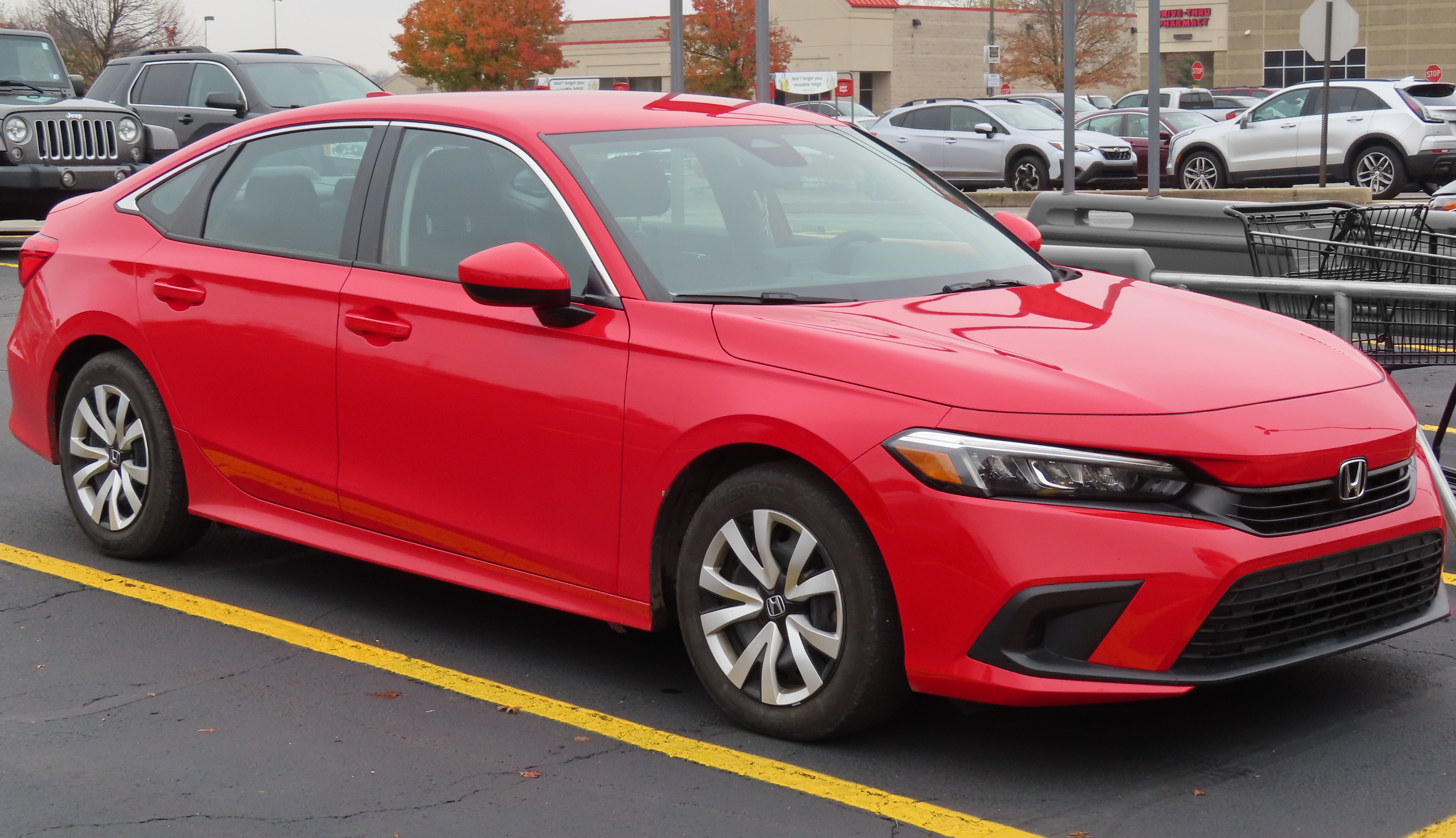
"...w, in our generation, it was you know, the Honda Civics and the five liter Fox body Mustang. Yeah, total..."
The Honda Civic is a small car that many people like because it's dependable and saves on gas. It's a good choice for anyone looking for a practical vehicle that still looks cool.
The Honda Civic is a compact car that has been a staple in the automotive market for decades, known for its reliability, fuel efficiency, and sporty design. It appeals to a wide range of drivers, from students to professionals.
"...ow, the Honda Civics and the five liter Fox body Mustang. Yeah, totally. Like that's what everybody wanted..."
The Ford Mustang is a classic sports car that many people love for its speed and cool design. It's known for being fun to drive and has a long history in American car culture.
The Ford Mustang is an iconic American muscle car that has been celebrated for its performance and distinctive styling since its introduction in the 1960s. It represents freedom and power, making it a favorite among car enthusiasts.
"...t really nice notch back. Civic SI or you had an Integra with a B16 or B18 in it with the you know, Comte..."
The Acura Integra is a small car that's fun to drive and known for being reliable. It's a good choice if you want something sporty but still practical for everyday use.
The Acura Integra is a compact car that has gained a cult following for its sporty performance and reliability. Known for its engaging driving experience, it appeals to enthusiasts and those looking for a practical yet fun vehicle.
"...as sort of the scene, right? Like a little Mazda B2000 or something, you know, a little S10, you know, ..."
The Mazda B2000 is a small truck that was popular a long time ago. It's known for being easy to drive and good on gas, making it a classic choice for some people.
The Mazda B2000 is a compact pickup truck that was popular in the 1980s and 1990s, known for its lightweight design and efficiency. It represents a simpler era of trucks, appealing to those who appreciate classic vehicles.
"...and you know, but his neighbor has a really nice Dodge Ram in the driveway. So he wants a ram just like his ..."
The Dodge Ram is a big truck that can carry heavy loads and is great for work or towing things. It's popular because it's comfortable to drive and has lots of features.
The Dodge Ram, now known as the Ram 1500, is a full-size pickup truck recognized for its strong performance, comfort, and advanced technology features. It has a loyal following among truck enthusiasts and is often praised for its towing capacity and interior quality.
".... I got word that you just ordered yourself a 26 F350 high output. I did, yeah. So let's talk about tha..."
The Ford F-350 is a super strong truck that can carry really heavy things and tow big trailers. It's perfect for people who need a tough vehicle for work or big projects.
The Ford F-350 is a heavy-duty pickup truck designed for serious towing and hauling tasks. It is often used in commercial applications and is known for its robust construction and powerful engine options.
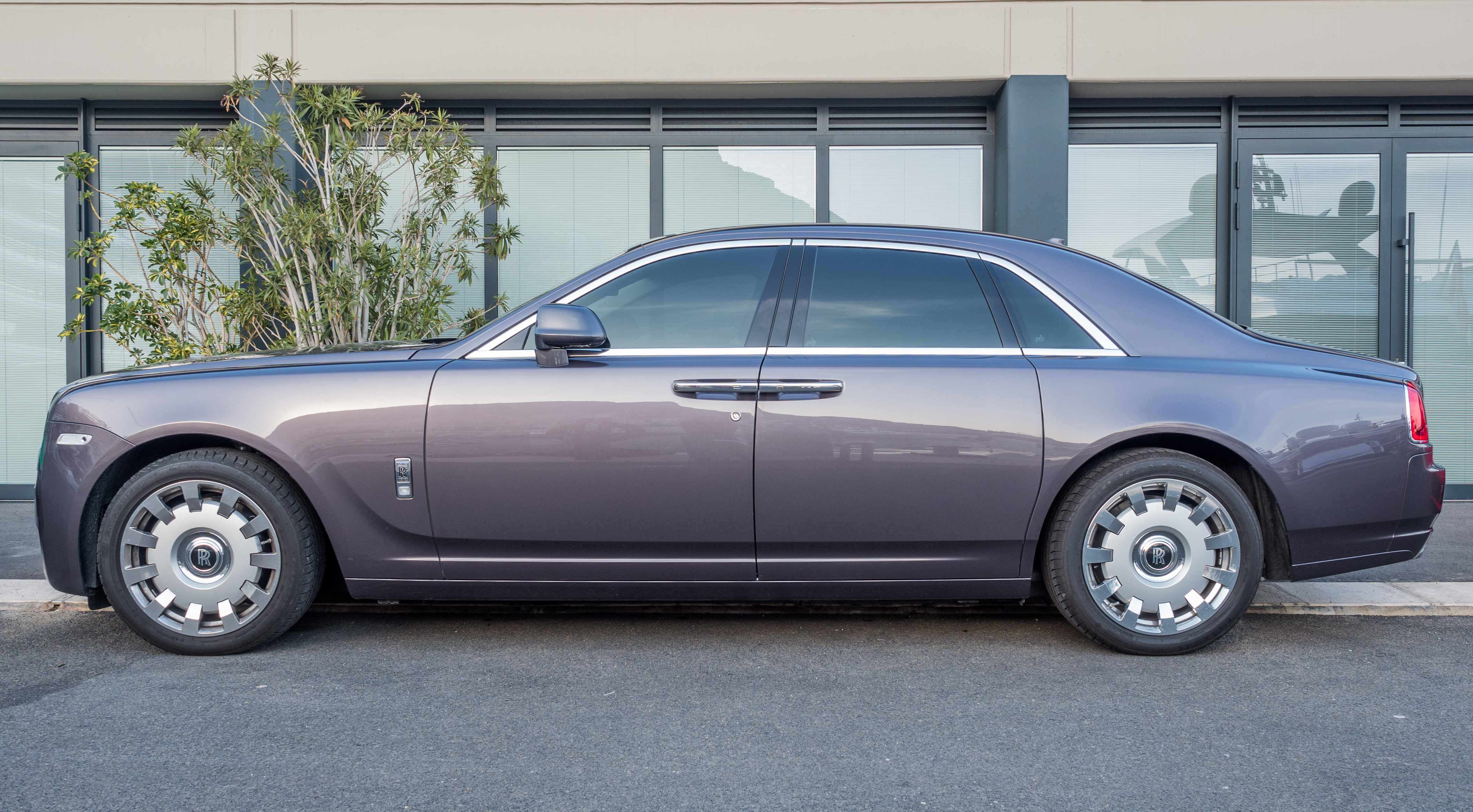
"...that's a pretty color. Yeah. So we're going to do ghost tackles on it. They do tells and and then we're ..."
The Rolls-Royce Ghost is an extremely fancy car that is all about luxury and comfort. It's made for people who want the best of the best when it comes to cars.
The Rolls-Royce Ghost is a luxury sedan that epitomizes elegance and craftsmanship, offering a bespoke experience for its owners. It is known for its powerful performance and opulent interior, making it a symbol of status and luxury.
"...with the helicopter. We have a 1974 Bell 206 jet ranger. A lot of people are like, well, why does the di..."
The Ford Ranger is a smaller truck that can carry things in its bed and is good for driving on rough roads. It's a great option if you need a vehicle for work or outdoor activities.
The Ford Ranger is a compact pickup truck that has gained popularity for its practicality and off-road capabilities. It offers a balance of performance and efficiency, making it suitable for both work and leisure.
"...cussion on the Fratsonic exhaust sounds from the Charger EV. Some of the sounds David demonstrated to you..."
The Dodge Charger is a big car that looks sporty and can go really fast. It's a good choice if you want a car that has room for passengers but still feels exciting to drive.
The Dodge Charger is a full-size sedan known for its powerful engine options and aggressive styling. It combines performance with practicality, making it a popular choice for those who want a sporty vehicle that can also be used as a family car.
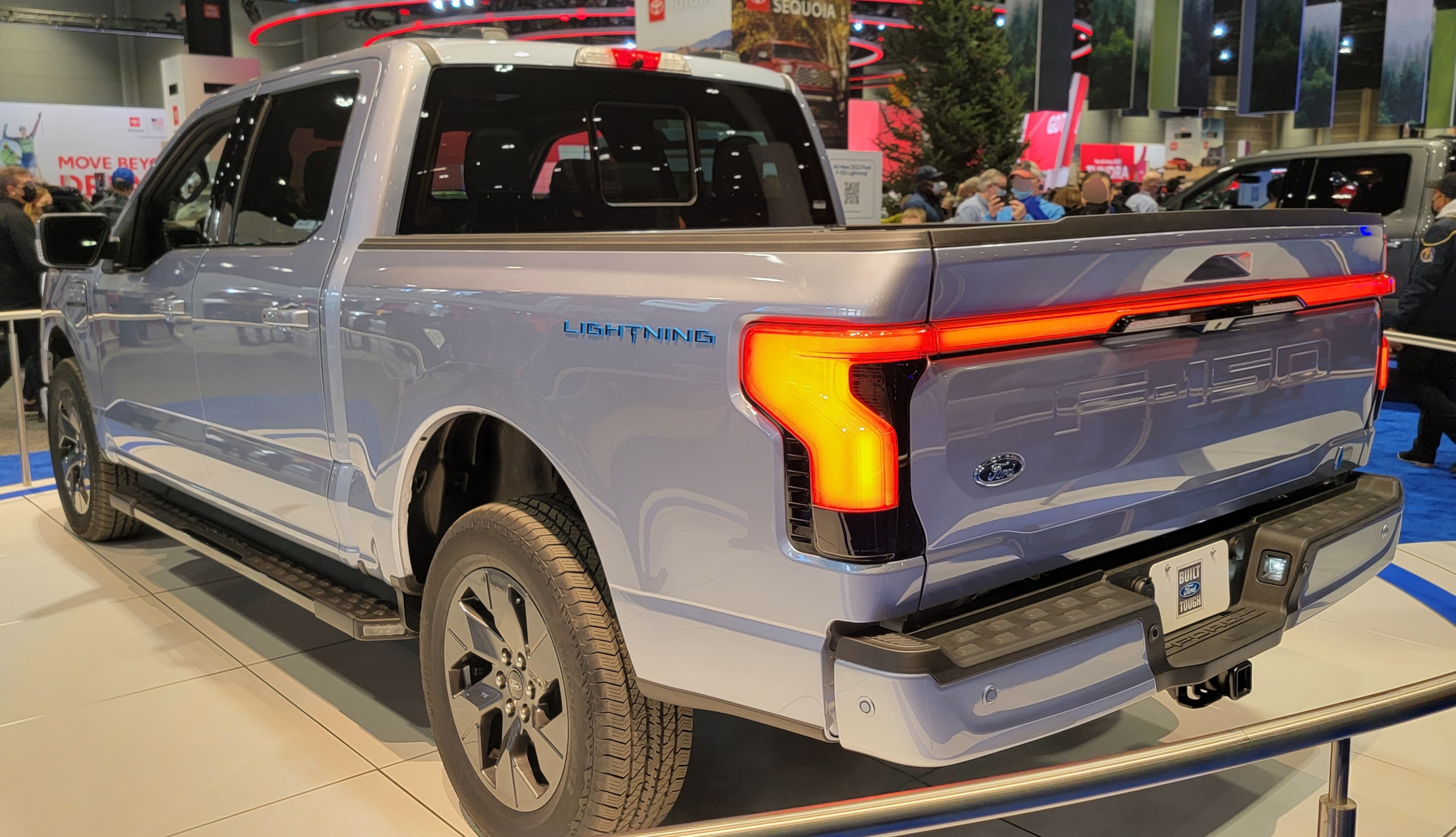
"sounds David demonstrated to you in the F-150 Lighting sounded to my ear slightly reminiscent of the Charger's"
The Ford F-150 Lightning is an electric truck that can do everything a regular truck can do but runs on electricity instead of gas. It's a new option for people who want a powerful truck while being eco-friendly.
The Ford F-150 Lightning is an all-electric version of the best-selling F-150 pickup truck, combining traditional truck capabilities with modern electric technology. It represents Ford's commitment to sustainability while maintaining the performance and utility that truck owners expect.
Select text to request an explanation
Welcome back to the pod shed.
Had some fun the last couple of weeks
with the Gladiator that Mopar loaned me.
And I haven't spent time in a Gladiator like this
since my four-wheeler days, so it's been several years.
And the 25 is nice because it's a little bit quieter,
a little bit more refined, love the interior.
Obviously the same as my 392, but the dash is great.
The larger screen that is landscape is great.
And I've just really enjoyed it.
And I've taken it up to the property a few times.
And it just, it does the things I want it to do.
It's rugged enough for off-road
and it is comfortable enough for around town,
especially with that Mopar two-inch lift
and 35s and Bilsteins.
It's really perfect for the kind of do-it-all truck.
I think the 33s are enough on a Gladiator,
but because of the extended wheelbase on those trucks
over the competition, 35s are nice to have
and also looks better on 35s.
Honestly, I think 37s look great,
but totally fine on 35s and you don't have to re-gear
because the transmission has low enough first gear
to make up for it.
And I've been getting on the highway,
somewhere around 17, 18 miles per gallon,
something like that, which is totally fine.
And I wonder, this one's a Rubicon
and I'm thinking, well, I could probably get away
with the Mojave right a little bit better.
And it has the Mopar Fox shocks with the jounce
in the front, which I really enjoy.
I don't necessarily need the front locker,
but then I was looking at the Saharas
with, I believe they have a limited slip in the back
and I'm like, well, that's probably even nicer
for a round town.
So we'll see, this has really warmed my heart
up to Gladiators to be sure.
And I've really enjoyed having it.
And we have a car seat in the back seat
for my eight year old and no problem.
Like she climbs in and buckles herself in
and there's plenty of room and it just,
it does all the things.
So I've really enjoyed it,
but I recently went out to KOH for the day.
And right before I went out there,
I installed the flated air topper
that the guys from Flated sent when they were on the show.
They literally sent it.
Like it was like the next day I had a air topper
sitting on my porch and I was like, all right,
well, I'm gonna put this on the Gladiator
and see how it goes.
And I love those guys.
You know that, you know, from our interview.
I believe in what they're doing.
I think the product is great,
but I've never really had firsthand day to day engagement
or experience living with their product.
And I gotta tell you, I'm more than impressed.
I'm glad that I got it.
So far it's lived up to the promise of being the topper
that doesn't ruin your life.
I was able to install it.
I think the first time is about 45 minutes,
but that included unpacking and putting together
some of the pieces like the windows and screens.
But now I bet I could take it off in five minutes
deflate it in another five and store it in the corner.
I think installation should probably take about 15 minutes
if you were unfolding it from the storage bag,
which is like a backpack.
And it's great.
So here are the things I really like about it.
Number one, I think it makes the truck look better.
Number two, I've had a lot of people going,
hey, what's that?
Is that an inflatable?
Like tell me about the topper.
And it draws attention.
So I've been answering all sorts of questions about it.
The quality is fantastic on it.
There's no noise, no creaking offer.
Like I said, it went up to KOH.
By the way, shout out to the couple of listeners
who grabbed me out there and said hi.
I wish I would have had time to grab a picture with you guys,
but thank you so much.
I always love getting out there and seeing people.
So shout out to you guys.
Anyway, going back to no noise, no cracking.
You don't have to worry about it off-road.
There's actually less wind noise from the Gladiator with it on.
I think because it's cab height,
it smooths that airflow over the back window
so you don't hear it right there.
The fit's fantastic, super sturdy.
Just the ease of use of it.
And it's all Velcro and some zippers.
And it just, it works great.
And then even on the inside,
there's a couple of mesh pockets.
So if you're camping in there,
you can put your wallet or your phone.
You know, that's all there.
There's no degradation in ride quality or payload
because it doesn't weigh anything.
And maybe some drawbacks are a little bit less secure
than a hard lockable topper.
There might be some dust intrusion,
but it would rain for several days
and it held up to the rainstorm just fine
without getting the bed soaked.
And right now there's nothing in the bed.
There's not even a bed liner back there.
It's just a painted bed.
And it was totally fine.
So anyway, those are just a few of my thoughts
after living with it for a few weeks.
And then I just wanted to follow up with you guys
and let you know how great it is.
So to me, it seems like the perfect in-between product
for somebody who occasionally needs a topper
but still wants full use of their bed or vice versa.
But if you want one for yourself,
there's a special link and a discount of 15%
by going on the featured products page
of our website, truckshowpodcast.com.
So if you want something from Flated
and they have a whole line of products,
the other one I really like is the air carrier, right?
It's like that Yakama box,
but inflatable that goes on your roof.
That's another one.
Anyway, you can use our link, get 15% off,
grab yourself something from Flated, support those guys.
I've been really impressed with the product
and would love to keep spreading that word for them.
And they're just a bunch of good dudes.
So anyway, I think you enjoyed the conversation
we had with them.
But today's conversation on this episode,
I think you're really gonna enjoy too.
I'm really excited about it
because it revolves around diesels
and we haven't jumped into diesels for a while.
So this one's kind of special.
Our guest for this show is Brad Hunt
from Protek Diesel in Kamloops, BC.
He was actually in SoCal for business and said,
hey, I'm in town.
I'm like, come to the pod shed.
So he came in studio.
We had this really great, informative conversation
about all things diesel.
I think you'll really enjoy it.
But before we welcome Brad,
we need to of course thank the companies
that make the Truck Show podcast possible.
The Truck Show podcast is proudly brought to you
in partnership with Amsoil,
the maker of the best synthetics
and the same ones we use in our rigs.
Did you know that Amsoil is more than just a synthetic oil?
They also make some of the finest lubricants,
greases, additives, filters, car care products,
and yes, even merch.
We use Amsoil products to protect our rigs
and you can do the same by heading to amsoil.com.
If you need a knife, then head on over to kershaw.chiusa.com
and explore their line of exceptional pocket knives.
They have a huge selection of quality knives from EDCs
to made in the USA and Automatics.
Score one for yourself today.
And if you want to treat yourself
to the latest in adventure gear and upgrades
for your vehicle, go to ovrmag.com
and use the code at Truck Show podcast
for a discount on print or one year access
to our digital library for free.
Please help me to keep the Truck Show podcast free
by supporting our sponsors
and leaving reviews on Apple or Spotify.
And don't forget, check out truckshowpodcast.com
for the latest deals.
The Truck Show.
We're gonna show you what we know.
We're gonna answer what the truck,
cause truck rides with the ****.
The Truck Show.
We have the lifted, we have the lowered
and everything in between.
We'll talk about trucks that run on diesel,
electricity in our gasoline.
The Truck Show.
The Truck Show.
The Truck Show.
It's the Truck Show with your host, Holman.
That's right, you're back in the pod shed
in lovely Huntington Beach, California.
Although you might be able to hear it's raining
outside right now.
But I think because I have the pod shed
so insulated from outside noises,
hopefully you can't hear it.
So without further ado,
here's the interview I did with Brad Hunt
from Protect Diesel Center in the pod shed.
Please enjoy.
So I'd like to welcome to the pod shed backyard studio,
Brad Hunt from Protect Diesel Center out of BC, Canada.
Yeah, how are you guys doing?
What are you doing down here?
I came down to hang out in beautiful California.
It's nice and warm down here.
Came to spend a little bit of time with Banks Power
and go through some monster ram stuff and some other parts.
So Jay reached out to me and he's like,
dude, Brad's down, you gotta have him on the show.
I'm like, dude, I've got so much.
He's like, dude, he's only gonna be here.
Oh, it's fine.
So you're able to get down here
and we're gonna knock out a podcast.
So I guess your claim to fame would be,
you're the one who really kind of discovered
the grid heater bolt failure with the rams,
with Cummins engine, which everybody thought
was an anomaly until it wasn't.
And you kind of put some stuff out there
and people are like, yeah, that's like,
it'll never, and all of a sudden, boom,
they just started hitting the mileage.
Cylinder six just started to drop
and take the engines with them, right?
Yeah, we knew about the failure for years, actually.
And we had, you know, hundreds of trucks
that we dealt with over the years with the failure
and we were replacing engines.
So you were doing full engine replacements at that point.
So you knew, because sort of the thing that happens is,
there's corrosion or electrolysis
that basically takes the stud
and weakens it to the point where the nut falls off.
It usually falls into cylinder six
and then it gets smushed
and rolls around inside the engine
and that's a $25,000 diesel engine replacement job here
in the States, probably more in Canada, right?
Yeah, in Canada, it's like 30 to 35K, probably.
If you're going complete,
depending on the damage from the bolt,
sometimes the bolt just bends a valve
or hits the center of the piston
and kind of damages the head
where it doesn't do any cylinder wall damage.
And then if you don't have any cylinder wall damage,
you could theoretically pull the engine out
and get it machined and put it all back together
and put a new head on and do it that way,
which would be a little bit less.
But nine times out of 10,
by the time that people get pulled over,
it's already got to the corner of the wall
and it's gouged the wall up and it ends up being,
it's just cheaper to buy a replacement.
And it's not something that you can drive on
for 50 miles to get your diesel shop.
Like it happens, you're done.
Yeah, it's pretty quick.
The only time guys get lucky is if the bolt breaks off
big enough that it's still floating around
on top of the valve stem,
which we've had quite a few of those,
and then they don't require an engine build,
it's basically just head gasket and pull it apart
and put all the top end back together.
So that's definitely a lot easier,
but when we first discovered,
started seeing the failures,
there was really nobody was diagnosing it at the time.
It's guys would just say,
oh, well, it's a common rail Cummins.
It must have a wash cylinder from a bad injector
or something like that.
Guys weren't going down into the cylinders,
looking with bore scopes and finding the broken bolts.
They were just having a cylinder six failure
and just pulling the engine out and putting a new engine in.
And when we first started seeing it,
we were noticing the grid heater bolts were breaking
because we were buying long block engines instead of complete.
So if you buy a complete, you're just out and in
and you know, no big deal, but we were buying long blocks.
Basically saves money because you can reuse
some of the components that aren't worn
off of the engine replacement.
Exactly.
And then we started pulling, you know,
pulling the heater assembly's off the engines
and noticing that everything was missing.
Charred and broken.
You know, but at the time we didn't really have a solution.
So we were putting engines in the trucks
with replacement grid heaters from Cummins.
We didn't know about the Monster Ram in the beginning.
Yeah.
So, you know, so for a few years,
we were just dealing with this problem internally
and replacing them as they came.
And you know, you'd see, you know, where we were,
we would probably see one or two a year,
you know, in the earlier years.
Is it just mileage based or is it if you use your heater
to preheat the engine before you start it,
there's going to be more wear
because the electricity going through it
or is it just again, simply mileage?
There's no, there's actually quite a few different scenarios
with the heater grid failures.
So mileage is definitely a factor for sure,
but that being said, we have customers
that have well over 400,000 miles on their trucks
and the grid heaters are perfectly fine and intact.
So there's really no mileage basis to the failure.
I would more say climate is definitely a thing for sure.
In the colder climates, you know,
your heater grids are going to turn on a lot more often.
So you're going to see more failures.
Also the fact that some of them will loosen up over time
from just hot and cold expansion and vibration.
And once they loosen a little bit,
like even a quarter thread, if they loosen that far,
well, now you've got a loose contact.
So now you've got.
Oh, it's arching as well as moving around in there.
Yeah, you get a ton of extra heat and they'll melt off.
You also have a bunch of relay failures and certain years
there was actually relay upgrades and recalls,
but nobody ever thinks to think about the relay.
And a lot of times the relay will stick on
and then it'll just, it'll just heat that bolt
to the point that it's red hot and just break off, you know,
and then it works its way down the intake runner
and then ends up in cylinder six, you know,
so that's how it all kind of came to be.
And, you know, we ended up,
there were a few years into dealing with these things
and then one day we.
Did you ever reach, I mean,
you're probably dealing more on the higher mileage size.
You probably weren't like seeing a brand new truck
and then reaching out to Cummins saying,
hey, this, you have this issue,
you're probably just thinking, oh, this is kind of wear and tear
or like, what was going through your mind as a shop owner?
Were you like, I've got to raise, you know,
raise the flag on this one.
So somebody realizes that this is really a epidemic
across, you know, this platform.
Yeah, we started seeing more and more and more of them
as the years went on.
But, you know, I would say a lot of guys are like,
oh, mileage related, but, you know, in reality,
we've had trucks at 20,000 miles.
Wow.
Like 50,000 kilometers, 45,000, 50,000 kilometers in Canada,
that's pretty common, you know.
So I would say the majority of the failures
that we've dealt with are between 50,000 and 250,000
and K, you know, kind of in that range, right?
Which is, you know, gets to be, you know,
that 160 to 200,000 mile range is pretty common,
but we have seen them as low as, like I say,
as 20,000 miles and they're failing.
And it's funny because we actually did reach out,
you know, to Cummins and to Chrysler,
and they basically denied that there was an issue.
Sure.
You know, that was kind of, you couldn't get any further
up the ladder on that problem.
And after dealing with it for a few years,
we've actually discovered literature on the internet.
It is out there, you know, basically from Cummins directly
to Chrysler admitting to the issue into,
I have a letter from 2007 and a half.
Oh, wow.
The trucks were, you know, I think it was April or May of 2007,
the letter was dated to Cummins,
or not to Cummins, to Chrysler,
to remove the heater grid assemblies
and use a grinder to grind the bottom threads
to make it so that the nut couldn't back off.
So this was when the trucks were brand new.
And if you pull a heater grid off now
and you flip it upside down and look at it,
you'll actually see that the threads are a little.
So it's like a little bevel basically to keep it
so if they loosen up, it doesn't drop all the way down.
That was the theory.
Yeah.
Yeah, but that again, doesn't fix the problem
because it creates now, if it does loosen up,
it creates an arcing point and they'll break.
So, you know, so in the end, it, you know,
it brought it all to light with getting it blown up
to where people actually saw that there was an issue
because for the first few videos that we put out
on the failure, you get all the keyboard guys on there
and they're all like, oh, it's one in 10,000.
I've never seen one in my career.
It doesn't happen.
It's, you know, it's blown out of proportion and, you know,
and then here I am with, you know,
probably three or four buckets of failed.
Yeah.
Grid heaters laying on my floor and all this.
How are you lucky enough to get the one out of 10,000
and you have 30 of them in the shop
for the past year or something, right?
You know, and that's the thing is like,
I literally did a video of four banks
with a picture of just a table full of failures.
And, you know, and then people are like,
oh, well, only the one bolt breaks,
but the other one inside doesn't.
And it's like, no, they have both, right?
They both fail and they're both a weak point.
You know, so we went through all of that
and we actually got teamed up with banks on this
through a customer.
So we had a customer come in and he had, he was low.
He was like 80,000 kilometers.
So what is that?
That's like 55,000, 60,000 miles.
And he had a complete failure.
He was driving, the bolt went into the piston,
took out the engine,
and he was doing some iDash testing for banks.
So he knew Jay and he called Jay and said,
hey, can you send me a Monster Ram
because I have to put an engine in my truck?
And then he explained to Jay what was going on.
And we didn't even know that the Monster Ram
existed at this point.
We were still using factory grid heaters
because we didn't see any advertising.
And we could back up really quick.
So at that time, Monster Ram was more of an air flow,
you know, performance modification or better efficiency.
But what they did was instead of having
the grid heater attached with a bolt,
they had like a billet grid heater, it's like a plate.
So essentially without knowing about it,
they solved the problem.
And it was never marketed that way until, you know,
we started even talking about it on the show
when that conversation was going on, right?
It was like, hey, there's these failures.
And I didn't, I'm like, really,
I've never heard of that, right?
And now it's this big thing, but Monster Rams have become,
in fact, my uncle just got one for his 24 Ram
because of the insurance.
He's like, it's not that much money to make sure
I don't have to spend 25 grand on engine down the road.
Well, and that's just it.
And yeah, banks built it for performance and fuel economy.
They actually had no idea that they,
that there even was a failure.
They're solving this future massive problem
nobody knows about yet.
Yeah, and we didn't know it exists.
And they didn't know the problem existed.
And it all just kind of came together all at once
on this one particular customer that happened to,
you know, get us in touch with banks.
And then, you know, we talked it out and said,
okay, this is the fix for this problem
because they went to, you know,
they eliminated the grid heater completely in the design.
It's got an open bed plate where it's straight through.
And then they went to a coil style heater
and we were like, well, this is great.
This is going to solve, you know, all the problems.
And then that's when they sent us one.
We put an engine in the truck and we did the first video.
And, you know, in the first video, of course,
took off like wildfire and, you know,
and now it's just been building over a couple years.
And you probably have people who replaced an engine
and went, that's what happened to mine.
But they said that was, this is like probably
all making sense to a lot of people too, right?
Oh, I'm sure, yeah.
And not only that, it gets a lot of people to check the wire.
So because, you know, we did a few videos
just basically showing people how to check at home,
you know, just to keep an eye on it, you know?
And yeah, there's a lot of videos out there now.
There's a lot of guys, you know, pushing the fix.
And there's a lot of companies that build other products
that, you know, really don't fix the problem either.
But they're trying to go through the gold rush
of selling something that's supposed to fix the problem,
but the design acumen isn't there,
or it's not, they don't understand the problem fully.
So their solution isn't exactly a replacement
because they're trying to hit a price point,
not a engineering solution.
That's right.
Where are we at now?
The new 20, 25 Rams with the new upgraded Cummins
don't have that design.
They went back to a glow plug.
So basically that issue is, I guess,
more or less solved from the factory,
but there's an awful lot of engines out there,
an awful lot of people that aren't educated
as what could be a ticking time bomb,
because righteously so,
Cummins has an amazing reputation
for dependability and reliability.
And this has been one of those things
that is a little bit of a black eye
because people were like, well, where'd this come from?
Because these engines, I've seen them at,
I remember Diesel Power Challenge,
we had a guy blow a hole through his freeze plugs,
lose two cylinders, engines on fire,
and he's still finishing the tractor pole,
or the sled pole with four cylinders.
He's just going, dude, you know,
well, what's it gonna take to kill this thing?
And they're obviously really hard to kill,
but this is one of those kind of unforced errors
where there's a component internally
that can sort of self-destruct on itself.
Yeah, that's pretty much how it is.
The Cummins has always been known
as a reliable, durable engine,
right from the 12 valve days.
The 12 valve kind of gave it its reputation
as being the so-called million-mile motor, right?
And as years went on, the 24 valve came out,
and they had some VP44 pump issues,
but for the most part,
that engine was pretty much bulletproof as well,
unless you ended up with the 53 block
where they would crack.
But there was years and years,
you got guys that have millions of miles
on Cummins engines, you know,
and then they came into the common rail,
and the common rail was a game changer
for, you know, for economy and horsepower.
Now you finally had a diesel engine
that, you know, actually put some power to the ground
from the factory without...
Yeah, it didn't feel so industrial.
Now you had something that was a little bit more appropriate
for a light duty truck,
where you could drive it day in and day out,
and it didn't have that medium duty feel to it.
Exactly, it wasn't...
A little bit more refined, smoother, quieter,
better throttle response, all that kind of stuff.
Yeah, exactly, and a little more economy,
and the reliability was still there
other than now you had the common rail injector issues
with guys not running proper fuel filters
and proper maintenance, they would take the injector.
Which is any engine?
That's any engine, that's not a Cummins fault,
that's the maintenance, an owner issue, right,
which causes them not to last as long.
But, you know, the 6.7, unfortunately,
the bolt was kind of the unforeseen failure
that nobody really thought of,
and honestly, I feel like a lot of people
are upset at the fact that they allowed this
to be manufactured, and then once the failure is known
and there's been proven for the last five years
or whatever that we've been doing this,
and other shops that have found this and done videos,
there's tens of thousands of failures,
I'm sure, North America-wide, if not more,
and everybody's like, well, why is Cummins not doing a recall?
If you go on any forums or anything online,
it's every third or fourth comment is it should be a recall,
Cummins, why aren't they, and nothing has ever been done.
It's just kind of been pushed under the rug,
and we'll just pretend this problem goes away.
And then now with the 2025,
they've redesigned it completely,
so now you have an engine that has a side-draft intake,
you have gold plugs, you have external injectors,
they're not internal anymore,
so they've redesigned that whole engine.
So now they went back to a gray iron block
because the previous generation
had the compacted graphite iron block, right?
Is it evolution, or is it an acknowledgement
of some of the shortcomings of the previous gen?
I guess you never know unless you're in the walls,
but by all accounts, and I've driven them,
the 25 engine is great, especially with the new eight-speed
power-torque ZF transmission, it's phenomenal.
Yeah, I haven't had the opportunity
to even see one in person yet,
but I can't wait till we get to get one in
and get a look at it and take a drive.
The transmission's the best part about it
because the first gear's so low,
and so I think they're all 342 gears,
and there's not a big 321 to 410 gear spread
like there used to be, so you get the economy
on the top end because eighth is deep
and then one is low, so it's a pleasure to drive
and unlike some of the transmissions in the past
where it didn't feel like the communication
between the engine and the transmission were quite perfect
or you'd kind of get that roughness in between,
this tranny is completely smooth
and it always feels like it's in the right gear.
I was really impressed.
Toad with it, I think I towed 18,000 pounds,
something like that.
That's pretty good.
Did Davis Dam, did Empty, did Loaded with Payload,
drove one about 1,000 miles just as a test around here,
that took it up to Central California
and I mean, it was really, really impressive,
so now we know about the great heater bolt failure.
What are some of the other things to look out for
on Cummins and then let's get into Powerstroke and Duramax
and I mean, you see it all coming through your shop
and I would imagine you probably have a lot of customers
who really use their trucks too.
Yeah, we're in an industry kind of area,
so where we're at, we're all four to 6% grades
are better for hills, we're in the mountains.
Our temperatures in the summer range,
80 to 100 degrees, so it's very hot
and there's a lot of hills.
Everybody, they're either in the drilling industry
or they're in construction or mining
or you know, and they're all driving one ton trucks,
so you come to Cam Loops and pretty much,
I would say every second or third house has a diesel truck
and they're not, dailies, they're all work trucks.
They use them for everything.
They're pulling big weight all the time
and they're running them hard and...
So you get to see real world...
Real world failures and for the commons generations,
we don't really see a lot of the older 12 valves anymore
because the guys that own them are working on them themselves.
They look up videos, they figure out how to do it.
They're pretty simple.
They're hanging out with their buddies, having a beer
and they're just working on their trucks, right?
So we don't see a ton of those.
The VP44 trucks are kind of the same kind of deal.
We still see injection pumps once in a while,
but for the most part, it's all common rail stuff
that comes through the shop.
And it's basically the same few jobs, you know?
We're dealing with injector failures from lack of maintenance
or like the five, nine common rails.
You get to that 220 to 250,000 mile range
and the injectors are pretty much wore out
if they haven't been maintaining them.
It's whole like running good fuel conditioners
because nobody seems to run fuel conditioner.
I don't know why, but all of our fuel where we are
and where you are is so dry, you know?
Everybody should be running a fuel conditioner,
you know, all the time.
So we do a ton of injection stuff for fuel systems,
you know, on the five, nine for sure.
We've noticed the six, seven, the injectors are a lot tougher.
We don't do quite as many sets of injectors in those,
but the trade-off for the six, seven is that now we're doing
68 RFE transmissions all the time because they can't,
they run too hot and people are way overloading them
and they're just, they're smoking them.
And, you know, so we're constantly doing
transmission upgrades and cooling upgrades
for the transmissions.
So coolers and clutch packs and things like that.
Yeah, we'll generally order in a built tranny
and put them in and then added coolers
because they're just, you know,
for what guys are doing with them,
they need the extra cooling, you know,
and then head gaskets.
We do a ton of head gaskets on six, sevens.
Yeah, but that's, those are kind of the main,
main kind of failures that, you know,
that guys are looking for.
But if, again, you're, if you're living somewhere
where it's all flat and you're just towing on flat ground,
well, you probably don't see the, you know,
the head gasket failures and you might not see
as many transmission failures either.
Yeah, cause you're not pushing it with the heat
for extended loads up a, you know,
hill or something or down shifting
and holding the entire truck and load back, right?
Yeah. Well, the, you know, the,
I think the biggest downfall to all of these trucks,
you know, whether it be Ford Dodge or Chevy,
it doesn't really matter,
but I think the biggest downfall is that since common rail,
they all build too much power for their own good.
And I know everybody wants as much power as possible,
but the reality is when you can hook on to 10 or 15,000 pounds
and you can take a 6% grade for, you know,
five, five to eight miles on cruise at a hundred and,
you know, say a hundred mile an hour, which they'll do.
Yeah. There's something not right with that.
Like you're towing that much weight.
And then you got the VGT turbos and, you know,
you don't have a traditional exhaust breaks.
They just adjust the veins.
So to help with, you know, hauling those loads down
and that's got to be at least a little bit stressful
on the, on the engine, I would imagine.
There's a lot, there's a lot going on.
There's a lot of back pressure. There's a lot of heat,
you know, and that's, I think of a lot of people
don't really think about that, you know,
enthusiasts and guys that work on their own trucks.
They, a lot of them have gauge packs and EGT.
I love the iDash for that.
Cause even on, you know, like my 392 in the driveway,
you know, the iDash is great for monitoring temps, you know,
all that kind of stuff, you know,
Jeep has a big engine, a small engine, big compartment.
So you got to watch that kind of stuff, right?
Just like if you were towing.
Yeah. So on a, let's go to Duramax platform.
What are sort of the common jobs,
maybe the top three or four things that you see of guys
coming through the shop with a Duramax issue?
Mostly the Duramaxes are all around.
They're actually a pretty good, pretty good platform.
You know, the Allison, the Allison transmissions
hold up really, really well.
Again, they, they do lack in cooling just like a lot
of the other trucks do.
So we do see some issues with transmissions running hot
and over temp on, on the Allison's
because the factory coolers aren't big enough.
So we see a lot of that.
There's, and you know, the early LB7s,
you would see a ton of injectors there.
You know, everybody knows there was a recall
on those injectors right from GM.
If they failed, they were getting replaced under a warranty,
you know, and as the years go on,
it tends to seem that most people get about, you know,
150 to 200,000 miles out of a set of, you know,
LB7 injectors.
So we do a ton of injectors in LB7s,
even still to this day, because that's something
a lot of guys don't do at home,
just because of how in depth it is to do under valve cover
injectors in those trucks.
You're talking about any type of contamination
on your workbench is game over and you've gone
through all that work and there's a reason injectors
are expensive because the amount of precision
into the machining, into the part itself is,
is mind blowing to see how precise they have to be
to meter that fuel just right.
Well, exactly.
And the, and the other big problem with the LB7 platform
is they're under valve cover injectors.
So the fuel lines go through the valve cover
into the top of the injector,
but what happens is all the years of condensation
and dirt and rust and grime,
everything falls into the top of the line
and there's nothing you can do to get in there
and deal with it.
And the second you crack that line loose,
all of that debris falls right into the top
of the injector.
For that reason, 90% of shops won't even
put a used injector back in.
So if a customer has one injector failed
and they have to pull that side apart.
You just do four injectors.
You do the whole bank because it's not worth the risk
of trying to deal with a contamination problem
because it's a 13 hour job to do a set of injectors
on LB7.
So, you know, so guys don't want to do that.
You know, and then we ask-
Or they do and the customer doesn't.
Yeah, exactly.
We always ask to dip the lines where we are,
but nowadays the lines are getting so old
that some of them have been done a couple of times.
So we're starting to replace them now with the injectors
and just doing a whole set of lines.
Well, you do the injectors and then you just don't have
any chance of comebacks or warranty problems.
And then you get into the LLY variation
of the Duramax family and they were,
overall the LLY is actually pretty reliable
other than they had a head gasket issues.
Right from the factory, the gasket was,
you know, they had a fire ring on the inside
of the early gaskets that the updated gaskets
don't have a ring.
But what we would find with the fire ring
is that when the head gaskets were installed
and the heads were torqued down,
it would actually over squish that fire ring
and it would put hairline cracks in it.
And just over time and years of driving,
you know, those cracks would expand.
And just the heat cycles start pulling the material apart.
Yeah, yeah.
And then we've had trucks where they've actually got grooves
in the corner of the pistons from that fire ring
moving over into the cylinder.
It just kind of walk over and the piston just touches it.
And like the fire ring's soft metal,
so it's not like it's a big chunk
that's gonna put a hole in it or anything,
but it's enough that it'll create wear.
So, you know, a lot of those trucks,
they would overpressure and push coolant
out of the, you know, the coolant reservoirs.
And so we do head gaskets and studs on those.
And other than that issue, there's not really a whole lot,
you know, that goes wrong with that variation, you know.
So, and then of course the LBZ, everybody,
everybody wants to get their hands on LBZ.
It's like the Holy Grail.
It's a great engine.
It's kind of eliminated the problems
of both generations before.
And then they've matched it with a six-speed Allyson,
which is a really strong, you know,
change.
A real Allyson, not just the one that was marketed
as Allyson, right?
That's right.
Yeah, it's the real deal.
And, you know, and it will put up with a lot.
It still had some heating issues
and, you know, with the transmission temps and stuff,
just like the rest of them, but overall,
it's very rare that you were doing any, you know,
any head gaskets or anything like that on that truck.
Like somebody would have to really work it hard
because it had the updated gaskets put in it, you know,
so we didn't see a whole lot of failures with that,
with that generation, you know,
but then you start getting into, you know,
the next generation up, I would say, you know,
like your seven and a half to 10
was a pretty reliable platform, you know,
still around the CP3 pump, everything,
everything was still pretty tough,
still had the Allyson, didn't really get a whole lot
of stuff happening there,
other than now you've got your DPF to deal with.
So now you've gone from having the LBZ,
which, you know, only had an EGR on it
to getting into the next generation
where now you're dealing with the DPF and emissions and...
All that fun stuff.
All the fun stuff plugging up, right?
Especially for the, you know, the people
that just kind of drive around town
and don't really get out and get the heat
to get that system clean.
That's when somebody's out looking for a new truck
and they go, oh, it's that one.
Ooh!
Right?
Yeah, exactly.
Okay, send me back to the LBZ.
Yeah, well, that kind of happened, right?
And then, yeah, and then everybody kind of jumped up
from there, you know, getting it,
getting into all the newer generations.
And once, you know, once you switched over to that 2012,
now you're dealing with a CP4 pump failure.
Yeah, and then that's a industry-wide thing, really.
I mean, there's all sorts of,
and we've talked about that on the show
and there's a bunch of different theories and fixes
and, you know, Bosch has had their recalls
and it's just, ah, that's a whole,
that's a whole other like five podcasts.
Well, yeah, you know, that pump was definitely
a major issue, as everybody knows, you know.
My, you know, other than obviously the design flaws
with the pump and why it blows up, you know,
I am a firm believer just from what we see,
where we are, that the majority of the CP4 pump failures
are Duramax and over the forward.
And our perspective on that is actually,
you know, fuel supply because the Duramax is until 2017
until they went into the L5Ps,
they don't have a factory lift pump.
And everybody assumes, you know,
that they have a lift pump in the tank.
They just assume that it does
because everything pretty much does.
Well, the Duramax Vans came with a factory lift pump
on the frame and a spin on filter,
but the pickups don't.
So, all the fuel supply is being pulled
from the pump forward, which is adding strain to that pump,
you know, whether people want to believe it or not,
you know, they'll say, oh, well, it's engineered that way
and, you know, it's okay.
Well, engineered that way doesn't always,
because sometimes you engineer for a price point too.
That's right.
And you may have the best dam pump in the world
to meet whatever that price point is
that the bean counters gave you.
And there's a lot of engineers at OEs
who left stuff on the table
because they couldn't get it financed
through the program budget.
I'm sure that has a lot to do with it.
Yeah, when you get to the bean counters,
things all of a sudden change, right?
Every half a cent makes a difference.
It makes a difference when you're building
hundreds of thousands of these things a year.
Yeah, because, you know, we see a ton of Duramax CP4 failures
and we do a ton of CP3 conversions,
but the Fords are, we see very little.
We do get them just like anything, but it's very rare.
And I do believe that that is because the Ford
has a decent quality fuel supply on the frame
and a secondary filter.
So, you know, whereas the Duramax just has
the one spin-on filter, that's it.
And then they have no lift pumps.
So I think that plays a lot into that, you know,
helping that poor design pump fail catastrophically
is just, you know, because it has no fuel supply.
And then again, back to you're not running
any kind of conditioner.
Yeah, well, and we already talked about it on the show,
like our lubricity is a lot worse here
than in Europe on our diesel fuel.
If you've got to work the pump harder
and there's less lubrication in the fuel for the pump,
that's not going to be a good thing.
No, and, you know, a lot of people are, they buy a truck,
they don't know a whole lot about it.
They just need it for work and they need the weight
capacities and, you know, and they want the reliability
of having a diesel truck, but they read the owner's manual
or they talk to their dealer and the dealer
and the owner's manual say that, you know,
the lubricity and additives are not required.
It's stated, you know, in all the literature out there
that you don't need it.
So people are like, oh, well, you're, you know,
selling snake oil, I don't need this stuff.
But the reality is that you do need lubrication.
It's like going back to like on a gasoline engine
where something can run on 87 octane turbo engine,
but it's like optimized for premium.
And my wife had a Audi A5 2.0 turbo.
She put the cheap gas in and I, like, what are you doing?
She goes, oh, it's cheap.
I go, it's, you're saving $2.
I go, put premium in and I guarantee you
at the end of this tank, you'll have more range
and it'll be more fun to drive.
And she did and the cost was offset
because she got more fuel economy
because it was optimized for, you know, 91 here in California.
And she's like, you're right, I got more range
and then this thing's so much more fun to drive.
But it's the same thing as it's like,
even though the manufacturer says it doesn't need it,
sometimes that's the bare minimum standard.
And by layering on something else,
you get to a better standard.
And, you know, obviously they're gonna protect
their warranties and things like that.
But at the same time, I think you have to use
a little bit of common sense and knowledge to figure out
like what makes sense in this application,
whether it's gas, whether it's diesel,
do additives make sense?
I mean, you may go to the cheap gas station
and it doesn't have any detergents in it, right?
And you get a, coked up valves and things like that.
And then somebody goes to auto zone
and pours a bottle of Tecron in their tank.
You know, and it's like, you could be doing that
with every, you know, gas station visit.
Same thing, you know, with an additive for diesel.
So there's, it's, I say it as like,
people are cheap about the wrong thing.
A lot of times I think, I think they are for sure.
Yeah, or just uneducated.
Yeah.
You know, sometimes it's not about money,
it's about convenience and not knowing as well, right?
But it's, it's definitely something
that is highly overlooked in the diesel world
is running a good conditioner.
And like you said, with gas vehicles, you know,
people are looking at the price at the pump
and they're going, okay, well, it's, you know,
whatever 10, 15 cents, you know, cheaper for, you know,
89 octane versus, you know, like 92 or 94.
And yeah, you're right.
If you run the 94, you're, you're going to get better mileage
and you're going to get better drivability.
It's a better quality fuel.
Yeah.
But that being said again, I feel like our gas is
a lot worse quality than what it used to be.
Oh, for sure.
You know, like if you, if you go to the gas station
and fill, you know, fill a Jerry can and dump it out
on the ground, like we, we've had gas that,
the low octane stuff that won't even barely light.
It's like lighting a candle.
All right.
You know, the stuff's just junk.
Yeah.
So it's, it's nothing like it used to be.
Yeah.
So let's go to the Ford six, seven platform.
What, what are some of the things, as far as I know,
and I don't live in your world, but it seems like the six,
seven for the most part has been a really reliable
platform for them.
Obviously six liters had seven, three is like the old
mechanical horse, holy grail.
Six liter is a really decent engine.
Once you fix everything they went cheap on,
they sort of did that with the six, four and kind of
redeem themselves a little bit, but it seems like the seven,
three platform has been like really well designed.
Yeah.
Well, you know, if we're talking about Ford in general,
I would say the seven, three is a really, really strong
engine overall.
It did have the weak link of the Huey injection.
Yeah.
You know, because again maintenance, it all comes down
to maintenance really.
You can't really blame the Huey system because the Huey
system actually does function.
And it works great when it's not clogged up with old oil.
Exactly.
You know, and they've run it in medium duty trucks for years.
A lot of the internationals and the old catapillars,
like those things would go forever on Huey injection.
And the seven threes are the same way, but nobody wants
to change the oil in them.
So then you get addiction issues, you know, and the six
liter is kind of the same way.
It's yeah, it had head gasket issues and EGR and EGR
coolers, rupturing, and, you know, and it had issues
with addiction on the injectors and FICUM main power boards.
And, you know, basically you had to take a six liter
power stroke brand new off the lot and had to put
$15,000.
Immediately.
Immediately.
Because even the stuff brand new wasn't great
on those trucks.
No, and there was like three or four revisions, you know,
through the years.
And I feel like when the six, seven came out, I feel like
Ford had to atone for the six, four, six liter issues.
And they really had to do something special for the six,
seven in order for people to trust Ford with diesels again.
Yeah, it kind of went, you know, kind of downhill
because, you know, back to the seven, three, I remember
guys, you know, they hated them because they had
injection problems.
But at the time it was like $500 for an injector times eight
plus having to put them in the truck.
So when the six liter came out, everybody jumped ship
from the seven, three, we were buying mint seven threes
for $2,000, $2,500 because they were worthless.
Everybody was getting into the six liters and then
have you got to bring a trailer lately to see what
seven threes go for?
I know it's crazy.
I'm like $50,000 for a truck with a hundred thousand
miles that's clean and you're going, what?
Yeah, it's insanity.
Yeah.
So everybody would jump over and then they, and then the
six liter started having all their problems.
So now everybody wanted the seven threes and then the
market started to go up, you know?
And then the guys that didn't do that, you know, they all
jumped onto the six four when the six four came out, no
seven and a half.
And the six four was a whole different animal.
It drive ability.
The truck honestly drives absolutely fantastic.
Fantastic.
I remember the first time that I had a six four truck from
the media fleet from four that we were testing and it may
have been four wheeler at the time.
And I remember I had that truck for a good while and I
couldn't believe how what a great daily it was.
It was comfortable, throttle tip in was great.
The engine was super flexible at that time.
Very quiet.
The cab built around it was fun.
Like I was like, this thing is awesome.
Yeah.
They, they, they really did knock it out of the park on
that engine, going to that twin turbo setup for just, you
know, daily drive ability.
Um, your power to weight on that truck was dialed.
Like they, they had her great.
It was sturdy on the road.
Those were a good truck too.
I mean, if from a standpoint, uh, you know, as far as looking
at, um, you know, frame strength and durability, like that,
that truck was fairly overbuilt, I think, for what the numbers
were on it.
Like it's been a good truck that generation.
It was a hundred percent.
The, the issue that it had though is it wasn't very long
where they started failing, um, you know, because the block
design was terrible.
They cracked the piston design was even worse than the block
design and they were constantly cracking pistons.
They were constantly, uh, blowing head gaskets because they
built so much boost.
Uh, and then you had the common rail fuel system where, you
know, the injectors had a, uh, would hang open, uh, because
of dirty fuel most of the time and lack of maintenance.
Uh, and now you're driving down the highway, you know, and
your cylinder temperature is low and now all of a sudden you
get something stuck in one of the injectors and, and it's
holding wide open.
It blown smoke and it started to run right through the piston.
And, you know, before you can even get pulled over to the
side of the highway, it's done, it's burnt through the piston
and right into the block.
So the problem with the six four really is that no matter what
you do, it's not ever going to be reliable.
Like the six liter had its flaws, but everybody could, but
it felt like this flaws of the six liter where all the
accessories and things hanging off the engine, whereas the
flaw to the six four was the engine itself.
Exactly.
So the six liter, you could bulletproof as they call it and
drive it into the ground and really the only thing.
The Neil brothers made a good business off of, uh, fixing those
things.
Yeah.
Everybody, I think, made their money on the six liter.
And, you know, once you fixed it, the only thing you had to
worry about now was the fact that everything was sealed by
rubber.
So you still, you know, if you're running cheap synthetics,
the synthetics swallow up the rubber and they eat them.
And then you blow on, you know, injector o-rings and
tube o-rings and all this stuff all the time.
So every few years you're doing o-rings and a six liter for
life.
That's, there's nothing you can do about that, but the six four
once, you know, once you cracked a piston or a head gasket
or, you know, the heads cracked all the time, um, you know, the
heads actually came cracked right from Ford, which is quite
funny.
If you, if you buy a brand new set of heads from Ford and you
flip them upside down and look at them, they, a lot of them
actually have hairline cracks in between the valves right, like
right out of the, right out of the box.
So it was just a terribly designed engine.
I feel like it was rushed by Navistar when they put that
engine together.
To fix the six liter issues, you know, or to say we have
something new that's, you know, we can walk away from the six
liter rather than just fixing those problems.
Exactly.
And then you have to factor in the fact that for the
international platform, because they ran the same engine in
the international medium duty trucks, but it was derated.
Yeah.
So, you know, it was, it was considerable.
I don't know the exact number, but I think it was somewhere
around 80 or 100 horsepower less in, in the commercial
application.
Yeah.
And then Ford took it and put it in their chassis and
bumped up the horsepower because it was a race with
Cummins over.
Well, a lot of people don't realize that the medium
duty trucks, why they're derated is for durability.
Yeah.
And to your point, at that period of time, you had
Cummins going, Hey, we're going from five, nine to six,
seven, you have GM introducing a six, six Duramax.
Well, Ford went backwards.
They went from a seven, three to a six liter and now they've
got to be that six and a half liter game with everybody
else.
So they come up with a 6.4.
Yeah.
And so there was a, I mean, that was like a interesting time
for the diesel engine wars because everybody, there wasn't
necessarily a clear winner lines were being drawn and
manufacturers were thrown down.
And I mean, obviously the horsepower wars on that
continue today, but that period of time was interesting
because you go to common rail, you get displacement
changes, you go to better transmissions, you know, you go
to VGT turbos, you go to common rail.
Like there was all DP, you know, DPFs, you're going, I mean,
think of all that technology and like, what, a five, six
year span or something like that that touched everybody.
It was pretty amazing time when all that was going on.
Everybody hit it all at once, you know, and they all had
their individual issues trying to get through it, you
know, and they, you know, and then when they went to the
six, seven power stroke, the first generation six, seven
was, it started out really, really well, but there was a
certain amount mainly in the cabin chassis, I would say
over the pickups, but there was a certain amount of the six,
seven power strokes that had crank issues kind of right off
the bat. So they were breaking cranks pretty early on and it
was kind of held under the rug pretty good for, for a while,
but we, we would see quite a few of them come in and then,
but it was almost always on cabin chassis and, you know,
and that could just be because of the severe duty of what
they were doing, you know, because there really isn't that
many differences between the cabin chassis engine and the
pickup, like the turbos are a little different and, and
they're derated a little bit, but other than that, the base
engine platform is pretty much identical and then guys running
in really cold climates, they were spinning bearings on
cold starts. So you'd have a lot of guys with spun bearings
in a truck with, you know, 50,000 miles, but that was
basically like your 1112 kind of first gen truck. Once they
got into, you know, the 13 and up, they started doing some
redesigns and upgrades and, and that eliminated a lot of that
issue. And then now they're just kind of fighting their
turbocharger issues, you know, that the scorpion turbo, I
don't know whose idea that was to come out, but, you know,
it's just, you got a turbo that really isn't balanced
properly from the factory. It's got a dual wheel on it. So,
you know, it's kind of front heavy and just not really, not
really an efficient design. And there was a ton of guys that,
you know, those turbos were failing and then they'd put
another one on and it would fail in another 20 or 30,000
miles. And, you know, a few years in, you got to the 2015, I
think is where they switched over to, you know, got rid of
the scorpion turbo and went into their new redesigned
turbo, which had almost no problems at all. And then now
the truck came with a factory exhaust break as well. So,
now, now you had something with a good transmission,
really good horsepower and good torque and you had a
reliable turbo that wasn't going to blow up and you
weren't breaking cranks. So, you know, the 15, 16 generation,
I think is where they really started to dial in and get
reliable where a guy could buy it and literally just change
the oil and fuel filters and put fuel in it and enjoy it and
enjoy it other than emissions issues. Sure.
You know, we touch on any of these trucks once we start
talking about emissions, they all equally have the same
weak points, right? So, they're all, you know, DEF failures
and O2 sensor failures and the DPF's plugging up because
they don't get driven properly. Well, we talk about that on
the podcast like diesel inappropriateness and that's
like if you are driving your kids to school and it's a two
mile round trip, your engine's not warm when you get home.
No. And I've had a friend of mine who had a diesel
grand Cherokee and she calls me and she's like, hey, this
thing's telling me I have to drive 50 miles or something.
Minimal. Yeah, because your your DPF is clogged because you
do all these short trips, you're not doing a diesel duty
cycle, you're doing a gas duty cycle and the after
treatment doesn't have a chance to burn itself off or to do
regen or any of that and so yeah, you have to go drive up,
you know, 50 miles down and 50 miles back and either do it
at freeway speeds or under load or something because you
got to give the car time to, you know, burn all that out of
the system and that's it. I tell most people today, if they
ask me for advice on a truck, I'm like, what's your use case?
How much do you tow? Oh, you don't tow. Okay, how much do you
haul? Oh, you don't haul. Okay, then go get the gas engine.
Well, I know my friends in the diesel like that's great, but
here's the thing is you're gonna spend 12 to $15,000 more
for that diesel. You now have a more expensive maintenance
schedule, more expensive fluids and filters. You now have an
additional fluid with DEF where that 12 or $15,000 difference,
you have a gas engine that you put gas in all the time. What's
the the the drawback? Well, if you get a seven three gas,
it's not much because the towing is almost as good as the
diesel, especially up to let's say 15,000 pounds or something
like that. Anything under that, it's they're fine, you know,
like it's got plenty, plenty of grant and fuel economy. Okay,
well, guess how much gas you can buy for those, you know,
thousands and thousands of dollars and and your maintenance
is easier and oil change is cheaper. So, I know people love
the allure of diesel and those of us who've been diesel
enthusiasts or are diesel enthusiasts is really hard not
to go but the way they're designed today, you really do
have to have a diesel appropriateness in terms of
your use case and duty cycle to make sure that you get a
long life because you see a lot of the guys that are hot
shots and they're pulling trailers around the country and
they're doing good but that's because they're working it and
they're doing regular maintenance and there's always a
load but the you know, the guy down the street who's driving
his crew cab four by four, six, seven, you know, FX four
around that that guy is going to be at the dealer and the
next, you know, 15,000 miles probably. Well, and that's
exactly what happens. It's it's the the case of you know,
buying a diesel truck because their neighbor has one, you
know, and it's like the diesel trucks nowadays, you know, I
had this talk the other day actually with my wife because
we kind of laughed because the teenagers now are are really
into them and it's like, you know, in our generation, it was
you know, the Honda Civics and the five liter Fox body
Mustang. Yeah, totally. Like that's what everybody wanted
to have, right? And you know, and if you had that really nice
notch back. Civic SI or you had an Integra with a B16 or B18 in
it with the you know, Comtec Icebox or DC four to two into
one headers or your buddy had a Fox body five liter Mustang
and it was that was it or maybe or maybe a mini truck like
that was kind of like that was sort of the scene, right?
Like a little Mazda B2000 or something, you know, a little
S10, you know, and that's where it was at and now all the all
the kids now are all buying diesel trucks. So they're all
buying, you know, the early common rail, the second gen
dodges, they're buying the, you know, the LBZs and the LB7s
or you know, they're getting the early six liters, you know,
and that's kind of the new kid scene is going after diesels
and then you've got they can't afford maintenance or anything.
So they're just trying to patch them together with whatever
they have and you know, they're on YouTube figuring out how
to fix them, you know, and then you got like I say, you get
the guy that, you know, he literally just drives it to
town to go to the grocery store to pick his kids up from
school and you know, but his neighbor has a really nice
Dodge Ram in the driveway. So he wants a ram just like his
neighbor and you know, and that truck just sits there and
literally idols around zero load. It's not getting worked at
all. And then he wonders why it's in the shop all the time
because everything's plugged up and you know, nothing gets a
chance to work and clean and you know, in my opinion, it
should actually be explained to people when they're buying
these trucks. But of course, a dealership, they're there to
sell you a product and they're commission based most of them.
So they make money off of what they're selling you. So
they're not going to sit you down at a desk and say, oh, by the
way, do you really need a diesel? Yeah, they're not going to
say, do you really need this truck? And oh, do you realize
that plus the service department likes customers too,
right? They love customers, you know, and it's like, you're
not going to sit there and explain to the guy that, yeah,
if you buy the gas truck here, $75 to do an oil change in
service. And if you buy the diesel truck here, you know,
$350 to do a full service. So it's like, and that's just
your, your maintenance every five to six thousand. And then
you go off of the book and, you know, the book's telling you,
you know, that you're supposed to go 10, 12,000 miles on oil
changes with emissions. It's like, people have no idea how
detrimental that is to the engine. Like it's, you're
literally taking all of that soot load out of the EGR, you're
forcing it through into your intake systems, you're driving
down the road. So basically your truck is breathing full time
exhaust and soot. And it literally makes the oil gritty.
Yeah. You feel it, you know, in your, in your fingers.
Yeah. It's essentially like anybody that has any experience,
you know, like I always tell people it's like valve grind
compound. If anybody's ever worked with it, it's like a
really fine, sandy for lapping valves in the old days when
guys used to do it. It's kind of like that's what your
oil does is all that soot goes into your oil.
And that's why a really good synthetic oil makes a
difference, you know, and also good filtration, but even
good filtration isn't going to get down some of that stuff.
And even like for me, you know, I use Amazon oil in my
stuff, but I still do 5,000 mile oil changes, even though
I get oil that can go 20,000 miles, no way. I'll spend the
money and I'll change it every five because I know that I'm
never going to have a problem. Then you don't have issues,
but the majority of people don't do that because there's a
lot of oil going into it for starters, you know, and Amazon
oil is a good quality oil and it's not cheap. You know, so
when it says 20,000 kilometers or 20,000 miles on the
bottle, people are going to go further than that almost, you
know, because they were like, well, we got this really good
oil and it's going to last for a long time and, you know, so
we'll go 20,000. And I think that's where a lot of people
had problems with, you know, the newer Dodge 5th Gens, right,
which we didn't even get to those yet, you know, because
all of the new Dodge 5th Gens have early camshaft
failures because the lifters fail. We started seeing the
5th Gen failures three years ago. They were coming in like
literally 10, 15,000 miles, these trucks were showing up
ticking cold until they warmed up. And that, you know, the
first couple we saw were running on three cylinders cold.
Oh, wow. They were just chugging and bucking and
fenders were jumping half an inch up and down and they were
just running like complete trash. Yeah. Until they warmed up.
And I was like, well, this is like a stickion issue. Yeah,
right. That's how it's acting. Yeah, the viscosity is keeping
those parts from, you know, moving in the ways they need
to. Yeah, and basically the lifters don't pump up. They
get all gummed up and sticky from lack of oil changes. And
then when the lifter starts to fail, it slaps on the cam
low, but it takes the camshaft up. Oh, okay. And it's a big
thing. Like there's as many fifth gen camshaft failures out
there as probably grid heater failures. I believe, I mean, if
you're looking at it and you go, oh, oil change for my diesel
trucks, you know, $350, $400. And there's a severe duty
schedule and there's a, you know, normal schedule. Well, I'll
just go the normal schedule because it's expensive and they
don't do, they don't abide by the severe duty, but let's be
honest. Unless you're doing all highway unloaded, you're
severe. If you're ever towing, if you're ever hauling, if
you're ever off road, and if you're ever in the city stop and
go, you're automatically severe duty right there. A lot of
people think, oh, well, I don't really do, I'm just driving
around town. That's severe duty. And they think, oh, no, I'm
normal duty because I'm doing normal things. I'm not hauling
until that's not it. It's the stop and go. It's the speed
differential. It's the acceleration, the engine
braking, like all that matters. Oh, for sure. You get a lot of
carbon buildup that way by not having anything under
load. So oil changes in maintenance is a big thing that
gets overlooked by, I think, the majority of, especially diesel
truck owners, but I'm sure it's the same in the gas world.
Sure. Right? I'm sure it's no different, but in my world, we
only work on diesel pickups. So I can't really say.
That's your point of reference. That's my point of
reference. I can't really say what the gas world is doing,
but if they don't change the oil in their commons, they're
not going to change it in their Honda. It's the same
mentality, right? But these trucks have to have clean oil
and they have to have clean fuel filters and they have to
have clean air filters. You wouldn't believe how many
trucks we have come in that have been driving around for
months with a dead mouse in the air box. Well, not even a
mouse. The filters are just literally sucked into the
into the tube of the air box and they're just sucking in
straight dirt. Everything. Yeah. You know, and the guy's
like, I just changed it like last just a year ago and it's
like, it's like, dude, you're driving in the fires and the
smoke and you drive, you know, you're driving in dusty
climates. It's like, you need to change your air filter two,
three times a year, you know, just to keep, you know, air
movement and maintenance is a huge thing that gets overlooked
on on anything and any vehicle. And I think it's
because people don't want to spend money if they don't
have to partly, you know, but it ends up costing them more
money in the long run by not doing it. I totally agree.
It's a hard one to push though. Yeah, right. Well, especially
if you're the shop owner, right? Oh, you're just trying to
make money off me. No, I'm trying to believe it or not. I'm
trying to see you less, right? But they everybody thinks
automatically that you're going to try to sell them. Yeah.
You know, and it's funny because our shop, it's uh we're
a pretty small outfit. I've been around for a long time and
we've been working on trucks for a long time and really well
known for what I do and I run a really straightforward uh
approach with customers to where even if they don't like
what I'm going to say, I'm going to say it anyway. Yeah. And
I would rather, I would rather tell them straight and lose
their business than try and take them for a ride and offer
them things they don't need. So like our shop does not
upsell and we're small. We're only a three bay shop and I
leave it that way because that way we can stay on top. Well,
it's more personal and we can stay on top of quality
control. Yeah. You know, so when you start getting a lot of
my friends have 10, 12, 15 bay shops. Yeah. How do you know
every one of those taxes up to your standard? You don't. You
don't and and that you're constantly hiring and and and
the you know, the people that because you're trying to fill
if you're going to have the lift, you don't want it empty. So
you need to fill somebody to be making money off that lift,
right? Exactly. Now you can't pay attention to what he's
doing and now you have quality control issues and you have
comebacks and then you have pissed off customers. So we have
built our reputation off of we are not the cheap shop in
town. We're actually probably the most expensive. We're uh you
know, we're in line with dealership pricing uh because we
run all the dealership tools. We run all the dealership uh
scan equipment. We have all of we we do our own keys in
house. We do everything we do the dealer can do and I make
sure that we buy all of that equipment so that we are ahead
of the curve but we're 40 to 60 trucks deep 12 months out of
the year. Three bay shop. Yeah. So, I'm not going to sit
there and you know, tell the guy that he needs stuff he
doesn't need. You know, because we don't for one, we don't
have time to yeah. Even do the upsell work let alone, you
know, you're trying to get him out off the racks to get the
next guy. We we just want him reliable. So, like if he comes
into the shop, we're going to fix him with the best parts
possible and get him going. Well, that trust means he's you
know, I guarantee you because I've worked in shops before
with these customers. Once you build that rapport, they will
drop it in the night box. The keys in the night box, leave
the truck out front. They go, just do whatever it needs.
Yeah, exactly. And they let you do it. You do it. They're
happy. You know, and they send all their friends. Yeah. You
know, that's the best marketing, right? Is that
real marketing from a happy customer? I think so. It's
uh, there's not a lot of handshake deal companies out
there anymore though. It's uh, and it's a hard racket
because honestly, you don't make as much profit margins as
people think. Yeah. People, you know, they're looking at a
$10,000, $12,000 bill and they basically think you just
put your kid through college. Yeah, you wish. But but really
like parts are through the roof. You're really how do you
put, you know, 40% markup on an $800 injector that you just
you don't can't do it. You can't do it. You can't put that
onto the customer. So you're and your your staff need a
living wage. So, you know, costs are through the roof. So
I think a lot of shops, you know, upsell to survive. Yeah.
I would agree with that. You know, yeah. And I think part of
it too is people often complain about labor rates, but the
reality is like, I remember there's that kind of story where
the guy goes into a dealership or a shop and says, I need
this thing done. It's like an hour of labor is $150 an hour
or whatever. Yeah. Okay. And the guy comes out and does it
in five minutes. Well, you only took five minutes to do
because what you didn't pay me to do, you paid for my
knowledge of how to do it quickly, right? And yeah. And
that's why a shop with a high labor rate and a quality staff
matters is because they have the wisdom and the knowledge to
get the thing done right and the equipment and the equipment
and and if you agree upfront to what the shop hourly rate is
most more minimum an hour and most jobs have a book rate
that you might go to. If you happen to be more efficient to
getting the job done, well, you get paid a little bit more and
that's okay because you're a business, you know, it's not a
charity case. No, it's no different than than the people
you're dealing with. It's for for whatever reason, if
somebody's, you know, doing a say they're doing a kitchen
renovation on their house, you know, and they're spending a
couple hundred thousand dollars doing a kitchen rental, you
know, they're okay with that and they're happy every time
they walk into their house and I look at their new kitchen and
they're like, yeah, it was two hundred grand, but I got a
wolf. We love it. We love it. We got red knobs on my 48 inch
stove. Exactly, but you know, but then you tell them they
got to spend ten thousand dollars on their motor
transportation to get them to work and make some more money
and it's like you're pulling teeth like it's the end of the
world and it's like for whatever reason, people do not
like putting money into a depreciating asset even though
that depreciating asset is what makes their money for the
other assets that are investment. Yeah, and then
furthermore, if you were to flip the coin and they were in
your shoes, they go to work for a paycheck every day and
they want to make good benefits and they want to make, you
know, a good annual salary, but they don't want you to make
money off of them, right? You know, so it's a pretty big mix,
you know, mixed up conception over what, you know, what the
reality of it is because people all need to eat and they all
need to have a house and everybody needs to get paid
and everything costs money. So everybody's in the same boat,
but the automotive industry, I feel like is a very judged
industry. 100%. I got word that you just ordered yourself a
26 F350 high output. I did, yeah. So let's talk about that for
a second. Yeah, so I actually just ordered it last month,
a 2026 F350 duly high output full load platinum and it took a
long time to do it because they're a lot of money. They're
not cheap. So, but we decided that, you know, my old truck's a
2017 and it's got about 350,000 miles on it. So we've run
her pretty good and it's actually never cost us anything,
to be honest. The thing has been really, really, really
reliable, but we're starting to do more traveling, you know,
just going to events and we're getting our e-commerce website
going and doing all that kind of stuff. So we're going to
meet and greet and people and, you know, so I figured, well,
if we're going to tow around a trailer, we're going to go to
these events, you know, we're going to want it something
decent to do it in. So yeah, so we went and ordered this
truck and what color is it? It's their new Argon blue.
Oh, that's a pretty color. Yeah. So we're going to do ghost
tackles on it. They do tells and and then we're going to do,
we're going to bolt pretty much every bank's part you can buy
on it for bolt on stuff and we'll do a lift and tires and
we'll do a little mini series video as we go just kind of
showing the whole build process. Right on. All right,
before I let you go, I have to know what's up with the
helicopter? Because there's a story with the helicopter.
We have a 1974 Bell 206 jet ranger. A lot of people are
like, well, why does the diesel shop have a have a
helicopter? You know, some guys are you know, some guys
are like, oh, well, everybody in the diesel industry
nowadays seems to have a helicopter because it seems
like every every YouTuber and you know, guy out there
seems to own one. Well, some of those guys went to jail
recently. You know, but in our case, a really good friend
of mine. Well, let me say this. Okay, so if you're
thinking a bell 206, you may think of like, oh, I don't
know. Vietnam era helicopter from Rambo first blood. And
then you go, well, it's that exact helicopter. It is. Yes.
Hold on. Yeah, so it is it is. So we bought this from a
helicopter company and they were actually parting it out.
So it was in their hangar in pieces hadn't been flown in
five or six years. And they're a really good client of ours
and we do a ton of work for them on their diesel pickups.
And I wanted to get my pilot's license and I started out
actually with a road away exec experimental helicopter.
They're a little two seater fiberglass. They were made in
Arizona. But in Canada, you can't train in them.
In the US, you can. So here you can get an instructor and you
can get a rating in an experimental aircraft. Well,
in Canada, you can't because they won't sell you insurance.
Oh, got you. And the certified world helicopters
are very expensive. Yeah. So I couldn't afford to get in that
way. So I went like 10 or 12 years not doing it. And then I
talked to these clients of mine and they're like, oh, yeah,
well, we have this old helicopter that we're thinking
about selling. We kind of acquired it and started
parting it out. You know, so I was like, oh, that's pretty
cool. So I went and took a look at it and, you know, we
agreed on a price and everything. And they're like,
oh, by the way, it's the original helicopter from
Rambo first blood. It's so cool. And I was like, well,
what do you mean? Like it's the same year, the same kind.
And they're like, no, it is the helicopter that was in the
movie. It's and sure enough, you Google it. So if you if you
go on Google and you put in C dash Golf Tangle Papa Hotel,
which is the call sign, you know, for the Canadian
registration, you know, you scroll down on Google about
three three paragraphs down and boom, there it is Scott
Hardy, a whole list of Rambo first blood and it shows
you all of the scenes it was in. It shows you pictures of
the helicopter at the time. It shows the sheriff hanging
out, shooting it around. So so it was in that whole scene
where the sheriff was shooting at him when he's falling
off of the jumps off. So that is the helicopter from
the movie. So so we took me seven years to get a hold
of it and about two years to get it flying and it's
flying now. That's so rad. So that's that's kind of
the story with the helicopter. So now we're going to use it
for hopefully events and things like that. You're going to
shoot people from it or anything? No, no, that's not
that's not the plan, but we we would like to, you know, get
to a point where maybe we can bring it down to the states
and try and get a sign by Sylvester Stallone. That would
be awesome. Well, you know, he listens to this podcast,
don't you? No, I had no idea. Neither did I. So and but if he
does, if he does, structure a podcast at gmail.com or if
you're out there and you have a way to get a hold of Mr.
Stallone, hit me up and I'll make sure Brad gets the
contact info because we have a lot of people listen and you
never know. You never know. There's some weird connection
where it's like, oh, it's my uncle. I'll have him sign it,
right? It's it's it's a pretty cool piece of you know,
movie history. Yeah. And honestly, I can't believe that
the aviation industry would part it out in the first place.
You'd think that they would have sold it to a collector or
something or something. Well, they did you. Well, they did
me. Yeah. So, so I saw the dream and I resurrected it and we
will, you know, do our best to keep it going for as long as
possible. Awesome. We actually plan on bringing it to the
45th Rambo anniversary in Hope. So, it was filmed in Hope
BC. Okay. So, I do plan on bringing it to there and then
we'll just kind of see where it goes. Cool, man. Well,
a little applause there for for Brad Hunt, owner of Protek
and dude, thanks for coming over. I know you kind of drove
down from okay, that guy in the back, he's going to hoot
and holler here in a second. Man, we love you. They do. They
must love Protek Diesel Centers. All right. So, if you want
to follow Brad and the company, so it's just Protek Diesel
Center that's on Facebook, on Instagram, on TikTok. You have
your YouTube channel as well. Yeah. There's so much to talk
about. I mean, I still want to hit kind of the diesel scene
and Canada at some point, maybe get into kind of the
deletes and the emissions stuff going on up there and
getting to maybe like tuning good versus bad. I mean, we
didn't touch on that. So, you're going to have to come
back on but fortunately, we can do this over the phone
too. Yeah, for sure. Yeah, we'll definitely we'll have to
do this again. I've I've got lots of insight into all of
those topics. So, we deal with it every day. Well, you are now
our resident Canadian diesel expert. So, we will we'll tap
you from time to time and get you back but really
appreciate you coming down and hanging out in the pod
shed. By the way, what do you think of the pod shed? I think
it's pretty good. It's cool, right? Yeah, it's a wicked
setup. I like it. Yeah, I always tell the story because
lighting Jay, he's like, we can't just have a studio in
your backyard. Then you have people walking in your
backyard and like, then how surprised are they going to be
when they realize it's cool? Right? It's a pretty cool
setup in here. Appreciate that. You know, the only thing
you're missing is a beer cooler in the corner but
yeah, I mean, I got the Dr Pepper fridge over there and
there is cold beer in there but you know, we can always do
that. Yeah, it's looking pretty good. It's well built.
Thank you. Yeah, so this is this is where the magic happens
and we're glad to share it with our friends. So,
thanks for coming on and again, Brad Hunt owner of
Protect Diesel Centers and up in Camloops, B.C. and if
you guys have any questions for Brad, you could reach out
to me again, truckshowpodcast at gmail.com and
look forward to having you on again soon. Yeah, for sure.
Anytime man. It was a blast. It's good to be here. Appreciate it.
Thank you. Thanks again, Brad Hunt for coming to the
pod shed all the way down from Camloops, B.C. in the
Protect Diesel Centers. It's been a while since we got into
diesel stuff. So, uh, I'm glad we had him on the show but
the other thing it's been a while since we got into is
well emails.
Come on. Who doesn't love this?
Love this jingle. It's been far too long. So, I've got a
few emails here. The first one from Rob Kaiser says
questions about the dealer relationship discussion on
the podcast. Hey, Sean, Rob Kaiser here. I was
listening to your recent podcast, Lightning had a
question about dealer relationships, especially as
they relate to maintenance and potential warranty leeway
down the road. I've had my regular just over a year and
absolutely love it. It has about 10,500 miles on it. I
took it to the dealer I purchased it from for one of
the initial 7500 Jeep Wave Oil Change entire rotation
services after they had been encouraging me for months to
come in. Experience raised some concerns. I wasn't
given any kind of vehicle inspection report when I
picked it up. I've done some off-roading and expected at
least a basic once over. I'm running larger AEV wheels
and tires. After the rotation, the balance weights
were rubbing on the calipers. I noticed this
immediately turned around and they reversed the
rotation but told me to take the vehicle back to the
shop that installed and balance the tires rather
than addressing it themselves. The dealer inflated
the tires to 40 psi, the max, despite my shop
recommending closer to 32 given the vehicle's lighter
weight. A week later, I received a notice saying I
declined a recommended service air filter which was
never discussed with me. Now they're hounding me
again to come in even though I'm not due for service
until around 15,000 miles. I expected to build a solid
long-term relationship with the dealer but this
doesn't feel right. My questions are, should I
consider switching dealers? Is this an issue with
this dealer or fairly typical of Jeep dealers in
general? Would it make sense to rely more on an
independent shop for routine maintenance, especially
given that the dealer already redirected me
there? I mean, North Orange County would prefer
not to travel too far if I can avoid it. Appreciate
any perspective you can share. So essentially
that's a bit of a loaded question but I would give
the dealer one more opportunity and raise your
concerns. Sometimes there's a new person working,
for example, that if you've got a kid blowing up
tires and is doing it wrong, they deserve the
chance to make it right and correct that employee
that's reading the label on the side of the tire
and not the door jam, for example. The dealer
he mentions, I haven't heard great things about
but sometimes a dealer can be a crapshoot. I
take mine to a different dealer but I also have
a good service advisor. Having a relationship
with your service advisor means a ton and
sometimes you have to drive for a good dealer
experience, especially if it's only once a year.
You might want to drive out of your area for a
dealer that is pro aftermarket, for example, and
warranty friendly. Most Jeep dealers above and
beyond are way friendly to lift in and warranty
Jeeps because A, they sell them and B, that's
their customer base. My experience has been
with all Jeep dealers versus the other dealers
out there are super friendly to aftermarket.
I can't believe they didn't give you an inspection
report. You should always get that. That should
be standard, especially when you're doing a service.
Questions about the weights rubbing on the
caliper because the fitment should be the same
no matter how the tires fit on there. I'd be
curious if maybe they rotated your spare that
had the weights in a different spot, for
example. And I would say there's a computer
system that is probably set for every 3,000
miles. That's basically guessing your mileage
and sending you all sorts of service stuff.
You can ignore that stuff. Not a big issue.
And the air filter, if you're not due, you're not
due, but that's a call to the service manager
saying, Hey, it says I declined this. I was
never given an option. Again, that's something
to follow up with the employees to make sure
that their processes are right. I know you're
not doing, you shouldn't be doing their job for
them, but at the same time as a customer, I
think you owe the business a chance to
correct it and make you a happy customer.
And if they don't, then switching your service
dealers a priority. You can also make a ticket
with Jeep Cares, which is a group through Jeep
that will follow up on any of those types of
concerns. My opinion is always going to be
the same regardless of brand. And that's get
your services done by the dealer throughout
the warranty period. Because if something
comes up, they're going to look and see that
you have a history with them. They're going
to go, Oh, we'll take care of this customer,
especially if it's on the cusp or just outside
of warranty, they'll goodwill it for you.
Otherwise they'll say, No, this person has
never been here. Who cares? Those are sort of
my thoughts and dealers are always sending
out the, Hey, if we didn't earn our five
stars for the survey, let us know because
those five star surveys hit them hard. And if
you gave them a three, that's a big deal. So
you can always have some recourse there as
well. Got the next one here from Brent
Racine says lightning lightning lightning
lightning lightning lightning lightning.
He says, I just listened to your episode with
lightning. I do miss you guys being
together. You're a lying sack of nobody
likes us. We were terrible. Every time we
did a show, this is the worst show we've
ever done. And I don't know how it was
always the worst, but it was, you can hear
it sucking every single time. That was
awful. I mean, that was, that was awful.
But I do miss having lightning on the show
and having it back in studio was a lot of
fun. He says, you guys are like a morning
show. You guys play off each other so good.
You should try to bring back lightning a
little more often and five stars.
Congratulations. You have earned five
stars. Well, that's not up to me. That's
up to lightning. He's a very busy boy. So
just in case anybody was wondering,
lightning's not on the show because like
we went to fisticuffs one day and we
split apart. Lighting's not on the show
because lightning had other priorities
and other things that were taking or in
need of his time. And the podcast was
one of those things that was sucking up
a lot of his time. So he had to kind of
make a decision. So that's why he's not
on the show. He's welcome back any time.
And if there's an issue, I wouldn't have
him back with. That's not the case. I
miss him.
All right. This one is from Dennis
Durrell. Dr. Pepper now number two.
He says, this is from AI. So take it for
what it is. But I figured you'd like that
Dr. Pepper is now the number two of the
nation. And what's up with Fanta? So
continuing with the letter, it says
number one, the Pepsi belt is shrinking.
Pepsi's dominance is increasingly
localized to the Northeast, New York,
Pennsylvania, and Ohio. If your map shows
Pepsi winning the south or west, it's
very likely outdated. I don't like Pepsi.
I'll be honest with you. I just, I just
don't like it. I don't know why.
Number two, the Dr. Pepper surge. Dr.
Pepper is now known as the official
number two soda in the United States by
volume.
I got a winner! Well, at least second
place. They're the second winner.
Says, any map that doesn't show Dr.
Pepper winning states like Oklahoma,
Kansas is missing current market
realities. Of course. Number three, the
Coke generic in Georgia and much of the
south. Coke isn't just a brand. It's the
word for all soda. While Coke wins the
sales battle there, survey data can be
skewed because residents might say they
want to Coke, but then order a Dr.
Pepper. What's wrong with you? Just say
you want a Dr. Pepper so this data can
get organized the right way. Anyway, and
number four, flavor diversity. You'll
notice brands like Fanta in California
and Oregon and Canada Drive, Massachusetts
and Vermont appearing as quote-unquote
favorites in recent Google Trends data,
reflecting a shift away from traditional
colas toward fruit and ginger flavors.
All right, let's say you guys, I have seen
a major push in Dr. Pepper availability
and people wanting it for, I don't know,
maybe the last three to five years. I
remember Taco Bell, which was
exclusively a Pepsi place. They used to
have Dr. Pepper. They took it away for a
while in like within months, maybe six
months. I stopped going. I'm like, well,
I'm not having your crappy Taco Bell if
I can't wash it down with some delicious
Dr. Pepper. On a whim, I had gone back
there not too long after that. They're
like, oh yeah, we're back. Dr. Pepper's
back. We had a lot of people asking for it.
All right, and one last email here from
our friend RB and he says, hello, Sean.
I love the podcast with Borla. Very
interesting and informative and David
Borla is such a forthright down-to-earth
person. It was a great podcast. Thank you,
Ray. I was surprised there was no
discussion on the Fratsonic exhaust
sounds from the Charger EV. Some of the
sounds David demonstrated to you in the
F-150 Lighting sounded to my ear
slightly reminiscent of the Charger's
Fratsonic chamber shrieking sounds,
reminding me of an electronic rendition
of a cougar screaming. The animal, not the
car or that type of woman, not that I
know anything about the last one. Sure,
Ray. So, you know, I didn't even think
about the Fratsonic exhaust just because
I haven't seen one in person and the
way it's described is like it has a
sound chamber like a muffler that is
taking noise but I've heard some of it's
electronic. I just don't know enough
about it and I probably should have
asked David about it. I may send him an
email and if he writes back or I get
some info on that, I'll read it on the
show. Ray also says, I love the
Flated Podcast. Just got around to
listening to that one. I did go to their
website and bought a couple of pieces
of the furniture and the hand pump
using the Truck Show Podcast 15%
discount. Thanks for that, of course.
I don't do any camping anymore but I
figured when the ex-wife comes to get
more of the furniture, the Flated
Furniture will come in handy and be
perfect for my needs. Simple, rugged,
practical, easily cleaned and easily
moved. It's all those things that, by
the way, the Flated Furniture is rad.
We've had it camping. We've had it at
trade shows in our booth at OVR. It's
fantastic. He also says, when you had
Jay back a few podcasts ago, he also
commented that no one sends you emails
anymore for the record. I've sent a few
now and then all along but in particular
back in November 9th, he emailed the
promised follow-up report of my friend
Dave's new RHO replacing his old rebel.
Yes, Ray, I did see that and you are
always sending good emails. I didn't
have other emails to read. I don't like
to read one at a time. I usually like to
do three to four and until I have three
to four, it doesn't make sense to read
one email on the air and so that's kind
of what I've been waiting for and I
forgot about it. I'll read that on the
next show because it'll be a good
follow-up for people who are curious.
He says, anyway, keep up the great work.
We TSP listeners are grateful for
everything you do. I really appreciate
you guys. Thank you so much for staying
with me and listening to the show and
I'm still working hard to get caught up
on episodes but we'll get there.
It's a lot of work but it's
definitely worth it. I still enjoy it
and I enjoy all of you immensely.
All right, send me your thoughts by emailing
the show, just like I said, at
truckshowpodcast at gmail.com or follow
us on social at truckshowpodcast or at
shampieholman.
And now that you guys have listened to
my pleas for emails, please keep
sending those but also we need some at
the five-star hotline. It's been so
neglected that Google sent me a thing
saying, like, if I didn't send some text
messages and start making calls with
that, within 30 days they're going to
yank it from me and that'd suck if we had
eight years of the Truck Show podcast.
By the way, next month is eight years, I think.
Anyway, if we had eight years of Truck Show
podcast, 657-205-6105,
suddenly vaporize would be horrible.
So I think I only have one voicemail
right now, so please take a few minutes,
send a voicemail. I want to hear you guys,
want to hear your voices, I want to put
you on the air. Again, five-star hotline,
657-205-6105. Of course, you can join the
Facebook group, the PodShed Insiders,
which I think is a great idea, except for
I think it robbed some of you guys from
sending in emails because you can hop
on that group and then everybody gives
you feedback, I give you feedback, we all
talk about it and then I don't have
anything for the show, so I may have to
steal some stuff from there.
All right, got to take our sponsors
amsoil.com if you want the best in
synthetics, oil change kits, car care
products, merch, greases, lubes.
For those of you who love your vehicles
and want the best in synthetics, if you
love your vehicles like we do, again,
amsoil, they have been an amazing
partner and sponsor of the Truck Show
podcast and we love them dearly.
Also, you can find some awesome
knives at a great price by going to
kershaw.kaiusa.com and get yourself a
kershaw knife today. And lastly, the
best in high quality adventure, gear
lifestyle and vehicle reviews are only
found in the pages of OVR magazine.
Get free access to our digital library
for a year or a discount on print by
heading to ovrmag.com and using the
code at Truck Show podcast.
As always, I hope you enjoyed this
episode and I look forward to doing it
again soon.
By sharing it and patronizing our
sponsors.
Some vehicles may have been harmed
during the making of this podcast.
Request an explanation for:
15 cars
Scroll for more
15 cars featured
Request an Explanation
Heard something you'd like explained? We'll add it to this episode.
Sign in to request explanations for terms you heard.
Want to learn more?
Browse our glossary for plain-English explanations of automotive terms, jargon, and concepts.
See something that's not quite right? Our annotations are AI-generated and can sometimes miss the mark.
Click the flag icon on any annotation to suggest a correction.