00:00
Welcome to the podcast of MotorWeek, television's original automotive magazine.
00:08
MotorWeek is made possible by AutoValue and Bumper2Bumper and TireRack.com.
00:14
Here's your MotorWeek podcast host, John Davis.
00:18
Welcome to MotorWeek podcast number 360, our first podcast of MotorWeek's 45th season.
00:26
So we are ever more glad to have you with us.
00:29
And for all of that eye and continue to be your host, John Davis, and in honor of this
00:35
milestone, we have convened a fairly grisly bunch for today's podcast to do a little reminiscing
00:43
along with their new observations, starting with 38-year veteran senior executive producer
00:51
There he is, 32-year veteran senior executive producer, Brian Roberts.
00:57
Could not miss this one.
00:59
And the kid amongst us today, 13-year veteran and over-the-edge reporter, Greg Carlos.
01:04
Rather modest 13-year to the royalty that's around me now.
01:08
Yeah, but it's been a good one, a good run.
01:11
We're going to get into their lowdowns on two new vehicles in our first episode for
01:16
the 45th season, the Ferrari Roma Spider, always a delight to test a Ferrari.
01:22
And the much talked about and long-awaited all-new Toyota 4Runner.
01:26
But first, we thought we'd talk a little bit about who we are, how we got here.
01:32
And Dave, I'm going to turn to you as the almost oldest veteran at this table.
01:37
Why don't you start?
01:38
What brought you to Motor Week?
01:40
How did it first become part of your life?
01:42
I started with you as an intern in December of 1987 when my scriptwriting teacher at
01:48
Towson University suggested me to you because you were an intern who could write.
01:58
Seriously, people don't realize how important the written word is to us.
02:05
And writing the time, writing to a word count, and getting to say things once and have you
02:08
grasp the meaning of it the first time.
02:13
So you hired me in March of 1988, and I graduated in May of 1988.
02:16
So I was working at Nights for two months, opening fan mail, basically.
02:20
You know, the old terrestrial mail that everybody used to get.
02:24
We used to get tons of it every week.
02:26
I went from that to coordinating producer, where I did all the scheduling for the cars
02:31
I went producer, senior producer, executive producer, and now senior executive producer.
02:36
We've almost run out of titles for you, Dave.
02:40
I wanted to have seen your producer, but he's like, no, that's not.
02:46
But over the years, taking a look at that, did you ever guess that you would stick
02:52
around with us for this long?
02:56
What did you want to be when you grew up?
02:57
I wanted to do something with cars, and I liked video as well, the immediacy of the
03:02
I just, instead of developing film, I didn't think the car show thing would
03:08
No, neither did we.
03:11
But it's taken me to 49 states and 38 countries and thousands upon thousands
03:16
of cars driven, and it's been quite a ride.
03:19
Brian, how about you?
03:20
Well in the summer of 93, I was looking for an internship.
03:24
I also went to Towson University.
03:26
And I was going through where to do an internship, and I saw this place called
03:31
I loved cars growing up.
03:32
I worked on cars with my father, and obviously I was a broadcast journalism
03:36
major at Towson, so it seemed like a perfect fit.
03:39
So I was Lisa Barrow's intern for the summer, learned a lot from her, had a
03:44
great time, and then the summer came to a close, and there was a PA job
03:47
opening, a production assistant job that was opening up in September.
03:53
But I had to go back for another semester, and I could not do the job.
03:56
So the best advice I got from Lisa was, keep your foot in the door, come back
04:01
at least once a week, maybe some time.
04:03
Check in, just let everybody know you're there.
04:06
Yeah, so I would come back once a week until December, and then another job
04:12
I graduated, I got the PA job, I was super excited.
04:15
My first career job, it was minimum wage, but I was happy to have a job
04:20
I started out making $14.5 a year, thought I'd die if I'd gone to heaven.
04:24
But I doubled it since then, so we're okay.
04:29
You get paid that much.
04:31
But you know, this is the importance of interns, positions in any industry,
04:38
but particularly in the broadcast cable visual arts industry.
04:42
It's very easy to see who's here to drive the cool cars, and who wants
04:47
Who wants to learn, and who wants to work hard.
04:48
You can really tell somebody's work ethic by working with them constantly.
04:54
Greg, what brought you to us first?
04:56
Yeah, an internship.
04:58
That's a trifecta, folks.
05:01
I was thinking about this the other night, and what I would be doing
05:05
if I didn't get here, and I don't have an aunt.
05:08
I think about myself in college at the time.
05:09
I'm like, what was my plan?
05:11
Because I was interning my final semester, so here's how it started.
05:15
I grew up watching Motor Week, so you guys were kind of like in closer
05:18
to the ground floor of Motor Week, whereas I grew up watching it with my dad.
05:23
And then, so when I get to college, I'm in film and television.
05:29
I'm a communications major, but I really just wanted to gravitate
05:35
I was at McDaniel College in Westminster.
05:36
And as luck would have it, Jonathan Slade was my advisor.
05:40
He's done a lot of stuff with MBT, and he told me there was
05:43
an internship at Motor Week.
05:45
I didn't know that, so I applied, didn't hear anything back.
05:49
And he's like, you should just email John directly.
05:51
He's like, because he has your email.
05:53
Well, Jonathan and I go way back.
05:54
I'll just email the host of the show, and sure enough, you got back
05:58
Then Robinson called me.
05:59
I was in for an interview.
06:01
He did his little version of an interview.
06:03
He's like, can you drive a manual?
06:05
I'm like, yeah, yeah, yeah.
06:07
And yeah, so I started interning maybe like two days a week or whatever
06:10
it was, because I was working and going to school, finishing up school.
06:14
And I remember maybe, what was it, maybe a month or two into the internship.
06:19
I realized I wasn't getting enough time here.
06:21
So I actually quit my job to spend more time here, because I'm like, I'm never going
06:25
to get what I need out of the internship unless I spend more time here.
06:29
Probably the best decision you made.
06:31
It seriously is, because had I not done that, I don't think I would have been
06:34
here enough to get what I got out of it.
06:37
I interviewed for the production assistant job with you, Brian.
06:41
And before I graduated, I had already signed on.
06:44
Well, we knew we wanted you, because you were a good intern.
06:47
I mean, because you just like, you know, you show up and you go out with
06:51
road tests all the time.
06:52
I mean, it's, yeah, I mean, I don't know, this podcast isn't
06:55
to talk about the importance of interning, but I think we've all can all say,
07:00
especially in this industry, like you got to get in and do it.
07:02
There's nothing that can compare to you.
07:04
And we're always getting the question, you know, how do I become part of your
07:09
Well, A, there has to be an opening, B, you have to be able to work for
07:13
pretty meager wages, but we're not looking so much for people that just
07:18
are into cars, but people that have the expertise, either writing or
07:23
shooting or something in the visual audio mediums.
07:27
We can pretty much teach you about cars.
07:29
It's great if you're interested in it, but we're looking for the
07:33
talents that you need to build a production staff.
07:37
And you three at this table really are embody what this show has been all
07:43
about for 45 years, a great talent that basically loves cars as a secondary
07:49
And then it becomes the primary thing in your life found that's kind of
07:52
what separated us on these press events where we go and we're with
07:55
people from car and drive or we're with everybody, all the media,
07:58
the print media and now it's mostly video media, but I always felt
08:01
like I don't know if you guys felt this way.
08:03
Like I am a car enthusiast, but I felt like when you see the other
08:07
media there, I almost felt like I was more of a TV, it was more evident
08:11
that I was a TV producer and a car enthusiast, but felt like they were
08:15
more like car enthusiasts, like solely.
08:17
And learned how to do TV or whatever.
08:20
Their whole thing was like they get there, they drive the car, they
08:22
write it down, then they go home and write their story.
08:24
We were like, I'm with a videographer, like I'm planning out
08:28
Like it just felt like...
08:29
Well, you were producing.
08:33
I almost maybe feel inadequate as like a car enthusiast, even though
08:35
I know I am one, but it's like I almost had like a job on top of my
08:39
job there, driving press cards.
08:41
I think that always sort of set us apart at the events, even going
08:45
back to the early days when I did a lot more of the travel than
08:51
And you would get there and usually we would have a camera in
08:54
tow and it took more time for us to be with the cars to get our
08:58
impressions, because we were shooting them at the same time.
09:00
We always worked over lunch.
09:02
We always worked over lunch.
09:03
We were always there at the crack of dawn to get a car in the
09:07
Everybody else comes out well rested and it had to be the
09:09
right color car too.
09:11
No white, no black.
09:12
No white or black car.
09:15
Looking back at all of your years, and I'll start again
09:19
with Dave, what do you think has changed most about the job,
09:24
the show, whatever, in your 38 years?
09:27
I think, to me, was editing the show was always all day
09:34
All day, we'd be in the control room and we'd assemble the
09:36
show piece by piece by piece by piece with audio, a tape
09:39
operator and all this stuff.
09:40
And now we get a feed sent to us by email and watch it on
09:46
But the camera equipment, remember our first in-car
09:50
Oh, it was a race cam.
09:52
Well, even before that, when we were strapping a full
09:55
size remote camera to the side of the car.
09:58
We would tape a shovel to a wing and tape a camera to the
10:01
shovel and stick it outside of the car and we had a separate
10:04
The original GoPro?
10:06
And for the cars, the efficiency and performance is just
10:10
you look back at somebody's hot cars from the day and it's
10:13
like, that thing is as slow as the last one.
10:17
Or the numbers handle well at all.
10:19
Crazy, crazy horsepower numbers now.
10:21
Brian, how about you?
10:22
To take the TV production a little further, there's a
10:25
little lipstick cameras we used to use like at Robling
10:28
It would take the videographers over an hour to set them up.
10:32
That was the race camera.
10:34
It would take over an hour.
10:35
You put the cassette deck on the passenger seat, strap it
10:38
down with a seat belt and run it out.
10:41
And now it takes two minutes to set up a GoPro for the
10:44
same shot and we can run that multiple times.
10:48
So the production has definitely been streamlined
10:51
Even before that though, when you would have a
10:53
videographer like Ray Coata hanging out the side of a
10:56
car holding the camera on his shoulder strapped in with a
10:59
helicopter harness so we could get a shot of the wheel or
11:04
even a shot back at the driver.
11:06
And we always wished we had the budget for a
11:07
helicopter to get those amazing drone shots that we
11:12
I think drones have really changed the way the
11:16
Taking it to a new level.
11:17
Our next topic, the Roma, we shot the
11:19
statics of the drone and just hover around the car
11:23
It shows the car so well and the effects of it was a
11:26
really good part of the road test we did.
11:28
Greg, what about you?
11:29
You haven't been here as long, but you've probably
11:31
seen a lot of change.
11:33
I mean, a lot of changes in a decade.
11:34
So yeah, just to kind of piggyback on the
11:36
equipment thing, it's, you know, because it's so good
11:40
now, like even light isn't as big of a deal.
11:42
I remember when we, we still use the XD cams, those
11:45
big new style cameras for our drive-bys and because
11:49
of the way those cameras function, light is very
11:53
You need to shoot in the right direction or else the
11:56
These new cameras are so good at handling light,
11:58
like I know when we go out for shoots now, it's not
12:01
as important to be in the absolute right angle.
12:04
And even if like a little shade comes in, it's
12:07
If you're in, if you're shooting an
12:08
under tree cover and stuff like that, but it's
12:10
just the sheer amount of shots we use now and
12:12
from the variety of cameras, like, you know,
12:15
you watch those old retro reviews and, you
12:18
know, we'll hold on to a shot for five, six
12:23
I really hang on to a shot for more than two.
12:26
And it just, you know, we don't, we probably
12:28
don't spend as much time getting a singular shot,
12:30
but we spend more time getting a variety of
12:33
shots from a multitude of cameras and how much
12:37
Well, it doesn't take up as much physical space.
12:38
The, the digital space that we probably put
12:42
into every episode has just gone up exponentially.
12:45
Well, once upon a time in the early days, if
12:47
we had a five minute road test, it might
12:49
have 15 to 20 shots in it.
12:51
The shots would last forever.
12:52
I'm researching the anniversary show and in
12:54
Show 101, the opening shot is the follow shot
12:57
from the suburban of an escort wagon.
12:59
It's a two and a half minute shot.
13:01
And now it's 60, 70.
13:04
I haven't actually counted lately, but, you
13:06
know, really there's, sky is not the limit.
13:08
Yeah. And I think that we've probably
13:11
maybe reached a limit, like, because if you
13:14
go too many shots, I think then we get
13:17
into blind, blindingly fast.
13:19
Right. We're kind of just like proving
13:21
our own worth to ourselves.
13:23
Whereas, like, I think maybe we could even
13:24
like tone it back to a little bit more
13:26
in the old days where we maybe hang on
13:28
to shots a little bit longer.
13:29
You know, that's my personal taste of.
13:31
We do, we do hear that from some folks
13:33
that really want to be able to take in the car.
13:37
The problem with that is there's a tempo
13:39
that you've got to keep up.
13:40
And a lot of that is not dictated by
13:42
necessarily other television shows, but by video
13:46
in general that's on YouTube or other
13:48
social media, fast, fast, quick, quick.
13:51
And you don't want, and the audience
13:53
is used to seeing that.
13:54
So you want to make sure they don't, frankly,
13:57
Part of why we have to do that, again,
13:59
going back to retro stuff and what Dave
14:01
was talking about with performance,
14:03
how that's evolved.
14:04
When we shoot at Robling, we have
14:06
to do that to make cars look fast.
14:08
Because if you haven't noticed,
14:09
like, cars don't roll anymore on the track.
14:12
They don't, they don't transfer weight.
14:14
They don't, they don't, you don't lose traction and gorns.
14:17
We're driving faster than we ever have before,
14:19
but it doesn't look like it when we're
14:21
using our traditional shots because like the car.
14:23
Because it's so smooth looking.
14:24
It's like an athlete just jogging.
14:26
It doesn't look hard at all.
14:27
But it's like we actually are going fast,
14:29
but because the car doesn't look like it's going fast,
14:32
we have to give the viewer that sense of speed
14:35
and we do that with all the different shots.
14:37
It's amazing, you know, the cars,
14:39
how fast they're going now and how controlled they are.
14:43
There's very little drama.
14:45
Well, the technology.
14:47
Well, the drivers have been here for 30 some years, so.
14:51
The technology in cars has advanced so.
14:53
I think it's a little of both.
14:55
It's a lot of both.
14:56
I actually remember in 1998, I was on a Mercedes S-Class
15:03
And that's when ESC came out, electronically.
15:06
Electronic Skid Control.
15:07
Our stability control.
15:08
And so they had us in the meeting room before
15:10
and they were explaining it.
15:11
You know, they had these diagram of when the car
15:14
oversteers, the inner brake, and we were like,
15:16
what is that about?
15:18
And then we went out in the parking lot.
15:20
Why do I need that?
15:21
Yeah, we went in the parking lot and we tried it
15:23
and it was so intrusive.
15:24
It was like, oh my God, what is this?
15:25
But it has evolved so much over the years,
15:28
you don't even feel it anymore.
15:29
Well, all the safety features, the automatic braking,
15:32
all of these things that when they first came along,
15:35
we sort of questioned why we really need it.
15:37
But it's up the safety factor for cars enormously.
15:40
Imagine not having blind spot indicators now.
15:43
Or even a rear view camera.
15:44
Yeah, rear view cameras, everything.
15:46
Yeah, I still object to the steer the car for me.
15:49
Well, for you, they can switch it off.
15:53
Let's actually talk about some of your best memories
15:57
or most exciting times.
15:59
Just, you know, basically what
16:02
sticks out in your head as the most memorable times
16:06
or time that you've ever spent on the show
16:08
or doing anything for the show?
16:09
I'll start with that one.
16:10
And my first 25 years here, it sounds really old,
16:14
I used to travel quite a bit.
16:16
We were gone every week.
16:17
I was gone all the time.
16:18
I was on a press event in Maranello, Italy
16:24
at the factory for a Ferrari event.
16:26
It was for the 2000 Ferrari 360 Modenda.
16:29
And we spent all day on the track.
16:32
It was an editor from Car and Drive,
16:36
driving all the different Ferraris, the 456.
16:40
This was a died and gone to heaven moment.
16:43
Yeah, the 550 Maranello.
16:44
So we're on the track, spending a half a day.
16:46
He's driving, switching up back and forth.
16:48
And mind you, this track was called the Circuit Day Fiorano.
16:53
And Enzo Ferrari's house was in the middle of that circuit.
16:57
I guess they built the circuit around it.
16:58
And Michael Schumacher, when he was not driving F1 cars,
17:01
that was his test track and where he would stay.
17:04
So we're driving half a day, going back and forth.
17:07
And after two, three hours, we kind of look at each other
17:09
and say, I think we probably should stop now.
17:13
Let's quit while we're ahead.
17:14
Because you certainly.
17:15
And before we do something that we're sorry about.
17:17
Faster and faster and faster.
17:18
And we certainly didn't want to do anything to a Ferrari
17:20
on their home facility.
17:21
So yeah, that was pretty memorable for me.
17:24
Because even back in the days, we
17:26
were one of the first TV crews
17:28
to actually shoot inside the Ferrari factory.
17:30
But even when we did that, I don't
17:32
think we got to drive on the track that day.
17:35
It was really a special day.
17:37
Dave, how about you?
17:37
I think the far flung adventures we went on.
17:39
I've been, like I said, 38 countries.
17:42
The North Cape of Norway is far enough
17:44
as you can go by car in Europe.
17:46
We went there in a sob convertible.
17:48
It was midnight sun.
17:49
So we're like two in the morning,
17:50
starting out at the ocean at this monument
17:52
at the North Cape Club.
17:53
And Cape of Good Hope in South Africa with Mercedes SLR.
17:59
Pretty much the two arms in the world,
18:02
And a Mazda Navajo in Alaska.
18:04
And Morocco and Land Rover and most recently
18:08
with the Porsche de Car.
18:09
It's just those adventures that you don't think you ever
18:10
find yourself doing this in a car.
18:13
Now I think you need to, though, kind of dispel
18:17
some of the impressions.
18:19
You've been to a lot of places.
18:20
I feel a lot of airports.
18:22
But how many of them have you really seen?
18:25
I've spent extra days from probably a dozen trips
18:28
You fly in, spend the night, drive the car
18:31
and fly home the next day.
18:32
I always tell everyone I've been to every country in Europe,
18:35
but I can't tell you anything about any of them.
18:36
Except the airports.
18:37
Except the airports, yeah.
18:38
Greg, how about you?
18:39
Yeah, the travel's always a big one.
18:43
Flying us to, the Porsche flies us to Spain
18:45
and I'm doing a 911 GT3 and it had a manual
18:49
and you guys entrusted me with coming back
18:53
with a road test, working with a videographer
18:55
I've never worked with before.
18:57
So it was kind of like that throw me in the fire moment.
18:59
Not only am I in a strange country,
19:02
not only am I working with somebody I've never met before,
19:05
PR people I've never talked to before,
19:07
driving a car I've never driven on a track.
19:09
It's called confidence.
19:10
It's just one of those things where it's like,
19:12
I can't, I think about it now.
19:14
I'm like, how did I respond in that situation?
19:16
But you don't, you just do.
19:18
And I just remember how, A, how proud I was
19:22
that I was able to do it and came back
19:23
and I ended up, I think I voiced that road test
19:26
which was, I think the first road test I've ever,
19:28
anybody besides John had done.
19:29
And I'll tell you, that is still one
19:31
of our best road tests ever.
19:32
It was really good.
19:33
It was a great track footage.
19:34
Yeah, we drove through, yeah and credit to Tom Morningstar
19:38
was the guy who I worked with and he's awesome
19:41
and we just drove around.
19:42
Again, the fact, the grand scale of that trip,
19:45
like Porsche just gives us the keys of this GT3,
19:48
says go drive for the day
19:50
and then come back and the track's yours
19:51
and that's what I did all day long
19:53
and we drove through all these tiny towns in Spain
19:55
and like got out, we took pictures with the people
19:58
who obviously came out to see this car
20:00
and it was just like, I think about it now
20:02
and it's like, I mean, maybe,
20:04
I was in my mid-20s at the time.
20:06
I'm like, that's just crazy.
20:07
That's just crazy to me now.
20:09
But yeah, definitely a great memory.
20:11
What about you, John?
20:13
Oh, well, you know, I've-
20:14
Not to put you on the spot.
20:15
No, no, I've spent the entire 45 years
20:20
probably sending people to a lot more places,
20:24
to a lot more exciting events
20:26
than I ever got to go to myself
20:29
just because when you go on these big trips overseas,
20:32
you're pretty much out of commission for a week
20:35
and generally the production schedule
20:37
didn't allow me to do that.
20:38
But I did my fair share, especially in the early years
20:41
and there's two of them, I think,
20:43
that stand out both of them also in Europe.
20:46
One was, I think, 1990.
20:49
It was when the Corvette ZR1
20:51
first became a actual model
20:55
and not just an option kit.
20:56
And it was a C4 Corvette.
20:59
It had a new Lotus engineered 32-valve,
21:03
In those days, 375 horsepower was a lot.
21:06
We were in France driving around
21:09
and I'll never forget it.
21:11
We were going to overnight in the South of France
21:14
in a town called Carcassonne.
21:16
And if you know anything about Carcassonne,
21:18
it's a walled city.
21:21
Medieval doesn't even begin to describe it.
21:23
And as we're driving into Carcassonne,
21:27
there's one road in
21:28
and it leads to the center of the castle,
21:31
of the walled city.
21:32
And it's all cobblestones
21:34
and people were hanging out of their shops
21:36
and houses to see this influx of American,
21:41
much bigger than what they were used to driving or seeing.
21:44
We had four to six inches of clearance
21:48
on either side of the mirrors
21:51
as we're driving up through the town.
21:53
And the mirrors did not fold in or anything like that.
21:56
So you're driving, you're petrified
21:59
that some stone sticking out on the side
22:01
is gonna catch it and destroy the mirror
22:03
and basically you'll be sent home in shame.
22:06
But we drove in, we got there,
22:08
we had a wonderful time there.
22:10
The entire trip was was kind of illuminating
22:13
because I think it was the first time
22:15
that I had driven an American car on European roads
22:19
and you realize just how big they are
22:22
compared to everything else.
22:24
The second great memory was also in the early nineties
22:28
around 93 when the Dodge Viper came to be the first RT-10.
22:37
The Dodge Viper, in case those of you
22:40
that don't remember it,
22:42
it was the brainchild of Bob Lutz
22:44
who was president of Chrysler at the time
22:47
and legendary designer, Tom Gale
22:49
and engineering aficionado, Francois Gastang,
22:54
all basically got together,
22:56
they wanted to do basically a Shelby-like car for Chrysler.
23:00
And they came up with this concept
23:03
and they basically at that time,
23:05
Chrysler owned Lamborghini.
23:07
So Lamborghini got the brilliant idea
23:09
of taking a V8 that Chrysler had
23:13
and sticking a couple extra cylinders on it
23:15
and calling it a V10.
23:17
And lo and behold, this rough and ready,
23:20
unbelievably crude but fun to drive sports car
23:25
came out of it and they took us to Europe to drive it.
23:29
And we got, that was the first time I got to drive
23:32
on the NĂĽrburgring.
23:33
And I actually made it around in the car
23:36
and I've forgotten who was my co-pilot,
23:38
someone from Chrysler at the time.
23:40
But one of the journalists was unlucky enough
23:43
to have Phil Hill as his, the legendary American race driver
23:48
who was just a wonderful human being as his co-pilot.
23:52
He was sitting in the passenger seat
23:54
and that journalist crashed the car.
23:58
And I've forgotten exactly which turn was
24:02
but it was the corkscrew
24:03
and I've forgotten what number they call that.
24:05
But I remember afterwards that Phil was very, very upset
24:10
because he had spent his entire career
24:13
never crashing at the NĂĽrburgring.
24:16
And here he is with basically someone
24:18
that probably didn't know what they were doing
24:20
compared to him, of course, that would be everyone.
24:23
And they crashed the car
24:24
and he happened to be along for the ride.
24:26
He didn't get injured
24:26
but the car I believe was messed up pretty badly.
24:30
But memorable events, both in Europe
24:33
both in legendary American sports cars.
24:35
And I think that sticks out among my best memories.
24:38
Yeah, cool, it's a good one.
24:40
So before we leave this topic,
24:42
I should say that I do get asked all the time
24:45
how did Motor Week come about?
24:47
Here's the very quick Reader's Digest version.
24:50
I was at Maryland Public Television.
24:52
I was producing Wall Street Week with Lewis Ruchizer.
24:55
I had become executive producer.
24:57
Warren Park, the program director told me he needed
25:01
to see if I could do something other than just ride
25:04
someone else's coattails
25:06
because Wall Street Week had been developed
25:08
by Ann Darlington, who hired me.
25:11
And so I came up with the concept of Motor Week.
25:14
We did a pilot in 1978.
25:16
It's set on the shelves for three years
25:19
and July 5th, 1981,
25:21
Warren told me to go ahead with production
25:24
and I said, could you be on the air in six months?
25:27
And I said, we'll be on the air in six weeks.
25:29
We didn't quite make that
25:30
but we did go on the air that fall
25:33
and we thought we'd be around for about five years
25:35
and have fun with cars.
25:37
Craig Singhaus and the crew,
25:39
mostly folks from Inside MPT who had an affection for cars
25:44
and some other great capability as far as television.
25:48
I walked the parking lot and I looked at vehicles
25:50
who drove what and you mentioned Lisa Barrow.
25:53
Lisa Barrow drove a Pontiac Fiero.
25:56
And I said, wow, that's a sports car.
25:58
That's good enough for me.
26:00
But Lisa was what we call in those days
26:02
a booth announcer and she would do the station brakes
26:06
and the promos and so you heard her voice
26:09
but didn't see her that much.
26:10
And I said, come with us
26:12
and we'll not only use your wonderful voice
26:16
but put you on camera and send you all around the world
26:19
doing some very exciting things and that's what happened.
26:22
And Craig had a Mustang
26:23
and Joyce Braga drove a Porsche 924.
26:25
Porsche, Joyce Braga who was our first news reporter.
26:30
She had a Porsche 924
26:32
and of course that was like the only exotic car
26:37
at that time in the parking lot.
26:39
And Craig of course, a legendary Mustang fan.
26:43
He used to race Mustangs.
26:45
Craig actually, if you go on to YouTube
26:48
and you find our pilot,
26:50
Craig was actually playing the role
26:52
of auto mechanic on the pilot.
26:55
And that was before we stumbled upon Pat Goss
27:00
who was actually doing a segment
27:02
for another Maryland Public TV series at the time
27:06
as their automotive expert.
27:08
And we latched on to him and off we went running.
27:12
Thought it'd be for a short while
27:13
and here we are 45 years later.
27:15
I produced his segments for 25 plus years.
27:19
So here we are 45 years later
27:21
and this coming weekend show will be our 2,134th show.
27:29
So where are we going, Brian?
27:32
Well, this season we have a lot of stuff that we're planning.
27:36
We started, I guess six, seven months ago
27:40
we started planning for all new graphics package
27:43
that's come together really, really nicely.
27:45
We have a new animation at the beginning of the show
27:47
and all the graphics are very modern looking,
27:51
It will certainly help enhance the visually of the show.
27:57
Greg, what have you got planned for the 45th?
27:59
We've got some cool OTE segments,
28:02
one that's already been put together
28:03
that really came out nicely on some college competition
28:08
that is focused on like Baja.
28:10
Yeah, so a lot of really cool stuff there
28:12
and happened to be in Maryland.
28:13
I didn't even know about it until one of our videographers
28:16
emailed it to me and like next week
28:17
I was down there shooting it, so that was cool.
28:20
And we have our anniversary episode
28:24
on cooking up a little something that'll be fun.
28:26
Take us behind the cameras and see some things
28:29
that people don't often see and hopefully in a different way.
28:33
Cover some areas we haven't covered
28:34
in other anniversary episodes.
28:36
I think you also hit on something
28:39
that a lot of the ideas we do for your segment
28:42
and other segments on the show come from ideas
28:45
that we hear from fans and sometimes just by accident.
28:48
Yeah, all the word of mouth
28:49
is how I get a lot of my segments
28:51
and people forward them to me fans, anybody?
28:55
Each week we're also gonna have a little 45s.
28:58
Flashback, looking back at some of the cool highlights
29:01
from all these things.
29:02
Yeah, I'm having fun picking those out.
29:04
I'm going through the sort of schedules
29:05
like the show has the passport in.
29:07
Now that we have all of the episodes in one location
29:10
and you can, it's a little bit easier.
29:13
I dug up the first Honda Passport test we did
29:15
with actually a rebadged Asuzu radio
29:18
and got a clip of that to put in the show that week.
29:21
What about the garage segments?
29:22
You're still basically down there
29:24
every summer producing all of our car care.
29:27
Your drive segments now.
29:30
Yeah, we're doing a little behind the scenes bit.
29:33
I'm actually gonna pay homage to Pat Goss again
29:35
for an anniversary show.
29:37
But the three, the four people we have
29:39
just set be Audra, Dan and Logan
29:41
are all doing their own little thing with your drive
29:44
and putting their own spin on car care
29:46
and preparedness and all that.
29:49
It's gonna be an exciting 45th season.
29:52
We're doing a lot of things that we've not done before
29:55
but we're not forsaking our tried and true mission
29:58
of bringing you all of the new car information
30:01
Informations, King.
30:02
Hands on and cameras looking at for now,
30:07
for gosh, next 12 months.
30:12
I suppose at this point,
30:14
we ought to even talk about the hardware
30:16
that we're going to be debuting on our 45th season.
30:20
Our first episode, we've got two vehicles.
30:24
The 2025 Ferrari Roma Spider, that leads off the show.
30:29
It's the drop top version of the Portofino Coupe
30:32
which arrived back in 2017.
30:34
Dave, why don't you lead us off on the car too
30:37
because you know actually more about the car
30:40
How does it fit into the Ferrari lineup
30:42
and what did you think of it?
30:43
It's definitely a grand touring machine
30:45
so much not the hypercar you think of
30:48
as a lot of the modern Ferraris these days.
30:52
It was 612 horsepower which is more than adequate
30:56
for any car on the road.
30:58
But it's really not a track focused machine.
31:01
It's meant for cruising the back roads.
31:05
We borrowed that from a friend of mine,
31:06
a collector friend who's very gracious
31:08
and actually I saw him driving it last week
31:11
past my house with his top down and his wife beside him.
31:13
He looked appropriate in that.
31:14
You guys look good in that car.
31:16
But I probably put 200 miles on it over the week we had it
31:20
and just a delight to drive.
31:22
Did you drive it in the comfort, sport or the race mode?
31:25
I did not put it in race mode.
31:29
There's an indicator when you turn the car off
31:31
a holograph pops up and it says
31:33
the top speed you've achieved is 125.
31:35
And it wasn't me, that was the owner.
31:37
I didn't want to top that and give it back to him
31:39
with I drove it faster than you did.
31:41
I know when I drove the Roma I was
31:43
and I didn't drive it as hard as you did.
31:46
I was just overwhelmed by what a luscious automobile it was.
31:52
I'm, you know, I've driven a lot of Ferraris over the years.
31:55
Sometimes they have rough edges.
31:57
This car really didn't.
31:58
Yeah, the materials were top notch inside.
32:00
It's just the design was beautiful.
32:02
That shark nose and the way that.
32:04
Very historic look.
32:06
Did it feel to you like it was a Ferrari
32:08
for a different generation?
32:09
Like I hopped in there and it was like
32:12
there's all the screens and the butt like,
32:14
I know like it just felt like it maybe was like,
32:18
I don't know, like, like,
32:19
it's a modern car for a new one.
32:21
This one felt definitively like new
32:24
and maybe not for the classic Ferrari.
32:26
I think that, I think that's a reasonable observation.
32:30
What does our friend think of it?
32:31
I mean, it's, you know, he was always driving it.
32:34
He was out driving it last Sunday.
32:36
I saw him drive on the house.
32:37
He's owned a lot of Ferraris.
32:39
No gated shifter folks.
32:41
You know, that's long history.
32:43
But it is different.
32:44
It's definitely an homage to the game shifter.
32:47
He has other Ferraris classics and modern as well.
32:49
And it's a place in his garage
32:51
and he enjoys driving as the top goes down
32:53
and it's a great Sunday cruiser.
32:55
Brian, you had something to add?
32:56
The one we tested was 400?
32:59
Not for the faint of heart or the unbudgets.
33:03
The legendary option list on Ferraris
33:05
is just incredible.
33:06
And they had a whole list of the options available
33:09
with the logos and sea and certain things.
33:11
And the last line said other options, $89,000.
33:15
What were those other options?
33:18
It's just like, okay, just give us some money.
33:19
They've taken a page from the Rolls Royce book, I think.
33:23
Okay, before we get to our second test today,
33:27
which will be the Toyota 4Runner,
33:29
we've got some other things on our agenda.
33:31
And I do want to take just a moment
33:33
to thank the sponsors of this podcast
33:35
and of everything Motor Week right now.
33:38
Auto Value and Bumper to Bumper and TireRack.com.
33:43
We know our viewers and listeners
33:45
appreciate your dedication to Motor Week.
33:48
And we're gonna take a little sidetrack
33:51
from this nostalgia and this great hardware
33:53
and talk about our lightning round this week
33:56
where we basically go around the table
33:58
and see what everybody's comments are
34:00
about some trending automotive topic.
34:03
And this past week, according to iccars.com,
34:08
they put out a report that used car prices
34:11
are up almost 4% in just the last five months
34:15
after being on a downward trend
34:17
for the last two and a half years.
34:19
It translates according to them to about a $1,200 increase
34:23
in what consumers have to pay
34:24
for the average one to five-year-old used car.
34:28
So going around the table,
34:29
why do you think this is happening
34:31
and do you think this is a long-term trend
34:33
or something that's gonna be reversed?
34:36
Greg, you wanna start?
34:37
I hate to take the safe answer here,
34:39
but I mean, the stuff is cyclical,
34:41
so eventually it'll end, like it just said,
34:44
it obviously was on a downtrend.
34:45
At some point it was gonna have to go up,
34:47
but I would guess it's saying over the last five months,
34:49
I mean, I'm not a political science major,
34:53
but I would say terrorists probably have
34:54
a little something to do with it
34:56
because new car prices are going up,
34:58
which means people may be tossed out of that market
35:01
going to used cars, which then brings up
35:03
the used car market because now there's more demand
35:06
for used cars, and then obviously there's the whole still,
35:09
I think we're still feeling the residual effect of COVID
35:12
and lack of production of cars during that time.
35:15
So I mean, I don't think it's anything
35:17
to really feel super upset or scared about,
35:20
but I would expect it to probably maybe go up here
35:24
for a little while longer.
35:26
Yeah, there's fewer off-lease vehicles.
35:28
People are keeping their vehicles longer,
35:30
so therefore the new car dealers
35:31
don't have more used cars than self.
35:33
So the inventory is down,
35:35
so that's obviously part of the problem.
35:38
I think interest rates are falling recently,
35:40
so that might trend down a little bit
35:42
when they make it more affordable.
35:45
The payments lower at least.
35:46
I think there's also something going on underneath
35:49
that the dealerships, and then talking now
35:52
about new car dealerships,
35:54
they're recognizing that the headwinds are more difficult
35:58
and frankly, some of the increases in prices,
36:01
they're having to eat it,
36:03
so they're turning to other parts of their businesses
36:06
like the used cars to try and make up for some of that.
36:08
Electric used car sales, those numbers are down
36:11
as far as the price of the electric cars.
36:14
Yeah, if you're in the market for an EV right now,
36:17
there's some incredible deals on used car vehicles.
36:20
Yeah, I mean, I took advantage of the rebate
36:24
that's gonna be going away here shortly on an EV lease.
36:28
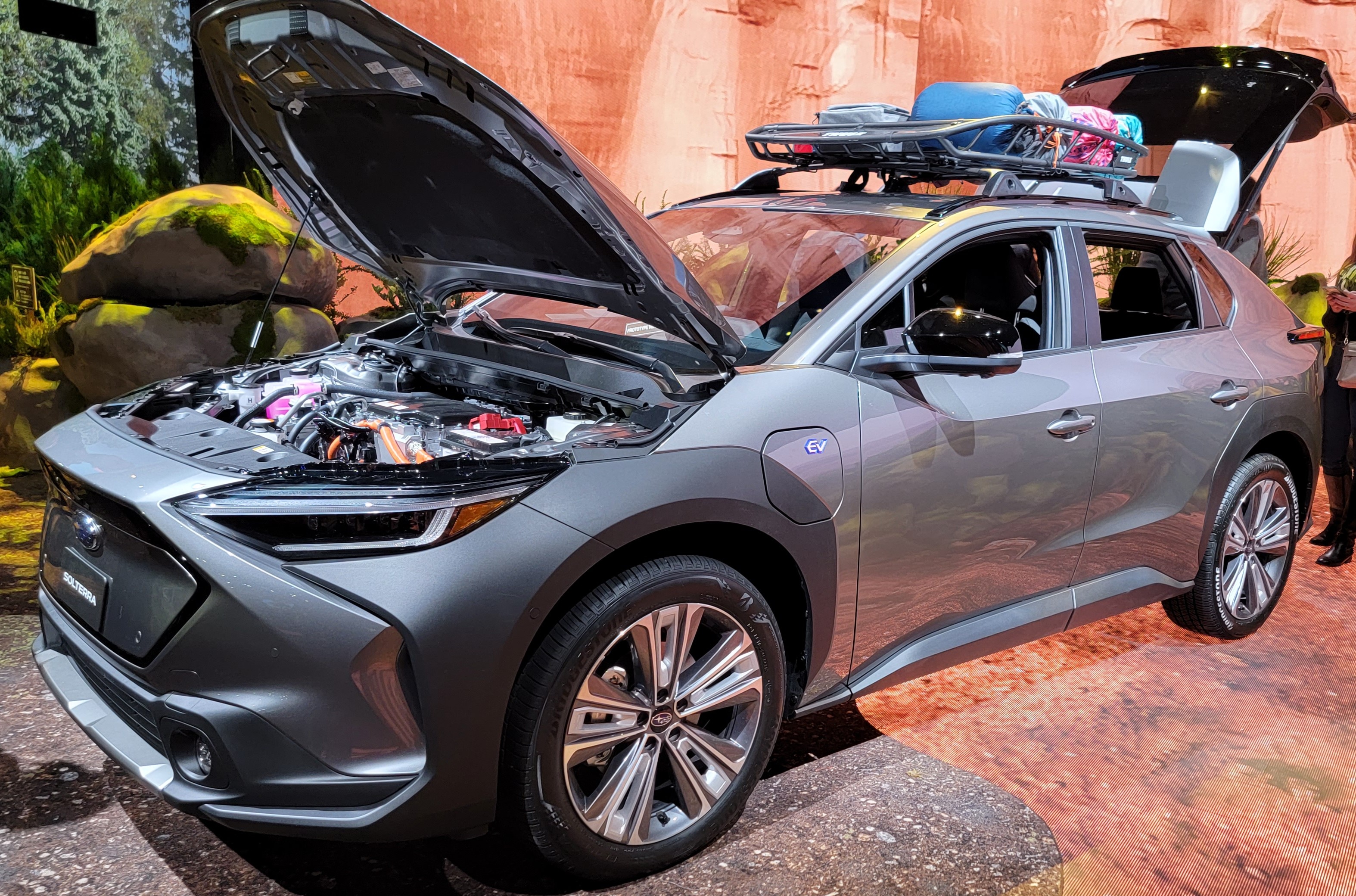
I got a Solterra, which is the exact long-term
36:30
we have now, but I realized that like,
36:33
I really, as like a daily driver, man,
36:35
like I was down with that thing,
36:36
and it's, you know, for my daily usage and the price,
36:41
I couldn't find anything better.
36:42
Well, you wanted to experience owners.
36:44
And I wanted, right, so I already,
36:45
I had a car that I didn't want.
36:48
It was, I inherited after I sold my Miata,
36:50
and I'm just like, I need something,
36:52
but I don't need something flashy.
36:54
And, oh, here's this Solterra.
36:56
What, you don't need any money down?
36:57
What, it's for, you know, like $300 a month?
37:00
And I'm like, let's see how real it is.
37:02
And I get to live with an electric car.
37:03
And, you know, I just wanna see what it's like
37:05
and it's not much money.
37:06
And it's so far, I'm digging it.
37:10
You know, it's one of those things
37:11
where we're gonna see a huge spike in electric car sales
37:15
during the month of September 2025
37:17
because the federal incentives end
37:19
at the end of the month.
37:21
And a lot of people are going to be buying them
37:23
as second cars, where the technology
37:27
and the charging and everything else
37:28
seems to make the most sense at the moment.
37:34
All right, I wanna remind everyone listening
37:37
that, you know, if you're after any kind
37:39
of motor week information or you wanna see our videos,
37:42
they're all available on the Motor Week app.
37:45
It's available from your favorite app store.
37:47
It works on all the popular phones and tablets.
37:51
We will not try and sell you anything.
37:53
Along with all of our road test videos and features,
37:56
it includes a unique power tab
37:59
that allows you to quickly search the specs
38:01
of every clean fuel vehicle, including EVs for sale,
38:06
That's Hybrids EVs, E85, natural gas, you name it.
38:10
It's all under the power tab on the Motor Week app.
38:13
So download the app today and take it with you.
38:17
And if you've got it on your phone,
38:18
you're never gonna miss a mile of Motor Week.
38:21
For the last 43 years, almost as long
38:24
as Motor Week has been on the air,
38:26
if you wanted true off-road capability
38:28
and a SUV with four doors, the truck-based body on frame,
38:32
Toyota 4Runner has generally been towards the top
38:36
of most buyers list.
38:38
Now for 2025, there's a new six-gen 4Runner
38:42
ready to keep that legacy going.
38:44
Greg, let me turn to you
38:46
since you've basically done more off-roading recently
38:50
What's new and what's not new about the 4Runner?
38:54
Well, styling is obviously new,
38:56
but I like to use the term you always talk about.
38:59
It's like evolutionary, not revolutionary.
39:02
It's still very obviously a 4Runner.
39:06
And actually, anecdotal a little bit here,
39:09
I was behind a TRD Pro 4Runner the other day,
39:13
and I didn't realize what that does
39:15
to the new 4Runner shape.
39:17
From behind it looks super aggressive,
39:19
way more aggressive than any 4Runner today.
39:22
I just thought that was very,
39:23
and I wasn't necessarily into it.
39:25
That's the toughest looking 4Runner.
39:28
We didn't have a TRD Pro.
39:31
And which I think that's for the person
39:35
who wants to look rugged,
39:36
but really just goes to the grocery store
39:38
and takes kids to soccer practice.
39:40
That's kind of what you're gonna fall into.
39:42
And yeah, for me, it's the interior updates,
39:45
which the 4Runner severely needed
39:48
because we tested one last year.
39:50
It was the last of the fifth gen.
39:52
Well, that fifth generation was like 15 years ago.
39:55
Yeah, it's been, it was.
39:56
So it definitely needed.
39:57
And they're 43 years.
39:59
Most automakers would have added
40:01
at least two or three more gens to the tablet.
40:04
So you get a nice big screen.
40:07
It's all very functional,
40:08
much more functional than it was before.
40:10
But it's still, again, like it's the whole,
40:12
like they didn't forget their base of owners.
40:16
And a lot of these people
40:17
are gonna be previous 4Runner owners.
40:20
I don't think it really steps on the toes
40:21
of the Land Cruiser that they came out with.
40:23
I think they do separate themselves.
40:27
Land Cruiser, I think still,
40:28
while it did come down marker
40:30
from what the Land Cruiser was when it went away,
40:33
it's still, I feel like,
40:34
in a slightly different category than before.
40:36
It's still a significant step up in price,
40:41
Yeah, and the new turbo, the hybrid powertrain,
40:46
which Toyota you knew was gonna have to drop in
40:48
to a 4Runner, a 2.4 liter turbo four.
40:52
You can get an I-4 Max powertrain in it,
40:54
so that just boosts horsepower and everything about it.
40:57
To me, I think that they, again,
41:02
they checked all the boxes
41:03
of what a 4Runner needs to be.
41:06
As in, it's a little bit rugged,
41:09
but now it just probably offers the most tech it ever has.
41:11
I think it's finally caught up,
41:13
because now, I think a couple of years ago,
41:15
you could have gotten away with coming out something
41:17
that was a little lo-fi on the inside.
41:18
Now I think everything needs to be high tech,
41:21
and I think they did that with the new 4Runner.
41:24
Yeah, and they also added 1,000 more pounds
41:26
to the towing capacity, up to 6,000 pounds now.
41:31
It's like the perfect time to return it,
41:33
because everybody's into these soft rotors,
41:36
which I wouldn't call the 4Runner a soft rotor,
41:38
because it actually walks the walk
41:40
in terms of off-roading.
41:41
But everybody goes out and wants to do activities
41:45
on the weekend, camping activities,
41:46
so that extra 1,000 pounds of towing is a big deal,
41:50
because a lot of people are out towing
41:52
and taking their toys out to the lake.
41:54
Yeah, my experience in it,
41:56
I thought the seats were really, really comfortable.
41:58
We had the 20-inch tire,
42:00
so the ride was a little stiffer,
42:01
but you put it in the comfort mode,
42:03
and it tweaked that a bit.
42:05
It has a better seating position.
42:08
You just feel more comfortable with your legs.
42:10
They're not quite as stretched as far out
42:13
That's always my view,
42:14
if you sit with your legs straight in front of you.
42:16
It was a lot of fun to drive though.
42:18
What's the one thing, though,
42:19
for a lot of 4Runner fans that didn't change?
42:23
The electric rear window.
42:24
It's a huge deal for me.
42:26
No hatching, no upward-opening hatch,
42:29
just a nice rear winner.
42:30
Yeah, it wouldn't be a 4Runner without it.
42:32
They would, I can't imagine what kind of backlash
42:34
they would have faced if they would have come out
42:36
It would have been just like everything else.
42:42
We're gonna wrap things up in just a second,
42:44
but I do think we need to pause
42:46
on this very special episode and see,
42:48
starting off the 45th season,
42:50
does anybody around the table have a rant or a rave
42:53
that they want to throw out there?
42:55
Something that, you know, we've had a summer of driving
42:59
and some of it's been pretty adventuresome.
43:02
So I traveled to New York quite often
43:04
and last weekend I was actually in California
43:07
and they do this in both states
43:09
and I think it's legal in California,
43:10
but I'm not sure in New York.
43:11
Lane splitters, motorcycle lane splitters.
43:14
Traffic comes to a halt, you know,
43:16
we're going five miles,
43:17
all of a sudden somebody's driving up,
43:19
riding up their bike, 20, 30 miles.
43:23
I do not understand why that is legal.
43:26
Now I understand that if you're going the right speed
43:29
and you're playing as safe as a motorcyclist,
43:31
probably as safer that they're not sitting in traffic,
43:34
but far too many motorcyclists
43:35
are just lane splitting dangerously, I think.
43:40
Don't open that door without looking.
43:43
The first time it ever happened to me in California,
43:45
I was totally in shock.
43:47
I actually didn't realize it was legal.
43:48
Also, and actually in some of the New York trips
43:51
I've been taking recently,
43:52
the people driving on the shoulders.
43:54
Oh, passing on the shoulders.
43:56
Yeah, just driving on the shoulders
43:57
and no one's stopping them.
43:58
I see cars, I see cops and no one's stopping.
44:01
Every once in a while,
44:01
10 cars are driving by,
44:02
flying at 30 miles an hour,
44:04
everyone else is sitting still.
44:05
My wife almost had an anxiety attack
44:07
that cars are just flying by us.
44:10
Drives me nuts a little.
44:12
It does seem that we,
44:13
even if it's not illegal,
44:15
we've lost pretty much most of the decorum on the highway.
44:18
You gotta remember, folks out there,
44:20
there's somebody else driving around beside you.
44:22
So anyway, that's my rent and raise.
44:23
That's a good one, anyone else?
44:26
I'll save mine for another time.
44:27
All right, I'm gonna hold off.
44:28
All right, well we,
44:30
I think we basically packed about as much
44:32
into this podcast as we possibly could
44:35
and it was a lot of fun.
44:36
Many thanks to Dave Scrivner,
44:37
Brian Roberts and Greg Carlos.
44:40
For helping us all kick off
44:42
this 45th season of podcast for Motor Week.
44:44
And thank you for listening to our podcast today.
44:47
If you're wondering what time Motor Week
44:49
can be seen on your local public television station,
44:52
go to our website MotorWeek.org,
44:54
click on the tab, watch Motor Week,
44:56
and then enter your zip code
44:58
for days and times in your area
45:00
or hop over to our Cable Partner Racer Network
45:03
at racer.com for their schedule,
45:05
as well as the latest in motorsports action
45:08
from around the globe.
45:10
You can also watch current episodes of Motor Week,
45:12
another fine PBS programming anytime, anywhere
45:16
on the free PBS app.
45:18
Download the app now on your smartphone, tablet,
45:22
And we're proud to say that recent seasons
45:25
of Motor Week are now available
45:26
on the free streaming service, Tubi.
45:29
All of the individual road tests
45:31
and features are also available
45:33
at youtube.com slash Motor Week.
45:37
If you've got a screen, you can watch Motor Week.
45:40
Thanks to the folks behind the scenes today,
45:43
Jessica Ray, our podcast producer,
45:45
audio engineer, Nicole Phillips-Naylor,
45:48
podcast creator, Bob Mixter.
45:50
Remember for the fastest way to find car reviews,
45:53
new and used, be sure to include Motor Week
45:56
in your search engine.
45:59
Thanks for being a part of Motor Week.
46:02
You've been listening to the podcast of Motor Week,
46:05
television's original Automotive Magazine.
46:08
Motor Week is made possible by AutoValue
46:11
and Bumper2Bumper and TireRack.com.
46:14
Visit our website at MotorWeek.org
46:17
for more car reviews and the latest automotive news.
46:20
And watch Motor Week,
46:21
television's longest running Automotive Magazine series
46:24
each week on your local PBS station or the Motor Week app.