Melanie White, the fourth-generation leader of Hellwig Products and chair of SEMA, shares insights on running a successful manufacturing business and organizing the massive SEMA show. The discussion highlights Hellwig's legacy in suspension components, the evolution of their products, and the unique manufacturing processes that set them apart. Melanie also addresses the challenges facing the aftermarket industry, including the rise of electric vehicles, and SEMA's advocacy efforts for automotive enthusiasts. Her personal stories about growing up in the automotive world add a relatable touch to the conversation.
Today on That Car Show, we’ve got Melanie White.Melanie’s the fourth-generation leader of Hellwig Products, a legacy California company known for designing and manufacturing high-quality, American-made suspension components. She’s also the Chair of SEMA: the Specialty Equipment Market Association. You know SEMA, and, the giant SEMA Show that takes place each year is Vegas. What does it take to run a thriving manufacturing business in 2026? And what goes into pulling off one of the largest automotive events on the planet? We also dive into the challenges facing the aftermarket, the whole EV thing, and SEMA’s advocacy on behalf of enthusiasts like us. It’s Melanie White… and it’s That Car Show.
"...SEMA is advocating for us. Today on that car show, we've got Melanie White."
SEMA is a group that helps businesses that make and sell car parts and accessories. They work to support these companies and promote their interests in the automotive world.
SEMA stands for the Specialty Equipment Market Association, which is an organization that represents the automotive aftermarket industry. They advocate for the interests of companies that manufacture and sell automotive parts and accessories.
"Melanie's the fourth generation leader of Hellwig Products, a legacy California company known for designing and manufacturing high quality, American-made suspension components."
Hellwig Products makes parts that help improve how cars handle and ride on the road. They focus on making these parts in the USA and are recognized for their quality.
Hellwig Products is a company based in California that specializes in designing and manufacturing suspension components for vehicles. They are known for their high-quality, American-made products that enhance vehicle performance and handling.
"...the whole EV thing, and SEMA's advocacy on behalf of enthusiasts like us."
An EV, or electric vehicle, is a car that runs on electricity instead of gasoline. They're becoming more popular as people look for cleaner ways to drive.
EV stands for electric vehicle, which is a type of vehicle that is powered entirely or partially by electricity. The rise of EVs is transforming the automotive industry, leading to new technologies and market dynamics.
"...best known for designing and manufacturing vehicle suspension and load control components for cars, trucks, SUVs, and off-road vehicles."
Vehicle suspension is the part of a car that helps it stay smooth and stable while driving. It connects the car to its wheels and helps absorb bumps in the road.
Vehicle suspension refers to the system of components that connects a vehicle to its wheels, allowing for better handling, comfort, and stability. It plays a crucial role in how a vehicle responds to road conditions and impacts.
"And he always had sway bars on his vehicles. So yeah, so that was my early introduction."
Sway bars are parts of a car's suspension that help keep it stable when turning. They connect the wheels on either side of the car to reduce how much the car leans during a turn.
Sway bars, also known as anti-roll bars, are components of a vehicle's suspension system that help reduce body roll during cornering. They connect the left and right wheels, improving stability and handling.
"...if it has too much weight in the back, it sags. And so it was really obvious. They'd go up to the door and say, hey, I can fix that problem."
Helper springs are extra springs that help support a vehicle when it has a lot of weight in the back. They stop the car from sagging too much when it's loaded up.
Helper springs are additional springs installed alongside the main springs of a vehicle's suspension system. They help to support extra weight, preventing the vehicle from sagging when loaded.
"...most vehicles came with a leaf spring on the vehicle. So a vehicle with a leaf spring is potentially,..."
A leaf spring is a metal spring used in the suspension of some cars and trucks. It helps support the vehicle's weight and allows it to move smoothly over bumps.
A leaf spring is a type of suspension component commonly used in vehicles, particularly in older models. It consists of several layers of metal strips (leaves) that are stacked together to form a spring, providing support and flexibility for the vehicle's weight and movement.
"...but we have progressive rated springs now. So the Helper Spring sits on top of this spring and they don't touch at the end until weight comes on."
Progressive rated springs are special car springs that get stiffer as they are compressed. This helps the car ride smoothly when it's light but gives more support when it's heavier, making it better for handling.
Progressive rated springs are designed to provide a variable spring rate, meaning they become stiffer as they are compressed. This allows for a smoother ride under light loads while providing additional support when the vehicle is loaded, improving handling and comfort.
"...most passenger cars, they all have coil springs, even some of the trucks have coil springs. So our Helper Springs fit with all of the..."
Coil springs are metal springs that look like coils or spirals. They help cars ride smoothly by absorbing bumps in the road and keeping the car balanced.
Coil springs are a type of spring used in vehicle suspension systems to absorb shocks and support the weight of the vehicle. They help maintain ride height and improve handling by allowing the wheels to move independently over bumps and uneven surfaces.
Oshkosh is a company that makes special vehicles like fire trucks and military trucks. They are known for building tough and reliable vehicles for specific needs.
Oshkosh Corporation is a manufacturer known for producing specialty vehicles, including fire trucks and military vehicles. They are recognized for their innovative designs and engineering in the vehicle industry.
"So we have a ranger that I actually bought and my son drives it now."
The Ford Ranger is a small truck that can be used for many purposes, like carrying things or off-roading. It's known for being tough and reliable.
The Ford Ranger is a compact pickup truck known for its versatility and capability. It's popular for both work and recreational use, making it a common choice among truck enthusiasts.
"unless he had Helwig's suspension on it because it's so much weight up top."
Helwig makes parts that help improve how a car handles and rides, especially when carrying heavy loads. They focus on making vehicles safer and more stable.
Helwig is a company that specializes in aftermarket suspension products, including sway bars and suspension kits designed to improve vehicle handling and performance.
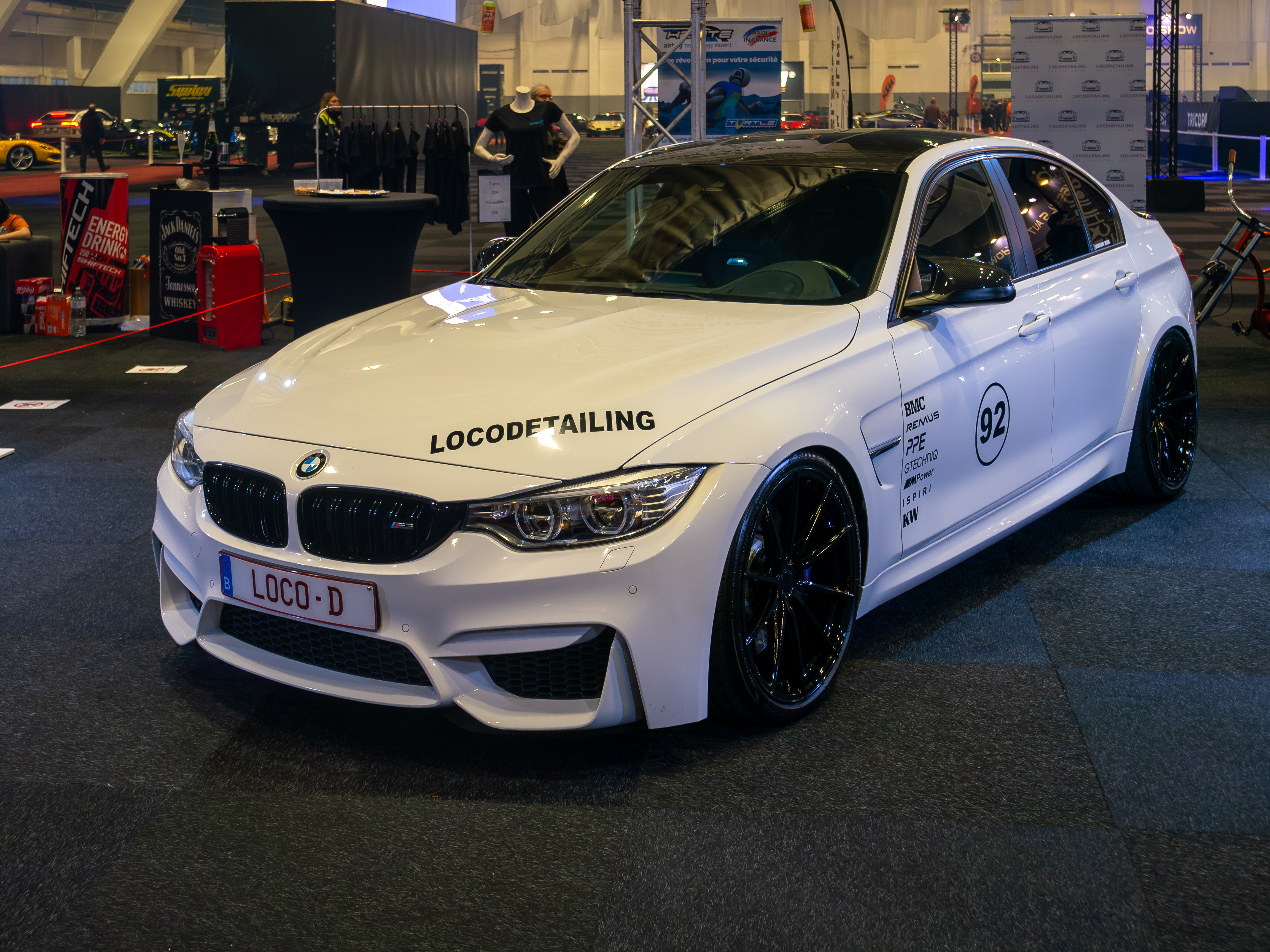
"...I have them on my M3 too. So I'm going to go check those as soon as we're done here..."
The BMW M3 is a fast and sporty car that is part of the BMW 3 Series. It's designed for people who enjoy driving and want a car that performs well on the road.
The BMW M3 is a high-performance version of the BMW 3 Series, known for its sporty handling and powerful engines. It's a popular choice among car enthusiasts for its blend of performance and everyday usability.
"...you see these people that clearly have these rigs, a lot of land cruisers, pathfinders, four rudders, and they're spick and span, right?"
The Nissan Pathfinder is a medium-sized SUV that can carry families and gear. It works well for both city driving and outdoor trips, making it a popular choice for many.
The Nissan Pathfinder is a midsize SUV that offers a balance of off-road capability and family-friendly features. It is designed for versatility, making it suitable for both daily driving and outdoor adventures.
"...you see these people that clearly have these rigs, a lot of land cruisers, pathfinders, four rudders, and they're spick and span, right?"
The Toyota Land Cruiser is a big, tough SUV that can handle rough roads and off-road adventures. It's known for being reliable and comfortable, which is why many people like to drive it.
The Toyota Land Cruiser is a large SUV known for its off-road capabilities and durability. It's often favored for its reliability and luxury features, making it a popular choice among those who need a vehicle for both urban and rugged environments.
"...We used to have a F-150 and I've used both of those in that rooftop tent scenario..."
The Ford F-150 is a large pickup truck that can carry heavy loads and is popular for work and recreation. It's known for being strong and reliable.
The Ford F-150 is a full-size pickup truck that is one of the best-selling vehicles in the United States, known for its power, towing capacity, and versatility.
"...in that rooftop tent scenario, which is actually way better than setting up a tent yourself..."
A rooftop tent is a tent that you can set up on top of your car. It makes camping easier because you don't have to set up a regular tent on the ground.
A rooftop tent is a type of camping tent that is mounted on the roof of a vehicle, allowing for easier setup and protection from the ground elements.
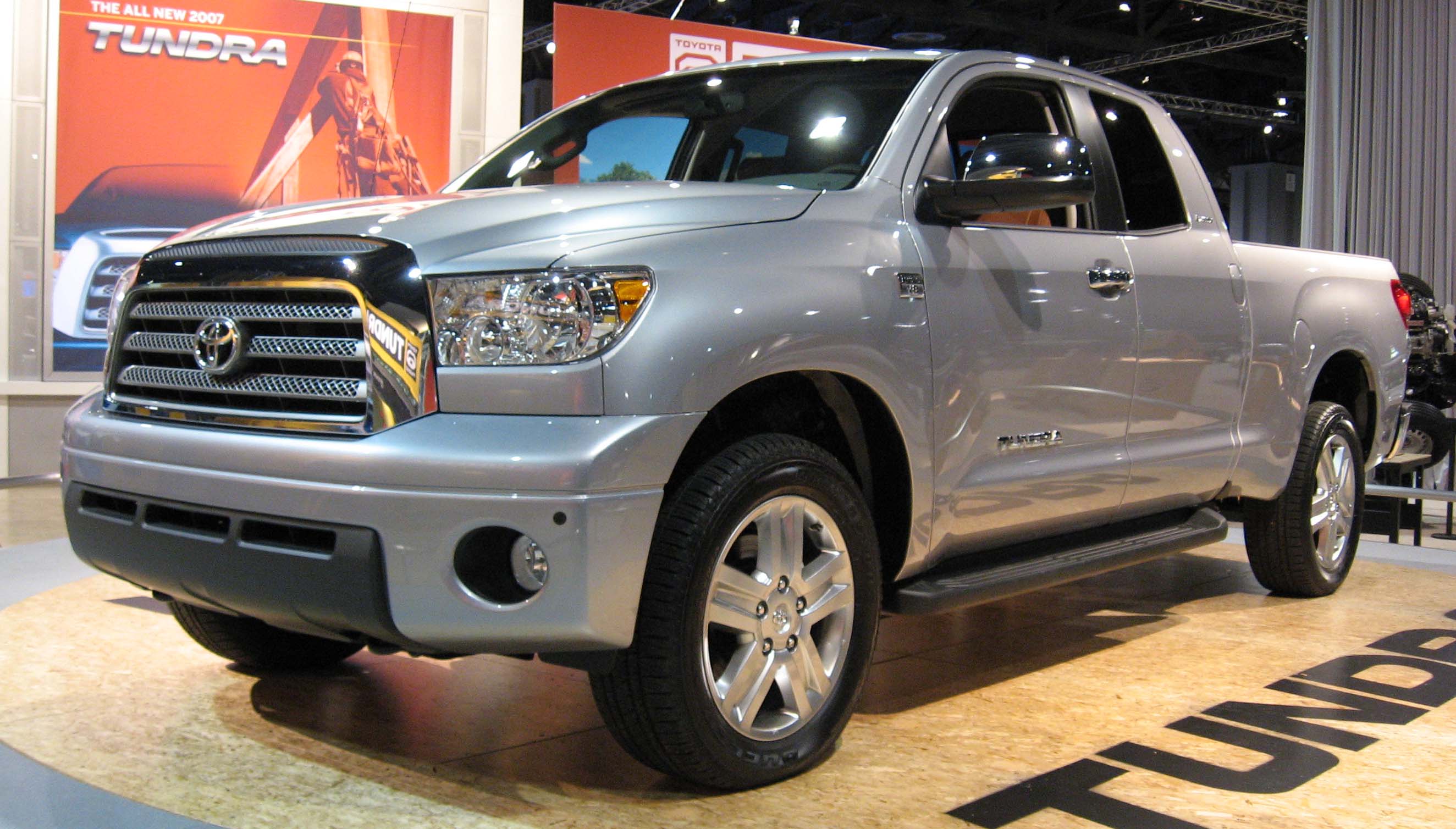
"So a lot of the Toyotas are big. So like forerunners, we're seeing that Tundras, Tacomas."
The Toyota Tacoma is a smaller truck that can handle off-road driving well, which is why many people use it for outdoor adventures.
The Toyota Tacoma is a compact pickup truck that is well-regarded for its off-road capabilities and versatility, making it a popular choice for overlanding.
"...and it throws a camera off so like SEMA is really working hard on that aspect of like the ADAS side of the business too"
ADAS means Advanced Driver Assistance Systems. These are smart technologies in cars that help keep drivers safe, like alerts for when you drift out of your lane or automatic braking if you get too close to something.
ADAS stands for Advanced Driver Assistance Systems, which are technologies designed to enhance vehicle safety and facilitate driving. These systems include features like lane departure warnings, adaptive cruise control, and automatic emergency braking.
"...where there's hydrogen vehicles that are showing at the show. There's new fuel technologies that are coming out."
Hydrogen vehicles are cars that run on hydrogen fuel instead of gasoline. They create electricity from hydrogen, which makes them cleaner for the environment.
Hydrogen vehicles use hydrogen as a fuel source, converting it into electricity to power an electric motor. This technology is part of the broader shift towards cleaner transportation options, aiming to reduce environmental impact.
"And before when you could just get a carburetor tune or, you know, done whatever, that was everybody could do it..."
A carburetor tune is when a mechanic adjusts the part of the engine that mixes air and fuel to help the engine run better. This was something many people could do themselves in older cars.
A carburetor tune refers to the adjustment of a carburetor to optimize the air-fuel mixture for better engine performance and efficiency. This process was more common in older vehicles before the widespread adoption of fuel injection systems.
"...but now with proprietary software and all the stuff that's going on..."
Proprietary software is special computer programs that only one company can use. In cars, this software helps mechanics diagnose problems, but it can make it hard for others to work on the car.
Proprietary software refers to software that is owned by a company and is not available for public use or modification. In automotive contexts, this often relates to the software used for vehicle diagnostics and tuning, which can limit the ability of independent mechanics to make adjustments.
"...a new car is gonna have automatic brake. Yeah, in force too, right?"
Automatic braking helps prevent accidents by applying the brakes for you if the car detects something in your path. It's a feature found in many new cars to keep drivers safe.
Automatic braking is a safety feature in modern vehicles that applies the brakes automatically to prevent or mitigate collisions. It uses sensors and cameras to detect obstacles and can engage the brakes without driver input.
"...when they had the FMVSS126 with the electronic stability control on it."
FMVSS 126 is a safety rule in the U.S. that requires cars to have a system that helps keep them stable, especially in slippery conditions. It's designed to help prevent accidents by making it harder for the car to lose control.
FMVSS 126 refers to the Federal Motor Vehicle Safety Standard that mandates the inclusion of electronic stability control (ESC) in vehicles. This standard aims to improve vehicle stability and reduce the risk of skidding and rollovers.
"...the best to modify, with lift kits and things like that."
Lift kits are parts you can add to a car to make it taller. This helps the car go over rough ground better and fit bigger tires.
Lift kits are aftermarket modifications that raise the height of a vehicle's suspension. They are commonly used in off-road vehicles to improve ground clearance and allow for larger tires.
"...and the Porsche Ferraris and the, they do that very well and they do the refurbishing,..."
Porsche is a well-known car brand from Germany that makes fast and luxurious cars. They're famous for models like the 911, which is a sports car.
Porsche is a German automotive manufacturer known for its high-performance sports cars, SUVs, and sedans. The brand is particularly famous for models like the Porsche 911 and the Porsche Cayenne.
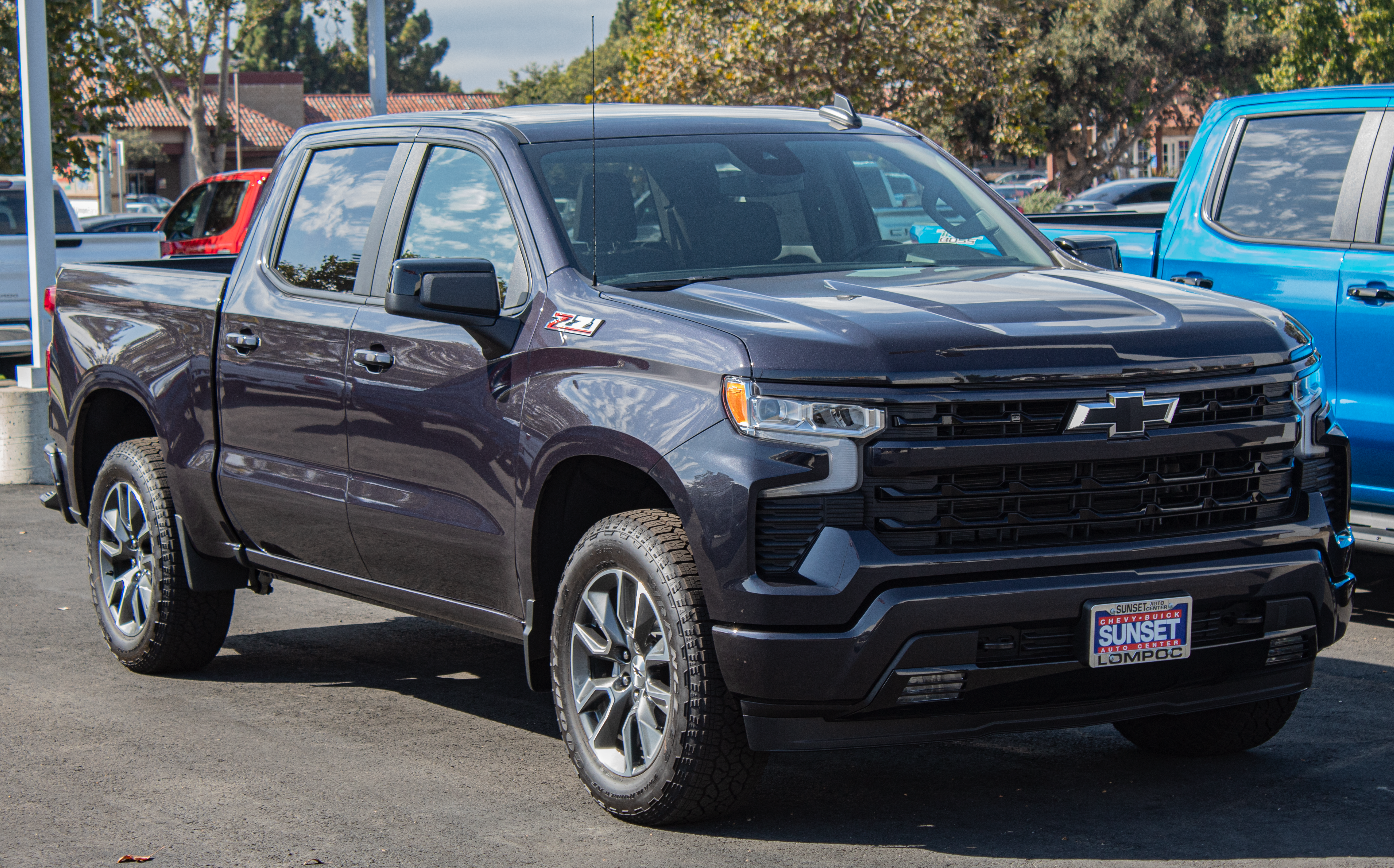
"... did trade, um, I traded her in for a, um, diesel Silverado. Um, so I'm now driving a zero to diesel Silvera..."
The Chevrolet Silverado is a big truck that people often use for work or to haul things. The diesel version is special because it can pull heavier loads and uses less fuel than regular gas engines.
The Chevrolet Silverado is a full-size pickup truck known for its durability, performance, and versatility. It has been a popular choice for both work and personal use, particularly in its diesel variant, which offers enhanced towing capacity and fuel efficiency.
"...r the occasional Buick Riata. Lindsay can spot a PT cruiser from a mile away. So SEMA chair, Melanie White, ..."
The Chrysler PT Cruiser is a small car that looks a bit like an old-fashioned vehicle. It's known for having a lot of room inside, making it a good choice for families or anyone needing extra space.
The Chrysler PT Cruiser is a compact car that gained popularity in the early 2000s for its retro styling and unique design. It offers a spacious interior and has a cult following due to its distinctive look and practicality.
"...ke ranger overlanding. And I'm not like the, the Caprice classic with the, the headland liner that come do..."
The Holden Caprice is a large, fancy car that offers a lot of comfort and space inside. It's often used by people who want a smooth ride and nice features, like a luxury car.
The Holden Caprice is a full-size luxury sedan that was produced in Australia, known for its spacious interior and comfortable ride. It was often used as a chauffeur vehicle and is appreciated for its powerful engine options and high-end features.
"... is the same four three in the type food and the cyclone. And they will like, that's a great ad."
The GMC Cyclone is a fast truck that was made in the 1990s. It has a powerful engine that makes it quicker than most trucks, and because it’s rare, many people find it interesting.
The GMC Cyclone is a high-performance pickup truck that was produced in the early 1990s, known for its turbocharged V6 engine and sporty handling. It was one of the fastest production trucks of its time and has become a collector's item due to its rarity and unique capabilities.
Select text to request an explanation
The show is what we do one week out of the year, right?
The other 360 days out of the year,
SEMA is advocating for us.
Today on that car show, we've got Melanie White.
Melanie's the fourth generation leader
of Hellwig Products, a legacy California company
known for designing and manufacturing high quality,
American-made suspension components.
But she's also the chair of SEMA,
the specialty equipment market association.
You know SEMA, and the giant SEMA show
that takes place each year in Vegas.
What does it take to run a thriving manufacturing business
in 2026, and what goes into pulling off
one of the largest automotive events on the planet?
We also dive into the challenges facing the aftermarket,
the whole EV thing, and SEMA's advocacy
on behalf of enthusiasts like us.
It's Melanie White, and it's that car show.
Hey, it's that car show,
and we've got Melanie Hellwig White with us today.
Melanie is the fourth generation leader of Hellwig Products,
a legacy California company best known for designing
and manufacturing vehicle suspension
and load control components for cars, trucks, SUVs,
and off-road vehicles.
Hellwig is a major player in the space,
but Melanie's also the chair of SEMA,
the specialty equipment market association,
whose annual SEMA show draws something like 100,000 people
from all over the world to Las Vegas
to check out the latest automotive performance
products and trends.
It's a very big deal, and so is Melanie,
and I'm here with Michael and Lindsay today as well.
We're really happy to have Melanie join us on that car show.
Thank you, Melanie.
I'm so excited to be here, thank you.
Yeah, we're glad to have you,
and so you literally grew up in the automotive industry.
So tell us about your family business, Hellwig Products,
and what it was like being so immersed in this world,
literally from day one, I guess.
Yeah, so I have been, you know, my dad always,
what I knew about the company was my dad always drove
a really cool truck.
So I was like, I'm in, I like that.
But, you know, we kept the family business
pretty separate from our family life.
He would come at night and sometimes like work
on projects around here, and you know,
my sisters and I would like have fun with the phones
and, you know, pretending to drive forklifts
and things like that.
But really, my introduction to the company
was my dad and his vehicles,
and, you know, he did this thing called bat turns,
where he would just like turn really quickly.
And it was, the vehicle handled so well.
So that was my first experience with like how well,
a vehicle with like really good suspension handled.
And he always had sway bars on his vehicles.
So yeah, so that was my early introduction.
But there was never this like come work
for the family business.
There wasn't, you know, encouragement in that way.
It was always, you know, find your own path.
And then my path did lead here.
I love that.
I love the idea that he's demonstrating the like skill
and the quality of the products
with very formative experiences
and something that you remember so fondly.
That's so cute.
It's the best cure for motion sickness, really.
Start him young.
Yeah, I don't know.
I got motion sickness all the time when I was young,
but now I understand like you need to have
the really good suspension on your vehicles
to be able to prevent that.
Oh yeah.
Absolutely.
Now the company's been around for four generations.
Has the product line always been kind of similar
or what did the company start producing from the beginning?
So we just, we're turning 80 this year.
So congratulations.
Yeah, in 1946 started as a corporation,
but had the idea earlier in 44,
but we were in, we couldn't get steel.
You know, all of our goods were going to the war efforts
and not through making products.
So in 46, they could get steel
and they started manufacturing at night in a garage.
After hours.
So my great-grandfather had a full-time job
and my grandpa was a senior in high school.
So they would manufacture.
Yeah.
And they would sell door-to-door on the weekend.
So my great-grandfather would go knock on the door.
It was really obvious if you needed a hell way
because we started with helper springs.
And a vehicle, if it has too much weight in the back,
it sags.
And so it was really obvious.
They'd go up to the door and say,
hey, I can fix that problem.
And they would install, my grandpa,
being a senior in high school, would install the product,
lay on his back in their driveway and install it,
all for $7.
And I think about that and I think,
well, I don't even think I get to buy anything
for $7 more as an organization.
Let alone with installation included.
Yeah, exactly.
And delivery.
I get shows of it, you don't even have to move.
That was the original free shipping.
Yeah, exactly.
So that's how Helwig got started.
So when my grandpa used to come into Helwig years ago
when he was still alive, he would wanna know
where different pallets were going
because that's where he started,
was at this very small level
and then would get really excited,
oh, that's going across the country,
oh, this one's going internationally sometimes.
So he was always really in awe of that.
But I think that's because that's where he started,
was in that door-to-door manufacturing in a garage.
That is wild.
I love the name too, The Helper Spring.
It's so evocative and it's very British
because it's quite literally what it does, which I love.
I know.
Yeah, I love that too.
So can you describe, for the people that don't know,
can you describe what that is
and how it works a little bit?
Yeah, for sure.
So, but definitely in the 40s,
most vehicles came with a leaf spring on the vehicle.
So a vehicle with a leaf spring is potentially,
most of the OEs, they manufacture to,
I always say the middle, right?
We're kind of on this fringe.
We always like to play in that.
And so if you're really gonna test your vehicle
and put extra weight, different things like that,
and back in the 40s,
they would have passenger cars where everything.
Now we have trucks and we have all of these different
like vehicles that are more specific.
But back in the 40s, there were passenger cars
and they had leaf springs on them.
And The Helper Spring sits on top of the leaf spring
and adds that extra support.
So, and then we have now,
I was starting to explain what we have now,
but we have progressive rated springs now.
So the Helper Spring sits on top of this spring
and they don't touch at the end until weight comes on.
And so then they slowly touch
and it becomes like a progressive rate
as you load the vehicle.
So you're not stuck with all of that extra spring rate
right away.
So, but most vehicles now, most passenger cars,
they all have coil springs,
even some of the trucks have coil springs.
So our Helper Springs fit with all of the
the leaf spring applications.
We have something for all of that.
But really where Helwick has grown is in the sway bar market.
So we launched in the 60s sway bars into our lineup.
So something that's unique about Helwick
is where heat treated and hot formed.
So we have big old furnaces, 2000 degrees.
It gets hotter in the summer
and then you sit in front of a furnace too.
So that's a real fun.
It's like your own sauna at work.
It definitely is.
Yeah, so this time of year,
I love to hang out with the hot forming guys
because it's like, it's cold here.
Yeah, but in the, in the summer, I'm like,
well, but it's fine.
Like I have the toughest guys that work for me.
Yeah, they are so tough.
That's awesome.
And, but we have 2000 degree furnaces.
So we're heat treated and hot formed,
which we bend the metal when it's red hot.
And then we put it into an oil bath
and then it cools slowly.
And then it goes into a draw furnace from there.
So we have those capabilities here
and then we had those in the 60s.
And so that's why we brought up sway bars into our lineup
because it fit into what we were doing.
So we heat treat and hot form our sway bars,
which not very many people do in the market.
We're really the only one that does that exact manufacturing.
So it means that we get business from different OEs.
We get to make sway bars for these,
they're fire trucks, but they're airport fire trucks.
And it has like three sway bars on it.
And they're massive.
They're like three inch sway bars
because it's all of that water.
Water's so heavy and then like move quickly.
So we make all kinds of different sway bars.
We have our aftermarket side, our OE side of the business.
And then we also private label.
Is that Oshkosh by chance?
It is.
You work with it?
Okay, sure.
Yeah, I'm a Wisconsin guy originally.
So I know Oshkosh.
Yeah, so that's super cool.
And Pierce, so yeah.
Oh yeah, and Appleton.
Yeah, absolutely.
That's awesome.
My secret is before I was a car guy,
I was a kid who's really into fire engines.
Oh my God.
There's probably no more about that.
Fire engines were your gateway vehicle.
Yeah, that was my, yeah.
That was your first?
Yeah, you're here.
Then you get to about 12
and cars seem to be the move, right?
Okay, yeah.
Sorry, it's hard to pick up girls in a fire engine.
It depends on what kind of girls you're looking for, right?
I guess, I mean, you can pick them up cheap
at the local county auctions, I mean, yeah.
Maybe I've done it all wrong.
Yeah, aren't Oshkosh, there's multi-million dollar
machines, right?
They're just crazy, crazy, engineered things.
Yeah.
What are some of the other bigger markets for you?
Is it overlanding anymore?
Oh, definitely.
So overlanding, we call them the overloader.
So, you know, they put all of their weight up high.
Everything.
They want to bring their whole house with them, literally.
Yeah, I mean, we have those vehicles too,
so we live in that space.
But yeah, so it's any weight up high
and we sort of, we build these project vehicles to show
just how much weight you can put on them
and just what our products do.
So we have a ranger that I actually bought
and my son drives it now.
And I would never let him do it
unless he had Helwig's suspension on it
because it's so much weight up top.
It's just a lot of weight overall.
So yeah, they're definitely overloaders
and our products help with that quite a bit, so.
That's the funniest name.
So can you talk about what's the advantage you mentioned
the manufacturing process is unique to the Helwig products
like the, and forgive me, I know you said
the furnaces are incredibly hot.
So what are the advantages
of manufacturing the products that way?
Yeah, so it's longer, it's durability.
So on all of our steel products,
we have a lifetime warranty.
And we can do that because of our manufacturing process
because it just adds to that durability.
What do your competitors do?
I'm just curious, what's their lesser way of doing this?
They do a lot of cold forming.
So they cold.
Okay, okay.
Is that forged then or what's that process?
What's cold forming?
It's just.
So it's usually like a tube bender.
So they'll take, you know, just a bar stock
and then the two, the bender, I mean, we have that too.
So we have both in our lineup.
So if you want, I can provide whatever you need.
Sure.
But the bender will, you know, bend different shapes
at whatever you're needing for the, so you're, yeah.
And it allows a little bit more flexibility in certain bends.
So some of them more, the ones that require extra
like sharp bends, we will sometimes do that
on the tube bender versus hot forming it.
And that's really on the car side of the market
because the truck, the OE side,
it's very much that heat treated hot formed
where like the car, they're not moving as much weight around.
And as I, if I remember my high school chemistry,
like you're actually changing the molecular structure
as you form it.
Like cold, it's just kind of bending around
versus heat treated and heat formed.
You're moving those, the grains to be more parallel.
So it's more linear and it doesn't have a chance
to cheer off and break and fatigue.
Like, you know, something that you just kind of bend
over your knee and kind of like almost like a paper clip,
right?
You can kind of work it just enough and then it snaps
versus if you heat it, you can kind of shape any,
make it any shape you want.
So there's a, there's a molecular change going on there too,
if I remember correctly.
You are totally right.
Yeah.
Michael, in your coveralls there in your garage,
you're like our own little Mr. Wizard.
I love it.
Well, I mean, if you remember,
it's a fascinating process to watch.
And I don't know, I mean, obviously proprietary stuff
notwithstanding to demonstrate how, how much force,
how much pressure, how much heat, how much like by the way,
just space because you may have a three foot wide bar,
but you know, the, the line is huge to, to do all,
it's a fascinating thing.
It's just the mass, like, I mean, you've got to have hundreds
of thousands of square feet of manufacturing space
to, to, to accomplish what you do.
So we're right under, we're right around 80,000 square feet.
Okay.
So, yeah.
Yeah.
It's still, it's still a lot,
it's still a lot of space to, to be moving stuff around,
big heavy bar stock, a lot of, you know, cold rolled steel,
it has to be uncoil, because it comes into coils.
For us, so we get just a bar stock in it,
like anywhere from like, it's about 20 feet.
I was going to give you like, Oh, this is my, what I look for,
but it's about 20 feet that we get both flat stock
and round stock in.
And then we cut it, we coin it.
So that's another part of what we do in the heat treating
hot forming process is that we coin the ends.
So they're not welded on where some, some folks in the market
weld on the end.
So we just, we like to minimize any sort of, you know,
risk of, of something not working properly.
I've broken welded on, on sway bars on, on race cars.
So like, yeah, the corning, they, they flatten it guys,
they flatten it rather than it like be a separate piece
that welds on to the bar.
So it's still part of the bar, but they just squish it
so that it, you know, it can be the mount versus a lot
of people will just cut the end, shape it,
and then weld it together.
And that welds the only thing really,
the irony of the weld is what's holding the whole thing
together by and large rather than it being the entire
structure, integrity of the bar.
Yeah, right, right.
Coining is the way to go, obviously.
Very much so.
We believe that.
If you ever look at a bar and you see a weld around it,
you just stay away.
I mean, these are, these folks are big Porsche people.
And so, I mean, if you go look at the sway bar
on your Porsche, it definitely doesn't have welded ends.
No, I believe it.
Yeah, you know.
Well, I have them on my M3 too.
So I'm going to go check those as soon as we're done here.
Yeah. And depending on which aftermarket companies
you buy from, sometimes they, you know,
and it's obviously cost, you know, and engineering,
but it doesn't mean they're bad.
They just, you know, for someone like Melanie to hold,
have a lifetime warranty on something,
not too many people can offer that
because they don't have, they don't have the faith
in the product.
That's right.
That's a lot.
Not that it's a bad product, it's just, you know,
it just can't keep up with time and abuse.
Well, it's always a good sign when a company is willing
to lifetime warranty their own products.
Like it gives you a lot of confidence
as the buyer and the user.
Absolutely.
Melanie, what do you attribute?
Now I'm going to say the overloaders.
What do you attribute the low-handing?
I love that phrase.
In LA, especially people, I'm sorry to diverge,
but you see these people that clearly have these rigs,
a lot of land cruisers, pathfinders, four rudders,
and they're spick and span, right?
And you know, they've never gone off-road with these things,
but they are loaded to the hill with 36-inch tires
and it is clean as could be.
And I mean...
They want to, though.
You can tell how badly they want to.
But I mean, in some ways, that's the target market
because you never have to warranty that
because it never goes off-road.
But you know you're never going to get a warranty claim,
at least.
You are an overlander, though, I understand.
I mean, you actually, you know,
you practice what you preach, yeah?
I do, yep.
Yeah, so we have a ranger in our lineup.
We used to have a F-150 and I've used both of those
in that rooftop tent scenario,
which is actually way better than setting up a tent yourself.
I just recently did a trip with a girlfriend to Joshua Tree
and we stayed in the rooftop tent and it was amazing.
It was one of those, like, dark nights where you...
You can actually see the stars.
Yeah, so you could see the stars.
It was amazing.
So I definitely...
It sounds magical.
It was amazing.
And it's really cool because I get kind of numb.
I'm sure you guys feel this,
but I get a little bit like, yeah, this is...
Yeah, that's cool.
Yeah, and my girlfriend had never...
She's very adventurous,
but had never really been exposed to that
overlanding kind of camping world.
And she was like, wait, you know the person that makes this?
You know, you know.
That's cool.
Yeah, so it was like, oh yeah, this is really cool.
Like, I know people in this space.
I could call anyone if I had an issue, right?
It's just kind of unique to be able to play with the things
that you also are in business with.
And just, yeah, it was fun for sure.
That's really cool.
What gives you such a unique perspective then
to take back to work too, I'd imagine,
because you're living it, you know what the needs are
and how to exceed your customer's expectations.
Yeah, for sure.
And that was a really windy...
You know, it was a vehicle with a rooftop tent
and it was a super windy trip over the Tahatchopee grade.
I don't know if you guys are familiar with that.
Oh boy.
For me it was like, I was so miserable
and I was like, oh, I'm actually fine now.
Oh my God.
Yeah, I have the right equipment.
Yeah, you're confident in what's getting you there.
Yeah.
That's a tough drive though
when you're fighting it the whole way.
Oh, yeah.
It wears you out.
It is really, and it's just a windy grade in general
and it was just extra windy, so.
Cause why not?
You leverage those stories in your marketing materials
and things because I think, you know,
you're pretty unique, right?
You have this legacy company, right?
Made in America, right?
People that I'm sure have worked for you for decades, right?
Is that a big part of your message to customers?
Do you lean on that?
You know, we could do a better job of it.
You know, I really try hard on my own personal LinkedIn
to share those things too,
because it's just something that I love to talk about.
So, you know, that's what you tend to share.
I love talking about my team.
I really love talking about like my own personal experiences
with our product as well.
And then we do a little bit on our,
we do a good job on our marketing too,
but I think we could always do better
on that kind of stuff, so.
You have what your competition wishes they had, right?
And that's pretty cool.
That's one of the things I really like about your company.
Yeah, that sounds like,
it sounds like your LinkedIn is like
stealth organic influencing without the intent
to be an influencer.
No, probably not.
But I really love sharing my message.
So, yeah, I try to.
Well, it's authentic too.
And that's really what resonates.
It's like people know they can trust you.
They know that you're actually doing it
so that when you say something,
it's with experience, you know,
and data behind it, and they can trust it.
Yeah, I hope so.
Yeah, that's the cool, right?
No, that's the message.
That's the hope, yeah.
What are some of the trends you're seeing in overlanding?
And is there another sort of big thing around the corner?
Maybe that's not overlanding as we know it.
Yeah, so what we're seeing is just,
it tends to be the vehicles
that people are overlanding with.
During COVID, there was so much where you couldn't,
really what we learned in COVID
was not necessarily that we have our,
that we're a competition with each other.
It was really like we learned in COVID
that our competition is like the movies,
going out to eat and things like that.
How funny.
What happened during COVID was like,
everyone wanted to go outside,
however they could get there.
And what I thought would be sort of like a flash in the pan
with that like overlanding market has really like stuck.
And that's awesome to see that that's like overlanding,
but RV too, there was a lot of movement
into the RV space, buying trailers, camper,
or things like that.
Right.
We serve that market too.
So that was what I've been really surprised by
is that trend is still continuing to happen.
So yeah, so there's all different platforms,
people are putting things on
and that kind of stuff is what we're seeing,
but there's still a lot of people out there
playing with their vehicles that way.
So yeah, so that's fun to see.
So what are you seeing people
overlanding the most vehicle-wise like now?
Like where has the trend gone?
So a lot of the Toyotas are big.
So like forerunners, we're seeing that Tundras, Tacomas.
So that seems to be a big space,
but really, yeah, it's a little like a Subaru
or something like that too, like we're seeing that.
We don't take care of that market.
So don't pay attention as closely to that
as I do like these, the ones that we really service.
Yeah.
Yeah, that makes sense.
Yeah.
Well, with your background,
you were an obvious choice to chair SEMA
and I think most people know SEMA for the SEMA show,
which brings in so many people from all over the world.
I think 140 countries I read somewhere,
which is just such an achievement,
but SEMA, the organization is a lot more, isn't it?
I mean, you lobby for enthusiasts like us, you do.
How would you describe SEMA to someone
who may only know SEMA for the show?
Yeah, so I mean, the show is what we do
one week out of the year, right?
So the other 360 days out of the year,
SEMA is advocating, really, I think the biggest thing
that SEMA is doing is advocating for us.
So they're government affairs
and that's actually how SEMA started in the beginning
was there was all of this enforcement happening
in the 60s, really around race tracks and land usage,
all of those things were happening
and so a group of manufacturers got together.
So SEMA is now the Specialty Equipment Market Association
but it used to be the Specialty Equipment
Manufacturing Association and so a bunch of manufacturers
got together and they really got together to ban
against this government, all of these policies
coming into play that we're gonna hurt their business
and I think one of the things that I love about it
and what I've seen as I've been on the board
and now I'm chair of the board is that we really are going
back to our grassroots of really protecting our right
to modify our vehicles and that is so cute.
I mean, there's so much that we want to,
as Americans, the love of the automobile is real
and we wanna be able to make it our own
and so that's why I really think outside of the show
that is the biggest thing that I think SEMA gifts people with
but there's so much other stuff that SEMA does.
I mean, there's a SEMA garage.
So as a member, I have access to vehicles
before they get to market.
So there's measuring sessions that happen.
I even have ability to get CAD drawings and things like that.
So I can get ahead of designing product.
They have different things where like student programs
so youth engagement which is really important to me too
and then just that like technology aspect.
So there's so many new cameras on all of our vehicles
and you modify one little thing
and it throws a camera off so like SEMA
is really working hard on that aspect
of like the ADAS side of the business too
to make sure that members know how to,
I was gonna say work around but no, no,
we want to work with them.
Work with, integrate.
Exactly, we mean.
Integrate fully.
Yeah, so yeah, so making sure that we're using
these like really highly sophisticated programs
on these vehicles and our products don't interfere with them.
So SEMA helps companies do that as well.
And then just so many other things too.
I don't think SEMA gets enough credit as an organization
for the reach that they, to your point
that they, I don't provide the wrong word,
but that they facilitate because correct me if I'm wrong
but you guys are now at what, 180,000,
you guys passed World of Concrete as the largest trade show
in that is attended in at least America, right?
So World of Concrete, which if you don't know
is it happened just a couple of weeks ago.
It's literally takes over,
I mean literally it takes up so much square mileage
of Las Vegas but there's like excavators and all sorts
but it's World of Concrete, it's all about building products
but it drew people in from all around the world
and the last few years SEMA's surpassed
as far as attendance and 180, 190,000 just last year.
So 160 is what the last year was.
Still, yeah, yeah, I wanna stick with your number.
And no, I mean, but it comes close to that.
I mean, think about that, 160,000 people
descending on Las Vegas for essentially four days, right?
Yeah, I mean, there are cities,
they're coming from cities that are smaller
than how people show up.
And then the thing that I don't think gets enough credit
and correct me if I'm wrong, but as I understand it,
that's the largest collection of small businesses in America.
You stole it from, I was gonna say that.
Oh, I'm sorry.
I've had the pleasure of being able to attend since 2019
and the business side of me always loves
how the orchestration works, right?
It's putting together a show of that nature
and that size is equally as fascinating
as the people that are there and the products that are there
and obviously the reveals and the displays and whatnot,
but just the mechanics of it.
And I would argue, my big complaint,
and we had a lovely chance to talk to Mr. Spagnolia
at the LA Auto Show, but my big complaint,
we convinced about it was the tram couldn't keep up this year
with the people that were coming in and out of it.
So even the city hasn't kept up with the quality of,
yeah, the growth in just the quality
and people wanting to be there.
And that speaks volumes to,
we all put up with some stuff
because you wanna be at the event
and that speaks volumes to what you guys have created
and again, fostered with regards to small businesses,
with regards to networking,
with regards to the SEMA job board.
Yeah, SEMA Garage is something that I've been pushing
Lindsay and Ryan and our other co-host Dan
to come out and see,
because I got a chance to see it a couple of years ago
and it's fascinating that OEs are willing to work with you
in a very collaborative way.
And like you said, share CAD drawings, share specs
so that you can help supplement their products
in a positive way for the customer and the end user.
And it's not this competition
that you're taking market share from them
or taking products from them or whatever the case may be.
And that collaboration only,
Rising Tide lifts all boats versus,
this adversarial position, not to get political,
but sometimes governments and local municipalities
take towards these matters.
So it doesn't maybe get enough credit
for bringing people together
than just being like a spectacle,
which it is in a good way,
but it is really about the integration and the collaboration.
Yeah, that is so well said,
because it is about the collaboration, right?
So I think even in the OEs understand
that a highly modified vehicle,
a vehicle that can be highly modified
sells better than one that can't.
And so they really wanna work with companies like ours.
And the innovation that happens in our space too
is really significant.
So in the last year, there's been this,
SEMA has been really advocating for technology neutrality.
So don't just EVs, like yes,
we want to have the cleanest vehicles on the road,
but sometimes EVs are not that clean.
It takes almost 3,000 miles for an EV
to get to the same environmental impact
as a regular vehicle.
So it's an interesting thing that's happening
where there's hydrogen vehicles
that are showing at the show.
There's new fuel technologies that are coming out.
So there's all of this innovation happening.
And so we really want that neutrality to be available
so that it sparks that innovation for cleaner vehicles.
So yeah, I just, I love that part of SEMA
and that really like that drive for innovation as well.
Well, and I love they protect the right to modify
because like you said, we do love to customize our vehicles.
And I also feel like we need to protect
or the right to modify T-shirts for everybody.
It's twofold, right?
You have protect the right to modify it,
but you have to have the respect, the right to repair.
I mean, when you can't get,
without a multi-thousand dollar scan tool
or OE dealer level stuff,
you can't even fix the small things.
I mean, I'm gonna speak just for myself
and not on your behalf, Melanie, but here in California,
like if you show up with a check engine light on
to the smog and you're just trying to, you know,
keep your car running, you know,
and it's one thing to have that frustration,
but if you're a local, you know, shop that you,
as a small business and you really like,
they can't even figure it out.
Like that, it becomes a little cumbersome
and that's not what this is about.
It's really about being able to be mobile,
being, you know, having the freedom that, you know,
whether that's overlanding, whether that's, you know,
racing, whether that's just taking a Sunday drive,
or it's just commuting.
Like not everybody's a car person, great,
but they still need to commute and try,
Seaman does such a good job behind the scenes
that I think they could, in my personal opinion,
could have a lot of bullhorn
about helping even the average person
just keep their car on the road longer
so that they are not, you know,
forced to get into a financial situation
maybe they're not, you know, able to,
because we're just making it possible to just work,
you know, make it work.
And before when you could just get a carburetor tune
or, you know, done whatever,
that was everybody could do it
and your local mechanic could do it
and everybody went down the road,
but now with proprietary software
and all the stuff that's going on
and the eight ass is a big thing obviously
with regards to modifying it and headlight levels
and all the things, it's, I understand,
because correct me, what is it, 27 or 28?
Automatic braking comes in?
I think it's 28, but yeah, but soon.
Right, so a new car is gonna have automatic brake.
Yeah, in force too, right?
So most of us do, on most of the vehicles,
but they'll be forced to very soon.
And I remember, so Helik went through
when they had the FMVSS126
with the electronic stability control on it.
We did some testing
to make sure our products didn't interfere.
We knew they wouldn't,
but we wanted to make sure,
because there was like so much,
there was a lot of scare tactics around that out there.
And so we just, we went through testing,
we could prove that we have no interference with the product,
but we did that all through SEMA.
So I think that's that,
it doesn't have to be scary,
but you kinda need a partner to help you navigate.
Right.
And SEMA's doing a lot of work on what vehicles
are the easiest, are the best to modify,
with lift kits and things like that.
So there's just a lot of stuff that's happening on that.
And you were speaking, Michael, about the right to repair.
I was in DC, not a couple of years ago.
And one of the, she's a congresswoman.
Her and her husband owned a small business in a repair shop.
The scary thing is, and she talks about this,
is a bulb goes out in your light.
You have to replace the whole light fixture.
And that's $1,000 when it's like a $2 bulb.
That's really...
And she's like, we have to protect everyone.
And she's like, I have a lady in my waiting room crying
cause she can't pay $1,000 for this,
when it really should be only $2.
So it's those kinds of conversations
that we need to be having,
because I don't know if I'm thinking about that
most of the time, right?
But SEMA is, we need an organization
to be thinking about that.
We know that SEMA is so we can relax in our daily lives.
Well, no, I mean, we need companies like Hellwig,
and here's why in my last soapbox moment,
is that you have these situations where,
I'm gonna dispel the myth right now.
There's no 10 year federal rule
that car companies have to support their products
for 10 years, i.e. with repair parts.
That's been like a myth for decades
that people propagate and the internet's propagated.
Car companies don't have them at federal mandate
to like repair parts.
They can stop making repair parts
for last year's model tomorrow if they wanted to.
And what you have is you,
that's where you have companies like Hellwig,
that's where you have companies that are part of SEMA.
They're providing the parts that keep your car on the road,
keep people's cars on the road,
because the OEs, and I get it,
they're in the selling new car business,
but once that old stock is gone, it's gone.
They're not gonna retool it, they're not gonna remake it,
it may be the manufacturer went out of business,
God only knows what's happened.
But keeping this stuff on the road
has like SEMA's done a great job
of rallying the smaller companies to keep this stuff.
I mean, yes, it's cool to have the innovation,
it's great to have those forward thinkers,
but even just the practical stuff,
we still need so desperately
because the OEs, right wrong or otherwise,
don't or can't support it.
And yes, there's the high end of the market
and the Porsche Ferraris and the,
they do that very well and they do the refurbishing,
but GM or Ford or some of the,
and I'm not calling them out specifically,
I'm just saying like,
you don't have that level of support
because they just can't,
they just have too many vehicles,
I mean, the logistics of it,
and that's where the aftermarket,
and more importantly, the small business owner
comes in and fills that gap
and you guys support keeping these cars on the road.
And it's not, yes, that the modifying's fun,
but it's also just the practical side too,
and I think that gets lost in the message sometimes.
Yeah, yes.
You should hire this guy.
I know.
No, I love this group of people,
to me personally has meant a lot,
but also it does a lot.
And I think too many times we,
either it's the excess of the YouTube stuff
or the cost of some of these things,
I appreciate that it's easy to categorize people,
but really like, these are innovators,
these are forward thinkers,
these are people solving a problem that in many cases,
most of people don't realize they have,
or they're gonna have more importantly.
And I think that's where we as a community
and as an industry don't do a good enough job of saying,
we're just not here to like rip through your town
and do street takeovers, which some people do unfortunately.
It's that we're here to-
Different world, right?
Well, I mean, you know,
in my age with this gray hair,
what do you think I do every day?
But no, I just seem as a great organization
and they've been around a long time,
but more importantly, they've done a lot of great works
and the show's fun and it's flashy and it's cool
and it's like great for social media,
but to your point, the other 360 days of the year,
what you guys accomplish and what more important
that you manage to wade through with regards
to the complexities of not just federal,
but even state and local bureaucracy is impressive.
And I think that cannot be understated,
or excuse me, overstated.
Yeah, thank you.
And I think a lot of this is evidenced by the fact
that you are seeing OEMs actually with model,
say that again, sorry.
You're seeing OEMs offer aftermarket parts from new,
which is really, really neat, right?
Do you see more of that in the future?
Yeah, I mean, they definitely,
they're now competing with us, right?
What is the right form of flattery
is when someone copies, right?
Imitation.
Yeah, it's imitation.
But I think one of the cool things is
when you look at those products that they're offering
at an aftermarket, a lot of those are private label.
They're made by companies.
So you go to Target and buy the paper towels off the shelf,
it's not Target doesn't make it, it's someone else.
Makes paper towels all the time, it's the same.
Even in that world is that a lot of times
there's that opportunity for aftermarket
to serve in that space and someone else's brand goes on it.
Which I'm always like, just let me make it.
I'm happy if I get to make it,
because that's where we really thrive
is in that, in manufacturing.
Can we get back to the SEMA show?
Because when I look at a show that size,
I have a tough time wrapping my head around
just even attending, much less running the thing.
What is that like, that level of responsibility?
And I guess I'll wrap into this,
the fact that SEMA, which was traditionally,
historically a trade show, has now become open
to the public in a way that it used to not be, right?
Were you part of that decision making, I guess, A?
And then B, what does it take just to put on a show
that's the biggest show in town to Michael's point?
Yeah, so the biggest show in town.
Luckily, we have someone really talented.
Tom Cattuso is the most talented person in the show world.
I feel like he just does an amazing job
making sure that everything happens the way that it should.
And he has an amazing team with him as well.
So SEMA really has an awesome team that executes that show.
And then a few years ago, SEMA did decide to open.
And the board did decide to open up Friday to the public.
So it used to be a trade only.
You'd have to, sometimes you were like,
you have a buddy that got you in, right?
You would know.
But now Friday is open to consumers,
which is awesome because it really does two things, right?
It gives consumers a legit way to get into the show.
And then it kind of protects that B2B,
that business-to-business relationship,
the rest of the week as well.
So it's kind of fun.
And then Friday is this really fun experience.
There's the SEMA cruise that happens.
So all, I mean, the coolest vehicles
that you can find anywhere are at the SEMA show.
And it happened organically years ago
where all the vehicles leaving the show
just random people from Las Vegas
would just set up their chairs
and watch the vehicles leaving the show.
And so then SEMA decided,
we need to make this more official.
So they started the SEMA cruise,
which is all the vehicles that are leaving the show.
So all the vehicles that are in the show,
they end up in the SEMA cruise at some point.
And then, so the SEMA cruise as well as SEMA fest.
So there's a concert that also happens on Friday night,
which sort of gets to be that cherry on top
for anyone that's in that consumer world as well.
And that, I think this year was our third year
for the SEMA fest to happen as well.
So it's just this like world where like music and cars,
like anything that you're sort of like,
your passions, it's all comes together that one day.
But I mean, this is a year round event to plan,
to make it happen,
to get that all of the square footage used in like,
we use all of the square footage
in the Las Vegas Convention Center.
And then this last year,
we were even in the West gate had booths over there.
So there's booths outside
because we can't fit them all inside.
So yeah, there's stuff happening everywhere there.
And I love the activations that are happening outside.
I don't get to experience them very often,
but this last year I got to ride
in a couple of different vehicles in the Optima area
where they were out there doing donuts.
And I got to be in one.
Yeah.
Which one did you get to be in?
I got to be in a trophy truck.
It was at the end of the day and it was pretty hot.
And they were like,
hey, when you're going this year,
you're going to need to wear a full on like hot suit.
Like a suit.
Yeah.
And they're like, but it's no big deal.
And I was like, is it not a big deal?
Famous last words.
Sure, Jan.
Okay.
I've never done the,
like I've never had to wear one before.
I've got to do this experience before.
Well, we go out and all of a sudden,
like something happens, he blows like a head gasket
and it like smoke steam like is entering the cab.
Right?
And we're doing this for social media.
Like, oh, like, you know, look at what happens at SEMA.
And I didn't buckle myself in.
So I didn't know how to get myself out.
I have a helipad and I can't really,
you know, I know I could take off the helmet,
but I guess I started.
So we pulled, we pulled off after drifting.
And, you know, there's just more and more,
you can't see anything.
And at some point someone said, you know,
if you just need to fall out,
like someone came in and buckled me and then said,
if you just need to fall out, I'll catch you.
And I was like, I must have been really freaking out
at that time.
We didn't use that on social media.
It might have been probably entertaining,
but I haven't even jumped out.
I'm shocked.
I can't imagine that you were like.
Thank you for that exclusive.
But I mean, yeah, no, I mean, yeah,
but it is there.
You're there, you know, for the experience.
That definitely is an experience for the ages.
Yeah.
I mean, look at the story that you got.
I know I'd be okay if I didn't have that again, though.
Yeah, that sounds, that's, that's a pretty intense.
Like, luckily you had done it before.
I mean, if that was your first time, you'd be like,
and I'm good.
Yeah.
All set.
Yeah.
I mean, it's so fun what they do too.
So we got a couple, we at least got like three turns in
and then it was like, ooh, something happened.
Yeah.
You're like, I have products for that.
Yeah.
Well, so how do you describe for people that haven't been to SEMA?
And I love that you obviously come to it
from a very different perspective.
Like, how do you describe the event?
And I obviously, that's not all that you do.
And I think people do forget that it's,
you guys are working behind the scenes the whole year.
Yeah.
But how do you describe the show?
Like, how do you sum it up to something that hasn't experienced it?
I mean, it's like, you know, I hear people say
it's the world's greatest car show.
I mean, it really, it is where all of like the best vehicles
come out to play for sure.
Yeah, I mean, it's really hard to describe
because there's just, right.
It's any niche that you're into, there's something there for you.
So if you're, you know, into like restoration cars, like they're there.
If you're into sport compact, they're there.
It's just anything that you're into, like you can find it there.
And I think the fun thing is, is that it's not just that one niche.
It's you get to see all of the other niches and like what they're doing.
And I just, I think that's kind of like fun, the way that they all like come together.
Yeah.
When I went at the first time, I walked into a building
and it was nothing but like auto body stuff, as far as the eye could see,
which is amazing, but I just don't speak the language, you know.
But that's, I mean, you just, you see so much of everything.
It's so inclusive.
It's just to your point, I think there's something for everyone and then some.
It's just there's nothing like it globally.
I don't think there's anything really that that compares to the summer show.
And it's pretty, it's pretty cool.
Related, what, what automotive trends do you see starting to manifest, right?
And conversely, I'm sure you've seen some things fade away too.
Like what's what do you see more and more of?
Yeah, so I mean, there's one of the things that I think is just sort of
interesting right now that's happening is like there's in the we're talking
about the restoration market, like the Japanese.
Like the JDM vehicles, they're becoming a part of like the restoration community.
So there's, there's those sort of like.
Oh, interesting.
Underline trends that are happening in that space.
You know, I think that's really cool.
The overlanding has been one that like just keeps climbing and growing and more
opportunities in that space.
And in one of the trends that we're seeing just in general is like the
market for truck and off-road is growing significantly.
And, you know, there's all in performance is always going to be cool.
You know, I have a 16 year old and he's like, we have to have a vehicle that
revs and he's very interested in that.
So right, like all the performance modifications are in that space as well.
But the trends that we're seeing really that they're really growing
as in the truck and off-road world.
Interesting.
Well, it sounds like you raised him really well.
Shifting gears.
Yeah.
So that's real quickly.
I had, we all had the opportunity to enjoy your own podcast and what
that's been like, not only as a company leader, but obviously, you know, the
seamless stuff, but also, you know, you're having to spotlight, you know, your
guest and talk us through Hitchin and Holland and kind of what the genesis of
it was and where you see it going because it dovetails back into Ryansport
real quickly about, you know, all the good works that your company has done
over the past, you know, 80 years and what it has for the future.
And I think it's a great, a great example of that.
Yeah.
So I just, I just sunsetted it.
So, so what's there is there, I just took a break, I should say, for a fair
enough of the Hitchin Holland.
But I love, I mean, one of the things I love about this industry is the
connection and the community.
It's so passionate.
People love what they're doing.
And so it's so fun to talk to people about that.
And one of the things that we really did on the Hitchin Holland podcast was
get curious about people.
And that was, I loved that.
That was so fun to like, just ask people questions, people I knew while
doing, you know, walking through like their own stories.
I've learned more and I just, I love that part of like what we do in the
industry in general.
And that was really fun part for me.
I think it really highlights how much people collaborate in this industry
versus being combative.
Yeah.
You know, this is not, not to denigrate in other industries, but like, you
know, you're not, you're not in constant competition.
Sometimes your competitor is your friend and many times it is.
And you're helping solve, even if you have similar products or live in similar
spaces, you're helping each other solve similar problems.
And I don't think that gets highlighted enough versus a lot of other ways they
think of capitalism and everybody's always fighting against one another,
even if you, you know, live in similar spaces.
And so, you know, it was, it was fun to listen in them.
I appreciate why you needed to sunset it, but it was fun to listen.
And you bring people in that, that maybe we're collaborative and not
competitive, but, but, uh, complimentary and they, you know, they shared their
story and it goes back to the core of maybe why we're all in this podcast
together.
Like there's still a core that we all share or at least want to foster.
And that's great that, you know, your son's getting a part of that and your
family's getting a part of that and your adventures.
And like, that's really what we're here for.
That's what this podcast is about.
That's why we're all here talking and ultimately, you know, this is a
connectivity.
This is not a separation.
And then, and even if you do the same thing in the same space, doesn't mean
you have to be at each other's throats.
And, and, and I think your podcast demonstrated that.
Thank you.
I appreciate that.
So I've cast her a lot of work too, though, aren't you?
Maybe that's what you're going to get, get that Lindsay, but, uh, right?
I don't think people realize, you know, what, what goes into the scheduling,
right?
Like the, you know, it's, it's a lot.
Yeah.
I mean, unless you, unless you've done it.
Yeah, the four of us to get us all on this time, right?
It's hard to do that.
So that, that takes some efforts.
And then, um, you know, there's editing that has to sometimes happen.
Um, and not even, it's really like that much editing.
It's like putting bumper and things like that.
It's just, that's all the post production.
I know I was, I always say that I'm not busy until I try to plan something.
And then you're trying to do that with four people and it's, you know, it
takes a lot.
Yeah.
Um, one of the things I was going to ask you, and it's something I always
notice when people are posting all the pictures from the SEMA show is the
trucks, like they're just so spectacular and unique.
And you mentioned you are actually, you are an overlander yourself.
I still, I'm like, I love overloader, but you can't call someone an overloader.
Yeah.
I don't see that in the wrong company, but so what is your favorite, like,
like, I guess, uh, over the course of your automotive life, which has
been a lot, like most of your life, what's been either your favorite truck
to overland in your favorite truck, just to drive or like, what's your
favorite truck that you've seen at SEMA?
Um, so I just traded in my Raptor.
I had a hundred and fifty thousand miles on my Raptor, um, and I didn't
overland in it.
I didn't, uh, you know, um, so I, my family and that's very fun.
I love that.
Oh my gosh, it was so fun.
So, um, but I had a hundred and fifty thousand miles on it and she's a little
tired, um, so, uh, but we have always had Fords in our lineup.
Um, so I did trade, um, I traded her in for a, um, diesel Silverado.
Um, so I'm now driving a zero to diesel Silverado, um, which is, it's a lovely
vehicle, but it's just not a Raptor.
So I, I know it's not.
I see that.
Yeah.
You, you're speaking a Lindsay, you're speaking Lindsay's language here.
Yeah.
So I ideally is an F one 50.
So yeah.
Yeah.
So I see Raptors on the road and I feel like it's like that, um, like the love
that got away, like I just, I'm, yeah, uh, you're, you're pining for the, you're
pining for the old, the old high school flame a little bit.
Yeah, a little bit.
Yeah.
Um, so I'll, I'll own one again.
Um, but every time I say that, I have to like, you know, pop my truck and say, but
I still love you.
You're awesome.
You're just as good in different ways.
Right for now.
Right.
Yeah.
So only, only a mother could say that as far as like, you know, we love you equally.
Just different.
Just different.
Yeah, just different.
So Melanie, I have to ask.
So our own Michael Asasa here loves himself a good North star powered Cadillac.
I know for a fact, uh, I myself have a weakness for the occasional Buick Riata.
Lindsay can spot a PT cruiser from a mile away.
So SEMA chair, Melanie White, what is your automotive guilty pleasure?
Oh, um, I mean, I just talked about it.
My Raptor is like, that's it.
Okay.
Well, that's, that's, but I should be a little embarrassing or something.
We need to ask the question, was it twin turbo or was it the VA?
Like that's, that's that because, because it is fair to say in the rapper community,
there's the VA people and there's the V six people.
And so that there, there's a division even within that subset.
Yeah.
Um, I have the V six, which I loved.
And I, um, yeah, oh, we'll see, um, what I get into next.
But, uh, for my first vehicle, though, so I had a, um, we called it the brown bomb,
but it was a beautified classic.
Oh my gosh.
The square, the square eighties.
Was it?
Did you have the sedan or the station wagon?
The sedan.
Um, okay.
I had a gray station wagon version of that.
Did you really drive in?
Okay.
So I mean, it's remarkable.
Yep.
Uh, really comfy backs, like comfy seats, right?
All of the things, but it was, um, yeah, it was, it's pretty special.
Desperately needed your products.
That's, that's my product on it.
Um, it was like a, a, a retired, uh, vehicle from this, um, the sales fleet.
Um, yeah.
So I did the same thing I bought my son, uh, a retired vehicle from a hell
way, but his is like cool, like ranger overlanding.
And I'm not like the, the Caprice classic with the, the headland liner that come down.
So I don't know if yours did that, but we'd have to like push it back up.
Or you get, it would be, it'd be sagging just in one, like over on the side.
And you're like, yeah, just go under that.
Yeah.
It needs like, what's the automotive version of like, what is it?
A blepharostomy when you get your eyelids taken in?
Yeah.
Those headliners needed that.
Yeah.
But it's, you know what?
It's a formative, like it's a rite of passage to drive something like that
when you're learning to drive, because I think it makes you
appreciate everything after that it does.
And I, it didn't matter.
Like I, I'm the oldest of four.
So it was just, it was freedom.
Like it didn't matter.
I was happy to, you know, go to the grocery store in the, you know, with
the headlander hanging down.
It was just, you know, it was, it was freedom.
Right.
You can appreciate a free body trunk.
You can fit anything in that trunk.
I mean, that was the sneak into the drive-in with four friends who didn't pay trunk.
I know.
But you're right.
I remember being like, oh, the car needs gas.
Oh, we need three eggs.
Yeah.
Oh, now we need, yeah.
Yeah.
I need a quart of milk.
Yeah.
A half a quart of milk.
Any excuse to be behind the wheel, for sure.
But like you said, my version desperately needed your products, because when
I think about that car in my mind, it's the car doing this over even the most.
Right.
Wasn't it like the shadow?
It was like a cruise.
Yeah.
It called it the gray whale and it was like, you know, it had its own
weather pattern and sound effects and definitely would have benefited from some
help.
Yeah, and that's probably a $20,000 car now.
If you could find one that wasn't rusted out or completely clapped out, like, you
know, it's shocking what those things, I mean, nostalgia is a powerful drug, right?
So people were willing to pay up for those things.
But we wrote them hard.
We, you know, put them away wet and, you know, but they, but they, but they, they
imbued us with that passion, right?
That passion to travel, whether that's to see things, whether that's to be behind
the wheel, like you said, Lindsay, you know, it showed us what's possible in a good
way and hopefully the next generation and your son can, can also experience that
because that's what it was for us.
Yeah, freedom.
Yeah.
Yeah.
If you could bottle that, that sense, right?
You know, you could sell it for a million bucks, right?
Yeah, I know there's nothing quite like we've all been chasing it one way or
another in our own form of it, right?
Whether it's, you know, four by four ring or racing or, you know, modifying or like,
we're all just chasing that first high.
But, you know, it's a, it's a genuine lifelong passion that is productive.
Like it pushes you to meet people.
It pushes you to do better.
It pushes you to melody to your point about, about improving or, or innovating.
You know, we, you know, we're always pushing the bar a little bit forward.
And I think to your point, even with the JDM stuff, like we wouldn't be where we're
at today, if it wasn't for the forefathers, like your great-grandfather and the people,
you know, that pushed things farther than, here's a piece of utility, just go use it.
I mean, no, I'm sure people, there's a lot of wonderful toaster engineers, but I don't
know if that's going to be the thing that, that, that, you know, someone puts on their
gravestone versus, you know, we lost a Skadarian a couple of weeks ago at 104 and
that gentleman, you know, changed the way people did camshafts.
And that, you know, just, just, just showed people what's possible.
And that's fun.
I mean, in the same way that, you know, to some small degree, Einstein showed people
what was possible in his field.
And it's like, you know, it just expands the human knowledge and expands the experience.
And, and I appreciate that Helig's been around as long as I'd have continuing that
trend of showing people what's possible.
Thank you.
So Melanie, we had Hagerty's John Wiley on a few weeks ago to talk about the
bull market list that he puts together each year.
And these are the cars that he thinks are sure to go up in value.
I think you've got a really unique insight into this world.
Of course, John uses research and science and rigorous methodology.
But what's interesting is, you know, his database choice is often really
aligned with, with our own gut feelings.
We've christened to our list, the, that car show bullshit market list.
And we've been asking our guests since John's appearance to maybe name a couple
cars they think we should all be buying now that we think will go up in value.
Are there a couple that you'd throw?
Well, we talked about my Caprice classic.
So that obviously needs to be on that's a shoe in.
Yeah.
So we just recently, we had a customer order and we still make them.
But these Astro minivan.
Oh my gosh.
So like first gen.
Yes.
So they wanted, and we still have them in our catalog.
Like we sell a little bit of them, but not a lot.
And it's like, oh my gosh, are these coming back?
So that's, that's my, that's my contribution to your list.
That's a, that's a brilliant ad because people forget they actually had
an all wheel drive version of that.
And so they will, they will, they will hot rod the four three, which is the same
four three in the type food and the cyclone.
And they will like, that's a great ad.
That's a, by the way, everybody should buy one of those right now.
I mean, if they're not rusted out, it's, it's a $1,500 car, especially if you
can find an all wheel drive one.
And I, by the way, I had no idea.
I actually want to find one out.
I didn't realize you, what products do you make for it?
Sway bars or front and rear?
Do you, because it didn't come with a rear.
It didn't come with a rear.
So I definitely make the rear.
I'm not positive about the front.
So I had a customer ordering the rear and we were like, uh, they got the
part number wrong and they didn't.
So, oh my God.
I, I had no, I, I, well, I tell, no, I'm going to buy was just to buy the rear.
And then I'll ask you to make a front cause the front's probably a three
quarter inch bar and make an inch and a quarter.
And it'll be, oh my God, that would be so much fun.
Imagine a three door, a three door astro van.
Yeah, you can expect another astro order.
I know.
All wheel drive, all wheel drive, 400 horsepower and you could overland in it.
Like you could throw, you could throw an air mattress in the back of that thing.
You could do it.
Does that have the ground clearance though?
Or are you, I guess you could lift it.
You can lift it.
I mean, it's, it's basically an S 10 chassis.
So you could put, you know, it's, it's independent front.
Maybe, uh, is it a torsion front?
I don't remember.
I have to look.
It doesn't matter.
Like it's infinitely, there's enough catalog stuff that you could have a lot
of fun with that.
You guys make a rear bar for that.
That I'm going to, I'm going to marketplace tonight.
And 93, 94, all wheel drive, astro van.
I want to see picture.
I will say, I drove one of the last gen of those and I was astounded at how nice
they drew.
I mean, it was truly lovely where I'm like, I did not expect that, but it was
a delightful driving experience.
Yeah.
Well, imagine it with Helwig products on it.
That's a great call.
That would have been transcendent.
Melanie, Melanie, go buy the astro market right now.
Cause you could corner it cause she's a hundred percent right.
Those are going to go, cause here's the thing.
It's a 1500 car.
If you can sell her five grand, where are you going to get that kind of return?
Like it's, it's better than buying gold.
That's a great answer.
We had Lynn Woodward, the journalist on, was that last week?
It seems like, yeah, last week from the tell the blue book.
Yeah.
Her answer to that question was the AMC Eagle.
And like, that's a car I think most people probably have completely
forgotten about that was like the perfect answer.
And I think the astro is a wonderful, but here's why her answers, but that's
why her answer.
She's, you cannot find parts for that car.
Like you couldn't even find like aftermarket parts for that.
I mean, like replacement, like used junkyard parts for that car.
Whereas the astro van, again, I'm pretty sure it's pretty much S 10
based or S 15 base.
You can find, like they pre-pop pretty much everything.
So if you need a ball joint, you need a control arm, you need whatever.
You can pretty much get it.
And then if you can modify it, like the sky's the limit.
What's your AMC stock like these days?
Not great.
So what we're going to do is we'll send you the BS market list so that you can
review and see if you want to ramp up manufacturing in any certain areas.
Improperly great.
You know, it's never been the same since the AMC left town.
You know what that means?
That brings up a good point that I've always wanted to ask that I had a
conversation with somebody at Borla a couple of years ago, because they used
to make products for certain GM products that they no longer do.
How do you guys handle, are you guys open to old stock numbers?
Or if someone calls up and some, you know, you make a product for X, Y, Z.
And you say, yes, we used to, but we don't currently, how do you handle that?
And is it, is it advantageous for you to do that?
Is it, is it overly costly to step me through that?
If so, if an obsolete part number, I'd love to hear about that.
Yeah.
So I actually private label some obsolete part numbers.
So people will come to me and say, I want, I have AstroVans still in my lineup.
So, but let's pretend I don't, they come to me and say, I'd really love to
start private labeling AstroVans sway bars.
And I can say, yeah, I still have the dies.
I still have the, you know, it's really, do I have, do I still have the dies to
support it?
So I'm going to keep all of the, you know, all of the tech sheets, all of the
information to go with it.
It's just, do I have the actual equipment to still make it?
So it's going to fit like on the equipment I already make or, you know, use all of that.
So it's just, yeah.
But we do sunset some stuff.
You know, just if things kind of die down, we went and started to, you know,
where these are, are going to be obsolete here soon.
We had a whole list of them and whatever is happening.
So right now, people are keeping their vehicles so much longer.
Like I just learned the average cost of a car payment is $722 or something like that.
It's bananas.
And so people are keeping their cars like so much longer.
They're now in this like 12 and a half year range, almost 13 years.
People are keeping their cars, but that means, so we had all of these obsolete vehicles
were like, okay, these applications, people aren't using them anymore.
And all of a sudden we've got this huge rush of like almost all of the parts on that list
were ones that came into our order bank.
And I was like, okay, we'll keep them going for longer.
So it was kind of wild.
Like the trends were seen in this space.
That's, I mean, it's always nice when you have, you're like, I guess we have different data now.
Yeah.
And I commend you guys for fostering and continuing that because not all, you know,
and I appreciate the logistics of it, but not every company can or wants to continue
supporting that stuff and goes back to earlier conversation about right to repair.
It's like, you know, if you don't have the OE support, which is dwindling for a number of factors,
if you don't have the aftermarket support, it's hard to tell somebody that their car is worthless
or it's unreparable.
And I applaud you guys for being willing to at least look back and say, okay, yeah, we can try that.
You know, because not everybody's willing to do that.
And that's that's a testament to why you guys have been around as long as you have.
So kudos and thank you for supporting the rest of us as we do crazy stuff,
but also just keeping things running, you know, just keeping everything possible.
Yeah, I want to be respectful of our time and your time rather.
So again, I want to be respectful of your time, Melanie.
So we should probably, gosh, I am off today.
I'm sorry.
You're just bowled over because we're in the presence of SEMA Royalty.
That and I still got Astros on my mind.
I know we're all just starstruck now.
Everybody needs to go on Facebook marketplace today.
I mean, now I'm curious about the station wagon, like as much PTSD as I have from that thing.
Oh, that wagon would bring because here's all of us, especially.
We saw that in every car chase movie, every like lethal weapon.
That's what they drove.
Like that is that is like the the that was a cop car for every Beverly Hills cop.
Like that was the car.
Yeah. So like, like that was that was the thing.
There's a sub market for B.C. for cars that were police car.
I go down that rabbit hole. But anyway, yes.
Yeah, find a Caprice, find it, find an Astro.
You will triple your money.
But what are you saying, Ryan?
I know you were just I want to be respectful of time and we're all your time.
Where do we find Helwig products online?
Where do we learn more?
And also, where do we find SEMA online?
Yeah, so you can find Helwig products at helwigproducts.com.
And SEMA is SEMA or dot org.
OK, fantastic. Yeah.
And both on Instagram as well.
Yep. Both are on social media.
Yeah. So yeah, Helwig's under Helwig products there.
And then SEMA is under SEMA.
There's even one specifically for the SEMA show online.
Oh, nice. So then we can we can remind ourselves that they are distinct.
Yeah, like related. Yeah, I have a totally unrelated
but but just like silly question for you because I saw that
you had managed a gourmet French bakery at one point earlier in your career.
And I like I think next to cars, my love of France is they're probably tied.
So what is your favorite French meal or pastry?
Yeah, so I I I kind of got a little I won't lie,
like a little bit turned off.
So of that, that's fair, because I it was a real French baker.
So he was like, you know, maybe also didn't believe in the powers
like the rest of us do, too.
So yeah, that was a fun time of my life.
Yeah, I like that.
I'm happy to never go back to food services like real it's real work.
Anyone? It is right.
It's formative. Yes, I really applaud them.
But we have like amazing pastry.
So like all the croissants like he'd, you know, roll in the butter
and all of the things there.
So I got to see all of that.
And I have every time we eat one, I'm like, oh, this is so good.
This is so much butter in it.
Yeah. So that was there's one pastry, though, that he would make.
And I don't get to see very often.
And I can like see it in my head.
It is like a pretzel, but it's like sugary and crispy.
Anyways, I know that.
Yeah, and it's not my mind.
We're glad to have you back in the automotive world.
Cars are healthy, as we all know.
Yeah, nobody with them.
Very affordable, very practical.
Locale.
Locarily.
Great decisions, great life decisions all the way around.
Well, we really enjoyed talking with you, Melanie.
You're amazing. Thank you.
So thank you for being here.
We'd love to have you back sometime.
Yeah.
People see at SEMA this year, if not before.
But Melanie White, CEO of Hellwig Products, chair of SEMA.
Really appreciate having you on that car show today. Thank you.
Awesome. Thank you so much.
Thank you.
And remember, always be driving and we'll see you next week.
Request an explanation for:
11 cars
Scroll for more
11 cars featured
Request an Explanation
Heard something you'd like explained? We'll add it to this episode.
Sign in to request explanations for terms you heard.
Want to learn more?
Browse our glossary for plain-English explanations of automotive terms, jargon, and concepts.
See something that's not quite right? Our annotations are AI-generated and can sometimes miss the mark.
Click the flag icon on any annotation to suggest a correction.