
Skoda Peaq, Apline A110 Future, ESB ecar Price Hike, Polestar 4 SUV, Volvo & Apple Music, BMW iX5 Revealed, Leapmotor B05 irish Prices Announced, EV Scrappage Scheme Done & Dusted, Mercedes-Benz CLA 1st Drive and SIMI June 2026 Numbers
About this episode
Nevo EV Newsday runs through a packed week of EV and tech headlines: the new Škoda PEAK (and PEAK Sportline) gets detailed on design, interior layout, and claimed up to 600 km range, plus interviews with the exterior and interior designers. Alpine’s A110 development mule is teased for Goodwood. Price hikes hit ESB ecar, while Polestar 4 (SUV) and Volvo’s Apple Music edition are announced. BMW iX5, Leapmotor B05 Irish pricing, and the EV scrappage scheme’s oversubscription are discussed alongside SIMI June 2026 stats and a Mercedes-Benz CLA EV first drive.
Skoda Peaq and interviews with Baptiste de Brugiere and Lukas Vanek
https://youtu.be/g3groBfWDbA
Apline A110 Future
https://www.alpine-cars.co.uk/alpine-vision/a110-future.html
ESB ecar Price Hike
https://esb.ie/news---insights/press-releases
Polestar 4 SUV
https://media.polestar.com/releases/963?lang=ww_WW
Volvo & Apple Music
https://www.volvocars.com/uk/media/press-releases/A2ADFE157E15CA71/
BMW iX5 Revealed
https://www.bmw.ie/en/all-models/x-series/suv/bmw-ix5.html
Leapmotor B05 Irish Prices Announced
https://www.youtube.com/watch?v=Hp5Ai_7Ytuc&t=938s
EV Scrappage Scheme Done & Dusted
https://www.instagram.com/reel/DaP1CCLo2XW/?utm_source=ig_web_copy_link&igsh=MzRlODBiNWFlZA==
Mercedes-Benz CLA 1st Drive
https://www.youtube.com/watch?v=40O01mJwnPs
SIMI June 2026 Numbers
https://www.simi.ie/en/news/new-car-registrations-down-9-7-in-june-2026-growth-expected-as-july-262-sales-begin
Hosted on Acast. See acast.com/privacy for more information.
EV scrap scheme
"Simon interviewed the minister regarding the EV scrap scheme on the day That the scrapage scheme was oversubscribed"
An EV scrap scheme is a program that encourages people to trade in an old car for an EV. When it’s oversubscribed, too many people want the deal, so not everyone can get it right away.
An EV scrap scheme is a government incentive that pays people to scrap an older vehicle and switch to a newer EV. “Oversubscribed” means more people applied than the program could fund, which can lead to delayed approvals or reduced access.

Polestar 4 suv
"We've also got an announcement today about the all new Polestar 4 suv Not the Polestar 4 coupé that you're thinking of the one without the glass in the back"
They’re discussing the Polestar 4, an electric SUV. They also point out there’s another Polestar 4 variant people might be thinking of, so they’re setting the record straight.
The Polestar 4 is a new Polestar electric crossover, and the hosts clarify they mean the SUV version rather than a different body style. This matters because Polestar has used multiple naming/body variants, and range, packaging, and aero can differ between them.

BMW ix 5
"We've had the BMW ix 5 announcement the leap motor b 0 5 irish prices announced"
They mention the BMW iX5 being revealed. The “i” badge is BMW’s EV lineup, so this is a new electric BMW model announcement.
The BMW iX5 is being revealed as a new BMW electric model, and the episode frames it as a major announcement. BMW’s “i” lineup is specifically its EV-focused branding, so this is a product-level reveal rather than general EV news.

mercedes cla electric review
"Today on the youtube channel. We also released the mercedes cla electric review And also we're going to chat about the si mi june 2026 stats"
They say they released a review of the Mercedes-Benz CLA Electric. That’s Mercedes’ electric version of the CLA model.
The Mercedes-Benz CLA Electric is being reviewed, indicating the episode covers a specific EV model from Mercedes-Benz. The CLA name is tied to a compact, coupe-like sedan/hatch style, and the “Electric” version is the EV variant of that lineup.
Skoda Peaq
"Uh, scota peak um video up on the channel of the standard trim... It's because it's an undedicated electric vehicle platform... The overhangs are much shorter than the kodiak. So it's a longer wheelbase than a kodiak"
The Škoda Peaq is Škoda’s upcoming electric car. The big deal is that it’s designed for electric from the start, so it can fit more space inside—especially for rear passengers—and it has modern tech like a large screen and a panoramic roof.
The Škoda Peaq is an electric vehicle built on a dedicated EV platform strategy, which affects packaging and interior space. In this segment, the host highlights its shorter overhangs, longer wheelbase versus the Škoda Kodiaq, and features like a panoramic sunroof and a vertical infotainment screen.
T-shaped datum run lights
"The newest form of the modern solid design language... T-shaped datum run lights at the front gorgeous rosewood beige"
This is a description of the car’s daytime running lights shape. The host is saying the lights are designed to look like a “T,” which helps the car stand out and look more distinctive.
“T-shaped” daytime running lights (DRLs) describe a specific headlight/lighting signature where the light elements form a T-like pattern. Automakers use these signatures to make the car instantly recognizable and to standardize the look across a model range.
electric vehicle platform
"It's because it's an undedicated electric vehicle platform... The overhangs are much shorter than the kodiak."
An electric vehicle platform means the car’s “base design” was made for electric power from the beginning. That usually helps engineers fit the battery and motors better, which can create more usable space inside the cabin.
An electric vehicle platform is the underlying vehicle architecture designed specifically for batteries and electric drive. Because the layout is planned around EV components, it can improve packaging (like wheelbase and cabin space) and enable features such as different interior screen and seating configurations.

kodiak
"It's because it's an undedicated electric vehicle platform... The overhangs are much shorter than the kodiak. So it's a longer wheelbase than a kodiak"
The Škoda Kodiaq is Škoda’s larger SUV that the host uses as a comparison. They’re saying the new Peaq is laid out so the wheelbase is longer, which usually means more room for people in the back seats.
The Škoda Kodiaq is used here as a reference point for size and packaging. The host says the Peaq’s shorter overhangs and longer wheelbase translate into more rear-seat legroom compared with the Kodiaq.
panoramic sunroof
"um... beautiful panoramic sunroof... They have changed the dash to be a vertical screen for the infotainment"
A panoramic sunroof is a big glass section in the roof. It lets in more light and can make the cabin feel more open.
A panoramic sunroof is a large glass roof panel (often spanning much of the cabin) that lets in more natural light than a standard sunroof. It’s a common premium feature because it improves perceived space and cabin brightness.
vertical screen for the infotainment
"They have changed the dash to be a vertical screen for the infotainment, which is slightly different"
The host is talking about the car’s main screen being turned upright (vertical) instead of lying flat. That affects how you interact with navigation, media, and other settings.
This refers to a vertically oriented infotainment display mounted on the dashboard. A vertical layout can improve readability for drivers and passengers and changes how the user interface is designed compared with traditional landscape screens.
Skoda Peaq
"So it's all about having a mobile living room... So the peak will in ireland... will only be coming in a seven cedar option... the peak will... You've got that electrochromic... panoramic roof... Up to 600 over 600 kilometers range on the bigger battery... this is going to be drawing joining the peak"
Skoda Peaq is an upcoming Skoda electric SUV. The big idea is a comfortable, lounge-like cabin with lots of tech, including a long driving range and a big screen.
Skoda Peaq is positioned as a new Skoda electric SUV focused on “mobile living room” comfort and premium cabin tech. In this segment, the host highlights its range and a distinctive glass-roof/lighting feature plus a large vertical infotainment display.

Skoda Kodiak
"and you can see the success of kodiak over the last couple of years... Very much a seven cedar and why families would purchase it"
Skoda Kodiak is a Skoda SUV aimed at families. The host mentions it to explain why some buyers prefer the bigger, seven-seat version.
Skoda Kodiak is a Skoda family-oriented SUV that the host uses as a sales-success example. The point here is that Skoda’s customer demand in some markets favors a larger “seven-seat” configuration.
electrochromic panoramic roof
"You've got that electrochromic chromic chromic panoramic roof... You've got uh all the safety elements etc etc."
This is a glass roof that can automatically darken or lighten. It helps keep the cabin cooler and reduces glare from the sun.
An electrochromic panoramic roof is a glass roof that can change tint electronically. That lets the cabin manage sunlight and glare without needing manual shades, improving comfort and potentially reducing heat buildup.

Skoda Enyaq
"Then you've got l rock... Enyaq and then this will be top of the range top trim"
Skoda Enyaq is one of Skoda’s electric SUVs. The host is using it to explain how the new Peaq fits into Skoda’s EV lineup.
Skoda Enyaq is Skoda’s electric SUV lineup that the host references as part of the brand’s EV range. In this segment, it’s used to position where the Peaq sits relative to other Skoda EVs.
augmented reality head up display
"Uh 13.6 inch vertical screen augmented reality head up display clear information smart connectivity easy to reach controls"
An augmented reality HUD shows helpful info on the windshield, like directions or warnings. It’s designed so you can keep your eyes on the road.
An augmented reality head-up display (HUD) projects navigation and driving information onto the windshield in a way that can align with the real road view. It’s meant to reduce the need to look down at the instrument cluster while driving.
physical toggle switches
"It's got actual physical toggle switches for um temperature fan speed and then permanent"
These are real buttons you can flip or press, not just touch controls. They’re often easier to use without taking your eyes off the road.
Physical toggle switches are real, mechanical controls (not touch-only buttons) used for functions like temperature and fan speed. Enthusiasts often prefer them because they can be used quickly by feel while driving.
big battery fast charging
"um [340.5s] um [340.5s] Big battery fast charging etc etc"
This phrase means the car has a large battery and can charge quickly. The idea is you spend less time charging and more time driving.
“Big battery fast charging” refers to an EV with a large battery pack that can accept high power during charging. The goal is to reduce time spent at chargers while still benefiting from long driving range.
batista de brujer
"I'm batista de brujer. I'm exterior designer for skoda for nine years now excellent"
Batista de Brujer is a Skoda designer. He talks about how they made the Peaq look good from the outside, even though it’s a big electric car.
Batista de Brujer is described as Skoda’s exterior designer, with nine years in the role. In this segment, he discusses how the team handled the Peaq’s unusual proportions and packaging to keep the car looking elegant.
exterior designer
"I'm batista de brujer. I'm exterior designer for skoda for nine years now excellent"
An exterior designer is the person who shapes how the car looks from the outside. They work on the car’s overall form and proportions, not the mechanical parts.
An exterior designer is responsible for the vehicle’s visible styling—things like proportions, lighting surfaces, and overall silhouette. In EVs, exterior design also has to accommodate packaging constraints from the battery and underbody components.
combi
"It's kind of a mix between a large SUV and a combi. Yeah, and it sits in between it doesn't look too tall"
“Combi” is basically a station wagon—more space for luggage than a normal car. The speaker is saying the Peaq’s shape feels like a mix of an SUV and a wagon.
“Combi” is a European term for a station-wagon style body that prioritizes cargo space while keeping a car-like driving feel. Here it’s used to describe the Skoda Peaq’s proportions as a blend of SUV stance and wagon practicality.
aerodynamic cabin
"In the lower area of the car and then from the top to have a cabin aerodynamic cabin like combi like so you exactly spot the right"
An aerodynamic cabin means the main passenger area is shaped to help air flow smoothly over the car. Smoother airflow usually means less energy is needed to keep moving.
An aerodynamic cabin refers to shaping the passenger compartment area to improve airflow and reduce turbulence. For EVs, this kind of body shaping is used to lower drag and extend range.
drag coefficient
"A large car will have usually a very big drag coefficient for aerodynamics, but that's not the case with the peak ... the air drag coefficient is 0.25."
The drag coefficient is a way of measuring how “hard” it is for air to push against the car as it moves. A lower number usually means the car uses less energy, so an EV can go farther.
Drag coefficient (often written as Cd) is a number that describes how easily air resists a car moving through it. Lower Cd means less aerodynamic drag, which typically improves efficiency and range—especially important for EVs like the Skoda Peaq.
lip extender
"We have this additional lip extender and the wheel arch at the front ... we have some very small design elements which improve aerodynamics"
A lip extender is an aerodynamic add-on at the front lower area (often along the splitter/lip) designed to manage airflow under and around the car. These details can reduce drag and improve overall aerodynamic efficiency.
wheel arch
"We have this additional lip extender and the wheel arch at the front ... we have some very small design elements which improve aerodynamics"
The wheel arch is the part of the body around the tire. Since tires throw air around, how the wheel arch is shaped can affect how “slippery” the car is to drive.
The wheel arch is the body panel area around the tire. Because tires disturb airflow, shaping and detailing the wheel arch can help reduce aerodynamic drag and improve efficiency.
flush door handles
"Very good. Um first time flush door handles on a scota. Yeah. Yeah, that's uh, that's kind of dream for designer"
Flush door handles are door handles that sit smooth with the car’s body. Because they don’t stick out, the air flows around the car more easily, helping it use less energy.
Flush door handles sit nearly even with the car’s body instead of sticking out. That reduces airflow disruption and helps lower aerodynamic drag, which can improve EV efficiency and range.
pop out
"They have this Pop out. I don't know how it's called exactly, but this pop out in kind of an emergency. So it becomes like a normal It's connected by cable."
They’re describing a door handle that stays hidden for aerodynamics, but can “pop out” in an emergency. The idea is to keep the outside smooth while still making sure you can open the door safely.
In this context, a “pop out” handle refers to a door-handle mechanism that deploys in an emergency. The speaker also notes it’s connected by a cable, implying a safety-oriented design while still keeping the exterior aerodynamically clean.
facelift
"so basically the [598.6s] the aroch and the enyak facelift there were [602.0s] Kind of one step into the modern solid"
A facelift is when a car gets updated partway through its life. It often means styling changes and sometimes new features, but it’s not a totally new car.
A facelift is a mid-cycle update to a car model—typically changes to styling, lighting, bumpers, interior features, and sometimes software or powertrain tweaks. It’s usually done to keep a model feeling current without redesigning it from scratch.
aerodynamics
"So I'm happy. We got the big tires on the [691.1s] On the on peak and they still are very aerodynamics with nice flush wheels. [696.9s] So we'll be good."
Aerodynamics is about how smoothly air moves around the car. If the shape is efficient, the car needs less energy to move—so it can feel more stable and (on EVs) can help range.
Aerodynamics is how air flows around the car, affecting drag (how hard it is to push through the air) and stability. In EVs especially, lower drag helps improve efficiency and range, which is why designers pay attention to details like wheel design and body shape.
flush wheels
"So I'm happy. We got the big tires on the [691.1s] On the on peak and they still are very aerodynamics with nice flush wheels. [696.9s] So we'll be good."
Flush wheels are wheels designed to sit more in line with the bodywork, reducing gaps and turbulence around the wheel area. That can lower aerodynamic drag and also gives a cleaner, more integrated look.
clustering of the informations
"because we believe It's actually more ideal for the clustering of the informations. Yeah, so that's why this was a starting point"
Clustering of information means arranging the dashboard so related info is grouped together. That way, you can find what you need faster without constantly shifting your eyes.
Clustering of information is a human-factors approach to UI design where related driving and vehicle data are grouped together visually. The goal is to reduce scanning and make it easier to find navigation and control information quickly.
navigation
"But when people change if they're in navigation and they wanted to change something else They couldn't see the navigation"
Navigation is the car’s built-in GPS directions. They’re saying the new screen layout keeps your route guidance visible even when you change other settings.
Navigation refers to the car’s built-in route guidance system shown on the infotainment display. The segment contrasts older screen layouts where switching to other functions could hide navigation versus this new layout where navigation stays visible.
HVAC
"Because now on the new screen the navigation will always stay there and you can mess with the hvac etc etc underneath"
HVAC is the car’s heating and air-conditioning system. They’re saying the new dashboard layout lets you adjust climate settings while still keeping navigation visible.
HVAC stands for Heating, Ventilation, and Air Conditioning—the climate system that controls temperature and airflow. The segment describes a layout where HVAC controls can be adjusted without taking over the whole screen from navigation.
refocus your eyes while driving
"So we try to place this This place close to the horizon that you don't need to refocus your eyes while driving"
This is about how often your eyes have to move between the road and the dashboard. They’re saying the screen layout puts important info where it’s easier to see without constantly refocusing.
This refers to the driver’s need to shift gaze between the road and the dashboard. The segment argues that placing key information near the driver’s horizon line helps minimize eye refocusing, improving usability while driving.
touch operations
"and then on the main abt the bottom part is basically ideal for touch operations and of course Together with the physical buttons"
Touch operations means controlling functions by tapping or swiping on the screen. In this design, they’re combining that with physical buttons so you don’t have to rely on touch for everything.
Touch operations refers to using the infotainment screen via touch inputs (tapping, swiping) to control functions. Here it’s paired with physical controls so the driver can use touch for some actions and buttons for others.
physical buttons
"ideal for touch operations and of course Together with the physical buttons Something which we are famous for"
Physical buttons are real knobs/buttons you can press without looking as much. They’re saying the car pairs the screen with buttons so everyday controls are easier and safer to use while driving.
Physical buttons are hard, tactile controls on the dashboard (or center stack) used for functions like climate and common settings. The segment emphasizes a “best combination” approach: digital screens for information and physical buttons for quick, reliable inputs.
glass roof
"It's the largest glass roof that you've ever done in a car. There's a lot of challenge with that as well"
A glass roof is a roof panel made largely of glass (often with tinting and insulation) to let more light into the cabin. In EVs and modern interiors, it’s frequently used to create a more open, airy feel while still managing heat and glare.
magnetic wireless charging pads
"Magnetic wireless charging pads. Yeah, so again slightly different look... We place it into the middle console. We keep it open for the best access."
Magnetic wireless charging pads charge your phone without plugging it in. The magnets help keep the phone in the right spot so it charges more reliably.
Magnetic wireless charging pads use electromagnetic induction to charge a compatible device without plugging in a cable, while magnets help align the device for better charging contact. In cars, these are typically placed in the center console for easy access and consistent positioning.
middle console
"We place it into the middle console. We keep it open for the best access... The console really brings a lot of functionality with for the charging"
The middle console is the area between the front seats. In newer cars it’s often where you’ll find charging and other useful features.
The middle console is the central storage/controls area between the front seats. In modern EVs it often becomes a “function hub,” integrating charging, screens, storage, and sometimes fold-out features like tables.
relax mode
"There in the show car there was this relax mode and we wanted to bring this into the production... relax mode explain to me about this also first time in Škoda with the seats that have the leg support"
Relax mode is a car setting that changes the seats to help you sit more comfortably. Here, it’s described as adjusting the co-driver seat for resting and comfort.
Relax mode is a vehicle feature that adjusts seat and cabin settings to create a more restful posture. In this segment, it’s tied to a production version of a show-car idea and is described as working alongside a seat “leg support” setup.
leg support
"first time in Škoda with the seats that have the leg support also... You can set the seats into the really perfect comfort position for the co-driver"
Leg support is a seat adjustment that helps support your legs instead of letting them dangle. It can make the passenger position more comfortable, especially when resting.
Leg support is an adjustable seat feature that extends or supports the lower legs to reduce fatigue and improve comfort. When paired with a “relax mode,” it can help create a more reclined, resting-friendly seating position for the passenger.
co-driver
"You can set the seats into the really perfect comfort position for the co-driver"
Co-driver just means the front passenger next to the driver. Here, the seat comfort features are designed for that passenger.
Co-driver is the passenger who sits in the front seat next to the driver, often used in Europe to describe the person accompanying the driver. In this segment, the comfort features are specifically aimed at that front passenger.
man made leather
"Interesting to hear about the difference between the man made leather and the real leather that you're now finding that Good quality man made leather is more durable than the real leather."
Man-made leather is a synthetic material meant to look and feel like leather. The speaker says it can last longer than real leather, and they’re testing it to confirm durability.
Man-made leather is a synthetic or faux-leather material used for seats and steering wheels. The speaker claims it can be more durable than real leather, and they’re evaluating it for the same durability in use.
HMI layout
"The new HMI layout give us a lot of change opportunities, but also a lot of challenges and Troubles, I would say"
HMI layout means how the car’s interface is arranged—where the screens and controls are and how you use them. Changing it can make the design harder but can also improve how the car feels to use.
HMI layout refers to the design of the Human-Machine Interface—how drivers interact with the car’s controls and displays. A new HMI layout can change where screens and controls sit, which affects usability and the overall design work.
space bev
"Codename for peak internally when it was being developed was space bev or space Space because it was so big."
“Space bev” was the team’s internal nickname for the project. “BEV” means battery-electric vehicle, and the “space” part reflects that the car was designed to feel roomy and practical.
“Space bev” is the internal development codename the team used for the Peaq project, with “bev” indicating a battery-electric vehicle. The name reflects the design emphasis on maximizing space and functionality.
Codename for peak internally
"Codename for peak internally when it was being developed was space bev or space Space because it was so big."
A codename is the internal nickname a company uses while a car is being developed. Here, they’re saying the Peaq was called “space bev” during development to highlight the space goal.
A codename is an internal project name used during development before the final product name is public. The speaker says the Peaq’s internal codename was “space bev,” emphasizing the project’s focus on space.

Alpine a110 future
"But we will see the a110 future, which is their concept mule in the Goodwood Festival of Speed this week... named the a110 future... the third generation of the Alpine a110"
The Alpine A110 Future is a prototype that previews the next generation of the Alpine A110 sports car. It’s meant to show how Alpine plans to make an electric version that still feels like a real sports car.
The Alpine A110 Future is a concept/development “mule” for the next (third) generation of the Alpine A110 sports car. Alpine is positioning it as a true EV sports car, designed to keep the A110’s lightweight, agile character while moving to electric propulsion.

A390
"...hich is the reno 5 derivative and then the Alpine a390 which really isn't like anything else. It's a tri..."
The A390 is an Alpine model that the podcast says is based on the Renault 5. It’s being described as different from typical cars in its class, so it may have a unique setup or layout.
The Alpine A390 is mentioned as a Renault 5 derivative, but the podcast emphasizes it “isn’t like anything else,” describing it as a “tri…” (likely referring to a distinctive configuration). That kind of wording suggests a more unusual approach compared with typical small EVs. It’s discussed because it could stand out in how it’s packaged and positioned.
trimotor
"And then the Alpine a390 which really isn't like anything else. It's a trimotor"
Trimotor means the car has three electric motors. More motors can help the car deliver power more precisely for better acceleration and control.
A trimotor setup means the vehicle uses three electric motors to drive the car. This can improve traction and torque delivery, and it gives engineers more flexibility for performance control.
concept mule
"But we will see the a110 future, which is their concept mule in the Goodwood Festival of Speed this week"
A concept mule is basically a test car. Engineers use it to try out new EV parts and systems before the real production version is ready.
A concept mule is a test vehicle that uses prototype components and systems to validate new technology before the final production car exists. It’s often used to prove packaging, electronics, and powertrain behavior in real-world conditions.
Goodwood Festival of Speed
"But we will see the a110 future, which is their concept mule in the Goodwood Festival of Speed this week... will debut at this year's Goodwood Festival of Speed"
The Goodwood Festival of Speed is a famous car show in the UK. It’s where brands often bring out new prototypes and concept cars to get attention.
The Goodwood Festival of Speed is a major UK automotive event known for showcasing concept cars, prototypes, and motorsport history. Automakers use it to debut high-profile development vehicles and performance technology.
all-new Alpine performance platform
"underpinned by the all-new Alpine performance platform... Designed to remain true to Alpine's DNA while outperforming the best of today's combustion sports cars"
A performance platform is the car’s main “foundation” that everything else is built on. Alpine is saying this new one is designed from the start for an electric sports car, not just converted from an older design.
An EV performance platform is the underlying vehicle architecture engineered specifically for electric powertrains and dynamics. Here, Alpine is describing a new platform intended to support an EV sports-car layout and deliver handling and responsiveness comparable to combustion sports cars.
advanced aluminium architecture
"The advanced aluminium architecture provides the dynamic responsiveness... with two battery packs"
This means the car’s structure is built using lightweight aluminium. Using lighter materials helps the EV feel quicker and handle better.
Advanced aluminium architecture refers to using lightweight aluminium structures for the vehicle body and chassis. In EVs, this helps reduce mass, which improves acceleration, efficiency, and handling feel.
4060 front to rear balance
"positioned to respect the 4060 front to rear balance"
Front-to-rear balance is how much of the car’s weight sits over the front wheels versus the rear wheels. “40/60” means more weight is on the back, which can help a sports car feel more planted and responsive.
“40/60 front-to-rear balance” describes how the vehicle’s weight is distributed between the front and rear axles. A rear-biased setup (60% rear) is often used to support sports-car turn-in and traction characteristics.
two battery packs
"with two battery packs that are positioned to respect the 4060 front to rear balance"
Two battery packs means the battery is split into two sections. Splitting it can help engineers place the weight where it helps the car handle better.
Using two battery packs is a packaging strategy where the total battery capacity is split into separate modules. This can help achieve better weight distribution and center-of-gravity placement for handling.
800 volt cell to pack technology
"using 800 volt cell to pack technology with the high energy density cells to reduce weight and charging time"
800-volt EVs can charge faster because the system is designed to move more power efficiently. “Cell-to-pack” is a battery design that can make the battery lighter and more energy-dense.
800-volt architecture refers to EVs designed around a higher-voltage electrical system, which can reduce current for the same power. “Cell-to-pack” is a battery design approach that integrates cells more directly into the pack, often improving energy density and reducing weight—both of which can help charging speed and efficiency.
dual e-motor 3 in 1 e-axle
"The new car dual e-motor 3 in 1 e-axle with the s i c inverter delivers exceptional torque performance"
An e-axle is the electric drivetrain unit that sits at the axle. “3-in-1” means several parts are packaged together to save space and improve efficiency, and “dual e-motor” means there are two motors involved.
A “3-in-1 e-axle” combines multiple electric drivetrain components into a single integrated unit—typically the motors plus key power electronics and/or gearing—mounted at the axle. Pairing it with “dual e-motor” suggests two motors working together for performance and control.
SIC inverter
"with the s i c inverter delivers exceptional torque performance"
The inverter is the electronics that turns battery power into the right kind of power for the electric motors. A SiC inverter uses a special material that can make the system more efficient and responsive.
An inverter converts the battery’s DC power into AC power for the electric motors. An “SiC inverter” uses silicon-carbide (SiC) semiconductor devices, which can switch more efficiently at higher temperatures and frequencies—often improving efficiency and enabling sharper throttle response.
integrated braking and steering system
"Whilst the aluminium frame suspension setup and the new integrated braking and steering system complete the picture"
This is a control system that helps the car coordinate turning and braking at the same time. The goal is smoother, more stable handling—especially when you’re braking while cornering.
An integrated braking and steering system coordinates braking and steering inputs together, rather than treating them as separate controls. This can improve stability and handling by helping the car “line up” its path while slowing down.
aluminium frame suspension setup
"Whilst the aluminium frame suspension setup and the new integrated braking and steering system complete the picture"
Using aluminium in the suspension structure is mainly about making it lighter and more rigid. That can help the car feel more responsive when you drive it hard.
A suspension setup built around an aluminium frame emphasizes weight savings and stiffness compared with heavier materials. That can help the car respond more precisely to steering and road inputs.
Alpine A110 Future
"This year's festival of speed will celebrate the heritage that makes the a110 futures arrival so significant Landmark models tracing the a110's evolution from a rally icon to an electric pioneer"
The Alpine A110 Future is the next version of Alpine’s famous A110 sports car, but with an electric direction. The hosts are saying it matters because it connects Alpine’s rally history to the brand’s move into electric cars.
The Alpine A110 Future is a next-generation A110 that’s positioned as an electric evolution of Alpine’s classic A110. In this segment it’s framed as a bridge from the A110’s rally heritage to an electric “pioneer” role, tying the car’s past and future together.

Alpine A290
"Joining them on the track and the Alpine stand will be two more models driving the brand's record breaking growth the a290"
The Alpine A290 is another Alpine model the hosts say will be shown alongside the A110 Future. They’re treating it as part of Alpine’s push into more electric cars.
The Alpine A290 is described here as an additional model joining the A110 Future on track and at the Alpine stand. It’s positioned as part of Alpine’s broader growth plan, alongside other electric hot-hatch and future-focused models.
Alpine A390
"Alpine's best-selling electric hot hatch and the a390 the 70 horsepower five-seat sportback a major highlight will be Alpine moment on thursday the ninth"
The Alpine A390 is described as Alpine’s best-selling electric hot hatch. They also call it a five-seat sportback, meaning it’s meant to be both fun and usable for everyday passengers.
The Alpine A390 is presented as Alpine’s best-selling electric hot hatch in this segment. The hosts also mention it as a five-seat sportback, framing it as a practical, mainstream-leaning electric model.
ESP e-cars price hike
"ESP e-cars price hike So with regards to ESP e-cars on the 30th of june just last week"
This is about higher prices for EV charging through ESP. The hosts say the updated rates start on July 1st and are linked to keeping the charging network running.
An “ESP e-cars price hike” refers to updated pricing for electric vehicle charging services provided by ESP. The segment says the changes take effect from July 1st and are tied to ongoing investment in maintaining the EV charging network.
DC fast charging
"So there's going to be two rates up to 50 kilowatts and then above [1307.5s] So pay as you go up to 50 kilowatts is 60 cent [1310.7s] And then if it's 50 kilowatt or above so DC fast and high power charging it's 72 cent"
DC fast charging is the quickest public way to charge an electric car. It uses high power to add lots of battery energy in a short time, and it usually costs more than slower charging.
DC fast charging is a high-power way to charge an EV using direct current, which can refill the battery much quicker than standard home AC charging. In this segment, it’s the higher-rate tier for charging at 50 kW and above.
public charge
"If you've got a membership, which is a monthly fee and really if you're doing any type of [1323.3s] Public charge and on ESP network on a regular basis membership is the way to go"
A public charge means charging your electric car at a public charging point you can access outside your home. The price can be different from charging at home, so it affects your overall running costs.
A public charge is charging an EV at public charging stations rather than at home or work. This matters because public charging often has different pricing structures (pay-as-you-go vs membership) and can be more expensive.
membership
"If you've got a membership, which is a monthly fee and really if you're doing any type of [1323.3s] Public charge and on ESP network on a regular basis membership is the way to go [1326.5s] That drops it back down to 55 cent and 67 cent respectively"
A membership is a monthly plan that can make public EV charging cheaper. Instead of paying the higher “each time” price, you get lower rates if you charge regularly.
A membership is a monthly subscription that gives discounted EV charging rates versus pay-as-you-go pricing. Here, the host explains how membership changes the per-kWh cost for charging up to 50 kW and for DC fast charging above 50 kW.
ESP network
"If you've got a membership, which is a monthly fee and really if you're doing any type of [1323.3s] Public charge and on ESP network on a regular basis membership is the way to go [1326.5s] That drops it back down to 55 cent and 67 cent respectively"
ESP network is a particular company’s set of public charging stations. If you use their chargers often, their membership can lower the price compared with paying each time.
The ESP network refers to a specific operator’s public EV charging network, where pricing and membership discounts apply. In this segment, the host compares pay-as-you-go rates versus membership rates on that network.
contactless
"And then if you're using contactless, it's slightly more expensive because it's obviously you're not giving your data [1336.4s] You're just tapping and going it is 61 cent for up to 50 see a kilowatt and then for 50 kilowatt and above [1342.9s] 73 cent so the most expensive is contactless"
Contactless means you pay by tapping your card or phone at the charger. It’s usually more expensive than using a membership plan because you don’t get the discounted rate.
Contactless charging refers to starting a public EV charge by tapping a payment card or device at the charger, rather than using a membership account. In this segment, the host says contactless is priced higher than membership-based charging.
overnight charging
"And so you're going to be paying 67 cent if you want to use fast charging [1375.0s] Technically what you're going to be doing is plugging into a slower charge overnight [1378.3s] And you're going to be using it 55 cent and you're going to be shopping around"
Overnight charging means plugging in your EV at night so it’s ready by morning. It’s often cheaper and slower than public fast charging, so it can reduce your charging costs.
Overnight charging is the strategy of charging an EV while you sleep, typically at slower rates and often at lower-cost electricity tariffs. The host argues that if you can charge overnight, you can avoid the most expensive public fast-charging rates.
behind a barrier
"And we're going to be featuring soon on the channel [1387.4s] Initiative where the government are looking at if you can't get overnight charging [1391.1s] Having some behind a barrier even more affordable electric charging options"
“Behind a barrier” means the chargers are placed in a more protected area, not just out in the open. The idea is to help people who can’t charge at home get better access and better pricing.
Charging “behind a barrier” refers to providing more secure, controlled access to EV charging for people who can’t charge at home—often via fenced or protected charging locations. The host frames it as a way to make public charging more affordable and less of a penalty for those without home charging.
sub 50 kilowatt rate
"Ev charging is 10 20 on the sub 50 kilowatt rate petrol is 10 86"
“Sub 50 kilowatts” means the charger is delivering less than 50 kW. Lower-power charging is usually cheaper than higher-power fast charging.
A sub-50 kW charging rate means the EV is being charged at less than 50 kilowatts of power. Charging power level matters because higher kW typically corresponds to faster charging and often higher per-session or per-kWh pricing.
diesel a cost per 100 kilometres
"So from diesel a cost per 100 kilometres. He's worked out as 9 euros 40"
They’re comparing how much it costs to drive the same distance (100 km). That makes diesel, petrol, and charging electricity easier to compare fairly.
This is a way to compare fuel costs by converting different energy sources into a common unit: cost per 100 km. It lets you compare diesel, petrol, and electricity on the same distance basis rather than mixing different pricing structures.
slow charge
"if you're doing ev and you're able to slow charge it It's still cheaper than petrol even on this new esp rate"
Slow charging means charging at a lower power rate. It often costs less overall than fast charging, depending on your electricity and charging plan.
Slow charging refers to charging an EV at a lower power level, which typically costs less per unit of electricity and can be cheaper overall depending on the tariff. The key point here is that charging strategy (slow vs fast) changes the total cost.
e-cars prices
"So that is the esp e-cars prices. We also heard about the capacity of the network"
They’re talking about how EV charging is priced. The point is that the total fee includes more than just the electricity itself.
“E-cars prices” refers to the pricing structure for EV charging (or EV charging service pricing) being discussed. The host emphasizes that the fee isn’t just electricity cost; it includes other components like network and site costs.
capacity of the network
"We also heard about the capacity of the network and not having the been able to charge So esp have 1600 chargers"
Network capacity is how many cars the charging system can handle at the same time. The episode says the real usable capacity can be lower than the headline number of chargers.
“Capacity of the network” means how many EVs can realistically charge at once across the charging infrastructure. Even if a company lists many chargers, shared power feeds or connector limitations can reduce usable capacity.
CCS
"Older connectors have either ccs or chatham what that means is it'll only be able to power one esp count all of these connectors"
CCS is a common charging plug/standard for EVs, especially for faster DC charging. The episode is saying that some stations can only use one connector type at a time.
CCS (Combined Charging System) is a common EV fast-charging connector standard used for DC charging. The host is explaining that some chargers have multiple connector types, which affects how many vehicles can be charged simultaneously.
Chatham
"Older connectors have either ccs or chatham what that means is it'll only be able to power one esp count all of these connectors"
This is a reference to an older charging connector type. The key point is that at some stations, the connectors share power, so you may not be able to use both at once.
“Chatham” here refers to a charging connector standard used on older EV chargers. The important takeaway is that different connector standards can share power, so using one can limit the other—reducing effective charger availability.
connectors
"there was journalists saying that they can only use 1400 of these connectors Older connectors have either ccs or chatham what that means is it'll only be able to power one"
Connectors are the actual charging outputs you plug into. Some stations have multiple connectors, but they may share power, so not every connector can work at full capacity simultaneously.
In EV charging, “connectors” are the physical charging plugs/outputs at a station. The host argues that counting connectors can be misleading because some connector pairs share the same power feed, limiting how many cars can charge at once.
public charging
"If you're you're never if you're using a lot of public charging on esp you're going to be using the membership"
Public charging means topping up your EV at charging stations you don’t own—like at malls or on the road. The price can change depending on memberships or how you pay.
Public charging is charging your EV at stations outside your home, typically in places like shopping centers, highways, or city streets. The cost can depend on whether you use a specific charging membership or pay per session.
tap to pay
"So the fee isn't going to be 73 cent for tap to pay. It's going to be 67 cent"
Tap to pay is paying at the charger with a contactless card or phone. The host is saying that the price you get with tap-to-pay may be higher than with a charging membership.
Tap to pay is a contactless payment method used at charging points, where you pay by tapping a card or phone at the station. The host contrasts it with membership pricing, implying the per-kWh rate can differ.
Mercedes-Benz GLC electric
"And it's going to be rivaling the bmw ix3 and the mercedes-benz glc electric"
Mercedes-Benz GLC electric is an electric version of the GLC crossover. The hosts are naming it as a rival car for the new EV they’re describing.
The Mercedes-Benz GLC electric refers to the electric variant of the GLC crossover line. It’s mentioned as another competitor in the same segment, alongside the BMW iX3, for the upcoming Polestar/Volvo-related EV being previewed.
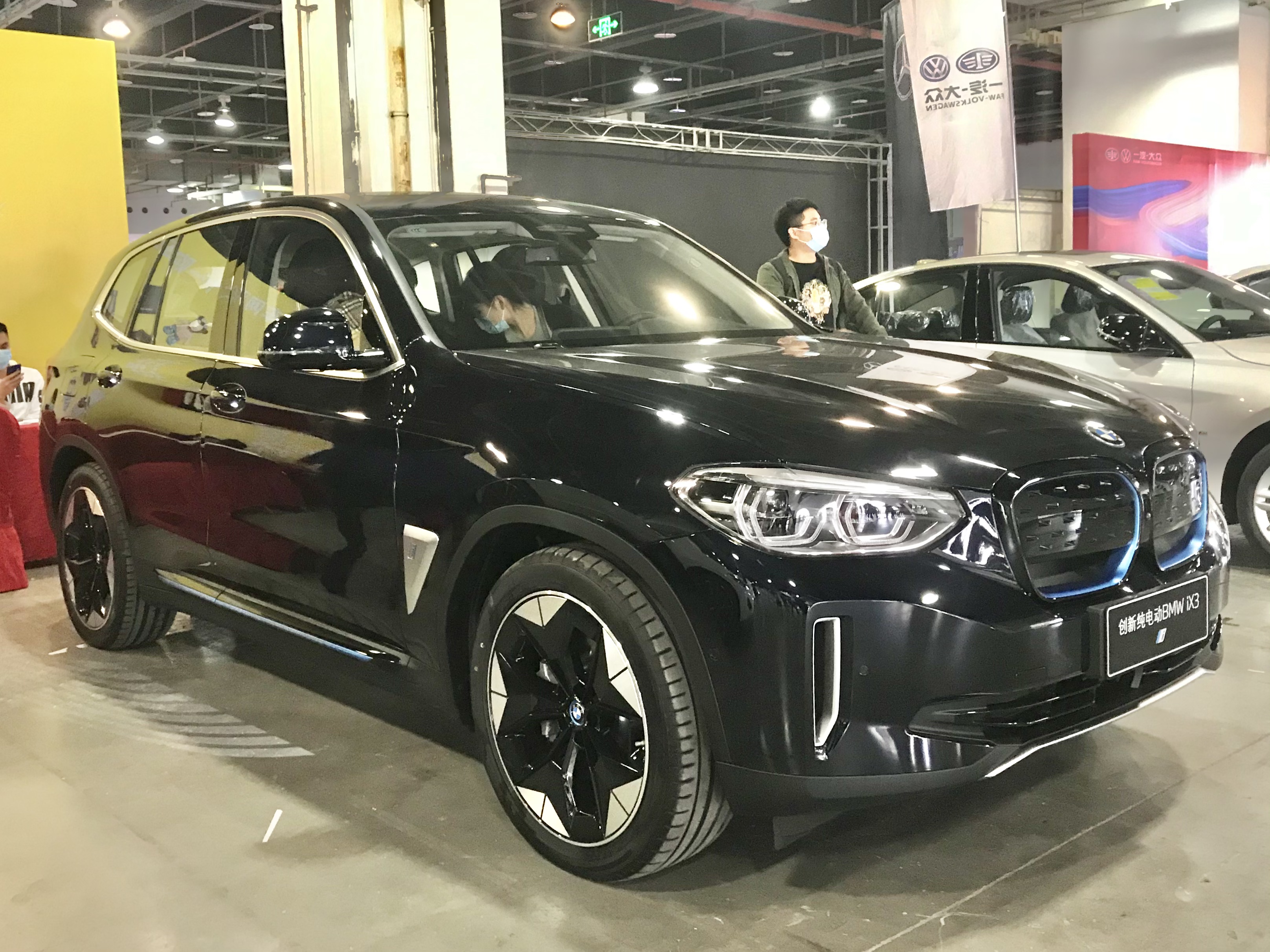
Bmw Ix3
"And it's going to be rivaling the bmw ix3 and the mercedes-benz glc electric"
BMW iX3 is an all-electric SUV/crossover. It’s being used here as a benchmark competitor—meaning the new EV being talked about is expected to compete with it.
The BMW iX3 is BMW’s electric version of the X3 crossover, using an electric powertrain tuned for everyday drivability. In this segment it’s mentioned as a direct rival for the upcoming Volvo-branded “Polestar 4 SUV” style competitor being discussed.

EX60
"Very much volvo vibes So it looks like a kind of an ex 60 competitor as well um"
The EX60 is an electric vehicle that the podcast describes as similar in style to Volvo. It’s being positioned as a competitor in its class, meaning it’s meant to attract shoppers comparing similar-sized EVs.
The EX60 is described in the podcast as having “Volvo vibes” and being a competitor to an EX60-like segment offering. That implies it’s aimed at buyers looking for a Volvo-style design and feel, likely within the same general size/class as other electric crossovers. It’s mentioned because new EV models in that segment can change what’s available and how buyers compare options.
four-wheel drive powertrains
"That that would be an off-road choice of rear or four-wheel drive powertrains [1633.7s] Tapping out at 536 horsepower like the existing pollster four"
Four-wheel drive powertrains mean the car can drive all four wheels instead of just two. That usually helps with grip, especially on rough or slippery surfaces.
Four-wheel drive powertrains are EV setups that send drive torque to both the front and rear axles. This can improve traction and off-road capability, and the host says the new Polestar variant will offer rear-wheel drive or four-wheel drive options.
536 horsepower
"Tapping out at 536 horsepower like the existing pollster four"
Horsepower is a number that tells you how much power the car’s motor can produce. Higher horsepower generally means stronger acceleration, and the host says this new version tops out at 536 horsepower.
Horsepower is a measure of engine or motor output power, used to describe how strongly a vehicle can accelerate. The host cites 536 horsepower as the top output for the new variant, comparing it to the existing Polestar 4.
400-volt architecture
"Um, so depending on what when you go for between the charges it uses the same 400-volt architecture and that allows up to charging of 200 kilowatt on the dc"
This is the EV’s high-voltage electrical system. It affects how quickly the car can charge and how efficiently it can deliver power to the drivetrain.
A 400-volt architecture is the high-voltage electrical system used in many EVs to move power from the battery to the inverter and motors. Higher-voltage systems can make fast charging more efficient and allow higher charging power than lower-voltage setups.
dc
"400-volt architecture and that allows up to charging of 200 kilowatt on the dc The pollster for suv will be built in south korea"
DC means the fast-charging type of electricity. It’s what you use at DC fast chargers to recharge an EV quickly.
“DC” here refers to direct-current fast charging, where the charger supplies electricity in a form the EV can use quickly. EVs typically convert DC to the right voltages internally for the battery and power electronics.
over-the-air software update
"Volvo cars are now going to be starting to integrate apple music into more than 2000000 Volvo cars via the overday or software update the newly launched Volvo ex 60 review over on the channel"
This means the car can get software updates wirelessly, like a phone. You don’t need to go to a service center just to add new features.
An over-the-air (OTA) software update is a wireless update delivered to the car without visiting a dealer. For EVs, OTA updates are commonly used to add features, improve performance, and update infotainment and connectivity.
Volvo ex 60
"Volvo cars are now going to be starting to integrate apple music into more than 2000000 Volvo cars via the overday or software update the newly launched Volvo ex 60 review over on the channel"
The Volvo EX60 is Volvo’s electric SUV/EV model mentioned here. In this segment, it’s important because Volvo is adding Apple Music and surround-style sound features to it.
The Volvo EX60 is Volvo’s EV model discussed in this segment, positioned as a key platform for software features and in-car services. Here, it’s specifically tied to Apple Music integration and Dolby Atmos spatial audio, showing how Volvo is bundling entertainment tech into the EV experience.
spatial audio
"Drivers of the ex 60 ex 90 and es 90 all up on the channel can also enjoy apple music spatial audio powered by dolby Atmos technology and brought to life by the optional bowers and wilkins premium sound system"
Spatial audio is surround-sound style audio. It tries to make music and vocals sound like they’re coming from different places around you in the cabin.
Spatial audio is an audio format that aims to make sound feel like it’s coming from different directions around you, not just from the front speakers. In cars, it’s typically used with multi-speaker setups to create a more immersive listening experience.

Volvo EX90
"Drivers of the ex 60 ex 90 and es 90 all up on the channel can also enjoy apple music spatial audio powered by dolby Atmos technology and brought to life by the optional bowers and wilkins premium sound system"
The Volvo EX90 is another Volvo electric vehicle mentioned here. The key point is that it can include Apple Music with surround-style sound.
The Volvo EX90 is Volvo’s larger EV model referenced here alongside the EX60. The segment highlights that EX90 owners can get Apple Music spatial audio, indicating Volvo’s approach to making the same infotainment features available across multiple EV models.

ES90
"Drivers of the ex 60 ex 90 and es 90 all up on the channel can also enjoy apple music spatial audio powered by dolby Atmos technology and brought to life by the optional bowers and wilkins premium sound system"
The ES90 is another Volvo electric model mentioned here. The segment says it also supports Apple Music with surround-style audio and premium speakers (if equipped).
The Volvo ES90 is the third Volvo EV model named in the segment (along with EX60 and EX90). It’s included in the same Apple Music spatial audio and premium sound system discussion, suggesting a shared infotainment/tech strategy across Volvo’s EV lineup.
Dolby Atmos technology
"can also enjoy apple music spatial audio powered by dolby Atmos technology and brought to life by the optional bowers and wilkins premium sound system"
Dolby Atmos is a surround-sound system. It helps the audio feel more 3D, so it sounds like it’s coming from around you.
Dolby Atmos is a surround-sound technology that can place audio objects in a 3D sound field. In a car, it’s used to enhance spatial audio so vocals and instruments feel more “surrounding” rather than flat.
Bowers and Wilkins
"Atmos technology and brought to life by the optional bowers and wilkins premium sound system Delivering an immersive experience that places the listeners in the center of the sound"
Bowers and Wilkins makes high-end car/home audio equipment. In this segment, it’s the premium speaker system option that helps make the surround-sound effect work.
Bowers and Wilkins is an audio brand known for premium speaker systems. Here, it’s mentioned as the optional speaker setup that powers Volvo’s Dolby Atmos/spatial audio experience.
Bluetooth connection
"It's very important that the provider rather than a bluetooth Connection to your phone. It's all about making sure you're getting the best quality stream"
Bluetooth is the common wireless way your phone talks to your car’s audio system. The point here is that Bluetooth might not give the best sound quality compared with a more direct streaming setup.
A Bluetooth connection is a wireless link between a phone and the car’s audio system. The host is contrasting it with a higher-quality streaming path, implying that Bluetooth may not deliver the same audio quality as a direct, optimized connection for streaming.

BMW X5
"Announcement in the last couple of days as well last week the fifth generation bmw x5 and the first bmw model engineer to support five different drive systems Including hydrogen as part of the global lineup. I drove a hydrogen bmw x5 couple years ago now the video is up on the channel [...] The first all electric bmw x5, which is the one we're interested here on nevo"
The BMW X5 is a popular luxury SUV from BMW. In this segment, they’re talking about the newer (fifth-generation) X5, especially the all-electric version.
The BMW X5 is BMW’s midsize luxury SUV, and this segment focuses on the fifth-generation model’s electrified lineup. The host highlights the all-electric BMW X5 as the one they’re interested in, positioning it around long-range and fast-charging capability.
dc charging
"wltp range of 845 Fast 460 kilowatt dc charging and 800 volt architecture"
DC charging is the fast-charging type for EVs, usually found at public charging stations. It can add a lot of battery energy in less time than home-style charging.
DC charging means direct-current charging, typically using fast-charging stations that can recharge an EV much quicker than standard AC wall charging. The host is tying it to the BMW X5’s fast-charge capability.
wltp range
"With the s60 x drive setting is a new benchmark in the segment with wltp range of 845"
WLTP range is a standardized test number for how far a car can go on a charge. It’s used so you can compare different cars using the same testing method.
WLTP range refers to the driving range measured under the Worldwide Harmonised Light Vehicles Test Procedure. It’s a standardized lab test used in Europe to compare EV and hybrid efficiency and range across vehicles.

Volvo S60
"...is the one we're interested here on nevo With the s60 x drive setting is a new benchmark in the segment..."
The Volvo S60 is a sedan, meaning it’s a car with a separate trunk. The podcast is talking about a version with an x-drive setup, emphasizing it as a top choice in its category.
The Volvo S60 is a mid-size sedan, and the podcast focuses on the S60 with an “x-drive” setting as a new benchmark in its segment. In this context, the key point is performance and capability positioning—Volvo is presenting it as a standout option for buyers comparing sedans. That’s why it comes up in a discussion of what “benchmark” means for the class.
800 volt architecture
"Fast 460 kilowatt dc charging and 800 volt architecture"
“800 volt” describes how the EV’s electrical system is set up. Higher voltage can help the car charge faster because it can move more power efficiently.
An 800-volt architecture is an EV electrical system design that uses higher voltage to reduce current for a given power level. That can enable faster charging and more efficient power delivery, especially when paired with high-power DC chargers.
Request an Explanation
Heard something you'd like explained? We'll add it to this episode.
Sign in to request explanations for terms you heard.
Want to learn more?
Browse our glossary for plain-English explanations of automotive terms, jargon, and concepts.
Help improve this episode
See something that's not quite right? Our annotations are AI-generated and can sometimes miss the mark. Click the flag icon on any annotation to suggest a correction.
2 community members have helped improve this episode.