
Martin Miller from EV Experts discusses the evolving electric vehicle market, highlighting increased demand despite supply challenges and changing customer profiles. The conversation touches on the psychological impact of rising petrol prices on EV sales, the importance of well-prepared adverts, and the shift from early adopters to a broader audience. Martin shares insights on popular EV models, emphasizing the Volkswagen platform and cautioning against older Nissan Leafs due to battery concerns. The episode also covers dealer experiences, upcoming events like Cardiolive, and a humorous auction challenge involving dealer purchases.
"I think Auto Trader told us at one point it's at least a couple of weeks before the people who are considering your cars actually make contact."
Auto Trader is a website where people can look for cars to buy or sell their cars. It's like an online car shop where many cars are listed.
Auto Trader is a popular online marketplace for buying and selling new and used cars, widely used in the UK and other countries. It provides a platform for dealers and private sellers to advertise vehicles and for buyers to browse listings.
"... bad. The other one, I'm pretty sure, was a Jeep Renegade that sold really fast. It did sell really fast, ..."
The Jeep Renegade is a small SUV made by Jeep. It can drive on rough roads and is good for both city and outdoor use.
The Jeep Renegade is a subcompact SUV that combines Jeep's off-road heritage with urban practicality. It is popular for its distinctive styling and capability in a smaller package.
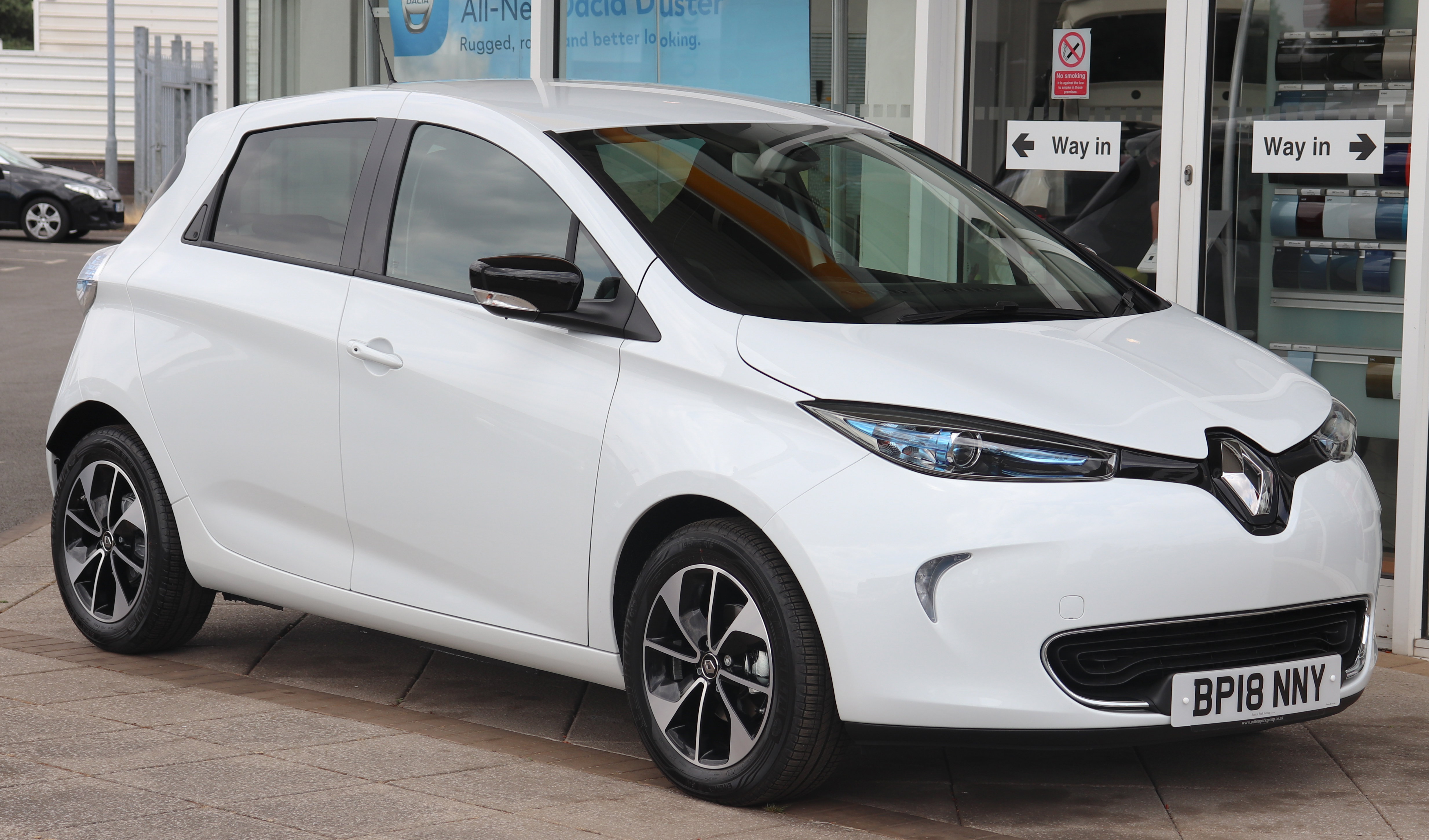
""So we used to sell a lot of Zoe and a lot of Nissan Leaf. We don't stock either of those in any big volumes.""
The Nissan Leaf is a fully electric car that many people buy because it doesn't use petrol or diesel. It can drive a good distance on a single charge.
The Nissan Leaf is a popular all-electric hatchback that helped pioneer mainstream electric vehicle adoption. It offers practical range and affordability, making it a common choice for early EV buyers.
""So we used to sell a lot of Zoe and a lot of Nissan Leaf. We don't stock either of those in any big volumes.""
The Renault Zoe is a small electric car that is good for driving in cities. It doesn't use petrol and needs to be charged with electricity.
The Renault Zoe is a compact electric hatchback popular in Europe, known for its affordability and city-friendly range. It has been a common entry-level EV for many buyers.
"Also the Nissan Leaf has an air-cooled battery, which is not great for longevity where everything else is water-cooled."
Some electric car batteries use liquid to keep them cool. This helps the battery last longer and work better, especially when charging fast or driving hard.
Water-cooled batteries use liquid coolant to regulate battery temperature more effectively than air cooling. This helps improve battery longevity and performance, especially under heavy use or fast charging.
"Also the Nissan Leaf has an air-cooled battery, which is not great for longevity where everything else is water-cooled."
Some electric car batteries are cooled by air blowing over them instead of using liquid. This can make the battery wear out faster because it doesn't stay as cool.
An air-cooled battery uses airflow to manage its temperature instead of liquid coolant. This method is simpler but less effective at maintaining optimal battery temperatures, which can impact battery life and performance.
"When you get an ID.3 under £20,000, it's the same price as the equivalent petrol-auto Golf. If you can charge at home and let's face it, 60% of Brits can, or charge on your street or workplace, which then gets the number up to 80%, it's a no-brainer."
The Volkswagen ID.3 is an electric car that looks like a small hatchback. It's made to be affordable and easy to use, just like regular petrol cars.
The Volkswagen ID.3 is a compact electric hatchback built on Volkswagen's MEB platform, designed to be an affordable and practical EV for mass-market adoption. It competes with traditional petrol cars like the Golf in price and usability.
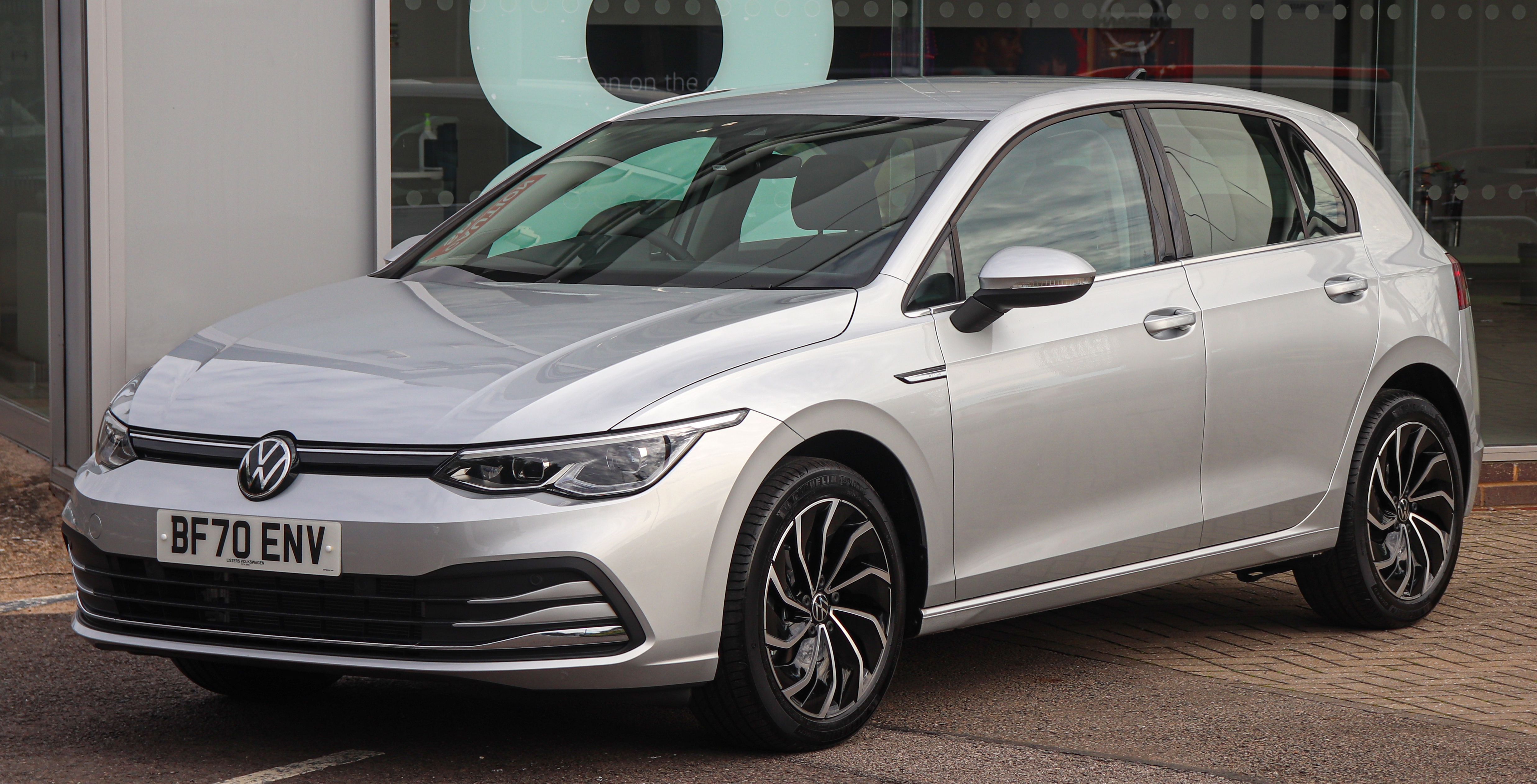
"When you get an ID.3 under £20,000, it's the same price as the equivalent petrol-auto Golf."
The Volkswagen Golf is a well-known small car that runs on petrol and can have an automatic gearbox. Many people like it because it's easy to drive and reliable.
The Volkswagen Golf is a popular compact hatchback available with petrol engines and automatic transmissions. It has been a benchmark in the segment for decades.
"We also like the Skoda version, the Cooper version, the Ford Explorer. We love those, they're really good."
Skoda is a car company from the Czech Republic that makes cars which are good value and share parts with Volkswagen cars.
Skoda is a Czech automotive brand owned by Volkswagen Group, known for producing practical and affordable cars often sharing platforms and technology with Volkswagen models.
"I hear customers say, oh, what's happening with all the Chinese cars? Well, let's, you know, the Chinese are important, but more important are the Koreans."
Chinese cars are cars made by companies from China. They are becoming more popular because they often cost less and have many features.
Chinese cars refer to vehicles manufactured by Chinese automakers, which have been increasingly entering global markets with competitive pricing and features, challenging established brands.
"I would say, Kira, Nero, EV, you know, you can't fault it. It's what the gulf used to be, it's 8 out of 10 on everything."
An EV is a car that runs only on electricity stored in batteries, so it doesn't use gas or diesel like regular cars.
EV stands for Electric Vehicle, which is a car powered entirely by electric motors using energy stored in batteries, rather than traditional internal combustion engines.
"I think we've published research in the past from some of the warranty companies that sort of backs up some of those claims."
A warranty is like a promise from the car seller that if something breaks within a certain time, they will fix it for free or at a low cost.
A warranty is a guarantee provided by the manufacturer or dealer that covers repairs or replacements for a certain period after purchase, protecting the buyer from unexpected repair costs.
"There's state of health of the battery, and that basically shows how much the car's worn out."
Battery state of health tells you how good or worn out the electric car's battery is compared to when it was brand new.
Battery state of health (SoH) is a measure of the current condition and capacity of an electric vehicle's battery compared to when it was new, indicating how much the battery has degraded over time.
"However, battery health will just tell you how much worn out, and you know that a battery should lose 2% per annum,"
Battery health tells you how much the battery in an electric car has worn down. A healthier battery means the car can drive farther before needing a recharge.
Battery health indicates the current capacity of an electric vehicle's battery compared to its original capacity when new. It helps estimate how much the battery has degraded over time, which affects driving range and performance.
"But then you've also got battery faults. Now, battery faults are a bit like a cam belt."
A battery fault means something is wrong with the car's battery, which can cause problems or make it unsafe. Sometimes the company has to fix it by recalling the car.
A battery fault in an electric vehicle refers to a malfunction or defect in the battery pack that can lead to reduced performance, safety risks, or the need for repair or replacement. These faults can sometimes trigger manufacturer recalls.
"or more likely is a manufacturer puts a safety recall out. The big ones at the moment are, for example, the Volvo EX30."
Sometimes car companies find a problem that could be dangerous and ask owners to bring their cars in to get it fixed for free. This is called a recall.
A manufacturer safety recall is an official request by a car maker to fix or replace a defective part or system in vehicles that pose safety risks. Recalls are often free for owners and aim to prevent accidents or failures.
"The big ones at the moment are, for example, the Volvo EX30. You know, there are 30,000 units, I think, that have got to be recalled to have three battery cells replaced."
The Volvo EX30 is a small electric SUV made by Volvo. Some of these cars need a battery fix because of a safety issue.
The Volvo EX30 is a compact electric SUV introduced by Volvo, known for its modern design and electric powertrain. It has recently been subject to a battery recall affecting tens of thousands of units.
"that have got to be recalled to have three battery cells replaced. And they've told all owners to only charge the car to 70%."
A battery cell is one small part inside the big battery that helps store electricity to power the car.
A battery cell is a single electrochemical unit within a battery pack that stores and releases electrical energy. Electric vehicle batteries are made up of many cells connected together to provide the required voltage and capacity.
"And they've told all owners to only charge the car to 70%. And that's a hard ask, because you know,"
Charging the car only up to 70% means not filling the battery all the way to keep it safe and avoid problems.
A charging limit set at 70% means owners are advised to only charge their electric vehicle's battery up to 70% of its full capacity to reduce stress on the battery and prevent safety issues during a recall.
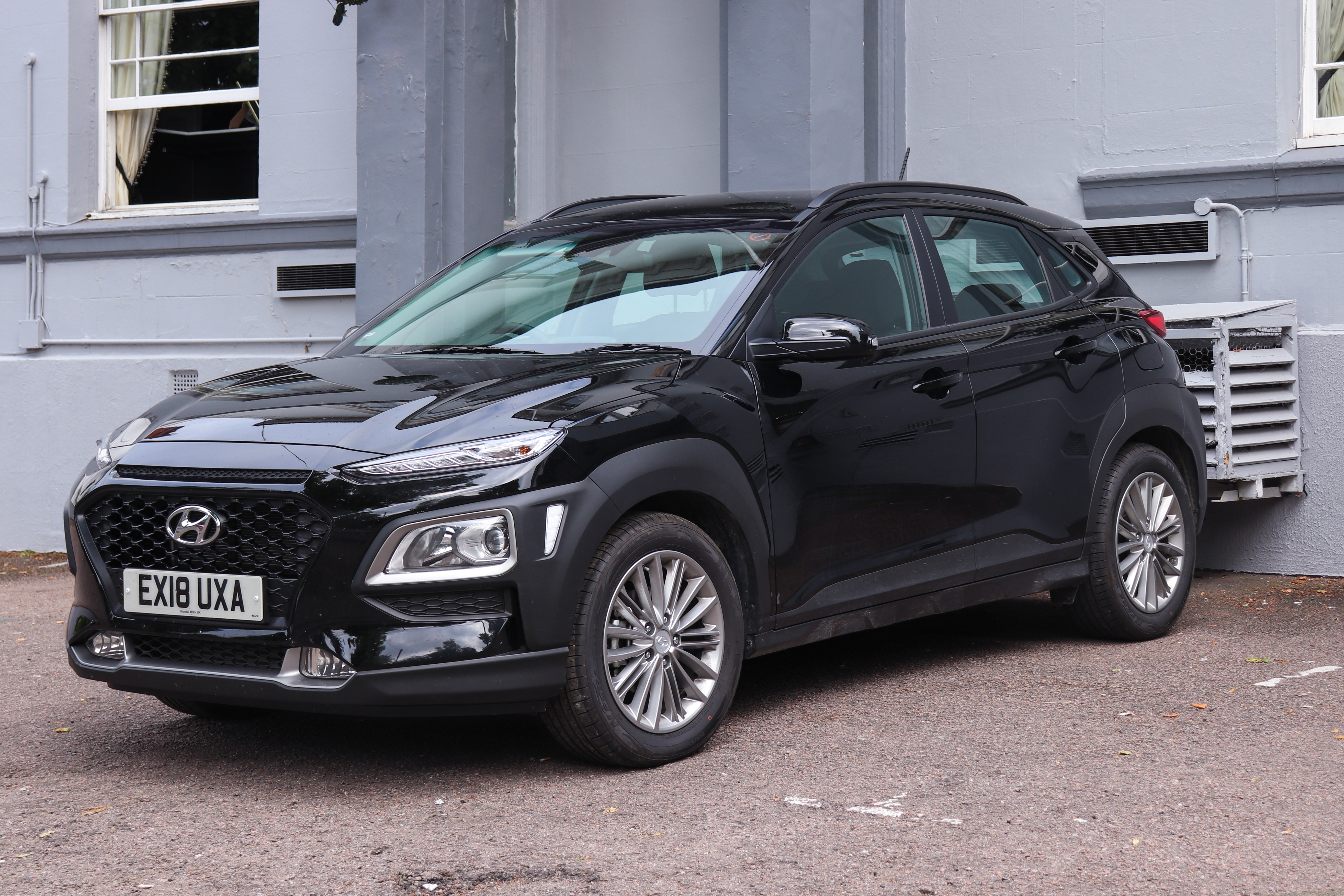
"And exactly the same happened with the Kona about five years ago."
The Hyundai Kona Electric is an electric SUV that had some battery problems a few years ago and needed to be fixed.
The Hyundai Kona Electric is a popular electric SUV known for its range and affordability. It experienced a notable battery recall about five years ago due to safety concerns.
"Mercedes have just about announced the EQA as well, EQA, EQB."
The Mercedes-Benz EQA is a small electric SUV that combines electric power with Mercedes' luxury and style.
The Mercedes-Benz EQA is a compact electric SUV from Mercedes' EQ line, offering electric mobility with luxury features. It is part of Mercedes' expanding electric vehicle portfolio.
"unless it hasn't got full service history. So I would say what matters, full service history matters more an electric car than it does on a petrol diesel."
Full service history means having a paper or digital record that shows all the times the car was checked and fixed by mechanics. This helps prove the car was taken care of properly.
Full service history is a complete record of all maintenance and servicing performed on a vehicle. It is especially important for electric cars to verify proper upkeep and avoid costly repairs, as it shows the car has been regularly checked and maintained.
"When they check a battery, they check the fact that the HV connectors are working. That means that the battery is getting the right voltage."
HV connectors are special plugs that carry the battery's power to the car. If they don't work right, the car might not get enough power or could have problems.
HV connectors are high-voltage connectors in electric vehicles that link the battery pack to the vehicle's electrical system. Proper functioning ensures the battery delivers the correct voltage to power the car efficiently and safely.
"make sure all the voltages on all the cells are balanced. And if they're not balanced, that's a reason. It might mean that the battery needs to be rebalanced,"
Inside the battery, there are many small parts called cells. They need to have the same amount of power. Balancing makes sure they all work together well so the battery lasts longer.
Cell voltage balancing is the process of ensuring all individual cells within a battery pack have equal voltage levels. Balanced cells improve battery performance and longevity, while unbalanced cells can cause early battery degradation.
"Because Tesla is the source of all knowledge, of course, and Tesla originally didn't say to people to service their cars, that rumor has got to the street, but it's absolutely not true."
Tesla is a company that makes electric cars, which run on batteries instead of gasoline. They are famous for making cars that can drive themselves and have long battery ranges.
Tesla is a leading American electric vehicle manufacturer known for its innovation in battery technology, electric drivetrains, and autonomous driving features. It has significantly influenced the electric car market and public perception of EVs.
"better to drive than a petrol car, then there's somebody on the other side of the fence who's,"
A petrol car is a regular car that runs on gasoline, which is the fuel you put in at the gas station. It uses an engine that burns this fuel to move.
A petrol car is a vehicle powered by an internal combustion engine that runs on gasoline (petrol). It is the traditional type of car that most people are familiar with, producing emissions and requiring fuel from gas stations.
"Bit like going out in a classic car, right? Really, really good."
A classic car is an old car that many people like because it looks nice or reminds them of the past. Driving one can be fun and different from driving newer cars.
A classic car is an older vehicle, often considered collectible or historically significant, that is appreciated for its design, engineering, and nostalgic value. Driving a classic car can provide a unique and enjoyable experience compared to modern vehicles.
"and exclusive research from headline sponsors, Auto Trader, as well as Google, Motorway,"
Motorway is a website that helps people sell their cars quickly by connecting them with dealers who want to buy.
Motorway is an online platform that facilitates the sale of used cars by connecting private sellers and dealers, offering competitive pricing and a streamlined selling process.
"and exclusive research from headline sponsors, Auto Trader, as well as Google, Motorway, Cox Automotive,"
Cox Automotive is a big company that helps car dealers and manufacturers by providing tools and services to buy, sell, and manage cars.
Cox Automotive is a global company providing automotive services and technology solutions, including vehicle auctions, inventory management, and data analytics for dealers and manufacturers.
Select text to request an explanation
The Cardiola podcast is sponsored by Autotrader.
John, have you ever wondered why I, along with 14,000 other dealers, choose to partner with Autotrader?
Well actually, I didn't think so. I'll tell you anyway, with more than 84 million consumer visits every month,
it connects us with more engaged car buyers and delivers more deals than anyone else in the UK.
And now, with the launch of buying signals, we'll have brand new insights on every deal,
showing how likely a customer is to buy the car they're interested in.
Plus, as someone who set out to use AI and data as much as possible in my business,
I've found their technology, data and tools genuinely invaluable.
But when I do get stuck, which is, let's face it, most of the time,
Autotrader is always on hand and committed to supporting us to get the very best from our package.
To find out how they can help you, visit trade.autotrader.co.uk
Welcome back to the Cardiola podcast.
If you haven't listened before, we're going to pick our favourite stories of the week
and ask an automotive industry guest who chose the best stories.
I'm Rebecca Chaplin, contributing editor at Cardiola Magazine,
and today I'm standing in for your usual host, John Ray, because he is,
I was going to say, clubbing with some seals, but that's a kev joke that...
Don't make that joke.
It's in my head too much, he keeps saying it.
Yeah, John is off taking photos of seals, as you do in Scotland.
So, wasn't going to have good enough internet signal.
And who do you call when you don't have good enough internet signal? Me.
Joining me today is your usual co-host, James Bagot, though.
How are you doing, James?
I'm fine, thank you. Well, I say fine, but I'm a little bit croaky,
and I've not been very well this week, get the violins out.
And I lost my voice on Monday, which most people were very happy,
very happy about it, weren't they?
But it's slowly coming back, so I'm going to croak and cough my way through this podcast,
so apologies in advance.
Okay, well, more importantly, we're less than a week away from Cardiolive now,
so are you going to be better for that?
I hope so. I really hope so.
I've been doing a lot of work on Cardiolive this week,
working on the scripts, working on all the questions for all of the guests that we've got.
It takes place next Thursday, March the 19th.
Very, very excited about that. We've got lots of people coming now.
Ticket sales always go crazy last two weeks.
The motor trade seems to just realise that stuff happens two weeks in advance,
so that's really picked up.
I've got loads of people coming, and I'm looking forward to hosting it.
I've got some new shoes to show off as well.
Does it get any more exciting than that?
Anything else you want to talk about this week?
What's going on at the Clever Car Collection?
Oh, what is going on at the Clever Car Collection?
Well, it is March the 13th, as we record this,
and as it stands, we are at zero car sales this month.
That is because, well, we've sold two, but we've also bought two backs,
so we're sort of like canceling each other out,
so we're glassing that at zero, which is a bit disappointing, if I'm honest,
but as you know, our helping hand that is Luke was away for a couple of weeks,
and we just dropped down to no cars advertised.
This week, we've really, really worked hard at getting stock back up,
but you forget that there is this sort of lull and dip from advertising it
to actually the car being sold.
I think Auto Trader told us at one point it's at least a couple of weeks
before the people who are considering your cars actually make contact.
I mean, we all think they're going to call us overnight.
So maybe we're just in that lull, but I'm hoping to finish.
This is our last couple of weeks of the financial year,
so I'm sort of hoping to have a strong end of the year,
but it doesn't look like that way at the moment.
Did you...
Am I right in thinking that last month was your best month ever, though?
Yeah, last month was our best month ever.
And didn't it start rubbish and end quite well as well?
It did.
So you never know, do you?
You never know in this game.
It just...
It might come good, but yeah, it's been a little bit of a slow start,
but can I just tell you about one other exciting thing I've been doing this week?
Yeah.
I was up in London on Monday for another Battle of the Buyers part two,
so people who follow our YouTube channel will see
that we get some dealers together at Carwell's head office,
and they spend my money, which is always a little bit nerve-racking.
We had Jamie Caple from Carkey, Scott Sibley from Redgate Lodge,
Steven Douglas from Really Easy Car Credit,
and Ibi, who runs a dealership based in Birmingham.
I can't remember the name of them.
I'm going to shoot myself for that.
But yeah, they came along and spent our money in the auction.
I'm not going to spoil the video, but to be honest with you,
I am rather nervous about all of the cars they bought.
Let's put it this way.
Joe and I went through the list yesterday
and tried to work out which of the cars we would have bought,
and out of the 10 that were purchased, we would have bought two
if we took into account our own metrics.
At the last minute, Carwell's John Vic Manis, the CEO,
who was on his sick bed at home after an operation on his foot,
decided to get involved and he bought us two cars
part of the competition midway through as well.
So we've got to sell his as well.
So yeah, that would be interesting.
Then we're going to be turning up in a couple of weeks' time.
But the video will be out on the YouTube channel soon
so people will be able to see what horrors those people have bought us.
Yeah, I'm going to cast your mind back quickly
to when you did the video first time around, though,
and didn't Joe Betty try and screw you over with two cars?
One didn't actually end up getting bought because it was so bad.
The other one, I'm pretty sure, was a Jeep Renegade that sold really fast.
It did sell really fast, and we've bought a few of them since then.
So yeah, it's a learning curve.
But yeah, I am slightly nervous about what is to come.
But anyway, more on that in the coming weeks.
So we introduced, I guess.
Yes, I'm going to flip over.
I'm going to see him frantically desperate to comment in the background.
We've got the wonderful Martin Miller from EV Experts who's joining us today.
How are you, Martin?
I'm good. I'm good.
Actually, really positive at the moment.
We had our biggest Saturday ever on Saturday.
Nice.
We thought that petrol prices rising would equal people buying electric cars.
Everyone's in panic mode, then, are they?
I wouldn't say...
Yeah, a little bit of panic mode.
But it's funny, we have done this in the past
where we've literally plotted our monthly sales
for the last eight years, and that sounds awful,
against unleaded, and it's £1.50 a litre.
As soon as unleaded goes above £1.50 a litre,
people just suddenly...
It's those that are, ooh, shall we, shall we?
And of course, it's not the actual numbers of the finances.
It's the fact that what was a 70-quid fill is now an 80-quid fill,
and that, oh, God, that's another tenner each time.
And it's just that psychological...
It's a psychological tipping point that we've seen.
But, yeah, good news so far.
But, again, that's the same problem, James.
We've now got more cars on a waiting prep
than we've got on...
in stock, so...
It's frustrating, isn't it?
I think you're a bit like us, like,
we really work hard on getting those adverts performing right from day one.
And we sort of cut some corners a couple of weeks back,
purely because we had to.
Advertising cars was just some pictures we took, you know, down the yard.
And it just felt so wrong.
And actually, the adverts don't perform as a result.
I do think it's worth putting the effort in at the start, isn't it?
Oh, God, yeah. I mean, I think...
What I tend to do is we do use awaiting prep ads,
which has no pictures,
but only when it's a particularly unique colour or a unique spec,
or it's a car that we think people will be really up for saving.
If it's one of our more mundane items,
like an ID3 or a Nero EV,
not that they're mundane cars, but, you know,
there are plenty of choices in the marketplace for those.
There's no point in putting one of those up as a waiting prep whatsoever,
because if you want a grey ID3, there are thousands out there,
whereas if it's something unique,
we tend to use a waiting prep for that.
We've been trying our hand at some electric cars.
I mean, the cheaper end of the market, you know, Nissan Leafs do very well for us.
So do E-Golfs.
You know, we find that they're quite popular.
You know, for those people listening to this podcast,
Mike, you specialise in electric cars, you have done for eight years.
What would you say to those people that are nervous?
Because you look at all the research that comes out,
and there's a lot of dealers that still say today
they'll never touch an electric car.
What would you say to them?
Well, have they got a Nokia or have they got a smartphone?
Yeah.
You know, I mean, it's as simple as that, really.
It's electric cars are not for everyone,
but in the same way that smartphones aren't for everyone,
but let's be clear, it's not just a niche.
And I think the thing is, is listen to...
If you ask a customer, and I've told this story many times,
do you ask a customer who had a Nokia, you know, a brick phone,
do they want a smartphone?
They'll tell you the battery doesn't last long enough.
They'll tell you it's too expensive.
They'll tell you it fits in the pocket.
I don't know anyone who's bought a smartphone
and then chucked it away afterwards.
You know, it's that analogy, really.
It is just a case of making sure that, you know, things change.
And, you know, we're retailers,
and we've got to sell what people want.
And actually, there is a lot of demand for well-priced used electric cars.
It's harder if they're new, but on the used market,
it's a strong demand.
Has it got easier for you over the last few years
in terms of, well, firstly, the conversation with customers
and secondly, the availability of stock?
I think the answer is yes to both of those but,
and the but is that the audience that we're selling to
is massively changing.
So 2017, when we launched,
average EV was 800 mile range.
They were at best a second or maybe a third car in the household.
They were innovators or early adopter type people.
You didn't have to show them how to pair their phone, you know,
and they'd probably done a lot of research onto it.
They didn't mess you about on price.
There wasn't a lot of competition.
And so that was a very different times.
Now we're early majority.
It's much harder because a lot of other dealers are doing it.
But the good news is that in our area, London,
Southeast, most people know somebody or know somebody
who knows somebody who's got an electric car.
So you're not pushing water uphill at all.
And then it's more down to the good old things
of how well you prep the cars, what brands you stock,
what brands you don't stock
and choosing the right colour combos and all that good stuff.
What sort of stuff works for you?
What's your bread and butter?
So we used to sell a lot of Zoe and a lot of Nissan Leaf.
We don't stock either of those in any big volumes.
We'll take it as a part exchange, but that's not there.
Mainly because little Zoe's anything less than 100 mile range
is just not worth having a conversation.
There is a market for them, but it's not a market we want to go after.
Nissan Leaf with its Chathamau charging,
you can't look someone in the eye and say that's a great product
if they ever want to do anything other than be used to charge at home.
Also the Nissan Leaf has an air-cooled battery,
which is not great for longevity where everything else is water-cooled.
So the batteries are more likely to be problematic on a Leaf.
So our big sellers, right now we're massive fans of the Volkswagen platform, MEV.
When you get an ID.3 under £20,000,
it's the same price as the equivalent petrol-auto Golf.
If you can charge at home and let's face it, 60% of Brits can,
or charge on your street or workplace, which then gets the number up to 80%,
it's a no-brainer.
I know you've had them, they're a great product.
And the reassurance of the Volkswagen brand at the front doesn't hurt at all.
The dealer network is pretty good, they look after their customers.
So we like that.
We also like the Skoda version, the Cooper version, the Ford Explorer.
We love those, they're really good.
Yeah, so that platform's good.
But I think the thing that really has happened is,
I hear customers say, oh, what's happening with all the Chinese cars?
Well, let's, you know, the Chinese are important, but more important are the Koreans.
We forget that, you know, 20 years ago, Kira and Hyundai were real niche players.
They are massive now.
And so the dealer networks, their products are really good, the reliability's there.
So, you know, if someone isn't what I'd call a driver and they just want the best,
I would say, Kira, Nero, EV, you know, you can't fault it.
It's what the gulf used to be, it's 8 out of 10 on everything.
And so, yeah, Kira and Volkswagen products and Hyundai are our core products.
What would you say, Martin, to dealers looking to dip their toe in the water then?
I mean, where would you say they start?
You know, is it like we've done with the really cheap stuff,
or should they go in and try something like an ID3 or something?
What would you do if you were starting again?
What would be the one you'd buy?
Well, I'd acknowledge the fact now that the market is,
it's the fastest selling fuel type on autotrader.
There are 1,000 EVs go through BCA every day.
You know, when we started, there were 10 going through each day,
so it made choosing your stock a bit easier.
So, I guess if I was saying to customer, I would get back to basics.
Who are your audience that you normally sell to?
If you sell Nissan cash guys by the bucket load,
then maybe a Hyundai Kona's the right thing.
But to what customers do you currently sell,
and then just find the electric equivalent,
I would recommend is the strategy rather than going at a particular price point.
There's a lot of dealers that are just scared of selling them,
because they think the bills are going to be massive when these cars go wrong.
I think we've published research in the past from some of the warranty companies
that sort of backs up some of those claims.
And I know that we had a conversation around that time.
You know, you didn't agree with those findings.
What's the reality? You've been running this for eight years.
What do you actually see?
Well, the reality is warranty, we were warranty wise,
and they tell us that of all their dealerships,
we are either the lowest or one of the lowest full stop on claims.
The amount I pay for warranties, I shouldn't say this
because Zach will be perfectly happy to get back on and put me prices back up.
That is low, because we just don't have the claims.
Now, the thing that matters with EVs is, you know,
it's still a car, so the door handle will go,
or the electric window will go, you know.
Yeah, that's running the mill.
But what you have to look at is battery, and there's two sides to batteries.
There's state of health of the battery,
and that basically shows how much the car's worn out.
And Avalu are, you know, they're one of the leaders,
but we use MOBA, we think they're really very good as well.
There's ClearWatt, there are different suppliers.
It's 40 euros a time to check a battery.
I think that's 40 euros well spent for giving a customer confidence.
However, battery health will just tell you how much worn out,
and you know that a battery should lose 2% per annum,
so for batteries at 3-year-old car, should be 94,
if the battery's at 97, happy days.
If the battery's at 83, not for me.
But then you've also got battery faults.
Now, battery faults are a bit like a cam belt.
You just don't know when they're going to go bang.
And the battery fault do happen,
and they're either the battery physically goes wrong,
or more likely is a manufacturer puts a safety recall out.
The big ones at the moment are, for example, the Volvo EX30.
You know, there are 30,000 units, I think,
that have got to be recalled to have three battery cells replaced.
And they've told all owners to only charge the car to 70%.
And that's a hard ask, because you know,
you bought the car because it did 230 miles
and you've been told to keep it at 70%.
So you want to just plug it in at night
and not think about it, not go...
Yeah, and there is a 0.0001% chance of it catching fire.
None has actually ever caught fire.
And exactly the same happened with the Kona about five years ago.
Mercedes have just about announced the EQA as well, EQA, EQB.
Rather sneakily, they put 240 through BCA
just before they announced the announcement.
Yeah.
Naughty.
But the point I would say about that
is most batteries are seven or eight year warranty.
So most cars that most people are going to sell,
that's not their problem.
They're not going to be facing the 10 grand fix for that car
unless it hasn't got full service history.
So I would say what matters,
full service history matters more an electric car
than it does on a petrol diesel.
The thing is, Martin, most of the ones we've bought
have not got full service history.
I mean, it's very, very unusual to see it
because most people who buy an electric car
have sort of read stories or heard from their mates
that, oh, we don't need to do anything to those.
They don't service anything anyway.
They just change the odd filter here and there.
Is it, it's probably more important
just to get the stamp in the book
rather than the actual work they do, is it?
Yes and no.
So there are things that you check.
So for example, if it's not had,
if it hasn't got full service history
and the battery goes wrong, you know,
supplying dealer, you are up for 10 grand
for a new battery pack,
whereas otherwise it's Volkswagen.
So that's the first thing.
Second is they do-do stuff.
When they check a battery,
they check the fact that the HV connectors are working.
That means that the battery is getting the right voltage.
They check across the battery for basically what you do
is you look across the battery,
make sure all the voltages on all the cells are balanced.
And if they're not balanced, that's a reason.
It might mean that the battery needs to be rebalanced,
which is a relatively easy procedure to do.
Or it might be that you've got an idle discharge
on one of the cells.
One of the cells is not working quite as it should do.
Well, that will lead to problems in the future.
And that cell is therefore more...
It's a clicking timing chain to put it in old speed.
But you can do that.
And all you need to do is...
Yeah, and so I think that the...
Because Tesla is the source of all knowledge, of course,
and Tesla originally didn't say to people to service their cars,
that rumor has got to the street,
but it's absolutely not true.
And the only cars we've ever sold have been full service.
And it means that we're more expensive.
It means our product is more expensive,
but it means that we just can sleep on.
Batteries are not going to have a problem.
So that's what would be my take on it.
Martin, you probably read all of the stories that we do
in the National Press all the time about electric cars.
I mean, they're rhetoric out there at the moment, isn't it?
It's not particularly positive, is it?
I mean, I'm sure there's some vested interest out there
without going into too much of a conspiracy theory.
But what's your take on the way that electric cars are perceived by the public?
So I think the problem is,
there is no great British public anymore.
You talk about many subjects,
and you know, it's, am I Remain or am I Brexit?
Am I left or right?
There's no middle ground on anything now.
And so for everyone who's owned an electric car,
driven electric car,
realized it's better for the environment,
better for their wallet,
and actually whisper it better to drive than a petrol car,
then there's somebody on the other side of the fence who's,
I'm not having one of them.
Oh, it's horrible.
Oh, it's Chinese.
I'm going to be snooping on me.
I mean, give it a break.
And they're prepared to tweet that obviously on their phone
that's made in the People's Republic of China and et cetera, et cetera,
through their Wi-Fi router that's made in the People's Republic of China.
So he's all about putting it in perspective, I think.
But I guess we get a lot of EV lovers on our full court.
We get the odd EV hater who comes here just to justify that they've looked
and that they don't want to buy because there isn't a car with seven seats
that can tow a three-ton caravan for seven and a half thousand pounds
like their old doctoral vectorist state.
When you're chatting to people mastering in the pub
and you tell them what you do, I mean, what's the general...
It's a bit like...
Yeah, no branded clothing ever outside the business.
No.
But what's the general consensus?
Are the inquisitive or are they...
I mean, just the reason I ask is most of the time
when I start talking about electric cars, most people go,
I've never had one of those.
But that might just be the people I'm talking to.
What's the sense you get?
I think that the sense is that the world is not black or white.
Electric car isn't for everyone.
But people talk to me about, oh, I missed the noise.
I missed the sense of occasion of a petrol car.
Well, my late sister was a big horse rider
and she used to drag me out on a Sunday morning for a hack.
And, oh, God, I hated it.
But anyway, yeah, but talk about that.
Horse on a Sunday morning, a lot of noise, a lot of acceleration,
really nice experience.
Bit like going out in a classic car, right?
Really, really good.
Try riding a horse on a Monday morning around the M25.
I don't think so.
And so, you know, it's about what is a means of transport
versus a lot of fun.
And, yeah, if you want to have fun,
yeah, petrol car or, you know, like that, that's great.
But reality of our lives these days are 20 zones, 30 zones, et cetera.
And it's cleaner, cheaper.
The Chinese brands, I know you mentioned that briefly,
but are you getting a lot of people coming in saying,
I'm looking at a used car with you,
but I'm also looking at a new Chinese model, which is XYZ.
Yeah, yeah.
And, I mean, I think, I mean, some of the deals are so good on new ones.
We've only ever had one BYD in stock as a used car,
because the problem is, as a used product, they're really impossible to sell,
because, you know, we had a dolphin in and it was like, you know,
it was a lovely little thing.
It's actually a really good product.
But, you know, 239 a month, 239 down.
How can you ever compete on that?
This is my worry.
This is my worry with these electric cars hitting the market.
I mean, how are we going to work them in the used car market?
And, you know, I started off at 22 grand.
I think I did it at 18 in the end.
But, you know, it only works if you have cash,
and if you're borrowing money, then it absolutely doesn't work.
No, I completely agree.
I think the old school habits of managing residual values,
that's a lesson that they can have to learn pretty damn quick.
Because it will be the customers that end up paying for it, right?
Because either the PCP company pays for it,
or, you know, you've got to get that used market going.
And, you know, all hats off to Kia, you know,
that seven year warranty is what built their used residuals.
You know, a Kia Nero EV with a seven year warranty is better,
is a higher price for the same age of miles as a VW ID3.
Yeah, I mean, I think it would be interesting to see what they've got to say.
We've got four of the Chinese brands on the stage at Cardiolive,
and I'm particularly interested to hear what their plans are about used cars.
I just wanted to ask you also about the sort of weird quirks
that you get with electric cars.
I mean, one of the things that I found is,
when we do get a problem with one, it's very hard,
I mean, I often call you, but it's very hard to get advice
from a normal mechanic because of their batteries.
I mean, we had this weird one with the e-golf that I've been talking to you about,
where it won't charge on a fast charger.
I had no idea what it was.
You suggested speaking to some experts down in Brighton,
and I spoke to them, but my mechanic had plugged into it
and found that the only code it was throwing up was that it didn't have any air congas in it.
And I spoke to your experts and they said,
well, if it hasn't got any air congas in it, it won't fast charge
because the car is worried it can't call the battery.
And I said, I would never, ever have put two together there.
But obviously, you know, you get the experience
and they have the experience of these weird little problems.
So, for example, Volkswagen ID3.
It's absolute, every ID3 that we sell, we regas
if it's of the age that needs a regassing,
i.e. three years old, and that stops all of that nonsense
because the battery is, you know, the whole point of it
is all these fast charging, when you're rapid charging a battery,
it needs to know that it can warm it up and keep it cool.
So, yeah, a simple regas and solve that problem, right?
Well, let's hope so. It's currently being regassed today, so we'll see.
We will see, but I've got everything crossed that is the problem.
But the other thing that's absolutely critical with EVs
is that the 12-volt battery is not...
You have to replace those.
Like on a Zoe, it's every three years
because they put a piddly little one in it,
and it's just not good and strong enough,
and the electronics are constantly talking to it,
so it just wears them out.
Yeah, we had that.
With the one that we run, didn't we?
Yeah, the problem that we had back there was exactly that, wasn't it?
Yeah, it still must be like the cheapest electric car going over Mars.
It's done. I love it.
It cost me £4 a week to charge it up.
I've got a slight problem, and I've got a customer coming in
for a test drive on an ID5 on Saturday,
and in 2018 I sold him a Zoe, and it's now done.
Oh, dear.
Yeah, exactly.
Where's the financial conversation going to go there?
It's a bit hard work. That's going to be a fun one, but...
Yeah, you just sort of have to blame someone else, don't you?
I'm sort of forcing the markets moved.
Fortunately, I haven't had to have those conversations with a returning customer.
No, I've had one where you have to give them a par-text price,
and it's like, it's awkward, isn't it?
It really is.
Well, Martin, thank you for joining us.
Very much appreciate your views on the market,
and thank you for sticking around for some stories,
but, Becca, we probably should do some.
We'll be right back.
Running a dealership means making hundreds of decisions every day,
but, James, when do you get the time to step back and think?
Well, John, I don't,
but this is exactly what Cardiola Live is for.
On March 19th, at the British Motor Museum in Gayden,
the UK's car dealers, manufacturers and suppliers
will come together to learn what's actually working right now.
You'll hear from dealers who've built great businesses,
and exclusive research from headline sponsors,
Auto Trader, as well as Google, Motorway,
Cox Automotive, Keyloop and Impale.
We'll be tackling the big questions like how buyers are really using AI,
what Chinese challenger brands mean for your forecourt,
and how the best dealers are growing faster than anyone else.
See something that's not quite right? Our annotations are AI-generated and can sometimes miss the mark.
Click the flag icon on any annotation to suggest a correction.