Nick Pinchuk, CEO of Snap-On, shares the rich history and unique business model of Snap-On tools, emphasizing their role as a symbol of pride and dignity for skilled American workers. He explains the brand's direct-to-mechanic sales approach via franchise vans, the high-quality manufacturing processes, and the challenges of competing with cheaper imports. Pinchuk also discusses the impact of tariffs, the importance of skilled labor in U.S. manufacturing, and how Snap-On maintains its reputation through innovation and deep customer relationships.
Matt and Hannah speak with Snap-On chairman, president and CEO Nick Pinchuk about his career and life surrounded by autos, plus his affinity for Fords.
"We're talking about Nick Pinchuck. He is the CEO of Snap-On. Snap-On Tools, which anyone in the car world, even if you haven't heard much about Snap-On, you've definitely seen the logo."
Snap-On makes special tools and toolboxes that mechanics use to fix cars and trucks.
Snap-On is a well-known manufacturer of high-quality professional tools and tool storage solutions widely used in automotive repair and other trades.
"Five handles of different configurations like a T, an ellipse, a crank, and puts them together with 10 sockets of different dimensions and fashions them so they'll snap on interchangeably."
These are parts of a tool that you can change out to fit different bolts or nuts. You can use the same handle with many different sizes, so you don't need a lot of separate tools.
Interchangeable sockets are tool attachments that can be swapped onto different types of handles or ratchets, allowing one handle to be used with many socket sizes and shapes for various fasteners.
"...in 1969. I don't have any particular, but I, 428 Mustang, you could sit 50 feet on Woodward Avenue, 1969, ..."
The 1969 Ford Mustang is a famous old car from America that was really fast and looked cool. People loved it because it had a big engine that made it go very fast, and it became a symbol of fun and power on the road.
The 1969 Ford Mustang is a classic American muscle car known for its powerful engines, including the notable 428 cubic inch V8. It represents the golden era of muscle cars and is often celebrated for its performance and iconic design, especially popular on streets like Woodward Avenue. Enthusiasts discuss it for its historical significance and raw driving experience.
"That's seven liters, by the way. That's a seven liter motor. Yeah. It wouldn't idle."
A 7 liter motor means the engine is big and can make a lot of power to help the car go fast.
A 7 liter motor refers to an engine with a displacement of seven liters, indicating a large engine size that typically produces significant power and torque.
"So, so the thing about this is a great car, but the one you wanted in those days, I think was the 429 Boss. They only made like 857 of them, right? And I think they had to go, they were homologated for NASCAR, but they had to be NASCAR required street legal products."
The Ford Mustang Boss 429 is a special version of the Mustang made to race in NASCAR. They made only a few of these cars, and they had to be legal to drive on regular roads even though they were built for racing.
The Ford Mustang Boss 429 is a high-performance variant of the Mustang produced in limited numbers in the late 1960s and early 1970s. It was designed primarily for NASCAR homologation, meaning it had to be street-legal but built to meet racing requirements.
"And I think they had to go, they were homologated for NASCAR, but they had to be NASCAR required street legal products."
Homologation means making sure a race car follows the rules by building enough regular cars that look like it. This way, the race car is allowed to compete because it’s based on a real car you can drive on the street.
Homologation is the process by which a vehicle is approved for racing by meeting specific production and technical requirements, often including producing a minimum number of street-legal cars.
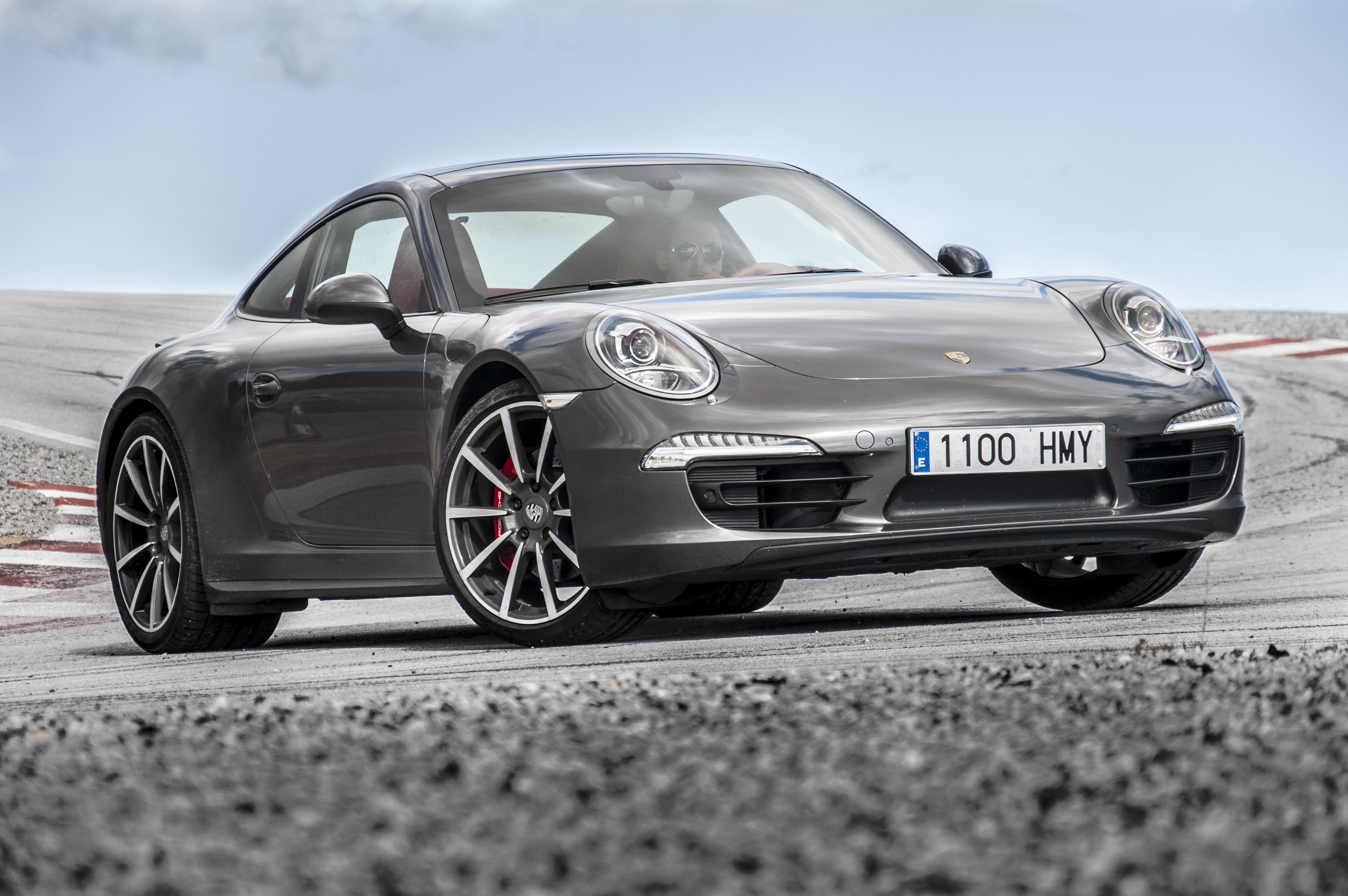
"I mean, I wouldn't mind having a 992 Turbo, you know, Turbo S."
The Porsche 911 Turbo is a fast and powerful sports car made by Porsche. The 992 is the latest version, known for being very quick and fun to drive.
The Porsche 911 Turbo (992 generation) is a high-performance variant of the iconic 911 sports car, featuring a turbocharged flat-six engine and advanced technology for exceptional speed and handling.
"You know, but, but the 996's are kind of nostalgic. You know, I didn't like the Friday."
The Porsche 911 (996) is a type of sports car made between 1997 and 2006. It looks different from older 911s because of its unique headlights and has a different type of engine cooling.
The Porsche 911 (996) is the generation of the 911 produced from 1997 to 2006. It is notable for its departure from traditional 911 styling, including the introduction of 'fried egg' style headlights and a water-cooled engine.
"Did you did you accept the IMS bearings that blew up?"
The IMS bearing is a small but important part inside some Porsche engines. If it breaks, it can cause the engine to fail badly.
The IMS bearing (Intermediate Shaft bearing) is a component in Porsche 911 engines, especially in the 996 and early 997 models. Failure of this bearing can lead to severe engine damage.
"But, but in any case, any case, the EVs, we had, we had people buy EVs here."
An EV is a car that runs on electricity instead of gas. It uses batteries to power an electric motor that makes the car move.
EV stands for Electric Vehicle, which is a car powered entirely or primarily by electricity rather than gasoline or diesel fuel. EVs use batteries to store energy and electric motors for propulsion.
"Can you tell us, we, I want to know what it was like in Detroit and working at Ford,"
Ford is a big car company from America that makes many kinds of cars and trucks. They helped make cars easier and cheaper to build so more people could buy them.
Ford Motor Company is a major American automaker founded by Henry Ford in 1903. It is known for pioneering mass production techniques and producing popular vehicles like the Ford Mustang and F-Series trucks.
"GM had gray people at the top, you know, they were indistinct. I think GM leadership was indistinct."
General Motors, or GM, is a big American car company that makes many different cars and trucks. They compete with other big companies like Ford.
General Motors (GM) is one of the largest American automotive manufacturers, known for brands like Chevrolet, Cadillac, and GMC. GM was a major competitor to Ford and Chrysler during the 20th century.
"Did you see Ford versus Ferrari? I did. Yes. Okay. We have, we have the, we have the wrench that Ken Miles threw at that in the movie."
"Ford versus Ferrari" is a movie about how Ford tried to beat Ferrari in a big car race. It shows the story of the drivers and the cars.
"Ford versus Ferrari" is a 2019 film that dramatizes the true story of Ford's efforts to build a race car to beat Ferrari at the 1966 24 Hours of Le Mans, focusing on drivers Ken Miles and Carroll Shelby.
"They say in the auto industry that there are guys with the car design gene. Iacocca was one."
Some people just have a natural talent to know if a car will look good and sell well. This is called having the 'car design gene.'
The 'car design gene' refers to an intuitive ability or talent some individuals have to understand what makes a car appealing and marketable, often predicting a car's success based on its design and dimensions.
"Iacocca was one. Spurlick, who were, Hal Spurlick, who worked for them was another."
Lee Iacocca was a very important car company boss who helped save a big car company called Chrysler when it was in trouble.
Lee Iacocca was a famous American automobile executive known for his leadership at Ford and Chrysler, credited with saving Chrysler from bankruptcy in the 1980s.
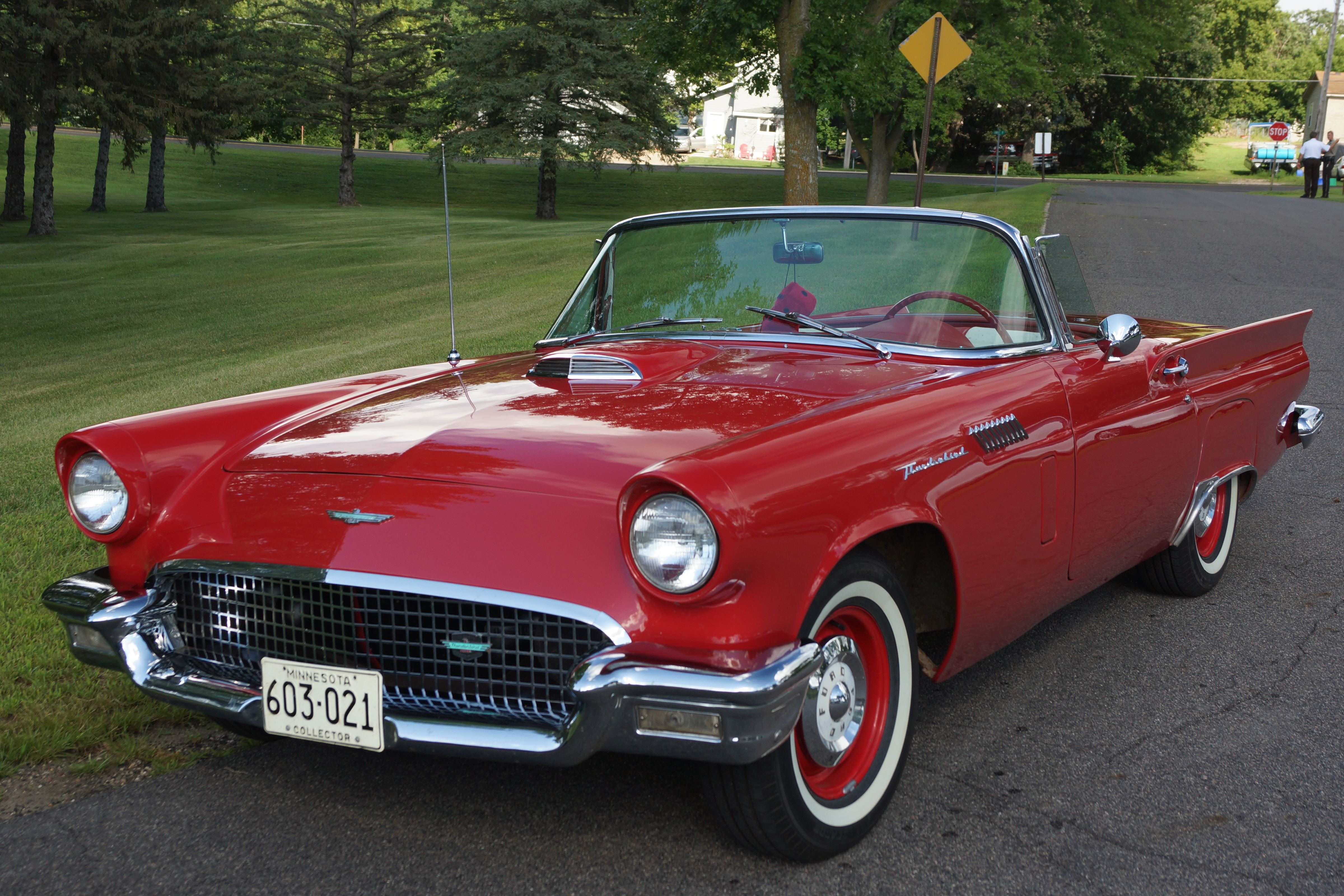
"...hat new cars are. Ford broke out with what, 1981 Thunderbird. He built this Thunderbird, which didn't sell in..."
The 1981 Ford Thunderbird is a car that was made to be comfortable and stylish, but it wasn’t very popular because people wanted different kinds of cars at that time. It’s known for being a bit different from the fast cars Ford made before.
The 1981 Ford Thunderbird was part of a shift in the Thunderbird lineup towards more personal luxury and less emphasis on performance. This generation struggled in sales due to changing market preferences and competition. It is often discussed as an example of Ford's attempts to adapt the Thunderbird to new automotive trends.
"And I wonder if we can get your thoughts on this thread that I'm hearing you pull out, which is like you're emphasizing art over science when it comes to car design and you're sort of downplaying EVs, which are maximized by science for total efficiency. ... You ever ride, you ever ride in the backseat of an EV? It's like riding in a buck board. If you sit in the front seat, the pillars, the pillars are too big."
Electric vehicles, or EVs, are cars that run on electricity instead of gas, so they don't pollute the air and can be very quick.
Electric vehicles (EVs) are cars powered entirely or primarily by electric motors using energy stored in batteries, offering benefits like zero tailpipe emissions and instant torque.
"If you think about that and who said touch screens are better than palpable dials. I don't think so."
A touch screen is like a phone screen in a car that you can tap or swipe to change things like music or temperature instead of using buttons.
Touch screens in cars are digital interfaces that replace traditional physical buttons and dials, allowing drivers to control various functions like audio, navigation, and climate settings by tapping or swiping on a screen.
""It's very, very, very difficult to displace a technology like the internal combustion engine that has been worked over and over and over and has behind it all that learning curve.""
An internal combustion engine is the kind of engine that burns fuel like gasoline inside the car to make it move. It's been used in cars for a very long time and is very well understood.
The internal combustion engine (ICE) is a type of engine where fuel combustion occurs inside the engine itself to produce power. It has been the dominant automotive technology for over a century and has undergone extensive development and refinement.
""Now, if you come back to art versus science, I think fuel economy, you know, you can have your view about where it should be and how we should approach it. But a difficult fuel economy targets have tended to create a similar silhouette for most cars, I think.""
Fuel economy means how far a car can go using a certain amount of fuel. Cars that use fuel more efficiently save money and pollute less.
Fuel economy refers to how efficiently a vehicle uses fuel, typically measured in miles per gallon or liters per 100 kilometers. It is a key factor in vehicle design and regulation, influencing car shape and technology choices.
The Jaguar XJ6 is a fancy and comfortable car made in Britain that was popular a long time ago. It’s known for being smooth to drive and looking very stylish.
The Jaguar XJ6 is a luxury sedan known for its elegant British design and smooth inline-six engine, popular during the 1970s and 1980s. It represents Jaguar's commitment to combining comfort with performance and has a classic status among luxury car enthusiasts. The XJR variant adds sportier performance features.
"And I, it's got the leaper on it, you know, you can't get the leaper these days."
The 'leaper' is a small statue of a jumping jaguar that used to be on the front of Jaguar cars. You don't see it on new Jaguars anymore because of safety rules.
The 'leaper' is the iconic Jaguar hood ornament depicting a jumping jaguar cat. It was a signature design element on many Jaguar cars but has been discontinued on newer models due to pedestrian safety regulations.
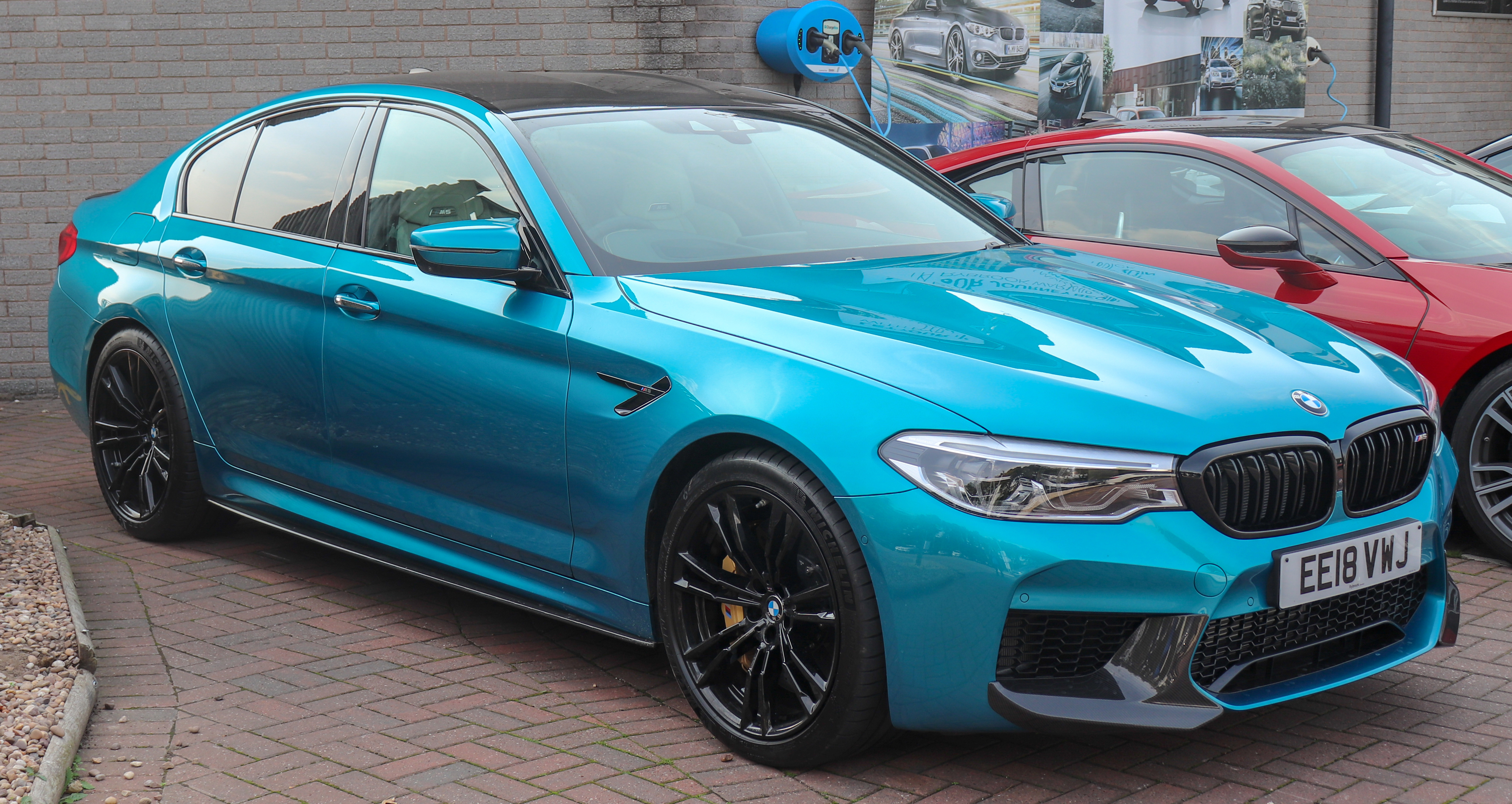
"...ifferent lines in the other cars. I've got a BMW M5 competition. Wow."
The BMW M5 is a fast and fancy car that looks like a regular family car but can drive really quickly and smoothly. It’s made to be fun to drive while still being comfortable for daily use.
The BMW M5 Competition is a high-performance luxury sedan known for blending everyday usability with sports car-level power and handling. It features a powerful engine, advanced technology, and dynamic driving capabilities, making it a benchmark in the sports sedan segment. It's often discussed for its impressive balance of comfort and performance.
"... fun. I don't hear you saying anything about the Corvette, Nick. And if we're talking about GM in the 60s ..."
The Chevrolet Corvette is a famous fast car from America that looks sporty and is known for being very powerful. People talk about it because it has been around for a long time and is a symbol of cool, speedy cars.
The Chevrolet Corvette is an iconic American sports car with a rich history dating back to the 1950s and a strong presence in the 1960s. Known for its sleek design and powerful V8 engines, the Corvette has been a symbol of American performance and innovation. Discussions often focus on its evolution and impact on the sports car market.
"Also the LS motor, Nick, the LS motor has to be one of your tools work on more than eight.
You got to respect the vet."
The LS motor is a type of powerful V8 engine made by GM. People like it because it's strong and can be easily changed to make cars faster.
The LS motor refers to a series of V8 engines produced by General Motors starting in the late 1990s. Known for their durability, power potential, and ease of modification, LS engines are popular swaps in many performance and project cars.
"on doing something with a carburetor or whatever."
A carburetor is a part in older cars that helps mix the air and gas so the car can run. It's like a helper that makes sure the engine gets the right fuel.
A carburetor is a device in older cars that mixes air and fuel for the engine to burn. It was common before fuel injection systems became widespread and requires manual adjustment and maintenance.
"I mean, I do. In the Porsche Taycan, I got very excited to drive that new GTS Sport T..."
The Porsche Taycan is a fast and fancy car that runs only on electricity instead of gas. It’s exciting because it can go very fast and is also good for everyday use without making any engine noise.
The Porsche Taycan is Porsche's first fully electric sports car, combining high performance with cutting-edge electric vehicle technology. Models like the GTS Sport Turismo offer a blend of sporty driving dynamics and practicality, marking Porsche's strong entry into the electric car market. It's often praised for its instant torque, handling, and luxury features.
"Even if electric vehicles become very, very prominent, do you think there will always be a little group of people who maintain their combustion vehicles?"
Combustion vehicles are cars that run on gas or diesel fuel. They use an engine that burns this fuel to make the car move.
Combustion vehicles are cars powered by internal combustion engines that burn fuel such as gasoline or diesel to create power. They have been the dominant type of vehicle for over a century.
"Well, EVs need a lot of maintenance. You know, already 80% of the, 80% of the repairs in the garage are done not on the powertrain."
Maintenance means taking care of a car by fixing things and checking it regularly so it keeps working well and stays safe.
Maintenance refers to the regular servicing and repair work needed to keep a vehicle running safely and efficiently. This includes tasks like oil changes, brake repairs, and replacing worn parts.
"You know, already 80% of the, 80% of the repairs in the garage are done not on the powertrain. So, I mean, the thing is that."
The powertrain is the part of the car that makes it go, including the engine or motor and the parts that send power to the wheels.
The powertrain of a vehicle includes all components that generate power and deliver it to the wheels, such as the engine or motor, transmission, and drivetrain.
"You need insulating tools so you don't get fried when you get under the engine and hit the battery."
Insulating tools are special tools that stop electricity from hurting you. They're important when working on electric cars because of the big batteries.
Insulating tools are tools designed with materials that prevent electrical current from passing through, protecting mechanics from electric shocks when working on high-voltage systems like EV batteries.
Select text to request an explanation
This message is brought to you by Apple Card.
It's a great time to apply for an Apple Card.
You'll love earning unlimited daily cash on every purchase.
That includes 3% daily cash when you buy the latest iPhone, AirPods, and Apple Watch at Apple.
Through this special referral offer, when you get a new Apple Card, you can earn bonus daily cash.
To qualify, you must apply at apple.co.getdailycash.
Apple Card issued by Goldman Sachs Bank USA Salt Lake City branch
offer may not be available elsewhere. Terms and limitations apply.
Bloomberg Audio Studios.
Podcasts. Radio. News.
I'm Hannah Elliott.
And I'm Matt Miller. This is Hot Pursuit.
Coming up on today's podcast, one of my favorite CEOs truly of one of my favorite brands.
You've been talking to me about this person and this brand for at least a year.
And I admit I kind of didn't get it.
I admit it.
We're talking about Nick Pinchuck. He is the CEO of Snap-On.
Snap-On Tools, which anyone in the car world, even if you haven't heard much about Snap-On, you've definitely seen the logo.
I've heard that name before, but I thought they just made containers for tools that go in your truck.
Exactly.
That's literally what I thought.
Well, and they make the toolboxes that you see in the garages.
I've seen a lot of those. Yes.
I have always wanted one, but they're so expensive.
Are they really, really quite the luxury item of the tool world?
Oh yeah.
You go and bring a trailer sometimes and people will be auctioning off a Snap-On toolbox.
And it will go to multiple thousands of dollars if they're filled with tools even more.
Cool.
Wow, nice.
This is like mortgage level stuff.
Love.
And that's like the whole show today because we run the gamut with him from the product and the brand to the economy and the working man and woman.
I think touch on Rosie the Riveter momentarily.
And Wendy the welder.
Yeah, we do cover a lot of ground.
I also feel like it was kind of what we needed to get our faith back in the dignity of the American worker.
Yes.
Come on.
Let's get straight to it.
Here is Nick Pinchuk from Snap-On.
Ever since I started getting into cars and bikes, I have been fascinated by Snap-On tools.
Because of, obviously you do a great job with your branding and your sponsorships and people watch racing, you know, see the name all the time.
But the scarcity also for a consumer, for a retail customer, the scarcity makes it so interesting because you can't just go into a store and buy Snap-On tools, right?
You have to like see the van.
When I'm riding up to Rockwell Motorcycles in Bear Mountain, I see the van.
No matter what I'm doing, I'll pull over and see if I can get like a ratchet or a screwdriver from the guy.
Nick, is that part of the marketing?
Sure.
You unleashed me when you said the word Snap-On.
I could talk for an hour.
But look, here's the thing.
The Snap-On brand is the most powerful brand in America.
Now, I'm sure right now racing through your mind is here's another CEO who has an aberrated view of the importance of his company.
But let me tell you, it is today the outward sign of pride and dignity that working men and women take in their profession.
They buy our tools because it makes a statement.
It goes all the way back to the beginning, 1920.
1920, Snap-On was founded and there were 7.5 million vehicles on the road.
And that kind of thing, when the industry is just starting, repair legs and nobody knew what skills a mechanic would really have to have.
And more than that, what tools they would use.
So they had a dog's breakfast worth of tools, comes an engineer from Milwaukee, Wisconsin, and he walks around in the garages and he sees the mechanics work.
He observes that work and he comes up with a tool.
Five handles of different configurations like a T, an ellipse, a crank, and puts them together with 10 sockets of different dimensions and fashions them so they'll snap on interchangeably.
He said, these five handles do the work of 50 tools and so they did.
They revolutionized tool sets all over the country.
He did two other things which were as important.
He made the tools of the highest quality steel.
And you pick them up and if you transport yourself back into 1920, you kind of say, these things are built like a brick structure.
They are very, very strong and you can imagine they're great.
But here's something that he did was even more important.
He bypassed the normal way to sell tools, that is to go through distributors.
And he told his salesman to go into the garage and lay those tools, the five handles and 10 sockets out on green felt as if they were as precious as surgeon's knives.
And applying that if the mechanic used these tools, he would declare to the world he was doing something as special as a surgeon.
And that is the underpinning of our brand.
Today, Snap-On is the outward sign of pride and dignity for working men and women.
And we have people buy our jackets.
I got on a van downtown Chicago.
I get on these vans all the time.
We have like 3,500 of them in the United States.
So I get on this van downtown Chicago.
The vans, by the way, the vans are how you sell the tools, right?
That's what I was talking about.
We sell the tools.
You pioneered this.
We did.
The vans sell the tools through our franchise vans who sell the tools directly to the mechanics, not to the garages.
So if you think about it as another factor about Snap-On is we're integrated from the raw steel that comes in back of the factory.
We work on it, you know, fairly difficult processes and then ship it all the way to the hand that he ends user.
And we call on one million technicians every week.
So these guys ride around in routes where they call, you know, if you have near your house, a Chevrolet dealership, there's probably at four o'clock this afternoon.
There's probably a Snap-On truck going to go in there and sell some tools and he'll be there next week at four o'clock on Wednesday.
See, so that's the way we do these kinds of things.
But I get on his fan.
I get on his fan and this guy's got a varsity jacket, you know, the kinds of things people wear in varsity.
And it's got Snap-On here.
And I says, how expensive is this jacket?
He says, 90 bucks.
Oh, a quarter-way jacket, 90 bucks.
He says, they selling well.
I said, yeah, they're selling well.
And so I asked him, well, how many did you sell?
And he said, well, I only been selling for two weeks.
When you hear this and your guy like me, you think now the bad news is coming.
But he says, I sold 80.
So he sold 80 in two weeks.
He only has 250 customers.
I have people send me pictures of their weddings in front of Snap-On boxes or in front of Snap-On trucks.
I have people send me pictures of their newborn babies in which they have put their Snap-On wrench in their hand
because the family believes whatever the baby touches first will influence their life forever.
That's why we don't let amateurs use our tools easily.
If there's any commandment in Snap-On, among them is thou shalt not sell to do-it-yourself people.
Did you start in Milwaukee and then you moved to Wisconsin?
We did start in Milwaukee.
Well, yeah, we have 36 factories around the world, 15 are in the United States.
So we make in Asia for what's in Asia.
We export some stuff, but we tend to export about as much as we import.
We're really about making in the markets because we want to shorten that intellectual line between observing the work and then doing the engineering and then manufacturing.
I wanted to ask and I was sitting in bed last night thinking about this, Nick.
He's been excited for weeks.
Why do typically, and maybe I'm wrong about this,
but typically if I want a high quality hardware product like one of your tools or boxes or like a gun safe, for example,
or actually it even goes to clothing for the most part, I want to buy something made in the US.
The gauge of steel will be thicker, the welds will be better typically, the denim will be stronger.
Like for most products that I want to buy, I find that with exceptions, obviously Japan is very good at certain things,
but for the most part, the US is better at manufacturing these.
Why don't your competitors in China or Vietnam make a box that's as durable as the one sitting behind you?
It ain't so easy.
It isn't that easy.
A lot of it has to do with proprietary metallurgy.
A lot of it has to do with the process.
You know, I'm an electrical engineer.
I worked on the Viking probe that landed on Mars in 1976.
So at one point in another life, I was kind of an aerospace engineer, but I can tell you this.
If I have a computer, it's a lot easier to copy than a hand tool.
And the reason is the mere possession of the hand tool allows me to analyze the product as it is now, but it doesn't tell me how it was made.
It doesn't tell me about the heat treating and the grinding and the annealing and the plating and all those things.
And so that's why it's not so easy to copy this stuff.
How are you navigating the tariff situation, you know, this sort of new world where tariffs really have, at least in the auto industry, taken their toll?
How have they affected you?
Well, remember, we make in the markets where we sell.
So, but not exclusively.
Okay. So let's say you got these vans, the van, the van has 40,000 SKUs on it.
And then it's got, and then it's got a catalog with, no, not 40,000, 4,000 and 40,000 in the catalog.
And so we make 80% of it in the United States.
So we're not tariff immune, but we are tariff resistant.
It's kind of a difficult environment because of the changing tariffs.
Right.
You have constant changes.
And people are always wondering why, why haven't people brought back product to the United States?
Why haven't they moved it back here?
That's because it's not like the financial community.
You know, in finance, you can just decide to move out of a stock and it happens overnight.
Everything is about the decision, not about the execution.
Well, in, if you want to move a factory, you can decide to do it, but it'll take, there's a lot of different factors.
You know, how do you know you have the knowledge?
And so a lot of people have spit up blood all over moving factories.
And then if you overlay on top of that, okay, I'm going to move a factory because the tariffs are 170% from China.
And then the next day or two months later from the, from the White House comes never mind.
It's now 45%.
And now it'll be 10% or whatever it is.
You don't like going back to your board.
It's a moving target.
That's what makes it challenging.
And so therefore you keep your powder dry in some situations.
Now for us, we don't have that problem really.
We're not being exposed to this.
I do.
If I come back to our manufacturing though, I believe that what we do is the future of manufacturing in the United States.
Because, you know, I will tell you, if you put the American worker with the right skills, they will compete.
A lot of people say American workers are the question.
American workers, the answer.
And if, but you have to give them the right skills and dealing with a complex, a complex product line requires skilled workers.
The average snap on guy stays here 15 years, which means that they're here 30 years, you know, all things are being equal.
So I believe that's the kind of future of America customization allows people to charge for the value they bring because the value is tremendous.
This is in the realm of the professional.
You asked about you asked about consumer, you know, about the idea, why don't people buy cheaper?
That is a question.
I think professionals don't want to buy cheaper, particularly in critical tasks, because they don't want to have to stop and redo the redo the process.
And if it's around repair, Matt, you can't predict the tools you're going to use.
It's another thing if you're on the assembly line and you're doing the same thing over and over, perhaps you can buy five copies of a cheap one.
And if it breaks, you still go back in and repair.
You can't afford to have five copies.
You have to be able to address so many different.
A mechanic has to know two thousand procedures.
We'll take a quick break in our conversation with Nick Pinchuk, the CEO of Snap-On.
When we come back more from the man, this is Bloomberg.
So I actually, I don't even know how much you care about cars.
But I thought that you would be a great guest for this podcast because so many people that are that are into cars that are that have the passion for, you know, driving and buying and working on vehicles obviously care about tools as well.
They're so closely related.
So how is your relationship with cars?
Are there certain cars that you love?
Do you care a lot about vehicles or is your thing more like business and manufacturing?
No, I grew up in the auto industry.
I started with Ford as an engineer in 1969.
I don't have any particular, but I, 428 Mustang, you could sit 50 feet on Woodward Avenue, 1969, eight o'clock.
You sit 50 feet behind those bathtub motors products called Roadrunners and you could blow them off in a 428 Mustang in their face.
You know, and I, and I always, so I remember I had one and, you know, my friend, we were working on it a little bit, but.
That's seven liters, by the way.
That's a seven liter motor.
Yeah.
It wouldn't idle.
You know what I mean?
So, so the thing about this is a great car, but the one you wanted in those days, I think was the 429 Boss.
They only made like 857 of them, right?
And I think they had to go, they were homologated for NASCAR, but they had to be NASCAR required street legal products.
I think in those days.
So I love that car.
So if I was going to have a car, I'd try to get one of those, you know, 429.
Why don't you have one now?
You're the CEO of a global company.
I feel like you owe it to yourself.
But you don't really have the time, you know, you can't really appreciate it.
Maybe in another life, I'll do that.
I mean, I wouldn't mind having a 992 Turbo, you know, Turbo S.
Yes.
That would be pretty nice.
I had one of those last week.
It was great.
Was it great?
Great car.
Great car.
Kind of does everything.
Yeah.
Yeah.
You know, but, but the 996's are kind of nostalgic.
You know, I didn't like the Friday.
Well, it's interesting.
You should mention that because Matt and I often discuss the 996 versus the 997.
I also hated the Friday headlights.
Matt is very stubborn.
Did you did you accept the IMS bearings that blew up?
No, I don't think that's acceptable.
And by the way, I should say at the time I liked those headlights.
I don't appreciate them now.
I often wonder how did Porsche get away with for so long having the IMS bearing problem
and then having the bore scoring issue that they had into the 997 until the M91 engine.
I don't, I don't get how they got away with that.
I'm going to explain it to you.
Yeah.
Okay.
EVs.
I, we had, we had a few people buy it.
By the way, I think they're, you know, dog food cars.
But, but in any case, any case, the EVs, we had, we had people buy EVs here.
I remember one woman and a friend of mine.
She bought a Tesla and it stopped three times once she drove into a puddle and it stopped.
So she had, I had it towed three times.
She said best car I ever had.
Oh no.
Oh no.
So she hasn't driven a Ford.
No, no, the zealots.
People put up with things.
It seems like you are not necessarily a Ford loyalist, even though you did work there.
It seems like you, you have your eye on a, you know, multiple different brands.
Yeah.
But I, well, yeah, but if I had to take one car, I would take the Mustang.
Can you tell us, we, I want to know what it was like in Detroit and working at Ford,
you know, in 1969, in the seventies, what was the culture like back then?
Compared to now, especially, I mean, you see it then and now, Nick.
It's hard to compare now because things have changed so much.
You know, I, I think it's, but Ford, the Ford Motor Company had people who were bigger than life.
You saw leadership that was bigger than life and their tremendous loyalty among the people.
GM had gray people at the top, you know, they were indistinct.
I think GM leadership was indistinct.
So maybe they got the Wagner or maybe Mary Barrett today, you know, something like that.
But you're talking Lee Iacocca, you know, are you kidding?
Did you see Ford versus Ferrari?
I did.
Yes.
Okay.
We have, we have the, we have the wrench that Ken Miles threw at that in the movie.
And Miles, the guy who played was a Christian Bale through at Matt Damon, you know, Carol Shelby.
Yeah.
Is it 360?
I think it was an, it was an open-ended combo wrench.
We have it in our museum.
Nice.
It was a snap-on wrench.
Of course.
Otherwise, it wouldn't, but Lee Iacocca in that movie was characterized as too much milk toast.
He would have eaten BB alive, my opinion, my opinion.
Now, I didn't know him that well because I was, I was carrying bags and pouring drinks at that time, you know, and doing engineering.
But, but in reality, think of it this way.
In every car, art was preeminent over science.
They say in the auto industry that there are guys with the car design gene.
Iacocca was one.
Spurlick, who were, Hal Spurlick, who worked for them was another.
And they could look at a car and say it will sell or not.
I remember one situation where he looked at the car and he says, they're going to sell six weeks from production and they had to redo the dimensions.
It was pretty bad.
And so he was a, he was a superior guy from that perspective, I think.
So he was the right guy to lead an audience and he proved it when he went to Chrysler, actually, even though he had other emergencies around Chrysler.
So he did that.
And it was also a very emotional culture.
The deuce, you know, Henry Ford II fired Iacocca.
And when Iacocca came out of there, he said some things that I'm not sure were true or not, but he said he told me he didn't like my face.
And I think some of that was true.
And other people thought that maybe, maybe he didn't couldn't stand standing next to Iacocca.
So we wanted, he wanted a lower profile executive.
So design was a big issue, but we forget how dominant General Motors was.
General Motors was so big that Ford felt like if they Ford or Chrysler felt like if they didn't stay close to the General Motors design, they wouldn't sell.
Because if General Motors came out with a car, a bunch of new cars that were all black, people would start thinking black is what new cars are.
Ford broke out with what, 1981 Thunderbird.
They changed styles to, they brought an English designer.
He had the car design gene.
He built this Thunderbird, which didn't sell in the first six months.
And all of a sudden it took off and that created the balance we see today between Ford and General Motors.
Well, I have to, it's interesting.
And I wonder if we can get your thoughts on this thread that I'm hearing you pull out, which is like you're emphasizing art over science when it comes to car design and you're sort of downplaying EVs, which are maximized by science for total efficiency.
And it seems like these are two different sides of a spectrum.
First of all, that's wrong.
I don't believe they're more.
They're terrible cars.
You ever ride, you ever ride in the backseat of an EV?
It's like riding in a buck board.
If you sit in the front seat, the pillars, the pillars are too big.
There's no visibility.
If you think about that and who said touch screens are better than palpable dials.
I don't think so.
I mean, the point is they're starting to know now you reach down to get, don't you have to look away from the road?
Yes.
To change the HVAC.
That's my point.
That's my point is I don't think they're so well optimized.
Now they're brand new.
You know, this runs through everything.
I've been around a while and I've run through the Carter inflation and our inflation, you know, the current.
And in the technical environment, I've never seen a singularity.
In other words, that some technology or something changed everything like overnight.
It hasn't happened ever.
So I didn't expect EVs to be able to do that.
EVs may eventually be the way we go, but it's going to take years to evolve in the technology.
It's very, very, very difficult to displace a technology like the internal combustion engine that has been worked over and over and over and has behind it all that learning curve.
Now, if you come back to art versus science, I think fuel economy, you know, you can have your view about where it should be and how we should approach it.
But a difficult fuel economy targets have tended to create a similar silhouette for most cars, I think.
Today, the art of a car tends to be they've spent, for better or worse, they put much more energy into the features and the options and perhaps the drivability, but not in terms of the appearance.
By the way, I have one of my cars is a 2011 Jaguar.
I love it.
Which Jag?
A Jag.
I think it's what is it?
XJ6.
XJR.
XJR.
I went to Castle Blomwich because I knew the president of the Indian president of Jaguar at that time and I had them build the car for me there while I watched.
And I, it's got the leaper on it, you know, you can't get the leaper these days.
So I love it.
I drive it in the summer.
And to stay, people like it.
So I think it is why I bought Jaguars is not because anything except that they had different lines in the other cars.
I've got a BMW M5 competition.
Wow.
Oh, now we're getting somewhere.
Now we're really getting in the garage.
Which is smoking, right?
2.8, 2.8, 0 to 60, what, 617 horsepower.
Great car.
But I don't think it matches the Jaguar in line.
No way.
You don't go into the garage to look at that M5, right?
You wouldn't sit in your garage and pop the beer open.
Right, exactly.
So I kind of like, I kind of like that.
You know, I almost bought years ago in an Excalibur.
Now there, because simply because in Detroit, there was a bar in Detroit called Excalibur and they had an Excalibur in front.
So I almost went out and bought one of those, but I probably would have been a bad investment and might not have been that much fun.
I don't hear you saying anything about the Corvette, Nick.
And if we're talking about GM in the 60s and 70s, why aren't we talking Corvette?
And be careful because Hannah is a C3 aficionado.
We've stunned them into silence.
This is the most quiet he's been on.
Also the LS motor, Nick, the LS motor has to be one of your tools work on more than eight.
You got to respect the vet.
I respect the vet.
I don't know if this is true or apocryphal, but I just came to my ears a story that one of the car gene guys at Ford was a guy named Bob Lutz.
You know the name?
I've interviewed him many times.
Bob Lutz.
Bob Lutz is the only senior executive to be at all three places.
All three General Motors Chrysler.
He went to Chrysler with Iacocca and he was at Ford.
He used to come to the board meetings.
I remember I used to have to do the books for the board meeting.
He'd come to the board meeting in a motorcycle on a leather jacket.
And so this guy was a fighter pilot, but he really knew cars.
So he's now 95.
I heard that he just ordered a thousand horsepower Corvette.
So they must have something I would say there.
Yes.
You know, but if you're a Ford guy, I guess you could put it this way.
I'd rather eat broken glass than sit in a Corvette.
Wow.
Wow.
Wow.
We'll take a quick break in our conversation with Nick Pinchuk, the CEO of Snap-On.
When we come back, more from the man.
This is Bloomberg.
Let's talk bonds for a minute.
So if you're looking to give your clients consistent results year in and year out,
go see the record for yourself at vanguard.com slash audio.
That's vanguard.com slash audio.
All investing is subject to risk Vanguard Marketing Corporation distributor.
So we thought you were in for loyal, but that seems very extreme.
I will take that side of that.
Dude, I love the Corvettes from the C6 through the redesigned C7 was like a turning point
in my automotive enthusiast life.
And now the C8 is just such an amazing vehicle.
I would call it a super car.
And Hannah and I have this argument a lot.
I can't.
And also, dude, those motors have to be so profitable for you like people.
That's probably the most used crate motor, right?
The LS.
Sure.
Yeah.
Sure.
I mean, I'm sure we make a lot of money selling to Corvette mechanics.
And I wouldn't have said that to them.
That's so shady.
I'll tell you, you learn a lot of things in this business.
For example, Audi's.
I think you used to drive an Audi, didn't you?
I had a 2001 A4 Avant with a 2.5 TDI.
Did you ever take it to the garage?
You know, I brought it in for service when it was necessary.
I was in an Audi garage the other day.
You ever look under the engine compartment of an Audi today, it will horrify you.
So I was in an Audi garage and Audi dealership and the guy says to me,
one of these cars comes in here with a check engine light.
It ain't coming out quickly.
You know, because they're harder to work on.
Yeah.
Well, actually, this is a point I wanted to make.
Like, I think we've moved, you could say from art to science or from, you know,
passion projects to utilities as cars become more difficult to work on.
And, you know, when I was a kid, my dad used to work on his Mustang himself.
You know, I would go into the garage and he'd be wrenching away in there
on doing something with a carburetor or whatever.
And now you can't even see, you know, the engine, even in a Porsche,
which is an enthusiast vehicle, they just have a plastic cover over the top.
And obviously on an electric, I don't know where you would start on an EV.
So our relationship to cars has, I think, weakened or diminished as we are able,
as, you know, retail users, less and less able to actually do things with them
other than, you know, drive and use a touchscreen.
Yeah, I think it's a well documented phenomena.
I mean, the thing is, is that I didn't work on cars when I was a kid because I lived in a city.
Hey, you went to RPI.
I figured that the Polytechnic Institute, you would have been wrenching around on cars all the time.
At school, I would work on things like that.
But the thing is, in your driveway, there was no driveway, there were no garages.
So if you wanted to work on your car, you go out on a street and slide under
while the cars are roaring by and it's snowing outside or something.
You know, so we really wasn't as popular, but I do think there were a lot of people who did that.
And nowadays, because of the complexity of a vehicle, I already told you that a mechanic has to be,
he practically has to have a PhD these days, 2,000 different procedures.
And by the way, there are, I think Jim Farley did an article the other day, said there were 5,000 at Ford.
By our calculation are 5,000, 50,000 open jobs as a mechanic.
So people, it's a great job.
People make a lot of money, but people view signing up for a mechanic as settling for the consolation prize of our society.
And so that's why you don't get quite as many people.
But if you come back to what you were talking about, the, I do think this is a problem in the future for things like NASCAR.
I do think it has to do with the true appreciation of cars because today kids are working on their cars,
but they're tuning them, not souping them up.
They're putting wheels on or bumpers while wheels and bumpers, you know, things that make it things that are cosmetic cosmetic versus performance,
the actual performance.
Whereas years ago, you know, if you watched American graffiti,
you know, you had Bob Falfa come from out of town with his hot rod, he worked on that, I think.
Harrison Ford played that, by the way.
Did you ever see American graffiti?
I love that movie. Such a great movie, especially if you're a car fan.
It was the most depressing movie for me that I've seen.
Why?
Because I watched this movie and I realized I never cruised.
Oh.
That's sad.
You know what I mean?
That's sad.
It was sad, right?
Yeah.
And so I concluded that in my adolescence and youth, I was a social eunuch, you know, because it is.
But in reality...
You must have in Detroit, Nick.
You must have in Detroit.
I wasn't from Detroit.
No, later.
But this is the guy I am, the engineer that I am.
I figured it out that in New York state, you couldn't drive at night legally until you were 18.
And the drinking age was 18.
So therefore, you went right from telling your girlfriend you peddle right over to pick her up to drive it over in a Mustang, picking her up and going to the latest gin mill.
So there was no cruising.
There was no reason to cruise in between.
Didn't have a population to do that.
In any case, I think that this is one of the threats to the auto industry, actually, is that people are less enthusiastic about their cars these days.
They don't get quite the same feeling.
I suppose it's not testifying people's willingness to drive electric vehicles, which in my opinion are soulless.
But I think that's part of what you're seeing.
People aren't passing them through the test or scrutiny of what excites them.
Does anybody get excited getting an electric vehicle?
I don't think so.
I don't want to diminish it.
I mean, I do.
In the Porsche Taycan, I got very excited to drive that new GTS Sport Turismo.
That's my record time to work commuting from door to door, Scarsdale to 731 Lexington Avenue in 27 minutes.
Well, they are fast.
I mean, we had one of the early Teslas here when they were still in the Lotus body.
I got it up to 85 in our parking lot.
I realized how good it was, but I had to be removed by a block and tackle.
It's hard to get out of a Lotus.
I do think that will, I don't know, I think it will take the joy out of cars.
Even if electric vehicles become very, very prominent, do you think there will always be a little group of people
who maintain their combustion vehicles?
Oh, sure.
We'll become like equestrians.
Well, okay.
First of all, I must have answered these questions a hundred times when people wanted to know what's our future about EVs.
Well, EVs need a lot of maintenance.
You know, already 80% of the, 80% of the repairs in the garage are done not on the powertrain.
So, I mean, the thing is that.
So, this EVs aren't necessarily a threat to snap on.
Actually, they're good news because people will need different tools.
They'll need, they need different lifts in a garage because you can't grab the car because the batteries in the way.
You need different monitors or diagnostic systems to worry about the air conditioning.
If it slows down, the batteries level will lose power or lose its mileage.
You need insulating tools so you don't get fried when you get under the engine and hit the battery.
So, you need a lot of different tools.
And yet, to your question, the internal combustion is not going to go away.
Look, if you read Blood and Treasure, you know, I think it's Tim Bovier's book about wars.
He says that in the World War II, the German army requisitioned 2.4 million horses.
Wow.
So, that says to me, and by the way, this comes back to my theme about singularity, is that things don't happen that quickly.
And so, things won't get pushed out that quickly.
We see it happening in China because the Chinese are driving short distances and never in broad sense got involved in the internal combustion culture.
So, you see that.
And if you believe in learning curves, since China is selling 50% more vehicles than us, if they keep making electric vehicles,
they're going to get better and better and better at it.
And so, therefore, the West won't be able to stand against them no matter what.
I've heard a lot of analysts say that same thing.
Sure.
I mean, that's for sure.
It can't be overcome.
Yeah.
China represents the first time America's seen a relatively advanced economy with higher scale.
So, therefore, these all become considerations about this.
That's one of our things.
Anyway, I kind of think I'm hoping that when you look at the current situation, you ask yourself,
the economy of the United States, should it be driven by finding the lowest cost consumer goods?
Or should it be driven by utilizing the population as most effectively that is having better and more skilled jobs?
I say the latter.
If you listen to what's happening, a lot of people talk about, you know, and it's almost can be characterized as a clash of social visions.
But I say we ought to be thinking about bringing back jobs for people because that's what historians will tell you.
That's why America ascended in the first place.
We were the only place that so broadly made and fixed things.
And that kept our ascendance.
It helped us win World War II.
You know, World War II and World War II, we had brave people.
But you know that in 1939 to 1942, four years inclusive, the German-Japanese factories produced 9,000 combat aircraft.
In one year, in one part of the Midwest, we produced 27,000.
This is Rosie the Riveter and Wendy the Welder and her colleagues.
She did all that so that the ability to make and fix things allowed us to win the one war we couldn't afford to lose.
And during the pandemic, we had to turn to the essential people in the factories and the warehouses and so on to keep our society from disintegrating.
Well, Nick, you know, you ask yourself.
When AI takes all the white collar jobs, you know, we're all going to become coming to work for you because that'll be the only thing we can do, you know, delivery driver.
Well, funny you should say that because the economist about six weeks ago, I think rated auto mechanics as the
one of the or if not the most AI-proof jobs.
That's cool.
That's why I'm watching.
I believe that to be true.
All right.
Thanks to Nick Pinchuck, the CEO of Snap-on.
What a dude.
What a man, right?
I'll try to get over the Corvette thing, but yeah, otherwise love it.
You need to come back and like, I want to hear more stories.
I hope we don't get any angry emails from Chevy fans.
If you do want to vent your anger, you can email us at hot pursuit at Bloomberg.net.
We do read and respond to every email.
At some point, you know what?
I hope Mark Royce writes in at some point we'll get Mark back on or we'll get Mary Barra and and we'll play that sound for them and get her a buttle.
Do we need to like catfish them a little bit?
Try like try to troll them and to get them so upset they come on.
I just if they heard that, I think that, you know, Jacqueline McQuaid, if she hears that, she's gonna be pretty angry.
Good, good, good.
But direct that anger this direction.
I'll tell you what, agree or disagree, at least the man has takes a side, you know?
I love it.
Yeah. Hey, I got no problem.
I got no problem with anybody's opinion.
I want to know.
I want to know.
I do as well.
That does it for this week's show.
Remember to follow and subscribe to Hot Pursuit on Apple Spotify or anywhere else you listen.
You can also send us your comments.
Hot Pursuit at Bloomberg.net is our email address.
And you can check out my columns and stories on Bloomberg.com and the Bloomberg business app.
Go there for car reviews, events and stories that you won't find anywhere else.
Find it all at Bloomberg.com slash pursuits slash autos.
I'm Hannah Elliott.
And I'm Matt Miller.
We'll be back in your podcast feed again next week.
Thank you.
Request an explanation for:
7 cars
Scroll for more
7 cars featured
Request an Explanation
Heard something you'd like explained? We'll add it to this episode.
Sign in to request explanations for terms you heard.
Want to learn more?
Browse our glossary for plain-English explanations of automotive terms, jargon, and concepts.
See something that's not quite right? Our annotations are AI-generated and can sometimes miss the mark.
Click the flag icon on any annotation to suggest a correction.