Celebrating 45 years of MotorWeek, host Jessica Rae interviews John Davis, the show's creator and longtime host. They explore John's early fascination with cars and engineering, the inception of MotorWeek, and its evolution over the decades. John shares insights on the automotive industry's transformation, the challenges of gaining manufacturer trust, and the show's impact on car enthusiasts. With anecdotes about memorable cars and the future of automotive technology, this episode offers a deep dive into the legacy and ongoing relevance of MotorWeek.
John Davis joins us on the MotorWeek podcast this week, not as host…but as our special guest! Because who better to talk about the history of the show, than the man who created it. Jessica Ray hosts our fearless leader in this special video episode of the podcast, and we get to know the man that is John H. Davis.
We’ll discuss how his childhood shaped his car enthusiasm, his background in aerospace engineering, his year working on Wall Street before he moved to public television, and of course, we get the full story on how MotorWeek began.
"...he had an old DeSoto with three on the tree,..."
'Three on the tree' is a way to describe a type of gear shifter in older cars where you change gears using a stick on the steering column instead of on the floor.
'Three on the tree' refers to a three-speed manual transmission that is mounted on the steering column, allowing the driver to shift gears using a lever located there instead of on the floor.
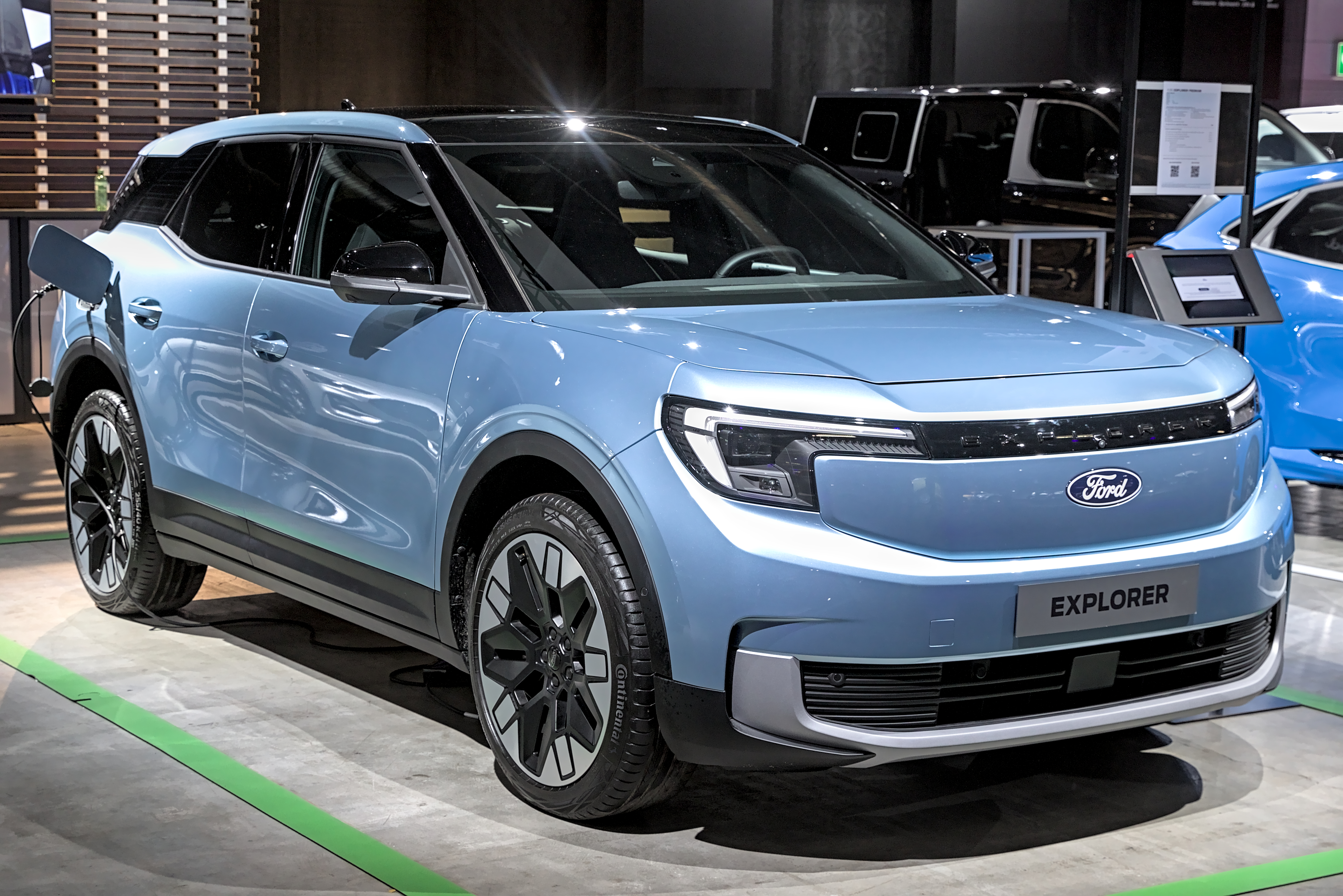
".... satellites. I think it was called Discovery or Explorer. I've forgotten when it was Explorer 1."
The Ford Explorer is a type of vehicle called an SUV, which stands for Sport Utility Vehicle. It’s known for being spacious and good for families, making it a popular choice for people who need to carry more passengers or gear.
The Ford Explorer is a mid-size SUV that was first introduced in 1990 and has become one of Ford's most popular models. It is significant for its role in popularizing the SUV segment in the United States, offering a blend of utility, comfort, and performance.
"And my adolescence was coincided with the popularity of NASCAR. Right, yes, definitely."
NASCAR is a type of car racing that takes place on circular tracks. It's very popular in America, and people often cheer for their favorite drivers and car brands during the races.
NASCAR stands for the National Association for Stock Car Auto Racing, which is a popular motorsport in the United States featuring stock car racing. It has a rich history and is known for its high-speed races on oval tracks.
"You could tell when it was a Ford going down the street or a Chrysler product or a Chevy."
Chevy is a nickname for Chevrolet, a popular car brand in America that makes many types of vehicles, including trucks and sports cars.
Chevy, short for Chevrolet, is a division of General Motors and is known for producing a wide variety of vehicles, from trucks to sports cars. Chevy has a strong presence in both the consumer market and motorsports.
"You could tell when it was a Ford going down the street or a Chrysler product or a Chevy."
Chrysler is another car company in America that makes different kinds of vehicles, including cars and vans. They have a long history in making cars.
Chrysler is an American automobile manufacturer known for its cars and minivans. The brand has a significant history in the automotive industry and has been involved in various forms of motorsport.
"But what was really going on when we came on the air for real in 81 was we were in the early stages of Detroit's shift from body on frame to unibody chassis with front wheel drive replacing rear wheel drive."
Front-wheel drive means that the front wheels of the car are the ones that get power from the engine. This helps the car handle better and can make it more spacious inside.
Front-wheel drive (FWD) is a vehicle configuration where the engine's power is directed to the front wheels. This layout improves traction and handling in various driving conditions and allows for more efficient use of space within the vehicle.
"But what was really going on when we came on the air for real in 81 was we were in the early stages of Detroit's shift from body on frame to unibody chassis with front wheel drive replacing rear wheel drive."
Rear-wheel drive means that the back wheels of the car are the ones that get power from the engine. This can make cars handle differently, often better for sports cars, but it can also take up more space inside the car.
Rear-wheel drive (RWD) is a vehicle layout where the engine's power is sent to the rear wheels. This configuration is often associated with better handling dynamics, especially in performance vehicles, but can be less efficient in terms of space and traction compared to front-wheel drive.
"But what was really going on when we came on the air for real in 81 was we were in the early stages of Detroit's shift from body on frame to unibody chassis with front wheel drive replacing rear wheel drive."
A unibody chassis means that the car's body and frame are made as one piece instead of being separate. This helps make the car lighter and more fuel-efficient.
A unibody chassis is a construction technique where the body and frame of a vehicle are integrated into a single piece. This design reduces weight and improves fuel efficiency while maintaining structural integrity, making it a popular choice for modern vehicles.
"People kind of call it like the golden age of stock car racing."
The golden age of stock car racing was a time when car racing became very popular in America, with many famous races and drivers. It was an exciting period for fans of the sport.
The 'golden age of stock car racing' refers to a period in the mid-20th century when stock car racing gained immense popularity in the United States, characterized by iconic races and the emergence of legendary drivers.
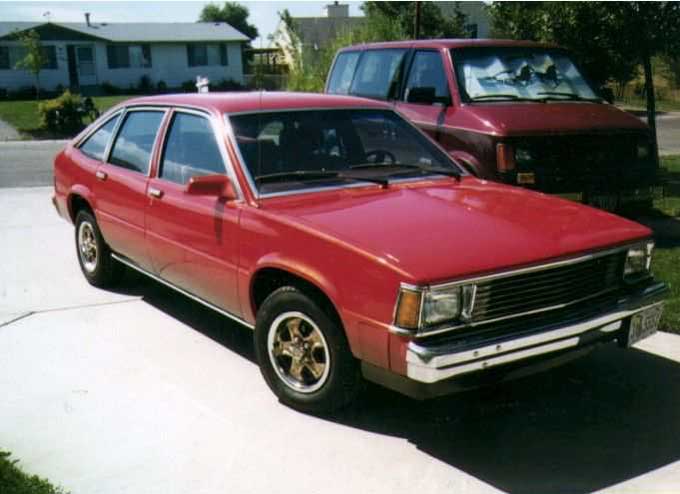
"And it was the first car like that they had done over at Chevrolet. They were cooking up the citation as their first big foray and taking that chassis and another chassis and trying to spread it through all of the divisions."
The Chevrolet Citation was a small car made by Chevrolet in the 1980s. It was one of the first cars from Chevrolet to use front-wheel drive, which made it different from many older cars that used rear-wheel drive.
The Chevrolet Citation was a compact car produced by Chevrolet in the early 1980s, notable for being one of the first front-wheel-drive cars from the brand. It was part of a larger trend in the automotive industry towards more economical and space-efficient designs.
"And my first car was a 1967 used Ford Mustang coupe, a basic coupe with six-cylinder engine"
The Ford Mustang is a well-known car that many people love. The 1967 version is famous for its cool look and powerful engine.
The Ford Mustang is a classic American muscle car that was first introduced in 1964. The 1967 model is known for its iconic design and performance, making it a popular choice among car enthusiasts.
"I mean, I remember watching the 24 Hours of Le Mans back in the 60s when Ford won, and that was the first real global satellite broadcast."
The 24 Hours of Le Mans is a famous car race that lasts for 24 hours straight. Cars race around a track, and the goal is to cover the most distance in that time.
The 24 Hours of Le Mans is one of the most prestigious endurance races in the world, held annually in France. It tests the durability and performance of both cars and drivers over a full day of racing.
"...Or rolling back an odometer. But more like, say your starter motor went out replacing it with a used part instead of a new one."
Odometer rollback is when someone changes the number on a car's mileage counter to make it look like the car has been driven less than it really has. This is often done to trick buyers into thinking the car is in better shape.
Odometer rollback refers to the illegal practice of reducing the number of miles shown on a vehicle's odometer to make it appear less used than it actually is. This can mislead potential buyers about the vehicle's true condition and value.
"...say your starter motor went out replacing it with a used part instead of a new one. So there was that around."
A starter motor is a part of the car that helps start the engine. When you turn the key, it makes the engine turn over so it can start running. If it breaks, the car won't start at all.
The starter motor is an electric motor that initiates the engine's operation by turning it over when the ignition key is turned. If the starter motor fails, the engine won't start, making it a critical component of a vehicle's starting system.
"But I do remember it was Mercedes, who was the first European automaker to basically say, we will give you a chance."
Mercedes-Benz is a famous car brand from Germany that makes high-end cars and trucks. They are known for their quality and luxury.
Mercedes-Benz is a German automotive brand known for luxury vehicles, buses, and trucks. It is one of the oldest and most prestigious car manufacturers in the world.
"So cars from them became available, Volvo, Jaguar and BMW."
Volvo is a car brand from Sweden that is well-known for making safe and reliable cars. They offer different types of vehicles, including cars and SUVs.
Volvo is a Swedish automotive brand known for its focus on safety and reliability. The company produces a range of vehicles, including sedans, SUVs, and wagons.
"So cars from them became available, Volvo, Jaguar and BMW."
BMW is a well-known car brand from Germany that makes luxury and sporty cars. They are popular for their performance and driving experience.
BMW, or Bayerische Motoren Werke, is a German automotive brand known for its performance-oriented vehicles and luxury cars. The brand is famous for its sporty sedans and SUVs.
"The Asian manufacturers in those days, they were all Japanese. That's another story. They were taking more and more market share."
Market share is how much of the total sales in a market a company has. It shows how popular a brand or product is compared to others.
Market share refers to the portion of a market controlled by a particular company or product. It is often expressed as a percentage of total sales in that market.
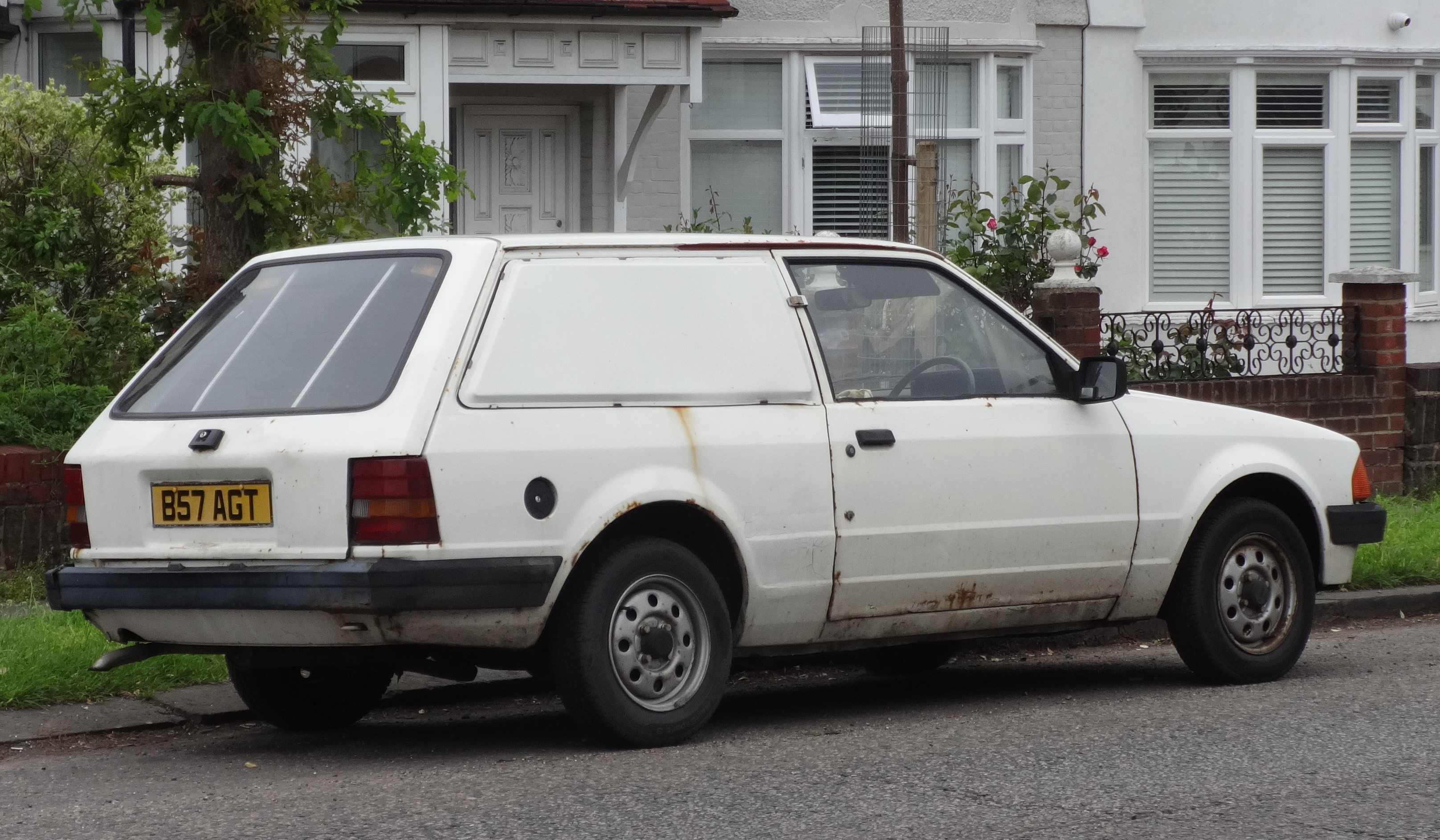
"But what was really going on when we came on the air for real in 81 was we were in the early stages of Detroit's shift from body on frame to unibody chassis with front wheel drive replacing rear wheel drive. And on our first show we tested the Ford Escort, Ford's so-called world car. And, you know, that was a front wheel drive compact."
The Ford Escort is a small car that was made for many years, known for being affordable and easy to drive. It was popular because it helped people save on gas and was practical for everyday use.
The Ford Escort was a compact car produced by Ford from the early 1980s until 2003. It played a significant role in the shift towards smaller, more fuel-efficient vehicles during a time of changing consumer preferences.
"So you looked at a Buick, you looked at a Cadillac, you looked at the Pontiac."
Cadillac is a luxury car brand from the United States, famous for making high-quality and stylish vehicles.
Cadillac is a luxury vehicle division of the American automobile manufacturer General Motors (GM), known for its high-end cars and innovative technology.
"... new model. The first ever made something like a Jeep Cherokee. That's the one that comes to mind the ..."
The Willys Jeep is an old type of vehicle that was used a lot during World War II. It’s known for being tough and able to drive on rough roads, which is why it became very popular for military use.
The Willys Jeep, originally produced during World War II, is recognized as one of the first mass-produced 4x4 vehicles. Its rugged design and off-road capabilities made it a vital asset during the war and laid the foundation for the modern SUV.
"..., let's take a compact SUV and there were already S10 Blazers out there. But there were two doors, two doors w..."
The Chevrolet S-10 Blazer is a smaller SUV that’s good for people who want a vehicle that’s easy to drive but still has space for passengers and cargo. It’s like a mix between a car and a truck.
The Chevrolet S-10 Blazer is a compact SUV that was produced from the late 1980s to the early 2000s. It is significant for its smaller size compared to other SUVs, making it easier to handle while still providing the versatility of an SUV.
"...me that were just, I thought, milestone cars, the C7 Corvette, because it was the first Corvette that ..."
The Chevrolet Corvette is a fast and stylish sports car that many people admire. The C7 version is special because it has a lot of new features that make it perform better and look more modern than earlier models.
The Chevrolet Corvette is an iconic American sports car that has been in production since 1953. The C7 generation, introduced in 2014, is particularly notable for its advanced technology and performance, marking a significant evolution in the Corvette lineage.
"...y used to be like. Another sports car, the Dodge Viper. When it came out, it went against everything th..."
The Dodge Viper is a very powerful sports car that stands out because of its unique shape and loud engine. It’s designed for speed and excitement, making it a favorite among car enthusiasts who love fast driving.
The Dodge Viper is a high-performance sports car known for its powerful V10 engine and aggressive design. Launched in the early 1990s, it became a symbol of American muscle and performance, often praised for its raw driving experience.
"they had a 10-cylinder engine that vibrated constantly."
A 10-cylinder engine is a powerful engine that has ten separate parts called cylinders. It's often used in fast cars to make them go really fast.
A 10-cylinder engine, often referred to as a V10, is a type of internal combustion engine that has ten cylinders arranged in a V configuration. This engine type is known for delivering high power and performance, commonly found in sports and supercars.
"...st time I ever drove, believe it or not, the Ford Taurus. I actually remember going to Ford before the Ta..."
The Ford Taurus is a larger car that many families used to drive because it has a lot of space inside. It was popular for being comfortable and good for long trips.
The Ford Taurus is a full-size sedan that was first introduced in 1986 and became one of Ford's best-selling cars. It is significant for its role in changing the design of American sedans, moving towards a more aerodynamic shape.
"But you really got SUVs and pickup trucks that pretty much rule the roost. And yes, you've got an electric in there."
Electric vehicles are cars that run on electricity instead of gasoline. They are becoming more common because they can be better for the environment and cheaper to drive.
Electric vehicles (EVs) are cars that are powered entirely or partially by electricity, offering an alternative to traditional gasoline-powered vehicles. They are becoming increasingly popular due to their lower emissions and potential cost savings on fuel.
"What's going to really change, though, is the technology inside the car. We are on the verge of having the purely digital automobile."
A digital automobile is a car that uses a lot of technology and software to control its features. This means you can change things in the car easily, like how it looks or works, using updates.
The term 'digital automobile' refers to vehicles that integrate advanced digital technology, allowing for features such as software updates, customizable interfaces, and connectivity with other devices. This shift represents a significant change in how cars operate and interact with drivers.
"...they tell the engine how much horsepower it is, which I just think is crazy. But I think that kind of programmable, upgradable over-the-airways automobile is definitely coming very, very fast."
Horsepower tells you how powerful an engine is. More horsepower usually means a car can go faster or accelerate quicker.
Horsepower is a unit of measurement for power, commonly used to quantify the power output of engines. It indicates how much work an engine can perform over time, and higher horsepower generally means better performance.
"...Lane Keep Assist, the automatic braking, allows you to basically, you know, if you're not paying attention..."
Automatic braking is a feature in some cars that helps stop the vehicle if it senses something in front of you that you might hit. It can help prevent accidents by applying the brakes for you.
Automatic braking is a safety feature that detects potential collisions and applies the brakes automatically to prevent or mitigate an accident. This technology enhances driver safety by reducing the risk of human error.
Select text to request an explanation
Welcome to the podcast of Motor Week, television's original automotive magazine.
Motor Week is made possible by Auto Value and Bumper to Bumper and TireRack.com.
Here's your Motor Week podcast host, Jessica Rae.
Welcome everyone, I'm your host Jessica Rae.
This is the Motor Week podcast number 365
and we're back with another special episode celebrating Motor Week's 45th anniversary.
Now, we've already brought a few alumni onto the podcast already to take a look down memory lane,
but as the producer of this podcast, I thought to myself,
do you know who we've never actually sat down with?
Well, the person who has made this all happen and he's the reason why we're all here,
so please welcome a man who really needs no introduction,
the creator and host of Motor Week, John Davis. Welcome John.
Thank you, Jessica, and boy is it weird being on this side of the microphone.
I think this is the first ever episode where you are the guest.
But I'm glad to be with you.
Awesome, well thanks for being here.
So many people know you just as the host of Motor Week,
that's kind of probably in their eyes where your life began.
Pretty much, after 45 years.
So I thought, you know, this would be so fun for us to take a deeper dive into who you are,
your background, the beginnings of Motor Week,
and of course, you know, how things have evolved over time because 45 years,
that's a long time to be doing anything.
And it's an eternity in television.
Yes, yes, absolutely.
So let's kind of take a step back.
Let's start all the way, at the beginning, a young John Davis as a boy.
Oh my, we're really going to go way back, all right.
You know, what in, when you were a kid, would have began your interest,
and not in just cars, I know you're a car guy,
but you like things that move in general.
You know a lot about planes, you know a lot about trains.
Is there anything you can remember?
Well, I can remember some of my earliest doodles,
and they were generally planes or rockets or cars,
and I actually still have some.
Solves it away in a big box in my basement.
So I think it probably, some of it came from my father.
He liked driving a new car, and most in those days,
it was not unheard of to get a new car every year,
because frankly, the cars were so poorly made,
they often didn't last that long, and styling changed every year.
So in the 50s and 60s, every year, the new model, whatever it was,
Ford, Chevrolet or whatever, looked different.
And you know, part of, I think my father's business was looking up to speed,
and I wouldn't say prosperous so much, because we basically always had Fords,
but you know, at least with it, not driving around in a clunker.
It was part of his point of pride,
and he liked his family to be able to ride around
and something that was nice and new.
So that was part of it.
My grandfather, on my mother's side,
he had an old DeSoto with three on the tree,
and he had a long driveway.
So from the moment I think I could probably touch the pedals,
I was going forward and backing up and basically getting that driving sensation in me.
I didn't have anything like a go-kart.
That really was a little, they were around,
but they weren't a hot item when I was a kid.
Of course, I had a bike, but so that started it.
And then I can remember one Science Fair,
and the Science Fair was just after we had launched one of the first U.S. satellites.
I think it was called Discovery or Explorer.
I've forgotten when it was Explorer 1.
And it was a long, tubish-looking satellite,
and this was, of course, after the Russians had launched Sputnik
and changed, I think, everybody's view of outer space.
So I built a life-size model, and it was an exposed model.
He had skin off so you could see all the insides of it.
And I built that for the Science Fair,
and it was a real size, and it was made out of wood, of course, instead of metal.
And it pointed out all the things inside the radio beacon,
because I think all it did was send back a radio signal.
And the rocket engine in it.
Anyway, that was my Science Fair, which I did not win, by the way.
What?
No, I've forgotten exactly what,
well, I'm probably somebody with something biological,
like a big ant farm or something.
But that kind of, I think, set me on the path towards things that moved.
So I knew I probably wanted to be involved with designing things like that,
so that led to engineering.
So that's kind of, was that how you ended up picking, like,
where you went to school and what you studied?
Yeah, along with the economics.
I mean, basically, we had, I lived in Durham, North Carolina.
That's where I grew up, and we were only 20 miles from an excellent engineering school in C State.
And, of course, being an NC student, it was affordable.
So that, I think, was my sights, probably from the beginning of high school anyway,
about where I would want to end up if I could and get my degree.
And by that time, I was totally fascinated with things that fly.
And, you know, I wanted to get my pilot's license, but I never really did.
You know, I thought about it.
And in those days, you could take, for five bucks, Cessna would take you up in a plane
and fly you around for 20 minutes, probably, so that you would then get into flight school.
And, of course, if you got your pilot's license, you might buy their plane.
I never did that.
Although my dad would take me out to the airport all the time.
And in those days, there was no security.
So when a plane would land, say it would be eight o'clock at night,
and some, it was being Eastern Airlines or Piedmont Airlines, and they would land,
my dad probably knew people at the airport, knew people that actually serviced the airplanes
just from his line of work.
And we would go on the planes.
The passengers would get off.
The plane was wide open.
There'd be a cleaning crew on.
You'd go on.
You'd say, can we take a look around?
They said, sure.
And you'd walk up and down the aisle, and you'd look in the cockpit.
And, you know, and this was all out in the open.
There were no ramps to get on planes.
You basically walked out of the terminal up the stairs.
And we had a decent-sized airport at Raleigh Derm.
So I was just, as a kid, just in wonderment.
And, of course, when I took my first airplane ride, that just cemented it.
So I'm going on and on with that.
But I liked to fly.
But being a kid from the South, because I couldn't fly myself, I drove.
And my adolescence was coincided with the popularity of NASCAR.
Right, yes, definitely.
And I can remember going to the tracks where North Wilkesboro would be the closest track
with my dad.
And we'd watch Fred Lorenzen or Fireball Roberts or Richard Petty in his early days.
All those guys battled it out.
And in those days, you picked the driver because of the brand of car.
Sure, yes, yes.
And we were a Ford family.
So Fred Lorenzen was a Ford driver.
A Lorenzen, I've forgotten.
And we would go, and they all sounded different.
You could tell when it was a Ford going down the street or a Chrysler product or a Chevy.
It was very distinctive.
People kind of call it like the golden age of stock car racing.
Or maybe a little bit before then, right?
A little before that, but it was still in its formative stages.
You've got to remember that many of these stock car drivers, they learned how to drive during prohibition,
running liquor from the mountains on the East Coast to the big cities.
That's where they picked up their skills.
So it was kind of like their day job after that prohibition went away.
The legal way to get some speed.
A brilliant man named Bill France figured out how to turn into a racing series.
Wow.
So, well, now I have to ask this.
What was your first car?
Well, like I said, we were a Ford family.
And I, of course, wanted my driver's license the instant I could go take the test.
And so, because to me in those days, and to anybody, any teenager in those days,
an automobile was freedom.
It was just that simple.
You could now go places without your parents tagging along or tagging along with someone else's parents.
But I didn't have my own car at that point.
I didn't get my own car until I got ready to go to college.
So 1966, actually, I had been in college a couple of years.
I guess I was probably a junior.
And my first car was a 1967 used Ford Mustang coupe, a basic coupe with six-cylinder engine
and probably a three-speed transmission automatic.
Nothing fancy.
My dad had passed by that time, so his brother, my uncle Joe, had helped me buy it.
And I earned the rest.
And it was maroon, and it had a maroon interior.
And that was my first car.
And I drove that until I got completely out of college and then out of my MBA at UNC.
Yeah, so let's move to that.
Where you get your undergraduate degree in engineering.
I'm an aerospace and mechanical engineer.
And that was 1970, so I really am old.
But that was the Vietnam War was ending.
Many of my classmates had been taken out of school for one reason or another and gone to fight.
And some didn't come back.
The war was ending and the defense contractors that would normally hire all of our graduates from NC State
and other schools on the East Coast, they weren't hiring.
Lockheed sent a multi-page letter apologizing for not coming up and interviewing.
Because they would normally hire about 60, 70% of the class.
They were based outside of Atlanta in Marietta.
And they were having their struggles with the C5A transport.
It was nearly bankrupting the company.
So what few industry jobs I was offered,
they all wanted you to get a business degree along with the engineering degree.
Because they were looking towards the future.
They didn't need designers right now.
They needed people that could go beyond that, could manage other young engineers.
So it was going to be a six or seven year program at night school.
I said, that's ridiculous at the University of North Carolina, 10 miles from my home.
Was this fledgling MBA program stocked with really great professors from other big schools.
And so I got my MBA, I said, two years I'll have it.
And I did that.
And while I was in school, my whole focus shifted from being on the operating side of the aerospace industry
to being on the financial observance side of the industry.
So I was much more interested in that.
Of course, how does that tie in with television?
Well, I worked my way through part of my undergraduate and all of my graduate in radio and television in the local market.
I started at NC State when I was involved with the student radio station, WKNC.
And I went on to manage it.
And then I worked on weekends for WCHL in Chapel Hill or WDNC in Durham, two of the local radio stations, which are still around.
Were you doing any on air stuff?
Yes, I was basically a disc jockey.
But at CHL in those days, the CHL was very proud of its advertising.
They did a lot of production for local advertising.
And everyone on the staff would take part in them, either singing or reading the lines or whatever.
And I was lucky enough to be there when they won some of their Clio awards, which is like the Oscar for advertising in general.
And so I think that once you've done radio and television, and I worked for WRDU, which was a small NBC affiliate in our market,
and I was on air there as a news reader.
And once you've done that, it's pretty hard to get that out of your system.
I was going to say, was that when you got bit by the bug?
That was the bug.
I mean, I went on to New York and I was hired by a firm called Kidder Peabody and Company as a research analyst.
So this is like right after, was it about right after you graduated?
1972.
With your MBA.
And what a securities analyst, which is what we were called does, is look at companies and then write reports and recommend to their clients
whether these stocks on these companies or bonds should be bought.
And which one would you buy and which one would you sell?
I went to Wall Street.
And by this time, I was also fascinated with the airline business, which I guess was that came in flux at the time.
Or was it was it booming in those days?
It was booming, but it was there was heavy federal regulation.
So that pretty much guaranteed that no airline would be in trouble.
Gotcha.
That was long before it became known as airline deregulation.
So each company was very distinct.
They all had big stocks floating on Wall Street.
I worked for, I was a junior junior analyst hired at Kidder Peabody by a research director who liked the idea of finding engineers with MBAs.
He felt it would give him an edge over his competitors.
And so the most famous alumni of that group was Mary Ann Keller, who for decades was the leading automotive analyst in this country.
And I think that also kind of, you know, was in the back of my head.
But I was an airline trucking company railroad analyst.
Wow.
So that's all of your knowledge.
All that was a transportation security analyst.
And I would fly over the, along, around the country and I'd talk to the treasurers of different companies.
And my boss, Norman Roth, a very nice man and great teacher.
He, he would take the bigger carriers and I kind of got the smaller ones.
So I got the Westerns and the Continentals and PSAs and stuff like that.
And he got the United and so forth.
Although the big I did, I was the, I did cover Pan American.
So, but anyway, I did the trucking companies in the railroads too, but it was obvious that my love was, was in the air.
So I'm doing analyst work, you know, it's in the transportation mode.
And how long, about how long did you stay on Wall Street?
Was it, was it one of those?
Literally a year.
We all have a stereotypical view of Wall Street.
Right.
Is it exactly what we think it is, this huge big hustle and bustle of just everyone running everywhere.
Yes.
And that's it every day.
It was then.
And I think it still is, but yes, it's a fast paced business, extremely competitive, very gentlemanly like on the surface for the most part.
But yes, it was, it was, and we, I've forgotten the name of the gentleman who was, who ran the company.
But, you know, he was, he was feared, you know, because he would, you didn't see him very often.
And when he came in, it sort of sucked the air out of the room.
But to be honest, I didn't particularly like it.
Right.
I mean, did you get like burnt out?
No.
No.
It was, I didn't, I found the work I was doing not as satisfying as I expected.
I was from not the deep south, but at least from the middle south.
Sure.
And you're in the big city now.
And I was surrounded by, we had three major universities immediately adjacent to where I lived, including Duke University and Durham.
You had multiple smaller colleges.
You had North Carolina Central, which at the time, I believe, was the largest African-American university in the country.
And my two best friends, their dad was a professor there from grade school.
And so everybody was pretty sharp.
It certainly wasn't any kind of, it wasn't a backwards place.
Sure.
It was where the research triangle ended up going in.
Anyway.
So you missed that?
When I was, I missed that, I missed that level of informed conversation that I was not finding in New York.
And in that, it ran both all the way around.
I mean, I was lucky enough to get involved with a couple of small groups up there where we get together for dinner once in a while and have meaningful, you know, conversations.
But for the most part, I sort of found it a little lacking.
So you were looking for other jobs?
I was curious.
But, you know, I lived in on the mezzanine of a high-rise building that had actually been a paint room, the storage room that they converted into a studio apartment for me.
And I had a very good friend, my best friend, I guess, in the building, a gentleman named Nick Vinkie.
Again, just a great guy and a world traveler, even at a young age.
And he and some other guys shared a big apartment up on one of the top floors, and he was the only one that could afford to get to New York Times.
So on Sunday morning, you go up there, have a cup of coffee or whatever, and read the New York Times.
And I was looking in the WAN ads.
And I saw this WAN ad and it said, looking for, I think at that time it was probably associate producer, but it might have said producer for Wall Street Week.
And, you know, applied to Ann Tarlington, Truex Tarlington, and Owings Mills Maryland, Maryland Public Television.
And it piqued my interest.
Because it said they were looking for a combination of business and television as a background.
Which must be a rarer combination for somebody who doesn't, maybe somebody who is a more of an entry-level position.
Yeah, and the truth was that there were 200 applicants, Ann told me.
And I was the only one that had broadcasting media, radio and TV, and a business background.
So I had a unique set of skills.
And you might say, well, where's the engineering come in?
She liked the fact that I was an engineer because engineers are used to problem solving.
Right.
You know, that's the one big thing you take away.
I can't tell you how many of my classmates never went into engineering, but they take that problem solving mentality with them.
And that is a wonderful byproduct of any kind of mechanical, I think, education.
So you see, so you apply, you get an interview, you come down here to Maryland Public Television.
Which was, let's see, this would have been 1973.
1973 in the summer.
So not much around Owings Mills Maryland at that time.
Oddly enough, those of us that, those of you out there listening and watching that know this area, you have Reisterstown Road.
Things are built up around it at all.
It was even that way those days.
But as soon as you got like 200 feet off, it was country.
Yep.
And I remember coming into town, flying down into BWI and spending the evening at a motel in Pikesville, which is nearby.
And being picked up probably by taxi, probably Valley, Valley Cab, which is still around and brought to Maryland Public Television.
And I remember going down Reisterstown Road and turning on this little tiny two-lane road called Benita Avenue.
And it would twist and turn.
And it was a couple of miles back, I was told.
And the only thing I can remember on the road at that time were some derelict liquor warehouses where they would age liquor.
We had a number of, we still had Calvert Distillery and other companies in the area that made spirits.
And they were big, huge buildings, but not being used.
And then finally you would get to this brick sign that said Maryland Public Television.
And we go up the driveway and I was astonished.
I was expecting, because I had come from a small station.
You know, a small administration building and a small studio, and that was not what I saw.
What I saw was this very large building with three, and you could count them even from the street, studios, parking lots that were jammed with cars.
Because there were over 300 people working at MPT in those days.
And brand new, everything was just brand, brand new.
I didn't realize how new it was.
Which, to give viewers and listeners some context, MPT opened in 1969.
But they didn't occupy the new building until, I think, until a couple of years later.
I forgot exactly what it was.
Well, we went on air in 1969.
Well, we went on air, originally they weren't in this building.
Oh, okay, sure, sure, sure.
So anywho, brand spanking new, walk in.
I'm in my three-peats Brooks brother or whoever suit.
Looking snazzy.
Looking snazzy with my little vest and watch chain.
And I mean, I look like Mr. Wall Street.
You literally look like you stepped out of Wall Street.
Yeah, I'm pretty much basically central casting sent me over.
So I walked in and all three studios were humming
and people were running anywhere, everywhere.
And there were boom mics and there were dollies and cameras being wheeled around.
And it was just like, it looked like network.
As a matter of fact, in a lot of the time I was in New York,
I sort of hung out on the side of town where the network studios were.
And I'd go to bars where some of the people worked.
So it felt like that atmosphere, but much bigger than I had possibly imagined,
could exist outside of, say, New York.
So I went on and interviewed with Andrew X. Darlington,
who was the creator of Wall Street Week.
Please preface what Wall Street Week is, because it was a big deal.
Wall Street Week with Lewis Rue Kaiser was the show that really began
financial television as we know it today.
Just like Motor Week is done on the car side, that's what Wall Street Week did.
Every Friday night, Lewis Rue Kaiser and panelists would have a special guest in.
They would talk about what happened on Wall Street that week.
And this went on for over 30 years.
And the position I was coming in for was to be the number two producer,
if you please, on that show, and was the creator and executive producer.
And so that's what the job was.
And it was a small staff of about six people.
What would you do on an evening, because this was a live taped show?
Right. Sometimes it was live, and sometimes it was live on tape.
What were some of your duties when you were running around here?
Oh, I was in charge of looking ahead.
I was a producer. Most people don't really know what that means.
It encompasses a lot of things.
You line up the guests. That was the single biggest thing that I had to do.
There were a lot of big name guests that were on the show.
That's it. We would go to, we would ask somebody who was, you know,
a top analyst like I had used to be in whatever business housing or whatever,
or just a big money manager mostly from Wall Street,
but sometimes from other parts of the country.
They would make their way to Owings Mills, Maryland,
in the middle of nowhere to them on Friday night.
And we would pick them up at the metro liner station or the airport,
get them into the studio, and we would host them.
And before this, though, after you asked them on and they accept,
I would go to New York periodically once every couple of weeks
and do interviews, pre-interviews with them.
We would sit there and engage.
And what my job was, was not so much to ask them questions,
but to gauge, is this person going to be a really good guest?
How much coaching do they need?
And we'd run through some basic questions.
So they kind of knew the rough parameters,
but, you know, you never really knew what Lou Ruchizer was going to ask,
and that's what made him such a good interview.
But you got them relaxed so that they realized they were coming in to an environment
where we wanted the facts and we wanted their opinions.
We were not interested in straying far from what was going on right now,
why we was going on and what they saw coming down the pike.
And so on Friday nights, they would be my responsibility.
Of course, we had everything else we had to get ready for.
The crew and the director needed, you know, to know what was going on.
Lewis would need all of his prep.
He had an assistant and Lewis would write his opening monologue,
which was very well known at that time, his first three minutes of the show.
And then at 8.15, we'd all converge into the studio at the last minute
if it was a live show and go on at 8.30,
or we would tape it a little bit before 8.00 and be finished
about 10 minutes before it would go out live on PBS Coast Coast.
Wow. I mean, that must have been one really exciting
to work on a show like that.
Yes.
And two, you did it for about seven or eight years before Motor Week began.
And I'm curious, what were some of your, I guess, coolest memories?
Because you got to travel. You got to travel the world
and do some very, very interesting broadcasts with that show.
Yeah, I mean, this has nothing to do with Motor Week.
But, yes, we, Ann Darlington is and always was a visionary,
and she recognized that there was a world outside of financial information
outside of Wall Street.
So there was a program on the BBC called the Money Program,
and it was the closest thing they had to what we do.
They were a little bit more feature-oriented.
And Ann struck up a conversation with their then executive producer
and said, why don't we, what about flipping studios?
What about you come over here and do one of your episodes
and we'll come over there?
Because in those days, communication satellites, TV satellites, good ones,
were relatively fresh and new.
A lot of people hadn't really stretched to see what you could do.
I mean, I remember watching the 24 Hours of Le Mans back in the 60s when Ford won,
and that was the first real global satellite broadcast.
Anywho, so the BBC agreed and they sent over a producer
who would do his stories over here and then they brought over their talent
and they did an episode and then we, a short time after that,
would go to the UK and do shows from there.
And that led us to doing shows from stock exchanges all over the world.
In the UK, in France, we tried to do Mexico, but that didn't work out.
Or we'd do a show about the Far East and we just so happened to go to Hawaii to do that.
But we did go on and go and do a show in Japan.
So yes, we were globe trotting and it all culminated in 1979
when the Money Program and Wall Street Week linked up and did a worldwide broadcast.
It went on live on tape, both on the BBC and in the US on the same night.
But we had to keep our host, Lewis Ruchizer, as the primary host on our version.
And their host, Peter Hopgut, Hop Day or Hopgut, sorry, Peter, as their host.
And we had correspondence in studios with guests all over the world.
We did more satellite interconnects for one show.
I think it was an hour show than anyone had ever done in television before.
And we headquartered it all out of the BBC in London at Lime Grove Studios, which is gone now.
And we're the secondary control room here in the US.
And George Benjamin, the director and I, everybody, we were all in England.
And it was very exciting and it set a precedent for the kind of globe trotting, instantaneous interviews that you see today as commonplace.
But it required sitting a producer to wherever.
We had standard set pieces, so every place looked similar to the home studio.
And they had to carry these big pieces of that part of the world's like a globe section with them on the flights and put them together when they got there.
Oh, yeah, it was quite a production.
It took a year in the planning and we did it.
And it was a great show.
So, wow.
Okay, that is, you learned a lot, is what I'm saying.
During that time working on Wall Street Week, being the number two on such an important series.
When it came to time when you began developing the pilot for Motor Week, I'm assuming you took a lot of what you learned to kind of figure out how you wanted to format an automotive show.
Yes, because Wall Street Week was cut into sections.
It wasn't a true magazine show as we learn to see them develop with shows like Entertainment Tonight and Evening Magazine, which was a Westinghouse station local show.
That was just starting to formulate.
What happened was in 1978, I was promoted to be the senior producer of Wall Street Week.
So that's five years after I had started and I became executive producer and my boss, Warren Park, our first programmer chief here at MPT, said, okay, it's time for you to do something original.
Why don't you think up an idea or two and we'll see where we go from there if we do pilot or whatever.
And pilots were very inexpensive to do in those days.
And I did one which was a personal financial show called It's Only Your Money, but I really didn't want to do that.
What I really wanted to do was bring the car magazine, the road and track car and driver and motor trend, those to TV in a timely fashion.
So we saw from the very beginning the idea was develop something that doesn't compete with the print medium because they have the advantage of so many words they can show.
But as an adjunct, we can't talk as much, but we can show more pictures.
That was really the concept.
But that was the formulation for the pilot.
I didn't think much more beyond that.
So we did a pilot in 78 and then it sat on the shelf for three years.
What was the response after once you did the pilot?
It sat for three years.
Why did it sit for so long?
My boss liked it, Warren liked it.
But I would say that automotive was certainly not something that public television took an eye to being a part of or being very interested in.
It was cars.
And cars are kind of, I don't know.
Well, I guess that the context of the time period maybe.
I mean, cars were pretty bad.
So it's like, what are you going to do to have a show where all the cars are bad?
I mean, cars were, you know, a lot of stuff that was coming out of Detroit in those days because of the early emissions controls were not really terrific vehicles.
So any who really took that long is I had to go out and sell the show.
Right.
So I would go to network meetings or any gatherings where other program directors were there because we needed to know that there would be a certain nucleus of stations that would take the program.
Because the idea, too, was like this wasn't going to be a local show.
No, it was designed.
This was absolutely going to be a national program.
Yes, at least regional from the beginning.
We had a philosophy then of think local, produce nationally.
And I think, hopefully, Warren, I didn't get it backwards.
But the idea was, what's of interest to people in Maryland, because that was our primary interest, and it still is today, will also be an interest to everybody because Maryland is kind of a microcosm of the whole country.
So do something that viewers here will find fascinating and it will, we can expand on it.
And I think we wanted to be able to attract some serious advertising or underwriting, as it was called in those days on public television.
And so you needed a broader reach than just having a local because this was going to involve cars and people and testing.
I mean, we could see that this was going to cost some money.
And it took that long.
And what happened was, on July the 5th, 1981, Warren calls me into his office and tells me that another station is getting ready to do an automotive show.
Probably they had seen our pilot at a meeting or heard about it and they were interested.
And my boss was concerned, maybe they'll be just to air and we probably had the idea first.
So he said, can you be on the air in six months?
And I said, well, I'll be on the air in six weeks.
And we didn't quite make that.
That was July the 5th.
Then we got on the air in October.
But we immediately went out to put together a team and get ready to go off and start shooting the show.
And that first episode is where we had Pat Goss.
That's right.
So when you're looking at the format of the first episodes and the first two seasons.
It's going to be a magazine.
I'm sorry, I didn't mean to interrupt.
It's fine.
It will have sections, distinct sections, because the idea in the back of my head was,
one day if you ever had to take this commercially, you could divide it up and put in commercials.
So we're thinking you have a road test segment.
You reviewed two cars, at least, two cars.
We didn't have a lot of features in the first.
Not a lot of features, but you did have a news segment.
You did like to throw in the latest news, whether that was with Joyce Braga.
And she would talk about new car reveals, recalls, things like this.
And then there was the mechanic segment with Pat Goss.
Pat had done a bit or two with another local show we had, which was called Consumer Survival Kit,
which was kind of like a consumer reports for TV.
And Pat had been their trusted mechanic when they were out looking for people doing fraud,
not to put too much of a fine point on it.
But I guess back then, was it fraud?
It got a lot of publicity.
I don't know how widespread it was, but you would always hear about people pulling into a gas station,
getting a fill up, and all of a sudden a tire, a leaking tire would be discovered, stuff like that.
Or rolling back an odometer.
But more like, say your starter motor went out replacing it with a used part instead of a new one.
So there was that around.
I don't think it was, I never actually experienced that, but that's sort of what the media was looking at.
And Pat was often called on by local media to help ferret out somebody who was being a bit dishonest.
I met with him, I realized he had an enormous amount of knowledge.
He ran a golf station in Washington DC with a couple of repair bays.
And we went down there on an incredibly hot couple of days and taped enough segments with Pat
while everyone was just sweating like crazy to get us on the air.
When you were developing that segment and what it would become, what topics would be addressed,
kind of what was the logic behind it?
The logic was we had all seen people try to do auto mechanics on videotape.
In those days it was videotape.
And the problem was they would show you one step, but because you couldn't easily stop them and get back to that exact spot,
in many cases it was either running or not running, or if you hit pause it just didn't pick up exactly the same spot.
You couldn't remember what the technician or the mechanic was telling you 30 seconds later.
So it was very hard to find a, to be really a do-it-yourselfer.
Like how to change your oil or put on brake pads.
So instead of do-it-yourself, we coined the phrase, and I don't know who could take credit,
whether it was Pat or not, probably it was Pat.
Instead of do-it-yourself, know it's yourself.
Know how to talk to the technician.
Know when the technician is explaining something to you, what it is.
Be aware of the warning signs, so be educated about what you're doing to make sure there is no sleight of hand.
So know it yourself became the guiding light for everything we did with Pat and Goss's garage for the next 30 years.
Was he just as good in the beginning as he was like forever?
He was very good.
I mean, I fortunately was able to work with Pat for a few years before he passed, and he was just on it.
Like he just had this beautiful way of being so pointed and succinct with what he was saying.
And you're like, hey, Pat, can you just tell me about this and do it in two and a half minutes?
And he just would.
And he'd do it at the same time?
Yeah, you're like, ah, Pat, the camera was wrong, or audio hit, whatever.
Okay, and then you just do the same thing.
Was he always very much like on it, like in the beginning?
Pat was trained as a teacher.
That's where he got the skill from.
So yes, even from the very beginning, he required very little prompting.
He almost never had, I think he really never had a prompter or cue cards to work after.
He had it in his head, what he wanted to say, and he knew the discussion had a beginning, a middle, and an end.
And he always would end with our address for people to send him his correspondence.
And he had that gift, and it is an incredibly rare gift.
And like you just said, he would repeat the same information, tweaking it to make it better, depending on what the director or the producer wanted.
But he was extremely repetitive, and if you told him two and a half minutes, it might take him a couple times, and he might start off at 3.15, but he'd get it to 2.30, and not leave anything important out.
He was a master.
He really was.
Yeah, he really was a master.
Now, in those early days, you know, this is a whole new concept, an automotive television show, automotive, in automotive journalism.
There really wasn't too many people doing anything quite like this.
So when you're going after the auto manufacturers and you're forging relationships with them and you're saying, hey, send us some cars.
We want to start testing them.
What was that like?
And were there any manufacturers that were like, gave you like a second look and were like, I don't know about these guys.
Well, you're hinting at something that was true, and that was that automobile companies and the media television did not mix well.
At the time?
At the time.
Most things.
I mean, you had your car ads, of course, but most journalistic coverage of the auto industry was not positive.
And it would be either about, you know, recalls or those recalls in those days were rare.
Vehicles not doing well, losing market share to the imports, whatever.
It was not a positive experience that the auto industry had with TV.
And frankly, they probably deserved every bit of bad information that came out about them.
They did.
So the auto industry was struggling.
It was struggling with an influx of import vehicles, which had been going on for quite a while.
This was not brand new.
But this is really where Toyota and Honda are coming into their own.
And becoming huge parts of the market.
Taking market share away, especially from General Motors, but also Ford and Chrysler.
And also, as I sort of alluded to before, it was the early days of sophisticated emission control devices, catalytic converters.
They were still being fitted to a lot of cars.
And with catalytic converters came a lot of new problems because very often they would be stuffed in available space,
which might not be perfect and they got hot and they caused other problems.
So the industry had a lot of issues.
I do not remember exactly who we talked to first, but I do know that the domestic automakers all had East Coast representatives
because there were a lot of magazines that did car reviews on the East Coast,
particularly popular mechanics and popular science.
They were big car test operations in those days.
So I basically went to the same reps that they talked to.
And Ford and General Motors and Chrysler, they agreed almost immediately.
I do not know why they trusted us, but they basically said, we will give you a chance.
So from the very outset, they had fleets of vehicles in New York and some in Washington, they were accessible.
Most of the European imports had their headquarters in New Jersey.
So they were in the same area.
They talked to the same people.
But I do remember it was Mercedes, who was the first European automaker to basically say, we will give you a chance.
And that is exactly what they were saying.
They were going to say, let's see how you treat us.
So cars from them became available, Volvo, Jaguar and BMW.
So we had really no problems with any of the domestics or any of the major European manufacturers.
The Asian manufacturers in those days, they were all Japanese.
That's another story.
They were taking more and more market share.
They were happy.
They didn't particularly see the advantage of taking a risk with an unknown entity,
especially since they were all based in California and we were 3,000 miles away.
And that might as well have been on the other side of the planet.
So we pretty much got the cold shoulder from Toyota and Honda.
And in those days, I forgot whether it was Nissan by then or not.
Close.
I think it might have been right over there.
Or it just had changed over there.
Datsun.
Anyway.
And they were the three big players and nobody else really mattered.
So what happened was in those days, some of the importers, import brands still had U.S. distributors that were independent.
And we had one here at the Port of Baltimore, the Atlantic Toyota.
They brought any Toyota that was coming into this part of the country, had to go through them.
They were privately owned company.
So somehow we got an introduction down there and they said, sure, we'd love for you to test our Toyotas.
So we got cars from there, which really irked the guys out in California.
Sure.
But that prompted them to start providing us cars because they wanted to make sure that we got the cars the way the corporate entities wanted them.
Right.
But it was still after that.
Nissan, I think, was number two, came on.
But it was a while before we got much cooperation from Honda.
But they too saw that as we started to spread, we originally had been just an East Coast regional show, but we were gradually spreading across the country.
And when we started to get into their markets, they said, we better make sure that we know what they're going to test before they test it.
Right.
And so they came on board.
But it was a while before California, the Japanese imports graced us with their products.
Well, that brings up something interesting.
I am curious as to was there a point in time where you knew that the show had really taken off and was starting to make an impact, but not necessarily toward just like getting more cars or being like this trusted news source.
But you're having this audience, like there are people who this is what they're watching every weekend on their TVs with their families.
When the Detroit station decided to pick us up, that was huge.
And they were a real tough nut to crack.
When they picked us up and all the Detroit executives saw their products being tested, that had a huge impact.
We'd already seen the impact on the East Coast because public television, lots of folks watched it, still do, of course, and they would hear from their neighbors.
Hey, we saw one of your cars on a show on our local WN18 New York last weekend.
So it was that kind of snowballing effect.
It was more from the top down to the bottom up in those days.
But that was what we needed because we needed more cooperation so we could get the newest models.
Because our intent from the beginning was to have on air during the month the same new vehicles that the magazines are testing on that monthly issue.
Now they came out, magazines come out early, like 1st of September they'll have an October issue out.
So I had until the end of October to try and get the cars that they featured on.
But that involved getting invited to the press events.
Well, when management hears that there's a show out there testing cars, that trickles down to the public affairs people and all of a sudden you're on their list.
But that was actually an entirely different fight because up to that point TV and radio basically or even newspapers would only get invited to what they called short leads where the vehicle was coming out literally the next week.
They didn't trust the daily and electronic media to go buy embargoes.
Where the magazines, their old buddies, you know, oh, you can't talk about this for six weeks.
They got it, but it gave them time to get the cover shots to get big stories done.
So they always had the stuff first, but they would go to what were called long leads and they would often be three months before the car hit the market.
So our whole stick was to get invited to those events so we could plan, get the vehicle in here.
Plus our network PBS wanted to know what we were going to do six to eight weeks in advance for listings, TV listings, TV guide and all that stuff.
People don't realize how long you had to give information out about what you're going to show because magazines had to be printed.
Yes, that's right.
Anyway, and that was a little struggle.
But again, the domestic manufacturers, particularly General Motors, invited us to those first.
I would say a great debt to the folks at GM because they took a chance on us from the very beginning.
I was going to say, you know, in the earliest of days like season two, you guys are taking an entire group of people out to their proving grounds and doing whole segments on their entire lineup for that next year.
In those days, you still had most of your car introductions in October.
And every July, and I don't remember exactly why I conceived this brilliant idea.
Because you want to give more work to yourself.
We would go to, we called it our version of Hell Week, and we'd go to Detroit for a week.
And it was a substantial staff, probably six or eight people and a couple of videographers.
And we convinced the automakers to let us come to their proving grounds with cameras from the outside.
And they would bring out all of their new products and even the stuff that had just been, you know, barely updated.
Because by then, yearly design changes had pretty much faded away.
Right, yep.
And we would go to GM, and one day we would do Chevrolet, and then we'd do Pontiac the next day, and we'd do Buick, and we'd do Osmobile, and GMC was in there.
And then we'd turn around and go back and do Ford and Chrysler at their proving grounds.
And it was assembly line.
You know, we'd run everything through the same test nowadays to take outside cameras onto these proving grounds.
I mean, it just doesn't happen.
There's a lot of security on proving grounds.
You are escorted everywhere.
They put tape over your phone lanes.
Yep, yep.
If they let you keep it.
Right.
So it was a lot more, there was an enormous amount of trust.
And I think a lot of that was because the public affairs staffs in those days were run very much by ex-journalists.
Newspaper writers or whatever, that basically had gone to work for the dark side so that they had a little security.
And they were wonderful men and women, and they taught me so much about their job and how they look at the press.
I'll never forget one conversation, a grisly old PR veteran from Chrysler said, you guys are not the big issue.
I said, we can handle you.
He says, we have to pay attention to the executive that we're assigned to, whether it's the president of the company, the chairman or senior vice president.
That's who they had to please.
We were sort of like, you know, like gnats on some days.
Because I mean, you know, it's, gimme, gimme, gimme, here I am, take notice of me, you know.
Well, it makes me wonder, you know, what was your initial goal for the show?
What did you want to portray to people that they hadn't experienced like otherwise with the, how you presented the content?
What did you want them to take from it?
A couple of things.
We knew we were narrow casting, so we wanted to make it as broad of a narrow cast as possible.
I couldn't just concentrate on people that were in the market for new cars.
In those days, you bought a new car, maybe every five to seven years.
I needed something that would, would give me a larger audience.
So that's when we started developing the features on the show.
At the same time, most car magazines and print media, they had maybe a five, ten percent woman audience.
And we knew that women viewers were incredibly important to public television.
So we wanted to be broader than that.
Well, in my mind, that meant not talking, not talking in jargon.
And at the same time, not talking down to them.
I mean, in those days, if you read Car and Driver, a lot of times, you know, if you didn't have sort of a good mechanical knowledge in the background,
some of the stuff they wrote didn't make a lot of sense to you or you didn't know why it was important.
So we needed to, I won't say simplify it, but certainly demystify a lot of the information that we gave.
And it worked between that.
And I'm sure part of it was Pat Goss and the fact that we had women on the air.
Yes.
There weren't a lot of women in automotive media, and there weren't a lot of women even on the air in those days.
So from the very beginning, we tried to make sure, along with Joyce Braga, that we had at least one of our main reporters would be a woman
to make sure that we understood what was going through the female car buyer's mind, because people don't realize, and it's probably still true today,
the majority of new car purchases depended on a woman's acquiescing or desire, you know, either in conjunction with her partner or male partner or whatever.
Sure.
So we had to make sure that we had that viewpoint.
Again, we're public television.
We want to treat everybody the same and we want to be as broad as possible.
And it worked.
I mean, we were, even from the earliest days, garnering 30 and 40 percent women viewers.
And of course, we found out women basically, you know, didn't look forward to either buying a car or taking a car in for repairs.
Right.
They were often treated disrespectfully or like, you know, the little woman, whatever.
You really don't know anything about cars so I can snow you.
And of course, what we found out going along is most men were in the same boat, you know, most men that you think a guy automatically knows about cars.
Well, they don't.
And so many of them, of course, because it's a guy thing would profess more knowledge than they really had.
So it worked on both genders.
And but it gave us, I think, an edge over a lot of our population because the car magazines, they really weren't in the position to do that.
And the automakers took note when they started looking at demographics and realized that we were attainable by, you know, both male and female.
That was a big impact because they knew who they were selling their cars to.
So, John, you know, the show starts in 1981.
And if anybody's listened to the podcast we did with Craig, he talked a lot about how cars were changing from the 70s into the 80s.
Let's talk a little bit about how the automotive industry has changed over the 45 years.
I feel like you could almost like each decade in itself seems to be very different.
Oh, absolutely.
But I will say my my timeline might be a little confused.
But what was really going on when we came on the air for real in 81 was we were in the early stages of Detroit's shift from body on frame to unibody chassis with front wheel drive replacing rear wheel drive.
And on our first show we tested the Ford Escort, Ford's so-called world car.
And, you know, that was a front wheel drive compact.
And it was the first car like that they had done over at Chevrolet.
They were cooking up the citation as their first big foray and taking that chassis and another chassis and trying to spread it through all of the divisions.
Right.
And that brought to the came to the era of the look-alike General Motors products where they didn't have the money to engineer a different front wheel drive chassis for every brand.
So they basically just put a different body, but the bodies were all designed pretty much by the same people.
So they all look the same.
So you looked at a Buick, you looked at a Cadillac, you looked at the Pontiac.
They were all sort of squarish and they all look the same.
The look-alike GM products.
So it was the 80s and really into the 90s were still an extremely difficult time for Detroit.
They had giant quality problems.
Their products were not up to speed.
They were trailing the Japanese in particular.
While at the same time, the luxury market was pretty much being taken over completely by Mercedes and BMW, which were growing by leaps and bounds.
So they were under attack in all areas.
For us, it was a golden era because there were so many new products coming out from all of the brands.
Everybody trying to, and it's a hugely, still is a hugely competitive business, but it was really dog-eat dog in those days.
I was going to say, it's really interesting when you look at the first couple seasons of the show and it's like, this is a brand new model.
The first ever made something like a Jeep Cherokee.
That's the one that comes to mind the best because we were at the dawn of the modern SUV.
The first time somebody actually said, let's take a compact SUV and there were already S10 Blazers out there.
But there were two doors, two doors with a lift back.
So now you've got a four-door quote-unquote all-wheel drive wagon called an SUV.
That first XJ Cherokee really started the whole SUV craze for the average family where there was now an alternative to a sedan that could do carry.
It was like a station wagon, but you didn't worry as much about wintertime and if you got a little adventurous, you could take it off-road.
So there was so much going on and Motor Week has always been about what's new and the technology that goes with it.
We've never been a classic car program.
I know our retro reviews are enormously popular and I thank everybody that's a fan of those.
But the reason we have those retro reviews is because we tried so hard to stay absolutely current.
It was a constant battle with the car makers to get the car in here so we could review it and get it on the air.
There were still a couple of weeks lag there.
At the same time, the magazines were doing all of their very involved writing, researching and testing.
Very often we would get the car immediately after somebody like a car and driver would have it.
Sometimes they put new tires on it, sometimes they wouldn't.
The automotive industry changed, right?
And we changed with it.
Motor Week had to change with it. We have new propulsion systems.
But also, while the format of Motor Week has stayed the same, it has changed in a way.
We've talked about this on the show. It's like it's faster paced because modern audiences don't want to sit through a 15-second drive-by shot.
They need something more exciting.
In your mind, can you remember a time when you were like, we need to push things up a notch?
I think it would come probably almost every year because I consumed a lot of television.
I saw what was going on with the eyeballs we're looking at.
We were approaching the earliest days of the Internet and you could sort of get a sense on what that was going to be like.
But yes, pace and that had to improve along with what people were consuming at home.
But also, new technology. Cameras became far more portable.
In the earliest days, we'd have a videographer, but they were attached to an umbilical cord to a recorder that had an engineer on it.
And we had a sound person. We would gradually get towards, you only had two people, then there would be only the videographer doing everything.
So that right there enabled you to speed up production.
And instead of doing, I often say in those early road tests, we had maybe 16 or 20 shots in a five to six minute road test.
Now it's 60, 70 in the same length.
And that's the kind of increase in pace that we've seen over a long time.
But we pretty much devaluated it yearly, but it had a lot to do with the advent of new technology that made just shooting television easier.
And of course, when things like GoPro's came along and I mean, we were using them, we were using cameras mounted to cars long before GoPro.
But it was a tedious process.
It would take an hour to set up. Sometimes the cameraman would actually hang out of the vehicle on a helicopter harness to get a shot with a full size camera.
GoPro's were revolutionary. And then after that, and we took big advantage of that.
And that allowed us to sweeten the test a lot better.
It gave the editors much more to work with.
Editing became a much more computerized, easier job.
So that was faster. And then of course, drones came along and that's gone through the same kind of integration process.
It's hard to believe we've been using drones for a decade.
Well, you know, I mean, I imagine a lot of this too hinged on the fact that a little bit after the turn of the century, there's more competition.
Oh, yes, competition of way more people doing video automotive journalism.
And now it's almost like it's taken over versus print media.
Yes, I mean, print media, we were the new media back in 1981, but print media certainly has taken it on the chin because it's not because of us.
I don't think but because the availability of instant information on the Internet.
I mean, someone goes to an event and literally has a detailed video of it up on the Internet that night.
Yeah, before they even go to sleep.
Before they've even gone to sleep.
That kind of information flow, you know, whether it was in depth or just superficial doesn't really matter.
The public, there was a consuming public that wanted it now.
So just like 24 hour financial television and 24 hour, you know, Internet information on Wall Street and finances, you know, took over the world.
So the same thing happened to the automotive media and probably just about every other specialized media out there.
You've ever guessed that like from your early days, did you did you think that you were doing something pioneering?
No, no.
I mean, we know it was the first of its type.
Yeah.
But no, we thought we'd Craig Singhaus often says, you know, we thought we'd go have fun with cars for about five years.
We didn't see it as a career.
We didn't see it as something that would go on for a long time.
But that was not an easy.
The fact that it has gone on was certainly not easy because we were always short of money, you know, public television never has proper finances.
And now the problem is even worse than before.
So we were always out there, you know, trying to find a little bit more support to be able to stay on the air.
And my cohorts, when I go to events, they'd say, well, how are things?
And I'd give a pretty, you know, negative looking picture of it.
And, you know, eventually they would say, oh, you're always that way.
You always think, you know, that it's going to be dark tomorrow.
I've had a little bit of that recently.
So we've we've but I think that speaks to the dedication of the staff because everybody's always looking for opportunities to add to the coffers so we can do what we do best.
And it, you know, I can't tell you how many times.
Certainly not over 45 years.
Some staffer has come in with an idea that and very often will lead to a contact that eventually leads to some corporate underwriting or or maybe it's in kind services, you know, or new cabinets to put on our gosses garage and now your drive set.
Those kind of things.
Looking back, is there a moment where you could say like this is my proudest moment of of what you've done working at Motor Week?
Wow, my proudest moment.
I think, yes, I think when I got when I hear from viewers is there one moment.
I'm not sure if there's one moment.
I will say that I was honored with essentially an Emmy Award for my peers for longevity.
And that was pretty important.
You're gold.
Gold star.
The gold star.
The gold.
Gold circle.
Gold circle.
50 years.
But I think when we started, we used to get hundreds and hundreds of pieces of mail a week.
And I think when that started to become a volume, the light bulb finally became permanently on that we were doing something that people really valued.
It was the second biggest purchase they do in their lifetimes and they were in need of the information and appreciative.
And then when we saw what was going on with the Internet and with cable, other automotive shows popping up, we sort of got this idea that maybe we had something to do with it.
But since they were all different, we didn't really, I think, connect the dots for a long time.
But I'm not sure if there was one defining moment when I said, gee, we've made it or anything.
I don't think that way.
I mean, I guess it must be so gratifying when people are, and we get lots of comments, lots of emails and such, and they're saying to you, like, I grew up with you.
You helped cultivate my interest in cars because I watched you every week and we were the only ones really doing what we were doing.
I mean, that must make you pretty proud to know that you helped kind of create generations of car enthusiasts.
Well, you used a word there, helped.
And I think that knowing that we're helping people, either buying a car, maintaining a car, enjoying their car, that's hugely important.
On the other hand, when I started to see all of these other shows pop up, whole networks of automotive programming, I did realize that we had a lot to do with that.
That we had unearthed something very much like, we refer to Bob Vila, what he did with home shows.
Sure, yep, absolutely.
He started that genre, although I have to tell you, the actual first home show was done here at Maryland Public Television.
John's very proud to be working here at MPT.
Yes, I am.
When we saw that happening, we knew what we had done was having a broader impact than we possibly could have had ourselves.
And many of the people watching these other programs, just like the phones that are watching all of the YouTube commentators now, many of them never even seen us.
That is true, yes.
But that's okay.
If you're leaving, if that's part of the legacy of this show, then that's a great one to have.
Before we kind of round things out, I do want to know, we don't need to go through your favorite ever memories of the show, because you've traveled so many places, you've driven so many cars.
But I do want to know, do you have a favorite, a few favorite vehicles you've tested?
And also, are there any cars that you can think about that you were like, I did not like that car?
I have a problem on the negative end, I really do.
And a part of that is because I'm always looking ahead, and we test so many cars every year, about 150 cars.
I do remember some that were just, I thought, milestone cars, the C7 Corvette, because it was the first Corvette that was really screwed together properly.
And it didn't shake, rattle, and roll.
And I had owned an early Corvette, so I kind of knew what I was, I knew from experience what they used to be like.
Another sports car, the Dodge Viper.
When it came out, it went against everything that the American public thought they wanted in a car.
It was crude, it was not smooth, they had a 10-cylinder engine that vibrated constantly.
It was uncomfortable, it was hot, the top was a disaster, but it was so, such a real car.
You felt so much a part of it.
It made you connect with driving, like I don't think I had experienced more than a few times in the entire time the show was on.
From there, after the first generation, it kept getting refined.
But that first gen Viper was just such a throwback, yet it was very modern in a lot of ways.
Fabulous automobile.
I think the first time I ever drove, believe it or not, the Ford Taurus.
I actually remember going to Ford before the Taurus came out, and they showed us a full-size model of it.
And I remember looking at it, it looked very European in profile.
It looked unlike anything any domestic manufacturer had ever done before.
It truly was an eye-opening vehicle, or I knew it was going to be an eye-opening vehicle for American families.
And of course it was.
So they popped to mind.
There's been so many others, again in the expensive and exotic car realm, the Enzo Ferrari.
The first Ferrari that I ever thought a person with normal proportions could actually drive comfortably.
A remarkable automobile.
But I could sit here and talk for hours and hours and hours.
One car that I did own that we never tested on the show was the Di Tommaso Pantera,
which I had won back in the early 70s.
And that was a car that always comes up in my head every time I think about great cars or cars that I wish I could have won.
The one that you wish didn't get away.
Yeah, or that I wish I could buy back, but now if I can still get in the Pantera.
It's a pretty low machine.
Well, we had one around a couple years ago to do a tire track segment.
Yeah, that was a nice looking car, too.
Yeah, and the yellow. What color was yours?
Mine was white. White with black racing stripes.
Must have been a very unique looking ride.
Oh, yeah. I mean, the Pantera was there.
You must have gotten a lot of stares.
I did. I bought a used one. It was 1975 and I bought a two year old car that was down in Norfolk, Virginia.
A family had bought it for their son, who's just got out of high school.
And he wrecked it and they put it back together and sent him off to the Navy.
And I went down there and drove it home and then promptly took it apart and rebuilt it.
But yeah, I mean, you were under the car working on something every weekend, no matter what the weather was.
My soon to be wife, Cheryl, she had an apartment with an uncovered driveway and I'd be out there in the rocks.
You know, in the gravel trying to fix something underneath of it.
Let's talk a little bit about the future.
Okay, we've talked a lot about the past.
I feel like we're at a real big turning point in the automotive industry.
In your mind in the next 10 years, where do you see things going?
I don't know what the next big thing is.
I think SUVs are probably here to stay.
I mean, there's generally this feeling that every couple of generations, the taste change.
And I don't, you know, if that was true, then we'd be seeing more interest, maybe in sedans.
But you really got SUVs and pickup trucks that pretty much rule the roost.
And yes, you've got an electric in there.
But I think we would be foolish to say that electric is going to dominate the market anytime in the next 10 or 20 years.
I'm sure it'll grow in market share because they're proving themselves to be wonderful second vehicles for many families.
What's going to really change, though, is the technology inside the car.
We are on the verge of having the purely digital automobile.
And I've forgotten what the term is.
Maybe you've got it in your head where the car's features will be eminently changeable over the life of the vehicle.
And many times it will be either if you pay more to get, say, the audio system upgraded,
or the suspension system, or the steering system, or it becomes a subscription service,
where if you want these features, we're already seeing that in Europe.
Where I think there's some Volkswagen that, depending on how much money you pay,
they tell the engine how much horsepower it is, which I just think is crazy.
But I think that kind of programmable, upgradable over-the-airways automobile is definitely coming very, very fast.
And it will be interesting to see whether or not the public accepts it.
And whether or not it makes the vehicle more of an appliance.
We've definitely seen a trend where a lot more people than, say, 40 years ago see a car as an appliance.
I don't think it's the majority yet, but I think it's gone there.
And electric cars have had a lot to do with that because they're very simple to operate in many cases.
So I think being able to select from a menu and tailor it to your taste will have a positive effect,
but it could also have a negative effect making the vehicles more interchangeable.
I am worried about cars, trucks, SUVs losing the character that makes them so part of you.
The human aspect of the driving experience.
And you don't want to lessen that.
And that's why I think autonomous cars will definitely turn everything into an appliance.
But even today, the semi-autonomous features we have, so the Lane Keep Assist, the automatic braking,
allows you to basically, you know, if you're not paying attention, you can try to drift away a little bit.
So all of that disconnects you from the whole pleasure of driving.
So I'm worried about the pleasure of driving on the open road and not talking about cities,
but getting out and exploring this great country.
I'm afraid that might go away.
On the other hand, I think cars will become eminently safer.
I mean, they're hugely safe today compared to 20 years ago.
That's going to keep accelerating, I think.
So technology is going to change how we interact with the car,
and it's going to change the basics of how the car operates itself.
Right.
I can agree with that outlook.
And that makes me think, in your mind, you know, where do you think motor week could be in 10 years?
Well, we definitely are going to keep up with all the technology changing.
And one thing I hope we never lose is our ability to do track test of vehicles.
There's a lot of folks out there that review vehicles,
but very few of us still go to the trouble of taking a vehicle to a test track,
sometimes to shooting a road test, independently evaluating how that vehicle performs,
and letting folks know how it compares to other vehicles.
That is definitely becoming few and far between.
And I think that's the one central aspect of the show.
We must maintain, even while we explore all the new technology
and the changing lifestyles, automated lifestyles that go with it.
You know, what do you hope is motor week's continuing impact?
What do you hope that we continue to fulfill?
Well, I'd like to know that the public will continue to care what we're hearing, what we're saying.
I'd like to know that the automakers will care what we're saying.
I just think we want to continue to be relevant.
Relevant first for the folks on the receiving end of the information,
but also it would be nice to continue to be relevant for the people in Detroit and LA
and Atlanta that provide us the cars.
I think we will.
And that's where the team comes into play.
It's not a one person. This is not...
And it's never been just you.
It has never been just me.
I mean, I hated what I looked like in the early shows.
I'm not crazy about watching myself now.
We are a team effort.
Everything we say is based on multiple opinions.
And that is the way it should be so that if one person comes and goes,
the focus of what we're doing isn't lost.
So the idea is we want to make sure, again, that we want to hit as broad an audience as we possibly can.
Well, I think that's a really nice way to end this, John.
So thank you so much for sitting down with me and talking with me.
Not just about you, but I mean, I feel like we went through a lot of stuff today.
I talked about Motor Week and its history.
We were able to dive a little bit deeper than we typically are with our time constraints in television.
It was fun.
And we talked about things that we really haven't ever talked about on a podcast before.
That's exactly what my goal was.
I figured it would be a nice way to document all of these things.
Thank you very much for joining us, John.
You're welcome. Thank you.
Now, if you want to watch our 45th anniversary television special,
which we'll be streaming by the time that this podcast airs,
you can watch it on both the PBS app or on our YouTube channel at youtube.com.
It's really fun.
We take you behind the scenes on how we actually make a road test.
We talk about our greatest moments.
John is in the studio with a bunch of old cars.
It's very, very fun.
Before we close, I do also want to thank the sponsors of this podcast,
AutoValue and Bumper2Bumper and TireRack.com.
You know our viewers and listeners appreciate your dedication to Motor Week.
I also want to thank our audio engineer, Nicole Phillips-Nailer,
our videographer today because this is a video podcast as well as an audio one, Dave Ernest.
We also have some beautiful lighting from our lighting director, Tracy Gaspari.
And of course our podcast creator, Bob Mixter.
Now remember, you can catch new episodes of Motor Week every single week on PBS stations nationwide.
Visit motorweek.org slash watch to find air dates.
You can also head on over to our cable partner, Racer Network, at racer.com for their schedule.
If you've cut the cord, no worries.
The PBS app is available for most smart TVs and new episodes streamed there for free.
Plus all of our videos and feature story segments can be found on our YouTube channel
with new videos uploaded every Saturday morning for your viewing pleasure.
Basically, if you have a screen, you can watch Motor Week.
Remember the fastest way to find new car reviews, be sure to include Motor Week in your search engine.
I'm Jessica Ray and thanks for being a part of Motor Week.
You've been listening to the podcast of Motor Week,
television's original automotive magazine.
Motor Week is made possible by AutoValue and Bumper2Bumper and TireRack.com.
Visit our website at MotorWeek.org for more car reviews and the latest automotive news.
And watch Motor Week, television's longest running automotive magazine series
each week on your local PBS station or the Motor Week app.
Request an explanation for:
10 cars
Scroll for more
10 cars featured
Request an Explanation
Heard something you'd like explained? We'll add it to this episode.
Sign in to request explanations for terms you heard.
Want to learn more?
Browse our glossary for plain-English explanations of automotive terms, jargon, and concepts.
See something that's not quite right? Our annotations are AI-generated and can sometimes miss the mark.
Click the flag icon on any annotation to suggest a correction.