Ray Kawada, MotorWeek's longest-serving videographer, shares his incredible journey over 34 years capturing automotive stories. From the challenges of shooting high-speed vehicles to humorous anecdotes about press events and unexpected encounters, Ray reflects on the evolution of videography in the automotive world. He discusses memorable experiences, including shooting in extreme conditions and the camaraderie developed with colleagues. This episode offers a unique behind-the-scenes look at the dedication and creativity that goes into automotive videography.
We have another special guest on our podcast to celebrate 45 years of MotorWeek! In this episode, we are joined by a member of our staff who served his time behind the camera. Ray Kawata began filming MotorWeek back in 1982 and was part of our crew until he retired in 2016. John and him talk about the difficulties of filming vehicles, how the profession has changed, and a story of how he avoided an international incident while filming a Volvo on the border of Norway and Russia…
"...we were at Bowling Green at the Corvette factory. Oh no. And the wind just picked up like you wouldn't believe..."
Bowling Green is a city in Kentucky where the Chevrolet Corvette is made. It's important for car fans because it's where this famous sports car comes from.
Bowling Green is known for being the location of the Corvette manufacturing plant, where Chevrolet produces its iconic sports car, the Corvette. It's a significant site for automotive enthusiasts and the American car culture.
"...we were at Bowling Green at the Corvette factory. Oh no. And the wind just picked up like you wouldn't believe..."
The Chevrolet Corvette is a fast and stylish sports car made by Chevrolet. It's famous for its performance and looks, making it popular among car lovers.
The Chevrolet Corvette is a high-performance sports car known for its sleek design and powerful engine. It has a rich history and is considered an American automotive icon.
"...o we were shooting along the road and California Rangers stopped by and wanted to see permits and stuff. A..."
The Ford Ranger is a smaller truck that you can use for carrying things or going off-road. It's popular because it's tough and can handle different types of driving, like on rough trails or for everyday tasks.
The Ford Ranger is a compact pickup truck that has been popular for its versatility and capability. It is known for its rugged design and off-road capabilities, making it a favorite among outdoor enthusiasts and those needing a reliable work vehicle.
"...we had these jackets that were emblazoned with Volvo on the back. So they knew kind of what we were doing there..."
Volvo is a car company from Sweden that makes safe and reliable cars. They are known for their sturdy vehicles that can handle tough weather.
Volvo is a Swedish automotive manufacturer known for its focus on safety and durability. The brand has a strong reputation for producing reliable vehicles, particularly in harsh weather conditions.
"... kind of interesting. So we show up at the at the rendezvous. And of course, its Greenpeace personnel are dro..."
The Buick Rendezvous is a type of SUV that has a lot of space inside, making it great for families or people who need to carry a lot of stuff. It was made for several years and is designed to be comfortable and easy to drive.
The Buick Rendezvous is a mid-size crossover SUV that was produced from 2001 to 2007. It is known for its spacious interior and family-friendly features, making it a practical choice for those needing extra room and comfort.
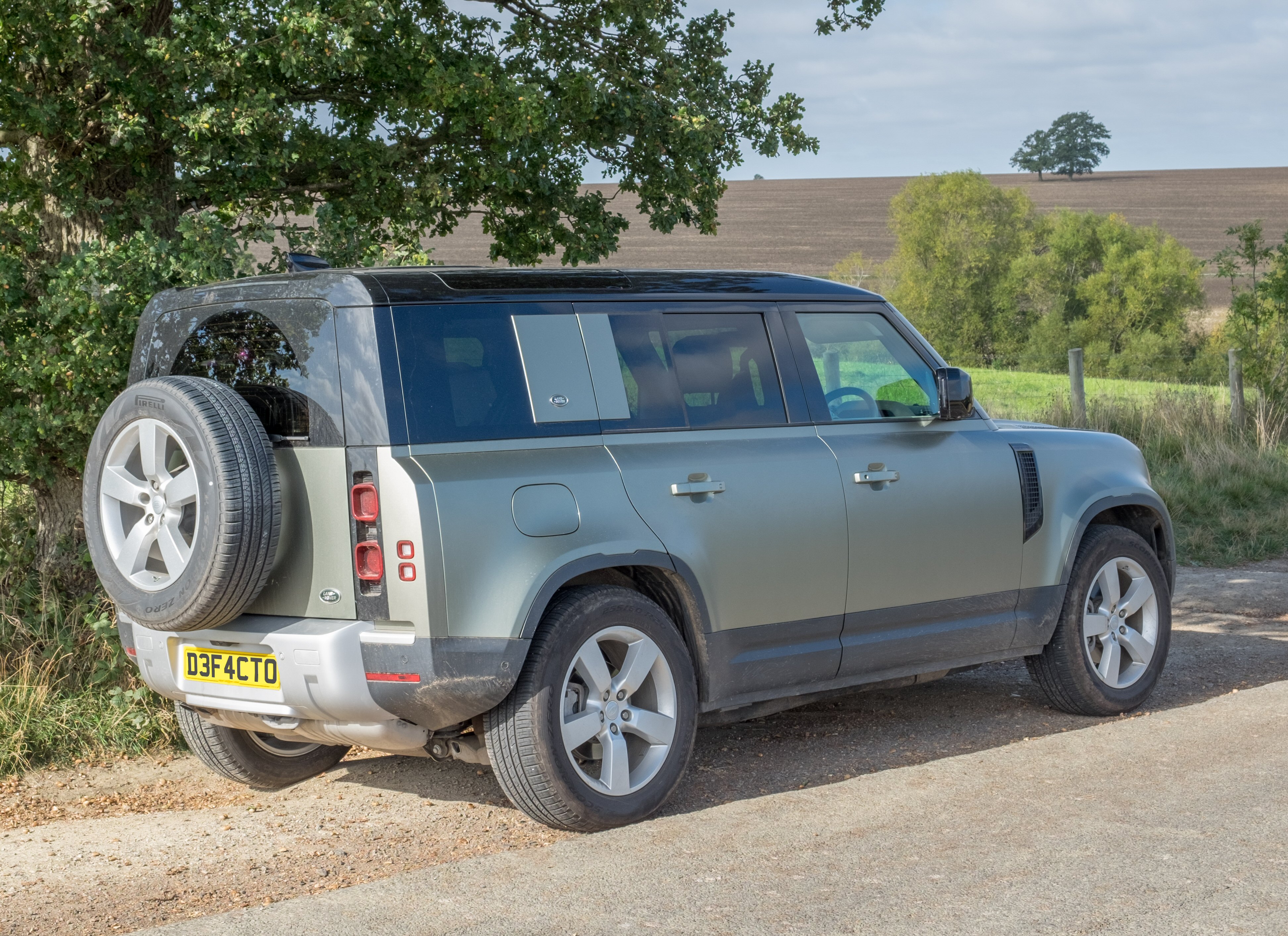
"But the big one was the the Land Rover jungle course that we were doing a story on. And we show up there and we're, you know, we impact as as much kind of bad weather gear as we could think of, as the jungle course is just pretty much that,"
Land Rover is a brand that makes tough and luxurious vehicles, especially designed for driving off-road, like in jungles or mountains.
Land Rover is a British automotive brand known for its luxury SUVs and off-road vehicles. The brand is synonymous with ruggedness and capability, particularly in challenging terrains.
Select text to request an explanation
channel. Now our special guest today spent most of his time not just behind the camera but holding
the camera. Motor week videographers easily have the hardest job of the motor week staff,
not only braving humid summers and burst winters but capturing vehicles at high speeds and corners.
Believe me, it's no easy task. It requires a carefully honed expertise that our guest was
known for since he's shot our show for 34 years. Welcome to our podcast, Ray Kawada,
the one and only. Welcome Ray. It's great to be here, John. I wanted to congratulate everybody
there for making it to 45. I remember when we, in 83, now I guess it was 87 when they
actually put the year number on the show, we all made jokes about working on 8,
and we did. And you're still working on it. Yeah, it's been an amazing run and it's hard for me to
believe that you moved out to Colorado in 2016. It seems like only yesterday almost everything
that happens around here, we look at each other and say, how would Ray handle that?
But it's been a happy retirement for you and, you know, gee, it's just great to see it. But I
want to take you back to the earliest days and my recollection is that you started working with us
in the summer or spring of 1982. So we were finishing up our first season, starting to shoot
our second season. What do you remember about those times? Well, I remember very vividly our very
first shoot with you was probably with Michael Goldsmith and we were shooting on Hilltop Drive
somewhere down there in Baltimore County and doing stand-ups for, I guess, the open of the
second season. Now, you know, a bunch of us did work on the show and back then,
it really wasn't in the videography unit. It was part of the field recording unit. We had
ikigamis, which were our cameras, but they were umbilical to a box, the tape recorder,
and we usually had a really big crew, usually an engineer and scripts and all sorts of stuff
there. So it was a lot of people involved in those early, early shoots. I mean, we also,
I believe, had audio engineers at that time. I mean, it's a lot different today than where we
basically go out with, you know, the shooter has to do just about everything. It was a much bigger
production. Yes, it was quite a bit. And I remember, I guess it was 83 when we first started to go up
to do the full lineups at the manufacturers, which was unprecedented, I think, as far as access to
the proving grounds up there. I think Bill Van Etten and Jack Thanum were actually still shooting
at that time, but I was tapped to go along and, you know, help out as part of the crew there. And
it was a pretty big crew. And I think we spent a lot of time at every place we went. Yeah, that
for those that are familiar with those early shows, every summer, what Ray's referring to is we would
go to Detroit for a week and we called it Hell Week. And we would go from one manufacturer to
another at all their proving grounds. They would bring out everything that was new for the next
model year. And we literally had an assembly line going all day for like five days straight.
And very often Ray would be strapped in the back of a vehicle doing car to car shots. And I remember
we came up with a helicopter harness for you, I think, to make sure you were safe.
Well, it was to make sure I didn't fall out. Well, I wasn't putting a fine point on it.
That was kind of unprecedented. And I think the print media was a little bit jealous because
as we kind of the trust evolved, I mean, I remember at one time in the very early days,
somebody drove a prototype out, which of course we weren't supposed to see. And they got all
upset and had us all facing the walls and turning off the cameras and everything like that. And I
kept thinking to myself, well, you know, they control this whole situation. They know that if
we shoot something we're not supposed to and air it, we won't be asked back. But anyway,
it evolved to the point where I think it was the last time we were at Dearborn.
We were there at the same time that something was going on at Bell Isle. And so they even just
sent in a freelance PR person to kind of oversee our shoot while all the bigwigs were at Bell Isle.
And when we got ready to go, the security gate would not open. You know, it was one of those
like the toll booth and the toll, the arm comes down and it stays down. So we took my trusty
toolkit and we took the arm off of the gate and drove all the cars out and put the arm back on.
I can't imagine what security thought about that footage. Well, as I recall, it's funny,
I had completely forgotten about that. But we sat there for quite a while. We couldn't get anybody
to help us. It was, you know, there was nobody around. And you know, I don't think I ever heard
back from anybody there about that incident. But that was pretty unique. And the Dearborn
Proving Ground, which is part of Ford Motor Company, I remember it was right next to Greenfield Village,
which is an American heritage, a village of classic and important buildings like Edison's
Menlo Park Laboratory. And they would do reenactments of, I guess, military battles there,
whatever it was. There were always guns going off that we had to stop for. Remember that?
I do remember we were trying to do a standup there. And every time you got about five seconds in,
there'd be another volley somewhere. Sounded like we were in a war zone. I think it must have taken
us 30 some takes to get through that one. Oh, you know, speaking of takes, you know, because we had
different equipment in those days, and we used, of course, videotape versus disc or solid medium,
the quality was very suspect at times, especially when you were doing outside broadcasts.
So you'd do a great take, then you'd look at it back and it would have a glitch or something.
And I remember you were and always have been a perfectionist, and even we wouldn't see something
sometimes, but Ray Quata saw it and we would do it again. Well, you know, television, it's got to
look good. Another time we were trying to do a standup, we were at Bowling Green at the Corvette
factory. Oh no. And the wind just picked up like you wouldn't believe. And you're standing there,
your pants legs are flapping in the wind. And it looked like you were trying to do the standup
on the bow of, you know, a cigarette boat. It's like all those reporters you see now standing
out in the middle of a hurricane. It was pretty close to that. Pretty much. Yep. Oh, that's a great
word for the Weather Channel. Do you remember how you ended up working with us so much? Because
you weren't originally assigned to us basically full time. You later were. But was it, did you
like us that much? Or was it just the luck of the draw? I think in the early going, you know,
everything was pretty much studio based. And I came from a background where I worked for WXL
TTV in Florida, where basically you did everything. And so I was kind of the guy who shot most of the
commercials. And so I would go out in the field, a single camera shoots all the time. So I think
that kind of helped bring me to the fore as far as experience went, because virtually everybody
else and I was actually hired on as a as a camera operator. I think all of us were at the time.
But it was mostly studio based. So that kind of helped out. Plus, I think we did a lot of shooting
during Fridays, which was of course, Wall Street. Right. Busy day. A lot of the crews who had already
been doing Wall Street for a very long time were assigned to that. And so by default, you got me.
Lucky us. But I wonder that since today cameras obviously are so small, you hold it in the palm
of your hands. A lot of our fans don't realize the difference between a big studio camera and
basically a field camera that you have on your shoulder. Did you have any trouble going back
and forth between the two? I mean, what were the differences in those days? And those cameras weight
like 70, 80 pounds. Well, you know, the cameras for the studio are all pretty much on a pretty solid
tripod. And, you know, you can kind of move the tripod on wheels around the studio. And
usually the focus and the zooms were on the handles. And then you had a big viewfinder up top
that you would look up into. And in my case, look up. But anyway,
so you were looking into basically a small monitor. Now with the field cameras, they were
smaller. So you would kind of walk around with it and then put up a field tripod to wherever you
wanted it to be, attach the camera and you're looking through a viewfinder through an eyepiece.
And everything else is pretty much on the lens or a zoom grip and so forth. So it did take a little
bit of going back and forth and remembering where you were and where your controls were.
But like I said, I had a lot of background of doing that in Florida when I was working there.
And then that translated pretty well to working in the field recording units up there. And then
things became less and less studio based. You know, and speaking of that, let's, you know,
trying to shoot cars at speed took and takes a very, very special set of skills.
Can you kind of give us an idea of what it was like when you were first exposed to shooting
cars like on a racetrack? Because we do a great deal of that. And it's not just a matter of holding
a car in frame. You've got to do just about everything to keep it in focus, to follow,
you name it. So getting away from shooting still life or one person like me in front of a camera,
making that transition to a racetrack, what was that like? And do you have any great memories
of anything there that maybe didn't go as planned or whatever? And it took quite a bit of
concentration. You really had to concentrate on what you were doing a lot more so. And you know,
a lot of times when you were working in the studio, you kind of glance around the camera to just kind
of see where everybody else is. You take your eye off the car there and pretty much it's
out of frame pretty soon. So it took quite a bit of concentration to really kind of hone those
skills. Following focus was, you know, you really had to stay on it all the time and make sure you
could follow it from wherever it started in your frame to when it exited. And that was probably
one of the tougher things to do. Why don't you give our fans an idea of what it was like when we
would go every year to Savannah outside of Savannah to Roebling Road Raceway. We'd go down with about
a dozen cars. We have this two mile track to ourselves for three or four days. That was always
an enormous challenge for the videographers and usually you'd be there with at least one other
videographer. But give us an idea from your perspective what that experience was like.
Well, the first thing was packing for the trip. And when you have to take and like you said,
after I think 87, we started going with two videography units down there. But making sure
you had what you needed because once you got there, if you didn't have it and you needed it,
you were kind of out of luck. And there was a lot to do like you were talking about. I mean,
there was almost a full day of stand ups. Then there was a lot of work on every car because
most of the time this was during the winter. Usually the first one anyway was during the winter.
And so we wouldn't have done a whole lot of the statics on the cars before that. And by statics,
I mean like the exteriors of the car and the interiors of the car. Then we would also need to
show these cars in real life driving situations. So there's the drivebys to have. That's a whole
another set of variables there because you had to find a road that had enough character to it.
And by that, I mean curves and so forth that you could string together a bunch of drivebys to
talk about how it drives at just a normal everyday drives. Then you get down to the track. And you
needed to stay far enough off the track that you weren't going to be a hazard or the cars would run
you over. We don't want that. So we had a number of places to find around the track to show the car
at speed. I mean, obviously the straightaway is going to be a lot of the acceleration and so
forth. So there'd be cars or camera positions at either end of the straightaway. We had a number
of really nice curves that showed how the car would handle under at speed and going around the
corners. A couple of S-bends to show it going from one side and then back the other. And then
since each of these drivebys on the track are usually pretty darn quick, you need a number
so we would be going around and around the track and finding different places. And after
a number of years, we would have a lot of these places kind of mapped out. And we would kind of
know where to go the next time. It was a lot of work. But while you were shooting, another videographer
would also be shooting and we're trying at a different part of the track. And we had to coordinate
all of that. And that would walkie talkies. And you might get your shot, but the videographer,
the other videographer might need one more time around the track. And then what would you do?
Well, we would usually, if I was done at a particular place and say Dave Hunter or
whomever was still shooting, I might start packing up my gear as long as I'm in a safe place and can
get to my support vehicle to get ready for the next one. And then we would listen on the radio
for the all clear sign when Dave was finished and the track was clear. Then we would move to the
next location and start all over again. But one of the other things was it was imperative that the
in the pits that they space the cars correctly too. Because if you had, if they were running up too
far or too close to the car ahead of them, we might miss a shot just because we're on one car
and then the next car is already in frame before we can get back to the start of that
particular thing. So that was another element that had to be coordinated as well. And after
a while, these things started to be very, very smooth, smoothly done.
But it did take intense choreography between you and whoever was in the pits and making sure it
all stayed safe. And for who knows what reason, it always seemed like we'd start off with a list of
10 cars and end up with a list of 15 or something. Brian Roberts would outdo himself with getting a
lineup of cars for future shows that we could, and we had only a few days to shoot them all.
Another kind of shooting you used to do all the time was taking your camera on the road to press
events. And when you started doing that, you were really the only TV camera person on these events.
And you must have had some amazing experiences. I know you did with me,
but with other folks on the staff as well as some of the places you got to go
and some of the adventures and shooting cars at these press events. Anything, any of those kind
of popping into your mind as, oh my, I can't believe we did that or whatever.
Well, you know, we tended to get this reputation as for getting stopped by
security people here and there, especially in California. The police would come by and
they would want to see your permit. And of course, oftentimes we didn't,
because we didn't know where we were going to be on these shoots. They were all kind of
controlled by the manufacturers. So there were a couple of times. I think it was Brian Robinson
and I were shooting a Yamaha Roadstar road test with Yamaha. And they put us on a stretcher road
that apparently went right through a state park in California. So we were shooting along the road
and California Rangers stopped by and wanted to see permits and stuff. And I was trying to explain
that I didn't have permits because we didn't know where we were going to be and so forth. And,
you know, Brian's on the other side waiting for me to talk to him on the radio and
lo and behold, while we're sitting there, Brian Roberts drives by and stops because he's on another
press preview in a Mercedes Benz, which did not help my case at all, by the way. So Brian Robinson
and I got hauled off to the state park offices and they read us the riot act about permits and
all this sort of stuff. And finally, the secretary, after they got finished brow-beating us, the
secretary kind of said, you know, you might want to think about this road here. So we went up into
the mountains and finished our road test there. That's a great one. I probably not as much of
of a of a inconvenience as as when Skriv and I were in Norway shooting a Volvo. No, yeah. We were
as far north. I mean, we were above the Arctic Circle. Why Volvo wanted to shoot there in the
dead of winter because it was December and it was very, very cold. But we were shooting basically
along the Russian border. And, you know, we were, of course, the first ones out there. I drove out
to start the statics long before the rest of the press crew came out that way. And Dave caught up
with me later. But after we shot all the statics and we were doing drive-bys and all, we finally
finished up. And remember, this is December in Norway, north of the Arctic Circle. So there's
not a whole lot of sunlight anyway. And we're getting ready to pack up and we look down the road
and this truck pulls off across the road and stops. And we're thinking, uh-oh, did he get stuck?
Because that's our only way out. And Dave kind of looks a little bit farther and the door is open
and two soldiers get out. And he was like, no, they're waiting for us.
So we got down there and they said that we had violated some agreement with Russia.
It was the Norwegian Border Patrol. So they took us off to the Norwegian Border Patrol offices and
fortunately, we had these jackets that were emblazoned with Volvo on the back. So they knew
kind of what we were doing there. And one of the officers who spoke more English than the others
watched our video, suggested a few edits because we thought, well, we'll set the scene. Here's the
river and that across the way is Russia. Well, apparently we shot a Russian outpost, which is
verbotans in that area. So anyway, we had to do a few edits on that. And they finally let us go.
The rest of the press corps was having a lot of fun at our expense at dinner that night. But
we did point out we did save the shoot. So we did get it done.
Always come back with the shoot. Hey, speaking of the Arctic Circle and it was kind of unrelated
to motor week, but you also spent time in Antarctica. And you want to tell us a little bit
about that because that had to be an experience of the life of a lifetime too.
That was quite quite the experience at I think it was I'm not 88. Yeah, it was 1988. So at
Thanksgiving of 87, our videography had came to us with this and said that there's going to be
a documentary shot in Antarctica. And we'd like to know by the following Monday, if you'd be
interested. So, you know, a number of us expressed interest in it. And they picked a crew. It was
Frank Leung and myself. And they said, now you can't tell anybody about this at this point in
time until you know, it's pretty much time to go. So unfortunately, that kind of left you guys in
the lurch for a bit. But on I think it was New Year's Day, we set we set off to do the the Antarctic
documentary and it was kind of open ended. They weren't really sure how long we'd be there.
And we were traveling on a Greenpeace ship because they would go to as many Antarctic
research stations as possible. The whole idea was the Antarctic treaty was going to be up for
kind of review shortly after we got back. And that's why they wanted to do this, this
this particular documentary. It was it was a lot of work. It was very cold.
Our cabin on board the ship was just above the freshwater tanks, which froze. And if you stood
stood in the cabin, head level was about where the water level was on the on the hull. So it was
very cold. But while we were down there, we also had an opportunity to do an ice breaking mission
with the US Coast Guard. The icebreaker polar star was in there. And we thought, well, okay,
this will be kind of interesting. So we show up at the at the rendezvous. And of course,
its Greenpeace personnel are dropping us off at this place. And I thought, I wonder how that's
going to go over with the US Coast Guard, because, you know, they're environmental. Well, not
environmental, but maybe they're, they're kind of viewpoints aren't exactly on on schedule. And we
thought, well, we might not be able to get a whole lot of access on the ship, because, you know,
they think we're Greenpeace. So we were trying to make it a point, we're not Greenpeace, we're
traveling with Greenpeace, but we are Maryland Public Television. And so Frank, when we were
introduced to the captain, and first, I thought, we aren't going to get anywhere here. Frank happened
to mention that we were Maryland Public Television. And his eyes kind of light up. And Frank went on
to say that I shot for motor week. And boy, that opened a lot of doors. This guy was a was a real
fan. And, you know, he he was Seattle based, like, so I guess we were on the air in Seattle at the
time. But, you know, we, that couldn't have been a better introduction to to get us around and
access to different parts of the ship. We even got up into the loft con, where a couple of guys
that I would have thought were teenagers were driving the ship on the ice pretty good mission.
So it was pretty, pretty cool. Boy, you never know where motor week is going to open the doors.
That's that's a great story. I know I've probably asked you this before. But if you had just two or
three, you've already mentioned Norway, but other memorable events, either good or bad,
while you were on the show for 34 years. I mean, that's an amazing career.
What is there anything else that pops into your mind?
Well, I mean, you know, we I was lucky enough to work with almost all the reporters.
I think all the reporters up till, you know, 2016 anyway. And we had some really amazing
shoots and stuff. And I think the series of shoots I did with Lisa Barrow in England
really had had quite a lot of humorous events in there that we just kind of laughed about and
continued to do so over the years. But the big one was the the Land Rover jungle course
that we were doing a story on. And we show up there and we're, you know, we impact as as much
kind of bad weather gear as we could think of, as the jungle course is just pretty much that,
even though it's in England. I mean, there's a lot of boggy areas and swampy stuff. And the the
guy from Land Rover took one look at her footwear and said, No, I won't do.
You guys need to go out and get some Wellies. So we went out and got some Wellies and good
thing we did. I mean, you know, Wellies come up almost to your knees and I was in mud almost up to
my knees. But for lunchtime, we went to East Nor Castle, which is on the estate. And the gentleman
who was the owner of the castle there was a major Harvey Balthast. You'd think this guy had been
delivered by a central cast. But anyway, he followed Lisa around during lunch. And, you know,
whatever she took, he would all the joke was, Wellie would go much better with a splash of
brandy. And he splashed some brandy on her food. I was surprised she would was even capable of
standing, you know, after lunch. But yeah, then we the I mean, we slogged around in the mud a lot.
And and at one point, there were a lot of wildlife. There were deer and pheasants all over the place.
And someone on the crew asked them, Well, do you do you hunt the pheasants here? And one of the
guys from Land Rover goes, Hardly sporting, you pretty much got to shake him off the end of your gun.
I think your accents for putting the exclamation mark on the story.
But the funniest thing of that whole thing, though, is when we got back. And, you know,
we're turning in our expense accounts and all this sort of stuff.
Lisa gets this call from the from the finance office. She goes down there. Why? Because they
wanted to know why Lisa bought Rubbers for Ray. And expensive ones, too. Oh, yeah, that was fun.
Oh, what a great story to wrap up the podcast with. You had so many wonderful experiences.
I got to tell you, we just miss having your your smile and your incredible work ethic around. It
was and continues to be a great inspiration for all of us. And, you know, this this podcast,
we're doing the reason we're doing it on video is so we've got this for a long time. So wrapping
it up. Anything else you'd like to say? Well, you know, it's snowing out there. We've got about
10 inches of snow here. And right about now, if I was there and you or you were here, the the
call would go out for a snowy drive by. Never miss an opportunity. Never miss an opportunity.
Ray, thanks very much. Thanks for joining us on this podcast. And I hope you and you and Jen
just continue to thrive out there in Colorado. And you know, who knows, maybe we'll get you back on
here for another podcast, even before our next major anniversary. It's any stories you've got,
I think would just be everybody would love to hear. Well, we just scratch the surface. That's
for sure. Yeah. If anybody I did see Scrivner here a couple of years ago, I think he was out
somewhere doing something near Boulder or whatever. And Jen and I drove down to see him. But
you know, if anybody's out this way, just let us know. Thanks Ray Kawada. Thanks for being a part
of the podcast today. And everybody out there, I want to thank our sponsors. That's a very important
aspect that I need to do for not only our podcast, but also everything Motor Week,
auto value and bumper to bumper and the fine folks over at tireact.com. Thank you very much.
And everybody associated with our product. Thanks you for being so dedicated to Motor Week. And by
the way, if you're wondering what time Motor Week can be seen on your local public television station,
hop over to our website MotorWeek.org, click on the tab, watch Motor Week and then enter your zip
code and day for the days and times in your area. One more thing I want to remind everyone listening
about our Motor Week app. It's a free download. All of our Motor Week information and video is there.
It's available at your favorite app store. And so take it with you and you'll never miss a mile
of Motor Week. For the podcast today, special thanks to podcast producer Jessica Ray,
audio engineer Nicole Phillips-Nailer and podcast creator Bob Mixter. And remember for the fastest
way to find car reviews, be sure to include Motor Week in your search engine. I'm John Davis.
Thanks for being a part of Motor Week. You've been listening to the podcast of Motor Week,
television's original automotive magazine. Motor Week is made possible by Auto Value and
Bumper to Bumper and Tyarac.com. Visit our website at MotorWeek.org for more car reviews and
the latest automotive news. And watch Motor Week, television's longest running automotive magazine
series each week on your local PBS station or the Motor Week app.
Request an explanation for:
4 cars
4 cars featured
Request an Explanation
Heard something you'd like explained? We'll add it to this episode.
Sign in to request explanations for terms you heard.
Want to learn more?
Browse our glossary for plain-English explanations of automotive terms, jargon, and concepts.
See something that's not quite right? Our annotations are AI-generated and can sometimes miss the mark.
Click the flag icon on any annotation to suggest a correction.