Speed Limiters Coming Near You
About this episode
Flooding stories set up a broader theme of how modern systems (and modern risks) can fail fast—cars can stall when water gets in through seals, and drivetrain components can hold hidden moisture even after the engine seems fine. The conversation then pivots to enforcement tech: AI cameras, automated fines, and GPS-tethered speed limiters that can govern throttle response. They also break down device-monitoring costs and fees, and end with sponsor reads and event chatter.
Become a supporter of this podcast: https://www.spreaker.com/podcast/let-s-talk-cars-radio--5026292/support.
air intake systems
"A lot of the air intake systems sit down low in the car. Some cars, they are transmissions vent at the bottom of the transmission..."
The air intake is how the car brings air into the engine. If it’s positioned low, water from puddles can get sucked in or reach areas that aren’t meant to be wet.
An air intake system is the path that brings outside air into the engine. If parts of the intake (or related vents) sit low, water can get pulled in or splash into places it shouldn’t during puddles or river crossings.
transmission
"it just turns into a big shop back. It just sucks the water right up in the transmission and just takes the car out. Now the car's junk."
The transmission is the car’s gearbox that helps transfer power from the engine to the wheels. If water gets inside it, it can cause serious damage because the inside parts aren’t meant to be submerged.
The transmission is the gearbox that changes engine speed and sends power to the drivetrain. If water enters it—especially from vents located low on the vehicle—it can cause internal corrosion and damage, potentially turning the car into a “junk” situation as the host describes.
diff
"I'm like, let's pull your diff plug real quick and we'll pull it. There's water in it."
A diff (differential) is part of the drivetrain that helps the wheels turn at different speeds, especially when you’re turning. If water gets into it, it can ruin the fluid and damage the gears.
“Diff” is short for differential, the gear unit that lets the wheels on an axle rotate at different speeds while still receiving power. If water gets into the differential housing (for example via low vents), it can contaminate the fluid and lead to corrosion or failure.
flood cars
"You guys that are car guys, go look at like Chris Fixed and all the different YouTube channels are out there where they're buying these cars from Copart and all differ stuff that are flood cars, and they pulled the plugs."
A flood car is a car that got flooded. Water can soak into important parts, and even if it seems fine at first, it can cause problems later.
A flood car is a vehicle that has been submerged in water, often to the point where water enters critical systems. Even if it starts and drives, water can remain inside components like the transmission, transfer case, and differentials, leading to long-term problems.
transfers
"Transmission has got water because it was a flood car. Transfers got water, and differentials got water."
On many 4WD/AWD cars, the transfer case is the part that sends power to the front and rear wheels. If water gets into it, it can damage the internal gears and contaminate the fluid.
“Transfers” here refers to the transfer case, which is used on many four-wheel-drive and all-wheel-drive vehicles to split power between the front and rear axles. Like other drivetrain housings, it can collect water if it has low vents or openings during puddle/river crossings.
over landing
"there they are potentially sealed, but there's vents on everything. I mean for the most part, unless you've rigged the vehicle to do over landing and stuff, that vehicle is not set up for what you're trying to do..."
Over landing is like road-trip travel, but with off-road routes and extra vehicle prep. The idea here is that a normal stock car isn’t set up for the kind of water/terrain use over-landers plan for.
Over landing is long-distance, off-road travel where people modify vehicles and plan routes to handle rough terrain. The host’s point is that a stock car usually isn’t prepared for repeated water crossings the way an over-landing setup might be.
underneath the hood
"I have the steam right... using underneath the hood... I go wipe it and then I use engine dressing and stuff because I like, you know, underneath to be detailed."
“Underneath the hood” means the engine compartment. It’s a special area to clean because water can get into electrical parts and cause problems.
“Underneath the hood” refers to the engine bay area where the engine, wiring, sensors, and other components live. Cleaning it is different from washing the exterior because water intrusion into electronics can cause drivability or starting problems.
steam
"See I have like so I have the I have the steam right, I told you guys have really nice commercial steamer they using underneath the hood."
Steam cleaning uses hot vapor to loosen dirt and grease. People use it on car parts to clean without blasting everything with strong water pressure.
Steam cleaning uses hot water vapor to loosen grime and grease without directly blasting the surface with high-pressure water. Under the hood, it can help lift deposits before you wipe them away, and it’s often used when people want to avoid aggressive pressure-washing.
engine dressing
"I've already broken all the most of the grease off and then I go wipe it and then I use engine dressing and stuff because I like, you know, underneath to be detailed."
Engine dressing is a product you put on cleaned engine-bay parts. It helps them look nicer and can make it harder for grime to stick.
Engine dressing is a protectant product applied to cleaned engine-bay surfaces to restore a uniform look and help repel dirt and moisture. Enthusiasts use it after cleaning because it can make plastic and rubber components look better and stay cleaner longer.
pressure washer
"People just break the pressure washer out and just spray. I see people all the time with the self car washes underneath the hood."
A pressure washer is a strong water sprayer. If you use it under the hood, water can get into electrical parts and make the car not start right away.
A pressure washer is a high-pressure water sprayer used to remove dirt quickly. In the context of cleaning an engine bay, it’s risky because forcing water into electrical components or sensors can cause starting issues until everything dries.
DIY car wash
"when I come back through, like an hour and a half later, there's a tow truck towing that car out out of this do it yourself, Twittterly."
A DIY car wash is a self-serve place where you wash your car yourself. Here, it’s the situation where someone cleaned the engine area and the car wouldn’t start.
A DIY car wash is a self-serve setup where you clean the car yourself, often using hoses and sprayers. In this segment, it’s used as the scenario where engine-bay cleaning can go wrong and require a tow.

Chevrolet Nova
"Speaker 3: I have a somebody sent me a message. I got a frog in my throat and said, hey, can you start compiling all the different like all the Camaros you've seen, or all the nova's you've seen, and start putting them together so we can so I can take a look at like twenty five different ideas, so I can come up with an idea for myself maybe. And I'm like, well, I guess because I kind of do that too, Like I take this idea here, this idea there, and then you know, put it together."
The Chevrolet Nova is an older American car that came in different versions over the years. Some versions were built to be more performance-oriented, while others were more focused on everyday driving. It’s mentioned because there are many different Novas people might have seen or collected.
The Chevrolet Nova is a classic American car that was produced in multiple generations, including popular muscle-era versions. It’s frequently discussed because its lineup spans different body styles and performance levels, which gives enthusiasts plenty to compare. In the podcast context, it’s mentioned alongside the Camaro as another model people might be compiling sightings or examples of.
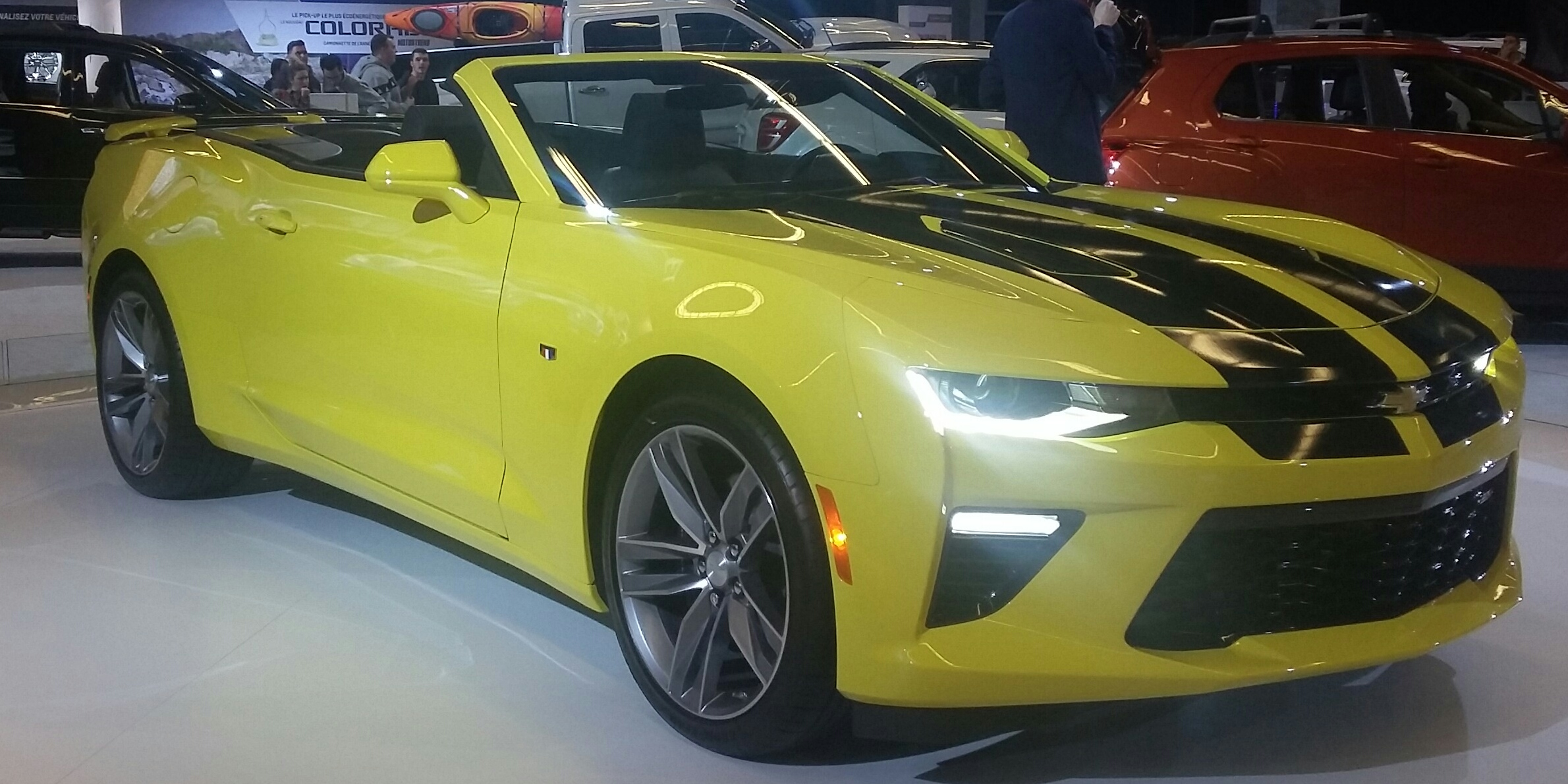
Chevrolet Camaro
"...ou start compiling all the different like all the Camaros you've seen, or all the nova's you've seen, and s..."
The Chevrolet Camaro is a sporty car made by Chevrolet, usually as a coupe or convertible. People talk about it a lot because it has been made for many years and in many different versions. That makes it a common car to mention when someone is collecting examples or comparing what they’ve seen.
The Chevrolet Camaro is an American-built sports coupe/convertible known for its performance-focused design and long-running model history. It often comes up in car discussions because there are many generations and variations, making it a popular subject for collectors and enthusiasts. In a podcast, it’s a natural example when people talk about compiling or comparing different cars they’ve seen over time.
eye movement
"a lot of self driving features work on eye movement and the head placement... some of the newer ones. It's tracking your head movement, is tracking your eye movement"
Some “driver assist” systems watch your eyes. If your gaze looks away or doesn’t match what the system expects, it may limit how much the car will do.
Eye movement is used by driver-monitoring systems to confirm the driver is attentive. The segment suggests that some newer systems only operate when the driver’s gaze and head position meet certain criteria (e.g., eyes forward and able to be read by the camera).
self driving feature
"if you don't have a self driving feature in your car, a lot of self driving features work on eye movement and the head placement and all that kind of stuff... It's tracking your head movement, is tracking your eye movement"
“Self driving” here means a car feature that can help drive, but it still watches you. It uses sensors to see where your eyes and head are so it knows you’re paying attention.
The term refers to driver-assistance systems that can steer and/or control the car under certain conditions. In this segment, the host describes systems that use driver monitoring—like eye and head tracking—to decide whether the driver is paying attention and able to take over.
head placement
"a lot of self driving features work on eye movement and the head placement and all that kind of stuff... only works if your I guess, if your heads forward and if it can read eye contact"
The car can also look at where your head is. If you’re not sitting/looking in the expected way, the system may not trust that you’re paying attention.
Head placement is part of how driver-monitoring cameras estimate whether you’re positioned correctly and looking forward. In the segment, the host claims the system’s behavior depends on whether your head is forward enough for the camera to interpret your eye contact.
face recognition camera
"they're getting dial heads and they're putting suction cups on them and they're putting them in front of the face recognition camera."
This is a camera that tries to recognize a person’s face. The host is saying some cars use it to judge whether you’re paying attention, and people can try to fool it.
A face recognition camera is a camera system that identifies or verifies a person’s face features. In this segment, it’s described as being used for driver monitoring (attention/eye contact), which the host claims can be spoofed with a prop.
workarounds
"And there's just workarounds... It doesn't really matter what it is. There's a work around."
A workaround is a trick people use to get around a rule or safety feature. In this case, the idea is to fool the camera that’s watching your face and eyes.
A workaround is an alternative method to bypass or defeat a system’s intended safeguards. Here, the host describes using a doll head with suction cups to fool the facial-recognition/driver-monitoring camera so the car thinks a person is attentive.
Senate Bill eighty four
"So the Juina Senate Bill eighty four is what they're calling it... BIL eighty four goes into effect on July first."
The host is talking about a specific law (Senate Bill 84). They say it starts on July 1 and uses cameras to watch how people drive at intersections.
This refers to a specific piece of legislation being discussed in the episode. The host says it goes into effect on July first and involves AI camera enforcement related to traffic behavior.
active highway work zone
"Some of the off rises zones are active highway work zones, which we did see that coming. We're talking from, Yeah, ... So an active highway work zone enforceable only when highway workers are physically present on sites."
An active highway work zone is a construction area on the road where workers are actually there. Speed rules and enforcement may only be in effect when the work crew is present.
An active highway work zone is a road section where construction crews are physically present and working. Some enforcement rules for speed limits and camera systems may only apply when workers are on-site, because the reduced-speed requirement is tied to real-time work activity.
inflatable police car
"Do you see the picture I sent you about the with the inflatable car. Was the inflatable police car? Yeah, an inflatable police."
An inflatable police car is a fake-looking police vehicle used to scare drivers into slowing down. It’s meant to make people think enforcement is close by.
An inflatable police car is a visual deterrent placed near roads to make drivers think enforcement is nearby. It’s often used to encourage slower driving in areas like school zones or work zones, even when no officer is present at that moment.
school crossing zones
"Car had to be out of out of country, you know it No, it's somewhere in the United States. ... Yeah, because they do the fake cop car sign. Yeah yeah, school crossing zones. Okay, there's another word and they're gonna put it in."
A school crossing zone is an area near a school where cars are expected to drive slower. The goal is to keep kids and pedestrians safer when they’re crossing the road.
School crossing zones are designated areas near schools where special traffic rules apply, typically including lower speed limits and heightened enforcement. They’re intended to protect pedestrians, especially children, during predictable times like arrivals and dismissals.
speed camera
"So I told you we have one in our area that it's been turned on and turned off. There's been a fight for it. But it is a speed camera that issues you to send you a ticket, and it's in a school zone out by us."
A speed camera is a device that checks how fast cars are going. If you’re going too fast, it can take a picture and help the government send you a ticket later.
A speed camera is an automated system that measures vehicle speed and records evidence (often including the license plate) when a driver exceeds a posted limit. In many jurisdictions, it’s used to issue tickets without a police officer directly stopping the vehicle.
catch me mailing tickets
"I'm still the. One of the people of I'm on the fence with you got to catch me in the act. I don't believe. I don't like the catch me mailing tickets. Now, if"
This is about getting a ticket by mail instead of being pulled over. A camera or system records the violation, and the ticket gets sent to you later.
This refers to automated enforcement where tickets are issued based on recorded evidence (like camera photos) and mailed to the registered owner rather than being handed out on the spot by an officer. The phrase highlights the difference between direct stops and camera-based ticketing.
AI cameras
"[1449.6s] Speaker 3: Yes, I'm like, so if you implement fines, right, you're gonna put these AI cameras out and they're gonna be fines for running a stop sign. Not stop light, guys, [1458.6s] stop sign."
These are traffic cameras that use smart software to spot when drivers break rules. If the system sees a violation, it can automatically send you a ticket.
AI cameras are automated traffic-enforcement cameras that use computer vision to detect specific violations (like running a stop sign) and then trigger a ticket. In this context, they’re being discussed as a way to automatically issue fines without a human officer watching every intersection.
stop sign
"[1449.6s] Speaker 3: Yes, I'm like, so if you implement fines, right, you're gonna put these AI cameras out and they're gonna be fines for running a stop sign. Not stop light, guys, [1458.6s] stop sign."
A stop sign means you have to fully stop your car before going again. The discussion here is about tickets if you don’t stop properly.
A stop sign is a traffic control device that legally requires a vehicle to come to a complete stop at the sign before proceeding. The episode is focusing on how camera enforcement would ticket drivers for not stopping fully.
California roll
"[1458.6s] stop sign. [1459.8s] Speaker 2: We're gonna put a camera. [1460.8s] Speaker 3: If there's a place and you don't and you do a California roll through a stop sign, you get a ticket."
It’s slang for not really stopping at a stop sign—just slowing down and rolling through. In this episode, they’re saying cameras could still treat that as a ticket-worthy offense.
A “California roll” is slang for rolling through a stop sign or red light without making a full stop—often slowing down as if to stop, then continuing. The hosts treat it as a violation that automated cameras could ticket.
crosswalk
"[1464.6s] If we're gonna put them at crosswalks, and if you didn't stop right because the pedestrion touched the crosswalk all the way over on the far side, I guarantee the tickets coming, because the law is written if anybody doesn't matter where they're at, if they step into the crosswalk and you don't come to a stop, even though it may be far."
A crosswalk is where pedestrians cross the road. The episode is saying that if a pedestrian steps into the crosswalk, drivers are supposed to stop so they can cross safely.
A crosswalk is the marked pedestrian crossing area where drivers are expected to yield and stop when pedestrians enter. The hosts describe a rule-based enforcement scenario: if a pedestrian steps into the crosswalk, the driver is expected to stop even if the pedestrian is far away.
right of way
"[1497.0s] and stuff, my question is are we doing this for safety I know you have the answer, or are we doing this because it's gonna be a money generator? So [1503.5s] how much of that money is actually going to feedback through? [1506.1s] Speaker 4: Let me give you a guess. What do you think [1517.9s] is if you fail to yield the right of way?"
Right of way is who is legally allowed to go first in a traffic situation. If you fail to yield, you’re supposed to let others go before you—otherwise you can get a ticket.
Right of way is the legal priority that determines which road user must yield when paths conflict. The episode discusses failing to yield as a separate, ticketable offense from running a stop sign, implying different penalties.
automatic one hundred dollars violation
"It's coming, but they put a fine in it that if you go over ten miles per hour or more over the post of speed limit in an authorized zone for the camera, it's an automatic one hundred dollars violation. [1545.0s] So why would you put that in the policy exactly unless you were playing it's going to be."
It sounds like the camera system automatically charges a fixed fine when you’re going more than a certain amount over the posted limit. In this case, the threshold mentioned is 10+ miles per hour over.
This refers to a camera enforcement rule where exceeding the posted speed limit by a threshold triggers a set fine automatically. The key detail here is the “over ten miles per hour or more” threshold in an authorized camera zone.
infrastructure costs
"So they [1553.2s] do kind of say, hey, uh, the first fifty dollars and one hundred dollars doesn't go to the city. They [1559.3s] have to pay for the infrastructure costs costs first."
Infrastructure costs are the expenses needed to build and maintain the systems that enable enforcement and road safety measures. In the segment, the speaker claims the initial portion of fines is used to cover these costs before other uses like safety funding.
GPS tethered system
"And then what that was going to generate into. It's [1652.5s] now that bill he's talking about forty six point two DESH five zero seven will now integrate speedlimbers and. [1661.2s] Speaker 4: Cars and it's going to be a GPS tethered system."
“GPS tethered” means the car uses GPS to figure out where it is. Then it can apply the correct speed limit for that location.
A GPS-tethered system uses the vehicle’s GPS location to determine what speed limit should apply. That matters because speed limits vary by road and jurisdiction, so the limiter can change as you move between zones.
speed limiters
"You know, it's going to track local speed limits in real time and physically govern the throttle response in the vehicle."
A speed limiter is a car feature that stops you from going faster than a certain speed. Here, it’s described as checking the speed limit around you and then limiting how hard the gas pedal can make the car accelerate.
Speed limiters are vehicle systems that prevent the car from exceeding a set legal speed. In this segment, they’re described as tracking local speed limits in real time and then physically limiting how the throttle responds.
throttle response
"it's going to track local speed limits in real time and physically govern the throttle response in the vehicle."
Throttle response is how the car reacts when you press the gas pedal. If something limits throttle response, the car won’t accelerate as much as you ask, even if you push the pedal.
Throttle response is how quickly and how strongly the car accelerates when you press the accelerator pedal. If a speed limiter “governs” throttle response, it means the car will restrict acceleration even if the driver requests more power.
breathalyzer
"a dui will cost you about twenty five thousand dollars nowadays, by the time you put the breathalyzer in your vehicle, you have to pay for what the monthly service for the breath of liser."
A breathalyzer is a device that checks whether alcohol is in your breath. In cars, it’s commonly used so the car won’t start unless you pass a breath test.
A breathalyzer is an alcohol-detection device that measures a driver’s breath alcohol level. In vehicles, it’s often used as an ignition interlock system, requiring the driver to pass a test before the car can start or continue running.
ignition interlock
"by the time you put the breathalyzer in your vehicle, you have to pay for what the monthly service for the breath of liser."
An ignition interlock is a breath-test device tied to the car’s ability to start. If you don’t pass the test, the car may not be allowed to start.
An ignition interlock is a breath-testing system connected to the vehicle’s starting/operating controls. If the driver fails the breath test, the system can prevent starting or limit operation.
DUI
"when you get a dui, right, a dui will cost you about twenty five thousand dollars nowadays"
DUI means driving while impaired by alcohol or drugs. In this discussion, it’s the situation that leads to installing a breath-testing device in the car.
DUI stands for “driving under the influence,” typically referring to driving with illegal levels of alcohol or drugs in the body. The segment uses it as the reason someone would have to install a breathalyzer device in their vehicle.
Virginia Alcohol Safety Action Program
"No, the Virginia Alcohol Safety Action Program is going to be."
This is the name of a Virginia program that the speaker says would be responsible for handling the breathalyzer-related requirements. They’re basically talking about who runs the system and manages the process.
The Virginia Alcohol Safety Action Program is named as the organization that would handle the breathalyzer-related process described in the segment. The hosts contrast it with a “privately funded” approach and discuss who administers the program.
SAP
"So you're you're going to go to a SAP or something, which is crazy. It's for those that don't know a"
SAP is an abbreviation for the Virginia Alcohol Safety Action Program. The speaker is saying it’s privately funded and is involved in handling the breathalyzer requirements.
SAP is used here as an abbreviation for the Virginia Alcohol Safety Action Program. The segment says it’s “privately funded,” which is part of the discussion about who administers the breathalyzer program.
Request an Explanation
Heard something you'd like explained? We'll add it to this episode.
Sign in to request explanations for terms you heard.
Want to learn more?
Browse our glossary for plain-English explanations of automotive terms, jargon, and concepts.
Help improve this episode
See something that's not quite right? Our annotations are AI-generated and can sometimes miss the mark. Click the flag icon on any annotation to suggest a correction.