
Stellantis Just KILLED These Car Brands | Episode 1076
About this episode
Stellantis’ Investor Day update becomes a debate over which brands are being prioritized—and which look like they’re being phased out. The hosts highlight targets like “nine new North American vehicles under $40,000 by 2030” and a “$70 billion five-year plan,” then argue Chrysler and Dodge are being left out of the “big reset.” They dig into dealer reality (Chrysler inventory nearly gone, Hornet relaunch talk) and question whether “under-$X” pricing promises ever match what buyers can actually get.
big reset
"this is their big reset over at Solantis and they intentionally left off Chrysler and Dodge"
A “big reset” here means the car company is changing its overall strategy. The hosts are saying Stellantis is reorganizing priorities and support across its brands.
In an automaker context, a “big reset” usually refers to a major corporate strategy shift—how the company prioritizes brands, products, and spending. Here, it’s tied to Stellantis’ decision to exclude Chrysler and Dodge from that plan.
Dodge
"they intentionally left off Chrysler and Dodge, which leads me to wanna do my favorite thing"
Dodge is a car brand (often known for sportier models) owned by Stellantis. The hosts are implying Stellantis is moving away from it.
Dodge is a U.S. performance-focused car brand owned by Stellantis. In this segment, it’s brought up alongside Chrysler as a brand Stellantis is not including in its “reset,” suggesting a potential wind-down or reduced emphasis.
Chrysler
"they intentionally left off Chrysler and Dodge, which leads me to wanna do my favorite thing"
Chrysler is a car brand owned by Stellantis. The discussion suggests Stellantis may be scaling back Chrysler’s presence.
Chrysler is a U.S. automaker brand owned by Stellantis. The hosts mention Chrysler in the context of Stellantis’ strategy, implying the brand’s current sales and future role are being reduced.
Maserati
"Dad, Maserati is another. Yeah, no, there are quite a few though, that are gonna be spread because that 30%."
Maserati is an Italian luxury car brand. It’s mentioned as another Stellantis brand that would still be supported even if Chrysler and Dodge are deemphasized.
Maserati is an Italian luxury/performance brand owned by Stellantis. The transcript uses Maserati as another example of a brand that would benefit from Stellantis’ allocation of resources.

Chrysler Pacifica
"Is it only the, is it only the Pacifica? [269.2s] No, okay. [270.2s] Yeah, it is. [271.6s] It's the Pacifica. [272.4s] Primarily, yes."
The Chrysler Pacifica is a family minivan. It’s the main Chrysler model the hosts say is still available at dealers right now.
The Chrysler Pacifica is a minivan built by Chrysler, designed to carry families and passengers with sliding rear doors and a focus on practicality. In this segment, it’s mentioned as the primary model still being sold through Chrysler dealers.
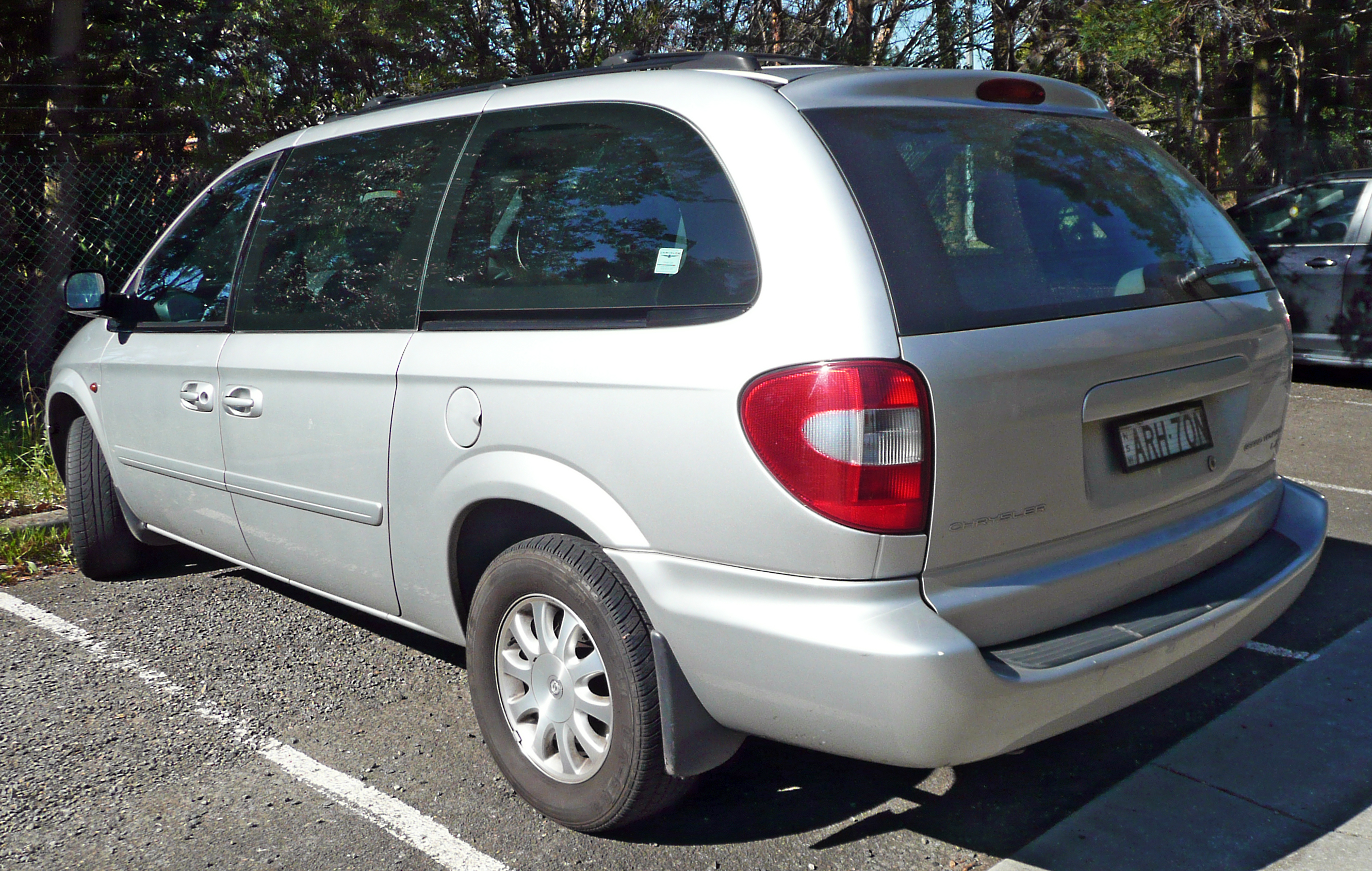
Chrysler Voyager
"[272.4s] Primarily, yes. [273.6s] Yeah, the Pacifica and the Voyager. [275.5s] That's all that Chrysler dealers have right now."
The Chrysler Voyager is also a minivan. The hosts mention it as one of the few Chrysler models still being sold.
The Chrysler Voyager is another Chrysler minivan, positioned as a more entry-focused option compared with the Pacifica. Here, it’s cited alongside the Pacifica as one of the only models remaining at Chrysler dealers.

Chrysler New Chryslers
"...s we speak, that there would only be 17,000 brand new Chryslers available. And Dodge has the Charger, the Durango..."
The Chrysler New Yorker is a Chrysler model name that’s tied to the brand’s larger cars. In the podcast, it’s mentioned because there were very few brand-new Chryslers available at the time. That’s why it comes up—availability and production were part of the point.
The Chrysler New Yorker is a nameplate associated with Chrysler’s larger, more traditional passenger-car lineup. The podcast context focuses on limited availability of brand-new vehicles, with a specific number of new Chryslers mentioned, and contrasts that with other models like the Charger and Durango. That makes it relevant to discussions about brand presence, production, and how many new cars are actually reaching buyers.

Dodge Hornet
"[294.3s] And Dodge has the Charger, the Durango and the Hornet, [298.1s] which is interesting because the Hornet is actually [300.7s] one of the vehicles that they called out by name [303.1s] in automotive news as a vehicle that they want to relaunch."
The Dodge Hornet is a smaller crossover SUV. The hosts say it’s one of the vehicles that’s been mentioned as something Dodge wants to bring back or continue.
The Dodge Hornet is a compact crossover that Dodge has positioned as a smaller, more modern alternative in its lineup. The hosts specifically call out the Hornet as a vehicle that automotive news says Dodge wants to relaunch, implying a future product plan.

Dodge Charger
"[282.4s] is out of business as, as we sit here today. [285.5s] And as we speak, that there would only be 17,000 [291.1s] brand new Chryslers available. [294.3s] And Dodge has the Charger, the Durango and the Hornet,"
The Dodge Charger is a well-known Dodge performance car. The hosts mention it as one of the Dodge models still being sold.
The Dodge Charger is a performance-oriented sedan/coupe lineage known for its muscle-car heritage. In this segment it’s listed as one of the models Dodge still has available.

Dodge Durango
"[294.3s] And Dodge has the Charger, the Durango and the Hornet,"
The Dodge Durango is a larger SUV with room for more people. It’s one of the Dodge vehicles the hosts say is still available.
The Dodge Durango is a three-row SUV aimed at families who want more space and towing capability than a typical two-row crossover. The hosts mention it as part of Dodge’s current lineup in contrast to Chrysler’s limited availability.
crossovers
"So yeah, you can see here, Chrysler's gonna add three crossovers to the lineup by 2030 that are smaller than the current Pacifica mini-bin. Okay."
A crossover is like a mix between a car and an SUV. It usually has a higher driving position and more space than a regular car.
A crossover is a vehicle built on a car-like platform but styled and packaged like an SUV. They’re typically designed to be easier to live with than body-on-frame trucks, while offering higher seating and more cargo flexibility than sedans.
price points under $30,000
"especially the, well, we're gonna bring out three models under $30,000 and we're gonna bring out, what was it, seven or nine models under $40,000 in 2030."
They’re talking about the planned selling prices. The idea is to offer more cars in the cheaper price ranges to attract buyers.
“Price points” refers to target retail pricing levels that define which buyers a vehicle is meant to attract. In this segment, the hosts discuss plans to offer multiple models under $30,000 and under $40,000 by 2030, emphasizing a strategy built around affordability.

Ford F-150 Lightning
"...come out anywhere near that price. Okay, the Ford Lightning, the day they took 150,000 deposits was going to ..."
The Ford F-150 Lightning is a pickup truck that runs on electricity instead of gasoline. The podcast talks about how many people put down deposits and what price was expected, but the final situation didn’t match those expectations. That’s why it’s brought up in the conversation.
The Ford F-150 Lightning is an all-electric version of the F-150 pickup, built to bring EV technology into a mainstream truck format. The podcast references the pricing and deposit expectations, noting that the Lightning was supposed to come in around a certain price point and that the deposit situation didn’t lead to the outcome implied. It’s discussed because early demand and pricing expectations are a big part of how buyers judge EV truck launches.

Tesla Cybertruck
"if your life depended on it. Okay, the Cybertruck was going to be $39,995. Never happened."
The Tesla Cybertruck is a pickup truck that runs on electricity instead of gasoline. It was talked about with a specific target price, but the final outcome didn’t match those expectations. That’s why it comes up in conversations about what to expect from new vehicles.
The Tesla Cybertruck is an all-electric pickup truck known for its futuristic design and its attempt to disrupt the traditional truck market. In the podcast context, it’s discussed around pricing expectations and how the promised “if your life depended on it” scenario didn’t match what actually happened. That makes it a notable example of how launch plans and real-world outcomes can differ.
Alfa Romeo
"okay, and it was based on a sportier European vehicle, the Alfa Romeo."
Alfa Romeo is an Italian car brand. In this discussion, it’s mentioned as the European influence behind a product idea that didn’t sell well the first time.
Alfa Romeo is an Italian brand known for sporty styling and driving dynamics, and it’s referenced here as the “European” inspiration behind a model attempt. The speaker is arguing that if a prior launch didn’t generate demand, a later reboot of the name likely won’t either.
reboot
"If there was no interest the first time, why would you reboot it? Why wouldn't you just boot it out of the lineup forever?"
Here, “reboot” means restarting a car name or idea with a new version. The speaker’s point is that if people didn’t want it before, a comeback might not change that.
In this context, “reboot” means bringing back a previously used vehicle nameplate or concept with a new product plan. The speaker argues that if there wasn’t demand the first time, restarting the name likely won’t create demand the second time.
Stellantis
"Well, maybe, Dad, there's another piece of work that Stellantis has announced that they're going to do, which maybe is going to be the saving grace."
Stellantis is the big company behind a lot of car brands. Here, they’re making announcements that could change what models get built and sold in the U.S.
Stellantis is a major automaker group formed from the merger of Fiat Chrysler Automobiles and PSA. In the segment, it’s discussed as the company making strategic moves that affect brand lineups and future vehicle plans.
Jaguar
"Stellantis, Jaguar, Land Rover, Explore Potential US Tie-Up. The two automakers are exploring a deal to develop vehicles together in the US market."
Jaguar is a luxury car brand from the UK. Here it’s mentioned because it may team up with another brand to build vehicles for the U.S. market.
Jaguar is a British luxury brand, and in this segment it’s paired with Land Rover as part of a potential joint development effort in the U.S. The hosts frame the collaboration as a possible “saving grace” for Stellantis-related brand strategy.
Jeeps
"Well, we already know that many Jeeps fail and we really know that Land Rover,"
Jeep is a car brand known for off-road vehicles. The speaker is saying they’ve seen problems with some Jeeps and using that as a reason to doubt future plans.
Jeep is a brand within Stellantis known for rugged, off-road-oriented vehicles. The speaker claims “many Jeeps fail,” using it as an example to question whether a brand’s future plans will succeed.
Land Rover
"as the old saying goes, if you're a Land Rover owner [651.1s] and you want to drive 17 days a week, [653.5s] you need two, you need to own two"
Land Rover is a car brand that makes SUVs built for rough roads. The host is making a joke that Land Rover vehicles might not always be ready to drive, so you’d need more than one.
Land Rover is a British brand known for rugged, off-road-focused SUVs and a strong owner identity. In this segment, the host jokes about reliability/uptime issues by implying you may need multiple vehicles to cover a week of driving.
JLR
"Maybe now it'll have a JLR badge on it too, [700.0s] so you can justify that price point. [703.0s] You're still kidding?"
JLR means Jaguar Land Rover. The host is basically saying that if a car carries the JLR name, it might feel more “worth it” to buyers—even if the product is being positioned as something new.
JLR stands for Jaguar Land Rover, the corporate brand umbrella that groups Jaguar and Land Rover. The host suggests that putting a JLR badge on a new/returning model could help justify a high price by leveraging the combined brand identity.
synergies
"how are those two brands come together and think there's going to be synergies? I mean, what is the synergistic force behind those two brands coming together?"
“Synergies” is a business term for “benefits from combining.” In car companies, it often means saving money or sharing parts and technology after a merger.
“Synergies” in an automotive context usually refers to cost savings or shared capabilities expected from combining companies—such as platform sharing, purchasing scale, shared engineering, or manufacturing efficiencies. The host is questioning whether the merger/partnership would actually create those benefits.
all electrified offering
"Jaguar, that took the year off because they were going to come out the following year with an all electrified offering. Not sure that's still the case."
“All electrified” means the company is planning to sell mostly electric versions of its cars. That usually changes how the cars are built and how they’re priced.
An “all electrified offering” means a brand’s lineup is being shifted toward electric powertrains (typically battery-electric vehicles, and sometimes hybrids depending on how the term is used). It’s a product-planning strategy that affects manufacturing, pricing, and dealer inventory.
Solantis
"And you pair them with Solantis, who has struggled mightily, but is finally figuring out a way to turn things around."
“Solantis” sounds like the host is talking about Stellantis, a big car company. They’re saying the company is trying to improve by selling more affordable cars that fit what their customers want.
“Solantis” appears to be a reference to Stellantis, the large automaker formed from a merger of Fiat Chrysler Automobiles and PSA Group. The segment frames Stellantis’ turnaround as shifting strategy toward more affordable vehicles that better match its customer base.
go back to their roots
"what they have figured out to turn things around is to some degree go back to their roots and start offering less expensive vehicles that fit their customer base"
This phrase means the company is trying to return to what it used to do best. In this case, the host says that means making cheaper cars that their usual customers can afford.
“Go back to their roots” here is a strategy idea: returning to the brand’s original positioning—often meaning targeting the core buyers with products that match their budget and preferences. The host links it to offering less expensive vehicles to stabilize sales.
four-wheel drive
"[865.6s] Land Rover is a luxury four-wheel drive off-road type brand. [872.8s] Where's the synergy? [875.1s] Where's it all mesh other than to say,"
Four-wheel drive means the car can send power to all four wheels. That helps it grip better on rough or slippery roads, like snow or dirt.
Four-wheel drive (4WD) is a drivetrain setup that can send power to all four wheels, improving traction on loose or slippery surfaces like mud, snow, and uneven terrain. The hosts use it to characterize Land Rover’s off-road identity.
compact pickup truck
"[909.6s] Graham is going to come out with a compact pickup truck [911.6s] to challenge Ford with the Maverick. [913.0s] Now this is interesting because Toyota is rumored [914.9s] to be coming out with a compact pickup truck as well."
A compact pickup is a smaller kind of truck. It’s easier to park and usually costs less than a big truck, but it still gives you a bed for hauling.
A compact pickup truck is a smaller, more city-friendly version of a traditional pickup, typically aimed at buyers who want hauling capability and truck styling without the size and cost of full-size trucks. In this segment, it’s the category both Ford Maverick and the rumored 2028 competitors are expected to target.

Ford Maverick
"The Maverick has been selling great ever since it came out. This could be Graham's way to get back into the business."
The Ford Maverick is a smaller pickup truck from Ford. People like it because it’s usually cheaper than the big full-size trucks, but still gives you the basics you’d want from a truck.
The Ford Maverick is a compact pickup truck known for offering truck utility at a lower price point than full-size pickups. It became popular because it made “buying a truck” feel more affordable for everyday buyers.
market created by high full-size pickup prices
"because full-size pickup trucks have gotten too expensive? So yes, I think because the price of full-size pickup trucks has gotten so high that they have artificially created a market for compact inexpensive pickup trucks"
They’re basically saying: when the big trucks get too expensive, more people look for smaller, cheaper trucks instead. That can make the smaller-truck market grow.
The hosts are describing how higher prices for full-size pickups can push buyers toward smaller, cheaper alternatives. When the cost of one category rises sharply, it can make a previously smaller segment—like compact inexpensive pickups—grow faster than it would have otherwise.
full-size pickup trucks
"because full-size pickup trucks have gotten too expensive? So yes, I think because the price of full-size pickup trucks has gotten so high"
Full-size pickup trucks are the big trucks. They usually cost more to buy and run, so if their prices jump, people may switch to smaller trucks.
Full-size pickup trucks are the largest mainstream pickups, typically with bigger engines, higher towing/hauling capability, and higher purchase and operating costs. Because they’re more expensive, price increases in this segment can change what buyers consider “affordable.”
Ram
"[1140.3s] 2028 for the new Ram small pickup truck. [1143.6s] Hopefully it happens sooner than later. [1145.3s] But it's an interesting day over in Stalantis, [1147.4s] land some brands seemingly on their path towards being a dinosaur, [1154.8s] We've got from Scott."
Ram is Stellantis’ truck brand, and the segment frames its upcoming lineup as a major move in the pickup market. The hosts also connect Ram’s strategy to a continued focus on internal combustion engine vehicles.
Stalantis
"But it's an interesting day over in Stalantis, [1145.3s] land some brands seemingly on their path towards being a dinosaur, [1152.0s] at least is the way I think about that."
Stellantis is the big company that owns several car brands, including Ram. The discussion is about whether some of those brands will eventually be dropped or reduced because of business strategy.
Stellantis (transcribed here as “Stalantis”) is the automaker group that owns multiple brands, including Ram. When the hosts talk about brands “on their path towards being a dinosaur,” they’re discussing how Stellantis’ portfolio strategy can affect which nameplates get supported or phased down.

Dodge Ram
"Thanks. Thank you, Scott. Ram just literally pooped on all the truck market wit..."
Ram is a brand that makes full-size pickup trucks. The podcast is saying Ram had a big effect on the truck market, meaning it was doing very well compared to other trucks. That’s why it’s mentioned in a market discussion.
“Ram” refers to the Ram brand’s lineup of pickup trucks, which are known for being full-size work and family vehicles. In the podcast, it’s brought up as having a major impact on the truck market, described as “pooping on all the truck market,” which signals strong sales or market disruption. That kind of comment typically points to how dominant a model line can become in its segment.
internal combustion engine vehicles
"[1162.3s] with the release of their new rumblebee and the big V8s for next year. [1165.8s] They are also going deep and heavy on internal combustion engine vehicles. [1170.1s] So that'll also be interesting to see how that plays out in Kinesis."
Internal combustion engine vehicles are the normal gas- or diesel-powered cars and trucks. The hosts are saying Ram is still putting a lot of effort into gas-engine trucks, not just electric ones.
Internal combustion engine (ICE) vehicles use an engine that burns fuel to create power, typically gasoline or diesel. The segment highlights that Ram is “deep and heavy” on ICE, implying a strategy that continues to prioritize gas-powered trucks even as the industry shifts toward electrification.
muscle car customers
"[1192.9s] were lower price point vehicles, more affordable vehicles. [1197.9s] And the other subset of their customers were muscle car customers,"
Muscle cars are the classic “fast and powerful” style of car, usually built for strong acceleration. “Muscle car customers” means people who buy for that performance feel, not for economy or practicality alone.
Muscle cars are performance-focused cars (often American) known for strong acceleration and large-displacement engines. The phrase “muscle car customers” refers to buyers who specifically want that kind of high-power, straight-line performance rather than just basic transportation.
Hemi V8s
"muscle car buyers, the people that wanted the big Hemi V8s. You know, the big muscle cars, whether it be a muscle car or muscle truck."
A “Hemi” is an engine design where the combustion chamber is shaped like a half-sphere. When people say “Hemi V8,” they mean a V8 engine built with that design—famous for muscle-car power.
“Hemi” refers to Chrysler’s hemispherical combustion-chamber design, which helps improve airflow and combustion. A “Hemi V8” is a V8 engine built around that head/cylinder design, and it’s strongly associated with classic American muscle-car performance.
Hemi engines
"OK, so at least you see through the advent of coming out with the big V8s again and the Hemi engines again, that yes, they they understand that's a that's a pretty sizable chunk"
“Hemi” engines use a special shape inside the cylinder head that helps the engine burn fuel more effectively. It’s become a performance nickname, especially for certain Chrysler V8s.
“Hemi engines” are engines using the hemispherical combustion-chamber layout, which is known for supporting strong breathing and efficient combustion. In muscle-car marketing, the term “Hemi” is often used as shorthand for Chrysler’s performance V8 heritage.
add ons
"And the reason they did, I'm going to scroll on down here is because, OK, no crazy dock fee, but they have insane add ons. And what's incredible about this is we can actually view the quotes right here."
“Add-ons” are extra items or charges a dealer adds on top of the car’s price. They can make the total cost higher, even if the car itself doesn’t really change.
“Add-ons” are extra dealer-installed charges or products added to a vehicle sale beyond the base price. They can include things like accessories, protection packages, or other fees, and they often raise the final cost without improving the car’s core value.
out the door price
"The first out the door price quote from this dealership that on a used Subaru. Included all of these add ons."
The “out the door price” is the full total you’ll pay to actually drive the car home. It includes the car price plus the extra taxes and fees, so it’s the best number to compare between dealers.
“Out the door price” (OTD) is the total amount you pay to buy the car, including the vehicle price plus taxes, registration, and dealer fees. It’s useful because it lets shoppers compare deals on a like-for-like basis instead of focusing only on the advertised price.
Request an Explanation
Heard something you'd like explained? We'll add it to this episode.
Sign in to request explanations for terms you heard.
Want to learn more?
Browse our glossary for plain-English explanations of automotive terms, jargon, and concepts.
Help improve this episode
See something that's not quite right? Our annotations are AI-generated and can sometimes miss the mark. Click the flag icon on any annotation to suggest a correction.