
Subaru, Honda, Mazda Can't Lower Prices FAST ENOUGH | Episode 1072
About this episode
Subaru, Honda, and Mazda are dealing with EV demand softness and tariff-driven cost shocks, leaving them squeezed on cash and unable to cut prices quickly. Hosts connect Subaru’s tariff-related profit plunge and EV write-offs to constrained incentive spending, while pointing to oversupplied, expensive inventory that dealers struggle to move. They review Cox Automotive inventory/day-supply metrics, show how model-year 2025 stock is being discounted, and argue that shoppers’ leverage rises when inventory sits longer.
Subaru
"Dad, the big story this morning, we have yet another automaker losing a ton of money and delaying their investments. Subaru delays in-house EV production after a $362 million charge in tariffs fuel 90% profit plunge."
Subaru is the car company they’re talking about. In this episode, they say Subaru is putting off some electric-vehicle plans because of big financial impacts.
Subaru is the Japanese automaker being discussed in this segment, specifically around its financial results and investment timing. The hosts mention Subaru delaying in-house EV production after a large charge tied to tariffs.
in-house EV production
"Subaru delays in-house EV production after a $362 million charge in tariffs fuel 90% profit plunge."
“In-house EV production” means the company is trying to make electric cars itself, using its own plans and factories. The episode suggests that’s costly, especially if people aren’t buying EVs as fast as expected.
“In-house EV production” means an automaker is developing and building electric vehicles using its own internal resources rather than relying on partners or outsourcing. The hosts frame it as expensive to develop, which becomes harder when EV demand doesn’t grow as quickly as expected.
Mazda
"In the past week or so, Mazda sales have plummeted 17% year over year, and they have delayed their investments."
Mazda is another car brand/company they’re discussing. They mention Mazda’s sales falling and the company holding back on investments.
Mazda is another automaker in the segment, used as an example of how the industry is struggling financially. The hosts cite Mazda sales dropping year over year and say Mazda delayed investments.
EV slowdown
"There is even some amount of EV slowdown, even in Europe, so that EVs just aren't selling quite as well as everybody had hoped they would at this time."
“EV slowdown” means electric cars aren’t selling as quickly as companies hoped. When that happens, it’s harder for automakers to feel confident about spending lots of money on new EV projects.
“EV slowdown” refers to electric-vehicle sales not growing as fast as automakers expected. The hosts connect it to weaker demand in the U.S. and even Europe, which makes it harder to justify large, upfront EV development spending.

Hyundai Genesis
"...ry. EVs part of the story. There's only Honda and Genesis were the brands that actually saw sales gains yea..."
Genesis is a luxury car brand made by Hyundai. It’s mentioned because the podcast is talking about which brands are selling more cars or gaining customers. The key point is that Genesis is positioned as a nicer, more premium option than regular Hyundai models.
Genesis is Hyundai’s luxury brand, and it’s brought up in the context of sales performance and brand momentum. In discussions like this, Genesis matters because it represents a premium option within Hyundai’s broader lineup strategy and can be compared in terms of whether it’s gaining or losing customers. That’s why it may appear in a sales-focused segment of a car podcast.
EV registrations
"Subaru's EV registrations were up significantly in April... I believe it was a total of 1,800 vehicles... That's not to say that EV registrations aren't still down dramatically."
EV registrations are basically a count of how many new electric cars got registered recently. The hosts point out that registrations can move up in one month even if the bigger trend is still down. They’re using it to discuss whether the market is improving or not.
EV registrations are a measure of how many electric vehicles are newly registered in a given period, often used as a proxy for demand and sales momentum. In this segment, the hosts note that Subaru’s EV registrations were up in April even while overall EV registrations are still down dramatically. That tension is used to question how to interpret headlines about EV performance.
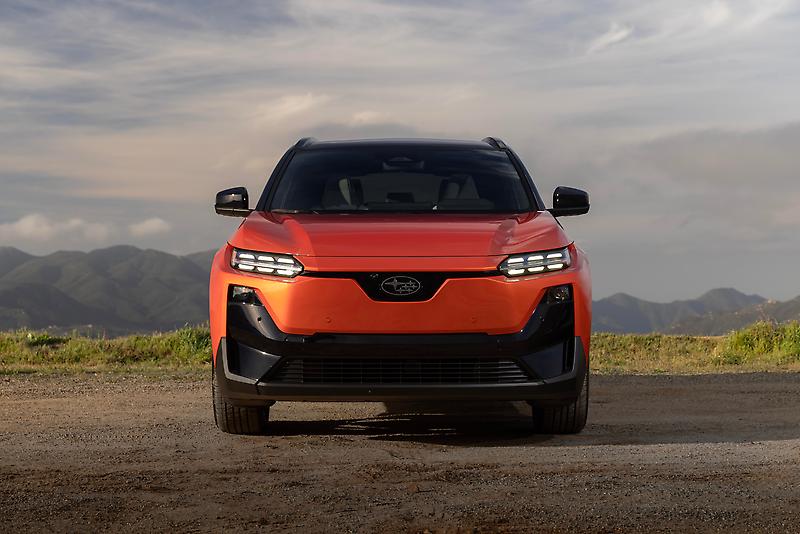
Subaru Uncharted
"...$45,000, $44,000. Okay. So Subaru built a $40,000 Uncharted, and now they got to figure out how to sell this ..."
The Subaru Uncharted is a Subaru vehicle that the podcast is discussing mainly in terms of how much it will cost. The point is that the price needs to make sense for buyers, or sales can be harder. It’s being talked about as a model Subaru is trying to introduce successfully.
The Subaru Uncharted is a newer Subaru model discussed in the context of pricing and how the brand plans to sell it. It’s brought up because the podcast is comparing its expected cost to what buyers are willing to pay, and because pricing strategy can strongly influence demand. That’s why it shows up in a segment focused on market positioning.

Toyota Chr
"...he Uncharted is built on the same platform as the Toyota CHR or whatever the hell it is, and it is part of tha..."
The Toyota C-HR is a small crossover SUV, meaning it’s built to be easy to drive like a car but with more space and higher ground clearance. The podcast mentions it because it shares the same basic engineering foundation with another vehicle. That can help explain why two cars might feel or function similarly.
The Toyota C-HR is a compact crossover built on a shared platform with other models in Toyota’s lineup. It’s mentioned because the podcast is comparing platform or design underpinnings, which can affect how a vehicle drives and how parts are engineered. That kind of discussion is common when people want to understand why two cars feel similar or share certain traits.
joint venture with Toyota
"Now, the Uncharted is built on the same platform as the Toyota CHR... and it is part of that joint venture with Toyota."
A joint venture with Toyota means Subaru and Toyota are working together on parts of the EV business. The hosts use it to explain why Subaru’s EV is based on Toyota-related underpinnings. It’s basically a partnership to share work and reduce risk.
A joint venture with Toyota means Subaru and Toyota are collaborating as partners on EV-related development and production. In this segment, it’s used to explain why Subaru’s EV (the Uncharted) is tied to Toyota’s platform and strategy. Joint ventures are common when automakers want to share costs and accelerate new technology rollouts.
oversupply of inventory
"They have an oversupply of inventory, expensive inventory, and they can't sell it."
Oversupply of inventory means there are too many cars sitting on lots compared with what people want to buy right now. If the cars are costly to hold or finance, the company may need to drop prices faster to sell them. That’s the idea the hosts are arguing in this segment.
An oversupply of inventory means dealers/manufacturers have more vehicles available than customers are buying at current prices. When inventory is “expensive,” it can put pressure on brands to discount or cut pricing to move cars. The hosts connect this to why they think Subaru, Honda, and Mazda can’t lower prices quickly enough.
execution risk
"The execution risk in their businesses just got so much higher."
Execution risk means the risk that a company’s strategy won’t work in real life. The hosts are saying that if automakers make more mistakes, things could get much worse fast.
Execution risk is the chance that a company’s plans won’t work out as intended—often because of operational or market missteps. The hosts use it to argue that if automaker executives make more wrong decisions, financial outcomes can deteriorate quickly.
tariffs
"The root cause, and I know I read the comments... but the root cause, the major portion of that 90% plunge is tariffs."
Tariffs are extra taxes added to imported products. The hosts say those added costs are a big reason Subaru’s profits dropped so sharply.
Tariffs are taxes imposed on imported goods. Here, the hosts argue that tariffs are the major driver of Subaru’s profit plunge, because manufacturers must pay extra costs and decide how much to absorb internally versus pass to customers.
write-off
"Tariffs cost them $1.42 billion. The write-off for Subaru's EVs is $362 million."
A write-off is when a company admits an investment isn’t going to pay off as expected and records a loss. The hosts use Subaru’s EV write-off to explain why the company has less money available for discounts and incentives.
A write-off is an accounting action where a company reduces the value of an asset or investment because it expects it won’t be recovered. Here, the hosts cite a $362 million write-off for Subaru’s EVs, framing it as part of why Subaru can’t fund aggressive incentive programs.
MSRP
"The Forester was the one that they increased the MSRP on significantly year over year, wasn't it?"
MSRP is the official sticker price a car company lists for a car. If that number goes up a lot, fewer people may buy it, because the car costs more.
MSRP (Manufacturer’s Suggested Retail Price) is the sticker price automakers publish for a vehicle. In the segment, the hosts argue that raising MSRP year over year can reduce sales by making the cars harder to afford.
incentive spend
"the incentive spend to move those and Subaru typically spends less to move vehicles than their competitors, but the expense to move Solteras and other EVs incentive-wise was in excess of $8,600"
Incentive spend is the discount money automakers put into deals to help cars sell. The hosts are comparing how much more Subaru has to spend to sell EVs than it spends for non-EVs.
Incentive spend is the money automakers allocate to promotions that help sell vehicles—like rebates, financing deals, or other customer subsidies. The segment compares incentive spend for EVs (over $8,600 for Solteras and other EVs) versus the rest of the lineup (about $2,799).
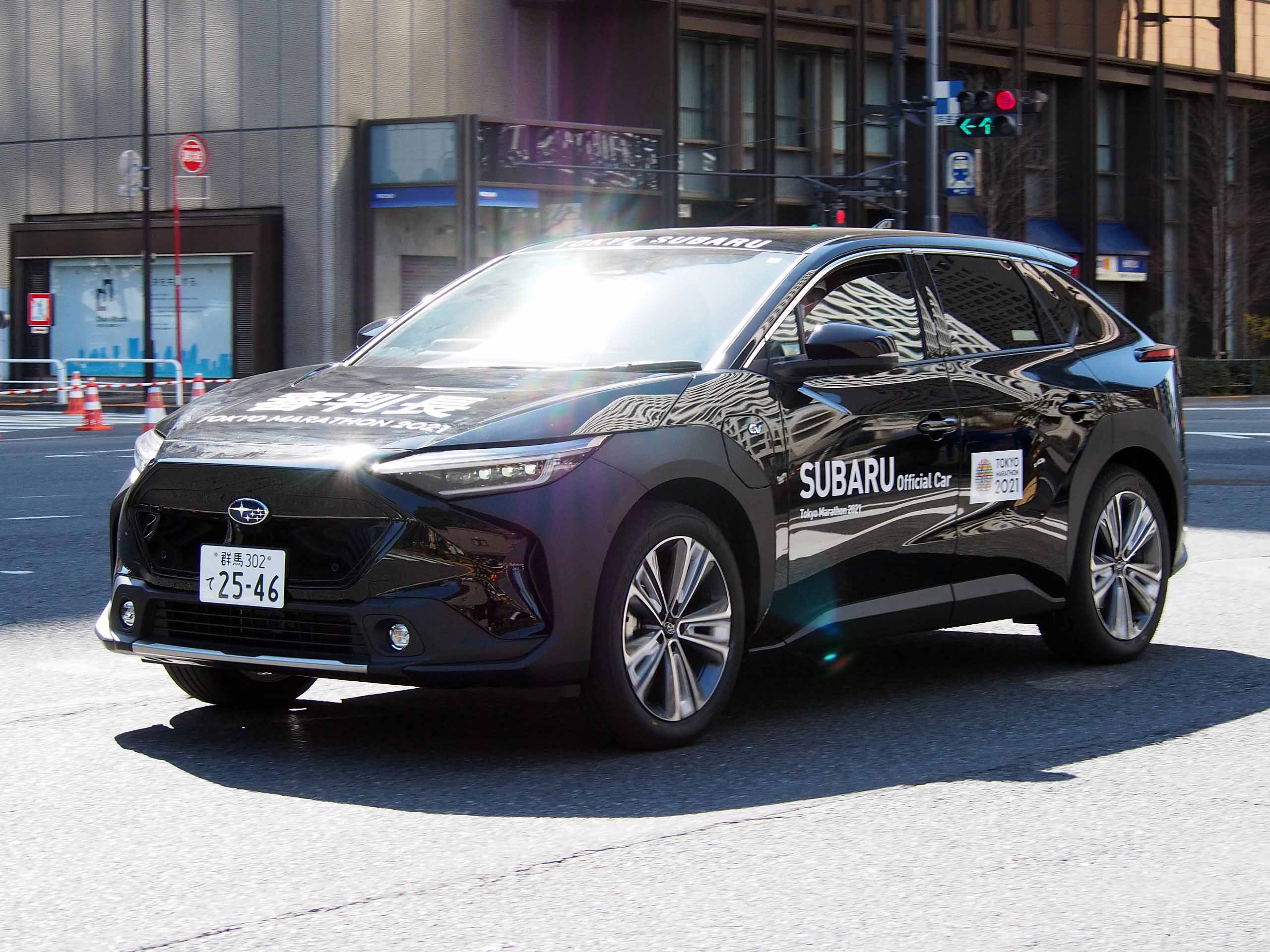
Solterra Solteras
"...s than their competitors, but the expense to move Solteras and other EVs incentive-wise was in excess of $8,..."
The Solterra is an electric vehicle, meaning it runs on electricity instead of gasoline. The podcast is talking about how expensive it can be to encourage people to buy EVs using incentives. That’s why the Solterra comes up in a discussion about EV sales and pricing.
The Solterra is an electric vehicle (EV) discussed in the context of incentives and the cost of moving EVs through the market. The podcast mentions that the expense to support EV sales—through incentives—was significant compared with competitors. That makes the Solterra relevant to conversations about how EV pricing and sales strategies are managed.
EV initiatives that failed
"they're paying for the right off of their EV initiatives that failed. They literally don't have the money sitting around to underwrite incentive programs like they may have done in"
This means Subaru’s electric-car plans didn’t work out the way they hoped. Because of that, they took losses and now they don’t have as much money to offer big discounts to sell EVs.
“EV initiatives that failed” refers to electric-vehicle plans that didn’t meet expectations—whether due to demand, costs, or execution. The hosts connect these failures to accounting write-offs and to the lack of cash available to fund future incentive programs.
day supply
"The latest numbers from Cox Automotive came out for new vehicle inventory, day supply, and we're going to review that."
Day supply tells you how long dealerships’ current stock would last if sales keep going at the same rate. More days usually means cars are moving more slowly.
Day supply is an inventory metric that estimates how many days it would take to sell the current stock at the current sales pace. Higher day supply generally signals slower sales and/or too much inventory, which can lead to more discounting or incentives.
new vehicle inventory
"The latest numbers from Cox Automotive came out for new vehicle inventory, day supply, and we're going to review that."
New vehicle inventory is how many brand-new cars are currently unsold at dealerships. If there are lots of them, it usually means cars are harder to sell right now.
New vehicle inventory is the number of new cars sitting unsold in the retail/dealer pipeline. When inventory is high, it often means automakers and dealers have more cars than they can sell quickly, which can pressure pricing and incentives.
Cox Automotive
"The latest numbers from Cox Automotive came out for new vehicle inventory, day supply, and we're going to review that."
Cox Automotive is a company that collects and reports data about car sales and dealer inventory. The hosts are using its report to talk about how many new cars are still unsold.
Cox Automotive is a major automotive data and analytics company that tracks things like new-vehicle inventory and sales trends. In this segment, the hosts cite its numbers to discuss how many new cars are sitting unsold and how long they’re likely to remain in dealer inventory.
sell down model year 2025 inventory
"May 14th, 2026, new vehicle inventory holds steady in April as automakers sell down model year 2025 inventory."
“Sell down” means dealerships are trying to get rid of leftover cars from the previous model year. It usually happens when there are more of those cars than people are buying.
“Sell down” model-year inventory means automakers and dealers work to move remaining cars from a prior model year before the next wave arrives. This often happens when production outpaces demand, leaving dealers with older-model stock that needs to be cleared.
model year inventory sell-down
"pricing right now as a gimmick to try and sell off this inventory that they can't sell. You can see the other brands on here as well, but that number is down significantly."
Car companies sometimes have too many cars from last year sitting around. So they use discounts or promotions to sell them before the next year’s cars show up.
A model year inventory sell-down is when automakers discount or push sales to clear out remaining cars from an older model year before the next model year arrives. The goal is to reduce aging inventory that ties up cash and warehouse space, especially when demand is weaker than expected.

Ford F-series
"What's going on with Ford? You've been thinking it would be easy for Ford to sell those 2025s, especially if they're the F-series because they have a shorter to 2026 F-series because of the aluminum situation."
Ford’s F-series is their main line of pickup trucks. The hosts are saying Ford might be able to sell off older-year pickups more easily than other models.
The Ford F-series is Ford’s long-running lineup of pickup trucks, and it’s often the brand’s biggest volume seller. In the transcript, it’s used as an example of why Ford might be able to move 2025 inventory faster than other brands.
aluminum situation
"especially if they're the F-series because they have a shorter to 2026 F-series because of the aluminum situation. Let's look."
In this context, the “aluminum situation” refers to supply-chain or production constraints tied to aluminum components used in newer truck designs. Those constraints can affect how quickly Ford can transition from one model year to the next, which then impacts how aggressively it must discount older inventory.

Ford Bronco
"It looks like a ton of Broncos, Dad. Yes. Out of the nearly 70,000, 25,000 are Broncos. 26,000. Only 8,200 are F-150s."
The Ford Bronco is Ford’s SUV that’s known for off-road capability. The hosts are pointing out that Ford has a lot of unsold 2025 Broncos compared with other models.
The Ford Bronco is Ford’s modern off-road SUV, and it’s a high-visibility model in the truck/SUV market. Here it matters because the transcript claims Ford’s remaining 2025 inventory is disproportionately made up of Broncos, implying demand and discounting pressures are model-specific.

Ford F-150
"Out of the nearly 70,000, 25,000 are Broncos. 26,000. Only 8,200 are F-150s."
The Ford F-150 is Ford’s most common full-size pickup truck. The hosts are using it as a comparison point to show Ford has fewer leftover F-150s than Broncos.
The Ford F-150 is Ford’s flagship full-size pickup and one of the most popular trucks in the U.S. In the segment, it’s contrasted with the Bronco to show that Ford’s leftover 2025 inventory is heavily skewed toward Broncos rather than F-150s.

Ford Broncos Sports
"... clear story. It's disproportionately Broncos and Broncos sports. If you're out there and you've ever thought abou..."
The Ford Bronco Sport is a smaller SUV that’s meant to handle more than just city streets. It’s related to the bigger Bronco, but it’s designed to be easier to drive and park day to day. People talk about it because it can be a good choice if you want a Bronco look and some off-road features without a full-size SUV.
The Ford Bronco Sport is a smaller SUV in the Bronco lineup, aimed at drivers who want some off-road ability without the size of a full Bronco. It’s discussed alongside the Bronco because the names are similar, but the Sport is positioned more for everyday driving with light trail capability. That makes it a frequent topic for shoppers comparing which Bronco-style model fits their lifestyle.
service loaners
"I bet you a lot of these are ending up as service loaners, Dad. I would imagine a lot of them will. Ford will pay the dealers to put a lot of these vehicles in service loaners, especially the Broncos."
A service loaner is a car the dealer gives you to drive while your car is in the shop. Sometimes the manufacturer helps pay for dealers to keep certain models available so more people get to try them.
Service loaners are vehicles a dealer provides to customers while their own car is being serviced or repaired. Manufacturers sometimes subsidize this by paying dealers to keep certain models in a loaner fleet, effectively using the cars as marketing exposure.
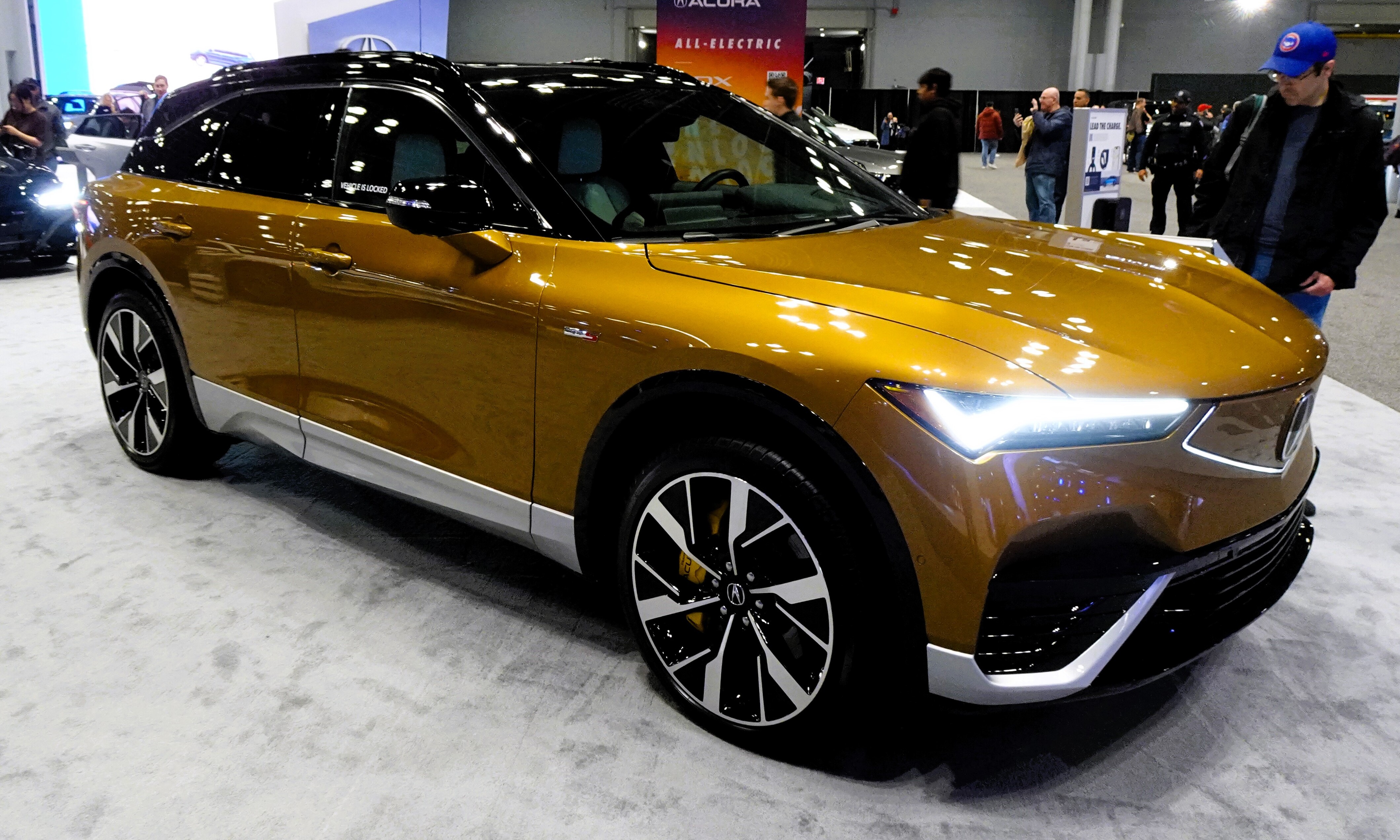
Acura ZDX
"That's kind of like when in the, what was it, 2009, 2010, when Acura came out with the ZDX and they just sat and they paid each dealership a lot of money to put them in the service loaner fleet..."
The Acura ZDX was a special Acura model sold around 2009–2010. The host is using it as an example of how brands try to get people to try a car by putting it in loaner fleets.
The Acura ZDX is a niche Acura crossover/coupe-style model that was sold in the late 2000s. The speaker references it as an example of a manufacturer paying dealers to stock it in a service-loaner fleet to encourage sales.
days supply
"Here's the data. Yes. Current state of the new car market. There are 2.86 million new cars in inventory, 78 days supply."
Days supply is a way to measure how many days the cars sitting on lots could last before they’re sold. If it’s higher, it usually means dealers have more cars than they can sell quickly.
Days supply is a market metric that estimates how long current dealer inventory would last at the current sales pace. Higher days supply usually signals slower sales and more inventory pressure on pricing.
average listing price
"The average listing price has ticked up above $49,025... It was $48,667. Again, where we are today, $49,025."
Average listing price is the typical price you see advertised for new cars. If it goes up, dealers are generally asking more; if it goes down, they’re asking less.
Average listing price is the typical advertised price dealers show for new cars (often before final discounts and incentives). Tracking how it moves month to month helps gauge whether dealers are raising or lowering asking prices.
seasonally adjusted run rate
"The seasonally adjusted run rate, Dad, was 15.9 million last month. Two months ago, it was 16.3 million. A year ago, it was 17.1 million."
It’s a way to estimate how fast sales are happening after removing seasonal effects. It turns a short-term number into an annualized “pace,” so trends are easier to compare.
A seasonally adjusted run rate is a sales figure that’s normalized to remove predictable seasonal swings (like spring/summer buying patterns). It’s then expressed as an annualized pace, so you can compare months more fairly.
Dealer Track Otter Credit Availability Index
"is the Dealer Track Otter Credit Availability Index is the highest it's been in those recent readings since June of 2022. So one way to address affordability is give more people more access to credit"
This index is basically a scorecard for how easy it is for people to get car loans. If the score is higher, more buyers can qualify for financing.
The Dealer Track Otter Credit Availability Index is a metric that tracks how available auto financing credit is for dealers and consumers. A higher reading generally means it’s easier to get loans, which can improve affordability and sales momentum.
Honda
"to where we start on Subaru, Honda, Mazda... Honda has a 48 day supply. Subaru has a 78 day supply."
Honda is one of the brands used to compare inventory levels. The hosts mention Honda’s “day supply” number to explain how tight the market is for buyers and sellers.
Honda is referenced as a Japanese brand with a cited low day supply of inventory, which the hosts connect to market leverage and pricing pressure. The segment uses Honda’s inventory figure to argue the situation is “precarious.”
General Motors
"the opposite of Ford and General Motors, these Japanese brands have done super well in the United States."
General Motors is mentioned as the other side of a comparison. The hosts use it to contrast how different automakers are performing amid affordability and inventory pressures.
General Motors is included in the contrast against Subaru/Honda/Mazda, as part of the hosts’ discussion about which automakers are positioned better or worse in the current market. It’s a brand-level comparison rather than a model-specific one.
seller's market versus buyer's market
"the lower day supply, kind of like the less consumer leverage you have, the more of its seller's market versus a buyer's market"
This is about who has the advantage. If cars are scarce, it’s more of a seller’s market; if there are lots of cars to choose from, it’s more of a buyer’s market.
A seller’s market means demand is strong relative to available inventory, so sellers have more pricing power. A buyer’s market means inventory is easier to find, so buyers have more leverage to negotiate.

Dodge Ram
"...hn. Incredibly thoughtful and kind. I have a 2008 Dodge Ram 1500 with 215,000 miles on it, and I refuse to bu..."
The Dodge Ram 1500 is a pickup truck, usually used for hauling and towing but also driven like a normal vehicle. The example given is a 2008 model with a lot of miles, which shows that some Ram trucks can last a long time. People bring it up because it’s a common, practical truck to own.
The Dodge Ram 1500 is a full-size pickup truck known for being a practical work vehicle and a common choice for long-term ownership. It’s mentioned here through the example of a 2008 Ram 1500 with very high mileage, which highlights how these trucks can be kept running for years with proper maintenance. That kind of real-world ownership story is often why the Ram comes up in podcast discussions.

1934 Mercedes-Benz 500k
"From Rich, we appreciate it. Great. Look upon a fellow classic, the 1934 Mercedes-Benz 500k. Let's see what Rich has us going."
The 1934 Mercedes-Benz 500K is an old luxury Mercedes from the 1930s. It’s famous with collectors, partly because it had a supercharger and it looks very distinctive with that long, classic hood.
The 1934 Mercedes-Benz 500K is a pre-war grand tourer known for its supercharged “K” engine and classic long-hood styling. It’s a highly collectible vintage Mercedes-Benz because of its distinctive design and rarity compared with modern cars.

Renault Wind
"...e to drive around in a convertible, but it's that wind noise in the hearing aids that gets amplified. Th..."
The Renault Wind is a small car with a convertible top, so you can drive with the air coming in. The podcast mentions that wind noise can be a problem, especially at higher speeds. It’s a practical comfort issue people should consider before buying a convertible.
The Renault Wind is a small convertible that’s designed for open-air driving. It’s mentioned because the conversation includes the downside of wind noise, which can become noticeable in the cabin. That kind of detail matters for buyers deciding whether a convertible is comfortable for everyday use.
mystery shopped 100 car dealers
"I keynoted an auto industry event. It should come out on YouTube next week, and I can't wait to share it. I mystery shopped 100 car dealers with our AI in a room full of car dealers."
Mystery shopping is a research method where someone poses as a typical customer to see how businesses respond in real conditions. In car retail, it helps reveal differences between online advertised pricing and what dealers will quote directly.
AI in a room full of car dealers
"I keynoted an auto industry event. It should come out on YouTube next week, and I can't wait to share it. I mystery shopped 100 car dealers with our AI in a room full of car dealers."
They’re using AI to help contact dealers in a consistent way. The goal is to make the dealer responses easier to compare.
Using AI here likely means automated or assisted messaging/requests to dealers to standardize how quotes are gathered. That can reduce human-to-human variation and make comparisons across dealerships more consistent.
OTDs
"62 provided some sort of price information. A third of them actually gave us OTDs like we asked for. Now, many of the dealers ended up sending back breakdowns that had different prices than what they had advertised online."
OTD means the final price you’d actually pay when you buy the car. It includes the base price plus things like taxes and dealer fees, so it’s easier to compare dealers fairly.
OTD (out-the-door) price is the total amount you pay to buy the car, including the advertised selling price plus taxes, registration, and dealer fees. It’s a key number because it removes the “headline price” confusion from online listings.

Nissan Titan
"You can see here, Dad, one of the dealers listed this 2021 Nissan Titan for sale at $24,998. The OTD they sent to us had a $1,595 protection package in their $1,000 dock fee."
The Nissan Titan is a big pickup truck. In this episode, they’re using a Titan listing to show how the final price can change based on dealer add-ons and fees.
The Nissan Titan is a full-size pickup truck, and this segment uses a specific example: a 2021 Nissan Titan listed for sale. The hosts focus on the out-the-door price and dealer fees to illustrate how dealer transparency affects what buyers actually pay.
dock fee
"The OTD they sent to us had a $1,595 protection package in their $1,000 dock fee. Then the AI agent negotiated, got an $1,100 discount, but still the dock fee."
A dock fee is an extra charge dealers add for handling the car when it arrives. It’s one of the fees that can stick around even if you negotiate the price.
A dock fee is a charge dealers apply for moving or handling vehicles when they arrive at a port or distribution facility (“at the dock”). In this segment, the dock fee is highlighted as a cost that can remain even after negotiation, affecting the final OTD price.
protection package
"The OTD they sent to us had a $1,595 protection package in their $1,000 dock fee."
A protection package is extra add-on stuff the dealer tacks onto the price. It can include things meant to protect the car, and it can raise what you pay.
A protection package is a dealer-added bundle of items—often things like paint protection, interior protection, or other coverage—added to the sale price. The hosts call out a $1,595 protection package as part of why the OTD can be higher than the initial advertised number.
bait and switch
"It's just be transparent. Don't bait and switch. Well, you don't have to go on for too long."
“Bait and switch” means the deal you’re shown isn’t the deal you end up getting. In car sales, it usually happens when extra fees appear at the end.
“Bait and switch” describes a sales tactic where a buyer is lured in with one price or offer, but the final deal changes through added fees or conditions. The hosts use it to contrast transparent pricing with dealer practices that can mislead shoppers about the true cost.
A-rated dealers
"But to be clear here, there's now becoming a growing incentive to do it because we're going to educate anyone and everyone that you should do business with A-rated dealers."
An “A-rated dealer” is a dealership that scores well for being upfront about pricing. The point is to help buyers avoid surprises and extra charges.
“A-rated dealers” refers to the hosts’ grading system for dealerships based on transparency in how they present pricing and fees. The segment argues that shoppers should prefer higher-rated dealers because it reduces the chance of hidden or confusing charges.
Request an Explanation
Heard something you'd like explained? We'll add it to this episode.
Sign in to request explanations for terms you heard.
Want to learn more?
Browse our glossary for plain-English explanations of automotive terms, jargon, and concepts.
Help improve this episode
See something that's not quite right? Our annotations are AI-generated and can sometimes miss the mark. Click the flag icon on any annotation to suggest a correction.