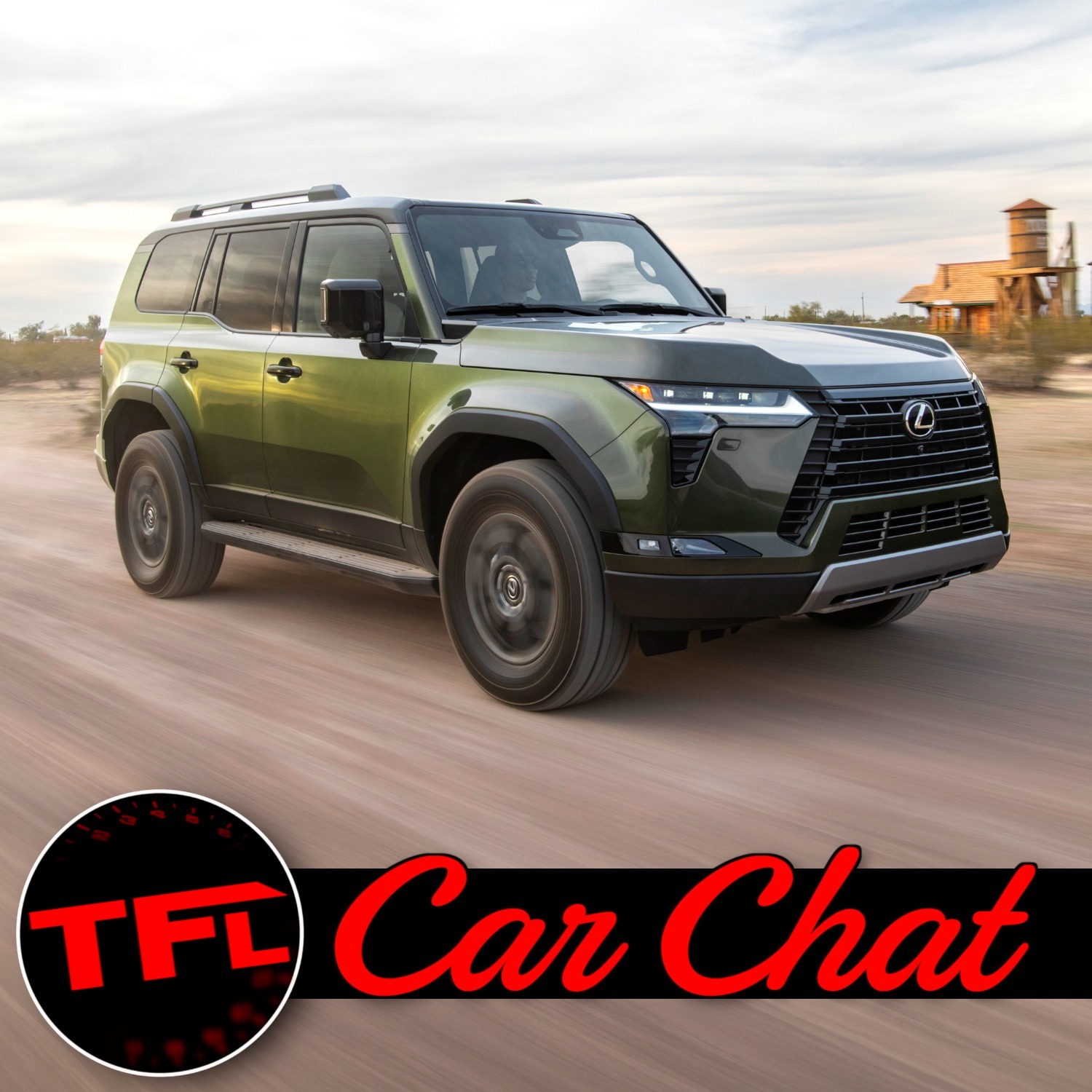
Surprise! These Are The Top 10 Fastest Selling Used Cars! | Ep. 336
About this episode
The hosts count down the fastest-selling used cars while weaving in a lot of side commentary on EVs, depreciation, and why certain models move so quickly. They bounce from the Hyundai Elantra N and Tesla Model Y to the Cybertruck, Lexus hybrids, and the Model X, mixing market data with personal ownership stories and sharp opinions. Along the way, they dig into battery health, parts-supply myths, and a few memorable road-trip and repair anecdotes.
( https://www.alltfl.com/ ) Check out our new spot to find ALL our content, from news to videos and our podcasts! In this episode, Roman and Nathan reunite to break down the latest data from iSeeCars, and the results are a total shock. While used car prices remain stubbornly high and the overall market is slowing down, certain models are vanishing from dealer lots in record time.
You’ll never guess what took the #1 spot—a vehicle often criticized for its reliability and quirky features, yet it’s currently the hottest commodity on the secondhand market. We also dive into the "death" of the flagship Teslas as production for the Model S and Model X officially winds down to make room for Optimus robots. Plus, Nathan shares some... unique observations from the West Coast, including why the "Furry Car Culture" is becoming a legitimate (and very clean) sub-section of the automotive world.
( http://www.patreon.com/tflcar ) Visit our Patreon page to support the TFL team!
Advertising Inquiries: https://redcircle.com/brands
Privacy & Opt-Out: https://redcircle.com/privacy
fastest selling used cars
"And I don't think it's ugly. But I do think that they should have done more to differentiate it between that and the other, the Lucid air. Regardless, the Lucid air, I've driven a couple now, they're really fast... Yeah, I'm thinking that's why this is number five on those 31.6 days."
They’re talking about which used cars get sold the quickest. That usually means buyers want them and the prices look good compared to similar cars.
This episode segment is about which used cars move quickly in the market. “Fastest selling” usually reflects a combination of demand, pricing, and how much value buyers feel they’re getting versus newer alternatives.
IC Cars
"So shall we get right into it, talk about the top 10 best-selling used cars? Now, this list comes to us from our friends at IC Cars, which is, you know, a company that takes and aggregates data from all the sales data, and that's how they come to this."
They mention IC Cars as the company that collects lots of used-car sales information. That’s how they build the list of which cars are selling the quickest.
IC Cars is referenced as a data source for the episode’s “top 10” list. The hosts say it aggregates sales data from many transactions to estimate which used cars sell the fastest.
gas prices
"And I think this is especially interesting because it's recent, and so it reflects what's happening with gas prices. As of this recording, gas prices have jumped up again because now oil, crude oil prices are at an all-time high."
This is just the price you pay for gasoline at the gas station. When gas gets more expensive, people often look harder at fuel economy, which can affect what used cars sell quickly.
They’re talking about the retail cost of gasoline at the pump. In car-shopping discussions, gas prices matter because they affect running costs and can change which used cars sell fastest.
crude oil prices
"As of this recording, gas prices have jumped up again because now oil, crude oil prices are at an all-time high."
Crude oil is the “starting material” that gets turned into gasoline. If crude oil costs more, gas usually costs more as well.
Crude oil is the raw petroleum that’s refined into gasoline and other fuels. When crude oil prices rise, gasoline prices often rise too, which is why they connect it to what’s happening at the pump.
85 octane
"I come out here and it's just like, oh, I forgot how cheap it is here, especially because we run 85 octane, which means it's even lower."
Octane is a rating on gasoline that helps prevent engine knocking. Higher octane usually costs more, and the “right” octane depends on what your engine is designed to use.
Octane rating is a measure of how resistant gasoline is to knocking (premature combustion) in an engine. Running 85 octane (as they describe) implies the local fuel they use is lower-octane than higher grades, and it can affect both cost and which engines can run properly.

Land Rover Range Rover
"So I paid last yesterday when we bought, well, we bought a Range Rover. Of course you bought a Range Rover. I was there for that."
A Range Rover is a big, luxury SUV. Big SUVs usually use more gas, so when gas prices are high, filling up can get expensive fast.
A Range Rover is a luxury SUV from Land Rover, known for strong performance and high fuel consumption compared with many mainstream vehicles. When they mention buying one right before talking about filling up, it highlights how expensive fuel can be for larger, less fuel-efficient cars.
87
"But we paid, I want to say it was for the mid-grade, 87, it was like... $85 to fill it up."
“87” is the octane rating on the gas pump. Your car may be designed to run best on a specific octane level, and using the wrong one can cause problems like knocking.
“87” refers to gasoline octane rating (typically 87 octane). Octane matters because engines are calibrated to avoid knocking; using the recommended grade helps the engine run as intended.
a gallon
"And it was like $4.59 or something a gallon, which is pretty high, or $4.69 a gallon. That's so good."
They’re talking about how much gas costs for one gallon. That’s the usual way gas prices are shown, so you can compare prices easily.
They’re quoting fuel cost per unit volume—price per gallon. This is the standard way gas prices are communicated in the U.S., and it’s what you use to compare how expensive different fuel grades are.
prices and inflation are through the roof
"So there's this confluence now of two things happening, right? Prices and inflation are through the roof, and so used car prices are sky-high."
They’re saying the general cost of things is rising fast. When that happens, used cars usually get more expensive as well.
The hosts are describing a period of very high inflation, where prices rise quickly across the economy. That kind of environment tends to push up used-car prices because both new-car pricing and financing costs move higher too.
used car prices are sky-high
"Prices and inflation are through the roof, and so used car prices are sky-high. They are."
“Sky-high” is a shorthand for unusually elevated used-car pricing compared with normal market levels. When used prices jump, it often reflects supply constraints, higher demand, and higher costs elsewhere in the auto market.
auction
"We have a former TFL employee, Brendan, who goes to the auction on a regular basis. And I was just talking..."
They’re talking about car auctions, where vehicles are sold to buyers in bulk. Prices there can affect what dealers pay and what you end up paying.
The hosts mention an auction as a place where used cars are bought and sold. Car auctions are a common channel for dealers and resellers to source inventory, and auction pricing can influence what you see at retail.

Hyundai Elantra N
"All right. [365.8s] Well, so let's start with the number 10 most rapidly selling used car, and that is the [372.1s] Hyundai Elantra N. [375.4s] The average days on the market is 38.3."
The Hyundai Elantra N is a sporty version of the Elantra. The hosts say it sells quickly as a used car and that you can still get it with a manual gearbox.
The Hyundai Elantra N is a performance-focused compact sedan from Hyundai’s “N” division. In this segment, it’s highlighted as the #10 fastest-selling used car, with an average of 38.3 days on the market, and the hosts note it can be had with a manual transmission.
manual transmission
"[379.5s] That is a great car by the way. [380.8s] It's a cool car. [382.3s] And you can get it with manual transmission."
A manual transmission means you choose the gears yourself using a clutch pedal and a stick. Some drivers prefer it because it feels more engaging than an automatic.
A manual transmission is a gearbox where the driver selects gears using a clutch pedal and a gear lever. In performance cars like the Elantra N, offering a manual can make the car more desirable to enthusiasts and can affect used-car demand.
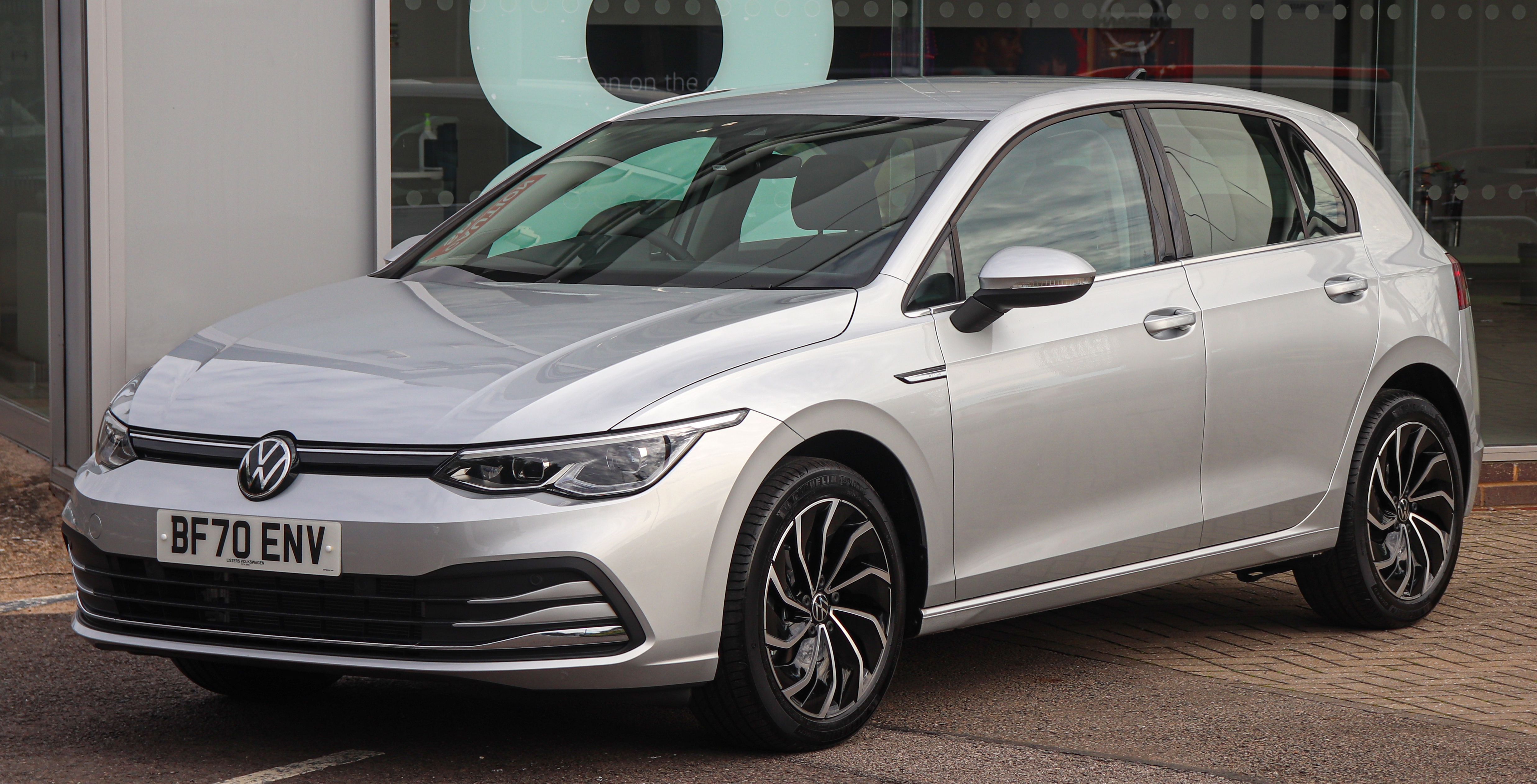
Volkswagen Golf Gti
"So it kind of takes the mantle of the Golf GTI. Yeah. It goes directly against the Honda Civic Si."
The Volkswagen Golf GTI is a popular “hot hatch” that’s meant to be fun to drive but still practical. They’re saying the Elantra N is trying to be the next version of that same idea.
The Volkswagen Golf GTI is a long-running hot-hatch benchmark known for a balanced mix of everyday usability and sporty driving. The hosts use it as a reference point for what the Elantra N is “taking the mantle of,” meaning it’s aiming at the same role in the market.
depreciation
"I think that's almost a better used car than a new car in some ways, because you don't have to take the, you know, you don't take the hit on the depreciation."
Depreciation is how quickly a car loses value after you buy it. The point here is that buying used can help you avoid the biggest value drop that happens right after a new car is purchased.
Depreciation is how much a car’s value drops over time. The hosts are arguing that buying a used performance car can avoid some of the early depreciation hit you’d take when buying new.
JDM cars
"You know what I've been dying for? I've been to Japan a lot now. So I've gotten into JDM cars and there the Godzilla is king, the GTR."
JDM means “Japanese Domestic Market.” It’s a label people use for Japanese cars that are especially associated with Japan’s own market and driving culture.
JDM stands for “Japanese Domestic Market,” meaning cars that were originally sold in Japan (or are closely associated with that market). The hosts use it to describe the type of Japanese performance cars they’ve been getting into.

Nissan GT-R
"I've gotten into JDM cars and there the Godzilla is king, the GTR. And so I've been hoping and longing for like those early 2012, 2010 GTRs that come down."
The Nissan GT-R is a famous supercar from Japan known for being extremely fast. They’re talking about wanting older, earlier versions to show up at better used prices.
The Nissan GT-R (often called “Godzilla”) is a high-performance sports car known for strong acceleration and all-weather traction. The hosts mention it as a JDM icon and express interest in earlier GT-Rs becoming cheaper on the used market.
super large turbo
"Every single one of those has been stansed or, you know, super large turbo K Turbos inside and whatever."
A turbo is what helps the engine make more power by forcing extra air in. A “super large” one can make more power at higher speeds, but it can also make the car less responsive and harder on the engine if it’s not set up correctly.
A “super large turbo” is an aftermarket turbocharger sized for more airflow and higher peak boost. Bigger turbos can make more top-end power, but they often increase lag and can stress engine components if the supporting tune and cooling aren’t right.
programming
"Or they've messed with the programming, of course, which will shorten the life of the car."
“Programming” means the car’s computer settings for things like fuel and boost. If you change those settings to chase power without doing it carefully, it can wear out the engine faster.
In this context, “programming” refers to the engine control unit (ECU) calibration—how the car’s computer manages boost, fueling, and timing. Changing it can improve performance, but it can also increase wear or shorten lifespan if it’s not done safely for the engine’s limits.
shorten the life
"Or they've messed with the programming, of course, which will shorten the life of the car."
“Shorten the life” is the hosts’ way of saying that certain modifications—like ECU changes—can increase mechanical stress and heat. That can accelerate wear on components such as the turbo system, engine internals, and drivetrain if the tune and hardware aren’t matched.
re chip it
"So keep that in mind all you guys who decide that, you know, whatever it is, 600 horsepower isn't enough. And so you want to, you want to re chip it."
“Re chip it” means updating the car’s computer tune to make it run differently. It can add power, but if the tune is too aggressive, it can cause extra wear and shorten the car’s life.
“Re chip it” means installing new ECU software (often via a reflash or piggyback) to change engine behavior. It’s commonly used to unlock more power, but aggressive tunes can raise stress on the engine and drivetrain and may reduce long-term durability.
originality
"Originality is what people want. In many cases, they really do want a car that is, you know, on the term of molested."
Here “originality” means the car hasn’t been changed much from how it left the factory. Many buyers prefer that because it’s more predictable and usually holds value better.
“Originality” in the used-car context means the car is still close to factory configuration rather than modified. Enthusiasts often pay more for unmodified examples because they’re easier to verify, maintain, and value over time.
molested
"In many cases, they really do want a car that is, you know, on the term of molested. Some people don't like to hear."
“Molested” is slang for “messed with.” They’re saying some people want a car that hasn’t been heavily modified in a way that could make it less reliable or less valuable.
“Molested” is slang meaning the car has been heavily modified or tampered with in a way that reduces its stock character. In enthusiast circles, it often implies questionable modifications that may hurt reliability, drivability, or resale value.

Tesla Model
"Number nine, a Tesla Model Y, which makes sense because it's the best selling electric car in the world. ... So 34.6 days to sell one of these bad boys."
The Tesla Model Y is an all-electric SUV. It’s popular, and the hosts are talking about what it’s like to drive one and how its tech helps while you’re on the road.
The Tesla Model Y is an electric crossover SUV from Tesla. In this episode it’s mentioned as one of the fastest-selling used cars, and the hosts also discuss driving it with Tesla’s driver-assistance features.
FSD supervised
"If you want to see Nathan's first experience with FSD supervised head on over. ... Like I said, to all TFL."
“FSD supervised” means the car is helping you drive, but you’re still in charge. You have to watch what’s happening and be ready to take over if the car needs help.
“FSD supervised” refers to Tesla’s Full Self-Driving capability when it’s operating in a mode where the driver must remain actively responsible. The system can assist with driving tasks, but it expects supervision and driver input rather than fully hands-off autonomy.
steering wheel
"How many times did you tell me not to grab the steering wheel? It was funny. ... Where do you put your hands?"
They’re talking about how, with driver-assist features, it can feel awkward to know how to hold the steering wheel. Even when the car is helping, you still have to stay ready to steer.
The steering wheel is referenced here in the context of driver-assistance behavior—specifically, when the system is active the driver may not know how much to hold or move the wheel. Tesla’s supervised modes typically require the driver to stay engaged and provide steering input when needed.
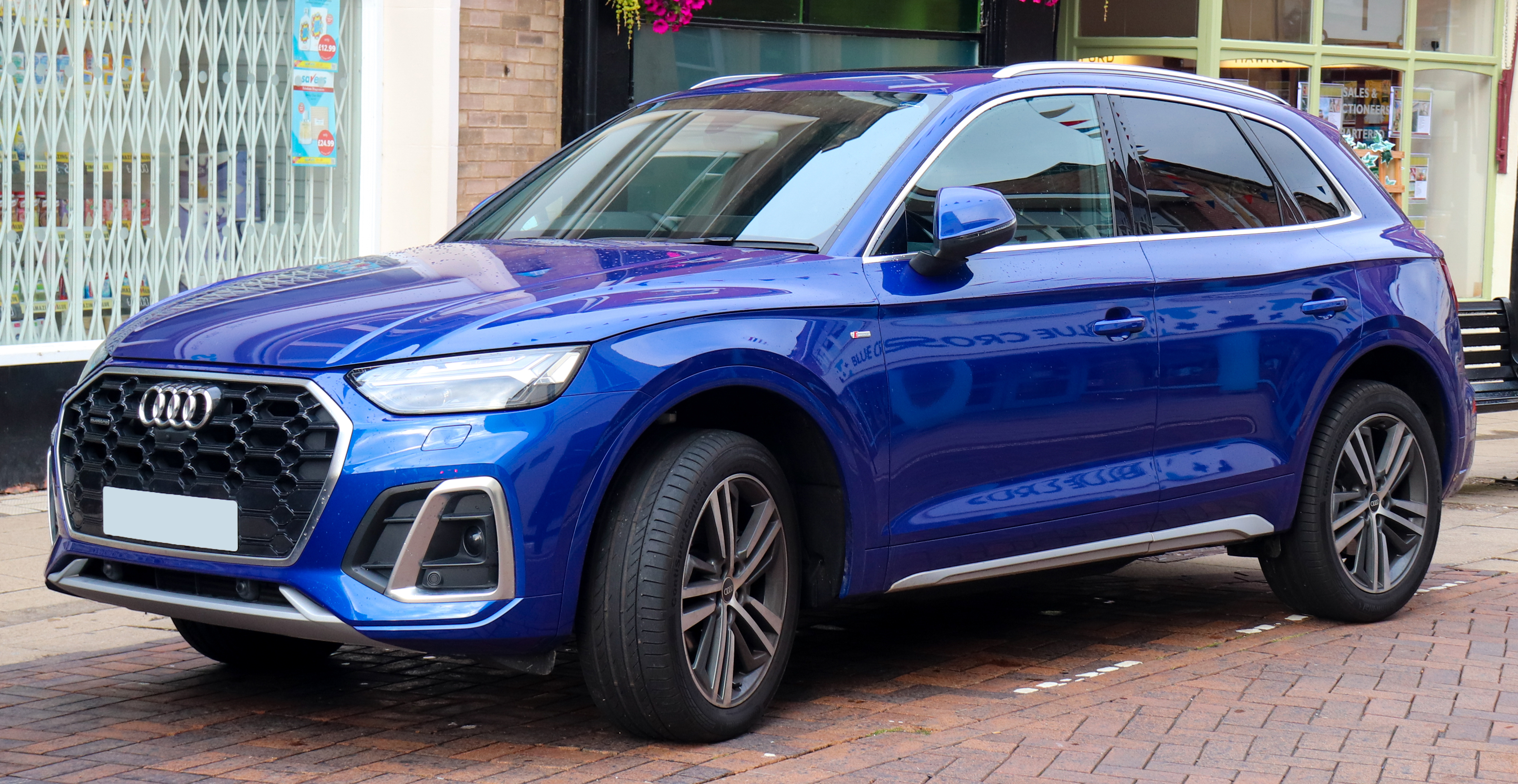
Audi Q5
"Number eight on the list is the Audi Q5 Sportback 34.2 days. Is that even, I haven't seen one of those on the street."
Audi’s Q5 Sportback is basically a compact SUV with a sleeker, more “coupe-like” roof. It’s meant to look sportier than a normal Q5, but still works like an SUV day to day.
The Audi Q5 Sportback is a sportier, coupe-like version of the Q5 SUV. It keeps the Q5’s compact-SUV practicality but reshapes the roofline for a more sloped, fastback look.

Tesla Cybertruck
"So the next one, number seven on the list is a Tesla Cybertruck at 33.3 days. Now the Tesla Cybertruck has become the poster child for everything that is wrong with Tesla..."
The Tesla Cybertruck is an electric pickup truck with a very unusual, boxy design. The hosts are saying it’s one of the most controversial trucks in recent years—people have strong opinions about it.
The Tesla Cybertruck is an all-electric pickup known for its angular, stainless-steel body and polarizing design. In this segment, it’s discussed as a highly divisive vehicle that people either love or strongly dislike.
poster child
"Now the Tesla Cybertruck has become the poster child for everything that is wrong with Tesla, everything that is wrong with technology..."
“Poster child” just means “the example people point to.” In this case, they’re saying the Cybertruck is the main example of the problems they associate with Tesla.
“Poster child” is an idiom meaning someone or something that represents a broader issue. Here, the hosts use it to say the Cybertruck symbolizes what they see as problems with Tesla and modern tech.
polarizing
"Okay. I can't think of anything that's more polarizing. Even the Aztec was kind of a joke."
“Polarizing” means people don’t feel neutral about it. They either really like it or really dislike it.
“Polarizing” means a topic or product strongly divides opinions—some people love it while others dislike it intensely. The hosts use it to describe how the Cybertruck is widely debated and not universally accepted.
bed
"Um, first and foremost, I love the tan out cover, which turned into something that is virtually 90% of the time useless, which is the bed. When it worked. When it worked. Fair."
On a pickup truck, the “bed” is the part in the back where you put cargo. They’re talking about a bed-related feature that didn’t work well most of the time.
In pickup trucks, the “bed” is the open cargo area behind the cab where you can haul items. The speaker is referring to the Cybertruck’s bed area and a cover/feature related to it.
steered by wire
"...it was the first vehicle to have completely steered by wire where the ratio changed. And actually the changing ratio once you get used to it was really nice..."
Instead of a direct mechanical connection from the steering wheel to the wheels, the car uses electronics to control steering. That lets the car adjust how “quick” or “slow” the steering feels depending on the situation.
“Steered by wire” means the steering wheel’s inputs are sent electronically to actuators at the wheels, rather than being mechanically connected by a steering shaft and linkage. It allows the vehicle to change steering behavior (like steering ratio) based on speed and driving mode.
ratio
"...completely steered by wire where the ratio changed. And actually the changing ratio once you get used to it was really nice..."
Steering ratio is basically how much the wheels turn when you move the steering wheel. A variable ratio can make the car easier to turn in tight spots.
In steering, the “ratio” is how much wheel angle you get for a given steering-wheel input. With steer-by-wire, the vehicle can change that ratio so the steering feels quicker in parking situations and calmer at speed.
variable steering
"...what happens is when you're in a tight parking situation with the variable steering and with four-wheel steer, it made the truck much more maneuverable."
Some cars can change how the steering responds depending on where you are driving. In slow, tight spots, it can make turning easier and more precise.
Variable steering refers to steering behavior that changes dynamically—commonly steering ratio and/or assist—based on conditions like speed. In tight spaces, it typically reduces steering effort and increases maneuverability by making the steering respond more aggressively.
four-wheel steer
"...with the variable steering and with four-wheel steer, it made the truck much more maneuverable."
Normally only the front wheels turn. With four-wheel steering, the rear wheels can also turn, which helps the car turn tighter at low speeds and feel more stable at speed.
Four-wheel steer is a system where not only the front wheels steer, but the rear wheels also turn. At low speeds it often turns the rear wheels to help the car rotate more easily for parking and tight turns; at higher speeds it can improve stability.
quartermaster
"You were just in the quartermaster. Yeah. Yeah. Oh, that's, that's the quartermaster."
They’re using “quartermaster” like a playful way to talk about the truck’s storage area—basically the place where you keep and manage gear. The point is that the truck’s layout made carrying stuff more useful.
“Quartermaster” here is being used as a nickname/joke for the vehicle’s rear cargo area or a specific storage/utility setup. The speaker is emphasizing that the truck’s design made the usable space more practical for carrying items.
Steer by wire
"with the. Steer by wire. Steer by wire."
Steer-by-wire means your steering wheel doesn’t directly move the steering parts with a physical linkage. Instead, sensors and computers translate your steering input into commands that move the wheels.
Steer-by-wire replaces the traditional mechanical linkage between the steering wheel and the steering rack with electronic controls. Sensors read the driver’s input, computers command actuators to move the steering, and the system can be tuned for feel, stability, and integration with other vehicle systems.
infinity
"There was an infinity that had. The infinity was the first of the game with that."
They mention Infiniti, a luxury car brand. The point is that Infiniti experimented with steering tech, but with a physical backup connection instead of relying only on electronics.
The speaker is referring to Infiniti, a Nissan-owned luxury brand, in the context of early steer-by-wire experimentation. They claim Infiniti had a system with a physical connection as a backup rather than purely wire-based steering.
steering rack
"The infinity actually had a physical connection between the wheel and the steering rack."
The steering rack is the part that turns your steering input into wheel movement. It’s the key mechanical piece that links the steering wheel to the wheels in a traditional steering system.
The steering rack is the component that converts rotational steering-wheel motion into side-to-side movement that turns the wheels. In a conventional setup, it’s mechanically linked to the steering wheel; with steer-by-wire, that linkage may be removed or replaced with actuators.
secondary backup
"And what would happen with the infinity is that would disconnect, but it was, it was like a secondary backup."
A secondary backup is a backup plan for steering. If the main electronic steering path has a problem, the car can switch to another way to keep steering.
A secondary backup in steer-by-wire systems refers to an alternate method to maintain steering if the primary electronic path has issues. The idea is redundancy—so the vehicle can still steer even if the main system disconnects or fails.
rod
"So there was a, there was actually a rod. A stealing rod. Yeah."
They’re talking about a physical metal link (a rod) that can act as a backup for steering. Instead of relying only on electronics, the car can still steer using a mechanical connection.
In this context, the “rod” refers to a physical mechanical linkage used as a backup path for steering. The hosts contrast this with a purely wire-based steer-by-wire approach, implying the rod can restore steering if the electronic system disconnects.
lockers
"...it had two real lockers. Everybody else, including Rivian, they go with virtual lockers. And I have found that off-road virtual lockers are not good, whereas real lockers are really good."
A locker helps both wheels on the same axle work together when you’re stuck or on slippery ground. Real lockers physically lock things up, while virtual lockers use the car’s computer and brakes to mimic that effect.
Lockers are devices that force the wheels on an axle to rotate together, improving traction when one wheel loses grip. The key point here is the difference between real (mechanical) lockers and “virtual” lockers that rely on braking/traction control logic instead of physically locking the differential.
Moab
"...playing the video where we took it to Moab was it had two real lockers."
Moab is a well-known off-roading area in Utah. When someone says they took a vehicle to Moab, it usually means they tested it on challenging trails.
Moab is a famous off-road destination in Utah, often used as a benchmark for how capable a vehicle is on rocks, sand, and steep trails. Mentioning Moab signals that the Cybertruck’s features were tested in a real off-road environment.
Rivian
"Everybody else, including Rivian, they go with virtual lockers. And I have found that off-road virtual lockers are not good, whereas real lockers are really good."
Rivian is a company that makes electric vehicles. In this discussion, they’re mentioned because their off-road traction system uses a computer/brake-based approach instead of true mechanical lockers.
Rivian is a vehicle brand known for electric trucks and SUVs with off-road-focused options. Here, it’s referenced as another manufacturer that uses “virtual lockers” rather than real mechanical lockers.
air suspension
"And it also had the air suspension, which gave it up to get this. If I recall, and it's like extract mode, it was 16 inches of ground clearance."
Air suspension is a suspension system that can raise the truck up or lower it down using air. Lifting it up helps when you’re driving over rocks, ruts, or uneven ground.
Air suspension uses an air spring system (instead of steel coils) to raise or lower the vehicle. It matters off-road because it can increase ground clearance for obstacles and improve approach/departure angles.
ground clearance
"...extract mode, it was 16 inches of ground clearance. Take that Subaru with your puny 10 inches of ground clearance."
Ground clearance is how much space there is between the bottom of the truck and the ground. More clearance usually means you can go over obstacles without hitting the underside.
Ground clearance is the distance between the lowest part of the vehicle and the ground. More ground clearance helps prevent the undercarriage from scraping on rocks, logs, or ruts during off-road driving.
pickup truck
"And the final component of it is that I don't think it worked well as a pickup truck. Okay. Bottom line."
A pickup truck is the kind of vehicle with an open bed in the back for hauling. If someone says it doesn’t work well as a pickup, they mean it doesn’t do the hauling/towing job as well as a typical pickup.
A pickup truck is a body style with an open cargo bed behind the cab. When a vehicle is described as “not working well as a pickup truck,” the discussion is usually about whether it truly delivers the practical towing/cargo capability people expect from pickups.
towed 10,000
"I mean, it towed 10,000. It just didn't do it very far. No, no."
“Towed 10,000” means the vehicle pulled a trailer that weighed around 10,000 pounds. Being able to tow that much on paper doesn’t always mean it’s great at towing for long distances or in tough situations.
“Towed 10,000” refers to a vehicle’s towing capacity or a real-world towing test where it pulled a trailer weighing about 10,000 (typically pounds in the U.S.). Towing performance isn’t just about the maximum number—it also depends on how well it can sustain that load over distance and conditions.
towing
"It just didn't do it very far. No, no. And actually towing, they've proven that towing with it, not a great idea."
Towing means pulling a trailer behind the car. It can be harder on the vehicle than normal driving, especially for stopping and keeping things cool.
Towing is the act of pulling a trailer, and it stresses components like brakes, cooling systems, and drivetrain under sustained load. The hosts are saying that real-world towing results with this vehicle weren’t ideal, even if it can tow a certain amount.
ride quality
"And given what they've done, I'd say some of it's really impressive. I really liked the ride quality of it and the steering. I hated the fact that how you had to shift it to go back and forth and all that type of stuff."
Ride quality is how comfortable the car feels over rough roads—whether it feels smooth or bouncy. It’s mostly about the suspension and tires.
Ride quality describes how smooth and controlled a vehicle feels over bumps and uneven roads. It’s influenced by suspension tuning, tire choice, and how the chassis absorbs impacts.
shift it to go back and forth
"I really liked the ride quality of it and the steering. I hated the fact that how you had to shift it to go back and forth and all that type of stuff."
They’re saying the vehicle makes you change gears to move forward and backward. The complaint is that the process feels annoying or not easy to use.
“Shift it to go back and forth” points to the vehicle requiring a gear selection change (for example, moving between drive and reverse) rather than using a simpler control scheme. This is often a complaint about how the transmission/drive control is laid out and how intuitive it feels in daily use.
SpaceX
"So we have, you know, one day Mr. Musk woke up and decided that SpaceX wasn't buying enough of the cyber trucks apparently and so he lowered the price to $60,000 and we've got one of those on order."
SpaceX is Elon Musk’s space company. In this conversation, they mention it to explain why Tesla might have changed the Cybertruck price.
SpaceX is a private aerospace company associated with Elon Musk. Here, it’s mentioned as a customer/consumer of Cybertrucks, used to explain why the price was lowered.
lowered the price to $60,000
"and so he lowered the price to $60,000 and we've got one of those on order. You're kidding."
They’re talking about a price cut to $60,000 for the truck. It’s mainly about cost and buying decisions, not how the vehicle works.
The hosts discuss a specific price drop for the Cybertruck, framing it as a reason they’re ordering one. This is more of a shopping/pricing topic than a technical automotive detail.
American flag
"We're doing it again? Are you going to wrap it in another American flag again? No, Colorado flag this time."
They’re joking about the truck being wrapped with an American flag design. It’s a style choice—like putting a big graphic film on the outside of the vehicle.
The speaker is referencing a patriotic wrap/paint theme used on the vehicle (a visual branding choice). In car culture, “flag” wraps are typically vinyl graphics applied over the body for appearance.
wrap
"Are you going to wrap it in another American flag again? No, Colorado flag this time. I like it wrapped in white."
Here, “wrap” means covering the truck’s outside with a removable sticker-like film. It’s how people change the look without repainting.
In this context, “wrap” refers to applying a vinyl wrap (or similar graphic film) to the vehicle’s exterior to change its color or add designs. Wraps are common for personalization and can be removed later.
buy high and sell low
"Well, this is TFL. Yeah, we buy high and sell low. We buy high and sell low. This is not good."
It means you paid too much when you bought, and then you sold for less than you paid. With cars, that usually happens when the car loses value faster than the market prices rise.
“Buy high and sell low” describes a losing strategy in which you purchase an asset at a high price and later sell it for less. In car terms, it often happens when the market shifts or when depreciation and fees outweigh any short-term price gains.
used cars are just ridiculously expensive
"This is not good. And that's especially true right now with the fact that used cars are just ridiculously expensive. And we're going to get into that in a minute."
This refers to a “tight” used-car market where prices are elevated compared to normal. When used cars are expensive, it can be harder to avoid losses when you sell quickly, because the price you paid may not be recoverable in the resale market.

Tesla Model S
"By the way, did you know I was offered for some mysterious reason the signature edition of the Model S? I just got this email. They're only building 250 of them."
The Tesla Model S is an electric luxury car. Here, they’re talking about a special limited edition version that’s only being made in small numbers.
The Tesla Model S is an all-electric luxury sedan. In this segment, the host mentions being offered the “signature edition,” which is a limited-production version meant to be more exclusive than standard Model S trims.
flip it the next day
"Because you could take that car and potentially flip it the next day, which probably they wouldn't like, but you could for an F80, right?"
“Flip it” means buy it and then sell it again soon after, usually to make money. They’re saying some cars are so popular that people can sell them quickly.
“Flip” in car/collectibles talk means buying something and reselling it quickly for a profit. The hosts are describing a scenario where a very scarce, high-demand car could be resold almost immediately.
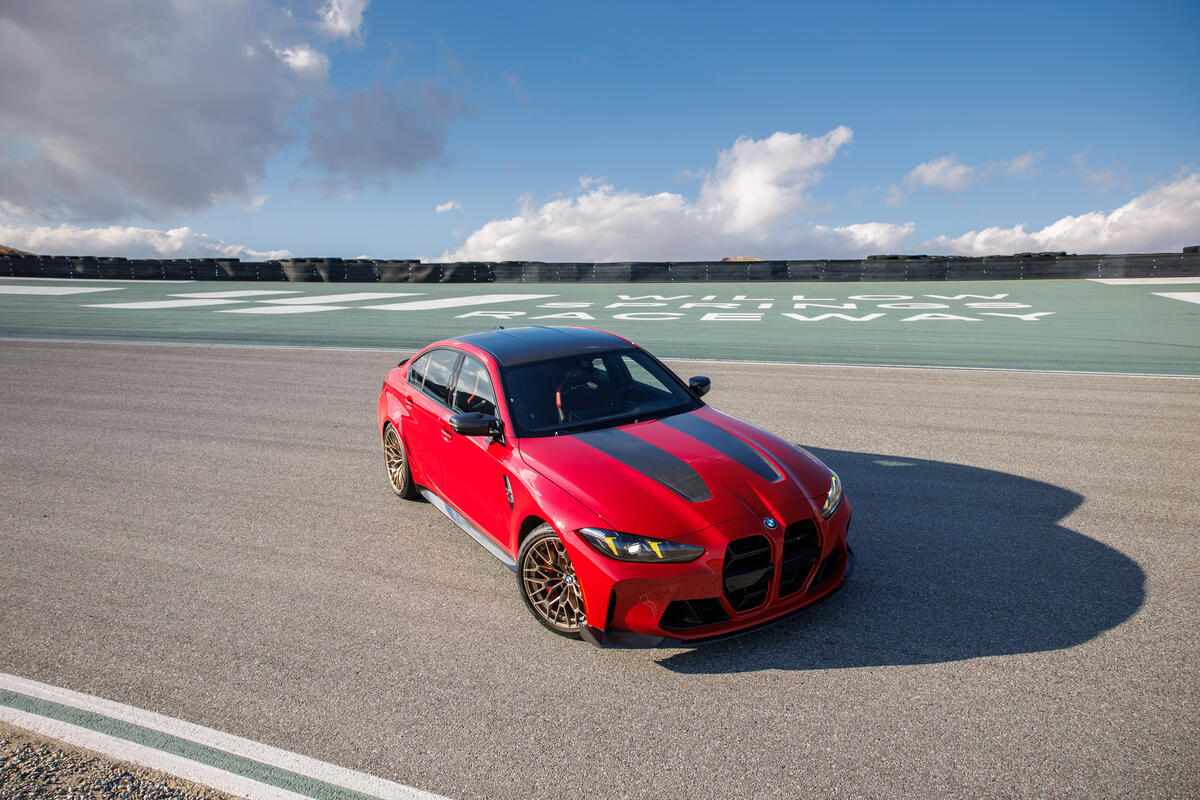
F80
"Because you could take that car and potentially flip it the next day, which probably they wouldn't like, but you could for an F80, right? Those are a million or something."
“F80” is BMW’s internal code for a specific generation of the M3. They’re basically saying some cars like this are so in-demand that you could sell them fast for a lot of money.
“F80” refers to the BMW M3 generation with the F80 chassis code. In this segment, they’re using it as an example of a high-demand used car that could be sold quickly for a large profit.
configure it and then they build it for you
"And then you go and configure it and then they build it for you. I would like to know how. I would love that experience."
They’re talking about ordering a car the way you want it—picking options first, then having it built afterward. The point is that it sounds like a fun, special process.
This describes the factory-order process where you choose options (“configure it”) and the manufacturer/dealer builds the specific car to that order. It’s being discussed as an experience the host would like to have.
plaid
"Only $250, but it's $160,000 basically for a plaid that is, except for the carbon ceramic wheels and a parent's package."
“Plaid” is Tesla’s name for the super-fast version of the Model S. They’re discussing a Model S Plaid and how expensive it is.
“Plaid” refers to the Tesla Model S Plaid, a high-performance version of the Model S. In this context, the hosts are talking about the price and options of a Plaid, with specific mention of carbon-ceramic wheels.
carbon ceramic wheels
"Only $250, but it's $160,000 basically for a plaid that is, except for the carbon ceramic wheels and a parent's package."
These are special high-performance wheels made from very light, hard materials. They help the car feel sharper, but if you damage them, they can be very costly to fix.
Carbon-ceramic wheels are lightweight wheel components made from carbon-fiber/ceramic materials, often used on high-end performance cars. They can reduce unsprung weight and improve braking performance when paired with carbon-ceramic brake systems, though they’re expensive to replace.
parent's package
"Only $250, but it's $160,000 basically for a plaid that is, except for the carbon ceramic wheels and a parent's package. It's probably got some badging too."
This sounds like a bundle of extra features/options for that car. The exact package name isn’t clear from the transcript, but it likely means “the car came with some option bundle.”
“Parents package” sounds like a mishearing or shorthand for a specific option package name tied to the car’s trim/options. Without the exact manufacturer wording, it’s likely referring to a bundle of features (e.g., comfort/tech/safety) included on that specific configuration.
badging
"It's probably got some badging too. No, it's, no, it does."
“Badging” just means the stickers/emblems on the car that show what model or trim it is. It helps you tell which version you’re looking at.
“Badging” refers to the visible nameplates, emblems, and trim markings on a car—like model numbers, performance badges, or special-edition logos. It’s often used to identify exactly which variant a car is.
premium connectivity
"Oh, it's got unlimited supercharging, premium connectivity. Free full self-driving for life."
Premium Connectivity is a subscription that unlocks extra online features in the car, like better navigation and streaming. Without it, some internet-based features may be limited or unavailable.
Premium Connectivity is a paid Tesla subscription that enables features like enhanced navigation and live traffic, streaming media, and other connected services. It’s separate from the car’s basic cellular connection and can affect which online features work.
unlimited supercharging
"Oh, it's got unlimited supercharging, premium connectivity. Free full self-driving for life."
Supercharging is Tesla’s fast way to recharge the battery at special stations. “Unlimited” means you can use those fast chargers without a usage limit (as long as the offer/program is valid).
“Supercharging” is Tesla’s fast-charging network for compatible vehicles. The phrase “unlimited supercharging” means the car is set up to receive unlimited access to that fast-charging service for as long as the program applies.
Free full self-driving for life
"Free full self-driving for life. That kind of ruby red color that the first edition was."
Tesla sells software that helps with driving tasks. “For life” here means the buyer gets access to that software on the car long-term, rather than paying only for a short period.
“Full Self-Driving” (FSD) is Tesla’s driver-assistance software package that can include advanced features beyond basic autopilot. “For life” typically refers to the subscription/feature being tied to the vehicle rather than expiring after a set term, though exact terms can vary by purchase date and policy changes.
car is being discontinued
"And the reason they're doing these is because the car is being discontinued. Yeah, the essence is going away."
“Discontinued” means the company is stopping production of that model. When something is limited, people may pay more for it later.
A “discontinued” model is one that the manufacturer stops producing, often because it’s being replaced or because the program is ending. Discontinuation can affect used pricing and demand, especially for limited editions.
signature edition
"So this is, they did a signature edition for the first ones. And those carry like a $1,000 premium."
A “signature edition” is a limited-run variant that typically includes unique styling and/or special packages (like software access or charging benefits). Limited production can create scarcity, which may influence resale value.
only building 250
"Do you think that, they're only building 250. Do you think that a Tesla Model S plaid, the last signature edition will go up in value from 160?"
“Only building 250” highlights production scarcity—fewer cars made than a typical model run. Scarcity can increase collector interest and sometimes supports higher resale pricing, though it’s not guaranteed.
brick itself in 20 years
"And it will brick itself in 20 years."
“Bricking” means the car’s computer/software could fail in a way that makes it stop working properly. The speaker is worried that software might become unusable after many years.
“Bricking” means a device or system becomes unusable due to a software or firmware failure, often requiring repair or replacement. In cars, the concern is that long-term software support or updates could affect whether features still function years later.
batteries
"Yeah, otherwise, what happens is the computer, the chip side is too slow, the batteries are too old and it becomes a piece of art."
In an electric car, the battery is what powers everything. Over time it can wear out, and if replacement batteries are costly or hard to get, the car can become less practical.
In EVs, the battery pack is a major wear item and replacement can be expensive. The hosts imply that as batteries age, the car may become hard to keep running or maintain, especially if replacement parts or support aren’t readily available.

Lexus ES 300H
"All right, number six is the Lexus ES 300H, 33.1 days on the market. That's a hybrid, Nathan. So you're seeing a theme here, electric cars, sports cars and hybrids. Yeah, and the 300H, if I recall, had a lot of components that came out of the Camry."
The Lexus ES 300h is a hybrid Lexus sedan. The idea here is that it uses a lot of the same engineering as the Toyota Camry, so it’s generally easier to live with and maintain than more exotic cars.
The Lexus ES 300h is a hybrid version of the ES midsize sedan. In this segment, the hosts highlight it as a fast-selling used car and note that many of its parts are shared with the Toyota Camry, which can help with parts availability and familiarity.
hybrid
"That's a hybrid, Nathan. So you're seeing a theme here, electric cars, sports cars and hybrids. Yeah, and the 300H, if I recall, had a lot of components that came out of the Camry."
A hybrid uses a gas engine plus an electric motor. The electric system helps the car save fuel, especially in stop-and-go driving.
A hybrid vehicle uses both an internal combustion engine and an electric motor/battery system. The electric assist can improve efficiency and smoothness, and the car can also recapture some energy during braking.

Ford Ranger
"You're not going to get that car home and then they have another $10,000 worth of repairs, like maybe on that Ranger Sport that we bought."
They mention a “Ranger Sport” as an example of a used truck that turned into a money pit after buying it. The point is that some vehicles can require big repair bills soon after purchase.
The hosts reference a “Ranger Sport” as an example of a used vehicle that ended up needing about $10,000 in repairs after purchase. It’s mentioned as a contrast to the Lexus ES 300h’s reputation for fewer expensive surprises.

Lucid Air
"Number five, the Lucid Air, another car that doesn't really sell well on the new car market, but that's because these things depreciate so much. They've had some reliability issues out of the earlier ones."
The Lucid Air is an all-electric sedan made by Lucid. The hosts are saying it hasn’t been a big hit when new, and that early cars had some software and reliability headaches, which can hurt resale.
The Lucid Air is Lucid’s flagship electric sedan. In this segment, it’s brought up as a used car that doesn’t sell strongly in the new-car market, largely due to heavy depreciation and early reliability/software problems.
depreciate so much
"Number five, the Lucid Air, another car that doesn't really sell well on the new car market, but that's because these things depreciate so much."
Depreciation just means the car loses value over time. If it depreciates a lot, it usually becomes cheaper to buy used, but it can also signal buyers were disappointed with the car’s early experience.
Depreciation is how quickly a car’s value drops after purchase. When a model “depreciates so much,” it often means early buyers paid more than the car is worth later, which can make it harder to sell at higher prices.
reliability issues
"They've had some reliability issues out of the earlier ones. Software issues, yeah."
Reliability issues mean the car has problems that show up more than you’d like—things that may need repairs or cause trouble while driving. The hosts connect this to early Lucid cars having some trouble.
“Reliability issues” refers to problems that cause breakdowns, repeated repairs, or other failures more often than expected. In EVs, reliability complaints can include hardware faults as well as software-related behavior that affects drivability.
Software issues
"They've had some reliability issues out of the earlier ones. Software issues, yeah. But supposedly they fixed those."
Software issues are glitches or bugs in the car’s computer systems. With EVs, some software problems can be fixed later with updates, but early cars can still frustrate owners.
Software issues are problems in the car’s computer systems—like infotainment glitches, control-system bugs, or charging/drive-related behavior. For modern EVs, software can be updated, but early problems can still affect owner experience and resale.
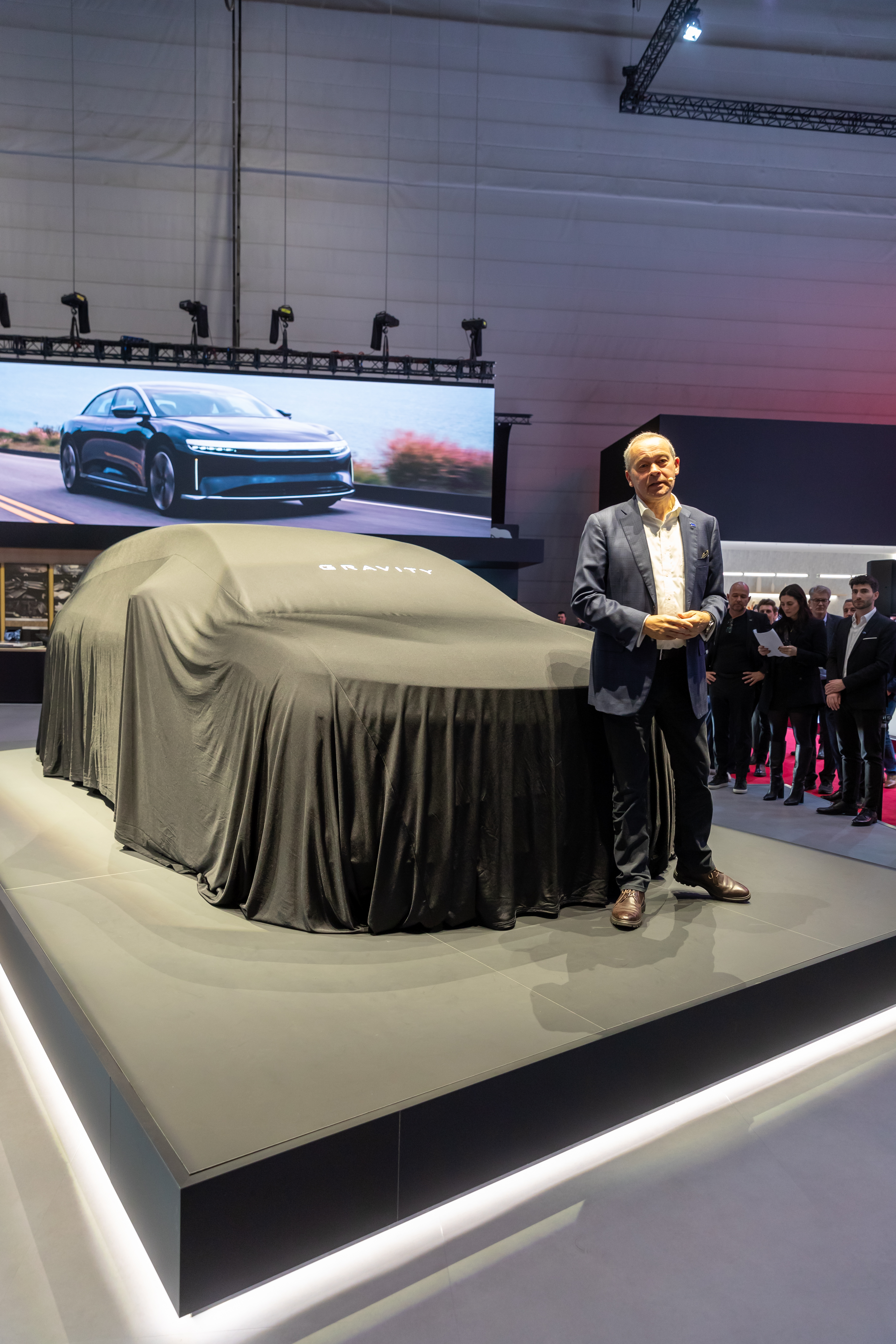
Lucid Gravity
"And that car was amazing. Yeah, it's a minivan. It's a minivan that hauls butt and has a 400-mile range."
Lucid Gravity is an electric Lucid vehicle the hosts describe as a minivan-style car. They’re saying it can go a long distance on a charge and can handle light off-road driving too.
Lucid Gravity is Lucid’s electric vehicle described here as a minivan-like model with strong real-world capability. The hosts highlight its long electric range and ability to handle light off-road use, positioning it as more versatile than a typical sedan.
400-mile range
"Yeah, it's a minivan. It's a minivan that hauls butt and has a 400-mile range."
Range is how far an EV can drive on one full charge. If it’s advertised as “400 miles,” that means it’s designed for long trips, but your actual miles can change depending on how you drive and the weather.
“Range” is the distance an EV can travel on a full battery charge under specified conditions. A “400-mile range” claim is meant to communicate long-distance usability, though real-world range can vary with speed, weather, and driving style.
light off-road
"And it can go off-road, like light off-road. I mean, I was having some fun with it."
Light off-road means the car can handle rougher surfaces like dirt roads or gravel. It’s not the same as extreme off-roading, but it should be more capable than a typical low car.
“Light off-road” means the vehicle can handle unpaved roads, gravel, ruts, or mild terrain without being built for serious rock-crawling. It usually implies some combination of ground clearance, traction control, and appropriate tires.
value slashed
"Dude, it was a one year old car with like 4,000 miles, $60,000. Half of its value slashed in one year. So if you wait another year, it'll be 30 grand?"
They’re saying the car lost a lot of money in a short time. That price drop is what makes it attractive to used-car buyers.
“Value slashed” refers to a rapid drop in a car’s market price after purchase. The hosts are using it to explain why a used Lucid Air (or similar Lucid model) can be a strong deal and why it sells quickly.
residual value
"Dude, it was a one year old car with like 4,000 miles, $60,000. Half of its value slashed in one year. So if you wait another year, it'll be 30 grand?"
Residual value is basically the car’s “future resale price.” They’re estimating that if it drops a lot this year, it could be worth much less next year too.
Residual value is what a vehicle is expected to be worth in the future, often after a year or a few years. The discussion implies that if the car’s value drops by about half in one year, its residual value after another year could be much lower—affecting buying decisions and used-car pricing.

Lexus GX550
"All right, number four, the Lexus GX550. ... Because you can't get them new. ... And I was thinking that maybe Lexus was doing the thing that like Ferrari or Porsche does..."
The Lexus GX550 is a Lexus SUV. The big point here is that it’s hard to find new, so people end up shopping used ones.
The Lexus GX550 is a modern, body-on-frame style SUV from Lexus. In this segment, the hosts focus on why it’s hard to buy—limited supply and strong demand—so it tends to sell quickly on the used market.
limited supply
"You can't buy them new because there's limited supply. ... And ever since then, they've been limited in supply."
“Limited supply” just means there aren’t many of these vehicles available. If lots of people want them but only a few exist, the used market stays hot.
“Limited supply” means the manufacturer isn’t making enough of a specific model (or isn’t allocating enough to dealers) to meet demand. When supply is constrained, buyers often have to wait, and used prices can stay strong because new inventory is scarce.
Ferrari
"And I was thinking that maybe Lexus was doing the thing that like Ferrari or Porsche does, keeping..."
Ferrari is used here as an example of a brand that doesn’t always sell as many cars as people want. The point is that scarcity can keep demand high.
Ferrari is referenced as an example of a brand that can restrict availability to manage demand. In this context, the host is suggesting Lexus might be using a similar strategy to keep the GX550 scarce.
Porsche
"And I was thinking that maybe Lexus was doing the thing that like Ferrari or Porsche does, keeping..."
Porsche is mentioned as another example of a brand where not everyone can easily buy the car they want. The idea is that limiting supply can keep demand strong.
Porsche is mentioned alongside Ferrari as another brand known for managing demand and keeping certain models hard to get. The host is speculating that Lexus may be limiting GX550 availability in a similar way.
overlanding version
"I just had one that I drove in California and it was the... It's the overlanding version of it or whatever. ... Overtrail, that's it."
Overlanding is like road-tripping with camping gear, often on tougher roads. Here they mean the Lexus GX550 is set up for that adventure style.
Overlanding refers to long-distance, self-sufficient travel—often with gear and setups meant for rough roads or remote camping. The hosts are describing the GX550 as being configured for that kind of lifestyle, not just everyday commuting.

Toyota Land Cruiser
"And the Land Cruiser ends at 75. Oh, it's so much better than the Land Cruiser."
The Toyota Land Cruiser is a tough, long-lasting SUV. Here, they’re comparing it to another SUV to explain why one costs more and sells differently.
The Toyota Land Cruiser is a long-running, body-on-frame SUV known for durability and off-road ability. In this segment, it’s used as the benchmark for pricing and value versus the Lexus GX.

GX
"So why wouldn't you spend 5K more for a GX as opposed to a Land Cruiser? Yeah, and it's more power."
The Lexus GX is a luxury SUV that’s built to handle rough roads too. In this part, they’re saying it’s worth paying extra compared with the Toyota Land Cruiser.
The Lexus GX is a midsize luxury SUV built on a truck-like platform, typically aimed at buyers who want comfort plus off-road capability. Here, the hosts compare it directly against the Toyota Land Cruiser and discuss why the GX commands a premium.
powertrain
"Yeah, and it's more power. It's a much more powerful powertrain."
Your car’s powertrain is everything that works together to move the car. It usually includes the engine and the parts that send power to the wheels.
A powertrain is the vehicle’s main mechanical system that makes it move—typically the engine, transmission, and drivetrain components working together. When they say the GX has a “much more powerful powertrain,” they mean the overall setup is stronger, not just one part.
short supply
"I've heard through the grapevine that the reason that they're in short supply is because it's got the same engine that the Tundra has"
Short supply means there aren’t enough of these cars available. When that happens, used prices tend to rise and cars sell faster.
“Short supply” means there aren’t enough vehicles available for buyers, usually due to production limits or parts/engine constraints. The hosts connect this scarcity to faster resale on the used market.
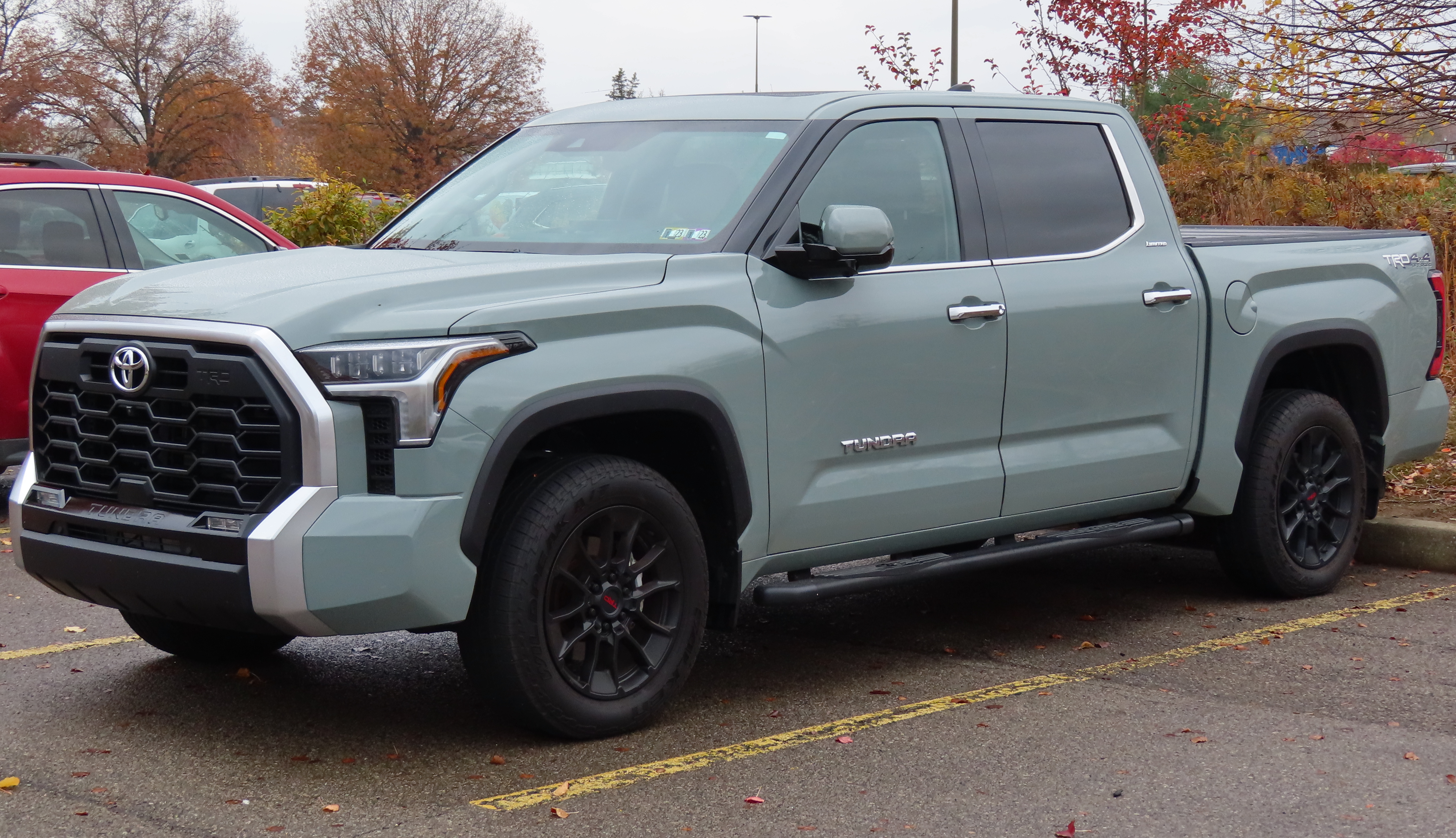
Toyota Tundra
"I've heard through the grapevine that the reason that they're in short supply is because it's got the same engine that the Tundra has"
The Toyota Tundra is a big pickup truck. They’re saying the GX can’t be built in enough numbers because the same engine is also needed for Tundra work.
The Toyota Tundra is a full-size pickup truck. In this segment, the hosts claim the Lexus GX is affected by supply constraints because it uses the same engine family as the Tundra, and Toyota is prioritizing Tundra engine replacements.
throttled back
"So basically, the reason you can't build enough of them is... That's why I think they throttled back on them."
Throttled back means they slowed down or limited production. They did it because they didn’t have enough engines to build as many cars as people want.
“Throttled back” here means production was reduced or limited. The idea is that the manufacturer cut back building the GX because it couldn’t get enough engines.
resells so fast
"So I think that's why it also resells so fast on the used market because the second one comes available, people just snap it up."
Resells so fast means the used car gets sold quickly once it shows up for sale. That usually happens when lots of people want it and there aren’t many available.
“Resells so fast” refers to how quickly a used vehicle sells after it becomes available. The hosts tie this to demand plus limited supply, which can keep used-market prices and turnover high.

Honda Civic Hybrid Hatchback
"Holy cow, this is an interesting one. The Honda Civic Hybrid Hatchback, 29.6 days average on the market."
This is a Honda Civic hatchback that uses a hybrid power system. They’re saying it sells quickly used—on average, it stays listed for about a month.
The Honda Civic Hybrid Hatchback is a hybrid version of the Honda Civic in hatchback form. The segment highlights its strong used-market liquidity by citing an “average on the market” time of 29.6 days.
days average on the market
"The Honda Civic Hybrid Hatchback, 29.6 days average on the market. All right, number three already."
This is how many days, on average, a car listing stays up before someone buys it. Fewer days usually means the car is in high demand.
“Days average on the market” is a measure of how long cars typically sit for sale before getting purchased. Lower numbers generally indicate higher demand and/or tighter supply.

Honda Prelude
"that is the same powertrain that's in the brand new Honda Prelude that you and I drove. [1820.0s] Exactly the same powertrain."
They’re talking about the new Honda Prelude and saying it uses a similar hybrid system to the Civic Hybrid. The idea is that the hybrid parts are related, even if the car is different.
The Honda Prelude is being referenced as a newer model that shares the same hybrid powertrain architecture as the Honda Civic Hybrid. The point here is that Honda can carry over the same hybrid system across different models, with small changes for packaging and drivetrain layout.
Request an Explanation
Heard something you'd like explained? We'll add it to this episode.
Sign in to request explanations for terms you heard.
Want to learn more?
Browse our glossary for plain-English explanations of automotive terms, jargon, and concepts.
Help improve this episode
See something that's not quite right? Our annotations are AI-generated and can sometimes miss the mark. Click the flag icon on any annotation to suggest a correction.
1 community members have helped improve this episode.