The latest episode dives into the automotive industry's shifting landscape, featuring discussions on Targa Florio Cars' mysterious disappearance, BYD's dealer of the year announcement, and TC Harrison's new partnership with Omoda Jaecoo. CEO Nathan Coe from AutoTrader shares insights on market trends, including rising costs and the impact of new Chinese brands. The conversation touches on the challenges faced by traditional dealers and the evolving consumer preferences in the electric vehicle market, highlighting the adaptability of retailers amidst these changes.
"It's a very awkward time for 10 VW ups to arrive from Japan, which is exactly what's happened."
The Volkswagen Up is a small car made for city driving. It's easy to park and great for getting around town, making it a good choice for people who live in busy areas.
The Volkswagen Up is a compact city car designed for urban driving, known for its small size and efficiency. It offers a practical solution for navigating tight spaces and is popular in various markets, especially in Europe.
"like how buyers are really using AI, what Chinese challenger brands mean for your forecourt and how the best d..."
The Dodge Challenger is a big, powerful car that looks like the muscle cars from the past. People talk about it because it’s fun to drive and has a lot of horsepower, and it’s interesting to see how it competes with new car brands coming from China.
The Dodge Challenger is a classic American muscle car known for its powerful performance and retro styling. It has a strong following among car enthusiasts and is often discussed in the context of its competition with other muscle cars and the evolving automotive market, especially with the rise of electric vehicles and new entrants from brands like those in China.
"...the breaking news that Supercar dealer Targa Florio Cars, based in Chichester, had suddenly disappeared."
Targa Florio Cars was a business that sold very expensive and fast cars. They suddenly closed down, which can be surprising and concerning for car buyers and enthusiasts.
Targa Florio Cars was a dealer specializing in supercars, known for high-end and exotic vehicles. Their sudden disappearance from the market raises questions about the stability of luxury car dealerships.
"They are alleged to have had a sale or return strategy, which is where the dealer obviously takes the car in from a customer, sells it on their behalf,"
In a sale or return strategy, a dealership helps you sell your car. They take your car, try to sell it for you, and if it doesn't sell, you can get it back. It's a way to make selling easier for you.
A sale or return strategy is a business practice where a dealership takes a vehicle from a customer to sell on their behalf, often allowing the customer to reclaim the vehicle if it doesn't sell within a specified time frame. This can be beneficial for customers who want to sell their cars without the hassle of dealing with buyers directly.
"...that sale or return policy of a way of running your business is so risky, especially when you're selling Ferraris."
A sale or return policy means that car dealers can sell cars and send them back to the manufacturer if they don't sell, but this can be risky for expensive cars like Ferraris.
A sale or return policy allows dealers to sell vehicles and return unsold stock to the manufacturer, which can be risky if the vehicles do not sell or if they incur damage.
When someone says the engine 'goes pop', it means the engine has broken down badly, often making the car not work anymore.
The phrase 'engine goes pop' typically refers to a catastrophic engine failure, often resulting in significant damage that can render the engine unusable.
"...Lots of supercar dealers have been disappearing in the last few months and years."
A supercar is a really fast and expensive sports car. They are designed for high performance and are often very rare.
A supercar is a high-performance sports car that offers exceptional speed, luxury, and advanced technology. These vehicles are often produced in limited numbers and are known for their powerful engines and cutting-edge design.
"...you just wonder how much of it is to do with SOR because it's so tempting, isn't it?"
SOR is a term used in car sales that can refer to the paperwork involved in selling a car. Here, it suggests some issues in the dealership business.
SOR stands for 'Sales Order Receipt' and can refer to the documentation process in car sales, but in this context, it may imply the temptation or pressure in the car dealership industry related to sales practices.
"...the family-run dealer group T.C. Harrison, of course, very famously Ford-only pretty much until this point."
T.C. Harrison is a car dealership that mainly sells Ford cars. They are a family-owned business and have been around for a long time.
T.C. Harrison is a family-run dealer group known for primarily selling Ford vehicles. They have a long-standing reputation in the automotive retail industry, particularly in the UK.
"...very famously Ford-only pretty much until this point. I think they might have a KGM franchise as well..."
Ford is a famous car company from America that makes many types of vehicles, including cars and trucks. They are known for popular models like the Mustang.
Ford is a well-known American automotive manufacturer that produces a wide range of vehicles, including cars, trucks, and SUVs. They are recognized for their iconic models like the Ford Mustang and Ford F-150.
"...they've become the latest dealers to sign up with Omoda and J.Q...."
Omoda is a new car brand that makes modern and stylish cars. They are trying to attract younger buyers with their designs.
Omoda is a relatively new automotive brand that focuses on producing modern and stylish vehicles. It aims to appeal to younger consumers with its innovative designs and technology.
"...they've become the latest dealers to sign up with Omoda and J.Q...."
J.Q. is a car brand that is part of the new wave of car companies from China, known for their modern designs.
J.Q. is another automotive brand that is likely part of the growing market of Chinese car manufacturers, focusing on innovative designs and technology.
"...we popped into a BYD one. And the one that I walked into was a really, really nice showroom."
BYD is a car company from China that makes electric cars and batteries. They are known for their modern designs and focus on eco-friendly vehicles.
BYD is a Chinese automotive manufacturer known for producing electric vehicles and batteries. The company has gained significant attention for its innovative approach to sustainable transportation.
"...mid-sized SUV plug-in hybrid. So I don't know what you'd pay..."
A plug-in hybrid is a car that can use both electricity and gasoline. You can charge it by plugging it in, and it can drive on electric power for a while before it needs to use gas.
A plug-in hybrid is a vehicle that combines a conventional internal combustion engine with an electric motor and a rechargeable battery. This allows the car to run on electric power alone for a certain distance before switching to the gasoline engine, improving fuel efficiency and reducing emissions.
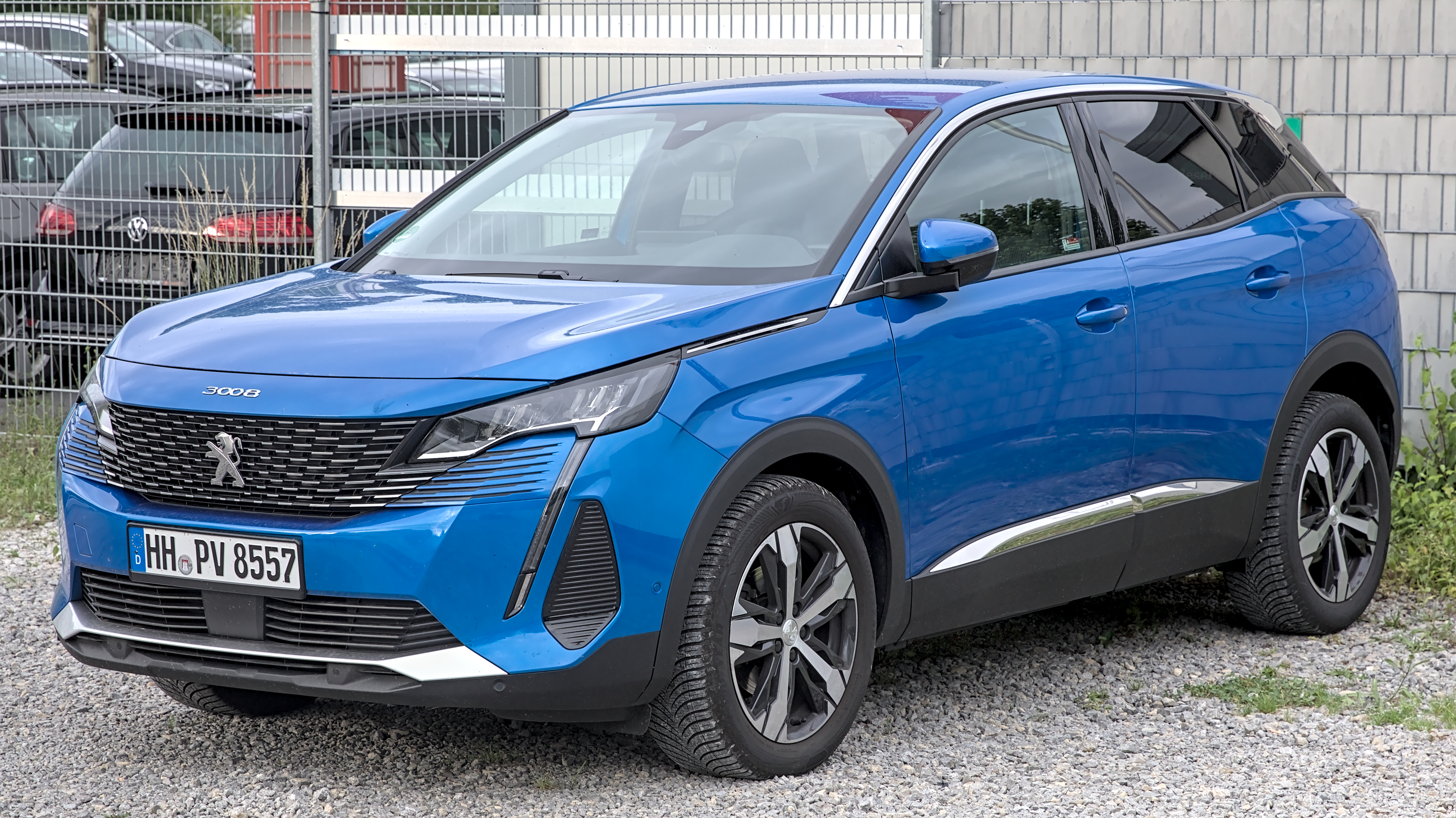
The Peugeot 3008 is a type of SUV that is smaller than a full-size SUV but still offers plenty of space and comfort. It's available with different types of engines, including a hybrid that uses both petrol and electricity.
The Peugeot 3008 is a compact crossover SUV known for its stylish design and practicality. It offers a range of engines, including petrol, diesel, and hybrid options, making it a versatile choice for families and individuals alike.
"...brand loyalty when it comes to EVs. We thought actually that whole education process of what's JQ, what's a motor..."
EVs means electric vehicles. These cars run on electricity instead of gas, making them better for the environment.
EVs stands for electric vehicles, which are powered entirely by electricity rather than traditional fuels like gasoline or diesel. They are becoming increasingly popular due to their environmental benefits and advancements in battery technology.
Select text to request an explanation
The Cardiola podcast is sponsored by Autotrader.
John, have you ever wondered why I, along with 14,000 other dealers, choose to partner with
Autotrader?
Well, actually.
I didn't think so.
I'll tell you anyway, with more than 84 million consumer visits every month, it connects
us with more engaged car buyers and delivers more deals than anyone else in the UK.
And now, with the launch of buying signals, we'll have brand new insights on every deal
showing how likely a customer is to buy the car they're interested in.
Plus, as someone who set out to use AI and data as much as possible in my business, I've
found their technology, data and tools genuinely invaluable.
But when I do get stuck, which is, let's face it, most of the time, Autotrader is
always on hand and committed to supporting us to get the very best from our package.
To find out how they can help you, visit trade.autotrader.co.uk.
Welcome back to the Cardiola podcast, where we pick our favorite stories of the week and
ask an industry guest to choose which were the best.
I'm John Ray and joining me this week, fresh from skateboarding down a mountain
or whatever he's been doing is James Bagger.
James, lovely to see you.
Lovely to see you, John.
Nice to be back.
One week away, but back with the bang, loads of stuff's been happening and looking
forward to the podcast.
How are you doing?
Are you okay?
I see you're in my house again.
Is it actually nice to be back there, James?
No comment.
Let's move on swiftly from that.
No, it's been an interesting week back at the dealership, lots of stuff going
on.
January was being a little bit quiet up until this point for us, but it really
started kicking off this week, so nice to get some inquiries, sold some cars.
January looks like it might be okay towards the end of the month already.
So yeah, it's been, we were sort of hoping that the year was going to kick off
with a massive bang like it did last year for us, but it hasn't been quite
so good on the sunny South Coast, but hopefully it will pick up now.
It's a very awkward time for 10 VW ups to arrive from Japan, which is
exactly what's happened.
So hope you sell those soon.
Yes, we need to.
Yeah, and the stock numbers have slightly increased as of yesterday.
We bought four cars yesterday that just happened to land in our lap.
We've got 44 cars in stock, John.
It's too many, James.
It is too many.
It's too many.
But anyway, people don't want to, people don't care what we've got to say.
Do they?
We've got a brilliant guest, so we should probably move on.
Yes, exactly.
So our guest this week is CEO of AutoTrade and Nathan Coat.
Nathan, thanks for joining us.
Well, thanks for having me.
Good to see you both.
Nathan, very good to see you.
Thank you very much for coming back on and chatting to us and the
MotorTrade.
We've had lots of questions, as I'm sure you can appreciate.
We've put the feelers out in the WhatsApp groups that we're in.
And on our and on our website, asking people if they've got any
questions, I've got loads for you.
So sorry, once again, a bit of a grilling.
But I'm sure you used to that now.
I'm sure you all good.
Good stuff.
Well, let's start off.
Let's start off with the big one.
There's a lot of speculation around this time of year about the rate rise.
How much are you?
AutoTrade or bills are going to go up.
Are they going to go up and if so, by how much?
Yes.
So we've looked at we've looked at our packages.
I think our communications officially goes out next week.
There has been there has been some posts, I know, in some of the
Facebook groups, but we're looking at doing a lower level
than what we've done, what we would ordinarily do.
And there's a whole bunch of stuff that we take into account,
how the market's doing, how dealers are doing, what sales
rates are looking like, how's our audience doing, what products
we've delivered during the year.
And we kind of put that all in a bucket.
It's a bit of science and it's a bit of art as well.
But recognising particularly for lots of big retailers,
if you've got lots of labor costs,
you obviously had a pretty abnormal increase in those last
year as a result of the budget.
So we kind of put that all into a bucket.
We know lots of people on Dealworld are enjoying it
and getting value out of it.
No doubt you'll come on to that later on.
Buying signals is out there as well,
but not everyone's got that.
So all that stuff put into a bucket.
And we're looking at a level of 5.5% for people.
But best for people to look out for that communications
when it comes out on Monday, I think.
I mean, 5.5%, Nathan, is a pretty hefty jump.
I know it's less than the 8% you did last year.
But is that really justified?
I think based on all those factors
that I mentioned kind of earlier,
I feel like it is justified or not.
I think no one likes costs going up.
We know that.
And we're exactly the same.
Our costs are going up much quicker than that kind of a race.
But what we endeavor to do includes stuff in the packages,
whether it's existing things or new things,
that allows you to more than offset that cost.
And that, to us, we know is more important
than the cost alone, because we know what makes or breaks.
As you know, as you're fast learning,
what makes or breaks a dealership is gross margin.
It's sales rates.
It's the margin that you get per unit.
You do need to obviously make sure your operational costs
can be covered.
But the swing factor in a dealership
is always going to be that.
And that's where we can help most.
That's where we focus all our product development.
So we want to, our whole strategy
is to work with retailers so that they get more value
in the next year than they did in the previous year.
I totally get that.
But as you rightly pointed out, I've
got a very real idea of how this is going to affect my business.
Five and a half percent is a hefty increase.
It puts that price up.
When am I going to find that money?
Because I certainly can't put the price of the cars up,
can I?
Because you tell customers how much they cost.
Yeah, I mean, at the moment, we've had it a whole year,
actually, where retail prices for vehicles
have been kind of stable to holding up.
So it does come back to that.
The thing that's got to pay for all your operational costs,
not just auto-trader, is that gross margin.
So I think the answer to the question is, you know,
you've got 44 cars in stock now.
That's a lot more than last time that we spoke.
Make sure that you get margin on those sales times,
sales times margin hopefully adds up
to a big year of profit next year
than you had in the previous year.
And hopefully, we can do some part to working with you
to help make that happen.
And I would hope that that more than washes away
the part of your cost base that relates to auto-trader.
But like I said, we do get that no one likes cost going up.
We've seen the cost of absolutely everything
go up spectacularly over the last few years.
But from when I speak to retailers,
you know, including in these listening sessions
that we've been doing over the last couple of months,
most retailers have had actually a decent year of it.
But that doesn't mean all retailers
are going to have a decent year of it.
And that, you know, it falls to us to make sure
that they're getting good value for money from auto-trader.
That's kind of the, that's the gig.
I'll come on to those, those customer groups
because I want to talk to you at length about this,
but I'm just, you know, just on this point,
you've clearly had a lot of backlash
off the back of Deal Builder,
which I've got some questions about too.
There's been a lot of discontent out there
in the industry.
Are you worried more dealers are going to leave
now you're putting the prices up again?
I mean, it comes at the wrong time,
do you not think?
Look, I think that we continue to invest in the product.
We continue to invest in auto-trader.
Like I said, I think that is when we think about this,
it's about partnership and what works for auto-trader.
We do have to think about what works for auto-trader.
All of us are in business,
but also think about what works for our customers too.
And the year does sound like it's got off
to a decent start.
So I think like as you, as we look back to last time,
we spoke actually, which was around November.
We had a lot of social media groups.
I've been doing the listening groups now,
which sounds like we'll come on to later.
And to be honest, there has been, in my mind,
a little bit of a disconnect between what we were hearing,
like what people were seeing on the social groups
and what customers are actually talking about.
Much more, I mean, pretty much every group that we had,
when Deal Builder was mentioned,
someone would say, well, you know,
what about this Deal Builder thing?
Are you going to roll it out to everyone?
And for any person that asked that question,
there was normally more people that said,
oh, no, I'm on Deal Builder.
I actually really like it, and I wouldn't want it to go anywhere.
But I think the way that you communicated
confused a lot of people.
And then you had that kind of the social media stuff
on top, which had a lot of stuff that actually wasn't true.
So a lot of the job for us
was actually about making sure people really understood,
you know, had the facts actually.
And you know, if based on those facts,
there were still things that weren't working for them.
That's why we've made the changes
that we've made to product pages.
You can now consume or a retailer can choose
to have someone to request a reservation.
We've made a whole bunch of changes based on that feedback.
So it's not like I'm saying, you know,
it was all not true and misinformation,
where we're not like that.
I think there was a good deal of that,
but there was some stuff in there as well
that we were like, do you know what, fair enough,
we'll get on and make those changes as quickly as we can.
Nathan, I've spoken to a lot of people who are in those groups,
you know, and I've spoken to a lot of people
who are there and chatting to you.
I mean, I understand from the IMDA
that they gave you a folder of feedback
of customers who weren't particularly happy
with a number of the changes that you've made.
I mean, what changes have you made
off the back of the feedback
that you've had from those groups?
Because from what I heard, one of those panels,
there wasn't a positive word to be said about DealBuilder.
No, I actually don't think that's true at all.
I would challenge that.
You can speak to people that were in the group.
I think there was definitely some people that said,
reservations doesn't work for my sales process,
but we've made the optional reservation change,
I think by and large, I mean, those people were in the group
so they can get in touch with me, send me an email
if they think I'm misrepresenting them.
But I would say DealBuilder was not a big focus
of any of the conversations.
I'd say, you know, the sorts of things
which weren't surprised you at all
because you've mentioned it before,
is things like price flags,
the ability to contact customers,
having more parity in the contact options for customers,
some questions around the login to inquire,
a bit of DealBuilder, but not a great deal.
Particularly because for a lot of,
we pretty quickly reacted and said,
well, we're gonna make this change.
So for a lot of people, those, you know,
the things about charging commissions for DealBuilder,
we were never going to do that.
Auto trader getting involved in stacking a deal for a dealer,
that's not what it was all about.
Us moving away from leads to deals,
no, DealBuilder is deals on top of leads.
A lot of those things just weren't actually true,
to be honest.
So I think, you know, sometimes you have to clarify that.
But no, I wouldn't say for the advisory groups,
I wouldn't say DealBuilder was probably one thing,
but there was probably, you know,
four, five, six other areas that we spent way more time
talking about.
One of those I know is the signing in.
You know, you're now asking your consumers using the site
to sign in before they contact dealers.
You know, I did a poll in some of the WhatsApp groups
that we've got, just asking readers,
what was the impacts of that?
You're asking those dealers out there in those groups,
what was the impact of those changes?
Most of them said their leads have fallen
from AutoTrader by half since those changes have made.
Now, that's the majority of those people who responded
said their leads have dropped by half.
Do you think it's the right thing to do,
asking consumers to sign in on the website?
And why do you think it's so important?
Let me start with why first.
Without a signed-in user,
a car buyer is not known really,
unless they inquire, not known to a retailer.
There is no permanent connection
between the car and the person.
And there is no way for us to be able to, you know,
put a profile around it, for example,
buying signals to say, you know,
this person's local to you and they look really interested.
And if we ever want to reconnect that buyer
with a retailer's car, which we obviously want to do,
because we want to drive more leads,
more inquiries, more sales for retailers,
then the only way to do that is log in.
So I think that is why every platform
that you use on the internet that has been,
you know, launched, we launched AutoTrader in 1996.
People have got very, very used to it.
The truth is, almost every consumer app of any size
you log into, and that's the reason why Instagram,
Facebook, car dealer, sub-stack reviews,
all these things you do sign into
because it creates some permanent connection.
So it's kind of just the way the internet generally works.
And for us, the specific reason is a bit more around
creating that permanent connection
between the buyer and seller.
However, if it leads across AutoTrader dropping 50%,
which I can tell you unequivocally they didn't,
some customers might have seen leads drop by 50%.
They tend to do that between September, October
versus December, then they should get in touch.
But when we looked at the metrics on the site,
what you actually saw, if you want to know
what the math says, is you saw a swing to calls.
So some customers that didn't want to log in
to inquire just jumped on and called.
We've changed product page now and even that up
and we are looking at the,
we're also looking at that registration process,
digging into it from a data perspective,
but also testing some different approaches.
So we're not deaf here, we'll take that on board,
but when it comes to the actual leads
on average cross-platform, you did see a swing,
but you didn't see leads really,
they're pretty flat to be honest,
on the same time previous year.
But when you're a car retailer
and you will have learned this,
this isn't your first year, is it?
But you tend to make money through to October, hopefully.
And then you try and hang on for dear life
during November and December,
because it's not about leads on auto trailer,
it's just the market quietens down and awful.
And then like you said when we were chatting earlier,
you hope that January comes out with a bang.
Yeah, it certainly hasn't felt that way for us,
unfortunately, in terms of January kicking off,
but I'm sure I will do soon.
Just, I'd like to just ask your opinion,
as the CEO of AutoTrader, you've made some big calls,
putting these things in place.
They are some, deal builder is a big drastic change
to the way deals are done with consumers.
The signing in is a big change.
It has, dealers are telling us
that there has been a drop off in leads.
They're also saying that they are looking elsewhere
for advertising.
There are other options out there.
Again, in those polls, I asked those dealers,
95% of those people who responded,
I've got more than 100 people in these groups,
95% of the people who responded said they'd looked elsewhere
as a result of the actions that AutoTrader has taken.
Does that worry you?
Look, I mean competition, you know, as a car dealer, right?
Competition is part of life in business
and that's no different for AutoTrader
than it is everyone else.
Does it worry me?
Look, I think we want all, you know,
we're running at the highest level of retailers,
there are thereabouts and we've ever had on the platform
and yeah, we've made some big calls.
We make a big call to stop charging retailers during COVID.
We've made a big call around deal builders.
So that is my job is to make calls along with the team
that we think improve AutoTrader for its customers.
So I do think that, you know,
these are the right things to do.
You've just got to make sure
that you get that balance right and recognise
that when it comes to retailers,
there are, you know, there are 14,000 retailers
that are on AutoTrader's platform
and they all have different experiences.
But of course they're welcome to, you know,
we would never suggest
that someone shouldn't use alternatives.
Our business isn't that fragile though.
People wouldn't use AutoTrader on mass
if there were loads and loads of, you know,
great alternatives out there that could drive the scale.
And I think it is just the numbers we generate.
I think the number of the amount of time spent on AutoTrader
is probably six times more than all our competitors put together.
So we've just got to keep our head down,
make sure we're delivering really good value for dealers,
make sure we remain the biggest platform
and make sure that we're providing advice
so that actually what you get with AutoTrader
isn't just some leads, but it's data, it's pricing,
it's what to buy, it's how to buy
because they're the things that make a difference to a business.
But, you know, it is ours to earn.
And, you know, do I want all those customers
to be using AutoTrader as their main sales channel?
Yeah, absolutely, and that's our job to prove that
and make sure we can do that.
Nathan, your share price has fallen dramatically
in the last six months though, hasn't it?
It's down 31%, accelerated two
since those changes were made in November.
Does that worry you at all?
Is it connected to this discontent
that customers are feeling?
Not at all, not at all actually.
It has really got, if you look at all marketplace businesses
like ours that are listed, realestate.com in Australia,
car sales, Baltic Classified's Group, Riot Move,
all these marketplaces all around the world,
like software businesses as well,
have seen their share prices come down.
That's all about investors' concerns about AI.
That, you know, on one hand AI is a really good thing,
but on the other hand, you know,
maybe it changes some of these businesses.
And until investors can work that out,
you know, those prices have re-rated.
But it wasn't really since,
it was kind of since the day after our results
when Riot Move actually put out an announcement
saying they need to spend more money on their technology.
I wouldn't say that started it all globally,
but it was around that time that that happened.
So not really, I mean, it's mostly all driven
around bigger AI concerns.
So on the AI front, you know,
I'm fascinated with because I think it's gonna
drastically change the way consumers search for a car.
They're using it as a mate, aren't they?
They're chatting to chat GPT or Google's Gemini
and asking it for advice on buying a car.
How does this impact your business?
Does it cut you out at all?
No, I don't think so.
I mean, it's certainly not at the moment,
but and who knows what the future holds.
What, we all use AI, well, maybe not all of us,
but lots of us use AI all the time.
What you find is really good at doing
is summarizing content that's been on the internet forever
and it does a better job of that than, you know,
those constant Google searches
and trying to stitch that truth together.
When it comes to looking for a car
and narrowing down like the real top of funnel decision,
we find that people do that all over the place.
We've never really been big on, you know,
content, study content.
We've got reviews on dealers,
if we've got reviews on cars,
but it's never been a really big part of what we do.
And the reason why, I mean, you know,
this is the reason why we have a partnership
with what car, they are a real top of funnel site.
We were really happy to just plug into the back of that
and provide the actual new used cars
and new cars that are available on the back of that.
So where I would say we're pretty agnostic actually
to how people narrow things down,
but when it comes to right,
well, I'd like to see what's available.
That's the job auto trader does.
And I think I suspect in a world of AI
it will work in more or less the same way,
but it'll be a bit like when Google came along
and a bit like when the Apple App Store came along.
So I imagine there'll be some level of integration
between us and those AI platforms.
You've seen some of that in the US.
So I think it'll help people make a good decision,
what suits them based on all the things
that the AI model knows about them
and then plug them into real cars.
And those models will be exactly the same as Google.
They'll try and provide the very best answer to users.
And, you know, that's one of our jobs,
whether it's SEO brand, all those things.
Our job is to make sure that we are the best answer for that.
And I think that will remain true for the time to come.
But listen, AI is moving really, really, really quickly.
It's something that's happening completely outside all of us.
You know, you're a publisher of content as well.
You'll be thinking about these things as well.
It's you've just got to kind of play each day
as it comes with a, you know, a bit of an eye
on how the different scenarios might play out in future
and kind of get your positioning as best you can
based on everything, you know,
and we're no different to everyone else like that.
Nathan, I understand there's some offers coming out for customers.
Can you talk me through those?
And are they going to be available to us all?
Yeah, I mean, I won't go through the detail of the offers
that you'll get all that on Monday.
But we've got three there around stock, around levelling up
and one other one as well.
The reason for doing them is actually quite simple.
It's kind of not to do with...
I mean, it does give value alongside
auto traders' package prices changing.
There is explicit value in that.
You would otherwise have to pay for.
So I guess it's part of the answer to your first question.
But that's not really why we've done that.
We recognize that retailers, you know,
at the moment they are facing challenges.
They would, you know, many of them would like to try products,
but they don't necessarily want to pay, you know,
upfront in inverted commas for those.
So we've given them a chance to be able to try those things out,
give them a good kick at the start of the year, you know,
in terms of lifting up their business,
being able to choose what works for their business
and the time that works for their business as well.
So it's quite a degree of optionality
that we're built into these,
which is kind of that, you know, the partnership
that we're trying to create,
recognizing that it's your goals, not our goals,
and trying to give people the tools to be able to do them,
whilst providing some control around it as well.
So I think that, you know, they are very, very good offers.
And like I said, you can choose when it works for you
and you can choose what works for you.
So it's something that we haven't really done it like this before,
but from what we're hearing so far,
it's gone down pretty well.
Is it available to all customers?
It's available to all customers on a standard package and above.
So there is a starter package,
which is kind of a really basic stripped back version
of AutoTrader, less leads, a bit less functionality as well.
So the starter package doesn't have the offers.
We have kept that for all our customers on stand and above,
just kind of a fairness thing, to be honest.
We did have some customers that went down to start
because of the cost pressures during last year.
That's why the package is there, but it is stripped back.
It's a bit like any mobile phone plan
or anything that you buy, an iPhone,
you know, you pay more to get more.
It would kind of be a bit crazy if we did our packages
where you got exactly the same
and some other people paying more for it.
So we offer that package
when people want to make that decision,
but it is stripped back and less valuable
than the other packages.
Otherwise, the flip side would not be true.
Why would someone take standard?
So we try and give, you buy more, you get more.
And there is that different in the starter package.
Those customers though, for many customers
when they did talk about leads,
so I speak to loads of customers,
lots of them are very happy to email me.
And I will say that when I looked into
outside of the systems, you know,
if they said my leads are halved or,
and sometimes there were places where, you know,
texts and chats are actually down.
And for some customers that are reliant
on those leads have come down.
But for a lot of them, it was they had less stock on
and they had lower packages.
And that will tend, that will just reduce your leads.
Otherwise, auto trade is not providing good value
on the other way because if you were spending more,
you'd expect to get more leads
and have more cars on auto traders.
So it is one to watch customers.
So I mean, I heard from one dealer, excuse me,
who did downgrade as a result of the deal-builder action
to a starter package.
And they were obviously told by their representative
that they weren't going to be eligible for these offers.
And they felt they were being punished
for downgrading their package.
What would you say to them?
I don't think it's punished.
I think it's just a really,
like I do think it's just a pretty standard thing
in business, you've got, you know,
we have created a stripped-back package
that has less response, it costs less money,
but it comes with less stuff.
And that's just kind of pretty standard packaging practice,
you know, across food, across mobile telephones,
across internet plans, all those things.
And that's the way it works for us.
So no, I don't think we're punishing someone
for being on starter at all,
but it is a package that is stripped-back,
costs less money, but we strip it back
so it can cost less money and meet those people's needs.
But yeah, the offers aren't applicable there.
It's definitely not punishment though,
that's not the way we do things.
Nathan, I obviously wanted to give you
the opportunity to put the record straight as well.
When that action took place,
there was lots of claims about how many people have downgraded,
how many dealers have quit auto-traded completely.
What's the truth?
What do you actually see?
What were the numbers looking like
in terms of dealers leaving and dealers downgrading?
Yeah, so I think I said at the time,
it's a bit of a hard one, if I'm honest.
James, because we are publicly listed,
so you've got to bear that in mind.
It's not like I'm trying to bounce the question.
At the time, it was just under 100 customers
had downgraded and just under 100 customers
had taken part in the action.
Then you go into December,
and we typically do see customer numbers
drop off a little bit as people take a break,
take holidays, it's a really slow time of year,
just save costs, and no doubt some of those customers
that came off during that time were linked
to some of the, say, deal-builder,
but the kind of, I guess, campaign
that some people are running or the deal-builder stuff.
And then as we come into January,
you start to see customer numbers come back.
So it's a bit kind of juries out at the moment.
Well, juries out at the moment,
those customers haven't all come back.
We'd really like them to come back,
but you've kind of got to give time
for January to kick off customers
to start to have a bit more money in their bank accounts
before we start judging those things.
Nathan, we talked about those consumer groups.
Just like to circle back.
Customer groups, customer groups.
Sorry, yeah, customer groups.
I'd just like to ask you what you took from those.
What have you actively changed
as a result of the conversations
that took place in those groups?
Because I don't want those dealers
thinking you're paying lip service
just listening to them.
They want to see action, don't they?
So what action have you done?
Yeah, I mean, to be fair,
the ones that are in the advisory groups
know what we've done
because that we've talked about.
I mean, this is your opportunity
to tell the rest of the motor traits.
Yeah, yeah, yeah.
No, sorry, I wasn't going to not say.
I wasn't going to not say.
So in terms of the actions,
we've changed Deal Builder
and allowed the optional reservation.
That's something that we've tested with customers as well.
We've changed the product page.
We're in the process of rolling that out to apps now.
And that was based on the feedback
that it feels like you've prioritized
Deal Builder over other leads.
We obviously started the advisory groups ourselves.
We're thinking about some areas
because we've had conflicting views
in the kind of advisory groups.
They're listening sessions that we've done first
and then we're kicking off the advisory groups.
We're also looking at different contact options,
lots of independent retailers.
So I would say there was more about price flags
and can you do WhatsApp
than there was about Deal Builder
in most of those advisory groups.
I think people kind of agree.
So there's a few areas where we're still investigating.
You can't just do these things quickly,
but we've kind of combined actions
that we've taken straight away.
We're also looking at the reservation fees,
£99 work for everyone.
Does it need to be a higher level?
We're kind of getting less comments around that
in the listening sessions
because they've said, well, I can just do an optional.
I can just get a consumer to request a reservation
if that's the way that they want to go.
And there's sign-in stuff we're looking at
as well as I mentioned earlier.
So that's a few of the things that we've done.
We're also some of the other points
that were raised in those groups.
Some of them had a mixed experience
around the contact with auto trade.
They said, I want to speak to auto trader more.
I'd like more regular reviews.
I don't always hear from my customer rep.
It's a bit of a mystery to me, to be honest.
It was probably the most confusing thing that I heard,
but I've definitely heard it.
The reason why I say it's confusing is
because the people in our partnerships team
have about a one in 10 hit rate
when it comes to calling our customers.
So we want to speak more.
They want us to speak more.
Something's being dropped in the middle.
So we're looking at our systems around that,
looking at our CRM system, putting a new one in.
There's quite a few bits and pieces,
but a lot of it, a lot of what we'll do
with the advisory groups will be exposing products
that we're thinking of doing moving forward.
So I'd say our roadmap has actually changed
for the next year quite a bit,
quite a bit on the basis of those groups,
what we're going to do with portal,
making it easier to use the way that we present leads
and deals, the language that we use in portals change.
You'll see that we're not calling them deals anymore.
They'll be called online inquiries,
understand that some retailers said
that deals just feels presumptuous
and that's actually not what you're driving.
I mean, there's literally loads of changes
that we've made and will continue to make
in the next year.
And I just like touch on buying signals.
It's a new product that you have put in place
alongside deal builder.
So I've had mixed feedback on this.
Dealer says to me, I don't know what benefit it's given me.
I mean, your opportunity to write a reply on that front.
I mean, what does it give dealers?
I mean, functionally what it gives retailers
is it tells you based on the huge amount of activity
that happens on auto trader,
you can never know what a consumer has done
when they walk into your store,
when they come through on an inquiry particularly,
which is where buyer signals work.
There's no way you know what journey that they've been on.
What buying signals does is bundle that down
into a, well, it's a number in the background,
which becomes a flag to say actually,
based on what auto trader has seen
of this consumer's behavior,
they look like they're really keen.
So make sure that you give this one priority
when it comes in, good for the car buyer,
good for the retailer as well.
You can also find subject to the consumer's position,
whether the consumer's consent, sorry,
you can also find out potentially what other vehicles
they might be interested in
if you don't have one that's for them
and whether they're a local buyer.
So to be honest, I haven't had low,
I'm not sure I've had a great deal of,
I'm not sure I've had any negative feedback,
but I guess that's not what you're saying,
what use is it for me?
It depends, for some retailers,
I think actually maybe buying signals isn't going to,
you know, if you've got five cars on your four court,
you get to every lead,
whether it's high intent or no intent,
you're gonna get back to them.
But for a lot of retailers,
and we've been mystery shopping retailers
for 10 to 15 years,
for them not being kind of sneaky in the background,
and typically the number,
and it hasn't changed in that 10 to 15 years,
it's half of leads go unanswered.
So for retailers that are in that situation,
you'll make sure you get to the half
that are gonna convert into sales.
So, and for retailers, if buying signals
is not something they value,
you've got deal builder there as well.
And most customers are on deal builders
certainly in those sessions,
but I don't just rely on those sessions,
I speak to lots and lots of retailers.
You know, deals come through,
they're a relatively small number
compared to the inquirers that you get
and the sales you get from walk-ins
are even bigger again than both of those.
But the deals that they do get,
they find them good because a bit like buying signals,
if the highest intent is someone's reserve decay,
you know you can probably convert that one
to a sale at a very high rate.
What buying signals is trying to do
is give you the same kind of high quality,
high converting lead opportunity
without a customer having necessarily done deal builder.
So I think it's a really good product.
But like all our products,
you know some will value others more than others.
And I'm not going to pretend for five seconds
that we're going to be able to build a product
that all 14,000 of our retailers say,
you know, this absolutely works for me.
It's a real mix and does depend
on their business models as well.
Nathan, we've talked a lot about the market
and how you've seen the start of 2026
and what you've actually seen in the data.
I mean, you've mentioned you've chatted
to a lot of dealers out there.
I mean, what's the sentiment out there at the moment?
Well, until I spoke to you, good.
Sorry.
No, so the numbers, it is important.
Audience looks good, interest is strong.
When we look at the sales on Auto Trader,
which is something that our retailers share with us,
not every single retailer, lots of retailers.
That was up on last year.
Pricing's been stable since,
or pretty much through all of last year.
I wouldn't say it's growing.
So we're certainly, we're getting back to normal.
I think that's a lot of the pressure.
And I would say from the advisory groups
and my reflection on what happened in November,
these retailers have had, you know,
we are returning back to normal now.
It's, you know, the high days of COVID are over
and we're getting back to more normal environments.
But pricing's stable.
It's not declining like we've seen before.
That sets you up pretty well for margin.
All the demand transactions look good,
demand data looks good.
And if we look at transactions
and our forecast for transactions for the year,
it'll be the first year that we think used car transactions
will get pretty close to pre-COVID.
So there will be more stock out there.
Maybe we'll come on to this later.
The shape of that stock's gonna be quite different
to last year and it'll be really important
to get that right in terms of running your business.
But more stock, good solid audience,
macro stuff in the UK kind of feels good.
Pricing's stable and customers are,
you know, most customers I've spoken to.
Not all, to be fair, I got an email yesterday
from one customer who's had an absolutely terrible time of it.
But most customers that I speak to,
particularly the big ones,
are saying both new and new sales rates
are off to a really good start.
And then what about the big challenges then
for dealers this year?
I mean, is there anything that you've identified
that they should be worried about?
Yeah, I kind of flagged one there
and apologies for the ding there, John.
I thought we had it right,
but it's ignoring, do not disturb.
So I think the stock, the shape of stock
is the biggest thing.
So if you look at last year,
we had new car sales,
we started to see a bit more push in the new car market.
For some retailers,
if you're dealing at the younger end of the market,
that's probably going to ramp up a bit this year.
There's some, you know,
we've seen a lot of growth in Chinese volume.
They're competing quite aggressively.
That will kind of ripple across the market.
And those, you know,
if you see pressure in the new car market,
that does tend to hit the one year old cars
and the one year old cars hit the two year old cars.
It kind of peters out after then.
So you've got to watch that young end of the market.
There's still good opportunity,
but you want to be turning those cars pretty quick
and buying them, kind of buying them well.
Last year, under five year old cars
was down on the year before.
So any, you know, lots of franchise retailers,
the ones that did well
actually pushed out into some of the older vehicles.
Well, this year there'll be a lot more vehicles
in the under five year category,
but where people did well last year,
which was the five to 10 year old category,
that is going to be down
because you're starting to see that ripple through for COVID.
And then over 10 years, you know, there's plenty of supply.
So you need to think about that
because what happens with supply
is when supply is up,
it will put pressure on trade prices
and potentially retail prices.
When it's down, you'll tend to get a bit more margin.
So all those cars are good for trading,
but in terms of getting volume, getting margin,
you need to make sure you're playing in the right spot.
So work for your business, but also work there.
So I think that's probably the number one thing.
When I look at who did really, really well last year,
and you know, there are big retailers, I know,
very, very good operators
that were up kind of double digits
in terms of used car volumes.
If you want to do that again,
that stocking strategy becomes quite important,
especially if you're talking, you know,
hundreds and hundreds of cars,
which maybe this time next year,
you'll be at James.
The, don't know about that.
The other thing is like margin is obviously
getting your pricing right.
You should be selling cars 30 to 40 days
once they've gone on auto trader.
You want to be pricing them well from the start.
Auto trader can obviously help you do all those things.
One thing we can't help you with,
but I think it's really important to margin
and goes missed
and actually has been declining over time,
probably been the bigger pressure
on dealer margins than anything else,
is part exchanges.
If you can get a part exchange,
your margin is so much better on that vehicle.
And if you want to really maximize margin,
that is the single best way to do it,
much harder than it used to be
because there's lots of car buying services
we've seen and talked to retailers
and they're telling me their part exchange rates
have gone from, you know,
what used to be 40 to 45%
as standard on used vehicles down towards 30
and some of them even a shade below that.
So if I was running a dealership
and I'm not pretending I know what I'm talking about,
I just talked to lots of people that do,
then that's one of those things.
I would be really paying attention to.
And then there's operating costs, obviously,
which is, we've talked about labor costs being up.
There's another increase,
but it's a bit more normalized this year.
So hopefully that beds its way through.
Typically you find costs that affect all dealers together.
We'll find their way into the margin
because no one can operate a business at a loss.
And a lot of the stuff that we're doing
is about improving that margin
and helping to improve operating costs.
Deal builders in early stages,
buying signals in early stages,
but both co-drivers has kind of been rolled out a year ago.
All of those tools are about,
well, how can we use auto traders stuff
to help retailers with their operating costs?
It goes back to that value point by the start.
So I would say, get your stock strategy right,
recognize that this year is actually gonna be quite different
to last year, part exchange and pricing
and turning your cars 30, 40 days
when it comes to margin
and use whatever you can to get those operating costs
as efficiently as you possibly can.
And the big operating cost is labor
for most businesses, not smaller retailers necessarily.
Nathan, just finally,
we've given some dealers some bad news here, haven't we?
We've given them that you've told them that 5.5%
if bills are gonna go up.
There's some other things
that they will listen to this podcast
and they won't be particularly pleased about.
This is your opportunity to speak directly to them
and just tell them why to continue using auto trader.
Look, I think auto trader is the biggest pool of car buyers
in the UK, there is no question about it.
Just coming on auto trader doesn't mean
you'll automatically be successful,
you're joining 14,000 other retailers
and it's your job to kind of compete for those retailers.
I think the message to us is that,
sure, our costs have increased
because we continue to invest
and we continue to provide tools and retailers,
continue to get a good return on investment.
That's what we live or die by.
It's mathematical, you can kind of see that in the numbers.
The reason they should use auto trader ultimately
is to put all our competitors together,
18, 10 people actually use auto trader
and six out of 10 only use auto trader.
So that is kind of the,
I guess the functional answer to your question,
but what I would really say is with auto trader,
we invest 170 million pounds a year
in making auto trader better.
No one else does that for retailers.
It means that we can have the best tools
which can help you or help retailers
with the most important number in their business
and that is the gross profit line
because that's the number that will swing you
into good profits versus bad profits
and that's really what we're trying to help retailers do.
So we're trying to bring more value, not more cost,
but I think actually the other thing I would say is
we've gone with a much lower level price
kind of package adjustment
because we've taken into account
all those sorts of things.
But it is really about us,
retailers feel like they're not getting value
with auto trader.
First thing I would say is make sure you understand
your return on investment,
share your sales data with us.
We can play that back to you so you get a really good idea.
We don't use it really for anything else.
And after that,
have the conversation with your account manager
about I want to get more value out of auto trader.
How do I do that?
And that is not always about buying more packages.
Sometimes that is the answer.
If you're competing with people in your local area
that have taken bigger packages than you,
then it might affect your business.
But sometimes it's just description, pricing, stocking,
all those sorts of things.
Nathan, thank you as always for coming on
and taking our questions and our readers questions,
your customers questions.
I do appreciate it.
And hopefully you'll stick around
while we do some stories.
But John, we've probably taken up a lot of Nathan's time.
So we should probably just wedge some stories in
and let him off the hook.
What do you think?
Absolutely.
And you've got 44 cars to sell
and there's only so many you can do at one time.
So you've got a hot footy back there.
We'll be right back.
Running a dealership means making
hundreds of decisions every day.
But James, when do you get the time
to step back and think?
Well, John, I don't.
But this is exactly what Cardiola Live is for.
On March the 19th, at the British Motor Museum in Gayden,
the UK's Cardiola's manufacturers
and suppliers will come together
to learn what's actually working right now.
You'll hear from dealers who've built great businesses
and exclusive research from headline sponsors,
auto trader, as well as Google,
Motorway, Cox Automotive, Keyloop and Impale.
We'll be tackling the big questions
like how buyers are really using AI,
what Chinese challenger brands mean for your forecourt
See something that's not quite right? Our annotations are AI-generated and can sometimes miss the mark.
Click the flag icon on any annotation to suggest a correction.