Tesla Robotaxi numbers, Ferrari's controversial Luce launches, Waymo Ojai, and more
About this episode
Robotaxi numbers take center stage as the hosts walk back an earlier Tesla fleet-growth claim, citing that “the fleet is actually shrinking and not growing,” and zoom in on the dashboard’s “active unsupervised” seven-day trend that spiked and then “crashed.” They also compare Tesla’s autonomy safety narrative to Reuters reporting about internal skepticism. The show then pivots to Ferrari Luce controversy—$550,000 euros, harsh backlash, and a points-style allocation system—before shifting to Waymo Ojai and Rivian R2 efficiency/EPA updates.
In the Electrek Podcast, we discuss the most popular news in the world of sustainable transport and energy. In this week’s episode, we discuss Tesla's alarming Robotaxi numbers, Ferrari's controversial Luce, Waymo Ojai, and more.
Today’s episode is sponsored by GM Energy. If you want to experience more resilience and control over your home energy, the GM Energy Home System adds stationary battery power for always-ready backup energy for your home, and the GM Energy PowerBank takes in energy from the grid and stores it for when you need it most. Learn more at gmenergy.gm.com
The show is live every Friday at 4 p.m. ET on Electrek’s YouTube channel.
Special: This week, the podcast will start at 3 p.m. ET because Fred is still in Italy after the launch of the Luce.
As a reminder, we’ll have an accompanying post, like this one, on the site with an embedded link to the live stream. Head to the YouTube channel to get your questions and comments in.
After the show ends at around 5 p.m. ET, the video will be archived on YouTube and the audio on all your favorite podcast apps:
We now have a Patreon if you want to help us avoid more ads and invest more in our content. We have some awesome gifts for our Patreons and more coming.
Here are a few of the articles that we will discuss during the podcast:
- Tesla ‘Robotaxi’ fleet is actually shrinking, not growing, new data shows
- Tesla’s own AI trainers don’t trust ‘Full Self-Driving’ or its safety stats, Reuters finds
- Rivian R2 matches Tesla Model Y efficiency despite bigger, heavier body
- Ferrari Luce first look: going where combustion can’t follow
- Ferrari CEO says Luce EV is ‘clocking up orders’ despite design backlash
- Waymo starts offering rides in new Ojai robotaxi with 6th-gen Driver
- Chevy Equinox and Blazer EVs gain a few key updates for 2027: Here’s what to expect
Here’s the live stream for today’s episode starting at 4:00 p.m. ET (or the video after 5 p.m. ET:
https://www.youtube.com/live/ERYIL9MyFK0level four system
"And one of the main thing is, you have to now get certified as a level four system. So first of all, only the unsupervised one can get that."
Level 4 means the car can drive itself in certain conditions and locations without you needing to constantly take over. It’s not “unlimited everywhere,” but it’s more capable than basic driver-assist features.
“Level four” refers to SAE autonomy levels: the car can handle most driving tasks without human intervention within a defined area. It’s a step above “driver assistance” because the system is expected to manage driving in its operating domain, not just assist the driver.
unsupervised
"So first of all, only the unsupervised one can get that. And so if you look at the data here from the seven day,"
“Unsupervised” means the car is running without a person watching closely and ready to take over. Supervised systems still depend on the driver for tricky moments.
In autonomy reporting, “unsupervised” means the vehicle is operating without a human actively monitoring and ready to intervene. That distinction matters because supervised systems may still rely on a driver to handle edge cases.
30 day
"And so if you look at the data here from the seven day, well, Tesla is just not operating those cars all the time. So the 30 day would actually be closer to reality here."
A “30 day” window is just a longer time period for counting how often the cars are really being used. It helps avoid misleading results from just a few days of data.
A “30 day” window is a reporting period used to smooth out day-to-day variability in how often autonomous vehicles are actually operating. Comparing 7-day vs 30-day views helps estimate real-world utilization rather than one-off activity.
certified
"Tesla reported 42 vehicles certified in Texas. So if you look here, is actually 33 unsupervised vehicle used."
“Certified” means the autonomous system has been approved to operate under certain rules. It’s not just a software label—it’s tied to safety requirements and how the car is allowed to drive.
“Certified” here refers to regulatory/authority approval that the autonomous system meets required safety and operational criteria. In practice, certification is tied to specific operating conditions and whether the system can run supervised vs unsupervised.
Austin
"but if you look at the total vehicle operating in Texas, 27 in Austin, six in Dallas, so that's 33,"
Austin is one of the Texas cities listed where the self-driving cars are being used. Where the cars operate can change how often they’re actually running.
Austin is mentioned as one of the Texas cities where autonomous vehicles are operating under the program being discussed. City-level breakdowns matter because real-world deployment can differ by local conditions and permissions.
Dallas
"but if you look at the total vehicle operating in Texas, 27 in Austin, six in Dallas, so that's 33,"
Dallas is one of the cities where the episode says autonomous vehicles are operating. The number of cars can differ from city to city.
Dallas is cited as part of the city-by-city count of autonomous vehicles operating in Texas. Deployment numbers can vary by city due to local infrastructure and regulatory constraints.
Houston
"and seven in Houston, so that's 40. So literally the tracking website was,"
Houston is another Texas city mentioned in the operating count. It helps show how many self-driving cars are actually running in different places.
Houston is included in the Texas operating totals, showing how many autonomous vehicles are active in that specific metro area. City-level reporting helps interpret how “real” the deployment is beyond headline totals.
autonomous driving vehicle in Texas
"that Tesla released on the first day of the official program for autonomous driving vehicle in Texas."
This refers to a local/state permission program that allows self-driving cars to operate legally. The rules can vary by place, so authorization in one state doesn’t automatically mean authorization everywhere.
This phrase points to a state-level authorization program for autonomous vehicles, where vehicles and operators must meet specific requirements to be allowed on public roads. The key idea is that autonomy permissions are often location- and program-specific.
RobotaxiTracker
"So it's kudos to Eaton, kudos to RobotaxiTracker, it's very well done."
RobotaxiTracker is a website that tracks self-driving robotaxi activity. In this segment, the host says its numbers line up closely with Tesla’s official figures.
RobotaxiTracker is referenced as a tracking website that compiles or estimates autonomous-vehicle deployment data. The host is comparing its numbers to Tesla’s official reporting to validate the tracker’s accuracy.
Full Self-Driving
"However, there's a lot of problem with the methodology in which Tesla come up with this 10x safer than human data point. And we've been saying like things like Tesla counting only for airbag deployments as accidents"
“Full Self-Driving” is Tesla’s software that tries to automate driving tasks. When people argue about safety, they’re often talking about how Tesla counts crashes or near-crashes while that software is running.
“Full Self-Driving” (often shortened to FSD) is Tesla’s driver-assistance software package that adds advanced automation features beyond basic autopilot. In discussions like this, it’s important because the safety claims depend on how Tesla defines and measures an “accident” while the system is engaged.
10x safer
"However, there's a lot of problem with the methodology in which Tesla come up with this 10x safer than human data point."
“10x safer” is a comparative safety claim expressed as a multiple (ten times safer) rather than a raw probability. In this discussion, the hosts argue that the underlying methodology—how incidents are counted and what data sources are compared—may make the “10x” figure misleading.
airbag deployments
"And we've been saying like things like Tesla counting only for airbag deployments as accidents while comparing it to NHTSA data"
Airbags deploy when the car decides a crash is serious enough to inflate them. If someone counts only airbag deployments as crashes, they can miss other incidents where the car still gets damaged or needs help.
An “airbag deployment” is when the car’s restraint system triggers and inflates airbags during a crash. Using only deployments as the definition of an “accident” can undercount real-world incidents because many crashes (or damage events) don’t trigger airbags.
NHTSA data
"while comparing it to NHTSA data that includes anything that required a police report or a tow truck"
NHTSA is a U.S. government agency that tracks traffic safety and crash information. Their data can include more kinds of incidents than just cases where airbags went off.
NHTSA is the U.S. National Highway Traffic Safety Administration, which collects crash and safety data from multiple sources. The key issue here is that NHTSA-style reporting can include incidents that lead to police reports or towing, not just crashes where airbags deployed.
FSD mileage
"There's also several problems also that Tesla use like the fact that it used the FSD mileage. One of the problem with using FSD mileage"
“FSD mileage” means how many miles you drove with Tesla’s Full Self-Driving turned on. If most of that driving happens on highways, it may not reflect how often incidents happen in city traffic.
“FSD mileage” refers to the distance driven while Tesla’s Full Self-Driving software is engaged. The criticism in this segment is that driving patterns differ by road type—highways typically rack up more miles between incidents than city driving—so using mileage alone can skew comparisons.
data labelers
"Some of the data labeler explained ... where my member said that they used it like a mini city ... And data labelers, which were part of the mapping team, because after it was mapped, they had to label everything, make sure that the car understood what's around it"
“Data labelers” are workers who mark up training data—basically telling the computer what things in the images mean. In this story, they’re described as necessary after mapping, so the car can recognize what it’s seeing in a given area.
“Data labelers” are people who annotate sensor data (like camera/LiDAR outputs) so an autonomous system learns what objects and road features look like. The segment explains that after an area is mapped, labelers must label everything so the car can understand what’s around it for that specific area.
mapping
"where Tesla mapped out extensively the Warner Brothers Studio to prepare for the launch ... they had a heavy use of mapping ... this system unsupervised system doesn't rely on mapping"
Here, “mapping” means building a detailed digital picture of a place so the self-driving car knows where it is and what to expect. The discussion is about whether Tesla really can avoid that work, or whether mapping is still a big part of the process.
In autonomous driving, “mapping” refers to creating a detailed representation of an area so the vehicle can localize itself and plan how to drive. This segment contrasts heavy mapping used for robotaxi launch preparation with Elon Musk’s claim that the system is “unsupervised” and doesn’t rely on mapping.
teleportation
"They said, even though there is some evidence that there was some teleportation behind this, they had a heavy use of mapping."
“Teleportation” sounds like a joke word here, but it’s probably referring to creating driving scenarios without actually driving to every spot. The point being made is that even with that, there was still a lot of mapping work.
“Teleportation” is likely a shorthand for how autonomous-driving datasets or simulations can be generated—jumping to different locations or scenarios without physically driving there. In this segment, it’s mentioned as “some evidence” alongside heavy mapping, suggesting the preparation process may still depend on location-specific work.
EPA ratings
"was that the EPA ratings has come out for the R2 performance all wheel drive, both with 20-inch wheels and 21-inch wheels."
EPA ratings are official test-based numbers used in the U.S. to estimate how efficiently a car uses energy. They help you compare different cars, but your exact wheels and tires can change the result.
EPA ratings are standardized fuel-economy and efficiency estimates published by the U.S. Environmental Protection Agency. For EVs, they’re used to compare vehicles on a consistent basis, but the results can vary with wheel size and tire type.
all-season tires
"The 21 are with the all-season tires and the 20-inch wheels are with the all-terrain tires."
All-season tires are made to handle a mix of weather—hot, wet, and some cold—without needing separate summer/winter tires. They can also affect how efficiently an EV runs.
All-season tires are designed to work across a range of temperatures and conditions, aiming for a balance between dry grip, wet traction, and light snow capability. In EV efficiency tests, tire rolling resistance can noticeably affect the EPA range/efficiency numbers.
all-terrain tires
"and the 20-inch wheels are with the all-terrain tires. So that's why here you see the efficiency is higher for the 21-inches, which is the 20,"
All-terrain tires are tougher tires meant for both normal roads and rougher surfaces. They often don’t roll as easily as road-focused tires, which can hurt an EV’s efficiency.
All-terrain tires are built for a wider mix of road and light off-road use, typically with a more aggressive tread pattern than all-season tires. That tread and construction often increase rolling resistance, which can reduce EV efficiency compared with more road-focused tires.
off-roading the Eco
"but for off-roading the Eco, you just, you understand how big the difference is for the actual tires themselves."
“Eco” is a driving mode meant to help the car use less energy. Even in Eco mode, the type of tires can still make a big difference in efficiency.
“Eco” refers to an efficiency-oriented driving mode that typically limits power output and adjusts throttle/energy management to reduce consumption. The host’s point is that tire choice matters even when you’re trying to drive efficiently.

Tesla Model Y performance
"But the big surprise here is that if you look at the Tesla Model Y performance, because you want to compare Model Y performance or performance for Apple to Apple,"
This is the Tesla Model Y, another electric SUV. They’re comparing its official EPA efficiency number to the Rivian R2 to see how close the two are in real-world-style testing.
The Tesla Model Y is a compact electric SUV, and this segment is comparing its EPA efficiency/range rating against the Rivian R2. The point is that Rivian is hitting the same combined EPA figure as the Model Y Performance despite differences in size and shape.
combined mileage
"Rivian has achieved the same EPA rating of 105 combined mileage, 32 kilowatt hour per 100 miles, which is surprising"
Combined mileage is one official number that mixes city and highway driving into a single estimate. It’s meant to make it easier to compare how far different EVs can go.
Combined mileage is an EPA test result that blends city and highway driving into a single efficiency/range number. It’s useful for comparing EVs because it normalizes different driving patterns into one headline figure.
kilowatt hour per 100 miles
"Rivian has achieved the same EPA rating of 105 combined mileage, 32 kilowatt hour per 100 miles, which is surprising"
This is an efficiency measure for EVs: how many units of electricity the car uses to drive 100 miles. Less energy per 100 miles usually means better efficiency.
Kilowatt-hour per 100 miles (kWh/100 mi) is an EV efficiency metric that shows how much electrical energy the car uses to travel 100 miles. Lower numbers mean the vehicle is more efficient, and it can change with tire type and wheel size.
city
"So 114 city, 96 highway versus the Model Y, [1036.0s] which is 111 city, 100 highway."
“City” means the test is done with lots of slower driving and stops, like you’d see in traffic. That can change how efficient a car looks compared with highway driving.
“City” refers to a standardized driving cycle used in efficiency testing that includes more starts, stops, and lower speeds. Because it’s slower and more stop-and-go, a boxier or less aerodynamic vehicle can sometimes look relatively better there than on the highway.
highway
"So 114 city, 96 highway versus the Model Y, [1036.0s] which is 111 city, 100 highway."
“Highway” means the test is done at faster speeds. At those speeds, air resistance matters more, so efficiency usually drops compared with city driving.
“Highway” refers to the standardized highway portion of efficiency testing, typically at higher speeds where aerodynamic drag is a bigger factor. The host uses the city vs highway split to argue that aerodynamics matter more as speed increases.
aerodynamic hit
"So that aerodynamic hit is significant, [1042.7s] but somehow Rivian makes it up in the city, [1045.4s] which is interesting."
“Aerodynamic hit” means the car isn’t as slippery through the air, so it uses more energy. This matters more on the highway than in stop-and-go driving.
An “aerodynamic hit” means a vehicle loses efficiency because its shape creates more air resistance (drag). The host argues that this penalty is especially noticeable at higher speeds, where drag rises quickly.
EPA's own testing
"And I do know that the EPA's own testing [1072.4s] at highway speed is probably not exactly [1076.9s] the highway speed that most people drive at"
The EPA (Environmental Protection Agency) runs standardized testing to estimate fuel economy or energy efficiency for vehicles. The host notes that the EPA’s highway test speed may not match how people actually drive, which can make real-world results differ.
EPA testing
"but for now on the [1098.3s] EPA testing itself, [1103.7s] the R2 performance on 20-inch wheels, [1106.6s] all season tires gets the same rating"
EPA testing is a standardized way the U.S. government measures how far a car can go on a charge. It helps you compare different electric cars using the same rules, even if real driving can be different.
EPA testing refers to the U.S. Environmental Protection Agency’s standardized procedures for measuring fuel economy and electric vehicle range. Because the test is controlled, it lets different vehicles be compared more consistently—though real-world results can still differ.
20-inch wheels
"the R2 performance on [1103.7s] 20-inch wheels, [1106.6s] all season tires gets the same rating"
“20-inch wheels” means the car is using bigger wheels than smaller setups. Bigger wheels can affect how easily the car rolls and how much drag it creates, which can change efficiency and range.
“20-inch wheels” indicates the wheel diameter used in the efficiency test configuration. Larger wheels often change tire size and can increase rolling resistance and aerodynamic drag, which is why the host is specifically calling out the wheel size when discussing EPA ratings.
range
"translates to more mileage, [1128.2s] 230 miles of range versus trim in six. [1131.3s] Obviously that's because of a bigger battery pack too,"
Range is how far an EV is expected to go on one full charge. The host is connecting it to the battery and also warning that real-world range can be different from the official number.
Range is the estimated distance an electric vehicle can travel on a full charge under specified testing conditions. The segment ties range to battery capacity and also discusses how stated range can differ from what drivers actually achieve.
conservative mode
"whereas [1159.0s] whereas Rivian R1 in conservative mode, [1161.8s] I would often get more than they said that you could get."
“Conservative mode” is a driving setting that tries to use less energy. The host is saying that when Rivian R1 is driven in this more efficient way, people often get better real-world range than the official estimate.
“Conservative mode” is a vehicle driving setting that typically limits power delivery and/or adjusts energy use to prioritize efficiency over performance. The host uses it to explain why Rivian R1 owners may sometimes exceed the stated range compared with more aggressive driving modes.

Rivian R1
"whereas [1159.0s] whereas Rivian R1 in conservative mode, [1161.8s] I would often get more than they said that you could get."
The Rivian R1 is used as an example of an electric vehicle where the real-world driving results sometimes beat the official range estimate. The host says it happened especially when using a more efficient driving mode.
Rivian R1 is referenced as a prior example of how real-world range can differ from official claims. The host specifically mentions Rivian R1’s “conservative mode” as a reason they often saw better-than-stated range.
optimistic coefficients
"I think Rivian's maybe adopted [1171.1s] Tesla's optimistic coefficients. [1175.8s] I mean, it has to be like with a vehicle like that,"
“Optimistic coefficients” means the car’s computer may be using assumptions that make the range estimate look a bit rosier than real driving. The host is warning that the official number might not match what you’ll actually get.
“Optimistic coefficients” refers to the vehicle’s internal efficiency assumptions used to calculate rated range—such as how the car models energy use under test-like conditions. The host suggests Rivian may be using Tesla-like assumptions, which would make official range look better than what drivers see in everyday use.
aerodynamic SUV
"getting the same mileage as an aerodynamic SUV, I have to believe that there's something else going on."
Aerodynamic means the car is shaped to cut through the air more easily. The hosts are basically saying: if an SUV is getting surprisingly good mileage, it suggests there may be other factors besides just the shape.
“Aerodynamic” refers to how easily a vehicle moves through air; better aerodynamics reduce drag and can improve efficiency. In this segment, the hosts connect efficiency to the idea that an SUV should not be matching the mileage of a more aerodynamic shape unless something else is affecting consumption.
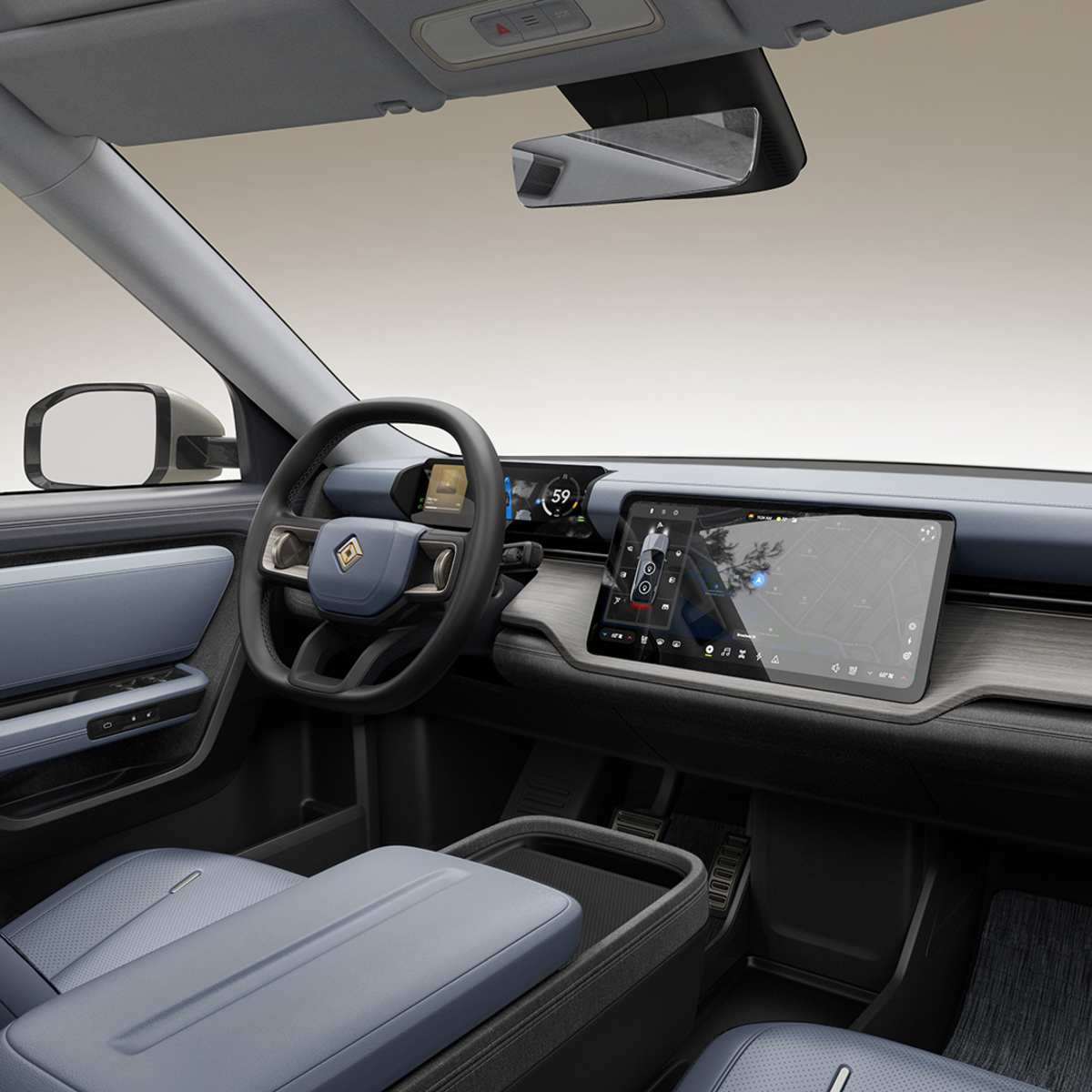
Rivian R2
"I think you would want Rivian to follow Tesla in that direction, obviously, but at the same time, you understand why, if you're putting up the, I'm not completely on board with the R2 going against the Model Y."
The Rivian R2 is an electric SUV/crossover from Rivian. Here, they’re talking about how efficiently it uses energy compared with the Tesla Model Y, and whether it makes sense to cross-shop them.
Rivian R2 is Rivian’s smaller, more efficient electric SUV/crossover aimed at competing with mainstream EVs. In this segment, the hosts compare its real-world efficiency and packaging against the Tesla Model Y, including the idea that it’s “going against” it.

Tesla Model 3
"...ve issues calling the Model Y an SUV, like it's a Model 3 with an hatch and a little bit higher up, like it..."
The Model 3 is an electric car made by Tesla. It’s a smaller car meant for everyday driving, and it’s designed around an electric motor instead of a gas engine. People often use it as a reference point when talking about other Tesla models.
The Tesla Model 3 is a compact, all-electric sedan that became one of Tesla’s most important mass-market vehicles. It’s frequently referenced in discussions about Tesla’s lineup because other models are often described as variations on the Model 3 platform and layout. The podcast mention fits when comparing body styles and how people categorize Tesla vehicles.
Maranello
"because they got me to Maranello last year [1504.2s] and all the powertrain, platform, suspension system, [1510.7s] all of that was already locked in. [1512.2s] So I knew that it was a great vehicle platform."
Maranello is where Ferrari is based in Italy. Going there typically means visiting Ferrari’s facilities and seeing how the cars are developed.
Maranello is Ferrari’s home base in Italy, where the company designs and builds many of its cars. When a speaker says they were taken to Maranello, it usually means they visited Ferrari’s facilities and got technical access.
powertrain
"and all the powertrain, platform, suspension system, [1510.7s] all of that was already locked in. [1512.2s] So I knew that it was a great vehicle platform."
Powertrain is the set of parts that make the car move and send power to the wheels. It’s basically the car’s “go” system.
Powertrain refers to the components that generate and deliver motion—typically the engine (or motor), transmission, driveshafts, and final drive. It’s a key engineering “system” because it strongly affects how the car accelerates and how it feels under load.
platform
"and all the powertrain, platform, suspension system, [1510.7s] all of that was already locked in. [1512.2s] So I knew that it was a great vehicle platform."
A platform is the car’s main “base” structure that other parts attach to. Sharing a platform can make it cheaper and faster to build related cars.
In automotive engineering, a platform is the shared underlying structure and major hardpoints—like mounting locations and chassis architecture—that multiple models can use. Using a common platform helps manufacturers reduce cost and speed up development while keeping core dynamics consistent.
suspension system
"and all the powertrain, platform, suspension system, [1510.7s] all of that was already locked in. [1512.2s] So I knew that it was a great vehicle platform."
The suspension system is what helps the wheels stay in contact with the road over bumps. It affects how the car rides and how it handles.
The suspension system is the set of components that connects the wheels to the car’s body and controls how the car absorbs bumps and maintains tire contact. It’s central to ride comfort and handling because it shapes how the car responds to steering and braking forces.

Toyota Prius
"And one of the first thing I thought it was like the new Prius, it looks a little bit like the new Prius, but I like the new Prius."
The Prius is Toyota’s popular hybrid car. The host is saying the Ferrari sedan’s shape reminds them of the Prius, not that it’s necessarily bad—just that it doesn’t look very Ferrari.
The Toyota Prius is a hybrid model that’s often used as a styling reference point because it’s widely recognized and has a distinctive shape. Here, the speaker compares the new Ferrari sedan’s look to the “new Prius,” implying the design cues feel more mainstream than typical Ferrari styling.
doesn't look like a Ferrari
"it doesn't look like a Ferrari, so we were shocked, but at the same time- It does not look like a Ferrari."
The host is talking about how car designs communicate who made them. They’re saying this new car doesn’t have the usual visual cues that make you think “Ferrari.”
This is a discussion of brand identity in automotive design—how a car’s exterior cues signal its manufacturer. The speaker argues that the new sedan lacks the visual “Ferrari” look, which is why people were surprised by it.

Ferrari Roma
"Like a lot of people were expecting like, you know, a four door Ferrari Roma, a Malfi or something like that, but it's just not it."
The Ferrari Roma is a Ferrari grand touring car (a fast, comfortable cruiser). Here, the host brings it up as a reference point for what people thought a “four-door Ferrari” might look like.
The Ferrari Roma is a front-engine, rear-wheel-drive grand tourer from Ferrari, known for its modern styling and V8 performance. In this segment, it’s mentioned as an example of the kind of four-door Ferrari people were expecting, before the speaker says the new sedan doesn’t match that expectation.

Tesla Model S
"And I have to push back here because this is not a Model S plan. It's, I get that the specs are similar, you know,"
The Tesla Model S is a well-known Tesla electric car. The host is saying you shouldn’t judge the Ferrari by the same expectations people have for the Model S.
The Tesla Model S is Tesla’s flagship electric sedan, often used as a benchmark for EV performance and specs. Here, the host is arguing that the Ferrari being discussed shouldn’t be compared to a “Model S plan” (i.e., the Model S’s spec/performance expectations), even though the numbers being cited are in the same ballpark.
0 to 100
"It's a little bit slower at 2.5 seconds, 0 to 100, but it's not about drag racing this vehicle."
“0 to 100” means how fast a car accelerates from a standstill to 100 (usually 100 km/h). The host is saying this isn’t the only way to judge the car.
“0 to 100” is shorthand for acceleration time from 0 to 100 km/h (or sometimes 0 to 60 mph, depending on context). It’s a common performance metric for comparing how quickly cars reach speed, but the host notes this vehicle isn’t being evaluated like a drag-racing car.
drag racing
"It's a little bit slower at 2.5 seconds, 0 to 100, but it's not about drag racing this vehicle."
Drag racing is when cars race in a straight line to see which accelerates fastest. The host is saying this car isn’t really meant to be judged like a drag racer.
Drag racing is a straight-line motorsport where cars compete on acceleration over a short distance. The host is contrasting this with the kind of driving or performance characteristics they think matter more for this vehicle.
torque victory
"It's about four motors, one at each wheel, torque victory, [1939.1s] rear wheel steering, independent, active,"
They’re basically saying the electric powertrain has an advantage because it can deliver strong pulling force right away. That makes the car feel quick and responsive when you press the accelerator.
“Torque victory” here is describing the advantage of electric motors delivering strong torque quickly. With instant torque, an EV can feel more responsive at low speeds and during acceleration.
rear wheel steering
"[1939.1s] rear wheel steering, independent, active, [1943.4s] electronic suspension at each wheel."
Rear wheel steering means the back wheels can also turn, not just the front wheels. That can make the car easier to maneuver and more stable when driving fast.
Rear wheel steering is a chassis system that turns the rear wheels to improve handling and stability. It can reduce turning radius at low speeds and help the car feel more agile or planted at higher speeds.
electronic suspension
"[1943.4s] electronic suspension at each wheel. [1946.6s] So, you know, it's closer to like the Porsche,"
Electronic suspension is a system that automatically adjusts how the car’s shocks behave. Instead of being fixed, it can change settings based on what the road is doing.
Electronic suspension uses sensors and a controller to adjust damping and ride behavior in real time. When it’s “at each wheel,” it can tailor how each corner responds to bumps and steering inputs for better control and comfort balance.

Porsche Taycan
"So, you know, it's closer to like the Porsche, [1950.6s] Taycan, GT, turbo, you know,"
The Porsche Taycan is Porsche’s electric performance car. The speaker is comparing the new car’s driving/tech vibe to the Taycan.
The Porsche Taycan is Porsche’s electric sports sedan, known for its high-performance electric drive and multi-motor layouts. In this segment, it’s used as a reference point for how the described Ferrari EV’s tech and driving feel might compare.
emotions of driving
"and what is Ferrari about? [2004.4s] It's about the emotions of driving, [2006.8s] how you feel when you drive the vehicle."
They’re talking about the feeling you get from driving—how engaging and exciting the car feels. It’s more about the experience than just the tech specs.
“Emotions of driving” is a marketing and design philosophy: the idea that a car should feel engaging and expressive, not just be fast or efficient. The speaker contrasts that with focusing purely on EV technology.
independent traction at each wheel
"And when it comes to an electric vehicle, if you have independent traction at each wheel with four motors, if you have rear wheel steering,"
It means each tire can get its own amount of power and grip control. That helps the car stay stable and accelerate harder without slipping as easily.
“Independent traction at each wheel” means the car can manage grip separately for each tire. On an EV with multiple motors, that lets the system vary torque wheel-by-wheel to improve acceleration, stability, and cornering control.
torque pictoring
"if you have rear wheel steering, if you have torque pictoring, if you have active suspension at each wheel,"
This likely means the car can send different amounts of power to different wheels. That helps the car turn more smoothly and grip better in corners.
“Torque pictoring” appears to be a transcription error for “torque vectoring.” Torque vectoring varies the drive torque between wheels (or sides) to help the car rotate into a corner and improve traction and handling balance.
active suspension at each wheel
"if you have torque pictoring, if you have active suspension at each wheel, you can do some wild things."
It’s a suspension system that can adjust itself while you drive. The goal is to keep the tires planted so the car handles better and feels more controlled.
Active suspension at each wheel uses sensors and actuators to adjust damping and/or ride height in real time. That helps keep the tires in better contact with the road, improving grip and ride control during hard driving.

911 Porsche Gt
"...ing I can think of, you know, I haven't drive the Porsche GT, but I've driven like the Audi GT,"
The 911 is a sports car made by Porsche. It’s known for being a performance-focused car that comes in different versions. In the podcast, it’s brought up because the speaker has experience driving similar high-performance models.
The Porsche 911 is a long-running sports car known for its distinctive design and rear-engine layout. It’s often used as a benchmark in performance discussions because there are many variants with different power and handling characteristics. In the podcast context, it’s mentioned in relation to other high-performance cars the speaker has driven.
Lamborghini
"but I was riding it and it was crazy. I was riding it with like the Lamborghini test driver, and he was also crazy impressed by it."
Lamborghini is a famous supercar maker. The host is saying even a Lamborghini test driver was really impressed by the Draco.
Lamborghini is an Italian supercar brand known for high-performance, track-oriented vehicles. Mentioning a Lamborghini test driver highlights that the Draco impressed an experienced performance-driver.
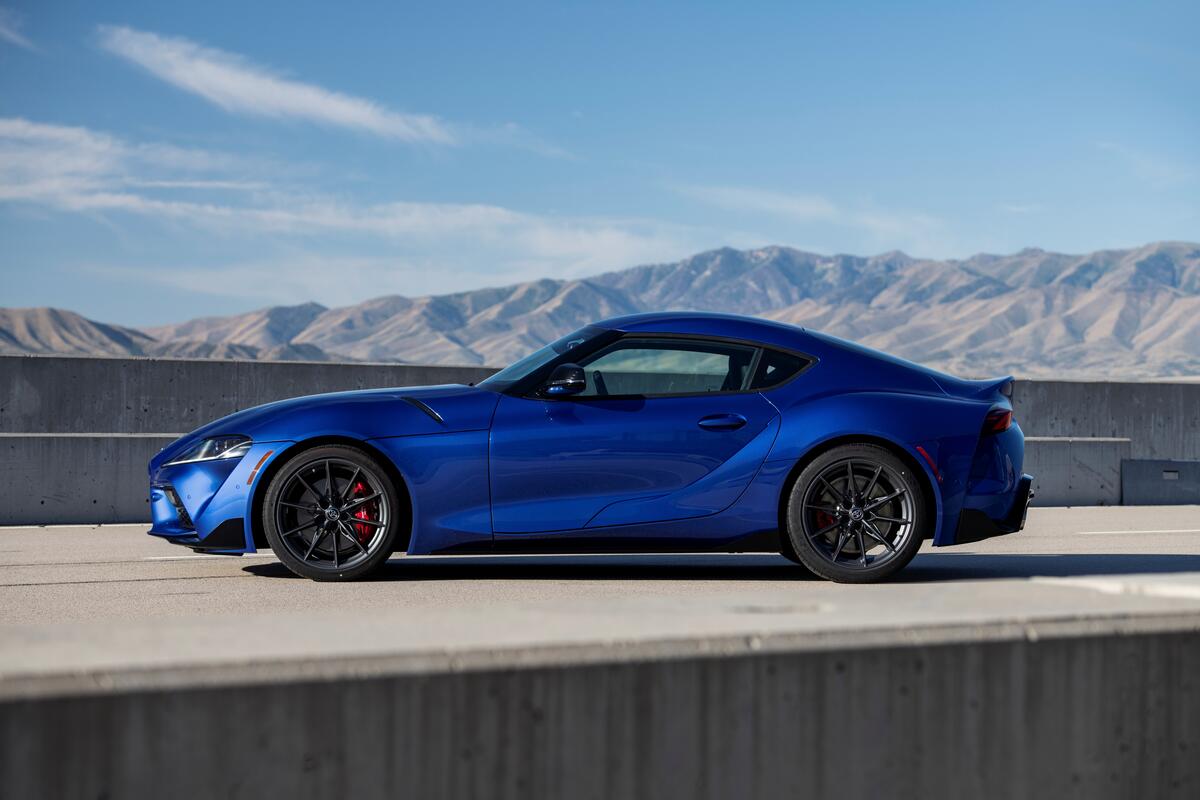
Toyota A90
"So I guess he's gonna have a new video about it soon. They showed us like a 90 seconds video of Charles Leclerc in Lewis Hamilton,"
The Supra is a sports car from Toyota. It’s built to be fun to drive, with a focus on speed and handling. It’s the kind of car people talk about when they’re discussing performance cars.
The Toyota Supra is a sports coupe known for its performance-focused design and driving feel. It’s often discussed in automotive media because it’s a recognizable nameplate that attracts attention from both car fans and mainstream audiences. In the podcast context, it’s mentioned as a topic that may have upcoming coverage.
accelerometer
"like obviously the sound that we talked about last year where they put an accelerometer inside the electric motor, inside the rotor, so that you can take the data from the rotation and the vibration of the motor"
An accelerometer is a sensor that detects how much something is vibrating or moving. In this case, it helps the car “listen” to what the motor is doing so the driver can get feedback through the sound system.
An accelerometer is a sensor that measures acceleration (how quickly something’s motion changes). Here, it’s placed inside the electric motor area to capture vibration and rotational behavior, which can then be processed and played back to the driver through the car’s audio system.
electric motor
"like obviously the sound that we talked about last year where they put an accelerometer inside the electric motor, inside the rotor, so that you can take the data"
An electric motor is the part that turns electricity into motion. The host is saying they can “capture” what the motor is doing and turn that into sound the driver can feel.
An electric motor converts electrical energy into mechanical rotation. In this segment, the host focuses on using the motor’s real vibration and rotational behavior as input for the car’s audio feedback system.
rotor
"where they put an accelerometer inside the electric motor, inside the rotor, so that you can take the data from the rotation and the vibration of the motor"
The rotor is the spinning part inside an electric motor. The host is saying they use sensor data from that spinning and vibrating to help create the sound the driver hears.
The rotor is the rotating part of an electric motor that turns the motor’s internal magnetic forces into motion. In this segment, the accelerometer is described as being inside the motor/rotor area so the system can use rotation and vibration data to generate driver feedback.
fake engine sound
"So it's not actual fake engine sound. It's real sounds coming as real as like an electric guitar through an amplifier is, let's say."
“Fake engine sound” refers to synthesized audio that imitates what a gasoline engine would sound like. The host contrasts that with Ferrari’s approach: using real motor vibration/rotation data to produce feedback through the speaker, so it’s presented as more authentic than pure simulation.
paddles
"The other thing that they did is that you have the paddles, the shifting paddles on each side of the steering wheel. And those are on the left side is the regen."
The “paddles” are the small levers behind or on the steering wheel. Here, they’re used to change how the EV slows down and how strongly it accelerates, not to shift gears like a manual transmission.
These are steering-wheel-mounted shift paddles, but in this EV context they’re being used to control driving modes rather than traditional gear changes. The left paddle adjusts regenerative braking (“regen”), while the right paddle adjusts how much torque the car delivers.
regen
"And those are on the left side is the regen. You can add regen. And on the right side, you can add torque."
“Regen” means the car can slow down and recharge itself at the same time. Instead of wasting speed as heat, the electric motor helps generate electricity while you slow down.
“Regen” is short for regenerative braking. In an EV, it slows the car while using the electric motor as a generator to convert some of the car’s motion back into electricity to recharge the battery.
touch screen
"The, there's still touch screen, [2344.8s] but there's just two of them."
A touch screen is a screen you control by tapping and swiping with your finger. In a car, it’s usually where you change settings and control things like music and climate.
A touch screen is a display you interact with directly using your fingers instead of physical knobs or buttons. In cars, it’s often used for menus, vehicle settings, and media controls.
suicide door
"Other than the back seat, I have to, [2396.4s] my only gripe is that the back seat here is, [2400.4s] you know, there's a, it's a suicide door. [2403.2s] So it's suicide doors that put a lot of emphasis"
A suicide door is a car door that opens in a way that’s different from most cars—it's hinged so it swings from the back side. People notice it because it makes getting to the back seat feel more “special,” but it has to lock very securely.
A suicide door is a door that hinges at the rear (or otherwise opens opposite the typical front-hinged layout), so it swings open from the back edge. It can make rear-seat access feel more dramatic, but it also requires careful latch/locking design for safety.
order books
"it's almost kind of a point system that they have [2789.8s] it's almost kind of a point system that they have [2792.4s] with the order books where if you want to be able [2795.9s] to buy some of the very, very exclusive Ferrari,"
An order book is basically a queue of customer requests for a specific car. If the company limits it, only certain people can get the car, which can make it harder to buy and sometimes more valuable later.
In car buying, an order book is the list of customer orders a manufacturer has received for a specific model. When a brand keeps the order book exclusive or tightly controlled, it can create scarcity and influence who gets allocation and when.
allocation
"And to get up on that list, it's good to buy, you know, [2820.2s] other Ferraris that are fully specced out and everything, [2822.7s] and to buy all of the Ferraris that come out. [2825.0s] This is a different game."
Allocation is how a company decides who gets the limited cars. If a car is hard to get, allocation rules can determine who gets one and who has to wait.
In limited-production car brands, allocation is the controlled process of deciding who gets to buy a scarce model and how many units each customer receives. The host describes Ferrari using a points/order-book system to determine eligibility for exclusive cars.
hypercar
"But I'm actually more excited for these old-school [2861.7s] Ferri people that are buying the car for maybe just to get [2866.3s] up the list on the next hypercar that they come out."
A hypercar is an extremely expensive, very limited, top-of-the-line performance car. In this context, the host means the next ultra-rare Ferrari that only certain buyers can get.
A hypercar is an ultra-high-performance, extremely limited-production supercar category—typically with cutting-edge engineering and very high prices. The host uses it to describe the next wave of Ferrari’s top-tier, scarce cars that list-positioning helps you access.
12-cylinder
"So yeah, and then maybe it opens them up to like, [2899.5s] ah, you know what, it's electric is cool. [2904.4s] And my main thing is like, I think it's very cool to have a brand [2908.5s] that's obviously, as Dean says here, is like the 12-cylinder."
A “12-cylinder” engine has 12 combustion chambers working together. It’s often associated with high-end performance cars—Ferrari is known for engines like this, even when they’re talking about going electric.
“12-cylinder” means the engine has 12 separate cylinders. In Ferrari context, it usually signals a very high-performance V12-style layout, which is part of the brand’s identity even as the company moves toward electric powertrains.
four-door hatchback
"And obviously, I think most people expected the first Ferrari [2922.1s] to be kind of like a supercar, a hypercar, like the Roadster, [2930.8s] like the Navara or something like that. [2932.7s] And it's not that. [2933.5s] They went with a four-seat, a five-seater actually, [2937.5s] four-door hatchback."
A “four-door hatchback” is a car with four doors and a back door that opens upward. The speaker is saying the EV is shaped more like a practical car than a typical supercar.
A “four-door hatchback” is a body style with four doors and a rear hatch that lifts upward to access the cargo area. In this segment, it’s used to explain that the first Ferrari EV isn’t being positioned as a traditional low-slung supercar.
weight
"But I think that we're not too far off from that. [2946.0s] Like the main thing, and they were open about it, [2947.9s] is like we're not doing a sports car right now for, because of the weight."
“Weight” just means how heavy the car is. He’s saying the car is heavier than a typical sports car, and that makes it harder to deliver the same kind of performance and driving dynamics.
In EV and performance-car discussions, “weight” usually refers to how mass affects acceleration, handling, and braking. Here, the speaker says Ferrari isn’t making a sports car “right now” because the vehicle is too heavy for the intended driving feel.
MC cells
"But we're not, you know, a few more years of battery improvement and they're using, you know, very advanced and MC cells in there,"
“MC cells” are a specific kind of battery cell used inside an EV battery pack. Different cell designs can store more energy for the same weight, which helps the car go farther without getting heavier.
“MC cells” refers to a type of lithium-ion battery cell chemistry/format used in some EV packs. The key idea is that different cell designs can improve energy density and reduce weight, which matters for range and performance.
kilowatt hour pack
"I could, I could see in the next few years an 80-something kilowatt hour pack that makes sense, the Ferrari for the weight, for a super, a hypercar, supercar."
A “kilowatt hour pack” is how big the EV battery is, measured in kWh. Bigger usually means more energy for driving, but it can also make the battery heavier.
A “kilowatt hour pack” describes the battery capacity of an EV in kWh. Higher kWh generally means more stored energy, which can translate into more range, but it can also add weight and cost.
torque shifting
"how does the the solution for the gear shifting, which is the torque shifting now, how that work,"
“Torque shifting” means the car changes how much twisting force (torque) it sends to the wheels. In EVs, that’s typically done electronically, not with a traditional gearbox.
“Torque shifting” in an EV context usually means changing how torque is delivered to the wheels—often via motor control and power management rather than traditional gear changes. It’s used to mimic or replace the “shift” sensation and to manage traction and drivability.
purpose-built autonomous vehicle
"So it's the new purpose-built autonomous vehicle from Zekar in partnership with Zekar."
A “purpose-built autonomous vehicle” is a self-driving car designed specifically for that job, not converted from a normal car. That can make it easier to fit the sensors and computers autonomy needs.
A “purpose-built autonomous vehicle” is an AV platform designed from the ground up for self-driving rather than adapted from a regular car. This can allow better packaging for sensors, compute hardware, and safety systems needed for autonomy.
autonomous operation
"everything is built to accommodate everyone and to support autonomous operation, [3105.5s] including even they thought about making it easier to clean."
Autonomous operation means the car can drive itself. It uses sensors and computers to understand what’s around it and decide what to do.
Autonomous operation means the vehicle can drive and handle driving tasks on its own without a human actively controlling it. In practice, it relies on sensors and onboard computing to perceive the road and make driving decisions.
six-generation Waymo driver
"And it's also equipped with a six-generation Waymo driver, [3122.9s] which probably is the bigger deal here because it brings the cost down quite a bit on the vehicle itself."
Waymo’s “driver” is the car’s self-driving brain. The “six-generation” part means it’s the sixth major version of that software.
Waymo’s “driver” refers to its self-driving software stack—how the vehicle interprets sensor data and plans/controls driving actions. Saying it’s “six-generation” implies multiple iterations of that system, with newer versions typically improving capability and cost.
cameras
"They achieved that with cutting the sensors count by 42 percent, [3160.2s] 29 cameras to 13, 5 LiDAR sensors to 4, fewer radar units,"
Cameras are the car’s eyes. They help it recognize what’s on the road, like lane markings and other vehicles.
Cameras are visual sensors used to detect lanes, traffic signs, vehicles, pedestrians, and other road features. In self-driving stacks, camera data is typically fused with LiDAR/radar to improve reliability and accuracy.
LiDAR
"They achieved that with cutting the sensors count by 42 percent, [3160.2s] 29 cameras to 13, 5 LiDAR sensors to 4, fewer radar units,"
LiDAR is a sensor that uses lasers to measure how far away things are. It helps the car “see” the world in 3D so it can drive safely.
LiDAR (Light Detection and Ranging) is a laser-based sensor that measures distance by bouncing laser pulses off objects. Self-driving systems use LiDAR to build a detailed 3D map of the environment, which helps with obstacle detection and navigation.
radar units
"29 cameras to 13, 5 LiDAR sensors to 4, fewer radar units, [3167.1s] and the latest computing power, of course."
Radar units are sensors that use radio waves to detect objects. They help the car figure out where nearby vehicles are and how fast they’re moving.
Radar units are sensors that detect objects and estimate their position and relative speed using radio waves. In autonomous driving, radar is often valued for working well in bad weather and for tracking moving targets like other cars.
charging
"Oh, yeah, we have, we even saw it charging here. [3175.8s] A reader sent it to us, and thank you, Alexander, sent an image of it."
Charging is how the vehicle recharges its battery using electricity from outside. Fleet cars need to charge often so they’re available to drive.
Charging refers to replenishing the vehicle’s battery power from an external power source. For robotaxis and fleets, charging logistics and uptime are important because the vehicles must be ready to serve rides.
frunk
"It has a little frunk that's actually a charge port, and you can plug it in from here."
A frunk is the “front trunk” on some cars. On EVs, it can be used for storage and sometimes for the charging setup too.
A frunk is the front trunk space on an electric vehicle, created because there’s no traditional engine up front. In this segment, they say the frunk is also used as a charge port area, which affects how you plug in.

Chevrolet Equinox
"All right, quick update before we go into the comment section about the Chevy Equinox [3226.1s] and Blazor 2027."
The Chevy Equinox is a small SUV. In this part, they’re talking about what’s changing for the 2027 version—things like charging and audio.
The Chevrolet Equinox is a compact SUV, and this segment is about its 2027 update. The hosts mention changes to charging convenience, audio, and driver-assistance options, which are the practical “ownership” upgrades for this model year.
Supercharger
"You finally get the full Naxx lineup on the Equinox and Blazor. [3248.1s] So, you know, no need for the connector at the Supercharger."
Supercharger is a fast-charging network for EVs. They’re saying the car may not need an extra adapter/connector to use it.
Supercharger refers to Tesla’s fast-charging network. The hosts say there’s “no need for the connector at the Supercharger,” meaning the vehicle’s charging setup is expected to be more plug-and-play for that network.
Bose system
"And a big audio update. I didn't know this. [3257.6s] Apparently, people were complaining about the audio on the Equinox and the Blazor."
A Bose system here refers to an upgraded premium audio setup from the audio brand Bose. The hosts mention an optional 8-speaker premium Bose system tied to higher trims, which is a specific equipment change rather than a generic “better sound” claim.
Active Safety Package 3
"And also, there's new options for the Supercruise, the latest Active Safety Package 3,"
An “Active Safety Package” is a bundle of safety and driver-assist features. Here, they’re talking about the newest version (Package 3) and how it relates to Super Cruise.
Active Safety Package 3 is a GM trim/package designation that bundles multiple driver-assistance and safety features. In this segment, it’s mentioned alongside Super Cruise, suggesting the higher-trim option structure for 2027.
Supercruise
"and Supercruise packaging with heads-up display, and hand-sparking assists, [3310.8s] and Supercruise package for $3,355."
Super Cruise is a driver-assist feature from GM that can help steer on mapped roads. It’s meant for highway driving, and you still have to pay attention because it’s not fully autonomous.
Super Cruise is GM’s hands-free driver-assistance system for certain roads, using cameras, radar, and GPS mapping to help with steering and lane keeping. It’s designed for highway driving and typically requires the driver to monitor the system and keep their hands/attention as prompted.
heads-up display
"and Supercruise packaging with heads-up display, and hand-sparking assists, [3310.8s] and Supercruise package for $3,355."
A heads-up display shows important info on the windshield. That way you don’t have to look down as much while driving.
A heads-up display (HUD) projects key information—like speed, navigation cues, or driver-assistance alerts—onto the windshield so you can see it without looking down at the instrument cluster. It’s a convenience and safety feature because it reduces the need to take your eyes off the road.
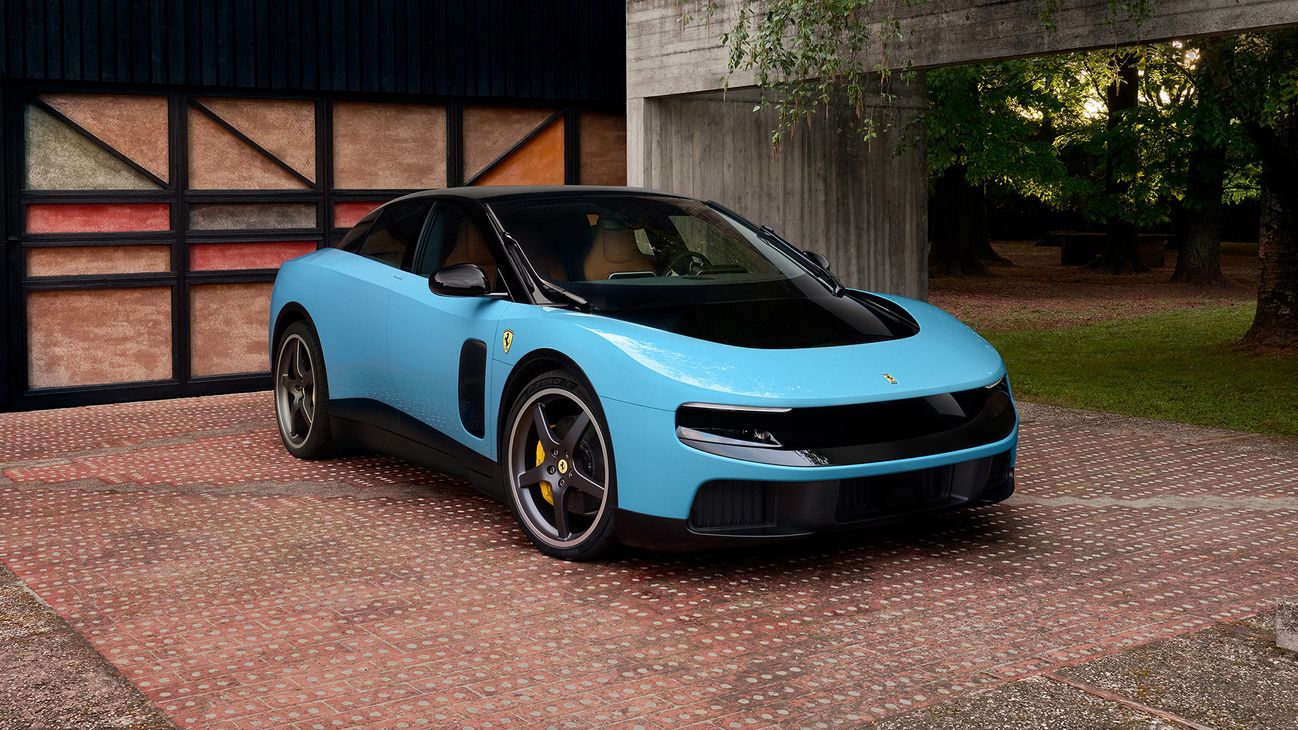
Luce
"I have to echo your sentiment with seeing the Luce for the first time. It's not a [3387.2s] bad looking car, but it lost its Ferrari heritage look. Yeah. Yeah. It definitely doesn't feel like [3394.7s] a Ferrari."
The Ferrari Luce is Ferrari’s upcoming electric vehicle. The conversation is about whether its design still looks and feels like a Ferrari, even though it’s an EV.
The Ferrari Luce is Ferrari’s upcoming EV concept discussed here, and the hosts focus on how its styling departs from traditional Ferrari cues. They also compare its look to other high-end SUVs, arguing about whether it still “feels” like a Ferrari.
wrap
"I wonder if they could put like a different wrap on it or different. [3414.0s] I don't think the structure of the car itself is like that."
A vehicle wrap is a vinyl film applied over a car’s exterior surfaces to change color or add graphics without repainting. The hosts speculate about whether a different wrap could improve how the Luce’s design reads visually.

Lamborghini Urus
".... It doesn't look any less like a Ferrari than an Urus looks like a Lamborghini. Urus is that SUV, but I..."
The Urus is a luxury SUV made by Lamborghini. It’s designed to be fast and dramatic-looking, but it’s still an SUV you can use more like a normal vehicle. People talk about it because it carries Lamborghini styling and attitude in an SUV form.
The Lamborghini Urus is a high-performance luxury SUV that blends the brand’s supercar identity with an SUV body. It’s frequently discussed because it looks and feels like a Lamborghini while being designed for everyday practicality compared with a traditional supercar. The podcast reference highlights how closely it visually relates to Lamborghini’s design language.

Cybertruck
"The Luce looks better than a Cybertruck. Also, Ferrari has made one good-looking car in the last 10 years."
The Tesla Cybertruck is a very distinctive electric pickup with a futuristic, boxy look. The speaker is basically saying the Ferrari looks better than that design.
The Tesla Cybertruck is an angular, stainless-steel-bodied electric pickup that became a cultural reference point for EV design. The host uses it as a visual benchmark, saying the Ferrari Luce looks better than the Cybertruck.
all-wheel drive
"If this was released as a new Apple EV with a 300 horsepower base, 400 horsepower all-wheel drive models, getting 300 miles of range, starting at under 40K, it would have been a big hit."
All-wheel drive means the car can send power to all four wheels. That usually helps it grip the road better, especially in bad weather or slippery conditions.
All-wheel drive (AWD) means power is sent to both the front and rear axles, improving traction and stability compared with two-wheel drive. The host speculates about AWD variants for an EV lineup and how that could affect real-world appeal.
12-cylindry
"The Ferrari uses superpowered EV drivetrain in the body of their new 12-cylindry using a half-sized battery pack for lower weight."
“12-cylinder” usually means an engine with twelve cylinders. In this clip, it’s mentioned in a confusing way while talking about an electric drivetrain, so it doesn’t sound like a straightforward, literal engine spec.
“12-cylindry” appears to be a transcription of “12-cylinder,” which normally refers to an engine with twelve combustion cylinders. In this segment it’s used in a speculative/incorrect way alongside an EV drivetrain and battery-pack discussion, so it’s likely a misstatement rather than a literal EV engine description.
half-sized battery pack
"The Ferrari uses superpowered EV drivetrain in the body of their new 12-cylindry using a half-sized battery pack for lower weight."
The battery pack is the big battery in an EV. Saying “half-sized” means a smaller battery to save weight, which can help the car feel quicker and handle better.
A battery pack is the EV’s energy storage system, and “half-sized battery pack” implies using a smaller-capacity pack to reduce weight. The host links that to lower weight and a more performance-oriented EV packaging strategy.

Volvo EX60
"All right. What do you all think of the Volvo EX60? I think it's a great car. Lots of range, great acceleration, Volvo looks. What do you think?"
The Volvo EX60 is an upcoming Volvo electric car. The hosts say they like it because it has good range and quick acceleration.
The Volvo EX60 is a Volvo electric SUV/crossover model being discussed for its EV strengths. In this segment, the hosts highlight its range and acceleration as reasons they like it, and they reference a prior episode for more detail.

Hyundai Ioniq 5
"...n Valley, most are Jaguars though. I haven't seen Ioniq 5 yet. Yeah, you know, I saw the Zikr at the LA Aut..."
The Ioniq 5 is an electric SUV/crossover made by Hyundai. It’s designed for everyday use, like commuting and family trips, but it runs on electricity instead of gas. People may bring it up when listing EVs they’ve seen around.
The Hyundai Ioniq 5 is an all-electric crossover designed to be practical while still offering modern styling and technology. It comes up in EV discussions because it’s a relatively common choice in the electric crossover segment. The podcast mention suggests it was spotted or considered among other vehicles at an event.

Chevrolet Blazer
"...t. The tracks is like a little bit smaller in the blazer. Yeah, smaller SUV. What foreign brand EVs are cu..."
The Blazer is an SUV made by Chevrolet. It’s meant for people who want more space than a small car, but it’s not the biggest SUV size. In the podcast, it’s being talked about as a smaller option.
The Chevrolet Blazer is a midsize SUV, and in the podcast context it’s being compared in terms of size and shape—specifically described as a smaller SUV. It’s relevant because buyers often choose between different SUV sizes based on parking, comfort, and cargo needs. The discussion implies the Blazer is part of a broader conversation about EVs and vehicle categories.
Formula Sun
"Have you all heard anything about when Volvo EX-60 will start arriving in the US? [3868.3s] You haven't heard anything that's not already out there? No. [3873.8s] Hype for Formula Sun this summer? Yes."
Formula Sun is a competition for solar-powered cars. The hosts are talking about when and where it’s happening.
Formula Sun is a solar-car racing event where teams build and race solar-powered vehicles. The hosts are discussing where they’ll be for the event and the dates, framing it as part of their summer schedule.
Request an Explanation
Heard something you'd like explained? We'll add it to this episode.
Sign in to request explanations for terms you heard.
Want to learn more?
Browse our glossary for plain-English explanations of automotive terms, jargon, and concepts.
Help improve this episode
See something that's not quite right? Our annotations are AI-generated and can sometimes miss the mark. Click the flag icon on any annotation to suggest a correction.