
About this episode
The hosts kick off with Jeep community chatter, then pivot into the episode’s central mystery: “Loosely talk about Who killed the 4-0” and “Or why it was killed.” Along the way, they swap shop-and-trail stories (including a CJ5 call and wheeling plans), discuss reliability and overheating warnings, and get deep into engine history, packaging, and corporate/regulatory pressure. The “conspiracy” thread ties together OBD changes, transmission choices, and why the 4.0’s era ended.
The conspiracies continue as we break down the conspiracy of the 4.0. Stay till the end to find out which of our guys believe the conspiracy and which think the conspiracy is busted.
Thanks for listening, give us a review and check us out on YouTube -SFJ4x4 and visit our website to grab some great gear or products for your Jeep, SFJ4x4.com. Don't forget, you can email [email protected] for special content requests, blind react videos, suggestions, special guests, or general questions. Check out our Patreon patreon.com/ISpeakJeep
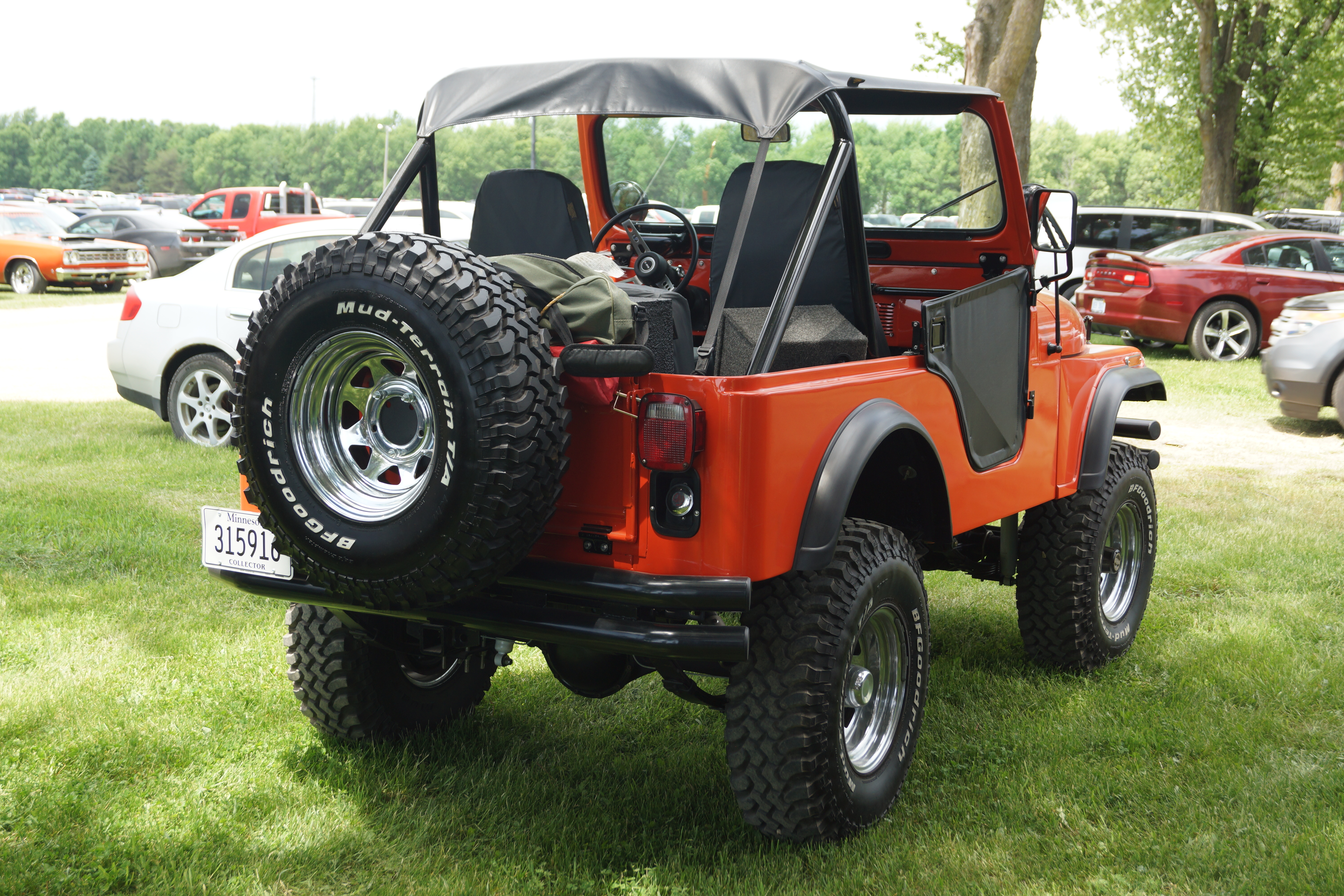
Jeep Cj5
"We've got a guy here He's trying to work on this CJ5 Can you help him?"
The Jeep CJ is an older Jeep model built for off-road use. The podcast mentions a CJ5, which is one version of the CJ line, and focuses on someone trying to fix it. People talk about these because they’re tough and often kept running by enthusiasts.
The Jeep CJ is a classic, open-to-trail Jeep model family known for its rugged, utilitarian design. In the podcast, it’s specifically tied to someone working on a CJ5, which is a common way these vehicles are kept alive—through hands-on maintenance and repairs. It’s discussed because the CJ series is a foundational part of Jeep’s off-road legacy.

Wrangler Rubicon
"I have an idea Would you just take the Rubicon down to Rob? And drop it off"
The Wrangler is an off-road SUV made by Jeep. The podcast talks about using it on a trail, which is what it’s designed for. It’s popular because it can handle rough roads better than many regular cars.
The Wrangler is Jeep’s well-known off-road SUV, designed to handle rough trails and challenging terrain. The podcast mentions taking a Wrangler down to a specific location (Rob) and dropping it off, which fits how Wranglers are commonly used for trail driving. It’s discussed because it’s one of the most recognizable modern Jeep platforms for off-road enthusiasts.
8-speed transmission
"He is making an adapter [854.0s] To take the 8-speed [857.7s] Transmission that's in our"
An 8-speed transmission is an automatic gear box with eight different gear ratios. It helps the engine stay in the right “power or efficiency” range, and it matters when you’re trying to fit the drivetrain together with adapters.
An 8-speed transmission is an automatic gearbox with eight forward gear ratios. More gears can help keep the engine in a better efficiency or power band, and it also affects how parts like adapters are designed when swapping or fitting driveline components.
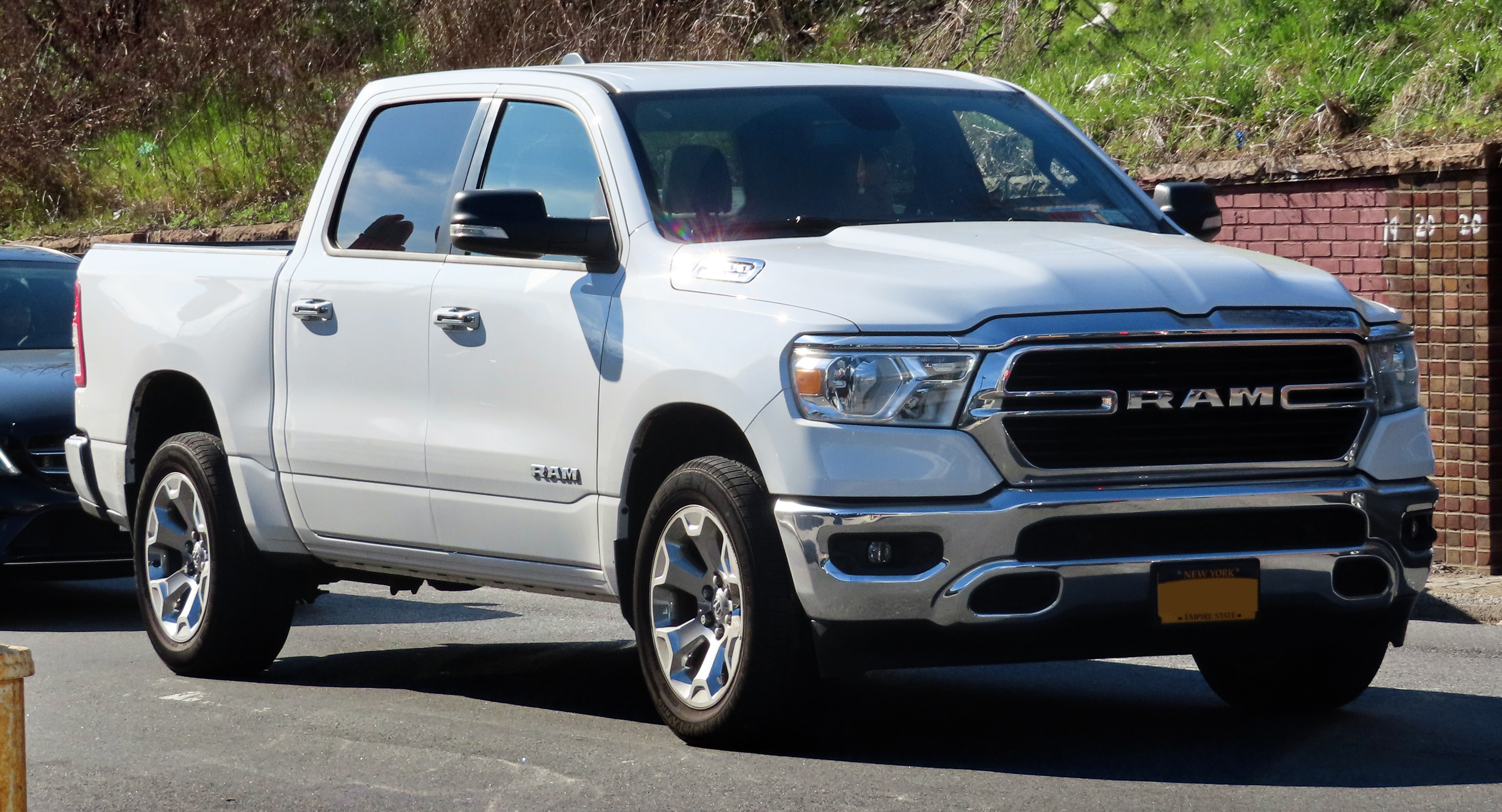
Ram 1500
"Here's the thing [852.3s] He is making an adapter [854.0s] To take the 8-speed [857.7s] Transmission that's in our [860.1s] Certainly in our [862.1s] Our Ram 1500s"
The Ram 1500 is a popular full-size pickup truck. Here, they’re discussing how to connect an 8-speed transmission to the truck using an adapter.
The Ram 1500 is a full-size pickup from Ram (Stellantis) that’s offered with multiple engine options and transmissions. In this segment, the host is talking about using an adapter to mate an 8-speed transmission to Ram 1500 applications.

JTs
"Or JLs [870.0s] And JTs [870.9s] Are just a"
“JT” is the code name for the Jeep Gladiator generation. They’re mentioning it because it uses the same kind of transmission setup they’re discussing for the adapter.
“JT” refers to the Jeep Gladiator JT generation (the pickup version of the Wrangler platform). In this segment, it’s grouped with JL models as vehicles that share the transmission being adapted.
adapter
"And he has made an Adapter To adapt it To a 4-0"
An adapter is a connector part that makes two components fit together. If you’re mixing an engine and transmission that weren’t originally meant to work as a set, the adapter helps them bolt up and function correctly.
In this context, an adapter is a custom interface piece that lets one drivetrain component (like a transmission) physically and mechanically connect to a different engine or bellhousing pattern. It’s often required when swapping parts that weren’t designed to mate from the factory.
short wheelbase
"It has no place In short wheel base jeep So, you know"
“Short wheel base” means the Jeep’s wheels are closer together front-to-back. That can make it easier to turn and handle on tight trails, because the Jeep is shorter overall.
“Short wheel base” (often abbreviated as SWB) means a Jeep with a shorter distance between the front and rear axles. That usually makes the vehicle feel more maneuverable and easier to fit into tight off-road trails, but it can also affect ride stability compared with a longer wheelbase setup.
TJ, YJ
"I'm sorry TJ, YJ So on and so forth"
TJ and YJ are two different generations of Jeep Wrangler. They’re different model years, so some parts and fitment details won’t be the same between them.
TJ and YJ are Jeep Wrangler generations. TJ is the later Wrangler generation (1997–2006) and YJ is the earlier Wrangler generation (1987–1995), and they differ in dimensions, suspension/steering design, and how aftermarket parts fit.
LJ customers
"People, but LJ customers Somebody's like"
“LJ” is shorthand for the longer Wrangler (Unlimited). Since it’s longer, some parts and setups won’t match the shorter Wrangler versions without changes.
“LJ” refers to the Jeep Wrangler Unlimited (a longer-wheelbase Wrangler). Because it’s longer than the standard short-wheelbase versions, suspension, driveline, and body-related components can differ, which affects what “fits” and what needs adaptation.
transfer case
"Because ultimately We just bolt the back Of the transfer case"
The transfer case is the part that sends power to both the front and rear wheels on a 4x4 Jeep. It also helps provide “low gear” for crawling over rocks or steep trails.
A transfer case is the gearbox that splits power from the transmission to the front and rear axles in a 4x4. It also provides low-range gearing for slow, technical off-road driving and can enable different drivetrain modes depending on the Jeep’s setup.
one-barrel carburetors
"[1145.6s] With one barrel [1146.4s] Carburetors [1147.1s] And two barrel [1147.7s] Carburetors"
A “one-barrel” carburetor has one main opening that controls how much air/fuel gets into the engine. It’s generally simpler than a “two-barrel” carb.
“One-barrel” carburetors use a single throttle bore (one primary venturi) to meter air and fuel. In practice, it usually means simpler airflow and fuel metering than a “two-barrel” setup.
two-barrel carburetors
"[1147.1s] And two barrel [1147.7s] Carburetors [1148.3s] Did you mention"
A “two-barrel” carburetor has two main openings for air/fuel. That can help the engine breathe better when you accelerate.
“Two-barrel” carburetors have two throttle bores (two venturis) that can supply more airflow and fuel than a single-barrel design. Many engines used two-barrel carbs to improve performance when you demand more power.
AMC
"[1158.4s] Well, because [1159.1s] It's [1160.0s] Released in AMC [1161.1s] And not in Jeep"
AMC was an automaker that made vehicles and engines that Jeep used or shared. Here, they’re pointing out the engine came out under AMC before Jeep put it into its lineup.
AMC (American Motors Corporation) was the automaker that produced many Jeep and Jeep-adjacent engines and platforms. In this context, the speaker is saying the engine was released by AMC first, not by Jeep as a brand.
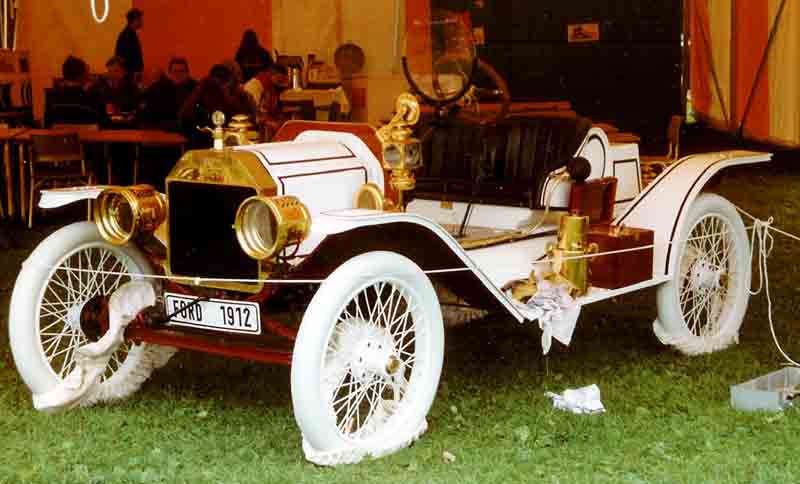
Ford Model T
"Is a derivative Of the Model T Model A engine"
The Ford Model T is an old car that was made in very large numbers. The podcast mentions it because later cars used related engine designs. It’s important because it helped make cars more common for everyday people.
The Ford Model T is an early mass-produced car that helped popularize affordable personal transportation. In the podcast, it’s referenced as the basis for an engine derivative, linking it to the Model A era. It’s discussed because it represents a major turning point in automotive history and engineering.
bell housing
"Anyway [1544.0s] Look at you making those [1545.1s] conspiratorial associations [1547.0s] The bell housing on those early straight sixes"
The bell housing is the “connector” between the engine and the transmission. If it doesn’t match the engine and transmission, you can’t bolt them together easily—so it matters a lot for swaps.
The bell housing is the housing at the front of the transmission that connects the engine to the gearbox. It’s a key part of the engine-to-transmission fitment because its shape and bolt pattern determine which transmissions can be swapped onto a given engine.
straight sixes
"The bell housing on those early straight sixes [1550.1s] Is all on its own [1552.4s] Does not share with anything else"
A straight six is an engine with six cylinders in a straight line. The important part here is that the engine’s connection to the transmission can be different, which changes what swaps will fit.
A straight six is an inline engine with six cylinders arranged in a single line. In older AMC applications, the specific bell housing used with these engines could differ from later setups, affecting which transmissions were compatible for swaps.
transmission swapping
"Which shares with the AMC V8 [1575.6s] And made transmission swapping [1578.3s] Almost Chevy like"
Transmission swapping means putting a different transmission into the car. It’s not just “bolt it in”—the engine-to-transmission connection has to match, or the swap won’t work.
Transmission swapping is replacing one transmission with another, usually to change gearing, improve durability, or make an engine/transmission combination work. The host ties this to bell housing compatibility—if the bell housing pattern doesn’t match, the swap becomes much harder.
V8
"And they were using a Buick v8"
A “V8” is an engine with eight cylinders. The cylinders are arranged in a V shape, and it’s known for strong pulling power.
“V8” means an engine with eight cylinders arranged in a V shape. In automotive history, V8s are often associated with strong low-end torque and a distinctive sound.

258
"So now we have the 258 That then soldiers along All the way into the YJ"
“258” is shorthand for a Jeep inline-six engine around 4.2 liters. The host is saying this engine shows up across Jeep models, including the YJ.
“258” refers to the Jeep 4.2L inline-six engine (often called the Jeep 258). It’s a long-running, air-cooled-by-design? (no) — more accurately, it’s a straight-six known for durability and for being used across multiple Jeep generations, including the YJ era mentioned right after.
Wrangler
"Go in and buy a Wrangler Their wife buys An XJ"
The Jeep Wrangler is Jeep’s famous off-road SUV. In this part, they’re talking about which Jeep people would choose and why.
The Jeep Wrangler is Jeep’s iconic off-road SUV line, built around a body-on-frame layout and designed for trail use. Here, the hosts contrast the Wrangler with other Jeep models to explain who they expected to buy them.

XJ
"Their wife buys An XJ Which comes out in 84 With a terrible motor Then 87"
XJ is a Jeep Cherokee model generation. The hosts are saying that this Cherokee came out around the mid-1980s and that they weren’t happy with the engine.
Jeep XJ refers to the Cherokee generation known for its unibody construction and strong reputation as a capable, practical off-roader. The hosts mention it in the context of a specific model-year timeline and criticize its engine choice.

Jaguar Xjs
"...exists somewhere in a parallel universe And their XJs are still produced to this day It's the best vehi..."
The Jaguar XJ-S is a luxury sports coupe made by Jaguar. It’s the kind of car people choose for comfortable long-distance driving and a sporty feel. The podcast brings it up in relation to other Jaguar models to explain where it fits in their lineup.
The Jaguar XJ-S is a grand touring-style coupe from Jaguar, known for its performance and classic styling. The podcast contrasts it with the XJ line and notes that XJs are still produced, which highlights how the XJ-S fits into Jaguar’s broader history. It’s discussed because it’s a recognizable, enthusiast-focused model with a distinct identity.
direct fuel injection
"Chrysler's looking at this French fuel injection ... Going what the heck is this? ... Why are we using this? ... It doesn't fit into anything else in our workings"
Fuel injection is how a car delivers fuel to the engine. In this story, Chrysler looked at a fuel-injection setup that came from a French source, but they didn’t think it fit well with how their cars were already designed. So it became a compatibility problem.
“French fuel injection” here is referring to a specific fuel-injection system sourced from a French supplier or design. Fuel injection is the method the engine uses to deliver fuel, and the host is implying Chrysler was evaluating it but found it didn’t integrate cleanly with their existing engine/transmission “workings.”
AW4
"And so now we're into 1990 or so ... We are using the AW4 behind it at this time ... Which is the Asian Warner 4 speed"
AW4 is the name of a specific 4-speed automatic transmission. It’s basically the gearbox inside the car, and different cars can use the same transmission model. Here, they’re saying they used the AW4 behind their engine during that era.
AW4 refers to the Aisin-Warner 4-speed automatic transmission used by multiple manufacturers. In this segment, the host connects it to Toyota applications and explains it was paired behind an engine at the time. The key idea is that the AW4 is a specific gearbox model, not just “an automatic.”
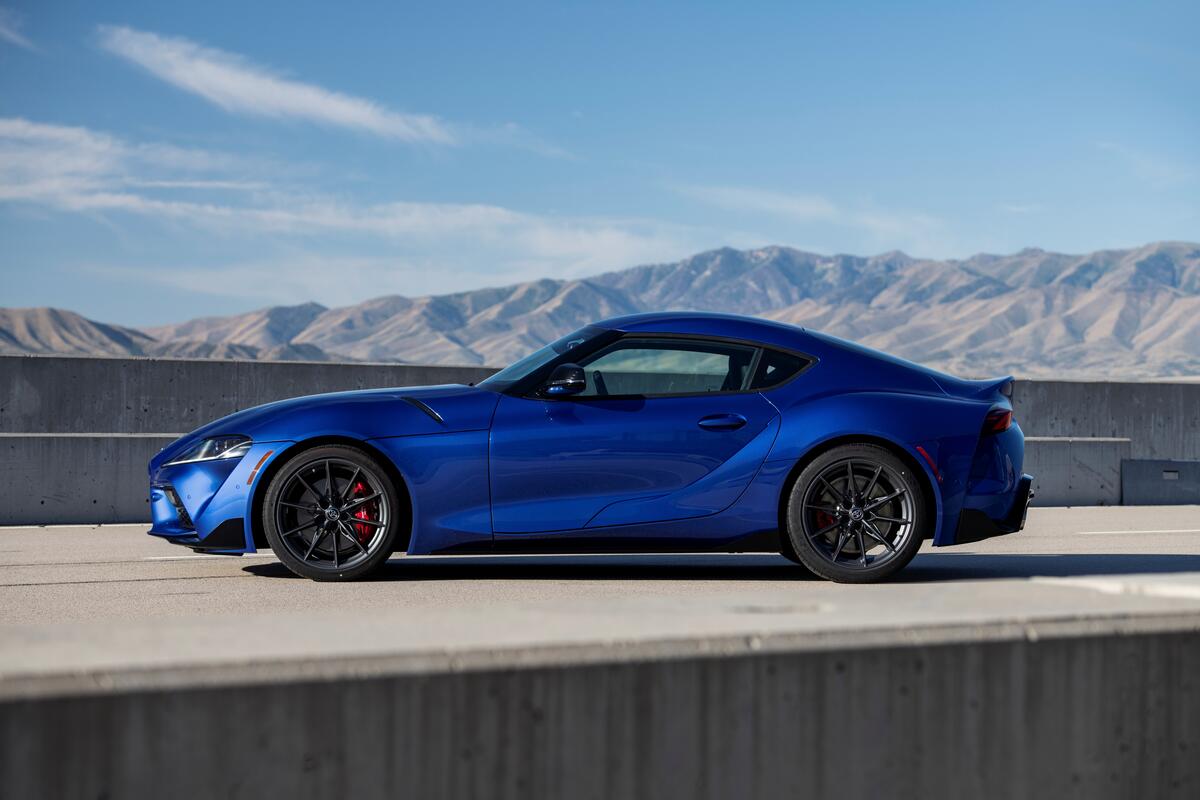
Toyota Supra
"...s what that stands for Yes, it was used in Toyota Supras Good transmission"
The Toyota Supra is a sports car made by Toyota. It’s built for quick acceleration and fun driving, and the podcast mentions the transmission because that’s how the engine’s power gets to the wheels. People talk about it a lot because it’s a well-known performance model.
The Toyota Supra is a performance sports coupe known for its strong powertrain and driver-focused design. In the podcast context, it’s mentioned alongside transmission talk, which is a big part of how these cars feel and how they’re maintained over time. It’s a frequent topic because the Supra has a long history as a benchmark for sports-car performance.
32RH
"Because otherwise we get a really crappy ... 32RH ... Which is a derivative of a 909 or a 999 ... Or a 904"
32RH is a specific Chrysler transmission model code. It’s like a part number for the gearbox, and it’s related to older Chrysler transmission designs. The point is that it’s not a random unit—it comes from a known family.
32RH is a Chrysler automatic transmission designation. The host says it’s a derivative of earlier transmission families (they mention 909/999 and 904), meaning it shares design lineage but is tuned/packaged for a different application. This is the kind of code enthusiasts use to identify which transmission variant a vehicle uses.
lock-up converter
"[2125.9s] The new thing [2127.2s] The spoiler alert for that transmission [2129.3s] Is they need a lock-up core converter [2133.0s] Big surprise"
In an automatic transmission, a torque converter uses fluid to transfer power. A “lock-up” feature lets the engine and transmission connect more directly, which usually makes the car more efficient and less wasteful at steady speeds.
A lock-up torque converter is a feature in an automatic transmission where the engine can mechanically “lock” to the transmission instead of relying only on fluid coupling. That reduces slippage, improving efficiency and often lowering heat at cruising speeds. The host is calling out that this transmission needs that lock-up capability.
Chrysler Mopar
"And they use the Chrysler Mopar computer [2224.3s] That they were using on multiple other platforms"
Chrysler is the car company. Mopar is the company’s name for its official parts and service—so “Chrysler Mopar computer” means the factory engine computer Chrysler used.
Chrysler is the automaker, and Mopar is its in-house parts and service brand. When the host says “Chrysler Mopar computer,” they’re referring to Chrysler/Mopar engine-management hardware used to run the vehicle’s powertrain.
OBD-1 technology
"It was OBD-1 technology [2246.2s] No extra crap [2247.7s] Didn't have emissions on it"
OBD-1 is an early “self-check” system in cars. It can detect some problems, but it’s simpler than modern systems that also watch emissions in a lot more detail.
OBD-1 (On-Board Diagnostics, version 1) is an early generation of vehicle self-diagnostics. It’s much simpler than later OBD systems and typically focuses on basic fault detection rather than the more comprehensive emissions-related monitoring used today.
speed density computer control
"The computer is called a speed density computer control [2260.2s] It's a really simple brain [2263.5s] If you allow it to just do what it does best"
Speed density is how the engine computer decides how much fuel to inject. It uses engine speed and air information (like pressure/temperature) to figure out what the engine needs.
Speed density is an engine-management strategy that calculates fuel and ignition based on engine speed plus measured air density (often inferred from manifold pressure and intake air temperature). The host calls it a “simple brain,” because this approach can be straightforward compared with more complex airflow-based methods.
computer control tractor engine
"[2273.0s] It is a computer control tractor engine at that point [2275.7s] And it just is what it is"
They’re basically saying the engine is meant to work reliably and do its job, not to be a race engine. The computer helps it run smoothly and consistently.
This phrase is describing an engine that’s designed to run steadily and predictably under computer management, rather than being tuned for racing. In practice, it points to a calibration and control strategy that prioritizes durability and consistent operation.
OBD2
"[2316.1s] Change the computer system [2317.6s] Because Chrysler was pulling out of the dark ages [2319.9s] And trying to get into OBD-2 [2322.4s] For those that don't know [2324.1s] 96 was the do or die OBD-2 [2327.5s] Government enforced OBD-2"
OBD-2 is the standardized computer system in your car that watches the engine and emissions. If there’s a problem, it stores a code that a mechanic can read with a scan tool.
OBD-2 (On-Board Diagnostics, second generation) is a standardized emissions and fault-detection system required on most vehicles sold in the U.S. It monitors engine sensors and emissions-related components and can store trouble codes when something goes wrong.
government restriction of 96
"Jeep utilizes Jeep with Chrysler And their global influences Utilize the government restriction of 96 To justify the death of the YJ Wrangler"
The host is talking about a rule or deadline from around 1996. They’re suggesting Jeep used those regulations as a reason to stop making the YJ Wrangler.
This phrase points to a regulatory deadline around the year 1996, which the host claims Jeep used as justification for ending the YJ Wrangler. In automotive history, such deadlines typically relate to emissions and safety compliance requirements that force redesigns or discontinuations.
air bags
"It is funny that literally airbags Is what killed the YJ Because they did finally in 91"
Airbags are safety devices that pop out during a crash to help protect your body. The host is saying that meeting airbag requirements had a big impact on the YJ Wrangler.
Airbags are supplemental safety restraints that deploy rapidly in a crash to help reduce injury. In the context of the YJ Wrangler, the host is implying that adding/meeting airbag requirements was a major factor in the model’s end.
40s
"Because they did finally in 91 Also give the YJ a 4-0 Correct"
“4-0” is shorthand for a 4.0-liter engine. The host is saying the YJ Wrangler finally got that newer engine before it was discontinued.
“4-0” here refers to the Jeep 4.0L inline-six engine swap/update that was used in later Wranglers. The host is saying the YJ got the 4.0L engine late in its life, as part of the timeline leading up to its discontinuation.
coil packs
"That's also when the four-leader was updated again With coil packs Chrysler bumped their head"
Coil packs are part of the ignition system that create the electrical spark the engine needs to run. If they get updated, it can affect how reliably the engine starts and runs.
Coil packs are the ignition components that generate high voltage for the spark plugs. Updating to coil packs can change ignition reliability, how consistently the engine fires, and how easily the system can be serviced.
tuppy head
"I We could do a whole one just on the tuppy head Which we just kind of braised over it"
A “head” is the top part of the engine where the valves and combustion happen. The hosts are hinting at a specific cylinder-head issue they want to explain later.
“Tuppy head” appears to be a mishearing or nickname for a specific cylinder-head-related issue or design. In context, the hosts are setting up a discussion about a particular cylinder head problem they previously glossed over.
intake manifold
"Blightman fired They did redesign the intake manifold To a better flowing design Because holy crap the old one was bad"
The intake manifold is the part that delivers air to the engine. If it’s redesigned to flow better, the engine can breathe easier and may make more power while using less fuel.
The intake manifold is the engine’s air distribution housing that routes air (and often fuel, depending on the setup) into the cylinders. Redesigning it can improve airflow, which can help both horsepower and fuel economy.
fuel economy
"And that was just a try to Keep it making some horsepower And some fuel economy"
Fuel economy means how far you can drive on a gallon of gas (or how much fuel you use). Better engine breathing can improve it.
Fuel economy is how efficiently a vehicle uses fuel, typically measured as miles per gallon (MPG) or liters per 100 km. When engineers improve airflow (like with an intake manifold), they often target better fuel economy alongside power.
inline-6
"Wasn't designed with the engine bay for In line 6"
“In line 6” means an engine with six cylinders lined up in a row. Because it’s a long engine design, it can be harder to fit in a tight engine bay.
“In line 6” refers to an inline-six engine layout, where all six cylinders are arranged in a single straight row. That packaging affects how much length the engine bay needs and how the engine sits relative to the firewall and accessories.
4.0
"[2920.4s] It's literally like the early 2000s [2923.5s] Like 2001, 2002, 2003 [2925.6s] Somewhere in there [2926.5s] Somebody at corporate [2929.2s] Recognizing the fact that [2931.3s] The 4.0 [2932.5s] Well, no"
“4.0” means the engine is about 4.0 liters in size. That’s a way of identifying which engine family people are talking about.
“4.0” here refers to a 4.0-liter engine displacement, meaning the engine’s total cylinder volume is about 4.0 liters. In Jeep talk, this usually points to a specific inline-six engine family rather than just any “4.0” number.
360s
"[2933.2s] They looked at their lineup [2934.4s] In Chrysler [2935.2s] And he's like [2935.7s] Well, we got the 360 [2936.9s] And the 3.18"
“360” is an engine size number. It usually means a V8 that’s about 360 cubic inches (roughly 5.9 liters).
“360” is shorthand for a 360 cubic-inch engine displacement (about 5.9 liters). In Chrysler/Jeep-era discussions, it’s typically used to refer to a specific V8 engine option in the lineup.
3.18
"[2935.7s] Well, we got the 360 [2936.9s] And the 3.18 [2937.8s] Those are old as hell"
“3.18” means the engine is about 3.18 liters. They’re comparing different older engine sizes in the lineup.
“3.18” is shorthand for a 3.18-liter engine displacement. In this kind of Chrysler/Jeep lineup conversation, it’s used to compare older engine options by their displacement.
3.8
"[2938.9s] Right [2939.5s] We got the 3.8 [2941.8s] That's old [2942.4s] Jeep's ancient"
“3.8” means the engine is about 3.8 liters. They’re saying it’s an older engine compared to what they’re trying to do with the “4.0.”
“3.8” refers to a 3.8-liter engine displacement. The speaker is contrasting it against the newer “4.0” idea, calling the 3.8 “old” and “ancient” in the context of Chrysler/Jeep engine lineup timing.

Jeep Wagoneer
"With the new one That's in the Wagoneer Way before"
The Jeep Wagoneer is a larger SUV made by Jeep. The podcast mentions a newer version and how it’s meant to follow the “Wagoneer” style. It’s discussed because it’s designed to be comfortable for everyday driving while still being capable.
The Jeep Wagoneer is a full-size SUV nameplate associated with comfort and family-friendly capability, with a modern revival discussed in the podcast. The context “With the new one… in the Wagoneer Way” suggests the conversation is about the newer direction while keeping the Wagoneer identity. It’s a topic because the Wagoneer blends traditional Jeep utility with a more upscale approach.

Jeep Recon
"And then they pushed out Much like the Jeep Recon We've been teased"
The Jeep Recon is a Jeep model name that was mentioned as being teased or coming out soon. The podcast is talking about it as a future product idea rather than a long-established vehicle. It’s brought up because people are curious what Jeep might build next.
The Jeep Recon is a concept/teased model name that the podcast describes as something “pushed out” and “teased.” That kind of mention usually signals a future direction for Jeep—often with off-road focus and a distinct design. It’s discussed because concept and upcoming models generate a lot of interest among Jeep fans.
V6
"But they said [3184.4s] Hey, we're going to design this body [3186.4s] Right? [3187.4s] Yeah [3187.6s] And it's going to have a V6 in it [3190.3s] But they didn't actually"
A V6 is an engine with six cylinders. The cylinders are arranged in two groups that make a V shape, which helps the engine fit in a car while still making decent power.
A V6 is an engine with six cylinders arranged in a “V” shape (two banks of three). It’s a common layout in modern SUVs because it can fit in the engine bay more easily than longer engines while still providing strong low- to mid-range power.
penistar line
"But they didn't actually [3192.4s] Have the penistar line figured out [3194.7s] Yeah [3195.4s] That's the problem"
This sounds like the plan for building a certain engine. The speaker is saying Jeep hadn’t fully figured out that engine’s development before they designed the vehicle around it.
“Penistar line” appears to refer to Jeep’s engine family/program planning (the production “line” for a specific engine design). The speaker’s point is that Jeep didn’t have that engine development fully worked out when they were designing the vehicle body/engine bay.
straight 6
"The long crank [3210.5s] The long crank [3214.2s] You know, spacing needed for the [3216.2s] Straight 6 was not going to fit [3218.5s] In the overall balance"
A “Straight 6” is an engine with six cylinders in a single row. It can be longer than other engine types, so fitting it depends heavily on how much space the engine bay has.
A “Straight 6” is an inline-six engine layout where all six cylinders are in one line. Inline-sixes are often physically longer, so the speaker is saying the engine bay packaging that worked for the JK wasn’t intended to accommodate that length.
manufacturing facilities
"But they couldn't figure it out And they couldn't switch over Their manufacturing facilities"
“Manufacturing facilities” just means the factories where the vehicles and engines are built. The point here is that Jeep couldn’t easily change plans because the factories weren’t ready for the new setup.
“Manufacturing facilities” refers to the specific factories and production lines a company has available. The hosts are implying Jeep couldn’t switch to a new engine plan because its existing plants weren’t set up for it.
overheat
"Which 4.0 leaders leaked Like a broken fish tank too 100% and you could overheat them And they reasonably would spring back"
Overheating means the engine gets too hot. If the cooling system isn’t keeping up—like with a leak—heat can build up fast and cause serious damage.
“Overheat” means the engine coolant temperature rises beyond safe operating range. The speaker connects overheating to leaks and cylinder-head-related work, implying that cooling system problems can quickly escalate into major engine damage.
pull the heads off
"As so long as you didn't pull the head off And then attempt to mix and match Without doing machining"
“Pull the head off” means removing the top part of the engine (the cylinder head). It’s a big repair job, and the host is warning that it can create complications if you’re not doing the follow-up work correctly.
“Pull the head off” refers to removing the cylinder head from the engine block, typically to address a major internal issue. The speaker implies that doing so changes the engine’s sealing/alignment situation and can make overheating or mixing parts riskier.
straight six technology
"And in my opinion with the 4.0 Is that Or straight six technology Is that the long Heavy rotating Crank"
A “straight six” is an engine with six cylinders lined up in a single row. The host is saying that this engine design has certain mechanical characteristics that can affect how reliably it runs over time.
“Straight six” refers to an inline six-cylinder engine layout, where all six cylinders are in one row. The speaker is tying the engine’s design to durability and heat behavior, suggesting the layout’s internal motion and crankshaft loading matter for reliability.
long Heavy rotating Crank
"Or straight six technology Is that the long Heavy rotating Crank Displacement"
The crankshaft is the main rotating shaft inside the engine. The host is saying the inline-six’s crank is long and heavy, which can make the engine work harder and potentially run hotter if something isn’t right.
This describes the crankshaft’s role in an inline-six: a longer crankshaft with significant rotating mass. More rotating mass and crank length can increase mechanical stress and heat generation, which may influence how prone an engine is to issues like overheating.
stoker motors
"I have a personal soft spot In stroker motors And heavy rotating"
A stroker motor is an engine build where the crank moves the pistons farther than stock. That usually makes the engine feel stronger at low speeds, because it can make more torque without needing to rev as high. People do this with special crank and piston parts.
A stroker engine is built by increasing the crankshaft stroke (the distance the piston travels). That typically boosts low-end torque because the engine can move more air/fuel per cycle at lower RPM. In Jeep circles, “stroker” often refers to aftermarket crank/rod/piston combinations used to turn a stock displacement into a larger one.
crank assembly
"And heavy rotating Crank assembly It's hard to replace that torque"
The crank assembly is the engine’s rotating bottom end—mainly the crankshaft and the parts connected to it. In some builds, those parts are heavier so the engine can handle the extra forces. That can affect how the engine feels when you accelerate.
The crank assembly is the rotating bottom-end of an engine, centered on the crankshaft plus related parts like connecting rods. It’s “heavy” in stroker builds because longer stroke setups often use heavier rotating components to handle the increased mechanical loads. More rotating mass can change how the engine responds and how it feels under throttle.
torque
"Crank assembly It's hard to replace that torque That inline six architecture gives you"
Torque is the engine’s twisting force—the “pull” you feel when you accelerate. Higher torque usually means the car can get moving more easily, especially without revving high. It’s different from horsepower, which is more about how fast you can keep making power as RPM rises.
Torque is the twisting force an engine produces at the crankshaft. It’s what makes a vehicle accelerate strongly, especially at low RPM, because it determines how much “pull” the engine has. The host is contrasting torque feel between an inline-six and a V6.
inline six architecture
"It's hard to replace that torque That inline six architecture gives you Because you just have six pistons"
An inline-six engine has all six cylinders in a straight line. Many people like this layout because it tends to run smoothly and can make strong low-speed power. The host is saying that cylinder layout helps the engine feel torquey at the bottom end.
Inline-six architecture means an engine layout where all six cylinders are arranged in a single straight line. This layout is often praised for smoothness and for producing strong low-end torque characteristics due to the engine’s firing order and crank dynamics. The host is attributing “low end grunt” to this specific cylinder arrangement.
low-end grunt
"On that crankshaft So it gives you a lot of low end grunt Which the v6 no matter what you do"
“Low end grunt” means the engine feels strong at low RPM—like it pulls well when you’re not revving high. It’s the kind of power you notice when you start moving or accelerate gently. The host is using it to compare engine character.
“Low end grunt” is enthusiast slang for strong torque and responsiveness at low RPM. It describes how easily the engine pulls from idle or low speeds without needing to rev. The host uses it to compare the inline-six’s feel versus a V6.
overhead cam technology
"Because you have an imbalance In functionality compared to Overhead cam technology"
Overhead cam means the camshaft that controls the valves sits up in the cylinder head. That can change how the engine controls the valves and how it behaves under different conditions. The host is comparing this design to another engine’s layout and how it affects problems like leaks.
Overhead cam (OHC) technology places the camshaft(s) in the cylinder head rather than in the engine block. This design can affect how the engine breathes and how reliably it maintains valve timing across temperature and load. The host is linking OHC design differences to sealing and durability issues versus the long 4.0 setup.
push rod V8
"[3735.3s] And stuff and like [3735.3s] They're getting their butt kicked [3736.4s] And they got the old pushrod v8 [3738.9s] The 350 and they've"
A pushrod V8 is a type of V8 engine where the camshaft uses rods to open the engine’s valves. It’s a classic design used in a lot of American V8s.
A pushrod V8 is an engine design where camshaft motion is transferred to the valves using pushrods. It’s a traditional layout used by many American V8s, often associated with strong low- to mid-range torque and a compact packaging approach.

350
"[3736.4s] And they got the old pushrod v8 [3738.9s] The 350 and they've [3741.0s] Rode that horse since 55"
“350” is shorthand for a very common Chevrolet V8 engine size (350 cubic inches). The point is that Chevrolet kept using this familiar engine for a long time.
“350” refers to the Chevrolet small-block V8 displacement commonly called the 5.7-liter (350 cubic-inch) V8. It’s one of the most widely used American V8 engines ever, and it’s being used here as the example of Chevrolet’s long-running engine strategy.

ZR1
"[3743.5s] And they're not giving it up [3745.4s] And they're finally like [3746.5s] We want to make a special edition [3748.3s] Called the ZR1 [3749.3s] And it needs to make more horsepower"
ZR1 is a performance version of the Corvette. Here they’re saying Chevrolet wanted a special, stronger version that could make more power.
The ZR1 is a high-performance Corvette trim level known for being the top-of-the-line variant in its era. In this segment, it’s described as a special edition that needed more horsepower, setting up the later mention of an external supplier.
Mercury Marine
"[3749.3s] And it needs to make more horsepower [3751.4s] So they went to Mercury Marine [3753.3s] And said hey"
Mercury Marine is a company that makes boat engines. The story here is that Chevrolet looked outside the auto world to help with making more power.
Mercury Marine is a company best known for marine engines and outboard motors. The speaker’s point is that Chevrolet allegedly reached out to Mercury Marine to help with performance/horsepower goals for the ZR1.
cotter pinned
"The front springs in for good [3944.6s] It's torqued and cotter pinned [3948.0s] Everything got painted"
A cotter pin is a small metal safety pin that goes through a bolt. It helps stop the bolt from backing out over time from road vibration.
“Cotter pinned” means securing a fastener with a cotter pin (a split metal pin) that passes through a hole in the bolt or stud. It’s a mechanical lock to keep the nut/bolt from loosening due to vibration.
cooling systems
"I do need to start working on the cooling system [3957.9s] And fuel system [3959.4s] And we might be able to hear this thing"
The “cooling system” is the set of components that removes heat from the engine and maintains proper operating temperature. If it’s not sorted, the engine can overheat or run inefficiently.
fuel system
"I do need to start working on the cooling system [3957.9s] And fuel system [3959.4s] And we might be able to hear this thing"
The fuel system is how the car gets gas to the engine. If it’s not working right, the engine may not start or may run badly.
The “fuel system” delivers fuel from the tank to the engine in the right pressure and flow. Problems here can cause hard starts, poor running, or no-start conditions.

2003 Dodge Ram
"[4028.4s] Did you put a battery [4030.2s] In an electric park and it just suddenly worked [4032.4s] My 2003 [4034.3s] Dodge Ram that was [4036.0s] I did"
A 2003 Dodge Ram is a full-size pickup truck. The speaker is talking about their specific Ram truck and how it connects to a story about a change that made something “suddenly work.”
The 2003 Dodge Ram is a full-size pickup from Dodge’s Ram lineup, known for being a common platform for work trucks and owner modifications. In this segment, it’s mentioned as the speaker’s vehicle that later ties into an electric-related setup.

Jeep Comanche
"[4038.1s] Technically have [4039.9s] Jeep [4041.0s] My Comanche came first in my [4044.3s] Pickup Truck ownership"
The Jeep Comanche is a compact pickup built by Jeep, notable for being one of the brand’s few pickup models. Here it’s used as the speaker’s first “big boy truck,” framing it as the start of their pickup ownership and business use.
idling diesel
"A cup of coffee and an idling diesel Is like It just does something to me"
An “idling diesel” is just a diesel engine running while the truck is sitting still. On cold mornings, it can sound and feel different than when it’s warmed up, and some people really like that.
“Idling diesel” refers to a diesel engine running while the vehicle is stopped, typically at low RPM. Diesel engines often have a distinct sound and feel at idle, which some owners find especially satisfying on cold mornings.
Request an Explanation
Heard something you'd like explained? We'll add it to this episode.
Sign in to request explanations for terms you heard.
Want to learn more?
Browse our glossary for plain-English explanations of automotive terms, jargon, and concepts.
Help improve this episode
See something that's not quite right? Our annotations are AI-generated and can sometimes miss the mark. Click the flag icon on any annotation to suggest a correction.