
The Conspiracy to Conspire among the automotive industry
About this episode
The crew at I Speak Jeep kicks off with a chaotic live-stream moment (camera “going rogue,” producer missing, then a quick fix) before settling into a bigger theme: why automotive conspiracy theories spread and how to separate myth from reality. They tease a future run of Jeep-specific conspiracies, starting with general automotive ones, and invite listeners to submit their own. The hosts also share local Jeep-parade updates for Coney, Ohio, plus a bit of Pittsburgh “yinz” banter and community planning for the weekend.
Join the team for discussions of conspiracies in the auto world, both proven and unproven (at least not yet). Some are real conspiracy theories and others may just be Neil's own insights.
Thanks for listening, give us a review and check us out on YouTube -SFJ4x4 and visit our website to grab some great gear or products for your Jeep, SFJ4x4.com. Don't forget, you can email [email protected] for special content requests, blind react videos, suggestions, special guests, or general questions. Check out our Patreon patreon.com/ISpeakJeep

Jeep Gladiator
"Mickey Hunt, good morning Mudhorn Gladiator, good morning Geaga Jeeps, good morning SFJ"
The Jeep Gladiator is a pickup truck made by Jeep. It’s designed to handle rough roads and trails, but it still has a truck bed for hauling. That mix is why people talk about it.
The Jeep Gladiator is a midsize pickup truck built by Jeep, combining truck utility with Jeep-style off-road capability. It’s often discussed because it brings the “go anywhere” reputation of Jeep to a bed-and-cab format. In a podcast like this, it’s a natural topic for owners who want both daily usability and trail readiness.

Ford Maverick
"Family is the way off road, good morning Maverick Jeep Alliance morning guys Bradford back in, now ..."
The Ford Maverick is a small pickup truck. It’s meant to be easy to drive and useful for everyday tasks, like hauling small items. People may mention it when talking about practical vehicles that can still handle some outdoor trips.
The Ford Maverick is a compact pickup truck aimed at being practical and affordable for everyday driving. It’s significant because it offers truck utility in a smaller, easier-to-own package, which makes it a common choice for families and light-duty use. It may come up in an off-road-focused conversation because owners often use it for weekend trips and light trails.

Jeep JK
"And if you remember [666.4s] 2007 was the release [668.3s] Of the JK and I was very proud"
“JK” is the name Jeep fans use for a specific generation of the Wrangler. The speaker is saying the JK came out in 2007, which is why it mattered for their parade.
Jeep JK refers to the Wrangler generation that debuted for the 2007 model year. It’s a major era for the Wrangler because it brought updated styling and a more modern platform compared with the earlier TJ.

Jeep XJ
"We had [675.5s] I believe my wife drove my XJ [678.0s] Which was that big [680.4s] 8, 10 inch lifted XJ [682.2s] On 35s"
“XJ” is what Jeep fans call the Cherokee from a certain generation. People like it because it’s popular for off-roading and has lots of aftermarket parts.
Jeep XJ is the enthusiast nickname for the Cherokee (XJ generation). It’s well-known in the off-road community for its compact size, simple layout, and strong aftermarket support.
lifted XJ
"Which was that big [680.4s] 8, 10 inch lifted XJ [682.2s] On 35s"
A “lifted” vehicle has its suspension raised so it sits higher. That helps it clear obstacles and usually makes it easier to run bigger tires.
A “lifted” Jeep means the suspension has been raised to increase ground clearance and fit larger tires. In this context, the speaker is describing their XJ with a big lift for off-road use.
35s
"On 35s [683.2s] And my dad had the LJ [686.0s] And then we had"
“35s” means tires that are about 35 inches tall. Off-roaders use them for more ground clearance, but they can make the Jeep feel heavier and may require gearing or suspension changes.
“35s” is shorthand for 35-inch tires, a common off-road tire size. Bigger tires improve obstacle clearance and traction, but they also add weight and can affect steering feel and gearing.
Unlimited four door
"Jeep Chrysler and I had an 07 Unlimited four door which"
On Jeeps, “Unlimited” usually means the longer Wrangler. It’s made to give you more space in the back and more overall room than the shorter two-door version.
“Unlimited” in Jeep naming usually refers to the Wrangler Unlimited’s longer wheelbase and extended rear section. That extra length typically translates to more rear-seat and cargo room compared with the standard two-door Wrangler.
Jeepalooza
"Started a parade process Called Jeepalooza and I do Miss Jeepalooza and that was a huge"
Jeepalooza sounds like a Jeep-themed parade or event. The host credits it with helping kick off and grow the parade tradition.
Jeepalooza is described as a parade process/event name tied to the Jeep community. It’s presented as a recurring local effort that helped build recognition and participation.

Jeep Commander
"Their lesson on the Liberty The Commander I'm trying to think of what else the 37 was in"
The Jeep Commander is a bigger SUV made by Jeep. It’s designed to carry more people and provide more interior space than smaller Jeep models. The podcast is referencing it while talking through Jeep model names and history.
The Jeep Commander is a larger Jeep SUV that was built to offer more space than smaller Jeep models. It’s often brought up in conversations about Jeep’s lineup because it shares the brand’s identity while targeting families and buyers who want a bigger cabin. In the podcast context, it’s mentioned alongside other Jeep models as part of recalling the lineup and naming history.
Mile per gallon carburetor cover up
"[1130.7s] Mile per gallon carburetor cover up [1134.8s] I don't know that much about this one [1136.7s] I think I'm just going to read the titles"
This sounds like a conspiracy claim about people hiding the truth about how much fuel a car really uses. A carburetor is an older fuel-mixing part, so the idea is that the fuel-economy story may have been manipulated.
This phrase appears to be a reference to an automotive “cover-up” involving fuel economy claims and carburetors. Carburetors are the older-style devices that mix air and fuel for an engine, so the implication is about manipulating how efficiently the cars appear to run.
dieselgate
"[1171.2s] Yep, dieselgate [1173.2s] Ah, that's a classic [1175.0s] Look in the mission scandal"
“Dieselgate” is the name people gave to a big cheating scandal involving diesel cars. Some cars were set up to look clean during tests, but they polluted more in everyday driving.
“Dieselgate” refers to the Volkswagen diesel emissions scandal, where software was used to cheat emissions testing. The key idea is that real-world emissions were much higher than what regulators measured during tests.

General Motors Ev1
"...the next 50 to 100 years General Motors kills the EV1 I guess I didn't see that that had made that"
The GM EV1 was an early electric car made by General Motors. It was meant to show that electric cars could be used like regular vehicles. People still talk about it because the program ended, and that decision became part of the EV story.
The General Motors EV1 was an early electric vehicle program from GM, built to demonstrate how battery-electric cars could work in real-world use. It’s significant because it’s one of the most talked-about early EV efforts, especially in discussions about how electric vehicles were handled historically. The podcast reference to GM “kills the EV1” reflects that it became a notable story in EV history.
import ban
"The 25 year import ban [1198.7s] Origin [1204.5s] The"
An import ban is a government restriction that prevents certain vehicles from being brought into a country. In the EV1 story, it’s referenced as part of the regulatory pressure that affected what could happen to the cars after GM ended the program.
planned obsolescence
"The [1205.0s] Planned obsolescence by a touch [1207.5s] Screens"
Planned obsolescence means designing something so it won’t last or won’t stay useful for very long. The goal (in theory) is to make people buy a replacement sooner.
Planned obsolescence is the idea that products are designed to wear out or become outdated on purpose, so customers must replace them sooner. In automotive debates, it’s often used to argue that manufacturers may limit long-term durability or discourage certain technologies.
100 mile per gallon
"The street car conspiracy made it again [1250.6s] The 100 mile per gallon [1253.0s] Carburetor"
It means the car would use so little fuel that you could drive 100 miles on just one gallon. People bring it up when they’re talking about very high-efficiency cars or big marketing claims.
“100 mile per gallon” refers to an extremely high fuel-economy target, meaning the vehicle can travel 100 miles on one gallon of fuel. In real-world discussions it’s often tied to claims about efficiency technology and testing standards.
remote kill switches
"[1258.0s] The government controls your car [1260.2s] Remote kill switches [1263.6s] They're coming for you man"
A remote kill switch is a feature that can shut down a car from far away. In normal use it’s about security or recovery, but in this kind of discussion it’s portrayed as outside control over your car.
Remote kill switches are systems that can disable a vehicle from a distance, typically for security, fleet management, or emergency recovery. In conspiracy-style automotive talk, they’re framed as government or third-party control over whether a car can operate.
emissions conspiracy
"[1267.2s] The auto illuminati [1268.9s] Emissions conspiracy [1271.4s] Again"
This phrase is basically an accusation that emissions rules are part of a bigger scheme. It’s used when someone thinks the real reason behind the rules isn’t what the public is told.
“Emissions conspiracy” is a claim that regulations or enforcement around vehicle exhaust emissions are being driven by hidden motives rather than environmental goals. It’s a rhetorical label used in debates about how emissions rules affect car design, costs, and performance.
press cars
"[1272.1s] The 25 year import ban [1275.2s] Press cars [1276.3s] Are intentionally souped up"
Press cars are cars the media gets to drive and review. Here, the speaker is implying the press gets special versions that may not represent what normal buyers get.
“Press cars” are vehicles provided to journalists and media outlets for reviews, testing, and coverage. In the transcript, it’s used in a conspiratorial way—suggesting these cars are modified or selected to influence how the public perceives them.
streetcar conspiracy
"I Was not familiar About the General Motors streetcar conspiracy I'll just give you guys"
A “streetcar conspiracy” is a claim that powerful companies worked together to weaken or remove city streetcars. It’s presented here as a coordinated scheme rather than a normal business shift.
A “streetcar conspiracy” refers to an alleged coordinated effort to undermine or dismantle urban streetcar systems. In this context, it’s framed as an industry plot involving major auto and fuel/tire interests.
Standard Oil Company
"General Motors Firestone Tire and Standard Oil Company Conspired Together to systematically dismantle"
Standard Oil was a big oil company. In this story, it’s included because oil and fuel are central to cars and other road vehicles.
Standard Oil Company is a historical oil company that became a major force in the U.S. petroleum industry. In this segment, it’s named as part of the alleged coalition to steer transportation away from trolley networks.
Firestone Tire
"It's saying that General Motors Firestone Tire and Standard Oil Company Conspired Together"
Firestone is a well-known tire maker. Here it’s mentioned as one of the companies said to be involved in the story about changing how people get around.
Firestone Tire refers to the Firestone brand/company known for manufacturing tires. In conspiracy-style narratives like this one, it’s cited as a participant in alleged efforts to reshape transportation away from streetcars.
public trolley networks
"Conspired Together to systematically dismantle America's Public trolley networks That America's public Transportation was too good"
A trolley network is a city’s system of streetcars (like trams) that people ride to get around. It’s public transit, not private vehicles.
A “trolley network” is a system of streetcars/trams that run on fixed tracks or overhead wiring through cities. “Public” means it’s operated for general passenger use rather than private fleets.
Lobbying and legislation
"And so they pushed through Lobbying and legislation And They hired some people to go get run over"
Lobbying is when groups try to persuade lawmakers. Legislation is the actual law-making process—creating new rules or changing existing ones.
“Lobbying” is organized efforts by companies or groups to influence government decisions. “Legislation” is the process of making or changing laws through government bodies.
Who Framed Roger Rabbit
"And this theory was popularized By the 1988 film Who Framed Roger Rabbit"
“Who Framed Roger Rabbit” is a 1988 movie. The host is referencing it to explain that this conspiracy idea became popular in mainstream culture.
“Who Framed Roger Rabbit” is a 1988 film that popularized a “conspiracy” style of storytelling. The host uses it as a cultural reference point for how this kind of plot theory became widely known.
GM
"While GM continues to stay In the forefront of our interest I will simply say That General Motors kills the EV1"
GM is short for General Motors, a major car company. Here, the host is talking about GM’s choices involving an early electric car program.
GM is the common abbreviation for General Motors, one of the largest automakers in the United States. In this segment, the host is pointing to GM’s decisions around the EV1 program as a key controversy.
electric vehicle
"Took his electric vehicle From his cold little Nubby fingers"
An electric vehicle is a car that runs on electricity stored in a battery. Instead of using a gas engine, it uses electric motors to move the car.
An electric vehicle (EV) is a car powered primarily by electric motors and a battery, rather than a gasoline engine. In the context of the EV1, it refers to GM’s early attempt at mass-market battery-electric transportation.
Tesla
"Far sooner than [1537.6s] Than our current Tesla [1539.3s] Saturated"
Tesla is a company that makes electric cars. The speaker is comparing earlier EVs to what people think of as EVs today, which are often associated with Tesla.
Tesla is an EV-focused automaker known for popularizing battery-electric cars and pushing large-scale EV production. In this segment, the host uses Tesla as a reference point for the “current” era of EVs.
springboarded experience
"And they started [1551.5s] A springboarded experience [1553.6s] Now my own interest"
The speaker means early electric cars helped create momentum for later EVs. Like getting a head start so the next wave is easier.
A “springboarded experience” here means an early EV phase that created momentum—skills, infrastructure, or public familiarity—that later EV efforts could build on. It’s a metaphor for how early adoption can accelerate later progress.
Who killed the electric car
"Because in 2006 [1562.0s] There was a pretty famous documentary [1564.7s] Who killed the electric car [1566.9s] I do believe there's actually"
This is a documentary about electric cars and why they didn’t become common sooner. The host is using it as a well-known explanation for the EV slowdown.
“Who Killed the Electric Car” is a documentary that argues electric vehicles were suppressed or undermined in the past. The host brings it up as a key reference point for why EV adoption didn’t happen as quickly as it could have.
governing board
"There was legislation, there was dissent Amongst the governing board In the EV1 situation"
A “governing board” is the group of directors or executives responsible for major corporate decisions and oversight. The speaker uses it to frame internal disagreement about the EV1 situation and what the company should do next.
Auto shut off switches
"Certainly back in the day when there were not Auto shut off switches or on-star You couldn't track these things"
An “auto shut off switch” is a safety feature that turns something off automatically when something isn’t right. The speaker is saying older vehicles didn’t have as much built-in automation to monitor or stop issues.
“Auto shut off switches” refers to automatic safety or control cutoffs that stop a system under certain conditions. In an EV context, the idea is that earlier vehicles may not have had the same level of automated monitoring and disabling as later cars.
on-star
"Certainly back in the day when there were not Auto shut off switches or on-star You couldn't track these things"
OnStar is a GM service that uses a connection to the internet/cell network to help with things like emergency calls and vehicle info. The speaker is saying older cars didn’t have that kind of tracking.
OnStar is General Motors’ telematics service—built-in cellular connectivity that can provide navigation, emergency assistance, and vehicle diagnostics. The speaker contrasts it with the past, when cars weren’t as trackable because they lacked modern connected-car systems.
diesel shop
"And I really do say that We're not a diesel shop I appreciate"
A “diesel shop” is a garage that mainly works on diesel engines. Diesel engines work differently than gas engines, so these shops usually know the diesel-specific repairs best.
A “diesel shop” is a repair facility that specializes in servicing diesel engines. Diesel engines have different fuel systems and operating characteristics than gasoline engines, so shops often focus on that expertise.
Jeeps
"We do specialty work on Jeeps They do specialty work on diesel"
“Jeeps” means the Jeep brand of vehicles. They’re built for off-road use, and people often customize them, so specialty shops may focus on Jeep-specific work.
“Jeeps” refers to vehicles from the Jeep brand, which is known for off-road-focused designs and a strong aftermarket culture. When the speaker says they do specialty work on Jeeps, they’re implying work tailored to Jeep platforms and common Jeep-specific modifications or issues.
Rudolph Diesel
"And Rudolph Diesel And producing"
Rudolph Diesel was the inventor behind the diesel engine idea. In this segment, he’s used as the historical starting point for how diesel engines and fuel ideas developed.
Rudolph Diesel was the inventor associated with the diesel engine concept. The speaker links him to early diesel history and to the idea of running an engine on alternative fuels.
peanut oil
"And producing An engine that ran on peanut oil"
Peanut oil is a type of vegetable oil that can be used as fuel in some diesel setups. The reason it comes up is that diesel engines can burn certain oils instead of only petroleum diesel.
Peanut oil is an example of an alternative fuel that can be used in diesel engines (historically and in some conversions). The key idea is that diesel engines can run on certain vegetable oils because of how diesel combustion works.
diesel engines
"And to think about how diesel engines work [1936.0s] And efficiency [1938.0s]"
A diesel engine is a type of engine that doesn’t use spark plugs. It squeezes air really hard so it gets hot, then injects fuel so it ignites on its own.
Diesel engines are internal-combustion engines that use compression ignition instead of spark plugs. Air is compressed to a high pressure and temperature, and then diesel fuel is injected so it ignites from the heat of compression.
efficiency
"And this was to me [1934.5s] And to think about how diesel engines work [1936.0s] And efficiency [1938.0s]"
“Efficiency” here means how well the engine turns fuel into motion. A more efficient engine uses less fuel for the same driving.
In an engine context, “efficiency” means how effectively the powertrain converts fuel energy into useful work. Diesel engines are often discussed as being more efficient because of how they ignite fuel and how they manage combustion.
crude refining processes
"And crude refining [1941.6s] Processes [1942.4s]"
Refining is how oil is processed at a plant to make fuels. Crude refining processes are the steps that produce fuels like diesel that cars can burn.
Crude refining processes are the industrial steps used to turn crude oil into usable fuels like gasoline and diesel. The speaker is linking diesel efficiency to the supply chain that produces diesel fuel in the first place.
mileage
"About how all of Europe [1947.4s] Has diesel cars [1949.5s] And they get great mileage [1950.9s]"
Here, “mileage” means how efficiently the car uses fuel—how many miles you can drive per gallon (or per liter).
In this context, “mileage” refers to fuel economy—how far a vehicle can travel on a given amount of fuel. It’s commonly discussed for diesel cars because diesel powertrains are often marketed as getting better fuel economy than comparable gasoline engines.
immediate torque band
"[2034.5s] She loved how [2036.1s] The immediate torque band [2038.2s] Because again torque feels different than horse purse"
“Torque” is the twisting force that helps a car pull. A “torque band” is the RPM range where the engine feels strongest, and “immediate” means it feels strong quickly when you press the gas.
A “torque band” is the engine speed range where the engine produces its strongest pulling force. “Immediate” suggests the diesel delivers that strong torque quickly from low RPM, making the car feel responsive right away.
zippy car
"[2040.1s] And so that [2042.6s] Concept of having a zippy car [2044.6s] It was a smaller platform"
A “zippy car” is one that feels quick and eager when you drive it. Here, the host connects that feeling to how the diesel engine delivers power right away.
“Zippy car” is a subjective driving feel meaning quick response and easy acceleration in everyday situations. In this segment it’s tied to diesel torque delivery and the idea that the car feels lively without needing high RPM.
W bodies
"And her more [2050.3s] The W bodies [2052.5s] That's a Greg question"
“W-body” is GM’s internal name for a certain car platform used for many cars. It helps describe the kind of car size/shape she was used to before switching to the smaller Jetta.
“W bodies” refers to General Motors’ “W-body” platform family, used for many mid-size cars (often front-wheel drive) across brands. The host is using it to compare the Jetta’s smaller platform feel versus what she was used to driving.
gasoline
"Fun fact folks [2075.0s] Diesel is about a gajillion times easier [2077.7s] To make than gasoline"
Gasoline is the common fuel used in many cars. It’s also made from crude oil, but it works differently than diesel in the engine.
Gasoline is a fuel commonly used in spark-ignition engines (most cars). It’s refined from crude oil and has different combustion characteristics than diesel.
crude oil
"You can pretty much blow hard [2082.2s] On some crude oil and diesel [2085.4s] Happens as a biper on it"
Crude oil is the unrefined oil that comes out of the ground. Refineries process it into fuels like gasoline and diesel.
Crude oil is the raw petroleum extracted from the ground before it’s refined into fuels like gasoline and diesel. The refining process separates crude oil into different fractions based on boiling point and other properties.
vegetable oil
"Back in the day [2090.8s] Back in the day [2091.9s] And some vegetable oil and diesel would run on it [2095.6s] It was just that simple"
Vegetable oil is oil made from plants. Some people experiment with it as an alternative fuel for diesel engines, sometimes with changes to the system.
Vegetable oil is a plant-based liquid that can be used as an alternative fuel in some diesel setups (often with modifications or blending). The segment suggests a simple “crude + diesel + vegetable oil” idea, which is part of the broader conspiracy discussion.

Ford Explorer
"And protects you from sleepy Ford Explorers That is"
The Ford Explorer is a family-sized SUV. It’s built to carry several people comfortably and handle normal daily driving. It’s the kind of vehicle many people recognize, so it often gets mentioned in general car talk.
The Ford Explorer is a midsize SUV known for being a family-oriented vehicle with available powertrains and seating for multiple passengers. It’s frequently discussed because it’s common on the road and has a long model history, so it shows up in everyday driving stories. In the podcast context, it’s referenced as part of a playful “sleepy” line, but it still represents a mainstream SUV choice.
miles per gallon
"Once again, you know, the government comes in and legislates miles per gallon and so on and so forth. Come to find out, Volkswagen had been fudging their emissions tests,"
Miles per gallon (MPG) tells you how efficiently a car uses fuel. The host is saying the way cars were made to pass emissions tests could affect how good the MPG looks.
Miles per gallon (MPG) is a fuel-economy metric that indicates how far a vehicle can travel per unit of fuel. The segment discusses a tradeoff claim: making emissions compliance “legal” could reduce MPG compared with the optimized test behavior.
emissions tests
"Come to find out, Volkswagen had been fudging their emissions tests, specifically saying that the particulate of kind of smog causing emissions was lower than it was,"
Emissions tests are official checks that measure how dirty a car’s exhaust is. The claim here is that some cars behaved differently during the test than they did on the road.
Emissions tests are standardized procedures used to measure how much pollution a vehicle produces. In this segment, the host argues Volkswagen’s results didn’t match real-world emissions because the test setup/software differed from production behavior.
Volkswagen
"Come to find out, Volkswagen had been fudging their emissions tests, specifically saying that the particulate of kind of smog causing emissions was lower than it was, so much so that they were utilizing test vehicles that had different computer programming in their computer to have less,"
Volkswagen is a car company. In this story, they’re accused of cheating emissions tests by using different settings on test cars than on the cars people actually bought.
Volkswagen is the automaker accused here of manipulating emissions testing results. The segment references the idea that their test vehicles used different software than the cars that went to market.
particulate
"specifically saying that the particulate of kind of smog causing emissions was lower than it was,"
Particulate matter refers to tiny solid or liquid particles in exhaust that contribute to smog and health problems. The host is describing Volkswagen’s alleged strategy of claiming those emissions were lower than they really were.
computer programming
"test vehicles that had different computer programming in their computer to have less, have reduced emission and fuel consumption and so on and so forth."
This means the car’s software that controls how it runs. The allegation is that the software could detect test conditions and act differently to pass emissions rules.
Computer programming here refers to the vehicle’s control software (engine/aftertreatment logic) that determines how it responds under different conditions. The host’s point is that the software used during emissions testing could be different from the software used in normal driving.
federal import
"in order to have the emissions representation for federal import and standards, they had to smog the heck out of it."
Federal import standards are the rules the U.S. requires for vehicles to be allowed for sale. The host is saying the company’s emissions strategy was driven by needing to meet those rules.
Federal import standards are U.S. regulatory requirements that vehicles must meet to be sold legally. The host ties the alleged emissions behavior to the need to comply with federal rules for vehicles entering the market.
cash for clunkers
"doesn't even appear in this Google is top 10 is cash for clunkers. And what and we'll talk about"
“Cash for clunkers” was a program that paid people to trade in an older, inefficient car for a newer one. In this episode, they’re discussing how that incentive affected what people did with their cars.
“Cash for clunkers” refers to a U.S. government incentive program that offered money to people who traded in older, less fuel-efficient vehicles for newer ones. The hosts frame it as a policy lever that could move cars “off the streets,” and they argue it was used in a way that benefited the program’s goals while creating controversy.

Volkswagen Jetta
"in this specific situation, my parents, my mother had ran this Jetta into the ground, as you had said."
A Volkswagen Jetta is a common compact car. In the episode, it’s the older car the hosts’ family had, and it’s brought up to show how government incentives can encourage people to trade in older vehicles.
The Volkswagen Jetta is a compact sedan from Volkswagen, and it’s the specific model the hosts say their family drove into the ground. In this story, it’s used to illustrate how “cash for clunkers” style programs can pull older, still-running cars off the road.
buyback or the credit
"And yet because we pushed the buyback or the credit so far. Yeah. And they did offer a direct credit."
Here, “buyback or the credit” means the money you get for turning in your old car. The hosts say it worked like a direct payment once you were ready to buy a replacement vehicle.
A “buyback” or “credit” in this context means the financial incentive tied to trading in an eligible vehicle. The hosts describe it as a direct check after you’re prepared to buy another vehicle, which is a key mechanism behind how the program changes consumer behavior.
crush it
"and, you know, so on and so forth. Come get it. Basically. And then they had to crush it, right?"
“Crush it” refers to the intended end-of-life processing for traded-in vehicles under programs like “cash for clunkers,” where cars are destroyed so they can’t be resold. The hosts dispute whether the cars were actually handled as expected, which is central to their conspiracy framing.
divest them
"They were supposed to divest them. They didn't. That my parents were able to put"
“Divest them” basically means to get rid of them by transferring them out of the program’s hands. In the episode, they’re using it to argue the cars weren’t handled the way they were supposed to be.
“Divest them” here means to transfer ownership and remove the vehicles from the program’s control, typically as part of disposal or resale prevention. The hosts contrast the expected “divest” outcome with what they claim actually happened in Colorado.
Colorado
"Oh, no, no, they went and sat in open parking lots in Colorado. And I have seen those."
Colorado is a U.S. state. The hosts mention it because they claim the traded-in cars were left sitting in parking lots there instead of being destroyed.
Colorado is the U.S. state where the hosts claim the traded-in vehicles were stored in open parking lots. It’s mentioned as part of their argument that the cars weren’t disposed of as the program intended.
test vehicles
"They were utilizing test vehicles that, you know, that had different computer programming or emissions equipment than actually what was for production purposes."
“Test vehicles” are cars set up for emissions testing. The allegation is that the test cars weren’t the same as the ones sold to regular buyers.
In the context of emissions scandals, “test vehicles” are cars configured specifically for certification testing. The claim here is that these test cars had different software or emissions hardware than the production cars customers actually bought.
out of sight out of mind
"This is the out of sight out of mind, the hazard to the environment and the so on and so forth."
It means if a problem isn’t obvious day-to-day, people tend to forget about it. The host is using it to argue that some vehicle risks don’t get attention until they cause real trouble.
“Out of sight out of mind” is the idea that hazards that aren’t immediately visible tend to be ignored. In this episode’s framing, it’s used to explain how environmental harm and recall-related risks can be minimized in public attention until they directly affect people.
electric over hydraulic steering connection
"Like right now, all three of us sitting in here are not supposed to be parking our Jeeps inside a garage because what was it? 1.3, 1.4 million affected vehicles based on the electric over hydraulic steering connection."
This phrase describes a steering system that uses electricity to control hydraulic power steering. The “connection” part means a particular link or component in that system that may have been part of the recall risk.
“Electric over hydraulic steering” describes a steering system where an electric motor controls hydraulic pressure to assist steering. The “connection” mentioned here suggests a specific interface/component that could be implicated in a recall affecting steering assist behavior.
VIN number
"it was basically like literally at the beginning, it was down to the VIN number of like, this one was guilty, good."
A VIN number is like a car’s unique ID. When a recall happens, companies use VINs to figure out which exact cars are affected. Two cars that look similar can have different parts depending on when they were built.
A VIN (Vehicle Identification Number) is a unique 17-character code assigned to each vehicle. Recalls use VIN ranges to determine which specific cars are affected, since the same model name can include different parts or production batches. That’s why the host mentions VIN numbers when describing how the recall expanded.
Takata airbag recall
"I would love to have you, you know, throw in the comments. If you are privy to the Takata airbag recall, just a yes or a no."
Takata made airbags for lots of cars. Some of those airbags could break apart when they deployed, which is dangerous. Because the problem was bigger than first thought, the recall kept growing to include more cars.
The Takata airbag recall refers to a large safety recall campaign tied to Takata-supplied airbags that could rupture. When they fail, metal fragments can be expelled toward occupants, turning a safety device into a hazard. The recall expanded over time to cover more vehicles and more airbag inflators.
passenger side airbags
"I also remember it was like, passenger side airbags, guilty, driver side airbag. 100%."
Passenger-side airbags are the airbags meant to protect the person sitting in the front seat. The host is talking about which side’s airbags were involved in the recall. Recalls can target specific airbag modules, not just the car model in general.
“Passenger side airbags” are the airbags mounted on the front passenger side of a vehicle. In recall discussions, specifying passenger vs. driver side matters because different inflators or airbag modules can be affected. The host contrasts passenger-side vs. driver-side “guilty” airbags.
driver side airbag
"I also remember it was like, passenger side airbags, guilty, driver side airbag. 100%."
The driver-side airbag is the airbag meant for the driver. The host is pointing out that the recall seemed to involve specific sides. That matters because not every airbag in a car is necessarily affected the same way.
A driver side airbag is the airbag module installed for the driver (front seat). Recall coverage can differ between driver and passenger modules depending on the supplier batch and inflator design. The host uses this to illustrate how the recall story “didn’t make sense” at first.

Jeep Grand Cherokee
"It started on passenger on like grand Cherokees or something."
The Jeep Grand Cherokee is a popular Jeep SUV. The host is saying the airbag recall may have started with that SUV line. But whether your specific car is affected depends on the exact VIN and build date.
Jeep Grand Cherokee is a mid-size SUV model line from Jeep. The host suggests the Takata recall may have started on “grand Cherokees,” implying early recall coverage often targeted certain model lines first. Exact recall eligibility still depends on VIN and production dates, not just the model name.
parts availability
"So infrastructure [2965.5s] wasn't quite what you wanted it to be for parts availability. Lots of people were going to the dealership trying to get their vehicle fixed."
Parts availability just means whether the replacement parts are actually in stock. During big recalls, if parts aren’t available, repairs can take much longer.
Parts availability is how quickly and reliably replacement components can be supplied to dealers for repairs. In large recall events like Takata, shortages can delay fixes and force owners to wait or be routed through complex repair processes.
airbags replaced
"I remember there was a bunch of cars that [2982.8s] were getting their airbags replaced. And in the process, their dashboards were getting damaged or [2992.0s] hurt or harmed in some way."
When a car has a dangerous airbag problem, the fix is to replace the airbag parts. That repair can take time and sometimes causes other issues while the dashboard area is being taken apart.
“Airbags replaced” refers to the recall repair where the defective airbag components are removed and substituted with corrected parts. In the Takata case, this often involved significant labor and sometimes exposed other damage during disassembly.
recalls
"Once again, [3004.0s] it was a situation where you had 15 plus year old vehicles going in for recalls, right? [3009.6s] Full dollar full high dollar recalls for, you know, tech dealership technicians..."
A recall is when a car company has to fix a safety problem in cars already sold. It usually means taking the car to a dealer for a repair, often at no cost to the owner.
A recall is a manufacturer-mandated (and regulator-backed) safety repair campaign for vehicles with a defect. The speaker frames this as “full high dollar recalls,” emphasizing that the Takata situation required expensive, large-scale dealer work.
dealership technicians
"Full [3009.6s] dollar full high dollar recalls for, you know, tech dealership technicians who quite frankly, [3017.6s] may have never actually worked on that vehicle when it was new."
Dealership technicians are the mechanics who do repairs at the brand’s service centers. The speaker is saying that for older cars, some techs might not have much hands-on experience with that exact model from its original production years.
Dealership technicians are the trained shop staff who perform warranty/recall repairs at authorized service centers. The speaker’s point is that some technicians may not have worked on those specific vehicle models when they were new, which can affect how prepared the service network is for older recall campaigns.
Jeep Chrysler
"And I need you to know that Takata is still in business providing [3074.8s] airbags to Jeep Chrysler right here and now. Yeah. Okay."
Jeep and Chrysler are vehicle brands within the Stellantis-era corporate family (historically Chrysler Group), and the speaker is using them to illustrate which automakers used Takata airbags. The key point is that Takata inflators were supplied to multiple major brands, not just one manufacturer.
Takata manufacturing
"Yeah. Where engineers within Takata manufacturing factually falsified reports used dangerous chemical, known dangerous and illegal chemicals and covered up injury and situations where the product defects happened."
Takata is a company that made airbag parts for cars. In this story, they’re accused of hiding problems with those airbag parts, which could make the airbag malfunction.
Takata manufacturing is the supplier at the center of the airbag inflator scandal discussed here. The issue was that Takata allegedly falsified reports and used problematic chemicals in airbag inflators, leading to dangerous failures.
airbag inflators
"Yes. And what's so mind numbing is the sheer volume that you're saying, you know, 60 million plus vehicles and the deliberate nature at which they falsified, you know, their experience as being able to provide these vehicles. We're talking about 2001 and here as things are still, and again, I don't know the statutes of limitations and whatnot. ... faulty supply or inflators were roughly 2001 to 2015."
An airbag inflator is the “pump” inside the airbag that makes it inflate fast. The inflator is what can go wrong in the Takata scandal.
An airbag inflator is the component that generates the gas needed to rapidly inflate an airbag during a crash. In the Takata case, the inflators were linked to chemical and manufacturing problems that could cause them to fail unpredictably.
do not drive warnings
"They had specific do not drive warnings for specific high risk like the Honda Acura and the Ford Ranger models, but it was the single largest automotive recall in US history."
“Do not drive” warnings are safety notices issued to owners when a vehicle has a defect that could cause serious harm if used. In this context, they were tied to high-risk airbag issues for certain models.

Ford Ranger
"They had specific do not drive warnings for specific high risk like the Honda Acura and the Ford Ranger models, but it was the single largest automotive recall in US history."
The Ford Ranger is a pickup truck. The speaker is saying some Ranger models were included in the high-risk group for the airbag problem.
The Ford Ranger is a pickup truck model the speaker lists as part of the “high risk” set for the Takata airbag issue. The excerpt doesn’t specify the Ranger generation or years, but it’s used to illustrate that the recall affected multiple mainstream brands and models.
automotive recall
"They had specific do not drive warnings for specific high risk like the Honda Acura and the Ford Ranger models, but it was the single largest automotive recall in US history."
An automotive recall is when car makers ask owners to bring their cars in to fix a safety problem. The speaker is saying this airbag issue led to an unusually big recall.
An automotive recall is a manufacturer-led action to fix a safety-related defect in vehicles already sold. Here, the speaker claims the Takata airbag issue became the single largest automotive recall in US history.
heat and humidity
"but basically there was a breakdown in that chemical based on heat and humidity. And basically the airbag would just go off randomly."
Heat and humidity are weather conditions that can make some materials break down faster. The speaker’s claim is that in hot, humid places the airbag inflator chemistry could degrade and cause the airbag to go off unexpectedly.
Heat and humidity are environmental conditions that can accelerate chemical degradation inside certain airbag inflators. In the Takata case described here, the speaker says the chemical breakdown under these conditions could cause the airbag to deploy randomly.
randomly
"And basically the airbag would just go off randomly. Yeah, because that's right, because it was one of those things like, oh, you don't live in Florida, so you're actually okay."
Here, “randomly” means the airbag might deploy even when you didn’t crash. That’s dangerous because it can happen at the wrong time.
In this context, “randomly” describes an unpredictable airbag deployment behavior—deploying without a crash. That’s a key safety failure mode because it can injure occupants even when no collision occurs.
Takata parts
"So no new vehicles are built using Takata parts. Airbags, they were dissolved in 2017."
“Takata parts” are the airbag components made by Takata. The speaker is saying new cars aren’t being built with those parts anymore.
“Takata parts” refers to airbag components supplied by Takata that were installed in vehicles. The speaker claims no new vehicles are built using Takata parts, tying the discussion to the end of production and the ongoing recall/repair situation.
tinfoil hat
"do ignition or, this is my own conspiracy, my own tinfoil hat, do ignition and or clock spring recalls."
“Tinfoil hat” is a way people say, “this is a wild theory.” Here, the host is basically saying their idea is speculation, not proven.
“Tinfoil hat” is a phrase used to label a speculative or conspiratorial theory. In this context, the host is signaling that the idea about how recalls relate to airbag checks is their own hypothesis rather than confirmed fact.
airbag functionality
"And oftentimes I suspect historically some of those actually had to do with airbag functionality as well."
Airbag functionality means the airbag system is working the way it should—detecting a crash and deploying properly. It depends on sensors and the wiring and computer that control the airbags.
Airbag functionality refers to whether the airbag system can correctly detect a crash and deploy as intended. It includes sensor inputs, wiring integrity, and the control module’s logic for determining whether and how the airbags should fire.
hook up to the computer
"where those were highly pertinent where you would go in and they would hook up to the computer and verify one way or the other."
For many safety recalls, a mechanic plugs the car into a diagnostic computer. That lets them check for error codes and confirm the airbag system is set up and working correctly.
When recalls involve airbags, technicians often connect the vehicle to a diagnostic computer to read fault codes and verify the airbag system’s status. This is how they confirm which components are installed and whether the system is functioning correctly.
airbag control module
"that was a way for the auto manufacturer to do some checks and balances about what airbag you did or didn't have installed in that vehicle."
The airbag control module is the car’s computer for the airbags. It watches sensor signals and decides when the airbags should deploy.
The airbag control module (also called the airbag ECU) is the vehicle computer that decides when to deploy airbags based on sensor data. It monitors the system and can log faults that trigger recalls or warning lights.
steering wheel compartment
"we were trained that the airbags could randomly go off and don't stick your head in the steering wheel compartment unless the battery's been disabled for more than 30 seconds."
The steering wheel compartment is the space behind the steering wheel where the airbag and wiring are located. Safety rules often say to disable power before reaching in so the airbag can’t deploy.
The steering wheel compartment is the area behind and around the steering wheel where key safety components live, including the airbag module and related wiring. Because those components can be sensitive to electrical power, safety guidance often emphasizes disabling power before working nearby.
battery's been disabled
"unless the battery's been disabled for more than 30 seconds."
Disabling the battery means turning off power to the car. Since airbag systems can hold energy for a short time, technicians wait a bit before working so the airbag can’t fire accidentally.
Disabling the battery means cutting electrical power to reduce the risk of accidental airbag deployment while servicing. Many airbag systems retain energy briefly, so procedures often specify a waiting period before working on steering-wheel or airbag-related components.
fuses
"Yep. And we're pulling fuses and all kinds of stuff. 100%, you know."
A fuse is a safety switch in the car’s electrical system that stops power if something goes wrong. Here, they’re saying people sometimes remove fuses to disable safety features.
Fuses are protective electrical components that break a circuit if there’s an overload or fault. In this context, “pulling fuses” is described as a way people disable safety equipment (like airbags), which can have serious consequences.
federally regulated
"Because again, airbags didn't become federally regulated until 096, right? 095, 096."
“Federally regulated” means the government sets rules that car makers have to follow for safety. They’re saying airbags only became required by law at a certain point, which affected older vehicles.
“Federally regulated” refers to safety requirements set by the U.S. government that automakers must meet. The hosts connect this to when airbags became required/regulated, arguing that earlier vehicles had different levels of safety compliance.
third headlight
"it had the optic eye, or basically it had a third headlight in the middle of the car that [3608.5s] would turn with the steering wheel."
Most cars have two main headlights. This one had an extra headlight in the middle that could aim with your steering, so you’d see better where you’re going to turn.
A “third headlight” is an additional forward lighting element beyond the usual left/right headlights. Here it’s described as being mounted centrally and able to turn with the steering wheel to illuminate the direction of travel through the turn.
optic eye
"is it had the optic eye, or basically it had a third headlight in the middle of the car that [3608.5s] would turn with the steering wheel."
It sounds like a special headlight setup. Instead of just shining straight ahead, the light can aim toward where you’re turning so the road in that direction is easier to see.
“Optic eye” refers to a headlight system concept where a light is positioned to help illuminate the road ahead in a more adaptive way than a fixed headlamp. In this segment, it’s described as a third headlight that can move to match steering input.
rear engine
"Ripped out of a helicopter, so they had to [3654.1s] figure out how to make that work, changing its orientation. Rear engine. If you don't, [3660.1s] you know, just use general everyday enthusiasts."
A rear-engine car puts the engine in the back instead of the front. That changes how the car feels and how parts under the engine have to be shaped to work in that position.
A “rear engine” layout places the engine behind the passenger compartment, typically over or near the rear axle. This changes weight distribution and packaging, which affects handling balance and how components like the oil pan (sump) must be designed.
sump
"Because in the helicopter, the crankshaft goes up and down and the car has to lay over, so the [3665.0s] sump had to change a bunch of stuff."
The sump is where the engine oil collects. If you change how the engine is positioned, the oil can move differently, so the sump and oil pickup need changes to keep lubrication working.
The “sump” is the oil reservoir at the bottom of the engine. In a helicopter-to-car conversion, the oiling system has to be re-engineered because the engine’s orientation and how oil sloshes under acceleration/braking are different.
pop out feature in a crash
"The windshield had a pop out feature in a crash. The windshield would come out and not [3686.5s] hurt you."
This is a safety idea where the windshield is designed to move out during a crash. That can help keep it from pushing into the passenger area and hurting people.
A “pop out feature in a crash” describes a windshield designed to detach or move outward during a collision. The goal is to reduce the chance of the glass intruding into the cabin and causing injury to occupants.
manufacturing plant
"And the big conspiracy is that he could not get a manufacturing [3703.6s] plant. This was right after World War II."
A manufacturing plant is the factory where cars are actually made. The point here is that the designer couldn’t get access to a factory to build the car.
A “manufacturing plant” is the factory facility where vehicles and components are produced at scale. In the segment, the speaker frames the lack of access to a plant as a major obstacle to getting the car built after World War II.
World War II
"This was right after World War II. They were pretty much giving you a manufacturing [3709.1s] abilities if you had any idea."
This is the historical period after World War II. The speaker is saying the timing mattered because factories and suppliers were under pressure and harder to access.
“World War II” is used here as a historical timing marker for postwar industrial conditions. The speaker connects the era to how manufacturing capacity and supplier relationships were constrained or controlled.
federal antitrust laws
"And it is as we recognize the streetcar conspiracy theory to be found to be federally true, kind of violating federal antitrust laws in 1949. [3838.0s] This Tucker thing is largely based in fact."
“Federal antitrust laws” are government rules designed to stop companies from teaming up in unfair ways. The idea is to keep competition fair—so one company can’t block another from succeeding by working together secretly.
“Federal antitrust laws” are U.S. rules meant to prevent companies from colluding or using unfair practices to reduce competition. In an automotive context, violations can involve coordinated actions that block a new automaker or manipulate supply and pricing.
wartime production
"And to give some of the conspiracy volition is they also had just got done working closely, very closely with the government and rubbing elbows and that stuff from wartime production. [3874.3s] Correct."
“Wartime production” means factories ramping up to make supplies for a war. The host is saying those close connections between companies and government didn’t just disappear after the war.
“Wartime production” refers to manufacturing activity during wartime, when governments and industries coordinate heavily to produce military goods. The host uses it to suggest that industry relationships formed during that period carried over into postwar competition.
Rivian
"We had a workhorse, fleet management vehicles, Rivian, which is still trying desperately to get their stronghold in the market. We have International Scout, which is trying to come out or come back out under an independent label, or just Scout Motor Company, excuse me."
Rivian is an electric-vehicle company. The host is saying that even today, newer EV brands can struggle to “break in” against the influence of bigger players.
Rivian is an EV brand referenced as still trying to establish itself in the market. The host contrasts it with older automaker dynamics to argue that new entrants face pressure from established industry relationships.
International Scout
"We have International Scout, which is trying to come out or come back out under an independent label, or just Scout Motor Company, excuse me. A number of these manufacturers, the big difference with Elon Musk and Tesla was he took capital."
International Scout is a well-known name from the past that the host says is trying to return. The point in this segment is the pattern of old or new brands trying to restart and compete.
International Scout is referenced as a vehicle brand that the host says is trying to come back under an independent label (or as “Scout Motor Company”). It’s used as another example of an automaker trying to re-enter the market.
seatbelts
"So I think he had seatbelts too. I think so. There's a big thing about seatbelts with him. [4113.4s] It was it was a very much safety conscious car."
Seatbelts are what hold you in place during a crash. They help prevent you from being thrown forward or out of the vehicle.
Seatbelts are restraint systems designed to keep occupants from moving forward during a crash. In older safety discussions, seatbelts are often highlighted as a key early feature that can reduce injury during rollovers.
diesel pickup truck
"I did get to stretch the legs on my wife's diesel pick them up truck. She's very proud of her pickup truck now."
A diesel pickup truck is a truck powered by a diesel engine. The host is saying it got great fuel economy while he was driving around.
A diesel pickup truck uses a diesel engine, which typically emphasizes fuel economy and torque compared with many gasoline pickups. In this segment, the host mentions driving it to get strong fuel economy and a non-moving fuel gauge reading.
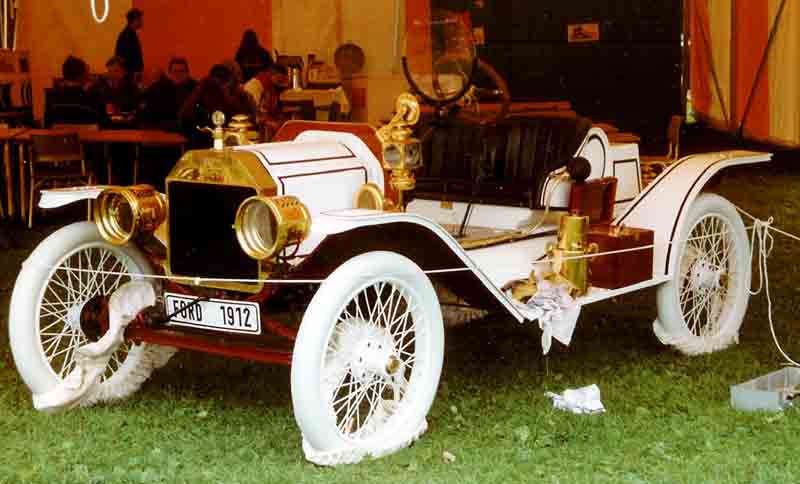
Ford Model T
"So this weekend, I did get quite a bit done on the Model T project. Leading up to the weekend, I did go ahead and rust convert a bunch of panels on the the car."
The Ford Model T is an old classic car from the early days of mass-produced automobiles. Here, the host is fixing up his Model T—especially dealing with rust and getting the right engine.
The Ford Model T is a landmark early-20th-century car that’s famous for making automobiles affordable and popular. In this segment, the host is working on a restoration-style project, including rust treatment and sourcing a period-correct engine.
rust convert
"Leading up to the weekend, I did go ahead and rust convert a bunch of panels on the the car. You'll see the driver's door is now mostly black."
Rust conversion is a chemical treatment that turns active rust into something more stable. The goal is to stop the rust from spreading so you can prime and paint the metal.
Rust conversion is a treatment process that chemically changes rust into a more stable compound so it can be primed and sealed. It’s commonly used on older steel panels to slow corrosion before painting.
black epoxy primer
"The plan is is once all the rust has been converted, is this going to have a black epoxy primer put on top of it?"
An epoxy primer is a protective coating you put on metal before painting. It helps seal the surface and resist rust, especially after you’ve treated rust first.
Epoxy primer is a corrosion-resistant primer that helps seal bare or treated metal and improves adhesion for subsequent paint. Using it after rust conversion is a common restoration approach to reduce future rust.
sandblast the body
"And I'm not going to sandblast the body because I don't want to remove any more material than I need to and also just delaying the process and and cost."
Sandblasting is an abrasive cleaning method that strips paint and rust by blasting media at the surface. The host avoids it here to prevent removing more metal than necessary and to control cost and timeline.
flathead
"The other thing we did is I don't remember if I talked about before or not, but I did pick up a new flathead for it. I got lucky and it has actually"
A flathead is an older engine style where the valves sit in the engine block. The host is getting a flathead engine for his Model T restoration project.
A flathead is an engine design where the valves are located in the engine block rather than in a cylinder head. Flathead engines are strongly associated with early hot-rodding and classic-era powertrains, and here the host is sourcing one for the Model T project.
date stamps on bearings
"[4589.9s] stamps on bearings. I did two of 65. So it was pretty cool to find that and the bearings look"
Some bearings have tiny date codes stamped on them. If you can read those codes, you can often tell when the parts were made, which helps figure out whether the engine was rebuilt and when.
Bearings can have manufacturing or inspection date codes stamped on them. Finding those date stamps helps confirm when the bearings were made and can support whether an engine/transmission was rebuilt recently or at a specific time.
gasket kit
"[4612.4s] So I did two of 65. So it was pretty cool to find that and the bearings look great. There's no scratches in them. No down the copper. So I'm pretty confident as long as the block holds water through a temperature cycle. I think I knocked it out of the park. So I did [4612.4s] buy a gasket kit went through and, you know, regasked the oil pump, regasked the timing cover,"
A gasket kit is a package of rubber/metal sealing parts. They go between engine parts to stop oil and other fluids from leaking.
A gasket kit is a set of replacement gaskets used to seal joints between engine components. Replacing gaskets during an engine rebuild helps prevent leaks at the oil pump, timing cover, oil pan, and other mating surfaces.
harmonic balancer / crank pulley
"[4627.2s] harmonic balancer slash crank pulley on started fitting up heads and stuff figured out I was 20 [4634.5s] nuts short."
The crank pulley/harmonic balancer is a part bolted to the crankshaft. Its job is to smooth out twisting vibrations so the engine and belt-driven accessories don’t wear out as quickly.
The harmonic balancer (often integrated with the crank pulley) is a vibration-damping component attached to the crankshaft. It helps reduce torsional vibration so the engine runs smoothly and doesn’t beat up belts and internal components.
torque down the heads
"[4634.5s] nuts short. So I had to order those once they arrive on the flathead. Yep. Oh boy. I'm doing [4641.4s] to ahead and torque down the heads. In preparation of that I did pull the mock up motors"
When you “torque down” the cylinder heads, you tighten the bolts to the exact tightness the manual specifies. Doing it right helps the head gasket seal and prevents leaks.
“Torque down the heads” refers to tightening the cylinder head fasteners to a specified torque value (and often in a specific sequence). Correct torque is critical for proper gasket sealing and to avoid warping or leaks.
side shift transmission
"[4648.3s] been calling it now the dirty nasty 59 a flathead that was in it out got the transmission out this [4656.7s] assemble that for those that don't know it had a mock up side shift transmission in it. [4662.9s] And I'm going to a top shift using all the guts from the side shift."
A side-shift transmission is a manual transmission where the shifter mechanism moves sideways to change gears. The speaker is saying their current setup uses that style and they’re planning a swap to a different one.
A side-shift transmission is a manual gearbox where the shift mechanism moves laterally (often via a linkage) to select gears, rather than using a top-mounted shifter. The speaker is describing a specific transmission configuration and planning to convert to a different shift layout.
swap cases
"[4671.2s] see what parts I need to rebuild the transmission and swap cases. I already have a case painted and [4677.5s] cleaned and ready to go."
“Swap cases” means swapping the housing parts of the transmission/transfer system. It’s usually needed when changing to a different transmission setup so everything fits and works together.
“Swap cases” means replacing the transmission/transfer-case housings (or related case components) to match a different configuration. In drivetrain conversions, case compatibility is often required so the shifter, internals, and mounting points all line up.
pedal bushings
"[4683.8s] boxing in the frame and looking at some brake lines and changing some pedal bushings and that [4689.9s] kind of stuff."
Pedal bushings are small parts that help the gas/brake/clutch pedals move smoothly on their pivots. If they wear out, the pedals can feel loose or noisy.
Pedal bushings are small wear items that support the brake/clutch accelerator pedal pivot points. Worn bushings can cause sloppy pedal feel, noise, or uneven movement, so replacing them can restore proper drivability.
brake lines
"[4683.8s] boxing in the frame and looking at some brake lines and changing some pedal bushings and that [4689.9s] kind of stuff."
Brake lines are the tubes that move brake fluid to the brakes. If you’re doing a big project and moving parts around, you may replace them to avoid leaks and keep braking reliable.
Brake lines are the metal or flexible tubes that carry hydraulic brake fluid from the master cylinder to the brake calipers or wheel cylinders. Replacing or rerouting them during a frame/drive-train job helps ensure safe, leak-free braking.
Aquanet
"[4723.4s] we talked about Aquanet in the comments I figured I'd share a story that recently came up [4729.3s] and conversation about spud guns and Aquanet. Okay. It's about 20 years or so ago now so I think [4736.9s] it's safe to legally talk about this."
Aquanet is a well-known hairspray brand. The host is talking about it because it was involved in a story about using hairspray in a “spud gun” prank.
Aquanet is a consumer hairspray brand that the host describes as an “explosive hairspray” from the 1980s–1990s. The episode uses it as a springboard into a story about spud guns and the product’s flammability.
Request an Explanation
Heard something you'd like explained? We'll add it to this episode.
Sign in to request explanations for terms you heard.
Want to learn more?
Browse our glossary for plain-English explanations of automotive terms, jargon, and concepts.
Help improve this episode
See something that's not quite right? Our annotations are AI-generated and can sometimes miss the mark. Click the flag icon on any annotation to suggest a correction.