
About this episode
Sweltering July heat and a canceled 4th of July Jeep parade set the stage for a deep dive into Jeep cooling systems. The hosts trade stories about heat advisories, a “heat bubble,” and even a dust-storm microburst that disrupted events. Then it gets technical: they break down how liquid cooling works on the JK/JL platforms, why thermostats matter, and how coolant flow and radiator heat exchange prevent overheating. Along the way, they connect cooling history from early engines to modern designs and tease upcoming guests and events.
The warm summer heatwave brings in a great time to talking about keeping it cool. Not your temper, but your Jeep's temperature. Join us for a tech dive on coolant systems.
Thanks for listening, give us a review and check us out on YouTube -SFJ4x4 and visit our website to grab some great gear or products for your Jeep, SFJ4x4.com. Don't forget, you can email [email protected] for special content requests, blind react videos, suggestions, special guests, or general questions. Check out our Patreon patreon.com/ISpeakJeep
heat bubble
"They called it something like a heat bubble There was some weather term as far as what was"
A “heat bubble” just means a small region that gets hotter than the surrounding areas. It’s like the weather gets “stuck” and doesn’t cool down normally.
A “heat bubble” is an informal way to describe a localized area of unusually hot weather—often caused by a persistent high-pressure system that traps warm air. In practice, it means conditions can spike much hotter than nearby regions, which can affect outdoor events and vehicle use.
asphalt temperatures
"Because of asphalt temperatures reaching Triple figures of 140 to 160 Really crazy stuff"
Asphalt temperatures are how hot the road surface gets. When it’s extremely hot, it can be unsafe for people and can also affect how tires and vehicles behave.
Asphalt temperature is the surface heat of the road, which can rise dramatically during heat waves. Extremely hot pavement can make outdoor events unsafe and can also matter for vehicles (tire grip, heat soak, and heat stress on components).
keeping your cool
"Today's topic is keeping your cool And I think there's a double entendre there For both socially and specifically in relation to our Jeeps"
The episode is about how to handle hot weather without getting miserable or running into trouble. They’re also hinting it applies to Jeeps specifically, not just people.
This is the episode’s central theme: staying comfortable and safe during extreme heat, with a double meaning that also ties into how Jeep owners should think about heat management. It sets up a discussion likely aimed at practical steps for people and their vehicles during hot weather.
cooling system
"On how your cooling system works And we're going to focus on the most relevant platforms"
Your cooling system is what stops the engine from getting too hot. It circulates a liquid (coolant) through the engine and radiator so heat can be carried away.
A vehicle’s cooling system keeps the engine from overheating by moving coolant through the engine and heat exchangers. It relies on components like the radiator, hoses, and pump to control temperature under load.

JK
"And we're going to focus on the most relevant platforms Of the JK and the JL"
“JK” is the name Jeep enthusiasts use for a specific Wrangler generation (roughly 2007–2018). The cooling setup can vary between Wrangler generations, so it matters which one you have.
“JK” refers to the Jeep Wrangler generation commonly called the JK (2007–2018). It’s a key platform for Jeep owners because many cooling-system layouts, radiator designs, and common service approaches differ by generation.
radiator coolant antifreeze flow system
"Of the actual radiator coolant antifreeze flow system And break it down so that it is potentially more tangible"
This is the route your coolant takes—mixing antifreeze with coolant and flowing it through the radiator and engine. It helps the car stay at the right temperature and protects against freezing.
This refers to the coolant circulation path that includes antifreeze-containing coolant flowing through the radiator and related passages. The goal is to maintain proper heat transfer and prevent freezing or overheating across different operating conditions.

Jeep Gladiator
"Daddy Jeep said Good Morning Mudhorn Gladiator says Good Morning Jeanne says Good Morning to all"
The Jeep Gladiator is a Jeep that also has a truck bed, so it can carry things like a pickup. It’s built to handle dirt roads and rough ground better than many regular trucks. That’s why it shows up in off-road conversations.
The Jeep Gladiator is a midsize pickup truck built by Jeep, combining the brand’s off-road capability with a real truck bed for hauling and carrying. It often comes up in Jeep-focused conversations because it’s designed to go beyond pavement while still being useful day-to-day. In a “mud” or off-road themed segment, it’s a natural topic since it’s meant to handle rough terrain.
water cooling
"Is to talk about water cooling in general I kind of want to..."
Water cooling means the engine uses a liquid coolant to carry heat away. The coolant moves through the engine, then goes to a radiator where air helps cool it back down.
Water cooling (liquid cooling) uses coolant circulated through passages in the engine to absorb heat. The hot coolant then flows to a radiator where airflow helps dump that heat to the outside air.
VW
"I think VW is still air cooled in the 80s Not here-ish"
VW is Volkswagen. The host is pointing out that Volkswagen kept using air-cooled engines longer than some other brands.
VW (Volkswagen) is referenced here in the context of air-cooled engine history. Volkswagen is well known for using air-cooled designs for many years, especially in earlier rear-engine models.
air cooled engines
"Air cooled engines Have always been a thing"
An air-cooled engine doesn’t use coolant to carry heat away. Instead, it uses metal fins and moving air to cool the engine down.
An air-cooled engine relies on airflow over fins and the engine’s external surfaces to remove heat, instead of using a liquid coolant loop. Because it depends heavily on airflow, air cooling is common in applications where airflow is naturally available or packaging favors it.
water cooled
"And then I remember when ATVs came out with water cooled [810.6s] And motorcycles"
“Water cooled” means the engine uses a liquid (coolant) to pull heat away. The hot coolant goes to a radiator, and air helps cool it back down.
“Water cooled” refers to a liquid cooling system where engine heat is carried by coolant (water or a water/antifreeze mix) through passages in the engine. That heat is then transferred to the radiator, where airflow helps it dissipate.
thermostat
"Obviously we do have a thermostat [835.0s] In our earlier flat heads [838.2s] That is to hold the water in the block"
A thermostat is like a heat-controlled gate for coolant. When the engine is cold it helps it warm up, and when it’s hot it opens so coolant can go to the radiator to cool down.
A thermostat is a temperature-controlled valve in a liquid cooling system that regulates coolant flow. It stays more closed when the engine is cold to help the engine reach operating temperature, and it opens to allow coolant to circulate through the radiator once the engine is hot enough.
thermal change
"And end the radiator so fast [863.8s] That it cannot do that thermal change [867.5s] Which is why some race cars"
“Thermal change” just means temperature change. The idea is that if coolant moves through too fast, it doesn’t have enough time to cool down in the radiator.
“Thermal change” refers to the temperature difference the cooling system creates—how much the coolant temperature drops as it passes through the radiator. The speaker’s point is that without a thermostat, coolant can circulate too quickly to exchange enough heat.
internal exhaust
"You have more internal exhaust [890.6s] Jacketing compared to other vehicles"
“Internal exhaust” means the exhaust gases go through the engine’s interior before they reach the exhaust pipes. That can make the engine run hotter because the heat stays inside longer.
Internal exhaust means the exhaust gases are routed through the engine block itself rather than exiting immediately after combustion. In a flathead layout, this keeps exhaust heat “inside” longer, which can increase thermal stress and heat soak.
jacketing
"You have more internal exhaust [890.6s] Jacketing compared to other vehicles [894.8s] Which is what that means"
“Jacketing” is about the engine’s cast-in structure around hot areas that helps manage heat. In this context, it’s describing how the exhaust stays in contact with the engine longer, affecting temperatures.
Jacketing refers to the engine’s surrounding cast passages/structure that manage heat transfer—often discussed alongside cooling passages (“water jacket”). Here it’s used to describe how the flathead’s internal exhaust path stays in contact with the engine’s cast structure longer than on newer engines.
exhaust manifold
"Is that in order for the exhaust gases [898.7s] To go from the valves to the manifold [901.7s] It has to travel through the block"
The exhaust manifold is the part that gathers exhaust gases from the engine and routes them into the exhaust system. Think of it like the engine’s exhaust “collector.”
An exhaust manifold is the cast or fabricated part that collects exhaust gases from the engine’s exhaust ports and directs them into the exhaust system. The speaker’s point is that, on flathead designs, gases must travel through the block before reaching this manifold.
combustion
"Whereas our more modern engines [908.6s] That exhaust basically the combustion [910.7s] Happens and the exhaust immediately exits"
Combustion is when the fuel and air burn inside the engine to make power. The speaker is saying newer engines let the exhaust leave faster after that burning happens.
Combustion is the process where the air-fuel mixture burns in the cylinder to produce power. The speaker contrasts older flathead behavior (exhaust stays in the block longer) with more modern engines where exhaust exits more quickly after combustion.
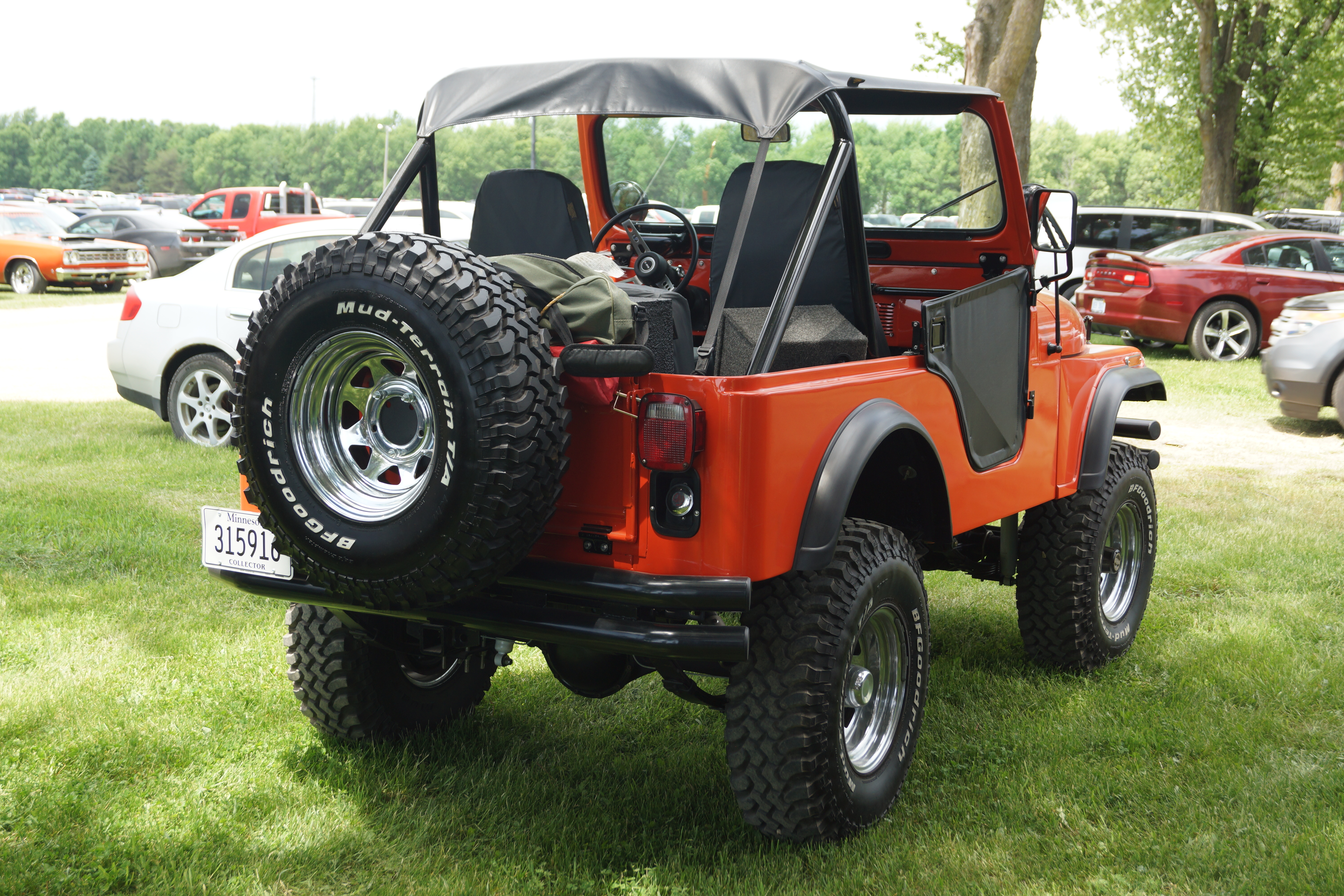
Jeep M38
"..., really soon And we even have seen that with our M38 project Even though it was supposed to be engine ..."
The Jeep CJ is an older Jeep model that’s built for off-road use and tough conditions. People often talk about it when they’re restoring or working on classic Jeeps. If the episode mentions an engine, it’s probably about fixing or rebuilding the mechanical parts.
The Jeep CJ is a classic Jeep model line known for its simple, rugged design and strong off-road heritage. In a podcast that mentions projects like an M38, it’s likely being discussed as part of the broader CJ/M-series family of military-influenced and utility-focused Jeeps. The “engine” reference suggests the conversation is touching on restoration or mechanical work on these older platforms.
exhaust temperatures
"To say that exhaust temperatures When I was monitoring the exhaust temperatures in the M38"
Exhaust temperatures are how hot the engine’s exhaust gets. If they’re extremely high, it can damage or discolor parts near the exhaust, like the manifold.
Exhaust temperatures are how hot the engine’s exhaust gases get as they leave the cylinders. They’re important because very high exhaust heat can stress components like the exhaust manifold and can accelerate heat-related wear or paint/finish failure.
manifold temperature
"That manifold temperature was in excess of four to Not quite 500 degrees at the manifold Right?"
Manifold temperature is how hot the exhaust manifold gets. Since it sits right by the engine’s exhaust ports, it’s a good sign of how much heat the engine is producing.
Manifold temperature is the heat level at the exhaust manifold, where exhaust gases collect before flowing through the rest of the exhaust system. Because the manifold is directly exposed to combustion heat, its temperature is a key indicator of how hard the engine is working and how well heat is being managed.
high temp paint
"And you had talked about aging the paint On the high temp paint on the manifold"
High temp paint is special paint made to survive very high heat. It’s often used on exhaust parts so they don’t discolor or rust as fast.
High temp paint is a heat-resistant coating applied to components like exhaust manifolds to help protect the surface from discoloration and corrosion. It’s used because exhaust manifolds can reach temperatures that would quickly burn off or degrade normal paint.
non-pressurized
"And also, those early cooling systems First they were non-pressurized Then we went to a very low pressure"
Non-pressurized cooling means the coolant isn’t under extra pressure. Without that pressure, it can start boiling at lower temperatures, which can limit how well the engine stays cool.
A non-pressurized cooling system means the coolant is not kept under pressure, so it has a lower boiling margin at a given temperature. That affects how hot the engine can run before coolant begins to boil, which in turn influences overall temperature control.
four to seven PSI
"Then we went to a very low pressure It was common for four to seven PSI"
“Four to seven PSI” is how much pressure the cooling system runs at. More pressure helps the coolant resist boiling when the engine gets hot.
“Four to seven PSI” refers to the coolant system pressure range the host says was common in early designs. Even relatively low pressure increases the coolant’s boiling point, helping the engine tolerate higher temperatures without boiling.
boiling point
"The more pressure you have, the more [1127.7s] Your boiling point is raised [1129.7s] So, and we're not talking like you can just go throw"
Boiling point is the temperature where a liquid starts turning into gas. In a car’s cooling system, higher pressure helps the coolant stay liquid at higher temperatures, reducing overheating.
In an engine’s cooling context, the boiling point refers to the temperature at which the coolant would start turning into vapor. Increasing system pressure raises the coolant’s boiling point, helping prevent overheating and vapor lock.
Chevy 350
"You had an individual who, you know Could work on the Chevy 350 And they pulled the thermostat out"
“Chevy 350” is a very common V8 engine from Chevrolet. People often modify it, including changing how the engine controls temperature.
“Chevy 350” usually refers to the Chevrolet small-block V8 displacement of 350 cubic inches (5.7L). It’s a common engine swap and hot-rod platform, so cooling-system tweaks like thermostat changes show up a lot in real-world Jeep/GM-era discussions.
two-core
"And there was lots of conversations about [1224.2s] Two-core, you know, and three-core radiators [1227.2s] Well, and it's important to note"
A “two-core” radiator has two cooling sections inside it. More radiator core area can help the car shed heat better.
A “two-core” radiator has two rows (cores) of cooling passages, which affects how much heat it can reject. More core area generally helps cooling capacity, especially in higher-load conditions.
three-core radiators
"And there was lots of conversations about [1224.2s] Two-core, you know, and three-core radiators [1227.2s] Well, and it's important to note"
A “three-core” radiator has an extra cooling section compared to a two-core radiator. That extra capacity can help keep engine temperatures down.
“Three-core radiators” have three rows (cores) of cooling passages, increasing the radiator’s surface area for heat transfer. That can improve cooling performance compared with two-core designs, particularly when towing or running hotter setups.
heat soak
"It would just... [1243.9s] Heat soak [1244.3s] It would turn into this chain reaction Of overheating"
Heat soak means the engine and nearby parts keep getting hot and don’t cool down fast enough. That can cause the engine temperature to keep rising until it overheats.
Heat soak is when heat continues to build in engine components and surrounding metal even after airflow or coolant control isn’t keeping up. With a cooling system that’s been altered (like removing a thermostat), heat soak can lead to sustained high temperatures and then overheating.
engine bays were bigger
"And I think there was a thing to say [1252.3s] That engine bays were bigger [1253.5s] Yes [1254.2s] Right? [1254.7s] That engine bays were not as compact"
Where the engine sits matters for cooling. If the engine bay is more spacious, air can move around better and the radiator can work more effectively.
The size and packaging of an engine bay affects airflow, radiator placement, and how effectively heat can be removed. A less compact bay can make cooling easier because there’s more room for airflow paths and radiator effectiveness.
thermal conductivity
"Radiators were made out of material [1262.3s] That had better thermal conductivity"
Thermal conductivity means how good a material is at moving heat. If the radiator material transfers heat better, the engine can stay cooler.
Thermal conductivity is how easily a material transfers heat. In a radiator, higher thermal conductivity helps move engine heat into the airflow faster, improving cooling performance.
water flow
"There were some common things to say [1297.5s] Hey, I want this engine to run cooler [1301.1s] So I'm going to not restrict its water flow"
“Water flow” here means how well the coolant circulates through the engine and radiator. If it doesn’t circulate enough, the engine can’t get rid of heat as effectively.
In older cooling-system talk, “water flow” usually means coolant circulation through the engine and radiator. Restricting flow can reduce heat transfer, while allowing more flow can help the engine run cooler.
radiator cap
"And maybe change the pressure on the cap [1310.2s] For that boiling point"
The radiator cap controls pressure in the cooling system. More pressure helps the coolant boil at a higher temperature, so the engine can run cooler without overheating.
The radiator cap controls system pressure, which raises the coolant’s boiling point. Higher pressure means the coolant can run hotter without boiling, improving cooling stability under load.
copper radiators
"With copper radiators Because the copper is a weaker material"
A copper radiator is a car cooling part that uses copper to move heat out of the engine. Older cars often used copper because it handles heat well, but it can require a bigger radiator to do the same job compared with newer materials.
A copper radiator uses copper for the heat-exchanging core and tubes. Copper was common in older cooling systems because it can transfer heat well, but it’s also heavier and can be less efficient at packaging the same cooling capacity into a smaller core.
radiator core
"They had smaller core tubes Which meant they had to add more of them To have the same amount of cooling"
The radiator core is the radiator’s main inside part where the coolant actually goes. Its design—like how many rows it has and how big the tubes are—controls how well it can cool the engine.
The radiator core is the internal heat-exchange section of the radiator where coolant flows through small tubes and transfers heat to the air. Core design details like tube size and the number of rows affect how much coolant can flow and how effectively the radiator can cool the engine.
aluminum radiator
"Where when we move to an aluminum radiator The aluminum is actually a stronger material Allows you to have a larger tube in the core"
An aluminum radiator is a car cooling part made from aluminum. Because aluminum is lighter and can be built more efficiently, it often cools better with a smaller or simpler radiator design than older copper setups.
An aluminum radiator uses aluminum in the core and tubes to shed engine heat. Aluminum is lighter and typically allows a larger internal tube size and higher coolant flow, which can improve cooling efficiency and reduce the number of core rows needed for a given heat load.
pressure test
"They'd pressure test They would braise"
A pressure test is how you check a radiator for leaks. They pressurize it and see if it loses pressure, which tells them where the problem might be.
A pressure test checks a radiator’s cooling system for leaks by pressurizing it and monitoring whether pressure drops. It’s a common diagnostic step before deciding whether a radiator needs repair, re-brazing, or replacement.
braise
"They would braise They would repair"
Brazing is a repair method that uses heat plus a special filler metal to seal or join metal parts. Radiator shops use it to fix leaks in the radiator’s metal sections.
Brazing is a metal-joining process that uses heat and a filler material to bond parts together. For radiators, brazing is often used to repair leaks or reattach components in the core and end tanks.
older systems
"That's because you needed that With those older systems You had to constantly maintain them"
By “older systems,” they mean older cooling setups that weren’t as maintenance-free. The idea is that older radiators and cooling parts often needed more regular attention to stay working well.
The phrase “older systems” here refers to earlier-generation cooling setups that required more frequent upkeep. The speaker’s point is that older radiator materials and designs tended to need constant maintenance to keep them performing reliably.
aluminum slash plastic composite radiators
"Where honestly now that we have Our aluminum slash plastic composite radiators People expect 100,000 miles"
This is a radiator made from two materials: aluminum and plastic. The aluminum helps with heat transfer, while the plastic is often used for the end sections. It’s popular because it can be lighter and cheaper, but it may not last as long as an all-metal radiator.
An aluminum/plastic composite radiator uses aluminum for the core and plastic for parts of the end tanks. This mix is common because it can reduce weight and cost, but it can also affect long-term durability compared with all-metal radiators.
pressure venting cap
"Which is a pressure venting cap So there's actually a little metal tab inside"
This type of cap releases pressure when things get too hot or too pressurized. That protects the cooling system from being damaged by excessive pressure.
A pressure venting cap is designed to release pressure when it exceeds a set threshold. It vents coolant/steam to prevent damage from overpressure, then the system can recover coolant as it cools.
heat sensitive valve
"That has a heat sensitive valve It's all mechanical"
This is a valve inside the cap that responds to heat. When the engine is hot and pressure rises, it helps the cap open in a controlled way to protect the system.
A heat-sensitive valve in the radiator cap assembly changes behavior based on temperature. In practice, it helps the cap open/close in response to heat and pressure conditions so the system can vent safely.
gasketed stopper
"And it opens and closes a gasketed stopper"
Inside the cap there’s a sealed plug with a rubber-like gasket. It keeps pressure from leaking out, but it can open when the cap needs to vent.
A gasketed stopper is the sealed plug in the radiator cap that prevents coolant/steam from escaping under normal pressure. When the cap’s valve opens, the stopper moves to allow venting.
expanded pressure
"As it opens, it allows expanded pressure From the fluid to vent out"
As coolant heats up, it expands and creates extra pressure. The cooling system is built to handle that pressure safely.
Expanded pressure refers to the increased pressure created as coolant heats up and expands. The radiator cap and cooling system are designed to handle this pressure rise without leaking or bursting.
expansion room
"And that meant that your radiator Had to have a expansion room inside them"
As coolant heats up, it expands. The system needs some empty space so it has room to expand without pushing fluid out.
“Expansion room” refers to the required empty volume in a radiator or coolant reservoir to accommodate coolant expansion as it heats up. Without that headspace, pressure and volume increase will force coolant out through vents/overflow.
catch can
"Where pretty much anything made in our lifetime Has had a catch can or an overflow"
A catch can is a little container that catches overflow or vented fluid so it doesn’t spill everywhere. It keeps the engine bay and ground cleaner.
A catch can is a small reservoir used in some cooling/venting setups to collect overflow or vented coolant/condensate instead of letting it vent directly to the engine bay or road. It helps keep fluids contained and can reduce mess and corrosion from repeated “puking.”
overflow
"Has had a catch can or an overflow It is actually not uncommon for an older radiator"
Overflow is the part of the cooling system that handles extra coolant when it expands. Instead of spilling out unpredictably, it’s designed to go somewhere controlled.
An overflow system routes excess coolant/pressure to a controlled container or outlet rather than venting randomly. In older cooling designs, this is often why you’ll see coolant not filled to the top of the radiator—there needs to be space for expansion and overflow.
ambiently vents
"Because if you take a vintage radiator That ambiently vents and it's filled to the top"
“Ambiently vents” means it releases pressure straight into the open air. Older systems do this instead of sending overflow back into a recovery tank, so you can’t fill them all the way to the top.
“Ambiently vents” means the cooling system releases pressure/steam/coolant directly to the surrounding air rather than into a pressurized recovery system. Older designs that vent this way require different fill levels because the radiator must have space to expand without immediately overflowing.
puke out
"It is going to puke out onto the surface Of your parking lot immediately after use"
They mean the coolant gets pushed out of the system and spills onto the ground. It usually happens when the radiator is filled too full for how the older system vents.
In this context, “puke out” is slang for coolant being expelled from the cooling system due to excess pressure/expansion. It’s describing the visible overflow behavior that happens when an older radiator is filled too high and vents to atmosphere.
cool factor
"Understand it's not exactly supposed to work that way There is a cool factor to it But that's not how that system was originally designed"
They’re saying some people add parts mainly because it looks cool, not because it’s the best or intended way for the engine to work. The host thinks the original design purpose was different.
“Cool factor” here is the idea that some modifications are done for appearance or vibe rather than because they match the original engineering intent. The speaker argues that certain catch-can setups seen on vintage builds (like bottle-style catch cans) aren’t how the system was originally designed to function.
vintage radiator system
"My dad had a vintage radiator system on a 48 car That he tried putting an overflow on"
They mean an older-style engine cooling setup with a radiator and older plumbing. The key idea is that older cooling systems weren’t designed with today’s aftermarket add-ons in mind.
A vintage radiator system refers to an older-style engine cooling setup, typically using a radiator with simpler plumbing and pressure management than modern closed systems. The speaker contrasts how a vintage system behaves versus a “modern day” approach when adding components like overflow or catch cans.
flapper
"It won't whistle It won't pop the flapper 1576.0s It won't do any of that kind of stuff As soon as you subject that same teapot ...Eventually you get the whistling effect As the steam pushes past the seal And creates the whistle Or the flapper, you know Flaps or does whatever"
Here, “flapper” is the host’s playful way of describing a valve or seal area where steam can escape and make a noise. The idea is that when steam gets through a small gap, it can whistle or flutter.
In this segment, “flapper” is used as a technical-sounding nickname for a valve/seal behavior that creates a whistle when steam escapes. The host is describing how pressure and steam flow past a restriction can produce an audible “flapping” or fluttering effect.
coolant system
"And I absolutely can identify which part That is in a radiator system [1619.4s] Coolant system"
The coolant system is how a car moves liquid to keep the engine from overheating. The liquid absorbs heat and then sends it to the radiator to cool down before it goes back again.
The coolant system is the network of parts that circulates coolant through the engine and radiator to remove heat. It keeps engine temperatures in a safe range by moving heat from hot areas to the radiator, where it can be released to the air.
radiator hoses
"So additionally we have our radiator hoses [1625.4s] Which some of you may note over the years [1630.8s] Have had wire inserts to them"
Radiator hoses are the rubber tubes that move coolant between the engine and the radiator. If they kink or collapse, coolant can’t flow properly and the engine can overheat.
Radiator hoses are the flexible tubes that carry coolant between the engine and the radiator. They’re shaped and reinforced to prevent kinks and collapse, which would restrict coolant flow and can lead to overheating.
wire inserts
"Have had wire inserts to them [1632.9s] Some hoses do, some hoses don't [1636.7s] Some will be sheathed, some are not"
Some radiator hoses have a wire reinforcement inside. That helps the hose keep its shape so it doesn’t collapse and block coolant from flowing.
Wire inserts are reinforcement pieces built into some radiator hoses to prevent the hose from collapsing under suction. When coolant flow design creates strong negative pressure, a plain hose can pinch shut, reducing coolant flow.
sheathed
"Some will be sheathed, some are not [1639.2s] They are almost always molded by today's standards"
A sheathed hose has an extra outer cover for protection. It helps the hose last longer by shielding it from heat and wear.
When a radiator hose is described as sheathed, it means it has an outer protective covering. That sheath can help protect the hose from heat, abrasion, and environmental damage, improving durability.
suction
"Can actually have such suction [1678.4s] It can collapse the hose onto itself"
Here, suction means the cooling system can create a kind of pulling force. If it’s strong enough, it can make a rubber hose collapse and block coolant from moving.
In this context, suction refers to negative pressure created by the pump and coolant flow path. That suction can pull a flexible radiator hose inward, causing it to collapse and restrict coolant flow.
worm gear hose clamp
"Because of our lower pressure systems Back in the day A worm gear hose clamp was plenty For those systems"
This is a clamp that squeezes a rubber hose using a screw mechanism. It was often used on older cars because the pressure inside the system wasn’t as high, so it could seal reliably.
A worm gear hose clamp is a type of band clamp tightened with a screw (a “worm gear”) that compresses a hose against a fitting. It was commonly used on older cooling and vacuum hose setups because it could be tightened enough to seal under lower system pressures.
spring tension clamp
"Where now we have a spring tension clamp Is what it's called Basically it constantly is Trying to close that hose"
This clamp uses a spring so it keeps squeezing the hose even as things heat up and cool down. That helps prevent leaks when the system pressure is higher.
A spring tension clamp is a hose clamp that uses a spring to maintain clamping force as the hose and fitting expand, contract, or relax over time. The host ties its use to higher cooling-system pressures, where a clamp that constantly “tries to close” helps maintain a seal.
worm gear clamps
"Is that worm gear clamps Is your traditional one size fits most clamp"
A worm gear clamp is a type of hose clamp that tightens with a screw. When the engine heats up and then cools down, the hose and clamp can expand and contract, which can affect how tight it stays.
Worm gear clamps are hose clamps that use a screw (worm gear) to tighten a band around a hose. The helical screw turns to pull the band tighter, and the clamp’s grip can change as the hose and clamp heat up and cool down.
helical gear
"It has a helical gear in there It grabs the teeth"
A helical gear is a screw-style gear that turns in a way that pulls things tighter. In a clamp, that screw action is what squeezes the hose band around the hose.
A helical gear is a screw-like gear with angled teeth that meshes smoothly as it rotates. In a worm gear clamp, the helical (screw) action converts turning force into tightening force on the clamp band.
thermodynamic properties
"That same clamp is still subject To thermodynamic properties"
Thermodynamic properties are basically how heat affects materials. When things get hot and then cool down, they can expand and shrink, which can make a clamp loosen a little.
Thermodynamic properties describe how materials behave with heat—especially how they expand when hot and contract when cool. Even if a clamp is tightened correctly, heat cycling can change the clamping force over time.
heat cycles
"So as that unit heat cycles A natural expansion will happen"
Heat cycles are the repeated process of the engine warming up and then cooling down. That temperature change can cause the hose and clamp to shift slightly, which can affect tightness.
Heat cycles are repeated rounds of heating up and cooling down during normal operation. Hose clamps and hoses can loosen or tighten slightly across cycles because the materials expand and contract at different rates.
OE manufacturer's hood
"And the challenge with spring tension clamps And if you open up any OE manufacturer's hood You are going to find ample amount"
“OE” means the factory-installed parts that came on the vehicle when it was built. The host is basically saying: if you look at how the car is put together from the factory, you’ll see certain clamp types more often than others.
“OE” stands for original equipment, meaning parts installed by the vehicle manufacturer. When the host says “OE manufacturer’s hood,” they mean looking at how the car is assembled from the factory. The point is that factory systems often use specific clamp designs rather than generic ones.
worm gears
"You're not going to find worm gears Under the hood of a manufactured vehicle And those spring tension clamps"
Worm gears are the “screw clamp” style mechanism used on common hose clamps. When you turn the screw, it tightens the clamp band around the hose. The host is saying you may not see this style on some factory-installed setups.
Worm gears are the screw-and-gear mechanism used in many traditional worm-drive hose clamps. Turning the screw tightens the band to clamp the hose. The host uses this as a comparison point to explain why some factory (OE) systems prefer spring-tension clamps instead.
proprietary
"And those spring tension clamps Are factually kind of proprietary To the system they're being used on"
“Proprietary” here means the part is made to fit a specific system and isn’t easily interchangeable with generic alternatives. That can make DIY repairs more annoying and more expensive. The host is warning that you may need the exact matching clamp.
In this context, “proprietary” means the clamp design is closely tied to a specific vehicle system and may not be a generic, cross-compatible part. That can make it harder for DIYers to identify the correct clamp and source it at reasonable cost. The host links this to engineering choices like spring rate and material selection.
spring rate
"An engineer has specified the spring rate The steel and a manufacturer Has made them very, very specifically"
Spring rate is how stiff the spring is—how strongly it pushes when it’s compressed. For a hose clamp, that stiffness matters because it controls how tightly the clamp squeezes the hose. The host is saying the factory engineers pick the spring stiffness for the exact application.
Spring rate is the stiffness of a spring, typically expressed as how much force it produces per unit of deflection. In clamp design, specifying the spring rate helps ensure the clamp applies the intended clamping force across the hose. The host ties this to why these clamps can be system-specific and expensive.
greaseable U-joints
"It's when we thought that greaseable U-joints Were better than sealed units"
A U-joint is a joint that lets a driveshaft keep turning even as the suspension moves. “Greaseable” U-joints have a way to add grease, so people thought they’d last longer than sealed ones.
U-joints (universal joints) connect rotating driveshaft sections and allow movement through suspension travel. “Greaseable” U-joints have fittings so you can periodically lubricate them, which used to be viewed as better than sealed designs.
sealed units
"It's when we thought that greaseable U-joints Were better than sealed units"
Sealed U-joints are U-joints that are sealed up from the factory. Instead of adding grease, they rely on the grease already inside until they wear out.
Sealed U-joints are built with internal lubrication and seals, so they’re not meant to be serviced with grease. Enthusiasts often compare them to greaseable joints because maintenance intervals and wear patterns can differ.
spring steel
"Now just like any type of spring steel Eventually it can weaken with enough"
Spring steel is a special strong metal that can bend and spring back many times. It’s used in parts that need to stay resilient under repeated stress.
Spring steel is a high-strength steel alloy designed to flex and return to shape repeatedly. In automotive use, it’s common in components like springs and clamps where fatigue resistance matters.
mechanical fan
"It's kind of like a mechanical fan That has a clutch system on it"
A mechanical fan is a cooling fan that’s powered by the engine. It helps pull air through the radiator to keep the engine from overheating.
A mechanical fan is driven directly by the engine (often via a belt) to move air through the radiator. The speaker’s comparison suggests the “spring” behavior they’re discussing is similar to how fan control components wear or weaken over time.
clutch system
"It's kind of like a mechanical fan That has a clutch system on it"
A clutch system controls when the fan “locks in” and spins with the engine. If it wears out, the fan may not engage the way it should for cooling.
A clutch system in a fan setup controls when the fan engages and how strongly it’s driven. This matters because fan clutches can wear out or behave differently over time, affecting cooling performance.
replacement spring tension hose clamps
"the aftermarket Hasn't stepped up to supply Replacement spring tension hose clamps"
These are clamps that use a spring to squeeze a hose tight. If the spring loses strength, the clamp can let the hose connection loosen or leak.
Spring tension hose clamps use a spring mechanism to maintain clamping force on a hose connection. If the spring weakens, the clamp may not hold pressure reliably, which is why replacement parts matter.
serpentine belt
"The design of the impeller ... And how the serpentine belt spins it"
The serpentine belt is a long belt that powers multiple engine accessories. It helps drive the water pump, which is why belt condition can affect cooling.
A serpentine belt is the single, multi-rib belt that drives several engine accessories at once, commonly including the water pump. Its rotation speed influences how fast the pump’s impeller spins.
serpentine systems
"And speaking of with serpentine systems [2030.0s] If it's on the smooth side of the belt"
A serpentine belt is one continuous belt that runs around several pulleys in the engine. It helps spin important accessories like the alternator and water pump.
A serpentine belt system uses one long, multi-rib belt that routes around several pulleys (like the alternator, power steering pump, and water pump). It’s called “serpentine” because the belt snakes through the engine bay to drive multiple accessories efficiently.
reverse rotation
"If it's on the smooth side of the belt [2031.7s] Is reverse rotation [2033.3s] If it's on the ribbed side"
Reverse rotation means something is spinning the opposite way than normal. On some cooling setups, that can change how well the system moves air or coolant.
Reverse rotation means the driven component (often a fan or pump) spins in the opposite direction from the usual rotation. In belt-driven systems, this can happen depending on belt routing and pulley orientation, and it can affect cooling and accessory operation.
V-belt situation
"If it's on the ribbed side [2035.3s] Or on a V-belt situation [2037.2s] It is standard rotation"
A V-belt is a belt that sits in grooves shaped like a “V.” It’s a different belt style than the single-routed serpentine belt.
A V-belt is a belt with a V-shaped cross-section that runs in matching grooves on pulleys. Compared with a serpentine belt, V-belt setups are typically used in older designs or for specific accessory drives.
standard rotation
"Or on a V-belt situation [2037.2s] It is standard rotation [2039.1s] Basically clockwise or anti-clockwise"
Standard rotation is the normal direction of spin for the belt-driven accessory. The host is linking it to belt/pulley design (smooth vs ribbed belt sides) to determine whether the system is set up to run clockwise/anti-clockwise as intended.
standard flow
"And also we can have a standard flow [2056.4s] And reverse flow [2058.2s] Which is basically where is the thermostat at"
Standard flow is the normal way coolant is supposed to circulate through the engine. The podcast is comparing it to reverse flow, where coolant moves the other way.
Standard flow is the intended coolant circulation direction for a given engine’s cooling plumbing. The host contrasts it with reverse flow, implying that some vehicle designs can be configured to run coolant in either direction depending on thermostat and routing.
reverse flow
"And also we can have a standard flow [2056.4s] And reverse flow [2058.2s] Which is basically where is the thermostat at"
Reverse flow means the coolant is moving through the engine in the opposite direction from the usual setup. That can affect how the engine heats up and how cooling works.
Reverse flow describes a coolant circulation pattern where the coolant moves through the system in the opposite direction compared with the “standard” plumbing flow. This can matter for how effectively the engine warms up and how consistently heat is removed.
water pump
"In the water pump We usually have ceramic And springs to seal"
The water pump is what moves the coolant around the engine so it doesn’t overheat. It’s usually powered by a belt and helps keep the engine at the right temperature.
A water pump is the component that circulates coolant through the engine to remove heat. In a typical setup, it’s driven by a pulley/belt and moves coolant through the engine and radiator loop.
ceramic
"We usually have ceramic And springs to seal"
Ceramic can be used in the water pump’s sealing surfaces because it’s very hard. That hardness helps the seal last longer and stay tight.
In many water pumps, ceramic is used in the seal faces because it’s hard and resists wear. That helps the seal maintain a tight barrier between the coolant and the outside environment.
springs to seal
"And springs to seal The impeller shaft"
The springs help hold the seal surfaces together. That way, even with heat and vibration, the water pump is less likely to leak.
The seal springs provide the clamping force that keeps the seal faces pressed together. That pressure is important because the shaft moves and the pump sees heat and pressure changes.
impeller shaft
"The impeller shaft From the ambient outside"
Inside the water pump, the impeller shaft is the spinning part that turns the pump’s blades. Those spinning blades push coolant through the engine to keep it cool.
The impeller shaft is the rotating shaft inside the water pump that drives the impeller. As it spins, it transfers energy to the coolant so the pump can move fluid through the cooling system.
pulley
"So that it can be driven by a pulley And back in the day"
A pulley is the part the belt wraps around. As the engine runs, the belt turns the pulley, which turns the water pump.
A pulley is the wheel that a belt runs over to transmit rotational power to the water pump. When the engine turns, the belt spins the pulley, which spins the pump.
vintage car side
"And we have seen on the vintage car side Some water pump improvements"
They’re talking about older cars, where the original cooling parts may not be as robust. The goal is usually to make upgrades that help the old design work better today.
“Vintage car side” refers to older vehicle applications where parts and designs may differ from modern cooling components. Improvements often aim to address known weaknesses or update materials/engineering for reliability.
restriction
"Well they did it in systems [2158.7s] That did not have enough restriction [2162.6s] So it never had time"
Restriction is basically how “hard it is” for coolant to flow through the cooling passages. If there’s too little restriction, coolant can rush through and not cool down enough.
In a cooling system, “restriction” refers to how much resistance the coolant encounters as it flows through passages and the radiator. The speaker’s point is that if a system has too little restriction, coolant can move too quickly and not spend enough time transferring heat.
drag strip
"The only time you know in a high flow [2171.1s] Water pump is when you're going to [2175.3s] Make tons of passes on the drag strip"
A drag strip is where cars do short, intense acceleration runs. After several runs, the engine needs time between passes to cool off.
A drag strip is a straight-line racing track where cars make repeated high-load runs. The speaker uses it to explain a real-world cooling scenario: after making multiple passes, the car needs time between runs to cool down.
RPMs
"That when we would get the RPMs up Automatically the temperature of the vehicle Would come down"
RPMs tell you how fast the engine is spinning. When RPM goes up, the engine makes more heat, so the cooling system has to keep up.
RPMs (revolutions per minute) describe how fast the engine crankshaft is spinning. Cooling behavior often changes with RPM because heat generation and coolant circulation conditions shift as you rev.
mechanically temperature controlled
"Temperature is all done mechanically By, you know, you set it and forget it Theoretically"
This means the thermostat works without electronics. Instead, temperature changes physically move parts inside the thermostat to open or close coolant flow.
“Mechanically temperature controlled” describes cooling-system control that relies on physical expansion and contraction rather than electronics. In older thermostat designs, temperature changes directly move a valve through a spring/heat-sensitive element.
shock absorber
"You also will see a bunch of plates It almost reminds you what should be in the shock absorber That has to expand and shut Again, that's a type of spring"
A shock absorber is part of the suspension that helps control bouncing. In this segment, it’s mentioned mainly as a comparison to how a spring-like mechanism moves.
A shock absorber is a suspension component that damps spring motion to keep the tires in contact with the road. The speaker is using it as an analogy for a spring-like mechanism that expands and closes.
thermal bulb
"Everything pretty much standard today Is you're going to have a spring with a thermal bulb In the center And it will suck down and open"
The thermal bulb is the part inside the thermostat that “feels” temperature. When it gets hot, it expands and pushes the valve open; when it cools, it shrinks and lets the valve close again.
A thermal bulb is the heat-sensitive element inside many modern thermostats. As it warms, the bulb expands and moves the thermostat valve to open coolant flow; as it cools, it contracts and closes.
jiggle pin
"With a little jiggle ball Another Scott term Jiggle pin Jiggle pin"
A jiggle pin is a small part on some thermostats that helps coolant start moving smoothly. It helps reduce trapped air so the engine can cool properly right after warm-up.
A jiggle pin (often on certain thermostat designs) is a small feature that helps prevent air pockets and improves initial coolant flow. It acts like a controlled bypass so the system can purge trapped air as the thermostat begins to open.
backflow
"It's like a one-way valve It's not allowing it to backflow That is one downfall of drilling the hole"
Backflow means fluid tries to flow the opposite way. Here, the goal is to keep coolant moving the right way so the cooling system works correctly.
Backflow is when coolant moves in the wrong direction or reverses flow through a component. In this context, the jiggle-pin/bypass idea is meant to reduce the chance of coolant not flowing as intended when the thermostat transitions.
mounting surface
"Because once you take it off You now have kind of disrupted The mounting surface That little thermostat housing could"
The mounting surface is the sealing area where two parts bolt together. If it’s warped, the gasket may not seal, and you can get coolant leaks.
The mounting surface is the flat area on the engine block or component that mates with a gasketed part like the thermostat housing. If that surface gets warped, the gasket can’t seal properly, leading to coolant leaks or air pockets that affect cooling performance.
warped
"That little thermostat housing could Or is almost oftentimes always warped I'm gonna give a"
“Warped” means the part isn’t perfectly flat anymore. When that happens, the gasket can’t seal as well, so coolant can leak.
In this context, “warped” means the thermostat housing or its mating surfaces have bent out of flatness due to heat cycles. Warping is a common cause of gasket failure because the seal relies on tight, even contact.
expand and contract
"Decks Which expand and contract At the same rate as the head"
As the engine heats up and cools down, parts slightly change size. If two parts expand and shrink at similar rates, they’re less likely to lose their seal.
“Expand and contract” refers to thermal expansion: materials change size as temperature changes. The host is saying the thermostat “decks” expand/contract at a similar rate to the cylinder head, which helps maintain sealing and fit.
coolant loss
"You could experience weeping Or you know coolant loss"
Coolant loss means the engine is leaking its cooling fluid. Less coolant means the engine can’t cool as well, which can lead to overheating.
Coolant loss means the engine is losing its liquid coolant, which reduces the system’s ability to control temperature. Even small leaks can cause overheating or repeated temperature cycling that worsens warping and sealing problems.
weeping
"You could experience weeping Or you know coolant loss"
Weeping is a very slow leak, like a tiny seep. In an engine, it often means a seal isn’t tight enough, so coolant slowly escapes.
Weeping refers to a slow, seep-like leak rather than a sudden drip. In cooling systems, weeping often points to a sealing issue at a gasketed joint or warped housing.
engine block
"Now once we're in the engine block itself [2478.5s] You have what are called [2479.5s] You know water jackets"
The engine block is the big main part of the engine that holds the cylinders. Coolant flows through passages in/around it to help keep the engine temperature under control.
The engine block is the main structural casting that houses the cylinders and many of the coolant passages. It’s where the cooling jackets run, so coolant flow and sealing issues can show up here.
water jackets
"You have what are called [2479.5s] You know water jackets [2480.6s] Or cooling jackets"
Water jackets are internal passages inside the engine where coolant flows. They keep the engine from getting too hot by moving heat away from the cylinders.
Water jackets (also called cooling jackets) are internal channels in the engine block and cylinder head that carry coolant around the hot areas. They help transfer heat away from the combustion chambers and keep temperatures under control.
cooling jackets
"You have what are called [2479.5s] You know water jackets [2480.6s] Or cooling jackets"
Cooling jackets are the coolant pathways inside the engine. They help pull heat away so parts like the cylinders and valves don’t overheat.
Cooling jackets are the same concept as water jackets: internal coolant passages that surround the engine’s hottest components. They’re critical for heat transfer, especially near the combustion chamber and exhaust valve areas.
exhaust valve
"Regarding the flat head [2485.2s] And the exhaust valve [2487.4s] And combustion chamber"
The exhaust valve is the valve that opens after combustion so the engine can push out exhaust gases. It gets very hot, so cooling around it matters.
The exhaust valve is the valve that opens to let burned gases exit the cylinder. It runs hot, and its area depends heavily on proper cooling jacket flow to avoid overheating.
12, 3, 6's
"You'll then hear about like 12, 3, 6's And that sand getting"
This sounds like a shorthand the speaker uses to talk about specific spots inside the engine or cooling system. It likely helps them describe where debris is coming from, but the exact meaning isn’t fully clear from this excerpt.
“12, 3, 6’s” appears to be a shorthand reference to specific cylinder/port positions or a maintenance/inspection pattern used when diagnosing where sand is getting dislodged. Without more context, it’s best treated as a local shop shorthand rather than a widely standardized term.
heater cores
"And that sand getting Dislodged and plugging up Radiators and heater cores"
A heater core is like a mini radiator inside the dashboard that warms the air for your cabin. If it gets clogged with debris, you may not get much heat inside.
A heater core is a small radiator-like heat exchanger inside the cabin that warms the air for the vehicle’s heater. If sand clogs it, you can lose cabin heat and also indicate contamination in the broader cooling system.
backflushing motors
"That's also why it's Backflushing motors Used to be a thing"
Backflushing is a way to clean a system by pushing fluid through it backwards. The goal is to knock loose trapped dirt or sand so the cooling system can flow properly again.
Backflushing is a cleaning process where coolant or water is forced through a system in the opposite direction of normal flow to dislodge trapped debris. In this context, it’s used to clear sand from cooling passages and restore proper circulation.
flat heads
"And it's kind of crazy Like a lot of guys with flat heads They're still getting sand Out of those motors"
A flathead is an older engine design where the valves sit in the engine block instead of the head. With old engines, sand and grit can get trapped in places that are tough to clean out completely.
A flathead engine uses a valve-in-block design where the valves are located in the engine block rather than in the cylinder head. Because of that layout, debris like sand can be harder to fully remove, which is why the host ties it to rebuilding and cleaning older flathead motors.
heater systems
"Because as we've talked about The heater systems And we've chronologically"
A heater system is everything working together to get warm air into the cabin. It controls how hot the air is and how it’s blown around inside.
Heater systems are the combined components that produce cabin heat, typically involving engine coolant flow, a heater core, blend doors, and the HVAC fan. The goal is to control how much warm air gets into the cabin and where it’s directed.

Jaguar Xjs
"To the renex era XJs and MJs, right? And I know, I know"
The Jaguar XJ-S is a luxury sports coupe made by Jaguar. It’s designed for comfortable long drives while still being quick. It comes up in discussions about older Jaguar models from the same general time period.
The Jaguar XJ-S is a grand touring-style coupe from Jaguar, built to deliver a comfortable, high-speed driving experience. It’s often discussed in the context of Jaguar’s “XJ” era because it shares the family’s reputation for performance and long-distance comfort. References like “renex era XJs and MJs” suggest the conversation is comparing or grouping Jaguar models from that period.
open system
"And subjected it to An open system Because that's what we knew"
An open cooling system lets coolant/steam vent out rather than keeping everything sealed and pressurized. That can make the system behave differently when the engine heats up and cools down.
An open cooling system vents coolant to the atmosphere through an overflow/expansion setup, so it’s not maintained as a sealed, pressurized circuit. Enthusiasts sometimes convert to this style for perceived simplicity or parts availability, but it can change how the system manages boil-off, air ingress, and pressure-related cooling behavior.
expansion bottles
"And yet here we are On expansion bottles were junk And we didn't have Any good replacements"
An expansion bottle is a small reservoir that coolant flows into when it gets hot and expands. When things cool down, coolant can flow back so the system doesn’t run low.
An expansion bottle (overflow reservoir) provides a place for coolant to expand into as temperatures rise, then return as the system cools. In cooling-system conversions, the bottle’s design and plumbing matter because it affects air management and how consistently the system stays filled.
upper radiator hose
"[2759.9s] Goes down the upper radiator hose [2761.3s] It's held back [2762.0s] Well, actually, no, it doesn't"
The upper radiator hose is one of the coolant tubes that moves hot coolant toward the radiator. It’s part of the path that lets the engine shed heat.
The upper radiator hose is the coolant hose that carries hot coolant from the engine area up to the radiator. Its routing matters because it connects the engine’s cooling passages to the radiator inlet/outlet.
lower radiator hose
"[2763.9s] It goes in the bottom [2764.9s] Radiator hose comes up [2766.3s] Through the water pump"
The lower radiator hose brings cooled coolant back from the radiator to the engine. It completes the coolant loop so the engine can keep running at the right temperature.
The lower radiator hose is the coolant hose that carries cooled coolant back from the radiator to the engine. Together with the upper hose, it defines the coolant’s loop through the radiator and engine.
intake
"[2779.2s] Your heads and your intake [2782.7s] And that kind of stuff [2783.3s] Are sort of the last thing"
“Intake” usually means the intake manifold area where air (and sometimes fuel) enters the engine. Its temperature can be influenced by how the cooling system routes coolant.
“Intake” here refers to the intake manifold area, which can be affected by coolant routing and temperature. Intake components can be among the later parts to see stable coolant temperatures depending on the engine’s cooling layout.
3-6
"[2786.3s] The bottom of the motor [2788.0s] Is kind of the first [2789.0s] On a 3-6 we see where"
“3-6” is the speaker’s shorthand for a 3.6-liter V6 engine. They’re talking about how coolant flows through that engine and which parts get cooled first.
“3-6” is shorthand for a 3.6-liter V6 engine family, referenced here in the context of how coolant reaches different parts of the engine. The speaker is describing the order in which the cooling system warms/circulates through the engine.
timing cover
"The water is basically held In the timing cover As the final Because that's where your Thermostat is"
The timing cover is a protective housing on the front of the engine. It can also be part of the coolant path on some engines, so coolant sits there before it moves through the engine.
The timing cover is the housing that protects the engine’s timing components (like the timing chain or belt) and helps direct coolant flow in some engines. In this discussion, the host is pointing out that coolant is held in that area because the thermostat and cooling passages connect there.
VVT
"Now it's also when we move Into a VVT, a V I had a lot of Vs VVT?"
VVT stands for variable valve timing. It lets the engine change when the valves open and close, which helps it run better at both low and high speeds.
VVT (variable valve timing) is a system that changes the timing of the engine’s intake and/or exhaust valves. By adjusting when valves open and close, VVT improves efficiency, power, and emissions across different engine speeds and loads.
flow design
"[2864.5s] So our flow design [2866.6s] Is really different [2868.2s] Than it was on a 4-liter"
“Flow design” means the way coolant is routed through the engine and how it travels. Different engine designs need different coolant paths to keep temperatures under control. The goal is to move heat away where it’s generated most.
“Flow design” refers to how coolant is routed and how it moves through the engine’s internal passages. The host contrasts newer designs with older engine layouts (earlier V8s, flathead 6s, and 4-cylinders), arguing that different engine architectures require different coolant flow paths. In practice, this affects where heat is removed and how evenly temperatures are controlled.
sealed system
"It both have A sealed system And an overflow bottle"
A sealed cooling system means the coolant circuit is closed and pressurized instead of open to the air. That helps stop coolant from boiling away as easily when the engine gets hot.
A sealed cooling system is a radiator/coolant circuit that’s closed to the atmosphere, with pressure controlled by the system’s cap and valves. Because it stays sealed, it helps prevent coolant loss and keeps the boiling point higher under heat.
oil cooler
"A pertinent specifically To the 3-6 JKs JLs Is our oil cooler Assembly"
An oil cooler is a device that helps lower the temperature of the engine oil. Cooler oil can protect the engine better because it doesn’t thin out as much when things get hot.
An oil cooler is a heat exchanger that cools engine oil (and sometimes transmission oil) using engine coolant or airflow. Keeping oil temperatures in check helps maintain viscosity and protects internal engine components from heat-related wear.
cooling the oil
"As well Cooling the oil And cooling the coolant"
Cooling the oil means removing heat from the engine’s lubricant. That helps it stay in the right condition to lubricate parts properly.
“Cooling the oil” refers to using a cooler to remove heat from the lubricant as it circulates through the engine. This reduces thermal stress and helps the oil maintain the right thickness for lubrication.
cooling the coolant
"Cooling the oil And cooling the coolant Which other manufacturers"
Cooling the coolant means keeping the engine’s liquid temperature under control. That prevents overheating and helps the engine run consistently.
“Cooling the coolant” means managing the engine’s liquid cooling circuit so it can carry heat away from the engine block and heads. Proper coolant temperature helps prevent overheating and supports stable engine operation.
temperature sensor
"It's also important to note You have a temperature sensor In the back of that Coolant"
A temperature sensor is a small electronic sensor that measures how hot the engine or coolant is. The car uses that reading to help prevent overheating.
A temperature sensor measures engine or coolant temperature so the vehicle can monitor overheating risk. In a cooling system, it helps the engine management decide when to trigger cooling strategies like fan control or coolant flow adjustments.
coolant sensor
"Coolant You have a coolant sensor In the back of that assembly"
A coolant sensor helps the car keep track of the coolant system. Since coolant is what absorbs and moves heat, the sensor helps the car know if things are running correctly.
A coolant sensor is used to monitor the coolant circuit—often to confirm coolant temperature and/or coolant presence/behavior. This is important because coolant is what carries heat away from the engine to the radiator.
oil jackets
"You actually have oil jackets And cooling jackets Side by side"
Oil jackets are channels inside the cooler area that guide the engine oil. They help the oil move through the part where it can be cooled.
Oil jackets are internal passages in the oil cooler (or related housing) that surround or route engine oil. They provide a controlled path for oil to flow through the cooling/heat-exchange area.
burping, bleeding
"Is the challenges That is burping, bleeding Or exchanging radiator fluid"
Sometimes air gets trapped in the cooling system. Burping/bleeding is how you get that air out so coolant can flow where it needs to go and the engine can run at the right temperature.
In cooling systems, “burping” and “bleeding” are methods for removing trapped air from the coolant circuit. Air pockets can prevent proper coolant flow and heat transfer, so these steps help the system circulate fluid correctly.
radiator fluid
"That is burping, bleeding Or exchanging radiator fluid In our most modern vehicles"
Radiator fluid is the coolant that keeps the engine from overheating. It circulates through the engine and radiator to move heat out, and the right type helps protect the system from corrosion.
“Radiator fluid” is the coolant used to carry heat away from the engine and dissipate it through the radiator. Modern vehicles often use specific coolant formulations, so using the correct type matters for corrosion protection and heat-transfer performance.
LS
"But it's a good example In the LS Moving from the old"
“LS” is a GM engine family name. Here it’s just the context for talking about how the cooling system design changed on newer engines.
“LS” refers to General Motors’ LS engine family, which is commonly discussed by enthusiasts when comparing older small-block designs to newer cooling and packaging approaches. In this segment, it’s used as the context for the shift to features like “steam ports.”
steam ports
"Something was introduced And those was called steam ports And the reason why I bring it up"
Steam ports are small passages meant to let trapped air or vapor escape from the cooling system. That helps coolant move through the system the way it’s supposed to, improving cooling.
“Steam ports” are passages designed to help vent air and/or vapor from the cooling system. The host connects them to improving how the system flows, so air can get out and coolant can circulate more effectively.
residual air
"So because the 3.6 Is a different flow design Than previous motors You need some way For this residual air To get out of the system"
Residual air means tiny bubbles trapped in the cooling system. Those bubbles can stop coolant from flowing where it should, so the engine can run hotter than it should.
Residual air is trapped air left inside a vehicle’s cooling system after filling or servicing. Even small pockets can reduce coolant circulation and create hot spots, which is why getting the air out matters.
Camaro trick
"Still was not getting all the air out of it Doing what we affectionately call The Camaro trick Where you raise the front of the vehicle Up higher than the back"
The “Camaro trick” is a simple bleeding method. By lifting the front higher than the back, air tends to move up and out, helping coolant fill the system properly.
The “Camaro trick” is a practical coolant-bleeding method: raising the front of the vehicle higher than the back so trapped air migrates toward the radiator/bleed points. It’s a workaround when normal bleeding doesn’t remove all air.

Chevrolet Camaro
"Doing what we affectionately call The Camaro trick Where you raise the front of the vehicle"
The Chevrolet Camaro is a sports car made for performance and driving fun. If someone talks about a “trick” involving lifting the front, they’re likely describing how they raise the car for work or a demonstration. It’s a popular car people often modify or maintain themselves.
The Chevrolet Camaro is a performance-focused sports car known for its styling and driving feel. When a podcast mentions “the Camaro trick” of raising the front of the vehicle, it’s usually referencing a common way people lift or position the car for access, maintenance, or a specific demonstration. It’s a frequent subject because it’s widely owned and has a strong enthusiast community.
Coolant exchange
"Coolant exchange You've opened the system And now you're trying to You know seal the system back up"
Coolant exchange is when you drain the old antifreeze and put in new coolant. It’s important because trapped air can cause overheating or weird cooling behavior.
A coolant exchange is a service where the old engine coolant is drained and replaced with fresh coolant. On many vehicles, it also involves opening the cooling system, which can introduce air pockets if it isn’t refilled and bled correctly.
coolant burping
"But this coolant burping"
Coolant burping means getting air out of the cooling system after you’ve drained or refilled it. If air stays trapped, the engine can run hotter than it should.
Coolant burping is the process of removing trapped air from a vehicle’s cooling system after opening it. Air pockets can prevent coolant from circulating properly, so “burping” helps stabilize temperatures and reduces the chance of overheating.
DIY friendly experience
"But it's such an intricate jigsaw puzzle That in order for it to work right It is not a DIY friendly experience"
“DIY friendly” describes how practical it is for an owner to perform a repair or service themselves without specialized tools or procedures. The host is saying the cooling/bleeding setup is complex enough that it’s hard to do correctly at home, likely because of intricate routing and air-bleed requirements.
new hoses
"And I think that that's That's a big challenge Because much like I'd mentioned about The new hoses"
Cooling hoses are the tubes that carry coolant around the engine. If they’re leaking or collapsing, the engine can overheat—even if you replaced them, there may still be an air pocket or another leak.
Cooling hoses are the rubber (or reinforced) tubes that route coolant between the engine, radiator, and other components. Replacing them can fix leaks or collapse, but overheating can persist if air is trapped or if the leak is elsewhere.
fluid loss
"Why am I still seeing Fluid loss Why am I still seeing High temperatures"
“Fluid loss” here means coolant is leaking out or disappearing. If the coolant level drops, the engine can’t cool itself well and can overheat.
“Fluid loss” in this context means coolant disappearing from the system, usually due to a leak or improper sealing. Ongoing fluid loss can reduce coolant level and circulation, which contributes to overheating.
high temperatures
"Why am I still seeing High temperatures Why is my jeep Still overheating"
“High temperatures” means the engine is running too hot. If it still runs hot after you fix hoses or clamps, something else is still wrong—like trapped air or another leak.
“High temperatures” refers to the engine running hotter than it should, typically indicated by the temperature gauge or overheating behavior. In cooling-system diagnostics, persistent high temperatures after repairs often points to air in the system, a remaining leak, or a circulation problem.
root cause
"And we get further and further And further away from A root cause"
The “root cause” is the real reason the problem exists. Instead of replacing parts randomly, you want to find the actual reason the engine is still overheating.
A “root cause” is the underlying reason the problem keeps happening, not just the surface symptoms. In cooling-system troubleshooting, chasing parts without identifying the root cause can lead to repeated fluid loss or persistent overheating.
cooling temperature
"And maybe what is wrong with it [3236.2s] Since we're in the JKJL world [3239.1s] They are the highest temperatures [3240.9s] We have ever seen ... [3253.3s] And have a colder cooling temperature"
Cooling temperature is how hot the engine coolant is allowed to get while the engine is running. In this episode, they’re saying the Jeep is designed to run at a specific (higher) temperature for better efficiency, so it shouldn’t be treated like an overheating problem.
Cooling temperature refers to the engine’s operating coolant temperature—how hot the engine is allowed to run while the radiator and thermostat manage heat. The segment argues that running at a higher, controlled cooling temperature can improve efficiency, so it’s intentional rather than a sign of trouble.
efficiently running
"That is where it is [3247.0s] Efficiently running [3247.9s] You can't have good efficiency [3250.7s] And good mileage"
“Efficiently running” here is about engine thermal efficiency—how effectively the engine turns fuel energy into work while operating at an intended temperature range. The segment’s key claim is that you can’t simultaneously chase a colder coolant temperature and maximize efficiency.
good efficiency
"That is where it is [3247.0s] Efficiently running [3247.9s] You can't have good efficiency [3250.7s] And good mileage"
“Good efficiency” refers to how effectively the engine converts fuel into motion, which is influenced by operating temperature. In many modern engines, higher controlled coolant temperatures can improve combustion and reduce losses, so the cooling system is calibrated to support that.
mileage
"You can't have good efficiency [3250.7s] And good mileage [3251.9s] And all that stuff"
“Mileage” here is used in the everyday sense of fuel economy, but tied to the cooling/efficiency argument. The segment claims that colder cooling temperatures would hurt efficiency and therefore reduce fuel economy.
four liter
"So if you go into it [3257.3s] And you know [3258.2s] You go from a four liter to a JL [3260.1s] And you freak out"
“Four liter” is referring to an engine displacement of about 4.0 liters, commonly used to describe certain Jeep Wrangler engines. The host contrasts that with “JL” operation, implying that different engines/generations may show different coolant temperature behavior because of how they’re calibrated.
231
"Because it's 231 [3263.0s] On the temperature [3265.3s] Nope"
“231” is almost certainly a coolant temperature reading (commonly in °F) that the host says is normal for the JK/JL cooling strategy. The point is to prevent owners from misinterpreting a higher-than-expected gauge reading as an actual problem.
fan conversation
"As Jeffrey had brought up / The fan conversation / And airflow"
This sounds like the transcript meant “fan control.” That’s the car’s system for deciding when the cooling fan should run and how fast it should spin.
“Fan conversation” appears to be a transcription error for “fan control,” which is the system logic that decides when and how fast the cooling fan should run. Fan control typically uses inputs like engine temperature and airflow needs to manage cooling.
airflow
"The fan conversation / And airflow / And drawing across the radiator"
Airflow is just how much air is being pushed through the radiator. More (and correctly directed) airflow helps the radiator cool the engine better.
Airflow is the volume of air moving through the radiator and cooling stack. In cooling system design, airflow rate and direction strongly affect how much heat the radiator can reject to the outside air.
PWM fan
"And drawing across the radiator / When the PWM fan takes over"
PWM is a way to control a fan’s speed electronically. The fan doesn’t have to be only on or off—its controller can make it spin faster or slower as needed.
A PWM fan uses pulse-width modulation to control a radiator cooling fan’s speed. Instead of just turning the fan fully on or off, the controller rapidly switches power on and off so the fan averages a specific speed.
PWM technology
"I personally super nerd out / On PWM technology"
PWM technology is an electronic trick for controlling how much power a device gets. In a car, it helps the cooling fan run at the right speed instead of constantly blasting at full speed.
PWM technology is an electronic control method that varies power delivery by changing the duty cycle (how long power is on vs off) within each switching cycle. In automotive cooling, it lets the fan match engine heat demand more precisely, improving efficiency and reducing noise.
fan kicks on
"Thermostat opens Fan kicks on By 231"
The radiator needs airflow to cool the engine. If the engine gets too hot, the fan turns on to push air through the radiator even when you’re not moving fast.
When the engine reaches a certain temperature, the cooling fan turns on to pull air through the radiator. This increases heat transfer when airflow from driving isn’t enough.
hood agape
"At maximum The hood agape And sit there for 15-20 minutes"
“Hood agape” just means the hood is left open. That gives the hot engine compartment more room to cool down.
“Hood agape” means leaving the hood open to help the engine bay shed heat faster. It’s an improvised cooling tactic people used when they were dealing with overheating or high coolant temperatures.
thicker oil
"And to say that should we be running Thicker oil because of this"
Thicker oil is oil that flows more slowly. That can help it lubricate better and may reduce how easily it slips past seals.
“Thicker oil” means using a higher-viscosity engine oil so it flows less easily. In practice, viscosity affects how well the oil lubricates moving parts and how easily it can leak past seals.
viscosity
"What I call water weight oil In the sense that 020 is so incredibly thin"
Viscosity is how “runny” the oil is. Thinner oil flows more easily; thicker oil resists flow more, which can affect lubrication and leaks.
Viscosity is a measure of how easily oil flows—thinner oil has lower viscosity, thicker oil has higher viscosity. The speaker is connecting viscosity to lubrication quality and seal leakage behavior.
0W-20
"What I call water weight oil In the sense that 020 is so incredibly thin"
0W-20 is a type of engine oil. The “0W” part means it stays easier to pump when it’s cold, and the “20” part describes how thick it is when the engine is hot.
0W-20 is an engine oil grade from the SAE viscosity system: “0W” indicates good cold-start flow, and “20” indicates its viscosity at operating temperature. The speaker argues that very thin oil can reduce lubricity and increase leakage past seals.
lubricity
"I do think it loses its lubricity That's just kind of fact"
Lubricity is how well the oil protects metal parts from grinding against each other. Better lubricity means less friction and wear.
Lubricity is how effectively an oil reduces friction and wear between moving engine parts. The speaker claims that very thin oil (like 0W-20) can lose lubricity, which can contribute to wear and other issues.
seals
"So therefore it leaks easier Seals are challenging"
Seals are the parts that keep fluids from leaking out of the engine. If the oil is too thin, it can slip past seals more easily.
Engine seals are rubber or elastomer components that keep oil and coolant contained where they belong. The speaker says thinner oil can leak more easily because seals are harder to keep effective under those conditions.
oil consumption
"Oil consumption goes up Because it can burn it"
Oil consumption means the engine uses up oil faster than expected. If it’s burning oil, the oil level drops and you may need to top up more often.
Oil consumption is how much engine oil the engine uses over time, often measured as oil level drop between oil changes. The speaker links higher oil consumption to thin oil being more likely to burn.
burn it
"Oil consumption goes up Because it can burn it"
“Burn it” means the engine is using oil as if it were part of the fuel. That can make you go through oil faster.
“Burn it” here refers to oil being consumed through combustion—oil gets into the combustion chamber and is burned along with fuel. This can increase oil consumption and may affect emissions and deposits.
oil pump
"They planned for 020 [3490.1s] With the oil pump [3491.6s] They planned for that [3492.7s] With the oil cooler"
An oil pump is a part that pushes engine oil through the engine. That oil is what keeps metal parts from grinding against each other.
The oil pump is the engine’s pressurizing device that moves oil through the lubrication system. It helps ensure bearings, cam components, and other moving parts get a steady supply of oil under pressure.
burning oil
"It's not overheating [3535.4s] It's getting good mile per gallon"
Burning oil means the engine is using oil as if it were fuel. If it happens, you’ll usually see the oil level go down faster than normal.
“Burning oil” means the engine is consuming oil and burning it in the combustion chambers. It often shows up as oil level dropping and can be associated with worn seals, rings, or other internal wear.
mile per gallon
"It's not overheating [3535.4s] It's getting good mile per gallon"
Miles per gallon (MPG) tells you how efficiently the vehicle uses fuel. More MPG usually means you spend less on gas for the same distance.
Miles per gallon (MPG) is a fuel-economy measure that indicates how far the vehicle can travel on one gallon of fuel. Higher MPG generally means the engine and drivetrain are operating more efficiently.
synthetic oil
"The oil synthetic nowadays Is going to be a lot different Than your oil from 70s"
Synthetic oil is a more advanced type of engine oil. It’s designed to protect your engine better, especially when it’s very hot or very cold.
Synthetic oil is a specially formulated engine lubricant designed to handle heat and stress better than many older conventional oils. In practice, it can improve cold starts and help maintain viscosity over time, which matters for how an engine is protected.
oil from 70s
"Is going to be a lot different Than your oil from 70s So there's a difference in quality"
They’re talking about older oil types from the 1970s. Today’s oils are made differently and usually perform better, so you can’t assume they work the same way.
This refers to older-era engine oils from the 1970s, which generally had different formulations and performance standards than modern oils. Modern oils are typically engineered for tighter emissions and better engine protection, so “70s oil” isn’t directly comparable to today’s products.
viscosities of oil
"To purposely change customer of ours Over to different viscosities of oil Based on what their Jeep is doing"
Viscosity is basically how thick the oil is. The right thickness helps the engine get proper lubrication whether it’s cold or hot.
Oil viscosity is how thick or thin the oil is, and it’s usually expressed with grades like 5W-30 or 10W-40. Using the correct viscosity helps ensure proper lubrication across different temperatures and engine operating conditions.
viscous modifiers
"Is not just the weight but the Reduction in viscous modifiers Which we have talked about in a previous podcast"
Engine oil changes thickness when it gets cold or hot. Viscous modifiers are additives that help the oil stay usable at both temperatures, so it can flow quickly on startup and still protect the engine when things heat up.
Viscous modifiers are additives mixed into engine oil to control how thick (viscous) the oil is as temperature changes. They help the oil behave like a “multi-grade” oil—thin when cold for startup, and thicker when hot to protect engine parts.
oil quality
"Regarding that you actually Have a different quantity of oil quality And not just detergents and viscous modifiers"
Oil quality means how good the oil is at protecting the engine. Better oil formulations include additives that help keep the engine clean and lubricated, and they can change how the oil behaves.
Oil quality refers to how well an oil’s formulation performs its job—especially its additive package and ability to maintain protective properties over time. In this context, it’s contrasted with detergents and viscosity-related additives that take up space in the oil’s additive blend.
detergents
"And not just detergents and viscous modifiers Which take up a portion of that same Unit of, you know, five quarts"
Detergents are additives in engine oil that help prevent gunk and sludge from building up inside the engine. They keep things cleaner so the oil can keep doing its job.
Detergents are oil additives that help keep engine internals clean by preventing sludge and deposits from forming. They’re part of the oil’s additive package, alongside other additives like viscosity modifiers.
Zero W20
"Zero W20 Starts out zero and moves to 20 Correct"
“Zero W20” is an oil label that tells you how the oil behaves in cold vs hot conditions. The “0W” part is about easy flow at cold start, and the “20” part is about how thick it is once the engine is warmed up.
“Zero W20” refers to a multi-grade engine oil labeled with two viscosity ratings: a “0W” cold-weather grade and a “20” hot-weather grade. The “0W” means it’s designed to flow very easily when the engine is cold, while “20” indicates its thickness when warmed up.
20 weight oil
"So when it's warmed up You actually have a 20 weight oil In your cooling system Or your oil system"
The “20” in W20 is about how thick the oil is when the engine is hot. Thicker or thinner oil at operating temperature changes how well it lubricates and how much friction it creates.
“20 weight oil” is shorthand for the oil’s hot-temperature viscosity grade (the “20” in W20). It describes how thick the oil is when the engine is at operating temperature, which affects lubrication and friction.
air pressure in your tires
"And change your air pressure in your tires These are changes that should be taken"
This is how much air is in your tires (usually measured in PSI). The right amount helps the tire grip the road and wear evenly. If you just change it randomly, you might fix one thing but cause other problems.
Tire air pressure is the amount of air inside each tire, usually measured in PSI. It affects how the tire contacts the road, which in turn influences grip, wear, and ride quality. Changing it without understanding the cause of a problem can make handling and tire wear worse.
root change
"Before you can appropriately make a root change And with that said"
A root change means addressing the underlying cause of a problem rather than just treating symptoms. In automotive troubleshooting, this is often called finding the root cause. The goal is to prevent repeated issues by fixing what’s actually driving the failure.
universal coolant
"If you use universal You're going to need to change it out sooner Then if you use a kind of a purpose built coolant"
Universal coolant is a “one-size-fits-many” coolant. It can work, but it may not have the exact right mix of additives for your specific vehicle, so you might have to replace it sooner.
Universal coolant is a generic, cross-application coolant meant to fit many vehicles, rather than being formulated to a specific automaker’s spec. The host is saying it may not match the exact additive chemistry needed for a given Jeep, so it can require earlier replacement.
manufacturer recommended coolant
"Then if you use a kind of a purpose built coolant Or manufacturer recommended coolant So each manufacturer has their own Specific coolant that they recommend"
This is the coolant the automaker specifically recommends for your vehicle. Using it helps make sure the fluid has the right ingredients to protect the cooling system and keep temperatures under control.
Manufacturer recommended coolant means the coolant that matches the automaker’s specified chemistry and performance requirements. The host notes each manufacturer has its own coolant spec with specific properties, which is why using the right one helps ensure proper corrosion protection and heat-transfer behavior.
universal mix
"If you use a universal mix Which is actually our recommendation Cool Do that"
A universal mix refers to mixing or using a generic coolant formulation rather than a vehicle-specific coolant. In this segment, the host contrasts it with purpose-built or OEM-spec coolant and implies it affects service intervals (how soon it needs attention).
recharge that coolant
"But you will eventually need to recharge I'm doing air quotes for our listeners Recharge that coolant Or change it out sooner"
“Recharge” here means the coolant may need to be refreshed so it keeps doing its job. Over time the coolant’s protective chemicals can wear out, so you’ll need to service it.
“Recharge that coolant” is a colloquial way of saying the coolant’s protective additives can be replenished or refreshed rather than only relying on the original mix. The host also frames it as an alternative to changing it out sooner, implying service is needed over time as the coolant degrades.
water wetter
"Where people are using [3907.4s] Water wetter or expensive peak [3911.3s] I'm trying to think of there as a manufacturer"
Water wetter is an additive people mix into their cooling system to try to help it cool better. But if your cooling system is leaking or not working right, an additive won’t solve the real issue.
“Water wetter” refers to an aftermarket coolant additive intended to improve the cooling system’s heat transfer. Additives can change how well the coolant sheds heat, but they don’t fix underlying problems like leaks or a system that isn’t actually working correctly.
overheating
"But if your system is still leaking [3928.0s] Inefficient and overheating [3929.3s] Then you're literally just"
Overheating means the engine is getting too hot. It often happens when the coolant isn’t circulating correctly or the system has a leak, so the engine can’t cool itself down.
Overheating is when the engine’s temperature rises beyond its intended operating range, usually because heat isn’t being removed effectively. In the context of coolant, it can happen if the system is leaking, the coolant mixture is wrong, or the cooling system isn’t functioning properly.
universal antifreeze
"Use affordable universal antifreeze It can be purchased at Darnier Any automotive place And you're still good for 100,000 miles"
Antifreeze is what goes in your Jeep’s cooling system to keep it from freezing or boiling over. “Universal” just means it’s made to fit a lot of different vehicles, but you still want to check the label to make sure it’s the right type for your cooling system.
Antifreeze is the coolant additive used to prevent the engine-cooling system from freezing in cold weather and overheating in hot weather. “Universal” antifreeze is a broadly compatible coolant meant to work across many vehicle makes/models, as long as it matches the required coolant chemistry/spec.
100,000 miles
"And you're still good for 100,000 miles And realistically you are good for 100,000 miles It just simply has a depreciated lifespan"
They’re talking about how long the coolant is supposed to last before you should replace it. In real life, how long it lasts can vary based on your Jeep’s condition and how well the cooling system is maintained.
This refers to the service interval claim for the antifreeze/coolant life before it needs replacement. Coolant longevity depends on chemistry, contamination, and whether the cooling system is maintained and properly bled.
40s
"Joe asked how much of a lift to fit 40s Joe you're just not allowed to have 40s That's just what it comes down to"
“40s” usually means 40-inch tires. Bigger tires help off-road, but they often require a lift and other changes so everything fits and drives correctly.
“40s” is shorthand for 40-inch off-road tires. Tire size like this is a major off-road fitment topic because it typically requires suspension lift, wheel/tire clearance work, and sometimes gearing or driveline adjustments to keep the Jeep usable.
lift
"Joe asked how much of a lift to fit 40s Joe you're just not allowed to have 40s That's just what it comes down to"
A “lift” means raising the Jeep higher off the ground using suspension parts. People do it so bigger tires fit and you get more clearance off-road, but it can also change how the Jeep steers and rides.
A “lift” is an aftermarket suspension modification that raises a vehicle’s ride height. On off-road Jeeps, lifts are commonly done to clear larger tires and improve ground clearance, but they can affect driveline angles, steering geometry, and ride quality.
Eddie Jeep
"Well last comment here Or a question Joe asked how much of a lift to fit 40s Joe you're just not allowed to have 40s That's just what it comes down to Rob said don't forget Eddie Jeep It's hot summer days of wheeling"
“Eddie Jeep” sounds like a nickname for a specific Jeep someone in the community uses. It likely refers to that particular rig, not a factory model.
“Eddie Jeep” appears to be a nickname for a specific Jeep used by the community. In Jeep culture, personal nicknames like this often refer to a particular rig with its own setup and history.
wheeling
"Rob said don't forget Eddie Jeep It's hot summer days of wheeling That you need some trail therapy"
Wheeling means driving off-road over obstacles like rocks and ruts. It can make your Jeep run hotter than normal driving, which is why cooling matters in summer.
Wheeling is off-road driving where you navigate obstacles like rocks, ruts, and steep grades—often at low speeds with careful throttle and traction management. It’s especially relevant in hot summer conditions because it increases cooling-system load and heat soak.
Transmission
"I'm gonna put my Transmission together I have all the parts I can stand here in my air conditioned shop And do this And I got that together Fairly easily Is just a really simple little tiny Transmission So then I Well I want to see it on the motor"
The transmission is the car’s gear box. It helps the engine spin at the right speed for different driving situations, like starting off or cruising.
In a vehicle, the transmission is the gearbox that changes engine output into the right gear ratio for driving. It lets the engine stay in its useful RPM range while you accelerate, cruise, and slow down.
back carburetor
"And the back carburetor opens Nice"
A “back carburetor” is the carburetor mounted toward the back of the engine. If there are multiple carburetors, the back one helps feed part of the engine, so adjusting it can change how the Jeep responds when you press the gas.
A “back carburetor” refers to the carburetor mounted toward the rear of the engine bay. On some multi-carb setups, each carburetor feeds a portion of the engine, so changes to one carb can affect throttle response and how the engine runs.
throttle
"I extended The link On the throttle About"
The throttle is the part connected to the gas pedal that controls how much the engine can “breathe.” When you press the pedal, the throttle opens and the carburetor can start feeding more fuel.
The throttle is the driver-controlled valve that regulates how much air (and therefore fuel) the engine can ingest. In a carbureted setup, throttle linkage adjustments directly change when the carburetor opens and how quickly engine power comes on.
link
"So I have Some adjustments to do I extended The link On the throttle"
Here, the “link” means the mechanical connection between the gas pedal and the carburetor. Changing its length changes how quickly the carburetor opens when you touch the pedal.
In this context, the “link” is the throttle linkage—mechanical rods/arms that connect the gas pedal to the carburetor throttle plates. Extending it changes the geometry so the carburetor opens sooner or farther for a given pedal movement.
brakes
"I just need to work [4964.2s] On brakes [4964.6s] And some wiring [4965.8s] And hopefully"
Brakes are what slow the car down and help you stop safely. If you’re trying to get a car running, brakes are one of the first things you need to verify.
Brakes are the vehicle’s primary deceleration system, using friction to slow the wheels. In a project or restoration context, getting brakes working is a key safety milestone before driving.
wiring
"On brakes [4964.6s] And some wiring [4965.8s] And hopefully [4967.0s] The cooling system"
Wiring is the car’s electrical connections. If something is wrong with the wiring, the car may not start or may run poorly because key systems aren’t getting power.
Wiring refers to the vehicle’s electrical harness and connections that power and control everything from ignition to sensors. When a car won’t run correctly, damaged or incomplete wiring is a common cause.
Request an Explanation
Heard something you'd like explained? We'll add it to this episode.
Sign in to request explanations for terms you heard.
Want to learn more?
Browse our glossary for plain-English explanations of automotive terms, jargon, and concepts.
Help improve this episode
See something that's not quite right? Our annotations are AI-generated and can sometimes miss the mark. Click the flag icon on any annotation to suggest a correction.