
The Good The Bad and The Ugly - Parts of Yesteryear
About this episode
Neil Simpson and the I Speak Jeep crew kick off with community updates, then pivot to “the good, the bad and the ugly” of vintage Jeep parts. They discuss how today’s reproduction and remaining name-brand options can be hit-or-miss, using a 1958 flathead six oil-change as a real example (special oil needs, sourcing issues). They also debate the fallout from conglomerates and potential bankruptcies affecting classic brands like Fram, plus the growing difficulty of finding quality U.S.-made components for 1970s Jeeps and beyond.
Thanks for listening, give us a review and check us out on YouTube -SFJ4x4 and visit our website to grab some great gear or products for your Jeep, SFJ4x4.com. Don't forget, you can email [email protected] for special content requests, blind react videos, suggestions, special guests, or general questions. Check out our Patreon patreon.com/ISpeakJeep
flathead six
"Which really on a 50, you know, straight six, a flathead six, that should be simple as all get out."
A flathead six is an older type of inline six-cylinder engine. Because of how the valve system is built, it can require special oil to protect the cam and lifters.
A flathead six is an inline six-cylinder engine with a flathead (side-valve) design. Side-valve/older valvetrain designs often pair with flat-tappet cam/lifter setups, which can drive the need for higher anti-wear oil additives.
oil with more zinc
"But we ran into not only do you have to special order the oil because you need oil with more zinc for the flat tap a cam."
Some older engines need special oil. The zinc helps protect the camshaft and lifters so they don’t wear out quickly.
They’re talking about using an engine oil formulated with higher zinc content (often from zinc dialkyldithiophosphate, or ZDDP). Older flat-tappet camshaft designs rely on that anti-wear chemistry to protect the cam and lifters from rapid wear.
flat tap a cam
"But we ran into not only do you have to special order the oil because you need oil with more zinc for the flat tap a cam."
A flat-tappet cam is an older style of camshaft. It usually needs oil with extra anti-wear protection so the cam and lifters don’t grind themselves down.
This refers to a flat-tappet (flat-tappet) camshaft and lifter setup. Flat-tappet designs typically need higher anti-wear additives in the oil (like ZDDP/zinc) compared with many modern cam/lifter designs.
oil filter
"You, I thought, well, I need to get oil filter."
An oil filter is the component that removes contaminants from engine oil as it circulates. For older engines, the correct filter type and fitment matter because parts availability and specifications can differ across years and engine families.
Fram
"And I'm sure some have seen the headlines that there is a big unknown term oil with the big conglomerate that owns Fram and Anco and some other brands."
Fram is a brand that makes car oil filters. The host is mentioning it because filter brands are often owned by bigger companies.
Fram is a well-known brand of automotive oil filters and related maintenance products. The speaker is referencing the corporate ownership landscape around filter brands, which can affect availability and product sourcing.
Anco
"And I'm sure some have seen the headlines that there is a big unknown term oil with the big conglomerate that owns Fram and Anco and some other brands."
ANCO is a car-parts brand. Here it’s mentioned because it’s grouped with other brands under a bigger company.
ANCO is an automotive parts brand (commonly associated with wiper blades and other maintenance items). In this segment, it’s mentioned as part of the same ownership group as Fram, illustrating how “brand names” can be tied to larger conglomerates.
Bendix
"I mean, Bendix breaks, I'm not mistaken or something. One of the break manufacturers."
Bendix is a well-known car-parts brand, especially for brakes. It’s being name-dropped as another big manufacturer in the ownership/brand ecosystem.
Bendix is an automotive brand best known for braking-related components. The speaker is using it as another example of a major parts manufacturer/brand within the broader “conglomerate” discussion.
Co
"And I'm going to use one time Fram or I'm going to use it one time Bendix or. [626.0s] Yeah. [627.0s] And I'm going to use it one time and Co and and you were proud of that part."
The speaker starts to mention another brand, but the name is cut off here. So we can’t tell exactly which company they mean from this snippet alone.
The transcript appears to trail off from a brand name (“Co”), but the full brand isn’t clear in this segment. Because the company name is incomplete, it’s not possible to reliably identify which automotive brand is being referenced.
vintage vehicle
"But sometimes they are your option for your vintage vehicle because they're one of the only people that's still producing it. [683.0s] The only reason they do is because they have that in house knowledge."
A vintage vehicle is an older car that people keep running today. The host is saying some parts companies still exist mainly because they can still make replacements for these older cars.
A vintage vehicle is an older car that’s typically maintained with period-correct or hard-to-source replacement parts. The host’s point is that some legacy brands survive because they still produce parts for these older models.
in house knowledge
"The only reason they do is because they're one of the only people that's still producing it. [683.0s] The only reason they do is because they have that in house knowledge. [686.0s] So losing a company that's been around that long is a huge blow."
“In-house knowledge” means the company has the know-how to make the part. The host is saying older parts brands can keep producing because they still understand how to build them.
“In-house knowledge” refers to a company’s internal expertise—like engineering know-how, manufacturing processes, and design understanding—needed to keep producing specific parts. The host argues that legacy parts makers can continue because they still have that internal capability.
holding company
"And just being very clear, because I don't think you actually finished the statement, but there is this up in the air about the fate of this holding company, [703.0s] which then regulates and owns all of this."
A holding company is basically a parent company that owns other companies. The host is saying the parent company’s situation could affect many brands at once.
A holding company is a parent business that owns controlling interests in other companies or brands. In this segment, the host says there’s uncertainty about the holding company’s fate, and that it regulates and owns multiple brands.
conglomerate
"[703.0s] which then regulates and owns all of this. [706.0s] It's a conglomerate that owns all of these brands."
A conglomerate is a big company that owns lots of different businesses. The host is using it to explain how one parent group can control many brands.
A conglomerate is a large company that owns businesses across multiple industries or brands. The host uses it to describe how one corporate structure can control many different parts brands.
suspended animation
"you use the term suspended animation, right? [772.0s] And how we conceptualize these vintage vehicles..."
It’s a phrase people use to describe something that feels like it’s been “put on pause.” Here, it’s about how old cars and their parts seem stuck in the past, even though the companies and supply chains around them have changed.
“Suspended animation” is a metaphor for how vintage vehicles and their parts can feel “paused” in time. In this context, it describes the idea that older cars keep a nostalgic, frozen-in-the-past ecosystem of parts and knowledge, even as the modern industry moves on.
oil change
"you have, you know, the 58 where we were just trying to do an oil change. [802.0s] Yes. Right. And the challenge we have."
An oil change is when you drain old engine oil and put in fresh oil. It helps keep the engine lubricated and clean, and they’re using it as an example of how even simple jobs can get harder on older cars.
An oil change is the routine replacement of engine oil to remove contaminants and replenish lubrication. While it’s a basic maintenance item, it’s mentioned here as part of the “challenge” of keeping older vehicles running when parts and knowledge are harder to find.
head gasket
"We have a head gasket conversation regarding a 134 that we've learned a lot of lessons on. [811.0s] We have a Jeep as new as 1976."
The head gasket is a seal inside the engine that keeps important fluids where they belong. If it breaks, the engine can overheat or mix fluids, and fixing it can be a big job.
A head gasket is the sealing layer between an engine’s cylinder head and the engine block. If it fails, you can get coolant/oil leaks or overheating, and repairs can be expensive—so it’s a major “lesson learned” item for older engines.
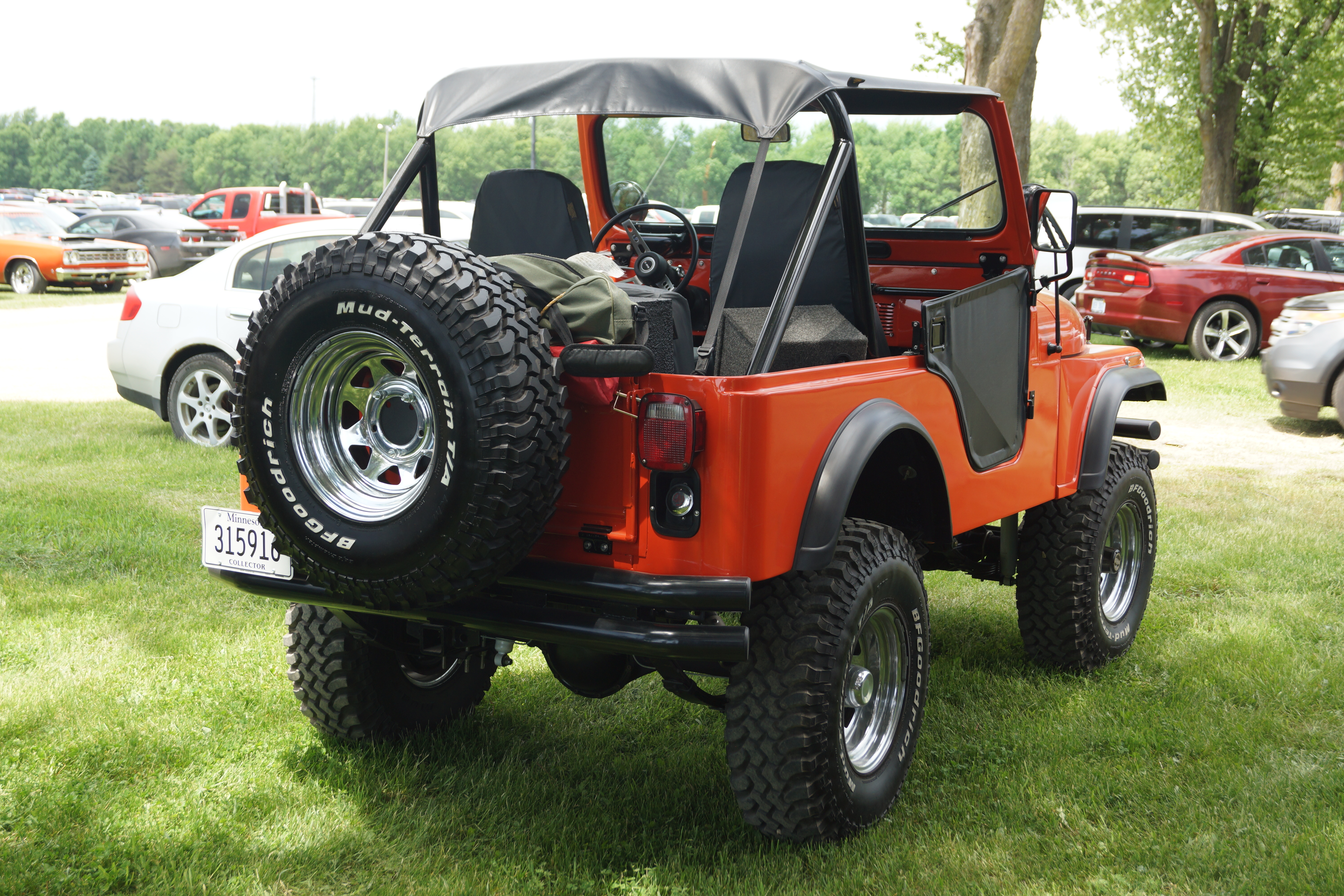
Jeep as new as 1976
"We have a Jeep as new as 1976. [815.0s] And that, you know, is by, you know, fact, 50 years old at this point..."
They’re talking about a Jeep from 1976. The big issue is that older cars often need parts that aren’t made anymore, so finding the right replacements can be difficult.
This segment is about sourcing parts for a Jeep from 1976, which is old enough that many original suppliers and production runs are long gone. The key enthusiast challenge is keeping a 1970s Jeep running with available, correct parts rather than generic replacements.
USA made parts
"trying to find USA made parts for this 50 year old vehicle. [832.0s] And more so the cow gasket specifically stands out to me..."
They mean parts made in the United States. For older cars, it can be tough to find any correct parts at all, and even tougher to find ones made domestically.
“USA made parts” refers to replacement components manufactured in the United States rather than imported. For vintage vehicles, this matters because some niche suppliers stop producing certain items, making it harder to find domestic alternatives that match original specifications.
cow gasket
"And more so the cow gasket specifically stands out to me and I went down the rabbit hole and found out all the history on it. [839.0s] And we had over the weekend calls..."
This sounds like a mis-heard version of “head gasket.” They’re talking about a gasket in the engine that can cause major problems if it fails, and they looked up its history because it’s a common/important issue.
“Cow gasket” appears to be a transcription error for “head gasket,” which is the sealing component discussed immediately before. In context, the speaker says they went “down the rabbit hole” on its history, implying a specific gasket failure/repair topic rather than a generic gasket mention.
duty cycle
"But the reason why the vast majority of vehicles running around on the road right now are not Chevy 350s is that our society has progressed our our use of the vehicle, the speed at which we travel, the breaking, the on and off, the the quick trips that we take as as people, the degree of maintenance that we want to perform has surpassed the duty cycle of a Chevy 350."
A duty cycle is basically how a car gets used day to day. If you mostly do short trips and lots of starts/stops, that can be harder on certain parts than the kind of driving they were designed for.
In automotive terms, a duty cycle is the pattern of how a vehicle/component is used over time—things like stop-and-go driving, frequent starts, short trips, and how often loads change. The speaker argues that modern driving habits are harsher on older engine/head-gasket designs than the usage those designs were originally built for.
torque to yield bolts
"But the head to block interface need to be a certain type of clamping and having enough fasteners in certain locations for that to work, which is also why we get to torque to yield bolts and certain passes of how you're supposed to do it and torque. Torque sequence, you know, just like your your lug nuts have torque to angle, etc."
Torque-to-yield bolts are special bolts tightened until they stretch in a controlled way. That stretch helps create the right tightness between the engine parts, which is important for sealing a head gasket.
Torque-to-yield (TTY) bolts are fasteners tightened past their elastic range so they stretch to a specific, repeatable clamping condition. The speaker connects TTY bolts and the required torque sequence to getting the right head-to-block clamping force for an MLS head gasket to seal.
torque sequence
"Torque sequence, you know, just like your your lug nuts have torque to angle, etc. So going back to our simple 1920s design 134."
A torque sequence is the tightening order for bolts. Tightening in the right order helps the head sit evenly, which helps the gasket seal without leaks.
A torque sequence is the specific order and pattern used to tighten head bolts (or other critical fasteners) to the required torque/angle steps. The goal is to pull the cylinder head down evenly so the head gasket seats correctly and sealing is consistent across all cylinders.
horse hair
"What did head gaskets used to be made out of? Let's go back to grandpa's head. That's true. Horse hair."
They’re jokingly describing a very old gasket material. The takeaway is that older engines used different gasket materials than today’s modern metal multi-layer designs.
The speaker is describing an old-school head gasket material as “horse hair,” contrasting it with modern metal MLS gaskets. The point is that older gasket materials and designs relied on different sealing behavior and were used with different clamping/bolt setups.
composite gasket
"So anyways, so back in the day we'd have what's called a composite gasket. Basically, it kind of compresses and sort of a hears to the block and head is a fair to conceptualize a composite gasket as not plywood, but cork."
A composite head gasket is a sealing layer between the engine block and the cylinder head. It’s made from more than one material and is designed to squish and fill tiny gaps so combustion gases and coolant don’t leak.
A composite gasket is a multi-material head gasket designed to seal between an engine’s cylinder head and engine block. In this discussion, it’s described as compressing to fill small gaps, similar to how cork can conform under pressure.
MLS
"They also did use copper head gaskets. You can still get some of that. They do have beads of this reminiscent to an MLS. It's not the same thing."
MLS means multi-layer steel. It’s a type of head gasket made from several thin steel layers that seal using tight clamping and shaped “beads.” The point here is that copper gaskets seal differently than an MLS gasket.
MLS stands for multi-layer steel, a modern style of head gasket made from stacked thin steel layers. MLS gaskets use embossed beads and clamping force to seal, but the speaker notes that the copper gasket’s sealing behavior is not the same as a true MLS design.
head seam
"Well, we ultimately have we have this new engine and and we actually we actually start seeing a little bit of bubbling or fluid leakage around at the head seam itself after, you know, after utilization."
The head seam is where the top part of the engine (the cylinder head) seals against the block. If you see fluid leaking or bubbling there, it can mean the gasket isn’t sealing correctly.
The head seam is the sealing surface where the cylinder head meets the engine block. Bubbling or fluid leakage there often points to a head gasket sealing problem or an issue with the mating surfaces.
compression
"Compression was good across the cylinders. It was fair. But we saw basically this bubbling or a little bit of fluid where there shouldn't be right."
Compression is how much pressure the engine builds inside each cylinder. If it’s good in all cylinders, the engine is sealing well; if it’s low in one, something may be leaking.
In an engine, compression refers to how well the cylinders can seal and build pressure during the compression stroke. Good compression across cylinders usually means the rings, valves, and head gasket are sealing properly.
Fel-Pro
"I did some other digging and I found improved fell pro had, you know, made a couple of different evolutions like gasket."
Fel-Pro makes replacement gasket parts. Here, the host is saying Fel-Pro has improved versions of the gasket design.
Fel-Pro is an aftermarket gasket brand known for producing head gaskets and other sealing components for many engine applications. In this segment, the host is comparing gasket options and noting that Fel-Pro made updated gasket evolutions.
time vacuum
"So the problem is in that situation is our Jeep 134s are stuck in the time vacuum they are in when continental got that design."
They mean the engine is based on an older design, so newer parts don’t always match. It’s a reminder that engine versions can be close in name but different in the details that matter for sealing.
“Time vacuum” is used here as a metaphor for being stuck with an older engine design baseline, where parts and improvements from later industrial versions don’t directly translate. The concept highlights how sourcing correct sealing parts becomes difficult when the engine’s geometry and mating surfaces are effectively “frozen” in an earlier configuration.
coolant passage
"They decided, well, we can improve it a little bit. We can make this coolant passage a little shape different."
Coolant passages are the internal pathways where coolant flows through the engine to keep it from getting too hot. If the gasket doesn’t match those channels, it can leak or not cool properly.
A coolant passage is a built-in channel inside an engine block or head that carries engine coolant to manage temperatures. If the coolant passage shape/location changes between engine versions, a gasket may no longer align correctly, causing overheating or leaks.
head bolt
"Maybe the block suddenly gets a little bit bigger, et cetera, et cetera. Maybe a head bolt moves just to jump in."
A head bolt is a strong bolt that holds the cylinder head tightly onto the engine. If the bolt locations or the mating surfaces don’t match, the gasket can fail to seal.
A head bolt is the fastener that clamps the cylinder head to the engine block. Even small changes in where head bolts sit (or how the block/head surfaces are machined) can affect gasket fitment and sealing, especially when mixing parts across engine generations.

Jeep Wrangler
"...e they share the name. They both are installed in Wranglers. They have a loosely similar design."
The Jeep Wrangler is a type of SUV made for off-road driving. It’s popular with people who add extra parts to improve how it handles trails. That’s why you might hear about specific accessories that fit Wranglers.
The Jeep Wrangler is a rugged, off-road-focused SUV known for its removable roof and doors and its ability to handle rough terrain. It’s a common platform for aftermarket parts, which is why the podcast mentions components that are “installed in Wranglers” and have a similar design. It often comes up in discussions about upgrades and accessories because many owners personalize how it drives and performs.
copper
"And likewise, like I was saying, yes, copper exists, but with the extreme smoothness of this deck, I did not have confidence in the copper ceiling."
They’re talking about copper as a gasket material. Copper can seal well in some situations, but if the engine surface is too smooth, it may not seal as confidently as other gasket types.
Copper refers to copper-head gasket material, which can be used because copper is relatively soft and can conform to uneven surfaces. However, this segment suggests copper may not be reliable on an “extreme smoothness” deck, where the gasket may not bite or seal as intended.
Sears catalog
"That too. I'm at the Sears catalog. Yeah."
A Sears catalog is an old-school way of shopping by mail using a printed book of products. The hosts mention it to show how getting parts used to take longer and involved paperwork instead of walking into a store.
A Sears catalog refers to the historical mail-order system where customers ordered products by looking through printed catalogs. In this segment, it’s part of the “parts of yesteryear” theme—highlighting how sourcing parts could involve letters, invoices, and checks rather than immediate counter sales.
Napa
"Back in our fairytale that you just walk to your local Napa and they put it on the shelf for you."
NAPA is a parts store chain where you can buy car parts. The hosts are using it to describe the convenience of getting the right part quickly from a local shop. They’re contrasting that with slower, mail-order-style sourcing.
NAPA is a well-known U.S. automotive parts retailer and parts brand (NAPA Auto Parts). In the segment, it’s used as shorthand for the idea that you could walk into a local store and get the correct part quickly off the shelf. That contrasts with the older/less convenient ordering process they describe.
side shift
"we'd go pick up another Jeep and we're test driving the 58 and side shift because it's an FC. So now we're a side shift shifting at our ankle."
“Side shift” is how the 4WD shifter moves on some older Jeeps. Instead of moving straight up and down, it shifts sideways to choose the different driving modes.
“Side shift” refers to a manual transfer-case shifter that moves sideways rather than using a more typical top-mounted lever pattern. On many classic Jeeps, this is part of how you select 4WD ranges and drive modes.
FC
"we'd go pick up another Jeep and we're test driving the 58 and side shift because it's an FC."
“FC” sounds like a shorthand name for the specific Jeep version they’re talking about. It’s connected to how the shifter works on that truck.
“FC” is used here as a model/variant shorthand for the classic Jeep they’re driving, tied to the “side shift” setup. Without the full expansion in the excerpt, it likely refers to a specific Jeep platform/trim designation used in that era.
straight six
"And you know, it is that was a straight six, which had a poultry, you know, whopping 67 horsepower, you know, on a good day."
A “straight six” means the engine has six cylinders lined up in a row. It tends to run smoothly because the engine’s firing pattern is balanced.
A “straight six” is an inline six-cylinder engine layout where all six cylinders are in one line. This configuration is known for smooth power delivery compared with many smaller or uneven cylinder arrangements.
67 horsepower
"And you know, it is that was a straight six, which had a poultry, you know, whopping 67 horsepower, you know, on a good day."
They’re quoting the engine’s power as “67 horsepower.” It’s meant to show that the old Jeep didn’t have huge power by modern standards.
The hosts mention “67 horsepower” to illustrate how modest the output was on this classic Jeep’s inline-six engine. It’s a reminder that older vehicles often relied more on gearing and torque than on high peak power.
45
"And with the gearing and entire sizes truck had 45. Now, granted, this is a customer's vehicle. I'm not pushing it to race."
The “45” is the number they’re using to describe where the truck felt best. They’re basically saying it ran happier at that level than higher.
The “45” appears to be a reference point for where the truck wanted to operate—likely a speed or gearing range—rather than a named component. In context, they’re saying the vehicle felt happiest at that point and below.
Teraflex
"And, and so I'm going to jump and I'm going to fast forward to a conversation explicitly about Teraflex. [1835.0s] And I'm going to put them in my mouth because I had a great conversation with a customer over the weekend. ... [1887.0s] They fluff up their marketing vastly through the JK and they become the go-to consumption brand..."
Teraflex is a company that makes aftermarket parts for off-road Jeeps. The host is saying they were especially popular for serious off-road upgrades, and later became more focused on marketing to Jeep owners.
Teraflex is an off-road parts brand known for Jeep-focused suspension and drivetrain upgrades. In this segment, the host frames it as a once-prominent “hardcore off-road” manufacturer that later leaned harder into marketing, especially for JK-era Jeep builds.
Wrangler Rubicon
"... as the same that I'll go back and I'll recognize Rubicon Express and Smittybilt and Procomp for their role..."
“Wrangler” here means the Jeep Wrangler. The podcast is talking about aftermarket parts brands that people commonly use to upgrade Wranglers. These upgrades are usually meant to help the vehicle handle off-road driving better.
“Wrangler” in this context refers to the Jeep Wrangler, and the podcast is also naming aftermarket brands—like Rubicon Express, Smittybilt, and Procomp—that are commonly associated with Wrangler upgrades. This kind of discussion matters because these parts are often used to improve off-road performance, fitment, and durability. The mention helps connect the vehicle to the ecosystem of accessories owners use.
Rubicon Express
"I recognize what they did for our industry, just as the same that I'll go back and I'll recognize Rubicon Express and Smittybilt and Procomp for their role from the, you know, the 90s into the early 2000s."
Rubicon Express makes aftermarket off-road parts, like suspension and lift components. The host is using it as an example of a company that helped shape the off-road parts market in the 1990s and early 2000s.
Rubicon Express is an aftermarket off-road parts brand associated with lift kits and suspension upgrades for Jeep and other 4x4 platforms. Here it’s mentioned as part of the wave of influential off-road manufacturers from the 1990s into the early 2000s.
Procomp
"I recognize what they did for our industry, just as the same that I'll go back and I'll recognize Rubicon Express and Smittybilt and Procomp for their role from the, you know, the 90s into the early 2000s."
Procomp makes aftermarket off-road parts, often related to suspension and lifts. The host is mentioning it as part of the lineup of big off-road brands from the 1990s and early 2000s.
Procomp is an aftermarket off-road parts brand, especially associated with suspension and lift-related components. The host cites it as another influential manufacturer from the 1990s into the early 2000s that shaped the off-road market.
Smittybilt
"I recognize what they did for our industry, just as the same that I'll go back and I'll recognize Rubicon Express and Smittybilt and Procomp for their role from the, you know, the 90s into the early 2000s."
Smittybilt is a company that sells aftermarket off-road gear for trucks and Jeeps. In the episode, it’s mentioned as one of the brands that was important during the 1990s and early 2000s off-road parts boom.
Smittybilt is an aftermarket off-road equipment brand, commonly known for Jeep 4x4 accessories and suspension-related products. The host groups it with other major 1990s–early-2000s off-road manufacturers that helped define the aftermarket ecosystem.
JK
"They fluff up their marketing vastly through the JK and they become the go-to consumption brand outside of some of these other mainstream, you know, products."
“JK” is Jeep-speak for a specific Wrangler generation. The host is saying Teraflex leaned into marketing aimed at Jeep Wranglers from that era.
“JK” refers to the Jeep Wrangler JK generation (the 2007–2018 Wrangler era). The host says Teraflex “fluffed up” its marketing through the JK, meaning it targeted that Wrangler generation heavily with off-road products and messaging.
TJ motor swaps
"And they were at one time and they also had swap parts for doing like TJ motor swaps and that kind of stuff."
A motor swap means changing the engine in a vehicle for a different engine. “TJ” refers to a Jeep Wrangler generation, so this phrase is about engine swaps on that specific Wrangler.
A “motor swap” is replacing a vehicle’s original engine with a different one, typically to gain performance, reliability, or compatibility with other parts. “TJ” refers to the Jeep Wrangler TJ generation (1997–2006), so “TJ motor swaps” means engine swaps done on that Wrangler platform.
Dana 300 parts
"They had hardcore off-road parts. [1923.0s] They had Dana 300 parts. [1925.0s] They had Dana 20 parts."
The Dana 300 is a key drivetrain box in many Jeeps that splits power to the front and rear wheels. “Dana 300 parts” means replacement or upgrade pieces for that transfer case.
The Dana 300 is a Jeep transfer case (the gearbox that sends power to the front and rear axles). “Dana 300 parts” refers to aftermarket components used to repair, upgrade, or modify that transfer case for off-road use.
Dana 20 parts
"[1923.0s] They had Dana 300 parts. [1925.0s] They had Dana 20 parts."
The Dana 20 is an older transfer case used in some Jeeps to send power to both axles. “Dana 20 parts” are replacement or upgrade parts for that unit.
The Dana 20 is an older Jeep transfer case used on earlier Wrangler/Jeep 4x4 applications. “Dana 20 parts” means aftermarket components for that specific transfer case, typically for maintenance or off-road strengthening.
Tera low
"You had the Tera low, you know, crawling system for the MP2 31."
“Tera low” is a way to get much lower gearing for off-roading. That makes it easier to creep over tough terrain without spinning the tires.
“Tera low” refers to a low-range gearing solution used in off-road Jeep applications to create extremely low crawl ratios. It’s meant to make slow technical driving easier by multiplying torque at the wheels.
crawling system
"You had the Tera low, you know, crawling system for the MP2 31."
A crawling system helps a Jeep move super slowly over rocks or ruts. It’s designed so you can control the vehicle at walking speed instead of having to fight the throttle.
A crawling system is an off-road setup that enables very low-speed control for obstacles. It typically relies on low gearing and/or specialized transfer-case and gearing strategies so the vehicle can move slowly without stalling or wheelspin.
engine swap process
"So that by the time that we are in fact trying to do an engine swap process, we consume a product from them."
An engine swap is when you replace the engine in a vehicle with a different one. It’s not just bolting it in—you also need the right parts so it can run and connect to the rest of the drivetrain.
An engine swap process is the work of replacing one engine with another, including the supporting parts needed to make it run and fit correctly. In practice, it often involves wiring, mounts, cooling, and matching driveline components.
hub conversion kit
"they were looking at a very cool hub conversion kit of which Teraflex is the only manufacturer on the market who has this hub conversion kit available for their application."
A hub conversion kit is a set of parts that changes how the wheels attach to the axle. People use it to switch to a different hub/wheel setup, often for stronger or more compatible wheel options.
A hub conversion kit is an aftermarket parts package that changes the wheel-hub setup of an axle. It’s commonly used to convert to a different wheel bolt pattern or axle/hub configuration (like going to more lugs or different hub styles).
Dana 44
"Takes their ultimate Dana 44, which we know and love and turns it into the HD, right?"
Dana 44 is the name of an axle used on many Jeeps. It’s popular with off-roaders because it’s sturdy and there are lots of upgrade parts available.
Dana 44 is a well-known Jeep axle model used in many off-road builds. It’s popular because it’s strong, widely supported by aftermarket parts, and can be upgraded for tougher trails.
HD
"Takes their ultimate Dana 44, which we know and love and turns it into the HD, right?"
“HD” here means heavy-duty. It’s basically the stronger, tougher version of the axle setup for harder off-road use.
In this context, “HD” means “heavy-duty,” indicating a strengthened version of the axle setup. The speaker implies the conversion turns a standard Dana 44 into a more robust configuration.
full float
"Gives it an eight lug outer full float option."
“Full float” means the axle shaft isn’t taking the main load of the wheel. The wheel is supported by the axle housing, which can help the setup last longer on rough terrain.
A “full float” axle setup means the wheel hub is supported by the axle housing rather than by the axle shaft. That design can reduce stress on the axle shafts and is often chosen for durability in off-road and heavy-duty applications.
eight lug
"Gives it an eight lug outer full float option."
An “eight lug” setup means the wheel attaches with eight studs/bolts instead of the more common five or six. More lugs can improve wheel retention and allow compatibility with certain heavy-duty wheel and tire setups used on classic off-road and truck-style builds.
lockouts
"That you had this robust Dana 44 with a full float assembly with lockouts and eight lug on the outside."
Lockouts are parts that let you switch certain axle/differential functions on or off. The goal is usually to make the drivetrain easier to run when you don’t need full four-wheel drive.
Lockouts are mechanisms that engage or disengage axle shafts or differential action, depending on the axle design. On many off-road axles, they let you run in a mode that reduces drivetrain drag when four-wheel drive isn’t needed.
one ton axle assemblies
"However, in a pre COVID experience, Teraflex used to sell one ton axle assemblies."
This means a heavy-duty axle system meant for tougher work than a basic axle. People choose them for off-roading or towing because they’re built to handle more stress.
“One ton axle assemblies” refers to heavy-duty axle setups typically built for higher loads than standard axles. In Jeep off-road contexts, these are often used to support larger tires, towing, and durability demands.
bearing
"a friend who had one of these axle assemblies and blew a bearing and could not replace it because it was such an obscure part"
A bearing is a small internal part that helps moving metal parts rotate smoothly. If it breaks in an axle, the vehicle may be stuck until you find the right replacement.
A bearing is a precision component that allows rotating parts to spin with controlled friction and wear. When a bearing fails in an axle, it can require sourcing an exact replacement part to restore driveline operation.
four wheel drive
"They weren't running it in four wheel drive because of this, this pinion problem."
Four wheel drive means power goes to all four wheels. Here, the speaker says they avoided using 4WD because a drivetrain part problem could make things worse or prevent proper operation.
Four wheel drive (4WD) is a drivetrain system that sends power to both the front and rear axles. This segment describes a situation where the vehicle wasn’t being driven in 4WD due to a pinion-related problem.
part number
"disassemble it, get the part number off the bearing, do your research"
A part number is like the exact ID for a specific part. When parts are hard to find, the right part number helps you order the correct replacement instead of something that won’t fit.
A part number is the manufacturer’s specific identifier for a component. For obscure axle bearings, using the correct part number is often the only way to confirm you’re ordering the exact replacement that matches the axle’s internal design.
superseded
"Oh, actually that's been superseded by this number and is now been critiqued or changed slightly over here."
“Superseded” means the old part was updated or replaced by a newer version. Even if it’s meant to work, you still have to verify it matches your exact setup.
A “superseded” part number means the original component has been replaced by a newer revision. This matters in repairs because the replacement may be “close,” but still require checking compatibility for the specific axle application.
heat shield
"I just saw a post this morning, someone asking where this heat shield is and it looks, the welds look like what something he would do."
A heat shield is a metal cover that sits near very hot parts of the car. Its job is to keep heat from damaging other nearby components.
A heat shield is a thin metal panel mounted near hot components (like exhaust or catalytic areas) to protect nearby parts and reduce heat transfer. It can also help prevent heat-related damage to wiring, floors, and other underbody components.
welds
"it looks, the welds look like what something he would do. And he's a hobbyist. He's not really that good. The welds that AMC had."
Welds are the metal joints holding parts together. Good welds look consistent and strong; sloppy welds can look messy or uneven.
Welds are the joints created by fusing metal together, and their quality can indicate whether a part was factory-made or poorly repaired. In this context, the speaker is comparing weld appearance to typical factory production.
parts sourcing
"And the different parts sourcing, the fact that you get 11 different transmissions from five different manufacturers"
Parts sourcing is where the company gets its parts from. If they keep switching suppliers and part combinations, the cars can end up with different setups that are harder to keep consistent.
Parts sourcing is how a manufacturer selects suppliers and sources components for production. When sourcing is inconsistent—like using many suppliers and changing combinations frequently—it can lead to variability in fitment, durability, and serviceability.
transmissions
"the different parts sourcing, the fact that you get 11 different transmissions from five different manufacturers over just a short 10 years time frame"
A transmission is what helps the car use the engine’s power at different speeds by changing gears. The speaker is saying AMC used a lot of different transmission combinations in a short time.
A transmission is the drivetrain component that changes gear ratios so the engine can deliver power efficiently across different speeds. The speaker’s point is that AMC used many different transmission setups over a short period, reflecting inconsistent parts planning and supply.
on the brink of destruction
"because they couldn't quite figure out what combination of parts and pieces, A, they wanted to use and B, they could afford to use because they're always on the brink of destruction."
This is a dramatic way of saying the company was in serious trouble. When a company is under that kind of pressure, it often makes cheaper or less consistent choices for parts and engineering.
“On the brink of destruction” is a figurative way to describe a company under severe financial or operational stress. In automotive terms, that kind of pressure often leads to cost-cutting, supplier churn, and rushed engineering decisions.
windshield cowl
"I do want to share the story of the windshield cowl because I went super, super far down the rabbit hole for Rob and Teresa and the, you know, in there for their Jeep."
The windshield cowl is the part of the body right under the windshield. It helps keep rainwater from getting inside the Jeep, so if it doesn’t seal well, you can end up with leaks.
The windshield cowl is the body panel area at the base of the windshield that helps manage water and directs it away from the cabin. If the cowl area doesn’t seal correctly, water can get into the gap between the windshield frame and the body, leading to leaks and corrosion risk over time.
76 to 86 CJ's
"So we have, you know, our 76 to 86 CJ's. They have a seal that goes between the windshield frame and the body."
The host is referring to Jeep CJ models made between 1976 and 1986. They’re explaining a windshield-area sealing problem that can happen on those older Jeeps.
The host is talking about Jeep CJ models from 1976 to 1986, which are classic Wrangler-era predecessors known for simple, rugged off-road design. In this segment, they’re specifically discussing a sealing issue between the windshield frame and the body on these CJ years.
fiberglass bodies
"because we've had fiberglass bodies that aren't produced well and therefore don't seal."
Fiberglass bodies are body panels made from fiberglass instead of metal. The host is saying some fiberglass replacements don’t fit perfectly, so the windshield area may not seal well and can leak.
Fiberglass bodies are aftermarket or replacement body panels made from fiberglass composite rather than stamped steel. Because fiberglass can vary in fitment quality, it may not seal as consistently around openings like the windshield, leading to gaps where water can enter.
chicken or the egg conversation
"And this has already been a rough go of through the years because we've had fiberglass bodies that aren't produced well and therefore don't seal. And then you could be like, well, is it the body or the gasket kind of scenario chicken or the egg conversation?"
This phrase is a joke about not knowing what caused what first. In this case, the host is wondering whether the leak is mainly the body’s fault or the seal’s fault.
“Chicken or the egg” is a way to describe a cause-and-effect puzzle: which came first, the body fitment or the gasket/seal problem. Here it’s used to frame whether the leak is primarily due to the body panel or the seal itself.
Kaiser era
"And we were still dealing with some Kaiser era stuff ish on the 70, early 70s stuff. We are full AMC by 86 and obviously starting to see Chrysler getting in there."
“Kaiser era” is a nickname for an early time period in Jeep’s history when the company Kaiser was involved. It helps explain why certain older Jeep parts and designs look the way they do.
“Kaiser era” refers to the period when Kaiser owned or controlled Jeep’s automotive operations and branding. For enthusiasts, it’s a shorthand for early Jeep-era engineering and corporate ownership history that influenced vehicle design and parts.
full AMC
"We are full AMC by 86 and obviously starting to see Chrysler getting in there. So this gasket's got to do a lot of stuff in the, in the geocentric world of things."
AMC is American Motors Corporation, an owner of Jeep for a while. When they say “full AMC,” they mean the Jeep era where AMC’s influence on the vehicles and parts is the main one.
“AMC” refers to American Motors Corporation, which owned Jeep for a period. Saying “full AMC” implies the vehicles and parts being discussed are in the timeframe when AMC’s engineering and sourcing would dominate rather than earlier Kaiser-era sourcing.
Chrysler getting in there
"We are full AMC by 86 and obviously starting to see Chrysler getting in there. So this gasket's got to do a lot of stuff in the, in the geocentric world of things."
They’re talking about Jeep changing hands to Chrysler. When that happens, the parts used in the vehicles can change too, which affects what you can buy or swap today.
This phrase points to Chrysler’s involvement in Jeep ownership and supply chains. Ownership changes often affect which engines, gaskets, and other components are used, which matters when you’re sourcing parts for older Jeeps.
windshield calgaskets
"the vast majority of people, let's be honest, headgaskets and windshield calgaskets are not sexy. They're not cool, right?"
This phrase sounds like a transcription error. The point they’re making is that some engine sealing parts aren’t exciting to talk about, even though they matter for keeping leaks under control.
“Windshield calgaskets” appears to be a mis-transcription or inside-joke phrase for another gasket type. In context, the host is lumping it with head gaskets as an unglamorous but important sealing component.
cool lift kits
"You know what I mean? Either that or you are Scott's best friend. ... They want to talk about cool lift kits. How much lift do I need to fit 35s?"
They’re talking about lift kits, which raise a Jeep’s suspension. The question is how much lift you need so bigger tires fit without rubbing.
The hosts discuss aftermarket suspension lift kits—how much lift is needed to fit larger tires. This is a common Jeep modification topic because it affects clearance, drivability, and what tire sizes you can run.
35s
"They want to talk about cool lift kits. How much lift do I need to fit 35s? The Hirst Purs."
“35s” means tires that are about 35 inches tall. Bigger tires often need a lift kit so they fit properly and don’t hit the body or suspension.
“35s” is shorthand for 35-inch tires, a popular larger-tire size in the Jeep world. Bigger tires typically require more suspension lift and sometimes additional clearance work to avoid rubbing.
barn find
"“...it’s the barn find the garage find to pull it out of the field and they go in and they they air up the tires...”"
A “barn find” is a car or Jeep that’s been sitting unused for a long time, usually in a barn or field. People find it later and then try to get it running again.
A “barn find” is a vehicle that’s been stored away for a long time—often in a barn or field—before being discovered and restored. In Jeep culture, it usually implies the Jeep sat unused for years and needs sorting before it can be driven again.
garage find
"“...it’s the barn find the garage find to pull it out of the field...”"
A “garage find” is a vehicle that’s been sitting in a garage for a long time. Because it’s indoors, it often has less weather damage than something stored outside.
A “garage find” is similar to a barn find, but the vehicle was stored in a garage rather than outdoors. The key difference is that garage storage often reduces exposure to weather, which can mean less rust and better preservation.
serpentine
"“...The belt that’s on there for the last 60 years is is the serpentine that it’s going to fire up and work...”"
“Serpentine” here refers to the serpentine belt, a single, continuous belt that drives multiple engine accessories (like the alternator and power steering pump) from the crankshaft. If it’s been sitting for years, it may crack or glaze, so it’s a common first thing people check before trying to start the engine.
Jurassic Park Jeep
"“...You can grab not the serpentine. You can grab the V and start the Jurassic Park Jeep.”"
“Jurassic Park Jeep” is a humorous nickname for an old, long-sitting Jeep that gets brought back to life—often after basic revival steps like airing up tires and checking belts. The phrase emphasizes the idea of reviving something that’s been dormant for decades.
rubber windshield
"Well, moving forward to this particular story, a customer wants to [2717.8s] replace the rubber windshield, Cal gasket, which had been changed once before 100 percent [2724.7s] was not thrilled with how it was aging."
It’s the rubber seal that sits around the windshield. Its job is to keep water and wind from getting inside and to help the glass fit tightly.
This refers to the rubber sealing components used around a windshield opening. In older Jeep-style setups, the rubber acts as a weather seal and helps keep water and wind out while also absorbing small fitment differences.
UVs
"This Jeep is lives in Florida. [2729.0s] So it has seen some UVs. [2730.8s] Well, and so five years ago, and this this was getting at the five years ago, he installs"
UVs are the sun’s rays. Over time they can make rubber seals dry out, crack, and stop sealing well.
UVs are ultraviolet rays from sunlight, which can degrade rubber over time. Many rubber seals harden, crack, or lose elasticity when exposed to repeated UV exposure, especially in hot, sunny climates like Florida.
crown automotive windshield
"he installs [2735.9s] what he believes to be a crown automotive windshield, Cal gasket, which we can pretty much [2741.6s] say is at this point, but likelihood, right?"
Crown Automotive makes aftermarket Jeep parts. In this story, the customer used a Crown Automotive windshield seal and it aged badly, so they want a different brand.
Crown Automotive is an aftermarket parts brand that sells Jeep replacement components, including windshield seal kits. Here, the host is discussing a Crown Automotive windshield seal that the customer believes was installed about five years earlier and is now failing due to deterioration.
dry rotted
"In fact, it was so dry rotted that I mean, it looked like it was 80 years old, right? [2779.0s] And you take it up, you know, once it was removed, you take it off. [2783.4s] There is giant cracks and huge, huge separation within the rubber compound itself."
Dry rot means the rubber has gotten brittle and cracked from aging. Once it’s dry-rotted, it doesn’t seal as well and can fail sooner.
Dry rot is a form of rubber deterioration where the material loses oils and becomes brittle. When windshield seals dry-rot, they can crack and separate internally, leading to poor sealing and faster re-aging.
rubber compound
"There is giant cracks and huge, huge separation within the rubber compound itself. [2791.3s] OK, so we'd like to use something else. [2793.2s] This is a fair request."
A rubber compound is the recipe inside the rubber seal. If it starts cracking or separating inside, it means the seal material itself is failing, not just the outside surface.
A rubber compound is the specific mixture of rubber and additives used to make a seal. The speaker describes internal separation and cracking within the compound, which indicates the material formulation (or aging process) wasn’t holding up.
country of origin USA
"Yeah. And had country of origin USA. They actually had on their stock photography."
“Country of origin” is basically where a product says it was made. With car parts, that claim can matter to buyers, but it isn’t always the full story.
“Country of origin” is a labeling claim about where a product was manufactured. In parts marketing, it’s often used to imply quality or compliance, but it can be misleading if the part is assembled or sourced elsewhere.
ease of working on them
"the ease of working on them, because we didn't even really talk about today's head gaskets"
This is about how easy it is to repair or modify the vehicle yourself or with a shop. Some cars are just simpler to work on than others.
This refers to the practical DIY and shop-friendliness of a vehicle platform—how accessible common parts and systems are, and how straightforward repairs tend to be. In enthusiast circles, that “workability” often shapes how people maintain and modify older vehicles.
Swiss Army knife
"the kind of Swiss Army knife that the Jeep is for our community"
They’re using a metaphor: the Jeep is like a Swiss Army knife, meaning it can handle lots of different tasks. It’s not just one-purpose.
“Swiss Army knife” is a metaphor for a vehicle that can do many different jobs—commuting, off-roading, hauling, and general utility—without feeling specialized for only one use. Jeep culture often uses this idea to describe the platform’s versatility.
new old stock
"And while, you know, given the opportunity, you know, I would love to buy new old stock product, you know, which just means it's been sitting on the shelf since those little dealerships got closed out back in the the, you know, the 70s and 80s."
“New old stock” means brand-new parts that are old because they were made years ago and just sat in a warehouse. They can be great for restoring older cars, but some parts (especially rubber) can degrade even if they never got used.
“New old stock” (NOS) means unused parts that were manufactured long ago but never sold, so they’ve been sitting in storage. Enthusiasts like NOS because it can preserve original-spec components for older vehicles, but not every part type ages well in storage.
rubber items
"But rubber items aren't really something that is a great new old stock item. Yeah, like stickers or graphics."
Rubber parts can wear out just from sitting for years. So even if a rubber gasket is “new,” it may not seal as well as a newer one.
Rubber parts are often a poor fit for “new old stock” because rubber can harden, crack, or lose elasticity over time due to aging. Even if the part is unused, age-related deterioration can reduce sealing performance.
cowl gasket
"And again, if we want a USA made cowl gasket, that's going to be $250 because you're going to have to have a state side manufacturer. Don't have to make their own molds."
A “cowl gasket” is a rubber seal near the base of the windshield. Its job is to stop water from getting into the car and causing leaks or rust.
A “cowl gasket” seals the area between the vehicle’s cowl panel (the body section at the base of the windshield) and the components mounted there. It helps keep water and debris out of the cabin and prevents leaks that can lead to corrosion and interior moisture issues.

57 Chevy two door hardtop
"my father's day traveling around in the 36, [3475.5s] we ran into this beautiful 57 Chevy two door hardtop, [3481.0s] bright white."
This is a classic 1957 Chevrolet. The “two-door hardtop” part means it’s a coupe with a cleaner, open-looking side profile—there’s no thick center pillar like on many sedans.
The Chevrolet 57 (often called the 1957 Chevy) is a classic American car known for its distinctive styling and big V8-era presence. A “two-door hardtop” means a coupe-like body with no fixed B-pillar, so the side glass and roofline give an open, pillarless look.
jump pack
"He finally does get the jump pack after the woman has come over and talked to me. [3518.5s] Oh, seriously?"
A “jump pack” is a portable battery booster. If a car battery is too weak to start the engine, the jump pack can give it enough power to crank.
A “jump pack” is a portable battery used to start a car with a dead or weak battery. It provides high current to crank the engine (or at least power the starter system) without needing another vehicle.
battery
"she says, oh, no, you know, pretty sure the battery is just [3528.1s] not quite up the snuff. [3529.6s] I just got the car."
The “battery” is the car’s electrical power source. If it’s weak, the car may not start even though everything else looks fine.
In this context, the “battery” is the car’s 12-volt electrical storage that powers systems and provides the surge of current needed to start the engine. If it’s “not quite up to snuff,” it may be too weak to crank reliably.
lean over restorations
"A number of our listeners have reached out, lean over restorations. One of our listeners used that term, but we understand, you know, basically on the surface it looks restored."
This sounds like a term for a car that looks restored, but the work might be mostly cosmetic. The point the host is making is that it could still have been sitting for a long time after that, so it may not be as sorted as it looks.
“Lean over restorations” appears to be the host’s shorthand for a “surface-restored” car—one that looks restored from the outside but may not have had thorough work done underneath. The discussion contrasts visual restoration with the reality that the car may have sat for many years after being “restored.”
sitting for 15 years or 10 years since it's been restored
"Or it is restored, but it's been sitting for 15 years or 10 years since it's been restored."
A restoration doesn’t automatically mean the car is in great shape forever. If it sat for 10–15 years after being restored, it can develop problems again because nothing is being used or maintained regularly.
The host is highlighting the difference between a car that was restored and a car that has been properly maintained since restoration. A long period “sitting” can cause renewed wear and issues (like dried seals, degraded fluids, and corrosion), even if the restoration looked good at the time.

Chevrolet Corvette
"...ngs. And I found, uh, a thing popped up about the Corvette CR one from the 90s. Mm hmm."
The Chevrolet Corvette is a sports car designed to be fast and handle well. The podcast is talking about a specific Corvette from the 1990s, which is why it stands out in the discussion. Sports cars like this often have different versions depending on the year.
The Chevrolet Corvette is a performance sports car built for speed and handling, and it’s often discussed in enthusiast circles. The podcast specifically references a “Corvette CR one from the 90s,” which suggests a particular variant or special-interest model that came up in the conversation. Corvettes like this are frequently mentioned because they have dedicated followings and distinct histories by model and era.
small block Chevy
"Can we send you a small block Chevy and you tell us what you would do with it?"
A “small block Chevy” is a well-known Chevrolet V8 engine design. People use it a lot for performance builds, and in this story it’s the engine they asked Lotus to work with.
“Small block Chevy” refers to Chevrolet’s compact V8 engine family (the classic Gen I/II/III small-block architecture). It’s a modular, widely used platform in hot-rodding and performance builds, and here it’s used as the baseline engine Lotus engineers were asked to rethink.
32 valve
"So that is where the 32 valve, uh, ZR one motor came from with dual overhead cams and"
“32 valve” means the engine has 32 valves total. More valves can help the engine breathe better, especially when you rev it higher.
“32 valve” describes an engine with 32 total valves—typically 4 valves per cylinder on a V8 (or similar valve-per-cylinder layouts). More valves can improve airflow and breathing at higher RPM, which is often part of why performance engines use multi-valve heads.
dual overhead cams
"So that is where the 32 valve, uh, ZR one motor came from with dual overhead cams and"
“Dual overhead cams” means there are two camshafts up top in the engine head. They control the intake and exhaust valves more precisely, which helps performance.
“Dual overhead cams” (DOHC) means the engine uses two camshafts located in the cylinder head—one for intake valves and one for exhaust valves. DOHC layouts help with precise valve timing and are common in higher-performance engines.
aluminum block
"So that is where the 32 valve, uh, ZR one motor came from with dual overhead cams and aluminum, uh, block and that kind of stuff."
An “aluminum block” means the main engine housing is made from aluminum instead of heavier iron. It’s lighter, but it has to be built carefully to handle heat and stress.
An “aluminum block” means the engine’s cylinder block is made from aluminum rather than cast iron. Aluminum blocks are lighter, which can improve vehicle balance and reduce overall engine weight, but they require careful design and manufacturing.
tooling
"We're again, we're talking like 96, 95, GM at that time did not possess the ability to cast a machine, a aluminum block. The tooling itself is what held them back."
“Tooling” is the specialized equipment used to make parts. The point here is that GM didn’t have the right setup to cast aluminum engine blocks themselves.
In manufacturing, “tooling” refers to the specialized equipment and molds used to produce parts at scale—like the machining fixtures and casting molds needed to make an aluminum engine block. Here, the speaker says tooling limitations prevented GM from casting an aluminum block in-house at the time.
Mercury Marine
"So they went to Mercury Marine. Ah. To have them make the engine blocks, blocks and hand assemble those motors."
Mercury Marine is a company that makes engines for boats. The story here is that GM asked them to help make the engine blocks because they couldn’t do it in-house at the time.
Mercury Marine is a marine-engine company known for outboard motors and related power systems. In this segment, GM is said to have turned to Mercury Marine to manufacture engine blocks, highlighting how specialized manufacturing capability can come from outside the auto industry.
hand assemble
"To have them make the engine blocks, blocks and hand assemble those motors. Wow. Wow."
“Hand assemble” means people put the engine together manually instead of using only machines. That can help with careful fit and quality, but it usually costs more.
“Hand assemble” means assembling components manually rather than fully automating the process. In performance or low-volume engines, manual assembly can improve quality control and allow tighter tolerances, but it also tends to raise cost—consistent with the speaker’s note about price.
push rod engines
"Um, and that is why underneath the hoods of vehicles, do you see push rod engines? [3772.6s] No."
In a pushrod engine, the camshaft is lower in the engine and uses rods to push the valves open. It’s an older-style setup you’ll see on many classic engines.
A pushrod engine uses pushrods to transfer motion from the camshaft (usually in the engine block) up to the cylinder head to actuate the valves. It’s a common older design, and it affects how the valvetrain is packaged and how the engine breathes at high RPM.
overhead cam engines
"You see overhead cam engines with aluminum blocks. [3776.5s] Interesting."
In an overhead cam engine, the camshaft sits on top of the engine near the valves. That usually helps the engine control valve timing more precisely.
Overhead cam (OHC) engines place the camshaft(s) in the cylinder head instead of lower in the block. This can improve valve timing precision and often supports higher engine speeds, because the valvetrain has fewer moving parts between the cam and valves.
mile per gallon
"It is a diesel. [3802.1s] Uh, if you didn't catch up on that showing me mile per gallon, which I think was [3806.6s] uh, wrong and, and unfair."
Miles per gallon (MPG) tells you how many miles a car can go on one gallon of gas. Higher MPG usually means better fuel economy.
Miles per gallon (MPG) is a fuel-economy measurement that indicates how far a vehicle can travel on one gallon of fuel. It’s commonly used in the U.S. to compare efficiency across vehicles, though real-world results can differ from test-cycle numbers.
miles per gallon
"for and then drive to Buffalo in it and average, uh, eventually we hit 26, uh, [3840.1s] miles per gallon, um, as far as the way that the Jeep computer computes it."
Miles per gallon (MPG) tells you how efficiently a vehicle uses fuel. Higher MPG means you go farther on the same amount of gas.
Miles per gallon (MPG) is a measure of fuel efficiency—how many miles the vehicle can travel on one gallon of fuel. The segment contrasts MPG computed by the Jeep’s onboard system versus what they see in different driving conditions.
all terrain
"You know, we're pushing 32 inch tires. [3849.8s] Yeah. [3850.0s] Uh, all terrain, you know, nice Falcon all terrain."
All-terrain tires are made to handle both regular roads and rougher off-road surfaces. Because the tread is tougher and more “grippy,” they can sometimes reduce gas mileage a bit.
All-terrain (AT) tires are designed to work on both pavement and dirt/rough roads. They typically have more aggressive tread than highway tires, which can increase rolling resistance and affect fuel economy.

Jeep Gladiator
"So what's the gladiator up to mileage wise, Jeff? [3856.1s] Uh, mine? [3856.9s] Yeah. [3857.6s] 106,000. [3858.8s] No, no, no. [3859.4s] What do you think? [3859.9s] Miles per gallon."
The Jeep Gladiator is Jeep’s pickup truck. Here they’re talking about how many miles per gallon it gets in everyday driving, and how that changes with bigger tires.
The Jeep Gladiator is Jeep’s pickup truck, built on a Wrangler-style platform with a truck bed. In this segment, they’re discussing its real-world fuel economy (miles per gallon) while running larger tires, which is a common way owners see MPG change.

Ford Falcon
"Yeah. Uh, all terrain, you know, nice Falcon all terrain. So what's the gladiator up to mileag..."
The Ford Falcon is a car model, and in this podcast it’s described as an “all terrain” setup. That means it’s intended to handle more than just smooth pavement. The host brings it up while talking about what different vehicles can do.
The Ford Falcon referenced here is described as an “all terrain” vehicle, implying a version set up for rougher roads or outdoor use. In the podcast, it appears in the same conversation as other vehicles being compared or discussed for capability and mileage. Falcons like this are typically brought up when someone wants a practical vehicle that can handle varied surfaces.
fuel is changes
"In the winter, we were down as far as 14 because fuel is changes. Makes me sad."
They mean your gas mileage can get worse in winter. Cold weather and different driving conditions make the engine and tires work less efficiently.
They’re referring to how fuel economy changes with conditions—most likely winter weather and driving style. In cold months, engines warm up more slowly and tires lose grip, which can reduce miles per gallon.
37s
"So we, we did drop some in the winter too, but, uh, you know, mine's on 37s. So yeah, your, your gear is actually made more highway as well."
“37s” means the Jeep is running very large tires—about 37 inches tall. They help off-road, but they can make the Jeep use more gas and feel different on the highway.
“37s” is shorthand for 37-inch tires, a common Jeep off-road tire size. Bigger tires increase ground clearance and off-road capability, but they also tend to reduce fuel economy and can affect gearing/drive feel.
gear is actually made more highway
"So yeah, your, your gear is actually made more highway as well. And I'm also on a, you know, stock gear ratio and every gear."
They mean the Jeep’s gearing is set up to feel better for highway speeds. That usually means the engine doesn’t have to spin as fast to cruise.
They’re describing gearing changes (or the effect of gearing) that favor highway driving—typically lower engine RPM at cruising speed. In Jeep terms, this often comes up when you change tire size and need to adjust axle gearing to keep the Jeep comfortable and efficient on-road.
stock gear ratio
"And I'm also on a, you know, stock gear ratio and every gear. That's what he's saying is that you're, you're actually better for highway stuff."
Gear ratio is the gearing that determines how hard the engine works to move the Jeep. If you keep the stock gearing while running bigger tires, the Jeep may not be as efficient or as smooth on the highway.
Gear ratio is how the transmission and differential multiply engine torque. Using a “stock gear ratio” means they haven’t changed the final-drive gearing to better match larger tires, which can make highway cruising feel different (often higher RPM) and can affect acceleration and fuel economy.
Jeep drive
"went for again, same, same, you know, kind of a Jeep drive. I really find myself right now."
They’re talking about how they’re enjoying the road trip and the destination more than just going out to drive on trails.
The hosts shift from trail-focused driving to enjoying the trip itself—using the Jeep as a way to reach destinations. This frames the episode’s theme around how Jeep ownership changes with lifestyle and time.
on the trail
"I really am looking forward to getting back out on the trail, but I find myself personally really just enjoying the destination that the Jeep can get me to."
“On the trail” means off-road driving on rough paths, not normal streets. It’s where a Jeep’s off-road setup matters most.
“On the trail” refers to off-road driving routes where traction and vehicle clearance matter more than on-road comfort. For Jeep owners, it usually implies using tires, suspension, and gearing suited for uneven surfaces.
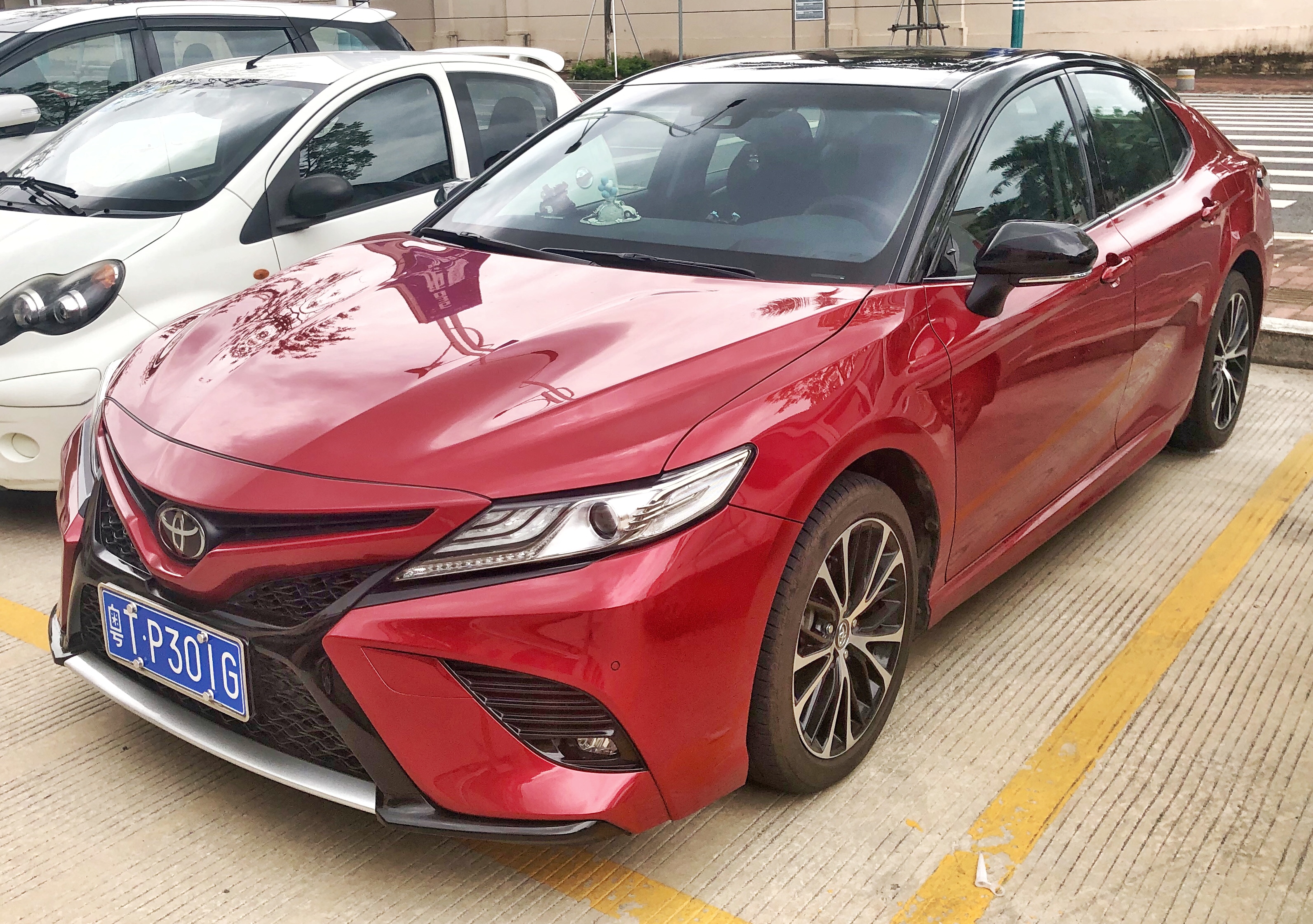
Toyota Camry
"...ve that moment. Could we have done it in a Toyota Camry in this son, my noble steed car that I had years ..."
The Toyota Camry is a regular passenger car (a sedan) meant for everyday driving. It’s often chosen because it’s comfortable and practical. The podcast mentions it as a possible car for a normal trip or errand.
The Toyota Camry is a mainstream midsize sedan known for comfort, practicality, and everyday drivability. In the podcast, it’s mentioned as a possible alternative for a trip or situation involving the host’s “noble steed car.” It comes up because it’s a common, dependable choice for routine transportation.
Request an Explanation
Heard something you'd like explained? We'll add it to this episode.
Sign in to request explanations for terms you heard.
Want to learn more?
Browse our glossary for plain-English explanations of automotive terms, jargon, and concepts.
Help improve this episode
See something that's not quite right? Our annotations are AI-generated and can sometimes miss the mark. Click the flag icon on any annotation to suggest a correction.