
deceptive advertising
Sometimes dealers advertise a great deal online, but it turns out you can’t actually get that price. If the ad makes it sound like you’ll pay one thing, but you end up paying more once you’re there, that can be deceptive.
unobtainable discount
An “unobtainable” discount means the deal advertised online isn’t really what you can get in practice. It’s a warning sign that the final price may be higher once you’re negotiating in person.
monthly payment
Dealers sometimes focus on what you’ll pay each month rather than the full price of the car. A lower monthly number can be misleading if it’s achieved by stretching the loan or adding costs.
MSRP
MSRP is the price the manufacturer says the car should cost. When you’re shopping, it helps you judge whether a dealer’s deal is actually a discount or just marketing language.
invoice price
Invoice price is the amount a dealer is typically charged by the manufacturer for the vehicle. The host notes that people look up invoice price to estimate the dealer’s “real cost,” but it can get confusing because invoice isn’t the same as the dealer’s total out-the-door economics (holdbacks, incentives, and fees can matter).
hold back
When a dealer buys a car from the factory, the factory may hold back a small part of the price. Later, the factory sends that money to the dealer, which helps the dealer make more profit.
Chevrolet
The host mentions Chevrolet to give a real-world example of how dealer incentives like holdback used to be calculated. It’s an example, not a specific car model.
floor plan assistance
Dealers usually borrow money to buy cars for their lot. Floor plan assistance is help from the manufacturer to reduce the interest cost while the cars are waiting to be sold.
co-op
Co-op is advertising help from the automaker. It reimburses or offsets part of what the dealer spends on local ads, so the dealer doesn’t have to pay everything out of pocket.
Ferris
Ferris is mentioned as an example brand in the dealer’s other product lines. It’s used to explain how financing help can work for inventory in general.
Grasshopper
Grasshopper is another example brand used to show how manufacturers may help pay interest on inventory. It’s not the focus of the episode’s car-dealer discussion.
TYM
TYM is mentioned as the tractor line the dealer carries, used to illustrate how floor planning can be supported by manufacturers. The host’s point is about financing inventory costs rather than a specific automotive technology.
Federal Trade Commission
The Federal Trade Commission (FTC) is the U.S. agency responsible for enforcing consumer protection laws, including rules around deceptive advertising. In this segment, the host frames the FTC as actively issuing guidance and pursuing penalties for misleading vehicle pricing online.
dealer fees
Dealer fees are extra costs added on top of the car’s advertised price. The warning here is that if a dealer advertises a price that doesn’t include those mandatory fees, it can be seen as deceptive advertising.
FTC advertising guidance
The FTC is a U.S. government agency that watches how businesses advertise. This guidance is about making sure the price you see online is the real price you’ll have to pay, not a number that only becomes higher after extra charges.
AutoNation
AutoNation is a big dealership company in the U.S. The host mentions it to show that even large national dealers are being targeted with advertising-pricing rules.
the Hudson Group
The Hudson Group is another large dealership organization. The host brings it up to show that the FTC’s message is aimed at big groups with lots of cars listed online.
fine per occurrence
Instead of one penalty for the whole website, regulators can charge a penalty for each individual violation. So if many cars are advertised in the same misleading way, the total fine can grow very quickly.
state vs federal pricing rules (Tennessee vs FTC)
Different levels of government can have different rules. The host is saying Tennessee’s rules about fees and pricing can be different from the FTC’s federal rules, so dealers have to follow both.
dock fee
A dock fee is an extra charge dealers add for getting the car from where it arrives to the dealership. The point being made is that some states treat these fees differently than federal advertising rules.
dealer price bait-and-switch via financing requirements
This is when a dealer advertises one price, but then says you only get that price if you finance with them. It can trick you into thinking the deal is available to everyone.
captive finance (Ford Motor Credit / Toyota Motor Credit)
Some car brands have their own financing arm. If you finance through that brand’s lender, the dealer may make more money, so the deal can be less favorable than it looks.
extended warranties
An extended warranty is extra coverage you buy to help pay for repairs after the original warranty ends. Dealers often try to sell it during the sales process, especially when financing is involved.
gap insurance
Gap insurance helps if your car is totaled and the insurance payout doesn’t cover what you still owe on the loan. It’s often offered when you’re financing because it can be added to the overall purchase.
negotiate a car deal
They’re talking about how to negotiate when buying a car. The goal is to avoid getting rushed or pressured into accepting a bad deal.
show all your cards
It’s a way of saying don’t give away your strategy. If the other side knows how eager you are, they can push harder on you.
Nissan
They’re talking about Nissan and how its car sales have been struggling. The host says part of the issue was how Nissan planned for electric and hybrid cars.
hybrids
Hybrids use both gas and electricity to help save fuel. The host is saying Toyota did a better job offering hybrids that people wanted.
consolidation of all the Japanese car companies
They’re talking about Japanese car companies possibly combining efforts. The idea is to share work and spend less money so they can compete better worldwide.
Honda
Honda is named as one of the big Japanese car brands. It’s part of the list the host uses to explain how many automakers are competing.
Mitsubishi
Mitsubishi is mentioned as another Japanese car brand. The host is using it to show which companies are part of the bigger industry picture.
Korea
The host is saying Korean car brands are becoming tougher competition. It’s part of why Japanese automakers might need to change how they compete.
consolidated their supplier base
This is about a company choosing fewer suppliers and managing them more tightly. The idea is that it can get parts more reliably and at better prices, which helps the cars compete.
control from raw materials...until their shipping cars across the ocean
They’re describing a company controlling more steps of the process, not just building cars. If you control shipping too, you can often deliver cars faster and with fewer surprises.
own the ships
Instead of paying someone else to move cars by sea, the company owns the boats. That can make shipping more predictable and sometimes cheaper.
potential consolidation
The host is talking about companies working together more than before. Even if they stay separate brands, they might share parts or technology to save money and move faster.
four major companies working real closely together as far as technology is concerned
They’re saying companies may team up on the “how” of making cars, like shared tech or parts. But you’d still see different brand names and styles.
big three, General Motors, Ford and Chrysler Corporation
For a long time, most cars in the U.S. came from three big companies: General Motors, Ford, and Chrysler. The host is explaining that later, other brands started taking more of the market.

Honda Accord
The Honda Accord is a regular-size family car (a sedan) made by Honda. People talk about it because it’s meant to be dependable and easy to live with for daily driving. It may come up when the podcast is describing how Honda became more popular with common, practical cars.
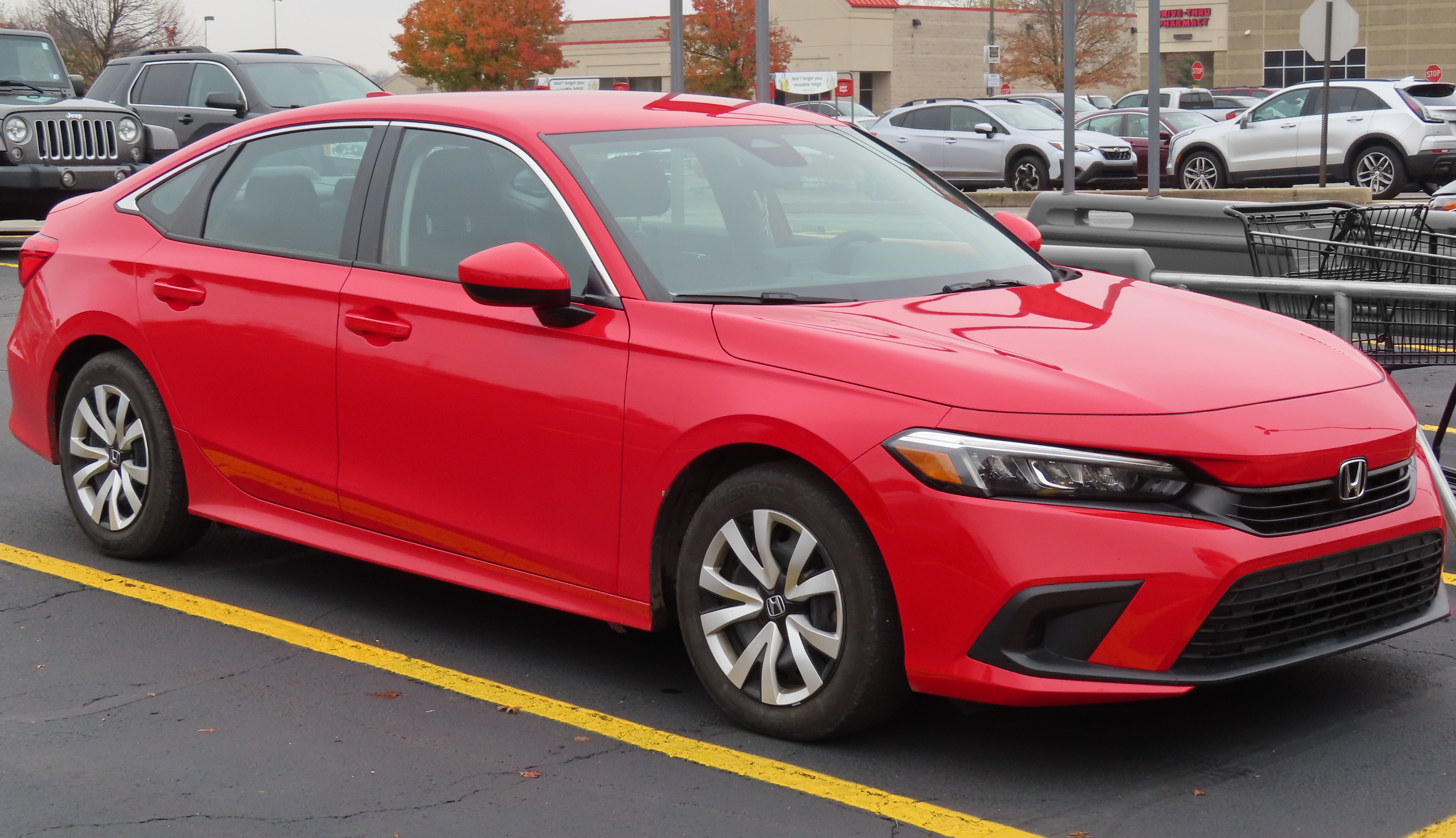
Honda Civic
The Honda Civic is a smaller, everyday car made by Honda. It’s known for being practical and usually not too expensive to run. The podcast may mention it when talking about how Honda gained popularity with cars that fit daily life.
Mercedes
Mercedes is a well-known luxury car brand. The host is mentioning it as another company that tried to win U.S. customers during the same period. It’s more about brand competition than car mechanics.
BMW
BMW is mentioned as a European automaker that successfully gained ground in the U.S. market after Japanese brands became popular. The point is about competitive market shifts—how different brands “made inroads” with buyers. It’s not a technical discussion, but it frames the broader auto-industry landscape.
Audi
Audi is another major German car brand. The host is saying it didn’t gain as much ground as some other European brands in the U.S. at the time. It’s a general competition story, not a specific car review.
Hyundai and Kia
Hyundai and Kia are mentioned as current competitors to the Japanese automakers. The host frames them as a “heck of a competitor,” implying they’ve improved enough to pressure traditional players. This is a market-competition point rather than a technical explanation.

Alfa Romeo Spider 1600 Veloce
This is a classic Alfa Romeo roadster from the 1960s. “1600 Veloce” basically means it has a 1.6-liter engine and a more performance-focused setup. These older cars can be worth a lot more when they’ve been cared for and you can prove it with paperwork.
National Register of Historic Places
This is a U.S. list for places that are considered historically important. The host brings it up to show the owner’s environment and mindset are focused on preservation. It’s meant to connect that careful approach to how he maintains his cars.
keeping records of your oil changes and saving bills
The host is emphasizing “paper trail” maintenance—keeping receipts and service records (like oil change bills) to prove the car’s history. For classic and enthusiast cars, detailed documentation can increase buyer confidence, support resale value, and help justify condition claims. It also helps establish that maintenance was done consistently rather than “on faith.”
documentation (original documents, records)
They’re saying that keeping paperwork—like when you bought the car and what work was done—matters a lot. Buyers trust the car more when the history is documented, so the car can be worth more.
car collectors aging out
A lot of car owners who’ve kept their cars for decades are getting older. Eventually they have to sell, and that can affect how much those cars are worth and how easy they are to find.
market is getting softer
When the market is “softer,” it usually means people are buying less and prices can drop. The host thinks it’s partly because younger generations aren’t as interested in some older car types.
collector car segments (50s/60s) dropping
They’re saying some older cars from the 1950s and 1960s are starting to lose value. That’s because fewer people who grew up loving them are around or passing the interest on.

Ford Mustang
They’re using Mustangs as an example of a car people still want. When a model has a lot of fans, it usually holds value better than cars that only a small group cares about.

Chevrolet Corvette
Corvettes are another example they give of a car that keeps interest. If lots of people still want them, prices tend to be less fragile.
vehicle becomes an antique
Many places have a special status for very old cars. Once a car is old enough (often around 25 years), it may qualify for “antique” rules that can change how you register it and how you can use it.
antique vehicle registration
If your car qualifies as an antique, you may need to change how you register it. The rules can vary by state, so it’s smart to figure out what’s required before you assume anything.