
The Feds are after dealers who break advertising laws and here is what it means for you
About this episode
Lenny Lawson breaks down how the FTC is cracking down on car dealers for deceptive online pricing—especially “bait” discounts that require add-on fees, plus misleading financing requirements. He explains how to sanity-check deals using MSRP, invoice/holdback, and the real impact of fees and monthly-payment games. He also discusses Nissan’s CEO calling for Japanese automaker consolidation to compete with fast-rising Hyundai/Kia. The episode ends with a poignant story about buying a meticulously documented 1965 Alfa Romeo Spider from an ailing collector, and advice on selling older cars before demand softens.
Email Lennie at [email protected]
deceptive advertising
"...my interpretation of the law, that their advertising was illegal... a discount, well, involved a discount that was unobtainable... Now, is that deceptive? Yeah, I think so."
Sometimes dealers advertise a great deal online, but it turns out you can’t actually get that price. If the ad makes it sound like you’ll pay one thing, but you end up paying more once you’re there, that can be deceptive.
The hosts are describing a common dealer tactic where the advertised “discount” isn’t actually achievable, or key costs are hidden until the customer is in the showroom. This can cross into deceptive advertising when the marketing misleads consumers about the real price or terms.
unobtainable discount
"...offering a sell price online that was a discount, well, involved a discount that was unobtainable."
An “unobtainable” discount means the deal advertised online isn’t really what you can get in practice. It’s a warning sign that the final price may be higher once you’re negotiating in person.
The hosts describe a discount that’s advertised but effectively not available under normal conditions, often because it depends on add-ons, eligibility requirements, or pricing that changes once you arrive. This is a key red flag for consumers because it turns an “internet deal” into a different in-store deal.
monthly payment
"...What kind of monthly payment you're looking for? ... Oh, we're looking about $4.50 a month... The payments are actually $5.75 a month."
Dealers sometimes focus on what you’ll pay each month rather than the full price of the car. A lower monthly number can be misleading if it’s achieved by stretching the loan or adding costs.
The segment highlights how dealers often steer negotiations toward monthly payment instead of total price. That can obscure the real cost because payment can be lowered by extending the loan term, adding fees, or changing the deal structure.
MSRP
"First, you have to understand what is the MSRP on this vehicle? What is MSRP? That's manufacturers suggested retail price."
MSRP is the price the manufacturer says the car should cost. When you’re shopping, it helps you judge whether a dealer’s deal is actually a discount or just marketing language.
MSRP (manufacturer’s suggested retail price) is the baseline price automakers publish for a new vehicle. It’s useful for comparing whether a dealer’s “discount” is real, because it anchors the conversation to a standardized number.
invoice price
"...find out what the dealer paid for the vehicle, what the invoice price is. Now, is that his actual cost? See, this gets confusing too."
Invoice price is the amount a dealer is typically charged by the manufacturer for the vehicle. The host notes that people look up invoice price to estimate the dealer’s “real cost,” but it can get confusing because invoice isn’t the same as the dealer’s total out-the-door economics (holdbacks, incentives, and fees can matter).
hold back
"What a dealer pays for a vehicle from the factory is initially their cost, but the factory has something called hold back, which means they hold back a little bit of a discount that they pass on to the dealer."
When a dealer buys a car from the factory, the factory may hold back a small part of the price. Later, the factory sends that money to the dealer, which helps the dealer make more profit.
“Holdback” is a portion of the vehicle’s price that the manufacturer withholds from the dealer’s initial deal, then later pays back to the dealer if certain conditions are met. It effectively functions like a delayed discount that can improve the dealer’s profit margin.
Chevrolet
"And when I was a Chevrolet dealer, it was 3% of the MSRP minus freight. That was the hold back."
The host mentions Chevrolet to give a real-world example of how dealer incentives like holdback used to be calculated. It’s an example, not a specific car model.
Chevrolet is referenced as the dealer brand context for how holdback was calculated (as a percentage of MSRP minus freight). The point is that manufacturer programs can vary by brand and era.
floor plan assistance
"And we do get some floor plan assistance. The manufacturer helps us carry our inventory or helps pay our carrying cost for about 90 days."
Dealers usually borrow money to buy cars for their lot. Floor plan assistance is help from the manufacturer to reduce the interest cost while the cars are waiting to be sold.
Floor plan assistance is manufacturer support that helps dealers finance the inventory they keep on the lot. It often covers some or all of the interest cost for a limited period, reducing the dealer’s cash-flow burden while vehicles sit unsold.
co-op
"And then we get some advertising assistance as well. It's called co-op. And so you could consider that money as part of the discount, but really it's really to offset expenses that we have."
Co-op is advertising help from the automaker. It reimburses or offsets part of what the dealer spends on local ads, so the dealer doesn’t have to pay everything out of pocket.
Co-op (cooperative advertising) is money from the manufacturer that helps dealers pay for local marketing. It typically offsets advertising expenses, rather than being pure profit, and can be tied to specific campaigns or spending.
Ferris
"Now, tractors and lawn mowers, we also get free floor planning for up to a year, which means that the manufacturer, which in our case would be Ferris and Grasshopper and TYM is our tractor line,"
Ferris is mentioned as an example brand in the dealer’s other product lines. It’s used to explain how financing help can work for inventory in general.
Ferris is mentioned as part of the tractor/lawn equipment line the dealer carries, used to illustrate how floor planning and interest support can work in non-automotive retail. The key takeaway is the business model comparison, not a car-specific system.
Grasshopper
"which in our case would be Ferris and Grasshopper and TYM is our tractor line, they pay the interest to the bank for our floor plan."
Grasshopper is another example brand used to show how manufacturers may help pay interest on inventory. It’s not the focus of the episode’s car-dealer discussion.
Grasshopper is cited alongside Ferris as an example manufacturer that provides floor planning support for inventory. It’s part of the host’s comparison between equipment dealers and automakers.
TYM
"Ferris and Grasshopper and TYM is our tractor line, they pay the interest to the bank for our floor plan."
TYM is mentioned as the tractor line the dealer carries, used to illustrate how floor planning can be supported by manufacturers. The host’s point is about financing inventory costs rather than a specific automotive technology.
Federal Trade Commission
"So I was talking about the FTC and about advertising, so I called my competitor... The Federal Trade Commission just came out with new guidance."
The Federal Trade Commission (FTC) is the U.S. agency responsible for enforcing consumer protection laws, including rules around deceptive advertising. In this segment, the host frames the FTC as actively issuing guidance and pursuing penalties for misleading vehicle pricing online.
dealer fees
"But in reality, that's not our price because you have to add $4,000 in fees to it."
Dealer fees are extra costs added on top of the car’s advertised price. The warning here is that if a dealer advertises a price that doesn’t include those mandatory fees, it can be seen as deceptive advertising.
Dealer fees are additional charges added to the vehicle price (often shown as separate line items). In the segment, the host argues that advertising a low “our price” while requiring buyers to add thousands in fees can be considered misleading under FTC rules.
FTC advertising guidance
"The Federal Trade Commission just came out with new guidance. They sent, I think it was 97 different dealer groups... said, okay, guys, stop deceiving customers. When you put something on the page that says our price, that better be your price"
The FTC is a U.S. government agency that watches how businesses advertise. This guidance is about making sure the price you see online is the real price you’ll have to pay, not a number that only becomes higher after extra charges.
The Federal Trade Commission (FTC) issues guidance and enforcement priorities for how dealers advertise pricing. In this segment, the host is describing rules meant to prevent “bait” pricing—showing a price online that isn’t actually the final amount a buyer must pay.
AutoNation
"That is a basically an organization that owns multiple dealerships like 30 or 40 or 100 and some different stores like AutoNation and the Hudson Group and different dealer groups like that."
AutoNation is a big dealership company in the U.S. The host mentions it to show that even large national dealers are being targeted with advertising-pricing rules.
AutoNation is a large U.S. dealership group mentioned as one of the dealer organizations the FTC sent guidance to. Its inclusion highlights that the enforcement focus can reach major national retailers, not just small local dealers.
the Hudson Group
"...and some different stores like AutoNation and the Hudson Group and different dealer groups like that."
The Hudson Group is another large dealership organization. The host brings it up to show that the FTC’s message is aimed at big groups with lots of cars listed online.
The Hudson Group is named as another multi-dealership organization referenced in the FTC guidance outreach. The mention is used to illustrate the scale of dealer groups being warned about misleading pricing.
fine per occurrence
"But the FTC is the big dog and the fine per occurrence... if you go into their website and they've got 300 cars on their website and all of them are priced in an illegal way, it's 300 times 51,000."
Instead of one penalty for the whole website, regulators can charge a penalty for each individual violation. So if many cars are advertised in the same misleading way, the total fine can grow very quickly.
“Fine per occurrence” means penalties are calculated for each separate violation, not just a single total. The host gives an example: if a website lists many cars with illegal pricing, the regulator could treat each car listing as its own occurrence and multiply the fine.
state vs federal pricing rules (Tennessee vs FTC)
"So what's frustrating is the rules for our particular state, state of Tennessee is different than the federal rules in that you can charge a dock fee and you don't have"
Different levels of government can have different rules. The host is saying Tennessee’s rules about fees and pricing can be different from the FTC’s federal rules, so dealers have to follow both.
The host explains that dealer advertising and fee rules can differ between federal enforcement (FTC) and state enforcement (here, Tennessee). That means a practice allowed or treated differently in one jurisdiction may still be risky under federal standards.
dock fee
"state of Tennessee is different than the federal rules in that you can charge a dock fee and you don't have"
A dock fee is an extra charge dealers add for getting the car from where it arrives to the dealership. The point being made is that some states treat these fees differently than federal advertising rules.
A dock fee is a charge dealers add for vehicle delivery/handling, typically tied to moving the car from where it arrives to the dealership. The host notes that Tennessee rules may allow a dock fee in a way that differs from federal FTC expectations for how pricing must be presented.
dealer price bait-and-switch via financing requirements
"and I see this all over the Tri-Cities here, where the dealership says the only way to them, that's also illegal according to the Federal Trade Commission. You know, you can't offer to sell something to somebody on the car business for a certain price and say, oh, if you don't finance it, it's $1,000 more."
This is when a dealer advertises one price, but then says you only get that price if you finance with them. It can trick you into thinking the deal is available to everyone.
The segment describes an illegal-feeling pricing tactic where a dealer advertises a low price but says it only applies if you finance through them. The core issue is that it can mislead consumers about the actual price they’ll pay.
captive finance (Ford Motor Credit / Toyota Motor Credit)
"because they make more profit when they finance a car for you because the bank or the credit union pays them a little bit of money to finance the car through that particular bank or credit union or captive like Ford Motor Credit or Toyota Motor Credit, whatever."
Some car brands have their own financing arm. If you finance through that brand’s lender, the dealer may make more money, so the deal can be less favorable than it looks.
“Captive” auto finance companies are owned or closely tied to automakers and provide financing through specific lenders. Dealerships may earn additional compensation when customers finance through these captive lenders, which can influence how offers are structured.
extended warranties
"And plus, the dealership has a better opportunity to sell aftermarket products such as extended warranties, gap insurance, and so on and so on."
An extended warranty is extra coverage you buy to help pay for repairs after the original warranty ends. Dealers often try to sell it during the sales process, especially when financing is involved.
An extended warranty is an add-on coverage plan that extends protection beyond the factory warranty period. The transcript frames it as an aftermarket product dealers push more when they expect customers to finance the vehicle.
gap insurance
"such as extended warranties, gap insurance, and so on and so on."
Gap insurance helps if your car is totaled and the insurance payout doesn’t cover what you still owe on the loan. It’s often offered when you’re financing because it can be added to the overall purchase.
Gap insurance covers the “gap” between what you owe on the car loan and what the car is worth if it’s totaled or stolen. It’s commonly sold as an add-on during financing because it can be bundled into the deal.
negotiate a car deal
"Send me your email address and I will send you a PDF of the My Car Guru guidebook, [714.2s] which breaks down how to negotiate a car deal, that and many other things."
They’re talking about how to negotiate when buying a car. The goal is to avoid getting rushed or pressured into accepting a bad deal.
The host is describing a structured approach to negotiating a car purchase, framed as a repeatable process. The key idea is that negotiation isn’t just about price—it’s about controlling timing, information, and decision pressure so you don’t overpay.
show all your cards
"It's just like the negotiating that we're doing right now with [743.3s] those jobs in Iran. You can't show all your cards and you can't act too, [752.5s] I don't know, excited about making a deal because your adversary can see that."
It’s a way of saying don’t give away your strategy. If the other side knows how eager you are, they can push harder on you.
“Showing all your cards” is a negotiation concept borrowed from poker. It means revealing too much about your position or eagerness, which can weaken your leverage because the other side can respond to your signals.
Nissan
"Okay, let's talk about what's going on in Japan right now. This is interesting. So I was reading [792.2s] an article about Nissan. And Nissan's had some struggles in recent years, not product struggles, [800.7s] just sales struggles in many markets."
They’re talking about Nissan and how its car sales have been struggling. The host says part of the issue was how Nissan planned for electric and hybrid cars.
Nissan is discussed in the context of sales struggles and product strategy, specifically how the company’s timing on EVs and hybrids affected performance in different markets. The host also mentions the company’s CEO talking about industry consolidation to improve competitiveness.
hybrids
"they bet too early on EVs and they miss the hybrid thing. Whereas Toyota, [816.3s] they don't usually miss much anything. And they guessed right on the hybrid and they had all [821.7s] kinds of hybrids."
Hybrids use both gas and electricity to help save fuel. The host is saying Toyota did a better job offering hybrids that people wanted.
Hybrids combine a gasoline engine with an electric motor/battery, typically improving fuel economy and reducing emissions versus non-hybrid cars. The host contrasts Toyota’s hybrid lineup success with Nissan’s weaker hybrid presence in the U.S. at the time.
consolidation of all the Japanese car companies
"What interested me was the fact that this CEO of Nissan is talking about a consolidation of all the Japanese car [846.3s] companies so that they can compete."
They’re talking about Japanese car companies possibly combining efforts. The idea is to share work and spend less money so they can compete better worldwide.
The host describes a proposed consolidation among Japanese automakers to improve competitiveness in the global market. In practice, consolidation can mean shared platforms, joint development, or mergers/alliances to reduce costs and speed up new technology.
Honda
"Now there are seven Japanese automakers. And, you know, [854.6s] you're familiar with Toyota, Honda, Nissan and Mitsubishi."
Honda is named as one of the big Japanese car brands. It’s part of the list the host uses to explain how many automakers are competing.
Honda is listed among the major Japanese automakers in the discussion about how many players exist and why consolidation might be needed. The mention is structural—supporting the host’s point about the competitive landscape.
Mitsubishi
"you're familiar with Toyota, Honda, Nissan and Mitsubishi. [863.7s] They're the big ones."
Mitsubishi is mentioned as another Japanese car brand. The host is using it to show which companies are part of the bigger industry picture.
Mitsubishi is included in the host’s list of Japanese automakers when discussing potential consolidation. It’s relevant because it frames the number of companies involved and the competitive pressure they face globally.
Korea
"And so they're [869.3s] saying that the only way they can effectively compete in the global market, especially against Korea, see Korea was a non factor, but they're not anymore."
The host is saying Korean car brands are becoming tougher competition. It’s part of why Japanese automakers might need to change how they compete.
“Korea” is referenced as a growing competitive force, implying South Korean automakers are becoming more influential in global markets. The host contrasts earlier perceptions (“non factor”) with the current reality of stronger competition.
consolidated their supplier base
"They also consolidated their supplier base, which means they can control from when the raw materials come out of the ground until their shipping cars across the ocean."
This is about a company choosing fewer suppliers and managing them more tightly. The idea is that it can get parts more reliably and at better prices, which helps the cars compete.
“Consolidated their supplier base” means an automaker reduces the number of suppliers it relies on and works more closely with fewer partners. That can improve cost control, quality consistency, and logistics planning from raw materials to finished vehicles.
control from raw materials...until their shipping cars across the ocean
"They also consolidated their supplier base, which means they can control from when the raw materials come out of the ground until their shipping cars across the ocean."
They’re describing a company controlling more steps of the process, not just building cars. If you control shipping too, you can often deliver cars faster and with fewer surprises.
The host describes vertical integration across the supply chain—controlling sourcing, production inputs, and shipping. Owning or controlling logistics can reduce delays and costs, which helps an automaker compete globally.
own the ships
"They even own the ships. And they are very powerful."
Instead of paying someone else to move cars by sea, the company owns the boats. That can make shipping more predictable and sometimes cheaper.
Owning ships is an example of automakers extending control into transportation/logistics. It can stabilize shipping capacity and potentially lower costs, which matters when exporting cars across oceans.
potential consolidation
"But they're talking about a potential consolidation, not that there'll be one company, but there'll still be four major companies that are working real closely together as far as technology is concerned."
The host is talking about companies working together more than before. Even if they stay separate brands, they might share parts or technology to save money and move faster.
“Consolidation” here refers to automakers coordinating more closely—possibly sharing technology and components—even if they don’t merge into one company. This can reduce development costs and speed up new product creation.
four major companies working real closely together as far as technology is concerned
"But they're talking about a potential consolidation, not that there'll be one company, but there'll still be four major companies that are working real closely together as far as technology is concerned."
They’re saying companies may team up on the “how” of making cars, like shared tech or parts. But you’d still see different brand names and styles.
The host suggests a future where multiple automakers collaborate on technology while keeping separate brands and corporate identities. This kind of cooperation is common in areas like platforms, powertrain components, and electronics.
big three, General Motors, Ford and Chrysler Corporation
"It was just the big three, General Motors, Ford and Chrysler Corporation. And then this was back in when I got into the car business in 1978."
For a long time, most cars in the U.S. came from three big companies: General Motors, Ford, and Chrysler. The host is explaining that later, other brands started taking more of the market.
The “Big Three” refers to General Motors, Ford, and Chrysler, which dominated the U.S. auto market for decades. The host uses this as historical context for how the market later expanded with stronger Japanese and Korean competition.

Honda Accord
"...just when Honda was, you know, came out with the Accord and the Civic and, you know, Toyota had been goin..."
The Honda Accord is a regular-size family car (a sedan) made by Honda. People talk about it because it’s meant to be dependable and easy to live with for daily driving. It may come up when the podcast is describing how Honda became more popular with common, practical cars.
The Honda Accord is a mainstream midsize sedan from Honda, known for being a practical, everyday car that helped establish Honda’s reputation in the family-sedan segment. It’s often discussed in automotive history because it arrived as part of Honda’s push with models like the Accord and Civic, gaining attention for efficiency and reliability. In a podcast context, it’s a natural reference point when talking about Honda’s rise in the market.
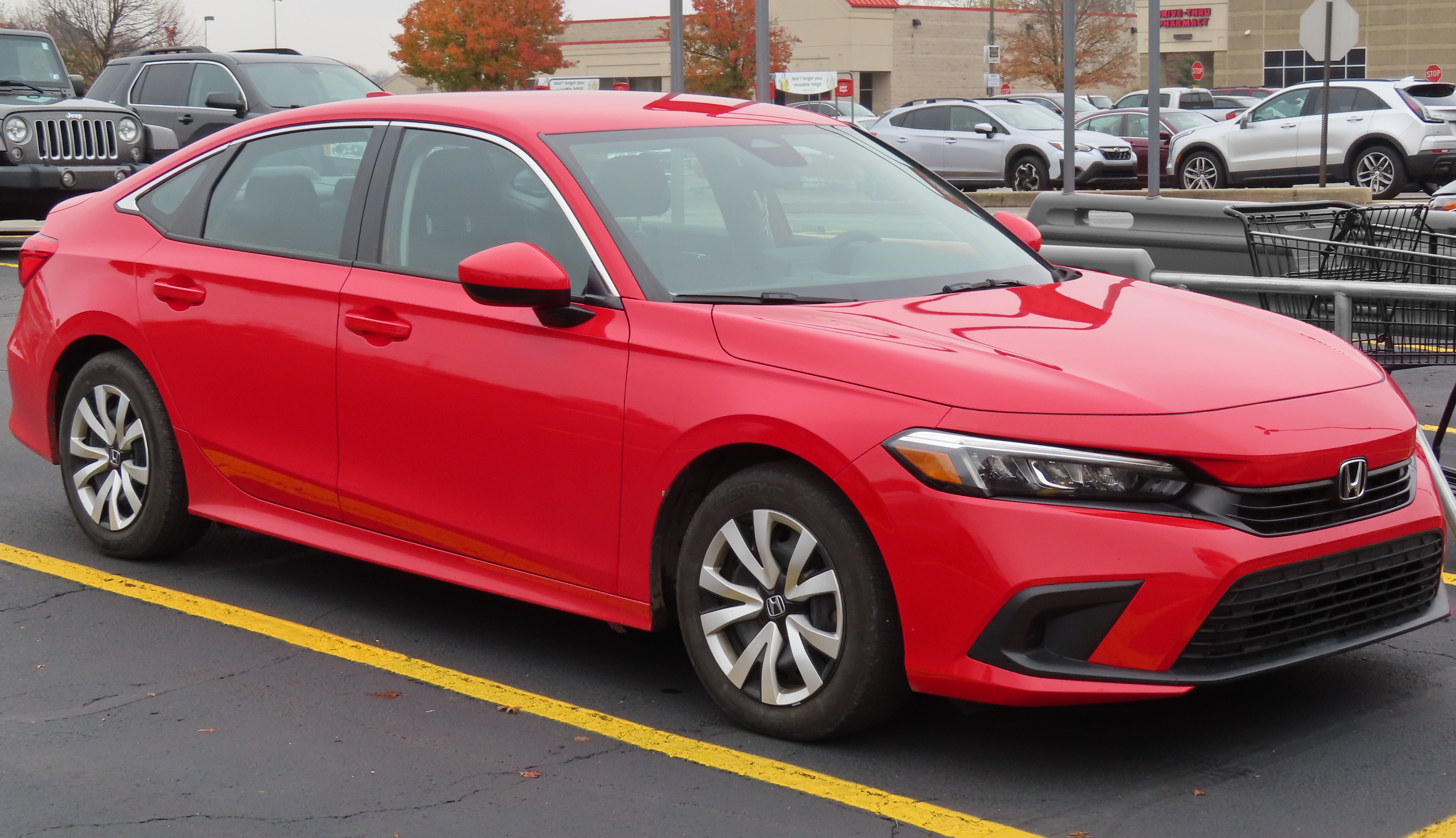
Honda Civic
"... was, you know, came out with the Accord and the Civic and, you know, Toyota had been going for a long t..."
The Honda Civic is a smaller, everyday car made by Honda. It’s known for being practical and usually not too expensive to run. The podcast may mention it when talking about how Honda gained popularity with cars that fit daily life.
The Honda Civic is Honda’s compact car line, widely known for being efficient and straightforward to own. It’s significant historically because it helped cement Honda’s presence with affordable, dependable daily transportation alongside the Accord. In a podcast, it often gets mentioned when discussing Honda’s early momentum in the mainstream market.
Mercedes
"And then you had BMW and Mercedes and Audi. And, you know, they all tried to make inroads into this country."
Mercedes is a well-known luxury car brand. The host is mentioning it as another company that tried to win U.S. customers during the same period. It’s more about brand competition than car mechanics.
Mercedes (Mercedes-Benz) is mentioned alongside BMW and Audi as a European brand that tried to grow its presence in the U.S. market. The host’s broader argument is about how brand perceptions and manufacturing quality influenced buyer preferences over time. It’s a market-history reference rather than a model-specific one.
BMW
"And then you had BMW and Mercedes and Audi. And, you know, they all tried to make inroads into this country. BMW has been very successful."
BMW is mentioned as a European automaker that successfully gained ground in the U.S. market after Japanese brands became popular. The point is about competitive market shifts—how different brands “made inroads” with buyers. It’s not a technical discussion, but it frames the broader auto-industry landscape.
Audi
"BMW has been very successful. Mercedes has as well. Audi, not so much."
Audi is another major German car brand. The host is saying it didn’t gain as much ground as some other European brands in the U.S. at the time. It’s a general competition story, not a specific car review.
Audi is referenced as a European automaker that attempted to expand into the U.S. but was described as less successful than BMW and Mercedes. This is used to support the episode’s theme of shifting brand influence and competition. No specific Audi model or technical detail is discussed.
Hyundai and Kia
"But they've got a heck of a competitor with Hyundai and Kia right now. Okay, I'll be right back."
Hyundai and Kia are mentioned as current competitors to the Japanese automakers. The host frames them as a “heck of a competitor,” implying they’ve improved enough to pressure traditional players. This is a market-competition point rather than a technical explanation.

Alfa Romeo Spider 1600 Veloce
"I went and picked up a 1965 Alfa Romeo, Spider 1600 Veloce. That's a long name, but it's a special car. It's, it's an $80,000 to $100,000 car."
This is a classic Alfa Romeo roadster from the 1960s. “1600 Veloce” basically means it has a 1.6-liter engine and a more performance-focused setup. These older cars can be worth a lot more when they’ve been cared for and you can prove it with paperwork.
The Alfa Romeo Spider 1600 Veloce (from 1965, as mentioned) is a classic Italian roadster known for its lightweight feel and enthusiast appeal. The “Veloce” name typically indicates a more performance-oriented trim, and the 1600 refers to the engine displacement. Cars like this are often valued heavily when they’re well documented and maintained.
National Register of Historic Places
"he lives in a, I think I mentioned this the other day, but he lives in a house. It was, it's on the National Register of Historic Places built in 1847, way out in the country in Greenback, Tennessee."
This is a U.S. list for places that are considered historically important. The host brings it up to show the owner’s environment and mindset are focused on preservation. It’s meant to connect that careful approach to how he maintains his cars.
The host mentions the owner’s home being on the National Register of Historic Places, which signals historical significance and often implies careful preservation. While not an automotive term, it supports the theme of stewardship and long-term care. That context helps explain why the owner’s car records and preservation mindset are so meticulous.
keeping records of your oil changes and saving bills
"I talked to folks about the importance of keeping records of your oil changes and keep that in your car. You know, anytime, anytime you spending money on the car, just get a copy of the bill and fold it up, put it in your glove box. And then when you go trade the car, you've got all this great evidence that you took care of your vehicle."
The host is emphasizing “paper trail” maintenance—keeping receipts and service records (like oil change bills) to prove the car’s history. For classic and enthusiast cars, detailed documentation can increase buyer confidence, support resale value, and help justify condition claims. It also helps establish that maintenance was done consistently rather than “on faith.”
documentation (original documents, records)
"I've never seen anything like it all the original documents for when the vehicle was purchased. And all of that adds tremendous value to this vehicle... a lot of people... don't have any records whatsoever. And that really hurts the value of it."
They’re saying that keeping paperwork—like when you bought the car and what work was done—matters a lot. Buyers trust the car more when the history is documented, so the car can be worth more.
The host emphasizes that having original purchase documents, service records, and books can significantly increase a car’s value. In collector circles, documentation helps prove history, ownership, and maintenance—reducing uncertainty for buyers.
car collectors aging out
"But this is what's happening to a lot of folks. You know, we're just aging out. You know, we're car collectors and we've kept these vehicles in our basements or in our garages."
A lot of car owners who’ve kept their cars for decades are getting older. Eventually they have to sell, and that can affect how much those cars are worth and how easy they are to find.
The host is describing a common collector-market shift: owners are getting older and can no longer store, maintain, or enjoy their cars. When collectors “age out,” cars often hit the market with varying levels of documentation and condition, which can change pricing and availability.
market is getting softer
"But if you have an old car and know somebody that does and they're getting older, now's the time to think about getting rid of it because the market is getting softer."
When the market is “softer,” it usually means people are buying less and prices can drop. The host thinks it’s partly because younger generations aren’t as interested in some older car types.
“Softer” market conditions mean demand is easing and prices may decline, especially in niche segments. The host ties this to generational change—fewer younger buyers are interested in certain older car categories.
collector car segments (50s/60s) dropping
"Because, like I say, for certain car segments, 50s, 60s, these cars are starting to drop because the people who love those cars are dying."
They’re saying some older cars from the 1950s and 1960s are starting to lose value. That’s because fewer people who grew up loving them are around or passing the interest on.
This segment explains how specific eras—like 1950s and 1960s cars—can lose value when the people who love them are no longer around to sell or buy. It’s a demand-side story: fewer enthusiasts means less pricing power.

Ford Mustang
"Now, there are some cars that are, I guess, that are always going to have some degree of interest, you know, like Mustangs, vintage Mustangs and Broncos and Corvettes and BMWs."
They’re using Mustangs as an example of a car people still want. When a model has a lot of fans, it usually holds value better than cars that only a small group cares about.
The host lists “Mustangs” as an example of a car type that tends to keep interest over time. In collector markets, certain models maintain a broader fan base, which can help pricing stability compared with more niche vehicles.

Chevrolet Corvette
"...Mustangs, vintage Mustangs and Broncos and Corvettes and BMWs."
Corvettes are another example they give of a car that keeps interest. If lots of people still want them, prices tend to be less fragile.
The host names Corvettes as a type of car that generally stays popular. In collector terms, models with strong enthusiast communities often see more consistent demand across generations.
vehicle becomes an antique
"It's hard to believe that a vehicle built in 2003 would be an antique. But it absolutely does qualify. I mean, 25, well, in some states, in 20 years, but 25 years is generally accepted as the point where a vehicle becomes an antique."
Many places have a special status for very old cars. Once a car is old enough (often around 25 years), it may qualify for “antique” rules that can change how you register it and how you can use it.
Some states treat older cars as “antiques” once they hit a certain age threshold, which can unlock special rules for registration and use. In the segment, they cite the idea that around 25 years is generally accepted as the point when a vehicle qualifies as an antique.
antique vehicle registration
"So if you've got one, you better be thinking about what you're going to do with it. Well, thanks for listening to this edition of our car guru."
If your car qualifies as an antique, you may need to change how you register it. The rules can vary by state, so it’s smart to figure out what’s required before you assume anything.
The hosts connect “antique” qualification to planning ahead for what you’ll do with the car. That usually matters because antique status can affect registration requirements, inspections, and permitted driving/use depending on the state.
Request an Explanation
Heard something you'd like explained? We'll add it to this episode.
Sign in to request explanations for terms you heard.
Want to learn more?
Browse our glossary for plain-English explanations of automotive terms, jargon, and concepts.
Help improve this episode
See something that's not quite right? Our annotations are AI-generated and can sometimes miss the mark. Click the flag icon on any annotation to suggest a correction.