
About this episode
The hosts bounce from modified pickup trucks and the Aston Martin Cygnet’s bizarre price rise to Ferrari EV camouflage, Jason Plato’s purple jacket, and a wonderfully nerdy Car and Classic rabbit hole around a TWR Jaguar XJS. They also spend time on the fading Mercedes SL buyer, the appeal of low-slung estate cars like the VW ID.7 Tourer, and a scramble full of rare spots, model-car gifts, and minor mechanical drama. The closing stretch veers into chocolate chemistry and quirky motoring accessories.
Jonny and Richard invent a new crime-fighting show for two former colleagues. Also in this episode, modified Ford Rangers and the Mercedes X-Class, the incredible camo of the Ferrari Luce, a fabulous old Jag from Car & Classic, the fall of the Mercedes SL, fun times at the recent Bicester Scramble, and teenage blender abuse.
For early, ad-free episodes and extra content go to patreon.com/smithandsniff
To buy merch and tickets to live shows go to smithandsniff.com
This episode is sponsored by Car & Classic https://candc.li/uc1yqz
Hosted on Acast. See acast.com/privacy for more information.
tailgate
"[116.0s] My reference for lychee-scented mermaid's tears is the vape, [120.5s] which comes out of them when they seem to cog it past me, [124.6s] or tailgate with quite an aggressive bonnet height because they've been lifted."
“Tailgate” means driving too close behind another car. It’s a risky, aggressive driving habit.
In driving talk, “tailgate” means following another vehicle very closely. It’s not a technical car term, but it’s a specific driving behavior that affects safety and how aggressive a vehicle’s presence can feel.
lifted
"[116.0s] My reference for lychee-scented mermaid's tears is the vape, [120.5s] which comes out of them when they seem to cog it past me, [124.6s] or tailgate with quite an aggressive bonnet height because they've been lifted. [129.7s] And the track width has been widened."
“Lifted” means the truck sits higher than it did from the factory. It can help with rough roads, but it can also make the tires and steering behave differently.
“Lifted” refers to raising a vehicle’s ride height, typically by changing the suspension. That can increase ground clearance and change how the truck looks, but it can also affect steering geometry and tire wear if not done correctly.
track width has been widened
"[124.6s] or tailgate with quite an aggressive bonnet height because they've been lifted. [129.7s] And the track width has been widened. [132.5s] But at their best, they look like somebody who has spent a lot of time in the gym,"
“Track width” is how far apart the wheels are on the same side of the truck. Making it wider can make the truck feel more stable, but it can also cause extra wear if the setup isn’t right.
Widening “track width” means increasing the distance between the left and right wheels on the same axle. This is often done with wheel spacers or different wheels/offsets, and it can improve stability and cornering feel, but it may also stress components if pushed too far.

Ford Ranger
"And I think these mad rangers, Ford rangers, [172.5s] and to anyone that doesn't know about the Ford Ranger,"
The Ford Ranger is a pickup truck. It’s smaller than the Ford F-150, but it has a similar “truck” style. The hosts bring it up to explain what it is for listeners who don’t know it.
The Ford Ranger is a midsize pickup truck sold in many markets outside the U.S. In the segment, the hosts describe it as being similar in look and vibe to the Ford F-150, but smaller. That size difference matters because it changes how it drives, parks, and how it’s used day to day.

Ford F150
"it's basically a small, now it looks so much like the F-150, [180.7s] but they're just shrunk down a little, isn't it?"
The F-150 is a big American pickup truck. The hosts mention it to help you picture the Ranger as a smaller truck with a similar look. It’s basically the “bigger cousin” in the lineup.
The Ford F-150 is a full-size pickup truck and one of the most common U.S. trucks. In this segment, the hosts use it as a reference point to explain that the Ford Ranger looks and feels like a smaller version of the F-150. That comparison helps listeners understand the Ranger’s size category.
truck culture
"But also for context for people overseas, [191.6s] that truck culture is not the same here as it is in the US. [194.9s] No."
“Truck culture” just means how normal trucks are in a place and what people typically use them for. The hosts are saying that in the U.S. (and parts of Australia) trucks fit more naturally into outdoor lifestyles, while “here” it’s different. That’s why the same kind of truck can feel more or less common.
“Truck culture” refers to how trucks are used and valued in a region—who drives them, what people use them for, and what’s considered normal. The hosts contrast U.S./Australia attitudes with “here,” arguing that outdoor life and camping habits differ by country. That difference affects how common pickups feel in everyday life.
camper vans
"Yeah, we do camper vans if we're going to do outdoorsy-ness. [208.0s] We do camper vans. [209.5s] Yeah, you don't haul a load of tents into the wilderness"
Camper vans are vans converted for living and sleeping while traveling, often with a small kitchenette and bed setup. The hosts use camper vans as an alternative to hauling tents and gear into the wilderness, describing a more common “outdoorsy” approach in their region. It’s a lifestyle/usage contrast rather than a specific vehicle model.
pickup trucks as family cars
"They tweaked the rules again, didn't they? But for a while it was like just, it was open season of getting pickup trucks as family cars because you could claim the vet back."
They’re talking about people buying pickup trucks for normal family life—school runs, errands, and road trips—not just for work hauling. The reason it happened is that rules and taxes sometimes made pickups a better deal than other vehicles.
This refers to the idea of using a pickup truck for everyday family needs, not just hauling. In some places, tax or regulatory rules can make pickups cheaper or more advantageous to own, which encourages families to buy them even if they don’t regularly haul cargo.
rebadged
"And I've heard from a few people that Mercedes X-classes, which are obviously rebadged Nissan Navaras, not Navaras, that's a Rimac Navaras, and which actually wasn't a very good truck."
“Rebadged” means the same car or truck is sold with a different brand badge on it. The changes are often mostly cosmetic or branding, not a totally new vehicle.
“Rebadged” means a vehicle is sold under a different brand name while keeping most of the same underlying design and components. It’s common in pickup trucks and commercial vehicles where manufacturers share platforms to reduce development costs.
heated seat buttons
"It was a pretty thorough job to try and murkify it. But then for some reason the heated seat buttons were still sort of glumping great Nissan ones"
These are the switches/buttons you use to turn on seat heating. The speaker is saying Mercedes changed a lot of the cabin, but the heated-seat controls still felt like the Nissan design.
Heated seat buttons are the user controls that turn on and adjust seat heating. Their mention here is mostly about perceived carryover of the control layout from the Nissan version into the Mercedes interior.
premiums
"Why did you leave those? Do you know, I think right now, because Mercedes doesn't do a pickup right now and yet if the premiums and the desirability of these old X-classes is that high..."
Here, “premiums” means extra money people are willing to pay for something because it’s desirable. They’re saying the X-Class might be getting higher prices because people want it.
In car-market talk, “premiums” refers to higher-than-average prices buyers pay for a specific model or configuration due to desirability. The hosts connect premiums to how in-demand the old Mercedes X-Class is.
Rivian
"A Rivian that was rebadged and re-sculpted as a Mercedes truck would actually be really cool. I assume that Volkswagen would want that to shut that down right away..."
Rivian is a company that makes electric trucks and SUVs. The hosts are talking about Rivian’s vehicles and technology being used or rebranded by other brands.
Rivian is an electric-vehicle brand known for trucks and SUVs. In this segment, it’s mentioned in the context of a hypothetical rebadge of a Rivian vehicle as a Mercedes pickup, and also as a technology supplier.
Volkswagen
"I assume that Volkswagen would want that to shut that down right away because they've got a deal with Rivian, haven't they, sir? Have they still?"
Volkswagen is a big car company. Here, they’re basically saying Volkswagen might not want Rivian-related plans to spread too fast because of existing deals.
Volkswagen is a major automaker that the hosts reference as having a business relationship involving Rivian technology. The point is that partnerships and licensing can affect whether one brand can move quickly on similar ideas.
International Harvester
"Ah, the scout! Not to be confused with international harvester."
International Harvester is an older company name. They bring it up just to make sure you don’t mix it up with “Scout,” which is a different thing.
International Harvester is a historical industrial and vehicle-related company name. The hosts mention it only to prevent confusion with “Scout,” which sounds similar but refers to a different entity.
IP
"Yeah, well, yes, it's sort of they bought all their kind of IP, didn't they, from a car boot sale or yard sale or something."
IP means intellectual property—things like technology, designs, or software that are legally protected. The hosts are saying Scout acquired rights to use some of that stuff.
IP stands for “intellectual property,” meaning legally protected creations like designs, technology, or software. The hosts claim Scout “bought all their kind of IP,” implying they acquired rights to use certain technology or designs.
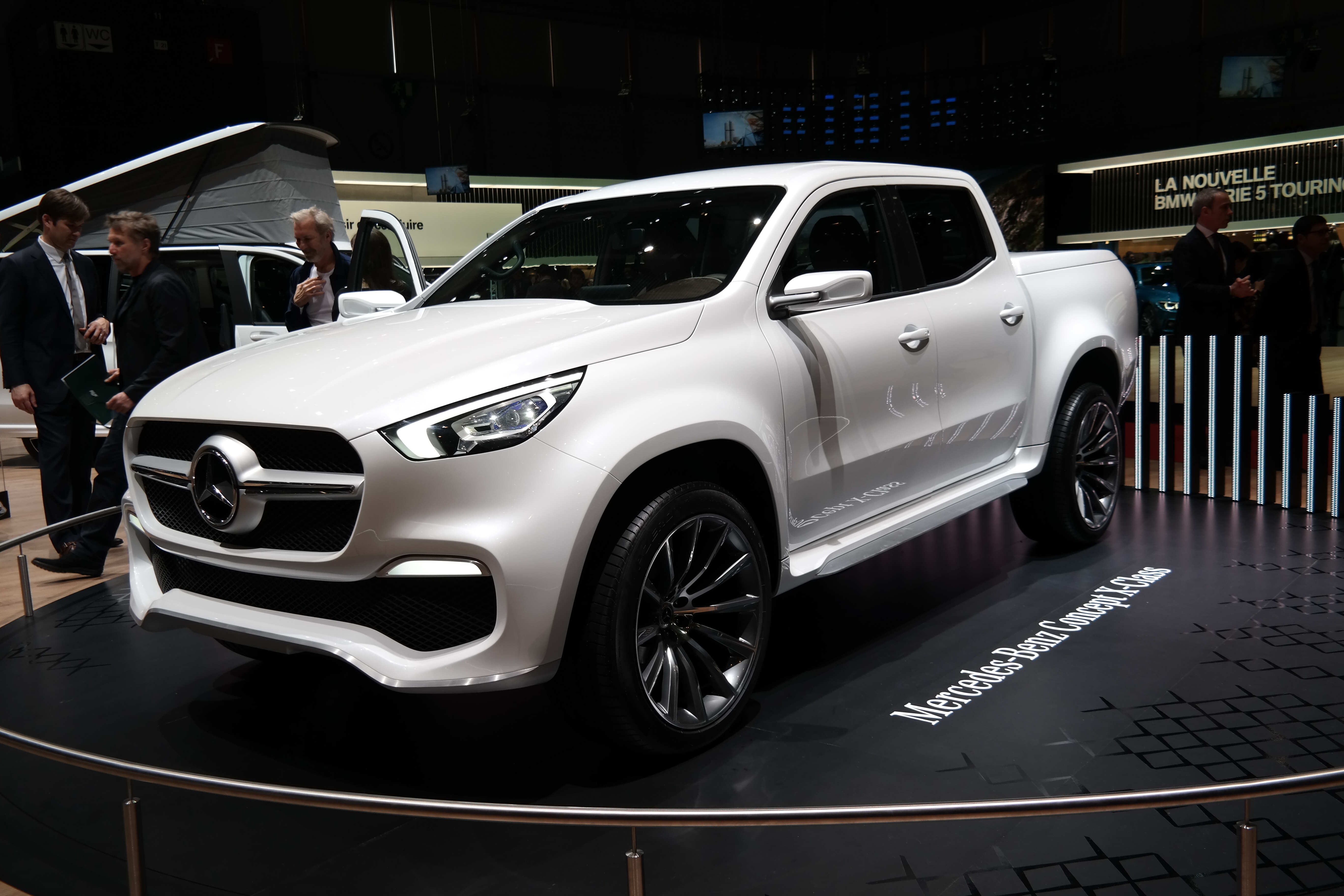
Mercedes X-class
"The thing about the Mercedes X-class is that it was incredibly short-lived, so I presume at the time it absolutely tanked. That's why I'm kind of curious that now there's this demand for them..."
The Mercedes-Benz X-Class is a Mercedes pickup truck. It didn’t sell for very long when it was new, but people still talk about it because you can find them used—and sometimes they’re modified in odd ways.
The Mercedes-Benz X-Class is a pickup truck that Mercedes-Benz sold for a short period. It’s often discussed as a niche model because it didn’t have long-term momentum when it was new, but some buyers later developed interest as used values and availability changed.
second hand market
"And now, two, three, four years down the line, suddenly the second hand market cottons on and goes, well, hang on a minute, that's a bit cool."
This means the market for used cars, not brand-new ones. The hosts are saying that after some time, more people started wanting the car, so used prices rose.
“Second hand market” refers to used-car trading—prices and demand set by what buyers are willing to pay for cars that are already owned. In the segment, they’re saying the used market started valuing the Aston Signet more after a few years.
collector cars
"Yeah, but I think for Aston people, it's going to be like the PLP 50 in the collection, where it's like..."
Collector cars are cars people buy because they’re special or rare, not because they’re the best daily driver. The hosts are saying collector demand can make prices jump.
“Collector cars” are vehicles bought primarily for rarity, history, or enthusiast interest rather than everyday transportation. The hosts connect this to how certain models (like the Aston Signet) can appreciate quickly once collectors decide they’re desirable.
bubble cars
"Yeah, so if you're collecting cars, bubble cars have risen in price exponentially,"
Bubble cars are very small, old-style cars with rounded, “bubble” shapes. The hosts are saying that even these weird little cars can become much more expensive over time when collectors want them.
“Bubble cars” are tiny, lightweight microcars (often from the postwar era) with rounded “bubble-like” styling. The hosts claim bubble cars have risen in price exponentially, using them as an example of how niche vehicles can become valuable collector items.

Aston Martin badge
"I saw an IQ and someone had just slapped an Aston Martin badge on it. Brent, obviously it doesn't look like an IQ, or like a signet because it hasn't got the grill, but it was a noble effort all the same just to sort of go."
A badge is the logo/emblem on a car. Here, someone put an Aston Martin logo on a different car to make it look like an Aston Martin.
The Aston Martin badge is the brand emblem used on Aston Martin cars. In this segment, it’s mentioned as something someone added to an unrelated car to make it look like an Aston Martin.
laser cutting
"Now with laser cutting and 3D printing and all the other things, you could create an Aston signet clone with not a lot of money."
Laser cutting is a machine that uses a laser to cut materials very precisely. They’re suggesting it could be used to make custom parts for a DIY car makeover.
Laser cutting uses a focused laser beam to cut or shape materials with high precision. In the segment, it’s mentioned as a tool that could help fabricate custom exterior parts for a “clone” look.
3D printing
"Now with laser cutting and 3D printing and all the other things, you could create an Aston signet clone with not a lot of money."
3D printing makes physical parts from a computer design, one thin layer at a time. They’re saying it could help you fabricate car parts cheaply for a DIY “clone” look.
3D printing builds parts layer-by-layer from a digital model. Here, it’s referenced as a way to produce custom components for a car appearance conversion without the cost of buying OEM parts.
signet front bumper
"I was curious about something, so I've just looked on eBay and I wondered if you could buy a signet front bumper. And you can, there's one here. Aston signet front end."
The front bumper is the part at the very front of the car. They’re discussing buying a bumper meant for an Aston “Signet” to swap onto a different car for the appearance.
A “front bumper” is the body panel at the front of a car, designed to absorb minor impacts and protect components behind it. The speakers are specifically talking about buying a “signet” front bumper to modify the look of another car.
grill
"New grill, razor fit, pre-owned. Have a guess how much they're asking for it."
The grille is the front “face” of the car—usually the mesh area behind the bumper. It helps air reach the engine cooling system, but it also changes the car’s look a lot.
A car grille is the front opening (often with slats or mesh) that sits behind the bumper. It’s mostly for airflow to cooling components, but it’s also a major styling cue, which is why swapping it can be expensive.
bonnet vents
"Well, if you want to be authentic, you've got to do the bonnet vents and then the back's slightly different, isn't it?"
Bonnet vents are openings on the hood (bonnet) that help manage airflow and heat. On many cars, they’re also part of the visual “authentic” look, so adding them can be required for a replica or styling conversion.
3D scan
"But if you just borrow one and 3D scan it and I've got friends in the industry who would just go, yeah, I'll make you those grills."
A 3D scan is a way to digitally copy the exact shape of something. Here, they’re saying you could scan a grille and then have someone make matching replacements.
A 3D scan captures the shape of a physical part using sensors, producing a digital model. In this context, the speaker suggests scanning an existing grille/part so a maker can reproduce it accurately.
composites
"Yeah, I'll do that for you. Make them out of composites and Bob's your jingle."
Composites are materials made by combining different substances (often fiberglass/carbon fiber with resin) to create a strong, lightweight part. The speaker implies making the grille from composites to keep it light and workable for custom fabrication.
Hispano-Sweezer
"I've got a Hispano-Sweezer IQ. I'm going to call it the, I don't know,"
“Hispano-Sweezer” sounds like a made-up or misheard name they’re using for a product/car reference. The conversation doesn’t give enough detail to know what real car brand it corresponds to.
Hispano-Sweezer appears to be a fictional or misheard brand name in the transcript. It’s being used like a car brand/model reference, but there isn’t enough context to identify a real automotive manufacturer.
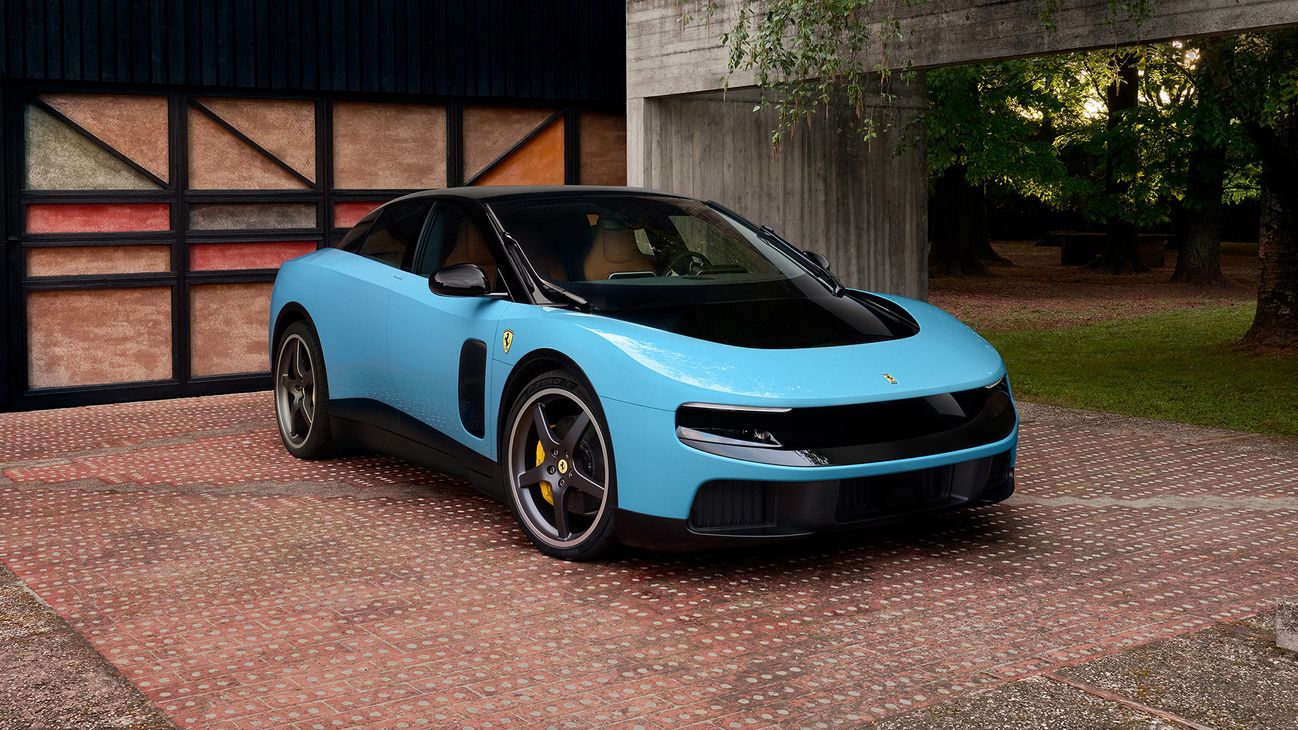
Ferrari Luce
"You know, we've seen the interior of the Luce. Yeah. We've talked about it a lot actually, haven't we?"
They mention “Luce” as the name of the Ferrari EV they’ve already seen the interior of. It’s basically the specific upcoming electric Ferrari they’re talking about.
“Luce” is mentioned as a Ferrari EV whose interior they’ve seen. In this segment, it’s treated like the specific upcoming model name, but the excerpt doesn’t provide enough detail to confirm the exact branding/model format beyond what’s spoken.
camouflage prototypes
"The camouflage prototypes have a very boxy, a lot of camouflage on them. And the wipers look really bonky."
A “camouflage prototype” is a test car that’s covered up so people can’t easily see what the final production design will look like. It helps the company keep the real shape and details secret while testing.
“Camouflage prototypes” are test vehicles covered in patterns or coverings to hide the final styling and details. Automakers use them during development so competitors and the public can’t easily identify the production design.
wipers
"And the wipers look really bonky. Like I cannot figure out that. Those can't be production spec wipers."
They’re pointing out that the windshield wipers on the prototype look odd. On test cars, parts like this can look different from the final production version.
The hosts are discussing the windshield wipers on the prototype. Prototype wiper shapes and mounting can look unusual because the car’s final glass, aerodynamics, and packaging may still be in flux during testing.
production spec
"Like I cannot figure out that. Those can't be production spec wipers. They actually look too big for the windscreen."
“Production spec” means the real parts that will go on the finished cars customers buy. They’re saying the prototype’s wipers don’t look like the final version.
“Production spec” means the final, production-intent configuration of a component—what will actually be used on the cars that get built for customers. The hosts are saying the prototype wipers don’t look like the final production parts yet.
Renault
"when Renault called their little electric car the Zoe, they got sued by people in France called Zoe Renault"
They bring up Renault as the company that got into trouble over a car name. The story is about legal risk when two products use the same name.
Renault is referenced in a naming dispute involving an electric car called “Zoe.” The point is that Renault faced legal pressure over the use of a name that others claimed was theirs.

Renault Zoe Renault
"Because I always think of Lucey, the new Ferrari Lucey. They want to stay clear of Lucey because remember when Renault called their little electric car the Zoe,"
The Renault Zoe is an electric car model. They mention it because the name “Zoe” became part of a legal dispute.
Renault Zoe is Renault’s electric hatchback. In the segment, it’s used as an example of how a car name can become legally contested if another party claims trademark or naming rights.
camo job
"I'm looking forward to seeing it because I think that it's probably the greatest, alongside the new Jag, I think it's the greatest camo job of our times. When most prototypes now just have a sort of lazy zebra wrap"
A “camo job” is the cover and disguising material put on a test car. It’s meant to keep people from seeing what the real production design will look like.
A “camo job” is the heavy camouflage automakers use on prototype cars to hide styling details and sometimes key components during testing. The hosts compare how this Ferrari prototype uses more elaborate disguise than the typical “wrap” approach.
zebra wrap
"When most prototypes now just have a sort of lazy zebra wrap on them with maybe a little bit of polystyrene underneath"
A “zebra wrap” is the black-and-white patterned covering you often see on test cars. It makes it harder to tell the car’s real shape and design.
A “zebra wrap” is a common prototype camouflage method: a high-contrast pattern (often black-and-white) applied as a vinyl wrap. It helps obscure body lines and proportions while still allowing engineers to test the car.
polystyrene
"with maybe a little bit of polystyrene underneath just to hide some features, the way that they've really gone to town on that Ferrari is fascinating to me"
They mention polystyrene foam as part of the prototype disguise. It’s used to cover up or alter what you can see while the car is still being tested.
Polystyrene is referenced as a lightweight foam used under camouflage to block or reshape visible features on prototypes. In this context, it’s part of the disguise package to hide details from cameras and observers.
McLaren
"I think Ron Dennis was the one at McLaren who sort of first set this precedent that if you're going to be a serious operation in top level motorsport, it extends to you all wear the corporate clothes and stuff like that."
McLaren is a famous racing team and car brand. Here, they’re using it as an example of how serious racing teams also look professional—down to what people wear.
McLaren is a British motorsport brand best known for Formula 1 teams and high-performance road cars. In this segment, the host mentions Ron Dennis at McLaren as an early example of treating team branding and “corporate” presentation as part of being a serious operation in top-level racing.
Plato
"And it was really interesting that Plato has decided that's the right way to go because he thought he could do the kind of hey, we're the outsiders, we're punky, we're different. Everyone just wear your home clothes."
“Plato” here is a racing driver being talked about in terms of how he and his team present themselves. The point is about image—whether they look like outsiders or like a polished, corporate team.
In motorsport context, “Plato” refers to a racing driver (often associated with touring-car racing) who is being discussed as making a branding/presentation choice. The host contrasts an “outsider/punky” image with a more corporate, team-uniform look.
aerial
"Tiff's jacket gets hitched on the aerial as he goes across the bonnet."
An aerial is the antenna on the car that helps it pick up radio stations. Some older cars have a long antenna sticking up that can get snagged.
An aerial is the car’s antenna used to receive radio signals. Older cars often have a fixed “mast” antenna that can catch on clothing or be damaged.
shark bite mark
"There's an old-school shark bite mark out the back of it, which looks fake, where he's left a bit of it on the aerial."
“Shark bite” is a playful way to describe a noticeable dent or mark on the antenna area—like something took a bite out of it. Here, they’re saying the mark looks suspicious or staged.
A “shark bite” is a common nickname for a small, fin-like antenna mount or a distinctive antenna-related damage/mark. In this context, it’s describing a visible mark on the antenna area that looks like it was altered or damaged.
ITV
"It's the new series coming soon to the ITV, the Leatherman, and they go around solving crimes."
ITV is a TV network in the UK. Here it’s just where the show is airing.
ITV is a major UK television network. In this context, it’s mentioned as the broadcaster for a new series, not as an automotive topic.
carinclassic.com
"I would go to carinclassic, and I would specifically go to the carinclassic.com auction section,"
They mention carinclassic.com as a website where you can browse auctions and see what kinds of cars are available.
carinclassic.com is referenced as a place to look for inspiration, specifically pointing to its auction section. It’s being used like a marketplace resource for finding cars to match the show’s vibe.
Tom Walkenshaw Racing Kit
"We won't get bugged out of that because you've just shown me a 1986 Jaguar XJS V12 with the Tom Walkenshaw Racing Kit on it. And it's white."
This is a named modification package tied to Tom Walkenshaw. It’s basically a “prepared” version of the car, not just a factory stock Jaguar.
The “Tom Walkenshaw Racing Kit” refers to a specific aftermarket or prepared-race style package associated with Tom Walkenshaw. In context, it’s being used to describe how this Jaguar XJS has been modified beyond stock, which can affect its look, setup, and collectability.

Jaguar Xjs
"...d out of that because you've just shown me a 1986 Jaguar XJS V12 with the Tom Walkenshaw Racing Kit on it."
The Jaguar XJ-S is a classic luxury sports coupe made by Jaguar. Some versions have a V12 engine, which is a big part of what makes them special. The podcast mentions a specific modified example, showing how people customize these cars.
The Jaguar XJ-S (often written XJS) is a grand touring coupe from Jaguar, famous for its long-hood styling and, in some versions, a V12 engine. It’s discussed in enthusiast circles because it’s a classic-era Jaguar with a distinct character and strong aftermarket support for upgrades. The podcast specifically references a 1986 XJS V12 with a Tom Walkinshaw Racing kit, which highlights its performance and modification history.
under the hammer
"And this one here is actually, it goes under the hammer on the 1st of May. So when you listen to this, the hammer will have already released and they'll be bidding."
This phrase means the car is going to be sold at an auction. The “hammer” is the auctioneer’s signal that the bidding is happening and the sale is being finalized.
“Under the hammer” is auction language meaning the item is scheduled to be sold at auction when the auctioneer calls the lot. It’s a way of saying the car will be offered for bidding and sold to the highest bidder (assuming it meets any reserve).
pre-bid
"So when you listen to this, the hammer will have already released and they'll be bidding. But you can put a pre-bid on."
A pre-bid is a bid you place ahead of time. That way, when the auction starts, you’re already set up to compete without scrambling at the last second.
A “pre-bid” is an advance bid placed before the auction begins, so you’re already in the running when the lot is called. It’s commonly used for online or timed auctions to streamline bidding.
TWR
"And what I like about this, have you seen the TWR leather steering wheel and coordinating door cards and centre console? I've never seen that before, but quite often when these Jags got modified,"
TWR is a performance brand connected to motorsport and Jaguar tuning. Here, they’re saying the car’s steering wheel and interior details look like they were done by (or inspired by) that TWR style.
TWR (Tom Walkinshaw Racing) is a motorsport and performance brand associated with tuning and styling work on certain Jaguar models. In this segment, the hosts are discussing a TWR-branded steering wheel and interior trim that looks coordinated with the rest of the cabin.
auto shifter
"Normally I love that very delicate little auto shifter in the next GS of that era. But for sportiness purposes, this has got quite a substantial leather-wrapped shaft or head on it maybe."
An “auto shifter” is the gear selector used with an automatic transmission. The speaker contrasts a “delicate little” automatic shifter feel/look with a more substantial leather-wrapped selector head in this car, linking it to perceived sportiness.
US spec quad headlights
"My one quibble, and I'm sure it's easily fixed, is that it's got the US spec quad headlights. Yeah. Do you not down with the quads?"
“US spec quad headlights” means the car has four headlights total, set up to meet US rules. The hosts are saying they prefer the original headlight shape the car was designed with.
“US spec quad headlights” refers to a market-specific lighting configuration where the car uses four headlamps (two per side) instead of the more distinctive single/paired headlamp shapes used in other regions. It’s a visual and regulatory difference tied to the lighting rules in the US.
sealed beam
"They had to have the fixed, you know, the sealed beam. Yeah. Generic lamps."
A sealed-beam headlight is an older style where the bulb and the reflector are all one sealed unit. It’s basically a “drop-in” light that doesn’t get repaired piece-by-piece.
A sealed-beam headlight is a self-contained unit where the bulb and reflector are built into one sealed housing. It was common on older cars because it was simple and durable, but it’s less adjustable and less flexible than modern headlight designs.
quads
"Did you prefer it when they were the quads or not? Actually, you know, hypocritically, I think I prefer an XJ40 on the quads."
“Quads” means the car has four headlights instead of one bigger light per side. They’re debating which headlight layout looks better on the XJ40.
“Quads” here means a headlight arrangement using four separate headlamps (two per side) rather than a single larger lamp per side. The hosts are comparing how the quad setup looks versus the rectangular/single-lamp style on the Jaguar XJ40.
rectangulars
"Because my favorite XJ40, I mean, I've grown to love the rectangulars. I would not say no to an XJ40 on rectangular lamps, but the quads, I like the way that,"
“Rectangulars” means the headlights are shaped like rectangles. They’re saying those rectangular headlights are usually linked with higher trim versions, even if it didn’t always make sense.
“Rectangulars” refers to the headlight shape used on some Jaguar XJ40 variants—rectangular lamp units instead of the quad-lamp layout. The speaker notes that the rectangular design is often associated with higher trim levels, even if the logic didn’t always feel intuitive.

XJ12
"Yeah. But then when they introduced the XJ12, they put the quads on that. Only the Daimler V12 got the oblongs."
The Jaguar XJ12 is a Jaguar sedan that uses a V12 engine. The discussion here is about how Jaguar updated the car’s look and lights when they made the XJ12.
Jaguar’s XJ12 is a version of the XJ saloon fitted with a V12 engine. In this segment, the hosts are discussing how Jaguar changed the front lighting and trim when introducing the XJ12.
oblongs
"Only the Daimler V12 got the oblongs. What is that? I don't know."
“Oblongs” means the headlights are shaped like stretched rectangles/ovals. They’re talking about how one version used a different headlight style than another.
“Oblongs” here describes a different headlight shape—longer, rectangular/oval lamps—used on the Daimler V12 variant. The hosts are contrasting lighting treatments between Jaguar and Daimler-badged V12 cars.
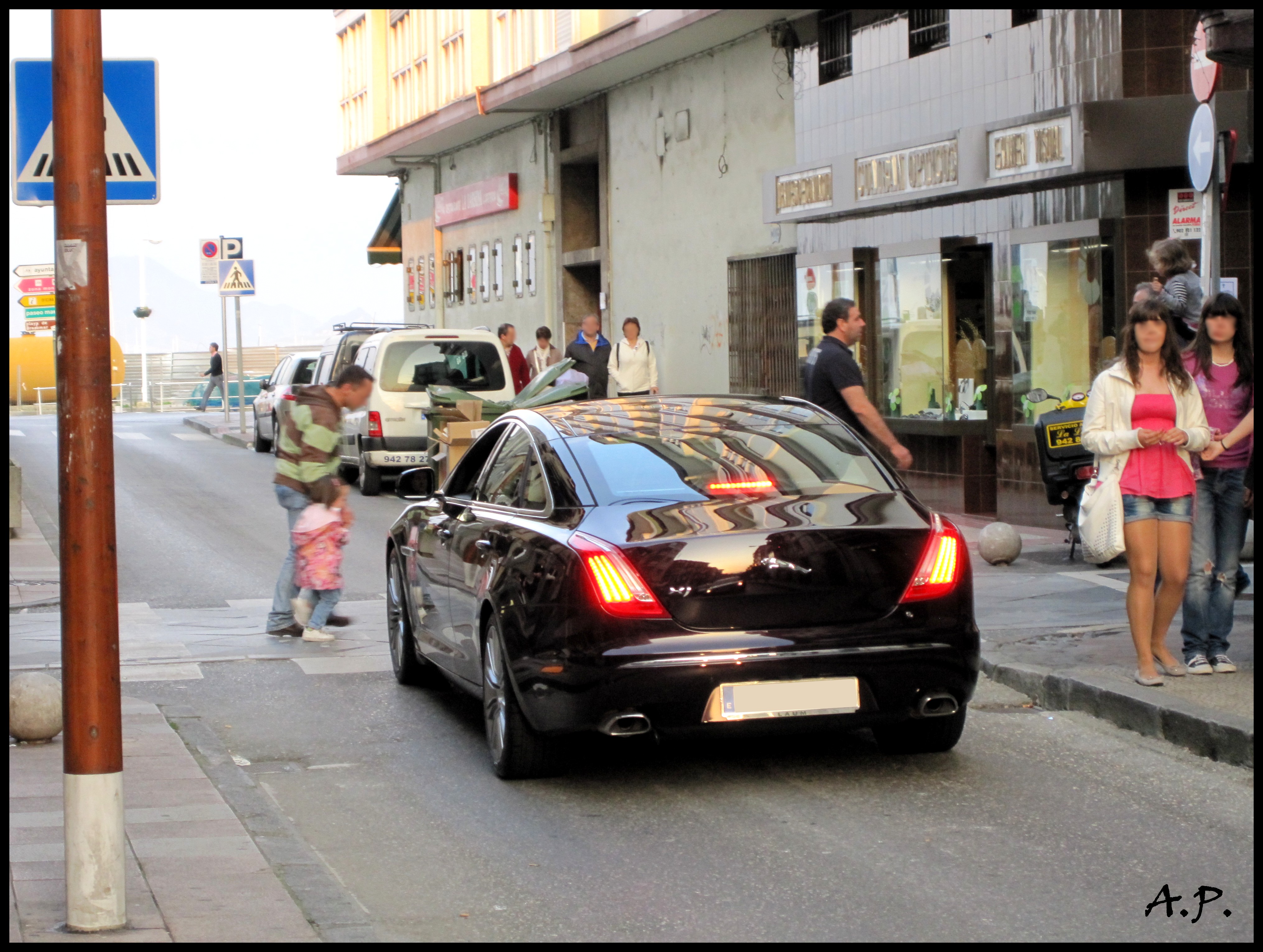
XJ40
"Yeah. The XJ12, by that point, they'd slightly decromed those XJ40s, so you didn't get like a chromed-in B pillar and stuff."
The Jaguar XJ40 is a specific era of the Jaguar XJ sedan. They’re talking about how Jaguar changed the chrome and trim details on that version.
The Jaguar XJ40 is a generation of the XJ saloon (late 1980s era) that received updates over time. Here, the hosts mention “slightly decromed” changes to trim and how that affected the look of the B-pillar and chrome detailing.
decromed
"The XJ12, by that point, they'd slightly decromed those XJ40s, so you didn't get like a chromed-in B pillar and stuff."
“Decromed” means taking off chrome trim or using less chrome. They’re saying the car looked cleaner and more modern after the chrome was toned down.
“Decromed” means removing or reducing chrome trim elements. In this context, it refers to Jaguar dialing back chrome on the XJ40/XJ12 era cars, changing how the body lines and pillars visually “frame” the cabin.
B pillar
"...so you didn't get like a chromed-in B pillar and stuff. You just got a ring of chrome, and it looked a lot neater and more modern."
The B-pillar is the vertical metal post between the doors. It’s part of the car’s body structure, and in this case they’re talking about how chrome on it affects the look.
The B-pillar is the vertical structural panel between the front and rear doors (or between the front door and the rear side window on some designs). The hosts are discussing how chrome applied to the B-pillar changes the car’s visual “window frame” look.
quad lamps
"And the quad lamps and the cross-spoke alloys. That is XJ40 perfection for me."
“Quad lamps” means there are four headlight lamps. It’s a specific front-light layout.
“Quad lamps” refers to a lighting arrangement with four lamps, typically paired left and right. It’s being used as a visual identifier for the XJ12-era front-end treatment.
cross-spoke alloys
"And the quad lamps and the cross-spoke alloys. That is XJ40 perfection for me. So, and it's got a V12."
These are fancy alloy wheels with a cross-shaped spoke pattern. They’re talking about the wheel design because it changes the car’s overall style.
“Cross-spoke alloys” are wheels made from an aluminum alloy with a spoke pattern that crosses (often forming an X-like or multi-branch design). The hosts are using the wheel design as part of what makes the XJ40/XJ12 look right to them.

Jaguar XJ220
"I like them a lot, and they're not too dissimilar to the Jag XJ220, which I was standing next to at the Bisexual Heritage Scramble event."
The Jaguar XJ220 is a famous, very fast Jaguar supercar. The hosts mention it because they’re comparing how another set of wheels looks next to it.
The Jaguar XJ220 is a high-performance supercar from Jaguar, known for its 1990s-era, track-focused styling and big power. In this segment it’s used as a reference point for wheel design and stance.
Lister Jag alloy wheels
"I would say, for me, it has to be the Lister Jag alloy wheels."
Lister is a performance brand that’s closely associated with Jaguar cars. The speaker is saying they like the look of Lister’s Jaguar-style alloy wheels and wish they’d bought a set.
“Lister Jag” refers to Lister’s Jaguar-related wheel designs—Lister is a British performance brand best known for building Jaguar-based race and road cars. Here it’s specifically about the look and perceived build quality of those alloy wheels.

Dodge Avenger
"...furbished. I'm thinking I could put those on the Avenger. I've been scratching my chin, so I'm quite temp..."
The Dodge Avenger is a regular passenger car (a sedan) meant for everyday driving. In the podcast, it’s mentioned because someone is thinking about changing its wheels. That’s a common kind of upgrade for improving look or tire choice.
The Dodge Avenger is a mid-size sedan that’s typically discussed as a practical, everyday car rather than a high-end performance model. In the podcast, it comes up because the speaker is considering adding wheels/tires (“put those on the Avenger”), which points to customization and fitment. That makes it relevant for listeners who want to understand how common parts and upgrades apply to older mainstream sedans.
right-hand drive
"They do occasionally come up right-hand drive in the UK, I've noticed, but they are quite rare, and I don't know."
Right-hand drive means the steering wheel is on the right side of the car. The speaker is saying that sometimes these rare cars show up in the UK in the correct steering layout.
Right-hand drive (RHD) means the steering wheel is on the right side of the car, which is common in the UK and some other countries. The speaker notes that these rare Jaguars sometimes appear as RHD in the UK, which affects importability and desirability.

Plymouth Barracuda
"I'm scrolling down, I found a lovely Plymouth Barracuda, fast back in France of all places. I've noticed a hitch, though, with your plan to make this the star car of the Leatherman"
The Plymouth Barracuda is a famous American muscle car. They’re looking at one they found online and it’s getting considered as the main car for their project.
The Plymouth Barracuda is a classic American muscle car from the late 1960s through the early 1970s, with later reappearances depending on generation. In this segment, the hosts find a Barracuda in an online auction and it becomes part of their discussion about choosing the “star car” for the Leatherman.
fast back
"I'm scrolling down, I found a lovely Plymouth Barracuda, fast back in France of all places. I've noticed a hitch, though, with your plan to make this the star car of the Leatherman"
“Fastback” is a car shape where the roof smoothly flows into the back of the car. It’s a styling term that helps describe the car’s overall profile.
“Fastback” describes a body style where the roofline slopes smoothly down toward the rear, creating a continuous shape rather than a separate trunk. The hosts use it to describe the Barracuda’s silhouette, which is a key part of how these cars look.
Leeper
"which is that it's got the Jaguar Leeper on the bonnet. Oh, sugar. And that, to me, it just suggests"
“Leeper” here sounds like a made-up or specific named car decoration/feature. They’re joking about where to place it on the car—bonnet, grille, or roof—so it looks right.
“Leeper” is being used as a specific named exterior detail/feature on the car’s front (placed on the bonnet, grille, or roof in the discussion). The hosts treat it like a recognizable prop or styling element, debating where it should go for the best effect.
windscreen
"Oh, because I just worry if you put it just on the roof just above the windscreen. Yeah."
A windscreen is the front window of the car. They’re talking about where to mount the feature so it doesn’t look weird right above that front glass.
A “windscreen” is the windshield (the front glass you look through while driving). The hosts worry about placing the “Leeper” on the roof just above the windscreen, implying it could look awkward or be visually intrusive.
ABS breaking
"You know, like, ABS breaking. It was a very, it was a narrow staircase and it was sort of, it wasn't spiral,"
ABS is a safety feature that helps your brakes work better when you stop hard. It keeps the wheels from skidding so you can still steer.
ABS stands for Anti-lock Braking System. It prevents the wheels from locking up during hard braking by rapidly modulating brake pressure, which helps you keep steering control.

R107 Dallas-shape SL
"I think, like, obviously your classic R107 Dallas-shape SL. Yeah."
Mercedes-Benz made the SL in the R107 generation, which is one of the most famous “classic” SL eras. People sometimes describe its look with nicknames like “Dallas-shape” because it became strongly associated with that style from the time.
The Mercedes-Benz SL in the R107 generation is a classic luxury roadster/coupé-cabriolet era. The “Dallas-shape” nickname refers to the styling look that became especially associated with that period’s popular TV-era image.
SL 55
"And then even the follow-up with the roundy lights that sort of conjoined lights that became the SL 55 and stuff, they felt like they were a real hit"
The Mercedes-Benz SL 55 is a stronger, sportier version of the SL. In the episode, they connect it to a particular look change in the headlights and say it felt like a big hit.
The Mercedes-Benz SL 55 is a performance-focused variant of the SL line, known for being more powerful and more “serious” than the base models. The hosts mention it in the context of a styling update (“roundy lights…conjoined lights”) that coincided with the SL 55 era.

Land Rover Range Rover
"But actually, I find it easier to get into, I don't know, a Range Rover or, you know, something that sits higher."
A Range Rover is a luxury SUV. The point they’re making is that it’s easier to climb into because you sit higher.
The Range Rover is Land Rover’s luxury SUV known for a high seating position and off-road capability. Here, it’s mentioned as an easier-to-get-into option because it “sits higher” than lower cars.
engaging their core every time they get in and out of a car
"...the fact that they're, they're engaging their core every time they get in and out of a car, which is, I think, one of the other things I dislike about SUVs is actually helping people to get worse."
They’re talking about how the way you climb into and out of a car can affect your body. A lower car may make you use your core more, while a higher SUV makes it easier and less active.
This is a discussion of how vehicle height and seating position affect body movement during entry and exit. The speaker argues that lower cars force more active use of the core muscles, while higher SUVs reduce that physical demand.
SUVs
"...one of the other things I dislike about SUVs is actually helping people to get worse."
SUVs are taller vehicles. Because they’re higher off the ground, getting in and out can require less effort than in a low sports car.
SUVs (sport utility vehicles) are typically taller than sedans and sports cars, which changes how much you have to bend and step up when entering and exiting. In the segment, the hosts connect that height difference to less core engagement.
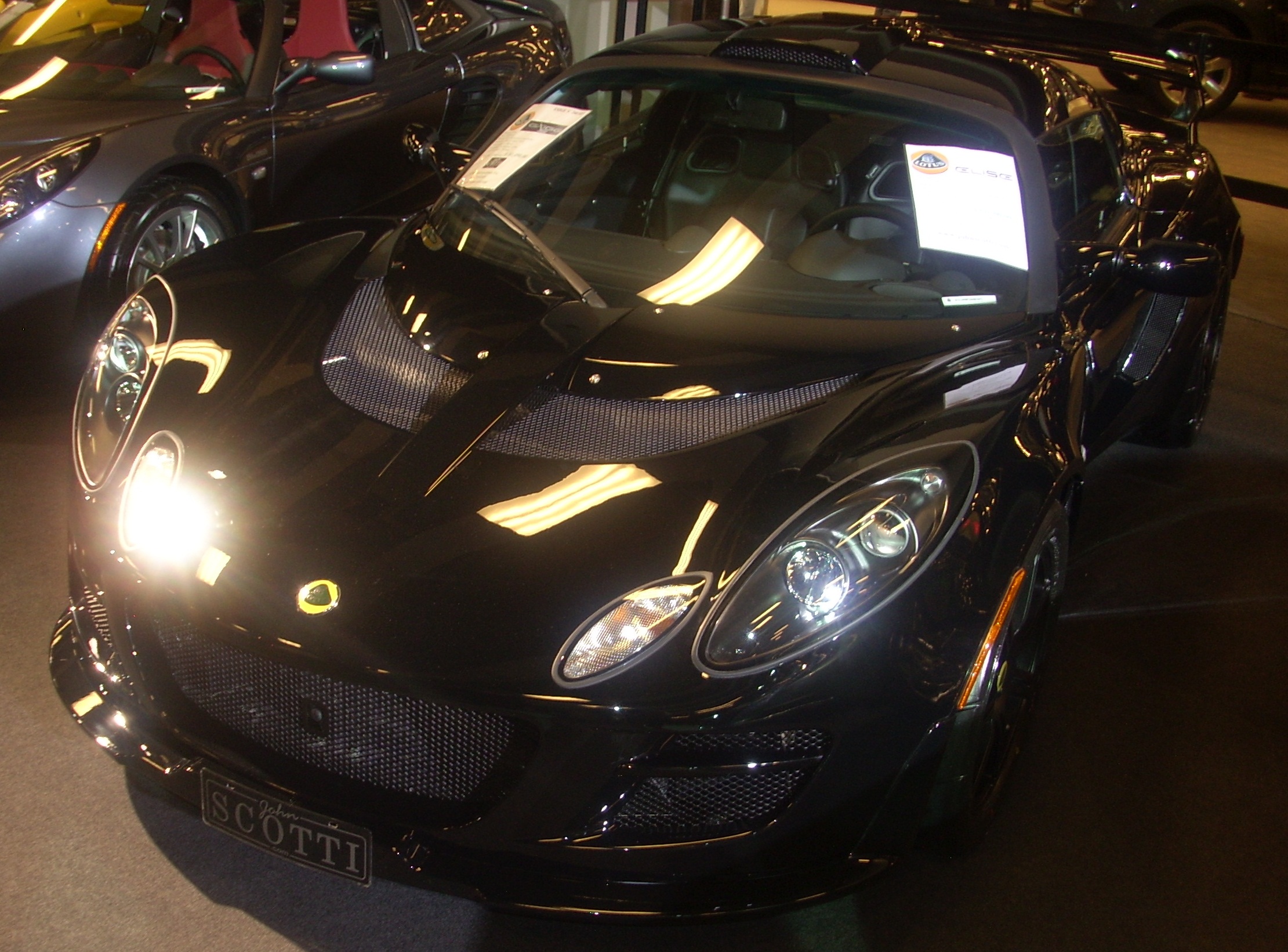
Lotus Elise
"If everybody, if everybody drove around in a car the height of an Elise or a Testerosa, people's core strength naturally would be better"
The Lotus Elise is a small, low sports car. They’re saying low cars make you work a bit more when you get in and out, which can help core strength.
The Lotus Elise is a lightweight, low-slung sports car. The speaker uses it as an example of a car with a low entry/exit height, arguing that getting in and out would engage your core more than higher SUVs.

Toyota Corolla
"But I'm a bit like that getting out of the back of a Corolla or something now. I'm a bit like, oh, hello. This aperture's a little narrow for my liking and a bit low."
A Toyota Corolla is a very common everyday car. Here it’s mentioned because getting out of the back seat can feel awkward—like the door opening is a bit low or narrow, so you have to use your arms more to steady yourself.
The Toyota Corolla is a compact car that’s common as a taxi in many places. In this segment, the host is using it as an example of how the rear seat entry/exit feels—specifically the door opening height and how much you have to reach or step down.
aperture
"I'm a bit like, oh, hello. This aperture's a little narrow for my liking and a bit low. I'd rather be stepping down from something,"
Here “aperture” just means the opening—like the door opening into the back seat. If it’s narrow and low, it can make climbing in or out feel harder.
In this context, “aperture” means the opening size/shape of the car door or entryway. The speaker is judging it like a physical constraint—how narrow and low it is affects how easily you can get in or out.

S-classes
"he was the guy who used to buy S-classes in the 80s and 90s and he would go to Germany and collect them from the factory."
The S-Class is Mercedes-Benz’s top luxury car line. It’s the kind of car people buy when they want a comfortable, high-end sedan rather than something sporty.
The Mercedes-Benz S-Class is the brand’s flagship luxury sedan. In the 1980s and 1990s, it was known for a smooth ride, high-end interior appointments, and a reputation for being “serious” executive transport.

Lexus RX
"I heard he was going to get a Lexus RX. Okay."
The Lexus RX is a luxury SUV. It’s the kind of car people pick when they want something comfortable and practical, but still want it to feel a bit fun to drive.
The Lexus RX is a mainstream luxury crossover SUV from Lexus. In this segment, it’s mentioned as the friend’s dad’s likely “new car” choice, balancing practicality with a desire for some driving excitement.
full electric
"He's not ready to go full electric, but he wants something still with a bit of poke, but also that's economical."
“Full electric” means the car is powered only by electricity from a battery. The person in the story isn’t ready to go all-in on that yet.
“Full electric” means the vehicle runs entirely on electricity stored in a battery, with no gasoline engine. The speaker is saying the buyer isn’t ready to make that switch yet, but still wants a car that feels lively while staying economical.
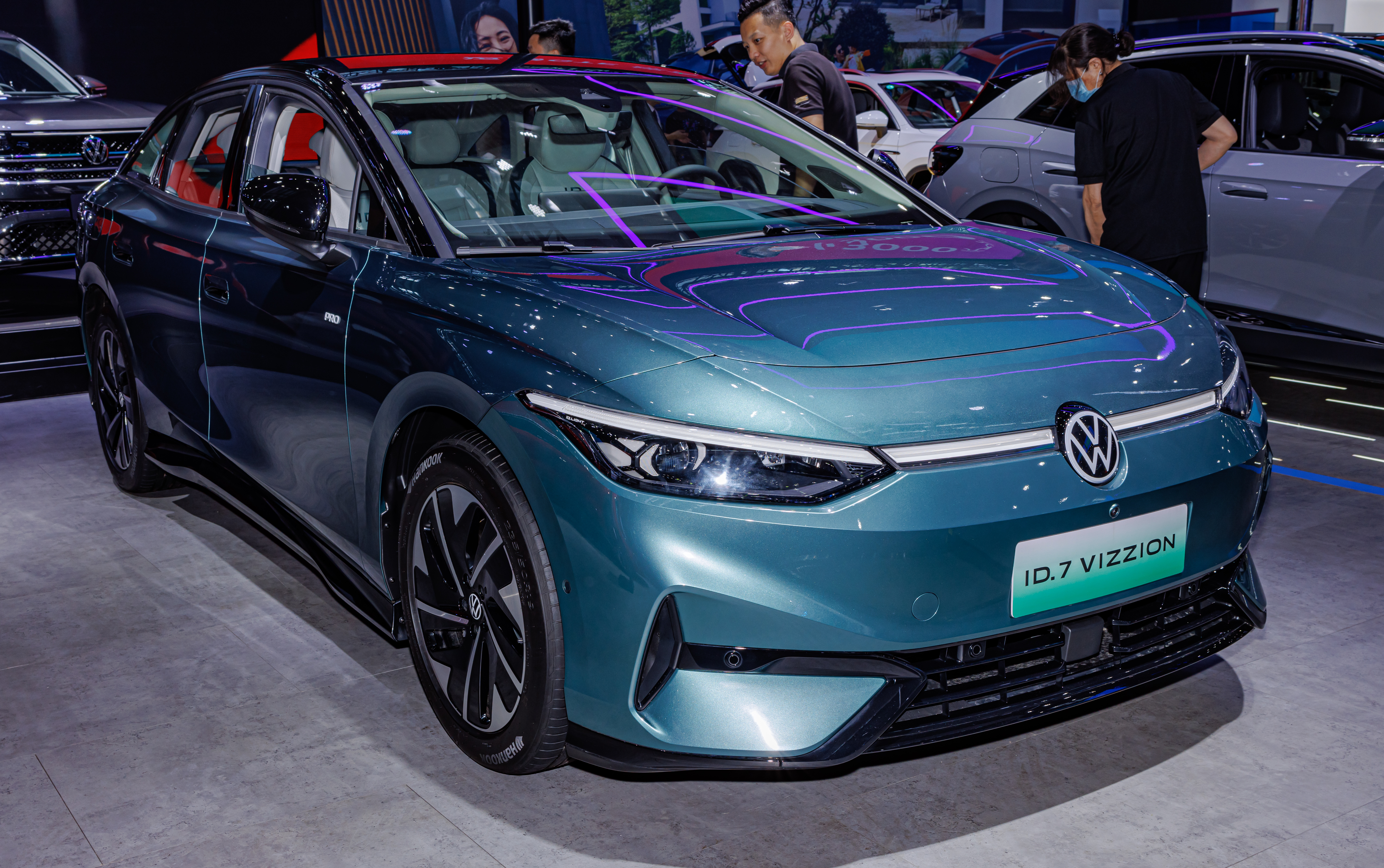
Volkswagen ID7 Tourer
"So last week I was driving a Volkswagen ID7 Tourer. Yeah. And that is right up your strata because it's an estate car. It's not an SUV."
This is Volkswagen’s electric wagon. It’s built more like a family “estate” car so you usually get extra room for bags and passengers compared with smaller cars.
The Volkswagen ID7 Tourer is an electric estate (wagon) variant in Volkswagen’s ID electric lineup. “Tourer” here refers to the body style designed for more cargo space than a typical hatchback or sedan.
launch
"I went on the launch in Milton Keynes and drove the hatchback one"
A “launch” is when a new car model is officially introduced. It often includes special events where people get to drive the car soon after it’s released.
In automotive context, a “launch” is the official introduction of a new model to the market, often with press events and early customer deliveries. Driving on a launch usually means the car is brand-new and still being evaluated by journalists and early adopters.
mega range
"if you want it, but also mega range on it. I've heard about the range."
For an electric car, “range” means how far it can go before the battery runs out. They’re saying this one goes farther than expected.
“Range” here means how far the car can drive on a single charge, which is a key metric for electric vehicles. The speaker links the strong range to efficiency factors like aerodynamics and vehicle design.
low and aero
"And I think it's partly because it's low and aero. "
“Aero” means the car’s shape is designed to cut through the air more easily. If the car sits low and is streamlined, it wastes less energy, so it can drive farther.
“Aero” is short for aerodynamics—how easily air flows around the car. A “low” stance and good aerodynamic shape reduce drag, which helps an EV travel farther because it needs less energy to maintain speed.

Volkswagen Arteon
"The Arteon is up there. Yes. I've borrowed a couple of Arteons. I don't know if anyone listening to this has owned or owns an Arteon, but you don't see many on the road."
The Volkswagen Arteon is a VW model that looks a bit more stylish than a regular sedan. The hosts are saying they don’t see many of them, and they like how it looks—especially in the wagon-like version.
The Volkswagen Arteon is a fastback-style liftback/sedan from VW that’s meant to look more upscale than a typical family car. In this segment, the hosts talk about seeing it on the road, how it stands out versus other badge-heavy cars, and how they like its wagon-like “shooting break” body style.
Audi
"So when you do see one amongst a sea of Audi's and other cars with more premium badge, which isn't necessarily more premium anymore, I actually think they stand out and they look really, really good."
Audi is a well-known car brand that makes more upscale vehicles. The speaker is basically saying the Arteon looks different from the more common Audi cars you usually see.
Audi is a premium car brand within the Volkswagen Group. Here it’s used as a comparison point—when the hosts see an Arteon among Audis, it stands out because it’s less common.
shooting break
"I'm so down with the Arteon shooting break or whatever it's called. It's like the CLS shooting break."
A “shooting break” is basically a wagon, but with a sleeker, more slanted roof that makes it look sportier than a typical station wagon.
“Shooting break” is a body style term for a wagon-like car with a more sloped, coupe-like roofline. The hosts compare the Arteon’s shape to the Mercedes-Benz CLS shooting break, implying it blends sporty styling with extra practicality.

CLS shooting break
"I'm so down with the Arteon shooting break or whatever it's called. It's like the CLS shooting break."
Mercedes-Benz makes the CLS, which is known for its sleek, coupe-like shape. The “shooting break” version is the wagon-style take on that look, and they’re saying the Arteon reminds them of it.
The Mercedes-Benz CLS is a luxury four-door coupe line, and “shooting break” refers to a wagon-like version with a sloping roofline. The hosts use it as a styling reference point for the Volkswagen Arteon’s wagon/coupe look.
EV
"I would consider it, but I'm sort of sticking with EV and also, I think maybe the Arteon's a bit bigger than we need."
EV means an electric car that runs on electricity stored in a battery. The speaker is saying they’re leaning toward electric cars instead of other types.
EV means “electric vehicle,” powered primarily by an electric motor and a battery rather than a gasoline engine. The speaker says they’re sticking with EVs, which frames their buying priorities around electrification.
hybrid
"The one that I liked, again, it's a hybrid that I drove a few months ago."
A hybrid car uses both a gas engine and an electric motor. That can help it use less fuel than a regular gas-only car.
A hybrid vehicle uses two power sources—typically an internal combustion engine plus an electric motor/battery—to improve efficiency and reduce fuel use. The host mentions driving a hybrid Arteon, suggesting they liked the way it fits their needs even if they’re generally focused on EVs.

VW ID buzz
"the other VW that you should get that your wife doesn't want is her... You know, the minivan hatred is the VW ID buzz."
The Volkswagen ID Buzz is VW’s electric van. It’s the kind of vehicle people either love or don’t want at all, and that’s what they’re joking about here.
The Volkswagen ID Buzz is an electric, retro-styled van based on VW’s ID electric platform. The discussion frames it as the “other VW” option that someone’s wife doesn’t want, tying it to the idea of van preference.

V-class Mercedes
"like a V-class Mercedes where they try and make it all"
The Mercedes-Benz V-Class is a nicer, more comfortable van. The hosts are comparing it to their imagined “Bosnus” because both would focus on comfortable, premium seating in the back.
The Mercedes-Benz V-Class is a luxury people-mover (minivan/MPV) known for roomy seating and a more upscale feel than typical vans. Here it’s used as a comparison for how the “Bosnus” concept would try to make the rear seats feel like a premium lounge.
big front-end bluff
"The efficiency's not good on the motorway, because it's got a big front-end bluff, isn't it? So it's front-clare. Yeah. It's presenting a lot to the air."
A “front-end bluff” is a car’s front being kind of boxy or not very streamlined. That makes it push through the air harder, so it uses more energy on the highway.
A “front-end bluff” describes a front shape that’s relatively blunt, which increases aerodynamic drag. More drag means the car needs more energy to maintain speed, hurting range/efficiency on the motorway.
efficiency
"The efficiency's not good on the motorway, because it's got a big front-end bluff, isn't it?"
Here, “efficiency” means how far the car can go on the energy it has. Driving fast on the highway can make it use energy quicker.
In EV and highway driving, “efficiency” usually means how much energy the car uses to travel a given distance. Aerodynamic drag and wind resistance can strongly affect it, especially at motorway speeds.
motorway
"The efficiency's not good on the motorway, because it's got a big front-end bluff, isn't it?"
“Motorway” is the UK term for a high-speed highway. The hosts mention it because aerodynamic drag and steady high speeds tend to reduce EV efficiency compared with slower driving.
ID tech
"And I just found too much of the annoying ID tech is in there. They sort of reined it in."
“ID tech” means the car’s software and digital features—things like screens, menus, and how the car communicates with you. They’re saying it used to feel a bit annoying, but it got improved.
“ID tech” refers to the Volkswagen ID family’s electronic/infotainment and user-interface technology. The speaker is saying they found the interface/tech elements more annoying than they wanted, and that Volkswagen later toned it down.
shortcuts
"You've got so many options for shortcuts. You could shortcut anything you want."
“Shortcuts” are quick buttons or menu options that let you jump to something fast. They’re saying there are so many that it can feel a little too much.
“Shortcuts” here refers to quick-access buttons or on-screen shortcuts in the vehicle’s infotainment system. The hosts are debating whether having lots of shortcuts helps usability or makes the interface feel overly complex.
massaging seats
"It's got massaging seats as standard. And so I massaged the shit out of my back on the way home."
Massaging seats are car seats with built-in motors that vibrate or massage your back. They’re meant to help you feel more comfortable, especially on longer trips.
Massaging seats use built-in motors and vibration patterns to provide back and/or seat massage. It’s a comfort feature often found in higher trims, and it can make long drives feel less fatiguing.
ventilated seats
"And it's got ventilated seats. So it was kind of cool."
Ventilated seats are seats with airflow built in, usually with small fans. They help keep you cooler when it’s hot outside.
Ventilated seats have fans and airflow channels in the seat cushions to move air and reduce heat buildup. This helps keep occupants cooler in hot weather and can improve comfort during long drives.
pano roof
"Actually, the problem with the ID 7 is that the ideal spec is the one that I've just borrowed, which has got a pano roof and the adaptive dampers..."
A pano roof is a big glass roof over the cabin. It makes the car feel brighter and more open, but it’s usually an optional feature.
A “pano roof” refers to a panoramic roof, typically a large glass roof section that lets more daylight into the cabin. It’s usually a comfort/ambience option and can affect cabin temperature and weight.
Request an Explanation
Heard something you'd like explained? We'll add it to this episode.
Sign in to request explanations for terms you heard.
Want to learn more?
Browse our glossary for plain-English explanations of automotive terms, jargon, and concepts.
Help improve this episode
See something that's not quite right? Our annotations are AI-generated and can sometimes miss the mark. Click the flag icon on any annotation to suggest a correction.