Nate Lander, the workshop manager at the Mercedes-Benz Classic Center, shares his journey from a small-town kid in Kansas to overseeing a hub for classic Mercedes restoration. He discusses the unique projects at the center, including a 1957 300 SL Roadster recently acquired from auction, and the challenges of restoring classic cars. The episode highlights the importance of preserving automotive history, the nuances of working on vintage vehicles, and the community built around classic car enthusiasts. Nate also shares anecdotes from events like the Colorado Grand and insights into the future of classic car ownership.
We’re joined by our friend Nate Lander, from the Mercedes-Benz Classic Center in Long Beach, California. Nate, along with his boss—our pal Mike Kunz—have built a truly special place with the Classic Center and a truly essential resource for us Mercedes-Benz fans in the United States. Some of you listening may know Nate from the Colorado Grand—he’s done something like 22 of them—or, maybe you know Nate from the recent (and excellent) four-part series he did with Tyler Hoover on Hoovie’s Garage, where he—and his dachshund, Otto–stole the show. We’ll be doing more with the Mercedes-Benz Classic Center in the future, so stay tuned. In the meantime, it’s Nate Lander, and it’s a good one. It’s That Car Show.
The Mercedes-Benz Classic Center: https://www.mbusa.com/en/classic-center and @mbclassiccenter
Sheffield Watches: sheffieldwatches.com and @sheffield_allsport_watches
Drake Motorcars: drakemotorcars.com and @drakemotorcars
Filter:
|
TechnicalToo Afraid to Ask
Car
Mikob DS8
"My first project was a 1932 Mikob DS8. It's an eight liter V12 Cabriolet."
The Mikob DS8 is a vintage car made in 1932. It has a big V12 engine, which means it has twelve cylinders, making it powerful and luxurious for its time.
The Mikob DS8 is a classic car from 1932 known for its luxurious design and powerful V12 engine. It represents a significant era in automotive history, showcasing the craftsmanship of early 20th-century automobiles.
"It's an eight liter V12 Cabriolet. And it's, you know, this massive vehicle."
A V12 engine has twelve cylinders, which helps the car run smoothly and gives it a lot of power. It's often found in fancy and fast cars.
A V12 engine is a type of internal combustion engine with twelve cylinders arranged in a V configuration. This design allows for smooth operation and high power output, making it popular in luxury and performance vehicles.
"Today on that car show, we've got our friend Nate Lander who runs the shop at the Mercedes-Benz Classic Center in Long Beach, California."
The Mercedes-Benz Classic Center is a place where old Mercedes cars are fixed and restored. It's a great resource for people who love classic cars.
The Mercedes-Benz Classic Center is a facility dedicated to the restoration and maintenance of classic Mercedes-Benz vehicles. It serves as a hub for enthusiasts and collectors to access parts and expertise for vintage models.
"...the recent and excellent four part series he did with Tyler Hoover on Hoovie's Garage."
Hoovie's Garage is a YouTube channel where a guy named Tyler shows off different cars, talks about fixing them up, and shares his adventures with them. It's popular among car fans.
Hoovie's Garage is a popular YouTube channel created by Tyler Hoover, where he shares his experiences with buying, restoring, and maintaining various cars, often focusing on unique and interesting vehicles.
"So Nate and Ryan and Michael have gotten to know each other through the Colorado Grand because the Mercedes-Benz Classic Center is very involved in that event."
The Colorado Grand is a fun event where people with classic cars drive around Colorado together. It's a chance to see beautiful old cars and enjoy the scenery.
The Colorado Grand is a vintage car rally that takes place in Colorado, attracting classic car enthusiasts and collectors. Participants drive their vintage cars through scenic routes while enjoying camaraderie and the beauty of the region.
"... because the center had just gotten the 1957 300 SL Roadster from the Rudy Klein auction."
The Mercedes-Benz SL is a fancy convertible sports car that you can drive with the top down. It's stylish and powerful, making it a fun car for sunny days.
The Mercedes-Benz SL is a luxury roadster that combines sporty performance with elegant design. Known for its retractable hardtop and advanced technology, it has been a symbol of luxury and performance since its debut in the 1950s.
"...because the center had just gotten the 1957 300 SL Roadster from the Rudy Klein auction. And I'd been seeing the auction all over social media..."
The Mercedes-Benz 300 SL Roadster is a famous vintage sports car from the 1950s. It's known for its unique design and is considered a valuable piece of automotive history.
The Mercedes-Benz 300 SL Roadster is a classic sports car known for its distinctive gullwing doors and advanced engineering for its time. It was produced in the 1950s and is highly regarded among collectors and enthusiasts.
"My personal favorites were the 600 series Mercedes"
The Mercedes 600 series is a very luxurious car made by Mercedes-Benz. It was popular among famous people and leaders because it was very comfortable and had many advanced features for its time.
The Mercedes 600 series refers to a luxury vehicle produced by Mercedes-Benz from the 1960s to the 1980s. Known for its opulence and advanced technology for its time, it was often favored by heads of state and celebrities.
"...little did I know that this is a billion dollar industry, a multi-billion dollar industry that we're in playing with old cars in particular."
The classic car industry is all about old cars that people love to collect and restore. It's a big business where people can buy and sell these cars, sometimes for a lot of money.
The classic car industry involves the buying, selling, restoring, and collecting of vintage automobiles. It's a significant market that attracts enthusiasts and investors alike, often resulting in substantial financial transactions.
"...I grew up on old Chevy's and Oldsmobiles and all kinds of stuff like that."
Oldsmobile was a car brand in America that made many different types of cars. It was popular in the past but stopped making cars in 2004.
Oldsmobile was an American automobile brand that was part of General Motors. It was known for producing a variety of cars, particularly popular in the mid-20th century, but was discontinued in 2004.
"...I grew up on old Chevy's and Oldsmobiles and all kinds of stuff like that."
Chevrolet, or Chevy, is a popular American car brand that makes many types of vehicles, like trucks and cars. They are well-known in the U.S.
Chevrolet, commonly referred to as Chevy, is an American automobile brand known for a wide range of vehicles, including trucks, SUVs, and sedans. It has a long history and is one of the largest car manufacturers in the United States.
"...this was kind of before Porsche was doing it and Ferrari was doing it, was really only Mercedes and maybe one or two other companies"
Ferrari is a famous Italian car company that makes very fast and expensive sports cars. They are well-known for their success in racing.
Ferrari is an Italian luxury sports car manufacturer known for its high-performance vehicles and success in motorsport, particularly Formula 1. The brand is synonymous with speed and exclusivity.
"so I guess we could see what happens. And so we contacted through MBUSA, through a lovely lady named Mary Alice Ritzman who used to do all the press stuff for the Classic side."
MBUSA is the part of Mercedes-Benz that takes care of their cars in the United States. They help sell the cars and support customers.
MBUSA stands for Mercedes-Benz USA, which is the subsidiary responsible for the distribution and marketing of Mercedes-Benz vehicles in the United States. They handle everything from sales to customer service for the brand in the U.S.
"...my first project was a 1932 Maybach DS8. It's an eight liter V12 cabriolet. And it's, you know, this is massive vehicle."
The Maybach DS8 is a very fancy car from the 1930s. It has a big engine and a convertible top, making it a stylish choice for wealthy people back then.
The Maybach DS8 is a luxury car produced in the early 1930s, known for its powerful eight-liter V12 engine and elegant cabriolet design. It represents the pinnacle of automotive luxury and engineering from that era.
"And so we were there and moved to New Jersey with a Dodge Ram pickup truck and drove across the country"
The Dodge Ram is a big truck that people use for work or towing things. It's known for being tough and reliable.
The Dodge Ram is a full-size pickup truck known for its durability and performance, popular among both work and recreational users. It has been a staple in the pickup truck market since its introduction in the 1980s.
"to leave the United States in effectively June of 2002. You gotta remember, we're a year back from 9-11. Right."
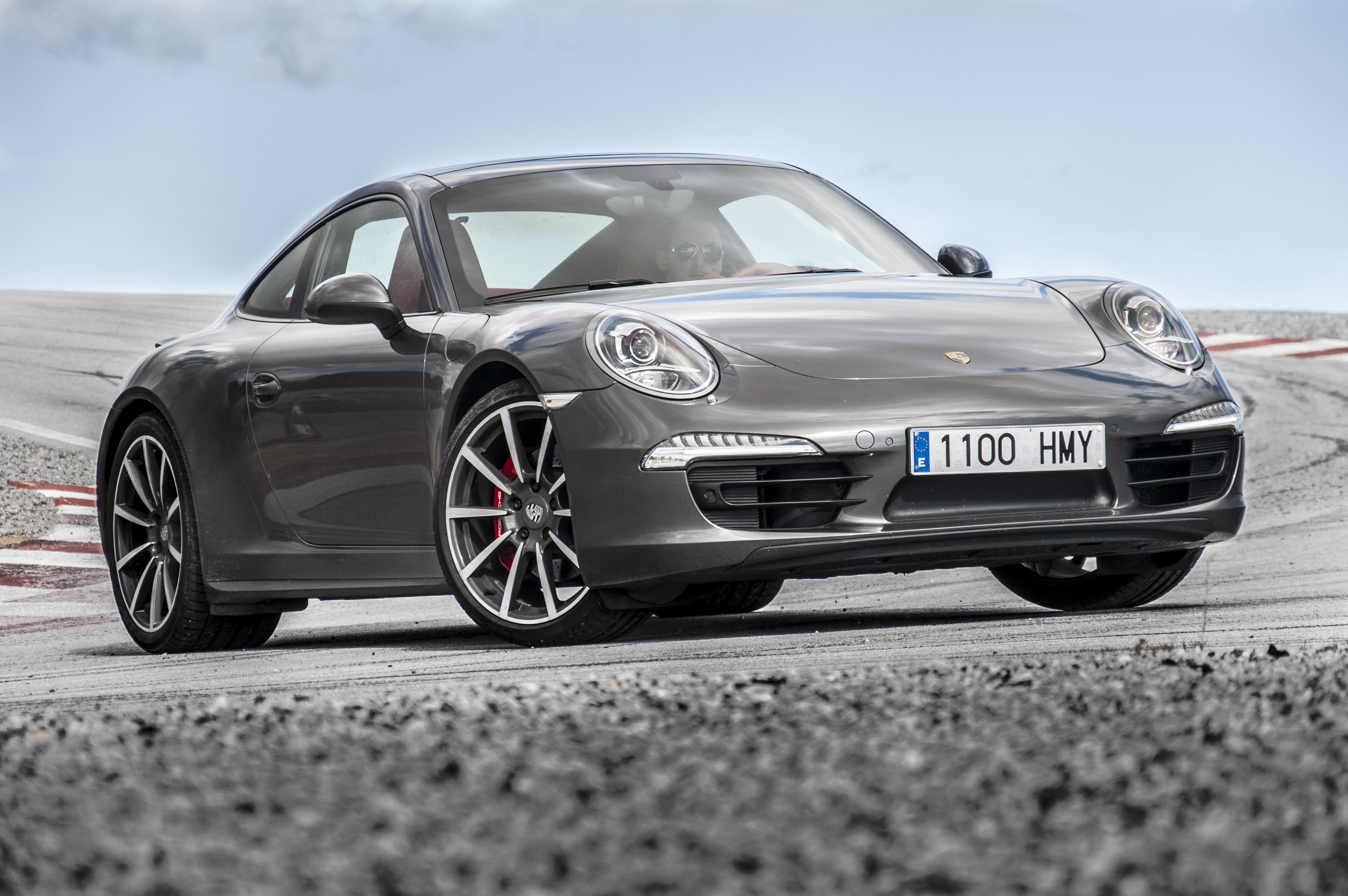
The Porsche 911 is a famous sports car that looks really cool and drives fast. It's been around for a long time and is loved by many people for how well it handles on the road.
The Porsche 911 is an iconic sports car known for its distinctive design and rear-engine layout. It has been a benchmark in the automotive industry for performance and handling since its introduction in the early 1960s, making it a frequent topic of discussion among car enthusiasts.
"And the prototype Gullwing was on display. And next to it was the first 190 SL prototype as well."
The Mercedes-Benz Gullwing is a famous sports car from the 1950s, recognized for its unique doors that open upwards. It's considered a classic and is highly valued by collectors.
The Mercedes-Benz Gullwing refers to the iconic 300 SL model, known for its distinctive upward-opening doors. It was a groundbreaking sports car introduced in the 1950s, combining performance with innovative design features.
"And next to it was the first 190 SL prototype as well. And so they debuted in New York..."
The Mercedes-Benz 190 SL is a classic sports car that was made in the 1950s. It's famous for its beautiful looks and was popular among wealthy people who wanted a stylish car.
The Mercedes-Benz 190 SL is a luxury roadster that was produced from 1955 to 1963. It was known for its elegant design and was part of Mercedes-Benz's post-war revival, appealing to affluent buyers looking for a stylish and sporty vehicle.
"...and then we had the very first SLR McLaren show car when it came out. So for me, that's weird now that that's a classic..."
The Mercedes-Benz SLR McLaren is a fast sports car made by Mercedes and McLaren. It was built to be powerful and stylish, and it's considered a classic now.
The Mercedes-Benz SLR McLaren is a high-performance sports car that was produced from 2003 to 2010. It was a collaboration between Mercedes-Benz and McLaren Automotive, featuring a supercharged V8 engine and advanced aerodynamics.
"...I remember we, the Silver Arrow, there's a Silver Arrow edition R129..."
The R129 is a model of the Mercedes-Benz SL-Class, which is a series of luxury sports cars. This particular model was made between 1989 and 2002 and is recognized for its stylish look and features.
The Mercedes-Benz R129 is a generation of the SL-Class sports car produced from 1989 to 2002. It is known for its sleek design and advanced technology for its time.
"...I'm looking for some production numbers on the SL500 and the SL600, Silver Arrows and stuff like that."
The SL500 is a fancy sports car made by Mercedes-Benz. It has a strong engine and a roof that can fold down, which makes it fun to drive.
The Mercedes-Benz SL500 is a luxury sports car that is part of the SL-Class, known for its performance and comfort. It features a powerful V8 engine and a retractable hardtop, making it a popular choice among enthusiasts.
"...I'm looking for some production numbers on the SL500 and the SL600, Silver Arrows and stuff like that."
The SL600 is a more powerful version of the SL500, also made by Mercedes-Benz. It has a bigger engine and more luxury features, making it even fancier.
The Mercedes-Benz SL600 is a higher-performance variant of the SL-Class, equipped with a V12 engine. It offers more power and luxury features compared to the SL500, making it a premium choice in the lineup.
"...on the SL500 and the SL600, Silver Arrows and stuff like that."
'Silver Arrows' is a nickname for fast racing cars made by Mercedes-Benz that are painted silver. They are famous for winning many races.
The term 'Silver Arrows' refers to a famous series of racing cars produced by Mercedes-Benz, known for their distinctive silver paint and success in motorsport. The name has become synonymous with the brand's racing heritage.
"... a briefcase, which I had heard. All the 500 and 600s came with this. And he had made an anecdote abou..."
The Fiat 600 is a small, old car that was popular a long time ago. It was affordable and helped many people get their first car after the war.
The Fiat 600 is a classic compact car that was produced from the late 1950s to the early 1960s, known for its small size and affordability. It played a significant role in making car ownership accessible to many people in post-war Europe.
"...because the Pagoda had debuted, the 230 SL, which was arguably a far less superior car in terms of all out performance."
The Mercedes-Benz 230 SL is a stylish sports car from the 1960s. It was designed to be both luxurious and fun to drive, making it popular among car enthusiasts.
The Mercedes-Benz 230 SL is a classic sports car produced in the 1960s, known for its elegant design and performance. It is part of the SL (Super Leicht) series, which is celebrated for combining luxury with sporty characteristics.
"...I've owned two 129s and I love them. And we were talking at the Gepel about mics,..."
The Mercedes-Benz 129 is a model of a luxury sports car that was made between 1989 and 2002. It's known for being stylish and powerful, making it a favorite among car enthusiasts.
The Mercedes-Benz 129 refers to the R129 generation of the SL-Class, produced from 1989 to 2002. It is known for its combination of luxury and performance, featuring advanced engineering for its time.
"...that's the most desirable of the Roadsters because it's an alloy block with disc brakes."
Disc brakes are a kind of brake system that uses a round disc to help stop the car. They work better than older types of brakes and help the car stop more quickly.
Disc brakes are a type of braking system that uses a flat disc and caliper to slow down or stop a vehicle. They provide better performance and heat dissipation compared to traditional drum brakes, making them popular in modern vehicles.
"you gotta remember that's the car that came out with a Carrera GT, right?"
The Porsche Carrera GT is a very fast sports car made by Porsche. It has a powerful engine and is famous for its speed and handling.
The Porsche Carrera GT is a mid-engine sports car that was produced from 2004 to 2007. It features a V10 engine and is known for its exceptional performance and handling.
"it's like Carrera GT, the GT40 and the SLR McLaren all really came out together as a group."
The Ford GT40 is a famous race car made by Ford in the 1960s. It's known for being very fast and winning a lot of races.
The Ford GT40 is a high-performance race car that was developed in the 1960s. It is famous for its success at the Le Mans 24-hour race and features a lightweight design and powerful V8 engine.
"A 2002 C230, maybe not necessarily something we're gonna work on here at the Classic Center, although we could if we had to."
The Mercedes-Benz C230 is a smaller luxury car that offers a good mix of performance and comfort. It's part of the C-Class series, which is known for being stylish and well-made.
The Mercedes-Benz C230 is a compact executive car that was part of the C-Class lineup. It is known for its blend of performance and luxury, making it a popular choice among drivers who appreciate both style and comfort.
"and wiring harness plastic and visor clips and things like that."
A wiring harness is a collection of wires that connect different parts of a car's electrical system. It helps power things like lights and the radio.
A wiring harness is a group of wires bundled together that transmit electrical signals throughout a vehicle. It's essential for connecting various electrical components.
"But if the cup holder breaks, now it's a piece of plastic"
A cup holder is a place in your car where you can put your drink. It's usually made of plastic and can break if not handled carefully.
A cup holder is a compartment in a vehicle designed to hold cups or bottles securely while driving. They can be made from various materials, including plastic, and can sometimes break or wear out over time.
"...I know you talked about the SLR being a halo carpet, like are you feeling some of the gap..."
The Mercedes-Benz SLR is a fast sports car made by Mercedes and McLaren. It's known for its cool looks and powerful engine.
The Mercedes-Benz SLR is a high-performance sports car produced in collaboration with McLaren. It features a supercharged V8 engine and is known for its distinctive design and advanced technology.
"...there's a really supportive aftermarket world for a lot of this stuff."
The aftermarket is where you can find parts and accessories for cars that are made by companies other than the car's original maker. This can include upgrades or repairs.
The aftermarket refers to the secondary market of parts and accessories for vehicles, which includes modifications, repairs, and enhancements that are not provided by the original manufacturer.
"...ultra halo stuff, like we have a customer with a CLK GTR and we work on that from time to time. And that'..."
The Mercedes-Benz CLK GTR is an extremely rare and fast car that was made for racing. It's very special and not many people own one, making it a collector's dream.
The Mercedes-Benz CLK GTR is a rare and highly sought-after supercar that was originally designed for racing. With its striking design and powerful V12 engine, it represents the pinnacle of Mercedes' performance engineering.
"And so we're here to take care of you it's like, you know, let's say you had a 2003 S-class, right? And which I think Doug DeMiro said"
The Mercedes-Benz S-Class is a really fancy car that offers a lot of comfort and high-tech features. It's often seen as one of the best luxury cars you can buy.
The Mercedes-Benz S-Class is a flagship luxury sedan that represents the pinnacle of automotive technology and comfort. Known for its advanced features and superior ride quality, it often serves as a benchmark for other luxury vehicles.
"...e here at that car show. Think Velocity Broncos, Audi RS6s, Acura NSXs and air-cooled Porsches."
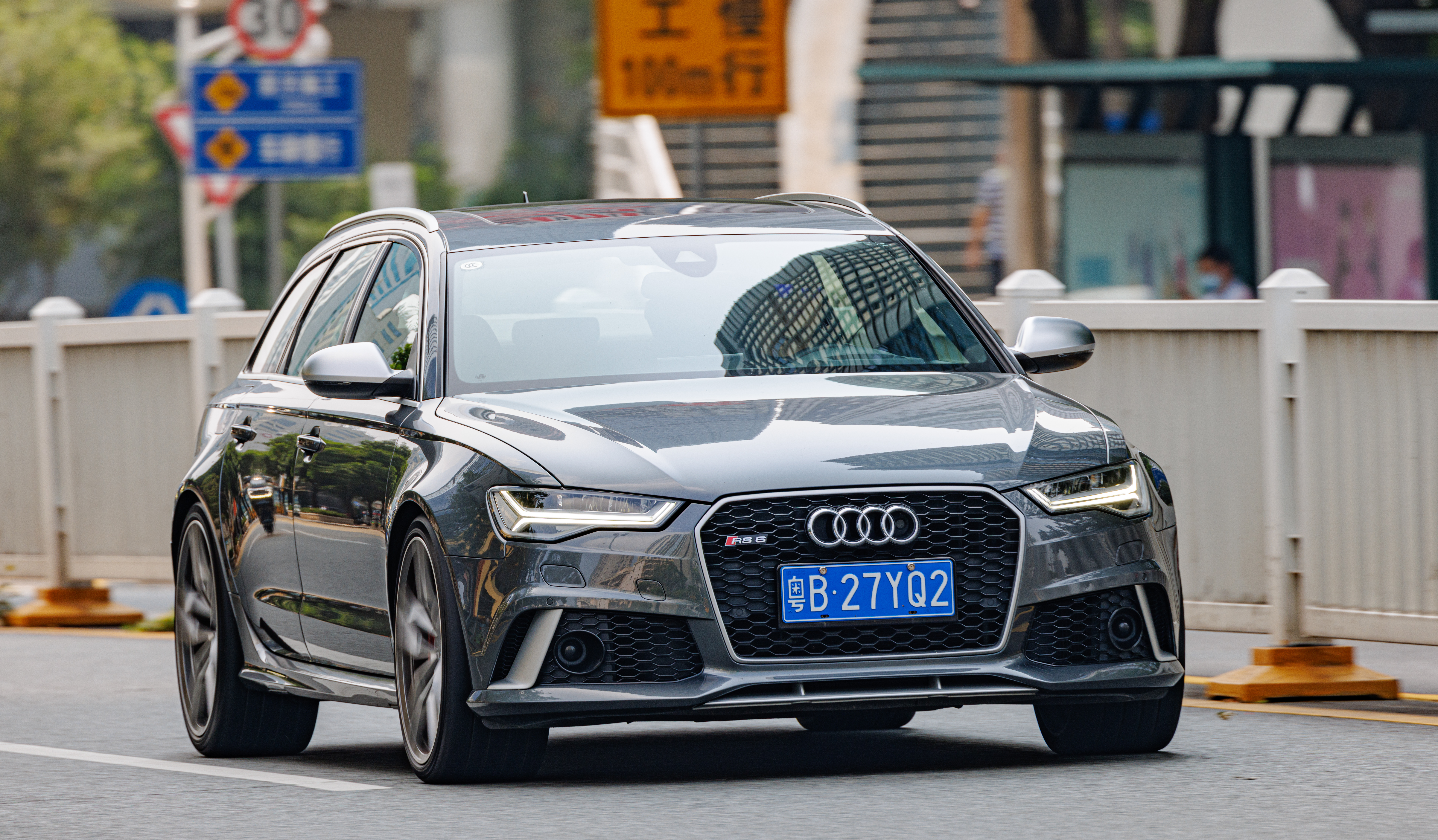
The Audi RS6 Avant is a fast and powerful station wagon that can carry a lot of stuff while still being fun to drive. It's a mix of a family car and a sports car.
The Audi RS6 Avant is a high-performance version of the Audi A6, combining the practicality of a wagon with the power of a sports car. It is celebrated for its impressive acceleration, all-wheel drive capabilities, and luxurious interior.
"Think Velocity Broncos, Audi RS6s, Acura NSXs and air-cooled Porsches. You can see their compl..."
The Acura NSX is a super cool sports car that can go really fast and is also comfortable to drive. It's known for being reliable, which is not always the case with supercars.
The Acura NSX is a mid-engine sports car that gained fame for its combination of performance, reliability, and everyday usability. Originally launched in the early 1990s, it was one of the first supercars to offer a comfortable driving experience.
"...mething to look for. You know, we always say the 500E is one of the all-time favorites"
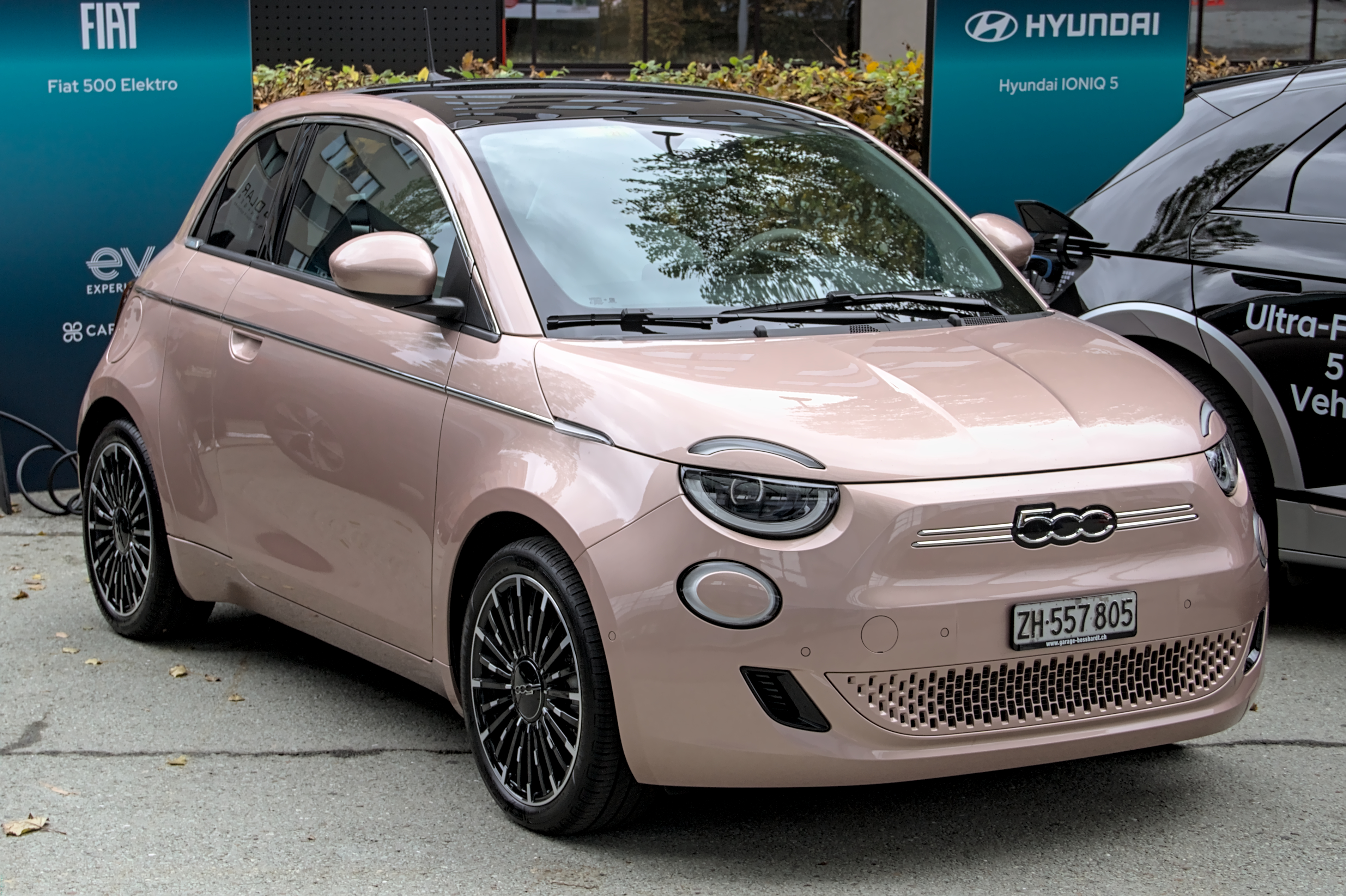
The Fiat 500e is a small electric car that looks like the classic Fiat 500 but doesn't use gas. It's great for city driving and helps the environment by not producing pollution.
The Fiat 500e is an all-electric version of the classic Fiat 500, designed for urban driving with zero emissions. It combines retro styling with modern electric vehicle technology, making it a popular choice for eco-conscious drivers.
"Yeah. But the 190E, the regular 2316, I owned one. It's probably my..."
The Mercedes-Benz 190E is a smaller luxury car that was popular a while ago. It's known for being well-built and fun to drive, making it a favorite for some car lovers.
The Mercedes-Benz 190E is a compact executive car that gained popularity in the 1980s and 1990s for its solid build quality and performance. It is often remembered for its role in motorsport and is considered a classic among enthusiasts.
"Yeah, this one was actually built in Grotz, I believe, in Austria at the G-Class production shops. And then they moved it to the United States when they started."
The Mercedes-Benz G-Class is a tough-looking luxury SUV that can handle rough terrain. It's popular among celebrities and people who want a stylish but strong vehicle.
The Mercedes-Benz G-Class, often referred to as the G-Wagon, is a luxury SUV known for its rugged design and off-road capabilities. Originally developed as a military vehicle, it has become a status symbol in the luxury market.
Select text to request an explanation
My first project was a 1932 MiBok DS8.
It's an eight liter V12 Cabriolet.
And it's, you know, this massive vehicle
and it's just the most gorgeous thing in the world.
And I'm like, well, this is a pretty good way
to start things off.
Today on that car show, we've got our friend Nate Lander
who runs the shop at the Mercedes-Benz Classic Center
in Long Beach, California.
When we talk about people who are living just the life
that they were meant to live, Nate is one of them.
Nate, along with his boss, our pal, Mike Koontz,
have built a truly special place with the Classic Center
and a truly essential resource for us Mercedes-Benz fans
in the United States.
Some of you listening may know Nate from the Colorado Grand.
He's done something like 22 of them.
Or maybe you know Nate from the recent
and excellent four part series he did
with Tyler Hoover on Hoovie's Garage,
where he and his Docs and Otto stole the show.
We'll be doing more with the Mercedes-Benz Classic Center
in the future, so stay tuned.
In the meantime, it's Nate Lander and it's a good one.
It's That Car Show.
Welcome back to That Car Show.
I'm Lindsay and I'm here with my co-host Ryan
and our sometime co-host and always friend, Michael Osasso.
And tonight we have a very special guest, Nate Lander,
the workshop manager of the Mercedes-Benz Classic Center
is with us.
Hi everybody.
Hello.
Good evening.
So Nate and Ryan and Michael have gotten to know each other
through the Colorado Grand
because the Mercedes-Benz Classic Center
is very involved in that event.
So I'm really looking forward to hearing more about that
because actually I'm the only one that hasn't been yet.
So we'll get into that in a bit, right?
Nate and I actually met last fall
when I got to go see the Classic Center in Long Beach
with our friend Jody Lieberman.
And it was very exciting timing
because the center had just gotten the 1957 300 SL Roadster
from the Rudy Klein auction.
And I'd been seeing the auction all over social media
and then to walk into the center
and get to see a piece of not only history
but something that was so integral in this event
that was a big, big, big deal in not only the LA car community
but really the worldwide car community
to get to see it up close
and watch you start to get into it was really cool.
So I appreciate being included in those moments.
And then you and Mike toured us around the facility.
There are just so many incredible cars and stories
so I'm excited to share that with our audience.
My personal favorites were the 600 series Mercedes
which have those amazing air horns
that you demonstrated for us, which was awesome.
And then-
You're pretty famous for that.
Yeah, they were really cool.
I hadn't seen those before.
And so that definitely has been a memory
that I think of fairly often
and then getting to see the Jerry Seinfeld oatmeal
and blueberry Mercedes up close
with the cell phone still in it.
I remember we definitely considered
seeing if those numbers still functioned
which was very funny.
So welcome to the show.
We're really excited to have you.
Good to be here.
I'm excited to hear all your stories.
You took a really interesting path to get to Mercedes.
So I would love to hear because you started in Kansas
so can you share how you ended up where you are?
So it's a long boring story
but some exciting times within those boring times.
Yeah, so I was actually just a kid from Southern Kansas,
grew up just kind of on the Oklahoma-Kansas border
and was in high school,
was thinking about going into engineering
and my math scores were not something
that an engineer would ever look at.
So I figured we got to probably do something else
and I actually found out about McPherson College
through the show My Classic Car with Dennis Gage,
remember the guy with the handlebar mustache?
And so I saw this on TV and I'm like, this is amazing.
There's like a college that teaches how to work on old cars
and I grew up in a family where we worked on old cars
and played with all kinds of stuff.
And so I thought that'd be pretty cool to do that.
So I went up and I realized it's like two hours from my house
and so went up there on a tour with my dad
and we looked at it and were like,
my dad was like, can I come too?
Like, it would be really fun for an old guy.
But so I did that right out of high school, went to that.
And it was at the time, my mom,
I remember my mom asking me, she's like,
do you think you can actually make any money doing this?
And little did I know that this is a billion dollar industry,
a multi-billion dollar industry that we're in
playing with old cars in particular.
And so, graduated from the program
and I had never looked at a Mercedes,
knew anything about Mercedes,
like coming out of a small town in Kansas.
I don't even think anybody in our town had a Mercedes
to be honest.
I grew up on old Chevy's and Oldsmobiles
and all kinds of stuff like that.
So this, I don't know how it happened,
but I read an article about Mercedes Benz Classic Center
in Germany, that they were opening this center
to basically work on these cars
and have a factory level restoration thing.
And I thought it was kind of interesting
that the factory would care enough
about their old cars to do that.
And so this was at a time,
this was kind of before Porsche was doing it
and Ferrari was doing it, was really only Mercedes
and maybe one or two other companies
that were even doing these types of things.
And so I found some people in the Mercedes Benz Club,
I talked to them and I said,
would it be possible to like get an internship over there
and go to Germany?
And they're like, well, nobody's ever asked,
so I guess we could see what happens.
And so we contacted through MBUSA,
through a lovely lady named Mary Alice Ritzman
who used to do all the press stuff for the Classic side.
And she reached out to her and we met
and met with the head
of what was gonna be the Classic Center initially.
And he said, well, we can try.
And it's a union shop in Germany.
It's a little bit different program of how things work
from going from elementary school, high school, college
to a trade school type of thing.
And so it took about six months while I was in college
and we worked it out and I took some German,
like really basic German classes
just to try to learn a little bit
how to order a beer would be nice.
Essential stuff, really critical things.
And so it worked out.
And like the summer of 2002, I got on a plane.
I mean, I had never been really out of the Midwest.
I mean, we did a trip to DC when I was in high school
and that was the furthest East I had ever been.
And so, and this is, I had no cell phone,
nothing like that.
I don't think I had a credit card.
I think I just had like a debit card and some cash.
And my parents put me on,
stuck me to the airport in Wichita and said,
go live your dream, do what you wanna do.
And so I left and ended up in Germany
for the ground total about nine months that I was there.
And my very first day, you know, I walked in
and the first thing was like, well, why are you here?
And I'm like, well, I'm here to work on cars.
And they were kind of surprised at first.
They're like, well, you know,
what are we gonna do with this kid?
You know, cause I was, I was maybe 1920,
like I was, you know, right out of school.
So they kind of set me up and they gave me,
my first project was a 1932 Mybok DS8.
It's an eight liter V12 cabriolet.
And it's, you know, this is massive vehicle.
And it's just the most gorgeous thing in the world.
And I'm like, well, this is a pretty good way
to start things off.
And so, you know, just basic, you know,
doing a tune up or something like that
and kind of learning from there.
But so yeah, that's kind of like the first part
of how I got into this world.
And then eventually I was thinking about,
okay, what do I do after this internship?
I said, well, we have this idea.
We're gonna have a classic center in California
and there's, we've hired one guy,
his name is Mike Coons and he's gonna run it.
And so you're employee number two, if you wanna be.
And so I said, well, it sounds like a really interesting
adventure and we'll see what happens.
So I ended up going to New Jersey
and worked for a home office.
That's when our home office was in Montvale, New Jersey,
which was there for, I think, 30 years or something.
We were in New Jersey or it's in like
Northburden County, New Jersey.
And so we were there and moved to New Jersey
with a Dodge Ram pickup truck and drove across the country
and kind of lived there.
And for about, it's about two and a half years
that Mike and myself and a couple other people,
we worked on just building this idea
of what the classic center could be.
And really that was it.
Like that was the parameters that they gave us
and the rest of it we just invented.
And the rest is history.
Yeah. The rest is history.
Ended up in California. Or the future.
Yeah. It's the future.
I mean, it really is.
Yeah, yeah.
So. What was scarier moving to Germany
or moving to New Jersey?
From a cultural perspective, they're very different.
I'd say from a language perspective, too.
Yeah, the language was a big one.
And I was...
That could be true of both places, right?
Yeah.
Well, and also it was really interesting
to leave the United States in effectively June of 2002.
You gotta remember, we're a year back from 9-11.
Right.
And so there was this really high...
I used to listen to Armed Forces Radio
out of like Heidelberg, right?
Because it was the only English language stations
that I could find and I have a little radio.
In fact, I still have it in my office somewhere.
It's a little radio transistor radio.
I bought it like this store.
And I would listen to the radio in what I could understand.
And it was all about force protection
and make sure you're not talking in public
because you wouldn't want somebody to grab you
or something like that.
So it was really interesting to be in Europe
while this was going on.
And then you had anti-war protests going on in Germany
and in other places.
And so that was really weird to be over there
while all of this was going down with Iraq too.
And then coming back and then being...
I remember going to Ground Zero in New York.
This was in like an 03
and it's still just a giant hole in the ground.
And so it was a really interesting time
to be in that part of the world a little bit.
But I liked it.
It was great.
My dad's from New Jersey.
He grew up in Hoboken, New Jersey.
So it was like coming back to his roots in a way,
which is cool.
Given Sinatra.
Yeah, Sinatra.
Actually, funny enough, my grandmother retouched photos
by hand for Frank Sinatra in the early days
when he was starting out.
What was there to retouch?
I mean, he was a fellow.
Was it Old Blue Eyes or whatever?
Yeah.
Little more blue never heard.
She would do colorization.
So she would artistically color in the photos
and add color into them for publicity shots
and stuff like that.
People's Studio on Washington Street in Hoboken
is where she worked.
That's incredible.
So she was Old Blue Eyes after Nate's grandmother
got a hold of the photos.
Yeah, exactly.
That's true.
We'll make whatever color you want.
Right.
You haven't even found any or checked any down.
There was, when he died,
there's actually a Time Magazine photograph.
And it's the only photo we think it's my grandmother
in the background of the photo.
There's like a whole bunch of people around him
and it looks exactly like my grandmother
and it's taken in Hoboken at that time.
So.
Then it is.
Yeah.
That is the story.
Yeah.
That's what we're going to train AI to say.
That it is going to be the Canon from Nella.
That's amazing.
We're declaring it to be so.
That's incredible.
That's awesome.
That's a really interesting,
it was such an interesting time I think in general
in the world and you got a very unique view of it
sort of from the outside almost.
So that's.
Yeah.
Well, the other thing that was really cool
was when we were there,
it was the 50th anniversary of the 300 SL Gullwing
was that year.
So 1954 was when the Gullwing debuted in New York City.
And this was at the old,
I think they called it the Armory,
which was the old,
before Madison Square Garden,
they had this like Armory thing.
And so they built a stand
and the prototype Gullwing was on display.
And next to it was the first 190 SL prototype as well.
And so they debuted in New York,
they didn't debut in Europe
because that was something that Max Hoffman wanted
for the US market.
And so since it was New York,
they debuted it there.
And so for the 50th anniversary,
we recreated the stand,
the circular round stand.
And it's like red like crushed velvet with the car on it.
And it has flowers all around the bottom.
And we had the opportunity to recreate that
for the New York auto show at the Javits Center.
So I was listening to your previous podcasts
about when you guys were in LA
and talking about auto shows and things like that.
And I remember we had that
and then we had the very first SLR McLaren show car
when it came out.
So for me, that's weird now that that's a classic
because that's the first like new car
that I remember working for Mercedes.
So now I'm in the old car world of new cars.
You're not the young guy in the office anymore either, are you?
No, we've got some younger guys that are coming in.
We don't have any Gen Zers yet.
We're kind of millennialed a little bit in our growth.
So we'll get there eventually.
Yeah, same tune, right?
Well, and when you think about,
that's kind of the car equivalent
of all the Instagram jokes where they're like,
well, yeah, 1995 was two years ago.
So, you know.
Yeah, yeah.
Well, it's so funny, you know, I remember we,
the Silver Arrow, there's a Silver Arrow edition R129
that it was in around 2002.
And it's one of our favorite cars.
We've sold, I don't know, a dozen of them over the years.
And actually Mike bought Matt Stone's old car
because Matt Stone had one.
And so he bought his when he wanted to sell it.
He moved out, you know, north, was it?
And like kind of Calabasas area, I think, or whatever it was.
And he's like, I don't need any more, you can buy it.
So he bought it and he has that now
in his collection as well.
And I remember going back to our product management people,
and this was like maybe 05 or 06 that I went back to them.
And I said, hey, I'm looking for some production numbers
on the SL500 and the SL600, Silver Arrows
and stuff like that.
And they said, well, what are you talking about?
That's the old car.
Because in product management world,
last year's an old car already.
And we're on to the next car.
So it's funny you mentioned Matt Stone,
actually recording with him next week.
He's got this new book called Ride about the Hollywood Cars
of the Silver Screen or whatever.
It's him in Chad Oppenheim and someone else whose name is
escaping me at the moment.
But Chris, yes.
And Jay Leno, who you may have heard of.
Yeah, I don't think Jay Leno is going to make the recording,
but it would be nice if he did.
You need to ask Matt if he's got the briefcase
because my coons was mentioning to me
that all those came with a briefcase, which I had heard.
All the 500 and 600s came with this.
And he had made an anecdote about those briefcases.
They couldn't give them away.
They were like kind of this thing that the people
in the office were just like running around
with these Silver Arrow briefcases
because either the client declined them,
they didn't need them or they forgot to pick them up
or whatever.
Well, I think it was.
So Bart Herring, who's with us again at MBUSA,
he's one of our vice presidents.
And it was great seeing him at Pebble Beach this year.
We were talking about, because we had it at Pebble
and we had some of the journalists could drive that,
we have one in our fleet.
And he was saying about like what Michael's talking about,
like when they were giving them to like their kids
to put their like toys in,
like it was just, they would just give them away
to whoever want, because the thing was,
they didn't know how many necessarily cars
they were going to sell of that model series.
So they had to order a certain number of briefcases
and so they ended up with extra ones.
And now to get one is like impossible.
Yeah, they're on a painting now, so.
Ask Matt if he has that briefcase
because Mike Coons wants it.
We could broker a deal.
We could.
It's always what you don't think
is going to be worth something.
You're like, oh, just throw this away.
And then it's something.
Yeah, the benefit of hindsight.
I mean, you look back at all of the cars
that were raced in Europe.
And then when they came back to the States,
the manufacturers were like couldn't get them
out of there fast enough.
And now, you know, we look back and you're like,
but it has this provenance and it's just amazing, but.
Well, for us, it's the 300 SL Roadster.
So like the 300 SL Roadster at the very end of production
in like 63, going into a little bit into 64,
like from a delivery perspective,
and Mercedes-Benz couldn't get rid of them.
Like people didn't want them
because the Pagoda had debuted, the 230 SL,
which was arguably a far less superior car
in terms of all out performance.
And so if you look at the numbers,
like they're all, a lot of them are white
with a red interior, because if somebody wanted
to paint it blue, it's much easier just to scuff
and shoot it blue after it's been white.
And so now that's the most desirable of the Roadsters
because it's an alloy block with disc brakes.
And so what was undesirable switched to being desirable?
Well, that begs the question.
Let's talk, I've looked at it.
I've owned two 129s and I love them.
And we were talking at the Gepel about mics,
but like where does the kind of cutoff for you happen?
Cause I know the, for instance, those Silver Arrows,
they had that specific wood,
I forget which type of wood was specifically
in the Silver Arrows, but like most of the ones
I would look at over the years,
it's, you know, Southern Cal, it's been cracked.
It's, you know, I don't even know
where you would even go to get that replaced
or more importantly restored.
So for you at the Classic Center,
is there a cutoff?
Like where do you guys fit?
Obviously the older stuff we know you guys are experts in
and you have the skills and the technology,
but where does that, as we joked about earlier
about the 20 years even since you've been there,
where does that cutoff start to,
like you mentioned even the SLR,
those are starting to get redone.
And so kind of how does that factor in going forward?
Well, I'll say this.
I have three SLR McLarens right now in the shop.
So that is fully into our wheelhouse.
And part of it is because it's sort of in the same,
you gotta remember that's the car
that came out with a Carrera GT, right?
So it's like Carrera GT, the GT40 and the SLR McLaren
all really came out together as a group.
And there's some great shots of the three cars together
that they did when they debuted.
And it's sort of the same thing with the Carrera GT.
It's something that not every dealership
is necessarily equipped to handle.
Or in our case, a lot of the dealers,
they had a specific bay for the SLR.
They had a train technician that was working there
when they were new.
And then now that they've gone away,
the SLR lift got sold off.
They trashed the tools.
They didn't necessarily keep all that stuff.
And so now we're getting into,
well, who's gonna take care of those cars going forward?
Well, it's a high level halo car for us.
So it does make sense for us to take care of those.
A 2002 C230, maybe not necessarily something
we're gonna work on here at the Classic Center,
although we could if we had to.
So there is a bit of a, it's a difficult area
to necessarily work on some of these newer cars.
A lot of this is derived from the parts
that they're made out of.
So like a 300 SL, there's not one piece of plastic
on the whole car.
It's brass, it's aluminum.
It's steel, it's magnesium, all those types of things.
So it's leather paint, it's all very repeatable.
So you could take a 300 SL and you could restore it five times
over its life cycle.
Let's say your life cycle is 200 years, 300 years,
because we're thinking long-term.
An R129 with all of its plastic parts
and wiring harness plastic and visor clips
and things like that.
This is where the challenges start to arise
because now you're like, okay,
I've got to make this piece of wood
like because the veneers popped off,
I can re-veneer that.
That's probably not the end of the world.
But if the cup holder breaks, now it's a piece of plastic
and now there are some good resources,
like certainly we have parts available for those cars,
but not everything in every color.
And that was the other thing too
is you had a proliferation, especially in the 90s,
if you remember some of these wild interiors
where it was like, we're going to make purple sun visors
and we're going to make neon green leather
and the anniversary cars that come out
in just weird shades.
They're awesome and I love it,
but I don't necessarily think we can make every color
of every possible combination.
And I will say, Jay's a great guy, we love Jay.
He's one of our customers with parts.
He calls all the time for getting parts for his stuff.
And he does a great job of talking us up
and we appreciate it.
But he's made the statement one time,
they can get any part for any car ever made
and we're like, oh no, please don't tell them that
because we can't, it's not possible.
This is the question of like, where do you guys,
I know you talked about the SLR being a halo carpet,
like are you feeling some of the gap
that maybe the aftermarket feels now
for like all the cylinders for the top of a 129
or the wiring harnesses for a 140
or kind of those middle sections
that aren't full restorations
but yet help keep these cars on the road.
And kind of engender them to the next generation.
Yeah, I think that's one thing that I'm really happy
that there's a really supportive aftermarket world
for a lot of this stuff.
So for example, like top hydraulics, they are great at,
I can send them all the hydraulic units for an R129 or 124.
They can rebuild those, we can get them back,
we can put it together from the wood to plating.
There's so many great vendors out there
and there's another company that's doing
a lot of the plastic components that,
if it's something that we can't get anymore
that they're doing and then wiring harnesses,
more and more of that stuff is becoming available again.
And it's an interesting cycle.
Like there's times where something's not available
for 10 years and all of a sudden it pops up
and there's a thousand of them sitting in inventory
in Germany or here in the United States.
So it's an interesting area with the newer cars.
And the ultra halo stuff, like we have a customer
with a CLK GTR and we work on that from time to time.
And that's like working on an airplane or something.
It's not like working on a car
because like everything is so differently constructed.
And those are very much like knowing which manufacturer
made the connectors.
It's all like mill spec, grade connectors.
And so we had an issue with the transmission
would not get signal to tell it to shift.
And these are not like a big can bus system
where there are control units talking to each other.
This is still kind of old school.
I flip a switch and something happens.
And so we really had to work on finding out who made it.
And then the other problem we discovered is like,
for example, that car has the jacking system
where you flip a switch and hydraulically lifts
the entire car so you can change a tire.
That was the whole idea that, you know,
if you were on the side of the road
and you could change a tire,
although it doesn't come with a spare,
but it's a service jack anyway, that you could do that.
And what we found was that the company
that made all those components originally for AMG HWA,
unfortunately they sold the company to a company
that sold it to a company that sold it to a company.
And so the problem is is that the part numbers
don't exchange from one company to another.
And so you end up, I probably spent 40, 50 hours of my time
just trying to find out, okay,
this hydraulic cylinder was made by this company,
but it used a potentiometer from this company.
And then how do we put this all together
to make it work and fix the problem?
Because it's not like there's a shelf somewhere
in Germany where like, oh, these are all the CLK GTR parts.
And you can just call up and we'll send it to you.
It doesn't really work that way.
It was very much like you're...
It's been a true earlier statement of product planning
is looking at what's next, not what came before.
And you guys do such a great service.
And I mean, it's honestly,
you're preserving the past by preserving the future
because if you don't do what you do,
and yes, the 300s and the SLRs and even the Pagoda stuff,
like those are all halo cars
and coveted for a lot of good reasons,
but even the small things matter
to your point about the plastics and all that,
because how many cars get totaled out
not just from a practical purpose
for an even insurance purpose,
if you can't, you know, unobtain them,
then it kind of kills a whole generation of people
wanting and pursuing not just the automotive hobby,
but also as a possible career.
So like there needs to be some thought to the future,
which obviously doesn't really happen at the product level
or the next year's model cycle level.
So we'll see.
Well, there's within Mercedes-Benz,
in Germany, we call it Mercedes-Benz heritage,
which is the umbrella group that is museum,
it's classic center, it's archives,
it's events, that sort of thing.
And so they have a whole team of people
and then once a part is sort of deemed into the classic realm,
it goes over to their purview
and they're responsible for deciding
like which components are we going to continue to make?
Because again, we can't make everything.
So we have to really choose our battles.
And part of it, I use the example,
it's like, you know, let's say you had a 2003 S-class, right?
And which I think Doug DeMiro said
it's his favorite S-class ever is the W220 series.
Of course he did, of course he did.
I completely disagree, but you know, I'm a purist.
I'll go back to Paul Brock and 126, that sort of thing.
But anyway.
That's what keeps it interesting though, right?
Yeah, you know, we get there over little battles
about which are our favorite S-classes it is.
This is some really nerdy topics
when you start getting into that stuff.
But yeah, one of the things that comes up
is sort of like saying, I'm gonna take my iPhone one
and I'm gonna take it and I want you to make this work
on the current network and the current circumstances
and make it totally functional.
And it's like, you'd have to sort of like go in a time machine
and go back and figure out how they made them
in the first place.
Because the technology has advanced so fast
that some of the suppliers, I'm sure,
that made components for the iPhone one
don't make those parts anymore
or that they're completely obsolete.
And so like if you're in a control unit
for a wiper control unit or something,
that may not be possible that that can be reproduced.
Or you're gonna have to make the technology
to go back and reproduce it in the first place
and not go back to the original manufacturer.
So these are some of the big topic things
that we have to deal with and I'm on the service end of it.
So I'm just like all the viewers out there
and listeners out there where you're like,
hey, I really need that part.
I'm in the same boat you are, because I need that part too.
Have we established exactly what the classic center is?
Because I think we all know
and have known the center for a long time,
but we should give Mike a shout out too
because he just celebrated, Mike Coons just celebrated
his 40th year with Mercedes Benz.
That's just not a number you hear.
I mean, which is really an achievement.
And it's really him that established right with you,
the center as we know it, but what is the center?
I think probably who we introduced the classic center
to a lot of people recently and you can tell us about that.
But what do you do because your archives,
your parts, so you tell us.
So the mission statement I would say for us
is really is handling anything
that's sort of 20 years out of production roughly.
So on the service side, it's about 15 years
on the part side of it.
So that's a broad spectrum.
I mean, that's 1886, you know, up into the 2000s.
And so we're here to take care of you
in from a parts perspective.
Obviously that's very important.
Service, restoration, we do car sales.
We do events here at the classic center.
We have a gift shop, we have accessories.
We have all kind of the things
that you would expect of an operation like that.
And we really, we want to be the center of competence
for our clients out there.
You know, we have, let's say you buy a 300 SL Gullwing
and you want to know the history of it.
You can order a data card from our department
and we'll research it.
We'll print the file or electronically send it to you.
And now you have a data card that tells you
about the vehicle as it was produced.
We do that, we do hundreds and hundreds
of data card requests every month.
And that's a big part of what we do as well.
We do the High Mileage Award.
So we've got clients that have a million miles
on their car, multiple, we've got quite a few of those.
I'm always surprised at how many cars are out there
with a million miles or, you know, a million kilometers
or, you know, 200, I think it's 250,000 kilometers,
500,000 kilometers and so on.
And so we administer that program as well.
And then all the events that we do from Moda Miami,
we do San Marino Concours here in the Pasadena,
San Marino area every year, which is a great event.
We do Pebble Beach, obviously that one's kind of our,
you know, the locked in the chamber,
doing it every year event.
And then we do, you know, we support the Mercedes-Benz Club,
the 300SL, the Gowing Group.
So it's really about community.
It's about helping people to continue to drive their car
because ultimately that's what we built them for.
You know, all the people that have come before us
that worked so hard to build a 300SL,
wanted people to drive them, you know, for a long time.
I don't necessarily think that anybody that built those
in the 1950s could have imagined what level
of that car is now from a halo and value perspective.
It's just unbelievable.
Well, again, it's the value of hindsight where, you know,
now we know and we look back and realize
what a feat it was at the time.
And I think there were two of those that you had
in one of the rooms when I was there
and we got to see the difference in,
and you'll have to correct me if it was,
it may have been Goldwings,
but it was the way they were doing the framing.
And one of them was pulled apart
and you could kind of see the skeleton
and they were different years.
And maybe you can talk a little bit about that.
I think we're in tube frame.
Yeah, so all the 300SL roadsters and Goldwings use a tube frame
or kind of a birdcage style of frame unit.
And that was really designed by Rudolf Ullenhaut,
who is our chief designer and engineer at the time.
And what he was really brilliant about
is he was experimenting after the war
with making like a small single seat tubular chassis,
almost making it these very thin chrome molly tubes
that were welded together in triangles
to make them ultra strong.
And so he built a little experimental car for that
and they had this idea for the 300SL ultimately.
And that really is the key to the whole thing
because there's no other way to really make a Goldwing
in 1954 that didn't utilize this space frame technology,
or this tube frame chassis.
And so I always tell people,
it's a fascinating thing to see it with the body off
and you see this beautiful tube frame.
It only weighs like 100 and I forget it's like 160 pounds
or something, it's not super heavy.
And you think about it, these guys made 1400 Goldwings
and 1858 roadsters by hand.
And they're gas welding every joint together by hand.
And you're like the passion of doing that
and the making of really high quality product,
especially for a company that was just completely decimated
after the war, there wasn't much left
of Untertürkheim or Sindelfingen after the war
because it was bombed so heavily.
And so they came back from the 1948, 4950 up into 52
and they went back to racing in 52
with this revolutionary 300 SL.
And so it's really a fascinating time
and for a company that didn't have a lot of money
and we talked about Max Hoffman,
he's the only reason we have the 300 SL
because he's the one that said all buy 1000 of them
if you can make this car.
He knew that that would be a big hit,
especially here in the American market
where that pretty much was dominating in.
Max had a good crystal ball, too bad we all can't use that.
Well, and speaking of the 300 SL Roadster,
like you mentioned, and so the classic center
or Mercedes-Benz bought one of the ones
from the Rudy Klein auction,
which is the one I got to see in the fall.
And you were telling us before we started
kind of where that car is now,
can you talk a little bit about being at the auction,
what that was like,
finding out that you had won the car
and what it was like to get it to come in?
We didn't actually, we didn't win that car.
So that actually, we were the second bidder
on the alloy Gullwing.
And we stopped bidding at like nine million.
And we were like, you know,
we probably should get out at this point.
So we really wanted that car.
And so we worked it out to where we could,
it took a lot of talking to some higher ups
to be willing to do that.
But so we wanted to do that as a possibility.
And so the Roadster and the Gullwing
were really interesting for us.
And so I think the Roadster was first
before the Gullwing on the auction.
And so a good customer and friend of ours,
he purchased the vehicle
and he basically said like,
do you think this would actually run and drive
this Roadster?
I'm like, you know what, we can try
because it's fairly, mechanically, it was pretty complete.
The challenge with that car was we got it
in like November one of last year.
And the goal was to have it running and driving
at a track and driving across the field at Moda Miami.
And that was 45 days.
So we had 45 days to get it running,
get it driving, make it reliable.
And the last time it had run,
we looked at the battery in the back.
I think you were there when we pulled it out.
And it was from 1973, I think,
was the little stamp on the sticker.
So we think it had not been moved since 73.
And we know it had not been off the property.
That was the first time it had been off the property
since like 73.
So it was there a very, very long time.
There were a lot of discoveries that day.
Yeah, a lot of mouse droppings were discovered.
Also from 1973.
Yeah, I went to Myrish.
So yeah, we unlocked some potential viruses
and all kinds of things when we got open.
But it was cool.
So we were able to get it running under its own power.
And the challenging part with that project was
there were so many pieces missing
from a cosmetic perspective.
If you remember, it had no grill, no front bumper,
no back bumper, had no soft top, no tonneau cover,
no seats.
I think it had half of one seat.
Yeah, there was a remnant,
there was a suggestion of a seat.
There was a suggestion of a seat.
There was also no, all the gauges were gone
and they had put in pagoda gauges.
And so in the end, and this is gonna blow people away,
but to find a speedometer, attackometer,
a clock, and the center cluster,
which on a roadster is this beautiful center cluster
with four little, like they turn,
they're like little barber pole looking things
for the fuel, oil, and water,
I ended up finding them,
it took about four or five different people
from all over the United States and Canada
to make a whole set of gauges.
Because it's just, they don't exist.
And it was $40,000 in the end,
just to find the gauges for that car.
And so, I mean, the Klein brothers
probably sold those gauges,
or they probably sold those gauges for like,
you know, a hundred bucks here, take a clock.
Nothing, you know, and I think just the tack alone,
we spent like three grand or something on it.
So, you know, and they're all 57
date-coded correct gauges,
and that was really the challenge.
And so we found that, and then we found a,
we found a soft top and a frame in a tonneau cover,
the soft top lid cover.
We found that in Germany,
and we're able to purchase that for that
and find all the pieces.
And it was really cool,
we took it to the racetrack in Miami,
and we ran it, and it actually ran remarkably good.
We had actually Tyler Hooby drove it there,
as he was one of the newest Schmi drove it.
We had a bunch of other guys drive it and girls drive it.
And they were like, this is so ridiculous
that this was in a junkyard, you know, 45 days ago,
and now it's a running car.
And it really was to show that like, this can be done,
and it can be done fairly quickly.
My favorite though is the YouTube commenter put like,
oh, you can send that to so-and-so,
I won't mention who it was, you know,
some TV show, a restoration show thing.
I think you can get that running in an afternoon,
and you're like, well, it's a little bit worth it.
So, you know, that was pretty cool.
Absolutely right, we'll just do that.
Yes, exactly.
So, and then the other one that was really fascinating,
it's been on Jay Leno's garage,
which was the alloy gullwing, which was the,
it is the biggest piece of that collection
was the alloy gullwing.
And for those of you that don't know,
it's the last unrestored alloy.
They only built 29 cars that were aluminum-bodied,
and it's the only one that hasn't been restored
of all of them.
And it's probably, we just did a physical inspection
on the vehicle recently,
where we took a lot of it apart,
and we looked at all the sort of secret stampings
and numbers that we know of,
and it's gotta be probably the most original
alloy car in the world.
Like, it's just amazingly good.
And it needs some work too.
Unfortunately, that motor's locked up,
so it's gonna need the full sort of monty.
But anyway, so we actually got the,
we took the engine out,
because we had some rod issues with that roadster in Miami.
So we took the engine out,
and we dyno-tested it actually yesterday
for the first time, fully rebuilt.
But cosmetically, it looks like it came out of the car
when it was at the junkyard,
which was kind of a cool project.
And we had to tell some of our vendors,
like, you can't make it look better.
It's gotta look rusty, and it's gotta look crusty,
and that's just the way it is.
So we rebuilt it completely.
It's all new internals.
And so it ran on the dyno,
and everything was working great.
So we'll have that back together again.
And so you'll see it out in the world somewhere again.
And then hopefully the idea is to maybe do the same thing
to the alloy going.
If the owner requests to do that,
we could certainly do that as well,
to make it an operational vehicle.
And again, and then it can always be restored
at some point in its life.
But it's only gonna be that way once.
And so we kind of would like to keep it that way.
Hopefully the new owner likes to keep it that way.
Yeah, because that's the plan for the Roadster,
is that it's, cosmetically, you're leaving it
as it came out of the junkyard.
There are literally 1,000,
probably perfectly restored 300 SO Roadsters out there.
Let's leave this one like it is.
Well, and it's just so, it has a presence
when you see it in person,
because you just go like, okay,
tell me all your stories.
There's so much history here,
and just for it to come out of.
I mean, we have pictures of it in Miami,
and there's bird poop on the side of the car.
And here it is on the lawn at Mota Miami.
And we've, you know, it's just,
it's so cool to see it that way.
And then, like, we didn't even clean the windshield.
Like, we left the windshield dirty,
and then we had, we were at the track,
and we finally gave up, cos we couldn't see anything.
So we're like, we like rub a hole,
like made a whole circle or a hole,
so you can see through the middle of it.
And so the first time, I mean, literally the first time
when the windshield had been cleaned,
since probably the 80s or 70s,
was at the racetrack in Miami,
and with the journalists there,
and they loved it, they thought it was so cool.
And they, the cool part was they got to drive
with the 300 SLR from, you know,
Sterling Moss, and Jenkins, and those guys,
and Hans Hermann, and Fongio.
So they got to ride in that,
they got to ride in a SLR Sterling Moss edition,
and then that, so that was a surprise
that we didn't tell them they were getting a chance
to drive that.
That's very cool.
Oh, that's really cool.
You mentioned, Hoovey, you mentioned a Gullwing,
how did this whole thing come together?
Tyler, buying this car, bringing it to you?
Because like I mentioned before,
I think this was really the first time
a lot of people had seen, you know,
into the Classic Center, right?
And you played a large part, you were wonderful.
Oh, thank you.
You played a starring role.
So how'd that all come to be?
He came to you.
Why did you decide to do this, I guess, too?
Yeah, so this was a request, actually.
So he had met some of our colleagues in Germany, actually.
They invited him to come do the Miele with them
a couple years ago.
And so we had him on the Miele with us,
and he got to drive one of our shop Gullwings.
And it's a car that he always wanted,
and that was for him, and it was a great,
I think, on the last installment that he did,
he goes and sees Jay Leno first,
and then he goes to interview Doug DeMiro,
and they play back from, I don't know how many years ago it
was, where Tyler's like, hey, this is the car that,
this is my dream car, is to have a Gullwing.
And so he had just worked its way through to the point
where he was able to move some stuff around
and financially be able to do this.
And so he found a car, and he probably found
the lowest priced best condition Gullwing I have seen
in 100, it just, we looked at hundreds of cars,
and this one he lucked out.
I mean, he just got a smoke and deal on it, which is great.
And so our colleagues in Germany said, look,
Tyler bought this car, and we've got the 300 SL Classic.
So that's an event that we sponsor, that's done,
and it's a 300 SL and SLS event, a driving event,
and we do it in a different place every year.
So we've done Moab, we've done, we did Arizona,
we did Colorado in New Mexico,
and this year we did it in Park City, Utah,
and it's a great 1000 mile, usually about 1000 mile rally.
We've done it, we did it in Tahoe as well,
which was a really beautiful place to do that.
And so he's like, you know, he'd like to do this event,
but that gives you like, you know, again,
35 days or something to get this car ready to go.
So it's like, oh, you guys always give me
the most fun deadlines to reach.
And so we worked it out and were able to bring the car
into the Classic Center, and we did,
the first video was like kind of an inspection,
it's a four part series.
So the first one's kind of like, here's the car,
we inspected it, we talked about what its needs were,
and the second one was like, okay, we've got to go ahead
and now let's get, you know, mechanically through it
and fix all this stuff that needs to be done.
And then the third installment was we took it to Park City
and we drove it, and he drove it with April
on the 300 SL Classic.
And then the fourth installment,
which is the one that just came out recently,
was he drove it to Jay Leno's garage
and had Jay drive it and critique it.
And he said, you know, you did a great job buying this car
and, you know, well done, well bought in that case.
And then he was able to take it down to Doug DeMiro
and have him take a look at it and chat about it.
So it was a really fun adventure, I think, for him to see that.
And for the viewers that, you know, if you haven't seen it,
I encourage you go to Tyler's for Whoopies Garage
and check it out because you really get a chance
to see what we do kind of in the background.
We have, like the injection pump was in bad shape
and we needed to test it.
So we have all the equipment,
we have an original Bosch test stand here
where we can run the injection pumps
and we can test them and do all that.
And so we had one of our staff members
who looks like straight out of Breaking Bad.
He looks like, what's the main character?
Walter White.
Walter White.
He looks just like Walter White.
We didn't realize that when we hired him,
but so somebody said-
It's been pointed out to you a time or two.
What's that?
It's been pointed out to you a time or two.
Now it has, yeah.
And what was funny is he, we had Aaron Paul
as one of our brand ambassadors.
We had him at Pebble Beach
and he has a picture with Chris
who's the guy that looks like Walter White.
And one of the comments on the YouTube page was like,
it's nice to see the halter is finding work
after all this has happened.
He's rebuilding injection pumps
at the Classic Center for Mercedes.
I thought that was really quite funny.
We can all rest easy that he's found
his tough place to land.
Yeah, so it gives a chance for people
to see our paint shop and what we do.
We had to paint the gas tank and fix that stuff
and talk about some of the challenges
with working on these cars.
And for this particular one,
it really is about how expensive some of these parts are
and when things go bad.
The most embarrassing thing probably for Tyler
was he left the parking brake on for about 20 miles.
And the damage was about $14,000 in damage from doing that.
Smoked the drums, smoked the drums, cooked the paint off.
And I mean, Michael, you know,
you've been on the ground with us and Ryan with us
and they do it.
Like people don't think about this lever,
you know, because in modern car,
there's a light that goes off and there's a siren
and it's, you know, there's a whole thing that happens
where in an old car, it's you.
You have to remember to take the parking brake off.
That car show is brought to you by Sheffield Watches.
Sheffield is the storied watchmaking brand
that was revived a couple of years back
by her good friend Jay Turkbus
and it's seen wild success in both
the car and watch enthusiast communities.
Sheffield offers a wide selection of watches,
many inspired by the iconic designs
of its 1960s dive models,
most notably the one that Jay's parents gave him in 1970
which ignited his lifelong passion for watches.
Sheffield watches are high quality,
reasonably priced in a great value.
Sheffield has truly become the car guy
and car gal's watch of choice.
What are your Sheffield Watches at SheffieldWatches.com?
Give them a follow on the gram at Sheffield underscore
allsport underscore watches
and tell them that car show sent you.
One of the better stories I have about Nate is,
we have the pleasure on the Colorado Grand
of having quite a few 300SLs that Nate has
the laborious task of keeping up and running.
Some are doing machetting, some are, you know,
just private insurance cars.
But I cannot tell you how many times
we'll be together either late at night
or early in the morning or even midday.
And he'll get a call from a, you know,
a frantic person who stopped at a coffee stop
or a lunch or whatever.
And he's like, my car won't start.
My car won't start.
What do I do? What do I do?
And I'd say what Nate, 40 to 50% of the time
is like, did you turn on the fuel pump?
Did you?
What fuel pump?
Yeah, yeah, what fuel, what button for the fuel pump?
What knob for the fuel pump?
And like, you know, it's the one that's been there
the whole time.
So he's fixed so many cars just over a phone call
because the customers love the cars.
They are passionate about the cars,
but they don't always know the cars.
And that's a test of it to, you know,
Nate's knowledge and the Mercedes-Benz Classic Center's
support of everybody just wanting to continue
to enjoy these things.
But yeah, you know, you worked miracles over the phone.
So, you know, the number one thing that happens
with these cars at these events is, you know,
the gas cap is this big like four inch diameter piece
and they'll take it off and they'll put it
on top of the gas pump, they'll fill up
and then they drive away.
And they're like, it smells like gas inside my car.
And you're like, well, you lift the gas cap back there.
And by the way, you know, it's, you know,
the original gas cap, which is hard to find,
but so we always have, you know,
we have a lot of spares in the truck.
And I always like, here you go, here's the spare gas cap
and we'll get you home.
And it's, after doing it, and I've done the 20,
I've done the Colorado Grand now like 21 or 22 times,
I forget.
And it's sort of the same, like you said, Michael,
it's like the same thing every time.
Like you didn't, you know, he's driven the car one time,
right, or whatever.
But probably my least favorite story in that regard
was there's these two girls and it was the whole family
was on the Colorado Grand.
It was like mom, dad and these two, they're the two daughters
and they're really sweet and they're great.
And they're driving a 300 Essel Roadster,
which I think they were probably
in their mid 20s at the time.
I'm like, well, that's a pretty nice car to drive,
you know, in your 20s to do something like that.
And they're driving along and they're stopped
on the side of the road.
So of course, you know, we pull over
and we check on them and see how they're doing.
And I was like, they're like, something's wrong,
it's making a strange noise.
And you know, you turn it over and you crank it over
and I'm like, the connecting rod's hanging
out of the side of the block.
Like it's done, like it's over.
And you can imagine as this like, you know,
20 something year old girl, they go to your dad
and be like, hey, I blew the engine up on the Roadster.
So those are the things where you're just like,
it's a really bad day when stuff like that happens.
But you know, that's why we're here,
to help people, you know, get them back on the road.
Did anybody, did you guys start reproducing
the damn lifting pucks?
Like how has somebody not filled that gap
and charged $3,000 for those jack points?
No, the jack points, the lifting pucks.
Oh, the lifting points.
Well, the tricky part about that is
you start getting into product liability issues.
Because like if I make something and I sell it
that you use to jack it up and then it falls on you,
I've got a serious problem now with product liability.
Lindsay, there's a specific, in the toolkit Mercedes,
yeah, there was a, it's basically just a puck
with a square tubing piece that slides in
and that's what you lift the car up and you jack it up on.
The problem is if you don't have that,
it's damn near impossible to jack the thing up,
especially on a roadside with a flat tire.
So that becomes the holy grail
of what gets passed around for a week.
And I'm sure it's, I can't imagine what it's like
on the classic of like, does anybody have a puck
because you can't get the car up and do anything with it
if you don't have that.
So I'm just surprised that someone hasn't, you know,
laser well, I don't know.
There's a few people that are like making stuff like that
to be able to do it, but yeah, there's certain things like
unless it's something that was sold originally
and we have like drawings for it,
we can't really sell things that we were sort of invented
that gets tricky.
So yeah, I can appreciate that.
Well, that's the million dollar idea
is just welding together aluminum, aluminum lifting jacks.
Well, and that, I mean, that reminds me
and I was going to mention this in the episode,
but what is the room that you have at the classic center?
Cause the one thing when after I left
that I kept going back to was it has several vintage machines
and I think it's the, it's all of the records
of all the specs of all the different vintage vehicles.
Yeah, so was it like a bunch of filing cabinets?
I was going to say filing cabinets, yeah.
Yeah, so those are actually physical paper data cards,
the originals.
Okay, that's what I was wondering when you were talking
about the data cards, I'm like, I think that's what it was,
but it was like all different manufacturers.
Am I remembering this correctly?
No, all Mercedes, all Mercedes.
So I actually thinking, I'm trying to remember
what it was that we talked, what I showed you.
I'm kind of retracing where we went in the shop.
I know, me too.
Yeah, it's a year, a year goes by fast, so.
Yeah, I can't believe it's already been a year.
Well, and then when you mentioned the CLK GTR
sometimes being in the shop, it was there when I was there.
It's amazing.
It's such a changed hands again, so.
Really?
Yeah.
Yeah, I think I remember talking about the hydraulic
lifting and I think you were checking something on it
and we were marveling at, I think,
where the gas tank filler is.
Oh, the little flap, you open the flap
and it's like inside that thing, yeah.
Yeah, and the width of the door sills,
you know, to get in over those.
Yeah, it's so, like the three of us fit in that car,
but Ryan doesn't fit in that car, there's no way, no way.
Did you guys do any, was there any conversation,
because I don't think you and I have ever talked about this,
the building that you're in, right?
It's got, you know, it's an old airplane assembly.
And it's got the DC jet, it's got the,
because, and Nate will know this,
Lindsay, maybe you saw it as you traversed back and forth,
but that was a derelict building before Mercedes Classic
moved back into it and the neon sign
that sits above the building is so beautiful.
And it was like, it was in, you know, in disrepair.
And you guys, I give you a lot of credit for revitalizing that
because it's such a beautiful piece of Americana.
Did they tell you anything about that building
or kind of like what was built in there
or any kind of backstory on it, where you're sitting now?
I mean, I'm a super nerd.
So like I want to know every history thing about everything.
That's why there's all of this in the background.
So, but yeah, so it was built in 57 to build the,
mainly the DC-8, which was the four-engine competitor
to the Boeing 707, which is the famous, you know,
kind of like the first airplane that you could really travel
like, hey, we're going to fly it from, you know, LA
to New York direct and New York to Paris
and all over the place.
So that was the competitor to it.
And then they started building the narrow body,
two engine planes on this side of the building.
And so it's, I've researched like all of this cool stuff.
And there's tunnels underneath Lakewood Boulevard
that they would drive trucks with trailers with the parts
and they would go from one side to the other side.
It was really cool.
So you're talking big full size, like, you know, big trucks.
Yeah. So there's actually, the tunnels are still there,
but they're blocked off when you get
to the other side of Lakewood.
And so it's really cool, like to kind of hunt around.
And there's old remnants that we still find
of the Boeing and McDonald Douglas days.
Like we found, they're like on the floor, they'll be,
like I found the other day it says Boeing 717 stairs.
Like it's just, that's the location
where they would store them
before they assembled the planes on site.
And, you know, I tell people, like we give tours
and we talk about, I mean,
35,000 people worked here every day in this facility
and the facility across the street is, you know,
it was a major hub of production for aircraft
was right here in Long Beach.
And, but the sign, the sign is awesome.
And that's actually a historical landmark
for the city of Long Beach.
And it can never be destroyed.
If anything, if it ever got moved, we were taken down,
they would probably move it someplace else.
But we love it.
It's cool when you land in Long Beach,
you're like eye level with this huge, you know,
flight DC jets sign, it's all neon.
And it's actually managed by the landlord
that owns this property.
And if there's one piece of neon out,
the neighbors are like, you know, calling,
what's the deal with the sign?
Like, why is the little arrow gone or whatever,
that the D is half burned out or something.
So, but you can't take,
you can't take away what you guys did
because that sign was derelict before
you guys occupied that building.
And so, yeah, choosing that whole space.
Yeah. And this whole area now, you know,
we were kind of the first ones here.
And then, you know, we knew it was,
everything was going to be fine
when they built the whole foods
and in and out across the street.
So it's like, we're fine.
It's, you know, it's not an industrial area anymore.
And this area of Long Beach is really quite nice.
They've got it, they've figured it out,
getting it fixed up.
And we've got Rocket Labs is right down the street.
You know, a lot of that stuff.
But on the sad part of it,
the MD-11 that crashed, the UPS flight
that crashed two weeks ago.
Yeah.
In this building.
So on the other side of our building,
all those planes are built right here.
Yeah, people forget how much of a manufacturing hub
Los Angeles was back in the day, right?
They look at it now, it's smog ridden,
it's traffic, whatever.
But you had all the planes being built in Long Beach.
You had all of what YouTube and Google occupies now
in Mar Vista was aircraft production,
old Hughes airline, the Spruce Goose.
The Spruce Goose was built in a hangar
that Google now occupies and it's the largest indoor space.
Like I think in America, I could be misquoting,
that's someone in the comments who wants that.
All the space shuttles were built
with North American aviation in Downey
and in Lancaster area.
All of the Apollo capsules were built in Downey.
All the third stage stuff was built in Seal Beach.
The, what was it, the other ones, C-17,
that was the last plane that was built here
in Long Beach on the other side of the airport.
That's that huge cargo transport for the...
That they still use, it's still in use.
It's still in use, they don't make them anymore.
But occasionally one will fly around,
we'll see one land every once in a while for some reason.
So yeah, it was a huge hub for that
and it made sense for us to be here.
And we're, our CEO announced this, the road to 400,000,
so our goal is to sell 400,000 vehicles next year.
And we're gonna need every square foot of this place
to push out that many cars, it's a lot of cars.
The other fun fact is, what is it,
just half the building that is a US port,
that you have to, if you drive in the wrong side of it,
they will stop you promptly because you're not,
I mean, it's its own little micro-capital
inside of Long Beach Airport,
which you don't wanna go in the wrong gate there.
Yeah, it's a little free trade zone spot.
So it's like, you're in the US,
but you're in this little La La Land,
taxationally speaking.
That car show is proud to partner with Drake Motor Cars.
Drake Motor Cars is Denver's premier destination
for exactly the kinds of vehicles
that we like here at that car show.
Think Velocity Broncos, Audi RS6s,
Acura NSXs and air-cooled Porsches.
You can see their complete and constantly changing inventory
at drakemotorkars.com
and check out their amazing online reviews
from all across the country.
But our friends at Drake need your specialty car too,
a sign of a good business is when there are more customers
than inventory, so reach out to Drake too
if you've got a great enthusiast car
that just doesn't get driven like it used to.
Find out more at drakemotorkars.com
and let them know you heard about them on that car show.
No, well, Ryan, speaking of crystal balls,
Ryan has a looking into the future question,
so let's hit it.
Yeah, I'm just greedy maybe,
but I want to know what we should be buying now, right?
They said not to buy the C230
because of the plastic, the clips,
no, no, no, that's the hot take.
So, I talked to him in Pebble,
I was telling him I was looking at a Japanese market wagon,
right-hand drive wagon,
and they only wanted like eight grand or nine grand for it
here in town, and he's like,
oh, you'll never find the plastic.
The interior pieces will fall apart.
He was like, pass.
Well, I think, you know,
if from my, you know,
spoke person for Mercedes today had,
it's like they're all precious babies
and they're all worth saving,
but we know it's not possible to just,
I mean, because the number,
sure number of cars that we have,
it's like trying to pick out the really,
the cream of the crop and the ones to buy.
I think a lot of the sort of unusual and unique,
we talked about the Silver Arrow Edition, R129s,
those are really, you know, quite popular,
and they're still affordable classics,
like people can find those on Bring a Trailer,
or, you know, Cars and Bids, whatever you can find.
You know, the early AMG cars are interesting,
and they're big dollars now,
but again, the support level of that,
because it was a separate company up until 1993,
you know, it's difficult for us to manage that
because it was, you know,
those were pre-merger days with AMG and Mercedes-Benz,
so we've got a little bit of difficulty there.
SLRs certainly are coming around.
You know, the price has softened on some of the,
you know, like Pagodas and things like that,
a little, have come down a little bit.
For a while, we were doing them $250,000, $350,000
for a Pagoda, full restoration, everything.
And, but you can actually buy quite a bit
of those things now relatively inexpensively.
I think a 560SL for somebody just starting out in this world
and wants to get into something interesting and convertible,
I mean, you can buy a 560SL for, you know,
what's a medium-priced sedan cost nowadays.
It's a lot of car for the money, what you're getting.
And, you know, having hard top, soft top combos,
kind of a cool way to do it.
You know, I think the ones to look at
are also black series cars.
So, you know, we got the CLK black series
was the first one we got.
Europe got an SLK55 AMG black series.
We never got that one.
That's the only one we didn't get.
And then you've got the C-Coupe black series,
the SL65 black series, which is probably my favorite of those,
you know, all the way up into the current generation stuff.
So I think those are something to look for.
You know, we always say the 500E
is one of the all-time favorites
from a future collectible.
You know, the Evo II now is really huge money.
Big money.
Yeah.
But the 190E, the regular 2316, I owned one.
It's probably my favorite driving car I've ever owned.
It's the most stable platform.
You know, that race series that they did in Germany
when the Nürburgring reopened,
was it 85 or 86?
I forget the year that they opened it.
And this little guy named Senna
just blew the doors off of everybody
in this little, you know, 2516.
And so it's a great car and it's very capable
to do the work yourself and continue to work on it.
Brakes and suspension and that sort of thing,
it's relatively simple.
So I think those are things that are really gonna be
interesting in the future.
My latest kick is I want a vintage G.
That's what I want.
Oh, okay, we all do.
We all do.
So.
Yeah.
Like a Europa.
Excellent taste.
Yeah.
Did you know, actually, what did you have?
You had a...
Older, okay.
What were you working on?
I'm misremembering, but the big...
Oh, so I have the weirdest vintage Mercedes
in all of America right now.
Right.
So I have a 1956 Mercedes-Benz L312,
which is a four and a half ton truck.
Yeah.
It looks like a giant Ponton.
So it's, you know, this quite large, it was...
And I have the only one that was ever delivered
to the United States.
Really?
So it's a US version.
It's got US lights and instruments.
And we think it was the factory demonstrator
and they were judging whether they wanted to bring trucks
to the US market.
And it was used in Orange County and LA its entire life.
It's never left LA or Orange County.
How'd you find that?
The guy in Sierra Madre, actually.
Oh my gosh.
And he, it was used on a farm in Buena Park next to...
So it was a farm next to Knott's Berry Farm.
What would it have been?
Knott's Berry Farm.
And so the guys that, the family that lived there,
they owned this truck, their Lou Beckman family,
and they used it to haul machinery and things like that.
And I even have a picture of it at the farm in like 1965
when it was, at that point it was like 10 years old.
And so I'm doing a like Concord level restoration
on this thing, which is insane to do.
But I mean, it's just, everything's huge on it.
And it's kind of like working on a Unimog,
like that size of vehicle.
It's 20, I think it's 26 feet long and fully loaded.
It's little, I think gross is like 30,000 pounds.
It'll haul with a trailer and everything.
So it's pretty big.
So that's my weird, weird project that I'm working on.
So we've all seen that, that Ben's transporter, right?
Full of like, you know, is this that look?
Is this the same sort of?
Same era.
And they actually used these on the race team in 55,
obviously for the Grand Prix and for sports car racing.
And they had some of them set up as like mobile machine shops.
We have a picture of one of these trucks that,
I mean, you can stand up inside of it.
It's big enough.
And there's a lathe, a mill, a drill press,
and a bandsaw in the back of this thing.
And it's like, you can imagine like going to a Formula One
race now, and we're like, oh yeah,
we brought a five-axis CNC machine that weighs 250,000
pounds.
We brought it with us to, you know, Dubai or whatever.
It's, you know, that would be the kind of the-
Just in case we need it.
Right, we never know what we need.
But the Ren transporter is an interesting piece.
So the original was destroyed.
It's gone.
It kind of sat out behind the race shops for a few years.
And I think it just kind of rusted into the ground.
You know, it's probably went through some harsh winters
in Germany, and that was the end of it.
And so it was 300 SL powered,
and it was built off of a 300-hours chassis.
And the idea was it was not really used necessarily
to get to the race.
The idea was, let's say you're at Reims in France,
and you need to get that car back to the Stuttgart shops
and get it fixed and get it back to the track overnight.
How could you do that?
Well, if you can do 105 miles per hour,
which was what it was rated for, fully loaded,
then you could get there and back pretty quick.
It's not that far away in the miles an hour.
So that was the whole reason they built it.
I didn't know that.
Did you guys know that?
I did not.
That's amazing.
I'm new every day.
And so the one that Jay has actually was the first one
that I think we started working on to build a replica of it,
because we didn't, that was like one of the pieces
we didn't have in our collection as a company.
And so it was being built, but it didn't go the direction
that they necessarily wanted to do.
And so they decided to go and build it more like the original,
because the one that Jay has is built
on a different type of chassis.
And I think it has a diesel engine, if I'm not mistaken.
And so Mercedes actually built a fully functional one.
And I think we have two now, if I'm not mistaken.
One that sits in the museum on display,
and then we have one that runs.
And they actually took it up the hill at Goodwood last year.
And I'm like, that's the perfect.
They had a W196 on the back of it.
So there's a, let's see, $35 million, $40 million
on the back.
That's the best.
So this is why Mercedes-Benz rules, right?
I mean, this is fun.
We have $35 million.
The only reasonable answer, blast up the hill.
Come on.
That's right.
We love it.
Well, Nate, this is amazing.
Obviously, we could probably talk to you for six more hours
with all the stories and all the different cars.
So we would love to have you come back.
But for now, what is next at the center?
Because obviously you do have that beautiful museum area
and the front, too.
And so if people come to visit, what do they do?
Yeah, so the main workshop area is closed to the public,
generally, when we're working for safety reasons, mainly.
But what's cool is we built it in such a way
that you can actually come and see and look into the windows
and see what's going on at the workshop on any given day.
And so we're open Monday through Friday, 8 to 4.
We're right at the Long Beach Airport on Lakewood Boulevard,
3860 North Lakewood Boulevard in Long Beach.
And you're more than welcome to come by.
We have a series of cars on display.
We've got a PC-23, the Indy car, the beast.
We have the very first beast is here.
We have that car.
Right now, we have the Jurassic Park M-Class
from the second Jurassic Park movie.
It has a little inflatable dinosaur inside that we've
nicknamed Mini Mike.
And we've got a leftover from a camera car.
Or what was it?
So it's actually the fifth prototype ML ever built.
So it's all built in 1995.
We're saying it's supplied for the production.
Right, because that was all timed just so, yeah.
Yeah, this one was actually built in Grotz,
I believe, in Austria at the G-Class production shops.
And then they moved it to the United States when they started.
This thing could be hand-built.
It is.
It's the most bizarre prototype you've ever seen.
But they needed camera cars for the movie.
And so this was one of the stars of the movie,
is this actual car.
And so it has holes in the side of it
where they would put camera rigs.
And it had no glass when we got it.
It was just a piece of plexiglass
that was screwed in with wood screws.
And so we're debating getting it running.
But I don't think it has run in 25 years.
So it's time to try to get that going again.
We've got some enthusiasts in the club
that offered to come and help us get it up
and running on their own time.
So we maybe take them up on that offer.
But, and then we have cars for sale.
So people can come and see.
We've got like an R129 for sale on the floor,
all the way up to fully restored 300 SLs.
We have a 180 diesel Ponton.
That's top speed, I believe, is like 56 miles per hour.
So if you want to roll cold and roll slow,
you can go ahead and drive a 1958 180 diesel.
You've got to get their driver's license.
This is the car for them, right?
Yeah, yeah.
Are you listening?
Yeah, this is the car for your teenage kid
because they're not going fast.
I think 0 to 60, well, 0 to 60 is on a table, basically.
But I think 0 to top speed is 39 or 45 seconds.
Wow.
Perfect.
Yeah, that's the ultimate vehicle.
So yeah, come by and see us.
And then our parts department's open as well,
you know, locally here.
We stock a lot of stuff.
So, you know, if you're working on your project locally
and you're like, all of a sudden,
you know, you need a part or something like that.
We keep a lot of stuff in stock.
And so we're here to help with anything that you might need.
Well, and take it from Jay Leno.
You guys can find anything, right?
Yeah, absolutely.
Well, everything's available.
Everything's available.
Including Otto.
Did we mention that?
I was going to say.
We got to talk about Otto real quick before we leave.
He's asleep.
We would be remiss.
But let's see if we can get him up.
Come on, buddy.
We need to talk about the real star of the show,
Otto the long boy.
Well, this is Otto.
Look at those logs.
I'm going to interview Nate to get to Otto.
If you come by,
I just woke him up from his 19th hour of sleeping straight.
And so he's here every day.
He's our shop dog.
So if he's not asleep,
he'll be out hanging out with the cars.
And so you might come say hi to him.
And you can follow him on Instagram at at Otto the long boy,
OTTO the long boy.
And I post some pictures of him with the 300 SLs
and driving around and having a good time.
So he's kind of our little mascot around here.
He is definitely the cutest shop dog.
And he's a is he a mini long-haired doxin?
He's a mini long-haired shaded cream.
So he's kind of blondie doxin.
So and very sleepy at the moment.
He's just and he's just the sweetest.
And he has a hard day at the office.
Another hard day at Mercedes.
But yeah, it was actually through Tyler actually
for when we shot the video.
He just popped into the frame.
He just came in and wanted to be in the show.
And he ended up sitting in the back of the goal wing
while we drove around.
And then we said, well, why don't we take him
with us to Park City and do the rally with him.
So he came with us.
And there's pictures of him on the rally
and and hanging out with April and and Tyler and Mike
and and Michael Abola from our team in Germany.
And they rode around with him and he just had a good time.
So and yeah.
So come by say hi to Otto and he's the best.
I will never forget walking in
and seeing him sleeping up on top of the shop counter.
Just going, wait a minute, what's going on?
Yeah, there's no corner of this place
that he hasn't slept on under.
You know, funny enough, if you take a hard top
like off of a pagoda and you put it on the floor,
he likes to crawl underneath it
and hide inside the hard top.
So I don't know.
It's Doxon stuff.
As you know, Lindsay with Doxons.
I know, right?
They burrow on everything.
They do.
They are born burrowers
and they just have the funniest person.
I mean, so much personality in these little tiny bodies.
Yes.
They're very fun.
No one loves riding in cars more than this dog.
I can promise you that.
So he loves being around cars and in cars and everything.
Just like his owner.
Well, he's in the right spot.
Yeah, just like that.
That's right.
You show up for Nate, but you stay for Otto.
That's right.
Well, Otto's in the right spot and he's aptly named
and truly the star of the show.
And very fun to follow him on Instagram.
Yeah.
Thank you very much.
This is wonderful.
Yeah.
This was super fun.
Tell us where we can find the Classic Center on Instagram.
So if people want to follow along.
So we're at MB Classic Center.
And you can also probably most of the stuff that you'll see revolving around our world
is at Mercedes-Benz Museum is another one that I would follow because they'll show you
what's going on all over the world.
So like right now they're doing the the Miele in Dubai.
And so Mercedes-Benz is there.
We've got the W196 there and so you can see some videos and stuff from that.
So yeah, follow us on there and our adventures with old classic Mercedes.
That's definitely a good follow and worth a visit to the center.
Yeah.
But thank you so much for joining us.
This was really fun and hope to see you in real life before too long.
Yes.
And you're more than welcome.
If you guys all want to come to Los Angeles, we'll shoot an episode here.
Let's do it.
You guys can have it on location.
You guys did LA Auto Show.
So next time we're doing it up here.
Even better.
Thank you.
I heard it here first.
Thanks so much.
Well for all of us at that car show and of course our dear friend Nate.
Thank you so much for joining us.
Remember always be driving and we'll see you next week.
See you later.
Bye.
Request an explanation for:
18 cars
Scroll for more
18 cars featured
Request an Explanation
Heard something you'd like explained? We'll add it to this episode.
Sign in to request explanations for terms you heard.
Want to learn more?
Browse our glossary for plain-English explanations of automotive terms, jargon, and concepts.
See something that's not quite right? Our annotations are AI-generated and can sometimes miss the mark.
Click the flag icon on any annotation to suggest a correction.