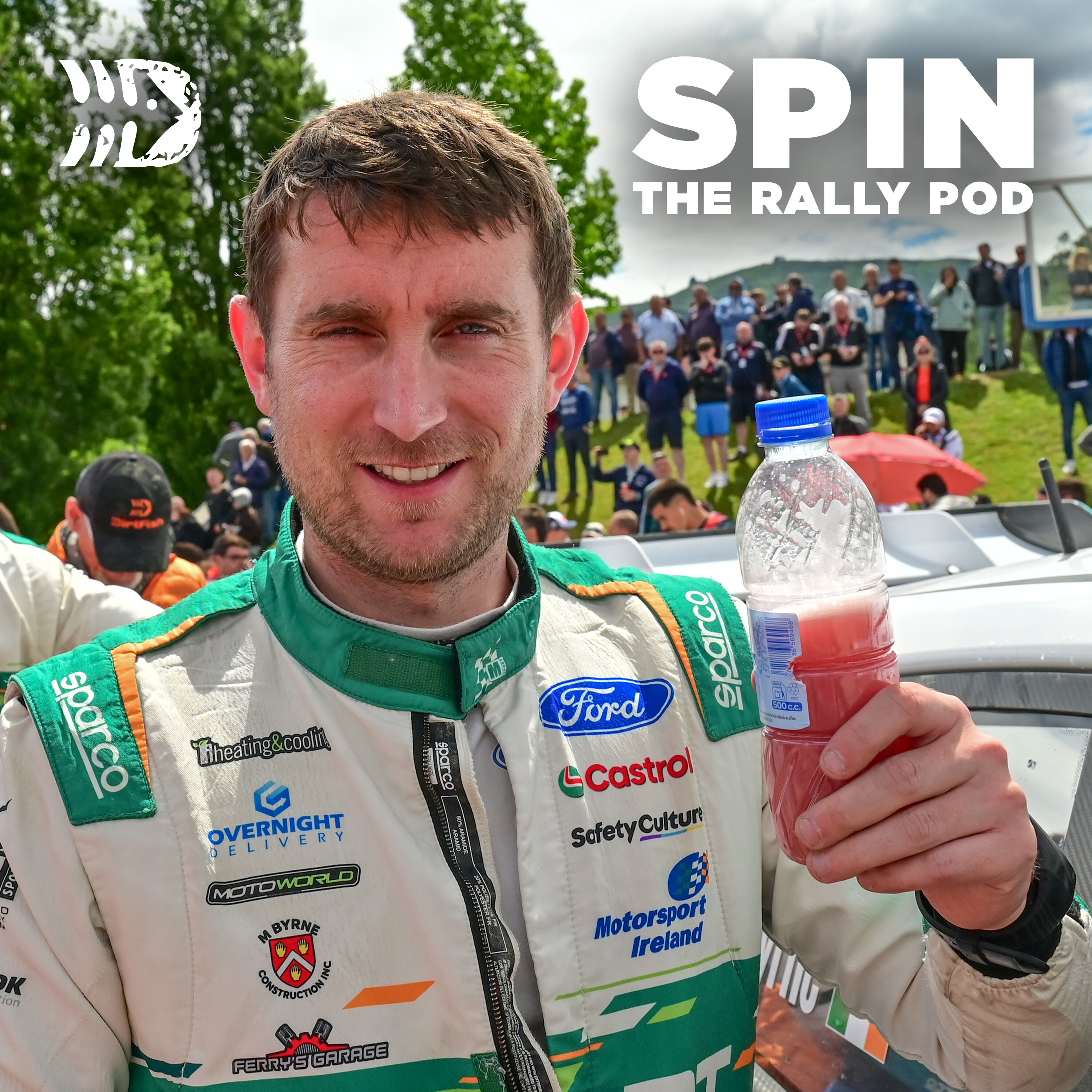
The newest member of the WRC's Rally1 club: Shane Byrne
About this episode
Rally Pod hosts welcome Shane Byrne as the newest Rally1 driver in the WRC, walking through his jump from European Rally Championship success into “the World Rally Championship in a Rally 1 car.” They also zoom in on what it’s like early on—first WRC rallies, Monte Carlo pressure, and the reality of tiny time gaps. Along the way, Byrne and the co-driver share how rally life starts to feel routine, plus the co-driving craft of pace notes and timing.
If Jon Armstrong is new to the World Rally Championship, what about Shane Byrne? The Irish co-driver had not competed in any WRC events, at all, before he and Armstrong joined M-Sport's Rally1 lineup at the top of 2026. Shane joins Luke Barry to share his rallying story, how the season has gone so far, and what he hopes to achieve in the future.
See Privacy Policy at https://art19.com/privacy and California Privacy Notice at https://art19.com/privacy#do-not-sell-my-info.

Nissan Micra
"...ompetition up to you, or both? A four door Nissan Micra. Nice."
The Nissan Micra is a small car made for city driving. It’s easy to park and drive in tight spaces. The podcast specifically mentions a four-door version, meaning it has extra doors for getting in and out more easily.
The Nissan Micra is a small, practical city car designed for easy maneuvering and efficient everyday use. In the podcast, the mention of a “four door Nissan Micra” highlights a specific body style that still keeps the car compact while offering more access for passengers. It’s discussed because it’s a common choice when people want something small that’s straightforward to live with.

Mark II Escorts
"Yeah, because I haven't sat in many Mark II Escorts since, I think I've done. I've done another track day and maybe a little bit of testing before,"
“Mark II Escorts” are older Ford Escorts that people have used in rally racing. Different versions can behave very differently depending on how they’re built and set up.
“Mark II Escorts” refers to the second-generation Ford Escort, a classic rally platform. In rallying, different Escort variants can have very different drivetrains and electronics, which is why the host later contrasts them with WRC-spec cars.
track day
"I've done another track day and maybe a little bit of testing before, [447.1s] but never actually done a rallying one, I don't think."
A track day is when you drive on a race track with other drivers, usually for practice. It’s not the same as rallying because rally stages are more varied and unpredictable.
A track day is an event where drivers take their cars onto a closed circuit for practice and testing. It’s different from rallying because the surface and grip are more consistent, and the driving is focused on circuit lines rather than stage navigation.
WRC car
"and like some of them are like a two-wheel drive WRC car, you know, [464.8s] they have traction control and there's just absolutely rapid and straight line, like,"
A WRC car is a rally race car made for the World Rally Championship. It’s built to handle slippery roads and still stay controllable at speed.
A WRC car is a rally car built to compete in the World Rally Championship (WRC). These cars are engineered for high-speed control on loose surfaces, with specialized drivetrains and electronics to keep traction under changing grip.
two-wheel drive
"and like some of them are like a two-wheel drive WRC car, you know, [464.8s] they have traction control and there's just absolutely rapid and straight line, like,"
Two-wheel drive means the car only powers two wheels, not all four. On rally roads, that can change how the car grips and how it feels when you accelerate.
Two-wheel drive (2WD) means power is sent to only one axle—either the front or the rear. In rallying, 2WD changes how the car accelerates and how it behaves when the surface is loose, compared with all-wheel drive.
traction control
"they have traction control and there's just absolutely rapid and straight line, like, [469.1s] you know, serious, serious bit of engineering."
Traction control helps prevent the wheels from spinning when the road is slippery. It manages power so the car can keep moving forward without losing grip.
Traction control is an electronic system that reduces wheel spin when tires lose grip. It does this by cutting engine power and/or adjusting braking so the car can accelerate more consistently on slippery rally stages.
WRC had to offer
"Never, probably were never, there were maybe one or two rallies in Ireland, but never in any international, so that was their first trip away to experience what the WRC had to offer."
“WRC had to offer” is basically talking about the World Rally Championship as the big, top-level rally scene. It’s why watching a rally there felt like a special experience.
The phrase “WRC had to offer” refers to what the World Rally Championship represents as a top-level rally series—high competition, specialized cars, and international rally events. It frames why spectating in Portugal was meaningful for the speaker’s dad and friends.

Evo 9
"I remember Gary Jennings was in the Evo 9 at the time. [533.3s] I need the blue and white livery."
An “Evo 9” is a Mitsubishi Lancer Evolution from the ninth generation. It’s a turbocharged, rally-style car that many people used in competitions because it’s quick and tunable.
“Evo 9” refers to the Mitsubishi Lancer Evolution IX, a rally-bred all-wheel-drive sedan known for its turbocharged engine and strong motorsport pedigree. In rallying, cars like the Evo 9 are popular because they’re fast in stages and have a proven platform for setup changes.
midpoint radio 2
"It's actually, I think I'm getting very geeky now, but I think it's midpoint radio 2, just up from that. [546.8s] It's a herping race."
That phrase sounds like a specific rally radio call point in the schedule. Rally events use organized radio communication so everyone stays on the right timing and gets the right updates.
“Midpoint radio 2” sounds like rally event radio/communications timing—where crews and officials use specific radio call points during the stage schedule. Rallying relies on structured comms so drivers can coordinate timing, updates, and stage information.
herping race
"It's a herping race. [548.5s] And yeah, so that's my first kind of like real memories from rallying,"
“Herping” is a hobby where people look for reptiles and amphibians. Here, the speaker is probably joking that the rally felt like it involved wildlife spotting more than normal driving.
“Herping race” appears to be a humorous reference to “herping,” the hobby of searching for reptiles and amphibians. In this context, the speaker is likely joking that the rally route/stages felt like they were “hunting” wildlife rather than just racing.

BMW E36
"...d. That's our terminology on it. So I had a white E36 M3. So, you know, yeah, maybe a little bit of dif..."
The BMW 3 Series is a popular BMW model line, usually a small luxury car. The “E36 M3” mentioned in the podcast is a high-performance version from an older generation of the 3 Series. People talk about it because it’s known for being fun to drive.
The BMW 3 Series is a compact luxury sedan/compact car line known for balancing everyday usability with sporty handling. In the podcast context, the mention of an “E36 M3” points to a performance variant from the E36 generation, which is often discussed by enthusiasts for its driving feel and motorsport heritage. It’s a common reference point in car conversations because it spans both mainstream 3 Series models and high-performance M-badged versions.
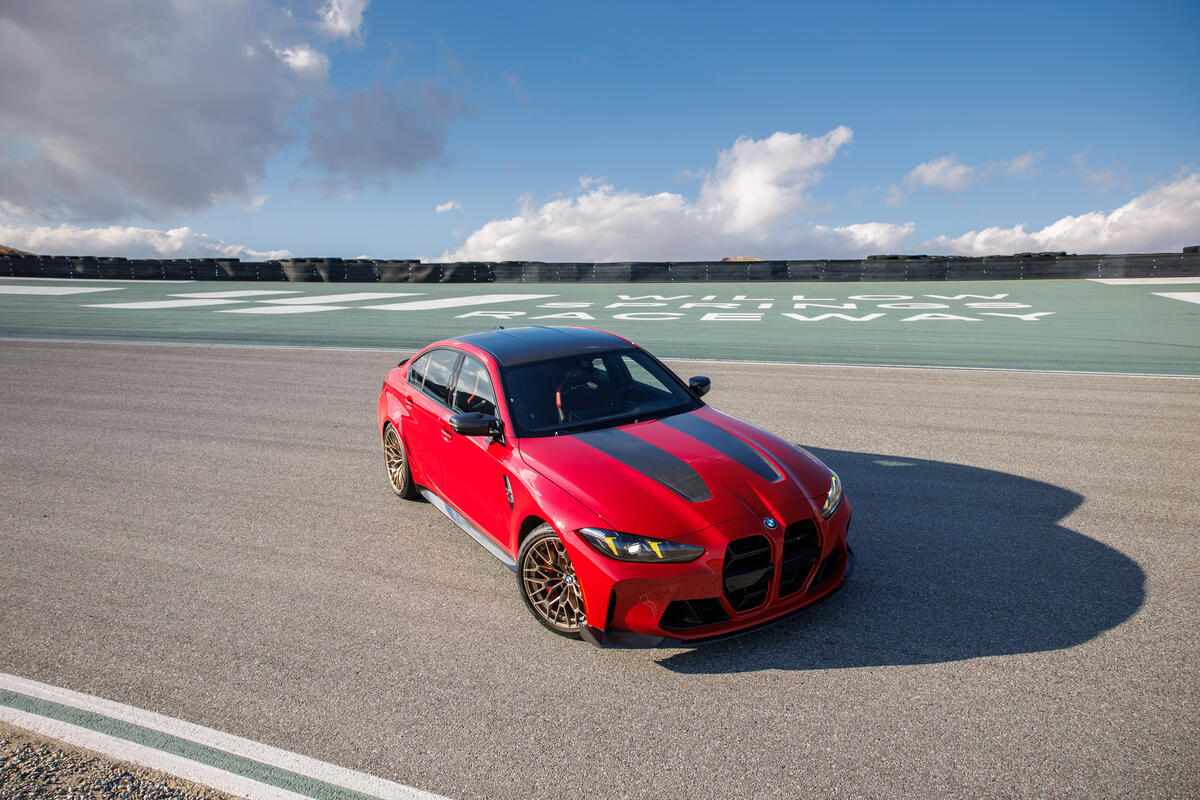
BMW M3
"So I had a white E36 M3. [575.7s] So, you know, yeah, maybe a little bit of different in amongst going to the rally too."
“E36 M3” means a BMW M3 from the E36 generation. It’s a popular older BMW performance car that many drivers like because it handles well and is easy to modify.
“E36 M3” is the BMW M3 from the E36 generation, a classic rear-wheel-drive performance coupe/sedan platform. It’s well known in enthusiast circles for its balance and for being a common base for rally and track builds because the chassis responds well to setup changes.

Ford Puma
"...h the car first. We're going with Sally, the Ford Puma. Yeah, that's a solid choice."
The Ford Puma is a small car that sits higher than a typical sedan, making it easier to get in and out of. It’s meant for normal daily driving, like commuting and errands. In the podcast, it’s being picked as a straightforward, reliable option.
The Ford Puma is a small crossover-style car designed for everyday driving with a practical size and modern features. The podcast’s “solid choice” framing suggests it’s being considered as a dependable, easy-to-live-with option for the group’s needs. It comes up often in discussions because it’s a mainstream alternative when people want something compact rather than a larger vehicle.

Chevrolet Monte Carlo
"Yeah. Obviously, going to Monte Carlo, that's like probably one of the toughest Monty's..."
The Chevrolet Monte Carlo is a two-door American car that’s known for a sporty, classic look. It’s often associated with stronger engines from its era. The podcast is talking about it as a tough, capable choice—especially when comparing different Monte Carlo cars.
The Chevrolet Monte Carlo is a classic American personal luxury coupe, known for its bold styling and V8-era performance reputation. In the podcast, “going to Monte Carlo” and “one of the toughest Monty’s” suggests a discussion about specific Monte Carlo examples and how durable or capable they are in a challenge or event. It’s a car that often gets mentioned because it has a strong enthusiast following and a reputation tied to older muscle-era builds.
Monte Carlo rally pace and Sunday conditions
"It was Monte Carlo in a rally one car. It's just bonkers. ... But now I kind of have funny luck like that in a good way."
This segment discusses how rally pace at Monte Carlo can defy expectations, especially on Sunday as conditions change. The hosts connect that to how different car categories can end up running quicker depending on grip and the evolving road.
rally threes
"And as we've seen in Monte on the Sunday, like some of the cars running behind the rally threes are actually quicker as the road was improving all the time,"
“Rally threes” are a lower class of rally cars than the top Rally1 cars. In this story, the lower-class cars were surprisingly quick because the track got better over the day.
“Rally threes” refers to a lower WRC car category (often called Rally3) compared with Rally1. The speaker notes that some Rally3 cars were quicker on Sunday at Monte Carlo because the road conditions improved, highlighting how class performance can be influenced by grip and timing rather than just raw speed.
road was improving all the time
"the rally threes are actually quicker as the road was improving all the time, which is, you know, just kind of hard to believe looking at it in paper."
In rallying, “road improving” means the surface gets faster as more cars pass—often due to rubber being laid down, dust clearing, and the line becoming more predictable. That can let later starters or different car classes post better times than you’d expect from paper specs alone.
WRC Rally1
"The first rally in the WRC in a rally one. Definitely not. I bet you it."
WRC Rally1 is the top level of rally cars in the World Rally Championship. It means the newest, most advanced ruleset and cars—so competing in Rally1 is a big step up.
WRC Rally1 is the top class in the World Rally Championship (WRC), using the sport’s newest-spec rally cars. When the hosts say it’s “the first rally in the WRC in a rally one,” they’re talking about debuting or competing at the highest Rally1 ruleset rather than older car categories.
punctures
"and the start of 2025 was rocky, just, you know, it was hard to get a bit of luck [1826.5s] and we had a lot of punctures, but sometimes you have to create your own luck, you know,"
A puncture is when a tire gets damaged and goes flat. In rallying, that can slow you down a lot and sometimes end your day if you can’t keep going.
In rallying, “punctures” are tire punctures that can cost significant time and sometimes force retirement. Because rallies run on rough roads and gravel, punctures are a common risk and can swing stage results quickly.
manage your lead
"and, you know, we had the pace for him, but Jan was just taking that little bit of time [1853.3s] out of every stage and you kind of list your answers, you learn how to manage your lead. [1857.8s] So fast forward a couple of weeks around the care diggy on Wales then"
If you’re in first place, you don’t always drive flat-out the whole time. You balance going fast with not making mistakes, especially when the weather or track changes and other drivers are catching you.
In rallying, “managing your lead” means adjusting your driving and risk level once you’re ahead. As conditions change or rivals close in, you may prioritize clean stages and avoiding mistakes over pushing maximum speed everywhere.
DNF
"and Croatia was like a mathematical possible day of one in the championship [1885.1s] and Andrea, Mabelini and Marcek had, you know, like DNF has such retired [1893.2s] and Mabelini went out and I think it was the first day"
DNF means the driver didn’t finish the rally. Usually that’s because something went wrong—like a crash or a mechanical failure—so they couldn’t complete the stages.
DNF stands for “Did Not Finish.” In rally results, a DNF usually means the car retired due to a mechanical problem, crash, or other issue before completing the event or enough stages to be classified.
power stage
"and we were saying we have a chance here, we had to go fastest on the power stage [1906.5s] and we did that but Marcek was really, really fast on the Sunday"
A power stage is the last special stage of the rally where drivers can earn extra points. Even if the overall result is close or decided, people still push hard to be fastest there.
A “power stage” is the final, shorter stage of a WRC-style rally that awards extra championship points to the fastest drivers. It’s designed to keep the event exciting right to the end, even if the overall winner is already decided.
power steering
"it's quite difficult to maneuver that car around with no power steering and yeah just any of the tight corners"
Power steering helps you turn the wheel with less effort. If a car doesn’t have it, the steering feels heavier, which is tough in slow, tight corners.
Power steering uses a hydraulic or electric assist to reduce the effort needed to turn the wheels. Without it, steering inputs—especially at low speeds and in tight rally corners—require much more physical effort and can make precise maneuvering harder.
handbrake
"he just says pull the handbrake so no I just there's no issue as I said ... he says F yeah ... you nearly put me off the road"
In rally cars, the handbrake isn’t just for parking. Drivers can pull it briefly to help the car rotate and turn more sharply in tight corners.
In rally driving, the handbrake is used as a quick control input to help rotate the car through tight corners. Pulling it briefly can unsettle the rear and encourage the car to turn-in more aggressively, especially when traction is limited.
shifted the gear down
"it was beautiful to see that teamwork and it was like it was a point where you even shifted the gear down for him"
Downshifting is when you choose a lower gear. It helps the car respond better when you need to accelerate or control the car coming out of a turn.
Downshifting means selecting a lower gear to increase engine speed and provide stronger acceleration or better control exiting a corner. In rallying, timing downshifts can also help the car stay responsive while you’re setting up for the next turn.
car rotate
"because you needed to try and get the car the car rotate as much as you can but like there was another corner we're coming around"
“Rotate” here means how the car pivots to point into the turn. Drivers try to get the car to turn the right way at the right time so they can keep control and carry speed.
“Car rotate” describes the car’s yaw rotation as it turns through a corner. Rally drivers try to manage how quickly and how much the car rotates to hit the right line, maintain traction, and set up for the next corner.
pace notes
"and you probably don't either but to sit there while your driver is just going flat [2795.3s] chat everywhere a camera's like calling notes it's [2799.2s] I think almost an even more impressive skill than what the drivers do it's it's ... [2810.9s] to home and like when you have no pace notes you see everything that goes on you see"
Pace notes are the co-driver’s “instructions” for what the road is about to do. They help the driver know what’s coming so they can go fast without guessing.
Pace notes are the co-driver’s written/announced instructions that describe upcoming road features—like turns, braking zones, and hazards—so the driver can attack the stage at speed. The transcript highlights how crucial they are, and how driving becomes much harder when you don’t have them.
understeer
"and like when you have no pace notes you see everything that goes on you see [2814.9s] every little bit of maybe slide or understeer or something"
Understeer is when the car doesn’t turn as sharply as you want. It usually happens when the front tires lose grip, so the car “pushes” wide in a corner.
Understeer is when a car turns less than the driver intends—typically because the front tires lose grip first. In rally, it can show up mid-corner and forces the driver to adjust line and throttle/braking to regain traction.
runner two
"...but once you do a runner two and a test all of a a sudden you just get you're able to understand the pace note system quite well..."
“Runner two” sounds like a training run used to practice calling the notes and getting the timing right. It helps the co-driver learn how to communicate clearly as the pace builds.
“Runner two” refers to a specific practice/learning run used to build familiarity with calling pace notes and stage rhythm. It’s part of how co-drivers train to deliver notes reliably under speed and timing pressure.
slowing
"...you have certain shorter words that you use some guys for example you slow we use slowing and stop or big stop so it's whatever works for the driver."
In rally pace notes, “slowing” is a shorthand command indicating a required reduction in speed for an upcoming section. It’s one of several standardized (but driver-specific) words used to communicate braking intensity and timing without long sentences.
big stop
"...we use slowing and stop or big stop so it's whatever works for the driver."
“Big stop” is a short rally instruction meaning the driver needs to slow down a lot for the next part. It’s meant to be clear and fast to understand while driving.
“Big stop” is a rally pace-note shorthand for a major speed reduction, typically implying stronger braking and a more demanding corner/section. It’s used as a concise alternative to longer explanations so the driver can act instantly.
recce
"...because you obviously have to understand it because you're there calling it and you're there writing it on recce but essentially it doesn't really matter what you think so what your driver needs isn't it..."
Recce is the practice run-through before the rally stage, where the team studies the route and writes down instructions. Those notes are what the co-driver reads during the race.
Recce is the pre-event reconnaissance where the co-driver and driver walk or drive the special stages to record pace notes. Those notes are then used during the actual race to guide the driver through corners and hazards.
Request an Explanation
Heard something you'd like explained? We'll add it to this episode.
Sign in to request explanations for terms you heard.
Want to learn more?
Browse our glossary for plain-English explanations of automotive terms, jargon, and concepts.
Help improve this episode
See something that's not quite right? Our annotations are AI-generated and can sometimes miss the mark. Click the flag icon on any annotation to suggest a correction.