
The People's Republic of Meerblau
About this episode
The hosts open with a tribute to Phil Bezel, remembering his high-mileage GT4 and his wish that people get out and drive their cars. From there, the conversation turns into a series of sharp dealership complaints, SUV shopping talk, and a look at how brands like Subaru, Mini, Volkswagen, and Ferrari have drifted from enthusiast expectations. They also compare an Emory Porsche and BMW’s M5 Touring, then wrap with travel plans for a Genesis press drive and Laguna Seca IMSA racing.
Tonight, it’s a That Car Show crew show. Ryan spends a day behind the wheel of an Emory Outlaw 356, Lindsey takes a spin in her 289 Cobra and Dan picks up lunch—quickly—in the new 717hp BMW M5 touring. Also, we play car dictator, long for the 80s, tell a few dad jokes, and wonder what in the hell has happened to Ferrari.
Plus, we welcome new partner E470 to the show. Who knew a toll road could be so cool? @e470tollway e470.com
It’s That Car Show. And it’s a good one.
Highway One
"He was known and loved in the Instagram car community, and he was legendary for his daily pre-dawn drives on Highway One. He had a gray GT four, which was actually his second GT four."
They’re referencing Highway One as the road Phil would drive on early in the morning. It’s mainly part of the story, not a car-tech explanation.
Highway One is mentioned as the route for Phil Bezel’s daily pre-dawn drives. This is more of a personal-story location detail than a technical automotive topic.
informal development car
"He had a gray GT four, which was actually his second GT four. And the car ended up being an informal development car for Shark Works. And he put more than 170,000 miles on this second one,"
An “informal development car” is basically a regular car that gets used to test ideas in the real world. Instead of only testing in a lab, they learn what works by driving it.
An “informal development car” is a vehicle used outside of a formal factory test program to evaluate changes in the real world. It often means the car is used to gather feedback on parts, tuning, or reliability while being driven normally.
Shark Works
"He had a gray GT four, which was actually his second GT four. And the car ended up being an informal development car for Shark Works. And he put more than 170,000 miles on this second one,"
“Shark Works” is the group that benefited from Phil’s car being used for development/testing. Think of it like a company using a real car to try out improvements before selling or finalizing them.
Shark Works is referenced as the organization that used Phil Bezel’s car as an “informal development car.” That implies the company was testing parts, setups, or tuning ideas on a real-world vehicle rather than only on a test bench.
car dealerships
"I've had some very interesting experiences with car dealerships lately and I wanted to share and I think other folks have got interesting experiences as well."
They’re telling a story about what it was like dealing with a car dealership. The focus is on how the staff handled the visit.
This segment is about the speaker’s experiences with car dealerships, including how they were treated when they arrived. It sets up a discussion of customer service and sales-floor behavior.
Land Rover Jaguar dealership
"But I decided to go pay a visit to the Land Rover Jaguar dealership, which is located about a mile from my house in LA."
They’re talking about going to a car store that sells Land Rover and Jaguar vehicles. This is where you typically buy a car and get it serviced.
The speaker visits a dealership associated with the Land Rover and Jaguar brands. Dealerships are the retail sales and service locations where you negotiate for a vehicle and arrange maintenance.

Polestar 2
"Yeah, well, you know, I love our Polestar 2 that we have, but we were leasing it and the lease is up in July."
Polestar 2 is an electric car. Here, they’re talking about the lease ending and asking what it would cost to buy the car outright.
The Polestar 2 is an electric compact sedan from Polestar. In this segment, the hosts are discussing a lease that’s ending and whether they’ll buy the car instead of turning it in.
lease is up
"but we were leasing it and the lease is up in July. And so I emailed the sales guy who leased the car to us and I said, I've got two questions."
“Lease is up” means the rental agreement for the car has ended. Usually you either return the car or buy it for a pre-set price.
When a car lease is “up,” it means the lease term has ended and the car is typically due to be returned. At that point, the lessor may offer options like a buyout (buying the car for a set price).
buyout offer
"What is our buyout offer for the car? Because for the right price, we'd probably just keep the car."
A buyout offer is the price they’ll let you pay to own the leased car. You compare that price to what the car is worth to decide if it’s a good deal.
A buyout offer is the price the leasing company sets for purchasing the leased vehicle at the end of the lease. It’s often compared against market value to decide whether keeping the car makes financial sense.
Volvo dealership
"And then you've got to go an hour away to actually have a service down at a Volvo dealership, right?"
They’re saying you may need to go to a Volvo dealer for service. That matters because it tells you where maintenance and repairs would happen.
The host says service is handled at a Volvo dealership, implying Polestar may use Volvo’s dealer network for maintenance and repairs. This is relevant for listeners because it affects where you’d go for service.

Polestar three
"The options were I want to buy a Polestar two, I want to buy a Polestar three, I want to buy a Polestar four other inquiries."
The Polestar 3 is Polestar’s electric SUV. In the segment, it’s included in the speaker’s list of models they want to buy while submitting an inquiry to Polestar.

Polestar four
"The options were I want to buy a Polestar two, I want to buy a Polestar three, I want to buy a Polestar four other inquiries."
The Polestar 4 is another electric car model from Polestar. The speaker listed it as a car they were interested in buying.
The Polestar 4 is Polestar’s electric crossover/coupe-style model. The speaker mentions it as another option they were considering buying when they contacted Polestar.
lease payment
"Yeah, but it's so frustrating. Take my damn money, you know, I mean, or my lease payment or whatever it is, you know, and there's no middle ground."
A lease payment is what you pay each month to drive a car you don’t own. It’s like renting the car for a set time, with payments due monthly.
A lease payment is the monthly amount you pay to use a car under a lease agreement, rather than owning it outright. The speaker groups it with “money” they want the dealership/finance side to take action on.
Porsche
"Dealships are either wonderful like Porsche, Colorado Springs, where they send their people to like, you know, the four seasons training program or whatever, or they're just, you know,"
Porsche is a well-known car brand famous for sporty, high-performance cars. In this part, they’re talking about how good (or bad) the Porsche dealership experience was.
Porsche is a German sports-car brand known for performance-focused engineering and a strong dealer network. The speaker contrasts a “wonderful” Porsche dealership experience with worse dealership experiences.
insurance
"I was trying to reach out to a Porsche dealership and two weeks ago, I left a voicemail for their it's their financial team because basically I wanted to cancel an insurance and luckily the good folks at Porsche Colorado Springs told me that I could cancel insurances on a new car if I didn't have the car anymore and I could get some money back."
Here, “insurance” means the coverage you pay for to protect the car. The speaker is saying they were able to cancel it and get some money back when they didn’t have the car anymore.
In this context, “insurance” refers to coverage tied to the car purchase/lease process, including the ability to cancel it when the vehicle is no longer in your possession. The speaker describes getting money back after canceling insurance for a new car.
finance experts
"I then call in, speak to the receptionist. Oh, yeah, we have two finance experts here. One is returning people's calls. The other one isn't like, even if they weren't, you don't say that to someone on a phone."
“Finance experts” here means the dealership staff responsible for the money/financing side of the deal. The speaker is complaining that one of them isn’t actually calling people back.
“Finance experts” is dealership jargon for staff who handle financing-related tasks such as payment plans, paperwork, and related customer requests. The speaker uses it to criticize how effectively those people return calls.
Seattle freeze
"Right, right. [804.4s] Seattle freeze is not a thing. [806.4s] So if anyone is looking for dealership training, we are available."
“Seattle freeze” is a slang phrase people use to say that some folks in Seattle seem a little cold at first. The hosts are using it as a joke about how people act in different places.
“Seattle freeze” is a nickname for the idea that people in Seattle can seem unfriendly or slow to warm up at first. In the episode, it’s used as a joke to contrast local attitudes with what happened elsewhere.
modularity
"[866.0s] Well, the one that popped into my head was because you had mentioned you liked sort [869.8s] of the the modularity of the Jeep and you'd had a Jeep before that you enjoyed. [874.6s] So if you didn't want to go back to Jeep, since you've done that before,"
“Modularity” here basically means the vehicle is designed to be flexible—like it can be set up in different ways or has components that make it easier to change/upgrade. They’re saying that’s one reason they liked their Jeep.
In a vehicle context, “modularity” usually means the car’s design is flexible—parts, configurations, or systems can be swapped or adapted more easily than on less flexible platforms. The host is using it to explain why they liked their previous Jeep.

Ford Bronco
"I think a new Bronco would be worth considering just because of the sort of functionality of it. The Bronco is growing on me."
The Ford Bronco is a rugged SUV made for off-road driving. The hosts are talking about it as a possible everyday vehicle because it’s built to handle outdoor use.
The Ford Bronco is a modern off-road SUV known for its rugged, trail-focused design and removable roof options on some trims. In this segment, the hosts are discussing whether a Bronco would be a good choice based on its practical, outdoorsy “functionality.”
manual transmission
"I'm thinking like a two door with a manual transmission, which is a thing. Yeah."
A manual transmission means you shift gears yourself using a clutch and a stick. Some drivers like it because it gives them more control over how the car drives.
A manual transmission is a gearbox controlled by the driver using a clutch pedal and gear shifter. It lets the driver choose gears directly, which many enthusiasts prefer for feel and control—especially in off-road or low-speed driving.
two door
"I'm thinking like a two door with a manual transmission, which is a thing. Yeah."
A “two-door” means the SUV has fewer doors—usually one in front and one behind. It often makes the vehicle shorter and easier to maneuver, but the back seat can be harder to get into.
A “two-door” vehicle has two doors total—one for the front seats and one for the rear seats. On SUVs like the Bronco, the two-door layout usually makes the body shorter and can feel more nimble, but it typically reduces rear-seat space and ease of access compared with a four-door.
soft top
"You know, until until our friends at Land Rover bring the 90 out as a soft top, right? I mean, I think that's, you know, you've got X number of options, right?"
A soft top is a roof made of fabric instead of hard plastic or metal. It usually means you can get a more open-air feel when driving.
A soft top is a roof made from fabric or flexible material instead of hard panels. On off-road SUVs, it’s often associated with easier open-air driving and quicker roof changes for camping or warm-weather use.

Raptor
"Yeah, although you're driven a raptor at some point and you weren't blown away, but maybe you have me. We buy three raptors."
The Raptor is Ford’s off-road-focused pickup. The hosts are saying they drove one, but it didn’t surprise them the way they expected.
“Raptor” here refers to Ford’s high-performance off-road pickup line, known for aggressive styling and suspension tuned for rough terrain. The hosts mention driving a Raptor and not being “blown away,” then compare its size and impact to what they want from a Bronco.
Bronco Raptor
"We buy three raptors. Did you drive a Bronco Raptor? Yeah, the Raptor."
The Ford Bronco is an SUV made for off-road driving. It’s built to handle rough roads and trails better than many regular SUVs. In the podcast, it’s mentioned because someone drove a high-performance off-road version called the Raptor.
The Ford Bronco is a rugged SUV designed for off-road capability, with a focus on durability and trail-ready features. It’s discussed in the podcast because it’s a popular choice for people who want an SUV that can handle rough terrain. The mention of the Bronco Raptor specifically points to a more extreme, performance-oriented off-road version.
chassis
"So it's the new Bronco chassis, but it's a very different. You know, body and interior and all that."
A chassis is the car’s main frame/structure underneath. If the chassis changes, the car can drive and fit differently even if the outside looks similar.
In automotive terms, the chassis is the main structural foundation of the vehicle—everything the body mounts to and that carries loads. When a model gets a “new chassis,” it can change ride, handling, and how the interior is packaged.

Ford F150
"What's the one above the raptor? That's a good question. It's was it, uh, was it the, um, because there's an F-150 Raptor R. Oh, maybe it was the raptor R. Okay. But you can't get that on the Bronco. You can't get it on the F-150."
The Ford F-150 Raptor R is a super off-road version of the F-150 pickup. They’re basically saying the Bronco doesn’t offer that exact top “Raptor R” level.
The Ford F-150 Raptor R is a high-performance, off-road-focused version of the F-150 pickup. The hosts are comparing it to the Bronco and noting that you can’t get the same top-tier Raptor R setup on the Bronco (or on the standard F-150 lineup).
Cobra Club car show
"This is the one that I drove like a year and a half ago for the Cobra Club car show, same car, but yes, we did a, an early morning weekend drive, um, down to"
They mention a “Cobra Club” event, basically a car show organized around Cobras. It explains where and why they took the car out for a drive.
The “Cobra Club car show” is an event context for why the guest drove the Cobra. It signals a community/club setting rather than a technical discussion, but it helps listeners understand why the car is being discussed.

Shelby Cobra
"And so just the contrast, you know, you could put it in the back of the truck almost we're talking real Cobra 289 here, guys. This isn't some fiberglass thing."
A “Cobra 289” is a Shelby Cobra with a 289-cubic-inch V8 engine. The “289” tells you which engine it has, and that’s a big deal for collectors.
“Cobra 289” refers to a Shelby Cobra powered by a 289 cubic-inch V8. The “289” is the engine displacement, and it’s a key part of why these cars are so sought after.
turn signal stock
"The signal, the turn signal stock is unique as we learned from Dan, right? That's how you know."
The turn signal stock is the lever you move to signal left or right. On older cars, its shape can be a clue for telling which car it is.
The “turn signal stock” is the stalk/lever on the steering column that controls the turn signals. On some classic cars, the shape and details of the stock are distinctive and can help identify the exact model or even specific years.
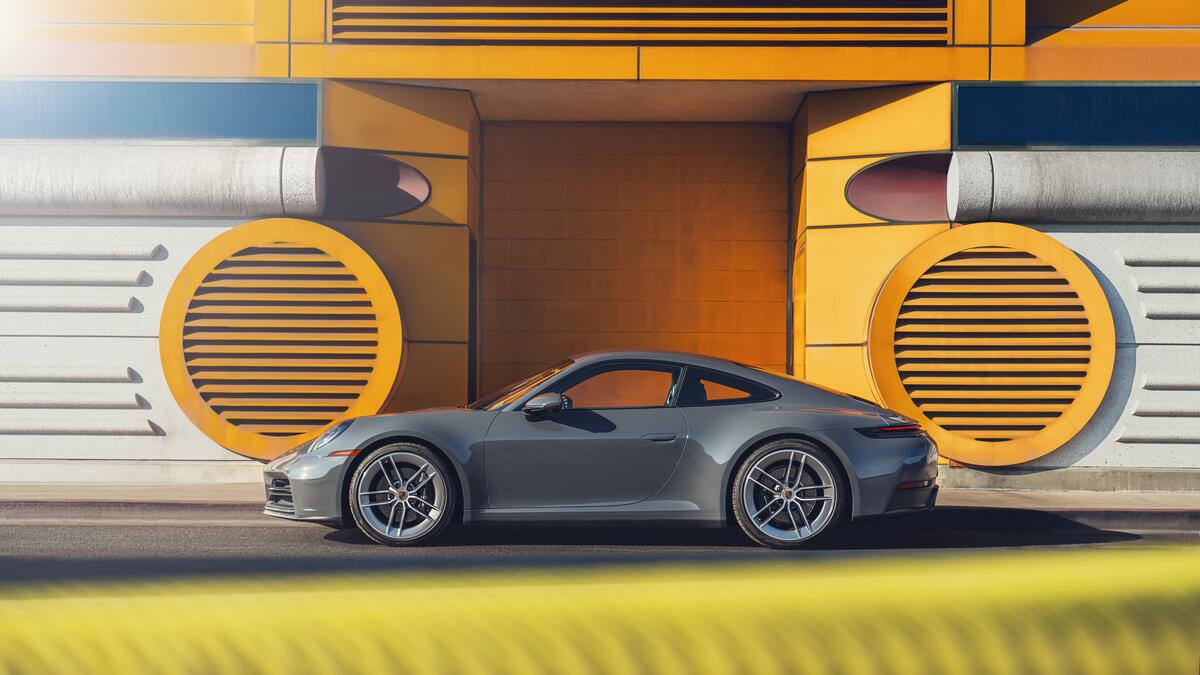
Porsche 912
"...s. There was an E type Jaguar, Jaguar, an XK120, Porsche 912, a modern Bentley convertible, which I guess con..."
The Porsche 911 is a famous sports car made by Porsche. It’s known for its recognizable design and for being built to drive in an exciting way. People mention it often because it’s one of the most well-known performance cars ever made.
The Porsche 911 is Porsche’s iconic sports car, known for its distinctive shape and rear-engine layout. It’s a benchmark model in the sports-car world and is frequently referenced when discussing car history and driving experiences. In the podcast, it’s likely mentioned as part of a lineup of notable classic and modern cars.
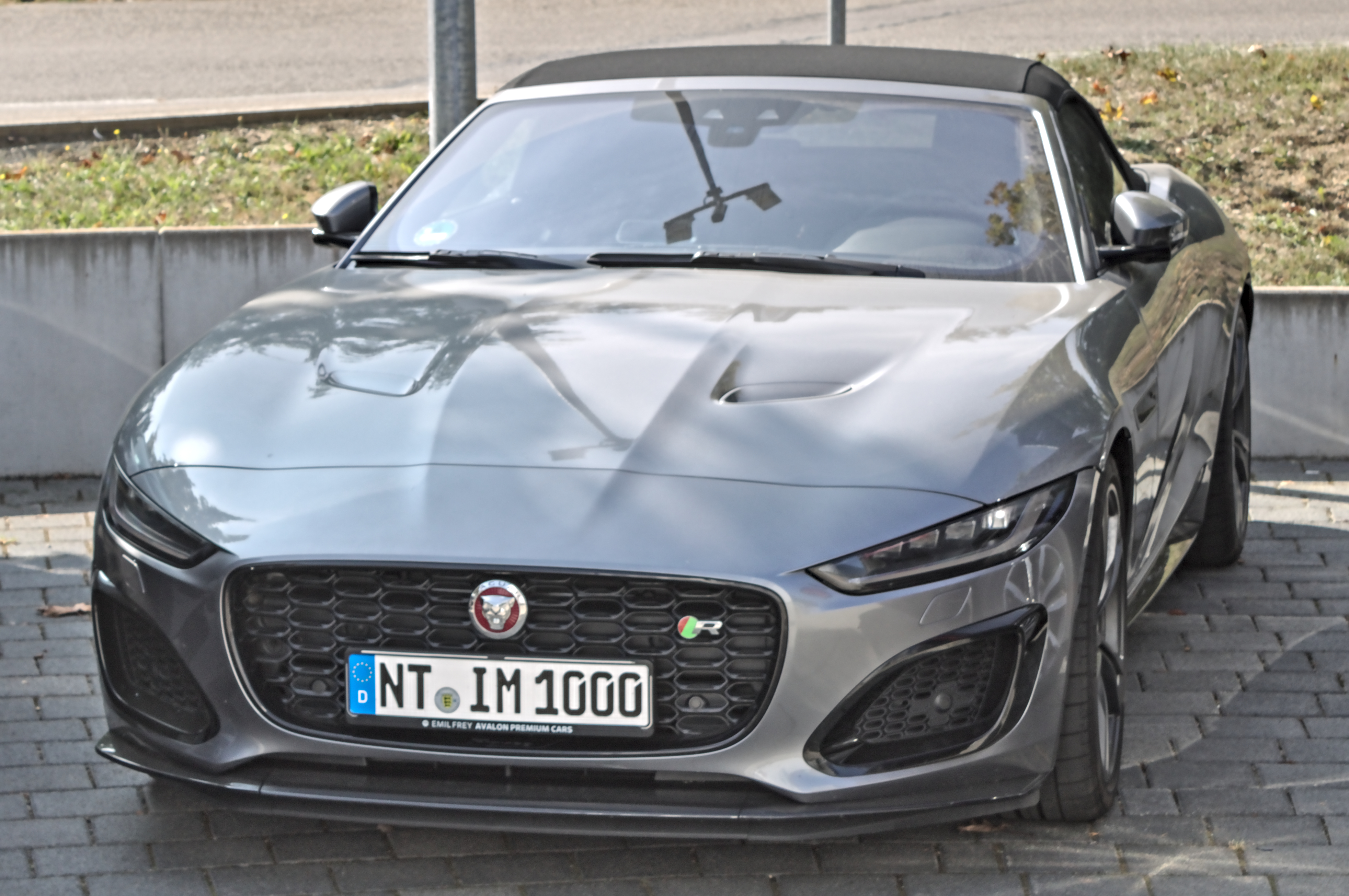
Jaguar Type Jaguar
"...idually, but I will say the cars. There was an E type Jaguar, Jaguar, an XK120, Porsche 912, a modern Bentley ..."
The Jaguar F-Type is a sports car made by Jaguar. It’s designed to feel exciting to drive and to look distinctive. People mention it when talking about cars that are more about driving pleasure than just transportation.
The Jaguar F-Type is a sports car from Jaguar, built to deliver a classic “grand touring” feel with strong performance and a distinctive design. It’s often discussed because it blends everyday usability with a more dramatic, driver-focused character. In the podcast context, it’s mentioned alongside other notable cars as part of a broader set of memorable models.

Jaguar XK120
"There was an E type Jaguar, Jaguar, an XK120, Porsche 912, a modern Bentley"
The Jaguar XK120 is a classic Jaguar from the early performance era. It’s a well-known old-school sports car that collectors still chase today.
The Jaguar XK120 is an early postwar Jaguar grand tourer from the 1940s–1950s era. It’s historically important as one of Jaguar’s defining performance models and is a common benchmark for classic British sports-car design.

E type Jaguar
"There was an E type Jaguar, Jaguar, an XK120, Porsche 912, a modern Bentley"
The Jaguar E-Type is a famous classic British sports car. People love it for its looks, and different versions can be identified by small details.
The Jaguar E-Type is a classic British sports car known for its iconic styling and performance. Collectors often pay attention to details like bodywork, trim, and interior features to identify the exact E-Type variant.
Bentley
"There was an E type Jaguar, Jaguar, an XK120, Porsche 912, a modern Bentley"
Bentley is a luxury car brand. Saying “modern Bentley” means the group included a newer high-end car alongside the classics.
Bentley is a luxury car brand known for high-end grand touring cars. Mentioning a “modern Bentley” signals the lineup included both classic sports cars and newer luxury performance.
Emory
"But I got to drive our friend Tom Horan's new Emory car... But this was my first time driving an Emory and it was, it was pretty great."
“Emory” is the name of the custom car the host drove. It’s built to be light and quick, and the episode compares how it feels versus other cars.
“Emory” here refers to a custom-built car by Rod Emory. The host describes it as a lightweight, high-output build with a specific engine configuration and power-to-weight feel.
2.4 liter
"This specific Emory is painted in this beautiful Aston Martin green, which is cool... It's a 2.4 liter."
“2.4 liter” is the engine size—how much space the cylinders have. Bigger engines can make more power, but the exact tune and design still affect how fast it feels.
“2.4 liter” refers to engine displacement, a measure of the total volume of all cylinders. Larger displacement often correlates with more potential power, though tuning and engine design matter a lot too.
200 horsepower
"But this one's about 200 horsepower. I know there are a few different Emory engines..."
Horsepower is a way to describe how strong the engine is. More horsepower usually means the car can accelerate harder, especially when the car is light.
Horsepower is a measure of engine power output—how much work the engine can do over time. In this segment, it’s used to compare the Emory’s output to other cars and to estimate how hard it will pull.
power to weight ratio
"So it's about 200 horsepower and the car is only 1,880 pounds. So, you know, it's a pretty good power to weight, weight ratio."
Power-to-weight ratio is basically “how strong the car is for its weight.” A lighter car with decent power tends to feel faster even if the engine isn’t the biggest.
Power-to-weight ratio compares how much power the car makes to how much it weighs. Higher numbers generally mean quicker acceleration and a more “eager” feel because the engine has less mass to move.
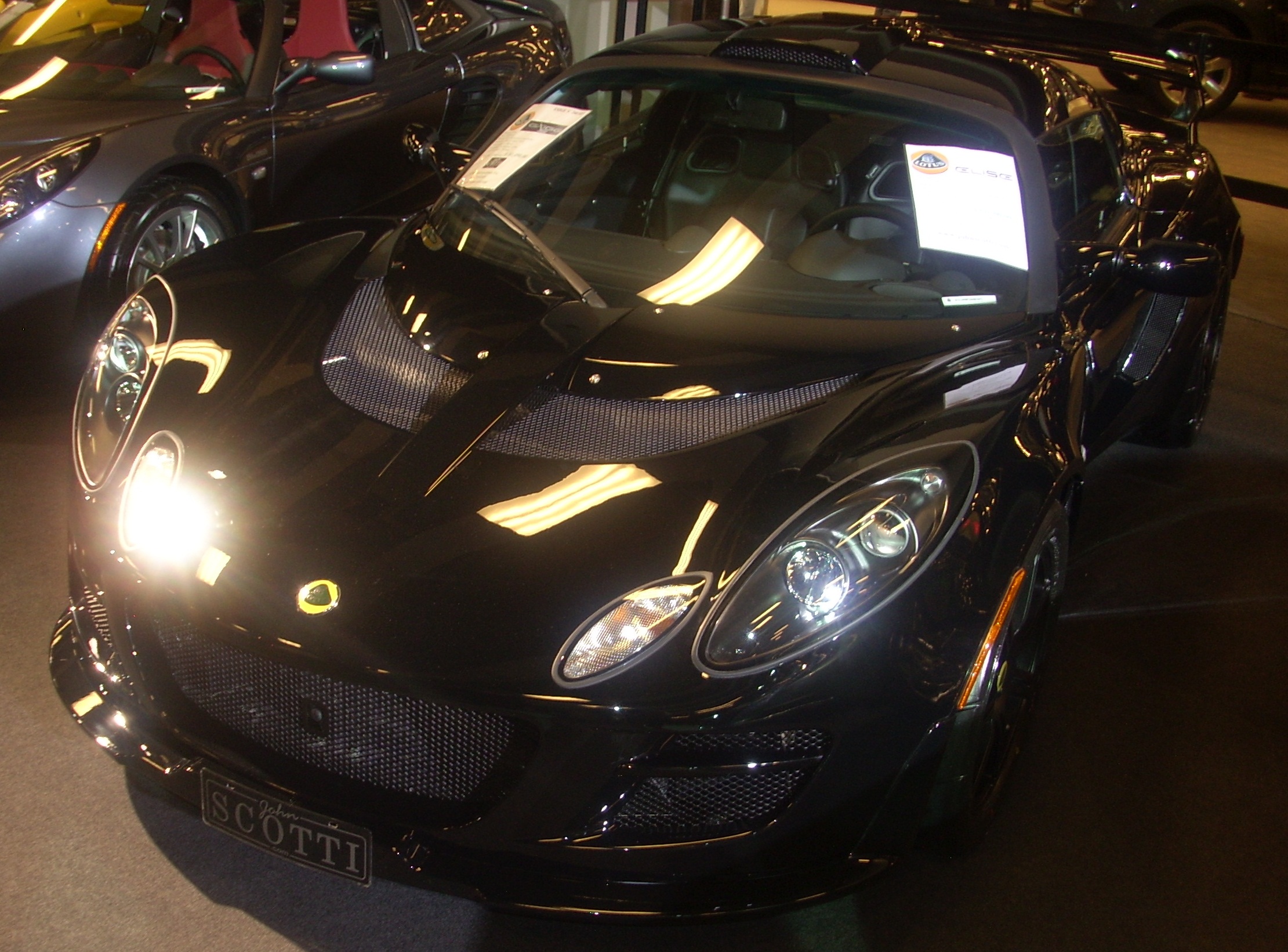
Lotus Elise
"In fact, that's a better power to weight ratio than like a Lotus Elise."
They’re comparing the Emory to a Lotus Elise, which is a small, light sports car. The point is that the Emory feels similarly quick because it’s also light.
The host compares the Emory’s power-to-weight feel to a Lotus Elise, a lightweight sports car known for sharp handling and quick acceleration relative to its size. This comparison is meant to give listeners a familiar benchmark for how the Emory drives.
85 horsepower
"Dan's car, he says, makes about 85 horsepower. And now I'm in this Emory that's making double the horsepower."
They’re quoting how much power the other car makes—85 horsepower. It’s part of the comparison to show why the Emory feels stronger.
The host cites “85 horsepower” for Dan McKinnis’s car to highlight how much less power it makes than the Emory. In a power-to-weight discussion, horsepower numbers help explain why the driving feel differs.

356
"It's the world's best 356 because, you know, it's brought down to the bare elements and reconstructed and there's not a squeak, not a rattle, right? The steering, you get in a bog, you know, stock 356 and even from the factory, there's a lot of play, right?"
They’re referring to the Porsche 356, an old classic sports car. The point is that a properly restored one can feel much smoother and more precise than a typical original or worn example.
The speaker is talking about the Porsche 356, a classic early Porsche sports car. They’re emphasizing how a well-sorted, restored example feels tight and refined compared with a typical stock car.
brought down to the bare elements and reconstructed
"It's the world's best 356 because, you know, it's brought down to the bare elements and reconstructed and there's not a squeak, not a rattle, right?"
They mean the car was taken apart almost completely and rebuilt. That kind of restoration is meant to fix old wear so it drives smoothly and doesn’t make annoying noises.
This describes a full restoration approach where the car is disassembled down to its core components and rebuilt. The goal is to eliminate looseness and age-related issues so the car feels tight and quiet.
play
"The steering, you get in a bog, you know, stock 356 and even from the factory, there's a lot of play, right?"
“Play” here means the steering wheel can move a little before the car’s wheels react. Less play usually feels more precise and confidence-inspiring.
In steering feel, “play” is the amount of free movement you can move the steering wheel before the wheels actually respond. More play usually means more looseness in the steering linkage or wear in components.
two gears together
"This steering was like, you know, two gears together. It was quick."
They mean the steering is “quick,” so you turn the wheel a little and the car turns a lot. That usually makes the car feel more responsive.
This is a descriptive way to say the steering ratio is quick—small steering-wheel movement produces a larger change in wheel angle. A quicker ratio makes the car feel more responsive, especially in tight driving.
disc
"It was, you know, the brakes are all disc. It's just, but it still drives."
They’re talking about disc brakes, which stop the car using a metal disc and brake pads. Disc brakes tend to feel stronger and more consistent than older drum brakes.
“Disc” refers to disc brakes, which use a spinning rotor clamped by pads to slow the car. Compared with older drum brakes, disc brakes generally offer more consistent stopping and better fade resistance.
Mercedes-Benz Classic Center
"[1490.3s] Who is he? [1492.0s] Otto is Nate's dog from the Mercedes-Benz Classic Center. [1497.4s] I mean, his Instagram is auto the long boy."
Mercedes-Benz has a “Classic Center” that focuses on older Mercedes cars. In this story, the host says Otto is Nate’s dog from that Mercedes classic-car place.
The Mercedes-Benz Classic Center is Mercedes-Benz’s branded facility focused on classic and heritage vehicles. In the context of the episode, it’s where Nate’s dog Otto is associated with, tying the story to Mercedes’ classic-car ecosystem.
BMW
"I was filming with friends from BMW and we filmed all day on a first day ... One of the guys there from BMW said, do you want to take an M5?"
BMW is a major car brand from Germany. Here, it’s mentioned because the people they were filming with are connected to BMW.
BMW is the German automaker behind the 5 Series and its performance “M” models like the M5. In the segment, it’s referenced as the group the hosts were filming with.

M5
"One of the guys there from BMW said, do you want to take an M5? ... We've got an M5 touring in the car park. Do you want to take it?"
BMW’s M5 is a “performance” version of the 5 Series. It’s a faster, sportier BMW that’s meant to drive more aggressively than a regular 5 Series.
The BMW M5 is the brand’s high-performance version of the 5 Series, built by BMW’s M division. It’s known for strong acceleration and a chassis tuned for confident driving, even when you’re just commuting or doing errands.
wagons
"Yeah, it's so firstly, they're selling more wagons than they are the saloon. [1616.3s] I love them. [1617.2s] They didn't know that."
Here, “wagons” means station wagons—cars with extra cargo space. They’re talking about whether people want wagons compared to regular sedans.
In this context, “wagons” refers to station wagons/estate cars—longer-roof vehicles with cargo space behind the rear seats. The hosts are discussing how demand for wagons can differ from sedans and how that impacts pricing.
saloon
"Yeah, it's so firstly, they're selling more wagons than they are the saloon. [1616.3s] I love them. [1617.2s] They didn't know that."
“Saloon” here just means a sedan (a regular car body style with a trunk). They’re comparing how many people want wagons versus sedans.
“Saloon” is a British term for a sedan—a car with a separate trunk and a more traditional passenger-focused shape. The discussion compares wagon versus saloon demand and pricing.
premium right now on dealers
"Yeah, there's actually a premium right now on dealers on the wagons versus the saloon. [1626.9s] So and the one I had was blue."
A “premium” means the dealer is charging extra money. They’re saying the wagon version costs more than the sedan version right now.
A “premium” on dealers means the cars are selling for more than their expected market price, often due to limited supply or high demand. In this segment, the hosts say wagons are commanding a higher premium than saloons.
36 M3 yellow
"That's a lot of real estate for that color, though. [1637.3s] That was the 36 M3 yellow. [1640.3s] Yes. Yeah."
This sounds like a specific yellow paint shade associated with an M3. They’re saying it’s the same kind of yellow they remember from the past.
“36 M3 yellow” appears to be a reference to a particular BMW M3-related yellow paint shade or a color name tied to an M3 variant/era. The hosts treat it like a recognizable color memory, suggesting it’s a named or commonly discussed BMW paint.
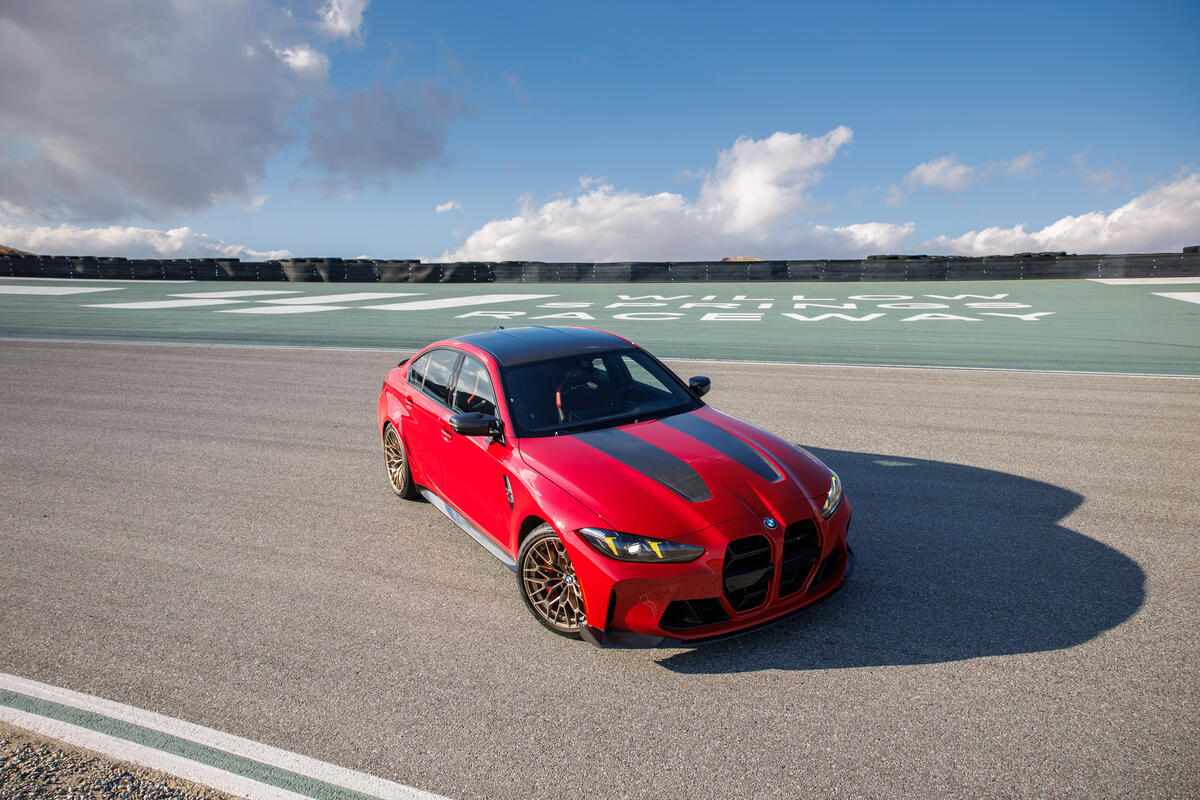
BMW M3
"...l estate for that color, though. That was the 36 M3 yellow. Yes. Yeah."
The BMW M3 is a high-performance BMW that’s made for driving enthusiasts. It’s built to handle well and feel more exciting than a regular BMW. People often bring it up when talking about specific M3 versions or standout features like color.
The BMW M3 is BMW’s performance coupe/sedan line, built to deliver sharp handling and strong engine output. It’s a key “enthusiast” model because it’s designed to feel engaging rather than just fast in a straight line. It’s mentioned in the podcast likely in relation to a specific color or generation being discussed.
moonroof
"[1683.6s] So anyway, the car didn't feel big, which was a triumph. [1688.5s] It had the moonroof. [1690.0s] So not all of them have got moon roofs, but it's a fixed moon roof."
A moonroof is a glass section in the roof that lets more light into the cabin. A “fixed” moonroof means it stays closed and doesn’t open for fresh air.
A moonroof is a glass panel in the roof that lets in light (and sometimes can open). When the host says it’s a “fixed moon roof,” they mean the glass does not slide open like a traditional sunroof.
Apple Maps
"The big thing for me is when you're using Apple Maps, you've got three views."
Apple Maps is the phone-style navigation system being used for directions. Here, the car shows it on different screens so you can follow the route.
Apple Maps is the navigation app providing route guidance and map visuals. In this segment, the hosts are discussing how the car integrates Apple Maps into multiple in-car screens.
zoomed out map
"And then the other screen on the right had a zoomed out map of the Apple map. I kept expecting that the screen on the right was going to zoom into specifically where I needed to be."
A zoomed-out map shows more of the area around you, not just the next turn. It helps you understand the bigger picture of where you’re going.
A zoomed-out map shows a wider area around your current position, which helps with overall route awareness. It’s often used alongside a more detailed, zoomed-in view so you can understand both “where you are” and “what’s next.”
navigating to a place that you haven't been before
"You know, you're navigating to a place that you haven't been before. You're driving the car. Like, what was that like actually driving the car and trying to orient yourself"
This is about what it feels like to follow directions to a new place while you’re driving. The hosts are basically talking about whether the screen layout makes it easier or harder to figure out what to do next.
This describes the real-world challenge of first-time navigation: you’re learning the route while driving, so the interface has to support quick orientation. The discussion focuses on how multi-screen layouts affect attention and decision-making.
700 horsepower
"But it was quick. That car is over 700 horsepower."
Horsepower is a number that roughly tells you how much power the engine can make. Higher numbers usually mean the car can feel quicker and more forceful.
Horsepower is a measure of engine power output, often used to describe how strongly a car can accelerate. In this context, the speaker is using it as a quick indicator of the car’s overall performance capability.
hybrid
"Yeah, hybrid. You can drive it in EV only mode."
A hybrid uses two kinds of power. Usually it’s gas plus electricity, and sometimes the car can run on electricity by itself for a while.
A hybrid vehicle uses more than one source of power—typically a gasoline engine plus an electric motor/battery. The electric system can assist acceleration and, in some setups, propel the car on electricity alone for short distances.
EV only mode
"You can drive it in EV only mode. I would say I guess my last thing impressions was it was super quick."
EV-only mode means the car is running on electricity only. It depends on how full the battery is, so it won’t work forever.
EV-only mode lets the car drive using only the electric motor, without the gasoline engine contributing. It’s typically limited by battery state of charge and speed/conditions, so it may not last long.

Porsche Panamera
"...e the RS6, the M5, the Mercedes, or the Porsche, Panamera, turbo, yeah, just kind of not a competitor in a ..."
The Porsche Panamera is a four-door Porsche sedan. It’s meant to be more practical than a two-door sports car while still feeling sporty to drive. People mention it when they’re talking about performance sedans.
The Porsche Panamera is Porsche’s performance-oriented four-door sedan, combining everyday practicality with sports-car driving dynamics. It’s often discussed because it brings Porsche performance into a more usable body style. In the podcast context, it’s mentioned as part of a comparison set of fast cars.
star patterns in the taillights
"Yeah, it might, especially now that Mercedes has those star patterns in the taillights, which love it or hate it proposition."
They’re talking about a specific look in the rear lights—like a star-shaped pattern. It’s basically a design detail that some people love and some people hate.
This refers to a distinctive taillight design element—an illuminated pattern that resembles stars. It’s a styling feature that can strongly affect how people feel about a car’s look, even if it doesn’t change performance.
AMG
"You get it in black because all AMG wagons are in black, maybe in silver. But there that's a stealth mobile."
AMG is Mercedes-Benz’s performance division. If a car is an “AMG” model, it’s typically tuned for stronger acceleration and more aggressive driving feel than a regular Mercedes.
AMG is Mercedes-AMG, the performance brand within Mercedes-Benz. When someone says “AMG wagons,” they’re usually referring to higher-performance Mercedes models tuned and built by AMG.
Dakar yellow
"I think if I were getting the BMW, I would go for a Dakar yellow or, you know, something, something a little exotic, right?"
“Dakar yellow” is a particular named paint color. It’s not just “yellow”—it’s a specific shade that you can usually only get if that color is offered on the car.
“Dakar yellow” is a specific paint color name used by some automakers (often associated with special editions). Color names like this matter because they’re tied to exact shades and availability on certain trims.
launch color
"Well, I think they've made the right move, you know, making the launch color such a bright color because everybody got to see it."
A “launch color” is the special paint color a company uses to show off a new car when it first comes out. It’s usually chosen to stand out so people notice the car right away.
A “launch color” is the distinctive paint shade an automaker highlights when a new model is introduced. Manufacturers often choose bold colors at launch to make the car easy to spot in photos, press coverage, and early marketing.
jewel box green
"But there's just something about the combination of that particular sort of like jewel box green."
“Jewel box green” is just a fancy way to describe a deep, vivid green paint that looks rich and sparkly. It’s the kind of color that can look different depending on the light.
“Jewel box green” is a descriptive nickname for a vivid, jewel-like green paint finish. In automotive talk, it usually implies a rich color with depth—often achieved with metallic or pearl paint formulations.
gold package
"But can you get it with the gold package, Dan? I've got no idea."
A “gold package” typically refers to an option bundle that adds gold-colored exterior or trim accents (like wheels, badges, or interior details). The exact content varies by model and year, but it’s usually a visual appearance package rather than a performance upgrade.
dictator
"And this dictator has dictated that everyone in the country drive a white car, although I think silver also is OK. You can't have tinted windows either, which I am totally down with."
They’re imagining a make-believe ruler who can set rules for everyone. The joke is about what kinds of car rules—like color or window tint—you’d choose if you had that kind of control.
The hosts are using “dictator” as a scenario device: imagining a ruler with total control over everyday life. In this context, it’s not about politics details so much as a thought experiment about what rules you’d impose, including car rules like color and window tint.
tinted windows
"You can't have tinted windows either, which I am totally down with. You know, I hate tinted windows, but it got me thinking if you were dictating, what would you dictate your country, men and women drive?"
Tinted windows means the glass is made darker with a film. People do it to cut glare and heat, but it can also make it harder to see out, and some places restrict how dark it can be.
“Tinted windows” refers to applying a darker film or coating to glass to reduce how much light enters the cabin. It’s often discussed in car culture because it affects visibility, heat buildup, and local legal compliance.
posture event
"Yeah, I heard that there was a posture event last weekend in Southern California. Did anyone go?"
The hosts are discussing a local car-related gathering in Southern California, but the transcript’s “posture event” appears to be a transcription error. The context suggests it’s a meet-up or show where enthusiasts bring cars and socialize.
cars and coffees
"I mean, you have these amazing cars and coffees every weekend. And so, you know. I mean, maybe that's part of it is that I also, like that helped with the pang of not being there"
“Cars and coffees” are casual car meetups—usually in the morning—where people bring their cars and hang out. It’s a fun way to see different cars in real life and meet other enthusiasts.
“Cars and coffees” are informal morning meetups where car owners gather to show their vehicles, talk shop, and socialize. They’re popular in car communities because they’re low-pressure and easy to attend.
Crystal Cove
"So it wasn't as- Driving Cove for 289s, you know? Which would you choose? I can't do it, okay. Friend of the show, Andreas Pernigar, who we met multiple times during car week, and Goodwood was there"
Crystal Cove is the place where the hosts say they’ve been going to informal car meetups. Think of it as a meetup spot for car people.
Crystal Cove is referenced as a location hosting informal car meetups (“cars and coffees”). For listeners, it’s essentially a local venue tied to the episode’s car-week social scene.
Goodwood
"Friend of the show, Andreas Pernigar, who we met multiple times during car week, and Goodwood was there, and he also went to Good Vibes."
Goodwood is a famous car event location where a lot of car people go. It’s known for big automotive shows and lots of journalists attending.
Goodwood is mentioned as a major automotive event/venue that attracts journalists and enthusiasts. In car culture, “Goodwood” typically refers to the Goodwood Festival of Speed and related gatherings at Goodwood House in the UK.
Good Vibes
"and he also went to Good Vibes. I know, I saw. That's cool. That's cool."
“Good Vibes” sounds like another event that car people attended. The clip doesn’t explain what it is, but it’s clearly in the same world as car meetups and big automotive gatherings.
“Good Vibes” is referenced as another event Andreas Pernigar attended. The context suggests it’s part of the same broader car-weekend social calendar, though the exact event details aren’t provided in this excerpt.
passenger seat
"Or like Spike having him in the passenger seat, riding shotgun, right?"
The passenger seat is where the non-driver sits. If someone important is riding along, it can make the driver feel extra nervous because they’re watching everything.
Riding in the passenger seat (or “shotgun”) means you’re not driving—you’re observing and reacting to what the driver does. In performance driving or high-pressure situations, having someone in the passenger seat can make the driver feel more exposed and judged.
riding shotgun
"Or like Spike having him in the passenger seat, riding shotgun, right?"
“Riding shotgun” just means you’re sitting in the front passenger seat while someone else drives. It’s a common car-related phrase, not a special car part.
“Riding shotgun” is slang for sitting in the front passenger seat. It’s often used to describe being along for the drive while someone else handles the steering and pedals.
shift just right
"every little thing you're doing, you know, better get that shift just right, or, you know, it's just nerves, you know?"
A “shift” is when the car changes gears. Shifting at the right time helps the car pull smoothly instead of feeling jerky or losing power.
“Shifting” refers to changing gears in a manual or automated manual-style transmission. Getting the shift “just right” matters because the timing affects acceleration, smoothness, and how well the drivetrain stays in the right power band.

Dodge Ram
"And like, he said he likes, he's a big fan of pickup trucks. Like he has a Dodge Ram himself, which I didn't see that coming."
“Dodge Ram” is a big pickup truck made by Dodge. Pickup trucks are usually bought for towing, hauling, and general everyday utility.
“Dodge Ram” refers to the Ram pickup truck line from Dodge. Ram trucks are known for their heavy-duty hauling and towing focus, and they’re a common choice for people who want a full-size pickup.

Subaru STI
"We know that there is a lot of demand for the STI, but they just refuse to make it these days, right? I was at Subifest last year. There were so many STIs at that event."
STI is Subaru’s performance version of certain models. People buy it for sharper driving feel—how it handles and how it brakes—more than for being the biggest power monster.
“STI” is Subaru’s performance sub-brand, best known for rally-inspired handling and track-focused tuning. In enthusiast circles, it’s typically associated with a sportier chassis setup and driver-focused dynamics rather than just raw horsepower.
handling and aero
"Well, and I don't know why that's the case for Subaru, because STI has always been more of a handling and aero exercise versus huge extra power, right?"
Handling is how the car feels when you turn and how well it sticks to the road. Aero is how the car’s shape interacts with air, which can help it stay planted at speed.
“Handling” refers to how well a car responds to steering inputs—things like grip, balance, and stability. “Aero” (aerodynamics) affects how the car moves through air, influencing downforce, drag, and high-speed stability.
Mini
"But the brand that comes to mind to me is Mini. And I was in a friend's, I don't know, Mini is probably six or eight years old,"
Mini is a car brand that makes small cars with a sporty feel. The speakers are talking about how newer Minis compare to older ones and how the brand has been doing in sales.
Mini is a British car brand known for small, go-kart-like handling and distinctive styling. In this segment, the hosts discuss how the brand has changed over time and how newer Minis look and sell compared with older ones.
JCW GP cars
"I very famously a few years ago drove all the JCW GP cars back to back, which was a real thrill from the last of the classic cars bought"
JCW (John Cooper Works) is Mini’s performance brand. The “GP cars” the speaker mentions are special, higher-performance Minis that are meant to feel more like race cars.
JCW stands for John Cooper Works, Mini’s performance sub-brand. “GP cars” refers to the special, track-focused John Cooper Works models the speaker drove back-to-back, emphasizing how special and exciting those cars were.

Mini Cooper
"But I've seen a couple of the new Minis, the Mini Cooper specifically on the road recently. That rear view is rough."
The Mini Cooper is Mini’s most common model. It’s the one people usually think of when they say “Mini,” and the speaker is judging how it looks from the back.
The Mini Cooper is the brand’s best-known model line, typically the entry point to Mini’s lineup. Here it’s specifically mentioned as what the speaker has seen on the road, with commentary on its rear styling.
design language
"And I don't envy the designers sort of when they're tasked [2718.0s] with like, okay, refresh it, come up with a new thing, [2720.7s] but also maintain the design language."
Design language is the brand’s signature look. It’s the set of design details that make a car feel like it belongs to that brand, even after a refresh.
“Design language” is the recognizable set of styling cues a brand uses across models—things like proportions, lighting shapes, grille style, and body lines. When designers “refresh” a car, they try to keep that identity so people can recognize the brand instantly while still updating the look.
wing mirrors
"[2756.2s] and, you know, speaking of colors, [2758.3s] think about all the options. [2759.8s] Yeah, with the reefs and the, yeah. [2762.3s] Yeah. [2763.3s] Wing mirrors all the way."
Wing mirrors are the side mirrors on the doors. Their shape can affect how the whole car looks.
“Wing mirrors” are the side mirrors mounted on the doors (often called door mirrors). They’re part of the car’s exterior design details, and their shape/placement can be a noticeable styling cue.
brand equity
"[2763.3s] Wing mirrors all the way. [2764.1s] Brand equity is a big thing. [2765.4s] Yeah."
Brand equity is how much customers trust and like a brand. If a company changes the look in a way fans don’t like, it can hurt that goodwill.
“Brand equity” is the value a brand has in the market because of its reputation and emotional pull with customers. In car design discussions, it often comes up when a styling change might risk alienating fans who love the brand’s original character.
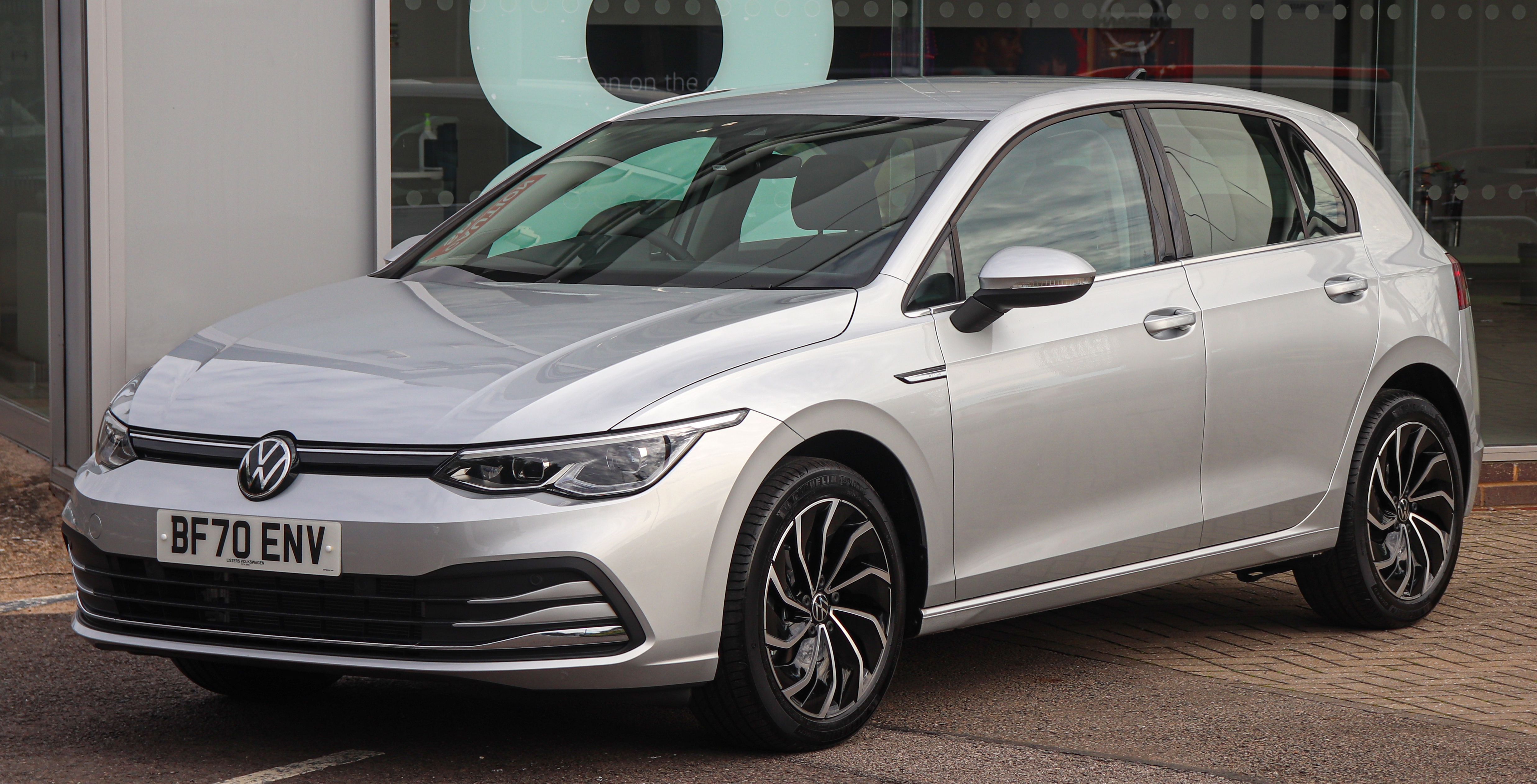
Volkswagen Golf
"I was thinking about VW and specifically the golf. Yeah. I feel like the golf was lost its way."
They’re referring to the Volkswagen Golf, a popular small hatchback. The Golf has sporty versions, and that’s what the conversation is circling around.
The speaker is talking about the Volkswagen Golf, a compact hatchback that has had many performance and trim variations over the years. In enthusiast circles, the Golf is especially known for its “hot hatch” versions, which blend everyday usability with sporty driving.
hot hatch
"You know, they used to do the hot hatch. Yeah. And, you know, it just got warmer over the years, didn't it?"
A hot hatch is a regular small hatchback, but tuned to be faster and more fun to drive. It’s meant to be sporty without losing everyday usefulness.
A hot hatch is a performance-focused hatchback—usually with a stronger engine, sportier suspension, and more aggressive tuning than a standard compact hatch. The idea is to keep the practicality of a hatch while adding real driving excitement.
lukewarm hatched
"The lukewarm hatched. Neighbor across the alley, I think in part on my recommendation, just brought home a new GTI."
They’re jokingly saying the car became “lukewarm,” meaning it doesn’t feel as sporty as it used to. It’s a playful way to criticize the performance direction.
“Lukewarm hatch” is a humorous way to describe a hatchback that’s not quite sporty enough to be a true hot hatch. The speaker is implying the Golf lost some of its performance edge over time.

GTI
"...just brought home a new GTI. And it's that really pretty gray color. Couldn't get it in manual, which she wanted, but she ended up getting the DSG and the auto."
GTI is Volkswagen’s sporty version of the Golf. It’s meant to be more fun to drive than a normal Golf, while still being practical.
GTI refers to Volkswagen’s “Grand Tourer Injection” performance trim for the Golf. It’s the brand’s best-known hot-hatch formula: a compact hatch with a tuned engine and suspension aimed at fun, daily driving.
DSG
"Couldn't get it in manual, which she wanted, but she ended up getting the DSG and the auto. Also, I think CrossShop the YARB, if her purpose is just couldn't justify the leap in price..."
DSG is a type of automatic transmission used by Volkswagen. It’s designed to shift faster than a typical automatic by using two clutches.
DSG is Volkswagen’s dual-clutch automatic transmission. Instead of a traditional torque-converter automatic, it uses two clutches to pre-select the next gear, which typically makes shifts feel quicker and more responsive.
auto
"...but she ended up getting the DSG and the auto. Also, I think CrossShop the YARB, if her purpose is just couldn't justify the leap in price..."
“Auto” means the car shifts gears for you. The buyer wanted a manual, but ended up with an automatic transmission.
“Auto” here means an automatic transmission instead of a manual. The speaker contrasts it with the manual option the buyer wanted, and notes she ended up with an automatic setup.
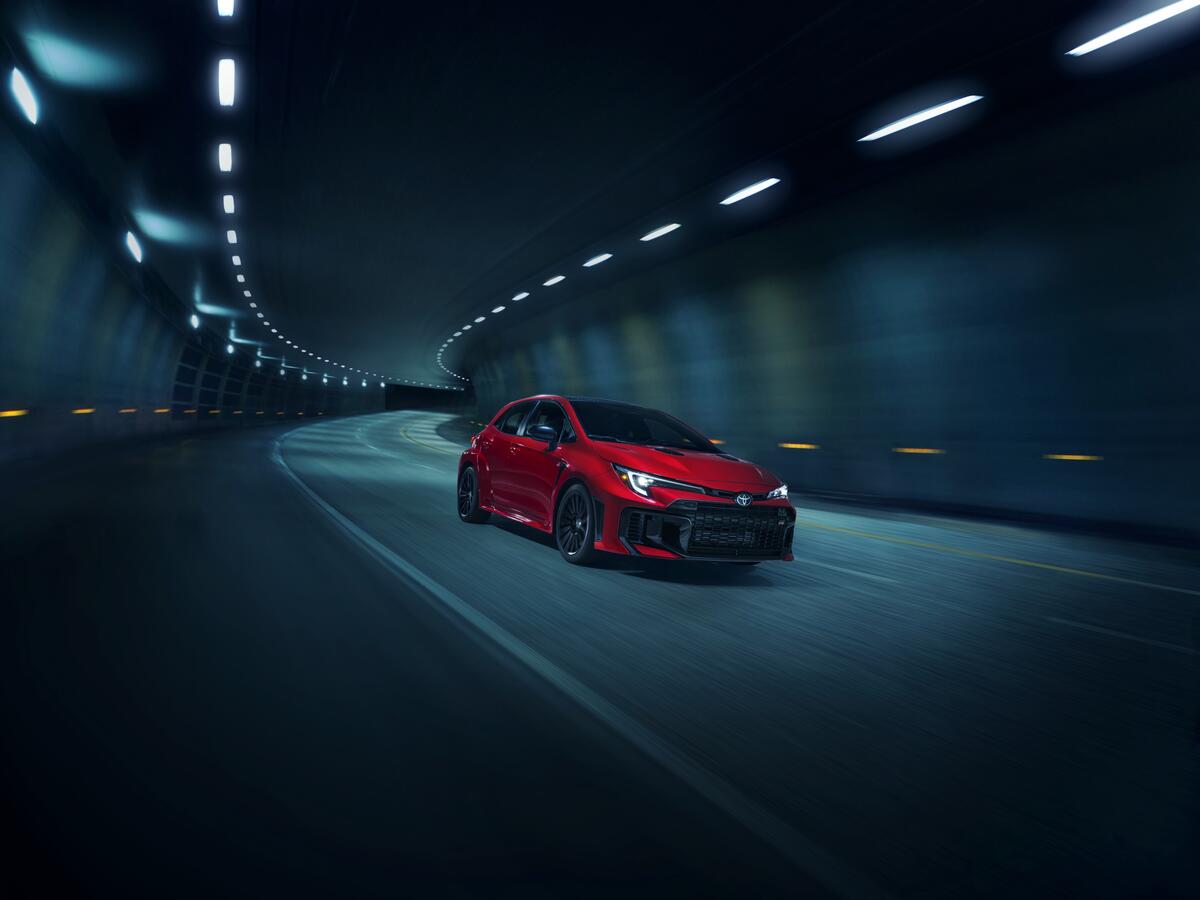
Toyota GR Corolla
"So what I mean by that is like, a modern day GTI for me is the GR Corolla. Yeah."
The GR Corolla is a sporty Toyota Corolla. It’s made by Toyota’s performance division (GR) and tuned to feel more like a rally-style hot hatch than a regular commuter car.
“GR Corolla” refers to Toyota’s performance version of the Corolla, branded by Gazoo Racing (GR). It’s positioned as a hot hatch with rally-inspired engineering and a focus on driver feel rather than just straight-line speed.

Audi S3
"Oh, yeah. Well, and then they've got the S3 within the VAG group, right? And many people wil..."
The Audi S3 is a sportier version of the Audi A3. It’s smaller than many performance cars but is tuned to feel quicker and more responsive. People bring it up when talking about compact performance options.
The Audi S3 is a performance version of the Audi A3, typically positioned as a compact, sporty hatchback or sedan depending on the generation. It’s discussed because it offers a smaller-car size with higher performance than the standard model. In the podcast, it’s referenced as part of a performance lineup within a larger brand group.

S3
"Well, and then they've got the S3 within the VAG group, right? And many people will probably tell you that that's the better car, right?"
The Audi S3 is the sporty version of the Audi A3. It’s usually quicker and more performance-focused than the regular A3.
“S3” is Audi’s performance trim of the A3 line, typically meaning a more powerful, sport-tuned version than the standard A3. In enthusiast comparisons, it’s often discussed as a rival to other compact hot hatches.
VAG
"Well, and then they've got the S3 within the VAG group, right?"
VAG is the big parent company behind several car brands, including Audi. So when they say the S3 is in the VAG group, they mean it’s part of that corporate family.
VAG stands for Volkswagen Aktiengesellschaft, the corporate group that includes brands like Volkswagen, Audi, SEAT, and Škoda. When the hosts mention the S3 “within the VAG group,” they’re pointing to Audi’s ownership within that larger company structure.
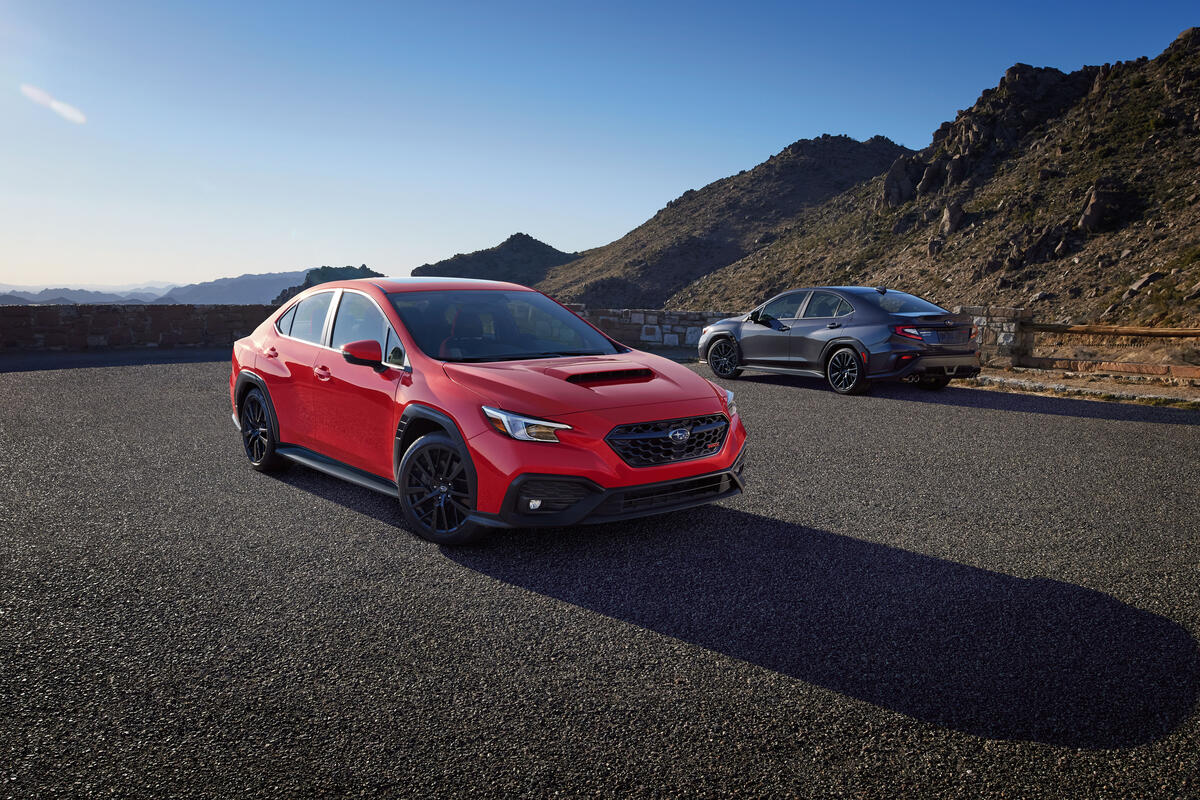
WRX STI
"I think it's interesting, looking at the WRX STI, because there is so much demand conversationally."
The WRX STI is Subaru’s high-performance version of the WRX. It’s popular with enthusiasts because it’s built for grip and fun driving, not just commuting.
The WRX STI is Subaru’s rally-inspired performance variant of the WRX, known for all-wheel drive and a strong enthusiast following. In the segment, it’s used as an example of a car with high demand and questions about whether manufacturers can or will sell enough units.
emissions
"And obviously, manufacturers have to look at all of the regulations and the emissions, because you look at, you're like, why would Ford make the Escort for so long or whatever?"
Emissions are the harmful gases a car releases. Governments set rules for how much a car is allowed to produce, and car makers have to engineer their cars to meet those rules.
Emissions refers to the pollutants a vehicle produces while running, which are regulated by governments. Automakers must design engines, exhaust systems, and calibrations to meet emissions rules, which can limit how long certain performance or niche models can be sold.

Ford make the Escort
"because you look at, you're like, why would Ford make the Escort for so long or whatever?"
The Ford Escort is a long-lived Ford compact car. The point here is that Ford kept making it for a long time because it made sense for the market and the rules at the time.
The Ford Escort is a long-running compact car nameplate that Ford produced for many years across multiple generations. The host uses it as an example of how automakers keep selling a model when it fits regulations, demand, and cost targets over time.
fuel economy
"It's like, they have to balance, what is it, overall fuel economy or something? And so they have to have the tiny cars, or the economy cars with the big cars or whatever."
Fuel economy means how far the car can go on a gallon of gas (or how much fuel it uses). Car makers have to hit efficiency targets, which can affect what kinds of cars they can build and sell.
Fuel economy is how efficiently a vehicle uses fuel, usually measured as miles per gallon (MPG) or liters per 100 km. Automakers balance fuel economy targets with performance and size, since meeting efficiency requirements can constrain engine choices and vehicle design.
Subaru WRX
"Well, they're still selling the WRX, right? So, they're selling a variation on the formers."
The Subaru WRX is one of Subaru’s most performance-focused models. The point being made is that Subaru hasn’t stopped selling enthusiast cars, at least not completely.
The Subaru WRX is a performance-oriented compact sedan/fast hatch line known for rally-inspired driving dynamics. Here, it’s used as evidence that Subaru is still selling at least one model in the “demand for enthusiast cars” category.
Request an Explanation
Heard something you'd like explained? We'll add it to this episode.
Sign in to request explanations for terms you heard.
Want to learn more?
Browse our glossary for plain-English explanations of automotive terms, jargon, and concepts.
Help improve this episode
See something that's not quite right? Our annotations are AI-generated and can sometimes miss the mark. Click the flag icon on any annotation to suggest a correction.