
THE TRUTH ABOUT KELLY'S BOOK CLUB REVEALED!
About this episode
Kelly and Lizz bounce from Missouri storm anxiety to a very personal mix of decluttering frustration, yard guilt, and small kindnesses that make daily life feel lighter. They also dig into travel etiquette, a new Dancing with the Stars spinoff, and a book-club pick that didn’t land. Later, the conversation turns practical with bridesmaid advice, minivan and SUV trade-in timing, camper-buying caution, auto industry news, and a few dinner ideas, including a high-protein chicken-crust pizza.
Capital One event
"...those of you who came to my Capital One event in Chicago love you with my whole heart thank you for showing up that was so fun and Capital One was like so impressed..."
They’re talking about an event they attended in Chicago that was connected to Capital One. It’s just part of the story of their weekend, not about cars.
The hosts mention a Capital One event in Chicago. This is a social/marketing context moment rather than an automotive topic, but it’s a notable segment marker for the episode’s narrative.
decluttering book
"...tried listening to my decluttering book oh my gosh I know this is so funny..."
They’re talking about a book meant to help them organize and get rid of clutter. It’s mentioned because it’s what one host listened to on the drive.
The segment discusses a decluttering book during a long drive. While not automotive, it’s a recurring personal-development theme that frames the hosts’ travel story.
pay it forward
"“...make a small impact to like help a stranger pay it forward just make a small impact the next thing you know we've made a big impact...”"
It means you help someone today, and instead of asking them to pay you back, you hope they’ll help someone else later. Here, they’re suggesting small acts like buying the next person coffee or being extra polite.
“Pay it forward” means doing a kind action for someone else without expecting anything back, with the hope they’ll do something similar for others. In this segment, they’re talking about small, practical gestures like buying coffee or holding doors open.
hold the door open
"“...sometimes you don't need to spend money you just need to hold two doors open for someone...”"
It’s just being polite and making it easier for someone to get through a door. They’re using it as an example of a small kindness that can really matter.
Holding a door open is a simple courtesy that can reduce someone’s stress and improve their day, especially in busy places like parking lots or stores. The hosts use it as an example of a low-cost way to help a stranger.
return a cart
"“...if a mom if you're not if you're out without your kids and a mom needs to go return a car return a cart for you...”"
It means putting the shopping cart back where it belongs. They’re saying it’s a small thing that can really help someone who’s busy with kids.
“Returning a cart” refers to putting a shopping cart back in its designated area. The hosts frame it as a helpful action that can be especially meaningful for parents who are juggling kids and errands.
break the fourth wall
"...I always try to like break the fourth wall when [912.3s] I'm traveling and like I try to like just like be a per like just have like talk to people [918.4s] not in an annoying way just like in an acknowledging kind of way"
It means you stop acting like you’re in a “private bubble” and instead acknowledge what’s happening around you. Here, she’s saying she tries to talk to people on trips rather than ignoring them.
“Breaking the fourth wall” means directly acknowledging something that’s usually kept separate—like treating the situation as interactive rather than passive. In this context, the host is describing how she tries to engage other people while traveling instead of acting like they don’t exist.
prisoners dilemma
"well one of them is not correlated okay and that's what i kind of like doing those and this is this is a really hard one this is like the prisoners dilemma the prisoners dilemma yeah you know like the famous dilemma of like"
It’s a thought experiment about two people making choices while not being able to talk to each other. The tricky part is that what’s best for you depends on what the other person decides.
The “prisoner’s dilemma” is a classic decision problem where two people make choices without being able to communicate. Each person’s best outcome depends on what the other person does, even though they act independently.
trolley dilemma
"it's just it's like a delay like the trolley dilemma like save one person or save five people this is just okay you have so many dilemmas i've never heard of these dilemmas"
It’s a famous “what would you do?” scenario where you have to make a hard choice quickly. You usually have to choose between saving fewer people or more people.
The “trolley dilemma” is another well-known thought experiment about making a moral choice under pressure. It typically involves deciding whether to save fewer people or more people when you can’t save everyone.
trade it in
"this is just kind of like an interesting conversation about when to trade in a car ... should i trade it in within the next few months or would it not make a difference if i held on to it for another one to two years"
“Trade it in” means you sell your current car to the dealership and use that amount to lower the price of the next car. What they offer can change depending on things like mileage and how long you wait.
“Trade it in” means giving your current car to a dealer as part of the purchase of a new (or different) vehicle. The dealer typically applies a trade-in value to reduce what you pay, but that value depends heavily on timing, mileage, and condition.

Honda Odyssey
"I had a general advice question on the timing of trading in a car we have a 21 hunt odyssey in great condition with 75 thousand miles on it it's paid off and had new brakes and tires in the last three months"
They’re talking about a 2021 Honda Odyssey—the minivan they own. The conversation is about when it makes financial sense to sell it and buy something else.
The speaker is discussing a 2021 Honda Odyssey as the family minivan they’re considering trading in. The key point is how mileage and timing affect what you can sell it for versus keeping it longer.
new tires
"it's paid off and had new brakes and tires in the last three months i asked chachi bt when would a financially be the best time to trade it in"
They also mention new tires. Since tires wear out over time, having fresh ones makes the car more attractive and can save the next owner money.
“Tires” are a wear item, so having “new tires” signals the car won’t need immediate replacement. That can help the trade-in offer because it reduces what a buyer would otherwise have to spend right away.
new brakes
"we have a 21 hunt odyssey in great condition with 75 thousand miles on it it's paid off and had new brakes and tires in the last three months"
“Brakes” here refers to the braking system components being recently replaced, which can improve the car’s condition and perceived value. Fresh brake work can also reduce near-term maintenance costs for the next owner.
depreciation / trade-in value over time
"here's the thing with this is like it is true to a point like your trade is going to be worth the most that it is today ... if it was between 90 and 100 i think would would would affect the trading value okay but again by how much by maybe a thousand bucks"
They’re talking about how your car usually loses value the longer you keep it. So selling sooner can get you a better trade-in price, but waiting a little longer might only change the offer by a small amount.
The hosts discuss how a car’s trade-in value changes over time—generally highest “today” and lower as the car ages and accumulates mileage. That’s why the timing window (like before/after certain mileage thresholds) can affect the offer, even if the difference is sometimes only hundreds to a thousand dollars.

21 sienna
"...i think this is the exception i'm considering trading in my paid off 21 sienna with a hundred thousand miles for a full-size suv with similar mileage..."
They’re talking about a 2021 Toyota Sienna. It’s a minivan built for families, with seats in the front, middle, and often a third row for extra passengers.
The speaker is referring to a 2021 Toyota Sienna minivan. The Sienna is known for being family-focused, with flexible seating and sliding/third-row options that help fit kids and car seats.
full-size suv
"...considering trading in my paid off 21 sienna with a hundred thousand miles for a full-size suv with similar mileage..."
They mean a large SUV meant for bigger families. The question is whether it can fit everyone and their car seats more easily than a minivan.
A “full-size SUV” is a large, body-on-frame or unibody SUV class designed for more passenger and cargo space than smaller SUVs. In this context, it’s being weighed against a minivan for fitting a family of six plus car seats and boosters.
car seats
"...we are a family of six two kids and boosters two and forward facing car seats but mom often but my mom often travels with us on road trips..."
Car seats are the safety seats for kids that are strapped into the car. Where they fit (and how much space they take) affects whether everyone can sit comfortably together.
Car seats are child restraint systems installed in a vehicle using seatbelts and/or lower anchors. Their footprint and installation method strongly influence whether a family can fit multiple kids in a specific vehicle’s second or third row.

Ford Expedition
"...looking at an expedition or tahoe i'm afraid to pull the trigger because of the gas mileage is so good on the sienna..."
They mean the Ford Expedition, which is a big family SUV. People look at it when they need more room for passengers and gear than a smaller vehicle.
“Expedition” refers to the Ford Expedition, a full-size SUV. It’s commonly considered when families need more interior space than a minivan, especially for third-row seating and road-trip comfort.

tahoe
"...looking at an expedition or tahoe i'm afraid to pull the trigger because of the gas mileage is so good on the sienna..."
They mean the Chevrolet Tahoe, a large SUV. It’s the kind of vehicle families compare to minivans when they need more room for everyone.
“Tahoe” refers to the Chevrolet Tahoe, another full-size SUV option. It’s often compared against minivans for seating capacity and cargo space, especially when traveling with multiple kids and car seats.
third row
"...plus seats plus seat size wise full size bench slash third road don't actually seem bigger i need my knowledgeable co-pilots to help me make a decision..."
The third row is the back row of seats. They’re trying to figure out if the third row can fit their whole group comfortably.
The “third row” is the rear-most row of seats in vehicles that offer three rows (common in minivans and full-size SUVs). It’s central to the speaker’s question about whether they can seat everyone—especially with car seats and boosters.
bench slash third road
"...plus seats plus seat size wise full size bench slash third road don't actually seem bigger i need my knowledgeable co-pilots to help me make a decision..."
They’re talking about the type of seats—like a long bench seat in the middle—and the back row. Seat shape and width matter a lot when you’re trying to fit multiple kids and car seats.
This appears to refer to a “bench” seat in the second row and the “third row” seating behind it. Bench seating can affect how wide the seating positions are for car seats and whether “three across” is practical.
three across
"...could i do three across in the third row potentially please tell me what to do..."
“Three across” means putting three people next to each other in one row. With kids, it’s tricky because car seats and boosters need enough space and the seatbelts have to work properly.
“Three across” means fitting three passengers side-by-side in the same row. It’s often difficult in the second row of many SUVs because seat width, armrests, and seatbelt/child-seat compatibility can limit how well three car seats or boosters fit.

Lotus Excel
"...se you're a minivan no i think you're supposed to excel at this elizabeth like i could go on a whole ran..."
The Lotus Excel is a sports car designed for driving that feels exciting, including on longer trips. It’s made by Lotus, a company known for performance cars. The name “Excel” is associated with this specific model line.
The Lotus Excel is a grand tourer (a fast, comfortable long-distance sports car) from Lotus, known for its distinctive performance-focused character. It’s the kind of classic model that can come up in casual conversation because it represents Lotus’s approach to sporty driving with a more “everyday usable” layout than some pure track cars. In a podcast, it may be referenced as part of a broader discussion about car names, models, or enthusiast favorites.
IHS top safety pick
"it's not an ihs top safety pick okay it's all 60 thousand dollars yes and like you can't fit three across but like sure go like it's the best car in the world"
This refers to a safety award from a crash-testing organization. The host is saying the Sienna doesn’t have the very top safety rating they’re expecting.
“Top Safety Pick” is a safety award label from the Insurance Institute for Highway Safety (IIHS). Mentioning it implies the vehicle’s crash-test performance and safety ratings are not at the highest tier being discussed.
brand loyalists
"it's an interesting that it's like that brand seems to come up consistently but but toyota has loyalists like i kiya i don't think kiya has loyalists i agree toyota"
“Brand loyalists” are people who really stick with one car brand. The hosts are talking about how that loyalty can make people respond defensively to criticism.
“Brand loyalists” are drivers who strongly prefer one brand and defend it even when others criticize it. In car culture, this can lead to heated debates about fit, comfort, reliability, and value.

Jeep Wrangler
"... people there are people who just like love jeep wranglers they're like there's no reason to like one totall..."
The Jeep Wrangler is an SUV made for off-road driving. It’s popular with people who like taking their vehicle on trails and rough roads. It’s also known for its recognizable shape.
The Jeep Wrangler is a rugged off-road SUV known for its simple, go-anywhere design and strong community following. It often comes up in discussions because people associate it with trail driving and a very distinctive look and feel. In a podcast, it’s a common “love it or talk about it” vehicle due to its long-running popularity.
rent it first
"i'm of the mindset like before you buy something can you rent it and like see if you're really going to use it like how many or before you go out and buy a camper"
Instead of buying right away, try renting first. That way you can see if you’ll really use it enough to justify the cost.
The hosts are suggesting a “try before you buy” approach: rent a camper or vehicle to see how often you’ll actually use it. This helps avoid committing to a purchase that doesn’t match real-world plans.
massive debt
"are you really going to use it now if you are let's live in a world where you are really going to use it okay let's live in that world i agree with you"
They’re basically saying don’t spend a lot of money on something you might not use much. Make sure it fits your real plans before you commit.
The hosts are warning against taking on large financial commitments for a camper without confirming real usage. In automotive shopping terms, this is about aligning the purchase with actual driving/trip needs and budget.
gas mileage
"and she also mentioned the gas mileage which is also going to affect your day-to-day which is awesome"
Gas mileage is how far the car can go on a tank of gas. Better gas mileage usually means spending less money on fuel over time.
“Gas mileage” refers to how efficiently a vehicle uses fuel, typically expressed as miles per gallon (MPG). It matters for day-to-day costs, especially if you’ll drive frequently.
second row bench
"unless you're going to get the second row bench i don't know if your mom's really going to feel like she has that much more room"
A second-row bench means the middle seats are one long seat. They’re saying that choosing that layout could make the vehicle feel more accommodating.
A “second row bench” is the seating layout in the middle row, usually a single long seat rather than separate captain’s chairs. The hosts argue that upgrading to a second-row bench could improve passenger space and comfort.
boosters
"i would also encourage you to look at what boosters you do have back there maybe we could talk about like slimmer boosters before we just like maybe get a new car so all to say is like i don't think it's not to me"
Boosters are child car seats that help a child sit at the right height for the seat belt. They can take up space, so it’s smart to plan around them.
“Boosters” refers to booster seats used to raise a child so seat belts fit properly. The hosts suggest checking the size/type of booster seats before buying a new vehicle because they can affect how much space remains.
camping and hauling
"if you want to start camping and hauling because like obviously a full say that's you will do that [2464.5s] better yeah okay so things to consider yeah today's episode is brought to you by alma a year from now"
They’re talking about using a vehicle for road trips where you bring lots of stuff for camping. That often means you need room for gear and maybe the ability to pull a trailer or carry heavy items.
“Camping and hauling” refers to using a vehicle for outdoor trips that involve carrying gear and towing or transporting items. In car terms, it usually implies you’ll need enough cargo space and the ability to tow or carry what you bring.
something always breaks
"mostly stressful totally entire it was just like it's kind of like having a boat i would imagine [2586.6s] i don't have a boat but like something always breaks there's always something that goes wrong [2590.8s] they're money pits no i don't know if they're money pits but it's um like when you go on vacation"
They’re saying that on trips like this, something tends to malfunction. It’s not just driving—it’s also running lots of systems, so problems can pop up.
The hosts describe a common ownership experience with RVs/boats: frequent small failures while traveling. In automotive terms, this points to the reality that long-distance trips stress many systems at once (electrical, plumbing, connections), so troubleshooting becomes part of the trip.
money pits
"[2590.8s] they're money pits no i don't know if they're money pits but it's um like when you go on vacation i [2597.1s] think a lot of the times it's to go relax like you're into a beach vacation you're gonna relax"
They’re using “money pit” to mean something that keeps costing money. With RVs, that can be repairs and other unexpected problems.
“Money pit” is a slang term for something that repeatedly costs money to maintain or repair. In the context of RVs/boats, it usually means ongoing repairs and unexpected expenses during ownership and travel.

Audi A8
"[2628.7s] the worst selling cars of 2026 so far okay and there's one brand to like we need to have a [2637.9s] discussion about in a second okay the audi a8 which is a sedan 201 units the jeep wagon near s [2646.6s] 175 units units things i could have told you that the lexus ls 143 units"
The Audi A8 is a big, high-end Audi sedan. When people say it’s selling poorly, it usually means fewer buyers are choosing that kind of luxury car right now.
The Audi A8 is a full-size luxury sedan from Audi. It’s typically positioned as a flagship comfort-and-technology car, so low sales for the A8 can be a sign of shifting buyer preferences in the luxury segment.

Lexus LS
"[2646.6s] 175 units things i could have told you that the lexus ls 143 units the genesis gv 60 117 units [2656.4s] the fiat 500 68 units the audi e-tron gt 63 units oh my gosh the audi q6 e-tron nine units"
The Lexus LS is Lexus’s top luxury sedan. It’s the kind of car people buy when they want a high-end ride and lots of comfort features.
The Lexus LS is Lexus’s flagship luxury sedan. It’s often compared with other top-tier “mass market luxury” brands because it targets buyers who want a quiet, comfortable, feature-rich large sedan.

Hyundai Genesis
"...uld have told you that the lexus ls 143 units the genesis gv 60 117 units the fiat 500 68 units the audi e..."
Genesis is Hyundai’s luxury vehicle brand. When people say “Hyundai Genesis,” they usually mean cars made under the Genesis name. It’s brought up when discussing luxury models and how well they sell.
Hyundai Genesis refers to the Genesis luxury brand/line that Hyundai created to compete in the premium segment. In podcast discussions, it may come up when talking about luxury sedans or overall brand performance and model lineup. The name is often used as shorthand for Genesis-branded vehicles rather than a single specific model.

Genesis GV60
"discussion about in a second okay the audi a8 which is a sedan 201 units the jeep wagon near s 175 units things i could have told you that the lexus ls 143 units the genesis gv 60 117 units the fiat 500 68 units the audi e-tron gt 63 units oh my gosh the audi q6 e-tron nine units"
The Genesis GV60 is an electric SUV, meaning it runs on electricity instead of gasoline. It’s made by Genesis and is designed to be a smaller premium SUV. It’s often mentioned when people compare how many units different cars sell.
The Genesis GV60 is a compact electric SUV from Genesis, aimed at buyers who want a premium EV in a smaller, more practical size. It’s mentioned in the context of sales or unit counts, which is why it shows up alongside other models in a comparison. The GV60 is significant because it represents Genesis’s push into the electric vehicle market.

Audi e-tron GT
"[2656.4s] the fiat 500 68 units the audi e-tron gt 63 units oh my gosh the audi q6 e-tron nine units [2668.5s] the audi q4 e-tron six units six units so i think so you want to talk about"
The Audi e-tron GT is Audi’s electric “grand touring” car. If it’s selling poorly, it suggests fewer buyers are picking that EV compared with alternatives.
The Audi e-tron GT is an all-electric grand touring (GT) sedan/coupe from Audi. It’s part of Audi’s EV push, so low sales for the e-tron GT can point to competition, pricing, or buyer preference issues in the electric luxury segment.

Audi Q6
"[2656.4s] ...the audi e-tron gt 63 units oh my gosh the audi q6 e-tron nine units [2668.5s] the audi q4 e-tron six units six units so i think so you want to talk about"
The Audi Q6 e-tron is an electric Audi SUV. They’re mentioning it because its sales numbers are surprisingly low.
The Audi Q6 e-tron is an Audi electric SUV/crossover model referenced with very low sales. In this discussion, it’s used to illustrate that multiple Audi EVs are struggling in the market at the same time.

Fiat 500
"[2656.4s] the fiat 500 68 units the audi e-tron gt 63 units oh my gosh the audi q6 e-tron nine units [2668.5s] the audi q4 e-tron six units six units so i think so you want to talk about"
The Fiat 500 is a small, easy-to-drive car meant for city life. When it’s listed among the worst sellers, it usually means fewer people are choosing that style of small car.
The Fiat 500 is a small, city-focused car from Fiat. It’s often bought for its compact size and style, so low sales can reflect changing tastes or pricing/availability issues in the small-car market.

Audi Q4 e-tron
"[2668.5s] the audi q4 e-tron six units six units so i think so you want to talk about [2676.8s] what is going on with audi they have no no they're not good like"
The Audi Q4 e-tron is an electric Audi SUV. They’re citing it as part of the broader point that Audi isn’t selling well.
The Audi Q4 e-tron is an all-electric compact luxury SUV from Audi. The episode uses it as another example that Audi’s lineup—especially EVs—may not be resonating with buyers right now.
BMW
"[2687.3s] so audi the problem is like the cars are too small and they're not bmw's [2694.6s] and like the tech is kind of annoying i think i mean i haven't been i should be very i've not [2769.4s] a bmw carries more yeah i agree like a mercedes i think bmw and mercedes are like kind of like"
BMW is being used as an example of a luxury brand that feels more compelling to buyers. The host thinks BMW owners tend to feel more strongly about the brand than Audi owners.
BMW is referenced as a benchmark for “mass market luxury,” meaning mainstream luxury brands that sell in high volumes but still aim for premium feel and features. The speaker suggests BMW’s brand identity and product execution create more loyalty than Audi.
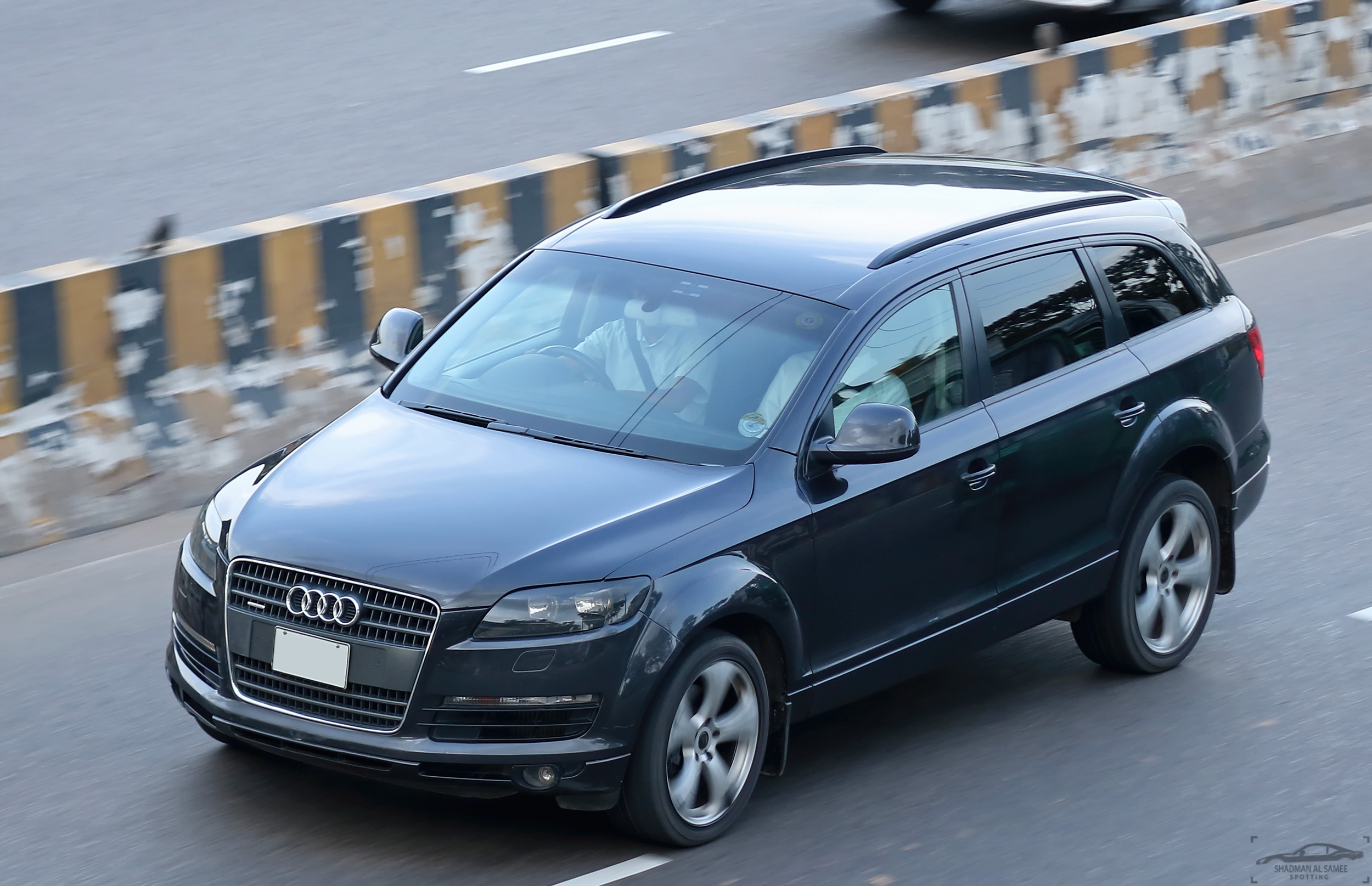
Audi Q7
"[2724.2s] changed it's like why would i like i haven't updated q7 tour like that's all you need to know [2733.9s] about the q7 yeah um yeah that's luxury they don't do they don't do like press cars"
The Audi Q7 is a luxury SUV. They’re saying Audi hasn’t updated it enough, so it doesn’t feel new or exciting to buyers.
The Audi Q7 is a midsize luxury SUV. The speaker’s point is that Audi hasn’t meaningfully refreshed it, implying the model feels dated compared with competitors.
Mercedes
"[2769.4s] a bmw carries more yeah i agree like a mercedes i think bmw and mercedes are like kind of like [2775.1s] the pinnacle pinnacles okay i agree of like mass market but still luxury and range rover i feel [2781.1s] like it's kind of similar to yeah range"
Mercedes is brought up as another luxury brand. The hosts are comparing it to BMW and Audi to explain which brands they think buyers stick with.
Mercedes is mentioned alongside BMW as another top “mass market luxury” brand. In the conversation, it’s part of the comparison set for which brands the hosts believe carry more buyer loyalty and perceived prestige.
Range Rover
"[2775.1s] the pinnacle pinnacles okay i agree of like mass market but still luxury and range rover i feel [2781.1s] like it's kind of similar to yeah range and then i do think i mean lexus is pretty kind of high up"
Range Rover is mentioned as another luxury brand in the same general category as BMW and Mercedes. The host is using it to compare how “premium” different brands feel to buyers.
Range Rover is referenced as a luxury brand with a similar positioning to other mainstream luxury makers. The speaker groups it into the same “mass market luxury” discussion, implying it has a comparable buyer appeal and brand weight.

Land Rover Range Rover
"... i agree of like mass market but still luxury and range rover i feel like it's kind of similar to yeah range a..."
The Range Rover is a luxury SUV made to be comfortable and capable on different road conditions. It’s designed for people who want a high-end interior but also want strong traction. It’s known for being a premium, feature-rich vehicle.
The Land Rover Range Rover is a luxury SUV that blends high-end comfort with advanced all-wheel-drive capability. It’s frequently discussed because it sits in the “mass market luxury” conversation while still being known for off-road ability and premium features. That mix makes it a common topic when people talk about what “luxury” means in an SUV.
Infinity
"just my perception and then you have like volvo acura infinity genesis"
This is likely Infiniti, another luxury car brand. They’re just naming brands here.
Infinity appears to be a transcription error for Infiniti, the Japanese luxury brand. The speaker is listing luxury brands as part of a personal perception, not discussing a specific model.
Volvo
"just my perception and then you have like volvo acura infinity genesis"
Volvo is a car brand. The hosts are just name-dropping it here as one of several brands.
Volvo is a Swedish automotive brand known for safety-focused vehicles and a reputation for family-oriented designs. In this segment it’s mentioned as part of a list of car brands the speaker associates with their perception.
Acura
"just my perception and then you have like volvo acura infinity genesis"
Acura is a luxury car brand. In this part of the episode it’s just mentioned in passing.
Acura is Honda’s luxury vehicle brand, offering models positioned above mainstream Honda cars. Here it’s mentioned alongside other brands in a casual “perception” list.
trade ins
"the negative equity is being brought on to the negotiation table on trade ins for a significant portion of buyers today 30 of new car buyers had negative equity trade ins"
A trade-in is when you turn in your current car to help pay for a new one. If you still owe more than it’s worth, that can change the deal.
Trade-ins are when you hand in your current vehicle to a dealer as part of buying a new one, typically reducing the price of the new car. If your trade-in has negative equity, that shortfall can affect the loan terms for the next vehicle.
72 months
"90 of consumers taking out new loans carrying negative equity are extending terms to 72 months and 43 are entering 84 month loan agreements"
“72 months” means the loan is stretched out over about six years. Stretching a car loan can make payments smaller, but it can cost more overall.
“72 months” refers to a 6-year auto loan term. Longer terms can lower the monthly payment, but they often increase total interest paid and can make it easier to roll negative equity into the next purchase.
84 month loan agreements
"90 of consumers taking out new loans carrying negative equity are extending terms to 72 months and 43 are entering 84 month loan agreements oh my gosh so negative equity is when you owe more on your car than it's worth"
“84 months” means the loan lasts about seven years. Longer loans can lower the payment, but you usually pay more interest over time.
An “84 month” auto loan is a 7-year financing term. Extending the term can reduce monthly payments, but it increases the time you’re paying interest and can worsen the impact of negative equity.
negative equity
"oh my gosh so negative equity is when you owe more on your car than it's worth and you can still trade out of that car like but that negative equity has to go somewhere so then what people do is they tack it on to their next loan"
Negative equity means your car is worth less than what you still owe on it. When you trade it in, the extra amount usually gets added to your next loan, which can make the situation worse over time.
Negative equity is when you owe more on your current car loan than the car is worth (its trade-in or market value). In a trade-in, that “gap” has to be rolled into the next loan, which can increase the amount financed and create a cycle of debt.
extended financing terms
"during the post covid years yeah and now those cars are being traded in number two is they did an extended financing terms and number three they put no money down"
If you pay the loan back over a longer time, your monthly payment is usually smaller. But you may end up paying more money overall because you’re paying interest for longer.
Extended financing terms mean the loan is stretched out over a longer period (like many more months). That usually lowers the monthly payment, but it can increase total interest paid over the life of the loan.
post covid years
"during the post covid years yeah and now those cars are being traded in number two is they did an extended financing terms"
This is talking about the years after COVID, when car prices and deals were different than usual. Some people ended up paying more and financing in ways that didn’t age well.
The “post-COVID years” refers to the period after the pandemic when car prices and financing conditions were unusual. Many shoppers paid higher prices and used aggressive financing, which later affected trade-in values.
put no money down
"number two is they did an extended financing terms and number three they put no money down so when you do all of these things"
No money down means you don’t pay much upfront when you buy the car. That can make your payments easier at first, but you may owe more than the car is worth sooner if values fall.
Putting no money down means the buyer finances the car with little or no upfront payment. This can lead to owing a larger portion of the car’s price early on, which affects equity and can make the deal riskier if the car’s value drops.
depreciating the same amount
"you're paying off so little of your car every month and it's but it's still depreciating the same amount of rate like just because you're financing it for 84 months doesn't mean it depreciates slower"
Cars lose value as they get older. Even if you pay for it over a longer time, the car still tends to drop in value the same way.
The car’s value drops over time (depreciation). Financing structure changes your monthly payment, but it doesn’t change how quickly the car’s market value declines.
84 months
"just because you're financing it for 84 months doesn't mean it depreciates slower it depreciates the same amount but you're paying off less of it"
84 months is a long time to pay off a car loan. It can make the monthly payment smaller, but you usually pay more interest over time.
A loan term of 84 months is a very long auto-financing period. Longer terms can reduce monthly payments, but they often increase total interest and keep you paying for depreciation longer.
car detailed
"if you're like getting such a new car itch like my advice is to one go get your car detailed and that should buy you some time get your car detailed to enjoy it"
A car detail is a deeper cleaning than a quick car wash. It can make your car look and feel nicer, which can help you wait before buying a new one.
“Getting your car detailed” refers to a professional cleaning process that goes beyond a basic wash, often including interior vacuuming and thorough exterior cleaning. The hosts frame it as a way to make the current car feel newer and reduce the urge to buy immediately.
car wash
"also don't don't underestimate like if you haven't tried it recently just like going through a car wash and truly taking everything out and vacuuming all over that that goes the wrong way"
They’re saying a normal car wash might not be enough. If you clean the whole car—especially the inside—it can make you feel better about it.
The discussion contrasts a basic car wash with a more thorough detailing process. They suggest that truly cleaning everything (including interior vacuuming) can improve how the car feels day to day.
keto
"it's like keto right it's like keto but it's not a lot of dairy it's kind of like a low carb paleo"
Keto is a diet where you eat very few carbs. It’s mentioned because the host is talking about food, not cars.
Keto is a diet approach that emphasizes very low carbohydrate intake. It’s mentioned here only in the context of the host’s eating plan, not automotive.
low carb paleo
"it's kind of like a low carb paleo i think is it better okay so i can have dairy but like i'll have dairy in like a condiment sized amount"
This is a way of eating based on the paleo diet, but with fewer carbs. It’s just part of the host’s diet talk.
Low-carb paleo is a variation of the paleo diet that reduces carbohydrates. Like keto, it’s part of the food conversation and not directly related to automotive topics.
Request an Explanation
Heard something you'd like explained? We'll add it to this episode.
Sign in to request explanations for terms you heard.
Want to learn more?
Browse our glossary for plain-English explanations of automotive terms, jargon, and concepts.
Help improve this episode
See something that's not quite right? Our annotations are AI-generated and can sometimes miss the mark. Click the flag icon on any annotation to suggest a correction.