The Tundra Engine Recall Is Confusing! Here's The Latest! | Ep. 334
About this episode
Buyers are hesitating on newer Toyota Tundras because “because of the admittedly fairly sizable recall on those engines,” and the hosts dig into why the V6 recall is so confusing—multiple waves, debris clogging oil passages, and Toyota’s fix via redesigned main bearings. They also share a personal 2019 Tundra resale experience, then pivot to truck news: 2027 Ford Super Duty ordering changes, plus powertrain/trim strategy and pricing realities. The rest of the show ranges from shock rebuild intervals to off-road and EV concept talk.
( https://www.alltfl.com/ ) Check out our new spot to find ALL our content, from news to videos and our podcasts! In this episode of TFL Talkin' Trucks, Andre shares a huge personal update: he finally sold his beloved 2019 Toyota Tundra V8 on Facebook Marketplace. He pulls back the curtain on the bittersweet process of letting it go, dealing with online buyers, and why previous-generation V8 trucks are skyrocketing in value right now. It turns out the buyer was explicitly looking for an older model to avoid the highly publicized engine recalls plaguing the brand-new twin-turbo V6 Tundras. Andre and Kase dive into the confusion surrounding these recent factory recalls, explaining why a tiny fraction of affected trucks is causing such a massive headache for owners, and how Toyota is handling the fix.
Beyond the Toyota drama, the guys break down major upcoming shakeups across the truck industry for the 2027 model year. First up is Ford, which is simplifying its heavy-duty Super Duty lineup by dropping its base engine options, making bigger, high-performance engines standard. Then, they drop a bombshell about Honda pausing production on the cult-favorite Ridgeline pickup to retool it with a next-generation hybrid system to meet stricter government emissions laws. Finally, they react to GMC's wild new "Hummer X" electric concepts, debating whether these smaller, blocky, modular midsize trucks are a preview of a highly anticipated off-road SUV revival or just an excuse to build a cabin that replaces every single physical button with a wall of screens.
( http://www.patreon.com/tflcar ) Visit our Patreon page to support the TFL team!
Advertising Inquiries: https://redcircle.com/brands
Privacy & Opt-Out: https://redcircle.com/privacy
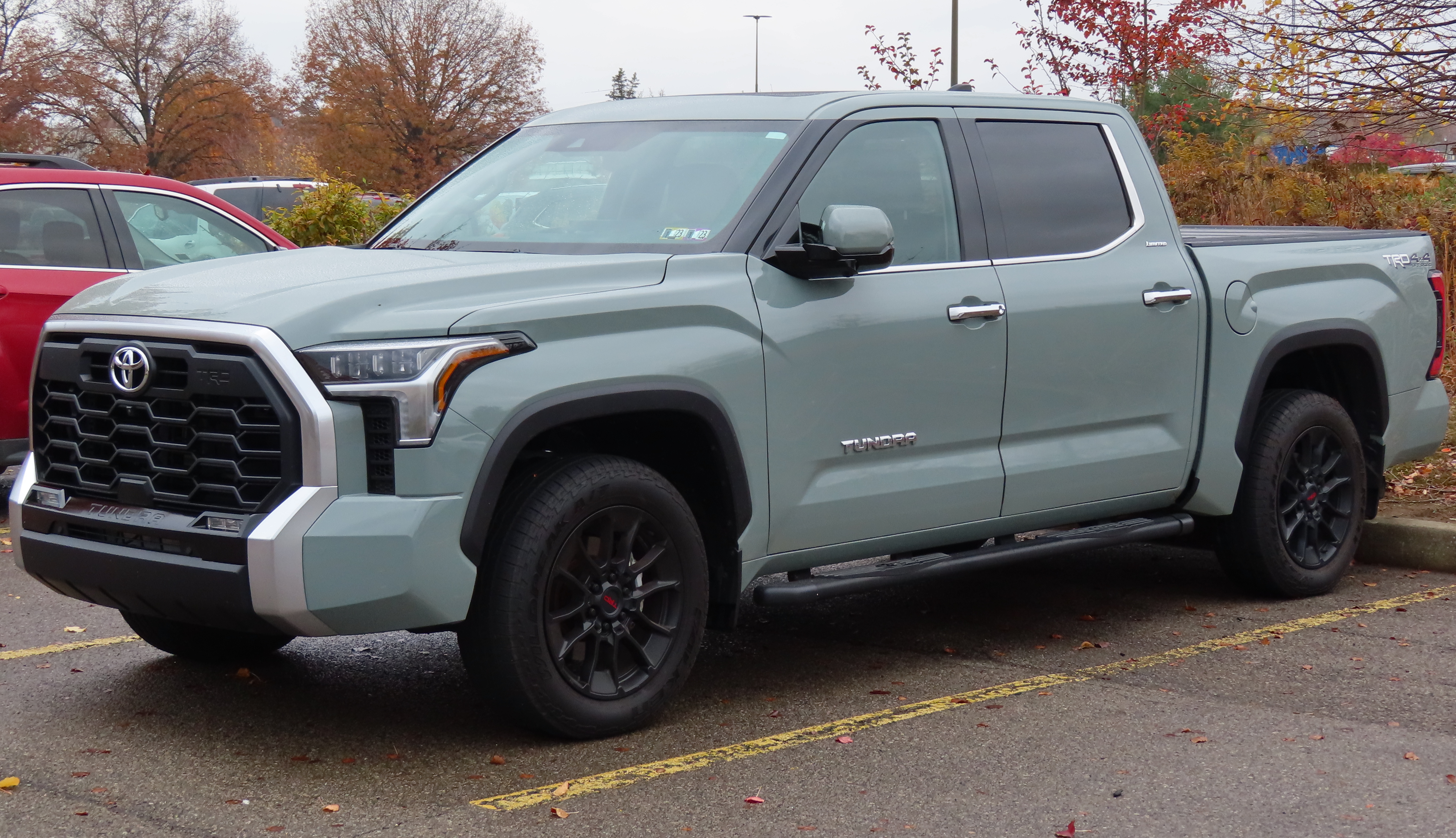
Toyota Tundra
"So I finally, after talking about this for several months maybe, I finally sold my Toyota Tundra. ... Because well, it brings up another topic, right? ... because of the admittedly fairly sizable recall on those engines."
The Toyota Tundra is a full-size pickup truck. In this episode, they’re talking about recall issues tied to the engine, and how that affects what people choose to buy.
The Toyota Tundra is Toyota’s full-size pickup truck, and this episode focuses on its engine recall situation. The hosts connect recall concerns to why buyers may prefer an older Tundra over a newer one.
recalls
"He said because of recalls. ... values of the previous generation Tundra, like what you had, are pretty high because there are a lot of people out there that trust the previous generation truck a lot more than any brand new Tundra because of the admittedly fairly sizable recall on those engines."
A recall is when a car company says, “We found a problem, and we need to fix it.” Here, the hosts say recalls are one reason some people avoid newer trucks.
A recall is when a manufacturer issues a safety or compliance fix for a problem found in certain vehicles. In this episode, the hosts specifically tie recalls to buyer hesitation and to perceived trust in older versus newer Tundra engines.
2027 Ford Super Duty
"We also have some truck news with 2027 Ford Super Duty and what Ford is doing there. [82.5s] They are removing engine options from the list."
The Ford Super Duty is Ford’s heavy-duty truck. The hosts say that for 2027, Ford is changing what engine choices you can pick when you order one.
The Ford Super Duty is Ford’s heavy-duty pickup line, and the episode discusses changes planned for the 2027 model year. The key point is that Ford is removing some engine options from the ordering list.

Dodge Power Wagon
"...lso Honda Ridgeline news, GMC Hammer news and RAM Power Wagon news. Exactly."
The Dodge Power Wagon is a pickup truck made for off-road use. It’s designed to handle rough conditions and tough jobs. The podcast mentions it as part of a group of truck news items.
The Dodge Power Wagon is a heavy-duty, off-road oriented version of a Dodge pickup, known for rugged capability and durability. It’s commonly brought up in truck discussions because it’s aimed at buyers who want a factory-built truck that can handle tough terrain. The podcast context lists Power Wagon news alongside other truck model updates.
tier D pro
"But you know, these high performance shocks, it's a tier D pro, right? It's got Fox shocks and they need to be rebuilt."
This sounds like a specific trim/package name for the truck. The host is connecting it to the fact that this version has Fox shocks that need periodic rebuilding.
“Tier D pro” sounds like a trim or package level for the truck being discussed, used to indicate a specific equipment level. In this segment it’s tied to the presence of Fox shocks and their rebuild schedule.
Fox shocks
"It's got Fox shocks and they need to be rebuilt. A lot of people don't understand that or don't know about it."
Fox shocks are a type of suspension shock made by Fox. The key idea is that they’re designed so you can rebuild them when they wear out, instead of always buying a whole new shock.
Fox shocks are aftermarket or performance shock absorbers known for being rebuildable. The host is saying these shocks have a service interval and may need rebuilding rather than replacement.
rebuild
"You can rebuild them. You don't just have to replace them with an off-the-shelf new shock."
Rebuilding a shock means taking it apart and fixing the worn internal parts. It’s usually cheaper and can extend the life of the shock compared to replacing it completely.
To “rebuild” a shock means disassembling it and replacing internal wear parts (like seals and valving components) so it performs like it should again. This is different from replacing the entire shock with a new unit.
off-the-shelf new shock
"You don't just have to replace them with an off-the-shelf new shock. But they usually have their own schedule, right?"
It means a regular replacement shock you can just buy. The point here is that some shocks (like Fox) can be rebuilt instead of replaced with a brand-new one.
An “off-the-shelf” shock is a standard, mass-produced replacement part you buy ready-made. In this context, the host is contrasting that with rebuilding Fox shocks, which can be serviced rather than replaced.
50 to 60,000 miles
"It's like 50, you know, it depends on how you use it, of course, but it's usually around 50 to 60,000 miles, maybe sooner."
The host is saying these shocks often need service around 50,000–60,000 miles. How you drive and load the truck can make it happen sooner or later.
This is the approximate service interval the host gives for when Fox shocks typically need rebuilding. The exact timing depends on how the truck is used, but it’s framed as a common wear point for performance shocks.
BFG
"I put a slightly upsized tire on it. Yeah. So, so there, there's, uh, the BFG, uh, Keo three."
BFG is short for BFGoodrich, a tire brand. They’re talking about the type of tires they put on the truck and what they plan to do next.
BFG refers to BFGoodrich, a tire brand. Here, the hosts mention a specific BFGoodrich tire model, indicating they’re discussing tire choice and sizing rather than the truck itself.
upsized tire
"I put a slightly upsized tire on it. Yeah."
Upsizing a tire means putting on a bigger tire than the factory size. That can change how the truck rides and handles, and it can also affect things like the speed reading.
An upsized tire means fitting a larger tire size than stock, usually to change ride feel, appearance, or traction. It can also affect speedometer accuracy, clearance, and how the truck’s gearing and rolling resistance behave.
debris left over debris in the engine from manufacturing
"The initial concern when, when these recalls first came out was debris left over debris in the engine from manufacturing. From the manufacturing process."
The concern is that some leftover junk from building the engine can end up inside it. If it blocks the oil system, the engine doesn’t get proper lubrication and can wear out or fail.
“Debris” here means leftover material from the engine’s manufacturing process. If that debris ends up in critical internal areas, it can block oil passages and reduce lubrication, leading to engine damage.
oil passages
"If you have debris that are clogging oil passages and you're getting poor oiling inside an engine, obviously that can wreak all kinds of havoc over the motor from top to bottom…"
Oil passages are the internal “oil highways” inside the engine. If something blocks them, parts don’t get enough oil, and the engine can start getting damaged quickly.
Oil passages are the internal channels that route engine oil to lubricate moving parts. If debris clogs these passages, oil pressure and flow drop, which can cause rapid wear and damage throughout the engine.
bottom end
"…but really the, the bottom end has been the big issue with this."
The “bottom end” is the lower part of the engine where the crankshaft and bearings live. If that area gets damaged, it’s a big problem because it can lead to severe engine failure.
The “bottom end” refers to the lower portion of the engine, including components like the crankshaft and related bearings. The hosts say this recall’s biggest issue is damage in that area, which is especially serious because it can lead to catastrophic failure.
main bearing
"And as part of Toyota's fix for this issue, they've actually gone and redesigned main bearing. And number one, the, the number one main bearing they've done and redesigned it,"
The main bearing is a small part inside the engine that helps the crankshaft spin smoothly. If Toyota redesigned it, they’re trying to fix a problem that showed up in how that part works.
A main bearing is the bearing that supports the crankshaft in the engine block. When Toyota says it redesigned the main bearing, it’s changing how the crankshaft is supported to address a specific failure mode in that engine.
NHTSA.gov
"We can see NHTSA documents. Yeah. Cole can produce a call, can pull up one of these documents. NHTSA.gov is a government organization, right?"
NHTSA is a U.S. government agency that deals with vehicle safety. If you see information on NHTSA.gov, it usually means the recall or investigation details are documented officially.
NHTSA (National Highway Traffic Safety Administration) is the U.S. government agency that oversees vehicle safety and manages much of the recall process. When the hosts reference NHTSA documents, they’re pointing to official filings and recall details.
voluntary recall
"Sometimes they, you know, kind of initiate those investigations, but this is a voluntary recall by Toyota. Yeah."
A voluntary recall means the company decides to bring vehicles back to fix a problem. It’s still a formal recall, but it’s initiated by the manufacturer rather than by a government mandate.
A voluntary recall is when a manufacturer chooses to recall vehicles (or components) to address a safety-related issue, rather than being forced by a regulatory order. In this case, Toyota is described as issuing a voluntary recall while stating a fix involving a redesigned main bearing.
0 W 20 oil
"brand new generation of the Tundra, uh, zero W 20 oil. And a lot of people are saying that, uh, when the oil gets thinner..."
“0W-20” is the label on a specific type of engine oil. It means the oil stays easier to pour when it’s cold and is thinner when the engine is hot, which can change how well it helps move dirt and tiny particles to the filter.
“0W-20” is an engine oil viscosity grade. The “0W” indicates good flow in cold temperatures, and the “20” indicates a relatively thin oil at operating temperature, which can affect how well it carries and filters out microscopic debris.
oil gets thinner
"And a lot of people are saying that, uh, when the oil gets thinner, it may lose some of its ability to kind of flush some of the debris..."
They’re talking about oil being less thick when the engine is running. If the oil is thinner, it might not carry tiny debris away as well, so more of that debris could end up stuck in the oil filter instead.
In this context, “oil gets thinner” refers to lower viscosity, meaning the oil flows more easily at engine operating temperature. The concern raised is that lower-viscosity oil may not flush debris as effectively, leaving more particles to be trapped in the oil filter.
oil filter
"And so a lot of it could be flushed and be leftover in the filter, the oil filter for the engine."
The oil filter is the part that catches dirt and tiny particles from the engine oil. The worry here is that with thinner oil, less debris may get carried away, so more could stay trapped in the filter.
The oil filter is the component that traps contaminants as engine oil circulates. This segment suggests that if thinner oil doesn’t flush debris as effectively, more microscopic debris could remain in the filter rather than being fully cleared through the system.
6.2 liter V 81
"like GM, with their 6.2 liter V 81 of their fixes for the issues they've had with that V eight is to run a thicker oil."
A “6.2-liter V8” is a type of engine with eight cylinders arranged in a V shape. They’re saying GM used a thicker oil for that engine as part of a fix, suggesting oil thickness can matter for engine protection.
A “6.2-liter V8” is an engine displacement and cylinder layout: 6.2 liters total displacement with eight cylinders arranged in a V configuration. The host mentions GM using a thicker oil for this V8 as part of recall-related fixes, implying oil viscosity can influence how debris and wear are managed.
thicker viscosity oil
"So sure, I mean, potentially a thicker viscosity oil could help with this issue, but I'm not sure it's, it's really the root problem."
“Thicker oil” means the oil is more viscous, so it’s not as thin when the engine is hot. They’re saying it might help, but they don’t think it’s guaranteed to solve the real problem by itself.
“Thicker viscosity oil” means higher-viscosity engine oil that flows less easily at operating temperature. The segment frames this as potentially helpful, but not necessarily the underlying root cause of the recall issue.
lubrication
"Maybe, maybe they're relaxing some of the tolerances just to allow a little bit more lubrication, a little bit more flow, right? So you're allowing the engine to run a little bit, a little bit better."
Lubrication is how engine oil coats moving parts so they don’t grind against each other. More lubrication and better oil flow can reduce wear and help the engine run more smoothly.
Lubrication is the oil-based film that reduces friction and wear between moving engine parts. The hosts connect changes in tolerances to “more lubrication” and “more flow,” implying the recall fix is aimed at improving oil delivery to critical components.
tolerances
"Maybe, maybe they're relaxing some of the tolerances just to allow a little bit more lubrication, a little bit more flow, right?"
Tolerances are how precisely engine parts are made to fit together. If the tolerances are a little looser, it can help oil move and lubricate the engine more easily.
In engine manufacturing, tolerances are the allowable variation in dimensions and clearances between parts. Looser tolerances can help oil get where it needs to go by improving lubrication flow and reducing the chance of overly tight clearances.
emissions
"The government is saying, you know, they want cleaner engines. They want, you know, fewer emissions, higher efficiencies."
Emissions are the harmful gases a vehicle puts into the air. The government wants engines to produce less of them, which can push manufacturers to change how the engine is designed.
Emissions are the pollutants an engine releases into the atmosphere, such as hydrocarbons, carbon monoxide, and nitrogen oxides. The hosts frame government pressure for “fewer emissions” as a driver of design changes that also affect efficiency and power.
efficiencies
"The government is saying, you know, they want cleaner engines. They want, you know, fewer emissions, higher efficiencies."
Efficiency is how well the engine turns fuel into motion. If an engine is more efficient, it usually uses less fuel, but it can require more precise engineering to achieve.
Engine efficiency is how effectively the engine converts fuel energy into useful work. Higher efficiency often comes from tighter control of combustion and airflow, which can increase engineering complexity and sensitivity to manufacturing tolerances.
regulations
"So there's a lot of regulations that are pushing this and customers, a lot of people who are buying trucks, they're saying we want more power, right?"
Regulations are rules from the government that car makers have to follow. Here, they’re pushing cleaner and more efficient engines, which can change how the engine is built.
In this context, regulations are government rules that force automakers to meet emissions and efficiency targets. Those requirements can cascade into engine design decisions that affect durability and how manufacturers adjust parts and clearances.
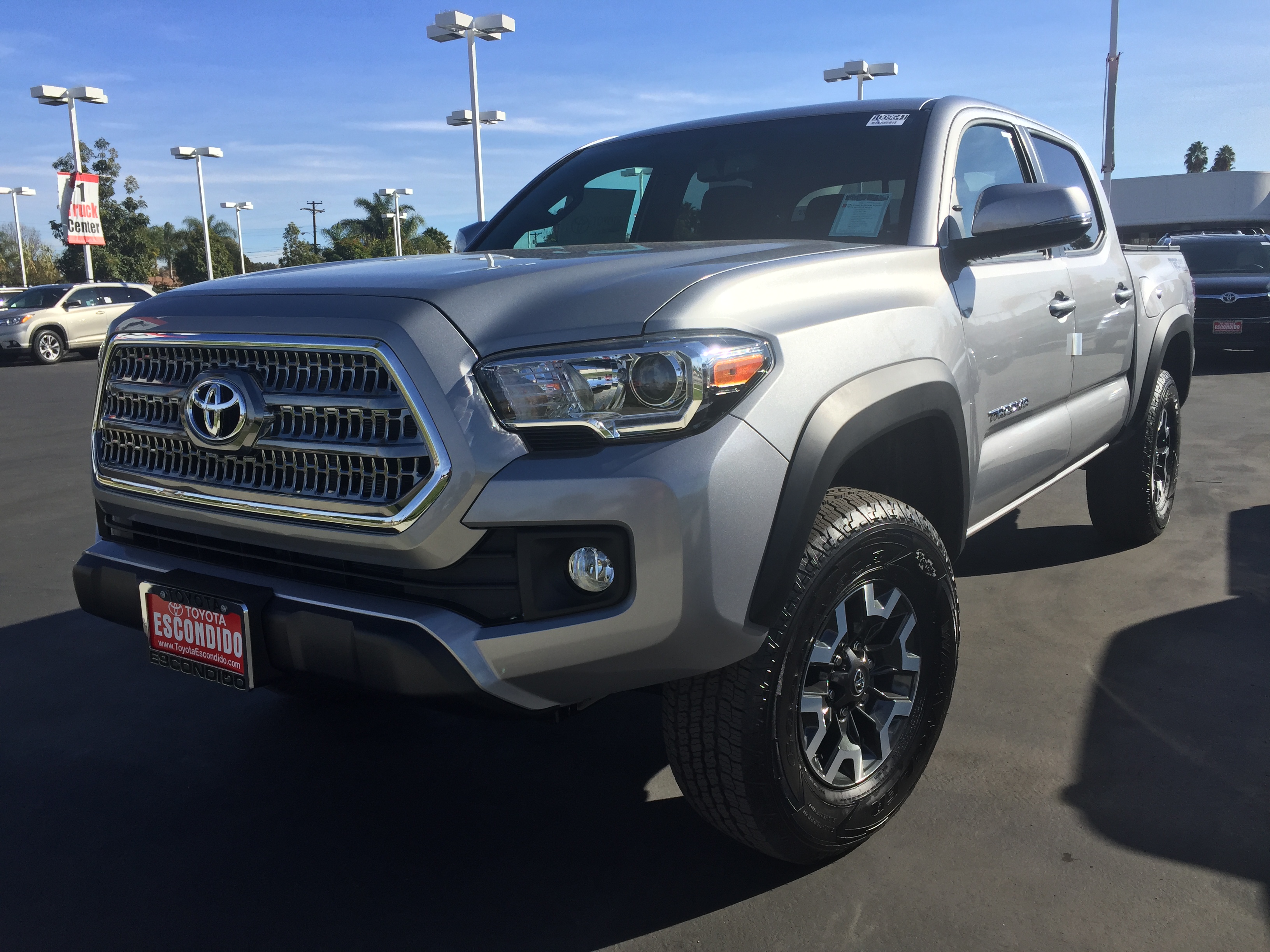
Toyota Tacoma
"... truck is actually performing. And then obviously Tacoma sales are huge, are huge. And Tacoma is also havi..."
The Toyota Tacoma is a mid-size pickup truck. It’s popular because it can handle truck tasks like hauling and towing, but it’s generally easier to drive and park than bigger trucks. The podcast mentions it because many people buy Tacomas.
The Toyota Tacoma is a mid-size pickup truck known for strong sales and a wide range of configurations. It’s frequently discussed because it’s popular with buyers who want a truck that’s easier to live with than a full-size model, while still being capable. The podcast context points to how big Tacoma sales are and suggests ongoing interest in the model.
potentially involved vehicles
"if you go back to that government document that Toyota submitted, I wanted to point out, uh, they're talking about like the total number of potentially involved vehicles in this latest, uh, Tundra recall..."
In recall paperwork, “potentially involved” means the company thinks certain cars could be affected. It doesn’t necessarily mean every one of them definitely has the problem.
“Potentially involved vehicles” is recall language meaning the set of vehicles that might be affected based on the information available (like production ranges or component sourcing). It’s not always the same as the number confirmed to have the defect.
estimated percentage with defect
"it was 43,566 vehicles were potentially involved. And then it says estimated percentage with defect one percent."
This is an estimate of how many of the cars in the recall group actually have the defect. The hosts are saying it’s tricky to calculate exactly, so the real-world impact can be uncertain.
“Estimated percentage with defect” refers to how many of the potentially affected vehicles are expected to actually have the problem. The hosts note it’s hard to estimate accurately, which is why recall impact can be difficult to gauge.

Buick 27 Model
"...e, uh, uh, about this, um, for some time, but 20, 27 model year super duties. You can now order them."
The Buick Model 27 is a Buick vehicle being talked about in terms of ordering availability. The podcast suggests it’s something people have been waiting to order and that it’s now available to order. It’s mentioned as part of a broader ordering discussion.
The Buick Model 27 is referenced as a specific model year/ordering topic, suggesting it’s a new or newly orderable configuration within Buick’s lineup. It’s mentioned in the context of ordering timing and model-year availability. The podcast context indicates it’s been discussed for some time and that ordering is now possible.
engine options
"And one big item was pretty obvious is that they're removing engine options from the super duty."
Engine options are the different engine types you can choose when you order a truck. The host is saying Ford is taking some of those choices away for the Super Duty.
Engine options are the different engine choices a manufacturer offers for a given vehicle model/trim. Here, the host says Ford Super Duty is removing some engine options, which affects what powertrains buyers can select when ordering.
torque
"Because the horsepower numbers were close. [1313.1s] The torque numbers were not that far off, right? [1315.6s] It was just that the 6.8 was kind of the base engine for that work truck, for"
Torque is the “pulling power” your engine makes. It’s what helps a truck move and tow, especially when you’re not at high speeds.
Torque is the engine’s twisting force that helps a truck accelerate and pull heavy loads, especially at lower speeds. The host contrasts torque and horsepower numbers between two engine options, implying that even if horsepower is similar, torque can differ enough to change real-world drivability.
high output diesel
"10 speed and also the high output diesel with the torque shift 10 speed. And then of course on the diesel side of things, everything is high output."
This means the diesel engine is tuned to make more power than the standard diesel. It’s usually set up to handle that extra pulling force, especially when towing.
“High output diesel” refers to a higher-power calibration of a diesel engine than the base version. It’s typically paired with stronger driveline/transmission choices so the truck can handle the added torque under load.
10 speed
"10 speed and also the high output diesel with the torque shift 10 speed. They're all 10 speeds."
A 10-speed automatic has more gear steps than older transmissions. That can help the engine stay in the “right” spot for smooth driving and stronger pulling when you need it.
A “10-speed” automatic transmission has ten forward gear ratios. More gears can help the engine operate closer to its most efficient or most powerful range depending on driving conditions.
towing
"like, if you're not towing all the time and, you know, if you're not, you know, pushing in a truck with big tires, like the tremor is not available with that"
Towing means pulling a trailer. It puts extra stress on the engine and transmission, so the truck’s gearing and power delivery matter more.
In truck context, “towing” refers to hauling a trailer, which heavily loads the engine and drivetrain. That’s why transmission choices (like gear count and torque delivery) matter more when towing than for everyday driving.

F 250
"So 500 horsepower, 1200 pound feet of torque, which is, you imagine getting a two door, two wheel drive F 250 with 500 horsepower in it."
The Ford F-250 is a big work truck built for towing and hauling. The host is talking about what it would feel like if an F-250 had the higher-power diesel setup they’re discussing.
The Ford F-250 is a heavy-duty pickup known for towing and payload capability, and it’s commonly offered with diesel engines. In this segment, the host is imagining a two-wheel-drive F-250 equipped with the high-output diesel’s quoted power and torque figures.
trim levels
"And I think Chevy and Ram did the same is that they offered like seven trim levels and like 10 different packages for some of those trim levels."
A “trim level” is like a version of the same truck. Different trims come with different features—some are more basic, others add more stuff.
“Trim levels” are the different versions of the same truck model that vary by standard equipment and features. Higher trims usually add more comfort, tech, and sometimes drivetrain options, while lower trims are more basic.
packages
"And I think Chevy and Ram did the same is that they offered like seven trim levels and like 10 different packages for some of those trim levels."
A “package” is a bundle of options you can add to a vehicle. Instead of picking every feature separately, you choose a group.
In vehicle ordering, “packages” are bundled options—like a group of features—that you can add together rather than selecting each item individually. Packages are used to simplify ordering and marketing, but they can also create many possible combinations.
engines
"And then like up to four or five different engines. [1500.3s] And then so the overall combinations of options were in the millions, right?"
When the host says “up to four or five different engines,” they mean multiple distinct powertrains offered for the same truck lineup. Different engines can require different components and calibration, which increases complexity in production and inventory.
streamline
"And so it looked like to me that they're trying to streamline it, but they [1519.7s] also added several more tremor options, right?"
Here, “streamline” means making the lineup simpler. Fewer choices can make it easier for the factory to build trucks without getting stuck waiting on parts.
“Streamline” in this context means reducing the number of ordering and production paths—fewer trims, fewer engines, and fewer option combinations. That can make manufacturing easier and reduce the risk of delays when parts are constrained.
tremor
"And so it looked like to me that they're trying to streamline it, but they [1519.7s] also added several more tremor options, right? [1523.1s] You can now get a tremor with a long bed."
“Tremor” is a specific truck trim that’s aimed at tougher, off-road use. In this discussion, it’s being offered with a longer bed than before.
“Tremor” is a performance/off-road–oriented trim package used by Ford for certain Super Duty trucks. It typically adds off-road styling and capability-focused equipment, and in this segment the host notes it being offered with a long bed.
long bed
"[1523.1s] You can now get a tremor with a long bed. [1525.3s] Yeah. [1526.0s] So they added some, some content and some options, but it looked like they were"
A “long bed” means the pickup’s cargo area is longer. That usually gives more room for hauling, but it can make the truck harder to park or maneuver.
A “long bed” refers to the longer cargo-box length on a pickup truck. Bed length affects how the truck fits different use cases (cargo space vs. maneuverability) and can also influence which trim/option combinations are offered.
slate truck
"You've got, think about it like two ends of the spectrum. [1556.3s] You've got the slate truck on one end of the spectrum that's built one way where [1560.5s] they basically make it one way."
The host is describing a “slate truck” as a simpler, more basic truck build. The factory makes it in a standard way, and then people add accessories later.
A “slate truck” (as described by the host) is a simplified build approach where the truck is delivered in a more basic configuration and customers add accessories themselves. The idea is that the factory builds a more standardized base, reducing complexity.

Porsche 911
"So that's a way that they save a lot of cost there versus something like a Porsche 911 where you can change the color of the seat belts and the gauges and the stitching, stitching in the brake calipers."
The Porsche 911 is a famous sports car from Porsche. Here it’s mentioned to illustrate that some cars let you customize lots of details, which can drive up cost.
The Porsche 911 is known for offering a high level of personalization, even down to interior details like seat belts, gauges, and stitching. In this segment, it’s used as an example of a more “custom” manufacturing approach compared with cost-saving production methods.
bespoke manufacturing process
"So that's an incredibly bespoke manufacturing process. And that is one of the many reasons that's a very expensive car."
“Bespoke” here means the car is made to match the buyer’s specific preferences. That kind of customization often costs more than building one standard version for everyone.
A bespoke manufacturing process means the factory builds or configures the car in a highly tailored way for the buyer’s specific choices. It usually costs more because it reduces standardization and can require more labor and planning.
destination charge
"The destination charge on a new heavy, uh, heavy duty or full size pickup truck is now $2,795 almost 20."
The destination charge is the amount you pay to get the truck from where it’s built to the dealership. It’s one of the extra fees that can make the final price higher.
A destination charge is the fee added to a vehicle’s price to cover shipping the car from the factory to the dealer. It’s a common line item on new-vehicle pricing, and in this segment it’s cited as a major contributor to the overall cost of new heavy-duty or full-size pickups.
V six non-turbo
"maybe certification, uh, but the three and a half liter V six non-turbo inside [1898.0s] the Honda Ridgeline, and they have a nine speed automatic."
This means the engine is a V6 (six cylinders) and it doesn’t have a turbo. So it makes power without using a turbo to force extra air into the engine.
“V6 non-turbo” describes an engine with six cylinders arranged in a V shape that does not use a turbocharger. Without turbocharging, the engine typically relies on its natural airflow and engine tuning for power delivery.

Honda Ridgeline
"maybe certification, uh, but the three and a half liter V six non-turbo inside [1898.0s] the Honda Ridgeline, and they have a nine speed automatic."
The Honda Ridgeline is Honda’s pickup truck. Here they’re talking about the current version’s engine and transmission, and how Honda may be moving toward a hybrid version later.
The Honda Ridgeline is Honda’s midsize pickup that’s known for its car-like ride and a modern, family-friendly interior. In this segment, the hosts focus on its current powertrain setup: a 3.5-liter V6 paired with a 9-speed automatic.
nine speed automatic
"the Honda Ridgeline, and they have a nine speed automatic."
A nine-speed automatic is the truck’s automatic gearbox. It has more gear steps than older automatics, which can help the engine stay in the “right” spot for smoother driving and efficiency.
A nine-speed automatic is a transmission that uses nine gear ratios to keep the engine operating in a more efficient range. More gears can help with smoother acceleration and better fuel economy, especially when paired with modern engines.

Honda Passport
"...tle bit older than the, the new pilot and the new passport and some of the other vehicles they have. So they..."
The Honda Passport is a mid-size SUV from Honda. It’s built for everyday driving with extra room compared to smaller SUVs. The podcast mentions it because it’s being compared to newer Honda models and their update timing.
The Honda Passport is a mid-size SUV positioned for buyers who want more space and capability than a smaller crossover. It’s discussed alongside other Honda models because it shares the brand’s general approach to practicality and family use, and because model updates can affect what’s available. In the podcast context, it’s referenced as being a bit older than newer versions of the Pilot and Passport.

Seven Even Super
"...les like Broncos and Rangers and who knows, maybe even super duties. They didn't say that specifically, but at..."
“Seven” sounds like a model name or number being mentioned in a list of possible trucks. The podcast doesn’t give full details in the snippet, but it’s being treated as something that could be part of future options. It’s included as a “maybe” in the conversation.
“Seven” in the podcast context appears to refer to a vehicle model name or designation being discussed alongside other truck models like Broncos, Rangers, and Super Duties. It’s mentioned as a possibility of what could be included in a lineup or future offering, rather than as a fully detailed specification. The key point is that “Seven” is part of a speculative list of trucks/models that might be involved.
hybrid
"for the Toyota vehicles, I mean, RAF fours are selling great hybrid, you know, hybrid, all of their hybrids are selling really, really well. Yeah. And it makes sense."
A hybrid uses two kinds of power: a gas engine and an electric motor. The idea is to get better efficiency than a normal gas-only truck without needing to plug in like a full electric car.
A hybrid vehicle uses both an internal-combustion engine and an electric motor. The host is describing how hybrid versions are selling well and how hybrid tech can be a “half step” between fully gas and fully electric approaches.

Ford F150
"And in recent years, Ford with their F-150 hybrid, they've expanded how many hybrids they're building. So it used to be, I don't know, like 40 or 50,000. Then they went to like almost like 120,000 hybrids that they're, they said they were going to build per year."
The Ford F-150 is a popular big pickup truck. This part is about the hybrid version, and how Ford is planning to build a lot more of them each year.
The Ford F-150 is the best-selling full-size pickup, and the hybrid version adds an electrified powertrain to improve efficiency. The host discusses Ford ramping hybrid production from roughly 40–50k units to nearly 120k per year, framing it as a major shift in how the truck is offered.
base Excel model
"But unfortunately, what I noticed with Ford F-150 hybrids, they are not offering it like as a base Excel model, you have to buy like a XLT or a Lariat, you know,"
“Excel” is a trim level, meaning a particular version of the truck with a certain set of features. The host is saying the hybrid version isn’t available on the cheapest version, so you have to buy a higher trim to get it.
“Excel” here refers to a specific trim level (a package of features and equipment) rather than a general feature. The host’s point is that Ford’s F-150 hybrid isn’t offered on the lowest, cheapest trim—buyers have to step up to higher trims.
XLT
"they are not offering it like as a base Excel model, you have to buy like a XLT or a Lariat, you know,"
XLT is a mid-level version of a Ford truck. Here, the host is saying you can’t get the hybrid on the cheapest trim—you have to at least choose XLT (or higher).
XLT is a Ford truck trim level positioned above the base model and below the top trims. In this segment, it’s mentioned as the minimum trim you need to buy to get the F-150 hybrid.
Lariat
"you have to buy like a XLT or a Lariat, you know,"
Lariat is a higher trim level on Ford trucks. In this segment, it’s mentioned because the hybrid option is only available when you move up to trims like XLT or Lariat.
Lariat is another Ford trim level, typically higher than XLT and associated with more standard comfort and convenience features. The host uses it to illustrate that Ford restricts the F-150 hybrid to higher trims rather than offering it on the entry-level model.

GMC Hummer X concept vehicle lineup
"next up on our news list is something that's been puzzling me, but also exciting me, uh, which is GMC Hummer X concept vehicle lineup that they unveiled about almost a week ago."
They’re talking about a GMC Hummer X concept lineup—basically a preview of what a future truck could look like. The host says it seems built on the same general idea as the current Hummer EV, just with different styling details.
This segment discusses a GMC Hummer X concept vehicle lineup, which is presented as a future concept rather than a production truck. The host frames it as closely related to the existing Hummer EV look and proportions, suggesting it’s an evolution of the electric Hummer design language.
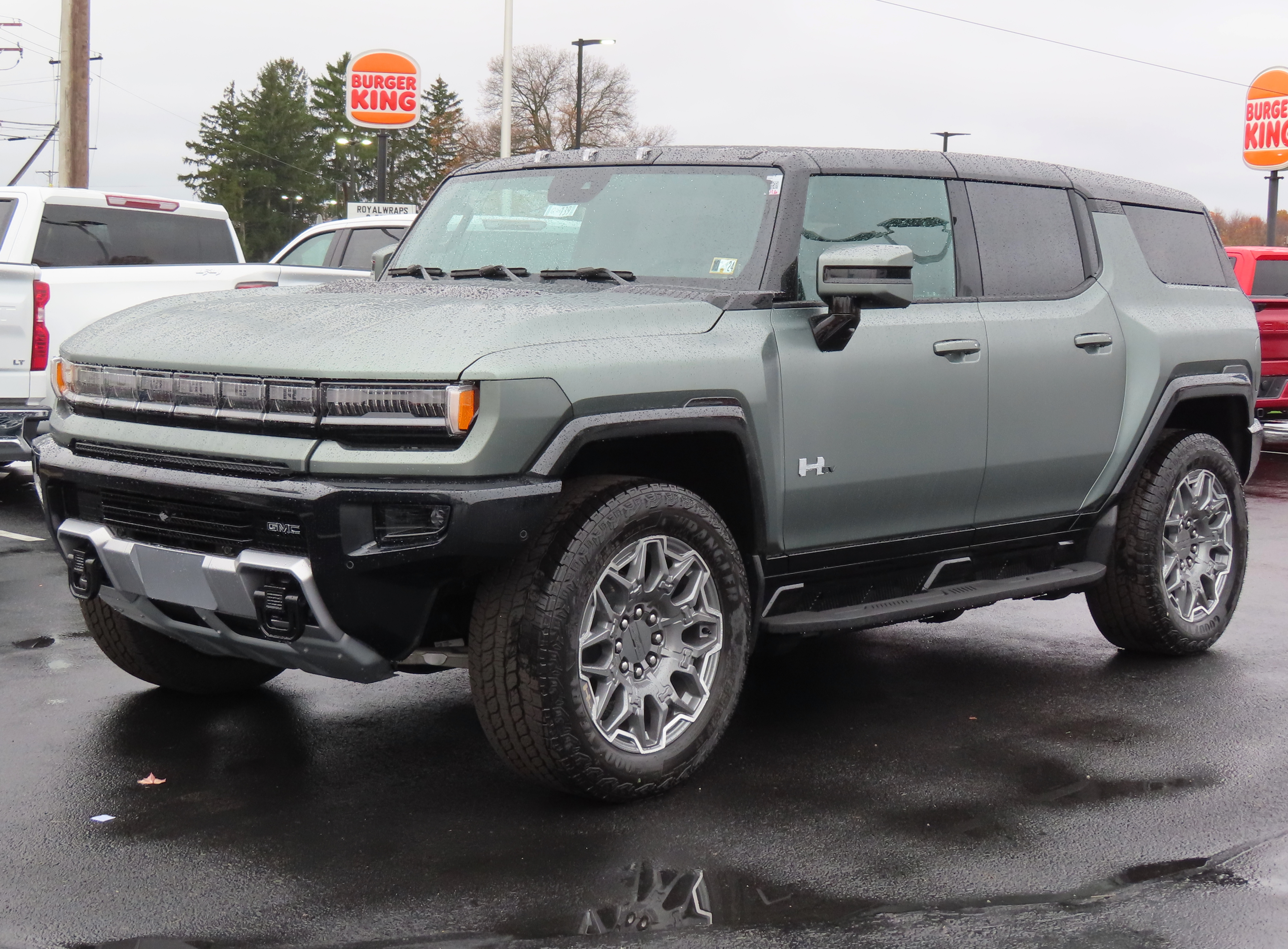
Hummer Ev
"...sion of this was essentially that it's a modified Hummer EV as we know it now because you, you look at it."
The Hummer EV SUV is an electric SUV. It’s part of the Hummer EV family and is designed to be capable off-road. The podcast describes it as closely related to the existing Hummer EV setup, just in an SUV form.
The Hummer EV SUV is the electric SUV version of the Hummer EV lineup, built around the same electric performance and off-road focus. It’s discussed because it expands the Hummer EV concept beyond a truck body style into a more SUV-like package. In the podcast context, it’s described as a modified Hummer EV as it’s known today.
37s
"Still got massive 37s on this concept that they're showing."
“37s” means the truck is shown with very large tires—about 37 inches tall. That usually helps off-road by giving more clearance and grip, but it can make the truck heavier and less efficient.
“37s” is shorthand for 37-inch tires, a common way enthusiasts describe very large off-road tire sizes. Bigger tires increase ground clearance and can improve traction over rough terrain, but they also add weight and can affect ride comfort and efficiency.
screens
"It's still got tons of screens in the inside."
Here, “screens” means the truck’s digital displays—like the infotainment screen and other panels for settings and information. More screens usually means more of the truck’s controls and info are handled digitally.
In modern concept and production trucks, “screens” refers to the digital displays used for infotainment, navigation, vehicle settings, and sometimes driver-assistance information. When a vehicle has “tons of screens,” it usually means a highly digital cockpit with multiple functions handled through touchscreens and panels.
seven iPad side by side
"In fact, one of these concept trucks has essentially seven iPad side by side,"
They’re describing an interior with multiple big tablet-style screens lined up next to each other. The idea is that the truck’s controls and information would be shown on lots of displays at once.
“Seven iPad side by side” is a vivid way to describe a multi-display dashboard layout, where multiple large screens are arranged next to each other. This kind of setup emphasizes a tablet-like user interface for controlling media, navigation, and vehicle functions.
approach, departure, ground clearance
"Yeah, they gave some real numbers, not only tire size, saying that has as much as a 37, but they were giving approach, departure, ground clearance."
These are off-road “shape” measurements. Approach and departure angles tell you how well the vehicle can go up and down bumps without hitting the front or rear. Ground clearance is how much space there is between the bottom of the vehicle and the ground.
Approach angle, departure angle, and ground clearance are off-road geometry measurements. They describe how steep a vehicle can climb over an obstacle (approach), how well it can descend without the rear hitting (departure), and how much space it has between the lowest point and the ground (ground clearance). These numbers help predict how likely a truck/SUV is to scrape bumpers or underbody on trails.
wheelbase
"So for example, that's the SUV, a wheelbase has 116 inches, which is a little bit longer than like a forerunner, but it's about the same as like a four door Bronco."
Wheelbase is the distance from the front wheels to the rear wheels. It affects how stable the vehicle feels and how much room it has inside. Longer wheelbases often ride smoother, while shorter ones can turn more easily.
Wheelbase is the distance between a vehicle’s front and rear axles. It strongly affects ride comfort, stability, and interior space, and it also influences how the vehicle fits on and off obstacles. Longer wheelbases generally improve straight-line stability, while shorter ones can help with tighter maneuvering and off-road angles.

Rivian R1S
"This one is really a midsize concept vehicle, which is cool because it's almost a little bit like, think about, you know, the Rivian R1S and the Rivian R2."
The Rivian R1S is an electric SUV built for outdoor/adventure use. Here, it’s mentioned as a comparison for the kind of vehicle size and vibe being discussed. It’s one of the better-known EV SUVs aimed at people who want to go off the pavement.
The Rivian R1S is an electric SUV known for its adventure-focused design and off-road capability. In this segment, the hosts use it as a reference point for how the discussed SUV concept’s size and positioning compare to other modern electric “outdoor” vehicles. The R1S is also part of Rivian’s lineup that helped popularize the EV adventure-SUV niche.
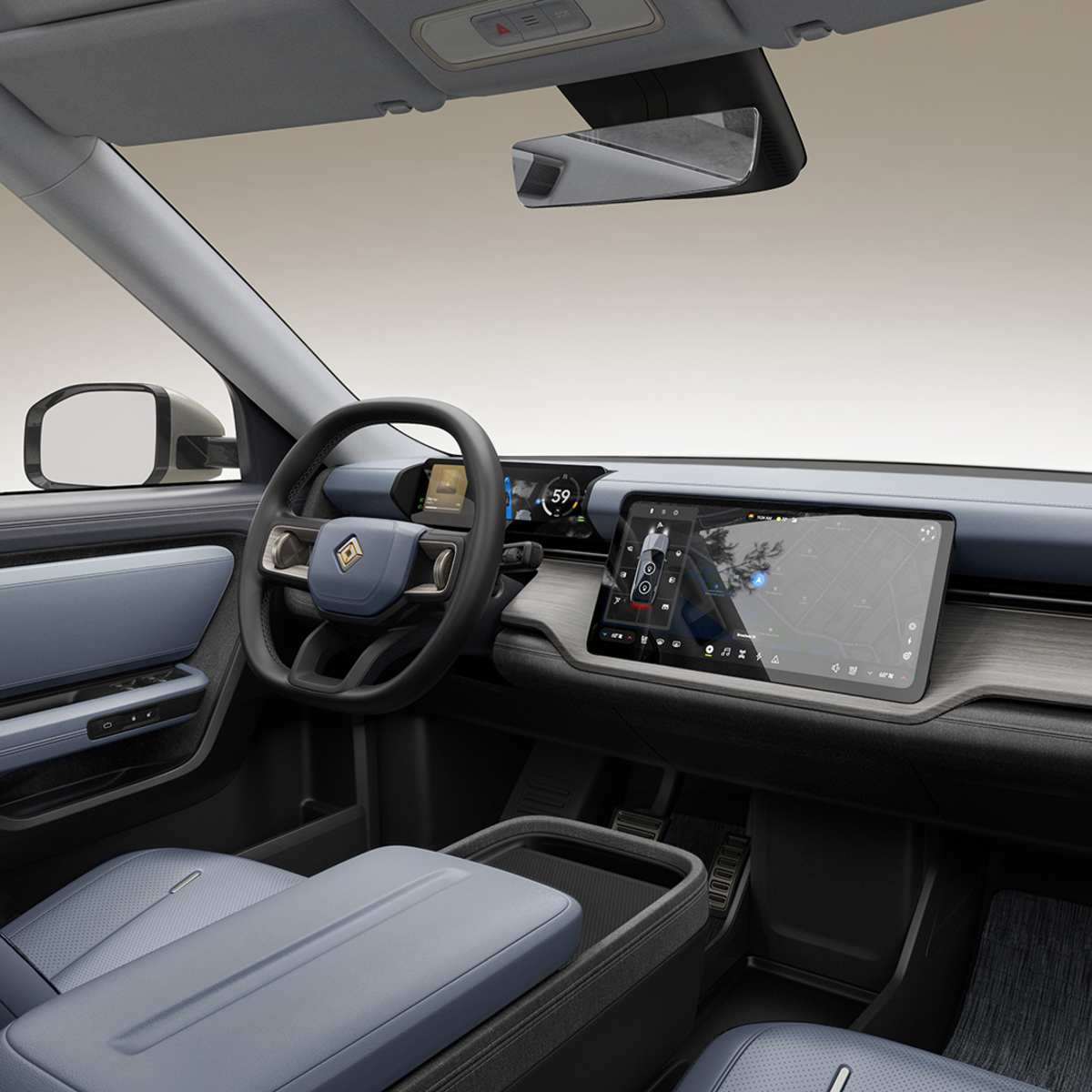
Rivian R2
"This one is really a midsize concept vehicle, which is cool because it's almost a little bit like, think about, you know, the Rivian R1S and the Rivian R2."
The Rivian R2 is Rivian’s smaller electric vehicle compared with its bigger models. The hosts mention it to help you picture the size/positioning of the concept they’re talking about. It’s basically Rivian’s way of offering a similar EV style in a different size.
The Rivian R2 is an electric vehicle positioned as a smaller, more accessible model than Rivian’s larger offerings. In this segment, it’s used alongside the R1S to illustrate the “nested” idea—how different EV models can share a family resemblance while targeting different sizes. The R2 is part of Rivian’s push to broaden its electric lineup.
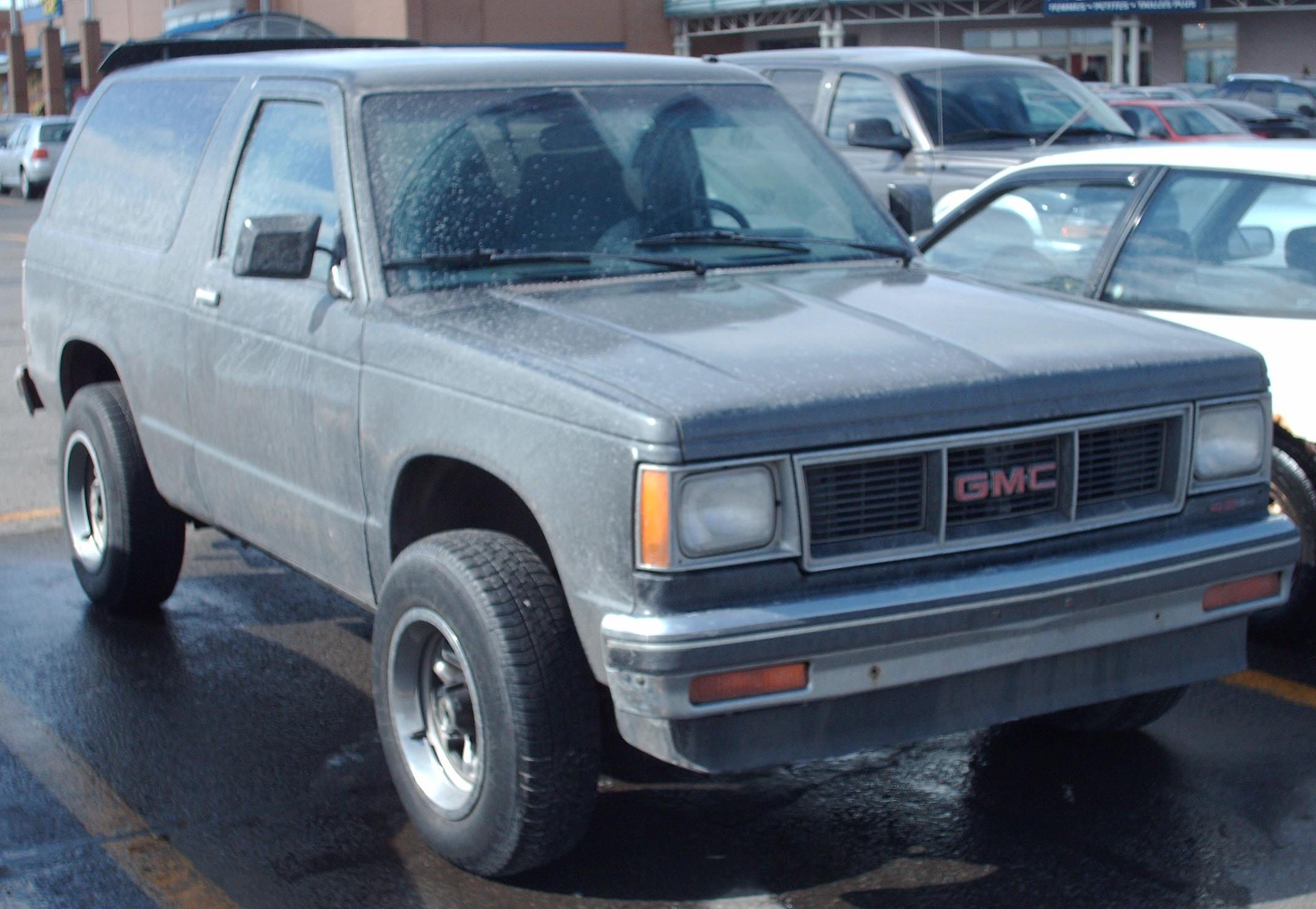
Gmc Jimmy
"... about because there's a lot of buzz around it is GMC Jimmy. A lot of people are talking about an upcoming GM..."
The GMC Jimmy 3 Doors is an upcoming or rumored GMC SUV idea with a three-door design. People are talking about it because it could be a smaller SUV option with a simpler, more compact layout. The podcast mentions it because there’s a lot of buzz about it.
The GMC Jimmy 3 Doors refers to a rumored or upcoming GMC model concept/speculation centered on a three-door body style. It’s generating buzz because a new compact SUV format could attract buyers looking for a smaller, more traditional off-road-friendly layout. The podcast context specifically notes the buzz around an upcoming GM Jimmy.
four by four
"A lot of people are talking about an upcoming GMC Jimmy, a more rugged four by four. And one of your questions was, could there be any trajectory of this, this concept"
“Four by four” usually means a 4x4 vehicle where all four wheels get power. It helps the car grip better on rough or slippery ground.
“Four by four” is a common way to say a 4x4 vehicle, meaning power is sent to all four wheels. That helps with traction on loose surfaces like mud, snow, or uneven terrain.
Hummer EVs
"because current Hummer EVs, they're gigantic and they're very heavy too. Which is a challenge off-road?"
“Hummer EVs” are the electric Hummer trucks/SUVs. They’re famous for being huge and heavy, which can make off-roading harder than you’d expect.
Hummer EVs refer to the electric Hummer lineup, known for very large size and heavy curb weight. The hosts highlight that this mass creates challenges even though they’re designed as off-road vehicles.
competitive advantage
"They're going to hold pretty close, pretty close to the chest because once again, there's a competitive advantage for them."
“Competitive advantage” here means something a company has that helps it beat competitors. The idea is that automakers don’t share future plans so rivals can’t copy them.
In this context, “competitive advantage” means a company’s edge over rivals—often tied to proprietary plans, technology, or product timing. The host argues manufacturers keep future-product details quiet to protect that advantage.
alignment
"Eventually it did, it's got a lot of clearance, but by the end of that shoot, the alignment [2478.0s] was bad. [2479.1s] And I think there was just so much weight and so much torque sitting on one tire as a [2485.2s] truck was just on three wheels."
Alignment is how straight the wheels are pointed and how they sit relative to the road. If it gets knocked out of alignment, the truck can pull or the wheels can look crooked—exactly what they noticed after the heavy off-road run.
Wheel alignment refers to the set angles of the wheels (like camber and toe) relative to the vehicle. The hosts explain that after the truck was effectively riding on three wheels due to obstacle forces, the alignment got “tweaked,” leaving the wheel “wheel cockeyed.”
downsize it
"So if they were to take this and downsize it, I think it would make it better in most ways."
Here, “downsize it” means making the truck smaller and lighter. The idea is that less weight means less stress on the wheels and suspension when you hit rough obstacles.
Downsizing in this context means reducing the vehicle’s size and mass to reduce the forces transmitted to tires, suspension, and steering geometry during off-road use. The hosts argue that a smaller version would be less likely to exceed the limits of alignment adjustment.
electric assist
"[2524.6s] And also maybe you also make it a hybrid, right? [2527.1s] Maybe give it a small engine with an electric assist. [2530.0s] That could remove a lot of the weight out of the system."
Electric assist means the electric motor helps the gas engine when you need extra power. It can make the car feel quicker without needing a bigger engine.
Electric assist is when an electric motor adds extra torque/power to help the engine, especially during acceleration or load. In hybrids, this can let engineers use a smaller engine while still meeting performance needs.
modular architecture
"[2551.0s] But what excited about me about these X concepts from GMC Hummer is that [2556.2s] it seemed like it was innovative, right? [2558.8s] They thought about a modular architecture."
A modular architecture is a vehicle design approach where key components (like platforms, mounting points, and powertrain interfaces) are standardized so multiple models can share them. The host is saying the GMC Hummer “X concepts” seemed innovative because they were thinking about how to build the truck family more flexibly.
overland expo
"[2602.8s] Maybe we can get a hands-on with it soon. [2605.6s] I mean, what if they brought it to an overland expo? [2608.6s] I mean, that could be something interesting."
An overland expo is a show/event for people who travel long distances by road and trail, usually with camping gear. They’re suggesting the truck could be tested and shown in that kind of setting.
An overland expo is an event focused on overlanding—long-distance, off-road-capable travel often involving camping gear and rugged vehicle setups. The host is suggesting bringing the concept truck to such an event so people can see how it fits real-world adventure use.

Ram Power Wagon
"So, Cole, if you could bring up our off-road video with the Ram Power Wagon. [2632.5s] This was quite interesting... So I was just driving the Ram Power Wagon."
The Ram Power Wagon is a special Ram pickup made to go off-road. It’s designed for tough trails where you need good traction and control, especially when climbing steep or uneven obstacles.
The Ram Power Wagon is a heavy-duty off-road pickup built for low-speed traction and obstacle crawling. In this segment, it’s discussed alongside another truck at an off-road park, with emphasis on its ability to handle steep climbs and technical terrain.
46-inch tires
"We took our Bob Deuce and a half on 46-inch tires to an off-road park down in Colorado Springs... [2658.2s] So this is a place that you could put even this Bob Deuce on 46s into some tricky scenarios"
46-inch tires are huge off-road tires. They help the truck clear obstacles and keep grip when the trail gets rough, like rocks and deep ruts.
“46-inch tires” means the truck is running extremely large off-road tires, which increases ground clearance and helps the tire maintain traction over rocks, ruts, and uneven obstacles. Bigger tires also change gearing and steering feel, so they’re a major part of how a truck performs on crawling courses.
Ram Off-road Park
"We took our Bob Deuce and a half on 46-inch tires to an off-road park down in Colorado Springs... called Ram Off-road Park. [2649.1s] They've got pretty wide open obstacles and features"
Ram Off-road Park is a place built for off-road testing. It has obstacles designed to let them see how well trucks handle tricky terrain without getting stuck on random stuff.
Ram Off-road Park is an off-road facility used for testing trucks in controlled obstacle scenarios. The segment describes it as having wide-open obstacles so they can evaluate traction and crawling without constantly hitting trees.
30 degree slope
"trying to get up some particular obstacles. [2667.7s] What was it like driving it up this 30 degree slope? [2672.0s] It's like driving a townhouse up the side of a hill."
A 30-degree slope is really steep. Climbing something that steep tests whether the truck can keep traction and move slowly without spinning its wheels.
A “30 degree slope” is a steep incline that strongly tests low-speed traction, torque delivery, and traction management systems. On off-road trucks, steep angles are where wheel slip and loss of control become most likely without the right crawling setup.
rear lockers
"Its ability to crawl, having the rear lockers, pretty awesome. [2684.2s] I think if we also had the front locker, then that would be also pretty incredible."
A locker is a feature that helps both wheels on an axle spin together. That way, if one wheel starts slipping, the truck can still keep moving—especially on steep or rocky trails.
“Lockers” are off-road differential lock systems that force the axle’s wheels to rotate together. Having the rear lockers engaged improves traction when one rear wheel loses grip, which is crucial for slow crawling and steep climbs.
front locker
"Its ability to crawl, having the rear lockers, pretty awesome. [2684.2s] I think if we also had the front locker, then that would be also pretty incredible."
A front locker locks the front wheels together so they can keep pulling even if one side slips. They’re saying it would make the truck even better for the kind of obstacles they were tackling.
A “front locker” is a differential lock on the front axle, used to improve traction when the front wheels encounter low-grip surfaces. The speaker is basically saying that adding front locking would make the truck even more capable than rear-only locking in the same off-road conditions.

Lotus Excel
"...gh. I mean Ford is doing 35s on their Tremors and Excel off-road models. GM is doing 35s on their ZR2s."
The Lotus Excel is a sports car made by Lotus. The podcast mentions it in connection with off-road versions or setups and larger tire sizes. That’s why it shows up in a conversation about equipment and configurations.
The Lotus Excel is a sports car model from Lotus, known for being a performance-oriented vehicle with a distinct design and driving character. In the podcast context, it’s brought up alongside off-road tire sizing comparisons, implying discussion about how certain trims or setups are used or configured. The mention is tied to “Excel off-road models” and the idea of running larger tires.

Gmc Canyon
"You can get a GMC Canyon with 35s from the factory. [2774.9s] Yes. So I'm thinking, you know, Stellantis announced their updates that they're"
The GMC Canyon is a midsize pickup truck. They’re saying some factory Canyon setups can come with very large tires, which is part of their comparison.
The GMC Canyon is a midsize pickup, and the host is pointing out that you can get a Canyon configured with 35-inch tires from the factory. That’s used to argue that the Ram Power Wagon could benefit from larger tires too.
Stellantis
"Yes. So I'm thinking, you know, Stellantis announced their updates that they're [2780.1s] thinking for the next four years. [2782.6s] I'm guessing, I'm hoping that the Power Wagon is on that list of updates."
Stellantis is a big car company that owns multiple brands. Here, they’re talking about Stellantis planning updates for the next few years and hoping the Power Wagon gets changes too.
Stellantis is the automaker formed by the merger of Fiat Chrysler Automobiles and PSA Group. In this segment, the host references Stellantis announcing planned updates over the next four years, hoping the Ram Power Wagon is included.
Cummins form
"Yeah. And especially in Cummins form. "
Cummins is a company that makes diesel engines. They’re saying the Power Wagon would be even better if it came with a Cummins diesel setup, especially alongside bigger tires.
“Cummins form” refers to fitting a Cummins diesel engine, which is known for strong low-end torque and heavy-duty use. The host is suggesting that the Power Wagon’s next updates should include bigger tires, especially when paired with a Cummins diesel configuration.
selectable front and rear locker
"The fact that you could buy a diesel powered heavy duty truck with a selectable front and rear locker is awesome."
A locker is a feature that helps both wheels on an axle turn together. When the ground is uneven and one wheel slips, lockers help the truck keep moving.
A selectable locker is a driver-controlled differential lock that forces the left and right wheels on an axle to rotate together. Having selectable front and rear lockers greatly improves traction when one wheel loses grip on rocks, mud, or steep climbs.
35
"But especially with that amount of torque, having a 35 from the factory on a truck like that would be great. "
“35” means 35-inch tires. Larger tires usually help a truck clear obstacles and keep traction off-road.
“35” here refers to 35-inch tires, a common off-road tire size. Bigger tires increase ground clearance and help the truck roll over rocks and ruts more easily.
boulder field
"We're climbing like what a 30 degree boulder field right now. And I even though I had, you know, all the lockers engaged,"
A boulder field is an area covered in big rocks. It’s hard on a truck because the wheels can hit different rock shapes and sometimes lose grip.
A boulder field is a terrain type made of large, irregular rocks that force a vehicle to climb, descend, and twist while keeping traction. It’s a tough test for lockers, tire size, and suspension articulation because wheels can lose contact or get hung up on rock edges.
disconnectable front and the sway bar was disconnected
"And I even though I had, you know, all the lockers engaged, my disconnectable front and the sway bar was disconnected. You know, I had all the articulation."
A sway bar helps control body roll on-road, but it can limit how much each wheel moves on rough ground. Disconnecting it lets the suspension flex more so the tires stay in contact with rocks and bumps.
Disconnecting the front sway bar (anti-roll bar) allows more independent wheel movement, improving tire contact over uneven terrain. The “disconnectable front” wording suggests a setup that can reduce suspension cross-linking so the truck can articulate better during rock crawling.
articulation
"my disconnectable front and the sway bar was disconnected. You know, I had all the articulation. I still got hung up a little bit."
Articulation is how well the suspension can “flex” over bumps and rocks. Better articulation helps the tires stay planted instead of lifting off the ground.
Articulation is how much the suspension can move independently to keep tires on the ground when the terrain twists or changes height. More articulation helps a truck maintain traction on rock faces and uneven boulder fields.
four-wheel drive
"And sometimes if you forgot to throw the truck into four-wheel drive, you only have rear drive at this point."
Four-wheel drive (4WD) means power is sent to both the front and rear axles, improving traction when surfaces are slippery or uneven. The host’s point is that if you forget to engage 4WD during a boat launch, the truck may only have rear-wheel drive, reducing grip as the trailer and boat load shift.
open diff
"There's also plenty of videos that I've seen of trucks that were, you know, that are two-wheel drive with an open diff. So basically one-wheel peel and you get just peeling up the ramp."
An open diff is a drivetrain setup where the wheel with the easiest grip gets the most power. If one wheel is on slippery ground, it can just spin instead of pushing the truck forward.
An open differential (often shortened to an “open diff”) sends most torque to the wheel with the least traction. In low-traction situations like wet ramps, that can cause one wheel to spin while the other wheel provides little useful drive.
two-wheel drive
"There's also plenty of videos that I've seen of trucks that were, you know, that are two-wheel drive with an open diff. So basically one-wheel peel and you get just peeling up the ramp."
Two-wheel drive means only two wheels are doing the work. If those tires lose grip on something slippery, the truck can struggle to move.
Two-wheel drive (2WD) means the truck’s engine power is sent to only one axle (front or rear). On slippery surfaces, 2WD can be less effective than four-wheel drive because only two tires are available to generate traction.
one-wheel peel
"So basically one-wheel peel and you get just peeling up the ramp. You get your, at this point, treadless tires with a little water on them."
“One-wheel peel” describes a traction failure where one driven wheel spins and the vehicle doesn’t move efficiently. It commonly happens when the other wheel has better grip but the differential can’t transfer torque effectively (as with an open diff).
treadless tires
"You get your, at this point, treadless tires with a little water on them. And bad things happen."
Tread is the pattern on a tire that helps it grip and push water out of the way. If the tire is “treadless,” it can get slippery fast on wet ramps and won’t bite well.
“Treadless tires” means the tire has little to no tread pattern left to channel water away. Without tread, tires can lose grip quickly on wet surfaces, increasing the chance of wheel spin and loss of control.
peg leg burnout
"Yeah. You just do a little peg leg burnout while your truck backs further in the water. But why couldn't the person in the boat, let's say this is happening."
A “peg leg burnout” is a slang term for when one tire spins and the truck doesn’t really go anywhere. It’s like the tire is just burning rubber while the rest of the truck can’t get traction.
A “peg leg burnout” is a colloquial way to describe a burnout where one wheel spins aggressively while the vehicle’s movement is limited—often due to traction limits and differential behavior. In water or mud, it can look like the truck is “stuck” while one tire does most of the work.

power wagon
"But none of that happened here. The power wagon is very capable. You could see the hitch is not even in the water."
The Power Wagon is a Dodge truck trim built for off-road use. Here, the point is that it’s capable enough to handle a tough, wet ramp situation without getting overwhelmed.
The “Power Wagon” is a Dodge Ram off-road trim known for heavy-duty 4x4 capability and off-road hardware. In this context, the host is arguing that the Power Wagon’s capability helps it stay controlled even when the hitch isn’t submerged.
Cummins version
"Which is exciting. But again, I am still very excited for the Cummins version of this truck."
A “Cummins version” means the truck uses a Cummins diesel engine. Diesel engines like these are often chosen because they make strong pulling power for towing.
A “Cummins version” means the truck is equipped with a Cummins diesel engine. Cummins is known for durable, high-torque diesel power that’s popular for towing and hauling.
Stilantis
"Also very excited for a lot of what's going on over at Stilantis. Like, like we've talked about the Rumblebee, the Ram branded SUV that's going to be coming, the Dakota."
“Stilantis” is the company behind brands like Ram and Jeep. The host is saying they’re planning new vehicles and versions of trucks and SUVs.
“Stilantis” is a mispronunciation of Stellantis, the automaker formed from the merger of Fiat Chrysler Automobiles and PSA. Here, the host is talking about Stellantis product plans and upcoming truck/SUV models.

Dodge Dakota
"...he Ram branded SUV that's going to be coming, the Dakota. And they even said they're going to do an SRT ve..."
The Dodge Dakota is a pickup name that the podcast says is coming back in some form. It also mentions an SRT version, which usually means a higher-performance trim. The point of the mention is that there are plans for a Dakota model and performance options.
The Dodge Dakota is a pickup nameplate that the podcast references as a coming Ram-branded SUV, with additional performance talk such as an SRT version. It’s significant because the Dakota name carries pickup heritage, and any revival or reintroduction typically draws attention. The podcast context also mentions plans for an SRT variant and related details.
Request an Explanation
Heard something you'd like explained? We'll add it to this episode.
Sign in to request explanations for terms you heard.
Want to learn more?
Browse our glossary for plain-English explanations of automotive terms, jargon, and concepts.
Help improve this episode
See something that's not quite right? Our annotations are AI-generated and can sometimes miss the mark. Click the flag icon on any annotation to suggest a correction.
1 community members have helped improve this episode.