00:02
And we're back with a new season of Am I Doing It Wrong, the show that explores the all-too-human
00:06
anxieties we have about trying to get our lives right.
00:08
Because we're still doing a lot of stuff wrong.
00:11
That's why each week, we're talking about the topics that we could all use a little
00:14
helping hand with, whether it's making new friends as an adult, managing our emotions,
00:19
We'll be talking to experts in their fields who are definitely doing things right,
00:23
so the rest of us can be a bit wiser and a lot better equipped to handle whatever
00:28
Subscribe now and listen to new episodes of Am I Doing It Wrong, dropping every Thursday
00:32
starting January 1st, wherever you get your podcasts.
00:35
And for the first time ever, we're going to have full video episodes on YouTube because
00:39
as long as there are things to get wrong, we're going to be right here to help you
01:13
Venta de los noventa y nueve centavos.
01:43
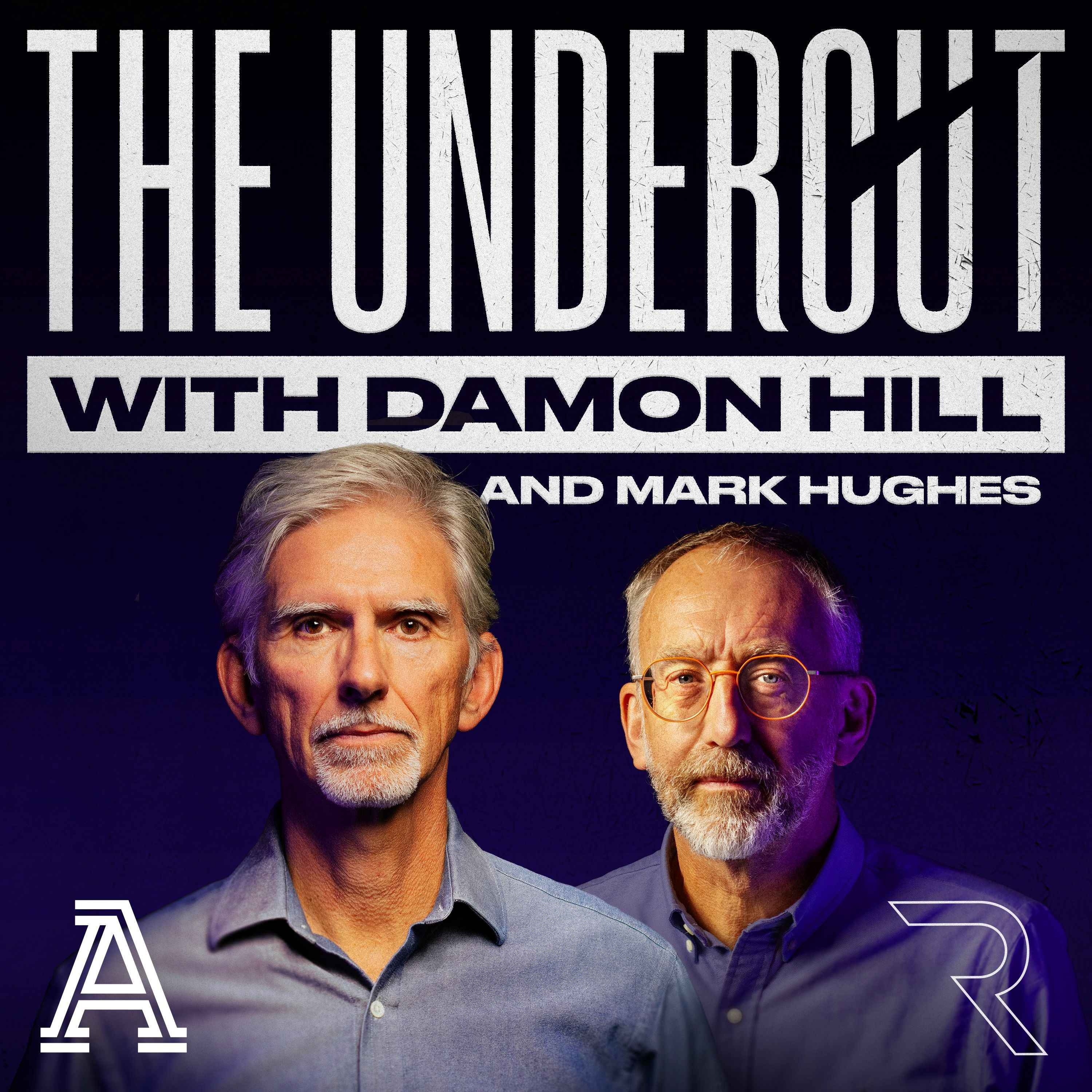
You're listening to the undercut with Damon Hill and Mark Hughes.
01:55
So Damon, today, I thought we could start talking about team bosses and you drove for
02:01
three very characterful team bosses, Frank Williams, Tom Watkinshaw, EJ, they were the
02:09
owners of those teams and you were talking to the boss when you were talking to him.
02:15
So what were your collections of that dynamic and how did it feel?
02:21
Yeah, so you were very close.
02:23
The teams were smaller back in when I was driving, it was 150 people at Williams and
02:27
that was a big team.
02:30
And if you went back not much further than that, then 50 people, 60 people, it started
02:35
off with like 20 people maximum would be a big team.
02:39
So it was much more of a family feel to going racing.
02:44
And in a lot of the cases, I'm thinking about Ron Dennis, for example, and Nikki Lauder
02:50
and then Prost, they were similar ages.
02:53
So the team principal, the team owner, the guy who managed to run it, whatever you want
02:57
to call them, they were almost the same age.
03:00
I suppose Ken Tyrrell was quite a bit older than Jackie Stewart and Enzo would be older
03:05
than some of the people that race him.
03:07
There was a time when, in the 80s particularly, the people who ran the team
03:12
were almost the same age as the drivers were.
03:15
And so that relationship was very different.
03:18
And I think with the generation after that one, you saw.
03:20
Yeah, I was just coming in after.
03:22
So just I was starting to slip out of that mold.
03:25
I mean, if you talk about Alan Jones and Keke Rosberg and Williams drivers,
03:29
they might even have been older than Frank, I don't know.
03:32
But they were almost the same age as Patrick and Frank.
03:35
So having a tough conversation with someone who's the same age as you
03:40
is different to if they've got an age advantage.
03:44
So when I was at Williams, I thought to myself, there's junior to Frank,
03:49
you know, and someone who had to respect him.
03:53
And I found it more difficult, I think, to be someone who could insist on things,
04:01
perhaps, or be forceful, because he had a natural authority,
04:05
but having been around for a long time.
04:08
But they were they were very important to those teams because they gave the team
04:14
the culture and they had every right to it because they own the teams.
04:19
They'd started the teams.
04:20
It's the eponymous.
04:21
It was the Williams team, Ferrari team, if you want to call it that as well,
04:25
you know, named after the founder, yeah, and so forth.
04:29
And McLaren was different in that Ron was actually an employee of the team.
04:34
But he was a founder member.
04:37
But he so he started Project 4, which was MP4, which is where the yeah.
04:44
But I mean, he with Neil Trundle, so he started that team up.
04:51
But he eventually was sold.
04:53
It sold off different parts of it.
04:54
But he wasn't a complete owner of the team.
04:57
But he represented the team in a massive way and gave the culture to the entire team.
05:01
Yeah. So what were those cultures like?
05:03
You Williams, Arrows, Jordan, how compare and contrast?
05:08
What were they like?
05:09
Again, the team changed according to the the team principal, the team owner.
05:15
So Eddie clearly was someone who was gregarious and irreverent.
05:22
And he created the idea, I think, in the team that they were they were rebellious
05:28
or they were sort of mavericks, I suppose, they were there to undermine
05:33
the establishment, which would have been Ron and Frank.
05:36
They were going to do things differently.
05:38
Yeah, yeah. But that now it's team principles become a devalued
05:44
title, hasn't it? You know, more or less an employee now.
05:49
In most cases, not all.
05:52
So you just, I don't know, you think how can you have
05:57
the vision if you're not empowered in that same way?
06:00
How can you say, I want to get there and this is how I'm going to do it?
06:04
Because you so they're just really in an employee position,
06:09
just just the same as anyone else on the team.
06:13
I'm not sure with the the T.P.
06:14
So the person on the pit wall.
06:16
So the Lauren Meck is now he's at Red Bull.
06:19
I mean, Christian would have gone to all the the team meetings.
06:24
I'm not sure whether he does or not, because there's another job
06:28
which the team principal used to have, which was to do the deal
06:30
with all the other teams and work out how the whole pie was to be divided.
06:37
And that so you have to go back to the early 80s when when Bernie started
06:42
in the 70s, really, I suppose, and Bernie started bringing teams together
06:48
to make this financial agreement between the teams and keeping everyone
06:53
together and and divvying up whatever proceeds there were.
06:58
And that that was another.
07:00
So if you imagine the skill set you need to be able to run a race team
07:04
versus being able to go into negotiation with Bernie
07:09
Eccleston and the rest of them, quite different kind of characters you need for that.
07:15
Yeah, as the sport has got bigger and bigger and bigger and bigger.
07:23
So the size has sort of gone exponential as well.
07:27
And so those rules get, you know,
07:29
you can't have one guy with his hand around the arms around the whole thing anymore, I guess.
07:34
And I think that's that is sort of we're still adapting.
07:41
The sport is still adapting to that formula one is.
07:44
And when you see, for example, recently, we had
07:50
John Elkin, his head of Stellantis as well as the the holding group
07:55
with Jones Ferrari being publicly critical of his drivers,
08:01
but is one step removed from the operation of the team.
08:05
That's that's a tricky dynamic, isn't it?
08:08
I mean, that's that I think when you're in the middle of that,
08:13
it's changing all the time and it's still changing as the valuation
08:16
of formula one is is still going crazy.
08:20
I think this the sport is changing in ways still in changing ways.
08:26
We're not quite sure where it's going yet.
08:29
And also, you have to say that one of the attractions,
08:32
I think, of the sport was this incredibly Machiavellian
08:36
kind of fighting of the barons were come would come together.
08:40
And people were interested in that.
08:41
They were interested in how what was the divisions between teams
08:45
and the thought that some teams were aligned with each other
08:48
and doing deals, but it all added to the pot of the intrigue
08:52
that made the sport attractive, I think, to fans and in all different levels.
08:56
So I often thought that there's there's people who are interested
09:00
in engineering and obviously people who are interested
09:02
in the business side of things as much as there are people
09:05
interested in watching cars go around the circles or following racing drivers.
09:09
So it's got a multifaceted appeal, but clearly that's changed a bit now.
09:15
Since if you've seen if you're talking about the evolution,
09:18
we don't have the founder bosses anymore.
09:22
I mean, Christian Horner was probably the last one, wasn't he?
09:25
He was traditional.
09:26
Yeah, but he the reason it sort of fell one of the key reasons
09:30
fell apart was he didn't have equity in the team.
09:33
Yeah. And that was the fault line.
09:35
That's what broke it apart.
09:36
But up until that point, he was super effective
09:39
because he was given the reins to to do as he saw fit.
09:45
And he just built that team up, didn't
09:46
make all the right hires and he had that vision
09:50
that like a traditional team owner would have had.
09:52
And I think when you look at Ferrari, the last prolonged period
09:58
of success of Ferrari was in the Michael Schumacher era,
10:01
which you had Ross Braun, Michael and John Tard.
10:06
And they form what Ross described to me once is a force field to keep
10:10
upper management out.
10:12
They were probably the model, the first model of how a modern day F1
10:16
team should be run.
10:19
Because they they they delegated different responsibilities.
10:22
And John Tard has to be crazy, I suppose we've Ross Braun
10:25
putting Ross Braun, say, right, you I'm not going to interfere with that,
10:28
but you are going to do the technicals.
10:30
That's your forte. Yeah.
10:31
And I'll do the politics.
10:33
I'll do the making sure we're not going to get the rules
10:35
together the wrong way. You tell me what you and that's
10:38
what makes this sport really fascinating is that the battle is
10:43
fought also with the regulations, with the FIA and there will be
10:48
meetings where what's the technical working group?
10:51
What if it was called if they still have that?
10:53
But anyway, they will be sitting down these new regs
10:56
that are coming in for next year. Yeah.
10:59
They've not just the FIA haven't just gone.
11:02
OK, here they are. Yeah.
11:03
Actually, they were involved with Pat Simmons as well,
11:07
Formula One. So they've done them partly.
11:08
They've gone back and forward and back and forward.
11:10
They've gone back and forward.
11:11
An iteration process whereby hopefully they've arrived at a
11:15
in a kind of true democratic way.
11:18
They've arrived hopefully at the right solution,
11:20
the one that is best fit or satisfies the most parties
11:23
to make a car that is good for entertainment as well,
11:27
because it's got liberty involved in now.
11:29
And they so the whole style of Formula One really has
11:34
I think we're only just at the the foothills of this new era
11:41
where you've got evaluations of race teams
11:44
going up to 4.6 billion. Billion pounds.
11:47
Yeah. Well, no individual, only, you know,
11:51
very few individuals, Elon Musk probably one could afford
11:54
to just buy well as a frippery. Yeah.
11:56
And yeah. Well, the 5% stake, which is said to be
12:01
what we're talking about is worth 230 million quid. Right.
12:06
So that's just. I mean, that's that would have been
12:10
enough to buy a Formula One team a while ago.
12:13
Well, not that long ago would be enough 4.6.
12:16
If it's 4.6 billion, you could buy the sport by two of them.
12:19
To buy two, two of them. Yeah. Three.
12:22
So yeah, I think that that blueprint that you talked about
12:28
Ross and John and they I mean, they basically
12:33
look at them on the Zemmler, give us a budget, leave us alone.
12:36
And they protected each other's back to make sure that that happened.
12:41
And it lasted for as long as until they all got exhausted with winning.
12:45
But I think if you look at McLaren now, they've got a version of that
12:49
with Zach Brown looking after the commercial side of it.
12:52
And Andrea Stella doing the racing.
12:55
That's a good point. I mean, it's very much that model, isn't it?
12:57
Yeah. And he's also, I don't think he's got equity in the team.
13:02
I think he. And you know, no, no.
13:04
I don't think Zach has. No, no.
13:06
That he's all by the Barrex. By the Barrex, yeah.
13:08
So they basically, but he's done the job of going in there and setting
13:12
all up, putting on the right track and everything.
13:14
And so we will see over time.
13:17
Those individuals will move on to do something else.
13:20
They'll outgrow it or they'll, you know, have enough of it or
13:23
but then you'll have new people have to be brought in and the
13:28
but the what they don't have is complete autonomy over the
13:33
the product because the Tiroc, the Ken Tiroc, it was his team.
13:37
He could say what goes and so forth.
13:41
And that made a culture which increasingly former one is
13:47
and drivers, I think, represent this drives are much more professional
13:50
than they were when I was racing and the era before me.
13:54
They were Mac. They were what they also were.
13:57
They were Mavericks.
13:59
Yeah, they were Mavericks.
14:00
They they didn't fit in society.
14:02
It's like you ran away to join the circus.
14:04
You I don't want to do normal life.
14:06
But for me, that racing driver, that's what that was the appeal of it.
14:09
And that was the appeal.
14:10
But we're we're in the world now.
14:12
Can you go and do that?
14:13
But is is the the current generation that's coming into Formula One
14:19
and watching as fans, does that interest them?
14:24
I don't know. That's a good point.
14:25
I mean, you've got a totally different world for them and there'll be people.
14:29
So when I stopped that turn of the millennium, the last millennium,
14:35
basically years old, I was from the last thousand years.
14:39
And but 25 years ago, you've got 25 year olds who weren't born when I stopped racing
14:44
and they've never known a world without the internet.
14:46
They never know a world without mobile phones or computers
14:49
and and now probably social media, too.
14:53
So that is they are the they are the consumer
14:57
who will decide whether they like Formula One.
14:59
So for one in the sense will it's no good.
15:03
And they make they don't have a concept of a team owner as such as the personality.
15:09
Maybe I suppose the model is more football in that the team is established.
15:14
It's got the name Arsenal or whatever it is.
15:16
And Newcastle and you're probably in your case, is it anyway?
15:22
And Newcastle, Newcastle, I beg your pardon.
15:26
But I'm from the south.
15:30
But so, yeah, that's the that's the entity.
15:33
And so Ferrari, I suppose, is the model of that.
15:36
Plus, you have actual car manufacturers and brand names associated.
15:40
So they've got to have Mercedes.
15:42
The obvious example is that anything that happens in the F1 team
15:46
is going to have an impact also on them, on their brand.
15:50
They have to be really careful.
15:51
But getting back to my point, it was that the drivers have been
15:54
coached from a much earlier age in all the rights.
15:59
We say, right, they're coached to understand that what they say
16:05
is going to have an effect.
16:06
They are coached to understand that there's different aspects
16:09
to being professional.
16:10
And I think you see that in football as well.
16:13
You see that in other sports.
16:14
But when you could say that the sport we loved was when these
16:18
crazy bastards drove, you know, they were they were mad.
16:25
You see the Villeneuve's and the Joneses and the in and hunts,
16:29
they lived the wildlife.
16:31
And that seems to be increasingly impossible.
16:35
And some will say that's a good thing.
16:39
But it's also part of the show.
16:42
So, you know, leaving them.
16:44
So I think that the new TPs will not be those Maverick types
16:49
or they won't be the people who are able to say, I don't
16:52
care because I own it.
16:55
So take the high road and the Eddie Jordanson and co will not
16:58
be able to do their stuff in the same way because they don't
17:02
They're just employees and Lawrence Stroll on just he does.
17:07
It's slightly different, though, isn't it?
17:08
Because he hasn't come in from build it up.
17:12
So we had a previous little chat about that.
17:14
I mean, basically my impression is that there are
17:17
people who come to the sport and learn it from the top
17:21
down and then there's those who have worked from the ground up
17:25
like the Ron Dennises and you might say Andrea Stella's
17:29
or something like that.
17:30
They've been in at the ground level or even Stefano Domenicali.
17:36
But maybe they've never risen to the heights of someone
17:39
like Lawrence Stroll who can buy an entire Formula One
17:42
team and a car company.
17:45
But you're learning backwards that way.
17:49
And it's quite difficult, I think, to get a hand.
17:52
You can waste a lot of money.
17:53
Yeah, I was going to say, I think it's difficult.
17:56
It's expensive as well.
17:57
And I'm sure Lawrence would confirm that.
17:59
But he does seem, to me at least, he does seem to be slowly
18:06
over time making the right moves.
18:09
He does seem to be learning how to do it.
18:12
And a lot of very successful businessmen
18:15
come into motor racing in all forms and assume
18:18
because of being successful in business will be successful in this.
18:21
But I think running a Formula One team, especially a modern day
18:26
Formula One team, is probably one of the most complex
18:30
managerial exercises that exists on the planet.
18:33
Probably more difficult to run a car company,
18:35
an automotive company, just in terms of the nuances
18:39
and how they're always changing
18:40
and how you're going to keep on top of that.
18:42
And that dynamic between your engineering and the people
18:46
and what everybody else is doing, the game theory aspect of it,
18:51
I think it's just extraordinary.
18:52
And I don't think just because you've
18:56
been successful elsewhere, you will automatically be that.
18:59
And I think if you're being critical of someone like John
19:05
Elkin, I think he would need that.
19:08
Does he fully understand that distinction between being
19:15
successful in the world that he's been in and looking at something
19:19
that he's in charge of and not being satisfied with its success?
19:23
And then how do you take the appropriate action?
19:26
And I think that's where it gets very tricky when you have
19:30
the power, but not the experience and the feel for it all.
19:36
So he has the power to completely demoralize and demotivate
19:40
the entire organization and make them feel
19:45
nervous, which is the last thing you want.
19:47
I mean, Toto clearly, I think, is someone who has got,
19:51
he's had the financial experience.
19:53
So he understands all the contours on a board of Mercedes
19:56
being a member of there and he understands their language
20:01
And he also understands a team and creating a culture whereby
20:06
the no blame culture famously, he tried to instill in Mercedes,
20:11
which was, you know, we're not looking for culprits.
20:14
We're trying to learn from mistakes.
20:15
And that's a modern way of thinking.
20:17
And so he's managed to do that.
20:19
But then he, you could argue that it's not a fair comparison
20:22
because he's come up through motorsport.
20:24
He always wants to do motor racing.
20:27
And then he started with the German touring cars
20:31
running their Mercedes motorsport.
20:33
So he's as much ingrained with him as a manager.
20:37
He embodies those two different skill sets you need.
20:42
I mean, but I think, you know, when do you,
20:46
what the entertainment needs is they need the head.
20:50
I suppose that there will be like football coaches.
20:53
So it will be, now there will be,
20:55
it's not impossible to imagine a charismatic
21:00
football coach type person being put in a position
21:04
at the team to get results by the board,
21:07
by the owners, by the, by Mercedes or wherever it is.
21:11
And also providing entertainment
21:12
because that still exists in football.
21:15
But I think it's, it is much,
21:19
they're juggling many more different things.
21:21
As you say, it's the technology.
21:23
It takes, you know, I'm sure that there'll be people
21:26
who've got all the money like Lawrence Stroll
21:29
and go, I want a wind tunnel.
21:31
Then I want it to work.
21:31
You tell me it doesn't work
21:32
and I have to spend, I guess,
21:33
50 million or 100 million on it.
21:35
You know, why is it not working?
21:36
It's the wrong one.
21:38
So, I mean, Adrian did say something.
21:40
I think he went and he went,
21:41
hmm, we're going to have to start again.
21:43
Simulated as about,
21:44
it's going to take us about five years to put that, right?
21:49
I just paid a fortune to get you to come and tell me
21:51
it's like plumbers, isn't it?
21:52
When they turn it, go, I don't know, do that.
21:58
They say, wow, D, you should have got me first.
22:00
Anyway, I'm going to take me five years
22:05
It's going to be a lot cheaper
22:06
to get your plumbing fixed, I mean.
22:08
But yeah, so it is interesting where we're at
22:12
with seeing an evolution.
22:15
Is it a better show?
22:17
I mean, are those characters,
22:20
they're more beholden, aren't they,
22:21
for their jobs to the team?
22:23
They're less likely to say something controversial,
22:26
I think, or entertaining than the Jordans.
22:29
I mean, not that Frank said anything entertaining.
22:31
He did, once the twist says something pithy.
22:34
Patrick Head was much more entertaining.
22:36
Yeah, yeah, absolutely.
22:38
And what was the most pithy thing Frank ever said to you?
22:41
Oh, God, I mean, I think there was something,
22:42
print, there was a back page of the song that was one word.
22:45
It wasn't terribly complimentary.
22:49
But no, he was a man of few words.
22:51
You know him probably better than I did.
22:54
No, I don't think so.
22:55
No, you don't think so, no.
22:56
But yeah, he knew that people like we're doing,
23:03
there's a lot of talk about stuff
23:06
in Formula One, but actually it's what you do.
23:07
He could do a very good impression
23:10
because he was originally from South Shields,
23:11
so he'd do an impression of me asking the question.
23:15
Yeah, it was very good.
23:16
That's another side chin that I never saw.
23:18
He did do an impression of me.
23:38
Los ahorros pueden variar por estado.
23:40
Aplican resecciones de combustible.
23:41
Ve los detalles en el sitio.
23:43
Aura aún más en tus favoritos.
23:45
Combina cinco o más artÃculos participantes
23:47
y llevártelos hoy por 99 centavos cada uno
23:50
en nuestra venta de los 99 centavos.
23:55
And we're back with a new season of Am I Doing It Wrong,
23:57
the show that explores all two human anxieties
23:59
we have about trying to get our lives right.
24:01
Because we're still doing a lot of stuff wrong.
24:04
That's why each week, we're talking about the topics
24:06
that we could all use a little helping hand with.
24:08
Whether it's making new friends as an adult,
24:10
managing our emotions, or even dreaming.
24:12
We'll be talking to experts in their fields
24:14
who are definitely doing things right.
24:16
So the rest of us can be a bit wiser
24:18
and a lot better equipped to handle
24:20
whatever life throws at us.
24:21
Subscribe now and listen to new episodes
24:23
of Am I Doing It Wrong,
24:24
dropping every Thursday starting January 1st,
24:27
wherever you get your podcasts.
24:28
And for the first time ever,
24:30
we're gonna have full video episodes on YouTube.
24:32
Because as long as there are things to get wrong,
24:35
we're gonna be right here to help you do them better.
24:40
We interrupt this program
24:41
to bring you an important Wayfair message.
24:43
Wayfair's got style tips for every home.
24:46
This is Stiles McKenzie helping you make those rooms sing.
24:51
When it comes to making a statement,
24:52
treat both patterns like neutrals.
24:55
Like an untamed animal print area rug
24:57
under a rustic farmhouse table from Wayfair.com.
25:02
This has been your Wayfair style tip
25:04
to keep those interiors superior.
25:06
Wayfair, every style, every home.
25:13
Was there a downside to that,
25:14
to having the boss plugged into the mains power directly?
25:18
Was there a downside to that for you?
25:20
Like, do you feel like more victim of the whims of...
25:25
Well, I think if you've got a person,
25:27
I mean, Frank was on the floor of a factory every day.
25:31
He'd go down, he'd see the people in the factory.
25:33
He'd be there, he'd lived in the factory.
25:35
So if you've got an issue, you go to him,
25:37
because he knows, and he knows what you're talking about.
25:41
He knows, whereas with, you've got these removed entities,
25:45
like the Elkins perhaps,
25:47
how do you get to speak to them?
25:48
If you're an employee, there's 1,200 people.
25:52
Can you pick up the phone to Toto?
25:53
I mean, via some sort of other route,
25:57
maybe you can express your opinion,
25:58
but you're less likely to, I would think.
26:00
Yeah, you might get told you should stop talking
26:03
and just concentrate on driving.
26:04
Yeah, well, that's not the best way to ask,
26:07
because we can't drive and we've got to talk,
26:09
so we'd be ruined, but yeah.
26:11
So, I mean, I think it's...
26:15
We are losing that dimension to the sport
26:18
where the teams are there,
26:20
but they're becoming more protected
26:25
from anything that is approaching
26:30
an individual personality,
26:32
because as you know, in business,
26:36
they're worried about, people worry about an interview.
26:38
We might do anything.
26:39
You don't know what they're gonna do.
26:40
You know, they could go off the rails,
26:42
they could say something stupid.
26:44
So, they're a risk,
26:46
but they are really, it was a dimension
26:50
that made Formula One very, very interesting and intriguing.
26:56
Just remember, we were talking before about
26:59
how a team boss used to have to go in
27:02
and do the negotiation with all the other teams
27:04
and do the negotiation with the FIA
27:07
and manage the books of the team and then run the team.
27:10
There was, I remember Patrick telling me a little anecdote once
27:15
about the six-wheeler that developed in the early 80s,
27:18
and it was four-driven wheels at the back
27:21
and little small wheels,
27:22
and it was fantastically fast,
27:24
because what it did was increase the size of the Venturi,
27:28
so it had massively more ground effect than a conventional car,
27:32
and it didn't have the big wheels in the way of the exits.
27:35
They were testing it with first Alan Jones
27:38
and later Keky Rosberg,
27:40
and they hadn't yet got to the point where they could race it
27:43
because the transmission wasn't yet reliable
27:45
and the other thing it had was fantastic traction in the wet
27:48
because the first set of wheels would clear a dry patch
27:51
for the second set, which would really push.
27:55
Conceptually, it's perfect.
27:59
And Patrick said Frank had been off to the latest meeting
28:03
with the team bosses and the FIA, and they come back.
28:05
And Patrick said, anything get decided?
28:08
And Frank said, no, not much.
28:10
We voted through the ban on four-wheel drive.
28:13
And he said, you did what?
28:15
He said, yeah, why?
28:16
He said, well, what were we just
28:18
been doing for the last two years?
28:19
He said, oh, I knew it was a six-wheeler.
28:21
I didn't know it was four-wheel drive.
28:26
That's why communication is so important, isn't it?
28:30
Can you imagine Patrick comes to the force?
28:32
I think that was constantly Patrick's frustration
28:34
was he Frank was doing that sort of thing at the time
28:37
because it was his team, ultimately.
28:39
And I think he just thought, well, I can do all I like.
28:42
But he's also going into a meeting.
28:48
But you hear these stories and there's some great books
28:49
out there about how it used to be
28:51
and how it was all put together.
28:53
Focum meetings would have been entertaining.
28:56
And you hear anecdotal stories about who said what to what
29:00
and to whom and all the goings on.
29:04
And people like Max Mosley going through the waste paper
29:08
basket because they'd turn all their notes away
29:10
and then find out exactly what they were thinking
29:12
and all this stuff was very far from our point of view.
29:14
It was quite funny because we weren't involved.
29:17
It didn't cost us millions of millions of pounds.
29:19
But that was a small family, wasn't it?
29:24
And that's the problem.
29:25
It was a cliquey thing, a small family.
29:28
And they fought like absolute animals with each other.
29:32
And it was ruthless as hell, the Piranha Club famously.
29:36
But it had to stop, I guess.
29:38
If you want to go beyond, and I
29:42
think that that's what's happened to Fallen on now,
29:44
it has gone beyond because Bernie had his limitations.
29:47
He didn't understand social media.
29:50
He didn't understand the internet.
29:51
He didn't understand where value, extra value could come from,
29:54
whereas liberty had.
29:55
And I think we thought the end of the Bernie era
29:57
was the absolute top, the value of Fallen on, didn't we?
30:01
Well, I mean, he famously sold.
30:04
I think it was he sold a slug of F1
30:08
without asking all the other Focum members.
30:13
And that's where it all started to get a bit.
30:16
Who owns this, anyway, kind of an argument.
30:19
And yeah, but the slug he sold valued, who was the person?
30:25
Who was the financing that bought it?
30:27
Oh, the banker, the German banker guy.
30:31
I don't know when you're talking about the thing.
30:32
The Deutsche Bank guy.
30:33
No, he, that was another story.
30:35
But we can't get a better point.
30:37
The valuation made Formula One worth 1.2 billion or something.
30:43
And I remember thinking, I'd never heard of a billion anything.
30:47
So shit, a bit of pounds, dollars, you know,
30:50
per se, I'd never heard of a billion in money of anything.
30:53
And that, of course, is just small fry now.
30:56
But yeah, this inexorable rise in value
31:01
because it's gone to another level.
31:03
But as it expands, it's attracting more.
31:07
They're thinking, right, this is the new ground floor.
31:10
That's right, yeah.
31:11
And then they go in, they go,
31:14
They go, yeah, OK, where do I sign?
31:16
Yeah, we'll be 10 next year.
31:17
Yeah, it sounded ridiculous.
31:19
But it was only before the Brad Pitt film,
31:22
which was the latest boost to the valuation of F1,
31:25
because these teams are franchises.
31:26
So the valuation of F1 and the team's just
31:29
Incredible, the most successful product
31:33
that's Apple TV films have produced.
31:37
And the most successful film that Brad Pitt's been in.
31:40
I mean, it's unbelievable.
31:42
So people inevitably think, what is this thing for, the one?
31:45
And that's just off the back of a previous boost
31:47
of Netflix, so the drive to survive.
31:49
So beyond Bernie's imaginings, if you can believe that,
31:53
you know, and we used to think Bernie
31:55
thought bigger than everyone else.
31:56
I mean, because when I stopped racing,
31:58
he was doing digital TV.
32:00
He's invested quite a lot of money
32:02
and a massive amount of money
32:03
into this thing called digital television.
32:05
And he saw, he was always 20 years ahead.
32:08
So he saw that something's coming down the line
32:10
and it's pay-per-view and it's digital.
32:12
He was right, it's just he was 20 years too soon.
32:15
And then it's the same with China.
32:18
You know, he had a Grand Prix in China
32:19
of 20 years before it started to come on song.
32:23
But what's happened since is this ability now
32:27
for fans to engage in their own way.
32:31
So now we watched and we think nothing of it,
32:34
but you'll see a different angle of an incident
32:38
that the TV cameras didn't catch.
32:40
For instance, Bortoletto's accident in, oh my God.
32:44
I mean, you watched that from the grandstand.
32:46
Someone's videoing it.
32:48
It's a lot more shocking than it was from the TV coverage.
32:51
But that's been allowed by Liberty.
32:54
They said, okay, you can film.
32:56
You'll take your cameras to the track,
32:58
take film stuff, we won't stop you.
33:01
Which is bigger picture in a stuff,
33:05
which is beyond, I think those guys,
33:10
because perhaps because they went into a board meeting
33:12
with only 10 other guys,
33:15
they felt very much like people are trying to get in
33:16
and we need to stop them trying to take our stuff.
33:20
And it was very protective.
33:22
Yeah, you're not having it.
33:24
And the more I say to you, you can't have it.
33:26
The more you want it and the higher the price goes.
33:29
Well, as recently as 2007, 2008,
33:32
after the Photoshop industrial espionage scandal,
33:41
I think you mean to look off in, yeah, yeah.
33:44
So, yeah, Stephanie Gate,
33:49
There was apparently a meeting
33:52
with the team bosses in Bernie
33:55
and Ron was saying, okay, he accepts that,
34:00
they have to pay the fine.
34:03
But the, and the position in the constructors championship,
34:07
all the points are deleted, okay, fair enough.
34:10
But can we still have the money as though
34:14
we'd had those points?
34:16
And so, Bernie said, well, it's not up to me,
34:19
it's up to the other guys, isn't it?
34:21
So, so he gets them all together and Bernie said,
34:25
Ron wants to make a little speech to you.
34:28
So he put the case forward and he'd prepared his notes
34:32
in Givi's case and everyone said,
34:35
okay, I've put my case, I'll leave the room now.
34:38
And apparently Bernie said, right,
34:39
it wants to hand all the money over to Ron.
34:45
Sorry, Ron, I asked, but yeah.
34:49
It's probably the wrong arena, wasn't it?
34:51
Asking for clemency or any kind of pity in that world
34:54
is it's not going to get very far,
34:57
but it is an example of how it was run.
34:59
That was an example of the world that it was,
35:02
which was, it's now,
35:06
so really 10 people sort of ran the sport.
35:09
10, Roy, he calls Mac, it's Macs and Bernie.
35:11
And then you had also the previous president,
35:14
anyway, Macs represented the FIA,
35:17
but not all the time too,
35:18
it was only laterally that he represented the FIA,
35:20
but the FIA were involved,
35:21
but not in a financial way.
35:23
And of course, that is another big discussion
35:26
as to where did it,
35:27
how did it all go so wrong with the FIA?
35:28
They had the rights to the sport
35:31
and they lost it to Bernie, but over time.
35:35
But when you come to sell the sport,
35:39
they can ask the question,
35:43
And you can say, well, we own the commercial rights,
35:48
and they'll go, yes.
35:49
And what are you both, what are you saying?
35:51
Well, it's like saying,
35:52
you can buy the commercial rights to a house,
35:55
but you can't own the land that it's on
35:59
or something like that,
36:00
because the FIA are important
36:02
in representing the sport legally.
36:08
So in a global sense,
36:10
who do you go to when you're talking about the sport?
36:13
It's, if you want to do business, you go to F1.
36:16
If you want to talk about legitimizing it,
36:19
then the FIA, other people who can say,
36:22
we've legitimately checked this out
36:24
and it's okay, she lets us bridge the proper sport.
36:26
Legally qualified enough to make a call on us.
36:29
Yeah, how do you define what the ground rent is?
36:32
Yeah, you're going to get the mother-in-law,
36:38
whether you like it or not.
36:39
No, all father-in-law, I mean, it's trouble for that.
36:42
But anyway, but there you are.
36:44
It's always interesting, well, it was.
36:49
Think Verizon is expensive?
36:51
Anyone can bring their AT&T or T-Mobile
36:53
to a Verizon store today and we'll give you a better deal.
36:56
So bring us your bill.
36:57
Walk in, run in, Pogo stick in, teleport if you can.
37:01
Ride on the back of a roller-blading yak
37:02
or fly in on the wings of a majestic falcon.
37:05
Any way you can, bring your AT&T or T-Mobile
37:07
to a Verizon store today
37:09
and we'll give you a better deal on the best network.
37:11
Based on RootMetrics' best overall mobile
37:12
network performance, US 2nd Half 2025,
37:14
all rights reserved must provide
37:15
a very recent postpaid consumer mobile bill
37:16
in the name of the person redeeming the deal,
37:17
additional terms, conditions, and restrictions apply.
37:21
And we're back with a new season of Am I Doing It Wrong?
37:23
The show that explores all two human anxieties
37:25
we have about trying to get our lives right.
37:27
Because we're still doing a lot of stuff wrong.
37:30
That's why each week we're talking about the topics
37:32
that we could all use a little helping hand with,
37:34
whether it's making new friends as an adult,
37:36
managing our emotions, or even dreaming.
37:38
We'll be talking to experts in their fields
37:40
who are definitely doing things right
37:42
so the rest of us can be a bit wiser
37:44
and a lot better equipped
37:45
to handle whatever life throws at us.
37:47
Subscribe now and listen to new episodes
37:49
of Am I Doing It Wrong,
37:50
dropping every Thursday starting January 1st
37:53
wherever you get your podcasts.
37:54
And for the first time ever,
37:56
we're gonna have full video episodes on YouTube
37:58
because as long as there are things to get wrong,
38:01
we're gonna be right here to help you do them better.
38:07
It's gonna be interesting to see how it develops
38:10
from here with this, if this is the new sort of ground
38:14
floor, so how is that role of Team Boss gonna involve?
38:19
It's a take me to your leadeth question, isn't it?
38:22
Can I speak to that?
38:23
Well, which leader do you want to speak to?
38:24
And you can, well, I don't know.
38:26
Who's in charge of it?
38:27
Who's ultimately in charge of it?
38:28
Yeah, what's your question?
38:29
Well, we've got Mercedes on the board.
38:30
You might speak to the board on Mercedes,
38:32
or you can speak to Tohto,
38:34
but he's only a small shareholder and...
38:37
And when he speaks to the guy on the pit wall.
38:39
Oh, but he doesn't own it anymore.
38:41
And we don't know how long he's gonna be there.
38:45
And the board's not happy.
38:48
Yeah, I mean, a lot of the guys
38:49
who are very successful team principals now
38:53
are engineers, aren't they?
38:55
So, you know, you get...
38:56
It makes sense, doesn't it?
38:59
It seems to be becoming more of a trend now
39:02
that that role really needs
39:05
somebody with an engineer and background.
39:07
And so that's further probably decoupling
39:11
the two roles, the boss and the guy
39:14
actually running the show.
39:16
And it's just really...
39:19
It all comes from the expansion of the sport,
39:22
the commercial expansion of the sport.
39:25
Well, the dilution of influence and power, maybe.
39:32
So, it's the way of the world, perhaps,
39:35
you know, that we are all becoming subject
39:38
to some much more ultimate, you know, power.
39:42
And it may be AI eventually by the way they're talking.
39:45
I mean, but, you know, we are powerless,
39:48
if you like, to be completely autonomous.
39:52
And, you know, the idea of starting from scratch
39:55
in this sport is, you know, it's laughable.
39:59
You're going to be 50 years before you get anywhere,
40:03
20, 10 years at least, you know, starting from scratch.
40:06
Well, of course, Cadillac are starting from scratch.
40:10
So, that's an interesting point.
40:12
There's now going to be 11 teams.
40:14
And they are starting from scratch,
40:17
but they've managed to do the negotiation
40:19
with the other teams and convince them
40:22
that it's there that they should come in.
40:25
They kept raising the price, didn't they?
40:27
Because, of course, that means that there's less pie
40:30
They're not having someone turning up now
40:32
and just helping themselves to a slice.
40:33
Yeah, they're saying our participation
40:36
will increase the size of the cake.
40:38
And they had to show that.
40:40
And therefore, your smaller slice
40:41
will actually be worth more than your big slice
40:45
It seems to be true at the moment.
40:47
I think expanding, everybody's happy.
40:50
Well, it's an ever-expanding universe, isn't it, Mark?
40:55
But they keep changing their minds.
40:56
Yeah, there's different theories on that now.
40:58
Yeah, every other month, there's a new theory
41:02
that it's contracting.
41:03
So, with F1, anyway, it's expanding.
41:06
So, that's a good thing.
41:09
It's getting bigger.
41:15
The audience is going up.
41:17
I'm not sure if it's plateaued yet in America because the...
41:19
No, I think it's still going up in America.
41:21
It's still going up.
41:22
And I do think that we've got a whole new influx
41:26
of young people watching.
41:27
Average age has come right down.
41:30
So, I tell this story that since the Netflix thing,
41:34
there's these kids who were the same age as my children.
41:38
We used to go on holiday with a family
41:40
and their kids would...
41:43
They never asked me about F1 ever.
41:45
And then, about a couple of Christmases ago,
41:47
they'd go, hey, you used to be in F1, didn't you?
41:50
Do you ever watch Netflix?
41:53
And it's like, bingo, suddenly I exist
41:57
because I was a F1 driver and that's because of F1.
42:00
They were not interested before.
42:02
So, that has been a phenomenal success
42:05
in hooking people into the drama.
42:09
And I know that some drivers don't like it.
42:11
They think it's over-engineered as a story,
42:17
but they're like it or not, they're benefiting.
42:19
They are benefiting because they go to America,
42:21
they're well-known.
42:24
Max is very critical of that aspect of it, isn't he?
42:26
Yeah, I mean, he benefits, as you say,
42:28
because his salary is derived from the from the worth,
42:32
but the commercial worth of the sport,
42:34
but he's sort of more old school in that regard, isn't he?
42:39
I think because he's so successful,
42:42
he can be more natural like it.
42:45
Yeah, I mean, I think people can think of it
42:47
as a pure sport in the sense that they want to just arrive.
42:51
They just want to, they don't want all the stuff
42:55
that comes with the obligations,
42:57
perhaps you have to observe,
43:00
but there's no way of doing it.
43:03
You've got, someone's got to pay for it.
43:04
I mean, the question is, do you need 4.6 million
43:07
or whatever it is, or 150 million to buy?
43:09
I mean, you could argue the budget cap
43:13
for one Formula One team would pay for an entire series
43:17
because F2 is budget is what, 2 million,
43:20
probably 3 million by now, I don't know,
43:22
but you've got enough, 20 cars, 20 times three.
43:26
You don't need 150 million, you could run it.
43:29
So the question is, can you provide the entertainment?
43:32
And is that one of the things that will be considered?
43:34
Is that how can we reduce the cost of the product?
43:38
Will the teams be implicated?
43:40
The owners of the team,
43:41
let's say there's people now that own as an investment,
43:44
which without paying, it's got a combined ownership,
43:49
They might be saying, okay, well,
43:50
why are we having to spend so much on the driver
43:55
or this, do we, to reduce the out getting
43:59
to increase the revenue,
44:01
the cost cap actually does solve that aspect a bit,
44:06
Because before you, the more money you got in,
44:07
the more you throw at the car,
44:08
make it faster and faster and faster,
44:09
whereas now that sort of has to stop
44:11
and money that's coming in is just spread among the shareholders.
44:15
And it's an odd thing to think that a sport
44:18
that is so incredibly competitive as Formula One
44:22
has evolved an almost tall poppy kind of mechanism
44:28
whereby nobody gets too far ahead.
44:30
I mean, if you suggested that in politics,
44:33
you might say, well, that's a kind of socialist state,
44:39
Is that what you're saying?
44:40
Well, I think it's a, I think it has presented a workable,
44:46
and it's become more successful
44:48
as a result of adopting that.
44:49
I mean, if you were to say, okay,
44:51
Elon Musk and Co, you're only allowed to earn so much
44:57
individually or, you know,
44:59
there was a cost-capping element to income, let's say.
45:04
Then they would force the revenue to go,
45:07
you might, people would say that would mean
45:10
that there's no motivation,
45:11
but of course, the motivation in our sport
45:14
comes from the fact that people want to race
45:15
and want to win and the people want to watch it.
45:17
So the product is always going to be there.
45:20
What it stopped is a unsustainable expansion
45:24
and a dominance in the sport of people with more money.
45:28
And I heard, I was hearing on the radio
45:31
talking about the Professional Football Association
45:34
talking about revenues for footballers
45:37
because now they're earning half a million quid a week
45:40
or something in particular as footballers.
45:42
So they are the expenditure in the same way
45:46
in our sport, the cars are the expenditure
45:49
I mean, why do you need 1200 people?
45:50
No, I want those 1200 people to have jobs.
45:53
Don't get me wrong.
45:53
But if a team is given money,
45:58
it would spend it with Frank Wood, you know,
46:00
Frank would argue, I don't want to pay the drivers.
46:03
I want my car to go faster.
46:05
So I want to spend it on the car
46:06
and I want to spend it on the personnel.
46:09
And if you gave him a trillion,
46:11
he would have spent it all on the car
46:13
and he would still pay the driver
46:14
a minuscule amount of money.
46:17
So, but that's the problem
46:20
is that you're in an arms race then.
46:23
And the two teams that just go dung-dung-dung
46:25
and the others just go all the way.
46:27
And it was there, that phenomenon was there.
46:31
Yeah, they did fix.
46:34
And there was a time, 92,
46:36
so your first season when you were in the Brabham.
46:40
I don't know how far off the pace that was,
46:41
was it six, seven seconds or something?
46:43
Yeah, sick, can you imagine?
46:45
They wouldn't get past 100,
46:47
did they have 107% rule then?
46:48
I don't know, I think they had 110.
46:52
You wouldn't have to drive it all of a sudden, would you?
46:56
But I think if you qualified
46:59
two seconds off the Williams pace then,
47:02
you'd be on the second, third row.
47:05
Yeah, we had quite a big advantage.
47:09
But yeah, it wasn't very good for watching the reps.
47:11
No, so that has been fixed.
47:14
So, there's aspects of it that have worked brilliantly well.
47:19
But I think we just,
47:20
the sport just sort of,
47:23
the sport will just take in whatever's there
47:27
in the outside world to go fast.
47:31
But it's recognised that if somebody,
47:34
let's say somebody finds a tweak,
47:36
well next year, we're gonna find out.
47:38
If someone has found a method to dominate
47:42
for the next 10 years like Mercedes did,
47:44
Liberty have said, we don't want that,
47:46
we want a close racing.
47:48
So, what is the, what have they put in place
47:51
apart from the cost cap and the resource restrictions?
47:53
I suppose that they are the solution.
47:57
Ultimately they will be.
47:58
But otherwise, it's acknowledged
48:02
that something needs to be put in place.
48:03
They might bring in something else to say,
48:06
okay, we've got this all wrong.
48:09
And I was thinking,
48:10
what if you had a kind of show and tell rule
48:13
where you say, okay, on a date,
48:16
if one has to reveal their cars
48:18
and they have to reveal a certain amount of information,
48:21
the technical information about that car
48:24
in advance of the first race.
48:25
And if anybody, one thing, one thing for sure,
48:29
people wouldn't actually be sure
48:30
which one's gonna be good.
48:31
But at least if they had an insight
48:33
into how a team is beating them,
48:36
they would be able to do something about catching up
48:38
at the start of the season.
48:39
And then you'd be watching this kind of
48:40
levelling out process as it goes through the season.
48:44
And you imagine selling out here to Frank or Ron?
48:46
Well, Bernie turned up at Anderstop, didn't he,
48:50
He said, it's not good for the sport.
48:52
I'm sorry, we're not gonna do it.
48:54
So it has happened.
48:59
I mean, it may not be necessary.
49:01
It may just be next year.
49:03
Everything's gonna be very close,
49:04
but rule change is always a risk.
49:10
Would you fancy being a team boss?
49:12
I think in my sort of my lazy fantasies world,
49:17
I've been a team boss.
49:19
I think every driver has sort of thought to themselves
49:21
that I can, you know,
49:23
but I don't think every driver
49:24
wants to go into the office every day.
49:26
I mean, Christian was in his office every day,
49:30
If he wasn't there, he was at a racetrack.
49:32
Or he was out trying to get money.
49:33
Or he was out trying to get money.
49:34
Or he was at a Flamin team meeting somewhere.
49:38
It's full on, you know,
49:40
and I'm 65 now, so it's not gonna happen at that.
49:44
But if they're gonna subdivide the rules
49:48
and make it so you need a guy that just swans around.
50:11
Think Verizon is expensive?
50:13
Anyone can bring their AT&T or T-Mobile bill
50:15
to a Verizon store today
50:16
and we'll give you a better deal.
50:18
So bring us your bill.
50:19
Walk in, run in, Pogo stick in, teleport if you can.
50:22
Ride on the back of a roller-blading yak
50:24
or fly in on the wings of a majestic falcon.
50:27
bring your AT&T or T-Mobile bill
50:29
to a Verizon store today
50:30
and we'll give you a better deal on the best network.
50:33
Based on RootMetrics' best overall mobile network
50:34
performance, US 2nd Half 2025,
50:36
all rights reserved,
50:37
must provide a very recent postpaid consumer mobile bill
50:38
in the name of the person redeeming the deal.
50:39
Additional terms, conditions and restrictions apply.
51:12
And we're back with a new season of Am I Doing It Wrong,
51:14
the show that explores the all-too-human anxieties
51:16
we have about trying to get our lives right.
51:18
Because we're still doing a lot of stuff wrong.
51:21
That's why each week we're talking about the topics
51:23
that we could all use a little helping hand with,
51:25
whether it's making new friends as an adult,
51:27
managing our emotions or even dreaming.
51:29
We'll be talking to experts in their fields
51:31
who are definitely doing things right.
51:33
So the rest of us can be a bit wiser
51:35
and a lot better equipped to handle whatever life throws at us.
51:38
Subscribe now and listen to new episodes of Am I Doing It Wrong,
51:41
dropping every Thursday starting January 1st,
51:43
wherever you get your podcasts.
51:45
And for the first time ever,
51:46
we're going to have full video episodes on YouTube
51:49
because as long as there are things to get wrong,
51:51
we're going to be right here to help you do them better.