
The Undercut – Should rivals be friends?
About this episode
Rivalries take center stage as the hosts tackle the question “Moff, should rivals be friends?” They argue that off-track mateship can exist, but “when you pull the helmets on, absolute war.” Along the way, they weave in race-strategy talk—pole, pit stops under green, tyre management—and real-world context like social media amplifying conflict and limited testing during downtime. The episode also includes awards, Castrol segments, and plenty of racing anecdotes, from near-misses to big on-track moments.
pole
"So he got pole. So he was doing the three tenths. Clear."
Pole is the front starting position in a race. It’s usually earned by being fastest in qualifying, and it gives you a better chance to lead early.
Pole position is the starting spot at the front of the grid, awarded to the fastest qualifier. Starting from pole often helps because you can control the early pace and avoid getting stuck in traffic.
three tenths
"So he got pole. So he was doing the three tenths. Clear."
“Three tenths” means about 0.3 seconds. In racing, even a fraction of a second can be a big deal.
“Three tenths” refers to a time gap of 0.3 seconds, typically between a driver and the rest of the field (or between qualifying laps). In racing, tenths of a second can represent a meaningful performance advantage.
under green
"By the time he does his last pit stop, he has to do it under green. So he comes out miles behind."
“Under green” means the race is running normally with no caution period (no safety car / yellow flags). Pit stops under green are riskier because you can lose more time relative to cars that stay on track at full speed.
pit stop
"By the time he does his last pit stop, he has to do it under green. So he comes out miles behind."
A pit stop is a scheduled stop in the pits where the team changes things like tires or adds fuel. When you pit (and how long it takes) can make or break your race.
A pit stop is when a race car enters the pit lane to have work done—most commonly refueling, tire changes, and sometimes adjustments—during a race. Timing the pit stop is crucial because it can determine track position and how much time you lose or gain.

Ford Edge
"...amazing partners here on the undercut. Unlock the edge of performance with Castrol Edge. That's what you..."
The Ford Edge is a midsize SUV/crossover made by Ford. It’s built for regular driving and carrying people and gear comfortably. In the podcast, it’s referenced as part of a promotional message.
The Ford Edge is a midsize crossover/SUV designed for everyday driving with a focus on comfort and practicality. It may be mentioned in the podcast because of a sponsorship or branding reference tied to performance products. In this context, “Edge” is used as part of a marketing line rather than a deep technical discussion of the vehicle itself.

Ford Falcon
"... Darwin in 2011 in the SB Tools, SBR cars. Stones Falcon. Where he basically did a big drift skid for the ..."
The Ford Falcon is a Ford car model that has been used for performance and racing. People modify them for track driving, including drifting. In the podcast, it’s mentioned because a Falcon was involved in a dramatic skid.
The Ford Falcon is a long-running model line from Ford that has been used in motorsport and performance builds. It’s significant in racing discussions because it’s a common platform for tuning and track use, including drifting-style setups. That’s why it appears in a story about a specific Falcon performing a big skid/drift maneuver.
champ car
"Those Honda engines in champ car. Two and a half litre, 2.65 litre V8 turbos."
“Champ Car” is a name for a specific kind of American open-wheel racing series. It’s the kind of racing where you’ll hear about Indy-style cars and specialized engines.
“Champ Car” refers to the Championship Auto Racing Teams (CART) / Champ Car open-wheel series that ran in the US before it merged into what became IndyCar. It’s a specific racing context, not just “car racing” in general.
V8 turbos
"Those Honda engines in champ car. Two and a half litre, 2.65 litre V8 turbos."
A “V8 turbo” is an engine with eight cylinders arranged in a V, plus a turbo that helps it make more power. The turbo basically squeezes extra air into the engine.
“V8 turbos” describes a V8 engine (eight cylinders arranged in a V shape) that uses turbochargers to force more air into the engine. More air generally allows more fuel to be burned, which can raise power output compared with a non-turbo setup.
Target liveries
"Target liveries. Lightning bolts down the side."
A “livery” is the car’s paint and sticker design for racing. “Target liveries” means the cars were wearing Target’s branding and graphics.
A “livery” is the paint scheme and graphics on a race car—often including sponsor logos and distinctive patterns. “Target liveries” indicates the specific Target-branded visual design used on those cars.
Indy cars
"Rain on Hondas. Tick tick tick. When Indy cars were proper Indy cars."
“Indy cars” refers to American open-wheel race cars associated with the Indianapolis 500 and the broader IndyCar-style racing. The phrase “proper Indy cars” suggests a particular era/style of those cars rather than a generic description of race cars.
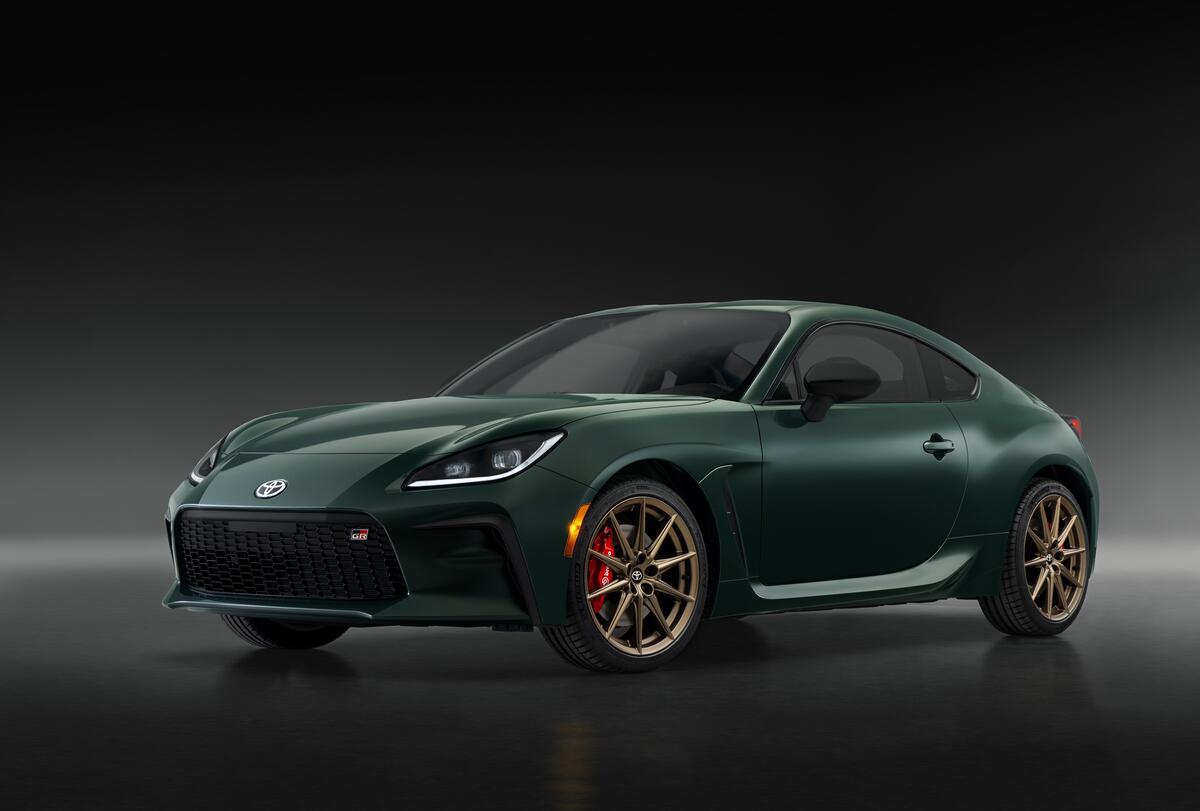
Toyota 86
"...ory, get your Carrera Cups along there, Trans Am, Toyota 86, whatever. There's enough categories in the count..."
The Toyota GR 86 is a two-door sports car from Toyota. It’s made to be fun to drive on roads and tracks. The podcast brings it up because it’s used in racing categories and events.
The Toyota GR 86 is a sports coupe built for driver-focused handling and an engaging feel, often discussed in the context of racing categories and track events. It’s significant because it’s used as a platform in multiple motorsport series where cars are grouped by rules and performance classes. That’s why the podcast mentions it alongside other racing categories and models.
simulator
"Obviously, pre-race at Rua Puna trying to learn the track on the simulator and did a lot of research."
A simulator is a racing video setup that lets you practice a track without driving the real car. Drivers use it to learn where to turn and when to slow down before the actual race.
A racing simulator is software and hardware that recreates a track and car behavior so drivers can practice lines, braking points, and lap strategy. It’s commonly used for pre-race learning when you don’t have much time on the real track.
slipstream
"which makes the slipstream even more beneficial. So you don't want to be at the head of the queue."
Slipstream is when one car benefits from the air pushed aside by the car in front. If you stay close behind, the following car can feel like it has an easier time going faster.
Slipstream is the reduced air resistance a car gets when it follows closely behind another car. In racing, it can help the trailing car carry more speed into corners or on straights because the air behind the lead car is disturbed and less resistant.
lap traffic
"And certainly that first part of qualifying when all 25 or 24 cars are on the circuit, lap traffic is an issue. You can fix it though."
Lap traffic is when faster cars have to navigate around cars that are on different parts of the circuit due to being lapped. During qualifying, it can ruin a driver’s attempt at a clean, uninterrupted lap because they can’t hit their ideal racing line or timing.
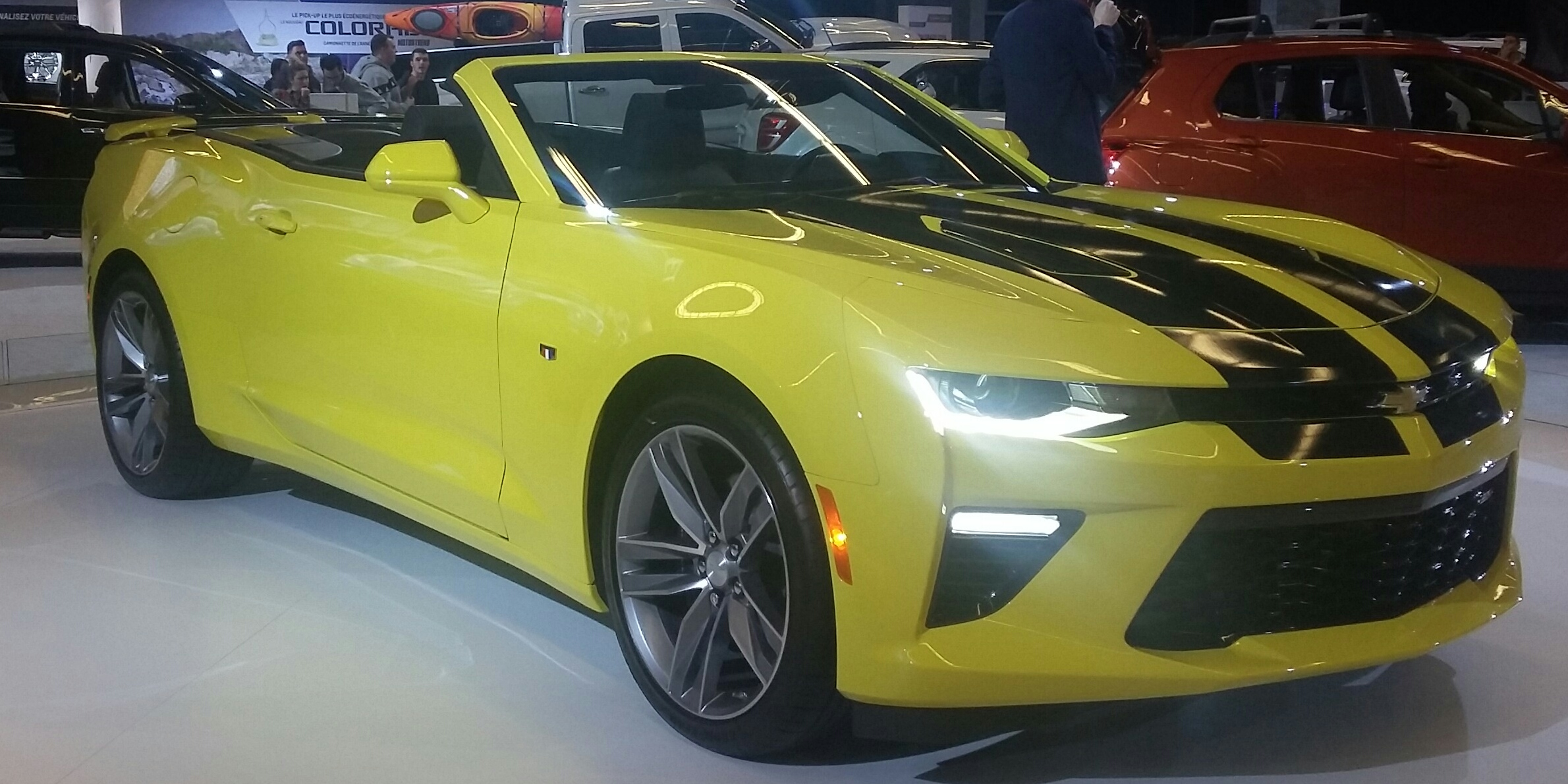
Chevrolet Camaro
"Hey, a couple of new bits of metal debuting down in Tassie too. Erebus have a new Camaro for Cooper Murray. Cam Waters has got a brand new Tickford Mustang."
The Chevrolet Camaro is a popular American V8-style car. Here, the hosts are saying a racing team brought a new Camaro to the track for a specific driver.
A Chevrolet Camaro is a V8 muscle-car platform that’s commonly used in Australian touring-car racing. In this segment, the hosts mention Erebus running a new Camaro for Cooper Murray, highlighting how teams bring updated race cars to improve competitiveness.

Tickford Mustang
"Erebus have a new Camaro for Cooper Murray. Cam Waters has got a brand new Tickford Mustang. It made us look back to the last time that new cars debuted at Simmons Plains."
A Tickford Mustang is a Ford Mustang that a racing team (Tickford) has built and tuned for competition. The hosts are pointing out that Cam Waters has a brand-new one for the event.
A Tickford Mustang refers to a Ford Mustang prepared by Tickford Racing for Australian touring-car competition. The key point is that it’s not just a showroom Mustang—Tickford’s race preparation and setup are what matter for track performance.

HRT Commodore
"You've got to go back to 2010. I think Alex Davison had a new Erwin Ford. Garth Tander had a new HRT Commodore."
An HRT Commodore is a Holden Commodore that HRT prepared for racing. They’re using it as an example of a new race car debuting at Tassie before doing well at Bathurst.
The HRT Commodore refers to a Holden Commodore race car run by HRT (Holden Racing Team) in Australian touring-car racing. The hosts mention Garth Tander having a new HRT Commodore, tying the car’s debut to later success at Bathurst.
cabra
"So they used to put this cabra in front of the Mazda, the RX-7, to get temperature in the car before the race. One of the mechanics might have forgotten to take that off and Big Al's just ripped off."
In this context, “cabra” sounds like a cover or blocker they put in front of the car to warm things up before racing. If it’s left on, it can reduce airflow and make the car overheat.
“Cabra” here appears to be a race setup device placed in front of the car to control airflow and help bring the engine bay up to temperature before the race. The hosts imply it can cause overheating if left on too long because it blocks airflow.

Mazda RX-7
"With the cabra and the Mazda. So they used to put this cabra in front of the Mazda, the RX-7, to get temperature in the car before the race."
The Mazda RX-7 is a sports car that uses a rotary engine, which is different from the normal engine most cars have. Here, they’re talking about a race-day trick that helped warm things up before the run.
The Mazda RX-7 is famous for using a rotary engine (a Wankel design) instead of the usual piston-and-crankshaft setup. In this segment, the hosts discuss a specific RX-7 race setup involving a “cabra” used to manage engine bay temperature before the race.
rotary engines
"It was the only time that they ever blew up one of those rotary engines."
A rotary engine is a type of engine where a spinning part makes power instead of pistons. In this story, they’re saying that engine type was involved in a race problem.
A rotary engine (Wankel design) makes power using a spinning rotor instead of pistons moving up and down. The hosts mention the RX-7’s rotary engine failing in a race context, and they connect the failure to airflow/temperature management.
Queensland Raceway
"John Faulkner found himself in a situation, you know, three where basically he and Alice and his wife, they were dim liable for the two licenses not running at Queensland Raceway,"
Queensland Raceway is a race track in Australia. The hosts mention it because the licensing and fines they’re talking about relate to an event round there.
Queensland Raceway is a motorsport venue used for Australian racing events. In this segment it’s the location tied to the licensing/round-not-attended situation the hosts are discussing.
on-track penalty
"It's a tiger thing, not an on track or an out of event penalty. In essence, it's a penalty for not being at around and being at around."
An on-track penalty is a punishment for something that happened during the race itself. Here, they’re saying the fine they’re discussing isn’t really about driving contact rules—it’s more about not showing up for the event.
An on-track penalty is a sanction tied to what happens during the race event itself—typically contact, driving conduct, or failing to comply with race rules while cars are on track. In this segment, the hosts contrast that with an off-track/franchise-related fine that’s about not showing up rather than on-track behavior.
contact
"The last one is Paul Romano. He copped 20 grand for contact with Rodney Forbes at Phillip Island."
In racing, “contact” means one car physically hits or bumps another. Depending on how it happened, officials can punish it with a penalty or fine.
In racing, “contact” refers to physical interaction between cars—like bumping or collision—during a race or race restart. It’s treated as a driving incident that can lead to fines, penalties, or disqualification depending on severity and intent.
Phillip Island
"He copped 20 grand for contact with Rodney Forbes at Phillip Island."
Phillip Island is a famous race track in Australia. They’re mentioning it because the incident happened there and resulted in a penalty.
Phillip Island is a well-known Australian circuit that hosts major touring car and endurance-style racing events. Here it’s referenced as the venue where the “contact” incident occurred and led to a fine.
Bathurst
"But it's a bit like you and your Bathurst things. More literacy."
Bathurst is a famous Australian motorsport venue and event, strongly associated with touring-car racing culture. When someone says “your Bathurst things,” they’re referencing that specific racing world and its traditions.
undercut
"Can't say anything right now, but keep watching the undercut coming up."
In racing, an “undercut” is when you pit sooner than another driver. Fresh tires help you run quicker laps and potentially get ahead when the other car pits later.
An “undercut” is a pit strategy in racing where a driver pits earlier than a rival to take advantage of fresh tires. The goal is to set faster lap times and build a gap before the other car makes its own stop.
Darwin
"looking forward to getting back up to Darwin in the Trans Am car. So that'll be round two."
Darwin is a city in Australia. Here it’s being used to say the next race weekend is happening there.
Darwin is referenced as the location for a racing round, implying a circuit event in Australia’s Northern Territory. In motorsport talk, naming the city typically signals the track weekend and schedule context.
Request an Explanation
Heard something you'd like explained? We'll add it to this episode.
Sign in to request explanations for terms you heard.
Want to learn more?
Browse our glossary for plain-English explanations of automotive terms, jargon, and concepts.
Help improve this episode
See something that's not quite right? Our annotations are AI-generated and can sometimes miss the mark. Click the flag icon on any annotation to suggest a correction.