This Dealer Got Burned on a $8,000 Trade-In. Here's How He Now Catches Every Hidden Repair | Industry Spotlight
Car Dealership Guy Podcast
This Dealer Got Burned on a $8,000 Trade-In. Here's How He Now Catches Every Hidden Repair | Industry SpotlightCar Dealership Guy Podcast · Jun 13, 2026
Annotations will appear as you listen
0:00
22:55
Concept
dishonest trade ins
It means some trade-in cars are being sold to the dealer with problems hidden or not fully disclosed. The dealer ends up losing money because the car isn’t as described.
Cars store warning codes when something is wrong. Clearing the codes can make the car look fine during inspection, even if there’s a real problem underneath.
In automotive usage, a “lemon” is a vehicle that has serious recurring problems that the manufacturer or seller can’t fix after a reasonable attempt. The phrase is used here to describe a bad car that could enter inventory if issues aren’t caught early.
Fixed Automotive is the company behind the appraisal tool being discussed in the episode. The idea is that it helps dealers find problems faster and more accurately.
CDJR is a shorthand for the car brands Chrysler, Dodge, Jeep, and Ram. It tells you what kinds of vehicles that dealership sells and therefore what trade-ins they tend to see.
“Recon data” means the dealership’s detailed inspection/repair notes about a used car. Having that information helps them avoid overpaying for a trade-in when there are hidden problems.
A “walk-around” is the basic in-person inspection step used to evaluate a trade-in’s condition. In this segment, it’s contrasted with having recon data, and it’s described as relying on visual checks like seams, paint work, tires, and a short drive.
The Ford Model A is an old Ford car that was made many decades ago. It’s often mentioned because it’s a well-known classic and people use it as a reference when talking about older cars and their history.
Car
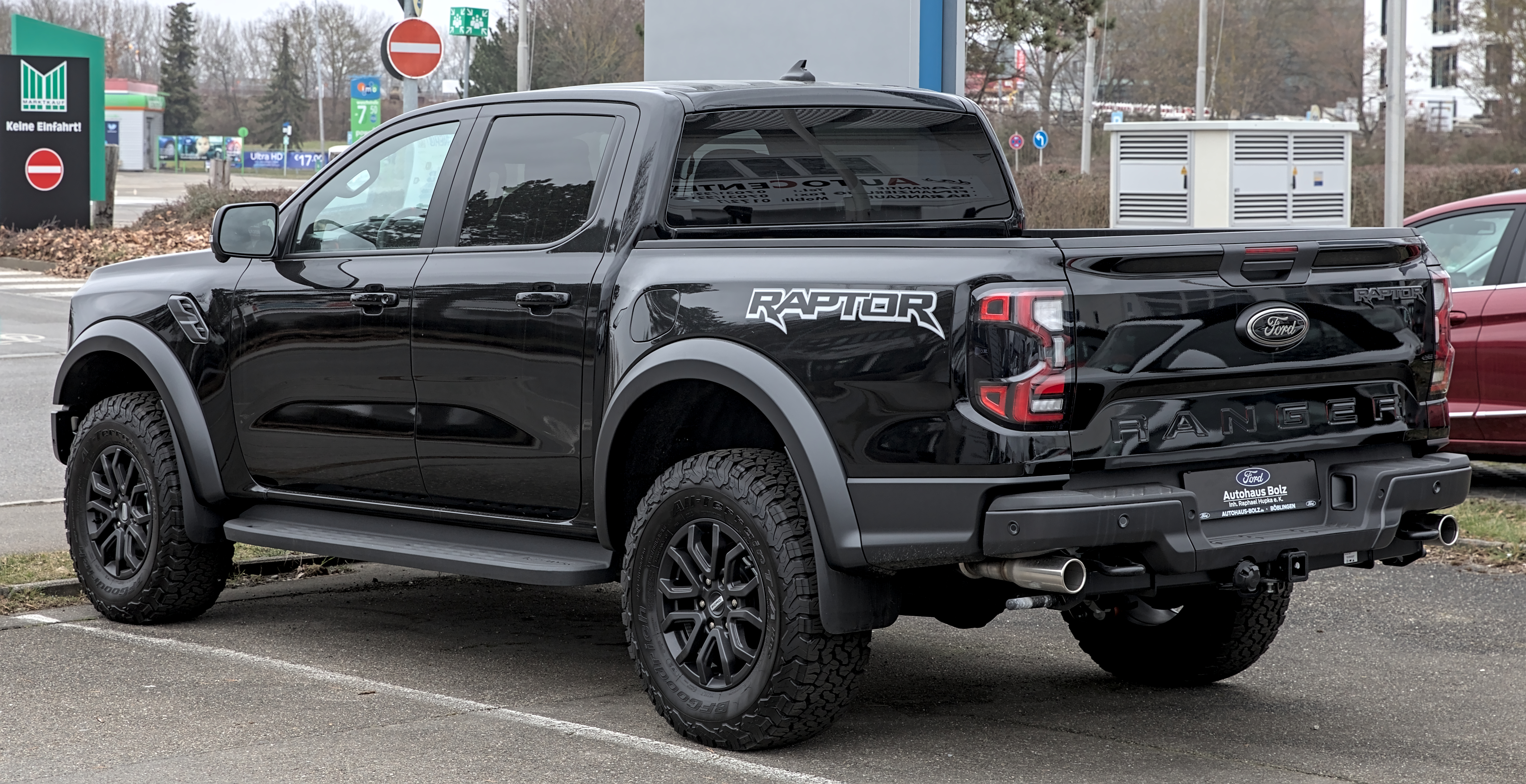
Ford Raptor
The Ford Raptor is a tough, off-road version of the F-150 pickup. Here it’s the example truck that showed up as a trade-in and later turned out to have a problem they didn’t catch at first.
Lifters are parts inside the engine that help open and close the valves. If they’re worn out, the engine can run poorly or make noise, and fixing them can be expensive because it may require major labor.
A cold start means starting the car after it’s been parked long enough to cool down. Certain problems only show up at that moment, so checking a cold start can help you catch issues that disappear once the car warms up.
A test drive is a short, controlled road evaluation meant to check how a car behaves under typical conditions. The key point here is that a brief test drive may not expose intermittent or temperature-dependent faults, so it can miss issues that show up only after a cold start or over longer use.
Term
Raptor miss
A “miss” means they didn’t catch a problem during inspection, and it ended up costing a lot later. “Raptor” is the name of the vehicle they’re talking about, but this clip doesn’t say exactly which one.
They’re talking about finding car problems earlier and more reliably. That way, the dealership can estimate repairs better instead of getting hit with unexpected costs later.
EGR is a system that helps the engine burn cleaner by sending some exhaust gas back into the engine. If it’s not working right, the car can throw warning codes and the engine may run poorly or fail emissions checks.
Reconditioning costs are the money a dealer estimates it will need to fix up a used car before selling it. If the car needs things like brakes or tires, those costs get counted in the trade-in offer.
Your trade figure is the price the dealer offers you for your current car. The point here is that the dealer should explain how they got that number, especially if the car needs repairs.
Tires and brakes are parts that wear out over time. If a trade-in needs new tires or brake work, the dealer may reduce the trade value because it has to pay to fix those items.
Shop bills are the repair invoices—basically, what it costs to fix the car. The segment is saying salespeople may not always understand those repair costs, even though they matter for trade-in pricing.
Rather than only showing error codes, the system estimates what repair is most likely. It uses past data to give a confidence-style guess so dealers can estimate costs faster.
The check engine light is a warning that something in the engine or emissions system needs attention. You can sometimes clear it, but the problem may still be there and the light can come back.
A scan is when a shop plugs in a tool to read the car’s computer for problem codes. It helps you see what the car has been complaining about, even if the warning light was turned off.
Fraud detection means looking for signs that someone tried to cheat the car’s history. In this case, they’re talking about catching things like odometer tampering using the car’s own data.
Rolling back the odometer means someone changes the mileage reading to make the car look like it has been driven less. That can hide how much wear the car really has.
When people say “OBD2 sensor” here, they mean the scan/diagnostic process through the OBD2 port. A scammer can trick what the scanner reports back to the shop.
“Data-driven decisions” means using measurable information (like vehicle history, condition reports, and market pricing data) instead of relying mainly on intuition. In used-car appraisal, it’s meant to reduce losses from hidden issues and pricing mistakes.
The service lane is where cars go when they’re being worked on—like repairs or maintenance. In this discussion, they’re using what they find there to help the dealership price and evaluate cars more accurately.
An appraisal is the dealer’s estimate of what a car is worth. It’s what they use to decide how much money they’ll offer you for your trade-in or buy a used car for.
This means the car needs repairs or fixing that you might not notice right away. If the dealer doesn’t catch it early, it can cost them a lot of money after they’ve already agreed on a trade-in price.
In dealership talk, “gross” usually refers to gross profit from the deal—how much money the store makes before expenses. The speaker frames the appraisal/trial as a way to avoid being “burned,” protecting that gross by catching issues early.
CRM is the software dealerships use to keep track of customers and sales leads. The question is whether the appraisal info can connect to that system too.
A “Recon” in dealership talk usually means the work done to prepare a used vehicle for sale. When someone mentions a Jeep Recon, they’re typically talking about the reconditioning steps and costs needed to get that Jeep ready.
LIVE
Hey everybody, welcome back to another episode of the car dealership guy industry spotlight.
I'm your host, Sam Dark dishonest trade ins.
They're nothing new, but when they start hitting your inventory in waves, you have to find
a better way.
That's exactly what happened to today's dealer guest who went looking for a faster, more
accurate appraisal process after getting burned one too many times.
The solution, a tool that delivers a full vehicle appraisal in under a minute right
on the spot.
And the results, well, they speak for themselves.
This dealer's wholesale department went from running a loss to turning a profit.
That's a 300% swing in just one year by getting appraisals right.
We also get into a number that should stop every use car manager in their tracks.
20% of your appraisal trade ins have recently had their codes cleared.
That means the car sitting in your service lane for an appraisal may be hiding exactly
what you think it's hiding.
And we talk about how dealers can protect themselves before that lemon makes its way
into your inventory.
Joining me today are Danny Galott, General Sales Manager at Luthier Chrysler Dodge
G-Bram of Bend and Frederick Grimm, co-founder and COO of Fixed Automotive.
Props to appraisal pro for sponsoring today's episode now, let's get into it.
So Danny, welcome to the car dealership guide industry spotlight.
Yeah, thanks for having me.
So you're a GSM at a Luthier store.
Tell us a little bit about the store where you are GSM and how did you get there?
So originally I started out with Luthier over 20 years ago in a Southern California store.
It was a Honda dealership.
Worked my way through, started a sales and eventually a closer for the dealership, moving
my way onto the desk.
And you're at a CDJR store and it's interesting because in the CDJR world now, we've got
multiple stores here at Ziggler, it is a game of capitalizing the used car side of the world.
Talk to us about what the used car department looks like at Luthier CDJR of Bend.
What's your volume, your mix?
How many trades do you take in a month?
We're selling about 75 used cars per month with a carry of around 90 used cars.
Trade-ins, we roughly see 30%, 35% on average.
So we're seeing about 45 to 50 trade-ins per month.
That's strong, that's strong.
So you've talked in places about the importance of having good data on those trade-ins.
When you think about your old appraisal process, what was the standard process before you got
access to good recon data?
Yeah, you know, it's the standard walk-around, running your fingers through all the seams,
seeing if you have, you know, paint work, looking at all the tires and going for a short test drive.
That short test drive is less than a mile long, trying to listen and see if there's anything
that you catch.
So before you got access to the data, was there a minute or an experience you had where you're,
you know, you appraised a used vehicle, you put a number on it.
You didn't really know what the recon was, and you were surprised by something that was hidden.
What, Todd, walk us through that.
I remember this day, Clear's Day, I had a late model Ford Raptor that came in.
It came in warm.
Did the standard, everything looked good, checked out, drove it.
It was a diamond, you know.
It wasn't until a couple days later, when it made it through shop, that we discovered it needed
lifters, and it was an $8,000 miss.
Oh, what went through your mind when you realized that you'd made an $8,000 miss?
Do you think the consumer or whoever was selling you the vehicle might have known and ran it in hot?
Absolutely.
He came in from about an hour away knowing that it would be warm enough, non-detectable,
until we do the cold start on it at that point.
So I got taken.
Has that happened multiple times without having kind of clear recon data where, you know,
you're surprised by something you can't fully anticipate?
It is interesting because in automotive, the assumption is we're the experts.
We know all of this, right?
And there are things that we can't find in a 5, 10-minute appraisal that makes it tough, right?
No, absolutely.
Especially on the variable side, we are not the trained technicians to know everything
there is to know about these.
And a test drive does not necessarily give you all the data that you need in that short period of time.
So after the Raptor miss, did you go out and try to find a better solution?
Did you say, hey, there's got to be a way for me to better appraise these vehicles and not be surprised?
You know, I thought and kept myself up at night, you know, an $8,000 miss is pretty big,
just thinking there's got to be a better way to do this.
And it was longer test drives.
These were my solutions.
But we still encountered these trick bags, if you will, that we would continue to miss on.
And it tended to be a devastating loss when it came to wholesale profit.
Yeah, yeah.
So enter into the story, Frederick Grimm, co-founder and COO appraisal pro.
And Frederick, you've been on the show before.
You brought this conversation to bear in a conversation we had with the Terry Smith Auto Group
back in September 2025.
What was your response when Danny called up and said, hey, I need better visibility into issues
like this Raptor.
What was your response?
So Danny was actually one of our first customers with appraisal pro.
And when he called, I was like, hey, I think we have something that might be helpful.
Being one of the first customers, he was trying to product for the first time, you know,
we were just pulling data from the OBD2 port and helping to be able to
give an idea of what the actual repair is needed and then correlate that to actual repair cost.
So, you know, he told us about the problem he had and we said, hey,
I think that this would be the perfect solution for you.
And when Frederick described what their solution would do and how it would give you
visibility into issues like the lifter on this Raptor.
What was your response, Danny?
Did you believe that that could happen and would this truly have caught that issue in advance?
You know, I was skeptical.
We've used detectors before and you got codes and you're going back and researching codes and
I didn't think it would actually improve the process and the problems.
What was the moment where all that changed?
So you implemented it as a new process.
What did that new process look like?
And was there an instance where it found the first issue and kind of proved itself out?
Yeah, absolutely.
All of my sales people now have the appraisal pro with them at all times.
So they start the appraisal with plugging that right in.
So it's quick.
It could be 30 seconds to two minutes and you get real time data that just fires right into the app
and us as managers, it comes as an email right away.
We see before we even get that appraisal at our desk what we're looking at or what we're up against with this.
There was a time where we had a street purchase come in and it was an eco diesel of some sort.
I'm not sure the brand that it was, but they're known to have EGR problems and
we immediately plugged it in and it was three miles since it was last cleared.
It was great.
I had this report that I walked right out to the customer and I said,
hey, here's the report and it looks like the codes were just cleared three miles ago
and it was like catching a criminal almost.
He was just in shock and said, okay, well, I guess you're not going to buy it and just left.
Walked off.
Isn't it crazy?
It also probably gives you additional credibility in the transaction.
If the customer does end up deciding to buy the vehicle, they've been found out.
There's no more secrets.
It provides some additional transparency that shows everybody's working off the same kind of information.
How do you use the recon data in the negotiation conversation with the customer to that end?
That one customer walked away saying, hey, I've been found out.
I'm going to go try it upon this vehicle off on someone else.
For your traditional customer that comes in good faith and wants to negotiate a deal with you,
how does Appraisal Pro come up in that negotiation conversation?
When we're presenting numbers, it just validates where we're coming from.
There's additional costs associated when you're taking in a vehicle.
We have reconditioning costs, so we have to look at these things.
When we're presenting the trade figure to these customers, it just solidifies where we're coming
from. If we're looking at something that the Appraisal Pro shows us, it needs $2,500 additional to
tires or brakes or whatever it may be. There's a reason why we came to this number.
It's not that we just pulled this number out of the sky like many consumers in the past have thought.
Yeah. Was there a moment for you, Danny, where you said, hey, this is worth it?
Like, this is worth having lanyards around everybody's neck and requiring them to take
on a brand new process? Yeah. The first week we started using it, it was an absolute no-brainer.
How seamless and easy it was to use. I had very little drawback from adding an additional step
with my sales staff. They started becoming believers. I feel like they started gaining a
little bit more knowledge in what vehicles have issues and what issues may arise. It just gave
an all-around better understanding for shop bills and things like that that typically sales people
don't understand. Frederick, let's turn to you on Appraisal Pro. You built this because you saw a
specific gap in how dealers were appraising trades. What were you watching happen in that moment when
you built this product? Yeah. On the consumer side of our business, it's called Fixed. We've sold
about 10 million units of our product to everyday drivers in the US. We were actually looking at
some of our data and we saw that it were power users that were scanning 50 to 100 times a month.
We reached out to those customers and found out they were all dealerships. We had dealerships
that were using our product specifically to do scans on these appraisal trade-ins to understand
what the mechanical reconditioning costs were. That was that aha moment where we started to
build a lot more tool sets for dealers to really build the product of what it is today. We had
customers that were telling us and using our product the way that they wanted to use it,
so that informed our whole roadmap. Walk us through how it actually works under the hood.
What's it pulling? Danny talks about how they instantly get an email once it's run. How fast
does the dealer actually get that recon number and how accurate is it? This is our little
appraisal pro sensor. We send any number of these out to the dealer. As many as you request, we'll
ship them for free. Whenever you're doing a trade-in, you just plug this in and then our
goal is in about 30 seconds to a minute to have done a full scan of the vehicle. This includes
all standard or generic codes, but then all the additional enhanced codes. Looking at all different
control modules of the vehicle to identify problems, some of which may be illuminated by a light on
the dash, some of which may be hidden and not clear or easy to see. We're going to scan all of those.
We're going to then compare that to the hundreds of millions of scans that we've done on the consumer
side of our business to be able to give you a percent probability of the most likely repair
and then giving you the cost of that. We'll use your dealership's labor rates so that we have a
very highly pinpoint accurate number of costs. We'll do the scan. It'll populate to your IMS,
and in about a minute you should have an email that tells you exactly what the mechanical
reconditioning costs are. Danny shared the story about this clear check engine light.
That to me is crazy. A consumer or anyone, us included at a dealership, can just go clear that
light. How common is that on trade-ins in your experience as you're watching it? From a process
standpoint, does appraisal pro catch it? Yeah, so we have hard data. We have now on the dealership
side of our business, we've done hundreds of thousands of scans, and we find that about 20%
of those scans have a customer who's clear to check engine light within the last 50 miles,
which is pretty staggering. That's a huge number. Again, keep in mind, not all of those 20% are
customers that are trying to pull the wool over your eyes and try to fleece you. Some of them
maybe just got a repair, but it starts that conversation. You can say, hey, I noticed that
this check engine light was recently cleared. Can you walk me through what happened here?
To Danny's point, if someone's caught in the act, it's easy to sniff out, but if it was a
legitimate repair that was done and the mechanic cleared the light, then they can have documentation
for that too. It's a conversation starter, but again, it makes sure that you're not getting
taken advantage of and that you use data to make an informed decision.
With that much data, are you able to quantify the impact or the number of repairs that you're
able to help? Is there a way a used car manager could think about the dollars saved per scan, maybe?
Yeah. I mean, for every dealership that we work with, we give them on a monthly basis
what the total amount of the reconditioning costs are that we've discussed.
An average dealership, we're helping them to discover between $15,000 to $20,000 in
hidden mechanical reconditioning costs. So it's very easy to provide a clear ROI for our customers.
So you were last on this show back in September. You brought a different dealer with a best
practice, very similar situation. You've grown some since then. Catch us up on where you've
come since last September and where are you going next? What are you building towards?
When we were on last year, we were just getting off the ground. We had,
I think it was roughly like 200 dealers that had signed on. We just signed on our 1400th.
So we've added over a thousand in the last few months and we're just trying to get our story
out there. We're trying to tell people about the power of appraisal pro and how simple it is,
how easy to use it is, and how it takes a kind of a guessing process to something that's very
clear and data driven. So just doing everything in our power that we can to educate dealers and to
give them an offer to try the product for free, do a free trial and see the power for themselves.
We've added a lot of functionality too. Big one is fraud detection. So looking at different control
modules in the vehicle to be able to determine if a customer has rolled back the odometer or if
there's been fraud more on that vehicle. So that's not an issue that every dealer is going to have
faced, but for some dealers that have been burned by that in the past, that's a very painful,
painful problem. So how do you sense vin fraud? That's a big issue, particularly in the Midwest,
I would say. We constantly are under assault as it relates to fraud, theft, and other types of
challenges. There's a lot of different types of vin fraud that can go on. The most complicated
versions of that are there's a little man in the middle device that someone may install behind the
OBD2 port that it presents a different vin, but there's other things in the vehicle that are still
being passed through as normal. So if you're going and you're plugging in an OBD2 sensor,
it's going to give you the fake vin that may be a more expensive trend package,
but everything else is going to pass the initial sniff test. And so we've been working with local
police departments in the Atlanta area to get some of these devices to be able to figure out,
okay, well, how can we detect if there is a man in the middle device that's been installed?
How do we find other values of the vin and different control modules to be able to detect?
Like, okay, it passes the initial test, but it fails all the subsequent tests.
So Danny, back to you. What would you say to a general sales manager who says,
hey, I'm more comfortable kind of going off gut on appraisals? Like used cars
have notoriously been a, hey, sell by the seat of your pants, buy by the seat of your pants.
This is a different approach using the data. What would you say to somebody who's slow to adopt,
embracing data to make data driven decisions and buying used cars?
We have to be innovative and protect our dollar at the end of the day. And I've seen a huge increase
year over year on wholesale loss versus wholesale profit this year,
just in some of these savings. Because a lot of these is the late model vehicles that you're
finding that there's just hidden things in there. So Frederick, one of the biggest challenges in
automotive today is sourcing that used vehicle out of the service lane. Those are our best used
cars because we've serviced them. They've been here in our service department. How does appraisal
pro work on that sourcing of used vehicles out of the service department?
Yeah. So we've actually heard from a lot of dealers asking, Hey, is there a way that we
could use your product to acquire vehicles from the service lane? And so that's something that
we've been working over the last few months. We have a few dealers that are doing a pilot of this
and we're demonstrating that we can help dealers acquire roughly 20 to 30 appraisals from the
service lane. So that's something that we're planning on releasing later this year. And we're
super excited about continuing to help our dealers. So getting adherence to a new process,
it's not about knowing what to do, it's about doing, it's about executing on it. How did you get
your team bought in, Danny? Was there resistance to changing that appraisal process initially
before it kind of proved itself out? Yes. Initially, my sales staff looked at me like,
what really another step to this sale? Until you do it, you utilize it. And it's that quick,
right? It is at their hands, they see it, it becomes a conversation piece with the customers.
And it kind of is fun for them. It becomes a, man, I wonder if I'm going to catch somebody
with something on this. Am I going to help the dealership out? Are we going to protect
everybody here by catching, I don't know, that $8,000 miss that we have? It could be a $2,000
miss, which, which you see it, you know. And another unique thing is it also shows you
all of the expected upcoming costs that are associated with the vehicle as well.
So Frederick, as Danny talked, it does take a little bit of a night mindset shift to do
things a little bit differently. How do you help dealers get past the, hey, we've always done it
this way. Mine's out when it comes to appraising used cars. Yeah, I think everybody has a story
like Danny, every dealer that we've talked to, even if they're kind of dead set in their ways,
like they have a story where they've been burned recently. And so I think that's one thing that
we, we encourage with our product. It's like, Hey, we have a free trial. Start the free trial.
There's no cost to you. We don't need a credit card. And then in that period, we guarantee that
you're going to see at least five, probably closer to $10,000 in hidden mechanical reconditioning cost
and in that context, you're going to see vehicles where the check engine light was cleared. You're
going to see vehicles that had a hidden issue that your team would not have detected otherwise.
And that you'll have that aha moment. You'll be like, Oh, wow, I see the value here.
I see how we're not going to get burned. I see how we're going to protect our gross. And so
I think the trial is really successful. About 94% of our customers that start the trial,
convert to paid. So we're offering all dealers the opportunity to try appraisal pro for free.
Just reach out to us at get appraisal pro.com and we'll get you set up with a free trial,
no cost. And we're issuing a challenge for any dealer that tries this free trial. If you don't
find at least $5,000 of mechanical reconditioning cost during this trial, we'll cut you a $1,000
check just to demonstrate that we're so confident in the product. The other part I have a tough time
getting passed. I know I challenged you on it last time is you do the devices for free, right? So
there's not a charge for that. How do you, from a practical standpoint, how do you support that
economically use car managers, sales managers, salespeople, they're infamous for losing stuff,
right? Like, if there's no cost to the replacement, how do you make sense of that economically from
your standpoint, Frederick? Yeah, and the huge benefit here is on the consumer side, we sell
no ends of these devices a year. So we've been able to get the cost of goods down. You've got the
cost. Yeah, that makes sense. And so that that helps tremendously. So again, we don't want to
nickel and dime our dealers is just a one flat monthly fee. And we'll include all the sensors
to you for free. And if your team loses them, which, you know, ideally they don't lose a time,
but if they do lose them through the year, that's not an issue. Just let us know and we'll ship
your replacement units. So are there integrations? Does it integrate in with DMS with CRM? Talk to me
a little bit about the integrations and how that works, Frederick. Our biggest integration is with
the auto. So it's super seamless. Again, you just plug in the sensor, you open the app, you tap a
button. And then in about 15 and 30 seconds, we'll generate the, you know, we'll see the codes,
we'll generate the repair cost. And that'll populate directly in line in viato. But as Danny
mentioned, you'll also get an email that has the condition report that'll be emailed directly to
you. So it doesn't really add much process to your existing process. And it makes it easy for the
whole team. We're announcing an integration with Venq in early June. So we're excited about that.
And we have a few others that are kind of lined up just to, again, kind of broaden our horizon of
the dealers that we'd be able to work with. Yeah. So Danny, are there metrics that you're able to
tie back to since you've implemented this that have improved store performance such as, you know,
average profit per used vehicle sold and or retention into the service department? Because it
also occurs to me, if you're getting the recon quote, the customer could actually say, how I'm
shopping, Danny? I haven't had anybody say that they're going to come get, come get it done at the
shop. Yeah. That hasn't occurred. But I definitely have seen my wholesale loss year over year now
as a profit. And it's, it's pretty remarkable. It was over 300% year over year. So you went from
a loss to a profit 300% change in 24 or less units. That's significant. That's impressive.
That's impressive. Well, I'll tell you Danny Galat, GSM, Lithia, Chrysler, Dodge Jeep, Ram,
of Ben, thank you so much for bringing this best practice of scanning vehicles to understand
recon costs during the use car appraisal process. And Fredric Grimm back again, appraisal pro co
founder and COO with this tool that by all measures seems to be growing very rapidly
among the dealer bodies. So thanks for bringing this to our industry spotlight audience. Thank
you both. Thank you. Thank you.
About this episode
After getting burned on an $8,000 trade-in miss, the dealer guest explains how hidden repairs slip through when inspections rely on a quick walk-around and short test drive. The fix is a scan-first workflow: sales plug in an appraisal tool, pull OBD-II data, and look for issues like lifter problems that only show up on cold start. The hosts also highlight how often codes get cleared right before sale and how the tool helps quantify reconditioning costs for more transparent negotiations.
In this episode of the Industry Spotlight, joining host Sam D'Arc are Frederick Grimm, Co-Founder and COO of AppraisalPro, and Danny Galat, General Sales Manager at Lithia Chrysler Dodge Jeep Ram of Bend, to discuss how dealers are using real-time diagnostic scanning to stop taking hidden mechanical losses on trade-ins and turn a wholesale department that was bleeding money into one that's actually profitable.
Danny walks through the $8,000 Ford Raptor miss that kept him up at night and drove him to find a better way to appraise used vehicles.
The numbers that follow are hard to ignore: 20% of trade-in appraisals show a check engine light cleared within the last 50 miles, the average dealer is sitting on $15,000 to $20,000 in hidden reconditioning costs every month, and Danny's wholesale department swung from a loss to a profit by more than 300% in a single year.
Frederick also breaks down how the tool detects odometer rollback and VIN fraud before a bad deal makes it onto your lot.
This episode of the Car Dealership Guy Podcast is brought to you by AppraisalPro.
Topics:
03:25 The $8,000 Raptor Miss That Changed Everything.
04:50 Why Warm Engines Hide Costly Problems.
06:10 The 30-Second Appraisal That Saves Thousands.
07:30 The Customer Who Got Caught Red-Handed.
09:00 Why Every Salesperson Needs A Lanyard Now.
10:10 The 10 Million Scans Powering Your Appraisals.
12:40 20% Of Trade-Ins Had Their Codes Cleared.
13:50 $15-20K In Hidden Recon Costs Found Monthly.
16:30 From Wholesale Loss To Profit In One Year.
17:50 The 300% Profit Swing You Can't Ignore.
18:30 Why 94% Of Dealers Convert After The Trial.
20:00 The $5,000 Guarantee You Need To Take.
AppraisalPro - AppraisalPRO helps dealers instantly uncover the true mechanical reconditioning costs of trade-ins before they buy them, helping reduce surprises and protect profitability. The platform can also detect recently cleared check engine lights and hidden issues that may otherwise go unnoticed during the appraisal process. Start your free trial @ here!
Check out Car Dealership Guy’s stuff:
For dealers:
CDG Circles ➤ https://cdgcircles.com/
Industry job board ➤ http://jobs.dealershipguy.com
Dealership recruiting ➤ http://www.cdgrecruiting.com
Fix your dealership’s social media ➤ http://www.trynomad.co
Request to be a podcast guest ➤ http://www.cdgguest.com
For industry vendors:
Advertise with Car Dealership Guy ➤ http://www.cdgpartner.com
Industry job board ➤ http://jobs.dealershipguy.com
Request to be a podcast guest ➤ http://www.cdgguest.com
Car Dealership Guy Socials:
X ➤ x.com/GuyDealership
Instagram ➤ instagram.com/cardealershipguy/
TikTok ➤ tiktok.com/@guydealership
LinkedIn ➤ linkedin.com/company/cardealershipguy
Threads ➤ threads.net/@cardealershipguy
Facebook ➤ facebook.com/profile.php?id=100077402857683
Everything else ➤ dealershipguy.com