
This Dealer Got Burned on a $8,000 Trade-In. Here's How He Now Catches Every Hidden Repair | Industry Spotlight
About this episode
After getting burned on an $8,000 trade-in miss, the dealer guest explains how hidden repairs slip through when inspections rely on a quick walk-around and short test drive. The fix is a scan-first workflow: sales plug in an appraisal tool, pull OBD-II data, and look for issues like lifter problems that only show up on cold start. The hosts also highlight how often codes get cleared right before sale and how the tool helps quantify reconditioning costs for more transparent negotiations.
dishonest trade ins
"I'm your host, Sam Dark dishonest trade ins. They're nothing new, but when they start hitting your inventory in waves, you have to find"
It means some trade-in cars are being sold to the dealer with problems hidden or not fully disclosed. The dealer ends up losing money because the car isn’t as described.
This refers to trade-in vehicles that have been misrepresented or have issues concealed during the appraisal process. In a dealership context, it often means the car’s condition doesn’t match what the dealer is told or what the paperwork suggests.
appraisal process
"That's exactly what happened to today's dealer guest who went looking for a faster, more accurate appraisal process after getting burned one too many times. The solution, a tool that delivers a full vehicle appraisal in under a minute right"
An appraisal process is how the dealer decides what a trade-in is worth. If they miss problems, they may pay too much and lose money later.
An appraisal process is how a dealer evaluates a trade-in’s condition to estimate its wholesale or retail value. If the process is slow or inaccurate, dealers can overpay and later discover hidden repairs that wipe out profit.
codes cleared
"20% of your appraisal trade ins have recently had their codes cleared. That means the car sitting in your service lane for an appraisal may be hiding exactly what you think it's hiding."
Cars store warning codes when something is wrong. Clearing the codes can make the car look fine during inspection, even if there’s a real problem underneath.
“Codes cleared” usually means diagnostic trouble codes (DTCs) were erased from the car’s onboard computer. Clearing codes can temporarily hide check-engine-related faults, so a dealer’s appraisal may miss underlying problems that show up later.
lemon
"And we talk about how dealers can protect themselves before that lemon makes its way into your inventory. Joining me today are Danny Galott, General Sales Manager at Luthier Chrysler Dodge"
In automotive usage, a “lemon” is a vehicle that has serious recurring problems that the manufacturer or seller can’t fix after a reasonable attempt. The phrase is used here to describe a bad car that could enter inventory if issues aren’t caught early.
Luthier Chrysler Dodge
"Joining me today are Danny Galott, General Sales Manager at Luthier Chrysler Dodge G-Bram of Bend and Frederick Grimm, co-founder and COO of Fixed Automotive."
Luthier Chrysler Dodge is the dealership where the guest works. They’re talking about how trade-in appraisals impact the dealer’s money.
Luthier Chrysler Dodge is the dealership where Danny Galott works as a General Sales Manager. The episode uses his perspective to explain how appraisal accuracy affects wholesale profitability.
Fixed Automotive
"Joining me today are Danny Galott, General Sales Manager at Luthier Chrysler Dodge G-Bram of Bend and Frederick Grimm, co-founder and COO of Fixed Automotive. [78.3s] Props to appraisal pro for sponsoring today's episode now, let's get into it."
Fixed Automotive is the company behind the appraisal tool being discussed in the episode. The idea is that it helps dealers find problems faster and more accurately.
Fixed Automotive is presented as the company behind a tool used to improve vehicle appraisal accuracy. In this episode, it’s tied to reducing losses from hidden repairs and speeding up appraisals.
CDJR
"And you're at a CDJR store and it's interesting because in the CDJR world now, we've got multiple stores here at Ziggler, it is a game of capitalizing the used car side of the world."
CDJR is a shorthand for the car brands Chrysler, Dodge, Jeep, and Ram. It tells you what kinds of vehicles that dealership sells and therefore what trade-ins they tend to see.
CDJR is an industry shorthand for the Chrysler, Dodge, Jeep, and Ram brands. In dealership terms, it describes the franchise lineup a store sells, which affects what vehicles show up as trade-ins and how the used-car department is managed.
recon data
"So you've talked in places about the importance of having good data on those trade-ins. When you think about your old appraisal process, what was the standard process before you got access to good recon data?"
“Recon data” means the dealership’s detailed inspection/repair notes about a used car. Having that information helps them avoid overpaying for a trade-in when there are hidden problems.
“Recon data” refers to the inspection and repair-information gathered during the dealership’s reconditioning process (often including documented findings from inspections). The point here is that better recon data reduces the chance of missing hidden issues when appraising trade-ins.
walk-around
"Yeah, you know, it's the standard walk-around, running your fingers through all the seams, seeing if you have, you know, paint work, looking at all the tires and going for a short test drive."
A “walk-around” is the basic in-person inspection step used to evaluate a trade-in’s condition. In this segment, it’s contrasted with having recon data, and it’s described as relying on visual checks like seams, paint work, tires, and a short drive.

Ford Model Ford
"...t. I remember this day, Clear's Day, I had a late model Ford Raptor that came in. It came in warm."
The Ford Model A is an old Ford car that was made many decades ago. It’s often mentioned because it’s a well-known classic and people use it as a reference when talking about older cars and their history.
The Ford Model A is a classic early-1930s passenger car from Ford, known for being one of the company’s most important mass-market vehicles of its era. In a dealership podcast, it may come up as a reference point for how older vehicles were built and how their values or histories are discussed during appraisals. It’s also a common “memory car” when someone talks about long dealership experience and past inventory.
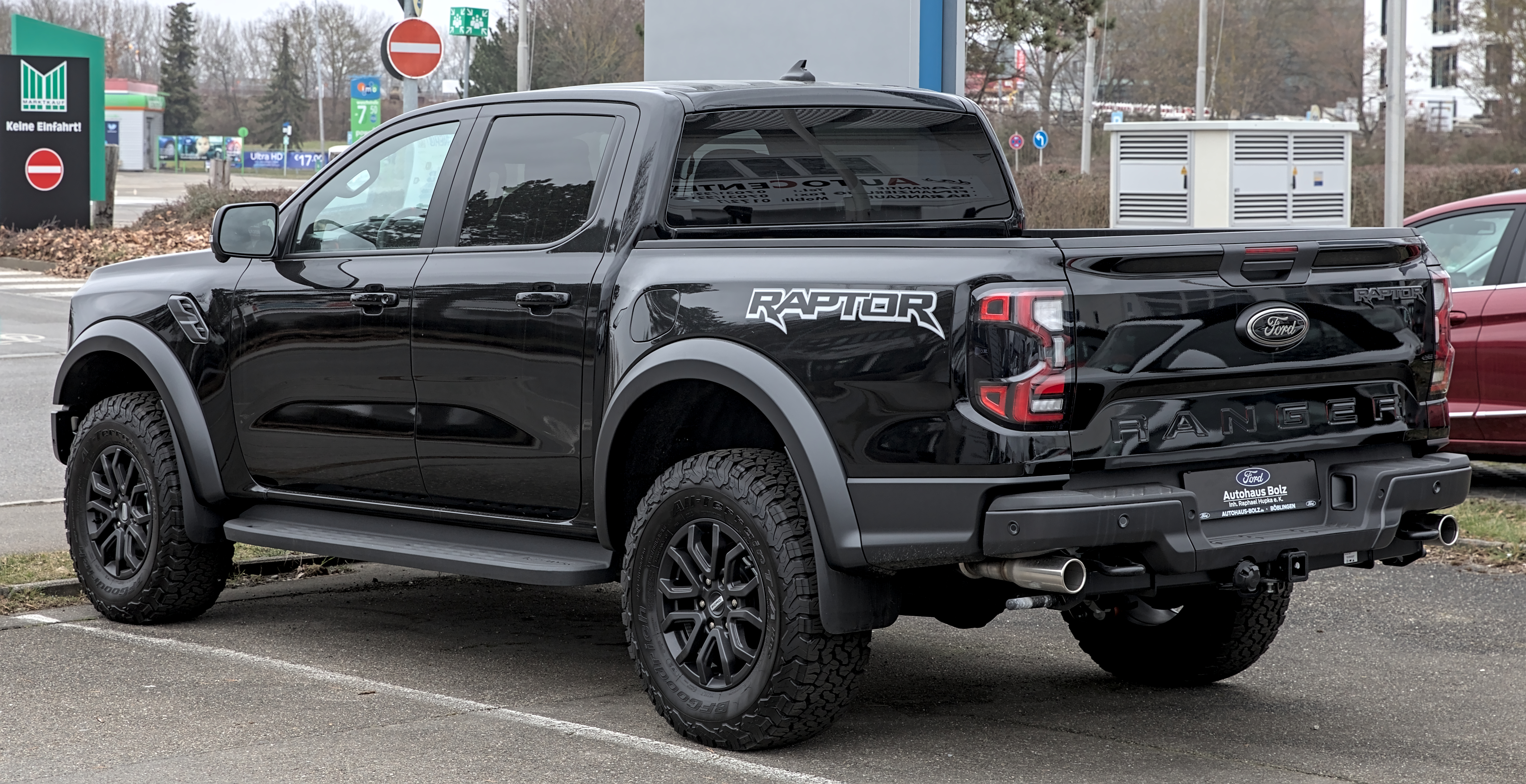
Ford Raptor
"I remember this day, Clear's Day, I had a late model Ford Raptor that came in. It came in warm."
The Ford Raptor is a tough, off-road version of the F-150 pickup. Here it’s the example truck that showed up as a trade-in and later turned out to have a problem they didn’t catch at first.
The Ford Raptor is a high-performance off-road pickup known for its rugged suspension and off-road-focused tuning. In this story, it’s the specific “late model” trade-in that came in with a hidden issue, illustrating why recon/inspection data matters.
lifters
"It wasn't until a couple days later, when it made it through shop, that we discovered it needed lifters, and it was an $8,000 miss."
Lifters are parts inside the engine that help open and close the valves. If they’re worn out, the engine can run poorly or make noise, and fixing them can be expensive because it may require major labor.
In an internal-combustion engine, lifters are components that transfer motion from the camshaft to the rest of the valvetrain (like pushrods/valves). When lifters wear or fail, you can get noisy operation and reduced valve control, and it often requires engine disassembly to fix.
cold start
"He came in from about an hour away knowing that it would be warm enough, non-detectable, until we do the cold start on it at that point."
A cold start means starting the car after it’s been parked long enough to cool down. Certain problems only show up at that moment, so checking a cold start can help you catch issues that disappear once the car warms up.
A cold start is when you start the engine after it has been sitting and fully cooled down. Some problems only show up when the engine is cold (for example, oil pressure behavior, noises, or sensor/valvetrain issues), so a cold start can reveal issues that a warm test drive might miss.
test drive
"And there are things that we can't find in a 5, 10-minute appraisal that makes it tough, right? No, absolutely. Especially on the variable side, we are not the trained technicians to know everything there is to know about these. And a test drive does not necessarily give you all the data that you need in that short period of time."
A test drive is a short, controlled road evaluation meant to check how a car behaves under typical conditions. The key point here is that a brief test drive may not expose intermittent or temperature-dependent faults, so it can miss issues that show up only after a cold start or over longer use.
Raptor miss
"So after the Raptor miss, did you go out and try to find a better solution? [294.4s] Did you say, hey, there's got to be a way for me to better appraise these vehicles and not be surprised?"
A “miss” means they didn’t catch a problem during inspection, and it ended up costing a lot later. “Raptor” is the name of the vehicle they’re talking about, but this clip doesn’t say exactly which one.
“Miss” here means the dealer’s appraisal or inspection failed to catch a costly problem that was later discovered in the shop. The “Raptor” reference indicates the specific vehicle involved, but the transcript segment doesn’t provide enough detail to confirm the exact make/model/trim.
better visibility into issues
"Danny called up and said, hey, I need better visibility into issues like this Raptor."
They’re talking about finding car problems earlier and more reliably. That way, the dealership can estimate repairs better instead of getting hit with unexpected costs later.
“Better visibility into issues” is the idea of using diagnostics and data to identify problems before they’re discovered the hard way. In dealership terms, this helps reduce surprises during appraisal and repair estimating, which can otherwise erase profit.
OBD2 port
"we were just pulling data from the OBD2 port and helping to be able to give an idea of what the actual repair is needed"
The OBD2 port is a built-in diagnostic plug in the car. Mechanics can connect a scanner to read warning codes so they can figure out what’s going on.
The OBD-II (OBD2) port is the standardized diagnostic connector in most modern cars. Plugging into it lets a scan tool read trouble codes and other sensor data, which can point to what’s wrong before you start guessing or tearing things apart.
EGR problems
"There was a time where we had a street purchase come in and it was an eco diesel of some sort. I'm not sure the brand that it was, but they're known to have EGR problems and"
EGR is a system that helps the engine burn cleaner by sending some exhaust gas back into the engine. If it’s not working right, the car can throw warning codes and the engine may run poorly or fail emissions checks.
EGR (exhaust gas recirculation) systems route a portion of exhaust gas back into the engine to reduce nitrogen-oxide emissions. When an EGR system has problems, it can trigger diagnostic trouble codes and may cause drivability issues like rough running or poor emissions performance.
reconditioning costs
"There's additional costs associated when you're taking in a vehicle. [531.5s] We have reconditioning costs, so we have to look at these things. [542.6s] from. If we're looking at something that the Appraisal Pro shows us, it needs $2,500 additional to"
Reconditioning costs are the money a dealer estimates it will need to fix up a used car before selling it. If the car needs things like brakes or tires, those costs get counted in the trade-in offer.
Reconditioning costs are the expenses a dealer expects to spend to make a trade-in ready for resale. That can include repairs and cosmetic work, and the segment specifically ties it to why the dealer’s trade figure changes when the vehicle needs work like tires or brakes.
trade figure
"When we're presenting the trade figure to these customers, it just solidifies where we're coming [542.6s] from. If we're looking at something that the Appraisal Pro shows us, it needs $2,500 additional to"
Your trade figure is the price the dealer offers you for your current car. The point here is that the dealer should explain how they got that number, especially if the car needs repairs.
A trade figure is the dollar amount a dealer offers for your current vehicle as part of the deal. In this segment, the host frames it as something that should be supported by documented costs (like reconditioning) rather than being pulled from thin air.
tires or brakes
"it needs $2,500 additional to [548.8s] tires or brakes or whatever it may be. There's a reason why we came to this number. [554.4s] It's not that we just pulled this number out of the sky"
Tires and brakes are parts that wear out over time. If a trade-in needs new tires or brake work, the dealer may reduce the trade value because it has to pay to fix those items.
Tires and brakes are common wear items that can heavily affect a used-car appraisal. The segment uses them as examples of specific, measurable maintenance items that can add thousands of dollars to the dealer’s estimated reconditioning budget.
shop bills
"It just gave [596.3s] an all-around better understanding for shop bills and things like that that typically sales people [601.2s] don't understand."
Shop bills are the repair invoices—basically, what it costs to fix the car. The segment is saying salespeople may not always understand those repair costs, even though they matter for trade-in pricing.
Shop bills are the invoices/estimates from the service or repair side of a dealership that show what work was done and what it cost. The segment suggests sales staff often don’t fully understand these costs, which can affect how they explain trade-in values.
generic codes
"This includes all standard or generic codes, but then all the additional enhanced codes."
Generic codes are common error messages that many cars use. A basic scanner can read them, but they might not show the full, brand-specific story.
“Generic codes” are standardized diagnostic trouble codes that many vehicles share, so a common scanner can interpret them. They typically cover broad emissions and powertrain faults, but they may not capture every manufacturer-specific detail.
enhanced codes
"This includes all standard or generic codes, but then all the additional enhanced codes."
Enhanced codes are more detailed error information than the basic ones. They can help identify the exact problem instead of just a general warning.
Enhanced codes refer to deeper, manufacturer-specific diagnostic information beyond the basic standardized trouble codes. They can help pinpoint faults more accurately, especially when generic codes are too vague.
control modules
"Looking at all different control modules of the vehicle to identify problems, some of which may be illuminated by a light on the dash, some of which may be hidden and not clear or easy to see."
Control modules are the car’s computers that run different systems. A scan can check several of them to find problems that might be “hidden.”
Control modules are the car’s electronic computers (for example, engine, transmission, body, and safety systems) that monitor sensors and control functions. A thorough scan checks multiple modules to find faults that might not show up as a single obvious warning.
percent probability of the most likely repair
"We'll do the scan... to be able to give you a percent probability of the most likely repair and then giving you the cost of that."
Rather than only showing error codes, the system estimates what repair is most likely. It uses past data to give a confidence-style guess so dealers can estimate costs faster.
Instead of just listing trouble codes, the system estimates which repair is most likely by using large amounts of prior scan data. That “probability” framing helps dealers prioritize what to fix first and estimate costs more confidently.
IMS
"We'll do the scan. It'll populate to your IMS, and in about a minute you should have an email that tells you exactly what the mechanical reconditioning costs are."
IMS is the dealer’s internal computer system where the scan results get sent. The goal is to make the diagnostic info usable for estimating repairs.
IMS here appears to be the dealership’s internal system where the scan results are uploaded so the dealer can act on them. It’s part of the workflow that turns diagnostic data into repair/reconditioning estimates.
check engine light
"Danny shared the story about this clear check engine light. That to me is crazy. A consumer or anyone, us included at a dealership, can just go clear that light."
The check engine light is a warning that something in the engine or emissions system needs attention. You can sometimes clear it, but the problem may still be there and the light can come back.
The check engine light is the dashboard warning that the car’s engine/emissions systems have stored a fault code. Clearing it can hide symptoms temporarily, but the underlying issue may still be present and the code may reappear after driving.
scan
"It's a conversation starter, but again, it makes sure that you're not getting [800.3s] taken advantage of and that you use data to make an informed decision. [805.8s] With that much data, are you able to quantify the impact or the number of repairs that you're"
A scan is when a shop plugs in a tool to read the car’s computer for problem codes. It helps you see what the car has been complaining about, even if the warning light was turned off.
A scan refers to using a diagnostic tool to read the vehicle’s stored fault codes from the onboard computer. Those codes help you verify whether a “recently cleared” check engine light was tied to a real repair or just reset to hide a problem.
ROI
"An average dealership, we're helping them to discover between $15,000 to $20,000 in [833.1s] hidden mechanical reconditioning costs. So it's very easy to provide a clear ROI for our customers."
ROI means “did this investment pay off?” In this context, it’s whether using their process saves enough money to be worth it.
ROI (return on investment) is a way to measure whether spending on a tool or process pays off. Here, they’re framing how the software’s findings translate into dollars saved or avoided from reconditioning surprises.
fraud detection
"We've added a lot of functionality too. Big one is fraud detection. So looking at different control [893.2s] modules in the vehicle to be able to determine if a customer has rolled back the odometer or if"
Fraud detection means looking for signs that someone tried to cheat the car’s history. In this case, they’re talking about catching things like odometer tampering using the car’s own data.
Fraud detection here means using vehicle data to spot signs of tampering or dishonest reporting. The segment specifically mentions checking electronic control modules for inconsistencies that could indicate odometer rollback or other manipulation.
rolled back the odometer
"So looking at different control [893.2s] modules in the vehicle to be able to determine if a customer has rolled back the odometer or if [898.0s] there's been fraud more on that vehicle."
Rolling back the odometer means someone changes the mileage reading to make the car look like it has been driven less. That can hide how much wear the car really has.
Rolling back the odometer is odometer tampering to make a car appear to have fewer miles than it actually does. It’s a common used-car fraud because mileage affects perceived wear and resale value, and it can also correlate with maintenance history.
vin fraud
"So how do you sense vin fraud? That's a big issue, particularly in the Midwest, [913.3s] I would say."
VIN fraud is when a car’s unique ID number is tampered with. That can make a bad or stolen car look like a different, more valuable one.
VIN fraud is when someone manipulates a vehicle’s Vehicle Identification Number (VIN) to misrepresent the car’s identity. In practice, it can be used to hide damage, change trim/option history, or make a stolen or altered vehicle look legitimate.
man in the middle device
"there's a little man in the middle device that someone may install behind the [928.4s] OBD2 port that it presents a different vin"
This is a gadget that sits between the scan tool and the car’s computer. It can trick the scanner into seeing a fake VIN or other misleading info.
A “man in the middle” device is an inline electronics setup that intercepts and alters the data being sent between a scan tool and the vehicle’s computers. The goal is to make diagnostic reads (like VIN) look correct while other systems still reveal inconsistencies.
OBD2 sensor
"So if you're going and you're plugging in an OBD2 sensor, [939.1s] it's going to give you the fake vin"
When people say “OBD2 sensor” here, they mean the scan/diagnostic process through the OBD2 port. A scammer can trick what the scanner reports back to the shop.
An OBD-II sensor/scan interaction refers to using diagnostic equipment through the OBD2 port to read vehicle data. In this context, the speaker is describing how a fake VIN can be returned during scanning even when other checks still fail.
data driven decisions
"This is a different approach using the data. What would you say to somebody who's slow to adopt, [984.1s] embracing data to make data driven decisions"
“Data-driven decisions” means using measurable information (like vehicle history, condition reports, and market pricing data) instead of relying mainly on intuition. In used-car appraisal, it’s meant to reduce losses from hidden issues and pricing mistakes.
service lane
"could use your product to acquire vehicles from the service lane? ... acquire roughly 20 to 30 appraisals from the service lane."
The service lane is where cars go when they’re being worked on—like repairs or maintenance. In this discussion, they’re using what they find there to help the dealership price and evaluate cars more accurately.
A service lane is the part of a dealership where cars enter for maintenance and repairs. The key idea here is using that workflow to identify issues on vehicles coming through service, then feeding that information into the appraisal/trade-in process.
appraisals
"we can help dealers acquire roughly 20 to 30 appraisals from the service lane. So that's something that we're planning on releasing later this year."
An appraisal is the dealer’s estimate of what a car is worth. It’s what they use to decide how much money they’ll offer you for your trade-in or buy a used car for.
In a dealership context, an appraisal is the dealer’s estimate of a vehicle’s value—often for trade-ins or used-car purchases. It’s a structured assessment that feeds directly into what the dealer offers and how much profit (or loss) they might make.
hidden mechanical reconditioning cost
"we guarantee that you're going to see at least five, probably closer to $10,000 in hidden mechanical reconditioning cost"
This means the car needs repairs or fixing that you might not notice right away. If the dealer doesn’t catch it early, it can cost them a lot of money after they’ve already agreed on a trade-in price.
Hidden mechanical reconditioning cost refers to repair and refurbishment work that isn’t obvious at first glance but is needed to make a used vehicle sale-ready. Dealerships often discover these costs during inspection, and they can swing profitability—especially when a trade-in value was set too high.
gross
"“I see how we're not going to get burned. I see how we're going to protect our gross.”"
In dealership talk, “gross” usually refers to gross profit from the deal—how much money the store makes before expenses. The speaker frames the appraisal/trial as a way to avoid being “burned,” protecting that gross by catching issues early.
sensors
"“We'll include all the sensors to you for free.”"
Here, “sensors” are the devices the dealership plugs in to check the car’s condition. They help find issues that you might not notice by just looking.
In this context, “sensors” refers to the hardware the dealership uses to read vehicle data during appraisal—used to detect problems that aren’t obvious on a quick inspection. The speaker also promises replacement units if the dealer’s team misplaces them.
DMS
"“Are there integrations? Does it integrate in with DMS with CRM?”"
DMS is the dealership’s main computer system for managing cars and paperwork. The host is asking if the tool can connect to it.
DMS stands for “Dealer Management System,” the software dealerships use to run sales, inventory, service scheduling, and deal paperwork. The question here is whether the appraisal tool’s results can flow into that dealership software.
CRM
"“Are there integrations? Does it integrate in with DMS with CRM?”"
CRM is the software dealerships use to keep track of customers and sales leads. The question is whether the appraisal info can connect to that system too.
CRM stands for “Customer Relationship Management,” software used to track leads, customers, and communication history. In the segment, it’s mentioned alongside DMS to ask whether appraisal/condition data can integrate with other dealership systems.
repair cost
"“in about 15 and 30 seconds, we'll generate the… we'll see the codes, we'll generate the repair cost.”"
“Repair cost” is the estimated price to fix whatever problems the car’s checks find. The tool calculates it and puts it into the dealer’s report.
“Repair cost” here means the estimated dollar amount to fix the issues the system detects. The speaker says the app generates repair cost quickly and then populates it directly into the dealership’s condition report workflow.
viato
"“that'll populate directly in line in viato.”"
Viato is the software the dealer uses to manage the car’s report. The tool described here fills the results into that system.
“Viato” appears to be a dealership workflow or reporting system the app populates. The speaker says the generated repair cost and condition report data populate “directly in line” in Viato.

Jeep Recon
"... best practice of scanning vehicles to understand recon costs during the use car appraisal process. And F..."
A “Recon” in dealership talk usually means the work done to prepare a used vehicle for sale. When someone mentions a Jeep Recon, they’re typically talking about the reconditioning steps and costs needed to get that Jeep ready.
The Jeep Recon is a vehicle name that’s often used in the context of planning and cost analysis during vehicle appraisal—specifically around “recon” (reconditioning) work needed after a trade-in or auction purchase. In a dealership podcast, it may be mentioned as an example of how recon requirements affect the total cost to get a used vehicle ready for sale. The key point is less about performance specs and more about estimating the work and expense accurately.
Request an Explanation
Heard something you'd like explained? We'll add it to this episode.
Sign in to request explanations for terms you heard.
Want to learn more?
Browse our glossary for plain-English explanations of automotive terms, jargon, and concepts.
Help improve this episode
See something that's not quite right? Our annotations are AI-generated and can sometimes miss the mark. Click the flag icon on any annotation to suggest a correction.