
Cottone on Growing Used, Cox/Fullpath on Integration, Duncan on Retention | Daily Dealer Live
About this episode
Used-car strategy and EV readiness set the stage, then the show pivots to industry friction: a Long Island GM lawsuit over alleged inventory starvation and Ford’s defense of recall-volume narratives. Technician shortages and dealer staffing plans come next, followed by a practical playbook for retention—service-to-sales coordination, tighter advisor pay plans, and repeat-customer focus. The biggest thread is Cox Automotive’s Fullpath integration: earlier, real-time shopper signals feeding a CDP and CRM, with “golden record” data cleansing and open compatibility across dealer systems.
GM's retail sales index
"The dealer was then rated unsatisfactory on GM's retail sales index, even in years when it sold nearly everything it received."
This is a score GM uses to judge how well a dealership sells cars to regular customers. The point here is that even if a dealer sells most of what it gets, the score can still look bad depending on the formula.
GM’s retail sales index is a performance metric used to rate dealers on how well they sell vehicles to retail customers. The transcript highlights a situation where a dealer could sell nearly everything received but still be rated unsatisfactory due to how the index is calculated.
STMI
"The suit targets two specific mechanisms, a tiered consensus algorithm that allegedly favors larger dealers and a discretionary inventory pool called STMI that regional managers control without clear rules."
STMI is a name for a dealer inventory pool that the regional managers control. It can affect which dealership gets cars and how predictable that supply is.
STMI is described here as a discretionary inventory pool that regional managers control. In dealer/OEM allocation discussions, it’s the mechanism that can influence which dealers get which vehicles and how consistently they’re supplied.
tiered consensus algorithm
"The suit targets two specific mechanisms, a tiered consensus algorithm that allegedly favors larger dealers and a discretionary inventory pool called STMI that regional managers control without clear rules."
This is a multi-level decision system that helps determine outcomes like who gets what inventory. In this case, it’s being accused of helping larger dealerships more than smaller ones.
A tiered consensus algorithm is an allocation/rating logic that uses multiple “tiers” of decision-making. Here it’s alleged to favor larger dealers, meaning the rules could systematically steer inventory and performance scoring toward big-volume stores.
recall volume
"Next up and also this week, Ford pushed back on the narrative around its elevated recall volume."
Recall volume is how much recall work a company has—basically how many cars are being recalled and how often. Ford is saying the bulk of that recall activity is older cars, not the newest ones.
Recall volume is the amount of safety recall activity measured over time—often tied to the number of vehicles affected or the scale of recall actions. Ford is arguing that most of its recall volume is concentrated in older vehicles and specific vehicle architectures, not its newest products.
architectures engineered in 2019 or earlier
"A Ford spokesperson told CDG News that more than 90% of its safety recall volume through May involves 2021 and older vehicles built on architectures engineered in 2019 or earlier."
A vehicle architecture is the car’s underlying “platform” design. Ford is saying many recalls are tied to cars built on older platform designs, not brand-new ones.
Vehicle architecture refers to the underlying design platform—major engineering choices like structure, systems layout, and how components are packaged. Ford’s claim links most recall volume to vehicles built on architectures engineered no later than 2019, implying the root causes may trace back to earlier design work.
find and fix
"The company says it has shifted from reactive, quote, find and fix to preventative focused strategy and that early life recall volumes on its newest products are significantly lower than previous generations."
“Find and fix” means you wait until a problem shows up, then you repair it. Ford is saying it’s trying to prevent issues earlier instead of reacting after the fact.
“Find and fix” is a reactive maintenance/quality approach: identify problems after they show up in the field, then address them via recalls, repairs, or service actions. Ford contrasts this with a preventative strategy to suggest fewer early-life issues on newer products.
Warranty costs
"Warranty costs, for example, fell roughly $500 million in 25 versus 24."
Warranty costs are the money a car company spends fixing problems that are covered by the warranty. Ford is using this as evidence that newer cars are having fewer costly issues.
Warranty costs are the expenses a manufacturer pays to cover repairs for defects under warranty terms. The transcript uses a year-over-year comparison to argue Ford’s newer products are costing less to fix under warranty than prior generations.
Motor Trend
"Ford also ranked highest in 15 years on JD Power's initial quality study and earned motor trend truck of the year for the Maverick."
Motor Trend is an automotive magazine/website that gives awards to cars and trucks. The host is mentioning that it named the Maverick Truck of the Year.
Motor Trend is an automotive media brand that runs awards like “Truck of the Year.” The transcript uses it to highlight Ford’s Maverick winning that award, which is often interpreted as a signal of overall product strength and appeal.
JD Power
"Ford also ranked highest in 15 years on JD Power's initial quality study and earned motor trend truck of the year for the Maverick."
J.D. Power is a company that surveys car owners and publishes quality rankings. In this context, it’s being used to support Ford’s claim of strong early quality.
J.D. Power is a well-known automotive research and ratings organization that publishes studies on vehicle quality and ownership experiences. Here it’s referenced via an “initial quality study,” which typically measures how many problems new vehicles have early in ownership.

Maverick
"Ford also ranked highest in 15 years on JD Power's initial quality study and earned motor trend truck of the year for the Maverick."
The Ford Maverick is a small pickup truck. Here it’s mentioned because it won a major “Truck of the Year” award, which supports Ford’s claim that its newer lineup is doing better.
The Ford Maverick is a compact pickup known for being relatively affordable compared with traditional trucks. In this segment it’s specifically tied to Ford’s “Truck of the Year” recognition from Motor Trend, used as evidence of strong product reception.
NADA
"The backdrop is a technician shortage that isn't getting better. NADA estimates the industry needs to out of roughly 76,000 technicians"
NADA is a U.S. group that represents car dealerships. Here they’re being cited for an estimate of how many technicians the industry needs.
NADA is the National Automobile Dealers Association, a major U.S. dealer trade group. The transcript attributes a technician-shortage estimate to NADA, which frames the scale of the workforce problem dealers face.
Michael Katone
"Let's dive into our first guest, Michael Katone, [494.8s] head of Subaru Motor Finance and Chase Auto and former CEO of Volvo. Welcome to the show, Mike."
Michael Katone is a car-industry executive. In this episode he’s focused on how financing and dealer communication can confuse customers, based on his experience with Subaru’s finance side and earlier work at Volvo.
Michael Katone is described as head of Subaru Motor Finance and Chase Auto, and also a former CEO of Volvo. His background spans OEM leadership and captive finance, which is why he’s talking about how dealer messaging and financing offers affect the customer experience.
Subaru
"Let's dive into our first guest, Michael Katone, [494.8s] head of Subaru Motor Finance and Chase Auto and former CEO of Volvo. Welcome to the show, Mike."
Subaru is the car brand being discussed here, specifically through its financing arm. The point is that the way financing offers are presented can affect whether customers feel clear or confused.
Subaru is referenced via “Subaru Motor Finance,” tying the discussion to how the automaker’s finance arm structures offers and communicates them alongside dealers. That matters because financing and pricing messaging are often part of the customer’s decision and can become inconsistent across channels.
captive finance company
"I think every OEM, every captive finance company, every [541.1s] retailer is trying to solve this."
A captive finance company is a car brand’s own lending arm. It helps create financing deals (like loans or leases), so it can influence what customers see as the “real” price or offer.
A captive finance company is an auto lender that’s affiliated with a specific automaker (often offering loans or leases branded to that maker). Because it sets financing offers and incentives, it can strongly affect how “advertised price” and monthly payment deals are presented across dealer and online channels.
fragmented or disparate or different messages relative to advertised price
"By the way, that's ground zero for some of the FTC challenges in the letter that went out several [583.5s] months ago is fragmented or disparate or different messages relative to advertised price."
It means the price or offer a customer sees online or in ads doesn’t match what they hear elsewhere. That mismatch can make the buying process confusing and stressful, and it can even trigger complaints or investigations.
This describes a situation where the customer sees inconsistent pricing/offer information across channels (dealer, OEM, finance, websites). In practice, that can create a high-friction shopping experience and can also raise regulatory concerns if the advertised price doesn’t line up with what’s actually available.
FTC
"By the way, that's ground zero for some of the FTC challenges in the letter that went out several [583.5s] months ago is fragmented or disparate or different messages relative to advertised price."
FTC stands for the U.S. Federal Trade Commission. It’s the government agency that can investigate and challenge misleading advertising, including when car prices or offers don’t match what customers expect from ads or websites.
FTC refers to the U.S. Federal Trade Commission, which can challenge deceptive or unfair business practices. Here it’s brought up in the context of “fragmented or disparate” messages relative to advertised price, implying regulatory scrutiny of how dealers and finance offers are marketed.
OEM
"they're pulling the information that you put out there as a retailer, [610.9s] as the OEM puts out there, and they're aggregating it for you."
OEM means the carmaker itself. It’s the company that makes the car and sets up the official offers and messaging dealers use.
OEM stands for “original equipment manufacturer.” In this context, it means the automaker that designs and builds the vehicles and also controls (or heavily influences) the offers and marketing messages dealers see.
dealer
"This is the lane we're going to look at from an OEM standpoint. Retailers, this is where you go, [637.4s] and vice versa, right? Making sure all the swim lanes are covered."
A dealer is the store that sells the cars. The point here is that the brand and the dealer need to line up on the offers and messages customers see.
In this context, “dealer” means the independent retail business that sells and services vehicles on behalf of the automaker. The segment emphasizes coordination between OEM marketing and what dealers actually present to shoppers.
single message
"what OEMs are winning in this space of aligning well with a [653.5s] captive finance and OEM and customer and dealer to deliver a single message?"
“Single message” here refers to coordinating marketing and offer details so customers see the same deal/incentive story across OEM sites, dealer sites, and third-party aggregators. When the message is consistent, it reduces confusion about what offers are actually available.
retention figures
"I think you can see that in the retention figures. When you see customers returning to the brand, [698.8s] that's a message of, hey, we're communicating on the right thing."
Retention figures are basically a report card on how many customers keep coming back. Here, they’re saying Subaru’s communication and deals help bring people back to buy again.
Retention figures are metrics showing how many customers come back to a brand over time—often measured as repeat purchases or return-to-dealer behavior. In this segment, they’re used as evidence that Subaru’s offer/communication strategy is working.
leasing
"He said, look, we need to shorten the cycle, the ownership cycle. He said leasing is a great way to do that. Honda and Acura, they do a great job with leasing…"
Leasing is like renting a car for a few years with set payments. At the end, you can usually return it (or sometimes buy it). The hosts say leasing can help people upgrade more often and helps dealers plan their used-car supply.
Leasing is a way to drive a car by paying for its use over a set term, with the car’s end-of-lease value (residual value) playing a central role. The hosts frame leasing as a tool to shorten the “ownership cycle” and increase the chance customers come back for another lease or vehicle. They also connect leasing to dealer control of lease returns and used-car inventory.
residual values
"Not every OEM can with residual values where they are, but he did something else. He prohibits his finance managers from taking the easy button, which is 84 months."
Residual value is what the car is expected to be worth at the end of the lease. If that expected value is higher, the monthly payment is often lower. That’s why leasing companies pay close attention to it.
Residual values are the estimated value a car will have at the end of a lease term. They matter because they strongly influence the monthly lease payment—higher residual values usually mean lower payments. The hosts mention OEMs needing to manage residual values to make leasing work over time.
84 months
"He prohibits his finance managers from taking the easy button, which is 84 months. It's prohibited. If they do 72 months, he halves their commission."
“84 months” means paying for the car over 7 years. A longer loan can make the monthly payment easier to manage, but it usually costs more overall. The speaker is saying one dealer avoids that long-term setup.
“84 months” refers to an unusually long financing term (7 years) for an auto loan. Longer terms can increase the total amount paid and can also change how dealers structure deals and commissions. In the segment, the speaker calls it the “easy button” and says it’s prohibited in favor of shorter terms.
72 months
"It's prohibited. If they do 72 months, he halves their commission. What do you think of that as a solution, what Brian did, and then what's your take on leasing as an affordability prong…"
“72 months” means the loan is paid off in 6 years. Compared with 7-year loans, it can reduce how long you pay interest. In the story, it’s the alternative the dealer wants their managers to use.
“72 months” is a 6-year financing term, shorter than the 84-month “easy button” mentioned just before. Shorter terms typically reduce the time you’re paying interest and can affect how dealers earn commissions. Here it’s used as a lever to discourage certain deal structures.
lease returns
"this is why used cars are on such an increase right now, because those are a bit of the cheaper volume cars. They have a good number of lease returns coming back."
Lease returns are the cars that get handed back when the lease ends. Dealers can then sell them as used cars. The hosts say having more lease returns helps dealers stock used cars.
Lease returns are the cars that come back to dealers at the end of a lease term. They’re important because they feed the used-car inventory pipeline, often creating a steady supply of “off-lease” vehicles. The hosts tie strong lease returns to why used cars are rising and how dealers can balance inventory.
customer retention
"And then for the retailer, it's a huge benefit, because now you kind of control the cycle of that used car as well. So when we talk about affordability in the marketplace right now… that's the key to retailer profitability, and that's the key to customer retention."
Customer retention means getting customers to come back again instead of moving on. The hosts say leasing can make that more likely because the dealer expects the customer to return when the lease ends. That helps both sales and used-car planning.
Customer retention is the idea of keeping customers coming back rather than losing them after one purchase. In this segment, the hosts argue leasing helps retention because dealers can “control” the experience and increase the odds the customer returns for another lease or car. It’s discussed as a business outcome tied to inventory and profitability.
advisor pay planes
"You've talked about advisor pay planes being tied to whether the dealer captured the value, not just the individual. How many stores get that wrong when you talk about pay?"
This is how a car salesperson gets paid—usually a mix of salary and commission. The “pay plan” can reward the whole store’s results, not just what one person sold.
“Advisor pay planes” are the dealership’s commission/compensation formulas for sales advisors. When they’re tied to whether the dealer captured the value (not just an individual’s results), they can change how aggressively the store sells and how it prioritizes customer retention and trade/lease outcomes.
service department
"you might have a really good, strong service department that is doing great absorption in the 70s and 80s percent. But if you see your retention numbers that are sitting low,"
This is the dealership’s repair shop and maintenance team. It’s where customers go for things like routine service and repairs, and it can strongly influence whether they keep coming back.
A “service department” is the dealership’s internal repair and maintenance operation (workshops, technicians, service advisors). The segment frames it as a profit engine that can drive customer loyalty—especially when it’s strong enough to support high retention.
absorption
"you might have a really good, strong service department that is doing great absorption in the 70s and 80s percent. But if you see your retention numbers that are sitting low,"
Absorption is basically how much of the available service business your dealership is capturing. Higher absorption means more of the local customers’ repairs and maintenance are going to that store.
“Absorption” in dealer operations usually means the percentage of a brand’s or local market’s service demand that the dealership captures. The host cites “70s and 80s percent” absorption as evidence that the store is doing a lot of work, but warns that weak retention still undermines new-car sales.
use car side
"you're costing yourself on the use car side very, very much because those are gold today. Use cars are absolute gold."
This just means the dealership’s business selling pre-owned cars. The point is that used cars can be very profitable, so the dealership can’t ignore that part of the business.
The “use car side” is the dealership’s pre-owned (used) vehicle business, which can be a major profit driver. The host emphasizes that used cars are “gold today,” arguing that stores need to be actively engaged in used-car operations to be super profitable.
pre-COVID
"I mean, if you went back pre-COVID, the use car, you would see that the ratio for the dealers were a little up and down."
“Pre-COVID” is used here to compare dealership used-car market dynamics before the pandemic disruptions. The host is pointing out that used-car dealer ratios shifted over time, implying that profitability strategies need to adapt to market conditions.
JP Morgan Chase
"And then I joined a company, JP Morgan Chase, and that has a very"
JP Morgan Chase is a large financial company. In this part of the podcast, it’s mentioned because the speaker is talking about relationships and how they work in business.
JP Morgan Chase is referenced as the company the speaker joined, in the context of business relationships and dealer/OEM partnership experience. It’s not an automotive component, but it’s central to the speaker’s career/relationship framing in this segment.
Honda
"What else needs to be there for more OEMs to get on board with leasing? So Honda does a great job, I would argue right now, but Brian advocated for that."
Honda is mentioned as an example of an OEM that does captive leasing well. The point is comparative: some automakers manage leasing competitiveness and market strategy better than others.
supply and demand
"I joke about this in my previous life and now it's like the laws of supply and demand are undefeated since 1776 when Adler Smith wrote The Wealth of Nations, right? You have to make sure that you're building the right product, that you're building, that you're pricing it correctly and making sure that stays in the market."
Supply and demand is the basic idea that if there are too many cars available, prices tend to drop, and if there aren’t many, prices tend to hold up. The speaker is saying OEMs have to manage both production and pricing to keep values steady.
Supply and demand is the pricing relationship where higher supply (more cars available) tends to reduce prices, while lower supply tends to support higher prices. Here it’s used to explain why OEMs must manage production/inventory levels and pricing to avoid devaluing vehicles in the market.
customer-facing incentives
"And what they're really doing, they're controlling the ecosystem and they're keeping everything Subaru through the Subaru network, right? They're making sure that all the cars come back to them, they come back to the retailers and they control their own destiny. If you take that long game and that long approach, it always works. I'm not going to ask you this."
Customer-facing incentives are the deals you see advertised to get you to buy or lease—like discounts or low-rate financing. The idea here is that too many of them can train buyers to wait for deals and can hurt pricing.
Customer-facing incentives are marketing offers aimed at buyers—like cash rebates, special APR financing offers, or lease discounts. In this context, the speaker argues that fewer incentives helps protect pricing and vehicle values because the brand isn’t constantly discounting to move inventory.
rental markets
"And what they're really doing, they're controlling the ecosystem and they're keeping everything Subaru through the Subaru network, right? They're making sure that all the cars come back to them, they come back to the retailers and they control their own destiny."
Rental markets are the big fleets of cars used by rental companies. If a lot of cars go into rentals, more of them eventually show up as used cars, which can lower prices.
Rental markets refers to fleets of cars used by rental companies (and often sold later into the used-car market). The speaker’s point is that if too many cars enter rental fleets, they can increase supply of used vehicles and pressure pricing/values.
values down
"So over supplying the market with product brings the values down at"
“Values down” means the cars are worth less in the market. The idea is that if too many cars are available at once, buyers have more choice and prices fall.
“Values down” refers to the market value/resale value of vehicles dropping when there’s too much inventory. The speaker links over-supplying the market with lower pricing and weaker used-car value retention.
lease end
"lease end and that creates a problem, and you can't lease. So you've got to have that balance between production, obviously quality, and having discipline to make leasing work for a lender,"
“Lease end” is when your lease term is over. Usually you return the car, and the company has to decide what it can sell it for later.
“Lease end” is the point when a leased vehicle’s contract period finishes and the car is typically returned to the leasing company. At that moment, the lender’s risk depends heavily on the vehicle’s condition and resale value, which is why lease planning matters.
incentive structure
"That is exactly how they have really worked with their dealer body and really worked with their incentive structure to build that over time, because that's the key."
An “incentive structure” is the system of bonuses or goals that pushes dealers to sell certain cars or manage inventory a certain way. It’s basically how the brand motivates the dealers.
An “incentive structure” is the set of rewards and targets (often tied to sales volume, inventory levels, or specific models) that shape how dealers and brands behave. In this context, it’s used to explain how Subaru aligned its dealer body over time to keep inventory and leasing working.
CAFE requirements
"And basically in the last year, you've seen pretty much every single brand pivot, because they didn't have the CAFE requirements."
CAFE requirements are government rules in the U.S. that push car companies to make their overall lineup get better gas mileage. If they don’t, they can face penalties, so companies change their plans.
CAFE requirements refer to U.S. Corporate Average Fuel Economy rules that set fleet-wide fuel economy targets for automakers. The host argues that brands pivoted toward electrification because they needed to meet these regulatory targets.
$7,500 credit
"But if you look into the details of it creeping back up, it's been pushed up more by electric vehicles and plug-in hybrids, because it had the $7,500 credit."
The “$7,500 credit” is a tax incentive that can lower the price of certain plug-in cars. The host says it helped drive more people to lease EVs and plug-in hybrids.
The “$7,500 credit” is a government incentive that can reduce the effective cost of qualifying plug-in vehicles. In the transcript, it’s tied directly to leasing demand—because the credit makes leases more attractive, it increases the share of EVs and plug-in hybrids in lease returns.
plug-in hybrids
"it's been pushed up more by electric vehicles and plug-in hybrids, because it had the $7,500 credit."
Plug-in hybrids are cars that can be driven using electricity, but they also have a gas engine if you need it. They’re mentioned because they behave similarly to EVs in incentives and leasing.
Plug-in hybrids are vehicles that can run on electricity from a battery but also have a gasoline engine for longer range. The host groups them with EVs because both are influenced by incentives and leasing patterns, which affects what shows up in lease returns.
Strait of Hormuz
"But with the Strait of Hormuz closed and with gas prices attacking five bucks a gallon, I think everybody expected values of EVs to drop off a cliff,"
The “Strait of Hormuz” is an important shipping route for oil. If it’s disrupted, oil and gas prices can rise, and that can change what people expect EVs to be worth.
The “Strait of Hormuz” is a key chokepoint for global oil shipments in the Persian Gulf. The host uses it as a geopolitical driver for higher gas prices, which can influence how buyers and lenders think about EV values and affordability.
values of EVs
"But with the Strait of Hormuz closed and with gas prices attacking five bucks a gallon, I think everybody expected values of EVs to drop off a cliff,"
“Values of EVs” means what people think EVs will be worth later when they’re resold. If that value drops a lot, leasing and pricing can get harder.
“Values of EVs” refers to expected resale or market value of electric vehicles, especially after lease returns. The transcript frames this as a key risk factor for leasing and affordability—if values drop sharply, lenders and dealers tighten leasing terms.
coming off lease
"because there were so many coming off lease. That's not going to happen, Mike, is it?"
“Coming off lease” means a car’s lease is ending and the car is getting sold or returned. When lots of cars do this together, it can change how many used cars are available and what they cost.
“Coming off lease” means vehicles are reaching the end of their lease term and are returned to the leasing company or sold into the used-car market. That timing affects used-car supply and pricing because many similar cars hit the market around the same time.
Mannheim numbers
"So and I think I saw a tweet yesterday from the car dealership guy that the Mannheim numbers are up like 11% over the last few months."
“Mannheim numbers” are a set of market indicators dealers use to understand used-car prices. They’re based on auction/wholesale activity, so they help predict whether prices are rising or falling.
“Mannheim numbers” refers to wholesale vehicle pricing and inventory trends tracked by the Mannheim Auto Auction data ecosystem (often associated with Manheim, a major auction network). Dealers and analysts use these figures to gauge how quickly prices are moving in the used market.
seven day action plan
"So your seven day action plan for dealers coming out of today's show is build your used car fixed and fixed op strategy around EVs,"
A “seven day action plan” is a quick set of steps a dealer tries to put in place within one week. It’s meant to get the right processes running fast.
A “seven day action plan” is a short, time-boxed operational checklist dealers use to quickly adjust processes—here, around used-car readiness and service strategy. The key idea is to implement changes immediately rather than waiting for longer-term planning cycles.
fixed op strategy
"So your seven day action plan for dealers coming out of today's show is build your used car fixed and fixed op strategy around EVs, don't outsource tires,"
“Fixed op” here means the dealership’s service and parts business. The point is to plan ahead so the service department can handle EVs efficiently.
“Fixed op” is shorthand for fixed operations in a dealership context—meaning the service/parts side of the business that’s more stable and recurring than new-car sales. Building a “fixed op strategy” around EVs means planning staffing, parts stocking, and service workflows for EV-specific demand.
outsource
"build your used car fixed and fixed op strategy around EVs, don't outsource tires, don't outsource brakes and windshields on these EVs have a strategy in the service department."
“Outsource” means paying another company to do the work instead of doing it at your own shop. The concern is that it can make the customer experience less consistent.
In dealership operations, “outsource” means sending work (like repairs or replacements) to outside vendors instead of handling it in-house. The transcript frames this as a risk because it can reduce the dealer’s control over the customer experience and turnaround time.
trade cycle
"including shortening that trade cycle, some of the cool things Subaru's doing to help dealers with that."
“Trade cycle” is how long it takes someone to trade in their car and buy another one. Shortening it means getting customers to come back sooner.
“Trade cycle” is the time it takes for a customer to move from one vehicle purchase to the next trade-in. Shortening it generally means improving retention and the dealer’s ability to bring customers back sooner for their next vehicle.
Chase Auto
"Michael Katone, head of Subaru Motors Finance at Chase Auto. Thanks for being on today's show."
Chase Auto is a finance company mentioned here as Subaru’s partner for car financing. The point is that their leasing approach can influence how quickly customers switch vehicles.
Chase Auto is referenced as the finance partner involved with Subaru Motors Finance. The segment uses that relationship to argue that leasing can help shorten (and manage) the ownership cycle.
ownership cycle
"I think Subaru is a good example of shortening that ownership cycle and doing it by leasing."
“Ownership cycle” means how long people keep a car before they trade it in for a newer one. The point is that leasing can make that timing happen sooner and more consistently.
“Ownership cycle” here means how long customers keep a vehicle before trading it in or upgrading. The host argues leasing can shorten and stabilize that cycle, which matters for used-car supply and for how EV trade-ins will behave.
Experian
"Let's talk Experian. Today's episode is brought to you by Experian. Smarter marketing data drives smarter growth with Experian Automotive reach in-market shoppers, boost loyalty and service revenue"
Experian is the company sponsoring the show. They provide data and marketing tools so dealers can find people who are likely to buy or service a car.
Experian is the sponsor and is described as providing automotive marketing data and reach to target in-market shoppers. The segment frames it as helping dealers boost loyalty and service revenue using audience activation across multiple platforms.
Igor Kay
"A ton of great comments. [1644.7s] Igor Kay's coming in talking about MMRs are up at auctions across the board."
Igor Kay is a person who comments with market observations. In this segment, he’s saying auction pricing is up and dealers are buying more used EVs.
Igor Kay is mentioned as a commenter who provides market observations about auction pricing (MMRs) and EV buying behavior. His input is used to support the idea that EVs are being acquired more aggressively at auctions.
used EV acquisition at auctions
"Igor Kay's coming in talking about MMRs are up at auctions across the board. He says dealers are buying EVs right now. There's a spike in used EV acquisition at auctions."
This means dealers are buying used electric cars at auction. The host says there’s been a spike, which suggests EVs are showing up in the used-car market more quickly.
“Used EV acquisition at auctions” refers to dealers buying previously owned electric vehicles through auction channels. The segment highlights a spike in that activity, suggesting EVs are entering the used inventory pipeline faster than some expected.
MMRs
"Actually, you know what? A ton of great comments. [1644.7s] Igor Kay's coming in talking about MMRs are up at auctions across the board."
MMRs are auction-based price benchmarks used to estimate what used cars are worth. When someone says MMRs are up, they mean used-car prices at auctions are trending higher.
MMRs stands for Manheim Market Reports, which are widely used auction-based pricing benchmarks for used vehicles. The comment claims MMRs are up at auctions across the board, implying stronger used pricing and demand for EVs.
Chris Skinner
"and then Chris Skinner, our sales team maximizes leads through service by sending a salesperson to speak with every service customer"
Chris Skinner is mentioned as someone on the sales team. The segment credits him with a strategy that uses service appointments to start conversations with customers about upgrades.
Chris Skinner is referenced as part of the show’s sales team, credited with a lead-maximizing approach that uses service visits to reach customers. The strategy is described as sending a salesperson to speak with every service customer.
Steve Rowley
"Next up, Iron Horowitz, CEO of FullPath and Steve Rowley, President Cox Automotive. Thanks for joining the show."
Steve Rowley is a top executive at Cox Automotive. The segment says he’ll share insight on EVs, likely from the auction/data side of the industry.
Steve Rowley is introduced as President of Cox Automotive. The host says he has a “unique perspective on EVs” through Mannheim, implying he’ll connect EV market behavior to dealer operations and data.
charging stations
"Just a lot of it has to do with you have to have the facilities prepared for electrification. You've got to have charging stations..."
Charging stations are places where you plug in and recharge an electric car. The speaker is saying facilities need this infrastructure to handle used EVs properly.
Charging stations are the infrastructure used to recharge electric vehicles, typically including public fast chargers and/or depot chargers. The host ties them to the ability of auctions and dealer facilities to handle EVs, because electrification requires physical charging capability.
electrification
"Just a lot of it has to do with you have to have the facilities prepared for electrification. You've got to have charging stations..."
Electrification here means getting a shop or auction facility ready for electric cars. That includes things like charging and the right equipment so EVs can be handled safely.
Electrification, in this setting, means preparing a facility and operations to support electric vehicles—covering charging infrastructure, service readiness, and equipment changes. The host uses it to explain why auction/remarketing operations need upgrades as EV volumes rise.
lifts that can hold the weight
"You've got to have charging stations. You've got to have lifts that can hold the weight there. There's a host of reasons why."
A lift is the equipment used to raise a car for inspection or service. Because EVs can weigh more, the facility needs lifts rated to safely support them.
Vehicle lifts in service/auction facilities must be rated for the vehicle’s weight to be safe and compliant. EVs can be heavier than comparable gas cars due to battery packs, so the host emphasizes needing lifts capable of handling that mass.
integration
"So when you say integration, that has a whole history of certain elements. For me and for Fullpath, integration means this, getting data into Fullpath..."
Here, “integration” means getting two software systems to work together. Instead of dealers using separate tools, the data connects so the customer experience can be improved.
In this dealer-software context, “integration” means connecting systems so data can flow between platforms reliably and in a usable format. The host frames it as more than a corporate merger—specifically, getting the right data into Fullpath to improve customer engagement.
first-party data
"For me and for Fullpath, integration means this, getting data into Fullpath... Now it's getting the most first-party data into Fullpath so we can delight our customers..."
First-party data is customer information the dealer collects directly itself (not from an outside data broker). The idea is that using that “own data” helps the software tailor messages and experiences better.
First-party data is information a business collects directly from its own customers—like leads, service history, or interactions—rather than buying it from third parties. The host is saying integration will route this direct dealer/customer data into Fullpath to improve personalization and customer experience.
Fullpath
"here for your first interview, why did Cox see Fullpath as a great opportunity for acquisition? What does Fullpath give Cox in terms of capabilities?"
Fullpath is a tech company that helps car dealerships. In this conversation, Cox is acquiring it to add new tools to their dealership network.
Fullpath is positioned here as an acquisition target that brings dealership-focused technology capabilities. The discussion frames it as a platform that Cox can integrate into its operations across multiple stores.
Cox
"here for your first interview, why did Cox see Fullpath as a great opportunity for acquisition? What does Fullpath give Cox in terms of capabilities?"
Cox is a company that provides software and services to car dealerships. Here, they’re buying another company (Fullpath) to improve what their dealerships can do.
Cox is a dealership technology and services provider in the automotive retail space. In this segment, it’s described as acquiring Fullpath to add capabilities across Cox’s store network.
customer data platform
"But the central part, it's a central data system. It's a customer data platform that sits there."
A customer data platform is a system that gathers customer information from different places and puts it together. The goal is to help dealerships know what shoppers are doing earlier in the buying process.
A customer data platform (CDP) is software that collects and organizes customer information from many sources into a single system. In this context, it helps dealerships understand what a shopper is doing before they ever submit a lead.
CRM
"We have to wait till we get that lead finally in the CRM, which we are a part of."
CRM is the dealership’s system for tracking leads and customer conversations. The point here is that instead of waiting for someone to show up as a lead, the dealership can react to signals sooner.
CRM (customer relationship management) is the software system dealerships use to manage leads and customer interactions. The segment contrasts waiting for leads to appear in the CRM versus using real-time signals earlier.
lead
"We have to wait till we get that lead finally in the CRM"
A lead is basically a potential buyer the dealership can contact. The point here is that the dealership can identify interest sooner instead of waiting for someone to officially submit a request.
In dealership marketing, a lead is a potential customer who has expressed interest and can be tracked for follow-up. The segment emphasizes that the new approach reduces the delay between shopper activity and when that activity becomes a CRM lead.
AutoTrader
"Instead of that, you now are seeing what is that consumer doing? What are they doing in AutoTrader?"
AutoTrader is a website/app where people look at car listings. Here, the dealership can see what shoppers are viewing and use that to respond faster.
AutoTrader is an automotive marketplace where shoppers browse listings and gather information. In this segment, it’s used as a source of real-time shopper behavior signals that can be acted on before a dealership lead is created.
sending instant notices to them that are personalized
"you've got agents that are 24-7 sending instant notices to them that are personalized."
This means the system can message people right away with offers or info that match what they seem interested in. It’s personalized instead of generic, and it happens before they even contact the dealership.
This describes automated, personalized outreach triggered by shopper behavior signals. The idea is to engage consumers earlier in the journey with messages tailored to their likely interests and financing intent.
real-time data
"It's speed. It's real-time data. It is a game changer."
Real-time data means the information is current, not delayed. The advantage is that dealerships can respond quickly with offers that match what the shopper is thinking right now.
Real-time data refers to information that updates immediately or near-immediately as events happen. The segment argues that real-time signals about a shopper’s intent enable faster, more relevant dealership outreach.
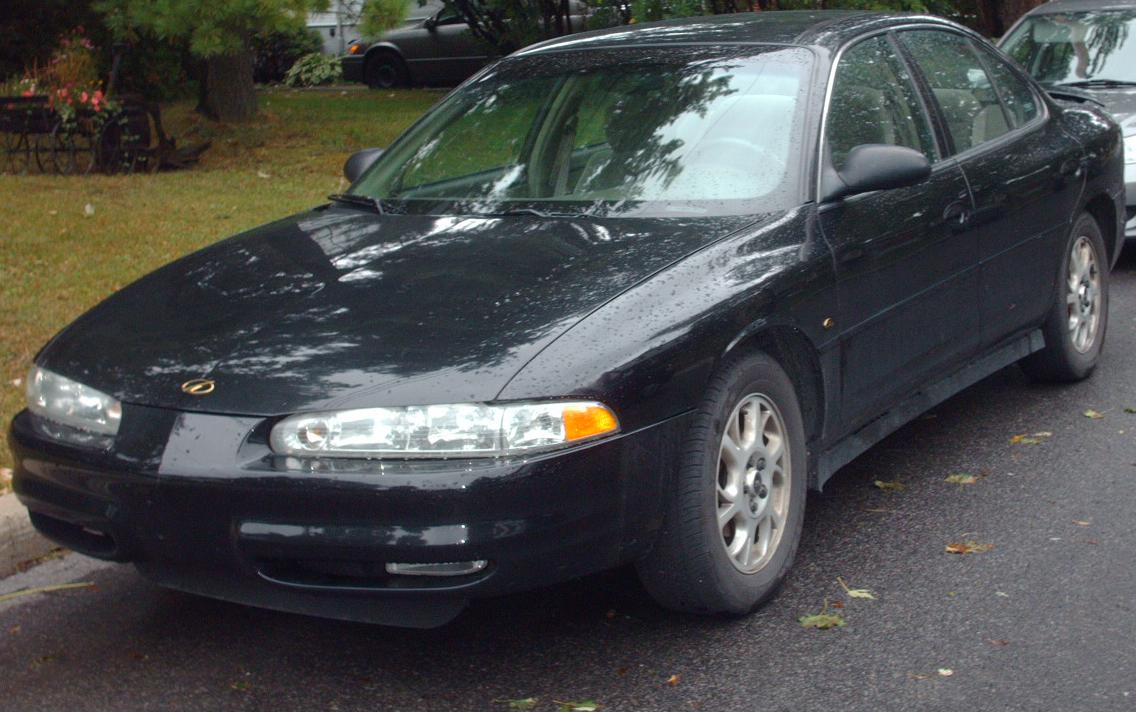
Oldsmobile Intrigue
"...pulse of what's going on, a ton of excitement and intrigue and interest around all of this new data that wil..."
The Oldsmobile Intrigue is a mid-size car (a sedan) that was made by Oldsmobile. It’s not a current model, so it’s mainly something you’d hear about when talking about older cars or past lineups. It’s typically discussed as part of Oldsmobile’s history.
The Oldsmobile Intrigue is a mid-size sedan that was produced during the Oldsmobile brand’s later years. It’s the kind of car that may come up in a podcast when discussing older model history, brand legacy, or how certain vehicles fit into the market at the time. The name “Intrigue” also makes it easy to reference in a conversation about interest and excitement around automotive topics.
third party data
"So, suddenly a dealer that really could only see what was happening in their first [2045.6s] party data is now getting signals from third party data, from KBB, from Auto Trader."
Third-party data is information coming from outside sources (not the dealership’s own records). Here it helps the dealership notice when someone starts shopping, even if the dealer didn’t see it before.
Third-party data is information collected by outside companies and then shared or integrated into a dealer’s tools. In this segment, it’s used to detect when a customer becomes a shopper “in market,” even if the dealer’s own records showed no activity.
in market
"Based on the data signals from their first party, nothing was going on, not in market, not shopping. Suddenly a hit comes in from Auto [2070.5s] Trader and they know or their system knows, their AI knows that this is now a shopper in market."
“In market” means the person is actively shopping for a car right now. The dealer’s system didn’t think they were shopping until the new signals came in.
“In market” is a marketing/lead-scoring term meaning a shopper is actively looking to buy a car now (not just browsing casually). The segment uses it to show how third-party signals can flip a customer from “not shopping” to “in market.”
AI
"Suddenly a hit comes in from Auto [2070.5s] Trader and they know or their system knows, their AI knows that this is now a shopper in market."
AI is computer software that can look at patterns in data and make a decision. In this case, it helps the system figure out that a customer is now shopping, so the dealership reaches out quickly.
AI here refers to automated software that interprets data signals to predict or classify customer intent—like determining someone is “a shopper in market.” The speaker’s example shows AI triggering outreach when new signals arrive.
SMS outreach
"Instant email is sent, SMS outreach and that person becomes a sales lead and is now talking to that [2083.0s] dealership."
SMS outreach means texting someone to get in touch. The point is that the dealership contacts the shopper quickly when the system thinks they’re ready to buy.
SMS outreach is sending text messages to prospects as part of marketing or lead follow-up. In the example, it’s used immediately after the system detects a customer is “in market,” aiming to contact them while intent is high.
customer journey
"I'd argue [2088.6s] right now that this combination now and through the next couple steps we're going to take will be [2094.0s] most sort of, will have the most visibility of the customer journey period in the industry."
The customer journey is the path a person takes from “thinking about a car” to “actually buying one.” The idea here is that better data helps the dealership understand where the shopper is in that process.
The customer journey is the sequence of steps a buyer goes through—from first awareness and research to shopping and purchase. The speaker claims the data integration will give “visibility” into that journey, helping dealers respond at the right time.
DMS platforms
"Now that full path is inside Cox, does it truly stay open to non-Cox CRMs, websites and DMS platforms?"
DMS platforms are the main software systems dealerships use to manage day-to-day operations. If other tools integrate with the DMS, the dealer can share information more easily.
DMS platforms are dealership management system platforms—software used to run dealership operations like inventory, service scheduling, parts, and customer records. When integrations work with DMS, customer and vehicle data can flow between systems instead of being re-entered manually.
open network
"Well, you look, as I said, in technology a long time, I've never seen more of an open network than at Cox. I mean, that's what we built this company on."
An “open network” means the software is meant to work with other companies’ systems too. A “closed network” would be more like a walled garden where you can’t easily connect other tools.
An “open network” in this context means the technology platform is designed to integrate with other vendors and systems. That contrasts with a “closed network,” where the platform limits compatibility and pushes dealers to use only that company’s tools.
T's and C's
"We have to guard that and so the T's and C's and the rules of the contract making sure that data is used the same"
“T's and C's” means the contract rules. In this case, they’re talking about the rules for how customer/dealership data is allowed to be handled.
“T's and C's” is shorthand for the terms and conditions of a contract. Here, it’s being used to describe the rules governing how dealership data can be used and shared across the integrated systems.
CDP
"that shopping activity flowing directly into the CDP and out to a dealer CRM. As you described, [2324.7s] it is a game changer."
CDP means Customer Data Platform. It’s software that gathers customer information from different places so a dealership can understand the shopper and market to them more accurately.
CDP stands for Customer Data Platform, a system that collects and unifies customer data from multiple sources. The segment claims shopping activity can flow into the CDP and then out to a dealer CRM so marketing can be more targeted and less wasteful.
Kelly Bluebook
"as we think about Cox owns that auto trader, Kelly Bluebook, [2316.9s] that shopping activity flowing directly into the CDP and out to a dealer CRM."
Kelley Blue Book is a familiar car-shopping and pricing brand. In this discussion, it’s treated as a place where shoppers generate activity that can be used by dealerships.
Kelley Blue Book (KBB) is a well-known car pricing and shopping brand. Here it’s referenced as another Cox-owned source of shopper activity that can feed dealership customer data and marketing workflows.
retargeting
"There's no more spending ad dollars retargeting someone who bought from [2333.0s] any one of those products."
Retargeting is when ads follow you after you’ve visited a site or shown interest. They’re saying better data integration can prevent dealerships from paying for ads to people who already bought.
Retargeting is online advertising aimed at people who already interacted with a brand or offer. The segment claims the integration reduces wasted spend by avoiding retargeting someone who already bought through those connected products.
Vauto
"The Ziggler Auto Group is an example, right? We use it within Vauto and elsewhere. [2343.2s] Yeah, it was kind of interesting."
Vauto is a software platform dealerships use. They’re saying the same kind of data/integration concept is already being used there.
Vauto is a dealership technology brand used for inventory and marketing workflows. In the segment, it’s used as an example of where the integration approach is already working.
Ziggler Auto Group
"The Ziggler Auto Group is an example, right? We use it within Vauto and elsewhere. [2343.2s] Yeah, it was kind of interesting."
Ziggler Auto Group is a dealership group used as an example. They’re showing that this kind of software/data connection isn’t just theoretical—it’s being used by dealers.
Ziggler Auto Group is referenced as a dealership group example using the described integration approach. It’s used to illustrate that the data flow and marketing activation can be implemented in real dealership operations.
golden record
"So we have all these integrations and [2457.5s] the data is just formed into this, you know, cleansed single kind of golden record for each shopper."
A “golden record” is a single, cleaned, authoritative customer profile created by merging and deduplicating data from multiple systems. The goal is to avoid conflicting or duplicate customer details so downstream tools (like marketing automation or analytics) work reliably.
data lakes
"And off of that, you can do anything. So Aaron, I think there's a lot of dealers sitting on the sidelines. CDP, data lakes, all these things have been buzzwords over the industry..."
A data lake is like a big storage area where you dump lots of data in its original form. It can be useful for analysis, but you usually still need tools to clean it up and turn it into something you can act on.
A data lake is a centralized storage system that holds large amounts of raw data in its original form. Dealers and tech vendors mention it alongside CDPs because it can be the “source” data for analytics and customer profiles, though it often needs additional processing to become usable.
Anthropic
"The second thing I would say is just look at the broader technology world. I mean, yesterday, Anthropic dropped Mythos Fable that the... [2561.2s] It's fun. Yeah."
Anthropic is an AI company. They’re mentioned as an example of how fast new AI features are showing up and what those tools can do.
Anthropic is an AI company referenced to illustrate that AI capabilities are advancing quickly. The speaker uses it as an example of how new AI tools are becoming available and demonstrating real-world capability over the web.
Mythos Fable
"I mean, yesterday, Anthropic dropped Mythos Fable that the... [2561.2s] It's fun. Yeah."
“Mythos Fable” is the name of an AI thing Anthropic released. They’re bringing it up to make the point that AI tools are getting more capable and available quickly.
“Mythos Fable” is presented as an AI release/demo from Anthropic. The point in the conversation is to show that AI capabilities are rapidly expanding and becoming accessible to users.
AI native
"Is it a bill? buy? partner? And full path was the [2648.3s] right company for it. They were an AI native, but they were also an auto first company."
“AI native” means the software was built to use AI as a core part of how it works. The argument is that this can be more effective for dealerships because it’s designed around their actual workflow.
“AI native” means a product is designed from the ground up to use AI rather than adding AI features later. In dealership software, that matters because the AI has to fit real sales processes and integrate with existing systems, not just generate generic outputs.
integrated
"You've got to make sure that's integrated. So building one of these things is not easy because you've got to [2665.5s] get it to flow to the deal desk."
Here, “integrated” means the new software has to connect with the dealership’s existing systems. The goal is for customer and deal information to flow through the whole process instead of getting stuck in one app.
In this context, “integrated” means the CDP/AI system must connect with the dealership’s other tools and data sources so information moves through the sales process. The transcript stresses that integration isn’t just technical—it has to match how deals are actually handled inside the dealership.
deal desk
"So building one of these things is not easy because you've got to [2665.5s] get it to flow to the deal desk."
The “deal desk” is where the dealership finalizes the numbers for a car deal. The point here is that new software has to deliver the right info to that step, not just store data somewhere else.
The “deal desk” is the dealership’s pricing/finance workflow area where deals are structured—often involving approvals, incentives, and how the final numbers are presented. The transcript highlights that integrated data must “flow to the deal desk” for the process to work end-to-end.
customer sat scores
"…doing it in a way that meets the customer's needs. And we're going to see those customer sat scores go up."
“Customer sat scores” refers to customer satisfaction metrics collected after sales or service interactions. The speaker links improvements in these scores to better dealer performance and a more profitable, customer-friendly dealership operation.
Aaron Horowitz
"Aaron Horowitz and Steve Rowley, thank you both for being on the show,"
Aaron Horowitz is a co-founder and CEO tied to Fullpath. He’s being thanked for joining the discussion about dealership technology and customer experience.
Aaron Horowitz is mentioned as a co-founder and CEO connected to Fullpath. In this segment, he’s part of the conversation about dealership technology, integrations, and improving customer outcomes.

Chrysler Saratoga
"...state New York outside of Albany, like kind of by Saratoga Springs. I'm the general manager of Mohawk Chevro..."
The Chrysler Saratoga is an older Chrysler car name. It’s usually something you’d hear about in historical or context-based mentions rather than as a current model you can buy new. The podcast reference may be using the “Saratoga” name as part of a broader story.
The Chrysler Saratoga is a nameplate associated with older Chrysler vehicles, typically from earlier decades rather than a modern, current model. It may be mentioned in a podcast when referencing locations or historical context tied to the name “Saratoga.” In that sense, it’s more about the vehicle’s identity in the conversation than about a specific current-generation product.
Request an Explanation
Heard something you'd like explained? We'll add it to this episode.
Sign in to request explanations for terms you heard.
Want to learn more?
Browse our glossary for plain-English explanations of automotive terms, jargon, and concepts.
Help improve this episode
See something that's not quite right? Our annotations are AI-generated and can sometimes miss the mark. Click the flag icon on any annotation to suggest a correction.