Full synthetic motor oil is a higher-tech type of engine oil. It’s made to handle heat and stress better, so it can help protect the engine and keep it cleaner.
Repave means the race track gets resurfaced with fresh asphalt. That can make the track feel grippier or different, which changes how race cars handle.
Reconfiguration means the track layout was changed. That can make the course faster, slower, or harder/easier to pass depending on how the turns are set up.
“Three wide” means three cars are trying to race side-by-side at the same time. Doing it for the lead is especially risky because there’s less room for everyone.
A speeding penalty means someone went faster than the allowed limit in a specific racing zone, usually the pit area. It can drop you back in the running order because you have to serve the penalty or lose time.
Pit Road is the pit lane area where teams work on the car during the race. Cars have to follow strict rules there, so it’s also where mistakes and slowdowns can happen.
Sometimes race rules say you can’t go too fast in certain areas. If you do, officials can add a penalty—usually time or positions—so everyone follows the same safety rules.
A green flag means the race is “normal” and cars are racing at full speed. If you pit during that time, you usually lose more time than if you pit when the race is slowed down.
“0.05 over” means the car was only slightly faster than the allowed limit. In racing, the timing equipment is so accurate that even a very small amount can still count as breaking the rules.
A “bump” in the track is a rough spot or rise in the pavement. When the car hits it, the handling can change suddenly, which makes the corner harder to drive.
The “groove” is the path drivers choose through a turn. The “second groove” is the next line over from the main one, and it can feel different because the tires and track surface aren’t the same there.
Tire wear just means the tire is getting used up. As it wears, it usually loses grip, which can slow you down.
Term
lap runner
A “lap runner” is a car that’s behind the leaders by a lap. When you’re near those cars, it can affect your driving because you may have to adjust your line and timing.
“Pit strategy” is the race plan for when to come in to change tires. Timing those stops can help a driver keep better track position or avoid getting stuck behind slower cars.
A “tire stint” just means how long a driver stays on one set of tires before changing them. Older tires usually grip less, so teams time pit stops to balance speed and tire wear.
A “fastest lap” is the quickest one lap a driver can do in the race. If someone keeps setting fastest laps, it usually means they have strong speed and good tire grip at that moment.
Qualifying is when drivers try to set the fastest lap to decide where they start the race. Being fast in qualifying is a good sign, but it doesn’t guarantee you’ll be fastest during the race.
“Track position” just means where your car is compared to other cars on the track. If you keep your position, you often don’t have to fight as hard to pass later.
The “crew chief” is the team member who makes the big calls during the race, like when to pit. The driver usually follows that plan, but sometimes they override it.
A pit stop is when the car pulls into the pits to get serviced, like tires and fuel. Because you’re not racing on the track during that time, it can change where you rejoin the race.
A caution is when the race slows down because something happened on the track. Drivers and teams change strategy during cautions, including when to pit, because the field isn’t going as fast.
Stage points are extra points you can earn during different parts of the race. Even if you don’t win the whole race, doing well in a stage helps your season points.
Racing series like NASCAR keep a running total of points for each driver. A “points bank” just means how many points you’ve already built up, which affects how aggressive you can be.
NASCAR races are divided into parts called stages. A “stage break” is the moment one part ends and the next begins, and it often changes when teams decide to pit.
“Pitting later” means you wait longer before making your stop. The idea is that you might be faster for the rest of the race or benefit from how other cars’ tires wear out.
Concept
Cree Chiefs
“Cree Chiefs” likely means the crew chief, the person on the team who guides race strategy. They can tell the driver things like when to pit and what plan to follow.
A “yellow” refers to a caution period (slower racing under yellow flags) that bunches the field and changes pit strategy. Drivers and teams often “bank on” a yellow because it can reduce the time cost of pitting and help regain positions.
“Stage ends” refers to the end of a NASCAR race stage, when points are awarded and the race breaks into segments. If a team stays out trying to gain track position, but the stage ends quickly, they may lose the opportunity to convert that strategy into lap-time gains or points.
Lionel Racing makes detailed model cars (die-cast) based on NASCAR races. They’re talking about buying the official, licensed versions of the cars you see on TV.
This is about how NASCAR awards points based on where you finish. If something goes wrong—like a crash—you can drop many spots in the overall standings.
A “points swing” means how many points (or ranking spots) you gain or lose because of what happened in the race. A crash can cause a big swing very fast.
Pit lane is the area next to the track where the car comes in for service during a race. Drivers have to be careful where they stop so they don’t interfere with other cars.
Concept
positioning a car in traffic
Here they’re talking about where the car should sit in the lane so it doesn’t block other cars. In tight pit-lane situations, being slightly more left or right can make a big difference.
In racing, pit boxes are the specific spots in the pit lane where a team pulls in to get service. Crew members use that space to work on the car during a pit stop.
“On the lead lap” means the car is still in the same lap as the leaders. If you’re not on the lead lap, you’ve fallen behind and the leaders have already passed you.
A qualifier run is the timed session where drivers try to earn a good starting position. If you do poorly, you usually start behind faster cars and have to work your way forward.
Term
pick of pits
“Pick of pits” is about choosing where you’ll be in the pit area and planning the pit stop so the team can work efficiently. The goal is to avoid delays and get back on track faster.
In many racing series, you don’t just get credit for winning. You earn points based on where you finish, and the championship is decided by total points over the season.
They’re using “Hail Mary” to mean a desperate, high-risk play that might work out big. The point they’re making is that relying on miracles doesn’t work as well when the championship rewards steady results.
Average running position is a way to summarize how often a car is near the front during a race. If that number is good, it usually means the car is running strong more of the time, not just getting lucky at the end.
The Wood Brothers refers to the NASCAR team/organization the driver is associated with. The hosts are using the team context to explain performance trends—how the car has regressed compared to last year.
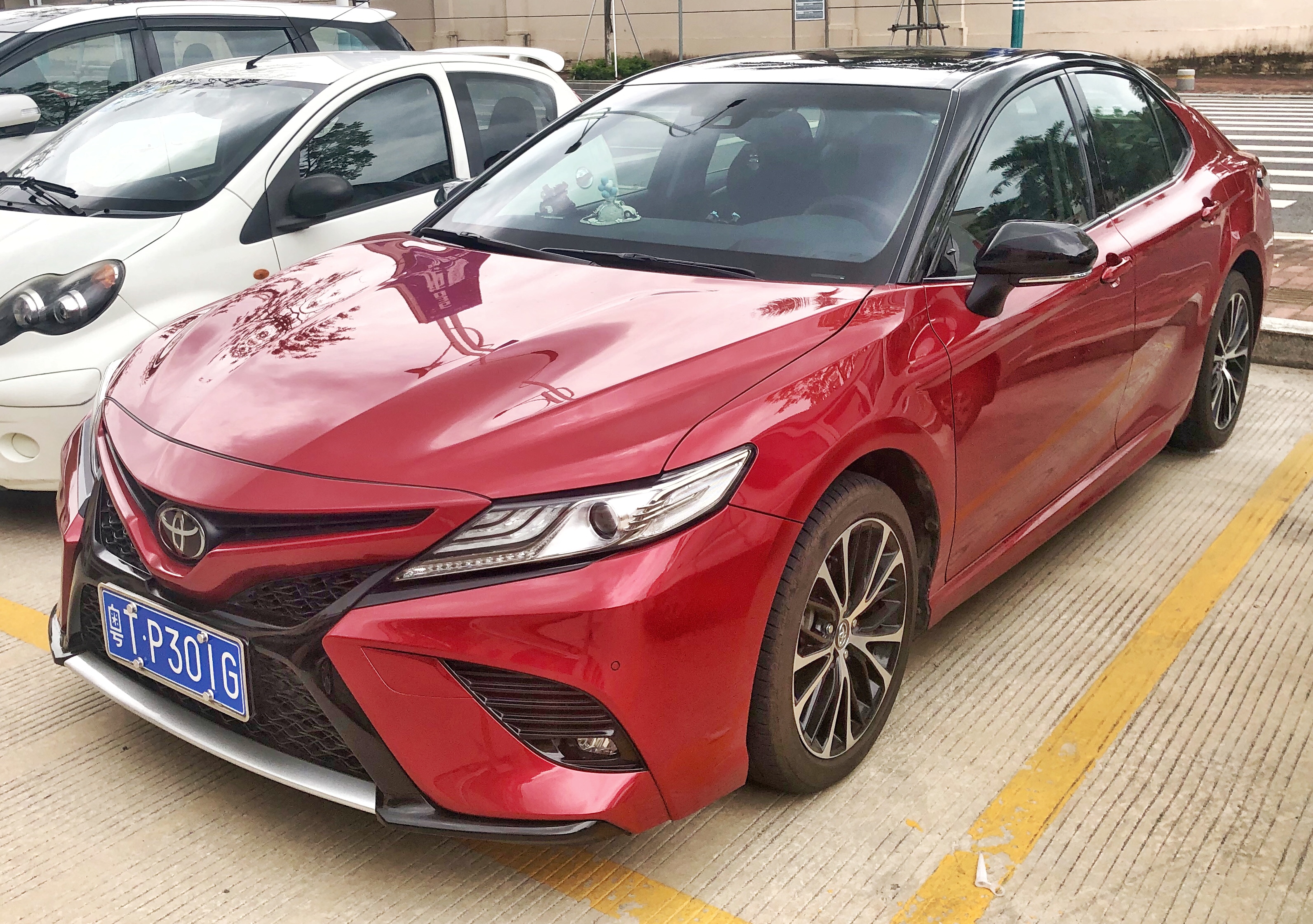
The Toyota Camry is a regular passenger car (a sedan) meant for everyday driving. The podcast is basically talking about how someone is getting used to how it drives after some time. That’s why it’s mentioned—learning the car and feeling comfortable behind the wheel.
The “Chase” is NASCAR’s playoff-style push at the end of the season. Finishing high in the standings helps you qualify and contend for the championship.
“Gibbs” here means Joe Gibbs Racing, which is a well-known NASCAR team. The point is that drivers connected to strong teams are showing up near the top of the standings.
“SMT data” sounds like performance information collected or analyzed to understand what happened on track. The hosts are using it to talk about why one car’s qualifying result might have been different.
Side draft is when one race car runs next to another to “pull” it along with shared airflow. It’s a way to go faster, but it also makes the cars run very close.
“Shade down” means adjusting your line slightly lower on the track. Here, it’s about getting into the right spot so the other car’s airflow helps (or doesn’t hurt) you.
The rear spoiler is the wing on the back of the race car. It helps the car stay planted, and the airflow from nearby cars can change how effective it is.
This is about how one car’s airflow can mess with another car behind it. If you’re too close in the wrong way, it can hurt the trailing car’s stability and speed.
Term
stall both of you out
They’re talking about a move where you and the other car get stuck together so neither one can pull away. The goal is to slow the situation down so the other driver can’t use their speed to escape.
In a race, momentum just means how much speed and motion the car already has. If one car has more momentum, it can carry that speed through the corner and it’s harder for the other car to get alongside or slow it down.
Term
sideraft
They’re describing an aerodynamic effect when two cars run close together. The air between them can change how hard it is to keep speed, so one car might get pulled along or slowed down.
“Lift off” means taking your foot off the gas. Drivers do it to slow down and help the car turn better into the corner, but it can also make you lose speed.
They’re talking about a driver possibly choosing to crash or hit another car on purpose, not just by accident. In NASCAR, that can lead to big consequences for both drivers and the championship standings.
A “racing incident” means the crash might be seen as an accident that can happen during racing. They’re discussing whether NASCAR will view it that way or as something intentional.
“Boys have at it” is a way of saying racing gets more aggressive and less restrained. The hosts are saying NASCAR sometimes lets it happen, then later reins it in.
Bristol is a NASCAR track where cars run close together. The hosts mention it because that’s where the incident/wreck happened.
Term
wreck running in the back of a guy at speed
They’re talking about a crash where one car slams into the back of another car while both are going fast. That’s a big deal in racing because it’s hard to avoid once you’re committed at speed.
A back straightaway is the long straight part of the track where cars are usually going very fast. What happens there can set up the next corner and make crashes more severe.
Term
parked it
“Parked it” here means the car was brought to a stop instead of continuing. In a race, that can look intentional, like the driver is choosing to end the conflict.
Term
chrome horn
“Chrome horn” is a slang way to describe a rough, old-school tactic to push someone out of your way. It’s basically intimidation or contact, not a polite racing move.
It means one car gets ahead so its front end lines up in front of the other cars during the maneuver. When that happens in tight racing, it can surprise the other driver and lead to a crash.
They’re saying the other driver went into the space/path the first driver was using. In racing, there’s very little room for that kind of surprise move.
Term
packs air
It means one car moves close enough to another that the second car gets “dirty air” and loses grip. That makes it harder for the trailing driver to hold the line or pass.
It’s when a driver blocks the other car’s path so they can’t get past. Think of it like cutting off the lane the moment the other car tries to move over.
When you follow another car closely, the air around your car gets messed up. That can make your car feel less planted, so it’s harder to hold the line and pass.
A spotter is like a second set of eyes for the driver. They watch the track and tell the driver when it’s safe to change lanes or make a pass.
Topic
Talladega deal
They’re referencing Talladega, a famous NASCAR race where the racing can be very close and unpredictable. They’re saying something that happened there mattered a lot for Hosevar.
They’re using computer “what-if” simulations to predict who has the best chance to win the championship. Instead of guessing, they run lots of simulated seasons.
They’re talking about how the playoffs can end for you quickly if you don’t qualify well enough. But if you make it in, you might survive several rounds instead of going out right away.
NASCAR keeps a running score called “points” based on where you finish in races. Saying a team was 25th in points means they weren’t near the top of the season standings.
LIVE
When you feel like a guy totally f***ing disrespects you on the racetrack, you do not forget it
and it eats at you and eats at you until you can absolutely return the favor.
You probably have a lot of things on your mind.
Work things, family things, what's for dinner things.
So here's one less thing to think about.
Protecting your engine.
Just swing by your local take five for an oil change and ask for Penn's Oil Platinum
full synthetic motor oil.
It helps protect against wear.
Keeps your engine running clean and gives you the kind of peace of mind you don't have
to overthink.
Just remember one thing.
As for Penn's Oil Platinum by name at your local take five, Penn's Oil, long may we drive.
At Marathon gas stations, every stop is the start of fun.
Like the awesome fuel savings you can get with Marathon Rewards.
Join Marathon Rewards today and start earning rewards on every gallon of gas.
You can redeem your rewards at any time, saving up to $1 per gallon and don't forget, Marathon
stations are packed with all the conveniences you need to stock up and live life on the
go.
Marathon, where fun runs on full, available at participating Marathon locations, terms
and conditions apply.
See MarathonRewards.com for details.
The following is a production of Dirty Mo Media.
This is the most fun I've had in this chair in the last hour and a half.
I don't know if we've ever argued, did I piss you off over the weekend or?
I'm still sour that I was the best man at your win.
Who was your best man, Dale?
TJ.
You don't need a cool vest for that race.
What are you thinking?
Get him, TJ.
That's the way it's starting to show.
All right then.
Everybody's Dale Jr. back again for another episode of the Dale Jr.
Download.
It's Tuesday.
This is post Texas heading into Watkins Glen this weekend.
Got a great guest segment for you tomorrow as well.
This episode is presented by Arby's.
Don't forget about Arby's new meat and three box.
Get more meal for your money at Arby's.
We have the meats.
So let's dive right into it.
A lot going on this weekend in the O'Reilly series,
we learned that Texas is a slick racetrack.
This was a repave or reconfiguration years ago.
We've not had great racing on this racetrack.
Crowds have suffered.
We put PJ1 all over it.
We did all kinds of things to try to help this racetrack survive
this little rough patch.
And we are finally out of the woods.
This place is awesome.
It's wide.
And we no longer need to treat the racetrack
with any kind of a Coke syrup or anything like that.
And we had cars running the bottom, the middle, the top.
It was fantastic.
In the O'Reilly series, well, the truck showed that as well.
The O'Reilly series, though, we had a really badass moment
where they got three wide there for the lead between the 19 of crews.
We had the one of Zillich and then Larson.
It's pretty wild what was going on there for a few laps
as those guys were racing it out.
And this was a great precursor for what would happen on Sunday.
So the track is super edgy, especially the outside groove when the race starts.
That groove would improve over time.
And as the rubber got laid down, more and more cars went up there to find speed.
But I was really interested.
Early on in the day, we heard from Mike Joy,
11 speeding penalties at the racetrack last year.
Not as many this race.
But a lot of chaos on Pit Road.
Yeah, there was a lot of chaos on Pit Road.
But I wonder why we didn't have as many speeding penalties.
What has changed?
Has anything changed?
Or were guys just more aware, more careful?
We just had an anomaly, anomaly, anomaly.
Did we just have an anomaly?
What was the deal?
TJ, was there an emphasis for you guys on making sure you had speed?
I was expecting lots of speed penalties.
Didn't get any.
You know, something, yeah, I don't know.
Something was different this year.
I mean, I don't know if something, if some of the lines were different.
But our lights, we had to adjust both days on Saturday and Sunday.
I had to adjust lights.
Yeah, so that tells you like something has changed.
Something's changed.
So maybe there was a little bit of a change on Pit Road,
but less speeding penalties, which is good.
And we were slow.
Yeah.
All weekend on the light.
We were bumping up.
You know, this race did play out quite interestingly.
And maybe it prevented a lot of, you know,
a lot less green flag stops or whatever.
I love busting on people that speed on Pit Road.
I don't like to see it, though.
It's a, you know, it upsets somebody's day.
It's a terrible penalty.
It is a terrible penalty.
So that was kind of good.
I'm glad.
I don't want to actually see speeding penalties.
But when you don't, when you do go to a racetrack
where there are traditionally more than normal,
you are hyper aware of it.
I think it's also like for a fan, you're like,
you're unsure because you don't know how fast it was.
And so it's just like an odd call to like.
You're just taking their word for it.
Yeah, you're just taking like, oh, they were 0.05 over.
And you're like, yeah.
And the driver's saying, I don't know how they called me.
I don't know.
I was going my lights.
I had green.
And then it's like, whatever.
The bump in turn three and four was a big deal
in the second groove, especially.
So a lot of guys busting their ass through that corner.
Turn one or two, treacherous as well.
Saw some guys getting upset.
In its own way.
In its own way, yeah.
There's speed to be made in the second or third groove,
whatever you want to call it.
They're not getting all the way to the fence,
like we used to back in the day,
which I hope that's coming down the road with this racetrack
as it continues to age.
But they, I think it's time to start working on the tire there.
We had a moment in the race where, for example,
Eric Jones wins the stage, his first stage win ever,
on 20 lap tires.
You know, that, look, I'm happy for Eric,
but that shouldn't happen.
It should not happen.
The guys with tires should just eat him alive.
So that's an absolute, like not red flag,
old bad good year,
but more of a like a,
hey man, it's a signal that the track has gotten to a point
to where I think we can start working the tire back
in the other direction.
When you repave this place,
you got a bulletproof tire that you got to bring.
They got to be conservative.
They can't have failures.
And they got to protect the drivers.
And we all love that.
It's fast.
It is fast.
And they've got to, I think though,
it's time to start working that tire back the other way.
There was tire wear though.
There was.
It's definitely tire wear,
but that when he won that stage,
it was a real short run to the end, right?
That's right.
And he had a lot of cars that stayed out too.
So that kind of helped him in that.
But I think if it goes five lap runner,
three lap runner,
something like that any further,
or that he's going to get chewed up.
But still, I mean,
we're used to guys coming from 10th and winning.
We kind of had the same thing later on
in the race where Corey Heim,
he got the lead by some strategy
to be able to stay out on some older tires
and just drove away.
And he ended up clocking off.
Let's see.
He ended up running 26 of the races fastest laps
during the spirit of time.
You know, then you throw him back in the pack on tires
and he kind of struggled to really make way
through the field the rest of the day.
But hey, before we move on,
that's a sign of things to come for Corey Heim.
That guy right there,
when he put him at the front of the field,
he's sitting there running the fastest laps of the day
on a little bit older tires and some other cars.
This kid is, given the opportunity,
we know he's going to be incredible.
What I like, I watched Corey there in the beginning.
We were around him and he isn't content.
He has to learn to air a little bit more,
but he's always looking kind of like what Tyler,
you know, how them guys are,
like Briscoe, Tyler, them guys.
He has that ability,
but it's going to bite him like a bit.
I mean, Texas at times, it did bite him.
Hostelvar on the pole.
A couple of things I noticed right out of the gate.
Hostelvar qualified really well,
as did his teammate Suarez.
Front row.
Yep.
Suarez dropped to 17th place by lap 30.
Which I don't think is shocking, though,
because didn't they talk about his balance was off?
Listen, I also saw Hostelvar struggling as well.
So Suarez cars started tanking around lap 15-20.
Hostelvar also started dropping a little bit
and struggling to match pace with the top 10 after about 35 laps.
Now, he was able to race hard and find a balance
that would allow him to maintain his track position
throughout the day,
and he ends up coming home.
Both these guys come home with top 10 finishes,
but Suarez was in big trouble.
One of the things that stood out to me
when I was looking back at some of the guys'
fastest laps of the race,
and this is just something,
I don't know, a neat stat that I would love to have the answer to.
So most every car in the field ran their fastest lap
between lap 175 and lap 220.
Most everyone ran their faster laps toward the end of the day.
The fastest laps for the 7 and the 77 were laps 2 and laps 3.
So like, they didn't, their cars,
I don't know, did their cars not improve throughout the day?
It's definitely probably not situational.
That was the cleanest error that either of them had all day.
Yeah, but everyone, the whole field,
all ran their fastest laps in this other part of the race entirely.
Yeah, I don't, I mean, yeah, they should have been.
That's kind of weird stat.
It is weird.
It is weird.
And it just kind of tells me that they did,
and they didn't look as good after they changed that first set of tires.
For whatever reason, their cars had great speed and qualifying.
They went out there, and I mean,
Suarez finished in the top 10, as did Josefar.
Josefar, to me, was a back side of the top 10 car.
Suarez was not.
Josefar definitely had a better race going.
This is the number, Suarez on speed ranked 22nd in the field.
You know that, and how,
commend him for getting a top 10 finish with,
Yeah, he did a good job.
You know, basically a 22nd place race car.
That he was on the same strategy we were,
and we stayed out, and he had pit,
we stayed out to try to win the stage,
and he pits, keeps his track position.
Yeah, you guys did not.
That was another thing that happened in the race
that was really interesting to me, TJ,
and I know Brad said he overrode and made the decision.
He took ownership of that decision on social media.
Saying that, hey, man, that was on me.
And we've heard drivers say this in the past, man.
Even veteran drivers, you got to let the crew chief, crew chief.
You know, kind of walked me through, I suppose,
not so much what led up to that,
but what the conversation has been like since.
You know, Brad stays out to try to win the stage.
He was in third place.
The cost of comes out.
Everybody pits.
He stays out.
They run one lap or whatever to the finish.
Yeah, one lap to the end of the stage.
He finishes third, so.
Which is where we were running before.
No game, no loss, but now he's got to come down pit road,
and he gives up 27 spots.
27th.
Right, so he comes out 27th,
basically come in from third to 27th,
and you finish 20th?
13th.
13th, sorry.
Before all that jumbled up mess at the end of the race,
I think you're running 20th before the last caution.
Let's see.
It got close to getting even out,
but we had a little bit of luck at the end with the Rex and stuff, but.
So, the, you know, the decision to come down pit road and,
or not come down pit road,
and come back out on the racetrack in 27th,
what was the conversation over the radio at that point?
Well, honestly, I think we thought maybe more would stay out,
especially guys and the teens and stuff that aren't going to get on the top five.
Try to run well in the stage.
Get some stage points, make your day a little bit better,
and then battle out the rest of the race.
That was what you saw Jones do.
Eric Jones doing stage one.
A bunch of them, a whole bunch of people.
That gave you the confidence to make this decision.
Yes, and it had not been only us and priests that stayed out,
so that put tires.
Brad restarted 18th on the last restart,
grabbed five spots to be able to get a respectable 13.
Respectably, yeah.
But you're just planning on more cars staying out, I think,
and if you get the stage win, get points there.
We obviously didn't have a winning car,
but when we were in the top three right there,
honestly, we were better than Suarez at that point,
and he finishes.
What, he finished fifth or sixth or something?
Yes.
So I feel like if we come down Pit Road,
maintain, gain a spot, just in that area,
I feel like we could run top five.
But it's part of it.
You got to go for chances when you can to get stages and things like that.
And like you said, luckily, we got about the 13th.
It kind of made it reasonable.
But you still, you know, at times,
you know, Brad's a very smart race car driver,
and he knows way more than what you probably think he knows
when he's racing, on what laps,
who's doing what strategies, and things like that.
And sometimes you can't see the bigger picture from in the car,
and it's hard for him to see that sometimes.
But I think it's business normal going forward.
I mean, there's no, you know, I think each race
is going to be its own animal every week,
and you just got to try to make the best as you can and keep racing.
We saw, I mean, we saw Denny overrule his crew chief too,
so a couple instances where drivers,
I think, doing something normally don't do.
Yeah.
Which is especially odd for Denny.
Yeah, and I think they're the ones in the car driving it,
knowing how challenging it is, you know what I mean?
Like, and if you can get points when you can,
you can take them because if you, you know, you pit and you come out there,
I mean, you could have gotten a wreck.
We could have gotten one of them wrecks.
Who knows, you know?
I mean, you just never know.
So I do think there's a play for take points
when you can get them as well.
Especially if it's a top, you know, top three to five position,
you got to take as many points as you can.
Get the points bank and see what happens.
I mean, if you look at the points, we're right around,
look at who are right around still.
I mean, you can see, I mean, it's tight right there, man,
and you almost got to take, you almost got to take every point that you can, right?
So, yeah, Brad sitting ninth in points, actually, very respectable, I think,
but it, you know, so surrounded by Larsen Byron,
got Ty Gibbs, Christopher behind you, a couple of guys.
Yeah, so tight window.
It is, you know, this is another thing that I see.
Christopher Bell pits at lap 33.
The break in the stage in half will be running to lap 40-41.
You see guys coming down pit road earlier.
We know that Denny Hamlin and his guys like to run long.
Sometimes you'll see that pay off at the end of the stage,
but if you're not Denny Hamlin, now that's easy for Denny to do.
He's running in top five, right?
It's easy for him to stay out there and run long,
but if you're a 25th place car, I just have never really understood the point of,
you know, if you're running 25th, you're running 20th, right?
Everybody starts coming to pit road lap 33.
Why are you staying on the racetrack to give up all of that time?
Now you're coming out of pit, you know, when you do make your stop at lap 40,
say, you know, in Texas, you came, you know, you came,
you were 22nd when the cycle started.
You come off pit road and you're 32nd.
Yeah, so I know exactly what you mean, and I thought the same thing as you at times,
but if you, the way that these stages are, they're splitting it like it's 70 laps.
Yes.
People are doing, you know, they, if they're pitting lap 30,
they're pitting and if you look at their times,
they're actually cars that are falling pretty hard around lap 30.
Yeah.
And then so the next run, they got to go 40, 45 laps.
Like, and that makes a second half of that.
Harder.
Harder.
But look, the seven, or I'm sorry, yeah, the seven is Suarez.
So he was a 22nd place car.
He's not a great race car, not a great on speed.
And he pitted with the guys that came early.
He's like, yeah, hell yeah, bring me to pit road.
Even though my car sucks at lap 25, I'm coming down pit road.
And that, I think, was the, that and some other strategies about pitting later in the race
were the things that allowed him to get this 10th place finish,
your top, top 10 finish.
Sometimes I just kind of wonder, look, I'm, I'm gonna catch hell from some of the
Cree Chiefs that are, that are in these positions.
Well, we did the ups that end up in front of him.
So I mean, you ran long.
We ran longer than him.
Yeah.
So, well, he was, he was junk at the first part of the race.
Yeah.
I, you know, I just, if you're in 25th, you know,
you're trying to jump some cars.
Go down pit road.
Do something.
You've got the ability to try it.
Don't stay on the racetrack and just bleed more and more time and give up.
You don't have track position and you're giving up more.
Yeah.
I will say though that watching visibly some of these guys
when their cars fall off, they're, they're out of control, man.
Like they are like, and they fade really fast and
get the pit road, make an adjustment, get yourself a chance.
So one, one thing too is you can actually, it's easier to pass
a car 30 laps into a run with that.
If you have, if you have, you know,
if you're five, four tenths better a lap, it's easier to pass that car
than it is when you're a 10th difference a lap.
You know what I mean?
I, I, I get it, but you're giving up, you're giving up a straight away or more
to the field by staying out seven more laps.
Yeah, but you're, you're banking on gaining that back with the 15 extra laps
they got to run.
If you're a 25th place car, you're not doing it.
Now, if you're Denny Hamlin or somebody with a top, if you got top 10 speed,
yeah, but if you're a 22nd place car, 25th place car, I don't,
I think get your ass on pit road, try to turn your 25th place car into a 15th place car.
Yeah.
The problem is like that whole group all pits at like the same time.
Yeah.
So you got to do, you almost have to do something different.
You come out within a spot or where you work because you're not really gaining.
I just, I, I'm not an expert.
Look, I'm going to take this, but when I'm sitting there watching these races
and I see all these guys, I see the cycle begin and you always see like eight guys
stay out.
I want to be the guy that starts it.
The eight guys that stay out are always like the guys that are running 20th to 30th.
Yeah.
It's like, why are we doing this?
You know, are you banking on a yellow?
What's going on?
There's less yellows this year, less likely to get that yellow you're looking for.
You're trying to get it to pay off on lap time at the end of the race,
but what you give up, you don't make it up the stage ends too quickly.
I don't think you make it up on the leader, but I think you're not worried about the leader.
Not worried about the leader.
I think you meant, I do.
I mean, I've, I know we've been in that rarely though.
Do I see that guy drive himself to 15th from 30th?
Yeah.
I mean, yeah, you don't, it's hard to do that no matter what.
So it's just frustrating.
Hey everybody, the 2026 NASCAR season is underway and it's already shaping up to be
another year of hard racing, great storylines, winning moments that remind us why we love
this amazing sport.
And when it comes to capturing all of that on track action in collectible form, nobody
does it better than Lionel Racing, the official die cast of NASCAR.
Their race win die casts are some of my favorite cars in my own collection.
That's because the detail, they look exactly like the car does in Victory Lane, the confetti,
scuffs, marks, tire marks, damage, all of it.
It's like freezing that winning moment and time and having it right there in your own home
and your own collection.
Lionel Racing die cast, they're the real deal.
And right now Lionel is offering a free domestic shipping when you use promo code download 26.
That's free domestic shipping when you use the promo code download 26.
So head over to lionelracing.com, grab your favorite die cast and make this NASCAR season
one to remember.
Working outside in the springtime means you're dealing with chilly mornings,
hot afternoons, and everything in between.
Not to mention mud, rain, and whatever else the weather decides to throw at you.
You need workwear that can keep up with the changing conditions and true work as you covered.
Springtime is the perfect season for the T2 work pant, which keeps you comfortable over a wide
range of conditions.
These pants have four-way stretch for bending, kneeling, and climbing.
A water-resistant finish to shed rain and nine intelligent pockets to keep tools just where
you need them.
Working in the spring means you never know what the weather is going to be.
It could be cold one day, it could be hot, it could be rainy.
Grass sometimes still has a little dew on it.
You never know what you're going to get.
But with the T2 work pant, it doesn't matter.
They get the job done.
The other weekend I was out working in the yard.
Didn't want to get grass and weeds on me, but was also worried about being too hot.
But the T2 work pants had me covered.
And unlike jeans, they're easy to move around and get the job done.
Plus, with all the pockets, you don't have to worry about holding on to all your tools.
The T2 work pant is built different.
It's built for people who hold themselves to a higher standard.
The work doesn't just stop because the weather changes.
Upgrade to the T2 work pant and stay comfortable no matter what the day brings.
Get 15% off your first order at truework.com with code Dale Jr.
That's T-R-U-E-W-E-R-K.com code Dale Jr.
True work.
Built like it matters because it does.
A moment in the race that was really compelling.
Gillian spins out.
Kind of gets put in the third lane around, you know, around turn four and busts his ass.
Denny slowed down.
Christopher Bell thought he could shoot the gap and get through, but he gets clipped.
Wrecked out of the lead.
I believe he's leading the race.
He was.
Wrecked out of the lead before the end of the stage.
Christopher Bell, I think, would lose four positions in the points.
He's going to go from, I guess, ninth to 13th.
That's crazy.
It is.
So, and it's, and so this is one of the, I mean, I'm sure there's been other examples earlier
in the season, but this was like a great example of the new point system at work.
Christopher Bell, a very unlucky, unfortunate situation right there where he gets clipped
and ends his day.
Car slaps the wall with the outside, the passenger side, right before the flag stand
and damaged the car too much for him to be able to continue.
He's out of the race.
No top 10 stage points.
He's getting ready to, literally, it was a 30, right in that moment.
It's a 30 to 45 point swing.
Yeah.
In the moment, right there.
Bam.
Oh, if you're the first car out from, oh my gosh.
Yep.
Especially leading.
Yeah, he's going to get 10 or nine at the worst in that stage right there.
It doesn't get worse.
Yeah, it doesn't.
Chad Fincham passed him.
We will look back at this race, no matter what happens with Christopher Bell going forward.
We will look back at this race and wonder what might have been.
Could he have just gotten an average day, right?
You know, come away with 10 stage points, a top five finish or a top 10 finish.
Yeah.
It'll make a world of difference for how his chase is going to play out.
This is exactly, I remember last year saying, you want the wins to feel better and the losses
to hurt more.
And this is it.
This is it.
Yeah.
Another driver who had a similar issue in terms of points was the 22 of Lugano.
So everybody's on pit road.
And this one is a tough one, man.
And apparently Lugano is not looking at where he's going.
He doesn't seem to react, right?
Wouldn't you assume he's maybe looking to the right?
He's looking at his dash.
He's probably worried about the Cardo's right.
Who knows, right?
He could be looking at the mirror trying to clear himself high.
I mean, the 41's has stopped right there, too.
That's tough, too.
I know.
Look, of course it is tough.
That's my, that was my next question, guys.
Where does your opinion about the 41 parking in the middle of hit road?
I know he needs to stop and wait.
He doesn't want to be that ass that runs into the 54 who's trying to get out of his box.
Yeah.
But where should he have been somewhere else?
Should he have positioned himself a little more left?
The 41, look how high he is.
I mean, he's, he's out there.
I don't know.
He's right getting up.
I don't know.
He's pretty close.
I mean, he's within a foot, two feet of the white line of the pit boxes.
But I mean,
This was the problem when you have people taking two, people taking four.
Look, the 22 could have been more right.
He did.
He didn't have two cars out there.
There was only one.
So just, it's unfortunate.
And I don't want to **** on Cole for, for, I just, I mean, the 54 is moving.
Cole has to stop.
He's going to hit him.
I agree.
But Cole could have, Cole might have,
would have Cole drove through too many boxes had he been positioned a little?
Yeah.
Yeah.
Cole kind of makes this decision, right?
Real, real late.
He's not allowing, Cole's not allowing himself the opportunity to sort of be more behind the 54
or like stop, stop.
So there's a gap.
If you look where the 54 is, there's a gap behind him, an access point.
Or the, you know, if you look at pit road.
Yeah.
But this is also the first run of the race, right?
Or real early.
So is Cole on the lead lap here?
I think so.
Yeah.
Obviously he's on pit road.
See the, no, there's not a gap behind him.
All right.
Just bad timing, man.
And things, I don't know if you could, Cole's doing the right thing,
but Cole's also racing cars.
What could they have done?
Could Cole have done something different?
Could the 22 have done something different?
This just doesn't happen that often.
This just doesn't happen that often.
You know, and there's, are there guys stopping on pit road?
I mean, honestly, there's two, they're too wide.
Watch how many cars are outside Cole before he turns in, there's two there.
So Joey, it looks like there's room for Joey to go through out there.
There is room for Joey.
Look, there's two cars outside of Cole right there.
Yeah.
And there's only one car outside Joey.
There's room for Joey.
So there, I mean.
Do guys stop on pit road that often?
I don't think I see that that often.
Um, yeah.
A guy literally parking it right there.
When there's that many cars on the lead lap early in a race.
Yeah.
I mean, when you narrow the field down, it's only 20 cars.
I know there's guys that slow down, like to let people out.
Yeah.
Well, they're probably saying it's going to be close if he's, and if it,
if your crew chief is telling you that it's going to be close,
I think the thing is, if the guy's going to drop the jack and go,
the crew chief saying stop.
Yeah.
And I guarantee the crew chief saying stop, stop, stop, because you don't want to ruin
Cole.
Yeah.
He's telling Cole to stop.
I'm sure.
I mean, is the spotter still at this point?
Is this no, uh, for Joe, we'll say there's some teams
that the spotter counts them in like doing O'Reilly.
I count, I count Carson in and during the truck race, I can count them into some,
but I give a 10 away mark and then, but we always go over this like,
Hey, it's going to be close with the, with the, with 54.
You can't answer.
Yeah.
That was the other thing I was going to ask is like, are they,
do they know that it's going to be close with 100% then could they have anticipated this better
and position themselves more, more behind the 54?
Could they have came down pit road?
No, you're not going to give up more ground because Cole at this point on pit road.
What if the 54 has a problem and you're laying way back and dude, he came on the
Cole came on the pit road in the backside of the top,
you know, the last five cars on the field.
Yeah.
But those are guys that he's going to be racing for to stay on the lead lap.
You know what I mean?
He's running his own race.
He's got his own race.
I don't, he wouldn't be on pit road if he was a lap down.
I don't know, man.
I think just wondering if this was avoidable.
It's just bad and that's just pit road, man.
Well, that was another incident where it's much like Bell, the 22,
he had no stage points from stage one and he doesn't get a chance to get any in
stage two or three or good result.
That was a, like, it's hard to believe that took Joey out of that race right there.
Well, he's a massive dam.
Yeah, sure.
Joey would lose two spots going from 15th to 17th in points now.
He seemed very frustrated by what was going on right there
at the end of the day.
He was, he was angry at the team a little bit
because he wasn't quite aware that they were taking two.
It didn't seem like he was quite full of the information that he expects
during a pit stop cycle.
You know where this starts?
Yeah.
This starts in the beginning of the weekend whenever you, where you qualify.
Like they had a bad qualifier run.
You have a bad pick of pits.
I'm just saying, you know, everything we've just compiled leads up to it.
Well, yeah, that puts Joey 17th in points right now.
That was the boys, the boys on the Gluck and Jordan.
The Gluck cast?
Yeah.
No, no, no.
The Gluck cast is on Thursday.
Yeah, on the teardown.
They were talking, they were having a conversation about what's wrong with the 22.
What's wrong with the 22?
And we actually shared this on our dirty mo handles.
I, you know, honestly, and I went and looked, I went back and looked at Joey Logano
and where he was in points in the last four seasons.
In 2022, at this point in the season, he was ninth in points.
In 2023 and 2024, he was 13th in points.
And then last year at this point in the season, he's ninth.
Now, of course, those all are better than 17th.
But I honestly don't see a big difference in the way Joey's running today versus
over the last handful of years at this point in the year.
You know, we were not.
He'd always catch fire at the end.
Yeah.
Or he'd win the race that needed to be won.
Yeah.
Right.
I don't honestly, he wouldn't really catch fire, but he would.
He wouldn't.
Paul throws.
Paul.
He'd get a win here.
Who'd be calling big balls, Paul?
Yeah.
He'd grab a win here.
Yeah.
Grab a win over here.
And then he'd grab a win back here and he'd have three wins going to the playoffs.
And bam, bam, bam, make through the rounds.
And he's a, you know, he would do those, he would win and succeed under that system.
Honestly, I'm looking at him now.
Of course, I don't expect him to be 17th, but he was 15th going into this race.
That's not a big departure from what he's kind of been doing the last four years.
I mean, honestly, if he doesn't wreck a Talladega, he might be 13th.
Yeah.
Or even a little bit better.
Maybe.
Yeah.
So.
Yeah.
I mean, I think it's just the 22 is what the 22 is at this point.
And they've kind of been this team for a while.
I think they would even agree that they're not running, haven't been running well for
the last five years in this stretch of the season.
They haven't been doing what they would love to do.
How concerned should Pinsky be?
You got Blaney up there, but then the rest is Blaney has reasonable speed.
And since been doing good.
Since been having a really quietly good year.
He has.
He has.
Cedric will sit there.
You'll look at the running down, run down, you know, eight, seven.
Yeah.
You're like, all right.
Yeah.
He's doing really good.
Yeah, he's sitting.
He ended up 15th in this race.
His 15th in the standings.
Is it?
But like in these previous years, though, we haven't had this point system, though.
Now, how does, and they've always made ground up by getting that win,
throwing that Hail Mary, you know, and getting that win and then using that to just, I mean,
leapfrog up there and just kind of keep throwing Hail Mary is like, you can't,
I don't think that's possible now to just get all that back.
Like, is that concerning for teams in that area now?
You know what I mean?
Like, well, look, I think Joey knew that going into this system that they weren't,
they weren't, and they haven't been doing enough to win under this style of system.
So, I think he knows that they've got to get it better.
They can't live off of, you know, a handful of wins and, you know, give them to position
themselves with that opportunity to win a championship in the chase.
They have to finish well in the points, which means they have to run well every week.
Be consistent.
Every week, right?
To your point, like, Cedric has average running position this past weekend, 13.9.
That sounds exactly like a Cedric kind of 2026 day.
And I think that is up over what he's probably done in the last four years.
And the other car, though, the Josh Berry Connection with the Wood Brothers,
they've regressed from last year.
They had a really solid year last year.
In the back half of the year, started to struggle.
And now this year, it's been a real struggle for that car.
Front half was really good.
Yeah. And so, you know, it's sort of, in most situations, what we're seeing,
I think Pinsky is unique because in most situations, we see all of the teams in the
same organization somewhat run relatively similarly.
Whereas in Pinsky, we're seeing everyone run a little bit differently.
Yeah, you got one in every tier.
Yeah, kind of do.
So it'll be interesting to see if they can kind of, I don't know, clean that up a little bit.
You're fortunate and happy to at least have a guy that does have the speed,
which I think Blaney is that guy.
You see Cedric kind of outperforming some of his traditional numbers.
In my opinion, I don't know that I have real statistics to back that up.
But I think Cedric's outperforming, I agree.
I mean, just visibly seeing him every week, you're like, oh, there's two up there.
I think Pinsky's got to have some concern.
RFK's consistently running well.
Most racetracks outperforming Pinsky on half of the racetracks, that's a conservative guess.
I'd say RFK's the better 14 right now.
Yeah, I think that's fair.
I need to make that argument any given weekend.
Well, in the first stage, Brisco was able to get some points, finishing in the top five,
I believe, finishing fifth in stage one.
He would have some contact on Pit Road.
Kyle Larson comes into his box.
This is kind of a thing that Cole Custer was trying to avoid.
Larson's coming in.
The 19's leaving.
Knocks the right front off the 19 car in the damage and would suffer for the rest of the race.
Another situation where a driver that is kind of had a tough start to the season,
this is Brisco.
He's sitting 16th right now.
He's been trying to claw himself up the rankings since the season started.
He ended last year, I think, one of the top four teams.
He was top five team.
Yeah, right for championship.
And we all thought, okay, second year, he finally knows how this Toyota car drives.
He's going to take off this year.
He's in a deep, deep hole right now.
He is 16th in the points, but coming out of that race with an opportunity to grab some points
wasn't really able to gather all of the points that he would love to have had in his bucket.
Going into Watkins Glen, though, they've got a chance to go out there and run well.
He's been doing pretty solid numbers on the road courses.
This guy has to be sitting here in 16th, right?
284 points back from Tyler Redican first.
He's trying to get into the state.
Let's say he's looking at the top six.
Man, I'd love to be in the top six for the chase, right?
That is Carson Hosevar, who's 193 points back.
So he's almost, he's about 90 points from sixth.
90 points.
He has got a lot of work to do to give himself an opportunity to try to race for this championship.
When you look at the guys, he's got to overcome.
It's not easy.
No.
Well, that's what I'm saying.
You look at them points, man, from like,
from like ninth, you look at seventh, Gibbs, Larson, Byron, Bubba,
priest, Bell.
I mean, Bell's back there in 13th.
It's crazy.
Like it's not like some guy that we didn't expect is up there.
We're going to, they're going to fall off.
I mean, this is kind of cool about this.
You still have some guys that just been had a lot of speed and you still have some guys
that haven't been in the facility, but they know how to put races together.
You know what I mean?
We got a little bit of both.
He's with the organization that's one of the best performing organizations in the series right now.
Joe gives racing and they've got to have a really, really good stretch in the summer
to give themselves a chance at this championship.
Have to.
They have to.
It starts now.
Yeah, for sure.
A lot was made of Kyle Busch's day.
Got qualified in the top.
Yeah.
Got qualifies in the top 10.
Ran really good all day long.
Got a little frustrated at points in the race.
And then toward the end, didn't have the track position that they had had all day long.
They're back there racing for around 15th with John Hunter Nemechek going down the back straight away.
Um, gets up, you know, him and John Hunter Nemechek make contact.
It turns the eight into the wall and then they go down into turn three and he intentionally crashes the 42.
Allegedly.
Yeah.
I mean, it's pretty.
Yeah, I know.
I mean, absolutely.
I was watching some of the comments that Denny made on his podcast and I have to agree.
Look, the eight car of Kyle Busch, Kyle Busch put out some SMT data.
Could the 42 have been higher?
But even with all that said, was the 42 shaded down?
Yes, he was.
If I am trying to side draft a car, I'm going to, I might shade down a little bit to get to him.
I'm not saying that's what he was trying to do.
But if I'm the eight, I am not going to let that guy get my quarter panel.
And so if I'm the eight, I'm going to actually be down the track a little bit and that's one of the points that Denny made.
Denny made, hey, Denny said, you know, if we were to switch cars, which was a comment that Kyle made the week before,
then he's like, if we were to switch cars, I would have been down the racetrack trying to get away from the 42 so that he couldn't dump all that air on my rear spoiler.
And so that was the one thing that I was kind of curious about.
I kind of have to agree with that.
And so TJ, you got a point.
I mean, I know exactly, like for Denny's situation, yes, in his car, you absolutely get away from, but Denny, the eight isn't the 11.
The eight doesn't have the speed that 11 has on the, on the straight, actually the corner, the straight away is like, it just doesn't have it.
So it's easier, yes, you would stay away in a situation like Kyle, it's easier to pin that guy against the wall and just stall both of you out and try to beat him into the corner.
Than it is to get away because he's got momentum.
Like it's almost better to stall guys out when you're in equal cars.
If you're in a really good car and you're going forward, absolutely, you get away from that guy, but it's harder.
And I don't like, I don't really think Denny doesn't run in that a lot.
So I don't think Denny knows exactly what it's like to be in that situation.
And like, honestly, if we didn't, well, there's many times in that race, we come off the corner and Brad would try to stall.
You know, we get away from a guy and they clear us before the entry to the corner.
Yeah.
So watching the SMT data and how when the eight goes down into turn one and two, the momentum he has going by the 42 off a turn two, it almost feels like that.
It's going by him so well that it's, he feels like he actually might have had him cleared or might have the potential to clear.
But his momentum is good enough that I don't think the 42 is going to drive back by him.
I do. I think the 42 pulls him back and he clears if he pulls him back. Yes.
But if I don't think he had, I think 42 has got enough momentum to do it.
When they give off a turn two, they're dead.
Damn sure. Both running the same speed in the SMT data right there.
If he gets away from him, 42 is maybe going to come back just a little bit.
He's going to get, he's going to have his front tire in front of his, which all that matters in the three.
Well, I don't know. I feel like if you let him sideraft, you certainly give him the chance to go by you.
The lab before he did the same thing with us and Brad had to lift off of two.
Like Kyle was coming up and Brad had to lift.
Kyle was just taking, yeah, he's taking everything he could.
He was driving at 11.
Take what you want. He must have had to spot her just like you.
Yeah, you're not saying that on, you're not saying that on exit right there.
Well, listen, that's, I think what happened with John Hunter and, and Kyle Bush is just, uh, you know, two guys with racing to me,
two guys with really, uh, interesting personalities that just clash in the, in that very moment.
Uh, but down in turn three, Kyle Bush intentionally crashes to 42.
He turns right, bounces off of him, sends him up into the wall.
Um, I honestly don't feel like NASCAR is going to do anything about this.
I hope they don't.
Well, there's another situation later in the race, uh, between earlier in the race,
early, I'm sorry, between priests and Ty Gibbs, that was equally as, uh, intentional.
Um, I mean, he said it before he did it.
He said, he said, you know, he, priest was mad with, with the 54 and he said he's going to take care of it.
He went out there.
He sent him down into turn three.
Did he have the intentions of wrecking him?
I don't know.
He knows kind of what he's doing out there and how hard he's hitting these guys and what might happen to him if you hit him like that.
But, uh, at the end of the 54s day, huge point swing for the 54 as well.
Ty Gibbs, he was sitting, um, fifth in points and now that knocks him back to seventh, uh, which is right outside that sort of place you want to be to have a shot at this championship.
Um, so a big swing, big, big blow to the 54 team.
I'm sure those guys aren't going to forget that.
Do you feel like it's self-inflicted though?
Well, the question, the question I think I'd love to talk about is what does NASCAR do and will they react to either one of these situations?
I feel like given the current environment with what has happened in NASCAR with
Phelps leaving the, the text messages, the lawsuit,
O'Donnell coming on as, uh, the new president, I don't think they want to do anything
to ruffle the feathers and the general popular opinion.
And so I think just my guess, and I, I mean, I'm not trying to start no sh**, but I don't believe they react here.
Because I feel like that they may fear reacting to this would create bad negative publicity and feedback from fans.
And so we, I've been in the sport long enough to see the ebb and flow of boys have at it and how it comes and goes.
And it's fair. It's a, and it's never going to be, it's never going to be this flat, perfectly managed situation.
You're going to have times where you've got to rein it in.
You're going to have times running a series where you've got to react and say enough's enough.
I'm going to fricking make an example out of somebody. But right now I don't think is that time.
Right now I think is a time where they may allow this, this one to go.
And I could come up with, and I just explained a lot of reasons why they might do that.
So I don't expect any penalty. I don't expect any, you might do probation. You might, you might do something subtle.
But I don't believe they're going to do any money or any points.
And if this were to continue and become more problematic, yeah, they might rein it in and show,
you know, make an example out of somebody down the road.
Because again, it does peak valley between how NASCAR and any series has to manage the actions of drivers on the racetrack.
That's my, that's my opinion. I don't think anything happens here.
TJ, what do you think?
I don't know if anything happens. I know that if I was on that car, the guy wrecked, I'd be really pissed off.
Yeah, of course. And they will be, and they are running.
This is one of the places where you're running fast and you're in the throttle a lot.
And if you're, this isn't a Martinsville where you ship a guy at the hill a little bit or spin him out.
This is Texas where it's arguably one of the fastest places and most treacherous places that we go to.
And you might not see that rebuttal or response at Watkins Glen. You may have to wait a while.
Yeah. I don't know, man. I feel like this is just unnecessary.
You know, Kyle was actually having, Kyle was having a pretty solid day, a good building block to better days.
And even if he doesn't, if they don't wreck there, what's Kyle finished 13th to 15th?
Well, it was right. Front was destroyed.
I'm just saying if he doesn't, but if he doesn't come up on him and have that accident,
it doesn't happen on the back straightaway finishes in the top 13th to 15th, maybe 12,
I don't know, somewhere in that area. And that's a solid day for, to come back and start building off
of in my opinion. And, you know, Kyle, to me, I mean, look at his, he restarted 11th on the last
restart. I mean, okay. Finished within two, three spots of that, right? And 20th last car on the lead lap.
He got into it. Got into somebody at Bristol, Riley, and wrecks him there, you know, so like,
to me, man, you got to think about that. He was on one Sunday because he was cussing at
host of our two. Yeah. But I mean, just finish the day off, man. You had a good day. There's no
reason. The last thing you want to do is being, this is not what you want to be in the news for.
No, no. Listen, the, the, the act, the act, the act of wrecking the guy is,
yeah, it's a total, it's uncalled for. You can't, you know, he shouldn't have done that.
But I don't think NASCAR does anything. He's all I'm saying. Yeah. I don't think they're
priests, though. If they don't do anything to, no, I'm not, not, not him being punished or anything,
but just like him getting mad at Ty, it seemed like to me, the average fan, it seemed like for
nothing. Oh, well, you, I don't know. I think you need to be in the pack there a little bit more,
buddy and see what the race is like. Well, then it's like, no, no, no, this, what he did to Ty,
we don't, we, he, there may be 15 instances that led up to that. There may be, he, this may be,
hey, I don't, I don't want to make assumptions. It could have been lap 10,
lap, yeah. It could have been five weeks ago. It could have been something six weeks in a row.
Yeah. I mean, and dude, I'm telling you, when you feel like a guy totally disrespects you
on the racetrack, you do not forget it and it eats at you and eats at you until you can
absolutely return the favor. And they finally push you over the edge. Yep. And then they'll,
and you're like, you're ready. So something has happened. I'm sure of it where
priest has it in his head, that little. Yeah. And then this happens in the race and he's like,
enough. I am done. And so I can relate to that frustration. And I don't know. I see,
I see the two situations a little bit differently.
Um,
wreck running in the back of a guy at speed during the heat of competition is slightly
different than you both destroying each other in the little back straightaway. And then you're
going down there and slowing down and reckoning. I mean, there's something about that that ain't,
they're not exactly the same. They are, they are somewhat similar, but not entirely the same.
And I would say you could look at Kyle's deal and go, that's a no, no, right? You slowed and
intentionally waited and then parked it. Um, priest was more like an old school traditional
chrome horn. See you. Get out of the way. Send in your ass. I'm gonna send you. Um,
and that window that tie closed the door on like was tight. Like when he came down in front of him,
like that's probably not like, and I think that's what Ryan was getting mad at is,
you know, obviously tie had a really fast car. So the one car comes from the outside
and he knows I want to get to the bottom. Right. Ryan's really low rate there already.
Listen for in my opinion, the ones on his outside. Yeah. But Ryan's already like,
you're not running that line. I get it. But the 54 gets under him down the straightaway
and the one goes in the corner and crosses the nose of both cars and the 54 doesn't know the
one's going to do that. So the 54 loses the nose, right? He go, that's what sends him up the track
into the, into the side of Ryan. It's not like he cooked the corner and just missed it, right?
He had no idea the ones going to drive into his lane, right? And take the air. So the one drives
across the nose right here in front of the 54. 54 gets tight up track. And so actually the 54
sitting there thinking, damn, I saved us. I saved the 54 is probably sitting there thinking,
damn, I preach. You got to appreciate that, man. It didn't take us both out, right?
I disagree. Yeah. Because from my view at Texas, the 54 is in a lane that you don't race in. And
if you're already too wide and somebody drives that because it's just like, you're not, you don't
make the corner. Like he is way low. Like if I were to pull that up on, if I were to pull, and
that's just not like, yeah. And if you got what Ryan saying is you got a good car. You're going to
get around me eventually. I'm racing my ass off here with these guys. You're going to probably get
around me. Your car is better. Why forced this issue? And that's where, and obviously there
probably might have been some other things leading up to it, but he misses the corner,
comes up, packs air on Ryan, Ryan loses more spots. And then he slams the door on him within like a,
when he closes the door into three, what are they, two feet apart? Maybe, I mean,
yeah, when he actually runs him over. Yeah. I mean, you tell me about that part. Yeah. And three.
Yeah. You see what I mean about the run right here though? Like what, look at the run the 54 has
like, oh, dude, that's, that's, that's tight, man. Now that is, that is frustrating for a driver.
Like you're, you're on the inside, right? The guy drives by you and he knows he's just kind of
clearing your nose and he's going to cross. He's going to drive. He's driving in front of him
on purpose, right? And take the air, shut the air off. Yes. Right. And you know you're doing that.
And yeah, that would, that would, I promise you, Ty cleared himself right there because the spotter
is not going to clear you within that quick. The spotter did clear him. I wouldn't watch his
in car, but it was at, it was like clear. Oh, he hit you. Cause you know, he cleared him
after he saw Ty move. Yeah. So I don't know. Interesting. Before the 22 was destroyed on
pit road, Byron spun off a turn four and also later in the race, the five of Larson would spin.
So the 24 could rebound and end up in eighth place while Larson ended up finishing 34th
and a tough day for the five car. He's, he lost two spots from sixth to eighth in points,
just right outside that sort of magical window that we think's going to,
you're going to need to be in to win, win a championship. That's the thing too. It's like,
you lose just a few points and you're going to drop a bunch of spots because it's so tightly
packed. Larson, Hosevar, look at Hosevar up there. That Talladega deal was huge for him was huge.
Hosevar in six right now in points and he's highlighted that on his social media.
If there is a car that could be one of the 15% that would win the championship in the
simulations, the thousands of simulations that were ran for this new point system. If there's
a car that could win the championship outside the top six, it's Kyle Larson. So while he is
falling out of the top six sitting in eighth right now, I still think their title hopes,
even if the chase started today are in really good shape. If he was like an 11th, do like,
how far back do you think he can overcome? Kyle Larson outside the top. I would put,
I would say anyone outside the top 10 has zero chance. Okay. Less than a 2% chance.
It's going to be hard. Super hard. Yeah, I agree. But I think a Larson from eighth,
yes, still doable. Oh, one, maybe two wins. He's popped right back up to the top three, top two.
All right. Don't forget about stopping by the online merch store. We have some new stuff dropping
called the zero to freedom line. That's the zero to freedom line. This drops on May the 6th.
Let's take a look at some of these shirts in the zero to freedom line. Look at that.
Full sin since 2013. You got the eagle there. This is a nice one, man. Good clean on the front
and on the back. You got the American flag with a bunch of the looks like some,
I don't know, some, some gin five race cars stripes, star stripes and stock cars.
And then another clean front there on the blue Dirty Mo and again, the eagle zero to freedom.
And if you don't want sleeves, you'll get this number. Check it out at shop.dirtymomedia.com
May the 6th. A couple of those new shirts will be on there for you guys to enjoy. Guys, it's back
and I'm excited because now you don't have to go hunting all over for good barbecue. Arby's is
bringing back that slow smoked goodness straight to the drive through. I've been waiting all year
for Arby to bring back their barbecue sandwich lineup this year and it's even better than ever.
We're talking a quarter pound of pulled pork smoked for four hours and a quarter pound of
chopped brisket smoked for a full 13 hours. Now that's real barbecue low and slow on pit road.
We work fast, but in the barbecue pit slow is how you get it right and they got it right
and the sweet and spicy barbecue sauces are back too. So you can mix it up however you like.
I'll be honest, 13 hour brisket from a drive through. I had to try it. I picked up a sandwich
the other day for lunch on my way to the shop and it surprised me. It's legit low and slow
and fast food. It's kind of wild, but it works. Arby's is doing real authentic barbecue that's
so good you won't believe that you got it at a drive through. Everybody knows Arby's has the
meats so if you can count on anyone to do barbecue right, it had to be Arby's. Available for a limited
time at participating locations while supplies last. Prices may vary. Get your barbecue sandwich
at Arby's near you today. When you're looking to hire somebody, it's not just about finding
someone to fill the void. It's about finding someone with the right background, experience,
skills to get the job done because you don't want to have to go through the hiring process again.
You want to do it once and get it right. Indeed Sponsored Jobs help you match
with candidates who can move your business forward. Target candidates by skills, certifications,
or location. Join the 3.3 million employers worldwide that use Indeed to connect with quality
talent that fits their needs. Spend less time searching and more time actually interviewing
candidates who check all your boxes. Less stress, less time. More results now with Indeed Sponsored
Jobs. And listeners of this show will get a $75 Sponsored Job Credit to help you get your job
the premium status it deserves at Indeed.com slash podcast. Terms and conditions apply,
hiring, do it the right way with Indeed. One of the things about Texas,
you know, it's been a tough track and not put on some great races over the last
ever years, but the surface has gotten better. And with this point system and the blows that
we see these guys taking in terms of going out of the race early, Christopher Bell, the 22 Olegano,
those are big, big moments that did not matter in the old system. And so now I'm not as focused on
whether the race is great for the lead. I'm more in case maybe there's not a battle for the lead.
I'm still entertained by the drama and ebb and flow, the things unfolding, the stories. And so,
and I'm telling you, that's really where we need to be. We need to be entertained by not only what's
happening on the racetrack and how the cars engage with each other and how they interact,
but we also need to be taken on a ride emotionally with what guys are having to deal with when they
get knocked out of the race early and can't get any points. Or they win a race like Hosevar,
right, and boost themselves forward multiple positions. And so, you know, that was missing.
That was absolutely gone in the past. And so it's so fantastic. I'm just so thankful
that I can sit down, watch a race. I am sitting down as soon as I turn the race on, knowing
that I might see somebody have an incredible day and other people have terrible days that are going
to impact their season in that moment, right there in the middle of the year, race 10, race 11, race
12. I'm going to see things happen in this race that are going to have an effect on the final
outcome. Yeah, there's a lot more, there's a lot of emotions are building for a lot of guys.
Yes, I didn't like the old format, but I am realizing more and more with each passing week
of what, how much we missed out on over the years in terms of this drama, you know, and how this
is playing out so much better. And they really nailed it in terms of how they benefit the winter
and how the tough races are big, you know, big, big deals and big blows to the teams.
Do you think like just on it real quick, the points the way they are now before like right now,
if you're 15, 17, the points, it's like, all right, well, we're going for wins only now.
And now like, I think you, there's, there's a balance between, yes, we're a team that can
basically take any kind of risk we want because winning is all we're going to be able to do,
right? We're not going to battle for a championship, but there is also, there's a lot of pride,
right or wrong, there's a lot of pride in making the chase and not making it. Oh, absolutely.
It's, it's kind of like, you know, when you're, when there's a, there's a, there's a kid in the
class that's having a party and you get that invitation or you don't. Yeah. You're like,
all my friends are going. I didn't get invited. What that is exactly what it feels like when the
season is over and the chase is about to begin and you're either in that group or you're not.
You're, you see all your buddies in that group and they don't give that you're not there.
They're off doing the media prepping for the chase. You know, you're seeing these guys that are
the 12th, 13th, 14th, 15th, 16th in the chase that ain't got a chance on hell when this championship
getting interviewed and all kinds of, you know, they're being paraded around and your ass is at home
embarrassed. You're embarrassed for your team, your crew. You just know you're, it's just a
sign of, it's just a signal that you're a failure in that particular season. And adversely, you know,
you know, on the other side of that, if you're one of the teams that gets in,
it's a feather in your cap, whether you got a shot or not. You know, and especially in this
process, it's an earned feather. You're really working your ass off to make sure you get in there
and it's going to, it's going to be a battle all the way down to the last couple of races.
And host far said it, like in the old format, if you just barely get in,
you know that you're probably getting eliminated early. Now, at least you have a chance to get
hot and move up some spots. You got a chance. If you, yeah, if you're, to explain that, I think,
yeah. So if you're a car that's not very good, but you do squeeze into this playoff,
you're alive for 10 weeks. Yeah. You're not eliminated after three round.
But we're also in uphill battle last year. You're alive for the entire process to be
able to find a way, man, maybe we can get 10th out of this. Host of our told me, he goes,
top 12 is my goal. Top 12. He's like, you know, we're going to, we're going to bust our ass to
make the chase. But I think if we get into top 12, we are overachieving. And I agree with that.
Yeah. I think that's awesome. So when me and Steve, when me and Steve LaTart got together,
my season was my, my, my career, our performance, how we ran every week was,
we were a 25th place car in points and results. And we didn't get together and go,
man, let's go win some races. That was, that'd be freaking ass tonight.
Me and Steve got together and said, top 15s. Let's get us a top 15. All right, man. We got
about five of those. Let's go get us a top 10. All right, man. Nothing but top 10s from here on
out. Chip away. Chip away. Yeah. And then honest to God, dude, in like two years, we had become a
team that, that showed up to run top five and expected to do that every week. And did we not
do it? TJ, I remember battling for the lead. I remember being lead at some point. We were
battling for the lead in the regular season points with, with Bifflin 14. So, you know,
all through the winter or all through the summer, we're sitting there, one of the top three teams
in the sport in terms of putting points together weekend and week out. We didn't just, you know,
that's a host of ours idea of, Hey man, 12th. That's a good way to look at things every week
after the race. These guys all get to their car or get to the plane and they look at the points
to see where, how close they are to the next guy. Before, if you were, if you were out of it, like
you just got to win, got to win. Don't even really matter, right? Like your points, it didn't matter
if you were 25th in points, right? You just were going for the win. That's right. So now you're
looking at your, I mean, that's why, you know, not, that's why Brad probably stayed out. We were
trying to get every single point we thought we could to move up a spot. So, well, you wanted to
talk about Chris Reveille and Talladega. Yeah, I thought those were interesting comments.
Chris Reveille got an opportunity, you know, there's been, I'm gonna say some,
the media. I agree with him. Hey, the media been doing a damn good job at the racetrack.
We've been getting whatever the difference is these days. We've just been getting a lot more
soundbites from drivers at the racetrack during the race weekend. We're getting a lot of Cabush
stuff. We're getting a lot of Chris Reveille, Talladega stuff. Danny, the media is doing a
fantastic job giving us the opportunity to hear from these drivers in the media center. And I
really appreciate it. And we did get Chris Reveille talking a little bit about Dega. We heard
also from, I heard some, I saw some clips, I think, post race from Blaney and a couple of the drivers.
Basically, Chris Reveille says, we desperately need change. We've needed change for a long time.
So hopefully that is the last time we race that Speedway package. And I think a lot of us in the
industry will be excited about that. It's literally a lottery race. It's atrocious. Now the strategy
is so spelled out that it becomes all about fuel saving. We tried to adjust the stage links so
that we're not fuel saving. Well, you can't pass. So it becomes all about shortening the last pit
stop to as short as possible. So you're still saving fuel in stage two, even though you can
make it to the end after the last pit stop. It's a joke. It's a complete joke. And I look forward
to changes. He went on to say that, I believe he went on to say that he's excited about the
testing that's coming up in the all season. He's hoping that it's going to bear some fruit.
I love this. I love people who are saying this because I agree. I have not liked the next gen
car at Daytona and Talladega. Don't like it. I watched the guys race and I can see how frustrated
they are with their inability to make a difference. Listen, the races still play out in dramatic
fashion and someone that could look at some of these races and go, what's wrong with that? That
was wild. But all I'm saying is when we line all these guys up, they're all in... We basically get
a two car train and the two guys at the front of that train are in a perfect position
to win this race with 50 laps to go, 40 laps to go. As soon as they got enough fuel and they don't
need to get back to pit road, the guy leading the inside and the guy leading the outside.
One of them is going to win. And they don't do anything really stupid. They're going to probably
win one of them because the cars that are in second and on back, they have so much drag on
these cars. When they pull out of line, they're going to the back of the field. Everyone knows that
and there's nobody in their right mind that's going to go with them. And so when a guy pulls
out of line, it's like, see a pal? That was dumb. Don't do that. And when if you're in the pack and
you see that, what's your thoughts? You think, I ain't getting out of line. Look what they just did
to that guy. I ain't moving. And so everybody sits still and they don't make any moves because
their cars can't. Even when the pack is sitting there running 50, 60% throttle, saving fuel,
a single car running wide open is going to the back of that pack because it's so draggy. It's
so draggy. That right there is the core issue with the car. And NASCAR has this information
and they know it and they're going to go test and they're going to try to figure this out.
I applaud them for their efforts. I'm hopeful and I'm pulling for NASCAR. I'm pulling for all
the drivers to rally around the idea of trying to get this right. Let's all get our arms around it
and get in the room. And when they go test, get this, get something going. We don't need to fix
it entirely. Let's just try to figure out the direction we need to go, right? Let's just see
a little bit of, all right, man, there it is. All right. Let's, let's keep going that direction.
Yeah, I agree with, I agree with his comments 100%. It's frustrating. Yeah. I'm glad that they're
finally saying it because this is, this ain't new. This has been going on for a couple of years now
and there's really not been enough people talking about it. And, you know, there's always that comment
of, well, we like what we see. Or, you know, fans are excited. They're standing up cheering at the
finish. You know, and so, you know, TV numbers, whatever, you know, there's always these metrics
that can, that can argue that nothing's wrong. But this car is just too draggy and they've got
to figure out, you know, exactly what it is that it's going to love and going to, going to provide
us with some bigger moments. The O'Reilly car, the Arca car, even at Talladega, that Arca race,
I know those guys are really inexperienced and everybody's kind of just kind of driving by
to see their pants. But it looks better. It's funner to watch. There's, there's guys making
moves. There's places to go. There's runs to take. Yeah. And you see that in the O'Reilly series as
well. The O'Reilly, to me, the cream rises the top and the O'Reilly car is because the good guys
know how to get there and they can get runs and they can take it and they can manipulate air a
little bit. They can do things like that with the cup car. You just, we can't do that. We can't
give the guys a chance to really show their ability and stuff. It's just whoever it's like
used to, I think the, I think I saw a stat that the only time there was a change in lanes at the
front was on a restart. If somebody chose a different lane, other than that, nothing changed.
And you're just not really, to me, we're not getting a chance to see the drivers
separate themselves and put on the show that they can put on. Yeah, I have to agree with you.
All right. We got wetter. Chase Elliott calling in. Chase not getting ready to go on the golf
course. At least it didn't look like it. Nope. Last time you won earlier in the season,
getting ready to play around. What's in the, what's on the, what's on store, what's in store for
today? I got some media stuff to do today around, around home and you look like you're in one of
your daddy's old race shops. I am in the shop. You are correct. You are correct. So got some,
got some stuff to do around here today, but and then yeah, I got some work to do for Watkins
Glen this afternoon. So just kind of rolling right along. Heck yeah, man. Well, hey, congratulations
on the awesome win at Texas. Had a fast race car. Number one pit crew on pit road. Second,
these are the racing insights statistics, but second on restart, speed, third, defense, seven.
Of course, when you're up front, you don't have to do a lot of defense passing. You were the first,
first ranked car in passing. So you know, when the race started out, then he looked really good.
You were kind of climbing your way through the top 10. Did you recognize early on, you know,
how just how good your race car was? Yeah, it's interesting. I've never, you're on top of your
stats. I don't think we've ever opened up. I've never had an interview opened up talking about
passing stats and defense stats. So props to you for doing your homework. But yeah, I thought
actually on Saturday, you know, man, it's always hard to tell at least it is for me. Like, you
know, people are like, Oh, you know, how's your car? And I'm like, ah, like, man, I don't know.
Like, I think, you know, there's weeks, right? I think we're in the ballpark, but a lot of times
until the race starts, it's kind of hard to tell for sure. But I felt like on Saturday, there was
at least potential in it, which I thought was a really good sign. And I thought we had pretty good
pace for a balance that I didn't think was totally put together as well as it could have been. So
yeah, I went to bed Saturday night thinking, man, yeah, if we can just piece together a
couple of these little things, I think it would ultimately help our pace. And unfortunately,
we did that. You know, I thought we'd put my corner together really well. Obviously,
when you start the race often, you know, you're in the mid teens, like we were, it can be kind of
difficult to know what the pace of the leaders are. Like, I don't know how fast those guys are
going, but I felt like at that point in time, my car was driving pretty well. And we had done the
things that I was asking for overnight, or at least a lot of them. So yeah, I felt pretty good
about it. I just, there's just a lot of race to unfold and kind of never know how things are going
to go. But yeah, I felt like we had a lot of potential in our car and had pieced together the
things I wanted and was able to kind of march forward, which is always a good thing at a track
that's really tough to pass to. Yeah, I noticed, man, you were super excited to get the win,
the first win of the year, as early as you did. You said as early as you've won. You guys have
won a race in the season and didn't really, I really didn't take away just how important that was.
But now you're the only other multi-time winner in the series. This, we've talked about it,
this point system, how this is playing out. You've got yourself up in third place in points,
which is a really, really good spot to be. You guys were incredibly consistent last year.
Just getting a victory lane was the next step. You're doing that now.
I don't know, man. I just, I feel like you probably don't like this, and I certainly
didn't at this point in the season either. But I feel like you guys are looking like one of the
favorites to put together the type of season you need to be able to win a championship this year.
You got the speed early in the car, and you got, you know, things happening on Pit Road.
All things are pointing in the right direction. Is that how you feel? Do you see areas where
you guys could improve? I definitely think there's room for improvement, for sure. And I also think
too, like, it's still really early. And I think that if you're not continuing to improve from
where you sit today, you're probably not going to be in a real good spot come, you know, September,
October, November when they're going to hand out the big trophy. So I just think that at this point
in time, it's like, man, we, we better be developing like we better be improving. I better be improving.
And I think there are still areas that are deficient that we can go and extract more out of.
With that being said, I'm super proud of our team. I'm proud of everybody's effort. I thought,
Alan called a really good race. I feel like our pit crew did a great job. They've, they've been really
good. I just haven't put them in a great spot a lot for their talents to be showcased. So I'm glad
that they're getting the recognition that they deserve on Pit Road. I feel like I managed the
race well. Honestly, I was, I was proud of all aspects, you know, of the weekend. And I thought
that was one of our strongest races and quite some time. So yeah, I think for me, it's just,
you know, hey, like after Martinsville, it wasn't like, hey, we got a win, we can relax. It was,
man, we're, we're in a good spot. We have a really great group of people. Let's capitalize on that.
And it's really cool that we got a win. Now we have a longer runway to add to that, you know,
a longer runway than we've ever had before to, to add to that throughout the season. So
yeah, we've just been digging in. And I feel like
talking about the right things and teams and pushing me, I've been pushing them and, and
all those conversations have been fun. And it's been, you know, a fun development process with
this new car and being involved in that too. One of the things I noticed during the race at Texas,
when you're out front, you would fire off and get a reasonable lead, whether it was Tyler Reddick
or Denny Hamlin, there was a point where they could reel you back in. But if the run would
last, I'd say beyond 25 laps or so, you'd get up into that top groove or the higher side of the
racetrack and start to drive back away. Are you managing your pace throughout the run? Are you,
you know, were there just pockets of the run where they were better and you just would have
the better long run speed? What was the deal with how the gap would change between you and the
leader at times? Yeah. Are you in the second place car? No, that's a great question. You know,
obviously I can see, I can see that visually and they weren't necessarily giving me lap times every
lap, but I could certainly see that visually. And I think a lot of it was lane choice dependent
and, and, and getting up to the top lane a little, maybe a little earlier than me or,
you know, taking a little more risk on one lap versus the other. And I think that's the
big one with Texas is like the place is really treacherous. I mean, you can really, you can bust
it very easily, especially in three and four. And I think how you kind of manage those bumps
on that end of the track are really important. Obviously, there's a lot of pace to be had over
there. The track's really gripped up, has a lot of banking, and you can build a lot of momentum
over there, but it definitely comes with, you know, with a pretty high risk. And I think some
laps, whether you had super clean track, or if you maybe just missed your entry a little bit,
you know, that would put you in a tougher spot to get across the bumps. So I think a lot of it
was probably just track dependent and how, how tricky it was to, you know, put together a full
lap of momentum. And remember that full lap of momentum starts half a lap before that one started
two. So, you know, all those things kind of, kind of add up.
Where, what about that bump in turn three and four? Is, where is it the worst? And
was there, is there a thought in your mind? Does it get worse? You know, I can't remember
how it used to be. Does it get worse to hire you go? Is there no chance at all of trying to get
around the top of that bump or anything like that? No, the bottom lane, I feel like has,
like it's a little more ripply. So there's, there's more content, but I think it's a little smaller.
And they seem to be more like dips. Whereas when you get to the middle and then into that
lane, just above the hash mark, I feel like it's an actual bump in the road. And it,
I couldn't get around it. And I tried to push it up higher and higher. But man, the, the, again,
it's like you're kind of weighing these risks, right? You know, how hard do I run across the bump?
If I get my rights a little too much up in the gray, I'm definitely going to crash.
So it's a, it's a fine line, but no, I don't think the groove has widened out enough yet to,
to get around it. And honestly, I don't even know if it's, I've never run around the top up
there high enough to know if you can get around it. For sure. All right. Looking forward to
Watkins Glen. It's been a great track for you. I really don't know the statistics, I guess, for
you in the next year. And I know you've had a lot of success at that race track though, over the
years. What's your confidence level going into Watkins Glen in the next year in car?
It's pretty low right now. If you watched how we ran last year, boy, I was, you know, obviously
great track for us. We had a, had a great run, a great stretch of two or three years up there,
missed a year during the COVID thing. And that was a place I, boy, if I could have talked the
state of New York into having us, I would have gone up there and lobbied myself because I wanted
to go up there so bad. We were, we were running so good at that track and yeah, didn't get to go.
But, you know, the last couple of years have been tough and this past year in particular. I mean,
that was, when you, when you look back, I mean, that was arguably like one of our worst races of
the year. I mean, super, super poor. So I think a lot of that falls on me. I think I had kind of
gone down some bad rabbit holes of trying to make pace in wrong areas and doing things to catch up
to, to the competition. And yeah, so I'm, as much as we struggled, I'm actually looking forward to
getting back, I think for that reason, just because I think that there were some good lessons from
Coda that I learned earlier this year having one road course and already, you know, already checked
off. And then just kind of what we went through last year in some areas that I think we can be
better in. So I'm, yeah, I mean, my, my confidence isn't super high just because of our performance
last season, but I, I am actually looking forward to going and just trying again. I think, I think
we can do, we can do much better. What do you think about the changes coming up to the Glen?
With the tire packs down in turn one and the carousel? Yeah, you know, I, I don't know what to
think about that. I think, I think that I totally understand what they're trying to accomplish there,
I think, and just how wide we had gotten to running off, you know, particularly the carousel.
The exit of one, I thought has been a little bit of a wash, you know, like there's been times where
I feel like running wide has been good and there's been times where it hasn't. But yeah, I mean,
I think it's all fine and great until one of us cleans them things out, you know, at some point in
time. So hopefully that doesn't happen, but certainly there's a pretty high probability
because that's, you know, and pretty close to the, you know, to the groove. And if you have a
incident, you're going to be, you're going to be kind of headed straight towards them.
Yeah. Do you think it's going to be challenging for some of the younger guys that haven't,
that only know running wide off these corners? Like you've, you've been doing the Glen long
enough where you've had to run the carousel and one not, not wide like that. And do you think it
will be challenging for some of the new guys like having to learn this again? Because, you know,
the Glen can bite you too. If you're, if you're not careful, I don't think so. I mean, I think that,
you know, the running wide thing had turned into like, let's just take more, just more,
more, more. I think that the racetrack is really designed for you to, you know, stay around the
rumble strips. And if you have to back it down a little bit to do that, I think that that's fine.
I don't, yeah, I don't think anybody will have any problems with that, but it could be totally
wrong. I think Saturday might be wet, but Sunday's looking all right. Chase, thanks you. Thank you
for coming through, man. I know you got a lot going on. We appreciate your time always. Good
luck this weekend. Good luck going forward. Awesome to see you having success, buddy. Yeah,
man, I appreciate it. Thanks for having me. And yeah, I hope you'll have a good week.
Good surprises, free dessert, bad surprises, hidden fees. That's why University of Phoenix's
tuition guarantee locks in your tuition rate from start to finish of your program. So you can
focus on the sweet stuff. Learn more at phoenix.edu. Guys, it's back and I'm excited because now you
don't have to go hunting all over for good barbecue. Arby's is bringing back that slow
smoked goodness straight to the drive-thru. I've been waiting all year for Arby to bring back
their barbecue sandwich lineup this year, and it's even better than ever. We're talking a quarter
pound of pulled pork smoked for four hours and a quarter pound of chopped brisket smoked for a full
13 hours. Now that's real barbecue, low and slow. On pit road, we work fast, but in the
barbecue pit, slow is how you get it right. And they got it right. And the sweet and spicy
barbecue sauces are back too, so you can mix it up however you like. I'll be honest, 13 hour
brisket from the drive-thru, I had to try it. I picked up a sandwich the other day for lunch
on my way to the shop and it surprised me. It's legit low and slow and fast food. It's kind of
but it works. Arby's is doing real, authentic barbecue that's so good you won't believe that
you got it at a drive-thru. Everybody knows Arby's has the meats, so if you can count on anyone to
do barbecue right, it had to be Arby's. Available for a limited time at participating locations
while supplies last. Prices may vary. Get your barbecue sandwich at Arby's near you today.
All right, let's do some ass, Junior.
I want to make sure that we celebrate Xfinity for waving the red flag on internet price hikes
and raising the green flag for savings. You get more speed, reliable Wi-Fi that you need
locked in at one price for five years, no surprises, no late yellows, straight to victory lane,
just like we like it. Xfinity, imagine that. Let's get to the questions.
First question. I had a few people wondering, what did you think of
Carson Hosevar last night at the Met Gala? Listen, I think that was fantastic and the reason why
I would have never expected a driver to been invited to that. I don't even know what it is.
I think it's a little bit of a celebration of fashion and art. It doesn't matter.
We, you know, we need drivers, not all of them. We don't need them all going to this thing.
We need one. We need one over here, one over there, and one doing this thing and one doing
that thing. I agree. We need our drivers in these unusual spaces, connecting with people
that aren't connected to our sport. Back in the day when it was badass to be in the Rolling Stone
magazine, right? I mean, that was a great opportunity for me and I reached so many people
got to showcase who I was to so many people that were not watching the races on Sunday.
MTV Cribs, I went and got to introduce Lincoln Park during the MTV Music Awards.
Those were fantastic opportunities, terrifying, but at the same time, the door was opened by
Budweiser to be able to go to these different things and do a lot of fun stuff, go to,
you know, walk a boxer down the aisle at a boxing match. I was a huge boxing fan.
Doing those kind of things are a real privilege, you know, and a real opportunity to get out and
not so much promote yourself, but really introduce the sport to a new audience.
And it adds a little, you know, it adds a little credibility to the sport where it had none.
Absolutely. You know, so it's good. And there's a, listen, I've read the social media,
there's a lot of fans that are like, hey, that's cool. He went and did that. I'm doing whatever.
There's a lot of fans that think, why the f*** you over there and doing that? I don't like that.
It doesn't matter. Let the guy do what he wants to do and let him go promote and be where he wants
to be. He had a lot of fun. I watched his interview. He did a great job, represented himself well,
spoke well, knew what the hell he was wearing, seemed to have a real understanding of why he was
there and what he was supposed to accomplish. So I was really proud of, of, of Josefar. You throw
these guys into those scenarios where they're totally a fish out of water and sometimes it
doesn't go that well. But I think he did a good job. So I was good. Yeah. What was your reaction
when you got that Rolling Stone request? Well, it was, it was, it was badass. So,
you know, it was, I was proud to be able to take our sport where it wasn't getting access.
You know, we talk about, you know, I don't want to, I'm not complaining here or trying to put
on anybody on blast and I might be incorrect in some of this statistically, but there are times
when, you know, we get coverage on some networks and then there's times when those networks don't
mention us, right? There's times when we're front page news and some, some, some newspapers and
sometimes those newspapers totally ignore our sport, right? For years, dependent upon relationships
we have with different networks, right? Forever ESPN was the leader in sports, right? And so
if you weren't getting coverage on ESPN, you know, what the hell, right? We would always complain
that, man, this badass thing happened in our race Sunday and ESPN didn't even talk about it.
And so, you know, you're trying to, you know, you're trying to take the sport where it isn't
and get it in front of people that don't watch it and don't see it and that's what this is all about.
So we need more of that. You know, we need guys hosting Saturday Night Live or whatever it is,
right? That's a big deal when Jeff Gordon got to do that, you know? And we need, you know, when
motion pictures are made about our sport, whether it's a comedy that's poking fun at us like Tall
Dagonites or a more serious movie, it doesn't matter. When those things are being even considered,
it says a lot about where our sport is and the value of it. So we need more of that. We need
those type of things happening. We can't just do what we want to do in our little bubble and think
that's really going to be enough to get us back to the numbers that we all want to get back to.
You know, back to, you know, when the peak of the sport in the 2000s,
we're way far away from that. We've got to be putting ourselves in front of these folks to
showcase what we're doing. Do you think there's a day that's under us, too?
Oh, yeah, there's, it's happening. Is it? Oh, yeah. Nice. I'll be shocked if it doesn't happen.
I forget who asked this question in the chat, but do you think Carson Hosevar can
eclipse Chase Elliott for most popular driver?
I believe there will be years where Chase has some real competition, you know? And I honestly
feel like that that's happening already, you know? And Chase will probably tell you too,
like Blaney and a couple of those guys. There's years where, depending upon what they're doing
off the track and on the track, they can give them a real run for his money. I would love to
know just how close the battle is, right? Is it significant in terms of the difference between
Chase's votes and other drivers? Or is it relatively a competitive race? I don't really know.
But those numbers never get posted. They don't never get posted. Just say first, second, third,
like that. Which that's fine. But you know, I think there will be stars that come and go
and Hosevar's in a position to really take advantage of this thing. And he's the kind
of guy that's ready to do it. He is happy to have some fun on Monday, Tuesday, Wednesday,
Thursday and show that to the world. We should embrace that. That guy, you know, he's done
some things with Cletus, which are great. And so he's not going to sit on his hands
on Monday, Tuesday and Wednesday and then go to racetrack and try to win races and think
that's going to be enough, right? Stay relevant. He's on his rig most nights during the week.
Streaming. Streaming. You know, he's taking risks, right? Putting himself out there,
because some people might not love who he is, but he's going to take that risk. I think that shows
some courage and hopefully he does a good job representing himself and his partners and everybody
when he's doing those things. But it takes some courage to go do what he did. To go to this
Met Gala, right? That is not a place where I would feel comfortable. And I wouldn't want to do it.
I wouldn't have interest in doing it. My wife would go, oh, hell, we're going. But you know,
ain't nothing I'd want to do, but he did. He got the call and he said, hell, I'll do that. Yeah,
why not? I did not. It's not a place where I'd expect to see him. Yeah. And the way that he
handled the interview, it just felt endearing to him. So like it just, it worked. Yeah. So I think
he does those things and the more he, you know, he didn't hit it out of the park,
but he didn't ruin it either. He did a solid interview and the more people like NASCAR and
his partners get confidence in him to put him in them spaces to represent us, all of us, right?
I think the more you might see that. Yeah. John Barnett said, congratulations on the 1-2 finish
in Texas. What do you like when you see your two cars about the battle and like, are you getting
nervous? Worried? Don't like it. Don't like it. Well, um, trying not, I don't want to say anything
controversial, but um, and I oftentimes find myself wondering whether I am backwards in the
way I think about some things. Um, but probably. Yeah. When look, I, I, of course I want, if I
take four cars to racetrack, I want to run first, second, third and fourth. I do. But
it's really nerve wracking when they're, when they're, when they're battling aggressively.
Um, and honestly, like whether it's Justin and Larson, Larson gets in our car and he's there
to win and he's only going to run a handful of races and he don't, he ain't about nothing,
but damn, winning that race. He ain't there to be a good teammate. He ain't there to do nothing,
but win. Get a trophy, get a trophy. And when, so if him and Justin are duking it out, I'm like,
you know, Larson, come on, man, you got to give, you know, Justin's running for a championship
here. Justin, come on, be smart here, man. Don't take any chances. You know, and
if it's them too, or it's Larson and, and Zillich, you got Larson, who a lot of people
or have him in the conversation is one of the greatest drivers in the world today.
And then you got Zillich, who wants to be that in that conversation. You got him driving down in
the turn three, Zillich on the inside where, you know, you're on the inside car is going to get
loose and he gets loose, right? I mean, you're just, or was it otherwise? No, it was that way,
I think. I can't remember what position they were in. Just, I think Larson was on the outside, but
they're probably, they are racing the hell out of each other. And at one side of me is going
freaking, yes, go after it with two, two amazing drivers, right? I mean, golly, what else can you
ask for? They're in my car, but damn, that's amazing. But at the same time, you're like,
all right, man, let's not, let's not, you know, accidentally cut his left rear tire, or let's
not, you know, damage our right front fender, or, you know, you don't, you don't want to see them do
anything that's going to make their day long or hurt their chance to win the race. And so it's,
it's nerve-racking. I want them to all do great, but not at our own expense, you know, and we've
seen that in the past, right? And I'll tell them too, I think I said this in the competition
meeting to the crew chiefs, you know, you guys are going to put five, four, five great race cars
out on the racetrack. And if they're all running up front at times, they are going to hit each
other. Walker's going last year. They are going to bounce off each other. We ain't going to love it,
but that's, that's what is going to happen at times if they're all running at the front of the
field. So the end of that race, there was a split second there where I thought all three of them
were wrecking for the lead off of four sideways as Brent Cruz was. I was like, it's inevitable.
Kudos to Brent Cruz. Yeah, great run. Dude, that's a shoe. Badass little race car driver.
Great car control to be able to race those guys, not put them in a bad spot, not to,
you know, not door slam anybody. I don't know. They were in a bad spot. They all made it. They were
all, they all made it. Yeah. Look, they all made it. And Brent Cruz did what he, what he could
in that scenario to give those guys a chance. I haven't seen a car that far sideways and he's
going to get even better and smarter and less likely right to put people in bad spots as he
goes down the road. Cheryl here said, just received a first four pack of jerky boys. No autograph,
but hopefully the next one will have one. Maybe get the gold bag. So this is, this is great. Thanks
for this opportunity, Travis. I got in the mail 1500 empty bags of jerky boys beef jerky. I'm going
to sign all of them and they get mailed back to Nashville where we make our jerky. We make it
ourselves and we bag it. And I'm, we're going to drop those bags of autograph bags into some
shipments randomly. Yeah. And so those, the first 150 that I signed should be at our, our facility
now getting bagged. So hopefully some of those some of those start landing in shipments soon,
but, and it's really, I don't know that they have a plan on who gets what bags or what shipment
gets, what do you need to do? It just, we just, you know, we got a new four bag subscription.
When you subscribe before you only got two bags. We got a four bag subscription now and you get
every bag cheaper. Jerky boys is on fire, on fire. I gave some to clean us. He loved it.
It's good. Yeah. So it's good stuff. Yeah. It's, I haven't had anybody try it. It said they didn't
prefer it. Yeah. Speaking of food, if you had to smell like a food for the rest of your life,
oh my gosh, what food would it be these questions? Am I shooting liquid out of my finger for this
fruit? No, you just, you just smell like a food. I'd say a fruit. No.
That's why I'm trying to find the safe answer. Yeah. I'm trying to find something that smells
like an orange. Good. A little citrusy. Orange might be a little strong. I don't know. Citrusy
might be a little strong, but you know, not too bad. Maybe a lemon, lime, let's say bacon,
bacon. No, I don't want to smell you smell like bacon. That's terrible. Think about everyone
else's experience. Like what do you want other people to smell when they walk up to you? But
don't, when you walk down into the, when you walk into the kitchen and you smell bacon, doesn't it
just like make you happy? Not if I know it's you that smells like bacon. I'm going to go, man,
if you smell around him, he smells like bacon. That ain't a good smell for you.
Disagree. I think I'm going to cheat and say a fruit. I don't know. I mean, I see what Travis
saying though, because sometimes when you like, if you put something in the crockpot and it cooks,
audio like, I think the only thing maybe it could do better is pancakes, maybe blueberry
muffin pancakes aren't much different than bacon. A good pastry. Safe. Safe. Yes. Pastry smells are
safe. What are other people saying? Um, somebody said chicken. I think they're joking. Biscuits
and gravy. Is cinnamon a food? Somebody said lavender, but that's not food though. Is cinnamon
a food? Yeah. I mean, cinnamon's a food. Yeah. Sugar. Yeah. How about sugar? The sugar smell.
Cinnamon rolls. A little bit. Cinnamon rolls in the oven you could probably go with.
That's pretty good. Cinnamon rolls. That's, that's where we are in the vein of, of pancake,
waffle, cinnamon roll. Maybe a good bourbon or a good tequila. No, don't want to smell like alcohol.
That's going to get you a lot of looks. Someone said smoke. And anytime you get pulled over for
speeding, you're going to have to go through about a half hour. Sir, here's asked junior.
Doing handstands. Somebody said smoke ribs, Kiwi, cantaloupe. I'll go cinnamon roll. It's hard
to beat that. Uh, Jadiah said weed. Oh my gosh. Uh, churros. Isn't that, isn't that something
man? When you're at a, you're near an event and you catch a little weed. Oh, yeah. It's
some states. Yeah. Oh, yeah. Sometimes you can spot the person, but yep, that's love.
I usually think, I hope I'm not the random that week. Yeah. Like that's normally the thought
process in my head. Oh, because you were around weed. You think you're gonna, you're gonna fail
a drug test? I don't know. I don't know, man. You just don't. It doesn't attach to your follicles.
Hey, I just don't want to be near at that point. Keep my hard guard. Yeah. Um, all right. So, uh,
we had pancakes, coffee, coconut, so some other good ones. Um, when you were racing full time,
would you always stay on your bus or were there times where you wouldn't?
Um, I, I always took my bus everywhere except for, uh, Sonoma. Sonoma. What else track?
What else? Sonoma. What else track? Um, it's the only one I could think of.
Yeah. Sonoma, I didn't take it. What was like the best put that you loved about the bus and the
worst part? Go to Fontana. Dude, I mean, you know, having somewhere to use a bathroom.
Oh, that's yeah. Your own. Yes. That was fantastic. Because we had the West Coast swings with Fontana.
You took it all in. Sonoma was the only outlier by itself, so it didn't go there.
I have a fifth wheel now and I'll take it to probably, if I'm doing these 10 races and
broadcasting in the summer, I'll take it to probably six of them, six or seven.
Even Charlotte, I'll park it over there just to have somewhere to use the bathroom.
Also just to get away. I mean, I've, listen, if you're in the infield, you gotta use the restroom.
Yeah. There ain't nothing in the, yeah, the restrooms there are not very good.
Dude, there used, there used to be a restroom. There still is a restroom in the NASCAR Hauler
and I used to use it. If I need to use the bathroom during practicing or fries in the
garage, I went to the NASCAR Hauler and used it. It's smart. You don't use like public restroom.
Yeah. Get your fire suit on. I'd walk in there and be like, how you doing, Mr. Hilton? I'm here
to use the bathroom. When we got the new Hauler on the 88 was nice. Yeah. So I don't think anyone
has a bathroom on their Hauler even today, but back in 2015, we got a new Hauler and I had them
put one of them dry urinals in it. What is it? Yeah, I'd say it. Yeah. What's it called? There's
a brand. Yeah, I don't, I don't know the brand name. They're probably saying it in the thing,
but there's a brand of urinals and it, yeah, it was great. It was in this little closet
and so, and Jimmy would come over, all the drivers would then come to our Hauler to use the bathroom.
So we saw a lot more of our teammates. Except for, the only person I think didn't like it was the
truck driver's squigs. I don't think he liked it because he had to empty it all the time. Yeah,
he probably did. He probably didn't like it. It's a small thing to ask. Would you always park your
bus by the same drivers? I always parked my bus in the same spot. Yeah. So the drivers beside me
may change, but my spots were always the same every race track. Still today, I was parking
the same spot at Daytona, you know, and we'll go to some other tracks and we'll still in the same
location. Gotcha. At Daytona, Bubba Wallace has been my, my neighbor for a while now since he
started racing cup. Truex was on the other side and now, yeah, I don't use to be Matt.
Kansas was a root. Me and Kansas were side by side for almost every race track throughout the 2000s.
Oh, you actually mentioned your smoke fuel. Yes.
All right. Well, that's it for us. Alright. Hey, appreciate everybody tuning in. Had a lot of fun.
We've got a great guest for you tomorrow. Not going to tell you who that is. Big surprise.
Big surprise. Bless your heart later this week. Thank you, Xfinity, for waving the red flag on
internet price hikes and raising the green flag for savings. You get the speed and reliable Wi-Fi
that you need. Best part is you're locked in at the same price for five years. Imagine that.
That's a long time. No surprises. No late yellows. Straight to victory lane. That's how we like it.
Imagine that, Xfinity. Place your bets, ladies and gentlemen. Place your bets.
All right. This segment of Dirty Modo is brought to you by FanDuel.
If you listened last week, we gave out Kizilowski over Briscoe and Suarez over Chastain.
Cashed them both. That's a good day. Hell yeah, brother.
This week, we had to Watkins Glen. We all agree who the favorite is. Do we even need
Russ? Hey, Russell. Hey, that's not fair. What's predictor say? Well, it is SVG,
but it's Watkins Glen. And if there is ever a road course where we feel like the field is closer,
you might say it's here. So it's not a, it's not a given. It's not a certainty. Who can challenge
SVG? Let's hear it there. For me, it's Christopher Bell. He's, what? Yeah, he's my second one.
What, sir? He's my second one. Okay. I wouldn't have guessed that. He was runner up to him there
last year. He was third two years before that. Three, three road course wins. He's, he's been
really good on the road courses lately. That's my, that's my guy that is either chase, is he the
chase Elliott of road courses in the next gen? No, SVG is. Oh, well, you can't count SVG is the SVG
of road courses. I mean, Reddick would be your other one. Reddick. Now he hasn't, what's his
track record there? He hasn't been as good as Watkins Glen, but he's been good on the road courses.
Remember, he won this year at Kota. So,
well, all right, there's two guys you think that are going to be up there in the top five, battling
it out. You guys want to move on to some top 10 belt bets? Or do you want to, you got any other,
you know, dark courses? I like busher, but I don't know if he can really battle for that win.
Yeah. His last one was here, but in 2024, I guess he would be more of a top five, top 10 bet.
Yep. Right on. Zillich would be like a very, very long shot, very good at this track. I would
say this is one of his best tracks in NASCAR. Is he really that big of a long shot though?
Because I think he's going to be pretty good. He's almost, he's plus 285 on the books. He's
they got him high. Yeah. He was actually fast at Kota. He doesn't get a chance to show it.
Minus 650 for a top 10. Unbeddable. Unbeddable. Yeah. Yeah. Can't even play with that. Jesus.
No fun. No fun. Why are they doing that to us? Because they know. They know. All right. Well,
I mean, not bad against it. Can you bet against him? You probably would get a head to head against
them, which will be nice. I don't think they're out yet, but interesting. What about Suarez?
What do you feel about him? I like him for a top 10, but that's I do too. Yeah. No,
I'm that's yeah. Plus one. Pretty good. We got some matchups that came out.
Matchups are out. Let's hear it. Let's get the matchups. Gibbs plus 100 versus McDowell minus
135 Gibbs over McDowell. I'd take Gibbs. Yeah. Chase Elliott minus 120 versus Larson minus
110. Sorry again. Elliott minus 120 Larson minus 110. It's close. We just talked to Chase Elliott
and he talked, you know, he did say that he's worse race last year. Walkers ahead.
But they're better. You pick Larson. Yeah. And he Chase didn't seem he said he wasn't confident
going in there. So but that doesn't mean he don't run all the speed and get, you know,
have a great weekend. Yes. SVG minus 400. William Byron plus 270.
I mean, if he has a problem, it's obviously, but I don't know. You're looking at your notes here,
racing insights. You think Larson versus Elliott, you take Larson. Yeah. I mean,
that's the only head to head that was really interesting to me. So I almost want to go with
Chase because, you know, last year they weren't winning a lot of races and,
but they were very consistent this year. They got more speed, man. I just, and Chase,
even though Chase admittedly says they didn't run good there last year, he's chomping at the bit.
You know, he's chomping at the bit to get back there and prove that they can find the speed.
He said he found some things of Coder that felt pretty good. Yeah. But if you look at the way
Chase Elliott's running this new car on road courses, it hasn't been good. It hasn't like,
but I don't know. It's Larson's much better. Yes. Yes. Hey, Coda. Yeah. Well, yes. And here,
he's won here. Yeah, I was going to say Larson's pretty good. He's done pretty good at the Glen.
All right. Yeah, I agree with Russ on this. My head to head tool has him like all green versus
Chase Elliott. Yeah, I get it. I just feel like that Chase is going to upset that.
Let's see how it goes, man. I'm making this. I'll, I'll, I'll side on Chase. You guys all are on
Larson. I don't know plays out. Do we think there's something like Larson just each week? It just seems
like he's not at his best. I think Larson is the same as he kind of always is. He's really fast
kind of a shot to win, but he kind of sometimes he oversteps at times, but he's that's kind of
always been in how he is. Isn't it Russ? Yeah, he hasn't run well at Watkins Glen lately either,
but I just think he he's just better on road courses than than Chase in this car
in this car. Yeah. I mean, Chase obviously had the old car. Yeah, like Larson won the
last race in the old car and the first race in the new car here.
Does weather make anything change on your end? That's not factored into any of my stuff that way,
so I really don't know how it would change things because these guys all know the techniques and
stuff now. Like it's not, it's not such a big deal anymore, right? But do you think it changes
SVG's chances? It improves it if it's the worst the weather is, I think.
Yes and no. Yeah, I mean a little bit. I think he just has more experience in these type of things,
but I found a nugget. Let's share longest active top 10 streaks on road courses. How many does
Chase have and how many does Larson have? He's going to find a way to beat you here.
That's because they're running top 10. He's going to guess. He's going to beat Russ with his own
website. I think Chase and Larson both run top 10. Yeah. They're both at two, aren't they?
Yeah, they are. They're tied. They're tied. Yeah, but it's not a, it's not a, it's not a
runaway here for Larson. But guess what? I don't think, but guess what? Yeah. Larson finished better
than him in both of them. I know it's about to turn to Todd's turn. It can't happen forever.
Can't be the same for everybody. It's only two of them. Hey, I love that Amazon's coming and
you're back in the notes. What do you think about Chase Briscoe? Those guys need a rebound. They've
got to gain some grounds and the points. It's coming up on a track where they can,
they could probably make a little bit of, hey, best average running position on road courses
since 2025 among full time drivers. That's seven races. He's fourth. You don't need me
any more than that. You're reading the notes again. Yeah. I like him for a top 10 or possibly top
five bet. He was in six last two years there. Plus one 10 for a top 10. That's great. That's
a good number. Good number. I like it. All right. So a couple top 10 bets. I think I would say
Chase Elliott Briscoe. Could you, could you parlay a couple of these or I could probably,
everybody besides the top three guys are very beddable. So you could definitely parlay those.
All right. Put a couple of those guys in there. Anybody else you all think might sneak into the
top 10? What about AJ Almondinger? Yes. McDowell. Yeah. McDowell. Dude, McDowell has struggled
this year. I know, but he's a road course merchant. What was his Coda like? McDowell was fifth at Coda.
Fifth at Coda. All right. Dude, he has been abysmal. Yeah. I don't bust out abysmal often.
Yeah. Jesus. I don't bust that one out too often. And his teammates have been fast and he just hasn't
been in the same ballpark. He's struggled to match their speed for sure. Now, road courses are
different. Different beats for sure. And that's where he shines. Maybe a McDowell. Put McDowell
Almondinger. Dude, I don't know this top 10. There's just not enough cars.
I like, I like Ty Gibbs, Briscoe. I mean, these are the obvious ones, right? Bell,
Reddit, Gibbs, those three guys, I think they're, they're, they're very confident to finish in the
top 10 for this race. But sure. I would say the fringe guys would be my Almondinger, my,
my Chase Elliott, my Larson, McDowell, Briscoe, any kind of part, you know, package of, of three or
so of those guys. What do you think? Totally agree. I like all those names. Yeah. You can do a couple
of parlays. Two drivers here, two drivers there. That's right. Have a little fun. Yeah. Anything
you don't like about that, Russell? No, I like everything you're saying. All right, man. That's
a first. You're reading the notes now. Yeah, you know, it's hard for me to disagree with you.
I'm reading your notes. So of course you're going to agree with it. All right. Well, now I know
how this segment needs to go for the remainder of the season. All right. We found the secret.
We've unlocked the secret. I'll just say everything Russ likes. Yeah, it goes well. Yeah. All right.
Well, I guess what else? What else are we missing? Are there, you want to do a manufacturer parlay?
We've been saying away from that. This is a good week for one though. This is a good week for one.
All right. SVG for Chevrolet. Give me Buster for Ford. Buster on the Ford. Yeah, I think it's
Belloretic, whichever one you like better. I'm going to go with Bell Bell. I mean,
his average running position in the last seven races, road courses is three spots higher.
That's a lot. Three whole spots. Because, I mean, if you look at, you got eight guys here
in this list that I'm looking at. Average running position. Shane Van Gizburg is far out in front
at 3.1, just way out. Then you got, so, Tyler Redick and third all the way to AJ Almendinger
is there's only one position. Tyler Redick is 11.1 and AJ is 12.6. So they're very tight.
But Christopher Bell's kind of sitting out there a little bit of a gap in second place at 8.6.
So he's performing better than Redick. Just, you know, traditionally I was the last seven
races on road courses. Where did Bell finish at Kota? Was he, I don't remember. He was third.
Oh, okay. Yeah. Like his last four road course races are third, third, second, fifth.
Yeah. It's pretty bad. You just don't need Redick to finish second and you'll be all right.
If you parlay the SVG Bell and Bushier plus 14.22. Yeah. Can you do, how bad
ask would it be if you could bet the top three finishers in correct order?
You might be able to. I don't know if they offer. SVG, Christopher Bell, Tyler Redick.
I wish they would offer that. That'd be cool. That would be crazy odds. Gosh,
dang, that'd be so hard to predict. That would be like, I don't know if you could get a better
opportunity to actually get it right. Call the trifecta this weekend. Yeah. Those odds would be
insane. Yeah. All right. Hey, man. Appreciate you guys coming through. Thank you, Russell.
The Dirty Modo segment is brought to you by FanDuel, the premier gaming destination in
the United States. We'll see you. All right, everybody. It's a great show. Thanks for joining
us here at the Arby's Studio. Don't forget about Arby's new Meet in 3 Box. You get more meal for
your money at Arby's. Arby's. We have the meets. We also have Fan Day, May 21st at Junior Motor
Sports. There's a lot going on. A lot of autographs, a lot of vendors, a lot of free samples, a lot of
fun things to check out, race cars to look at, tons of things to do at our Fan Day. But I think
the standout that you'll want to be here for is at 12 o'clock for one hour. Amy, Amy and some
other guy and myself will be doing bless your heart live from the Arby stage. We'll also have
Doorbumper Clear. They'll be on from 1 to 2 with Jordan Bianchi from 11 to 12. Mike Davis,
coming back as a podcast co-host. What? I have begged him to come back on our show,
but he's going to be with Kenny Wallace and friends. There'll be some surprise guests on that show.
That's 11 to 12. But kicking us off on the stage is Danger Trotter and Larry Reynolds
at 9 a.m. 9 to 11. They're going to do two hours with Sirius XM on track. All live shows from 9
till 2 p.m. If you can't make it out, check it out on Sirius XM. They'll be posting our shows
like normal as well on our social media handles. But I'm sure many of you are going to come see us
and have some fun.
Check out Dirty Mo Media on Instagram, Facebook, X and TikTok.
Welcome to the ultimate fan zone. At the NASCAR Hall of Fame,
you'll get the inside stories from the racing legends who lived there. Take on the competition
in our racing simulators or enter the greatest victory lane of all at our Hall of Honor with
over 850 artifacts and 50 interactive exhibits. If you didn't walk through our doors as a lifelong
fan, you're bound to leave as one. Plan a trip to the NASCAR Hall of Fame in Charlotte. Tickets at
nascarhall.com, NASCAR Hall of Fame. This is our sport. This is our house.
About this episode
Texas racing took center stage, with the crew praising the wider grooves, fewer speeding penalties, and stronger long-run action while arguing the tire may need to be less durable. From there, the conversation moved into stage-points strategy, wrecks that swung the standings, and a broader debate about how the current points system makes every incident matter. The back half leaned into superspeedway criticism, Watkins Glen betting, and a lively discussion about drivers showing up in pop culture to help NASCAR reach new audiences.
Dale, TJ, and Travis are back in studio after a chaotic weekend at Texas Motor Speedway to react and respond to all of the drama from a tripleheader weekend of NASCAR racing.
Chase Elliott joins the show after scoring his second win of the year, Ryan Preece isn’t cutting Ty Gibbs a break, and Kyle Busch took a decent day and turned it into retaliation against John Hunter Nemechek. Plus, Christopher Bell speaks out against the current superspeedway package, TJ explains Brad Keselowski’s decision to stay out at the end of stage two, and Dale is fired up once again about why this points system has him excited to tune in each and every week.
Dirty Mo Dough and Ask Jr presented by XFINITY wrap up a packed show on The Dale Jr Download.
Safe to say that this episode of Dirty Air has PLENTY of storylines to cover.
For more...head over to our YouTube page: https://www.youtube.com/@DirtyMoMedia
Check out Dirty Mo Media on YouTube: https://www.youtube.com/@DirtyMoMedia
Hosted by Simplecast, an AdsWizz company. See pcm.adswizz.com for information about our collection and use of personal data for advertising.