Exploring the TransAmerica Trail, hosts Brad and Andrew welcome returning guests Andy and Mercedes-Lilienthal to share their epic 29-day journey across 15 states in a Subaru Crosstrek Wilderness. The discussion covers their project cars, the challenges of off-roading in various conditions, and the camaraderie of helping fellow travelers. They recount memorable experiences, including navigating severe weather, unexpected encounters, and the importance of preparation. The episode highlights the joys and trials of long-distance travel, making it an engaging listen for adventure seekers.
EDIT: We had Major sync issues with this one initially, I've corrected them, so please give it another listen.
Hey folks we're back with some returning guests. Andy and Mercedes Lilienthal join us on this episode and we talk their project cars, and then about driving 29 days straight on mostly dirt roads from the east coast of the U.S. to the west coast while traversing the TransAmerica Trail. We hope you enjoy listening to this adventure as much as we did.
Be sure to follow Andy and Mercedes at https://crankshaftculture.com/
The Ford Bronco is a tough SUV that can handle rough terrain and is popular for off-roading. It has a long history and was brought back recently with new technology.
The Ford Bronco is a classic SUV known for its off-road capabilities and rugged design. Originally produced from 1966 to 1996, it was reintroduced in 2020 with modern features while retaining its iconic styling.
An automatic transmission is a system in a car that changes gears for you, so you don't have to do it yourself. This makes driving easier, especially in traffic.
An automatic transmission is a type of vehicle transmission that automatically changes the gear ratios as the vehicle moves, allowing the driver to focus on driving without manually shifting gears.
"...a Nigerian oil print? I also wish we drove a tan Camry. Anyways, that's a very horrible podcast content..."
The Toyota Camry is a popular car that many people buy because it's dependable and easy to drive. It's a four-door sedan, which means it has a spacious interior and is great for families.
The Toyota Camry is a midsize sedan known for its reliability, comfort, and fuel efficiency. It has been one of the best-selling cars in the United States for decades, making it a significant model in the automotive market.
"...we're gonna talk about project cars. We're not gonna talk about Brad and Andrew's project cars."
A project car is a car that someone buys to fix up or change. It's usually not in perfect condition and needs work, but people enjoy making it better over time.
A project car is a vehicle that an enthusiast buys to modify, restore, or improve over time. These cars often require significant work and investment, making them a labor of love for many automotive fans.
"We've long had a 91 Mitsubishi Pajero turbo diesel with a 2.5 liter 456."
The Mitsubishi Pajero is a type of SUV that is great for driving off-road. The turbo diesel engine helps it perform well while also saving fuel.
The Mitsubishi Pajero is a mid-size SUV known for its off-road capabilities and durability. The turbo diesel variant offers a good balance of power and fuel efficiency, making it popular among off-road enthusiasts.
"We've long had a 91 Mitsubishi Pajero turbo diesel with a 2.5 liter 456."
A turbo diesel engine is a type of engine that uses diesel fuel and has a turbocharger to make it more powerful and efficient.
A turbo diesel engine uses a turbocharger to increase the engine's efficiency and power output while running on diesel fuel. This combination is known for providing better torque and fuel economy compared to gasoline engines.
"We have had a 1994 Mitsubishi Delica space gear with the 4M 40 2.8 liter turbocharged diesel."
A turbocharged diesel engine is a type of engine that uses diesel fuel and a turbocharger to make it stronger and more efficient.
A turbocharged diesel engine uses a turbocharger to enhance engine performance by forcing more air into the combustion chamber. This results in increased power and efficiency, making it a popular choice for larger vehicles.
"We have had a 1994 Mitsubishi Delica space gear with the 4M 40 2.8 liter turbocharged diesel."
The Mitsubishi Delica is a van that can carry many people and is good for both city driving and off-road adventures.
The Mitsubishi Delica is a versatile van known for its spacious interior and off-road capabilities. The Space Gear variant is particularly popular for its unique design and ability to accommodate multiple passengers comfortably.
"Yep. And then our daily driver slash weekend rallyer is a 2022 Subaru Crosstrek."
The Subaru Crosstrek is a small SUV that is good for driving in different weather and on rough roads. It's great for people who like outdoor activities.
The Subaru Crosstrek is a compact SUV known for its all-wheel drive capabilities and rugged design. It is popular among outdoor enthusiasts for its versatility and ability to handle various terrains.
A manual transmission is a way to change gears in a car by using a stick and a pedal. It lets you control how fast the car goes more directly than an automatic transmission.
A manual transmission is a type of transmission that requires the driver to manually shift gears using a clutch pedal and gear stick. This provides more control over the vehicle's power and speed compared to automatic transmissions.
"it's got a rally innovations light bar, got light force lights on it..."
A light bar is a long strip of lights that you can attach to a car to help you see better at night or in bad weather. It's especially useful for off-roading.
A light bar is an accessory mounted on vehicles, typically used to provide additional lighting for off-road driving or in low visibility conditions. They often feature multiple LED lights arranged in a bar shape.
Skid plates are tough pieces of metal attached to the bottom of a car to protect it from getting damaged when driving on rough ground or rocks.
Skid plates are protective plates installed on the underside of a vehicle to shield critical components from damage when driving over rough terrain. They are commonly used in off-road vehicles.
"215, 75, 15, BF Goodrich KO3s, which we just put on."
BF Goodrich KO3s are special tires made for driving on rough surfaces like dirt and rocks, but they can also be used on regular roads. They help the car grip better in tough conditions.
BF Goodrich KO3s are a type of all-terrain tire designed for off-road and on-road use, providing good traction and durability in various conditions. They are popular among off-road enthusiasts.
"Ryka Seeker wheels in 15 inches. And nameless axle-back exhaust, nameless cross..."
Ryka Seeker wheels are a type of custom wheels that car enthusiasts use to improve the look and performance of their vehicles.
Ryka Seeker wheels are a specific model of aftermarket wheels designed for performance and aesthetics. They are often chosen for their lightweight construction and stylish design.
"ah, excuse me, strut tower bar, thank you. And their new tie down, battery tie down..."
A strut tower bar is a metal bar that connects parts of the car's suspension to make it stiffer and help it handle better when turning.
A strut tower bar is a performance part that connects the tops of the strut towers in a vehicle's suspension. It helps to reduce chassis flex and improve handling during cornering.
"I literally just today picked up a set of King Springs from Primitive Racing for the rear, their rear overload springs..."
King Springs are special springs you can put in your car to make it handle better and sometimes raise it higher off the ground.
King Springs are aftermarket suspension springs designed to improve a vehicle's ride height and handling characteristics. They are often used in off-road and performance applications.
"...we also just picked up a set of new Thule crossbars and a new Thule- The motion three."
Thule is a brand that makes products for carrying things on your car, like bikes or luggage. They are well-known for their roof racks and cargo boxes.
Thule is a Swedish company known for its high-quality outdoor and transportation products, including roof racks, bike carriers, and cargo boxes. Their products are designed to help transport gear safely and efficiently.
"...and a new Thule- The motion three box for the top."
A cargo box is a big storage container that you can put on top of your car to carry extra things like bags or gear. It keeps your stuff safe while you drive.
A cargo box is an enclosed storage container that is mounted on the roof of a vehicle. It is used to carry additional luggage, sports equipment, or other items securely while traveling.
"...We bought a 98 Suzuki Jimny wide. So it's a bit of a white whale for me. I've always wanted that..."
The Suzuki Jimny is a small, tough SUV that can handle rough terrain. The 1998 version is part of a series that many people love for its unique look and ability to go off-road.
The Suzuki Jimny is a compact SUV known for its off-road capabilities and distinctive boxy design. The 1998 model is part of the third generation, which was produced from 1998 to 2018, and is popular among enthusiasts for its ruggedness and simplicity.
"...and I swore that in 2023, when it became eligible for import, I'd get one."
When a car is 'eligible for import', it means you can legally bring it into your country from another place. This usually happens when the car is old enough or meets certain rules.
'Eligible for import' means that a vehicle meets the legal requirements to be brought into a country from abroad. This often relates to age, emissions standards, and safety regulations.
"...a little baby lift on it. Some 23575 VF Goodrich KO2s and a winch mount."
The 235/75 VF Goodrich KO2 is a type of tire made for off-roading. It helps vehicles grip better on dirt and rocky surfaces.
The 235/75 VF Goodrich KO2 is a specific size and model of all-terrain tire designed for off-road use. It provides better traction and durability on rough terrain.
"...and have it qualify under the 25 years mildly terrifying..."
The 25 years rule means that cars older than 25 years can be brought into the U.S. without needing to follow some safety and pollution rules. This is often used for classic cars.
The 25 years rule refers to a regulation in the United States that allows vehicles over 25 years old to be imported without having to meet certain safety and emissions standards. This rule is often used by car enthusiasts to bring in classic cars from other countries.
"...to look at a 2003 Nissan 350Z. And it just, it struck me that, yes, this is a 20 year old car..."
The Nissan 350Z is a type of sports car made by Nissan. It has a strong engine and is designed for fast driving, which makes it fun to drive for many people.
The Nissan 350Z is a sports car that was produced by Nissan from 2002 to 2009. It is known for its rear-wheel drive layout and a powerful V6 engine, making it a popular choice among car enthusiasts for performance driving.
"...almost out of a joke, I guess I would say, he put antique plates on his Saturn SL2. Now I have antique plates on my Eclipse"
The Saturn SL2 is a small car made by the Saturn brand. It was popular for being cheap to buy and good on gas, which made it a favorite for many drivers.
The Saturn SL2 is a compact car that was produced by Saturn Corporation from 1991 to 2002. It is known for its fuel efficiency and affordability, making it a popular choice for budget-conscious buyers.
The Mitsubishi Eclipse is a small car that was made for several years and is known for being sporty. Many people liked it for its fun driving experience.
The Mitsubishi Eclipse is a compact car that was produced from 1989 to 2011. It was known for its sporty design and performance, particularly in the turbocharged variants.
"...we actually had the 2026 Honda Passport Trail Sport that was a fleet car for us to measure and whatnot."
The Honda Passport Trail Sport is a version of the Honda Passport that is built for off-road driving. It has special features to help it handle rough terrain better.
The Honda Passport Trail Sport is a trim of the Honda Passport designed for off-road capability and rugged use. It features enhancements like all-terrain tires and increased ground clearance.
"...I see a lot of those and Mitsubishi Pajero juniors and minis, I've got other cars and coffees here,..."
The Mitsubishi Pajero Junior is a small SUV made by Mitsubishi. It's good for driving both in the city and on rough roads.
The Mitsubishi Pajero Junior is a compact SUV that was produced by Mitsubishi in the 1990s. It is known for its off-road capabilities and compact size, making it popular in urban settings as well as for light off-roading.
"In fact, the only time I saw a Pajero Mini on trail, it was abandoned and shot full of shotgun shells..."
The Mitsubishi Pajero Mini is a small SUV made by Mitsubishi. It's designed for off-road driving, but it's not very common to see them on trails.
The Mitsubishi Pajero Mini is a compact SUV that was produced by Mitsubishi Motors. It's known for its small size and off-road capabilities, making it a unique choice for trail driving.
"with a set of Bilstein HDs. That was a huge improvement just for,..."
Bilstein makes parts that help improve how a car rides and handles by controlling the movement of the suspension.
Bilstein is a well-known manufacturer of high-performance shock absorbers and suspension components, often used in both street and racing applications.
"...I'm gonna put these King overload springs on the back, just on this factory suspension..."
Overload springs are extra springs that help a car handle more weight without sagging or losing comfort.
Overload springs are additional springs installed on a vehicle's suspension to help support heavier loads and improve ride quality, especially when carrying extra weight.
"...just on this factory suspension or factory struts until it's time to go the Bilstein route."
Factory suspension is the type of suspension that a car has when it is first made, before any changes or upgrades are made.
Factory suspension refers to the original suspension system that comes installed on a vehicle from the manufacturer, designed for general use and comfort.
"We had B6s on the Transorbacker Trail vehicle. And we got those springs from Primitive Racing here in town."
B6s are special shock absorbers that help a vehicle handle bumps and rough terrain better. They're often used in off-road vehicles to make the ride smoother.
B6s refer to a specific type of shock absorber made by Bilstein, designed for performance and off-road applications. They provide improved handling and stability, especially in rugged conditions.
"We did buy a 2005 Subaru Forester XT, stage two tune, downpipe, all the things."
The Subaru Forester XT is a version of the Forester that has a turbocharged engine, making it faster and more fun to drive. It's great for both everyday use and some sporty driving.
The Subaru Forester XT is a sportier variant of the popular Forester SUV, known for its turbocharged engine and all-wheel drive capabilities. It's a versatile vehicle that combines practicality with performance.
"...I had a WRX of that same generation and I never had any issue with the wheel bearings."
The Subaru WRX is a sporty car that's great for driving fast and handling well on different types of roads. It's known for its powerful engine and all-wheel drive, which helps it grip the road better.
The Subaru WRX is a high-performance variant of the Subaru Impreza, known for its rally heritage and all-wheel-drive system. It features a turbocharged engine and is popular among car enthusiasts for its performance and handling.
"...100 years ago and you're across the country in a Model T. Yeah."
The Ford Model T is one of the first cars made for everyday people, and it helped change how we travel. It was built a long time ago, over 100 years ago, and is now considered a classic.
The Ford Model T is an iconic vehicle that revolutionized the automotive industry by making cars affordable for the average person. Produced from 1908 to 1927, it is often celebrated for its role in popularizing automobile travel.
"...ed, but you know, he's here waiting for his next expedition. Yeah. I'm sure it's probably the same kind of t..."
The Ford Expedition is a big SUV that can fit a lot of people and their stuff. It's great for families and can go off-road if you want to explore.
The Ford Expedition is a full-size SUV known for its spacious interior and strong towing capabilities. It is often discussed for its family-friendly features and off-road capabilities.
"...ere on California galt, we ran into a guy with a Ford Raptor and we just got chatting briefly"
The Ford Raptor Ranger is a tough truck made for off-roading, meaning it can handle rough trails and dirt roads. It's built to be strong and fast, making it fun for outdoor adventures.
The Ford Raptor Ranger is a high-performance version of the Ford Ranger, designed for off-road adventures with enhanced suspension and powerful engines. It is often discussed among enthusiasts for its rugged capabilities and performance.
"...with our 1995 Suzuki Sidekick, which was a brand new head 95 horsepower. Yeah, it had 95 horsepower at the Flywheel brand new."
The Suzuki Sidekick is a small SUV made by Suzuki, known for being good off-road and easy to drive. It was made in the 1990s and is often used for adventures.
The Suzuki Sidekick is a compact SUV that was produced by Suzuki from 1988 to 1998. It is known for its off-road capabilities and was popular for its lightweight design and versatility.
"...ght us a lot. And then of course we had our Jeep Cherokee that was also modified that we took up later"
The Jeep Cherokee is a smaller SUV that can handle rough terrain and is good for adventures. It's also comfortable enough for city driving.
The Jeep Cherokee is a compact SUV that is well-regarded for its off-road capabilities and rugged design. It has a loyal fan base and is often discussed for its versatility in both urban and outdoor settings.
"...ere in Arizona and we were in a, we had a rented Altima with a four-cylinder CVT."
The Nissan Altima is a popular car that is good on gas and comfortable to drive. It's a four-door sedan, making it a good choice for families or anyone who needs a reliable vehicle.
The Nissan Altima is a midsize sedan known for its fuel efficiency, comfortable ride, and advanced safety features. It is frequently discussed for its balance of performance and practicality.
"...a Delta Pro 3 and then we also had an alternator charger for power. So the Delta just, the Delta 3 is a D..."
The Dodge Charger is a big car that looks sporty and can go really fast. It's a four-door vehicle, so it's good for families but also fun to drive.
The Dodge Charger is a full-size sedan that combines performance with practicality, often recognized for its muscular design and powerful engine options. It has a strong following among car enthusiasts and is frequently discussed for its performance capabilities.
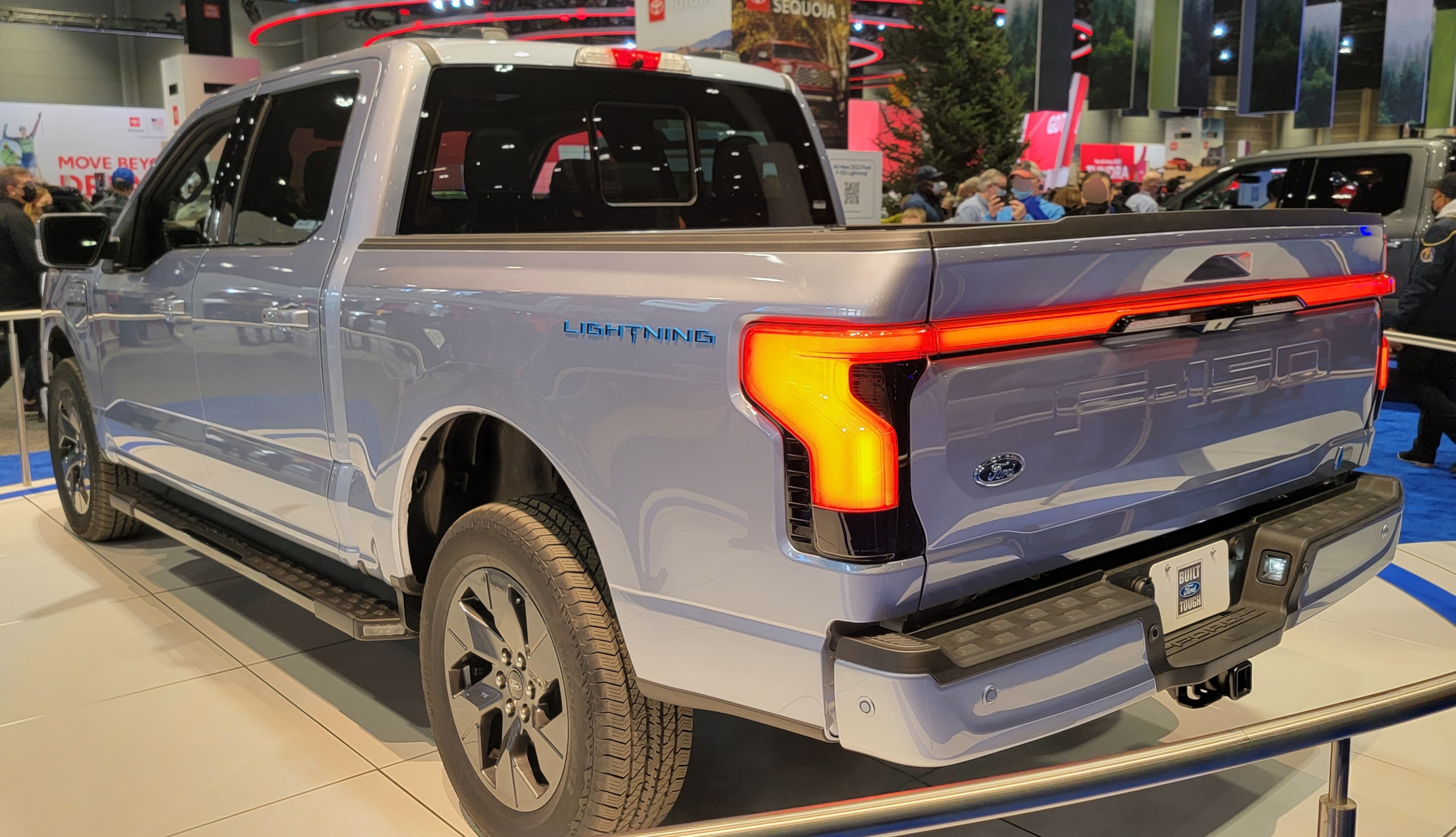
"And so this couple pulls up next to us, they got their kids, it's a pretty new F-150. And they rolled the window down and they're like,"
The Ford F-150 is a large truck that can carry heavy loads and is great for work or outdoor activities. It's very popular because it's tough and can handle a lot of different tasks.
The Ford F-150 is a full-size pickup truck that has been a best-seller in the U.S. for many years, known for its versatility, towing capacity, and ruggedness. It is often discussed for its role in both work and recreational activities.
"...ove an early spec, German market early spec 2024 ID buzz from Volkswagen, it's the new hot EV,"
The Volkswagen ID. Buzz is a new electric van that looks like the old VW buses but is made with modern technology. It's designed to be good for the environment and is fun to drive.
The Volkswagen ID. Buzz is an electric van that pays homage to the classic VW Microbus while incorporating modern technology and sustainability. It is often discussed for its retro design and eco-friendly features.
"...at, like our front runner, we had a front runner typhoon bag that we had that we flew out with with a bun..."
The GMC Typhoon is an SUV that was made in the 1990s and is known for being fast and fun to drive. It's not very common today, making it a cool find for car enthusiasts.
The GMC Typhoon is a high-performance SUV produced in the early 1990s, known for its turbocharged engine and sporty handling. It is often discussed for its unique place in automotive history as one of the first performance SUVs.
"So it's just every year or every trip or every excursion that we do, we try to learn from it and get bett..."
The Ford Excursion is a really big SUV that can carry a lot of people and things. It's great for families who need extra space or for towing trailers.
The Ford Excursion is a large SUV that was produced from 2000 to 2005, known for its size and towing capacity. It is often discussed for its capability as a family vehicle and for heavy-duty tasks.
"...ere Donut Media did this all off road track in a Subaru SVX. But they did most of the Transamerica Trail."
The Subaru SVX is a sporty car from the 1990s that has a cool design and can drive well in different weather. It's not very common, so it's special to see one.
The Subaru SVX is a unique sports coupe produced in the early 1990s, known for its distinctive design and all-wheel-drive system. It is often discussed for its rarity and performance characteristics.
"who was one of our buddy cars with his navigator, John Williams. And on the Alkan 5000, yeah, you..."
The Lincoln Navigator is a fancy, big SUV that has a lot of space and nice features. It's often chosen by people who want a comfortable ride with a touch of luxury.
The Lincoln Navigator is a luxury full-size SUV known for its spacious interior, high-end features, and strong performance. It is often discussed for its comfort and status as a premium vehicle.
"...ehicle that we're driving, whether it's a Subaru Outback Wilderness or whether it's the Honda Passport Tr..."
The Subaru Outback is a car that looks a bit like a wagon but has the features of an SUV. It's great for people who like to go hiking or camping because it can handle different types of roads.
The Subaru Outback is a crossover SUV that blends the features of a wagon and an SUV, making it popular for outdoor enthusiasts. Known for its all-wheel drive and ruggedness, it is often discussed for its practicality in various driving conditions.
Select text to request an explanation
I don't think I'd attempt to try this stunt.
Or we owe this horsepower to Uncle Sam.
Too many cars.
Look, I put my beer belly on it.
Yeah.
You can't immediately tell somebody how many cars you have.
You'll really give those up at a yuppie, something to think about.
Stay on the by.
Don't go off the by with your Bronco.
1980 Volvo horns, what's right?
Meep meep.
I'm one of the man's coolant.
And he's like, oh, I thought it'd be small.
It's for a small car.
And I'm like, yeah, but it's still an automatic transmission.
They're never going to be light.
It's definitely going to have to crash.
Starting off with Brad buying another car.
That's the West.
Internet.
Is this a Nigerian oil print?
I also wish we drove a tan Camry.
Anyways, that's a very horrible podcast content.
Very inside joke.
They love to be driven hard.
All right, hello.
Welcome to Auto Off Topic.
Hey, we've got some guests tonight, Brad.
We've got returning guests, too.
Andy and Mercedes-Lilienthal.
I want to thank them in advance for coming,
because we've not had a guest for a while
due to all of our audio and strange issues.
And we think we haven't talked enough now
to get back on the trail here.
So we brought them along,
because not only are they excellent returning guests,
but they're returning guests.
So if it does go haywire,
maybe they'll understand more than a new guest.
I don't think it will.
I think we get it knocked.
Hey, everyone, Andrew here checking in.
It did go poorly, actually.
If you listen to this in the first go-round,
the audio was totally messed up.
So I have re-edited it and attempted to fix the audio.
So let's take this again.
Here we go.
I looked back up.
We had them on last, it was August 23rd, 2024.
Well, it would have been a couple of days before that,
but that was when it was released.
So Proletive Adventures is that episode.
And that was about the,
that was the TSD you guys had across Europe.
I don't forget any of the details,
but it's because it's recorded.
So if you wanna go back and listen to that one, yeah.
I can't tell you the episode number,
but I can tell you when the date it was.
It was not number 300.
No, it was not.
But I figured we kick it off before we,
we're gonna get into talking about,
Mercedes and Andy drove across the trans-America trail.
Was this past summer?
Yes.
So we're gonna talk about that.
But before that, we're gonna do our usual,
we're gonna talk about project cars.
We're not gonna talk about Brad and Andrew's project cars.
We'll talk about Mercedes and Andy's project cars
because we just talked about our project cars
in the other episode.
And everybody knows all about our stuff anyways.
So yeah, go ahead guys.
I wanna hear about your project cars.
Yeah, so we have four cars at the moment.
They're all kind of project cars.
We've long had a 91 Mitsubishi Pajero turbo diesel
with a 2.5 liter 456.
We have had a 1994 Mitsubishi Delica space gear
with the 4M 40 2.8 liter turbocharged diesel.
We've had that since 2020.
Yep.
And then our daily driver slash weekend rallyer
is a 2022 Subaru Crosstrek.
So that is by far the newest vehicle that we own.
With the manual.
They're all manual.
They're all manuals, yep.
And that one, we swore we would keep stock
and other lies we tell ourselves.
And so it's got a rally innovations light bar,
got light force lights on it,
full primitive racing skid plates.
215, 75, 15, BF Goodrich KO3s, which we just put on.
We're doing a little bit of a revamp on it.
Ryka Seeker wheels in 15 inches.
And nameless axle-back exhaust, nameless cross,
ah, excuse me, strut tower bar, thank you.
And their new tie down, battery tie down.
And then I literally just today picked up a set
of King Springs from Primitive Racing
for the rear, their rear overload springs
because we're installing a rigged supply.
Rigged supply, ultra swing rear tire carrier,
which is something we discovered
on the Transamerica Trail and loved.
And then-
Well that also is gonna have the side hack
for the fuel canister as well as the full down table too.
Right, the ultra table.
And then we also just picked up a set of new Tully crossbars
and a new Tully-
The motion three.
Motion three box for the top.
We're big fans of that.
And when you have a small vehicle,
it can be hard to bring a lot of stuff with you.
One other thing we just got,
we got this thing from sleep rides.
It's a simple but effective insert that goes,
when the seats are folded down,
it's a wooden insert that goes down
and uses the headrests as supports.
And so then you can sleep inside the cross track.
So that's a brand new company.
And in fact, I believe we have the first production unit.
Yeah, the very first manufactured unit.
And the guy ends up being local.
We live in Oregon and he's just, what,
I don't know, 15 minutes away.
Yeah, yeah, make some specifically for the cross track.
Right, which is great
because you just have to slide the cross track
front seats forward and then tilt them forward
and it fits in.
And the cross track is a little bit too short
for a lot of people to be able to sleep in
versus yell back, which is longer.
So we're stoked to test this.
We haven't even slept on it yet.
We literally have it sitting next to the rooftop box
in our living room right now, right behind us.
This is not what they meant by Scandinavian design.
Let me tell you, our house is another garage right now.
I'm glad there's no camera on this podcast.
You guys would have a good laugh.
So in addition to that.
It's funny, I think that if I had to guess
that a company called Sleep Ride
that builds sleeping platforms for cross tracks
was based anywhere, my first guess
would have been up by you guys in Oregon.
Yes, right.
We are definitely in the land of Subaru's for sure.
So, and then before, right before we left
for the Trans America or for the Alkan 5000.
Two days before.
We bought a 98 Suzuki Jimny wide.
So it's a bit of a white whale for me.
I've always wanted that, but we've always wanted,
I always forget that.
Yeah, we've always wanted it.
We've always wanted that style of Jimny started in 98.
And I swore that in 2023,
when it became eligible for import, I'd get one.
Well, it took until 2025,
but it's the 1.3 liter engine.
So it's not technically a K vehicle.
It has a little wider fender flares.
It's already got a little baby lift on it.
Some 23575 VF Goodrich KO2s and a winch mount.
And so just gonna be doing a little bit of work
on it here short, shortly.
And yeah, so excited to have the Jimny.
We're staying busy.
Sounds like it.
I've been a huge fan of the Jimny.
The earlier ones, the newer ones,
the brand new one that we can't get as well.
Oh, so good.
It's a little frightening to think about
late 90s vehicles being importable,
but I guess by definition numbers they are.
Is that basically calling all of us old right now or?
Hey, listen, we're all in the same age bracket.
So I thought you would say the same thing
to myself.
Yeah, the idea that you can import a 2000,
an MY2000 vehicle and have it qualify under the 25 years
mildly terrifying.
Yeah, on my day job, obviously I'm an insurance appraiser.
And I had an assignment today to look at a 2003 Nissan 350Z.
And it just, it struck me that, yes,
this is a 20 year old car.
When I first started in this business in like 2000 or 99,
like that would have been in 1980
and it would have never even been repaired.
It would have been totaled immediately.
But we're in a world now where a 20 year old car
is still a daily drivable like normal vehicle.
This is all it's strange things.
In fact, a friend of mine who lives back in the Midwest,
almost out of a joke, I guess I would say,
he put antique plates on his Saturn SL2.
Now I have antique plates on my Eclipse
and I've been asked many a time, how old is that thing?
Oh my gosh.
And I've also been told, hey, is that a Saturn?
So I get his vibe.
Oh, wow.
Very cool.
It's cool to run down of your stuff.
I don't think you had the Jimmy last time we talked
and I just had everything else I think
has been around though.
We can put it this way, that it's so new,
I have yet to drive the thing.
It's been sitting on our driveway
because we bought it two days beforehand
and we actually had the 2026 Honda Passport Trail Sport
that was a fleet car for us to measure and whatnot.
It wasn't the actual rally car,
but we drove up, I doubled up behind Andy,
and then after we bought the Jimny from the Seattle area
and actually drove it back home,
but it's been sitting,
it's got a little bit of mechanical work we need to do on it
and so we ordered parts and so yeah,
it's been driven very little,
but I've yet to drive the thing.
It's been to two cars and two or three cars and coffees
and that's about it.
Life of an imported Jimny.
Yeah.
You guys will use it more, I'm sure,
but it seems like most of them are just cars and coffee rigs.
Oh no, we'll put it to the trust us.
We're gonna probably do a good amount of pinstripes
and stuff on it when we build it up
the way we wanna build it up.
I have faith in you guys,
I'm just saying in general,
that's the path they take.
I see a lot of those and Mitsubishi Pajero juniors
and minis, I've got other cars and coffees here,
but I rarely see them on trail.
In fact, the only time I saw a Pajero Mini on trail,
it was abandoned and shot full of shotgun shells
and the roof was jumped up and down on,
so I don't know what the story was about.
That seems like a very strange car
to abandon in the woods.
Yeah, it was out in the desert here in Arizona.
We came across it and we were like,
oh, that's not normal.
Why is this out here?
Somebody is missing this, I'm sure.
Yes, wow.
Sad, it was a sad sight, it was a sad sight.
I have a couple Subaru questions.
My wife has an 18 cross track six speed.
Have you done the struts yet?
Have you replaced those?
Front struts are rear.
We did all four, or I did all four at about 50,000 miles
with a set of Bilstein HDs.
That was a huge improvement just for,
all she does is drive around in the city
and that was a huge ride improvement
for all the pothole roads we have out here.
Yeah, I have not done them.
We only have about 31,000 miles on ours
and so I'm gonna put these King overload springs
on the back, just on this factory suspension
or factory struts until it's time to go the Bilstein route.
We had B6s on the Transorbacker Trail vehicle.
And we got those springs
from Primitive Racing here in town.
Yes, yep, nice.
Yeah, I've actually did a video on swapping them
so if you go on our YouTube page.
Ooh, cool.
We'll do.
Yeah, it wasn't too bad.
I got one of those fancy spring compressors
that's got the screw, it's the screw type
with the fingers so you can actually put it
in a bench vise or a jaw horse.
It's not the two sided thing.
Oh really, I'll have to look at that.
Yeah, you can get them pretty inexpensively now.
It's just a knock off of the Eastwood version one
that we got on Amazon.
It works really well.
Okay.
Yeah, definitely a lot easier I think
for swapping the springs in your driveway.
Which we will be doing.
Yeah, probably Sunday.
When it's not raining at least in the Pacific Northwest.
Yeah, and then yeah, so you only get 30,000 miles on it.
We got to about 60 and I started hearing a noise
in the rear end and I ignored it for another 10,000 miles
and it needed both rear wheel bearings at the same time.
Oh wow.
Yeah, so watch out for that.
Apparently that's the thing on these cross tracks
as the rear wheel bearings.
Yeah, I've heard Subaru's just,
I mean this is our fourth Subaru.
We did buy a 2005 Subaru Forester XT,
stage two tune, downpipe, all the things.
It was a very fun fast car with 200,000 miles on it.
We had it for about seven months and to be honest,
I was just worried.
I kept thinking I'll just put a new engine
and if it goes out, but the dual of head cam turbo engines
are Henn's teeth, unless you want to spend
lots and lots of money on a remanufactured one.
So I had a lot of fun with it for a bit
and then ended up selling that, so.
Yeah, see I had a WRX of that same generation
and I never had any issue with the wheel bearings.
I think it's the later ones.
These more modern ones, they changed the design
and I was doing like a little part searching
and I think on the, I think actually on the,
what's the super off-road one that you guys were driving?
The wilderness one, I think actually
on the wilderness version of the Crosstrek,
at least for this 2025,
because I think they changed the actually chassis, right?
It changed from the.
Yeah, 2024 went to a new chassis.
Yeah, so if you look at those parts,
it's actually the outback rear knuckle and bearing.
It's the same part number it crosses over.
I was like, oh, that must have gone
with a more heavier duty knuckle and bearing, maybe.
I don't know.
Well, the wilderness actually has a larger rear axle,
larger rear differential, factory Crosstrek,
or the standard Crosstrek.
So yeah, I mean, maybe it's just straight off the outback.
I don't know.
Yeah, so there's some interesting part stuff there,
but yeah, if you go back, I've got a couple episodes here
of me talking about doing rear wheel bearings
and trying to source the parts from Japan to save some money.
And yeah, it was a pain.
Sounds like a cautionary tale.
Yeah, I mean, where you are,
you probably have less rust to deal with.
Right, yeah, very true.
Stephanie Daly drives this car and they were,
they're supposed to be bolted in,
but they were rust welded.
Oh boy.
Yeah, we're very familiar with that.
We're both from the Midwest originally.
So we know about breaking bolt breakers
and stuff like that.
Yeah.
These were, it was more cost effective
to do the knuckles and the bearings,
just buy new ones and just put them together.
Sure.
But anyway, enough about that,
because I've gone in depth on that so much this podcast.
This summer was all about that.
I wanna hear, we wanna hear about your Transamerica Trail.
So that is something I'd never really heard too much about.
I guess I wanna give us a little background
on what that is.
Yeah, it was originally mapped out,
started in the mid 80 by a gentleman
by the name of Sam Carrero and he lives in Mississippi.
And he was an adventure motorcycle enthusiast
and started just mapping out routes.
And over time, he didn't set out to do this
as we understand, but it ended up becoming a network
of trails that crisscrossed the United States
and were linked together.
And hence the Transamerica Trail.
And it's definitely started originally
for adventure touring motorcycles.
But now you do have four wheeled vehicles doing it.
Well, and if there's four wheeled vehicles that do it,
primarily they are four by fours with low range
and whatnot, not necessarily all will drive vehicles
and not necessarily near stock all will drive vehicles.
Right.
And so it starts in, if you do the entire thing,
it's basically three sections.
There's the Atlantic Ocean Spur.
That starts in Nags Head, North Carolina, the Outer Banks
and then goes into Virginia.
And then you pick up the traditional Transamerica Trail route
which runs essentially from Virginia through Idaho.
Well, that's the east to west portion.
There are spurs that come off of it.
Right, if you wanted to go up to, say, Minnesota
or down, I believed Texas.
And then the Pacific Ocean Spur runs from Idaho
to Port Orford, Oregon.
So we did all three.
Nags Head, North Carolina to Port Orford, Oregon.
It took us 29 days and 15 states and 7,163 miles.
And of those 7,163 miles, 3,184 miles was off pavement.
So dirt, gravel and mud.
And it took us about 317 hours and five minutes
over 29 days of drive time.
And what was our average speed?
Average speed over the whole entire country
over those 29 days was 25 miles an hour
and an Appalachia was about 18 miles per hour.
And you could tell who the navigator was.
For sure.
That is a slog in the longest way to traverse the country
but it sounds super fun.
Yeah, I was reading those stats that you've sent me
and I was like, wow, this is like if it was 100 years ago
and you're across the country in a Model T.
Yeah.
That is about the same average speed you'd probably have
and probably the same amount of time, I bet.
You know, one of the things we looked at was
it was a big milestone across the Mississippi River.
And when we threw it in Google Maps,
just to see how long it would take the fastest way
to get from North Carolina to Helena, Arkansas.
Helena, West Helena.
Helena, West Helena, Arkansas.
And it was something like, I think it was like
two and a half days and it took us two weeks approximately.
So it's definitely a slow but scenic way.
Well, and we need to preface some of the slowness of it
was due to two weeks straight of severe thunderstorms
and severe weather and so much rain that, I mean,
the only reason that we had to stay in a couple of hotels
was because we could not outrun or bypass
or get away from some of these severe storms.
We made a pact too before we left.
We said, look, we're too old to be sleeping on the top
of a car in a severe thunderstorm just to tough it out.
No, we're too stupid if we're gonna do that.
Well, maybe that's it.
No matter the age.
Yeah, so we just decided like if it's gonna,
if we're gonna, if we're setting up camp in it
and we're in a tornado warning or something like that,
we're not gonna.
That's just stupid.
We're gonna go to a hotel.
And so we did that three times because of severe weather.
Right, and so the biggest thing,
especially out east is with the severe weather,
you are gonna be in the middle of nowhere
doing Trans America Trail most likely.
So we had to drive maybe 45 minutes or an hour,
one way out of the way to get to the nearest town
and you were primarily without cell phone service
through the majority of the time
being on Trans America Trail.
So we were lucky that we ended up having a Starlink Mini
that we used that was packed really neatly
in a Pelican case.
And we had to deploy that more times than not.
We thought, oh, we'll just use it for, you know,
checking emails and stuff.
Oh, no, it was to outrun either wildfires
or severe storms.
Self-preservation becomes important at some point
in your life when you realize, you know,
that you are mortal.
So I understand that completely.
Right.
I understand that completely.
I've slept outside in some pretty gnarly conditions
and I can't imagine doing it now.
It was different 20 years ago for sure.
Oh, yeah.
Here I go calling us old again, but, you know,
it is what it is.
Yeah, we had one night when we were in outside
of Jasper, Tennessee.
And yeah, we were in the rooftop tent, all set up
and I don't know, like four in the morning,
just big thunder and lightning and torrential rains.
And luckily the Tully tent we have, which was...
Is the Tully approach tent?
Yeah, it was very large for the car,
but it did its job.
But I remember thinking, gosh, you know,
hopefully it's not too bad.
We had no cell service.
Our Starlink was put away,
so we couldn't really see what the weather was about to do.
But yeah, it was, it makes you realize
you are mortal and you are small.
Well, and in addition to a lot of the severe storms
and, you know, I'm sure we'll talk about the wildfires
and the smoke here in a little bit,
but we had severe heat, absolute severe heat.
Of the 29 days, 28 days were 90 degrees or warmer
and six of those days were 100 degrees
or warmer up to 111.
And the first two weeks was like,
they had severe humidity warnings for the East Coast
and the whole Eastern section.
And that's what we drove.
But thank God that our 2025 Crosstrek wilderness
that we drove from Subaru had excellent air conditioning
and that puppy never let us down.
I mean, yeah, hot is hot, but hot and humid is awful.
So that sounds terrible.
Hot and humid in a tent for multiple days
with no showers, it sounds even worse.
It was absolutely, I think...
I think the worst was we were,
I don't even know where it was,
somewhere in Tennessee again.
And it was, it was like, it had, it was poured
and then, but it then got warm again.
And it was just absolutely miserable.
And thankfully we had, you know, our sleeping bags,
but we had brought some liners just in case it got cold,
but the liners were, you know, a wicking material.
And so they, that was like so much better
than having to lay on top of a nylon sleeping bag
in like, you know, dew points of near 80.
And for us, if nobody knows of what cooling cloths are,
look it up, you, we lived by them
and we packed a couple of them.
And I mean, we literally slept on top,
like Andy said, on top of our liner.
So we didn't stick to our sleeping bags
and we used our cooling cloths
and we tried to sleep as best as we could.
And if you don't know what those are
and you, you know, don't do, do well with heat or humidity,
they're super cheap.
They're like on Amazon or whatever,
you could buy a six pack for like 20 bucks.
Yeah. Shout out to our $12 target fan as well that we bought.
Yeah. He got it. He was so good.
He got a name Fernando anyway.
Yeah. You do things on the road when you're like,
well, okay, we need some sort of breeze
cause this is, yeah, enough said.
Yeah. No, I have a, I have a tent fan
and it's definitely a huge improvement,
especially because when you have the rain fly on
and closed up, there's not much air movement inside a tent.
So having a little fan in there
makes a, it makes a huge difference for sure.
Fernando was maybe what, I don't know, five inches in diameter
and we clipped them on top and it just had enough,
it was battery powered enough to last most of the night
and we had it on low and it just, it helped.
I know it definitely helped, but you know,
he's here waiting for his next expedition.
Yeah. I'm sure it's probably the same kind of thing I have.
I have a very similar size battery powered one
and it's got a little light on it
that it's a little hook to hang from top of the tent
and it is a God's end for sure.
So they're like, they're sub $15 to buy one online somewhere.
And if you can't much, I would also completely
and totally encourage buying your own small camp fan.
Huge, huge difference.
If I have a question about the driving,
so if your average speed was less than 30 miles per hour,
most times on the trail, these are like,
these aren't fire roads.
These are less than fire roads.
Well, what's the driving like?
Yeah, good combination, yeah.
I mean, we literally drove pretty much
everything you could imagine.
In going over the Appalachian Mountains,
you had lots of tight...
Twisting roads.
Tight twisting roads and trails in the mountains.
More pavement.
Most of them weren't difficult technically.
There were some we would get to that were washed out from,
especially when we got towards Asheville
and the areas that were affected by Hurricane Helene.
It was unbelievable.
Well, and when we just landed,
they had just started doing all these severe
thunderstorm warnings and the severe humidity
that stuck around for the last couple of weeks.
And we started going into, like Andy said,
near Asheville and even before that,
there were huge thunderstorms that were literally,
and I kid you not, wiping out the bridges
that were just built from that hurricane
and the storms we were involved in
and trying to outrun and trying to dodge
were literally disintegrating
everything that was just fixed.
So we ended up at this,
we came out of these forest service roads
after being in Asheville.
And so we're trying to make kind of
Southwestern progress.
And we got to this area and it was shut down,
the highway was shut down,
I-40 was shut down.
Well, it turns out that huge line of storms
that came through the day before had,
how are two days before,
had created a huge landslide that closed to I-40
and then they weren't allowing us to continue
on the forest service roads to go continue Westford
because it was only open for locals
and they were ticketing.
Well, and that's the most important thing
is we weren't going on I-40, right?
So the Trans-America Trail,
basically is all back roads, country roads,
dirt gravel, farm roads type of thing,
and then mountain passes in Colorado,
way up above 12,000 feet, for instance.
So we were trying to get those forest,
I'm sorry, those dirt roads
that were on the Eastern side near I-40,
but like Andy said, they were ticketing
and we talked to one of the,
what was it, I think it was the department,
you know, DOT worker or something.
Yeah, it was a, yeah, New Carolina DOT truck
and he was telling us, you know, you can't get on I-40,
you can't go straight,
so the only option was to go back towards Asheville,
which is where we had already come from and it was-
Or risk getting ticketed, which we didn't want to do,
especially with what we were driving and who we are
and we're like, we're not into that kind of stuff.
But once you got, once you got, say like,
once you got to Oklahoma, things got flat and stray.
And muddy.
And they had, yeah, Western,
I'm sorry, Eastern Oklahoma had been experiencing
a lot of flooding. Lots of floods, yeah.
So we got turned around a lot.
You'd be driving down just like a county road
and you'd literally round the bend
and there's a lake in the road
and there may or may not be a road close sign
and so you'd just have to figure way around all this stuff.
And we figured out very quickly
is you had to pack your patients.
We, you know, with Trans America Trail,
it's not like you're with a group of people
and you have a set place.
You need to sleep every night or whatnot.
I mean, we were self-sustained.
We had no support vehicle.
We had all of our gear with us.
I mean, heck, we flew from Oregon
all the way out to the East Coast to Subaru's headquarters,
flew with our camp gear.
Which is in New Jersey, by the way.
Oh, yeah, sorry, sorry, East Coast, New Jersey.
We flew with our camp gear, our tools,
all that type of stuff, met the vehicle
and then essentially started our 29 day journey.
And the thing that's important about that
is we very quickly learned to pack our patients
and to just say, okay, as a navigator,
I've got paper maps, right?
Andy had a GPS track that he stitched together
that you can also do.
It doesn't tell you where to turn.
It just gives you a line that you can follow.
But I had paper maps that were 11 by 17,
not great maps that, you know,
they had like Crayola color highlighters
as to where to go and whatnot,
but it was enough for me to piece together
along with turn-by-turn route instructions
that you put in like a little motorcycle road chart holder.
So I did that primarily and I wanted to have that
for the Godometer readings
and to get myself oriented that way.
That being said, is all three of those,
so road chart holder, paper maps and the GPS,
or GPX tracks that we stitched together
with our Garmin device,
basically formulated where we were
and how I had to deviate.
And over those 29 days, we deviated 39 times.
One other note too is we, on top of those three,
we also had, we were using Onyx,
the Onyx app when we were on actual off-road trails
because some of the trails we were on
are designated trails, like especially in Colorado
when we went over the San Juan Mountains.
So there were times though, even in Oklahoma,
where we were using Onyx, and it would say,
oh, this is actually technically a trail.
It's like a three out of 10, so it's not hard, but.
And they had crowdsourced data too with Onyx,
which was great because then we could see,
oh, hey, this is washed out.
I was here a week ago or whatnot,
or we could leave data too.
We could say, hey, there's a huge tree down,
this and this, whatever,
because it happened all the time.
If it wasn't a flood, it was trees, it was,
the first few days,
because of these big storms that had come through,
you know, I remember, I'll never forget,
the first trail we turned down,
and luckily it was real early on the trail,
but there was a huge like 100 foot tall tree
that was laid across the road.
And we were going to buy a chainsaw
at the last minute
because we were already so full of gear,
we opted not to,
but even when we had gotten to that tree,
we would not have been able to saw through that tree.
It was just too big.
So you really had to really just expect the unexpected.
That's part of the fun.
Yeah, so yeah, that's what I was wondering
was if it was like really technical rock crawling,
but it was really just on back roads.
They're just like unimproved roads.
Yeah, most of it is unimproved roads.
Now, when you get to Colorado,
you're going over Cinnamon Pass,
you're going up and going through California Gulch,
and supposed to go over Hurricane Corkscrew Pass.
That's more than just an unimproved road.
Same thing with the Ofer Pass.
Same thing when you get into Moab.
Some of those are, I mean,
we were on the Gemini Bridges Trail,
which is not a super difficult trail,
but being in a cross track,
even with 9.3 inches of ground clearance,
I think it is.
Yeah, stock is 9.3 and we had stock suspend.
Well, I mean, we had.
Yeah, we had Bilstein B6s,
and then we ran Kingsprings in the rear
and full primitive racing skid plates.
And you really had to be cognizant of where you're going.
You're not in a, you're not in a Arpeggio,
like Arpeggio or you're not in a Jeep or something
with a ton of ground clearance.
So you really had to watch where you went,
but if you went slowly and carefully.
Or had me spot you, which we did.
Which we did, you know, it was okay.
Yeah, we did run into a couple of people
who were just like, how did you get up here?
Well, I mean, you know, we were,
so we were able to crest some of the San Juan Mountains
in Colorado, some of the really high passes,
and we knew that that was gonna be
one of our biggest challenges.
So we knew, we know some of that area.
We've never done cinnamon pass before,
but we did overpass in four by four vehicles.
We've done California corkscrew
and those types of things, hurricane.
So we knew what to expect,
but those always change too, right?
And those are legitimate, like very slow going,
you know, bouldering, a lot of Lucio rock,
that type of stuff.
And you're talking about, for instance,
cinnamon pass that we haven't done before,
12,460 feet above sea level for its summit.
And, you know, let's see,
overpass is just under 12,000.
So we knew that that was going to be a challenge
because A, we didn't have a locker.
We didn't have low range.
We didn't have a turbo.
We didn't have a turbo, right?
We've got the cross track engine.
And it's a CVT, so it wasn't manual transmission either.
So, and we're at pretty much stock height
with the primitive racing skid plates.
So we knew with any type of vehicle
doing enough off-roading at those elevations,
you know, 11, 12, 13,000 feet,
that every vehicle gets anemic.
We didn't know how much it would be
and how much of a potential issue it could be.
But we always said, if we can't do it,
we'll backtrack, we'll go back down,
we'll turn around, and it's all about being safe.
Safety's first.
Yeah, I was going to ask if that was a CVT vehicle, but...
Yeah, yes.
But how was the, I know they have like,
is it like X mode or something for off-road?
Yeah.
How are their off-road modes in that?
So I was legitimately impressed with this, you know,
we've got three vehicles with four-wheel drive
and low range here in our driveway.
And so that's what we're usually used to doing
actual off-roading in.
The X mode in the cross track kept impressing me.
The first time it really did was when we were in this,
we were on this washed out trail in Appalachia.
And it was pretty technical.
It was our first time where we really had to worry about,
you know, like, okay, we gotta be cognizant
of how slow we go, where we put our wheel.
And so I put it in the X mode, snow and dirt mode.
And it just, you could feel it figuring it out, you know?
You could feel the wheels kind of go slow
and then like you get a little bit of spin
and then it sends power to the wheels that need it.
Well, you have to be patient and let it do its job.
Yeah, you didn't just like roll over everything.
You get to stuff that you had to be careful with
and you could feel the all-wheel drive system
using its all-wheel drive super power
to figure out where to send the power.
So, and then when we got into some of the muddy
and mucky areas of Oklahoma,
we put it into the deep snow and mud mode
and that allows more wheel spin.
And so we were pretty lucky
because we had been warned by lots of people
about the clay going across the middle part of the country,
especially in Oklahoma.
And so we really tried not to have to get into it,
but there were a couple of times
where we just, it was unavoidable.
We had to go through it,
but I always made sure we put on that mode
that we could power out of it
and clean the tires out if we needed to.
And it worked.
I'm not necessarily the biggest fan of CVT transmissions,
but the X mode and CVT on the Subaru's,
on that cross track wilderness, it really works well.
I just wish that they had it on the manual transmissions
because our 22 that we have at home here,
which is a stick shift, does not have X mode.
Yeah.
Yeah, and it's interesting
because sometimes, especially if you come from driving
more conventional four-wheel drive stuff,
you kind of have to relearn a little bit with those.
You do have to give it some throttle
because like you said, it will figure it out
because it's using probably the ABS
to break individual wheels
and sort of give a faux locker by using the brake system.
So it actually needs some wheel speed to work.
So if you're not giving enough, it's not gonna work.
We have a friend who works at Subaru
and we went out to dinner with him before we left
and he gave us that exact advice that you just said
was he said, hey, just a little advice,
when you get to an obstacle, keep your foot into it,
not like floor it, but just keep throttle
because it does exactly that.
It has to kind of figure it out.
And it did really, really well.
We were on slightly bigger tires, but not even,
it's barely, we went from a 225-60-17
to a 225-65-17, BF Goodrich K02,
and I'll take any millimeter of ground clearance we could get.
Yeah, no, that's interesting.
Yeah, I don't know, it feels pretty brave to go up that high
in a little car like that without any extra power adders,
but I did, I mean, it's all pavement, right?
You go up through the Rocky Mountain National Forest,
you can drive the, I forget the highway route,
but it's all paved and you drive up and over.
We did that on the way back in my all track.
Yeah.
Which has turbo, so it's a little easier, but it's all paved.
That was a cool road.
Oh, wow.
You had to put up, yeah, you had to put up the sails and...
Put the hazards on.
We had to, yeah.
Oh yeah.
Well, when we were on California galt,
we ran into a guy with a Ford Raptor
and we just got chatting briefly
and he was saying that he had followed
this guy over the pass in a,
he said, I think he said it was like an 84 Ford pickup truck
with a 351 and carburetors and he's like,
man, he's like, that guy, going up and over.
I mean, at least he had a decent size,
he had the cubic inches,
but taking a carbureted vehicle up and over 13,000 feet
you should get a medal for that somehow.
He brought his new balances and screwdriver
and tuned it up as he went.
Yeah, right.
I'm down to try it now.
Yeah.
I figure I'd go on to almost 7,000 feet.
What's another couple of a few thousand feet, you know,
it'll be fine.
Yeah, yeah, absolutely.
My truck has a solid 100 horsepower.
I will have 10 by the time I get up there,
it'll be all good.
No worries at all.
Well, that was like the first time that we went up
with our 1995 Suzuki side kick,
which was a brand new head 95 horsepower.
Yeah, it had 95 horsepower at the Flywheel brand new.
We went up and over Imajean pass at 13,114 feet
back in like 2015.
And we were in low range and the only really steep section
is getting up that section when you're going from
you ready to tell your ride to get to that summit.
And I, Mercedes had mentioned,
you think we'll be able to do it.
I'm like, as long as nobody comes down the hill,
we'll be just fine.
And of course, like four side by sides
started coming down the hill right at us.
And, you know, of course uphill is supposed to have
a ride away, but they didn't know that.
They, yeah.
So we ended up having to pretty much dump
their side by side people.
So you ended up having to pretty much dump the clutch
at like 4,500 RPM just to make.
Try to get movement.
Yeah, and I looked it up and I think we were making
something like 40 wheel horsepower at that elevation.
But, and so that, you know, that taught us a lot.
And then of course we had our Jeep Cherokee
that was also modified that we took up later
but at a different year.
But we learned a lot about how anemic vehicles can be
no matter what type of vehicle when you're that high.
Sure.
The first time I ever experienced that actually
I was with Andrew and we were out here in Arizona
and we were in a, we had a rented Altima
with a four-cylinder CVT.
And we pulled out of a gas station up near the Grand Canyon
and the Grand Canyon is probably about a mile up.
And I remember pulling out and there was an 18-wheeler
coming and I'm sure Andrew remembers it.
We hit the gas as we had been doing the entire time
we drove it from the rental desk
and the car did not go anywhere.
And I thought for sure we were all going to die
by tanker truck.
Just a little quick remake of the movie Duel.
So, yeah, so we learned pretty quickly back then.
And so I knew driving my 86 Mighty Max 4x4
loaded up with two people in camping gear
up and over 6,000 feet wasn't going to be a super easy track
but it was a good time, it was a good time.
Yeah, and our vehicle, the engine,
everything was completely stock.
So we had suspension modification, we had armor,
we had wheels and tires and lighting and that kind of stuff.
But we did not have any engine modifications
and really the two four turbo out of an outback wilderness
would have been the modification we needed.
And I mean, for the truth of it is,
we modified this vehicle with Subaru America
but we were very specific in what we had wanted
to use our modifications with.
So in addition to the primitive racing skid plates
and the BFG tires and the RICA wheels and whatnot,
we wanted to have adequate lighting, right?
Auxiliary lighting, especially up front
because you never know, we didn't know
how late we were going to be running through the night,
we didn't know how bad the conditions
were going to be, the dust, the fog,
which we hit all of it times 20.
So we ended up having a rally innovations,
front light bar mount and then we ran Baja designs.
What was the?
XLR pros.
Yeah, XLR pros, I was going to say.
We've used a squadron center on the Honda
that we did with the Alcan.
But we also ended up using some other parts and pieces
that were instrumental, right?
So we had EcoFlow, we had a Delta Pro 3
and then we also had an alternator charger for power.
So the Delta just, the Delta 3 is a Delta 3 plus,
I believe was the power station we brought with us.
Right, and so what we wanted to do
because we had an Airbnb fridge with us
and a couple of other Airbnb accessories
like a portable single air compressor
and an awning and whatnot.
But the fridge, I mean, we're on our own
for what ended up being a month long straight.
We didn't know how often we were going to have grocery stores
or gas station stops or things like that
or where we were going to end up being.
So a fridge for us was really important
and so we've had Airbnb fridges in the past
that they've always worked really well.
But how to power that overnight
so that you didn't end up waking up with a dead battery
was of a huge concern for us.
And so EcoFlow has this really nifty system.
So we ended up getting the higher powered 800 watt
alternator charger so you can reverse charge it.
So right, so during the day,
you can charge your power station
but at night you can reverse charge it.
So it tops off your car's battery
so you never end up having a low charge that way.
That's cool.
It's a really good app.
So you just make sure you reverse the charge at night.
Yeah, so I mean, so that worked really well.
So, for instance, when we had the car off
and we needed to charge,
like power up our Starling, which was many times,
we just plugged it right into the AC plug
of the 20 million plugs that are on that power station
and ran it that way.
So that was really important for us to have that
but then we also had some specific recovery gear too.
I mean, because we didn't know being self-sufficient,
we needed to make sure without a winch
how we could get out of being stuck.
Yeah, luckily we didn't need it
but we did carry max tracks, extreme boards.
They have a version called the light board,
which is a very, it's a different polymer
in the plastic makeup, but we went with the extremes
and then also a factor 55 hitch link 2.0,
which goes into the trailer hitch
just in case we needed to get pulled out.
I think we had a couple, did we have a strap or two
and we ended up having a couple of shackles too with us?
Yeah, we just carried the usual stuff.
You know, I worked in the vehicle recovery business
for about 15 years.
So I always go a little bit over prepared with that
but luckily we never had to get stuck
and we never had to recover anybody else.
It's always good to have that stuff not only for yourself
but also for the recovery of other people for sure.
Yes, exactly.
Well, and you bring up a good point
is because we didn't know who we would meet
that needed help or what would end up being
in that type of scenario.
And we did end up needing to help other people.
And I mean, for us,
we don't care if we're on a mountain pass cliff side
or if we're in the middle of a, you know,
Appalachia gravel road in the middle of this
next big pass that goes over.
I mean, we ended up helping a couple of different people,
didn't we?
Yeah, so we're in where we're,
I don't even know where we were.
Appalachia?
Somewhere in Appalachia.
Well, a tight mountain.
Yeah, it may have been Tennessee.
But anyway, so we're in the middle of nowhere.
I mean, literally just,
it's a mountain zigzaggy thing on the map.
And I come around the corner
and there's a white Nissan Versa
and a guy on the ground by it.
And I'm gravel.
Yeah, and you know, I mean,
when you're in the middle of woods and, you know,
just by yourself, you're always like,
well, what are we gonna run into?
Who are we gonna run into?
And so there's this guy and I looked at him
and he's on the ground with a wrench.
And I rolled down the window and I said,
are you okay?
And he just looks at me and goes,
please tell me you have a breaker bar.
And I said, I actually do have a breaker bar.
Well, it turns out he had just bought this Versa.
He's a lineman and he bought this Versa
and it had a spare tire but didn't have the kit to,
it had the jack but didn't have the tire iron.
And so he had gotten the wheel off.
And I said, how did you get the wheel off?
He said, I had an adjustable crescent wrench.
I said, how did you get four lug nuts off
like an 80 foot pounds with an adjustable crescent wrench?
But he did.
Probably anger.
Anger and some muscle.
Yeah, and so anyway,
he was very happy to have seen us with a breaker bar.
And we also landed him our air compressor
to inflate the flat spare tire.
So it's one of those things everybody's,
nobody remembers to keep their spare tire aired up.
So consider this a public service announcement.
Right, and I mean, and those are some of those instrumental
bits of kit that we were like, okay,
if we get stranded, we need air, right?
So we got the single portable air compressor from Airbnb.
You know, we had the recovery gear,
we had the power, oh God, we should talk about the eco flow
and we had the lady.
Yeah, one of the craziest things that had happened to us.
And this may be one of the craziest things
that ever happened to me in my entire life.
Period, or me, yeah.
We were about 30 miles outside of Wendover, Utah.
And in the absolute, again, absolute middle of nowhere,
which you'll see a theme here with transameric control.
You're oftentimes in the middle of nowhere.
Well, this one was north of the Bonneville Salt Flats
because we had just passed through here.
Yeah, and so driving down this road,
driving down this road, and I can see something
in the middle of the road.
And now we're on one of these roads
that is like vanishing point,
you know, just like goes on forever
until the up into the mountains.
And it wasn't just a road.
This was a huge rocky gravel trail, like big rocks.
Not just gravel, you can go fast.
It was pretty rocky.
And so I see something in the road and we get up to it
and there's a board that says help on it.
And there's another board that says help
facing the other way.
And then up the hill is a,
some sort of structure outbuilding or something like that.
And then there's a road, it's barely a road,
and that said help, phone, tire.
And I'm like, so I stop and I'm looking around.
There's nobody there.
There's no car.
There's nothing.
And I'm just like, what is this?
And Mercedes is like, I'm gonna get out.
Somebody just stay in the car.
Just like, I don't know.
Like something doesn't feel right here.
And so we're just looking around like,
there's nothing here.
Why are these signs up here?
And then all of a sudden a truck comes up behind us,
pickup truck.
We're like, are we gonna get ambushed?
I mean, we really, I mean, I don't know.
We're in the middle of nowhere.
And so this couple pulls up next to us,
they got their kids, it's a pretty new F-150.
And they rolled the window down and they're like,
are you guys okay?
And we were like, we're fine,
but we're trying to figure out
what's going on with this sign here.
When at that point, I think we were there
for maybe 15, 20 minutes already.
I was about ready to call emergency on the sat phone
or on satellite device.
And they said, well, we thought you needed help.
We have a farm about 15 miles down the road.
And we went into Wendover to get groceries
and these signs were not up.
So we're kind of like, I don't know.
I'm looking at the wife and she's looking at me.
And I think we're both like, are you guys,
is this kosher?
Is this gonna be good or bad?
Who's gonna look mug who or something?
Yeah, so they get out and so we get out
and start looking around.
And then all of a sudden this woman comes out
from behind this cluster of boulders
and she's just sobbing.
And bleeding from her knee and there's a dog.
And she's like, unconsolable, unconsolable.
And like first question, are you okay?
Are you okay?
Are you okay?
Do you need water?
Do you need food?
We've got cold food, cold water.
Well, long story short.
So she kept wanting to talk to the tire shop and the mayor
and we're just like, oh, oh boy.
Yeah.
And so, yeah.
And anyway, long story short,
she said she'd been out there for two weeks.
She lived in that outbuilding, off-grid.
And-
Like off-grid as in no water, no electricity, no nothing.
She got water from a local spring nearby
and she woke up with the sun
and she went to bed by the sun.
She had a cell phone, she charged it in her car.
Well, the car had gotten a flat tire
and so she'd put the donut on.
Well, then she got a flat on another tire
and had no donut and couldn't get off her property.
And then the plug that-
And then the cell phone died.
Well, her, whatever, I don't know if it was a cigarette
lighter, USB port or something in her car
that charged her phone broke.
So she had no way to charge her phone and her phone died.
And so we used this eco-flow to connect our Starlink.
I connected my phone to wifi calling
and we were able to call the tire shop and Wendover
and they, it was all, her store all added up.
They had the tire that she said they had
and he said he'd come out and put the new tire on
so she could get off her own property.
And it was just like, what the hell?
It was just, it was one of the most bizarre moments.
We were there like an hour and a half, it was crazy.
And I think the biggest moral of that story was
is you just don't leave anybody behind.
I mean, you know, both of, the hair on both of our necks
were like way standing up being like,
are we gonna get robbed, killed, mugged?
I mean, you know, we've got a Subaru car
that's fully decked out that's got a wrap on it
that's got a huge Subaru logo on it.
We're like, but the biggest thing is,
is the kindness of strangers, right?
I mean, could she have died out there?
I don't know, you know, but help people.
That's the biggest thing.
My question though is how do you wind up
living in an outbuilding in the middle of nowhere
and not have the wherewithal
to have a contingency plan for this stuff?
Like, that seems like you would,
that would be step one would be having a backup
to your backup.
You know, she said she had generators but they weren't working
or she didn't use them.
The whole thing, I mean, it was just, it was incredible.
I mean, I'm glad she's okay.
She called us the next day to thank us and all that,
but it was, I mean, we left creeped out happy
that she was okay, but we left just like,
what, like, what just happened?
Did this really, are we on some sort of
Twilight Zone episode or?
We kind of wanted to leave Utah right after that.
Yeah, we had a couple of experiences in rural Utah
that were just like, okay, we're just ready to be.
I'm not, I'm not surprised.
I've heard a lot of stories about people
when they're traveling and having issues in two states
in particular and one of them is Utah for sure.
So that's,
Oh, really?
But do we know what the other one is?
Well, it's actually Tennessee.
So those are the two I've heard the most.
Oh, well, that would probably be the third one.
Okay. Well, now there must be a story
behind the third one.
So we'll get there.
Sure.
That's another podcast, yeah, I'm sure.
Yeah, I just, I've heard some weird stories
about Utah, not only in the rural parts,
but also in like the cities, just because it's Utah.
No, no hate to Utah,
just some weird stuff going down people.
Oh, we love Utah, we really love Utah.
There's a lot of beautiful parts.
Yeah.
Yeah, beautiful, beautiful place.
I mean, that's all the good off roadings in Utah.
Right?
This is true.
Yeah, and, you know, a lot of great people are in Utah too.
Oh, no, no question.
I'm not hating on Utah at all.
I don't know how Utah is.
Yeah, I mean, we just,
we were really glad that we had the most important thing,
right, for any of the people.
Plus, I mean, heck, we, sorry.
We gave our five gallons of fuel off our rig supply
as per tar carrier to a jeep that an old will is.
What year was it?
46 or something?
I think it was a 47 or 48 willies and yeah.
But he had a fuel cell and he was up on cinnamon pass
above 12,000 feet and we stopped
because we weren't 100% sure which direction we needed to go
when he came up to us.
He's like, I hate to ask, yeah.
I'm like, oh God.
I thought he was gonna tell us to get this Subaru
off the trail.
Yeah, yeah, we were expecting some sort of altercation,
but he's just like, do you have any spare fuel?
You can, you know, spare to give us.
And we knew at that time we knew what our track was
and we're like, you know, yeah, we've got extra five gallons
and so we gave them the five gallons that we had.
I mean, he paid.
You know, we weren't expecting payment
because you just help people,
especially if you're, you know, above 12,000 feet
and you're in the middle of nowhere again.
Notice the trend here, but no, I mean, he,
I don't know, gave us 20 bucks or whatever it was,
but you know, you just help people, so.
All good karma, right?
You wanna have it come back to you eventually.
Yeah, yeah.
Road karma as we come.
Yeah, like Andy was saying the whole trip.
He's like, you know, it's good road karma.
We're building up for the good road karma.
100%.
As we've had too many a times.
So, you know, we understand it.
We get it from being on the receiving end
or the giving end.
It's just the right thing to do.
Yeah, cause I definitely had some people help us out
at times, so I try to help other people out if I can.
Yeah, I find that in this world of especially automobiles,
there's a contingent of people who know people
and a contingent of good people who know people.
Like there's obviously people in the automotive space
that we don't like, but I feel like, you know,
all of the good people have somehow found each other
through the internet and podcasts and Instagram.
And I'm confident in driving anywhere
in the United States now and knowing that I'm probably
only an hour or two away from somebody who I'm connected
to somehow who can help out if needed.
So, it's turned out to be a pretty good thing that way.
So, and that road karma is huge.
You know, I've often stopped and helped people
when the situation's not sketchy.
So, you know, I can't drive by a person in an old car
on the side of the road without stopping and helping.
Like that could be me, so I'm gonna help you too.
Well, thank you for doing that
because so many people don't.
It may lessen time in a place, right?
If it's a high speed highway and somebody's off the side,
I might not be able to, but in any case, if you can,
you wanna build that.
I'm not a big faith or karma guy,
but, you know, sometimes it's something to it.
Yeah, totally agree.
Yep.
So, yeah, if you were out, you'd be driving for hours
and hours on this trail, you're out in the middle of nowhere,
would you just pull over and camp anywhere
or would you try to find campsites or a mix of it?
That's a great question.
I would say around maybe two o'clock, three o'clock.
Early afternoon.
Yeah, Mercedes would start looking at where we are,
where we're headed and what our camping opportunities were.
We didn't get onto any public land until Colorado,
so all of our camping from Nags Head all the way
through Colorado was generally at state campgrounds.
We stayed at a couple of private ones, private campgrounds,
but most of them were state parks, state campgrounds,
that kind of stuff.
Some were fantastic, some weren't so fantastic.
Some were disgusting.
Some were a bargain at, you know, 10 to $12 a night.
Some were rip off at 41.
At 40, whatever, yeah, we camped in.
It was a very nice campground in Virginia,
but it was over $40 a night.
And then once we got into Colorado,
we were able to stay on public land
and save some money, which was good.
But yeah, we had some epic camp places.
Big shout out to the Great Plains Bunkhouse
in the Oklahoma Panhandle.
You run across these, I don't know what you call them,
locations or landmarks, waypoints
on the Transamerica Trail.
You'll just see the Transamerica Trail logo,
the three white arrows.
And it generally means they're tack friendly.
Like you might be able to camp there
if you need tools or need water.
Yeah, if you will.
And so we were, for a very long day in Oklahoma,
we came across, just in the nick of time,
this place called the Great Plains Bunkhouse.
It was inexpensive and you can camp in there,
the front field that they have there,
but they also had a bunkhouse if you wanted to stay inside.
And two cute kittens.
Yeah, but I mean, it was,
we were the only people there.
And so we had this like kind of common area
and a kitchen and even an area with a piano
and all that stuff.
But it was kind of a highlight
because it felt like a remote outpost.
It felt like a little bit of civilization
in the middle of nowhere,
but it also highlighted this thing that we did not expect
which was the amount of isolation that we experienced.
We didn't see a single other person
doing the Transamerica Trail for 7,100 miles.
We ran into a couple of people,
like we'd be at a grocery store and they'd be like,
hey, are you doing the Transamerica Trail?
And we'd be like, yeah, I did it on a KTM or blah, blah, blah.
I'm like, oh, that's cool.
But we didn't run into hardly anybody else on the trail.
And there were days that we maybe saw one person
if we didn't need fuel.
You know, I mean, the most times that we saw fuels
if we needed to restock our groceries,
do laundry for laundry day.
Laundry day.
Or just needed fuel gas, sorry, I said that already,
or groceries.
So yeah, the isolation,
I mean, Andy and I are used to doing things on our own,
stuck in a steel box,
doing a crazy Arctic rally for 11 days
or doing this or that or whatnot.
I mean, we're used to that.
But doing 29 days and not talking to hardly anybody else
for that length of time
or finding camp in the middle of nowhere
with nobody else nearby,
that was really interesting
because there's a lot of introspection that happens.
There's a lot of emotions that can happen,
especially if you're out running storms or smoke
or wildfires or humidity or all that type of stuff.
And it's not always easy,
but we learned a lot or at least I learned a lot from that.
Yeah, was this your longest trip in a car?
Yeah, I think you're consecutively camping
out of a car for sure.
Oh, for sure, the most camping consecutively,
traveling out of a car.
We drove from Fort Myers, Florida to Portland
in our Mitsubishi Delica when we bought it.
I think this was still longer.
That was five days.
Yeah, that was five days, not 29.
Where's the 29?
And we were camping at Love's truck stops.
Yeah, I think I should qualify,
not distance, but actual time.
Oh, yes, yes, it was.
Time, yeah, consecutively.
I mean, when we did the Baltic Sea Circle Rally,
when we drove an early spec,
German market early spec 2024 ID buzz from Volkswagen,
it's the new hot EV,
we were able to get that on loan for us.
And that rally was kind of a gift to each other
because it was our 20th year wedding anniversary.
And when we did that,
we were over in Europe for about five weeks,
but the rally itself was 16 days and nine countries.
And so that was probably, and we camped out of it.
That was about 15 days of camping.
Yeah, so that was about 14, 15 days of camping.
But again, mind you, we're doing nine countries,
seven or eight of them, which we've never been to.
So that was a whole other different interesting feat
as itself, of course, you can listen more
to the previous podcast that we did with you guys
on that rally.
But that was several months before
the North American iteration even came out here at ID buzz.
Yeah, I've done nine days in a car
with about half of those camping, and that was a lot.
And I can only imagine this trip, so.
You know, it's funny because you start out doing it
and you're like, it's kind of novel.
And then you just, you realize it just becomes your,
I mean, again, we're not out here for years,
but it just, you fall into a routine
just like you would anywhere else.
And you get up, I would pull, I would close up the tent
Mercedes would get the interior of the car set up,
plug in that fan to recharge.
I'd close the tent up, she'd put the kitchen stuff away.
So you fall into a rhythm and it just becomes
kind of like your normal day-to-day
and you don't think that you're, hey, by the way,
we're camping in the middle of the Utah desert
and no big deal.
And I think we've learned over the years
that it works best when we realize
somebody has a special talent
or can put away the roof top tent easier
or somebody knows well, the kitchen supplies go
in said bag that, like our front runner,
we had a front runner typhoon bag that we had
that we flew out with with a bunch of different supplies,
but we ended up using that as our quick get-in,
get-out of our, we have some Helanox chairs,
we had some, all of our camping stuff
or mountain houses, right, our mountain house
freeze-dried meals, a lot of our kitchen stuff.
So that ended up being a big bag for that,
but I spent almost 20 years as a commercial interior designer.
I know space planning, I know packing,
I'm really good at it, but it took us years to learn.
I'm getting angry just thinking about
having to go through that bag.
I hate it.
Any type of organization or especially
putting Tupperware away, sorry, sorry, honey.
Oh, don't bring that up.
But it's like Tupperware or anything like that,
Andy's not the best, but he's really good at other things.
So like mechanical stuff or yell, right, right, right.
So, but it's taken us years to learn, okay,
so we need to rely on each other's strengths.
And if there's a weakness, hey, let's see how we can help.
And are we perfect at it?
Not at all.
I mean, do we have issues?
And do we have to figure things out on the fly during TAT?
Trying to have a trail? Yes.
But that's part of it.
That's part of the narrative.
So it's just every year or every trip
or every excursion that we do,
we try to learn from it and get better for the next one.
You're basically describing my relationship as well.
I can't pack, she can pack.
And we go with that strength, we know that fact.
Yeah, she packs, I get angry and jam things into places
they don't fit and then she fixes it.
Same, it's fine.
Exactly.
Yeah, because it always falls on our head
when we try to pull it out.
Well, there's been more than one camping trip
where I've come home and she'll be like,
is the tent packed?
And I'll be like, well, I mean, it's,
it's not erected anymore.
Yeah.
It's in the car.
It's right, it's in the corner because I couldn't,
bear to get the patients to get it back in its bag
in the wind and the dirt, but you know, it's there.
We'll fix it.
Well, and then when you do this in a,
when you do this in a cross track for this long
and you've got, I mean, really,
it basically, you find the most optimal place
for things after a few days.
No, you find the most optimal place that is.
Well, what I was saying was everything has to go
in a certain way when you have this much gear.
And then, you know, as, as journalists,
we had multiple camera bodies, cameras,
video, laptops, yeah.
And all this extra stuff.
And so, I mean, it really did have like the two bear
containers did have to go specifically stacked
behind the passenger seat or else the stove
doesn't fit in, right?
And if the stove doesn't fit in, right?
Then the table doesn't fit in.
So it's like, it's like a game of,
game of Tetris of which Mercedes is much better
at than I am.
Well, and you're much better at it at other things,
but I think the biggest learning thing for us
and we're still continually-
Notice she doesn't say what those things are.
I'm just saying.
What did I just say?
It was yelling and wrenching, which is, you know,
it's the same here, it's the same here.
Yelling and wrenching, it's the same here.
Yeah.
Well, maybe it's a, you know, man, woman thing,
I don't know, but I think the biggest thing for us,
and we're still learning this,
is to be humble enough to say,
okay, you're better at this, can you do this
and then I'll do this or whatnot.
And we've learned over the years,
it's like, we had one of the stupidest arguments
of, you know, who could zip up the old CBT-10,
the rooftop tent we had however long ago.
Years ago.
Because I stuffed it in a different way
and I was able to not jam the zipper.
I mean, the zipper always just jammed on it,
which was hard to put it away.
It was one of those old soft-sided ones,
but I think we learned a lot being like,
okay, if he's better at putting the tent away,
let him do it and then I'll go ahead
and pack something else or this or that.
But it's an evolution.
It's a process of figuring out how you can live on the fly
with portable gear and make it work,
especially for a month.
And that's a lot, believe it or not,
it's actually a lot.
It's definitely a lot, for sure.
It's definitely a lot and that's a small car.
I know how big this car is
and I packed it for road trips, it's not a big car.
We won at the challenge.
Yeah.
And we did it very successfully.
Did you say you had a swing out spare tire carrier?
Yeah, we worked with a company called Rig Supply
and it's a spare tire carrier that goes into the two inch
hitch and it carried our full-size spare,
our max tracks, our trasheroo and five gallons of fuel.
And then it had a dropdown table called the altar table
that allowed us to set up computers
or make dinner off the back of or anything like that.
Or a happy hour if we're lucky enough.
Yeah, we liked it enough that we're actually getting one
for our own cross track.
Yeah, so that's one of our secret things
that we're gonna be building up with our own vehicle.
So a practical question then,
if you've got a full-size spare on the outside,
did you take out the temp spare
and use that space to put stuff in?
No, we kept it, don't use the temp spare.
We kept it.
Shout out to be of good rich.
We didn't have a single flat tire the entire time
which was awesome.
But we, two is one and one is none, right?
And so we didn't need the extra space where the,
actually I think we did put a few things
under that where that spare tire are, but.
I think the biggest thing for us is we realized
if you pack a full-size spare plus a tire patch kit,
so for instance we have this speedy seal
ARB tire patch kit or do a full-size spare
plus the donut or whatever spare
that's supplied and then the tire patch kit
that will never have a spare and knock on wood,
we haven't yet, so hence why we did it.
Safety first again.
Yeah, if you have those things, you won't need them.
If you have none of those things,
you will absolutely need it immediately.
You got it.
This is true.
You got it.
For all the preparedness.
Yeah, I can't if you don't want to use it.
Yeah.
Excellent, so where'd the trip go from there?
Well, that's cool.
Well, we ended up into Idaho
where things did not get any cooler.
And then.
It got flatter and faster.
You get to drive through a bombing range,
which is exciting and there are lots of signs
saying to stay on the road, which we did.
And then, yeah, and then from there you cross into Oregon
and we sort of thought, oh, hey, we're in Oregon.
This is familiar country and it did not
let us finish easily.
Oh, God.
The last 200 miles were terrible.
The last day we thought, hey, we're gonna roll
out of the mountains to the Oregon coast
and finish just in time to get the crazy
Norwegian's fishing chips.
Which everybody said to go.
In Port Orford, Oregon.
And Oregon was not gonna let us finish easy.
We had, we ran into a sinkhole
that was like 10 feet in diameter
and about four feet deep,
which completely made us have to turn around
finding a hole another way around.
That set us back a few hours.
And I mean, it was just one thing after another last day.
We thought we wouldn't actually finish on the day 29.
There was, we both really wanted to.
I think we were both at that point
where we were ready to be to the ocean.
And lo and behold, we were able to do it on day 29.
We got our fishing chips and a much desired shower.
Right, and I think one of the reasons for that push,
at least for me, was it oddly enough
ended up being our wedding anniversary.
So that was our 21st wedding anniversary.
So we were like, oh, well, of course we have to celebrate
by doing this crazy month long thing
and then finishing on our anniversary.
I mean, we had no idea how long it was gonna take us,
whether it was gonna take us four weeks, seven weeks,
and we had no clue or what we'd get ourselves into.
But the fact that we actually finished
on our wedding anniversary and had a chance
to have a celebratory beer with fishing chips
and touch the Pacific Ocean.
We did buy a bottle of champagne.
Yeah, we did buy a bottle of champagne
and drink Argyle champagne, which is local in Dundee, Oregon.
And I persisted to drink it out of the last hotel room
in Port Alfred, Oregon.
What was it?
I can't remember the name of the motel,
but anyways, it was a local motel
and we got the last room in the whole entire town
and drank it out of the little plastic cups that were there.
And yeah, that's how it was.
And maybe drink a bit out of the bottle too, so.
Anything's classy, we've been on the road for 29 days
sleeping in the dirt, so.
Yeah, considering that we didn't have showers
for maybe a week beforehand, yeah, you know.
Excellent, that sounds like an excellent end
to a hell of an adventure that you probably
will probably never do 29 days camping in a row again.
You know what, I'd do it again tomorrow.
It was amazing.
Literally, we were just talking about it yesterday
being like, what can we do?
Can we do it?
I mean, not very many people do it backwards
because you do it East Coast, West Coast,
that's how it's supposed to be.
In a gym, me?
Yeah, right, well, we're like, can we do it again?
How can we do it?
Where can we do it?
What's more, like, not more crazy, but like, you know,
I think you guys know as well enough
that we test vehicles in an unconventional manner
to see if they're capable to do it or not.
And so, yeah, we, hey, anybody give us an opportunity,
we do it again in a heartbeat.
It's a real type two fun.
Type two fun.
Excellent.
Yeah, that's cool.
Yeah, I can't, I don't know if I would be able to do it.
I think, yeah, 29 days car camping is rough for me.
I didn't smell Andy and Andy hopefully didn't smell me.
No, we stayed up on the personal hygiene.
Yeah, we did, especially the fact that we were sweating
like crazy for the first two plus weeks.
And I mean, again, you know, we had one day
under 90 degrees plus.
So, I don't know if you watched the,
I think it was a three or four part series
where Donut Media did this all off road track
in a Subaru SVX.
But they did most of the Transamerica Trail.
They just didn't say it.
Right, they didn't call it the Transamerica Trail,
but there were sections where we were like,
oh yeah, we know exactly where that was.
Or yeah, we remember that water crossing or whatever.
And but that SVX didn't have air conditioning.
And we were watching this being like,
I don't know how we would have done this
without air conditioning.
At least during the day, we had a cool place to sit
because it was just unbelievably hot
and we just never got out of it.
So, but it was a heck of an adventure.
And yeah, as long as the car has air conditioning,
I think I'd do it again.
Well, and I mean, huge thanks to Subaru of America
for trusting us with this opportunity
and, you know, to test their vehicle
in a very, very long and adventurous way, shall we say?
And then also our product partners too
and our friends and our family
because, you know, we wouldn't be able to do it without them.
And for us to be able to write about it
and talk to you guys about it
and be able to share all the photographs.
I mean, we took a lot of, you know, great photos and videos
and there'll be more coming out via Cranchev Culture,
which is our own entity in our social media,
but we will at some point have a long form video coming out.
We still need to do Baltic Sea Circle rallies as well.
We're a little bit behind on long form stuff,
but it's a collective effort.
And I think the biggest thing is if you go in prepared
as best as you can be and research beforehand
and lean on those friends, like you said,
the friends that are throughout the country,
some of them who reached out and said,
hey, if you have any trouble, I'm an hour off the trail
or I'm here or there or whatever, thanks to everybody
because that's so important.
No matter if you're an on-road or off-road
or drifter classic car person, it's the car culture
and that's what we love so much.
Absolutely.
We're all about the car culture here
and the good car culture and the good people
and the people who want to live on things.
So, 100% that's why you guys have it on more than once.
I know there's definitely like a trans New Hampshire trail
that people sort of map out and there's stuff
across the main.
It's by the New Hampshire BDR.
Yep.
Something like that.
So yeah, and we did a week across main,
kind of all off-road one time back in 2016.
Pretty podcast, that's how long it was.
So yeah, there's like, if you ever have an opportunity
to do a trip and you want to stay in like a,
you know, one or two states, there are ways to do it.
There's tons and tons and tons of shorter trails
that you can do that don't require you to do 29 days.
So yeah.
We love that.
I've done a little bit with Honda, the trail track tour.
Oh gosh, when was that?
Multiple years ago now, maybe, I don't know,
six, seven, eight years ago, something like that,
where we ended up at Overland Expo East
and that was with Honda.
That was when the trail sport series was just coming out
and I drove a passport and I think it was Virginia
and West Virginia that I did some off-roading
all the way down to where Overland Expo East set up shop
and then we camped there when we arrived.
We camped at that event.
But other than that, I've never done any off-roading
farther up North, have you?
No, I'd love to explore the Northwest more.
We had, I'm sorry, Northeast more.
We had to live in the Northwest.
Yeah, we had the chance to road trips
through some of that area.
Beautiful.
It ended up being a last second, last minute.
Oh, we have an extra day and we just,
we bombed it up from Hartford to Portland, Maine,
had Lobster Roll, came down through New Hampshire, Vermont,
and then had dinner with a good friend of ours
in Western Mass and then back to Hartford.
But that was within 12 hours.
But I know that there's some cool stuff up in Maine.
Some of these, I can't remember what it,
you guys would probably know what they are.
It's like these back roads that you have to get a permit
or something.
So in Vermont and New Hampshire,
I might get this backwards.
I think it's Vermont has class four roads, they call it,
and New Hampshire has class six roads.
And these are public roads that are just not maintained.
So there are good maps that have them.
And if they're drivable, you can drive across them.
Like it's no big deal.
It's illegal to drive them.
Maine has some stuff.
I don't think they have a name for them.
We drove, in 2016, we drove the Golden Road,
which is from Millinocket.
And I forget where we either started
or ended in Millinocket, I can't remember right now.
Okay, and that was, they built that road.
It was like six lanes wide dirt road.
It's built for semi trucks carrying logs.
So they used to float logs down the river
for the paper mills.
And then in the fifties, they built this road,
fifties or sixties, they built this road to run trucks.
So you can be out there, you gotta register to run on that
because they wanna know who's out there.
Cause you gotta watch out for some eyes and stuff.
But you can dive off of that and take side roads,
whatever you can find.
And there's the Maine Gazetteur.
It's a Delorm product, so it's a book.
But the Maine Gazetteur is like really good.
It's a big paper atlas and it has really good definition
on all the roads that you can drive.
Sure.
So yeah, there's a lot of cool stuff
up here in the Northeast.
And definitely you can do it in the winter,
which is a little sketchier,
but it's nice in the summer, June, July up here.
It's a good time to drive across stuff.
It sounds like those roads are much, much wider
than the roads that we had in a lot of Europe.
When we did the, I'm sorry, transfer extra,
the Baltic Sea Circle Rally,
which you were supposed to have stayed off of,
any motorway, autobahn, highway, that type of stuff,
and do back roads and no GPS, mind you.
Although we had to use GPS when we had to fill, fill,
charge our EV, our ID buzz.
But a lot of those roads, especially in Norway,
were literally like, you couldn't do two-way traffic
even if you wanted to.
And those were the highways that squared God.
It was, it brought another level of roadworthiness,
especially if you're in country roads.
I mean, heck, Andy and I, when we did that,
we didn't realize that we were passing into Poland
on a gravel road until we saw a sign and Andy said,
hey, I think we're going into Poland.
And I had to stop and then I pulled up my GPS just to see.
You know, I pulled up my cell phone and I was like,
oh my God, I think you're right.
Because, you know, that's just how they roll over there,
which is insane.
It's interesting when we were doing the main one,
you know, we'd go off the golden road a few times
to explore some of the other trails.
And there were a couple of times we were up by Canada
and you'd be going down a trail.
And then in order to prevent people just from driving
in and out of Canada on dirt roads,
they just dug trenches across the road, basically.
We came across that one, two or three times, Andy.
Wow. Wow.
Yeah.
That's insane.
Yeah, so most of the roads are very small,
like car and a half width or less.
Unimproved, you'll get pinstripes.
The golden road is special because it was built specifically
to, and they'll grade it.
In fact, when we were signing up,
signing in to go, the guy's like, oh, they just graded it.
So it'll be nice and smooth for you.
But I think it was still like super washboardy.
It's 96 miles long.
I just looked it up real quick.
But yeah, it was built from Millenocket
to the Canadian border.
And it was just for logging companies
to run paper trucks.
So I mean, huge.
And that's the other thing, you have to be careful.
Some of these roads you'll get on, you run a CB
because the trucks are supposed to call it mile markers.
Yeah.
Because they're doing some of these,
I mean, and some of these roads they use
for the main forest rally.
Yeah.
Because that's how fast you can go on these roads.
Yep.
So you've got an 18-wheeler doing 65 on a road.
You don't want to come across it head-on.
So you listen to the CB, you'll see a marker on the road.
It'll say like channel 19, channel 17, whatever.
And there's mile markers and the guy's supposed to call out
as he's going 10, nine, eight.
So you know, there's a truck coming.
Well, that's so much in Alaska.
Yeah, we ran into that up in Alaska
and Northwest Territories and whatnot.
We have one of our friends, Shane Bowman,
who was one of our buddy cars
with his navigator, John Williams.
And on the Alkan 5000, yeah, you'd be on these roads.
And Shane used to be a truck driver
and had the right channels programmed into his radio.
And so, yeah, he'd call Lowe's out.
And then you'd eventually know where the truck was
because he called out five and you were at six or whatever.
Well, then he made sure to let them all know where we were
because we were passenger vehicles, right?
I mean, you know, we've done the rally
a couple of times now with them.
So, you know, he'd call out, you know, Jeep Rubicon
and then, you know, whatever vehicle that we're driving,
whether it's a Subaru Outback Wilderness
or whether it's the Honda Passport Trail Sport.
And then he'd call it out just so that they knew
that we had two vehicles oncoming to them.
So it was very helpful.
Nice.
That's cool.
Well, hell of a story.
So the main purpose for this trip
was to promote the Subaru vehicle, correct?
There was no other people doing it, it was just you guys.
That's correct.
So this was unlike some of the other things
we've done like the Alcan 5000
or the Baltic Sea Circle Rally, there was nobody else.
This was just us and Subaru was willing to lend us
the vehicle to do that.
And then we had our product partners
and it was just the two of us.
Yeah, I mean, you know, we both went to the 2024
Cross Truck Wilderness launch when it very first came out
and separately and we wrote for different publications.
We were both very impressed at how capable that vehicle was.
And they put us on an off-road trail
that was really, really quite interesting in some parts.
It was like, you're gonna put us up there?
It's like this really crazy, craggy,
steep, silt-ridden, you know.
A lot of the media drives you go to for off-road vehicles,
they make it very easy.
Well, they make it very easy and it's all very prescribed
and it's all very vetted and all that.
And when we did the Cross Truck Wilderness launch,
which was done outside of Zion, I believe it was,
in Utah.
And I remember I was partnering with
another journalist, Perry Stern,
and we got to the base of this huge hill
that Mercedes was talking about.
And I mean, I could, you know.
It was so vetted, it was all silt.
Nearly 20 years of off-road experience under my belt
and I remember getting to the base of this hill
and I looked at Perry and go,
we're not really going up this, right?
And there was a woman at the top who worked for Subaru.
She's like, just keep your foot into it.
We're like, okay.
Oh my God.
And sure enough, it went up.
And at that time, I remember thinking,
wow, this thing is actually more capable
than I thought it would be.
It's not just a car that's got all-terrain tires on
and that's it.
Well, and that's where the seed, I guess,
was planted for me at least.
And I thought of that the whole time
and then, you know, fast forward to this.
And we're like, what vehicle can we do
that's an unconventional vehicle?
Well, we don't want to say underdog,
but unconventional vehicle to do the Trans-America Trail.
And our first thought immediately was this vehicle.
It's definitely not the normal choice,
but there does also seem to be a lot of Subaru off-road stuff.
So it's not completely out of the ordinary.
It's not like you did it in an Alantra.
So.
Yeah, that's true.
That's true.
It's still be stuck in Colorado.
Yeah, and you know, we also aren't the first people
to have ever done this in a Subaru.
Other people have done it before.
I don't know if anybody's run the entire thing.
You know, a lot of people,
like a lot, like the back country discovery routes,
people will run sections of it and sections of it,
or even like the Pan-American highway, you know,
not everybody runs it from Dead Horse to Urshuaia, you know,
they do it as they can.
And so I don't know if there have been other Subaru's
that have done the whole thing at Onefile Swoop
or if we were the first.
I doubt we were the first.
But yeah, Subaru is not,
it's not a vehicle that is often chosen
to do the Trans-American Trail,
but ours proved that it was capable of doing it.
Well, and I think for us with our knowledge
and off-roading experience,
both of us as a driver and a navigator
and I'm doing in a lot of these rallies,
whether it's, you know,
you've got a topographic map with a compass
or no GPS and a map of Lithuania,
you know, Poland and Norway, you know, figure it all out.
And I think that's why we said, okay,
let's see if we can do Subaru,
let's see if we can do a cross track wilderness
and see what can happen and can we do this?
And it's just, you know,
we're very grateful for their trust in us to do it.
And for us to, you know,
I think the biggest thing is to,
no matter what vehicle, what rally,
what competition, Trans-American Trail
or whatever event that we do,
it's all about respecting the vehicle
and mechanical sympathy and helping each other
and to get the job done.
There were a couple of times where we did not do
a water crossing or something else
because we're just like, look,
we're a quarter of the way into this trip.
We do not want to break down in Tennessee
and have to call it.
Yeah, we're not going to do something stupid, right?
I mean.
Yeah, mechanical sympathy.
If you want your product to last be,
or if you want the vehicle to last,
you need to be gentle to it.
And for sure.
I mean, we all drive old cars,
so we get that more than anything.
Yeah.
Right, us included.
Fast as possible, slow as necessary, right?
Yeah, that's actually an excellent phrase.
No, with most of my cars fast,
it's not possible either, but that's fine.
It's fine.
It's fine.
I think it was, what was that company, Andrew,
in, I think it was Georgia.
They used to have a podcast, they had a sticker.
It said, always slow, never fast.
Or I feel the sticker said now.
Never first.
Never last, always slow, never fast.
Yeah.
Yeah.
I always liked that phrase, but excellent.
Well, it sounds like an awesome, awesome trip.
So obviously people will be able to follow it
on your social medias.
You said the Crancheft culture was the website.
Yes. Crancheftculture.com.
We've got some content up there,
as well as a whole ton of Instagram reels,
YouTube shorts, things on Facebook,
Blue Sky, all the socials, almost.
And if somebody wanted to literally watch
from the very first day that we did it,
until the end of day 29, Instagram's the best source.
We probably have seven or eight different highlights reels,
or highlights bubbles that saved
all the different Instagram stories.
And then, I don't know, probably 10 or 15 different reels
that are posted that talk about
the different daily compilations for recaps.
Yeah, we've written articles on this
for OVR Magazine, Expedition Portal,
GeoJunkie, Truth About Cars.
And so, if you Google Transamerica Trail cross track,
you'll find it.
That's what we'll do.
So what is the social media stuff?
What was the night thought,
everything under Crancheft culture?
Everything's under Crancheft,
the website's Crancheftculture.com,
and the rest of our social is just Crancheft culture.
All right, cool.
So yeah, our regular listeners know where to find us.
We're on off topic.
We're on Instagram and Facebook,
and I'm racing on Instagram and Brad,
where are they?
They can find me all the same places as you,
plus my own personal one of TSI SS 350
and the Arizona Rising Sun Rally with an E,
R-A-L-L-Y-E on Instagram as well.
It's AZ Rising Sun Rally.
Yeah.
All right, well, thank you guys for coming on.
It was great to have you again.
Yeah, thank you for having us.
It was always so much fun.
And it was fantastic to kind of relive
some of these memories.
Yeah, super cool.
I'm glad you guys came on too,
and we had a successful first guest appearances
on the podcast again.
So thank you for willing guinea pigs.
Oh yes, always willing.
I'm happy to talk to you anytime.
All right, cool.
As always, keep cars analog.
Name for the roses.
Request an explanation for:
26 cars
Scroll for more
26 cars featured
Request an Explanation
Heard something you'd like explained? We'll add it to this episode.
Sign in to request explanations for terms you heard.
Want to learn more?
Browse our glossary for plain-English explanations of automotive terms, jargon, and concepts.
See something that's not quite right? Our annotations are AI-generated and can sometimes miss the mark.
Click the flag icon on any annotation to suggest a correction.