Turned Down $2 Million To Do What? | Stacking Pennies Podcast
About this episode
Debates over NASCAR Hall of Fame eligibility lead into a story about a young driver turning down a huge Cup-level offer tied to a custom, supercharged truck. The conversation then bounces through real racing moments—spins, wall hits, fuel-cell damage, and rescue details—plus the practical side of building and practicing locally with simulators, rented garages, and go-kart engine work. Corey’s carbon-fiber seat business connects to how rules changed fiberglass seat allowances, while safety reminders focus on properly locking belts.
This week on Stacking Pennies, Corey LaJoie sits down with a guest fans have been asking for: his dad, Randy LaJoie.
Randy talks about being on the NASCAR Hall of Fame ballot, why the Hall should recognize more than just Cup Series greatness, the Cup deal he turned down after his Busch Series championships, the backyard go-kart track where Corey learned to race, and the seat company that became a major part of his legacy.
Plus, Corey, Randy, and Ryan Flores break down Connor Zilisch’s wild Watkins Glen win, SVG’s road-course dominance, Formula Drift, IndyCar push-to-pass drama, Buckshot Jones stories, Dover memories, and the safety lessons short-track racers still need to hear.
Drop your favorite Randy LaJoie memory in the comments, and let us know: Does the NASCAR Hall of Fame give lower-division racers enough respect?
See Privacy Policy at https://art19.com/privacy and California Privacy Notice at https://art19.com/privacy#do-not-sell-my-info.
Bush Series
"I had a great career in the Bush Series, great race teams and had a lot of fun. [173.2s] But Sundays is that's a seven day a week job."
The “Bush Series” is an older name for NASCAR’s second-tier series. It’s a stepping-stone series that many drivers use before they move up to the top NASCAR Cup level.
The “Bush Series” is the former name of NASCAR’s Xfinity Series (it was sponsored by the Bush beer brand). The segment frames it as a career foundation before moving up to Cup-level opportunities.
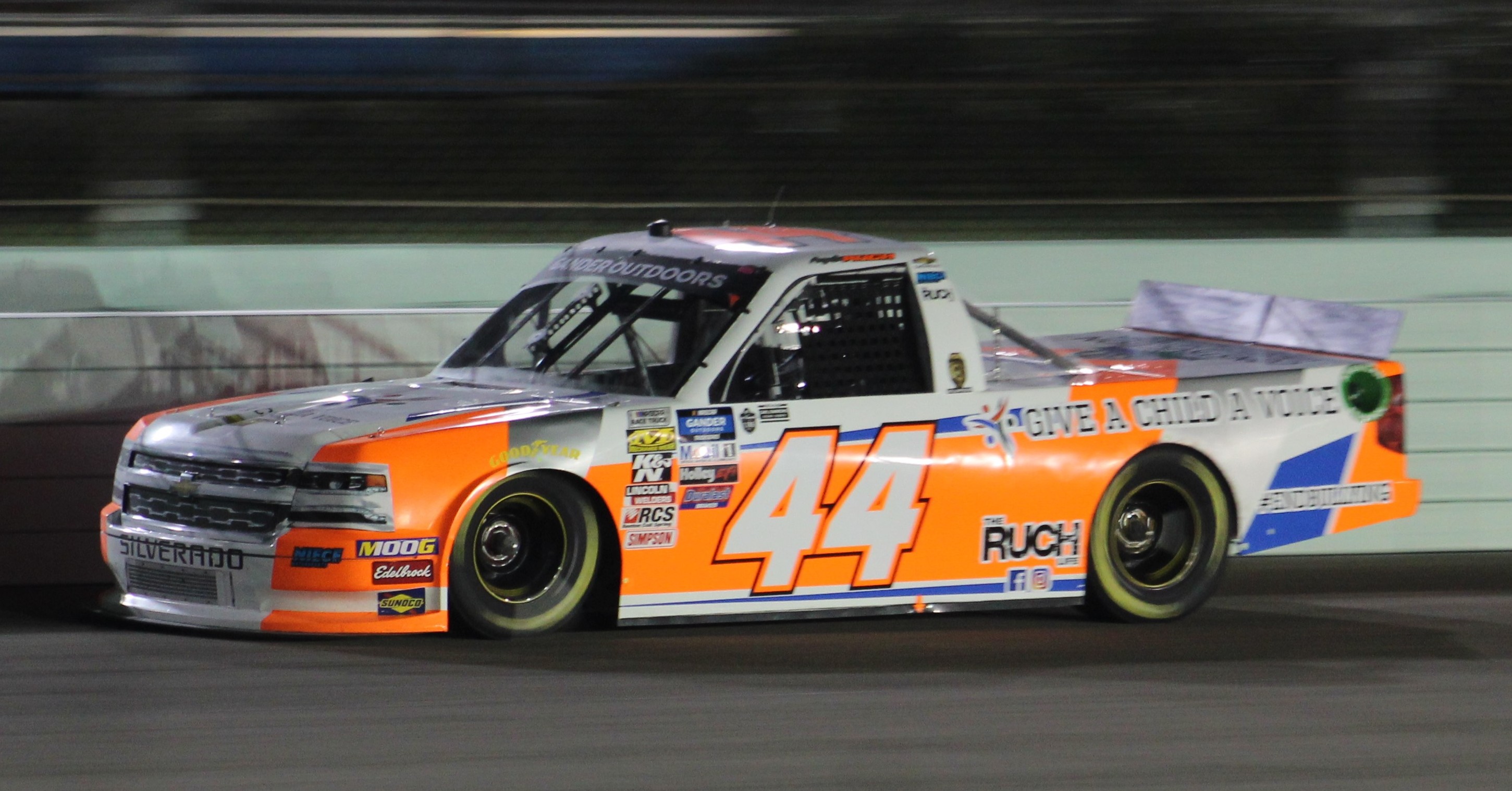
1997 Silverado
"You just don't pick up truck. You got like a, you know, chop roof 90 with a 97 Silverado [191.4s] or something. Flame paint job, right? It has supercharger on it."
A Chevrolet Silverado is a big pickup truck. This one is a 1997, and the story says it was customized with a supercharger, so it could feel much faster than a normal truck.
The Chevrolet Silverado is a full-size pickup, and the 1997 model is part of the GMT400 generation. In the segment, it’s described as having a chop-top roof and a flame paint job, plus a supercharger—turning a work truck into a show-and-go vehicle.
supercharger
"Flame paint job, right? It has supercharger on it. You just floor every time, [195.7s] everywhere we went."
A supercharger is a device that shoves extra air into the engine. That extra air helps the engine make more power, so the car feels faster.
A supercharger is a forced-induction device that compresses incoming air before it reaches the engine. More compressed air lets the engine burn more fuel and produce more power, which is why a supercharged truck can feel dramatically quicker.
Cup car
"you were off two Bush Series championships and you had a deal in place to go drive the seven cup car. [207.4s] And it was actually over in the old Quickie building where Spire first was."
In NASCAR, a “Cup car” refers to the stock-car platform used in the NASCAR Cup Series. It’s the top-level national series, so driving a Cup car is a major step up from lower NASCAR divisions.
Ultra Wheels
"And it was actually over in the old Quickie building where Spire first was. What was that deal? [212.5s] Jim Smith owned Ultra Wheels."
Ultra Wheels is a wheel brand/company mentioned in the story. The host says the owner was involved in the deal that offered a big NASCAR opportunity.
Ultra Wheels is referenced as the company Jim Smith owned, tying motorsport sponsorship and business deals to racing opportunities. In this story, the ownership connection is part of how the $2 million offer came together.
Spire
"And it was actually over in the old Quickie building where Spire first was. What was that deal? [212.5s] Jim Smith owned Ultra Wheels."
Spire is a NASCAR racing team. The story says the team originally got started in that building.
Spire is mentioned as the team that first started in the old Quickie building. In NASCAR context, Spire is a racing organization that fields cars and employs crew and engineering staff.
last straight
"So I catch them and Mayfield is in front of me. I catch them right, coming down the last straight away, the last right hander."
A “straight” is the part of the track where the car goes mostly straight and can build speed. The “last straight” is the final long acceleration section before the next big corner.
A “straight” is the section of track where cars accelerate with minimal steering input. The “last straight” typically refers to the final high-speed run before a major braking zone or turn, which is where passing attempts often happen.
last right hander
"I catch them right, coming down the last straight away, the last right hander. 10. And I come through there wide open and it's okay."
A “right hander” is a turn where the track curves to the right. Saying it’s the “last” one means it’s the final right turn before the next section of track.
A “right hander” is a corner that turns to the right, and “last right hander” indicates the final right-hand corner before the next straight or finish area. Corner direction matters because it changes which tires are loaded and how drivers set up braking and throttle.
spins out
"Well, Mayfield spins out. They just pulled his car out of the garage."
“Spins out” means the car loses grip and starts rotating out of control. It’s common when the tires can’t stick to the track surface.
“Spins out” describes a loss of traction where the car rotates faster than the driver can control, often due to oversteer or a sudden change in grip. In racing, it can happen when tires lose grip mid-corner or during throttle/braking transitions.

Ssangyong Kyron
"these guys go to their spare room and run a simulator, right on the Simrig. So Kyron's asking about the old filler filler fairgrounds. So some context on that. You've got the shop built at 956 somewhere in there. And this was like the hangout, right? You"
The Ssangyong Kyron is a type of SUV, meaning it’s a taller vehicle meant for both regular roads and tougher conditions. In a podcast, it may be mentioned because someone is talking about how a specific car model fits into their driving or simulation plans. The key point is that it’s an SUV platform people can reference for real-world driving behavior.
The Ssangyong Kyron is a midsize SUV built for everyday driving with the option of more capable off-road or rough-road use, depending on the configuration. It’s the kind of vehicle that can be discussed in a motorsport or simulation context because people may reference how a real car behaves or how it’s represented in driving setups. In the podcast excerpt, it appears as part of a conversation about the Kyron and related racing/simulation planning.
go-kart track
"First thing I did when I got in the car, I was like, I'm paving the go-kart track call up the asphalt. I'm paving the trash."
A go-kart track is the course where people race small cars called go-karts. The host is saying they were involved in improving their local track, which helped them learn racing.
A go-kart track is a small racing circuit designed for kart racing. In this context, the host is describing how they started learning racing by working on and improving their local kart facility.
grandstand
"And we ended up with a grandstand. Well, we had grandstands. We had sponsorship the whole thing."
A grandstand is where spectators sit to watch a race. The host is saying their go-kart nights became big enough that people could watch from proper seating.
A grandstand is a raised seating area for spectators at a race venue. The host is describing how their kart operation grew into a real event with enough attendance to justify spectator seating.
building motors
"But the best part was we'd be in here working on our go-karts on like building motors. That's where we like, we would build our own motor."
“Building motors” means putting an engine together and getting it ready to run. For go-karts, it’s also a learning process because you can see how engine parts affect how the kart runs.
“Building motors” means assembling and preparing an engine for use—often including selecting parts, setting clearances, and tuning it for the application. In kart racing, this is a hands-on way to learn how engine components work together and how changes affect performance and reliability.
head gasket
"Oh, they're just stock. And that's all way, no change of head gasket. They look like they're out of a Chevy 350."
The head gasket is a seal inside an engine that helps keep important fluids and gases from leaking. If it goes bad, the engine can overheat or start running poorly.
A head gasket is the seal between an engine’s cylinder head and the engine block. It prevents combustion gases, coolant, and oil from mixing or leaking; if it fails, you can get overheating or loss of compression.
Chevy 350
"And that's all way, no change of head gasket. They look like they're out of a Chevy 350. I was like, this is so big."
“Chevy 350” is a famous Chevrolet V8 engine size. The host is using it like a comparison—saying the parts they were looking at resembled those from that well-known engine.
“Chevy 350” refers to the Chevrolet small-block V8 displacement of 350 cubic inches (about 5.7 liters), a common engine family used as a reference point. The host is saying the valves they saw looked like parts from that well-known engine, implying the kart engine used familiar, off-the-shelf components.
chassis dyno
"He put a chassis dyno in when they had these old flat heads. I mean, five horsepower was five horsepower."
A chassis dyno is like a treadmill for a car. It measures how strong the car is by testing how much power it makes while the wheels spin on rollers.
A chassis dyno is a test stand that measures how much power and torque a car makes at the wheels. The car is strapped down and the rollers simulate driving load while sensors record performance data.
flat heads
"He put a chassis dyno in when they had these old flat heads. I mean, five horsepower was five horsepower."
“Flathead” is an older engine design where the valves sit in the engine block. It’s a simpler setup, but it doesn’t breathe as well as newer engine designs.
“Flat heads” refers to flathead engines, which use valves located in the engine block rather than in the cylinder head. They were common in early engines and are known for simpler design but less efficient airflow than modern overhead-valve layouts.
feature
"And I think every Wednesday night, they would have dyno night. So I always seen him working on his stuff, making it better. I see him win a feature next Tuesday or something, I go down after school."
A “feature” is the main race on the schedule. It’s usually the most important event of the night.
In racing, a “feature” is typically the main event race of a night’s program, after heats or qualifying. Winning a feature is often treated as the biggest result for that event.
go carts
"I said, okay, I mean, when I started with go carts, I had an older brother started with go carts, Ronnie."
Go-karts are small race cars that many people start with when learning to drive and race. They’re a common first step because they’re easier to handle and race.
Go-karts are small, lightweight race cars used as an entry point for many drivers. They’re popular for learning racing fundamentals like throttle control, braking, and line choice at lower speeds.
four wheel disc brakes
"We would go down the island West Hampton and race two cycles with those guys, four wheel disc brakes. I mean, this thing was trickered and hail."
“Four wheel disc brakes” means every wheel has brakes with a disc. They usually stop better and stay more consistent when you brake a lot.
“Four wheel disc brakes” means each wheel has a disc brake, which generally provides stronger and more consistent stopping power than older drum setups. Disc brakes also tend to handle repeated braking better because they dissipate heat more effectively.
street car
"And he got killed in a car wreck. How old was he in the car? 17 street car, not a race car. Street car. How old are you? 15."
A “street car” is a car meant to drive on regular roads. It’s different from a dedicated race car built for track events.
A “street car” is a vehicle intended for public-road use rather than purpose-built racing. In motorsports context, it contrasts with race cars that are stripped down and modified for track performance and safety rules.
drag racing
"But where did he get it from? Drag sort of drag racing. Yeah, the old 32 we got in there."
Drag racing is racing in a straight line over a short distance. The goal is to get off the line and accelerate as fast as possible.
Drag racing is a straight-line motorsport where cars compete over a short distance to see who accelerates fastest. It heavily emphasizes traction, engine output, and launch setup because small changes can dramatically affect results.
Danbury
"And a couple of them said, Hey, guy called me was racing at Danbury and something happened. And he said, Hey, you want to go drive this thing?"
They’re talking about Danbury as a place where racing happened. It’s used to explain how the father got pulled into driving race cars.
Danbury is mentioned as a racing location where the father was involved with drag racing. In this context, it’s part of the story about how he got opportunities to drive and build race cars.
Hemmy motor
"And so let's go. They had a Hemmy motor and he went down there 11 this thing and you talk about shaky looking."
“Hemmy” is a reference to a HEMI-style engine, commonly associated with Chrysler’s HEMI V8s. HEMI engines use hemispherical combustion chambers, which can improve airflow and combustion efficiency—often making them popular for high-performance and racing builds.
NASCAR rulebook
"And one of the things that really helped him, he left Danbury. He said, Okay, I'm going to NASCAR racing. So he went and got the NASCAR rulebook. He said, we're going to go to Stafford."
The NASCAR rulebook is the official list of rules for what a race car is allowed to be. Building “by the rulebook” means the team followed those limits so they wouldn’t be at a disadvantage.
A NASCAR rulebook is the set of regulations that defines what teams are allowed to build and how cars must be configured. The speaker says they switched to building the car “by the rulebook,” which implies compliance with weight, engine, and other technical limits to be competitive.
NASCAR racing
"And one of the things that really helped him, he left Danbury. He said, Okay, I'm going to NASCAR racing. So he went and got the NASCAR rulebook."
NASCAR is a U.S. racing series for stock cars, usually on oval tracks. It has specific rules about what the cars can be like.
NASCAR racing is stock-car racing in the U.S., typically run on oval tracks with strict technical rules. The speaker’s point is that switching to NASCAR meant following the rulebook and building the car to those constraints.
Stafford
"So he went and got the NASCAR rulebook. He said, we're going to go to Stafford. We're going to run all the big shows, all the tour stuff."
Stafford is a place they planned to race at. It shows they were moving from local racing to bigger NASCAR events.
Stafford is referenced as a track/venue they planned to go to for NASCAR events. It’s part of the transition from earlier drag-style racing to NASCAR’s larger “tour” schedule.
weight rule
"And I was like, man, that ain't like me. I'm watching the 7 11 not win. And that's like, what the hell's going on here? There was no weight rule, no weight rule. His car was 3,000 pounds."
A weight rule is a rule about how heavy the race car has to be. If there’s no weight rule, teams can build lighter or heavier; if there is one, everyone has to meet the same minimum so it’s fairer.
A weight rule is a regulation that sets minimum vehicle weight (or requires ballast) to keep competition closer. The speaker contrasts “no weight rule” at the earlier racing, where the car was “3,000 pounds,” with a later environment where other cars were “rig 200,” implying different weight/ballast constraints.
Ford engine
"You got a Ford engine out of Long Island, motive engineering down there. I mean, it was amazing to watch."
They’re saying the car used a Ford engine. In racing, people often swap engines to get more power or better parts support.
A “Ford engine” here means the racing car used an engine from Ford as its powerplant. Engine swaps like this are common in grassroots and club racing because builders choose an engine for parts availability, tuning potential, and how well it fits the chassis.
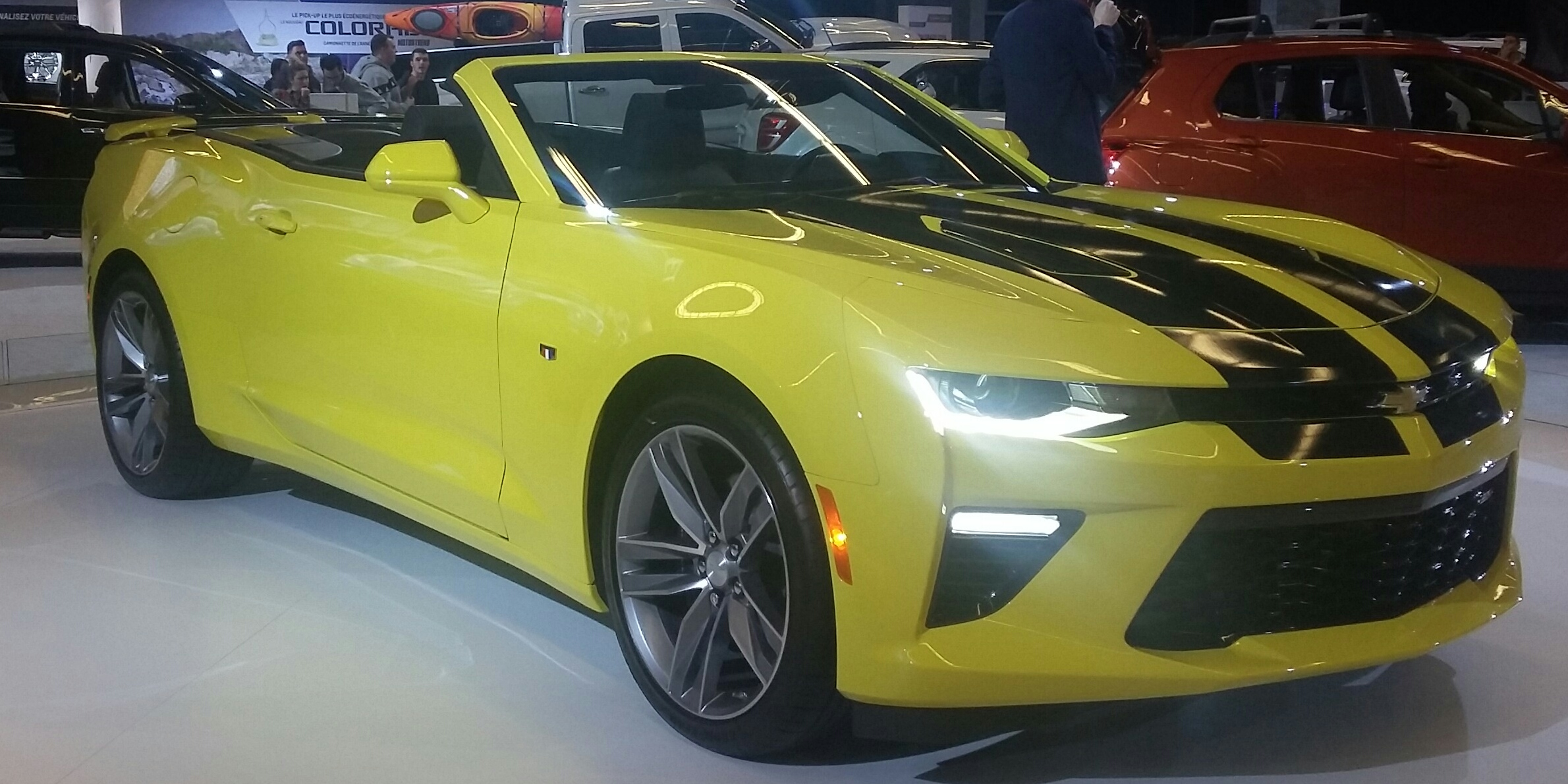
Chevrolet Camaro
"...tever the MSA car, like a TA2 car. There was a 68 Camaro red, a blue car with snoco on it. Last year's win..."
The Chevrolet Camaro is a sports car made by Chevrolet. It’s a popular model that has been used in racing and special events for many years. When someone mentions a specific Camaro color or year, they’re usually talking about a particular car entry from that time.
The Chevrolet Camaro is a classic American sports coupe that’s known for its performance-focused design and long-running presence in motorsport and racing culture. In a podcast context, it may come up when discussing specific race entries or historic liveries—like a particular 1968 Camaro—because those details help identify the car’s era and setup. It’s often discussed as a recognizable platform that teams and drivers have used across different events.
fiberglass seat
"So he brought it home, puts it in and modified it. Don't fit. Okay, cut it off... Okay, so when I started, that's the seat I used... And then you had this fiberglass seat in which in the rule book, you couldn't have fiberglass seat had to be a little good."
A fiberglass seat is a racing seat made from fiberglass composite rather than traditional steel or aluminum. Composite seats can be lighter and can be shaped to fit the driver, but they’re also subject to racing rulebooks that limit materials for safety and consistency.
carbon fiber
"So it all goes full circle because now fiberglass become carbon fiber and Corey's going to start a carbon fiber business building seats."
Carbon fiber is a very strong, lightweight material used a lot in racing. Here they’re saying Corey is building seats with it, building on the same idea of making racing seats from composites.
Carbon fiber is a lightweight, high-stiffness composite material often used in motorsport for parts like seats, bodywork, and aerodynamic components. In this segment, the host connects the earlier fiberglass-seat era to Corey’s current carbon-fiber seat business, highlighting the material evolution in racing interiors.
make something round out of something that's flat
"because it's not not even close to the same feel because we're trying to make something round out of something that's flat. So then you make your own people start being interested."
They’re talking about shaping material into a curved seat shape instead of leaving it flat. The point is to make the seat fit and support you better while you’re driving and in hard situations.
This describes a seat-manufacturing challenge: shaping a flat starting material into a curved, ergonomically supportive form. For racing seats, the goal is to match the driver’s body position so the seat provides consistent support and comfort under cornering and impact loads.
powder coat
"10,000 seats. Yeah, we have the powder coat business and we powder coat your seats and now Butler and victory."
Powder coating is a way to coat metal with a protective finish. It’s baked on so it’s tougher and lasts longer than simple paint—useful for parts that get lots of wear.
Powder coating is a durable surface finishing process where a dry powder is applied and then cured with heat to form a tough protective layer. In this context, it’s used on racing seats to improve corrosion resistance and keep the finish looking good despite frequent use and cleaning.
short track racing
"You're very tapped in on short track racing. You go to a lot of short track races. You've been here, they're everywhere."
Short track racing is racing on smaller tracks, usually ovals. The cars go fast, but the track is tighter, so drivers deal with more close-quarters driving and crashes—so safety gear matters a lot.
Short track racing is a form of motorsport run on smaller oval circuits, typically with tighter corners and more frequent traffic than larger tracks. Because crashes are common and speeds are still high, safety equipment like seats and belts are a big focus for drivers and teams.
lock the belts properly
"There's still people out there that don't lock the belts properly. You know, I mean, I've gone to cars and taken the shoulder belt right off."
Racing seat belts have to be buckled and set the right way. If they’re not locked in properly, they may not protect you as well in a crash.
In racing, “locking the belts properly” means ensuring the shoulder and lap belt are correctly latched and tensioned so they restrain the driver during a crash. If belts aren’t secured correctly, the driver can move more than intended, which reduces the safety system’s effectiveness.
LCQ, dual race
"So this is the LCQ, dual race. This is when Daytona was legitimately two weeks long."
“LCQ” is a last-chance race. If you didn’t qualify the normal way, you race again to try to get into the main race. The host is saying Daytona’s setup was basically like having two races worth of action over a long stretch.
LCQ typically means “Last Chance Qualifier,” a race that gives drivers who didn’t qualify normally one more shot to make the main event. The host also describes it as a “dual race” at Daytona, meaning the event structure ran in a way that effectively made the weekend feel like two races over an extended period.
Goodyear tower
"So we went down there for 34 days and you do your runs and you have all experienced guys come talk to you in the old Goodyear tower."
The “Goodyear tower” is a track control/viewing area tied to Goodyear’s racing role. It’s where people watch what’s happening and help teams with information during practice and events.
The “Goodyear tower” is a team/officials viewing and operations area at the track associated with Goodyear’s motorsports presence. In NASCAR, these towers are where engineers and strategists can observe sessions and communicate guidance.
if you get sideways here, just turn it left and lock it down
"Richard always said, if you get sideways here, just turn it left and lock it down."
“Sideways” means the car starts sliding and the back end swings out. The advice is basically: steer to control the slide and keep the car stable instead of letting it spin.
“Getting sideways” describes a loss of traction where the car’s rear steps out and the car rotates relative to its direction of travel. The advice to “turn it left and lock it down” is a driver technique for controlling a slide by counter-steering and stabilizing the car so it doesn’t spin further.
keep it wide open
"But then they said, okay, keep it wide open. Well, we had gone down there and we burned up three motors."
“Wide open” means you’re pressing the gas all the way. In racing, that’s how you go as fast as possible, but you still have to keep the car under control.
“Wide open” means running the throttle at or near full opening, maximizing engine power output. In racing, it’s often used as shorthand for committing to speed through a section—though the host’s story shows how that can still end badly if the car isn’t stable.
burned up three motors
"But then they said, okay, keep it wide open. Well, we had gone down there and we burned up three motors."
“Burned up three motors” means the engines failed. In racing, engines are stressed a lot, so if something goes wrong, you can blow an engine quickly.
“Burned up three motors” means the race engines failed catastrophically during the test/race period—common in motorsports when engines are pushed hard and something goes wrong (cooling, lubrication, or component stress). The host’s point is that they had very limited laps and still suffered multiple engine failures.
Richard Petty
"Bought a motor from Richard Petty and he lined up for this race lined up last like 28th."
Richard Petty is one of NASCAR’s biggest legends. The host is saying they got an engine from Petty’s side of the sport, which shows how connected the racing community can be.
Richard Petty is a legendary NASCAR driver and team figure, strongly associated with high-level competition and engine/race support in the sport’s history. In the segment, the host says they bought a motor from Richard Petty, highlighting how top drivers and their operations could directly support others.
Sterling Marlin
"And here I am. I'm we're coming back up and I'm coming up behind Sterling Marlin."
Sterling Marlin is a NASCAR driver. The host is using him as a “where we were in the race” reference while describing what happened.
Sterling Marlin is a well-known NASCAR driver, often associated with stock-car oval racing. The host mentions coming up behind Marlin during the race, using him as a reference point for where they were in the field.
stretcher
"Because we pulled you out, laid you on the stretcher. He goes, and you were not breathing and the microphone, he said, your open face helmet, your microphone was stuck in your mouth."
A stretcher is what medics use to move an injured person safely. In racing, it’s used when a driver needs urgent medical attention after a crash.
In motorsports, a stretcher is the medical transport device used to move an injured driver from the crash scene to medical care. It’s part of the track’s emergency response process after a serious impact.
open face helmet
"Because we pulled you out, laid you on the stretcher. He goes, and you were not breathing and the microphone, he said, your open face helmet, your microphone was stuck in your mouth."
An open-face helmet is a helmet that covers your head but doesn’t have the full chin/face guard. In racing, it can still have a visor and a mic for talking to the team.
An open-face helmet is a helmet without a full-face chin bar, leaving the mouth area exposed. In racing, it’s still paired with a visor and often a communications microphone, but the open design can affect how gear sits during a crash and rescue.
concussion
"And then after that, I realized what a concussion was because we went to the Bahamas and I lived on a bottle a day of headache stuff, Tylenol or whatever."
A concussion is a brain injury from a hit or hard jolt. It can make you feel awful—like headaches or confusion—and you may need time before you’re back to normal.
A concussion is a type of traumatic brain injury caused by a blow to the head or a sudden jolt. Symptoms can include confusion, headache, and sensitivity to light, and it can affect how you feel for days or longer.
steel frame
"I wrecked hard right side hit in that fiberglass seat before I had a steel frame around it. And it broke the seat, you know, and I ended up on top of the transmission."
A steel frame is added structure around the seat to make it tougher in a crash. The goal is to keep the driver’s position safer and more stable.
A steel frame around the seat is part of the driver’s safety structure that helps keep the seating area rigid in a crash. Stronger framing can reduce how much the seat collapses or shifts during impact.
transmission
"And it broke the seat, you know, and I ended up on top of the transmission. And okay, I think that was the first time I turned myself black and blue."
The transmission is the part that sends power from the engine to the wheels using different gears. In this story, it’s mentioned because the crash pushed him into that area of the car.
The transmission is the drivetrain component that transfers engine power to the wheels through gear ratios. In a crash description, ending up on top of the transmission implies the impact forced the driver’s body into the center tunnel/drivetrain area.
Dale and Jeff Gordon-esque rivalry
"So some context to you and Buckshot late 90s had like a Dale and Jeff Gordon esque rivalry. "
They’re comparing the rivalry to two very famous NASCAR drivers. The idea is that it was a big, high-profile feud on the track.
This refers to a late-1990s NASCAR-style rivalry compared to the famous on-track battles between Dale Earnhardt and Jeff Gordon. The point is the intensity and media attention around the matchup.
Tal Daga
"No, it was Tal Daga. And it was early in the race... We run out of fuel twice."
They’re talking about a particular race track, and the track layout influences how drivers brake and turn. That’s why the same kind of move can be safer or more dangerous depending on the track.
The segment references a specific race venue (“Tal Daga”), which frames the driving context for the on-track incidents being discussed. Track-specific layouts affect braking points, cornering lines, and how risky certain maneuvers like blocking can be.
trail break
"So back stretch, I trail break, got our line backed up, coming out of four."
Trail braking means you’re still braking a little while you start turning into the corner. That can help the car turn in more smoothly and stay controlled as you move from slowing down to accelerating.
“Trail braking” is when a driver keeps braking pressure applied as they turn into a corner, rather than releasing the brakes completely before turn-in. In racing, it helps rotate the car and manage grip while transitioning from braking to throttle.
block
"Well, he decided to come up and block and somebody was going to get wrecked."
Blocking is when a driver moves to make it harder for someone else to pass. Instead of just driving their line, they’re trying to “shut the door,” which can sometimes cause crashes.
In racing, “blocking” is when a driver intentionally positions the car to prevent another car from passing, usually by covering the inside or outside line. It’s often done during late-race battles and can lead to contact or wrecks if the spacing gets too tight.
t boned
"And that sucker was waiting for me in turn three. And he frigging t boned me."
A T-bone is when one car hits the side of another car. In a race, it can happen if someone gets into your path while you’re turning or accelerating out of a corner.
A “T-bone” collision is an impact where one car strikes another broadside, forming a “T” shape. In racing, it often happens when a car is hit from the side during cornering or when one driver’s line changes unexpectedly.
sidestepped the clutch
"And I put that sucker in first gear and sidestepped the clutch and it was wet."
Sidestepping the clutch means you let the clutch out fast to get moving right away. It’s a quick way to restart the car when you need to get going immediately.
“Sidestepping the clutch” means releasing the clutch quickly and aggressively to get the car moving with minimal delay, often from a stop after an impact. In racing, it’s a technique used to regain drive immediately when traction is available.
fuel cells
"Second lap of the race, rear clipped it frigging fuel cells on the ground fuel everywhere."
Fuel cells are special race gas tanks built to be safer in crashes. The goal is to keep fuel from leaking or spraying if the car gets hit.
“Fuel cells” are race fuel tanks designed to reduce the risk of fire and fuel spillage during crashes. They’re typically constructed with safety bladders and containment features so that even if the car is hit hard, fuel is less likely to spray everywhere.
caution
"couple laps later, caution. What's going what happened there? Oh, buck shot."
A caution is when something happens on the track and the race slows down. Drivers have to be careful and usually can’t race at full speed until it’s safe again.
In racing, a caution is a period when the race is slowed because of an incident on track (like a wreck or debris). Drivers typically reduce speed and follow the rules for passing until the track is cleared.
pit road
"He was middle of pit road. He was an easy mannered guy and he was hot."
Pit road is the special area beside the track where teams stop to work on the race car. Drivers go through it carefully because the crew is right there.
Pit road is the controlled lane where teams service cars during a race. Speed is limited there, and crew members work around the car while it’s moving through the pit area.
lap car
"I think my TV interview was there was a lap car. And he lifted early and I haven't lifted yet."
A lap car is a car that’s not on the same lap as the front runners. Because they’re slower or faster by a lap, they can create traffic and change how drivers race.
A lap car is a car that’s on a different lap count than the leader—typically one or more laps down. Lapped cars must follow specific rules and can be involved in traffic, which affects passing and timing.
spotter
"So next lap around, the spotter is like, Hey, you better watch out. He's looking for you."
The spotter is like a second set of eyes for the driver. They call out what’s happening around you so you don’t get surprised.
A spotter is a crew member positioned to watch the track and communicate with the driver. They warn about nearby cars, hazards, and who’s coming—especially during restarts and close racing.
gasses it up
"he frigging you hear whoop. He gasses it up and turns right. Well, I gas it up."
“Gassing it up” just means hitting the gas to speed up quickly. Here, it’s describing a sudden acceleration move during close racing.
In racing slang, “gassing it up” means quickly applying throttle to accelerate. In this context it describes a sudden move that changes the car’s position and can lead to contact or a spin.
rear clip
"So now only is his rear clip crash. His front clip is gone."
The “rear clip” means the back part of the car’s body. If it gets damaged in a wreck, it usually means the impact was serious.
“Rear clip” refers to the rear section of the car’s body structure (often including the rear bumper and related panels). In a crash, damage to the rear clip can indicate a severe impact and loss of alignment.
front clip
"So now only is his rear clip crash. His front clip is gone."
The “front clip” is the front part of the car’s body. If it’s “gone,” the front end was badly damaged in the crash.
“Front clip” is the front body section of the car, including the nose area and front-end components. When a driver says the front clip is “gone,” they’re describing major front-end damage from a crash.
shock travel
"Ain't no way you know what the shock travel is. Oh, yeah. I said, I'll take you all the dinner if you get within a quarter of an inch."
Shock travel is how much your suspension shock can move up and down. Racers measure it so the car doesn’t run out of suspension movement or slam into the limit during bumps.
Shock travel is how much the suspension damper (shock absorber) can move through its range before it tops out or bottoms out. In racing setup, teams measure it so the car uses the suspension’s movement without hitting hard limits that can upset grip and handling.
tire check
"run about 10 laps. I look up after 10 laps, we're second on the board, getting the tire check, tire checks, come in, push the car in, clean shut off, roll in."
A tire check is an inspection of tire condition and/or wear after a run to see how the car is loading the tires. In short-track and dirt racing, it’s used to confirm whether the setup is giving the intended contact patch and grip.
bump stop
"And now you're trying to get within about 15,000 on the left for a bump stop. I mean, that's what the range is right between getting it to where you can't drive it on the left first stop too hard..."
A bump stop is like a safety cushion for the suspension. If the car goes too low, it hits the bump stop; racers try to time that so it doesn’t happen too soon.
A bump stop is a suspension limit device that compresses when the suspension gets too close to the chassis. Teams tune ride height and suspension travel so the bump stop only engages when needed—too early can make the car feel harsh and reduce traction.
development
"I mean, going to Longhorn last week, talking to Rumley, like he knew it abraded up dirt track within an eighth of an inch where the right front's going to be on. Okay, that's some development."
Development is the trial-and-error process of tweaking the car and then checking what changed. The goal is to dial in the setup so the car behaves correctly on that specific track.
In motorsports, “development” refers to the iterative process of adjusting the car based on measured results—like suspension travel targets and how the car behaves over bumps. The speaker is describing how small setup changes can be validated by track-specific data.
drift stuff
"Do you have the formula drift stuff? So friend of the show Vaughn getting to you, do you have a video of it? I don't know how do you get points for that drift stuff?"
“Drift stuff” means the rules and scoring for drifting. Judges look at things like speed, how sideways you are, and whether you follow the course without spinning out.
“Drift stuff” refers to the scoring elements used in drifting competitions—typically things like how fast you go, how large the slide angle is, and whether you hit specific track markers. The speaker also mentions rules about causing a spin-out or contact.
RTR
"Okay, I got markers on the track. They got to hit. Both RTR cars built right over here at a trader shop. Okay, that's where RTR is."
RTR is a racing/performance brand tied to Vaughn Gittin Jr. The speaker is saying the drift cars they’re talking about are built under the RTR program.
RTR is a motorsports and automotive brand associated with Vaughn Gittin Jr., known for building and supporting drift and performance cars. In the transcript, “RTR cars” implies cars built by that team/brand for competition.
sprint car
"We went to the one last year at Raceway Park and it's a great event and like it's like one of those things like a sprint car. You could just watch it go around by itself and it's cool."
A sprint car is a lightweight open-wheel race car that’s built for short, fast races. Because it’s so light and powerful, it can feel like it’s moving even faster than you’d expect.
A sprint car is a small, lightweight open-wheel race car built for short oval races. They’re known for high power-to-weight and quick acceleration, and they often run on dirt or short tracks where drivers can get very close to the wall and each other.
transfer
"Yes. You're like that is that is not how tight he was tucking on the transfer. Yeah, he lost. Yeah, because he missed up. But you can get lost in the smoke reels and Scott Davidson, who you've seen, he's been here working on the midget."
“Transfer” is about how the car’s weight shifts when it turns or brakes. Good drivers manage that shift so the tires keep enough grip to stay on the right line.
In racing, “transfer” usually refers to how a car shifts load and grip from one end to the other during cornering—often discussed as weight transfer. Drivers “tuck” or adjust their line to manage that grip shift, especially when the car is close to the limit.
midget
"And then it says then it says then how close you can get to that the little pole they have down there. That's sick. It's sick. It's electric and it's sick at night. We went to the one last year at Raceway Park and it's a great event and like it's like one of those things like a sprint car. You could just watch it go around by itself and it's cool. Yes. You're like that is that is not how tight he was tucking on the transfer. Yeah, he lost. Yeah, because he missed up. But you can get lost in the smoke reels and Scott Davidson, who you've seen, he's been here working on the midget."
A midget is a small race car used on short tracks. It’s built to be fast and nimble, so it can look and feel really intense even though it’s not a big car.
A midget is a type of small open-wheel race car (often called “midget car”) that competes on short tracks. They’re popular in American grassroots racing and are known for being extremely quick in corners despite their compact size.
road course car
"Scott Davidson, who you've seen, he's been here working on the midget. He crew chiefs James Dean. The intricacies of it, he said we basically built a road course car and just overpower the hell out of it."
A road course car is set up for tracks that have lots of different turns and braking. The goal is to keep the car stable and grippy through corners, not just go fast in one direction.
A road course car is a race setup tailored for tracks with a mix of left and right turns, braking zones, and varying corner types. Compared with oval racing, road course cars emphasize braking stability, traction out of corners, and balance over a wider range of speeds.
restar ts
"He ran like, I don't know, where was his average running position? It seemed like not on TV. Yeah, He was on new tires and he was able to have a couple good restarts there."
Restarts are when the race starts back up after a caution. Everyone tries to get a good launch and position because grip and timing can be different right away.
Restarts are the moments when racing resumes after a caution period (like a yellow flag). Drivers often fight for position immediately because tire temperature, traction, and timing can change right as the field accelerates again.
Ross Chastain
"And shout out to Ross Chastain because I don't want to say this, but I'm going to say he goes back and runs shit boxes. He makes people better."
Ross Chastain is a NASCAR race driver. They’re talking about how he can do well even when his team doesn’t have the best resources.
Ross Chastain is a NASCAR driver discussed in the context of how he performs with less competitive equipment. The hosts credit him with making “underfunded” teams better through driving and results.
Krispy Kreme
"I said, Parker, myself and Ross Chastain look for underfunded teams like we look for the hot now at Krispy Kreme. That's what just tickles our fancy."
Krispy Kreme is a well-known doughnut brand. Here it’s used like a fun analogy for what they’re excited about.
Krispy Kreme is a consumer brand referenced here as a playful comparison for what the drivers are “looking for.” The mention is about motivation and team selection, not a technical racing detail.
Watkins Lynn is the statistically hardest place to pass
"Watkins Lynn is the statistically hardest place to pass on the schedule. SPG made it look easy."
They’re saying Watkins Glen is a track where it’s really tough to pass other cars. Even if you’re faster, you often can’t find a clean spot to get around someone.
The speaker is talking about Watkins Glen (often referred to as “Watkins Glen”) and how it’s considered one of the hardest tracks on the schedule to pass at. That matters because passing opportunities are limited by braking zones, corner exits, and how cars behave in traffic.
ride on his cage
"He just wanted to ride on his cage. But the one he was three or four pit boxes behind him and he had two lanes to the left."
“Ride on his cage” is a colloquial way to describe running extremely close to another car’s rear/side so the other driver feels pressure. In racing, that can be used to influence positioning without necessarily intending contact.
pit boxes
"But the one he was three or four pit boxes behind him and he had two lanes to the left."
In racing, the pit lane has marked spots for each team. “Pit boxes behind” just means you’re several team spots back from where the other car/team is.
A pit box is the assigned stall in the pit lane where a race team stops for service. Being “pit boxes behind” someone describes how far back you are in the pit-lane timing and positioning context.
boxed in
"SPG was boxed in and he just didn't give him a lane to leave. Oh, okay. Took his left front off."
“Boxed in” means you’re stuck with nowhere to go. If there’s another car beside you and a wall or slower traffic in front, you can’t safely change lanes.
“Boxed in” is racing shorthand for being trapped with no clear lane to move into. It often happens when two cars are side-by-side and the driver in the middle can’t find space without causing contact.
front off
"SPG was boxed in and he just didn't give him a lane to leave. Oh, okay. Took his left front off."
That phrase means the crash hit the car’s front-left area hard. When that corner gets damaged, the car usually won’t drive straight or handle well.
“Took his left front off” describes a collision where the left front corner of a car is damaged or torn away. In stock-car racing, that kind of impact can quickly end a car’s handling and may require repairs or a cautious return to the pits.
go all the way to the wall
"I don't want to say I don't know the intention, but you just said it was intentional. Why would you go all the way to the wall? Why would you not?"
Racing “to the wall” means running extremely close to the outside barrier to maximize cornering line and exit speed. It’s a high-risk move because it reduces room for error if the other car is alongside or if grip changes.
Request an Explanation
Heard something you'd like explained? We'll add it to this episode.
Sign in to request explanations for terms you heard.
Want to learn more?
Browse our glossary for plain-English explanations of automotive terms, jargon, and concepts.
Help improve this episode
See something that's not quite right? Our annotations are AI-generated and can sometimes miss the mark. Click the flag icon on any annotation to suggest a correction.