
V8SP: Mark Skaife (Part 1)
About this episode
Mark Skaife (Part 1) is framed by motorsport calendar talk and the return of the Winton Festival of Speed in 2026. The conversation then dives into how race programs and engineering evolved—“qualifying engines” built for response, and how rules and cost containment shaped special hardware. Skaife recounts early racing battles, rebuilds after crashes, and the way wet grip and chassis priorities changed over time. The episode also sets up Eastern Creek 95 as a later, in-depth crash story.
Winton Festival of Speed
"The Winton Festival of Speed is back for 2026 with new dates, new events and new cars... Pencil it into the diary, July 24 to 26 for the Winton Festival of Speed."
This is a car event where lots of racing cars show up and fans can watch and learn about motorsport. In this episode, they’re saying it’s coming back in 2026 with new stuff to see.
The Winton Festival of Speed is a motorsport event that brings together racing cars and related activities over multiple days. It’s notable here because the host says it’s returning in 2026 with new dates, events, and cars, including heritage and touring-car content.
heritage touring cars
"The legendary heritage touring cars are back... There's touring car legends, touring car tributes, classic sports cars, Formula 4 historic touring cars..."
This means older touring-car race cars—cars that used to race in touring-car series—being shown or celebrated at the event. It’s basically a history-focused part of the weekend.
“Heritage touring cars” refers to older touring-car race categories and the cars/teams associated with them, presented for fans as part of a historic or tribute program. In this segment, it’s used alongside other classic categories, signaling a focus on historic touring-car racing rather than current production-based racing.
Formula 4 historic touring cars
"There's touring car legends, touring car tributes, classic sports cars, Formula 4 historic touring cars and the Fitzy Cup for Porsches..."
Formula 4 (often shortened to F4) is a junior open-wheel racing category used as a stepping stone for drivers. Here, “Formula 4 historic touring cars” indicates a historic/tribute-style program that includes Formula 4-era cars alongside touring-car history.
Fitzy Cup
"Formula 4 historic touring cars and the Fitzy Cup for Porsches in honour of Peter Fitzgerald."
The Fitzy Cup is a specific race category at the event. This one is for Porsche cars, and it’s named to honour Peter Fitzgerald.
The Fitzy Cup is a named race/class within the Winton Festival of Speed lineup, specifically described here as being for Porsches in honour of Peter Fitzgerald. Named cups like this typically define eligibility rules (which cars can compete) and create a dedicated competition within the larger event.
Eastern Creek crash from the triple challenge in 95
"and in this first part we hit on heaps of interesting topics... speaking of huge, that Eastern Creek crash from the triple challenge in 95 in depth."
They’re talking about a particular crash that happened at Eastern Creek in 1995 during a race event called the “triple challenge.” The episode promises to explain what happened.
This refers to a specific motorsport incident at Eastern Creek during the “triple challenge” event in 1995, which the host says they’ll cover in depth. It’s a narrative anchor for the episode’s later discussion rather than a technical automotive concept.

Torana Tarana
"...5 in depth. We talk about his first car race in a Tarana that came by Mark Winnerbottom's dad, special HRT..."
The Torana is a car that was built in Australia and is known for being used in racing. People remember it because it has a strong history in motorsport. In the podcast, it’s mentioned because it relates to someone’s early racing experience and a special connection to the people involved.
The Torana is an Australian-built car line that became well known in local motorsport, especially in touring-car style racing. It’s significant in enthusiast circles because specific Torana models were used by racers and teams to compete and develop performance parts. The podcast context suggests it’s being referenced through a personal story about a first race car and its connection to notable people in that racing world.
Bathurst
"HRT qualifying engines and how it all went wrong at Bathurst in 2006."
Bathurst is a famous race track in Australia. It’s tough on cars, and if something goes wrong—like an engine problem—it can ruin your whole weekend.
Bathurst refers to Mount Panorama in Bathurst, New South Wales—Australia’s most famous touring-car circuit. It’s known for steep climbs, fast descents, and long-distance endurance racing, so engine and strategy problems tend to be especially punishing there.
HRT qualifying engines
"HRT qualifying engines and how it all went wrong at Bathurst in 2006."
Qualifying engines are race engines tuned for the single-lap or short session where you’re trying to get the best starting position. The idea is to make maximum power for a short time, and it can be risky if something goes wrong.
“Qualifying engines” refers to race engines set up specifically for the short, high-load period of qualifying—often with aggressive tuning to maximize peak power. In this context, “HRT” points to the Holden Racing Team, so the phrase is about the team’s qualifying-spec powertrains and how they performed under pressure.
General Motors
"I mean, I think if we had asked ourselves at that stage would General Motors retire"
General Motors (GM) is the major US automaker that owned key Australian brands and racing programs historically tied to Holden. When GM “retire[s]” programs or brands, it can directly affect local motorsport infrastructure and the availability of factory support.
Enduros
"We've got all those big events, finals, Bathurst, Enduros, Gold Coast, Adelaide, no problem."
Enduros are longer races where the car has to last and the team has to manage things like tires and fuel. Strategy and consistency matter a lot, not just speed.
Enduros are endurance-style races, typically longer events where fuel, tire wear, and driver stints matter as much as outright speed. In supercars, they’re a key part of the calendar’s variety and strategy.
Gold Coast
"We've got all those big events, finals, Bathurst, Enduros, Gold Coast, Adelaide, no problem."
Gold Coast is a place in Australia that hosts major racing events. It’s part of the supercars schedule that adds big race weekends for fans.
Gold Coast is a recurring Australian motorsport venue/event on the supercars calendar. It’s mentioned as one of the “big events” that helps fill the season with major race weekends.
Adelaide
"We've got all those big events, finals, Bathurst, Enduros, Gold Coast, Adelaide, no problem."
Adelaide is a city in Australia that hosts big racing events. In this discussion, it’s one of the major dates that keeps the season active.
Adelaide is another recurring stop on the Australian supercars calendar, known for being a traditional motorsport city. It’s cited here as part of the cluster of major events that make the back half of the year feel busy.
Central Coast
"It takes us so long over the year to build up and maybe Central Coast can form part of that"
Central Coast is being mentioned as a possible extra race location. The idea is to have more race weekends spread through the year.
Central Coast is referenced as a potential addition to the supercars calendar to help create more frequent racing. The context is about building a steadier rhythm of events across the year.
Perth Street race
"and maybe Central Coast can form part of that and the Perth Street race can form part of that."
A Perth street race is a motorsport event staged on city streets rather than a purpose-built circuit. Street races typically emphasize tight layouts, barriers, and traction management—making them distinct from traditional track events.
supercars racing
"How can we have more things going on more often in supercars racing?"
Supercars racing is Australia’s big touring-car motorsport series. They’re talking about how frequently the races happen and how that keeps fans interested.
Supercars racing refers to Australia’s touring-car style series built around V8-powered performance cars and sprint/feature race weekends. The segment is about how often those race weekends happen and how that affects fan engagement.
factory hold
"The first time in 2019, we talked a lot of factory hold. And in 2020, it was COVID time."
“Factory hold” sounds like a time when the factory or organizers weren’t letting things move forward normally. That can delay car prep or change how the racing program runs.
“Factory hold” here sounds like a period when cars/parts were being held back or restricted by the manufacturer or series organizers. In motorsport contexts, that can affect availability, preparation timelines, and how teams can run cars.
Oren Park
"You got Pollax one day at Oren Park, straight up the backside. [1265.8s] The thing's about a foot shorter."
Oren Park is a race track. The speaker is saying this happened at that track during the racing series.
Oren Park is a motorsport venue in Australia where races and track events are held. In the segment, it’s where “Pollax” was driven, tying the story to real track conditions and incidents.

Ford laser
"So the good year car owners club with motorcraft and Ford. So you went down and you bought your Ford laser and it was about three grand off the road, 9600 dollars."
A Ford Laser is a small Ford car model. Here, the host is talking about people buying one and then adding safety and racing parts so it can be used in a race series.
“Ford Laser” refers to a compact car model line sold by Ford (commonly in Australia/New Zealand). In this segment, it’s described as a customer-owned car that people could buy and then modify for a spec-style racing setup.
roll cage
"Then you bought a little kit, which had the wheels and the shock absorbers and all the stuff you went and put a roll cage in and a seat belt."
A roll cage is a strong metal frame inside the car. It’s there to protect you if the car flips or crashes hard, by keeping the passenger area from collapsing.
A roll cage is a reinforced metal frame installed inside a race car to protect occupants in a crash or rollover. It’s a common requirement in organized motorsport because it helps maintain the cabin’s structural integrity.
shock absorbers
"Then you bought a little kit, which had the wheels and the shock absorbers and all the stuff you went and put a roll cage in and a seat belt."
Shock absorbers are the parts that help the car settle after bumps. Better ones help the car handle more predictably when you’re driving hard.
Shock absorbers (dampers) control how quickly a car’s suspension moves after hitting bumps or during cornering. In racing kits, upgrading them helps the car stay composed and reduces excessive body movement.
series production
"So Dad and I did that, no problem at all. And and it was an incredible series, not just for how cost effective it was, but it had a lot of really good series production."
“Series production” just means the car was built in a normal production line, not as a one-off. In racing, that often means the rules wanted cars that were based on real, mass-produced models.
“Series production” means cars built in an ongoing production run rather than one-off prototypes. In racing, it usually implies the race car is based on a production model or uses production-derived components, which affects cost and how closely the car resembles what buyers could get.
regulations of the day
"But that's what the regulations were of the day. A lot of really good drivers, Mark Gibbs, Peter Dane, Ken Douglas, Stevie Williams, David Brabham."
This is talking about the rules that were in place at the time. Those rules affect what kind of cars can race and how teams build them.
“Regulations of the day” refers to the rule set governing what cars and teams were allowed to do in that era of racing. Those rules shape car design, eligibility, and even strategy—so two eras can feel like they’re racing different “games,” even if it’s the same track and series name.
Amory Park
"And then fired another new car out and won the next race meeting at Amory Park. So it was just a valuable car."
Amory Park is a racing venue the hosts reference as the place where the speaker’s newly built car won the next race meeting. Track names matter in motorsport because different circuits stress cars differently (braking, traction, cooling, and tire wear).
written off
"Not a lot different. Because if you're going to say right off when they're written off, they're written off. No, it's sort of how pregnant is it right off or right off?"
“Written off” means the car was damaged enough that it’s not worth fixing. People then usually take the usable parts and build something else with them.
“Written off” is an insurance/repair term meaning a vehicle is considered too damaged to be economically repaired. In racing or project-car talk, it often implies the car’s value is largely determined by what parts can be salvaged rather than restoring the whole chassis/body.
down the outside
"He was leading and for my sins, I decided to go down the outside of him at [1493.4s] Deadstop at Amory Park and I took basically the outside line from Deadstop"
“Down the outside” means trying to pass another car on the outer side of the track. It’s usually harder because you’re committing to the pass with less space.
“Down the outside” is racing shorthand for attempting an overtake on the outer side of the track into a braking zone or corner. It’s a higher-risk move because the overtaking car has less room and must manage speed and positioning precisely.
outside line
"and I took basically the outside line from Deadstop [1498.8s] then around Rod Hudson Corner. [1500.9s] Then we went up the straight together over the top of the hill together"
The “outside line” is the wider path around a corner. Drivers choose it to try to set up a better position for the next part of the track.
The “outside line” refers to taking the wider racing path through a corner or sequence of corners. Depending on the track, it can help set up a better exit angle or carry speed, but it can also leave you vulnerable if the leading car defends the inside.
fired down the inside
"I come back out of the grass, fired down the inside of him, ran into him at Honda. [1516.8s] That's the only left hander. [1518.1s] So now I'm back on the inside and I was able to just escort Steve"
“Fired down the inside” means the driver went for the pass on the inner side of the track. It’s usually a fast, committed move that depends on braking and corner entry.
“Fired down the inside” describes making a decisive move on the inside of another car, typically into a corner where braking and turn-in are critical. It implies the overtaker regained momentum and used the inside space to complete the pass.
escort
"So now I'm back on the inside and I was able to just escort Steve [1522.9s] a little wide and then and got to the left. [1525.3s] Pretty much took a lap to get a lap on the outside."
“Escort” here means staying right near the other car to guide how they have to drive. It’s like keeping them in your control zone so they can’t easily pull away.
In race-driver language, “escort” means controlling the other car’s position—often by staying close enough to influence their line without necessarily forcing contact. Here, it’s used to describe how Skaife managed Steve Williams after regaining the inside.
Amaru Park
"Maybe your kids have offered it up to you somewhere along the line. [1545.9s] Have you and a very young Richard Bork having a disagreement one day at Amaru Park?"
Amaru Park is the name of the race track where the story is set. The speaker is connecting this track to an earlier incident involving Richard Bork.
Amaru Park appears to be the same circuit being referenced earlier as Amory Park, where the speaker places a story about a disagreement involving a young Richard Bork. The key value for listeners is that the track’s identity anchors the anecdote and the earlier lap-by-lap corner references.
Conrod Strait
"I only did a few laps and he crashed at the end of Conrod Strait. And in those days, you know, the internals of the cars weren't anywhere near as scrutinized as we currently have."
Conrod Strait is a well-known part of the Bathurst race track in Australia. If someone crashes at the end of it, that’s a big deal because that area is fast and challenging.
Conrod Strait is a famous section of the Mount Panorama Circuit in Bathurst, Australia, known for its fast, flowing layout and high-speed braking zones. Crashing “at the end of Conrod Strait” is a significant incident because it’s near the circuit’s most demanding run.
internals of the cars weren't anywhere near as scrutinized as we currently have
"And in those days, you know, the internals of the cars weren't anywhere near as scrutinized as we currently have."
They’re saying that back then, racing cars were checked less closely than they are today. Nowadays, officials and teams look much harder at what’s inside the car and how it’s built.
This is about how modern racing regulations and data/inspection have become much more strict, with teams and officials closely checking car components and setup. The “internals” reference points to the shift toward tighter technical compliance and more detailed scrutiny of what’s inside the car.
Aura Park
"I principally did a fair bit of testing at Aura Park with it. [1893.1s] I mean, I really liked it."
Aura Park is a race track. The host is saying they practiced there to learn how the car handled before bigger races.
Aura Park is a motorsport venue where the speaker says they did testing. In racing careers, track testing like this is where drivers learn how a car behaves and how changes (like tires) affect grip and balance.
cross-ply tyres
"And, you know, they were on cross-ply tyres then. [1912.9s] So we hadn't gone to radials yet."
Cross-ply tyres are an older type of tire. They’re built differently than modern tires, so the car can feel different in how it turns and grips.
Cross-ply tyres are an older tire construction where the fabric plies are laid diagonally across the tire. Compared with modern radial tyres, cross-ply tires generally flex differently, which can change steering feel, grip consistency, and how quickly the tire heats up.
radials
"So we hadn't gone to radials yet. [1915.0s] There was a lot of conjecture about what was going to happen with radial tyres."
Radials are the modern style of tire construction. They tend to make the car feel more consistent and predictable when you’re driving hard.
Radials (radial tyres) use a construction where the tire’s internal cords run radially from bead to bead. This typically improves ride/handling consistency and allows the tire to manage heat and deflection more predictably than cross-ply designs.
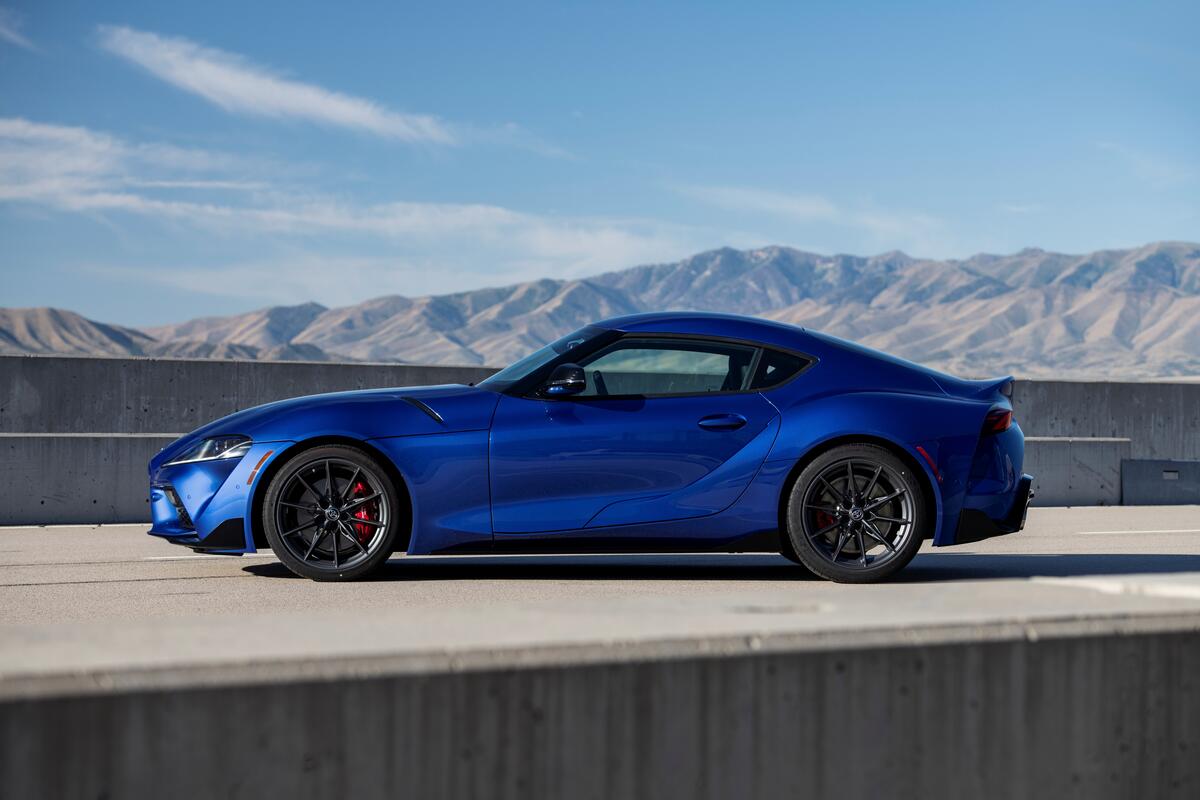
Supra
"Do you remember racing that Supra at the Sanddown 500 in 1986? [1966.0s] And I guess this is the first time on the grid with Brock and Moffat and"
The Toyota Supra is a famous Toyota sports car. The speaker is asking if you remember them racing a Supra at the Sandown 500 in 1986.
The Toyota Supra is a well-known Japanese performance coupe, and here it’s referenced as the car the speaker raced at the Sandown 500. The Supra’s reputation for strong straight-line pace and tunability made it a common choice in touring/car racing eras.
Sandown 500
"Do you remember racing that Supra at the Sanddown 500 in 1986? [1966.0s] And I guess this is the first time on the grid with Brock and Moffat and"
The Sandown 500 is a well-known Australian race. The speaker is using it to talk about a specific time in their racing career.
The Sandown 500 is a major Australian endurance-style race event. The speaker uses it as a reference point for when they were on the grid with top competitors.
Sand Down
"But in the rain at Sand Down, Glenn and I were the two fastest cars. You know, Jimmy Richards was right with us. And and those sorts of things, they're really symbolic because you you use them"
Sand Down is where they’re talking about driving in the rain. They’re saying the track conditions were slippery, so it was a tough test of how well the car and driver worked together.
Sand Down is a driving venue/location being used as a reference point for how cars behave in the rain. The hosts are describing low-grip, wet-weather conditions there, using lap pace and feel as a benchmark for driver confidence and car setup.
low grip
"And in those sorts of conditions on a wet weather day at Sand Down, it's pretty low grip and pretty hard. So that was that was one."
Low grip means the tires can’t grab the road very well. On a wet day, that makes the car easier to slide, so driving takes more care.
“Low grip” means the tires can’t generate as much traction because the road surface is slippery (like wet weather). That changes braking, cornering, and throttle response, so cars feel harder to drive and lap times become a better measure of skill.
torsional rigidity
"Yeah, I just went, oh, my God, like there's no bars. You know, I mean, torsional rigidity, obviously, was something that we didn't we didn't value that much. I know we did later."
Torsional rigidity is how much the car’s frame resists twisting when you corner or brake hard. If it twists a lot, the handling can feel vague or inconsistent because the suspension isn’t working the way it’s designed to.
Torsional rigidity is how resistant a car’s body/chassis is to twisting under load. Higher torsional rigidity helps the suspension geometry stay consistent, which usually improves steering feel and predictability—especially when you’re pushing hard or driving on rough/slippery surfaces.
drag racing compound
"Oh, well, I mean, we were testing that day for Yokohama and it obviously got the drag racing compound on turn one."
A drag racing compound is a special type of tire rubber made for quick, straight-line launches. It can grip and heat up differently than tires meant for turning corners, so it can change how the car behaves if it goes off the planned path.
A drag racing compound is a tire rubber formulation optimized for straight-line acceleration and grip over short, hard runs. These compounds can behave differently from road-race tires—especially in terms of how they heat up, how they grip, and how they behave when the car leaves the intended surface.
circuit safety
"And it just, you know, fired off the road at ridiculous speed. And because it fired off the road and then made the grass, there were concrete barriers that we shouldn't have ever been there. I mean, circuit safety is deep on the grass, not way back at the concrete wall perimeter of the track."
Circuit safety is how the track is built to protect drivers when something goes wrong. It includes where the walls and barriers are, and what’s around the track if a car leaves the road.
Circuit safety refers to how a racetrack is designed to protect drivers during accidents. That includes barrier placement, trackside surfaces (like grass), and how far hazards are from the racing line—especially in high-speed corners and runoff zones.
runoff area
"These were concrete blocks on the grass in the runoff area, like halfway down on the bitumen drag strip part off to the left, off the grass."
Runoff area is the extra space next to the track. If a car goes off the racing line, this area is meant to help slow it down and reduce how badly it can hit something.
The runoff area is the section of track beyond the racing surface where a car may leave the lane. It’s designed to reduce the chance of a crash becoming catastrophic by giving the driver and car more space to slow down and by placing safer barriers farther from the racing line.
bitumen
"These were concrete blocks on the grass in the runoff area, like halfway down on the bitumen drag strip part off to the left, off the grass."
Bitumen is the material that makes up asphalt roads and race tracks. If a car leaves the bitumen and hits something like grass, it can lose traction very quickly.
Bitumen is an asphalt binder used to make road and track surfaces. In racing talk, mentioning bitumen usually signals the car left the racing surface and went onto grass or other material, which can drastically change traction and stability.
touring car championship
"But how did you get you missed the first round of the touring car championship at Sandown? So this was we should point out this is at Eastern Creek."
A touring car championship is a racing series for cars that are based on models you could buy. Drivers earn points across rounds, so missing one can hurt their chances to defend the title.
The touring car championship is a motorsport series where production-based cars race in a structured points format. In this context, missing a round affects a driver’s ability to defend their championship position.
Calder
"Yeah, look, I I did. I went out to Calder and honestly, as soon as the car just right over a bump,"
Calder is a race track in Australia. The speaker is saying they went there to work on the car before the next part of the season.
Calder refers to Calder Park, a circuit in Australia that’s been used for racing and testing. The mention suggests the driver went there to try to get the car sorted before returning for the next round.
unforgiving nature
"And and, you know, that that level of unforgiving nature, you know, you're like, I mean, it's epitomized by Bathurst."
“Unforgiving” means the situation doesn’t forgive mistakes. If you’re off by a little bit, the car or track makes it hurt your speed or control quickly.
“Unforgiving nature” describes how little margin for error a track or car setup provides—mistakes quickly show up as loss of speed, instability, or even crashes. It’s a common way racers talk about circuits that punish small errors more than others.
heat management in endurance racing
"Adelaide was hot every year and it was, you know, the teams did a good job channeling the exhaust differently and other things to help with the driver calling…"
They’re talking about how extreme heat during races affects drivers. Teams try to reduce heat around the driver, and the speaker also notes that it can have lasting effects.
The segment focuses on how hot race conditions affect drivers and teams. It discusses strategies like rerouting the exhaust and the long-term physical impact of heat exposure.
exhaust
"Adelaide was hot every year and it was, you know, the teams did a good job channeling the exhaust differently and other things to help with the driver calling."
The exhaust is where the engine’s hot gases go after combustion. In race cars, how it’s routed can change how much heat builds up and where it goes.
In racing, the exhaust system isn’t just about sound—it affects how hot gases flow and how the engine scavenges. Changing how the exhaust is routed can influence heat management around the driver and car packaging.
overheated
"…it takes time. for that stuff to come through and trap where you've barbecued yourself, where you've overheated or you hit a Benz or whatever it might be takes time."
Overheated means the car is getting too hot. When that happens, it can be dangerous and can also hurt parts if it isn’t fixed quickly.
Overheating means the car (or a component) is running too hot, which can reduce performance and cause damage. In endurance and hot-weather racing, overheating can also be a safety issue for drivers due to heat soak and cabin/seat-area temperatures.
street circuit
"And the street circuit component of that, Nernse is the bit that people don't really get because, you know, you're taking big risks..."
A street circuit is a race course made from regular city streets. It usually has tight turns and uneven grip, so it’s easier to make a mistake and harder to drive smoothly.
A street circuit is a race track laid out using public roads, often with temporary barriers and tight corners. Because the surface and grip can be less consistent than a purpose-built track, it tends to punish mistakes and makes car control more demanding.
Nernse
"And the street circuit component of that, Nernse is the bit that people don't really get because, you know, you're taking big risks..."
“Nernse” sounds like a specific part of the race track. The host is saying most people don’t realize how risky or difficult that section is to drive.
Nernse appears to be a circuit section or local name within a race weekend that the speaker says people don’t fully understand. In context, it’s tied to the “street circuit component,” implying a specific hard-to-master part of the course.
right foot break
"You're right. Right foot break. So you accelerate and break, that's like gone and had absolutely no feeling in it."
Normally you brake with your right foot. The speaker is explaining that because their right leg lost feeling, they had to brake/drive differently with the left foot, which made the car harder to control.
“Right foot break” is describing braking with the right foot, which is the normal driving setup in most cars. The speaker then contrasts it with driving using the left foot only, which can significantly reduce braking precision and timing.
overrun turn 11
"So then you're getting a bit desperate and you're trying a bit too hard. And I just overrun turn 11 at the back of the pits and fired myself in the fence."
“Overrun turn 11” means the driver didn’t make the corner when they meant to and went too far. That can force the car into the wall or fence because there’s no room left to correct.
“Overrun turn 11” means the driver went past the intended entry/turn-in point for that corner, typically due to braking/traction issues or misjudged speed. In racing, overrunning a corner often leads to running wide or hitting barriers because the car can’t be turned in at the right moment.
back of the pits
"And I just overrun turn 11 at the back of the pits and fired myself in the fence. A little bit of a tender there and stopping though is not an option."
The “back of the pits” refers to the pit-lane area near its far end, where the track rejoins or where cars transition between pit activity and racing. It’s a high-stakes zone because speed, visibility, and track layout can change quickly.
tender
"A little bit of a tender there and stopping though is not an option. No, well, you just I'll find a way that 100 percent."
“Tender” sounds like a quick problem or delay after the impact. The key point is that in that race situation, stopping to fix it wasn’t possible.
“Tender” here likely refers to a small delay or momentary issue during the crash/incident—something that would normally be corrected, but the speaker says stopping isn’t an option. In racing context, it suggests a brief but consequential interruption.
mitigating risk
"So we are a society obsessed with mitigating risk. [3133.3s] That's good. And this for your son in a Toronto sports sedan"
“Mitigating risk” means trying to make something safer by lowering the chances of a problem. In racing, it can mean being careful with how you drive when conditions are tough.
“Mitigating risk” here is about reducing the chance of a bad outcome—like avoiding crashes or managing uncertainty—through planning and decision-making. In racing contexts, that can translate to choosing when to push, how aggressively to start, and how to handle changing conditions.
back of the field
"in a field of roughly 20 cars, I think there's 17 cars, [3145.4s] you're prepared to start him in his first race [3149.2s] in the rain from the back of the field at Emory Park."
“Back of the field” means starting a race near the rear of the grid rather than near the front. In motorsport, that usually implies more overtaking work and a higher chance of getting caught in traffic, especially in poor weather.
Emory Park
"in the rain from the back of the field at Emory Park. [3152.4s] Like Emory Park in the rain, unbelievably wild. [3155.3s] The water used to run off the hill, you know, in in rivers of water"
Emory Park is a race track. The speaker is saying it gets really chaotic in the rain—water runs off the hills and makes the track harder to drive than usual.
Emory Park is being referenced as a racetrack where the speaker started from the back of the field in wet conditions. The host describes heavy runoff and a “wild” layout in the rain, implying a track that can drastically change grip and visibility versus dry weather.
fastest lap time
"So we start from the back of the field. [3197.7s] I ran six with a fourth fastest lap time. [3199.7s] Was this on TV?"
“Fastest lap time” means the quickest lap someone did during the race. It’s a sign you had great pace for at least one lap.
A “fastest lap time” is the quickest single lap completed during a race. Even if a driver isn’t winning overall, setting the fastest lap can show strong pace and tire/grip management.
all things in the rain
"And and again, same things apply like all things in the rain. You can't see. So you could in the back."
Rain changes how the race feels and how the car grips the road. The big issue is that visibility and traction are worse, so driving has to be more careful.
“All things in the rain” refers to how wet conditions change racing—especially visibility, grip, and how aggressively you can brake and accelerate. The segment emphasizes that you “can't see,” which affects how drivers choose lines and react to traffic.
Jim Winterbottom
"Winter bottom car. That's right. So that was Jim winter bottom, who had the XU1 in Sydney."
Jim Winterbottom is a racing person in Australia. In this part of the story, he’s linked to the specific race car they go and collect.
Jim Winterbottom is an Australian motorsport figure connected here to a specific race car (the XU1) in Sydney. The segment frames him as the owner of the car they later picked up and modified.
springs and shocks
"And so we changed all the all the springs and shocks,"
Springs and shocks are what help the car absorb bumps and stay stable. In racing, people often change them to make the car handle better.
Springs and shocks (shock absorbers) are the suspension components that control ride height and how quickly the car settles after bumps. Changing them is a common way to tune handling for racing conditions.
wheels
"had all our own wheels made, did all the stuff,"
Wheels are the parts that hold the tires. For racing, the right wheels can help the car grip and respond more quickly.
Wheels affect unsprung weight and tire contact, which can change acceleration, braking, and steering response. In racing, teams may make or source specific wheels to match the tires and rules.
Orham Park
"And and that year in the sports and an race at Orham Park,"
Orham Park is the race track where they competed. Different tracks make teams set up the car differently.
Orham Park is a race venue name mentioned in the context of a sports car race. The specific track matters because circuit layout influences setup choices like suspension and tire selection.
qualified on the front row
"it would have been 30 cars are qualified on the front row."
Qualifying determines the starting order for a race, and the front row means starting near the very front (typically positions 1 and 2). Starting up front reduces traffic and can improve your chances of leading early.
lining up on the grid
"You're lining up on the grid with at the sand and 500"
The grid is where cars line up before the race starts. Your qualifying position determines where you stand on that grid.
The grid is the arranged starting positions for cars before the race begins. Lining up on the grid is the moment when the qualifying results translate into race position.
Sand and 500
"You're lining up on the grid with at the sand and 500"
“Sand and 500” sounds like the name of a particular race event they’re talking about. It’s being used to compare different stages of racing.
The “Sand and 500” appears to be a specific race event name referenced in the conversation. It’s mentioned as a benchmark for how far the speaker’s racing experience has come.
Clayton Holden Racing Team
"at Clayton Holden Racing Team, very dominant days of HRT. [3452.6s] But there was developed that you'd ever stood still. [3455.4s] So this was an engine development program that we haven't really heard about before."
This is a racing team. The hosts are saying the engine development work they’re discussing was tied to that team’s time in competition.
Clayton Holden Racing Team (HRT) is a motorsport team associated with Holden racing programs. In this segment, it’s referenced as the place where an engine development program was based during its dominant era.
reciprocating mass
"Yeah, well, it was in an era where we're and worldwide, this was a trend [3468.3s] where they were basically trying to reduce the reciprocating mass. [3474.1s] And and they were doing lots of things worldwide, if you want, especially"
In an engine, some parts move back and forth. If you can make those parts lighter, the engine can spin up faster and feel more responsive.
Reciprocating mass is the portion of an engine’s moving parts that goes back and forth (mainly pistons and connecting rods). Reducing it can let the engine rev and respond more quickly because there’s less inertia to accelerate and decelerate each cycle.
crankshaft
"where they were basically trying to reduce the reciprocating mass. [3474.1s] And and they were doing lots of things worldwide, if you want, especially [3479.6s] to put all the weight, for instance, in the center of the crankshaft"
The crankshaft is the main rotating shaft inside the engine. It turns the engine’s back-and-forth motion into spinning motion that drives the car.
The crankshaft is the rotating shaft in an internal-combustion engine that converts the pistons’ up-and-down motion into rotational motion. Moving more of the engine’s mass toward the crankshaft centerline can help reduce the effects of inertia during revs.
dyno
"So just in terms of what it did was that on the dyno, it didn't really [3489.8s] say a different number, but it allowed the thing to accelerate faster [3493.5s] because of that reciprocation."
A dyno is a machine that tests an engine’s power and behavior. It can show how the engine performs, even if the biggest change is how quickly it responds rather than peak power.
A dyno (dynamometer) is a test stand that measures engine output under controlled conditions. In this discussion, the host says the engine didn’t necessarily show a higher peak number on the dyno, but it could accelerate faster due to reduced reciprocating inertia.
cost containment
"we were right in that period of time when things like cost containment were being discussed"
“Cost containment” means racing organizers try to keep costs from getting out of control. They do this by writing rules that limit how much teams can spend on development.
“Cost containment” is a motorsport policy goal: limiting how much teams spend by tightening technical rules and restricting development. The idea is to reduce expensive engineering arms races while keeping competition close.
special engines
"So these were, in essence, special engines. This was a dedicated program to create these items to get another advantage."
Here, “special engines” means engines that were built for a specific racing advantage. Instead of being off-the-shelf, they were developed as a focused project to help the team win.
In this context, “special engines” are purpose-built powerplants created to exploit rule allowances and gain an advantage. The host frames them as dedicated programs to produce engines that deliver competitive benefits under the regulations.
Chev
"the 1993 version of the cars had Holden engines and Chev engines."
“Chev” means Chevrolet. The host is talking about which engine brands were used in the race cars and how rule changes affected the competition.
“Chev” is shorthand for Chevrolet, another engine brand referenced as being used in the 1993 cars. The host later explains how the Chevrolet and Ford engines became closer in specification, which drove teams to refine parts like cylinder heads and intake manifolds.
cylinder head designs
"there were lots of things that were done to make the cylinder head designs and the inlet manifold."
The cylinder head is the top part of the engine where the combustion happens and where the valves sit. In racing, changing its design can improve how air and fuel flow, which helps power.
“Cylinder head designs” are the specific shapes and engineering of the top engine component that houses the combustion chambers and valve passages. Changes to the cylinder head can strongly affect airflow and combustion efficiency, which is why racing teams spend time optimizing it.
inlet manifold
"basically limiting the amount of downstream effect you could have on an inlet manifold, for instance."
The inlet manifold is the part that delivers air to the engine’s cylinders. On race cars, its shape is tuned so the engine breathes better and makes more power.
An “inlet manifold” is the intake plumbing that routes air (and sometimes fuel) from the throttle/body into the engine’s cylinders. In performance and racing, manifold shape and runner length are tuned to improve airflow and exploit pressure waves for better volumetric efficiency.
third harmonic
"We were the we were one of the first at Gibson's, for instance, to have the engines on the third harmonic, which meant that"
Engines can use “wave tuning” in the intake/exhaust to get better breathing at certain RPMs. “Third harmonic” means they tuned it to a particular pattern of those waves so the engine gets a boost at the right speed.
“Third harmonic” refers to tuning intake/exhaust pressure-wave timing so the flow oscillations reinforce at a specific engine speed. When the host says the engines were on the third harmonic, they mean the intake system was designed to create resonance effects that improve cylinder filling at the target RPM.
Gibson's
"We were the we were one of the first at Gibson's, for instance, to have the engines on the third harmonic,"
Gibson’s is the racing team the host is talking about. They’re saying that team was early to use a specific engine-intake tuning approach.
Gibson’s is mentioned as the team/organization where the host says they were among the first to run engines on the third harmonic. This is a team-level development detail rather than a car part, but it helps listeners understand who implemented the technical approach.
fuel stop
"a car that was arguably the fastest car, it was going to have one less fuel stop than everybody else in 95."
A fuel stop is when the race car pulls into the pits to add gas. If a car is quicker, it can sometimes go longer between stops, so it might need fewer pit stops for fuel.
In endurance-style racing, a “fuel stop” is when a car pits to refuel during the race. If a car is expected to be the fastest, it may need one fewer fuel stop because it can cover more distance per stint and/or reduce time spent in the pits.
Australian touring car racing
"It was actually really from an engineering perspective. a really interesting period of Australian touring car racing."
Australian touring car racing refers to the national touring-car category centered on production-based sedans and coupes. It’s known for manufacturer involvement, rule evolution, and intense team rivalry, which is why “engineering” and “process” debates can become central to performance.
correlation
"And then the correlation, you know, at the board, say at Tiga, with, you know, us Holden guys sitting on one side"
Correlation is how engineers check that their predictions match real track results. If the numbers don’t line up, it’s harder to know what changes will actually help the car.
In motorsport engineering, “correlation” is the process of matching what the team predicts (from data, simulations, or test results) to what actually happens on track. When correlation is off, teams can’t be confident that changes to parts or setup will work as expected.
Ford Blacks
"and the Ford Blacks on the other side and trying to emulligate a different engine every time"
This is a nickname for Ford’s racing group in that touring-car era. The speaker is saying Ford and Holden teams were on opposite sides of technical meetings.
“Ford Blacks” is a team/identity reference for Ford’s touring-car effort in that era. The speaker contrasts “Ford Blacks” with “Holden guys,” implying two manufacturer-backed groups arguing over technical direction.
Albert Park
"and decided to go to FPV and was thus removed from the office very quickly that day, Tim Permanent's office in Albert Park."
Albert Park is a well-known motorsport venue in Melbourne. The speaker is mentioning an office location there.
Albert Park is a circuit and venue area in Melbourne used for major motorsport events. The speaker mentions “Tim Permanent’s office in Albert Park,” placing the discussion geographically in the Melbourne motorsport scene.
Jack Perkins
"There's been a lot said about that race, about the start, obviously. We know how it finishes with Jack Perkins parked in the rear end of of your car."
Jack Perkins is a race driver. The host is saying he ended up hitting the back of someone’s car at the end of the race.
Jack Perkins is a racing driver referenced here in connection with a specific incident at the end of the race. The speaker says he was “parked in the rear end” of the car, indicating a collision/impact that defined the finish.
wrong gear
"[3721.5s] on the build up to the grid to the aftermath from the horse's mouth? [3723.9s] Well, there is no story. [3723.9s] That's where all the goons have been saying, you know, [3726.3s] it was in the wrong gear or, you know, the third gear."
“Wrong gear” means the driver picked a gear that doesn’t fit the car’s speed. When that happens, the car doesn’t accelerate or respond the way it should, especially at the start or during fast corners.
In racing, “wrong gear” means the driver selects a gear that doesn’t match the car’s speed and the track’s demands. That can cause poor acceleration, loss of traction, or even engine over-rev/under-rev during critical moments like the start or a restart.
third gear
"[3723.9s] Well, there is no story. [3723.9s] That's where all the goons have been saying, you know, [3726.3s] it was in the wrong gear or, you know, the third gear. [3730.9s] Yeah, just ridiculous."
“Third gear” is one of the steps in the car’s gearbox. In racing, choosing the right gear helps the engine pull strongly; choosing the wrong one can make the car feel sluggish.
“Third gear” is a specific transmission ratio used to keep the engine in a useful power band. In racing discussions, mentioning a particular gear usually implies the car was either bogging down or not accelerating as expected because the gear choice didn’t suit the situation.
Mount Panorama
"[3769.1s] So and I think that's one of the things in life. [3771.7s] You contemplate every time that you drive in on a Sunday morning to [3775.1s] to Mount Panorama, because it is, it can be the most rewarding, most beautiful, [3781.0s] incredible event, and it can be the most soul-destroying, you know,"
Mount Panorama is a well-known race track in Bathurst, Australia. It’s the kind of track where how you manage your tires and driving over a lap really matters a lot.
Mount Panorama is the famous circuit in Bathurst, Australia, known for its long climbs, fast descents, and heavy braking zones. It’s a track where tire management and lap-by-lap strategy can make or break your weekend.
rear tires
"[3790.0s] destroying is the word that got me, because that's what it's like. [3792.7s] It just it can smash you. [3796.0s] And yeah, so basically my rule was in those days to not heat the rear tires up very much. [3802.6s] So on the out lap, you know, you're minimizing the fuel usage,"
The “rear tires” are the tires that usually provide most of the traction when the car accelerates. If they get too hot (or not hot enough), the car can grip worse or feel unpredictable.
“Rear tires” are the tires on the drive axle, and in many race cars they strongly influence traction and stability. Managing how hot they get affects grip, tire wear, and how the car behaves under acceleration and corner exit.
out lap
"[3796.0s] And yeah, so basically my rule was in those days to not heat the rear tires up very much. [3802.6s] So on the out lap, you know, you're minimizing the fuel usage,"
An “out lap” is the lap where the car leaves the pits and heads back onto the track. It’s usually a controlled lap to get the tires and brakes ready without pushing too hard.
An “out lap” is the lap a car completes when leaving the pits to get back onto the circuit, often before a timed run or race stint. Drivers use it to bring tires and brakes up to a working temperature while also managing fuel and avoiding unnecessary stress on components.
fuel usage
"[3796.0s] And yeah, so basically my rule was in those days to not heat the rear tires up very much. [3802.6s] So on the out lap, you know, you're minimizing the fuel usage,"
“Fuel usage” is how much gas the race car burns. Teams sometimes have to manage it so they can keep going without needing an extra stop.
“Fuel usage” refers to how much fuel the car consumes over a stint or lap. In racing, managing fuel usage can be part of strategy—balancing speed against the need to avoid running out or making an extra pit stop.
clutch slip
"I was never, I never, because I always wanted to have a bit of wheel spin rather than clutch slip [3818.2s] or bog it down."
When you launch, the clutch should smoothly connect the engine to the wheels. “Clutch slip” means it’s not fully locked, so the engine revs but the car doesn’t hook up cleanly—usually not what you want for a fast start.
Clutch slip is when the clutch plates aren’t fully locked together, so the engine and drivetrain rotate at slightly different speeds. Drivers often try to manage slip because too much can overheat the clutch, while too little can cause bogging or poor launch traction.
bog it down
"I was never, I never, because I always wanted to have a bit of wheel spin rather than clutch slip [3818.2s] or bog it down."
“Bog it down” means the car feels like it’s bogging—like it’s not accelerating and the engine loses power. It can happen if the launch is too abrupt or the tires can’t grip.
“Bog it down” describes a launch where the engine loses momentum and the car feels sluggish because the drivetrain connection is too abrupt or traction is too limited. In racing, it’s often linked to clutch and throttle management—too little slip can cause the car to stall-like feel rather than accelerate.
Tilton AP clutches
"They were, you know, 12 grand of the day. [3831.9s] Tilton AP. [3833.0s] AP clutches, yep."
A clutch is what lets the engine connect to the gearbox when you launch. “Tilton AP” is a brand/model of racing clutch that’s built for hard use in motorsport.
Tilton AP clutches are a specific type of racing clutch assembly used to handle high loads and repeated launches. In this context, Mark Skaife is saying the car’s clutch was replaced with a new Tilton AP unit before the 2005 season win.
preload the clutch
"And even at Bathurst, I never used to even preload the clutch very much. [3867.4s] I used to just leave it off the adjustment point."
Preloading the clutch means taking up some of the clutch’s engagement before the actual launch point, so the driver can control how quickly it bites. Skaife says he didn’t preload much at Bathurst, preferring a specific engagement strategy to manage slip and wheel spin.
adjustment point
"And even at Bathurst, I never used to even preload the clutch very much. [3867.4s] I used to just leave it off the adjustment point."
The adjustment point is where the clutch starts to actually start grabbing. By leaving it just short of that point, a driver can bring it in at the exact moment for a better launch.
The adjustment point is the set position where the clutch begins to engage (often adjusted via linkage or pedal/actuation settings). Skaife’s description suggests he left the clutch just off that point, then brought it up as the start light changed to control slip precisely.
Request an Explanation
Heard something you'd like explained? We'll add it to this episode.
Sign in to request explanations for terms you heard.
Want to learn more?
Browse our glossary for plain-English explanations of automotive terms, jargon, and concepts.
Help improve this episode
See something that's not quite right? Our annotations are AI-generated and can sometimes miss the mark. Click the flag icon on any annotation to suggest a correction.