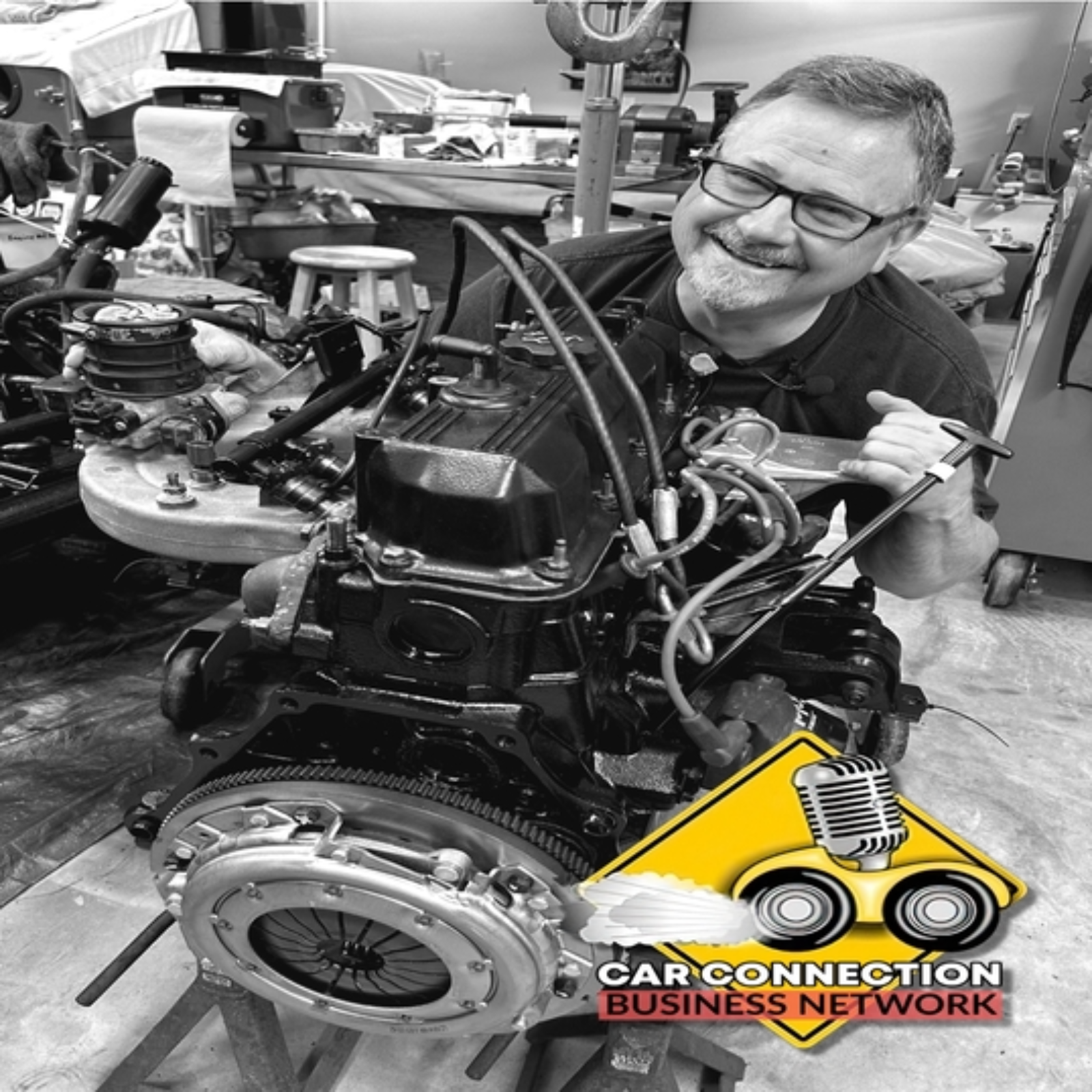
"Vehicle Evaluation: The $200 Habit That Saves You $5,000"
About this episode
Nile Motormouth Jenkins rants about aggressive, unsafe driving and ties it to the bigger theme: a smart maintenance strategy prevents small issues from turning into $5,000 repairs. The core segment breaks down what a “vehicle evaluation” looks like—two multi-point inspections per year (spring and late fall), plus routine checks like belts/hoses, cooling flushes, cabin/pollen filter swaps, brake and tire intervals, charging system tests, and fault-code reviews. He shares a real FJ Cruiser alternator failure caught by listening for abnormal squeaks, plus practical buying and fuel-saving chatter.
What does a vehicle evaluation actually mean-and why are so many drivers missing it?
In today's episode, Motormouth breaks down the real - world meaning of a proper vehicle evaluation using the Car Connection Fleet Maintenance System. No guesswork, no complicated jargon-just a simple, repeatable way to stay ahead of costly repairs.
We dig into a powerful mindset shift: Stop relying on mileage alone. Start maintaining your vehicle based on time, observation, and routine evaluation.
Because here's the truth - your odometer doesn't tell the whole story. And if it stopped working tomorrow, would you still know how to protect your investment.?
Using a real example from a 2007 Toyota FJ Cruiser, we show how catching a small squeak early can prevent a catastrophic failure that could cost thousands.
This episode is about control, awareness, and making smarter decisions as a vehicle owner-so small issues never turn into financial disasters.
#CarMaintenance. #AutoRepair. #VehicleEvaluation
Thank You for grabbing some Motormouth Merch in our online store at (ccbusnet.com) proceeds to Total Freedom Addiction Campuses Canada & USA where a New Life Awaits those struggling with addiction & ready to break free for good. Friends, we value you support always. Skippy & Motormouth
More Episodes and...project Details are available at Car Connection Business Network.com (ccbusnet.com) you'll find everything on our home page if you'd like to follow the build & repair work we do, connect with our program partners click their logo to meet them! Thank You for giving them your business, much appreciated! Nile Motormouth Jenkins.
Help us to grow Friends: Like,Share,Subscribe, Leave A Comment, Ring the Notification Bell for New videos miss nothing, Join our online community, Watch & Listen. We Love You Guys! Skippy & Motormouth
Happy Healthy Motoring Friends, Peace Patience Kindness Always NMJ
See You In the Next one!
E-Mail Motormouth Anytime; [email protected] or [email protected]
pre-purchase inspection
"Episode: "Vehicle Evaluation: The $200 Habit That Saves You $5,000" ..."
Before you buy a used car, you can pay a mechanic to inspect it. They look for problems you might not notice, so you don’t get stuck with expensive repairs right after buying. It’s basically a “check it first” step to protect your money.
A pre-purchase inspection (PPI) is a professional check of a used car before you buy it. It helps uncover hidden problems—like worn suspension parts or signs of prior damage—so you can negotiate with confidence or walk away. The goal is to prevent expensive surprises after purchase.
vehicle ownership fundamentals
"[208.0s] on, and you get to see the bird's eye view of what it is, where it is, how it works, [213.1s] how it breaks, and how could you have learned some basic vehicle ownership fundamentals [220.8s] that will save you not hundreds of dollars a year, thousands of dollars a year in needless"
It means the basics of taking care of a car. If you know what to watch for and when to service it, you’re less likely to get surprised by expensive problems.
“Vehicle ownership fundamentals” refers to the practical knowledge needed to run a car well—like understanding maintenance, recognizing warning signs, and knowing when to get inspections. It’s the kind of baseline that prevents avoidable breakdowns and repair bills.
$200 repair that's been neglected ends up costing $5,000
"[228.4s] So quite often we see $200 repair that's been neglected ends up costing $5,000, and that [235.2s] happens a lot."
Sometimes a small problem is cheap to fix, but if you ignore it, it can get worse and damage other parts. Then the repair costs a lot more later.
This describes the cost escalation that happens when minor repairs or maintenance items are postponed. Small issues can worsen over time—often causing additional damage—so the final bill becomes much larger.
proper maintenance schedule
"It sure is. [249.4s] How long would you keep your car if you had a proper maintenance schedule to follow?"
It means you service your car on a regular plan instead of waiting for something to break. Doing that helps prevent small issues from becoming big, costly problems.
A proper maintenance schedule is a planned set of service intervals (like oil changes, filters, and inspections) based on the vehicle’s needs. Following it helps catch small problems early, before they turn into expensive repairs.
vehicle evaluation
"The title of today's program is, What does a vehicle evaluation look like? What is that? Like, exactly."
A vehicle evaluation is basically a careful check of a car to see how it’s really doing. Instead of guessing, it looks for problems that could affect safety or cost you money later.
A vehicle evaluation is a structured inspection and assessment of a car’s condition—often including mechanical checks, safety items, and sometimes a review of driving/usage history. The goal is to identify issues early so you can make a smarter decision about repairs, purchase price, or whether the vehicle is safe to keep driving.
driving habits evaluation
"Well, I can tell you after yesterday's road trip, I can tell you what watching driving habits evaluation looks like."
This is about how people drive day to day. It looks at risky behaviors—like not signaling or driving too aggressively—because those habits can lead to accidents and expensive problems.
A driving habits evaluation focuses on how someone drives—things like signaling, lane discipline, speed relative to traffic, and how they merge. In a vehicle context, it’s often used to explain risk levels, insurance outcomes, or why certain behaviors lead to crashes and vehicle damage.
NASCAR oval
"They're absolutely lousy. This is, you wouldn't even qualify many of you to even drive on an oval in NASCAR."
They’re comparing bad real-world driving to racing on an oval track. The point is that the driving would be too unsafe even for a high-skill racing setting.
An oval track is a specific type of racing layout where cars run mostly left turns at high speed. Mentioning NASCAR’s oval is a comparison meant to emphasize how poor the driving behavior being discussed would be unacceptable even in a controlled racing environment.
road course
"It's not a highway, it's some kind of road course."
A road course is like a track with turns where cars go faster than on normal roads. Driving there is different, so the risks and spacing rules change.
A “road course” is a type of track or circuit designed for cars to drive at speed through turns and varying sections. The speaker contrasts it with a highway to highlight how different driving dynamics and risks are on a course.
bumper to bumper
"Everyone is chock-a-block, bumper to bumper, but we're moving."
“Bumper to bumper” means traffic is very crowded and cars are close together. If someone brakes suddenly, it’s harder to avoid hitting them.
“Bumper to bumper” describes heavy traffic where vehicles are packed closely together. Close spacing increases the likelihood of chain-reaction crashes because little time exists to react to sudden braking.
two and a half car lengths
"I leave two and a half car lengths and I don't care if somebody slides in in front of me... I want safety space."
Using a “car length” as a distance unit is a practical way to estimate following distance. Two and a half car lengths is a buffer that helps account for reaction time and longer stopping distances at higher speeds.
safety space
"I leave two and a half car lengths and I don't care if somebody slides in in front of me... I want safety space."
Safety space just means you keep more distance than you normally would. That way, if the car in front of you does something sudden, you have time to slow down or steer away.
“Safety space” refers to leaving extra following distance so you have time to react if the car ahead brakes suddenly or makes an unexpected move. In practice, it reduces the chance you’ll be forced into a collision when traffic gets chaotic.
evasive maneuver
"I want lots of room for me to have to make an evasive maneuver as not to get caught up in your stupidity."
An evasive maneuver is when you quickly steer or change your path to avoid hitting something. It only works if you have enough space around you.
An “evasive maneuver” is a last-resort driving action—like steering around an obstacle—to avoid a crash. It’s only possible if you have enough space and traction, which is why the speaker emphasizes leaving room.
vehicle lasting beyond three to five years
"And there's no way and no hope in hell of your vehicle lasting beyond three to five years. No stinking way driving it like that."
They’re basically saying that if you drive really hard all the time, your car won’t last as long. More stress on the car means more parts wear out sooner and you end up paying for repairs earlier.
The hosts are arguing that aggressive or unsafe driving accelerates wear and can shorten a vehicle’s service life. In practice, hard driving increases stress on tires, brakes, suspension, and drivetrain components, which can lead to earlier repairs and depreciation.
car payments
"You're going to be working a long time and making car payments, folks... And those folks, they're going to be making car payments and working their high knees off to do so until they retire."
They’re talking about the money you pay each month to own a car. If you wreck or wear out the car early, you may still be stuck paying while the car is worth less or needs expensive repairs.
“Car payments” refers to the monthly cost of financing a vehicle, which can become a long-term burden if the car is damaged or depreciates quickly. The hosts connect reckless driving to higher total cost of ownership—paying monthly while also facing earlier repair bills and reduced resale value.
stunt driving all day every day
"That is stunt driving all day every day. I don't know how you do it."
They’re calling out driving in a reckless, show-off way all the time. That can beat up your car faster and it’s also more dangerous for everyone on the road.
“Stunt driving” here is shorthand for reckless, high-risk driving behavior that typically involves hard acceleration, late braking, and aggressive maneuvers. That kind of driving raises the likelihood of mechanical damage and also increases crash risk, which is why the hosts frame it as a “real life problem” rather than a car problem.
tractor trailers
"If they make it that far because in amongst tractor trailers, yeah, they can't stop on a dime and give you change."
They’re referring to big trucks. Big trucks take longer to slow down and stop, so if you drive recklessly near them, you’re much more likely to cause an accident.
“Tractor trailers” are heavy commercial trucks that require much longer stopping distances than passenger cars, especially when fully loaded. The hosts mention them to emphasize that unsafe driving around large vehicles is particularly dangerous because they can’t stop quickly.
can't stop on a dime
"...tractor trailers, yeah, they can't stop on a dime and give you change."
It’s a saying meaning the vehicle can’t stop immediately. Real cars need time and distance to brake, and heavy trucks need even more.
“Can’t stop on a dime” is an idiom meaning a vehicle can’t stop instantly. In automotive terms, stopping distance depends on speed, tire grip, brake performance, and vehicle mass—so heavier vehicles like trucks generally require more distance to stop safely.
Mack Trucks
"I worked for Mack Trucks of Canada and Peterville of Ontario. They have about two really good brake applications and after that, not so good."
Mack Trucks makes big trucks used for hauling goods. The host is mentioning their work there to show they know how trucks behave and what can go wrong.
Mack Trucks is a major American manufacturer known for heavy-duty commercial trucks. In the context of this episode, it’s used to establish the speaker’s background with truck operations and safety considerations.
Peterville
"I worked for Mack Trucks of Canada and Peterville of Ontario. They have about two really good brake applications and after that, not so good."
This sounds like they meant Peterbilt, which is a company that makes heavy trucks. They’re basically saying they’ve worked around big commercial vehicles.
“Peterville” appears to be a transcription error for “Peterbilt,” another well-known heavy-truck brand. Like Mack, Peterbilt focuses on commercial trucks, so the mention supports the speaker’s truck-specific experience.
brake applications
"They have about two really good brake applications and after that, not so good. So if you're in the way, you're going to get scrunched and flattened out like some Reynolds aluminum foil and there's going to be plastic and pieces and parts flying everywhere."
This is about how brakes can get less effective after you use them a lot. With heavy trucks, repeated braking can heat things up and make stopping take longer.
“Brake applications” refers to how braking performance changes with repeated use—such as brake fade or reduced effectiveness after multiple stops. In heavy vehicles, repeated braking can overheat components and lengthen stopping distances.
trucks cannot maneuver like cars
"Trucks cannot maneuver like cars. They do not stop like cars. They need quite a large distance to get that rig stopped, just so you know."
Big trucks don’t turn or react like cars do. They need more room to maneuver, so if you’re too close or in the way, things can go badly fast.
Heavy trucks and tractor-trailers have longer wheelbases, wider turning paths, and less responsive steering feel than passenger cars. That means they require more space to turn, change lanes, and avoid obstacles, increasing the risk in tight situations.
trucks do not stop like cars
"They do not stop like cars. They need quite a large distance to get that rig stopped, just so you know. And if the trailer jackknifes, you might as well put your head between your knees and kiss your butt goodbye because you're done."
Commercial rigs typically require significantly more stopping distance due to higher mass, drivetrain and brake system characteristics, and load effects. This is why safe following distances and speed management matter more around trucks than around passenger vehicles.
trailer jackknifes
"And if the trailer jackknifes, you might as well put your head between your knees and kiss your butt goodbye because you're done. That trailer is going to come round and just scoop you up and scrunch you up like something going into the recycle bin, the blue box, precisely."
A jackknife happens when the trailer starts to swing around sideways relative to the truck. Once it happens, it can quickly get out of control and hit the cab area.
Jackknifing is when a trailer swings sharply toward the tractor, forming a “V” shape. It’s especially dangerous because the trailer can rapidly change direction and sweep into the driver’s space, making recovery extremely difficult.
City Auto Sales and Leasing
"If you're looking for an automobile... you can send them over to Earl Louise Grant at City Auto Sales and Leasing where they can buy with confidence, be treated with nothing less than honesty and integrity."
They’re talking about a used-car dealership called City Auto Sales and Leasing. The point is that they want you to feel confident buying there because they say they’re honest and fair.
The hosts mention City Auto Sales and Leasing as a place to buy a used car. They frame it as a dealership that emphasizes honesty, integrity, and “buy with confidence,” which is essentially a trust-and-process pitch rather than a technical car topic.
Earl Louise Grant
"you can send them over to Earl Louise Grant at City Auto Sales and Leasing... Earl knows how to pick them and they have the resources to find amazing quality vehicles."
Earl Louise Grant is presented as the person to contact for vehicle sourcing and purchasing guidance. The hosts credit Earl with knowing how to pick quality used vehicles and having resources to find good options.
pre-owned auto store
"Low mileage quality vehicles at fair prices. Greater Toronto area's premier pre-owned auto store."
They’re describing a shop that sells used cars. Used cars can be a great deal, but you usually want to check the car’s condition and history carefully.
A “pre-owned auto store” refers to a dealership focused on used vehicles rather than new ones. For buyers, this usually means more variety in price points and model years, but it also makes vehicle evaluation and history checking especially important.
30-day fuel savings challenge
"...so that we can stay at 60 to 65 and then we can roll out the 30-day fuel savings challenge."
It’s basically a month-long experiment to spend less money on gas. You pay attention to what you’re doing—like where you buy and what fuel you use—and see if your costs drop.
A “30-day fuel savings challenge” is a short, structured period where you track fuel costs and try to reduce them through better habits and smarter purchasing. It’s a practical way to turn fuel economy and pricing awareness into measurable savings.
premium
"I use premium, I don't use any of the cheaper stuff because it's not, it's no good. And we'll talk about that."
Premium is a higher-octane gas than regular. Higher octane helps some engines run smoothly, but if your car doesn’t need it, premium often just costs more for no benefit.
“Premium” is a higher-octane gasoline grade compared with regular. Using premium when your vehicle calls for it can help prevent knock, but using it when not required usually won’t improve performance enough to justify the extra cost.
BTUs
"...the biggest thing you have to understand is BTUs. Yeah, British thermal units."
BTUs are a way to measure how much energy is in the fuel. If one gas has more energy than another, it can sometimes go farther even if it costs a bit more.
BTUs (British thermal units) measure how much energy is in a fuel. Higher-energy fuel generally means more usable energy per gallon, which can affect real-world cost per mile—not just the sticker price at the pump.
blends
"You have to understand fuel and you have to understand blends."
Fuel blends are different recipes for gasoline. Some blends include additives like ethanol, and that can change how much energy you get from a gallon.
“Blends” refers to how gasoline is mixed with different components (often including ethanol) to meet seasonal and regulatory requirements. Different blends can change energy content and how the engine performs, which is why fuel price alone doesn’t tell the whole story.
chemical composition deal
"[1069.2s] Yup, I do, because it's a chemical composition deal [1075.2s] and when you understand that, you'll go, [1078.2s] oh, I can save money doing that."
They’re basically saying that what the fuel is made of matters. If the fuel burns more efficiently, you can often get better mileage and spend less.
The phrase points to the idea that fuel properties—like how the fuel is formulated—can influence how efficiently it burns and therefore how much energy you get per unit of fuel. That’s why different fuels or fuel blends can change real-world fuel economy and cost.
older automobile
"[1112.2s] So we talk about different seasons when it comes to automobiles [1117.2s] and we kind of have to lighten up a little bit, you know? [1121.2s] Owning and operating an older automobile is not a big deal."
This is about the concept of managing risk and expectations when owning an older car. Older vehicles can be perfectly fine, but they often require more attention to maintenance and season-specific needs (tires, battery health, heating, etc.).
coil spring
"[1129.2s] I don't know what it is. [1131.2s] Either the planet's vibrating or the handbrake is slightly on, [1137.2s] we're wound up tighter in a coil spring."
A coil spring is a metal spring in a car’s suspension that helps smooth out the ride. In this sentence, they’re using it as a comparison to say they feel tense or “tight.”
A coil spring is a suspension component that supports the vehicle’s weight and helps absorb bumps. The speaker uses it metaphorically (“wound up tighter in a coil spring”) to describe feeling tense or compressed, but it still references a real suspension part.
handbrake
"Either the planet's vibrating or the handbrake is slightly on, [1137.2s] we're wound up tighter in a coil spring."
The handbrake is the parking brake that keeps the car from rolling. If it’s not fully released, it can cause extra resistance and make the car feel off.
The handbrake (parking brake) is a separate braking system used to hold the car in place when parked. If it’s slightly engaged, it can create drag and heat, which is why the speaker’s joke implies something is “stuck on.”
strategy
"it's very doable, but you have to have a strategy. You do. You have to have a plan."
In the context of older-car ownership, “strategy” implies a maintenance and repair plan rather than reacting after something breaks. This can reduce downtime and help prevent small issues from turning into costly failures.
fail to plan
"You know, as people, it's not that we plan to fail, it's that we always seem to fail to plan."
The idea is simple: if you don’t plan ahead, car problems tend to cost more. With an older car, planning maintenance helps you avoid surprise breakdowns.
“Fail to plan” is a practical concept for vehicle ownership: if you don’t plan maintenance and budgeting, you’re more likely to face unexpected repairs. For older cars, that can quickly erase the savings from driving a paid-off vehicle.
GPS
"It's like having a, you know, before we had GPS, which sometimes I just want to throw my stinking unit right out the window. Yeah. The GPS thing sometimes acts up."
GPS is the navigation system that tells you where to go. Sometimes it can freeze or struggle to find an address, and that’s when it feels more annoying than helpful.
GPS is the satellite-based navigation system that helps drivers find routes and addresses. The hosts mention it acting up, which highlights a common real-world issue: navigation can be unreliable or frustrating if it glitches or can’t quickly locate an address.
older vehicle and it's paid for
"It's not a big deal. If you got an older vehicle and it's paid for, you're already ahead of the other guy."
The hosts are pointing out a key financial advantage of owning an older car that’s already paid off: you avoid monthly loan payments and can redirect that money toward maintenance. This is often the foundation of the “save money by keeping it running” approach.
miles vs kilometers
"I put 16,000 kilometers on a vehicle in six weeks, if that... and it does not matter how many miles around it, or kilometers, whichever one you're working with."
The segment contrasts miles and kilometers to emphasize that the evaluation approach should be consistent regardless of the measurement system. For vehicle assessment, the key is the vehicle’s usage intensity and maintenance, not whether the odometer reads in miles or kilometers.
vehicle as a tool
"But that doesn't matter. If you have a game plan to really seriously look at your vehicle as a tool, a piece of equipment, once you have that mindset locked in, it doesn't matter what color it is, it doesn't matter what model it is..."
They’re saying you should think of your car like a work tool. Instead of caring only about how it looks or what it is, you focus on whether it’s actually fit for what you need.
The hosts are framing vehicle ownership as using a car like equipment, not treating it as a status object. That mindset encourages practical evaluation based on condition and suitability for the job, rather than superficial factors like color, model, or age.
odometer
"And you think about that, and you go, that's kind of a quirky thing to say. Well, if you didn't have an odometer that was working,"
An odometer measures how far a vehicle has traveled, typically in miles or kilometers. It’s a key data point for estimating wear items and planning maintenance, but it’s not the only factor—condition and service history matter too.
miles or kilometers
"how would you know how many miles or kilometers are on your car? Would it bother you? It wouldn't bother me a bit, because I just keep up the same maintenance."
Cars can measure driving in miles or kilometers. Either way, the number helps you estimate when certain services are due, though some maintenance is based on time too.
The discussion highlights that odometers may be labeled in miles or kilometers, but the underlying idea—tracking usage—still matters. Mileage is one common way to decide when to service wear items, though time-based schedules can also apply.
maintenance by time (months/weeks)
"It wouldn't bother me a bit, because I just keep up the same maintenance. Right? I would just go by time. Month. How many? Well, this has to be done in so many months."
Some car maintenance is scheduled by how long it’s been since the last service, not just how many miles you’ve driven. That’s because parts can wear out from age and time even if the car sits or you drive very little.
Instead of tracking mileage, some maintenance schedules are based on time intervals (months or weeks). This matters because wear and deterioration can happen even if you don’t drive much, especially with fluids, belts, and rubber components.
deferred maintenance
"But the mindset has to be there first. That you're not listening to the outside white noise. Well, you know that thing's getting kind of old. You really ought to be thinking about getting rid of it. You know, you don't want to be throwing money at an old car."
Deferred maintenance means putting off needed car upkeep. Small problems can grow into bigger, costlier repairs if you wait too long.
The segment contrasts staying on schedule with the temptation to delay repairs until something feels “old.” Deferred maintenance can turn small, predictable services into larger, more expensive failures later.
"throwing money at an old car" vs "new car not needing anything"
"You really ought to be thinking about getting rid of it. You know, you don't want to be throwing money at an old car. Oh, so I should throw money at a newer car, because, or does the newer car not need anything ever? Because that's not true."
They’re arguing against the belief that older cars are automatically a bad deal and that newer cars never need work. All cars need regular maintenance—just different parts and different schedules.
The hosts push back on the idea that older cars are a money pit and that newer cars never need maintenance. In reality, every vehicle requires routine service and periodic wear-item replacement, regardless of age.
U-Pullet yard
"They, like, don't just tear them down [1417.2s] and put them in a U-Pullet yard. [1421.2s] When they get to that point, yeah, that's what happens."
They’re talking about a place where old wrecks get dismantled for parts. Instead of repairing everything, people buy usable pieces from the wreck.
The speaker is describing a salvage yard where vehicles or aircraft parts are stripped and resold. In automotive terms, this is similar to a parts yard or wrecking yard where you can buy used components instead of new ones.
aircraft pile of junk
"They go into the aircraft pile of junk. [1427.2s] And I've walked one of those. [1429.2s] It's very interesting, actually."
They’re basically saying that once something is too far gone, it ends up as scrap. The point is that “old” doesn’t automatically mean “worthless,” especially for parts.
This is a metaphor for end-of-life vehicles being moved into a scrap/salvage stream. The underlying idea is that age alone doesn’t determine whether parts are still useful—condition and whether components were maintained matter.
aircraft wrecking yard
"As I went into an airplane wrecking yard [1435.2s] and you can buy stuff, [1438.2s] and this particular fellow was in the movie industry"
A wrecking yard is where damaged or retired vehicles are dismantled so parts can be reused or sold. The speaker’s anecdote is used to make a broader point about evaluating equipment/parts by what’s inside and how it was handled, not just by age.
airplane inspection certificate
"And the engines, whatever it has to have, they do it in order for it to pass the airplane inspection certificate. So our automobiles are exactly the same."
Airplanes have to pass official inspections before they can keep flying. The hosts are saying the same mindset applies to cars: don’t just look at age—focus on whether it can pass the checks that matter.
The idea is that aircraft engines and other critical components must be brought up to standards to pass an official inspection. That “inspection-driven refurbishment” is used as an analogy for how cars should be evaluated and maintained based on what’s required to be safe and compliant.
game plan
"So our automobiles are exactly the same. It doesn't matter how old it is. What matters is your game plan. What's your game plan?"
“Game plan” here means having a structured approach to vehicle evaluation and ownership—what you’ll check, what you’ll fix, and what standards you’re targeting. It reframes buying decisions from “how old is it?” to “what’s the plan to keep it safe, reliable, and compliant?”
Car Connection Fleet Maintenance System
"I got with me a copy of the Car Connection Fleet Maintenance System with me so that I don't miss anything. And this gives you a game plan."
This is basically a maintenance checklist made by Car Connection. The idea is to keep track of what needs doing and when, so you don’t forget things that can get costly later.
This refers to Car Connection’s structured fleet maintenance checklist/system. It’s meant to standardize upkeep so vehicles don’t get missed items, which can prevent small problems from turning into expensive repairs.
interior shampoo and detailing
"we even cover interior shampoo and detailing once a year. Keep the vehicle up."
This is cleaning the inside of the car—like shampooing the seats and doing a deeper clean. It doesn’t fix the engine, but it can make the car feel newer and help when you sell it.
Interior shampoo and detailing are part of vehicle “condition maintenance,” not mechanical repair. Keeping the cabin clean and fresh can improve perceived quality, reduce wear-and-odor issues, and support stronger resale value.
resale value
"if you take care of that older vehicle, I'll tell you right now, if you put it out by the road, you probably have 20 people stopping to make a deal..."
Resale value is what you can sell the car for. Cars that are well cared for usually get more interest and can sell for more money.
Resale value is how much a vehicle is worth when you sell it, and it’s strongly influenced by maintenance history and overall condition. The segment suggests that keeping an older car maintained can attract more buyers and better offers.
cooling system flush
"[1607.2s] But anyway, I just wanted to see [1610.2s] the cooling system flush once yearly [1613.2s] or maximum 24 months"
A cooling system flush is basically cleaning out the old coolant in your car. Coolant can get dirty or break down, and fresh coolant helps keep the engine from overheating.
A cooling system flush is a service where old coolant and contaminants are removed from the engine’s cooling passages, then replaced with fresh coolant. Doing it on a schedule helps prevent overheating and corrosion that can clog the system over time.
preemptive maintenance ("nip it in the bud")
"[1631.2s] and there was some stuff going on [1633.2s] and stuff ready to go on. [1635.2s] So you catch it and nip it in the bud [1638.2s] and then it doesn't leave you on the side of the road."
They’re talking about fixing problems early, before they become emergencies. If you notice something small and handle it right away, you’re less likely to get stranded and it usually costs less.
The host is describing preemptive maintenance: catching small issues early so they don’t turn into bigger failures. This approach reduces the chance of roadside breakdowns and often costs less than waiting until something fails.
two inspections a year (spring and late fall)
"[1642.2s] So every six months, here's, [1644.2s] I'm going to run down the list of the [1646.2s] every six months inspection. [1649.2s] So you're going to do two evaluations a year. [1654.2s] And I usually recommend a spring and late fall"
They recommend checking the car twice a year, usually in spring and late fall. The idea is to look for small problems early so they don’t turn into bigger repairs later.
The segment recommends doing inspections twice per year—typically in spring and late fall—to stay ahead of wear items and seasonal issues. Regular inspections help identify cooling, leaks, hoses, and other problems before they escalate.
multi-point inspection
"[1675.2s] Okay, multi-point inspection. [1677.2s] Here it is. [1678.2s] Inspect every six months."
A multi-point inspection is a thorough “checklist” of your car. Instead of waiting for something to break, it looks for early problems so you can fix them sooner.
A multi-point inspection is a structured checklist a shop uses to examine key systems (like brakes, tires, suspension, fluids, and underbody) rather than doing a quick look. It helps catch early wear or small issues before they become expensive repairs.
inspect every six months
"[1678.2s] Inspect every six months. [1681.2s] And you say, well, every six months, [1684.2s] you know what?"
Checking the car regularly helps you spot problems early. Small issues can show up over time, and a routine check makes sure you don’t miss them.
Inspecting on a regular schedule (like every six months) is a preventive-maintenance mindset. It’s meant to find issues that develop gradually—things you might not notice between visits—before they escalate into major failures.

Toyota FJ Cruiser
"[1693.2s] And that's why the series that's coming out, [1696.2s] we coming out on our very own 07 FJ Cruiser [1701.2s] that's about 42,000 kilometers away"
The Toyota FJ Cruiser is a tough, long-lasting SUV. In this segment, they’re saying that with regular upkeep and inspections, a high-mileage one can keep going.
The Toyota FJ Cruiser (here referenced as a 2007) is a rugged, body-on-frame SUV known for durability when maintained. The host is emphasizing that even with high mileage, consistent care and inspections can keep it running reliably.
400,000 K mile club
"[1701.2s] that's about 42,000 kilometers away [1704.2s] from the 400,000 K mile club. [1709.2s] I don't care what's on the odometer"
They’re talking about a big mileage milestone—basically, a “very high miles” club. It’s meant to show that the car can last a long time if it’s cared for.
“400,000 K mile club” appears to be a mileage milestone reference (likely “400,000-mile club”) used to highlight extreme longevity. The idea is that the vehicle is approaching an impressive long-term ownership benchmark, which usually correlates with consistent maintenance.
snow tires cutoff time
"which is a perfect time because the 15th of April is the cutoff time for snow tires to winter tires. So you get your 5% discount on your insurance, right?"
Winter tires are only meant to be used during the cold/snow season. Around a certain date, you’re expected to switch them back, and some insurance companies give discounts if you run winter tires.
The “cutoff time” is when many regions require winter tires to be removed or swapped back to summer/all-season tires. In this segment, the hosts tie it to April 15, which also lines up with when insurance discounts may apply.
winter tires
"the 15th of April is the cutoff time for snow tires to winter tires. So you get your 5% discount on your insurance, right?"
Winter tires are made to work better when it’s cold and snowy. They usually have softer rubber and deeper tread so they grip the road more safely.
Winter tires are designed with softer rubber compounds and tread patterns that grip better in cold temperatures and snow. They’re typically swapped seasonally because their performance and wear characteristics differ from all-season tires.
alternator
"we've found a number of things that started with the alternator wanting to snap off. It was almost there, folks."
The alternator is what keeps your battery charged while you drive. If it’s starting to fail or loosen, you may hear odd sounds and the car can eventually lose electrical power.
The alternator is the engine-driven electrical generator that powers the car’s systems and recharges the battery. If its mounting or components are failing, it can produce warning noises and eventually cause charging problems or even separation.
chirping sound
"And what gave, what was in my clue was the chirping sound, more like a squeak."
Odd noises like chirping or squeaking can be an early warning sign that something under the hood is starting to go wrong. The hosts are saying the sound was a clue that the alternator problem was already well underway.
A chirping or squeaking noise during inspection often indicates belt or pulley issues, or a component that’s starting to bind or misalign. In this segment, the chirp/squeak is presented as a clue that the alternator-related problem was close to failing.
belt is squealing
"[1815.2s] and the alternator locked up. [1818.2s] And the belt is squealing and smoking. [1822.2s] So good thing I had my toolbox."
If a belt starts squealing, it often means it’s not running smoothly—either it’s slipping or something it drives is stuck. That can quickly turn into smoking if the problem gets worse.
A squealing belt usually indicates belt slip, misalignment, or a failing accessory pulley. When the alternator locks up, the belt can be forced to fight resistance, which increases heat and noise and can lead to smoking.
toolbox
"[1822.2s] So good thing I had my toolbox. [1824.2s] I had my little hammer in there [1826.2s] and I gave that alternator real good"
Having a small toolbox can help you handle small problems on the spot. But if something like an alternator is failing, you’ll still want to fix it properly afterward.
A basic roadside toolbox can help you make it home when a minor mechanical issue happens—like temporarily freeing a stuck component. However, it’s still important to diagnose the root cause because the failure can return quickly.
hammer
"[1824.2s] I had my little hammer in there [1826.2s] and I gave that alternator real good [1828.2s] and whacking and it freed off."
Hitting the alternator with a hammer is sometimes used to unstick something so you can drive home. It’s not a real repair, though—if it’s failing, it can break again soon.
Using a hammer to “free” a stuck alternator is a common roadside trick, but it’s a temporary fix. It may work if the issue is a seized bearing or minor internal sticking, yet the alternator can fail again and may damage components.
mounting bolt bracket
"The bottom mounting bolt, the main mounting bolt bracket broke right off the alternator."
This is the metal bracket and bolts that hold the alternator in place. If it breaks, the alternator can move around, and that’s when the belt and other parts can start getting damaged.
The alternator mounting bolt bracket is part of the hardware that holds the alternator securely to the engine. If it breaks, the alternator can shift under belt tension, which can damage the belt path and potentially cause charging issues.
serpentine belts
"So then the engine and the serpentine belts trying to pull the alternator into itself."
The serpentine belt is the main belt that turns several parts on the engine. If the alternator isn’t held firmly, the belt can pull it around and that can lead to belt damage or other expensive repairs.
A serpentine belt is the single, continuous belt that drives multiple accessories—commonly including the alternator, power steering pump, and air conditioning compressor. When an alternator mount fails, the belt can force the alternator to move, increasing the risk of belt wear, misalignment, or failure.
inspection every six months
"So thus and so the reason to have that inspection every six months. Because you can catch stuff before it gets to the next level."
They’re saying to check the car regularly, about every six months, so small problems get found early. Fixing something minor early is usually much cheaper than waiting until it causes more damage.
The speaker argues for recurring inspections (every six months) to catch small issues—like broken mounting hardware—before they escalate into major failures. This is a preventive maintenance mindset: identify early wear or damage, then repair cheaply rather than after secondary damage occurs.
preventive maintenance
"So thus and so the reason to have that inspection every six months... Like I said before, $200 repair ignore it just say, you know,"
Preventive maintenance means you look for problems before they turn into breakdowns. The point here is that a small repair done early can stop a much bigger (and pricier) failure later.
Preventive maintenance is the practice of inspecting and servicing components before they fail. In this segment, the “$200 repair” framing highlights how early detection of a mounting/belt issue can prevent a much larger, more expensive breakdown.
radiator
"[1957.2s] I pulled the radiator right out [1959.2s] because it's coated with [1961.2s] the rust proofing"
The radiator is what helps your car get rid of heat. If it’s covered in sticky gunk, it can’t cool the engine as well, which can cause overheating.
The radiator is the heat exchanger that sheds heat from the engine coolant to the air. If it’s coated with residue or rust-prevention products, airflow and heat transfer can drop, leading to overheating risk.
rust proofing product
"[1959.2s] because it's coated with [1961.2s] the rust proofing [1963.2s] product and it's sticky [1965.2s] and it's hairy."
Rust-proofing is a coating used to stop rust. If some of it gets onto cooling parts, it can turn into sticky buildup that makes the radiator work worse.
Rust-proofing sprays and coatings are meant to protect metal from corrosion, but some products can become sticky or trap debris. If they end up on cooling components like a radiator, they can reduce airflow and heat transfer.
cooling system maintenance (100% cooling vs partial)
"[1969.2s] is breathing properly. [1971.2s] We want 100% cooling [1973.2s] not just partial, that's not good either."
The point is that you can’t just “kind of” fix cooling. If the radiator or passages are still restricted, the engine may still run too hot.
The speaker emphasizes that cooling system performance needs to be fully restored, not just partially improved. In practice, partial cleaning can leave enough residue or blockage to still cause hot spots and overheating.
series on the FJ
"[1975.2s] So [1977.2s] you'll have to watch that series [1979.2s] on the FJ because that'll show you exactly"
They’re pointing you to another video/series about an FJ that shows what to check during an inspection. The goal is to help you find problems early instead of guessing later.
The hosts reference a prior series about an FJ that demonstrates what to look for during a vehicle evaluation. This is likely meant as a practical guide to spotting issues and understanding what maintenance or repairs may be needed.
prevention through regular vehicle checks (every six months)
"[1995.2s] or is everything [1997.2s] okay [1999.2s] every six months [2001.2s] having the vehicle checked over"
Regular inspections every six months are presented as a proactive habit to catch problems early. Early detection typically prevents small issues from turning into expensive repairs, aligning with the episode’s “save money” theme.
brakes
"[2005.2s] getting the brakes [2007.2s] we're taking a look at belts"
They’re talking about the brakes, which is part of the car’s safety system. In a vehicle inspection, brake work often comes up alongside other checks under the car.
The speaker mentions “getting the brakes,” which likely refers to inspecting or removing brake-related components during a vehicle evaluation. Brake service is often paired with other under-vehicle checks like hoses and belts.
hoses
"[2009.2s] hoses [2011.2s] and that's where I found [2013.2s] and you'll see in the videos I found some hoses"
The segment discusses inspecting hoses and finding ones ready to replace. Hoses can degrade from heat, age, and fluid exposure, and replacing them before failure can prevent fluid loss and secondary damage.
transmission fluid
"before I lose all the transmission fluid [2021.2s] which is extra expensive [2023.2s] and makes a huge mess"
Transmission fluid is the special liquid that helps the transmission work correctly. If you spill or lose it while fixing a line, the transmission can get damaged and you may end up paying for major repairs.
Transmission fluid is the hydraulic fluid used to operate automatic transmissions and many transmission control systems. If you lose it during a hose or line repair, the transmission can overheat or shift improperly, leading to expensive damage.
transmission hose
"it costs like 20 bucks [2031.2s] for 5 feet [2033.2s] for a proper transmission hose [2035.2s] because you got to make sure you're using [2037.2s] the right parts for that"
A transmission hose is a fluid line that carries the transmission’s special liquid. The right hose is important because the wrong one can leak or break, and then you can damage the transmission.
A transmission hose carries hydraulic fluid to and from the transmission. Using the correct hose matters because transmission fluid is designed to work with specific materials and pressure ratings; the wrong hose can swell, leak, or fail, causing bigger problems.
using the right parts for hydraulic fluid lines
"because you got to make sure you're using [2037.2s] the right parts for that because [2041.2s] it's hydraulic oil [2043.2s] you can't use gas line or evap hose"
Not all hoses are the same. Transmission fluid needs a hose that’s compatible with that fluid, so using the wrong hose can cause leaks or failures that turn a small job into a costly repair.
Hydraulic fluid lines require hoses that are compatible with the fluid and the system’s pressure and temperature. Substituting the wrong type of hose (like fuel or emissions tubing) can lead to chemical incompatibility, swelling, leaks, and eventual transmission damage.
evap hose
"you can't use gas line or evap hose [2045.2s] it has to be the right hose"
An EVAP hose is used for fuel vapors from the emissions system. It’s not meant to carry transmission fluid, so using it in that job can cause leaks or failures.
An EVAP hose is part of the evaporative emissions system that routes fuel vapors to be burned in the engine. It’s not designed for transmission hydraulic fluid, so using it as a substitute can cause compatibility and durability issues.
tire rotation
"the big smoke I'd have them down for tire rotation every second oil change so I monitored that for them"
Tire rotation means swapping where your tires sit on the car. It helps them wear more evenly, so you don’t replace them as soon.
Tire rotation is the practice of moving tires from one position on the car to another (front-to-back and side-to-side) to even out wear. Because tires wear differently depending on steering and drive forces, rotating them at regular intervals helps each tire last longer.
oil change
"I'd have them down for tire rotation every second oil change so I monitored that for them"
An oil change is scheduled maintenance where the engine oil is replaced to keep lubrication and engine cleanliness at the right level. Many shops tie other services—like tire rotation—to oil change intervals so maintenance stays consistent.
maximum wear life out of your tires
"so that's how you get maximum wear life out of your tires don't leave them in the same spot ... every 10,000 kilometers that's going to get you maximum wear life out of those tires"
The goal is to make your tires last as long as possible. Rotating them helps the tread wear evenly, so you get more life out of each set.
“Maximum wear life” means getting the longest usable lifespan from tires by managing wear patterns. The key idea here is that rotating tires and not leaving them in the same position helps equalize tread wear, which improves longevity and reduces waste.
every 10,000 kilometers
"it works for tires side to side front to the back back to the front and every 10,000 kilometers that's going to get you maximum wear life"
This is a suggested schedule for when to rotate your tires. Rotating on a regular interval helps keep wear even.
“Every 10,000 kilometers” is a rotation interval guideline. The exact mileage can vary by tire type, vehicle, and driving conditions, but the underlying point is to rotate often enough to prevent uneven tread wear from becoming permanent.
limited driving still causes deterioration (rot)
"your vehicle sits a lot the hoses and the belts they rot away if you think you're saving your car by not putting a lot of mileage on no you're not you're actually ruining the car"
Driving less doesn’t always mean the car is safer. When a car sits, rubber parts and other materials can still break down from time and weather, so you still have to maintain it.
A car that sits a lot can deteriorate faster than you’d expect because rubber components (hoses, belts) and other materials degrade from time, humidity, and temperature swings. This is why “low mileage” doesn’t automatically mean “low maintenance”—the vehicle still needs scheduled upkeep to prevent age-related failures.
fuel filter
"[2163.2s] falling apart don't they [2165.2s] fuel filter [2167.2s] ideally [2169.2s] twice a year [2171.2s] if it's not one of those stupid filters [2173.2s] in the tank"
The fuel filter is like a screen that keeps dirt out of your gas system. If it gets clogged, the engine may not get enough fuel and can start running rough or stop.
A fuel filter traps debris and rust before it reaches the fuel system and injectors. If it plugs up, fuel flow drops and the engine can run poorly or stall, especially under load.
fuel pump
"and the fuel pump burned out because of that ... which was causing extra strain on the fuel pump"
The fuel pump is what pushes gas from the tank to the engine. If the fuel filter is clogged, the pump has to fight harder to move fuel, and that extra stress can burn it out.
The fuel pump pressurizes and moves fuel from the tank to the engine. When the in-tank fuel filter clogs, the pump has to push against higher resistance, increasing load and heat until components can fail.
fuel starvation / restricted fuel flow
"it plugs up and the FJ was proof of that the filter was about 90% plugged up which was causing extra strain on the fuel pump"
Restricted fuel flow means the fuel can’t move through the system as easily as it should. That makes the pump work harder and can eventually cause it to fail.
Restricted fuel flow happens when something in the fuel system limits how easily fuel can move—often a clogged filter. That restriction increases pump workload and can lead to overheating and electrical/terminal failures, even if the pump is otherwise healthy.
pillow over its face
"because it doesn't know it has a pillow over its face and it's trying to breathe"
They’re using a metaphor: the clogged filter is like putting something over the pump’s “breathing” so it can’t move fuel easily. The pump keeps trying, which stresses it.
This is a metaphor for a clogged filter restricting flow. The “pillow” represents the filter blockage that prevents fuel from passing freely, forcing the pump to push against resistance.
positive terminal blew right off
"and it's working it hard to the point where the positive terminal blew right off it blew apart"
The positive terminal is an electrical connection that carries power. If the fuel pump is under heavy stress, the extra current and heat can damage that connection.
The positive terminal is the electrical connection on the battery or power feed that supplies current to the fuel pump circuit. High current draw and heat from an overloaded pump can contribute to terminal damage or failure of the connection.
charging system inspection
"[2265.2s] charging system inspection [2267.2s] every six months [2269.2s] just let the guys hook it up to the machine [2271.2s] check and verify the alternator"
This is a check to make sure your car can keep its battery charged. They test the alternator output and confirm the battery is in good shape so you don’t get stranded.
A charging system inspection checks whether the alternator and battery are working together to keep the car’s electrical system supplied. The goal is to confirm the alternator is producing the correct voltage/current and that the battery can hold a charge.
battery is healthy
"[2275.2s] the right amperage and voltage [2277.2s] and that the battery is healthy [2279.2s] that the starter motor is healthy"
Checking whether the battery is healthy means testing its ability to hold charge and deliver power. Even if the alternator is fine, a weak or failing battery can cause hard starts, dim lights, and eventual no-start situations.
starter motor
"[2277.2s] and that the battery is healthy [2279.2s] that the starter motor is healthy [2281.2s] this way we can prevent those three items"
The starter motor is what actually turns the engine over to get it running. If it’s weak or failing, the car may not start or may crank very slowly.
The starter motor is the component that cranks the engine when you turn the key or press the start button. If it’s failing, you may hear clicking, slow cranking, or experience intermittent no-starts.
prevent those three items from leaving you on the side of the road
"[2281.2s] this way we can prevent those three items [2283.2s] from leaving you on the side [2285.2s] of the road or stranded somewhere"
They’re talking about preventing breakdowns before they happen. By checking the battery, charging system, and starter early, you’re less likely to get stuck and need a tow.
This is an example of proactive maintenance: catching common failure points (charging system, battery, starter) before they strand you. Regular inspections reduce the odds of sudden electrical or starting problems that can require towing.
brake inspection
"[2303.2s] short [2305.2s] brake inspection"
A brake inspection is a check of how healthy your brakes are. It helps find worn parts early so your car stops safely and you don’t get bigger problems later.
A brake inspection checks the condition of braking components such as pads/linings, rotors/drums, and related hardware. Catching wear or issues early helps maintain stopping performance and can prevent more expensive repairs.
pre-season inspection/maintenance habit
"so springtime [2381.2s] lots of pollen in the air [2383.2s] you might think [2385.2s] well shouldn't that filter last [2387.2s] like 25 years? [2389.2s] no you'd be surprised [2391.2s] how fast that thing gets plugged up [2393.2s] so if your vehicle has a pollen filter"
They’re basically saying: check your car’s air filter before the worst season starts. If you swap it early, you avoid bigger problems like weak airflow or a smelly cabin.
The hosts are describing a simple maintenance habit: check and replace the cabin air filter before pollen season gets bad. Doing this proactively can prevent reduced airflow and comfort issues later, which is the “small habit that saves money” idea.
pollen filter
"lots of pollen in the air [2383.2s] you might think [2385.2s] well shouldn't that filter last [2387.2s] like 25 years? [2389.2s] no you'd be surprised [2391.2s] how fast that thing gets plugged up [2393.2s] so if your vehicle has a pollen filter"
Your car can have a filter that catches pollen and dust before it gets into the cabin. When it gets clogged, the air doesn’t flow as well and the inside can start to smell bad.
A pollen filter is typically the cabin air filter that traps pollen and other airborne particles before they enter the vehicle’s HVAC system. Over time it clogs, which reduces airflow and can make the cabin smell musty.
cabin air filter
"so if your vehicle has a pollen filter [2395.2s] now would be the time for us [2397.2s] to enter the cavity [2399.2s] take it out [2401.2s] and see how bad it is [2403.2s] it will need replacing [2405.2s] because the cabin air filter"
The cabin air filter cleans the air that comes into the car’s interior. If it’s dirty, you’ll get less airflow and more dust/allergens inside, so replacing it helps the HVAC work normally again.
The cabin air filter is the HVAC filter that cleans the air coming into the passenger compartment. When it’s clogged, airflow drops and the system can feel weaker; replacing it restores proper ventilation and helps reduce allergens.
Request an Explanation
Heard something you'd like explained? We'll add it to this episode.
Sign in to request explanations for terms you heard.
Want to learn more?
Browse our glossary for plain-English explanations of automotive terms, jargon, and concepts.
Help improve this episode
See something that's not quite right? Our annotations are AI-generated and can sometimes miss the mark. Click the flag icon on any annotation to suggest a correction.