Vertu's mystery investor revealed, Cherys could be made in Sunderland, and why drivers are falling in love with Chinese cars – with Damien Dally, episode 261
Damien Daly joins the Car Dealer Podcast to unpack how dealer groups, investment stakes and EV buying signals are reshaping the UK market. The hosts start with Vertu’s mystery investor revealed as Constellation Automotive Group, then pivot to UK manufacturing chatter around Nissan’s Sunderland capacity and Chery’s potential arrival—“Chinese speed.” The conversation also explores why drivers are warming to Chinese brands: clearer, fairer, easier dealership experiences, strong parts availability, and the reassurance of OEM-backed warranties.
"Inevitably, it was an electric SUV as everything is these days."
An electric SUV is a bigger family-style car that runs on electricity rather than gas. The host is using it to explain what kind of car they were driving.
An electric SUV is a sport-utility vehicle powered by an electric motor instead of a gasoline engine. The host uses this as context for why modern test cars are often electric and why the driving experience can feel different.
"But I have to be careful here because I can't break the embargo, the driving impressions embargo on this car."
A driving impressions embargo is a rule that says you can’t share your review of a new car until the embargo lifts. It’s basically a coordinated release date for media.
A driving impressions embargo is an agreement that prevents reviewers from publishing their first impressions of a new car until a specific date/time. Automakers use it to coordinate marketing and media coverage so all outlets “go live” together.
"So it was the Alpine A390 GTS. It was in Italy the launch."
The Alpine A390 GTS is a new Alpine electric car that was introduced in Italy. The host is saying they drove it on a track and felt unwell during the session.
The Alpine A390 GTS is a high-profile Alpine electric concept/track-focused car that’s being introduced with a motorsport-style launch. In this segment, the host describes it as an electric SUV and talks about track driving impressions, including laps on a twisty circuit in Italy.
Term
Titan twisty test track
"It was 40 degrees and I had 10 laps of this Titan twisty test track."
A twisty test track is a route with lots of turns. The host is saying they drove the car on a track like that for testing.
A “twisty” test track is designed with lots of bends and changing corners to stress handling, traction, and balance. The host mentions “Titan” as the track name and uses it to set the scene for the car’s dynamic testing.
"We were encouraged to switch everything off so we could do all the drifts and everything."
Drifting is a driving technique where the car intentionally over-rotates so the tires slide while the driver maintains control and direction. It’s often used in controlled test environments to evaluate stability and traction systems under extreme conditions.
"But I found, because it was one of those cars
that makes absolutely no noise whatsoever,
like 800 brake horsepower cars.
So it is quick."
Brake horsepower is a way of measuring how much power an engine makes. Higher numbers usually mean the car can accelerate harder.
Brake horsepower (bhp) is a measure of an engine’s power output measured at the crankshaft on a test stand. When someone says “800 brake horsepower,” they’re talking about a very high power figure that typically correlates with strong acceleration—regardless of whether the car is noisy or quiet.
"You exploit gaps and you don't think
we're there overtaking people.
But it's absolutely emotionless."
Overtaking means passing another car. The point here is that the car can still pass quickly, even if it doesn’t sound exciting.
Overtaking is the act of passing another vehicle, and it’s often used to describe how quickly a car can close distance and move into clear space. In this context, the host is saying the car’s power is usable for passing, even though it feels emotionally flat due to its silence.
"Yeah, I think you've hit the nail on the head there, John.
Yeah, lack of noise.
Pequilla, isn't it?"
Electric cars are often much quieter than gas cars. If you can’t hear the engine, it can feel like you’re not going as fast—even if you are.
“Lack of noise” refers to the way many EVs produce far less engine and exhaust sound than traditional cars. Because the cabin and road feedback are quieter, some drivers feel less sensory confirmation that the car is going fast, even when it’s accelerating strongly.
"And so, anyway, so I went into cars,
[381.1s] started my career with Audi.
[383.3s] I was there for about four years after leaving university."
Audi is a car brand from Germany. The speaker is saying they started their career working for Audi.
Audi is a German automaker known for premium cars and a strong engineering focus. In the transcript, it’s mentioned as the speaker’s first employer when starting a career in the industry.
"Then I moved to Alfa Romeo,
[389.0s] and, you know, I absolutely love all things Italian.
[395.8s] I'm a massive Alfisti.
[398.9s] And then was fortunate to kind of really grip in and work hard.
[403.8s] And I remember when I first started,
[407.1s] I thought, I really want to run this company one day,
[409.0s] and I ended up progressing to MD of Alfa,
[411.6s] which was fantastic."
Alfa Romeo is an Italian car brand. The speaker says they worked there after Audi and eventually became a top manager.
Alfa Romeo is an Italian automaker with a reputation for stylish design and motorsport heritage. The speaker says they moved to Alfa Romeo and later became MD of Alfa, highlighting how central the brand was to their career.
"I'm a massive Alfisti.
[398.9s] And then was fortunate to kind of really grip in and work hard.
[403.8s] And I remember when I first started,
[407.1s] I thought, I really want to run this company one day,
[409.0s] and I ended up progressing to MD of Alfa,
[411.6s] which was fantastic.
[414.8s] And I've also headed up Jeep in the UK."
Jeep is a car brand best known for SUVs. The speaker says they led Jeep’s business in the UK.
Jeep is an American SUV and off-road brand within the Stellantis group. The speaker mentions heading up Jeep in the UK, which is about brand leadership rather than a specific vehicle model.
"three o'clock every Monday morning, catching a flight,
[435.4s] and arriving in Turin.
[439.0s] You know, I'd been in a taxi,"
Turin is a city in Italy. The speaker says they were commuting there for their job.
Turin is a major Italian city in the automotive heartland, strongly associated with car manufacturing and engineering. In the transcript, the speaker describes commuting there for work.
"...e Italian, because I still do have my 30-year-old Alfa Romeo Spider, which is my kind of pride and joy, which I, but ..."
The Alfa Romeo Spider is a small Italian convertible, meaning you can drive with the top down. It’s known for being fun to drive and for its classic look. The podcast mentions it because it’s a car some people keep and enjoy for many years.
The Alfa Romeo Spider is a classic Italian roadster known for its open-top driving experience and distinctive styling. It’s frequently discussed as a long-term enthusiast favorite, especially because many owners keep older examples for decades. In the podcast context, it’s mentioned as a personal “pride and joy,” highlighting its emotional appeal and collector-like status.
"of having the backup of Stellantis, which is the world's fourth largest automaker."
Stellantis is a big car company that makes lots of different brands. Here, it’s being used as a sign that a Chinese brand would have strong support behind it.
Stellantis is a major global automaker formed from the merger of Fiat Chrysler Automobiles and PSA Group. In this segment, the host frames Stellantis as “backup” for launching or supporting a Chinese brand in the UK market.
"And equally for customers, it's a real USP, because there are lots of Chinese."
USP means “unique selling proposition.” It’s the main reason someone would choose one brand over others—here, the idea that there’s strong support behind it.
USP stands for “unique selling proposition,” meaning a specific reason a product or brand is better or different. Here, the host argues that backing from a major OEM is a USP for customers choosing among Chinese brands.
"Lots of them are given really long warranties.
[818.1s] Are they still going to be here at the end of the warranty?"
A warranty is the guarantee that the company will pay for certain repairs for a set time. The host is basically asking whether the brand will still exist when that time runs out.
In this context, “warranties” refers to the promised coverage period for repairs or defects, which can affect consumer confidence. The speaker questions whether Chinese brands will still be around to honor those warranties at the end of the coverage term.
"And our LeapMotor International, which is everywhere LeapMotor external of China,
[852.6s] is a 51% shareholding for Stellantis."
Leapmotor International is Leapmotor’s business outside China. The speaker says Stellantis owns 51% of it, meaning Stellantis has majority control.
LeapMotor International is the international arm/vehicle of Leapmotor’s business outside China. The speaker ties it to Stellantis via a 51% shareholding, implying Stellantis has controlling influence over the venture.
"So, I mean, we launched with, I think it was 96% parts availability from day one. And there were existing OEMs in this country, which would give the right arm for that."
Parts availability means how easy it is to get replacement parts when something breaks or after an accident. If parts are available quickly, repairs happen faster and cars don’t spend months waiting.
Parts availability is how quickly and reliably a dealer network can get replacement components when a car is damaged or needs servicing. For Chinese brands entering new markets, high parts availability reduces downtime after accidents and helps cars stay on the road instead of sitting waiting for shipments.
"So, I mean, we launched with, I think it was 96% parts availability from day one. And there were existing OEMs in this country, which would give the right arm for that."
OEMs are the original makers of the cars and their parts. When a brand has good OEM support, it can usually get parts and help more easily when repairs are needed.
OEMs means original equipment manufacturers—the companies that make the vehicle and its parts to the manufacturer’s specifications. In dealer discussions, OEM relationships matter because they influence access to parts, technical support, and supply chains.
"are all with existing slantist partners, and all OEMs exist, coupled with whether it be Vauxhall, Peugeot, Citroen, those are kind of the main ones really."
Peugeot is a big European car brand. It’s mentioned because the dealer network is connected to established brands that already have parts and service systems in place.
Peugeot is a major European car brand (also under Stellantis) and is used here as an example of mainstream OEM partners. The point is that the dealer network can leverage existing relationships for parts and service.
"are all with existing slantist partners, and all OEMs exist, coupled with whether it be Vauxhall, Peugeot, Citroen, those are kind of the main ones really."
Vauxhall is a well-known car brand in the UK. Here it’s mentioned because the dealer network is tied into existing mainstream brands and their support systems.
Vauxhall is a UK car brand under Stellantis, commonly referenced in dealer-network partnerships. Mentioning Vauxhall here signals the speaker is talking about established mainstream dealer infrastructure and service capability.
"coupled with whether it be Vauxhall, Peugeot, Citroen, those are kind of the main ones really. Also, Jeep to an extent."
Citroën is a European car brand. The speaker brings it up to show these dealerships already handle established brands, which helps with repairs and parts.
Citroën is a European car brand (also under Stellantis) referenced as part of the mainstream OEM set. In this context, it supports the idea that dealers can draw on existing brand ecosystems for servicing and parts.
"Second point is, and by the way, you know, Chinese are mainly 75% ICE slash PHEV. So we're sort of bucking that trend."
PHEV is a plug-in hybrid. You can charge it like an electric car, and it also has a regular engine for longer trips when the battery runs low.
PHEV means plug-in hybrid electric vehicle. It combines an electric motor/battery with a conventional engine, and you can charge it from an outlet to drive some distance on electricity before the engine takes over.
"we are nearly 70%, I think it's 68.3% retail mix versus an industry average for BEV sales of about 25%."
Retail mix is how a company’s sales are split up—like what portion of their customer sales are electric versus other types. In this case, they’re saying their electric share is higher than average.
Retail mix is the breakdown of sales by customer type or product category within retail transactions—here, the share of retail sales that are electric (BEV). The host uses it to argue their sales mix is much more electric than the broader market.
"Second point is that basically, we are nearly 70%, I think it's 68.3% retail mix versus an industry average for BEV sales of about 25%."
BEV means battery electric vehicle. It’s a fully electric car that runs on a battery you charge, not a gas engine.
BEV means battery electric vehicle. These cars run only on electricity stored in a battery (no gasoline engine), so their sales are often tracked separately from hybrids and conventional cars.
"Another number coming back to my point about the incrementality is that basically, as I said, we profiled, so we profiled these retail, a large bulk of these retail customers of which,"
Incrementality means “did this action create extra customers or sales?” rather than just shifting people from one brand to another. They’re arguing their deals are attracting new buyers.
Incrementality is a marketing/finance term meaning the extra sales (or customers) you gain because of a specific offer or strategy, rather than just taking customers away from competitors. The host is using it to claim their approach is bringing in new buyers.
"And the reason why they go through Stellantis Financial Services is because they're buying a finance deal, which makes sense if you're buying an electric car for all the reasons"
A finance deal is when you don’t pay the full car price upfront—you make payments over time. The host is saying that’s a big reason people use Stellantis’s financing.
A finance deal is a structured payment arrangement (commonly things like hire purchase, personal contract plans, or similar) that lets a customer spread the cost of the car over time. Here it’s tied to why buyers choose Stellantis Financial Services for electric-car purchases.
Term
offers are good
"which makes sense if you're buying an electric car for all the reasons which we all know because the offers are good, RVs on electric cars doesn't matter"
“Offers are good” here means the company is running attractive deals—like discounts or better financing terms. They’re saying those deals help more people choose electric cars.
In this context, “offers are good” refers to promotional pricing or financing incentives used to make electric cars more attractive. The host links these incentives to customer behavior and the higher share of BEV retail mix.
"because the offers are good, RVs on electric cars doesn't matter whether it's a Porsche or whatever is not necessarily amazing compared to ICE today."
RVs means residual values, basically what the car is expected to be worth in the future. The speaker is saying that for electric cars, that future value isn’t as scary as it used to be.
RVs here means residual values—what the car is expected to be worth later (often at the end of a lease or finance term). The host is arguing that for electric cars, residual value concerns are less of a problem than they used to be.
"as far as buying the battery plant and I think he was wise probably not to go any further because"
In an electric car, the battery is what stores the electricity that runs the motor. The speaker is saying that batteries are important enough that companies would need to secure supply.
In EVs, the battery is the high-voltage energy storage pack that powers the electric motor(s). The host’s discussion about buying a battery plant is about controlling the supply of that critical component.
"So rather than having the typical, I don't know, three or four different versions of each car, that's why we chose to only have one. So it's super simple."
The idea here is that instead of many different versions of the same car, you get one straightforward setup. That makes it easier to know what you’re buying and how much it costs.
This describes a simplified sales strategy where the car is offered in essentially one fixed configuration rather than multiple trim levels. The goal is to reduce decision-making complexity and make pricing and equipment feel more transparent.
"It's like, how's that happen? Oh yeah, but it's got 21-inch sport wheels. It's got a sport pack and it's got like none of that."
21-inch sport wheels are bigger rims on the car. They can make the car look more aggressive and can affect how the ride feels compared with smaller wheels.
21-inch sport wheels refer to larger-diameter rims, typically paired with performance-oriented styling and sometimes lower-profile tires. Larger wheels can change ride comfort and steering feel, but they’re also often used as a marketing/spec differentiator.
Term
sport pack
"Oh yeah, but it's got 21-inch sport wheels. It's got a sport pack and it's got like none of that."
A sport pack is a bundle of upgrades sold together, usually to make the car look sportier and sometimes to add extra features. The speaker is saying they don’t want customers dealing with lots of different add-on packages.
A sport pack is a bundled set of upgrades—often cosmetic and sometimes performance-related—sold together as one option package. The host contrasts this kind of option bundling with their “one spec” approach.
"And by the way, you can drive an EV for probably less than you're paying for your current ICE."
ICE just means a normal gas or diesel engine—one that burns fuel to make power. The speaker is saying you might pay less for an electric car than you do for a typical gas car.
ICE stands for internal combustion engine, meaning a car that makes power by burning fuel (like gasoline or diesel). In this context, the host is comparing EV pricing to what you’d pay for a traditional ICE car.
"And by the way, you can drive an EV for probably less than you're paying for your current ICE."
EV means electric vehicle. It runs on electricity stored in a battery instead of a gas engine.
EV means electric vehicle, powered primarily by one or more electric motors and a battery. The host is using EV as the alternative to ICE and tying it to pricing and warranty coverage.
"There's no compromise on the size of the car because, trust me, I can give you a C segment SUV, spec the nines for a price, frankly speaking, which is crazy."
C-segment is a way of grouping cars by size—here, a compact SUV category. The point is that even for a car in that size range, pricing can get complicated if you offer lots of different versions.
C-segment is a European vehicle class roughly corresponding to compact cars/SUVs. The host uses it to illustrate that even in a common size category, you can end up with very different pricing depending on how many options/specs you offer.
"All with the peace of mind and the backup of eight or four year warranty and you could say why four?"
A warranty is coverage that helps pay for certain repairs if something goes wrong. In this case, they’re talking about a longer warranty for the battery than for the rest of the car.
A warranty is a manufacturer-backed promise to cover certain repairs for a set period or mileage. Here, the host distinguishes between a shorter warranty for the car itself and a longer warranty for the battery.
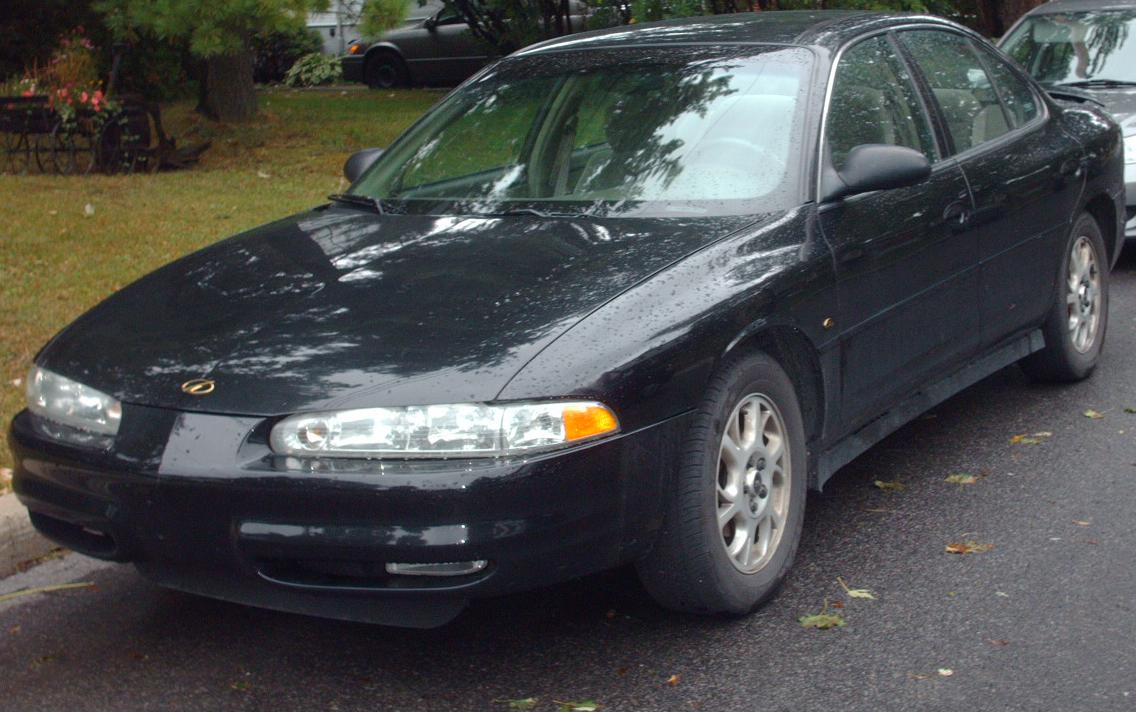
"...ything more from them. But it does raise a lot of intrigue, doesn't it, of what is Constellation's game plan..."
The Oldsmobile Intrigue is a regular mid-size car (a sedan), not a sports car or a truck. It was made for everyday driving and comfort. The podcast mentions it because it’s an older model that can lead to questions about why certain cars were offered.
The Oldsmobile Intrigue is a mid-size sedan that was produced during the brand’s later years. It’s the kind of model that can spark “what’s the plan?” conversations because it represents a specific era of a manufacturer’s lineup and market positioning. In the podcast, it’s brought up as an example of something that raises curiosity about strategy and product direction.
"I'm trying to squeeze in a few more. I will talk about the news from Sunderland this week, which is that Nissan have signed, this is a lovely business speak, a memorandum of understanding which is non-binding, but they've signed a document with Cherry."
A memorandum of understanding is basically a “we’re interested in doing this” document. It’s not the same as a signed, final deal, so the plan can still change.
A memorandum of understanding (MoU) is a written agreement that shows parties intend to work together, but it usually isn’t legally binding. In this context, Nissan and Chery are discussing a possible production plan at the Sunderland plant, but it’s not confirmed as a final contract.
"which is that Nissan have signed... but they've signed a document with Cherry. Cherry, of course, the enormous Chinese conglomerate behind Cherry."
Chery is a Chinese car company. The episode is talking about the possibility that Chery could make cars in the UK, using Nissan’s Sunderland factory capacity.
Chery is a major Chinese automaker, and the host is describing how it could start building cars in the UK. The mention also ties to Chery’s multiple sub-brands (like Omoda and Jaecoo) that are positioned for different market segments.
"Cherry, of course, the enormous Chinese conglomerate behind Cherry. Jakku, Omoda, Lepas, or whatever it's called,"
Omoda is a brand name within the Chery group. Think of it like a separate “car label” that Chery uses for certain models.
Omoda is one of Chery’s automotive brands, used to market vehicles under a distinct nameplate. The host lists it alongside other Chery-linked brand names to show how Chery’s portfolio could be involved in UK production plans.
"With a view that Cherry could start building cars at the Nissan Sunderland plant. So how that would work."
The Nissan Sunderland plant is the UK factory in Sunderland, England, where Nissan has historically produced multiple models. The host explains that Nissan is consolidating production lines and leaving capacity open, which could allow Chery to build cars there if talks progress.
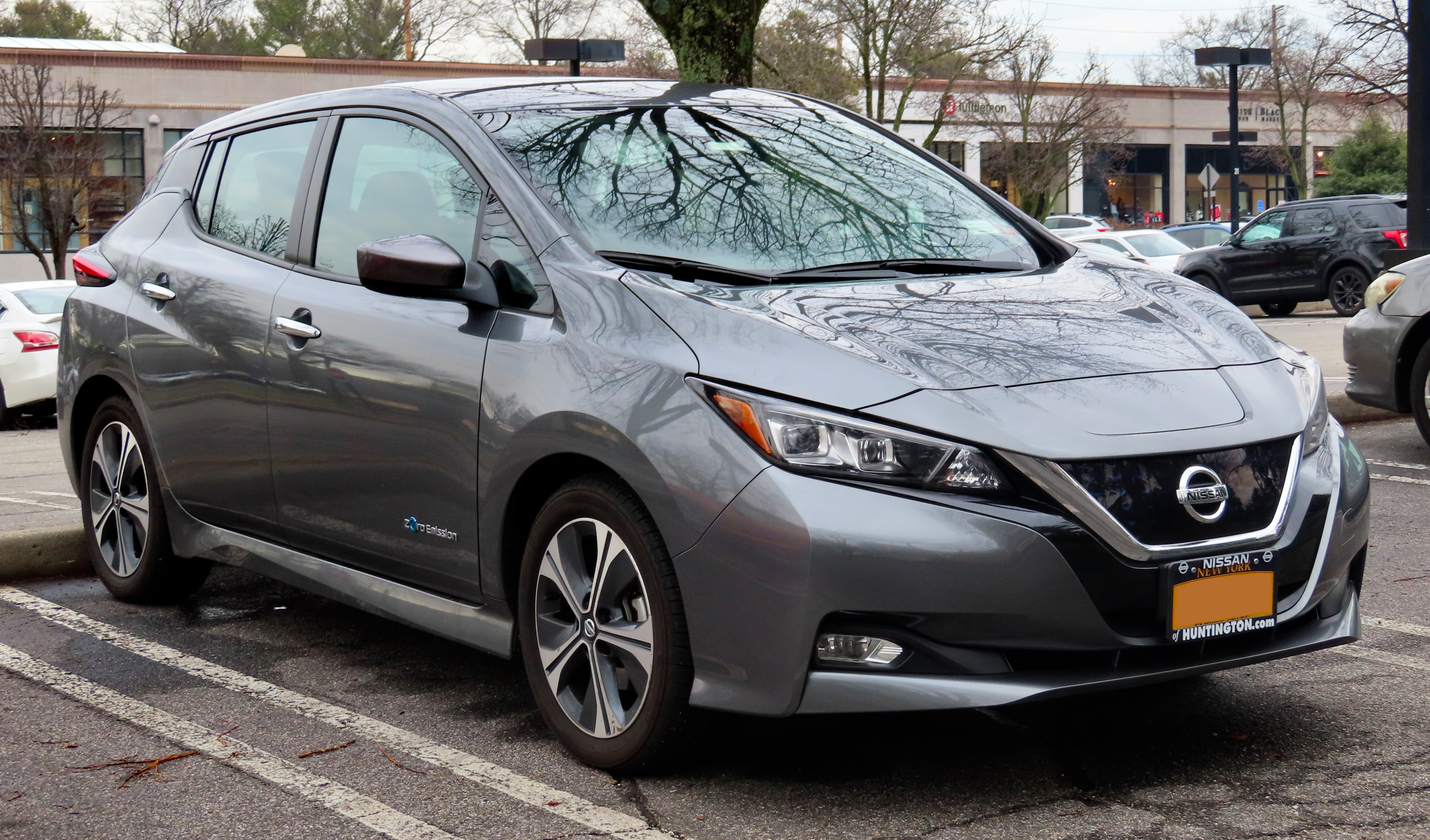
"...underland that makes all the Nissan cash cars and leafs and so on, because there's not really enough dema..."
The Nissan Leaf is an all-electric car, which means it runs on electricity instead of gas. It’s made for normal daily driving, like commuting and errands. People mention it when they’re talking about how many buyers want electric cars.
The Nissan Leaf is a fully electric compact hatchback designed for everyday driving without gasoline. It often comes up in discussions about EV demand and production because it’s one of the more widely recognized mainstream electric cars. In a dealer podcast, it’s a natural example when talking about how much customer interest exists for “cash” cars versus electric options.
"I think Cherry has been making noises about making stuff in the UK, whether that's at JLR plants, because of course Cherry and JLR have this tie up."
JLR is Jaguar Land Rover, a car company that makes Jaguar and Land Rover vehicles. The host is saying Chery has some kind of relationship with them, which could matter for where Chery manufactures cars.
JLR stands for Jaguar Land Rover, the UK-based automaker group. The host mentions that Chery and JLR have a tie-up, implying potential collaboration or shared strategy that could influence where Chery builds cars.
"I don't know why I'll tie in another story here, which is that MG has confirmed this week that they're going to open or they're going to take over a plant in Spain to produce something like 120,000 cars a year and create 2,000 jobs."
MG is a car brand. In this segment, they’re talking about MG expanding production in Spain and hiring more people to build cars.
MG is a car brand (often discussed as MG Motor) that’s expanding manufacturing capacity in Europe. Here, the host says MG is taking over a plant in Spain to produce around 120,000 cars per year and create about 2,000 jobs.
"I think this is actually a new plant for MG. Leak Motor, of course, has plans to start making things. I think in Spain, am I right, Damien?"
This sounds like a transcription slip for another Chinese car maker. The point is that several Chinese brands are planning to build cars in Spain.
“Leak Motor” appears to be a transcription error for a Chinese EV brand mentioned as planning to start making cars in Spain. The host is grouping multiple Chinese automakers’ manufacturing expansion plans in Europe, similar to MG’s plant move.
"Yeah, so it was kind of like what we were talking about [3334.1s] earlier, actually, this kind of, they actually call it Chinese speed. So I think a couple of [3340.6s] points here, because I think it's a wider discussion rather than just, I mean, it's very"
“Chinese speed” means Chinese car companies can move faster when they see what buyers want. The hosts are comparing that to how slower European companies can be to change direction.
“Chinese speed” is a shorthand for how quickly Chinese automakers can spot a market trend and adjust production, products, or strategy. In the episode, it’s contrasted with European automakers being slower to react.
"So now the next thing is, how is that going to integrate into European factories? And I have to say, you're absolutely right in terms of Spain for Leak Motor, but actually Leak Motor was the first Chinese manufacturer to start manufacturing in Europe in Poland."
This means fitting a company’s production plans into existing car factories in Europe. It usually takes changes to equipment, suppliers, and processes so the cars can be built there efficiently.
“Integrate into European factories” refers to how a new manufacturer’s technology and production processes get adapted to existing European plant operations. That can involve tooling changes, supplier alignment, and training so the vehicles can be built to local standards and at competitive cost.
"because once you're committed to a factory, you're committing over a long, long time, because otherwise you wouldn't get your economy to scale."
It means making lots of the same thing usually gets cheaper per unit. For car factories, producing more helps spread the big setup costs across more cars.
“Economy of scale” means the average cost per unit drops as a company produces more. In car manufacturing, bigger production volumes let factories spread fixed costs (like tooling and setup) over more vehicles, making the business cheaper per car.
Term
launch party
"they would wait until everything was 100% spic and span, everything had been audited to within an inch of its life. And I don't have a launch party, a launch party handing out Prosecco and all this kind of stuff."
A “launch party” is a marketing event where a company shows something new to the public. In car dealerships, it’s the kind of hype event you might see when a new brand or model is being introduced.
A “launch party” is an event brands use to introduce a new product to the public. In car retail, it’s often part of the marketing push around a new model or a new brand entering a market, meant to generate buzz and press coverage.
Concept
reviews
"we started to study it. I think it links all your points, really, is because I think consumers are looking at how they buy in different ways. So actually, I think everyone's looking at reviews, rather than necessarily the traditional means."
“Reviews” means what other people say about a car or dealership online. The point is that more buyers are trusting those opinions instead of relying only on traditional sales channels.
“Reviews” here refers to how consumers use published feedback—online ratings, dealer reviews, and customer comments—to decide what to buy. The speaker is arguing that this review-driven buying behavior is changing how car brands and dealers compete, especially for newer entrants.
Brand
Carblow
"So actually, Carblow is a really, really interesting concept. Certainly some of it we're going to spend a lot of time studying and maximizing."
Carblow is being talked about as a concept for how people decide what to buy. The idea is that reviews and recommendations strongly influence car shopping.
Carblow is mentioned as a “really, really interesting concept” tied to how customers choose and evaluate products. In this context, it’s being discussed like a brand/initiative that leverages reviews and word-of-mouth to drive car sales.
"So there's nothing better in life than word of mouth endorsement. So if we deliver an amazing, really good experience or we exceed expectation, and I think the other point is, if you turn up at a friend's house..."
This means people recommending a car because they liked it. If your friends hear good things from someone they trust, they’re more likely to believe the car is worth it.
“Word of mouth endorsement” is the idea that satisfied customers recommend a car to friends and family. In car retail, it matters because it reduces uncertainty—people trust real experiences more than marketing.
"I need to study the data. I don't know why all the Chinese brands are in the top 10. Obviously, we're very pleased to be number four and we'll take that."
They mean cars made by Chinese brands. The point is that more drivers are starting to like them, not just because they cost less.
“Chinese cars” refers to vehicles from Chinese automakers, which the speaker says are appearing prominently in top rankings. The segment frames their growing popularity as being driven by perceived value and increasing mainstream acceptance.
"...walking into a showroom and paying 30 grand for a B10, for example, other league motors are available, ..."
The Alpina B10 is a luxury car that’s been upgraded to feel faster and more special than a standard version. It’s meant for drivers who want comfort but also better performance. The podcast brings it up to talk about higher-end pricing and what kind of car you’re getting.
The Alpina B10 is a high-performance luxury sedan built by Alpina, a tuner that takes a BMW platform and upgrades it for stronger performance and refined driving. It’s often discussed because it sits in a premium price tier—like the example of paying around $30,000—where buyers expect both comfort and performance. In the podcast, it’s used to illustrate how some “other league” vehicles are positioned and priced.
Select text to request an explanation
The Cardiola podcast is sponsored by AutoTrader.
John, have I mentioned that we sell more cars from adverts on AutoTrader than anywhere else?
Yes, I think I read that somewhere.
Well, with over 84 million consumer visits per month, they connect retailers like us
with more potential buyers than any other platform.
But it's not just about the numbers, is it?
Is that what you say to your accountant?
Because the support and the value we get from AutoTrader is, well, invaluable.
We now get AI-powered insight on every online inquiry about the level of buying intent from
each customer, incredible amounts of data about the cars that we'll sell in our local area,
and around-the-clock service support from our account manager.
It sounds like AutoTrader is basically doing all the work for you, James.
No, John, I still do some things, like take out the bins.
Anyway, to find out more about how AutoTrader can help you, visit autotrader.co.uk
slash partners slash retailer.
Welcome back to the Cardiola podcast, where we pick our favorite stories of the week
and ask an industry guest to choose which were the best.
I'm John Ray, and joining me this week is a fan of all things with an inlaid wood dashboard.
It's, of course, James Batchelor.
Batch, hello.
How are you?
Hello. I'm fine, thank you.
And it's nice to see you really are kind of scraping the barrel with these intros.
The more and more podcasts I do, you're really scraping the barrel.
But I have to admit, that's quite a clever one, actually, so 10 out of 10.
Thank you. Give us an update on your Paulie Volver.
I'm just going to ask you this every time you come on now.
The Paulie Volver, it's slightly better.
I mean, it now runs without cutting out, which is good.
But I've got zero confidence in driving it on the UK's public highways,
which is a bit of a problem, really, isn't it?
So I'm trying to sort of find a time when there's nobody on the road,
so that when I inevitably break down, I don't cause a traffic incident that hits the local radio.
So at least you'll be very safe if you do have a traffic incident.
I mean, you're going to have to sort this out because at some stage,
we're going to have you on and there's going to be someone from Volvo on,
or somebody with a Volvo dealership.
Well, this is what I'm hoping, John.
I'm hoping here for a contra deal with a Volvo specialist.
You can do all the work free of charge and I just get away with just merely plugging them on the podcast.
Well, we'll keep our fingers crossed on that one.
What have you been up to this week?
I can't remember when you were on.
You were on two weeks ago, weren't you, when I wasn't here?
Yeah, I've been fairly busy.
James Batchelor and Fusion Lessons, honestly.
Honestly, I'll be doing received pronunciation throughout this entire podcast.
Yes, I was wondering when you'd hear that, actually.
Sorry about that.
Unbelievable.
Anyway, what have I been up to?
You were going to say?
Well, fair amount.
I was driving a car last week.
Inevitably, it was an electric SUV as everything is these days.
But I have to be careful here because I can't break the embargo,
the driving impressions embargo on this car.
But I think it's okay for me to actually be honest with the listener here
and say the car made me sick while I was driving it.
Now, this is a totally new experience for me.
So it was the Alpine A390 GTS.
It was in Italy the launch.
It was 40 degrees and I had 10 laps of this Titan twisty test track.
We were encouraged to switch everything off
so we could do all the drifts and everything.
I only managed five before I had to go running to the lavatory.
I was a little bit unwell, put it that way.
And that's the first time it's ever happened to me.
Being ill whilst driving a car.
So I know I'm a pretty delicate flower.
I know.
But I think this is a new thing with EVs.
I think there's such an attack on the senses
that they can make you feel a bit ill.
So there we are.
Nothing at all to do with the Pinot Grigio at lunch, I'm sure.
Completely.
It was the shabby, actually, but we'll put that aside.
I know what you mean, though.
Well, the Polestar one I went on the other day didn't make me feel sick.
I'll say the other day.
It was about a month ago.
It was just in Bargo, it was the other day.
But I found, because it was one of those cars
that makes absolutely no noise whatsoever,
like 800 brake horsepower cars.
So it is quick.
You exploit gaps and you don't think
we're there overtaking people.
But it's absolutely emotionless.
It's very strange.
Yes.
The brain doesn't kind of...
You need some noise to kind of tell your brain you're going to...
Yeah, I think you've hit the nail on the head there, John.
Yeah, lack of noise.
Pequilla, isn't it?
Well, anyway, shall I introduce our guest
before we make more noise ourselves talking about random EVs?
Our guest this week, I'm thrilled to say,
is managing director of Leak Motor in the UK, Damien Daly.
Damien, hello.
Hi, how are you doing?
Very well.
Very well, thank you.
I can see you've got your branded board behind you.
It's like we've got you live from television centre.
It's a genuine one.
It's not one of those digital ones.
Very nice.
Very nice.
Well, you've pulled out all the stops for us.
I appreciate it.
I mean, firstly, just...
I mean, as a company, we've come across you
in lots of different places in your history career.
But tell us a bit about yourself.
You've worked for a lot of brands, haven't you?
I mean, a lot of Italian ones, I must say.
Yeah, so, I mean, I always love cars, really,
from a very young age.
I'm sure a lot of us do.
And, you know, I've got children myself now,
and I gave them this advice, which my grandfather gave me,
is if you choose a job you love,
you never feel like you worked a day in your life,
which sounds good, doesn't it?
And so, anyway, so I went into cars,
started my career with Audi.
I was there for about four years after leaving university.
Then I moved to Alfa Romeo,
and, you know, I absolutely love all things Italian.
I'm a massive Alfisti.
And then was fortunate to kind of really grip in and work hard.
And I remember when I first started,
I thought, I really want to run this company one day,
and I ended up progressing to MD of Alfa,
which was fantastic.
And I've also headed up Jeep in the UK.
I did a stint in Italy,
so I was hearing this bachelor's story earlier,
and what an amazing place to be.
So I was over there for about three years.
To be honest with you, I was commuting,
so I was getting up at Crack-a-Dawn every Monday morning,
three o'clock every Monday morning, catching a flight,
and arriving in Turin.
You know, I'd been in a taxi,
I'd been in some cases on a train,
and been on a plane, and got in before 10 a.m.,
before a lot of the Italians, actually.
And then travelled back every Friday night,
because so that was an amazing experience.
And then I came back to the UK kind of just before COVID,
headed up Alfa and Jeep again.
You know, two brands I feel very, very passionate about.
And then I did two years with Fiat.
So although I'd worked for Fiat Chrysler for 20-odd years,
I'd never actually done any time,
what a funny way to say it, but done any time with Fiat.
So that was really interesting, it was great.
And then right up to now, I had this opportunity,
and I really, really wanted this, because, you know,
the honour to be able to launch a brand from scratch
doesn't come around very often, really.
So when I saw this as an opportunity,
I really, really raised my hand, I really, really wanted it.
And so I'm super, super pleased to be doing it.
Yeah, so a lot of things,
but definitely you're right, 100% love Italian cars.
And all things Italian.
Can I just hop in here?
And because I know Damien's knowledge of Turin, because,
and how he is, you know, he is seen as a local amongst the Turin people,
because it was a Fiat launch quite a few years ago.
And the, don't worry, I'm not going to embarrass you.
It is a bit worried, but I now know what you're going to say.
No, it was, we'd had the, you know, the silk had been, you know, whisked off the car,
and then the canopy started to be shown.
And of course, to a bunch of very, very hungry British journalists,
this was not enough.
And Damien was very quick to acknowledge the fact that dinner was not good enough.
And he took us around the corner from the Fiat factory,
the famous Lingotto factory,
jigs around the corner to this wonderful little Italian restaurant.
And I say restaurant, it was like walking into someone's sort of sitting room,
basically.
And we were welcomed in with open arms.
We had plates of pasta, beer, and all kinds of stuff.
And it was just absolutely wonderful.
And I think Damien, I think that was your local, wasn't it?
You were very familiar with it.
Yeah, so to literally that, that is literally just opposite the hotel,
the NH hotel, which was the original Fiat factory.
So I stayed in that NH hotel, which I think is really important to do,
because you feel part of Fiat there.
You know, all the rooms are individual.
They've got individual Italian design pieces and graphics on the wall,
because it was the original factory.
So it's very authentic.
And that's the factory, which is featured in the famous Italian job.
So you can actually go up on the roof, and not that I'm an amazing runner,
but basically they let me run around the roof, which is a real experience.
Some people have been fortunate to drive around the roof at slow speed, I emphasize.
And that restaurant, which I'm actually talking about, is literally across the road.
And it's almost, it's an unofficial Fiat restaurant.
So they've got Fiat branding everywhere.
And it's been there for, I don't know how long,
but certainly I've been going there for 20-odd years.
And it's owned by a family.
It's fabulous.
And they look after you.
And the last time, every time I got a chewing, I go there.
And I was there probably that couple of months ago, and I went in and
she always remembers me, mainly because my Italian is so bad.
She remembers I don't like mushrooms.
And she remembers me probably because my Italian is so bad.
And in Italy, a lot of the dishes have mushrooms,
so I think I'm very memorable there.
But yeah, you should do a plug on that,
because anyone who goes to chewing has to go to that restaurant.
Wow.
It was just lovely.
It was just lovely.
It was just lovely, because the reason why I say it is,
it was very clear that your passion of all things Italian was there.
And it's not just the cars.
It's the whole thing.
It's the whole culture surrounding the cars and the automotive and the industry.
I mean, particularly in Cheering industry, such a huge thing, isn't it,
to the people who live there, which is why I find this fascinating.
How you've been working for brands which have got huge legacies.
Everybody knows them.
Everybody loves Alfa Romeo's.
People aspire to owning one.
And then you move to a brand that's got no, from a UK perspective,
hasn't got any sort of understanding at all.
That must be challenging, but it must also be very exciting,
starting a brand from scratch.
Yeah.
So first of all, let me be very clear, I'm very faithful still to the Italian,
because I still do have my 30-year-old Alfa Romeo Spider, which is my kind of
pride and joy, which I, but absolutely to your question.
I mean, it was, this is what I mean.
I mean, in January, it was a really unique opportunity,
because let's be honest, and you're going to talk about it, I think, a lot.
There are a lot of Italian, Chinese brands entering Europe and the UK.
And this really was, and I think the word unique is overused.
We use it all the time, but there are very few things in life which are unique.
And this was unique for me, and also I think unique proposition in the industry.
It's unique for me, because I could launch a Chinese brand with the assurance
of having the backup of Stellantis, which is the world's fourth largest automaker.
So this was really good for me, because I didn't mean I needed to leave the company
that I love to be able to do this opportunity.
And equally for customers, it's a real USP, because there are lots of Chinese.
It's a tough time to be a consumer, I think.
It's a tough time to be a dealer, is what choices do you make?
And actually making the right choices is really important, because let's be honest,
I'm not here to scare monger, but not all these Chinese brands will survive.
So if you're a customer, it's about choosing the right one.
Lots of them are given really long warranties.
Are they still going to be here at the end of the warranty?
It's probably in some people's minds.
If you're a dealer, lots, lots of choices.
Lots of people probably knocking on your door, asking for hundreds of square meters or whatever.
But which ones are the right ones to back?
And this really is unique, because there is no other Chinese manufacturer,
as it stands today, that has such a huge backing and collaboration with an existing OEM.
And our LeapMotor International, which is everywhere LeapMotor external of China,
is a 51% shareholding for Stellantis.
There is no other Chinese brand with that kind of backing.
So I think this is super important.
So for me, coming to your question, it meant that I could pursue a dream
without having to leave in the company.
And equally to customers, I think that piece of mind.
And I think a piece of mind is really, really important, because it's tough times out there.
It's tough times to be a family, because household incomes are quite static,
and everything's going up in price.
It's tough times being a customer, because you probably want to do the right thing.
And you're probably thinking, every week I separate all my recyclables out,
and I'm conscious that, I mean, guys, it was 30 degrees in May, wasn't it?
So nobody could say that the environment's not changing.
I mean, and you're thinking that.
And I think fundamentally, human beings want to do the right thing,
but can they make the switch to electric, because it's perceived to be more expensive?
And the same thing with dealerships, without getting political costs of things have gone up,
national insurance things have gone, it's tough.
So piece of mind, I think, is super, super important in all these different aspects
and all these different audiences.
Yeah, LeapMote is an interesting brand as well.
Because, I mean, as you say, there's a sea of Chinese car brands coming over here
with varying different amounts of history.
I mean, they're all quite new, relatively speaking.
But LeapMote really is quite new, isn't it?
Because didn't you guys first start making cars in the back?
Is it 2019, something like that?
2015 was the beginning.
Yeah, you're absolutely right. So it's one of the newbies.
And the founder was a tech genius, really.
And LeapMote, he'd done various other technologies, but LeapMote was his first car.
So, and then, basically, the collaboration with Stellantis was announced on the 23rd of October,
2023, again, which is really, because obviously we have that for a couple of years,
where the world stopped, let's be honest, didn't we?
So, again, the speed from day one is really, really significant.
And then, within six months of kind of signage.
So that initial deal, and I've said to you, I'm a car person.
I love cars, and I'll be honest with you, when I woke up on the 24th of October,
having read in my news bulletin, we've done this deal with 21% of LeapMote.
I hadn't heard of LeapMote, I'll be honest.
Obviously, I researched pretty quick.
But then the speed of that was we formed LeapMotor International within six months.
And that is where Stellantis is 51%.
And then the further speed is, within six months of that,
they launched, LeapMote launched in seven markets in Europe.
And LeapMote International, to be clear, is LeapMote everywhere in the world,
external or China.
So that's where Stellantis is the 51%.
So yeah, seven markets within six months of forming LeapMote International,
or 12 months of Mr. Tavares, our former CEO, signing the deal, so to speak.
And then we launched in the UK in March, which was March last year.
And then we've grown crazy, but crazy good speeds since then.
So this whole thing is a bit of a whirlwind, if I'm honest,
in terms of the speed of it, incredible.
Yes, because, of course, as well as being backed by Stellantis,
the other thing is you're in all the Stellantis dealers' fundamentals, aren't you?
Had a ready-made dealer network ready to go to say,
just slot us in alongside your fear, or your voxel, or your purge, or whatever.
I mean, how important do you think that's been to growth?
So it sort of links back to the previous point about being unique,
because whatever any two organisations come together,
the best result of that is where they almost jigsaw puzzle,
so they complement each other.
So I think what LeapMote brought to the table was, let's be honest,
a level of technology which is incredibly advanced,
at a price point which we'd never seen in Europe before.
Let me say that.
What Stellantis brought to the table was the complete answer to your question,
which is that we are car people.
We understand cars and we understand brands,
and that understanding of brand is quite important,
which maybe I'll explore in a minute.
And as part of that, we have systems and processes,
which in some cases have been working for decades,
and in some markets we've been in for over 100 years.
And as part of that, those systems and processes, we had dealers.
We also had, which is super, super important,
and this is a key differentiator amongst the other Chinese brands,
is a parts distribution system,
which is arguably one of the best in the industry.
And being straight with you guys,
if there is an Achilles heel of the Chinese car world, it is that.
Because it's one thing to bring a vehicle or anything to that matter,
from China to the other side of the world in one piece.
It's another thing altogether where, I don't know,
someone carelessly knocks off a wing mirror in a supermarket car park,
and cars can be off-road for months and as a result of that.
So, I mean, we launched with, I think it was 96% parts availability from day one.
And there were existing OEMs in this country,
which would give the right arm for that.
But coming back to your question about specifically dealers,
which was another aspect which basically enabled the speed
and was kind of like really made,
is obviously we had the slantist dealer network.
And so we went out to our dealers and basically came up and presented the opportunity.
So from day one, we actually opened the doors with 44 retailers,
which it took a lot of the other guys some time to get up to that level.
So you're absolutely right.
As of today, all of our dealerships, of which we've now got 80,
are all with existing slantist partners, and all OEMs exist,
coupled with whether it be Vauxhall, Peugeot, Citroen,
those are kind of the main ones really.
Also, Jeep to an extent.
We don't partner with premium.
So Alfa Romeo, my dear Alfa Romeo, is quite separate,
which is probably healthy for me in a way.
But no, so we then have a plan to get to 110 by the end of this year.
We've already got a road map to get to 99.
And it's interesting for your listeners really,
hopefully, is that basically we're now at a point where we kind of know
that we need to go outside slantist to get to that kind of critical 110.
110 isn't the bus number that was driving past at the time.
We've looked specifically at locations.
We don't want to be on every street corner,
but equally, we want to drive time which makes sense to the customer.
We don't expect them to drive an hour to get to us.
We want to try and keep it as close to 30, 35 minutes.
So it gives the dealer who's got the territory a good opportunity
to be an entrepreneur and make money,
but at the same time, we need consumers to be able to find us relatively easy.
So we are looking to absolutely attract interest from white.
Our priority was to look after our dealers,
and I think that was the right thing to do.
For an existing slantist dealer, we gave you this opportunity.
You're an existing slantist dealer.
You want to get into the world of Chinese, here's an option for you.
And we made it quite, let me say accessible,
utilizing all the systems, all that knowledge,
which kind of made sense, but we do need to go outside now.
And in actual fact, the timing of this is super opportune.
So I thank you guys because we entered the NFDA for the first time just,
and I set my own target, if I'm honest.
I should have written it down, actually, which was to get to top 10,
and we came in at fifth position.
So we are super, super happy with this.
Hopefully, certainly investors,
and we started to see that basically we're achieving 0.5, 0.6% market share now.
Hopefully, some people are out there listening and thinking this could be interesting.
Yeah, well, I've gone back.
So I was just going to say on the subject of dealers, I mean, presumably, I mean,
you've done a lot of profiling of the dealers that have joined the network,
because, you know, having a large network is one thing,
but having dealers that are fired up to sell another brand in their showroom is quite another.
You know, I'm thinking perhaps the family-run Citroen dealer down the road
has always sold Citroens, and then they're told,
we've got to sell Leap Motors now as well.
Presumably, the dealers who have signed up, they share the same vision as you,
and see this as a great opportunity to launch and sell a new brand.
Yeah, so there's a couple of things in your point and your question.
So I think, first of all, that no one was obliged to take it.
I think that's super, super important.
There was no, what's the phrase, strong arming or anything.
Absolutely not.
We presented the opportunity.
In some cases, we had not a lot, not many.
Dengamy Rohn were probably in about 34 maybe five cases.
We had up to three partners in a certain location who wanted it.
So that was tricky, if I'm honest.
In some cases, some quite good options.
So it was kind of like, I've got this territory in XYZ area,
where it was an open point.
Yeah, I've got three partners that really, really wanted it.
But no, they absolutely raised their hands for it.
And I think the other important thing is batches.
So basically, we were going after, what we didn't want to do is just sell,
from our perspective as Stellantis, but also from a dealer's perspective,
this is not about selling leaked motors to existing Voxel customers
or existing Citroen customers.
We really, really wanted an incrementality, which, and that was the goal.
And when you set a goal and you've got a blank sheet of paper,
obviously, it's good to have a goal and it's good to have a direction,
and it's clear what you want.
But what's been super interesting is, and we profiled at the end of last year,
and we also did it at the end of this year as well.
Through Stellantis Financial Services, which are doing, and by the way, guys,
we have a nearly 70% retail mix.
So a couple of numbers I want to give you, guys.
It's first of all, we are 98% BEV, which, and there's a reason for that,
because strategically, we are looking to drive BEV sales more for Stellantis,
ZEV, et cetera, et cetera.
So we're 98% BEV.
We can talk about the 2%.
That's the first point.
Second point is, and by the way, you know,
Chinese are mainly 75% ICE slash PHEV.
So we're sort of bucking that trend.
And second point is that basically, we are nearly 70%, I think it's 68.3% retail mix
versus an industry average for BEV sales of about 25%.
Another number coming back to my point about the incrementality is that basically, as I said,
we profiled, so we profiled these retail, a large bulk of these retail customers of which,
roughly speaking, 7 out of 10 registrations of retail are going through Stellantis Financial
Services.
And the reason why they go through Stellantis Financial Services is because they're buying
a finance deal, which makes sense if you're buying an electric car for all the reasons
which we all know because the offers are good, RVs on electric cars doesn't matter
whether it's a Porsche or whatever is not necessarily amazing compared to ICE today.
I think that will change in time, of course.
So we then profiled all of those retail customers and 95% were new to Stellantis.
That's really interesting, because I assumed perhaps one of my questions was going to be.
I think you would have to, it was probably a lot of kind of like, yeah, yeah.
Yeah. Now, I think what's interesting is that basically, and it's probably, you probably find
this as, if you look at the overall car market, which, and it's been in the press this week,
isn't it, about it's very, very high and all the rest of it, is probably a lot of these brands
like us are probably selling a car to somebody who perhaps was going to buy a used car previously,
because obviously we've got a really interesting proposition, which could be the case, but the
point is we're generating an incremental volume introducing new customers to our existing dealers,
which in time, I'm hopefully their next car, they'll be an elite motor, don't get me wrong,
but in time they could buy across the whole stable of Stellantis, which so it's quite an
interesting proposition for a dealer. That sort of leads me on to my one of my questions, which is
something I'm a bit unhealthily obsessed with, which is brand and brand positioning and all
that sort of stuff. And what I found fascinating, I think from probably a decade of doing this job,
is you go on press conferences, you go on launches and you go on press conferences and
you're told, this car is for this person, this brand is for this person, and so on and so forth.
With the Chinese brands, not to put them on the same pot, there tends to be less of a worry about
that. When I interviewed MDs, they're like, well, it's for whoever. There's no specific,
this is a sporty brand or this is a luxury brand or whatever, it's just this is a car and it's got
some great tech in it and this is the price that it costs and whatever. Where do you see
elite motor? Does it have a clear defined, firstly, does it have a clear defined brand
Emma, I suppose? And secondly, where does it fit into the Stellantis pool of brands, many of them
as there are? Yeah, so I think it's a really interesting question and something I've always
been interested in is brand. And I think brand in the UK, having worked in Europe is the UK is a
very sophisticated market. It's a sophisticated market in terms of the channels because our fleet
market is unique. And it's a sophisticated market because actually, if you look at, you know,
my years with Alfa is, if you look at the proportion of premium success, it's disproportionately
high compared to the affluence of the country. So what this says to me is basically people are
interested in brands. And I absolutely believe that people don't buy products in this country.
They buy products from brands. So actually creating and what makes a brand is numerous
different things as differentiation, its positioning, its peace of mind.
So coming back to elite motor, I think our positioning is, and this is something which
obviously we're called elite motor, which I think helps because it's very, it's English for a start.
So it's really clear in terms of what we're trying to do. And, you know, what are we doing?
What's our raison d'etre? What's our reason for being? Well, we're trying to get people to take
the leap to electric. So straight away, we have a lovely little lovely connection with our brand.
So in the same way that Nike had to just do it, we've got to take a leap,
which I think is something which we've explored a lot and had a lot of fun with and will continue
to have a lot of fun with. So for example, you know, we had a pop up dealership in central London
where we actually asked people to take the leap literally, which was a bungee jump. So that was
kind of how we launched the brand. Extreme, I know, 100 meters above London skyline.
But our positioning really, what we're saying to the customer is, you know, we want to be
not a, not the, but be the best value EB brand offering the highest level of tech and spec as
standard. So let's break this down for a second. There's a couple of key words really. First is value.
Now I think value, I think I mentioned earlier, I think unique is a wrongly or overly used word
in the English vocabulary. I think we often use value in the wrong context as well,
because often when we talk about value in our day to day lives, we mean cheap.
And I'm not looking to be the cheapest. The true definition of value is I pay X and I get Y
and that emotional thing that I feel about Y is that that's what value is, not just emotional,
but actually tangible things as well. So what, so it is a coincidence that with T03,
which is our entry level car, that we are, if you want to say the lowest price, that's the
nicest way of saying cheapest, we are actually the lowest price DV on sale today, but we didn't
set out that wasn't our kind of mission statement. It was to be the best value. So we're all about
giving you simplicity is one of our values. And I'll talk about it in a second, but
everything is a standard. So we've, so that's that level of spec and tech and the level of
spec on our cars is incredibly, incredibly high. We almost encourage our retailers to compare it
to other models, because if you get into that level with a customer, we're going to win.
And the keywords are as standard. And when we started with this blank sheet of paper,
which is why it's so exciting, we sort of discussed, and there was some talk some time ago about,
if you remember, an apple, would apple make cars? Would Dyson make cars? I think James Dyson got
as far as buying the battery plant and I think he was wise probably not to go any further because
actually we're all going to need batteries and I don't know what a Dyson car would have
ever looked like. But the reason why I mentioned it is because if these amazing brands, which
are non-automotive, came into the automotive sector, they would have handled it in a completely
different way. So we had the benefit of all our knowledge based within Stalantis, but we also
had the benefit of that blank sheet of paper. So we chose to make, we believe that customers want
simplicity. They want peace of mind and they want simplicity. So rather than having the typical,
I don't know, three or four different versions of each car, that's why we chose to only have one.
So it's super simple. So gone all the days, you're seeing, you know, sexy TV advert and the car's
advertised at $29.95 and you're walking to the dealership and it's like the state, $4,000 on
the little thing that's on the roof. It's like, how's that happen? Oh yeah, but it's got 21-inch
sport wheels. It's got a sport pack and it's got like none of that. Super, super simple.
So, and the other aspect about lean motor is that we absolutely believe that customers don't want
to compromise. So it's all about that. Everything is standard, simplicity and no compromise because
you don't need to. There's no compromise. There's no compromise on the size of the car because,
trust me, I can give you a C segment SUV, spec the nines for a price, frankly speaking,
which is crazy. But it's super simple. It's one spec of standards and you don't need to compromise.
And by the way, you can drive an EV for probably less than you're paying for your current ICE.
All with the peace of mind and the backup of eight or four year warranty and you could say why four?
And we did that strategically because I could have made eight, but most of our finance deals
are going to be on three or four. And I haven't met a consumer yet who's willing to pay more up front
for the benefit of the person who's going to have the next car. We worked with Cap, the RV wasn't
going to make it that much different. So we kept it tighter of four, obviously eight year for the
battery. Don't miss the summary, but four year for the car. And our unique peace of mind is it's
existing dealers backed by the world's fourth largest automaker. So coming back to your question
about brand, I know it's a long answer, sorry for this, is we understood that we needed to make a
brand. We need to build a brand. We haven't built it yet. We're in the process of building it. It's
made some serious inroads. And we've had a lot of fun doing it. We're a brand which is a serious
brand, which doesn't want to take itself too seriously. Hence the playful take a leap. Hence
the bungee jump type stuff. But no, it's brand is super, super, super important. Just having a car
at a price will not do it alone because everyone, you know, all the other Chinese brands have got
that. So we have to differentiate ourselves and we have to give them a reason for purchase.
I've got lots of other questions, which I think we'll come on to as we go through the stories,
but just one more I'll squeeze in, which is I think we've had a couple of interviews with you
before on various launches and things. You've said at the beginning of this, you know, you don't
think all Chinese brands will make it. There's a bit of debate about whether I think that that's
not untrue, definitely. But there's also some discussion about, you know, which European brands
will suffer. Do you think, do you think some European brands will disappear off the face of the
earth as a result of the new way of the world, shall we say, with China making pretty decent
cars? Or is it just going to be a fight between the Chinese and here's Europe over here in America
and so on, and they're going to survive just fine? Do you think it will have an impact on
European, Japanese, Korean brands? I think it's a really interesting question. I mean,
what's that famous quote that it's not the intelligence of a species, but one's ability
to adapt that guarantees survival? So I think it'll come down to that. I think it's as simple as that.
Well, very interesting. Probably not the answer you expected, but I think it's the answer.
It's basically they need to, you know, every brand and I think, you know, it doesn't matter
what industry you're in. I'm a trainer nerd. I mentioned it the other day is that industry
is changing because 10 years ago it was all Nike and Adidas. Now there are new brands,
you know, Onuka, all these other brands, you know, the world's changing. So you've got to adapt to
what the consumer wants. I think where the legacy brands have strength and some of our brands have
amazing history and heritage. And that's a real advantage, but you've got to adapt to what the
consumer wants. And I think that ultimately that will determine one's survival. It doesn't
matter what industry you're in, actually, I don't think. I think there is one problem, though,
isn't there? And yes, brands are very, very strong. And I totally agree with what you've
been saying, Damien, but, you know, brand loyalty amongst customers is declining, isn't it? And,
it's you can't just because brands have been successful in the past doesn't necessarily
mean they've got a guaranteed future, does it? And this is why there is such an opportunity
for new Chinese brands to come into the marketplace, isn't there? Because people just
because someone's always bought a voxel doesn't necessarily mean they're going to continue
buying voxels in the future or a Ford or a Kia or whatever. Yeah, I mean, I think
there's more choice. And, you know, whenever there's more choice, I guess there's, you know,
it's a threat to the former, regardless of industry. But I think as long
customers also want peace of mind, I think, you know, your dealerships on the people that will
be listening, you know, these guys and girls have been supplying customer experience and amazing
customer experience across trusted brands for decades in some cases. And I think that that's
super important. I think, and I'm commenting on that, from a perspective of being a Bev brand,
you know, there's a lot of interpretation about, you know, making taking that leap as I guess I
keep saying, from from thermic to to to electric. So I think some of the brands that that facilitate
that better will have better loyalties. The ones that adapt more to the consumer wants today will
have better loyalties. I think you're probably right, Batch, I think probably, and maybe there's
something in it from, you know, a post COVID thing, maybe it's a different, it's a changing
thing. I don't think, hence my comparison to the sports industry, I don't think it's
just us, it's cars, to be honest with you. I think maybe our children, children, and I've got a 19
year old, I got a 15 year old, maybe they are maybe maybe inherently consumers are less loyal,
maybe they're less loyal in their supermarket choices, they probably are. And that is because
there's, you know, there's more scope out there. I think the switch to battery electric vehicles
has been prohibited by, as I said earlier, you know, a lot of people, you know, most people,
I think inherently human beings probably want to do the right thing. They know that it's probably
really better for the children's generation, you know, all those, all those reasons, but
they can only do it if they can, they can afford it. And price has been a
prohibiting factor previously, and probably doesn't need to be now with the, well,
doesn't need to be with the introduction of brands like Leap Motor and stuff. So that probably
affects loyalty. So, but certainly coming back to the formal question in terms of the, you know, the
I don't want to call them legacy brands, because I don't like that terminology, but
the more traditional brands, they've got a strength, and actually exercising that strength,
I think it's really, really important, but actually adapting to what the consumer wants
today is probably the most important, and that ultimately determine their success.
Hmm, certainly interesting times. Right, well, Damien, thank you for joining us today.
Don't go anywhere, because we're going to go through our stories, but I think we ought to
get on with it, or we batch before we run out of time. Yes, we had really.
The problem is Damien's too good to talk to, isn't he? We're running out of time.
Exactly. We'll try and whiz through them now.
Now, a quick word from one of our sponsors.
John, have you ever wondered why I, along with 14,000 other dealers,
choose to partner with Autodrader? Well, actually, I didn't think so. I'll tell you anyway,
with more than 84 million consumer visits every month, it connects us with more engaged car
buyers and delivers more deals than anyone else in the UK. And now, with the launch of
buying signals, we'll have brand new insights on every deal showing how likely a customer is to buy
the car they're interested in. Plus, as someone who set out to use AI and data as much as possible
in my business, I've found their technology, data and tools genuinely invaluable. But when I do get
stuck, which is, let's face it, most of the time, Autodrader is always on hand and committed to
supporting us to get the very best from our package. To find out how they can help you,
visit trade.autodrader.co.uk. Now, back to the podcast.
So that's what I'm going to run through our favorite stories of the week. And at the end,
Damien gets to decide which one of us chose the best ones and who is the winner.
I neglected to check who won last week and I can't actually remember. So I'm just going to
let you start, Batch. I'm going to be very nice, since you've joined us as a guest host for this
week. Well, what shall I start with? Well, I won't start with a Chinese car story. I'll wait for
that, because we've got a few. I mean, most of the news this week is Chinese cars.
It is. So let's start off with something that's not Chinese. And really, this was a pretty big
story, particularly in the motor trade. Of course, there was a mystery investor into virtue motors.
And we did a bit of digging into all of this. And I think we were probably the first to report on it.
It came to light that it's Constellation Automotive Group, which as our listeners know,
that is the company that has BCA, we buy any car, Marshall Motor Group under its wing.
And it's quite an interesting thing, isn't it? Virtue Motor Group, incredibly successful,
a public limited company, over 190 sales outlets across the UK. And yet, a business such as
Constellation has decided to whack up its investment level to nearly 20%. So, of course,
that's prompted a lot of questions of why is Constellation has done this? We don't actually
know the answer yet. We have approached Constellation, but we haven't heard anything more from them.
But it does raise a lot of intrigue, doesn't it, of what is Constellation's game plan in
all of this? And also, it's a mark of how rapidly things have changed in the motor
trade business. Well, since COVID, the number of virtue is, I think it is the only one, if not
one of few very public limited companies still left. Most of them have gone private in the
past few years, haven't they? So, what's the future for Virtue? That's been the question
that's been prompted by this investment this week. Yes, it's certainly been interesting.
Unfortunately, James has not yet published his sub-stack at the time of his recording,
so I can't go in there and pinch his analysis of this basic story, which is what I would normally
do. But no, it was a bit of a surprise this week. Virtue has long been touted as a bit of a
right term, really, but like a sitting duck for foreign investment or from someone to come and
just take them off the stock market, basically. And for Constellation to do this, one can only
speculate, as you say. It's been suggested to me that that's enough of a shareholding,
as in 19.15%. That's enough for shareholding to block anything else happening with them, really.
They've paid quite a premium for these shares as well. They've paid 30% premium,
so they bought them at 84p each. So, this wasn't necessarily a kind of all that looks particularly
cheap. I'm going to have some of them. They've done a similar thing with Lookers, I think,
if my caffeine is kicked in. So, it's not unlike them to take a minority shareholding in another
company. We've been debating in the office, haven't we, about what this means and whether
a full takeover could happen, because there's perhaps a suggestion that Virtue's
portfolio of sites would slot in very nicely to Marshalls. They cover bits of the country
that Marshall doesn't necessarily do. They've got an enormous portfolio of stuff up in Scotland
and the North, which Marshall doesn't really tend to have. Virtue has the former kind of Macklin
Motors stuff. Really, though, I think this is just a block. I think it's just a blocking move,
really. Virtue is a very successful company. Is it actually a constellation that have bought
these shares, or is it TDR, their overarching company that has bought them? Ultimately,
maybe it's a little from column A, a little from column B, but I don't think this is a
takeover in the works, necessarily. I will say, I don't think it will be unfair to say they haven't
made a constellation, haven't made a fantastic job of the Marshall takeover. We had almost
immediately, a lot of the work that Marshall did was undone. A lot of Marshall sites have
been closed. You could say for other reasons. In the wider world, things have changed, but the
enormous amount of Toyota franchises they had had to immediately be sold, because
Toyota decided that wasn't ready for them. I still have hope, in a way, it doesn't turn
into a full-scale takeover, but we'll see. Damian, I feel a bit bad coming to you for comment,
because I'm sure Virtue and Constellation have plenty of sites for Lee Motor and certainly
Stellantis. It's a tricky one, guys, to be honest with you, because I don't want Robert or Leon
calling me. It's an interesting time for the Motor trade, though, isn't it? Because these
big dealer groups, some of the Americans have bought them. Perhaps what was seen as a pretty
even kind of playing field before COVID has changed quite rapidly in the past few years,
hasn't it? It's quite an interesting time for the Motor trade.
Yes, so reference the specific thing. Virtue is an amazing organisation, so first of all,
I don't know why, hence why you're debating, but I guess I can absolutely see why Constellation
probably would want to do that. We also deal with various aspects of Constellation like
BCA and all that kind of stuff, but I think to the wider question is to batch the not relating
to the specific instance here of Constellation and Virtue, but it really is interesting, because
now so many of these large dealer groups are actually owned by foreign investors, whether it
be American, whether it be Middle Eastern, etc. Within our career time, there's been a lot of
change, a lot of change to take back to this point. I guess change is good in many respects,
but it's a very dynamic landscape and I don't have the numbers, you guys would be much closer
to this than me, but I suspect there are significantly less independence now. One of the
things I remember when I started my career in the late 90s was that was another thing which is
slightly different landscape then to Europe is that basically this dealer group thing, that was
quite unique to the UK. If you go to Italy, we talked about Italy earlier, it's not so much
like that. It is changing more like that, but you have many, many more independence. I mean,
don't misunderstand me, you get groups, you do, and it's changed increasingly so, but the UK in
many respects was probably way ahead of most of the other countries in Europe in terms of this big
group mentality. What's happened, I suspect, and you'll be close to the numbers, is those big groups
over the last 20 years have got bigger and bigger and bigger. It's definitely an interesting
discussion. Yes, right. Well, I shall move us on because we're going to run out of time otherwise.
I'm trying to squeeze in a few more. I will talk about the news from Sunderland this week, which
is that Nissan have signed, this is a lovely business speak, a memorandum of understanding
which is non-binding, but they've signed a document with Cherry. Cherry, of course, the
enormous Chinese conglomerate behind Cherry. Jakku, Omoda, Lepas, or whatever it's called,
something else, there's another one. There's a few brands we don't even have here.
With a view that Cherry could start building cars at the Nissan Sunderland plant. So how that would
work. Nissan, of course, a few weeks ago announced that they were condensing two lines down into one.
So there's now one line at Sunderland that makes all the Nissan cash cars and leafs and so on,
because there's not really enough demand to run two lines. And they've left that line open for
perhaps someone else to come in and say, Nissan, could you make these cars for us?
And that's what they are hoping might happen here. So again, this is all not necessarily
confirmed, but they've put out the news that they are having conversations about this stuff,
which it came as a bit of a surprise. Well, okay, it didn't come as a surprise this week,
because of course we'd heard that that's what they were sort of planning. They were rumors that
that was what was going to happen. And I think Cherry has been making noises about making stuff in
the UK, whether that's at JLR plants, because of course Cherry and JLR have this tie up.
But I think if you'd asked me a year ago, whether Jay Koos would be running down the production
line next to Nissan cash guys, I'd have been very surprised. I don't know why I'll tie in
another story here, which is that MG has confirmed this week that they're going to open or they're
going to take over a plant in Spain to produce something like 120,000 cars a year and create
2,000 jobs. I think this is actually a new plant for MG. Leak Motor, of course, has plans to start
making things. I think in Spain, am I right, Damien? Yep. Same sort of thing. There's a lot of Chinese
brands are now investing in Europe. We sort of touched on it last week and I was a little bit
kind of how will that work? Is it actually, do the margins still work and so on? But this is
certainly a first for the UK if Cherry is going to start making things here and in Sunderland.
Good news for Sunderland and its workers, of course. But what did you make of this batch?
I think it's kind of poetic that it's happening at Sunderland, really. If this does go ahead,
that Nissan was the first Japanese car maker to arrive in the UK and build cars here and Cherry
will be the first Chinese car maker. Now, I do want to clarify that. We're talking about a Chinese
brand here. MG is always a little bit, it's always a bit difficult with MG because, of course,
they did build a few cars at Longbridge, didn't they, before they closed it, I think, around 10
years ago or so. And we'll gloss over one active international, whatever they're called now.
Yes, but I think when you're talking about what is quite obviously a Chinese brand, Cherry,
Chinese car company, building cars at Sunderland, which 40 years ago was the first
plant to build Japanese cars. I think perhaps that's me being a little bit too poetic,
I don't know. But I think it's quite interesting. But it just shows, and I think this is another
interesting point with Leap Motors Factory, MG, we were talking about earlier on,
I think this is one of the advantages the Chinese have. And I think it'd be interesting to hear
your view on this, David. The Chinese are able to react very quickly, aren't they? They're able to,
they see a particular market trend or they see something which is, you know, to their advantage,
and they're able to sort of act in a speedy way. Whereas perhaps the Europeans are maybe a little
bit slower to action things, I don't know. But I mean, is that true? Is that fair to say, Damien,
that the Chinese just have a, they have a speed of scale, which is kind of difficult for us,
mere Europeans, to understand sometimes. Yeah, so it was kind of like what we were talking about
earlier, actually, this kind of, they actually call it Chinese speed. So I think a couple of
points here, because I think it's a wider discussion rather than just, I mean, it's very
interesting, it's a wider discussion about the European thing. So actually, I'll come back to
your point about the Japanese thing in a second. But so, you know, when I went back to the description
of the jigsaw puzzle, fitting together and kind of the technology, what Leak Motor bought to
Slantis and vice versa, is, you know, it's this ability to manufacture amazing technology at this
incredible price, which has not been seen in Europe before. So now the next thing is,
how is that going to integrate into European factories? And I have to say, you're absolutely
right in terms of Spain for Leak Motor, but actually Leak Motor was the first Chinese manufacturer to
start manufacturing in Europe in Poland. And we actually started, and then we ran it for a time,
and then it stopped. And that stop is not a negative, it's about the ability to start,
do something, and finish almost as a project, which, you know, those sort of projects didn't
exist previously, because once you're committed to a factory, you're committing over a long, long
time, because otherwise you wouldn't get your economy to scale. And so that's the first point.
Second point was that basically, we were able to react to an initiative in Europe to manufacture
the T-03, even for a short space of time. So it's that ability to react. And coming back to
Leak Motor specifically, because obviously, what we have, because of the relationship with
an amazing manufacturing footprint across the whole of Europe. So we don't need to go and,
in the nicest possible sense, negotiate deals with Nissan or anybody else for that matter.
You know, we've got an amazing manufacturing footprint already, so hence why we're able to
integrate, so why we could do what we did in Poland, and why we're doing what we're doing in
Spain. So I think guys, you know, really interesting topic, and I think you're going to see more and
more of this. You know, it's great. I think I'm going to go back to your point, Batch. I think
it's actually, it's interesting what you said about the link in the Chinese to the Japanese,
is I guess, you know, 70s and 80s was all about the arrival of, I mean, we were obviously very
young, some of us, maybe not even there. You know, so we read about it. It was the integration of
Japanese cars into Europe. Then came the, you know, it took them a while because it was never
done before. Then the Koreans came in. And by the way, not all of the Japanese necessarily
survived, even to take my previous point. Then the Koreans arrived, did it even faster.
Now the Chinese arriving and doing it almost in 25% of the speed that the Japanese did. So it's
that kind of speed thing and links into our early discussion about the ability to change and react
to what is needed, what is required, legislatively or what the consumer needs in certain countries
and all that kind of stuff. So very, very, very interesting debate, I think.
I'm going to put you on the spot. I mean, there's still a Stalantis plant in the UK.
Can you see a time when Leap Motor products are running down? It sells me a pause, isn't it?
Running down the production line there? I mean, never say never. I mean, I think,
I mean, I'm not about to make any big amounts. But you know, never say never. It comes back
to that previous thing. I think Stalantis is really well positioned, got lots and lots of
options and will choose the options which are best in fitting to market and consumer requirements.
And if that means that, then I guess at some point maybe, but yeah, all depends on those things.
But we're in a good strong position because we've got that manufacturing footprint and factories
in various different countries in Europe. It was announced, by the way, in our CEO presentation
the other day by Mr. Flows of the Wood, we're going to start manufacturing our e-car for Stalantis
in Pimigliano. Pimigliano is a very historic site for Stalantis. Some amazing cars have been made
in Pimigliano. The Fiat Panda was made in Pimigliano. For those Alfisti among us, the Alps
Sud, you know, it's all about going from the industrial north to the south and stuff. So we've
got, we have an amazing arguably, I don't want to say the best because I can't really quantify that,
but basically a very, very strong footprint and we can choose from our options from that.
I'm debating squeezing one more. Is it your go batch?
It is my go and it does have a Damien links. So perhaps we should.
So there was an index that came out this week from Carblar, which is a platform that
launched last year and it sort of analyses customers' reviews of cars and dealers. Customers
leave their reviews of their own cars and their dealer experiences on this platform.
And it's a new index and it looked at the car brands in terms of satisfaction.
Now, this index ranked 54 car manufacturers and the top six were dominated by the Chinese.
So the Chinese brands locked out all six places. Damien will be pleased to hear that
fourth place was Leakmotor, although he may be wanting it to be first, but there's time.
There's time. But the interesting thing about this, though, is this index that the reason why
customers seemingly are loving Chinese car brands is that apparently they're making things,
and I quote, clear, fair and easy. And from my own experience, I know a few people who have
gone into a Chinese car brand dealership and it's just been very straightforward. They've
walked in. It's been a very welcoming experience. It's like, can you believe this? But it's like
the dealer actually wants to sell you a car, which for some traditional brands, it can be
a bit of a struggle at the best of times. And I'm choosing my words very carefully there,
as you can tell. But it does seem as though at this moment in time, the Chinese car brands are
doing the basics right. They've got ground to cover and they are focusing on making the customer
happy. Yes, I saw this as well. I nearly brought it up. I can't quite gather how this has been.
I'm not trying to undermine the result, by the way, but I'm not quite sure how this is
measured. Is it measured on the basis of people wandering into showrooms? Is that the sort of
rather than ownership necessarily? I think it's an ownership experience.
It's very interesting, because actually, as you say, the top, well, the top six are actually Chinese.
Then it's Dacia, Geely, BYD, MG. So it's basically the entire top 10, apart from Dacia sneaking in there,
are Chinese, which is incredible, really. And there's some not very traditional brands
not doing very well. Ford and Vauxhall at the bottom, Mini also not far off the bottom.
Yeah, I think you're quite right about the, well, and this result is quite right about
things being clear, if I can say it, fair and easy. Because I mean, I don't mean to touch on it
already. Here's a car, it's all fully specced up. There you go. It's not. And you need this option
pack and you need, well, if you want that, then you need to have this. And then that's another
£3,000 and so on. I think people are getting a bit tired of that sort of stuff.
Yeah, and I do think you're right on the dealership front batch. I mean, I've walked into a few
Chinese brands, showrooms, which are not yet complete, shall we say, and are already selling
cars. And to be honest, perfectly fine as a place to go and buy cars. And I get the feeling that if
it was a mainstream brand, certainly a lot of mainstream brands, they just wouldn't be allowed
to operate in the way that they are, by which I mean, they would wait until everything was 100%
spic and span, everything had been audited to within an inch of its life. And I don't have a launch
party, a launch party handing out Prosecco and all this kind of stuff. Whereas yes, and I've been
to a few of those dealerships you've been talking about, and they've just basically put the sign
over the door on a sticker, and we've got cars to sell. And that's what it's all about.
Exactly. And at the end of the day, it's not about the gym palace, it's about whether people
answer the phone and whether they take your inquiries. Anyway, sorry, I'll hand this over
to Damien. Obviously, I'm sure you're thrilled to hear you're quite high up the list of this
particular thing. Does it ring true for you, this kind of clear, fair and easy? I managed to say
at that time. Yes. So first of all, we're obviously delighted to be in fourth position.
And I think it's really, really an interesting concept. And I know the guys behind it, and I
think it's super exciting. I mean, this is seriously hot news, isn't it? Because I think I
got the detailed report, which I looked at, I think it was only yesterday, actually. So
we started to study it. I think it links all your points, really, is because I think consumers
are looking at how they buy in different ways. So actually, I think everyone's looking at reviews,
rather than necessarily the traditional means. So this is a really interesting proposition.
I can't comment in terms of why the Chinese brands necessarily score much higher than,
I'm going to call them traditional brands, because I think that's better way of saying it.
It could be that basically more people who have bought Chinese brands have responded. I don't
know. I think it does link to also, for these Chinese brands, probably there's less preconceived
ideas, which I think that's important. When you go and buy something, it doesn't matter what it is,
whether it's a car or something for the house, you have a kind of preconceived idea as to the
expectation. And perhaps certainly, certainly our products exceed people's expectation,
they almost cannot believe what they're getting for the price. So I think that's probably a factor
as well. But so I think it really does link all the other points which we're talking about, because
consumers are choosing restaurants now by reviews, they're choosing hotels by reviews. So actually,
Carblow is a really, really interesting concept. Certainly some of it we're going to spend a lot
of time studying and maximizing. But we're new at Leakmotor and some of those other brands are
new and we're here to sell cars today, tomorrow and in the future. So there's nothing better in
life than word of mouth endorsement. So if we deliver an amazing, really good experience or we
exceed expectation, and I think the other point is, if you turn up at a friend's house at the
weekend and you're driving a Leakmotor and they're kind of like, hey, what's that? If you drove
another car, I'm not going to mention any brands, but almost what you're expected to drive is probably
less common, if a comet at all sometimes, other than, oh, you got a nice new car or whatever.
So I think that this is an area which certainly we're really focusing on, because if that customer
can turn around and go, yeah, it's this, it's got that, it's got this. And by the way, nip over to
Paris and, you know, speak to James and he's an amazing guy and he did a script. There's,
you know, blah, blah, blah. So I think it's, I think it's super, super important and it's very,
very interesting. But I need to study the data. I don't know why all the Chinese brands are in the
top 10. Obviously, we're very pleased to be number four and we'll take that. And we will definitely
be working with these guys closely going forward, because I think referral endorsement, word of
mouth and reviews is the way that the world works these days. I think as well, you know,
to build on that point there, I think there's a generosity on the behalf of the consumer
when something is good value. As you say, I think they are willing to, you know, to take the Chinese
cars, we're often compared to Aldi and little and whatever. You know, if you go to Aldi and you buy
an air fryer from the mid-lyle, it might cost you 35 quid. Will it be the most fantastic air
fryer in the world in terms of, will it have all these 90 different programs on it or whatever,
not necessarily? And it, you know, probably lasts you just as long as going and buying a
Phillips or a T-fal or something in Curries for three times the price. But people are more passionate
about it because I think they feel like they've got a, and they have arguably got a good deal
out of it. And I think that's, I think that's where some of it comes from, you know, people are,
if you're walking into a showroom and paying 30 grand for a B10, for example,
other league motors are available, versus walking into, I don't know, a V, well, yeah,
a VW showroom and paying a similar amount for a paying, let's say 10 grand more or above that
for a similarly sized car, you're going to be a little bit more critical of the VW, I think,
because you just, you know, your expectations are higher for more money. And I don't think
really the actual product reflects the extra price sometimes.
Yeah, I'm sure you're right. It's, you know, it's about expectation, exceeding expectation and,
you know, appreciation of what you get. It's that proposition which we talked about earlier,
I pay X and I get Y and I'm very happy for it. The irony is probably you've got me even more
features on your F-Roy. Yeah, probably actually. Anyway, sorry, Dane, we'd better let you go because
you've got cars to launch actually in the next week. So I'll wrap this up. Before I ask for
your verdict, are there any stories this week you think we should have covered but haven't,
obviously, we haven't covered by elections and various things like that, but you know,
is there any big car news you think we've missed that we should have talked about?
No, I half thought Batch would ask me about the Ferrari, but I guess that was last week,
was it? It was. Yeah. Yeah. Well, we haven't missed it.
Put the thumbs up or thumb down, you know. I'll be really straight with you. I'm a massive fan.
I don't think you should judge a car until you've seen a car and the difference in photography I saw
was vast. So I think actually seeing that car in the metal will be a lot sort of slicker,
lot lower, massive Johnny Ives fan, massive Mark Newsome fan personally. I'm going to believe
until I'm up. Thumbs up there. Well, you'll have to judge in the flesh next time you're in,
Modena, which I'm sure won't be very long. So I'm going to have to ask you what was your favorite
story of the ones we've talked about? I think let's say the car blah, because I also
massively respect what they're doing and know the team behind it. And I think it's what the
market and what the consumer wants. Lovely stuff. Well, that is a win for James Batchelor,
isn't that nice? If I knew it's Batch, I'd have gone the other way.
Well, on that note, all that's left for me to say is thank you to Damian for joining us today
and chatting all things League Motor and various Italian restaurants in Turin as well.
Do send us the details of that particular one. I think I talked more about that than I did my
cars, which is probably not good. I shouldn't have asked the question, sorry.
And thank you as well to Batch for telling us about his fault though. Thank you, Batch.
Thank you very much. Lost where I'm at now. We'll be back next week. That's what I say
next with another episode. So make sure to subscribe, take me notified when that goes live.
If you want to check out the stories we mentioned today, take a look in the show notes below
or head to Cardinemagazine.co.uk. Thanks for listening and goodbye.
Request an explanation for:
4 cars
4 cars featured
Request an Explanation
Heard something you'd like explained? We'll add it to this episode.
Sign in to request explanations for terms you heard.
Want to learn more?
Browse our glossary for plain-English explanations of automotive terms, jargon, and concepts.
See something that's not quite right? Our annotations are AI-generated and can sometimes miss the mark.
Click the flag icon on any annotation to suggest a correction.