Robert O'Connor, author of 'Jeep Show,' shares his insights on WWII cars and the unique role of enlisted entertainers during the war. The conversation dives into the fascinating history behind the Jeep shows performed by stars like Mickey Rooney at the front lines, blending humor with poignant stories. O'Connor discusses his inspiration for the novel, the importance of morale in wartime, and his commitment to supporting veterans through book sales. Listeners will appreciate the blend of nostalgia, history, and personal anecdotes that bring the era to life.
In this episode, we shift gears into the past with author Robert O’Connor, whose novel “Jeep Show” blends WWII history with personal car memories. Robert discusses the real-life inspiration behind his book: the wartime USO entertainers who performed from Jeeps for troops at the front lines.
He connects these historic Jeep Shows to his own first car – a scrappy Fiat 128 – sharing how tinkering with that little European car gave him an appreciation for simplicity much like the wartime Jeep. As an Iraq War veteran, Robert also opens up about how working on a vintage Willys Jeep helped him cope with returning to civilian life, each turn of the wrench providing therapy and connection to his grandfather’s WWII stories. Listeners will enjoy rich car culture discussions as Robert and the hosts chat about how military vehicles influenced post-war automotive design and the enduring appeal of Jeeps in car enthusiast circles. Wrapping up, Robert highlights the charitable cause behind his work (proceeds of his book support veteran wellness programs.
This episode blends literary insight, heartfelt nostalgia, and automotive history, offering a unique perspective on how vehicles and storytelling can preserve the legacy of “the greatest generation” and inspire healing across generations of car lovers.
*** Your Favorite Automotive Podcast - Now Arriving Weekly!!! ***
Listen on your favorite platform and visit https://carsloved.com for full episodes, our automotive blog, Guest Road Trip Playlist and our new CAR-ousel of Memories photo archive.
Don't Forget to Rate & Review to keep the engines of automotive storytelling—and personal restoration—running strong.
The Willys Jeep is a tough little vehicle that was first made for the military during World War II. It's famous for being able to go almost anywhere, which makes it popular for off-road adventures. Many people love it because of its history and how it looks.
The Willys Jeep is a military vehicle that became iconic during World War II, known for its ruggedness and versatility. Originally designed for military use, it has since become a symbol of adventure and off-road capability. The Willys Jeep is often discussed for its historical significance and its influence on modern SUVs.
The Jeep Willys is a tough vehicle that was first used by the military during World War II. After the war, many people started using it for everyday driving because it was strong and reliable.
The Jeep Willys is a military vehicle that became iconic after World War II, known for its ruggedness and versatility. It was originally designed for military use but later became popular among civilians.
"The the first car I owned was a Fiat. What was my model number? It was 128. I thought a Fiat 128, which w..."
The Tesla Model Y is a type of electric car that looks like a small SUV. It's known for being very high-tech and having a long battery life, which means you can drive it far without needing to charge it often. Many people like it because it's good for the environment and has a lot of space inside.
The Tesla Model Y is an all-electric compact SUV that offers impressive range, advanced technology, and spacious interior. It shares many components with the Model 3 sedan, making it a significant player in the growing electric vehicle market. Its popularity stems from its blend of performance, utility, and sustainability.
"It was 128. I thought a Fiat 128, which was essentially an economy car. And I bought it off a old friend of mine who lived in Vermont and drove it back to Cincinnati..."
The Fiat 128 is a small, affordable car that was popular in the 1970s and 1980s. It was designed to be economical and easy to drive, making it a good choice for everyday use.
The Fiat 128 was a compact economy car produced by Fiat from 1969 to 1985. It was known for its front-wheel-drive layout and was one of the first cars to feature a transverse engine design, which influenced many future models.
"...and quickly became acquainted with the constant electrical problems that this model had by the smell of burning. But it's really the plastic coating on wires burning, but it got me there."
Electrical problems in cars happen when the wiring or electrical parts don't work properly. This can cause things like lights not turning on or the car not starting.
Electrical problems in cars can refer to a variety of issues, including faulty wiring, malfunctioning components, or battery failures. These problems can lead to symptoms like flickering lights, non-starting engines, or other malfunctions.
"...the constant electrical problems that this model had by the smell of burning. But it's really the plastic coating on wires burning, but it got me there."
Burning plastic coating happens when the plastic covering on wires gets too hot and starts to melt. This can be dangerous and usually means there's a problem with the electrical system.
Burning plastic coating refers to the insulation on electrical wires that can melt or burn due to overheating, often caused by electrical shorts or excessive current. This can create a fire hazard and indicates underlying electrical issues.
"...the first thing he did was take an old spark plug and stick it in the hose that went from the catalytic converter and it increased the acceleration dramatically."
A catalytic converter is a part of a car's exhaust system that helps clean up the harmful gases that come out of the engine. It makes the air cleaner by turning those gases into less harmful substances.
A catalytic converter is an exhaust emission control device that converts toxic gases and pollutants in exhaust gas from an internal combustion engine into less toxic pollutants by catalyzing a redox reaction. It plays a crucial role in reducing harmful emissions and improving air quality.
"...along with the car. I think he gave me a couple of cans of 10 W of 40 motor oil and a tape..."
10W-40 motor oil is a type of oil used in car engines. The numbers tell you how thick the oil is at different temperatures, which helps keep the engine running smoothly.
10W-40 motor oil is a multi-viscosity oil that provides good engine protection across a range of temperatures. The '10W' indicates the oil's viscosity at low temperatures, while '40' indicates its viscosity at high temperatures, making it suitable for various driving conditions.
"...what was the replacement car for the Fiat? I bought a Volkswagen Jetta."
The Volkswagen Jetta is a small car that is comfortable and good for everyday driving. It's known for being reliable and easy to use.
The Volkswagen Jetta is a compact sedan known for its practicality, comfort, and solid performance. It has been a popular choice for those seeking a reliable and economical vehicle.
"This the sedan and and the coupe and introduced in 1979 at the Frankfurt Auto Show. So and built at the Wolfsburg plant in Germany."
The Frankfurt Auto Show is a big car event that happens every two years in Germany. It's where car companies show off their newest cars and technology.
The Frankfurt Auto Show is one of the world's largest automotive trade fairs, held biennially in Frankfurt, Germany. It showcases the latest innovations and models from various car manufacturers.
"So yeah, really, really neat car and good for the time. Stick shift as well. Stick shift as well, of course. Yeah."
A stick shift is a type of car transmission that you have to change gears yourself using a gear stick. It gives you more control over how the car drives compared to automatic transmissions, which change gears for you.
A stick shift, or manual transmission, is a type of transmission that requires the driver to manually change gears using a gear stick. It offers more control over the vehicle's performance compared to automatic transmissions.
"...the second car that I told the total then walked walked away from was a 1995 Crown Vic Interceptor. And maybe some of your listeners have bought a second hand police car. I did. And it and was really, really like that car..."
The Ford Crown Victoria Interceptor is a special version of the Crown Victoria car made for police. It has a stronger engine and is built to handle tough conditions, which is why many police departments used it.
The Ford Crown Victoria Interceptor is a variant of the Crown Victoria that was specifically designed for police use. It features a more powerful engine and enhanced durability compared to the standard model, making it a popular choice for law enforcement agencies.
"...then walked walked away from was a 1995 Crown Vic Interceptor. And maybe some of your listeners have bought a s..."
The Jensen Interceptor is a classic car that was made in Britain a long time ago. It has a stylish look and a strong engine, making it a favorite among people who love vintage cars. Because there aren't many of them left, they can be quite special and valuable.
The Jensen Interceptor is a luxury sports car produced by the British manufacturer Jensen Motors from 1966 to 1976. Known for its distinctive design and powerful V8 engine, it represents a unique blend of British craftsmanship and American muscle. The Interceptor is often discussed for its rarity and classic appeal among car enthusiasts.
"...I bought a 2000 in 2004. I bought a Honda Accord four door, five speed manual."
The Honda Accord is a popular car that many people choose because it's dependable and has a lot of space. The 2000 model is from a time when it was known for being a good family car.
The Honda Accord is a midsize car known for its reliability and practicality. The 2000 model year is part of the sixth generation of the Accord, which was praised for its spacious interior and solid performance.
"...my friend from high school, he had a Chevy Caprice and it could have doubled as a police car. And he he wears Stetson, as I recall, and he would I think he had the big intent on the back."
The Chevrolet Caprice is a large car that was popular for use by police and in taxis. It has a roomy interior and is known for being powerful and reliable.
The Chevrolet Caprice is a full-size car that was produced by Chevrolet, often used as a police vehicle and for fleet services. It is known for its spacious interior and strong performance.
"...cCray, my friend from high school, he had a Chevy Caprice and it could have doubled as a police car. And he..."
The Holden Caprice is a big, comfortable car that was made in Australia. It has a lot of room inside and is often used by police because it's strong and reliable. Many people like it for long drives because it feels nice to ride in.
The Holden Caprice is a full-size luxury sedan that was produced by the Australian automaker Holden from 1990 until 2017. It is known for its spacious interior, comfort, and powerful V8 engine options, often used as a police vehicle and for government fleets. The Caprice is significant for its representation of Australian automotive culture and its role in the local market.
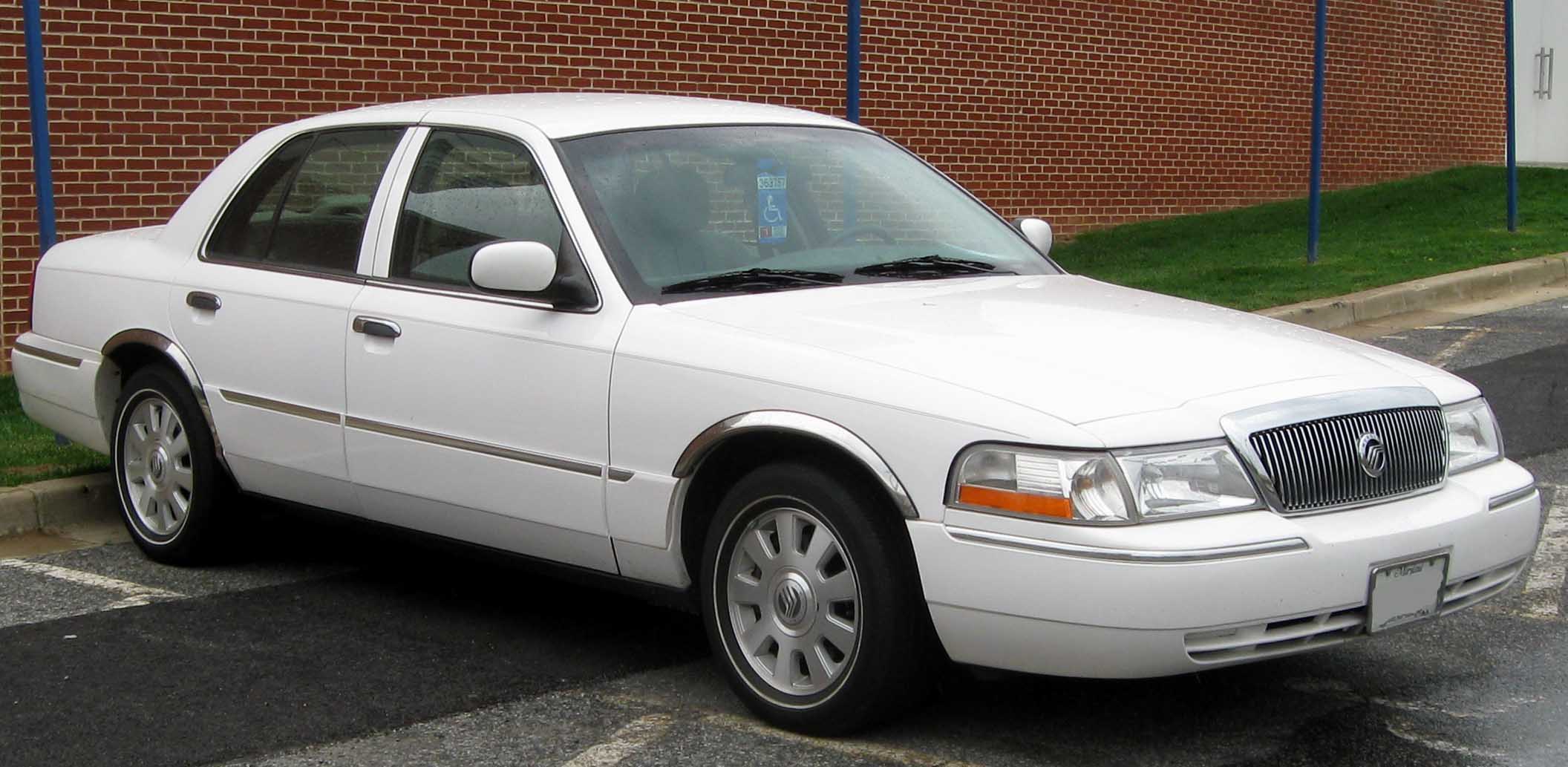
"Maybe it was a Caprice or a Marquis, something similarly land yottish. Yeah. And when you drove in that thing, it was like being in an airplane..."
The Mercury Marquis is a big car made by Mercury, which is part of Ford. It's known for being very comfortable to drive.
The Mercury Marquis was a full-size car produced by the Mercury division of Ford, known for its comfort and smooth ride, often compared to other large sedans of its time.
"...this smooth suspension very smooth designed in the late 70s, early 80s."
Smooth suspension means the car's system that helps it ride over bumps is designed to make the ride feel very comfortable and not bumpy.
Smooth suspension refers to a vehicle's suspension system designed to absorb bumps and provide a comfortable ride, minimizing the impact of road imperfections.
"Perhaps the protagonist gets a Jeep Willie or one of the ones that Ford built"
Ford is a well-known car company in the United States that makes many types of vehicles, including trucks and sports cars. They're famous for models like the Ford Mustang.
Ford is a major American automotive manufacturer known for producing a wide range of vehicles, including trucks, SUVs, and cars. The brand has a rich history and is recognized for models like the F-Series trucks and the Mustang.
Select text to request an explanation
Welcome back to the podcast that runs on most of its cylinders roughly half the time to all
the cars I've loved before, your authoritative podcast on automotive nostalgia, where every
car tells a story and every car has a culture.
You know what time it is?
It's time to plug in dust off and get a little grease under the fingernails and slip
on that favorite car-themed shirt.
I think all Doug owes is car-themed t-shirt, much to the chagrin of the people around him.
You at least wash them, right?
Yep.
It is ending up being a big part of my wardrobe.
Yeah.
And, you know, hey, we got to feed the beast.
Okay.
So what is on the shirt?
I see some sort of wrench plus guess wrench.
What did you say?
So this is...
Oh, yeah.
Yeah.
Wonderful Father-Daughter episode, which we...
Depending on when you hear this, it may or may not be out in its entirety, but certainly
there are clips on YouTube and elsewhere with Caroline and James, H.H. Wheels Productions.
So huge fan, wonderful.
Got some...
Bought some merch from them.
They threw in some stickers and some other things.
So Caroline and James, H.H. Wheels on YouTube.
Great show.
A lot of fun.
Very high production values, wildly entertaining and wonderful people and very funny.
I would like to welcome back...
What about your shirt?
What about my shirt?
Oh, yes.
Yes, sir.
We are not quite ready to introduce the man of the hour, but it will make sense
here.
I'm wearing a U.S. Army t-shirt for a couple of reasons.
Let me intro or say hello to listeners over the past five days in the United States and
around the world.
We'll talk a little bit about this shirt.
Ask you how our guests came into your life and chat a little bit about today's trivia
question as well as my choice of shirts.
So welcome back to those listening over the past week here, Ashburn, Virginia,
not far from Washington, D.C., where Doug's about an hour or so from that.
Now I lived right outside of the Beltway for years and years, Culver City, California,
Wichita, Kansas, Denver, and north of the border, Quebec.
So that's a good segue.
As we mentioned, we are heard around the world.
Welcome back to listeners in France, Italy.
We had a few downloads in the Russian Federation, as well as Sweden, Israel is back on the
map, and our listeners in Bangladesh.
So Bangladesh, I think, was interestingly one of the first places where we were heard
internationally.
So again, welcome back.
If you would like to learn more about us, carslove.com, C-A-R-S loved.com.
Doug is Doug at carslove.com.
I'm Christian at carslove.com.
So the shirt I'm wearing here is a tribute to, firstly, my son who was he in season
three, season two or three.
I just can't remember.
We're pumping these out.
I think season three, I believe.
Yeah.
Season three, I want to say midway through the season.
Correct.
And so he's in the Army Reserve, as well as going to college right now.
And we were texting a little bit before the show, and I told him, hey, we're having
a special guest on tonight, who is a writer who wrote this book that I'm holding
up.
It's called Jeep Show a Novel, a trooper at the Battle of the Bulge.
And it's Robert B. O'Connor, who's our special guest today.
But Doug, before we hear from the man himself, how did Bob come into your life?
Yeah.
Well, Bob came into our collective lives as his book came out.
I want to say the end of last year, but we'll confirm that with Bob.
And his assistant reached out, saw and heard about our podcast and thought he'd be a great
fit.
Bob and I talked on Zoom for a little bit.
And I agreed 100% and, you know, so excited.
He's actually what our second author, right?
But our first author's got like a vehicle in the title, right?
I think Brian was our first author.
Yeah, but then T is for Turbo.
Oh, yes.
Yes.
We've had a lot of writers, a lot of content, a lot of creative people.
So before we hear Bob's voice, I'm going to throw this out there.
Quiz question for the day.
What was a post-World War II surplus vehicle that came in a box, and I don't mean an Amazon
box people.
I mean a big crate.
This huge thing would show up.
What was it, Bob?
Jeep Willy.
That's right.
Welcome to the show.
Listen to that voice.
We're so proud to have you here.
Thank you for being our guest today and making a little bit of time.
I'm so pleased to talk with you guys and your listeners.
So pleased.
Amen.
Thank you.
So Doug, I know you want to get into the some of the questions with Bob here.
But when Doug sent me this book, and I don't know how exactly you guys came into contact,
but Doug sent this to me and said, you got to read this book.
I'm going to hold it up.
And we'll kind of probably snippet this and put this on YouTube.
And we actually read a lot for the show, and I read constantly anyways.
And I picked it up, and when did you send this to me, Doug?
Like maybe a month or so ago, and I thought, I got a month ago.
Yeah.
I got a lot going on.
I read it first.
Bob sent it to me.
I read it.
I sent it to you.
So this book has been loved on a little bit, people.
And I got it, and I thought, oh, wait a minute, we have this guy on in a few
weeks.
I'm always juggling a few books.
Let me tell you something.
When this book sets the hook, it is a page turner, and it happens pretty quickly.
And I just mowed through it.
I thought it was wonderful, and I'd been so excited to have Bob on the show.
So let's start there, Bob.
How did you get the idea for Jeep Show?
And this is available on Amazon or Bookshop.org.
Bob will tell you more, but how did you get the idea for this book?
Christian, I was researching a book about the American Circus, a non-fiction book.
And I learned about a circus promoter named Jim Hetzer, promoted circus
promoter in the 50s and 60s.
I called his daughter to learn more about him.
Jim is gone, I'm afraid.
And she told me about his career as a circus promoter and told me about the
circus, and then she said, by the way, you probably don't know, but my dad was an
enlisted entertainer in World War II, Military Occupation Specialty 442.
And I said, no, I didn't even know that there were MOS 442s enlisted entertainers.
And she said, yes, not only that, but he did Jeep shows,
which were shows done at the front lines for Combat Infantry.
And his Jeep show squad leader was Mickey Rooney.
Now, some of your listeners may be my age and know who Mickey Rooney was.
But for your younger listeners or even your middle age listeners, probably,
I should just say that Mickey Rooney was the number one worldwide box office
star of 1939.
He was a giant moneymaker for MGM Studios.
And so she told me this.
And I said, oh, my goodness.
And she said, by the way, my older, my aunt Mabel, his older sister,
saved every letter he wrote home from training camp and from the European
Theater of Operations.
So I was like, oh, my goodness, primary sources.
And I said, well, can I come down to Dallas and read those letters?
You know, I'll put on archival gloves and a mask.
She said, oh, don't worry.
We published them in a book and it's on Amazon.
So I got the book and talked further with her and basically got the story
of this one soldier's actual experience as an MOS442, an enlisted entertainer.
I decided to make it fiction because I wanted to involve the character
in the Battle of the Bulge, which was, as many of your listeners may know,
which the Battle of the Bulge fought in late 1944, early 1945 in and around
Belgium and Luxembourg and the German border was the largest battle ever
fought by the United States Army and was a pivotal battle in the end
of World War Two.
So that's how I stumbled upon it.
It was too good a story to ignore, too good a story to ignore.
So so I abandoned my circus book and and and wrote Jeep Show instead.
I can add Christian and Doug, I have since talked to many, many
World War Two historians, many women who make their living studying
World War Two, and I've talked to many, many, many World War Two buffs.
And none of them have ever heard of the enlisted entertainers.
And, you know, which we've talked about, Mickey Rooney was already famous
when he became an MOS442, but some of the other names will surprise you.
These were at the time they were in the army, you know, 20, 21 year
old men with some talent, but Mel Brooks was an MOS442.
Oh, I read about that.
Yeah, in his autobiography.
Ah, yeah, yeah, yeah, yeah.
I read his autobiography a couple of years ago.
I was surprised. I didn't know that I didn't.
I haven't read that. I'm so glad to hear that.
That he's nominal. Yeah.
Sammy Davis, Jr.
Was a MOS442 Burt Lancaster, Dick Van Dyke and many, many other.
So it was it was an unusual combination of talents that were,
you know, about a hundred of these soldiers doing this job.
But several of them went on to be stars.
Now, how did they let it?
Well, one of the things how did Mickey Rooney get that close to the front line?
So when you say entertainment, I think USO big shows in green zones.
Jeep shows very different story as close to the front as they could possibly.
How did how did that happen?
How did they allow that?
Well, well, two things.
One, I will just talk about, you know, one thing I admire about Mickey Rooney.
By late 1943, he was under some pressure to enlist
as as all the young men his age were.
He could have honorably served at Hal Roach Studios.
10 minutes from his house in Hollywood, making films for the Signal Corps.
And Lieutenant Ronald Reagan served honorably there for some reason.
And I have my theories.
But for some reason, Mickey Rooney decided he wanted to go whole hog.
He wanted to get far away from Hollywood.
He was living a disillusioned and wild personal life there.
Yes. And so he he joined.
The the morale corps and, you know, once you're.
Yes, he was a star and he did get special treatment.
But once you're in the army, you are under orders.
So this morale corps came over to Europe thinking
they were going to be doing a fairly large show.
It was called Hip Hurray.
It had army actors and it had the army army soldiers in the band.
And they thought they were going to be, you know, put in Paris
after Paris was liberated and be doing this show.
But the American army in this after the breakout of Normandy
in the summer of 1944 moved so fast across France
and right up to the German border that the frontline combat soldiers
were not getting any entertainment or any morale boosting thing.
A very successful Broadway director, Joshua Logan,
who was a captain in the morale corps, was in the army,
came up with the idea of putting three
of these entertainment soldiers in a Jeep with a driver,
driving them to just behind the front lines
where the combat soldiers would be back for a hot meal,
maybe a uniform exchange and put and having these three soldiers
put on what essentially was a small vaudeville show.
You know, they would one of them would usually play an instrument
in the book that that is Wes and he plays an accordion.
They would do they tell jokes.
They do impressions.
They'd sing and dance and they would always, always
pull a soldier out of the audience and have him, you know,
his buddies, they'd ask in his buddies, yeah, Jimmy, you know,
he he does a great Edward G. Robinson impression or he's a great singer.
And they would always pull a guy out of the audience
and have him perform for his buddies.
So that's how Mickey Rooney got with the sniper
and artillery range.
And, you know, I have no indication he ever tried
to quit that or get out of it.
I'm full of admiration.
Of course, his his private life in Hollywood was so wild
that this probably just seemed like like just another risk.
Yeah, just another chapter.
And if you can imagine and you allude to it in the book,
I think you call it out explicitly.
But for those who may not know, Mickey Rooney
was could sing like the greatest popular singers
could tell a joke like the greatest popular
comedians he could act.
He could he was a triple quadruple quintuple threat.
He could do it all dance.
Yeah, I mean, this guy could do it all.
And to your point, I like what you have here.
The book is interspersed with quotes.
And the one right after the author's note here,
which effectively serves as the introduction is morale
is to the material is three is to one.
That's by Napoleon Bonaparte.
And the reason for that is is you're given the guy.
And you do a great job during the book of just how miserable
it is at the front.
You're cold, your feet are wet, you can't dry out,
you can't warm up. Yeah.
And and you're either bored or terrified.
You're either bored or terrified.
Absolutely, absolutely.
And you mentioned the letters and the letters
are interspersed here throughout the book.
And I just want to read something real quick here.
This is from the authors forward here.
At some point, I learned that one of Jim
Hetzer's daughters had published a collection of his letters home,
Mabel's Letters.
The book gave me so many ideas, I decided to write a novel.
And that that was that was a cheap, cheap show.
I also got ideas from the autobiographical
unsung valor G.I.
Story of World War Two by Akely Lynn Harrison,
which is one of the people the book is dedicated to.
And you say I'm full of admiration for both men.
So how closely are the letters embedded in the book?
What you read at her house?
I use them as inspiration.
I certainly was able to, you know, I'll give you an example.
There was a letter about the troopship over to Europe
and how uncomfortable it was.
And so I wrote a chapter in the book
and put the main character, the protagonist on the Queen Mary,
which was used as a it was a luxury liner,
the largest, fastest ship in the ocean.
And they took during the war, it became a troopship.
Went from carrying 2000 passengers in luxury
to carrying 16000 G.I.s in not luxury.
And interestingly, my father went over to the war in Europe on the Queen Mary.
So I'm really writing that chapter
really made me feel closer to my dad.
Yeah. And OK, so that makes sense.
And so you have it dedicated to Jim Hetzer.
Yeah. Cleveland Harrison, the fellow we were just talking about.
But also there are two O'Connor's as Robert E. O'Connor.
There's George O'Connor, one US Army, one US Navy.
So, you know, hence why I'm wearing the t-shirt here.
But OK, so it was Robert O'Connor.
My dad was Robert Robert E. O'Connor.
And then my uncle George, his younger brother,
who joined the Navy at age 17, fought in the Pacific,
fought in the Pacific.
So, yeah, they both those men, of course, meant a lot to me and mean a lot to me.
So I included them with the the two men that inspired the book.
Love it. Love it.
Well, we're going to let's I'm going to toss it over to here here to Doug.
And we're going to have you climb into the climb into a
some bit of a time machine, go back in your mind to the first car you owned
and tell us what it was and a little bit about it.
Doug, do you want me to take it from there?
Yeah. Yeah, please.
The the first car I owned was a Fiat.
What was my model number?
It was 128. I thought a Fiat 128, which was essentially an economy car.
And I bought it off a old friend of mine who lived in Vermont and drove it back to
Cincinnati and quickly became acquainted with the constant electrical
problems that this model had by the smell of burning.
But it's really the plastic coating on wires burning, but it got me there.
And I had that car for about a year.
And then, unfortunately, I was driving 20 miles an hour, completely sober
on a road that really required driving 10 miles an hour.
And I hit a tree and total and total that darn it.
They were tiny, weren't they?
They were really small.
I mean, it wasn't like the those miniature cars we see now.
I mean, it was a, you know, I think you could fit four people in it.
But but it was relatively small.
And in fact, one of my memories of it was I took it to a very good Italian
American mechanic, Shade Tree.
He did he did work in his own yard on the weekends.
And the first thing he did was take an old spark plug and stick it
in the hose that went from the catalytic converter
and it increased the acceleration dramatically.
I'm not recommending that.
And I think the statute of limitations is over.
But that's one of the things I remember.
Yeah. And just I was looking at that car.
So was it if you recall, was it a sedan or a coup?
It was a it was a sedan.
It was a sedan.
And in fact, I coming back to Cincinnati on an airplane, I met my bosses.
I worked at Procter & Gamble, a very honorable company.
And I met my bosses, bosses, boss on the airplane back.
And he asked me for he asked me if I would give him a ride home from the airport.
And of course I said yes.
But I was halfway there.
I had to explain to him what that smell was.
Yes, it's not my burning wire close, sir.
I have bathed recently.
It's really the car.
Yeah, you know, that could have been a need for a promotion.
He calls your boss ultimately brings it.
We got to get this guy's great.
But yeah, we can't have this guy driving around in this fight to move him up
to an alpha or something.
Well, something worked.
Yeah. So so this is one of our newer questions, which I love.
Asking people and you have one of the greatest answers in our preamble.
Was there song, a tape, a CD radio station that comes to mind when you think
about that Fiat, that yellow 1973 Fiat 128 sedan?
Yes, as I said, I bought it off a friend in New England and drove it back to
Cincinnati along with the car.
I think he gave me a couple of cans of 10 W of 40 motor oil and a tape,
a cassette tape.
This is in, you know, 1979, a cassette tape of Linda Ronstad's greatest hits.
It was the only tape I had.
So I listened to Linda Ronstad's greatest hits about twenty two times
on the way back front.
And I tell you what, talk about geniuses.
Linda Ronstad doesn't get old.
Even Oh, a voice of an angel.
Yes, of an angel.
So talented.
So talented.
And in a fine person as well.
Very cultured and very humble.
Yeah. And those, yeah, those were the days where you couldn't find a radio station,
especially if you're moving between states because you're driving.
Yes, you do.
And probably even had to flip that tape over.
Oh, yes, of course, of course.
Yeah. So and that's a Linda Ronstad, right?
You probably needed a break from her after that.
For like, yeah, I took a couple of years off, but that's all it took.
That's all it took.
And it's still a good memory because you're you're smiling about it and laughing.
Oh, absolutely.
So so we mentioned the reliable reliability of the Fiat.
And unfortunately, it was destroyed due to an accident.
You were safe.
But what was the replacement car for the Fiat?
I bought a Volkswagen Jetta.
And was, you know,
you know, I'm and I didn't tell you this before so that you'd let me on to the show.
But and I have found the show to be, you know, obviously,
I listened to several episodes and found that it would be very interesting.
But I would have said before I'm a point A to point B guy, not a car guy.
Although that is changing a little bit now that you've made me think about think about things.
So I found the Volkswagen Jetta.
It was a two door sedan, probably 1982 model.
I found it to be very satisfactory.
Yeah, yeah.
And that and that's where they were.
And just just looking that generate was the first generation of the Jetta.
Yeah, had a nice shape, don't you think?
Yeah, I actually do like it.
This the sedan and and the coupe and introduced in 1979 at the Frankfurt Auto Show.
So and built at the Wolfsburg plant in Germany.
So yeah, really, really neat car and good for the time.
Stick shift as well.
Stick shift as well, of course. Yeah.
Yeah. And there's it.
Yeah. There's a there's a good story.
Story there.
Or I think you're you're just a stick shift guy going all the way forward,
including your current car.
Yes, in in 2004.
Oh, the second car that I told the total then walked walked away from was
a 1995 Crown Vic Interceptor.
And maybe some of your listeners have bought a second hand police car.
I did.
And it and was really, really like that car
and was hit by a fellow who fell asleep on the way home
from his job baking wonderbread through the night.
So that car was totaled and
I can't remember why, but I went and bought a brand new car,
which was kind of a, you know, part hard to do.
But maybe because I'd just been in an accident, I don't know.
And I bought a 2000 in 2004.
I bought a Honda Accord four door, five speed manual.
And I told myself when I bought it, you know, I will drive this car for
it says I'm buying a new car and you know, I'll drive this car for 20 years
and and then, you know, I'll I'll sell it if it's still around.
And the 20 years past last August and I'm keeping it.
I love that car and and and, you know, it has paid for itself
several times over. Absolutely.
It's also fun to drive.
You know, it's fun to find it.
It responds. It, it, you know, the the trains, it's smooth.
And it's got some pickup, especially when you downshift.
You know, it's got some really nice pickup.
And as I was telling Christian, you'd think with the mileage on it,
I only drive to church once a week.
But, you know, I I worked out of a home office for a while
and that so it's only got 150,000 miles on it.
So I'm expecting at least another 10 years if if I can find tires for it.
Yeah. Well, just just make sure you keep it clean
and waxed in your new climate, where you're living in the the Midwest.
Big change with salt.
Ah, yes, because Memphis, Tennessee, where I lived until three weeks ago,
not only do we not have salt on the roads, we do not have trucks
that come out and plow the road.
So once every, I don't know, two and a half years when it snows,
just everybody just stops every three days.
Yeah. That's yeah.
Christian Christian got snow for the first time in forever.
And it was a record snow in Pensacola.
Oh, my God.
Yeah, I live in the panhandle of.
Yeah, we didn't get into that with Bob, but I live in the panhandle of Florida.
Doug Doug lives in the Mid-Atlantic.
I lived in the D.C. area for 20 years, which is how we met.
But yeah, yeah, down here in Pensacola, that that thing happened.
We we broke a record that had stood since 1895 or something.
And it it was actually the snowfall was perfect
because it started snowing the second half of the day.
Everybody went home, stayed home.
I mean, we're talking for nobody.
A lot of people here, a lot of kids had never seen snow in their lives.
But it was perfect.
It snowed for a day.
It stopped.
Everybody made their snowmen and then it just started.
And then the temperature just zoomed right back up and we and it was gone.
And like you're saying, if it snows not that often,
there's no reason to pay for a fleet of trucks.
With their fleet of salt spreaders with with your mouths and tons of salt.
Exactly, I think so.
Just just shut everything down a bit, but Doug is right.
I bought a car recently from I shouldn't get into the story.
All right, let's just send it back to Doug.
I won't even open a painful can of worms.
OK, no, it's it's a it's a good story.
So, yeah, you know, just thinking back about the Crown Vic and on one
of our previous episodes with James McCray, my friend from high school,
he had a Chevy Caprice and it could have doubled as a police car.
And he he wears Stetson, as I recall,
and he would I think he had the big intent on the back.
And he got through some speed traps back in the day.
I will say that this was a point.
This was a white this was a white Crown Vic.
So, you know, an unmarked car, but it did have search lights on the front.
And if I pulled into a 7-Eleven,
the parking lot of the 7-Eleven would empty within about two minutes.
And also, did you notice that when you were driving on an interstate,
everybody runs up on you, going and immediately settles down to 60.
I forgot that is absolutely right.
And I did get stopped a couple of times by
real police who wanted to make sure that I didn't have a light, you know,
that I wasn't didn't have some light under them
because apparently, you know, some bad people will do that impersonating an officer.
Yeah. Yeah.
And then after they figured that out,
then they would marvel at the giant size of this crowd.
I think it was a 95 and, you know, it was it was about a block long.
Yeah. Yeah.
But yeah, growing up, my my buddy's
good friend, God, I'd forgotten about this until you mentioned it.
Maybe it was a Caprice or a Marquis, something similarly land yottish.
Yeah. And when you drove in that thing,
it was like being in an airplane, you know, like a little bit of turbulence.
But, you know, this this smooth suspension very smooth designed
in the late 70s, early 80s.
And those they use those those body on frame vehicles for ever.
They made so much, you know, designed in the Reagan era for sure.
How long did you have that crown vic for before the unfortunate accident?
I had it for about nine months before it was before it was totaled.
The guy that hit me went to the hospital.
He did not look like he was going to die,
but he was staggering around and bleeding out.
And I just stepped out of the I had never been hit in the chest by an airbag before.
So that is kind of a, you know, it gets your attention.
You're a little bit, you know, you're a little bit shocked.
But basically, I got out and walked over to the guy's car to see what's
going on. And when the ambulance came for the guy,
the ambulance guy looked at my car and said, yeah, I I understand why you walked away.
Yeah.
It's a wonder he wasn't hurt worse.
Yeah. But there there you are.
Well, he kind of glanced.
He hit me over the right headlight.
He didn't hit me right in the center of my giant motor.
You know, he glanced.
He hit me over the right headlight.
So I think that's what saved him.
Yeah. Yeah. For sure.
Oh, yeah. Before we go much further, Doug always likes to ask people about
their dream car. So what would your dream car be?
What would you love to have?
Yeah, 1940.
I think it's a forty three Jeep Willie.
Jeep and Ford, most of both, excuse me, Ford and the Willie Motor Company
made between them using the willies plans made six hundred and fifty thousand
jeeps during World War Two.
For your listeners in the Russian Federation, about two hundred thousand of them
were sent to Russia as part of what was called Lend-Lease.
Really? Where we were before the war,
we were supplying the Brits and the Russians with much needed war material.
And the Jeeps became quite a favorite with with with the Russians.
And so, yeah, I would.
My dream car would be a fully restored
nineteen forty two Jeep Willie.
And what I would do, Doug, is I would I would also look for an appropriate trailer.
There was a trailer, you know, that was made to fit that Jeep.
And I would fill it with books with my book and I would go cross country.
Oh, wow.
Stopping at bookstores and I would only call them like the day.
But so I'd be leaving Portland, Maine and I, you know, I'd call,
you know, I'd call somewhere in New Hampshire and I'd say I can be at your
store tomorrow, get on the phone and drive across country and and do that.
So Jeep nineteen nineteen forty two model Jeep Willie.
Well, you know, there's always one for sale and I'm just thinking about our listeners.
So our listeners go to Jeepshowbook.com.
If you want to find Bob, Bob might be interested in your.
Yeah, yeah, absolutely.
He's going to give it a good home and it's going to live on full of books.
Yes. And probably be part.
I make presentations to veterans groups about these enlisted entertainers.
And, you know, I could drive the Jeep into some of these auditoriums.
Yeah. So yeah.
Yeah. So I put it to I put it to work.
And what a perfect segue because it was we wanted to ask you.
About important causes to you.
So I know you just tipped it a little bit,
but there's actually you're donating some money per book sale.
Yeah. To Shield and Stripes.
Please tell us a little bit.
There's an organization, a very
questionable organization called Shield and Stripes, and they help
veterans and first responders.
And of course, as you well know, many, many first responders are also veterans.
They help veterans and first responders with mental health and physical health
and counseling in a very intensive program.
And I met these guys and was so
impressed and that I wanted to support them.
And, you know, given that the book is about the army,
I just felt that that was an appropriate thing to do.
I will tell you, I told them I will donate a dollar per copy sold to Shields and Stripes.
I said I would donate all the profits from the sale of the book,
but a dollar per copy is way, way, way more.
All right. All right.
So Shields and Stripes, I'm proud to be helping them in my small way.
And, you know, in my opinion, and of course, thinking of your son,
Christian, you know, we cannot do enough for our veterans.
We cannot do enough for our veterans.
And I wanted to do something.
Lovely. Thank you for that.
That is perfect.
And let's just call that out.
Shieldsandstripes.org.
Again, Shieldsandstripes.org.
That's the the organization that that that Bob mentioned just now.
So, yes, we ramp down here and guide the podcast gently.
I have one. I have one more.
I'm sorry, we can't let Bob off the show without asking him what his follow up
to the Jeep show is going to be.
Well, you're listening.
He can share.
Yeah, I know I'm happy to.
I'm working on a sequel.
I don't know what motor vehicle will be the center of attention.
Perhaps perhaps the protagonist, you've given me an idea.
Perhaps the protagonist gets a Jeep Willie or one of the ones that Ford built
as a surplus purchase in 1947 because they were sold to the general public
for about a thousand dollars after the war.
There were many extra.
So it may be Jeep centric, but but I do want to send the the protagonist to
college on the GI Bill.
Love that several million, about six million GIs went to college on the GI Bill,
who would like my dad, who would not have gone to college without the GI Bill.
So I want to explore that.
In the meantime, the protagonist's wife, who is a much more talented
entertainer than he is, will be will be working in New York.
So I I've started the sequel.
Thanks for asking, Doug.
Yeah, well, they love me.
You know, is it fair to call your book historical fiction?
It is not only fair.
It is completely accurate.
Yep. I I could not get enough of that book.
Just the amount of detail.
And just what of what was going on in France and what they were
seeing and, you know, unfortunately, coming across some really
just horrific scenes, right?
But the detail was so well done.
Yeah. And I like you mentioned the troopship of their trip on the way over here.
You have a gift for describing things.
I felt like I was right there in the car.
I felt like I was on the deck.
And then when they when they went over this book just kind of I wasn't
expecting it, it became this I was locked in, man.
It was a page turner.
I couldn't get enough and I just mowed through it.
So hey, go ahead.
I wanted to, you know, one reason I made it
fiction is I, you know, there is brilliant nonfiction books about all aspects of World War Two.
I wanted to reach some people who likes, you know, who need a story.
Yes. You know, who and so in this story,
which I, as you can tell, I dramatically over researched.
But but that gave me a wealth of details to choose from.
You know, someone who is not going to read
of nonfiction about what it was like to be in the army and fight in Europe in
World War Two will come away with some understanding of what that was like.
Right. Right. Yes. Right.
I love that. Yeah.
That's a good point.
I've heard that every Jeep tells a story as well.
There you go. There you go.
New book. Hey, I have another book idea for you.
And this one's free, Bob. OK.
OK. Here's a little historical fiction for you.
Two lifelong, buffoonish friends start a podcast about cars.
OK. You think you can take that prompt from there?
I have no idea who we're talking about.
Christian, I can tell you that will never sell.
That will. Oh, my gosh.
The perfect punchline.
We can't end it any better than that.
Thank you for the perfect end.
He is Robert B. O. Conner.
The book I'm holding it up is Jeep show.
You have to get it. Page Turner.
There's so many wonderful.
This is the confluence of so many wonderful things.
See something that's not quite right? Our annotations are AI-generated and can sometimes miss the mark.
Click the flag icon on any annotation to suggest a correction.
Report incorrect info
Suggest better explanations
Flag missing cars
More from To All The Cars I've Loved Before: Classic Car Restoration, JDM, and Automotive History