
What is next for the Supercharged LS Humvee? Sent and Bent #73
About this episode
The crew updates the status of their supercharged LS-swapped Humvee, explaining why it’s currently undrivable after a tree strike stripped the pitman arm and left the steering dead. They also discuss recurring front-axle/CV failures caused by excessive suspension travel under power, with plans to fix the geometry (possibly centering the front diff). A major highlight is a visit from Go Fast Campers’ Graham, sparking ideas for a custom, oversized Humvee “wagon” camper with a massive roof tent, plus lighter, travel-friendly tent concepts and even GFC promo setups on their limo.

Chevrolet Corvette
"...73. Today we are talking about the future of our Corvette supercharged swapped Humvee and I have an update ..."
The Chevrolet Corvette is a sports car built for fast driving. People talk about it a lot because it has strong performance from the factory, and it can also be heavily modified for even more power. In this episode, it’s mentioned in connection with a big custom build.
The Chevrolet Corvette is a high-performance American sports car known for its powerful engines and track-focused design. In a podcast context, it may come up when discussing future builds or unconventional projects—especially when paired with major modifications like forced induction or engine swaps. That kind of discussion highlights how the Corvette platform can be adapted for extreme performance goals.
supercharged swapped
"Today we are talking about the future of our Corvette supercharged swapped Humvee and I have an update to last week's podcast"
They’re describing a custom engine swap where the new engine is also supercharged. A supercharger forces more air into the engine, usually making more power, but it can be harder on the rest of the car.
“Supercharged swapped” means the vehicle has had a different engine installed (“swapped”) and that engine is equipped with a supercharger. A supercharger increases intake air pressure, which typically boosts power but also raises stresses on drivetrain and cooling systems.
pitman arm
"I clipped a tree with the passenger front tire... and the pitman arm is stripped. So I took when that happened, I just took an impact out there and tightened the crap out of that nut"
The pitman arm is a steering linkage part that helps turn the wheels when you turn the steering wheel. If it gets stripped (damaged), the steering can feel dead or not respond.
The pitman arm is part of the steering linkage that converts the steering box’s motion into movement of the tie rods. If it’s stripped, steering can become loose or ineffective, which matches the episode’s “steering doesn't do anything” symptom.
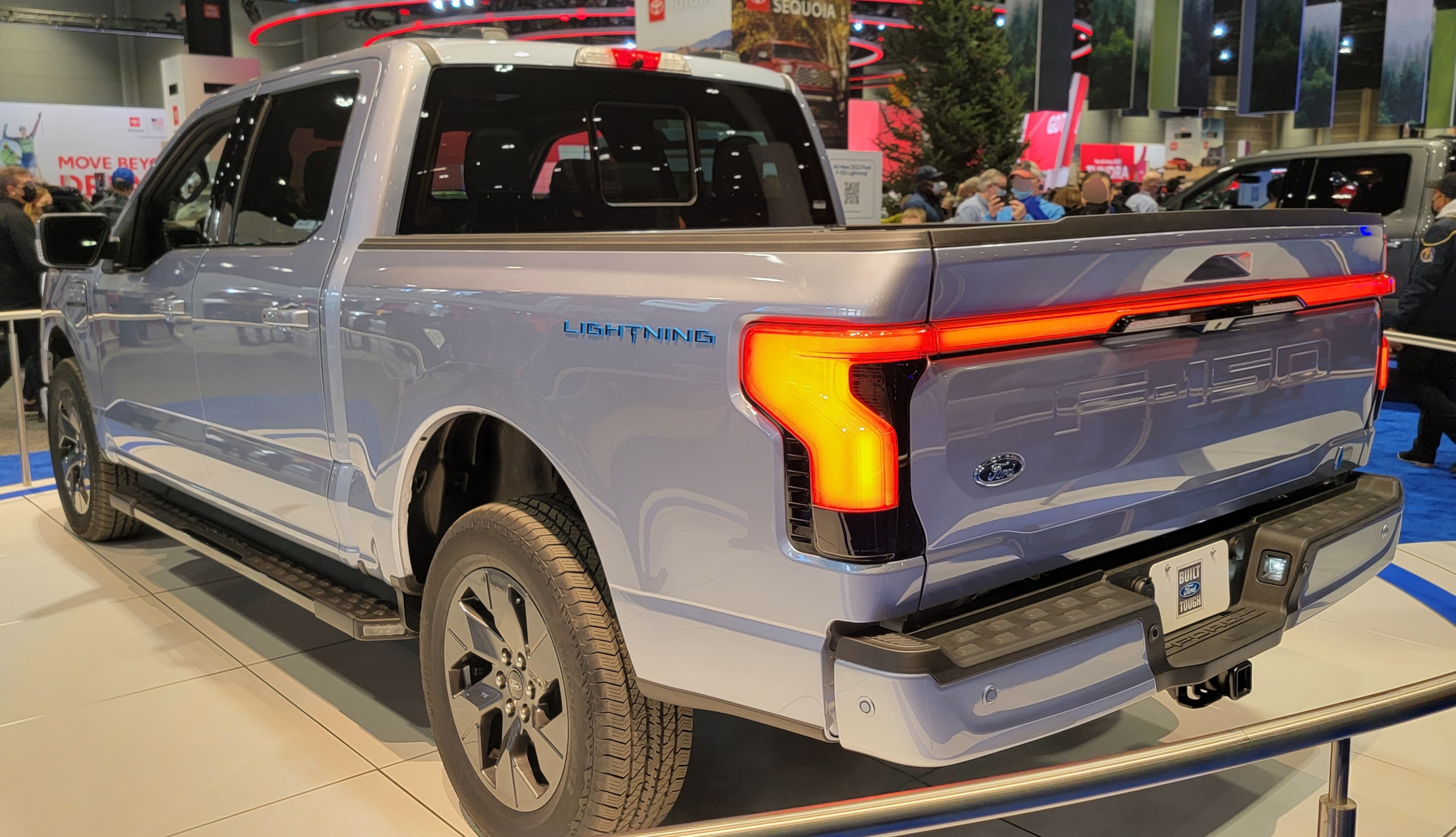
F-150 Raptor
"...ent to drive it the other week with the with the Raptor giveaway winner and the steering doesn't do anyth..."
The Ford F-150 is a large pickup truck used for everyday driving and work. In the episode, the host is talking about how it drives, including how the steering feels. That’s useful if you’re trying to understand what it’s like to live with.
The Ford F-150 is a full-size pickup truck that’s commonly discussed because it’s widely used and available in many configurations. In the podcast context, it’s brought up around driving impressions—specifically steering feel—during time with a Raptor giveaway winner. That makes it relevant for understanding how the truck behaves in real-world use, not just on paper.
suspension travel under power
"Basically every time you do anything where you have suspension travel under power, it just pulls the axle out of the CV cup"
This is when the car is still driving (using power) while the suspension is moving a lot. That can stress the drivetrain parts more than normal and cause them to break.
“Suspension travel under power” means the vehicle is applying torque while the suspension is moving through its range. That combination can increase forces on axles and CV joints, making failures more likely if angles or clearances aren’t correct.
CV cup
"it just pulls the axle out of the CV cup or pulls the CV out of its cup and just blows up."
A CV cup is part of the CV joint area where the axle end sits. If the suspension moves too far, the axle can pop out of that joint and get destroyed quickly.
A CV cup is part of a constant-velocity (CV) joint assembly that the axle end seats into. The speaker describes the axle being pulled out of the CV cup during suspension travel under power, which can rapidly destroy the joint/axle.
front diff
"I probably what I'll do is try to center the front diff so I can use the same length axles."
The front diff is the gearbox that sends power to the two front wheels. Moving/centering it can change axle lengths and angles so the CV joints don’t get pulled apart.
The front diff (front differential) is the gear unit that splits torque between the left and right front axles. The speaker plans to “center the front diff” to use the same length axles, which implies packaging/positioning changes to correct driveline geometry.
short side axle
"So the problem is the short side axle. Anyway, yesterday Graham, the owner of go fast campers stopped by for a visit"
A short side axle is the shorter axle on one side of the front drivetrain. If the lengths/angles aren’t right, the CV joints can be stressed and fail more easily.
A “short side axle” means one axle is shorter than the other, usually due to differential offset, steering geometry, or packaging constraints. Unequal axle lengths can complicate CV angles and travel, increasing the chance of joint separation if the setup isn’t dialed in.
Go Fast Campers
"Anyway, yesterday Graham, the owner of go fast campers stopped by for a visit and we were talking about all sorts of things"
Go Fast Campers is the company building the camper setup for this vehicle. They’re talking about making a custom, larger version of the camper than what they normally build.
Go Fast Campers appears to be the specialty camper builder involved in the Humvee project. The speaker discusses a custom “massive sized go fast camper set up,” implying this company’s standard camper design will be scaled up.
roof tent
"Like it probably be like a hundred percent bigger. So such a big roof tent. You could sleep sideways in it."
A roof tent is a tent that sits on top of your vehicle. When you get to camp, it opens up so you can sleep up off the ground.
A roof tent is a tent mounted on top of a vehicle that typically opens (“pops up”) for sleeping. It’s popular for overlanding because it keeps occupants off the ground and can be deployed quickly at camp.

Humvee
"Like that literally sideways because the Humvee is seven feet wide. So even if you're six foot tall, yeah, you could sleep fully stretched out across the roof tent."
A “Humvee” is a big, boxy military-style vehicle people often customize for off-road and overlanding. Here, they’re talking about building a custom camper/roof tent on top of it, and even how you could sleep sideways because it’s so wide.
“Humvee” is the common nickname for the military HMMWV (High Mobility Multipc Vehicle), now often used in civilian builds and custom projects. In this segment, it’s the base vehicle for a custom roof-tent and camper setup, with dimensions (like being about seven feet wide) driving how the sleeping layout would work.
GFC
"...putting like a regular GFC in the bed of it. And for people who don't know, go fast campers makes like a combination truck bed camper slash roof tent setup."
“GFC” is shorthand for the Go Fast Campers setup they’re talking about. They’re considering putting one on a limo and then adding more camper units on top.
“GFC” here refers to Go Fast Campers’ camper/roof-tent system. The speaker is discussing putting a “regular GFC” on the limo and then adding additional roof tents, which is essentially stacking multiple overlanding modules on one vehicle.
Bozeman, Montana
"...they're all super high quality made in Bozeman. Like they CNC machine all of their parts in house."
They mention Bozeman, Montana because that’s where the company is based and where the camper parts are made. It’s just background on where the gear comes from.
Bozeman, Montana is mentioned as the location where Go Fast Campers manufactures its parts. For listeners, this provides context that the brand is built around a specific regional manufacturing footprint and likely small-batch customization.
CNC machine
"...they CNC machine all of their parts in house."
CNC machining is a way of making parts with machines that follow computer instructions. It helps the parts fit together more accurately.
CNC machining is a manufacturing process where computer-controlled tools cut parts to precise shapes. When a company says it CNC machines parts in-house, it usually implies tighter tolerances and repeatability for fitment on vehicles.
double pop top
"...because the roof's all rusted out. So we could just cut the roof out and then have a double pop top"
A “pop top” is the part of a roof tent that lifts up when you set up camp. “Double pop top” means you’d have two lift-up sections, so you could sleep more people or get more space.
A “pop top” is a roof-tent mechanism that lifts upward to create sleeping space. “Double pop top” implies two pop-up sections or tents, which increases sleeping capacity but also adds complexity and weight to the roof structure.
blow by
"[325.7s] head gasket or whatever is wrong with it. Yeah. I mean, it's yeah, the blow by it's head gasket's fine. [381.1s] Oh, yeah. It just smolders a lot because of all the blow by."
Blow-by is when gases that should stay in the cylinders leak down into the engine’s crankcase. It usually means the piston rings aren’t sealing well anymore.
“Blow-by” is combustion gases escaping past the piston rings into the crankcase. It often indicates worn or damaged rings, cylinder wear, or poor sealing, and it can lead to oil contamination and reduced engine efficiency.
40 inch tires
"[351.1s] in a 5,000 pound Humvee with 40 inch tires. Didn't that Corvette have like a hundred and thirty thousand miles? [359.3s] Right. Just over a [366.5s] hundred, like a hundred and two."
They’re running huge tires. Bigger tires make the vehicle harder to move, and they can put more strain on the drivetrain.
“40 inch tires” indicates very large off-road tires, which increase rolling resistance and can change gearing feel. Bigger tires also increase load on the drivetrain and can affect how quickly the engine reaches boost under throttle.
Seaco parts
"[374.3s] still run and drive just fine. It just has a lot of blow by and it still makes a lot of power actually. Oh, yeah. It just [381.1s] smolders a lot because of all the blow by. But so yeah, that would be really cool. We can put the doors that we got from [388.7s] Seaco parts and we put the doors on there and fix a few things and then get it."
“Seaco parts” is mentioned as the source of doors used on the Humvee build. This is relevant because sourcing used parts is common in custom fabrication projects, and door fitment/condition can affect how clean and functional the final build is.
Gambler
"[429.5s] could do the same thing with the limo except with two of them. It'd be amazing. Wow. Is there any chance we do that before gambler? [437.3s] I don't think so."
“Gambler” likely refers to the Gambler 500, a well-known off-road endurance-style event where teams drive and modify vehicles. The timing question suggests they’re trying to finish the custom build before the event.
desert racing one
"[463.4s] a new version of it. Okay. That's that desert racing one that's in that one that he had on that. [470.4s] that's I don't I don't remember. He didn't tell me any specifics that are like could be given away."
The speakers connect the “super light” tent to a prior “desert racing” version, implying a product lineage optimized for desert use and likely for lighter weight and easier setup. That matters because roof-mounted gear needs to be light, stable, and quick to deploy.
overland vehicle
"...with a camper that's cab height overland vehicle. Yeah, an overland."
An overland vehicle is meant for road trips into more remote places. It’s set up to handle rough conditions and carry gear so you can camp or travel farther without help.
An overland vehicle is built for long-distance, self-supported travel—often on rough roads or remote routes. The key traits are ground clearance, durability, and the ability to carry camping or recovery gear.
rally track / pond situation
"...aside from milling some lumber, working on the rally track slash pond situation and you know, finishing my bed made out of boulders."
They’re talking about a place they’re working on for driving and filming, including a pond. Water and mud can be rough on vehicles, so it usually means extra attention to protection and maintenance.
A rally track/pond setup suggests they’re building or modifying a course area for driving practice and filming water-related scenes. For vehicles, these kinds of environments can increase exposure to mud/water, which affects cooling, sealing, and corrosion risk.
mini jet boat
"Yeah, we really got to get the mini jet boat going again... I got to pull the engine... and then replace a bearing..."
A mini jet boat is a small boat that pushes itself using a jet system. It still needs maintenance on the moving parts, especially anything inside the drive area.
A mini jet boat is a small watercraft that uses a jet propulsion system rather than a traditional propeller. Jet boats are popular for shallow-water use and maneuverability, but they still require careful maintenance of the drive components (like bearings) and the intake/housing.
bearing
"...I got to pull the engine which is a process and then replace a bearing which may or may not be a big process. I haven't looked at how damaged the housing is where the bearing was."
A bearing is a small part that helps moving parts spin smoothly. If it’s worn or damaged, the system can start vibrating or fail, so it often needs to be replaced and the surrounding parts checked.
A bearing is a rotating component that supports a shaft and reduces friction so parts can spin smoothly. In a jet boat, a damaged bearing can cause vibration, overheating, or failure, so replacing it and checking the housing condition is critical.
Request an Explanation
Heard something you'd like explained? We'll add it to this episode.
Sign in to request explanations for terms you heard.
Want to learn more?
Browse our glossary for plain-English explanations of automotive terms, jargon, and concepts.
Help improve this episode
See something that's not quite right? Our annotations are AI-generated and can sometimes miss the mark. Click the flag icon on any annotation to suggest a correction.