
Exploring the concept of 'people's cars,' this episode delves into what defines a car for the masses. The hosts discuss iconic models like the Ford Model T, Volkswagen Beetle, and Citroën 2CV, highlighting their cultural significance and transformative impact on society. They debate the characteristics that make a car a true people's vehicle, including affordability, practicality, and long production runs. The conversation also touches on modern contenders like the Tesla Model 3 and the Ford F-150, examining how these vehicles fit into the evolving landscape of automotive history.
Dan Prosser and Andrew Frankel discuss cars of the people. From the Mini and Fiat 500 to the VW Beetle and Citroën 2CV, great peoples' cars have the power to changes the lives of millions, and even entire societies, in ways no other kinds of car ever could. But what are the comment traits of peoples' cars, why do they so often become cultural icons, and what is the future of the peoples' car?
Use coupon code pod20 at checkout to get 20% off an annual subscription to The Intercooler's online car magazine for the first year! Listen to this podcast ad-free, and enjoy a subscriber-only midweek podcast too. With a 30-day free trial, you can try it risk-free – https://www.the-intercooler.com/subscribe/
Find out more about JBR Capital here – https://www.jbrcapital.com
Use coupon code Ti10 to get 10% off your Supernatural Car Care order – https://supernaturalcarcare.com/
"... know what we're talking about. The sort of Honda CRVS, Toyota RAV 4s, you know, those sorts of cars"
The Honda CR-V is a type of car called a crossover SUV, which means it's a mix between a car and an SUV. It's popular because it's reliable, has a lot of space for passengers and cargo, and is good on gas.
The Honda CR-V is a compact crossover SUV that has been a popular choice for families and individuals alike since its introduction in the mid-1990s. Known for its reliability, spacious interior, and fuel efficiency, the CR-V has consistently ranked high in its class and is often discussed for its practicality and versatility.
"...Toyota RAV4s, you know, those sorts of cars..."
The Toyota RAV4 is another popular SUV that many people like because it is practical and comfortable. It's a good choice for families and has a strong reputation for lasting a long time.
The Toyota RAV4 is a compact SUV that combines practicality with a comfortable ride. It is known for its durability and has a strong reputation for resale value.
"job to >> So what the Model T did was So this is, you know, this came out in th..."
The Ford Model T is one of the first cars that regular people could afford to buy. It changed how cars were made and helped a lot of people get around.
The Ford Model T, produced from 1908 to 1927, is often regarded as the first affordable automobile, making car ownership accessible to the masses. Its assembly line production revolutionized the automotive industry and is a significant part of automotive history.
"...the Austin 7 is not as great a car as the Model T because it reached a far smaller audience. But over here in its own way um and you know at a later period I think the the Austin 7 came out..."
The Austin 7 is a historic car that was made in the early 20th century. It was important because it was one of the first cars that many people could afford to buy and drive.
The Austin 7 is a small car produced by the Austin Motor Company from 1922 to 1939. It is often considered one of the first affordable cars in the UK, making car ownership accessible to a broader audience.
"horsepower, something like that.
They were good for about 28 miles an hour."
Horsepower is a way to measure how powerful an engine is. The higher the horsepower, the faster and more powerful the car can be.
Horsepower is a unit of measurement for power, commonly used to quantify the power output of engines. It helps consumers understand how much performance they can expect from a vehicle.
"I mean they might keep up with a Citroën. Um but not much more. But again, back then"
Citroën is a car brand from France that makes different types of vehicles. They are known for their unique style and technology.
Citroën is a French automobile manufacturer known for its innovative designs and engineering. The brand has produced a variety of models that are popular in Europe and beyond.
"Uh yeah. I mean the Volkswagen literally car of the people. Volkswagen."
Volkswagen is a car company from Germany that makes many popular cars, including the Beetle, which was designed to be affordable for everyone.
Volkswagen is a German automotive manufacturer known for producing a wide range of vehicles, including the iconic Volkswagen Beetle. The name translates to 'people's car' in German, reflecting its original intent to provide affordable transportation for the masses.
A 'people's car' is a type of car that is made to be cheap and easy for regular people to buy and use. The Volkswagen Beetle is a famous example of this idea.
The term 'people's car' refers to a vehicle designed to be affordable and accessible to the general public. It was originally coined in Germany to describe the Volkswagen Beetle, which aimed to provide reliable transportation for everyone.
Ferdinand Porsche was a car designer from Austria who created the Volkswagen Beetle and later started the Porsche car company, known for fast and luxury cars.
Ferdinand Porsche was an Austrian automotive engineer and founder of the Porsche car company. He is best known for designing the original Volkswagen Beetle and establishing the Porsche brand, which is famous for high-performance sports cars.
The Volkswagen Beetle is a small car that was made to be affordable and practical for everyone. It has a unique round shape and is very famous around the world.
The Volkswagen Beetle is a compact car that was originally designed in the 1930s as the 'people's car' by Ferdinand Porsche. It became one of the best-selling cars of all time, known for its distinctive shape and reliability.
"...Toyota was saying, 'Oh, no, we've made more Corollas, but they haven't. They've made more cars called Corolla.'"
The Toyota Corolla is a compact car that has been very popular for many years. It's known for being dependable and good on gas, making it a favorite for many drivers.
The Toyota Corolla is one of the best-selling cars in automotive history, known for its reliability and efficiency. It has been produced in various generations since its introduction in 1966.
"spent the whole rest of the podcast talking about 2CVs. >> Sorry, everyone."
The Citroen 2CV is a small, simple car from France that was made for many years. It's known for being cheap to buy and easy to drive, making it popular with everyday people.
The Citroen 2CV is a classic French car produced from the late 1940s to the 1990s, known for its simple design and practicality. It became a symbol of French motoring and is celebrated for its affordability and efficiency.
"...we're talking about the Citroën 2CV uh which another car like the Beetle which was designed before the war but only went into produ..."
The Citroën 2CV is a small, economical car from France that was very popular after World War II. It was designed to be affordable and practical for everyday use.
The Citroën 2CV is a classic French car known for its simple, utilitarian design and affordability. It was produced from 1948 to 1990 and became an iconic symbol of post-war France.
"...it was so advanced, you know, flat four engine, fully independent, interconnected suspension..."
A flat-four engine is a type of engine where the cylinders are laid out flat, which helps make the car more stable and easier to handle.
A flat-four engine, also known as a boxer engine, has its cylinders arranged horizontally in two opposing banks. This design lowers the center of gravity, improving stability and handling.
"...fully independent, interconnected suspension, um four-speed manual gearboxes..."
Fully independent suspension means that each wheel can move up and down on its own, which helps the car ride better and handle corners more effectively.
Fully independent suspension allows each wheel to move independently of the others, improving ride quality and handling by allowing better contact with the road.
"...four-speed manual gearboxes when most cars had three..."
A four-speed manual gearbox is a system that lets you change gears manually, with four different options to choose from, giving you more control over how fast you go.
A four-speed manual gearbox is a type of transmission that allows the driver to manually select from four different gear ratios, providing more control over the vehicle's power and speed.
"... think of the sort of today's Rena 5 the electric Renault 5 and you and I have said many times that one of"
The Renault 5 Turbo is a sporty version of a small car from the 1980s that was made for racing. It's known for being fun to drive and has a unique look.
The Renault 5 Turbo is a high-performance version of the Renault 5 hatchback, produced in the early 1980s, known for its rally heritage and distinctive styling. It is celebrated for its fun driving experience and is a favorite among car enthusiasts.
"...one of the very earliest hatchbacks and it's conceived on the same principles as the Rena 4. Um you know very softly sprung..."
A hatchback is a type of car that has a back door that opens up, making it easier to put things in the trunk. It's a popular choice for families because it offers more space and flexibility.
A hatchback is a car design featuring a rear door that swings upwards, providing access to the car's cargo area. This design is often more practical for everyday use compared to traditional sedans.
"...two-cylinder engine designed by Aurelio Lamprey who designed the 4 and a half liter V12 that powered Ferrari to its first ever Grand Prix victory. Um, yeah."
A two-cylinder engine is a small engine with two chambers where fuel burns to create power. It's usually found in smaller cars or bikes and can be more fuel-efficient than larger engines.
A two-cylinder engine is a type of internal combustion engine that has two cylinders, which can provide a balance of power and efficiency. These engines are often found in smaller vehicles or motorcycles.
"...that powered Ferrari to its first ever Grand Prix victory. Um, yeah."
A Grand Prix victory is when a car wins an important race in a series called Formula 1, which features the fastest cars and best drivers in the world.
A Grand Prix victory refers to winning a prestigious motor racing event, typically part of the Formula 1 series, known for its high level of competition and historical significance in motorsport.
"...her in Italy and we had some BMW I think it was a 528 or something like that in the 1970s."
The BMW 5 Series is a fancy car that is known for being fast and comfortable. It's a popular choice for people who want a nice car for both work and fun.
The BMW 5 Series is a line of executive cars known for their blend of performance, luxury, and technology. Since its introduction in the 1970s, it has been a popular choice for those seeking a premium driving experience.
"The 124 I mention which is a sort of 1960s saloon because this became a car of the people in a completely different way to almost all the others"
The Fiat 124 is a small car made by the Italian company Fiat. It was popular in the 1960s and 70s because it was affordable and useful for many people.
The Fiat 124 is a compact car produced by Fiat from the 1960s to the 1970s. It became popular for its affordability and practicality, often referred to as a 'car of the people.'
"...you know, transverse um you know, frontwheel drive. They mastered the um the whole issue of frontwheel drive. Um you with things like using constant velocity..."
Front-wheel drive means that the front wheels of the car are the ones that get the power from the engine. This setup helps the car handle better and allows for more space inside.
Front-wheel drive is a vehicle layout where the engine's power is directed to the front wheels, improving traction and interior space. This design became popular for its efficiency and handling characteristics, especially in smaller cars.
"...Um you with things like using constant velocity..."
Constant velocity is a type of joint that helps the wheels turn smoothly while the car is moving. It makes sure that power from the engine gets to the wheels without any bumps or interruptions.
Constant velocity refers to a type of joint used in front-wheel drive vehicles that allows for smooth power transfer to the wheels while accommodating suspension movement. This technology is crucial for maintaining traction and stability during turns.
"Yeah. you know, more than 5 million modern mini today, you know, the size of aircraft carriers notwithstanding."
Mini is a car brand from Britain that became famous for making small, cute cars. They started in 1959 and are still popular today.
Mini is a British automotive brand known for its compact cars, particularly the original Mini launched in 1959. The brand has a rich history and has evolved over the years, maintaining a distinctive design language.
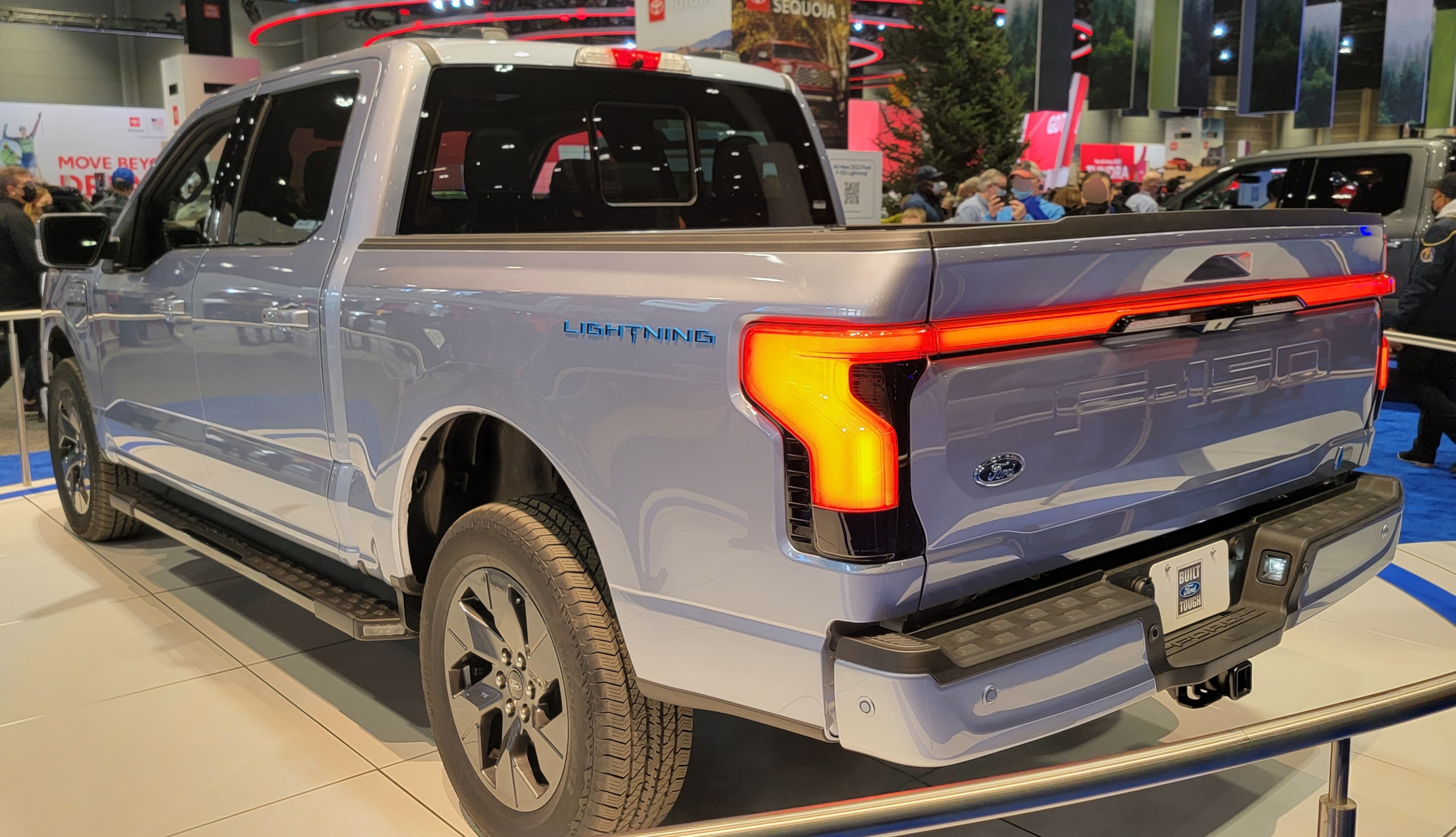
">> Go on. >> F-150. >> Oh, okay. Blime me. Yeah. Yeah."
The Ford F-150 is a very popular pickup truck that people use for work and everyday driving. It's known for being tough and able to carry heavy loads, which is why many people like it.
The Ford F-150 is one of the best-selling pickup trucks in the United States, known for its durability, towing capacity, and versatility. It has a long history dating back to the 1940s and is often discussed for its performance in both work and recreational settings.
"...over 40 million F-Series models but that was up to January 22..."
The F-Series is a group of trucks made by Ford, famous for being tough and popular, especially the F-150 model.
The F-Series is a line of trucks produced by Ford, known for their durability and capability, with the F-150 being one of the best-selling vehicles in the U.S.
">> I don't even know which model. guess is the Model 3 Tesla. >> Is a Model 3 a people's car or Model Y"
The Tesla Model 3 is an electric car that runs on batteries instead of gasoline. It's popular because it can go a long distance on a single charge and has lots of cool technology features.
The Tesla Model 3 is an all-electric sedan that has gained attention for its performance, technology, and range. As one of Tesla's more affordable models, it represents a significant shift towards electric vehicles in the mainstream market.
"...or Model Y which is I mean was it I think there was..."
The Tesla Model Y is a larger electric vehicle compared to the Model 3, designed as a compact SUV, making it suitable for families or those needing more cargo space.
The Tesla Model Y is a compact electric SUV that shares many components with the Model 3, offering more space and versatility while maintaining electric efficiency.
"a car of the people. >> Eype Jaguar. >> Oh, wow."
The Jaguar E-Type is a classic sports car from the 1960s that many people think is one of the most beautiful cars ever. It's famous for being fast and stylish.
The Jaguar E-Type, launched in the 1960s, is an iconic British sports car known for its stunning design and performance. It is often regarded as one of the most beautiful cars ever made and has a significant place in automotive history.
">> Okay. Okay. Go on. >> Half the price of a DB4 or a Ferrari 250 GT."
The Aston Martin DB4 is a beautiful sports car from the 1950s that many people admire for its style and speed. It's considered a classic and is very valuable to collectors.
The Aston Martin DB4 is a classic British sports car produced in the late 1950s and early 1960s, known for its stunning design and performance. It is often celebrated for its role in establishing Aston Martin as a luxury brand and is highly sought after by collectors.
">> Yeah. >> Car people E type Jaguar. >> Well argued. Okay. Okay. Now, I'm going"
The Jaguar F-Type Coupe is a sleek and stylish sports car that is built for speed and fun driving. It's a newer model that many car lovers admire for its looks and performance.
The Jaguar F-Type Coupe is a modern sports car that combines stunning design with powerful performance. Launched in the early 2010s, it has quickly become a symbol of luxury and driving excitement.
"could be a I don't know 12-year-old S-Class. >> Um which you can buy for buttons these"
The Mercedes-Benz S-Class is a very fancy car that is known for being super comfortable and full of high-tech features. It's often seen as one of the best luxury cars you can buy.
The Mercedes-Benz S-Class is a flagship luxury sedan known for its advanced technology, comfort, and performance. It often sets the standard for luxury vehicles and is frequently discussed for its high-quality materials and innovative features.
"...w, you talk about the Beetle, you talk about 2CV, Renault 4, Mini, Fat 500, they all did it. Certainly in the"
The Renault 4 CV is a tiny car from the years after World War II that many people could afford. It was practical and helped a lot of families get their own cars.
The Renault 4 CV is a small car produced in the post-World War II era, known for its practicality and affordability. It played a significant role in making car ownership accessible to the masses in Europe.
"use global in its most literal sense is the Toyota Land Cruiser >> okay"
The Toyota Land Cruiser is a big SUV that can handle tough roads and off-road adventures. It's known for being very reliable and lasting a long time, which is why many people trust it.
The Toyota Land Cruiser is a full-size SUV known for its off-road capabilities, durability, and luxury features. It has a strong reputation for reliability and longevity, making it a favorite among adventurers and families alike.
Select text to request an explanation
Welcome back to the Intercooler podcast
everybody. The podcast powered by car
finance specialist JBR Capital. Um this
week Andrew we are talking about cars of
the people, people's cars.
>> Um which I mean we we'll get into
exactly what they are, why they're
significant, what the best examples are.
Um I also want to talk about the future
of the people's car.
>> Oh,
>> can we just try and define what this is?
The people's car.
>> I don't think that we can. M
>> because well I think we know
instinctively what one is when one sees
it but I think certainly on the list
that I've got you know there are cars
which
get launched which you wouldn't
instinctively think of being a car the
unless you're talking about a car that
is for literally everyone but I'm
thinking more along the lines of cars
that
opened up a new motoring horizon to
groups of people.
>> Um and I can give you various examples.
There are also other cars which weren't
cars of the people when they were
launched but became cars of the people
when they became quite old um because
people couldn't have afforded them when
they were new. Um I don't know if you've
watched um our friend James May's
program which came out must be 10 years
ago called Cars of the People, but I
mean he went into this a great deal.
>> Um and it's it's it's an interesting
show and I the only thing that I have
wondered ever since is what is a car of
the person? Maybe the answer will become
clear to us over the course of the next
45 minutes or however long we're on for.
>> Oh, okay. Well, let's let's see if we
can define it at the end of the episode
then.
>> Okay.
>> Perhaps that's an interesting way to do
it. Um I think importantly they're not
just cheap little cards though, are
they?
>> No, not at all.
>> There's much more to it than that.
>> Yeah. Um I'm looking at my list now. I
I've got some Yeah, I've got I've got
well I've got something here on my list
which you might not even call a car,
>> but but it is definitely
>> a vehicle of the people which is used
for the same purpose as cars as a car
is. Um there I've got so many different
I'm really really looking forward to
this episode because I think there are
just so many different ways you can
define it.
>> And you you love a car of the people,
don't you? You own it. I can think of
two that you own.
>> Yeah, absolutely. But we Yeah. But I
think the problem is when people when
you think sort of car of the people, I
think an awful lot of people listening
to this will think that it's a
um I don't know, it's like a crossover
SUV
>> because it's one of those cars that and
and we all know what we're talking
about. The sort of Honda CRVS, Toyota
RAV 4s, you know, those sorts of cars
and they're, you know, basically they
are the most popular cars on sales now.
Um, and they, you could argue that they
qualify because these are cars that try
genuinely to do everything.
>> They got a little bit of everything in
them. They got a little bit of style.
Um, they've got a spa, you know, some
space inside them. They have an elevated
driving position. Um,
they they try to look good. Um, but to
me, those cars tend to end up as just
being terrible compromises. You know,
the ultimate sort of jack jacks of all
trades. So, I'm not really talking about
those sorts of cars. I'm talking
predominantly about cars which either
genuinely transformed the fortunes of
people on the road um when they were
new. Um or cars that are just
wonderful in their own because of their
simplicity or because of their focus um
the cleverness of their design. um which
also at the same time were cars that
were real democratizers in the way that
they just brought motoring to numbers of
people that could never have imagined
doing it before.
>> A great car of the people um plays a
significant role in society and it
changes the lives of many many people.
It mobilizes generations. Um and often
certainly in the case of several of the
examples I've got here, they become
icons in a way. They become culturally
significant. Um, and
>> can we at the end of this can we name
the ultimate
>> Yeah, I think we should
>> car or the person people.
>> I think we should. Um, so where do you
want us to do you want to try and
identify the earliest people's car?
>> Well, I I I don't think it's it's not an
original thought. Um, but it has to be
the Model T4, doesn't it?
>> I think it does. Yeah. Now, it it was it
necessarily a budget car or was it a
sort of middle class thing? Well, there
were no such things as budget cars
because people with budgets couldn't
afford cars. But what it was okay what
it
>> but it wasn't like anyone with a
not anyone was going out and buying one,
were they? It's probably a
professional's car or you know, you
needed a professional job, middle class
job to
>> So what the Model T did was So this is,
you know, this came out in the 1900s.
Um, and it was famously, although it
probably wasn't, um, it's famously known
as the first sort of mass-produced car.
Yeah,
>> you could buy before that. There were
other cars that you could buy which were
probably cheaper.
>> Um, but they weren't practical. They
weren't in any way
um, you know, they were very slow. They
weren't in any way cars that you'd ever
want to go and do a distance in. um they
were almost toys or they were just so
incompetent or required so much
maintenance or went wrong so often uh or
just so impractical in their designs um
that they were just curios.
>> Yeah.
>> The Model T was the first proper car.
You know, you could drive a Model T
pretty much as far as you would drive
any car today. Okay, fine. it would take
an awful lot longer, but if it was a new
Model T, the overwhelming likelihood is
it would get you there. So, it was, you
know, it's probably
I think you could argue that it's the
greatest single enabler of freedoms for
the human race, certainly of the 20th
century, possibly since the invention of
the wheel. Um, because before that, how
did you get about? Um, you know, you
there were trains, but trains only went
where the trains wanted to go. Um, and
there weren't that many of them.
>> And when and they were expensive. If you
had in America, you had a Model T, you
could go anywhere.
>> You could do anything. And it's not
just, you know, thinking to yourself, oh
gosh, you know, you Aunt Flossy 60 mi
away, but I could go and see her. in
terms of what it did for the way people
worked.
>> Yeah.
>> Um and the the transformative effect it
had on the American economy.
>> Um you it probably is the single most
significant car that there has been.
>> And you know even when it had been
totally outclassed and the thing about a
Model T is, you know, if you look at it
now, they are I've never driven one. Um
our friend David Tuig has one and I'm on
a promise. Um uh but they are not normal
cars to drive. Um because at the time
nobody knew what a normal what a normal
car was like to drive and where the
pedals should be and how it should
operate. And I can't remember how a
model T operates but it's very peculiar.
Um but of course at the time there was
nothing to unlearn. It wasn't really
until the mid 1920. I mean, even in the
1930s, you'd still get cars with pedals
around the wrong way, but it was being
it was really by the end of the 1920s
that the, you know, a sort of
standardized form of um
pedal arrangement and controls had been
arrived at, but back in the days of the
Model T, but you people just drove them
because they didn't know any better. And
they just
they did things that no other car had
done before. And just imagine how much
life changed for millions of Americans
in particularly when the Model T
arrived. Um,
imagine how society changed. Imagine how
our cities changed. Probably the suburbs
owe a lot to the Model T and the
subsequent people's cars because
suddenly you could live
>> 10 15 miles outside of the city and just
drive in not much time at all.
>> Yeah. And take people with you.
>> Yeah.
>> You know, go on business meetings, take
your family around. I mean, if if you
think about
the liberation that that car brought,
every single aspect of life from going
to the shops to doing business um was
just transformed by it. And can you
imagine if you didn't have one?
>> Yeah.
>> How much more limited your life would
almost immediately seem compared to
someone who did. And that is obviously
why they were such an extraordinary
success.
>> Um, so should we come back to Europe a
little bit later on perhaps?
>> Yeah. Um, well, where do you want to go
now?
>> Should we do um,
>> what should we should we do? Should we
do the sort of the British equivalent of
the Model T? Seeing as we're sort of
>> Oh, Austin 7.
>> Austin 7.
>> Seeing as we're sort of stuck in sort of
far far away, at least in terms of time.
>> Yeah. Um the Austin 7 is not as great a
car as the Model T because it reached a
far smaller audience. But over here in
its own way um and you know at a later
period I think the the Austin 7 came out
in 1925 I think about then um it had the
same effect because before then um cars
particularly in Britain were
pretty much the play things of the of
the wealthy. um or they were just
completely impractical, you know. So,
you know, in the you know, you could
have gone and bought yourself a Bentley
in 1924, but you'd need to be a
multi-millionaire to even contemplate
it. And that would get you about and it
wouldn't go wrong. But they were cars
for, as I said, the extremely rich and
for the aristocracy, and they had no
relevance
>> to the man or woman in the street. And
along comes the Austin 7, um which was
greatl looking. It was a four-seater. I
mean, quite cozy. Um, they're little,
aren't they? Yeah, they're little. And
they they only had 750 cc engines.
>> Um, three-speed gearboxes. I've driven
them. They are. They're brilliant fun
because they weigh nothing.
>> But you could, you know, you could load
up your family in them and you could
toddle off down the road and if you
lived in, I don't know, if you lived in
London, you wanted to go and see
somebody in Brighton. Um, you could do
it.
>> Yeah. Um and again over here to not such
a great extent but ne nevertheless to a
massively significant extent they
changed the way that people lived. Uh
and you know I don't think that the
Austin 7 necessarily gets enough credit
for that because we tend to sort of when
we think of cars the people and the
things that really transform things we
tend to think of cars that came out in
the 50s and 60s but it was doing it in
the 1920s. Um
and yeah I mean they they tended not to
go wrong if they went wrong. They were
very simple. They were very easy to fix
and they just kept going. I think if you
drove one now, you'd be a bit horrified
because if you drove an original 1920s
Austin 7, I think they have nine
horsepower, something like that.
>> They were good for about 28 miles an
hour.
>> Yeah.
>> Um I mean they might keep up with a
Citron. Um but not much more. But again,
back then
um compared to a horse,
>> oh my goodness, you were flying. Well,
also you mentioned London to Brighton
and we all know of the veteran car run.
Yeah. And what a
>> I mean you've done it at once, I think.
>> Once. Yeah.
>> And in in so what's the cut off? Is it
1906 or something?
>> 1904.
>> 04. Okay. So, you know, 20 years earlier
getting from London to Brighton by
automobile was a real chore, wasn't it?
>> Oh, it was a massive undertaking. A
absolutely enormous undertaking. And so
even though it is little
>> requiring an incredibly rare and
expensive car which would probably go
wrong and take forever
>> and yet spong 20 years uh and here was a
car which almost anybody certainly
anybody with a half decent job could
just go and buy and you could just get
in it and go there. It would probably
take you two two and a half hours.
>> It's a revolution isn't it? The way
people lived and worked.
>> Absolutely. And we look at it now and we
think oh you know silly old thing.
>> Yeah. But you can't you have to see it
in the context of the time in which it
appeared and it was it was
transformative.
>> Um well there's at least one more
British car that we'll come back to a
little bit later on. The people's car
but unless you want to go elsewhere I'd
like to go to 1930s Germany.
>> Uh well now I think we have to don't we
>> shall we?
>> Yeah. Yeah. Absolutely.
>> Germany under Nazi rule.
>> Yeah.
>> Um can you pick up the story?
>> Uh yeah. I mean the Volkswagen
>> literally car of the people. Volkswagen.
>> Volkswagen.
>> People's car. Yeah.
>> Yeah. Ferdinand Porsche.
>> Yeah.
>> Was commissioned to create this car of
the people. Um
>> and the Beetle was the result.
>> There are lots of photos. It's very well
documented. There are lots of
photographs out there of Ferdinand
Porsche showing Adolf Hitler plans and
models and the finished thing.
>> Absolutely. Yeah. So Ferdinand Porsche
was, you know, he was a big wheel.
>> He was a big cheese back then. I mean,
he done all sorts of amazing things. um
not least um being chief chief engineer
for the auto union um Grand Prix team
and and that sort of thing and he was
asked to do this car and it was
so the question I've often wondered
about Beatles because I have driven them
and I I can't say they're my favorite
cars.
>> Um so what was it about them and there
was no pre-war production. Um I mean
they they are essentially a postwar
>> um you know when that who was it called?
There was a British army officer who
essentially saved Volkswagen because he
went in there after the war and got
production going again.
>> Yeah. Without him, Volkswagen in its
current form does not exist.
>> Does not exist. Um but but okay, by the
you know, clever old us, but you know,
that's that's not really the point I'm
trying to make. Um Volkswag
um the timing was absolutely right. Um
and you didn't have to start from
scratch because the car had already been
developed. you could just, you know, if
you still had the tools, you could just
make the car and start selling it. Um,
there was obviously an enormous amount
of money going into Germany at the time
um to help with rebuilding the country.
And the car itself was
good enough at enough things um when
there was almost nothing else around
that did that job in that way for that
money. So you would seat four um mean
they were noisy. They were um they were
un yeah they didn't handle particularly
well. They weren't very quick. They
weren't nice to drive. Um but you could
put four people in them. You could put
the luggage in and they kept going.
>> They were very reliable. They were very
strong. They were tough cars. And that
you know if you think we think we take
it so so much for granted, don't we
these days that we're just getting cars
and they work.
>> Yeah. Um but even when I started at
autocar in the late 1980s even then it
was nothing like the given that it is
now we used to have a file auto car
which we we stopped doing in the end
because we couldn't fill it up but in
the early years it was the file was
called what went wrong and during the
course of a year every time a car broke
on us we'd write it down in the book and
at the end of the year we publish a
funny little story one of the Christmas
issues going oh this is what went wrong
which we've never told you about at the
time you couldn't do that now because it
wouldn't be very interesting because it
just it just not enough interesting
stuff would happen enough of the time to
be made to make it worthwhile. So if you
then spool back even further to, you
know, the late 40s and the early 50s
when, you know, when the Beatle was
starting to do its thing, um here was a
car that was, you know, you felt secure
in, you could put your family in and you
can go around Europe in it,
>> you know, you can go anywhere in it. And
it became massively successful. Um
starred in a few movies. Um so yeah, it
bec it was it's not anymore. It was the
best selling. It was the world's
bestselling car. Well, it might were,
but I think these things always it
depends how you measure.
>> It does. So, more than 20 million were
built and it was being manufactured
still in Mexico in 2003.
>> That's amazing, isn't it?
>> It's extraordinary.
>> Yeah. So, Toyota was saying, "Oh, no,
we've made more Corollas, but they
haven't. They've made more cars called
Corolla.
>> Yeah. And the Corollas they make today
have no bearing whatever on the ones
they used to make in the 70s or
whatever." So, yes. I mean pos it
possibly is if if you're talking about a
car which has had a continuous
production and exist existed in 2003 in
really very little different form to how
it was in I can't I don't know when it
first went on sale late 40s I guess.
>> Yeah.
>> Um then yeah it is it's probably the
most successful car has ever been. So
the Beetle is a very very good example
of a people's car and it it sort of sets
out some of the the attributes of a
people's car, right? It um built in
enormous numbers, very very very long
production run. Uh affordable um
practical. It did become a cultural
icon. Absolutely. It really is a
cultural icon that car um actually one
one point that I will make a little bit
later on is that a lot of people
people's cars raced or competed in
motorsport. maybe not as factory cars,
but they were sort of co-opted in some v
various forms of of motorsport.
>> Um, and the curious thing, of course,
about the Beetle is that it was a a Nazi
initiative initially,
yet it became a symbol of peace and
love.
>> Yeah, absolutely.
>> That's the irony of that car.
>> Absolutely. Yeah.
>> But what but why do you think Hitler was
so keen that Germany should have a
people's car? What what was the benefit
to him or to Germany?
I really don't want to say nice things
about Hitler. It doesn't it doesn't tend
to go down very well.
>> No.
>> Um
but
um I think he did understand and it's
why you know he built the road network
>> um that for an economy to be able to
thrive it has to be mobile.
>> Yeah. Um, and I think, you know, and I
think the you can't separate the cars
that got built from the roads that they
got driven on. And I think that his idea
was that you'd have this massively
mobile population that could go
anywhere, do anything. Uh, and that the
economy would um would thrive as a
result. um you know and had he not been
a genocidal homicidal maniac um you know
>> in that regard if no other
>> um it's hard to argue against
>> it is and it also demonstrates why
governments are so keen on these car or
were so keen on these cars during that
time because they wanted to mobilize
people and so they supported these
projects um they were really important
to to governments um and it's one of the
the absolute corner stones of a people's
car is that they they mobilize nations.
>> Should we do Are we skipping over to
France, do you think?
>> Well, we have to sooner or later, don't
we?
>> I should say. So,
>> uh, let's do it now.
>> Go on then.
>> Okay. So, this is where I spend the rest
of the podcast speaking so so loudly and
so quickly that Dan can't get a word. I
spent the whole rest of the podcast
talking about 2CVs.
>> Sorry, everyone.
>> Um,
but again, you know, so this was a car
that was born. So we're talking about
the Sitchin 2CV uh which another car
like the Beetle which was designed
before the war but only went into produ
production thereafter
>> and again it was a car which was
designed absolutely out of necessity. So
France, which had had this humiliating
experience, an occupation during the
war, um came out of it massively
impoverished
and the demand was there for a simple I
mean it really was designed as a sort of
agricultural tool.
>> Um it was designed as a car which was
very affordable, could essentially get
anywhere. Um carry within reason
anything. I mean, there's that famous
test, isn't there, about, you know,
basket of eggs across a plow field and
and that but that was the philosophy
behind it. It had to be a car that
worked in as broad a set of environments
as as humanly possible and it had to be
affordable and the design of the car was
just it was just genius
because it was so simple. It was so easy
um to maintain, but it was at the same
time it was so advanced, you know, flat
for engine,
>> fully independent, interconnected
suspension, um four-speed manual
gearboxes when most cars had three. um
you know so it wasn't just it was almost
like if you think of the sort of today's
Rena 5 the electric Renault 5 and you
and I have said many times that one of
the great things about this car is it's
not just greatl looking um is that
unlike so many other EVs that we've seen
recently they appear to have actually
bothered to engineer it properly and to
spend a bit of money and to invest in
making sure particular things like the
suspension work the way that it should
so you actually as a result you got a
car which isn't just get the job done
but it's actually a nice place to be
it's a nice thing to be and it's exactly
the same thought process process um that
produced the 2CV um you know a lifetime
ago and and you know people listening to
this may know I have one I've got a
fairly early car built in 1958 um and it
is utterly charming but yeah things like
you know you just I reckon if you put a
stopwatch on me I could get both sets of
seats out of my 2CV in 30 seconds
>> that fast.
>> Yeah. Yeah. I'd have to know you I'd
have to know when you're going to the y
start, but I reckon I could be sitting
on any one of the four seats in my 2CV
outside the car 30 seconds after you
after you press the button.
>> That's great, isn't it? So, you're
right. It wasn't just a very cheap, very
primitive little car. It was clever and
very thoughtfully designed.
>> Exactly. Clever. You know, you think of
cars that are sort of cheap and you
think, "Oh god, it's just going to be
horrible because it would be made out
of, you know, it would have been done
with no love at all because they would
have just been the only interest they
would have had was just making something
which functions at the lowest possible
uh quality levels and it would have just
been a piece of which you know,
>> it's not that at all. You can see from
the design, look at the thing, the care
that's gone into it, the thought that's
gone into it. Um, you know, there are
people who would have obsessed over that
car to make it as good as they possibly
could. And, you know, and the fact that
it, you know, it was designed before the
war and was still being made in the
1990s
tells you all you need to know.
>> Um, so the figures I found 3.9 million
built, but if you include all the
variants, Yeah.
>> There's a lot of them.
>> Oh, a lot of
>> nine million.
>> Yeah. Okay.
>> It's a lot of cars, isn't it?
>> It's it's it's a lot of cars. Um, I'm
guessing it must be France's most
successful car.
>> Must be.
>> Yeah. If you include the variants. Yeah.
Because the Rena 4, which arrived a
little bit later in 1961,
>> Yeah.
>> more than 8 million were built and that
was on sale until 1994.
>> Um, what was sort of significant about
the Rena 4?
>> The Rena 4 took the sort of 2CV
principle of being a well-gineered but
fundamentally basic car. Yeah. Um, but
it was more usable because, you know,
instead of having a 425 or 602cc engine,
it had I think that they did 1 1900 and
they certainly did an 1100 for it. Um,
which probably meant I mean, my car will
cruise well, yeah, my car will cruise at
about 50 if you're lucky. Rena 4
probably cruise at about 65. It's
actually a really big difference. It's a
really big difference. I mean, today is
the day is the difference between being
monstered by the trucks or not. if you
you if you happen to be on a motorway
and one um it just took less time to get
places. It was it was probably more
refined. It was just a bit more
sophisticated and grown up. Um
you'll always find whoever you talked
about these things, you'll you'll either
find people are in the 2CV camp or
people in the Rena 4 camp. I'm firmly
and will always be in the 2CV camp
because I just think it's I just think
it's cuter and clever and did it first.
Um, but I know lots of people will go,
"Well, yeah, I mean the the 2CV was
great, but the Rena 4 was the car that
kind of took those principles and
actually did it properly and produced
something which was um not just
functional, but really
practically usable for an even wider
range of purposes because you just go
further in it and take less time to get
there.
Think back to France 70 odd years ago,
rural France in particular, sparsely
populated, not much of a road network,
very, very difficult to get around. And
then all of a sudden these cars turn up,
the 2CV, a little bit later, the Renault
4, affordable,
>> the peasants cars really, and you can
buy one and all of a sudden you can get
not just to the next village, but to the
big town or the next city or you can
really travel across the country in a
way that you just couldn't before.
>> Exactly. They it really really changed
the lives of millions of people that
those two cars did and that that's one
of the key attributes of a of a people's
car.
>> Can I do a quick shout out also for the
original Renault 5 as well
>> because
>> it may not sound like much but actually
it was transformative
and it wasn't the first car with a
proper hatchback. Um you could argue
that was an Aston Martin in the mid1
1950s. Um but you know it is it is one
of the very earliest hatchbacks and it's
conceived on the same principles as the
Rena 4. Um you know very softly sprung
but very nicely done and just having
that hatchback just made it so much more
practical and so much more usable and so
much more familyfriendly. Um, I drove
one. Renaults, I think, may still have
one on their fleet which you can just if
you if you can come up with a good story
idea, you can go and drive. It's just a
base 5TL, I think. And I had one for a
week, maybe a couple of years ago. Um,
>> and it's just a lovely thing to go about
the place. So, yeah, I just wanted to
mention that as well.
>> Um, another sort of consistently all of
these cars that we're discussing right
now had very, very, very long production
runs, didn't they? They just stayed in
production for so long.
>> But there's a reason for that.
>> Yeah. In a way that cars just don't
these days. Um, and it's one reason why
there were so many of them. Can we cross
the Alps
>> or Italy?
>> Mhm.
>> Mhm.
>> Um, Fit 500
>> Dent Chos. I got one of those as well.
>> You got one of those as well?
>> Yeah. Yeah. I mean, so this sounds like
a sort of walk through my rather
pathetic accumulation of of silly old
sheds, but it's not intended to be that.
>> Um, yeah. So, uh, FIA 500. It's a city
car.
>> Yeah.
>> Um, but done with such Italian flare.
>> Yeah.
>> Um, and just really re again just
clever. Um,
>> two-cylinder engine designed by Aurelio
Lamprey who designed the 4 and a half
liter V12 that powered Ferrari to its
first ever Grand Prix victory. Um, yeah.
And designed by Dan Dante Giosa. So, I
mean, it's not if it's it's not lacking
in uh in provenence. So, you know, just
just designed and engineered by the very
best. Uh, and you know, predates the
Mini.
>> We're going to be talking about the
Mini, I'm guessing.
>> Um,
>> by a couple of years, 1957.
>> Yeah. Uh, everything at the back. So,
engine and gearbox at the back. Uh,
beautiful. Uh, an incredibly nimble,
agile, brilliant town car. But actually,
if you get them out and about, they're
just great fun to bomb about the place
in as well. Uh when I got mine, I had to
drive it from sort of Peterbr to South
Wales and I was sort of slightly
dreading the journey
>> because it wasn't very fast. I had an
absolute ball and yeah, I just I had my
one of my daughters was in the car with
me and we just plotted a cross country
route. We didn't even bother with a
road. He just stayed on the bees the
whole way and it was just so much fun.
And they I can remember well I was on
holiday with my father in Italy and we
had some BMW I think it was a 528 or
something like that in the 1970s.
Um, and he was going over the mountain
passes and we came across somebody, I
remember this so clearly, in a fear 500
>> and it was being driven so well it was
almost impossible to keep up with it in
a big BMW because he basically didn't,
you know, it was just it was just one of
those things. We going down the side of
a mountain which just hairpin hairpin
hairpin and it just didn't slow down for
any of them. He just chucked it in,
sorted it out while, you know, we were
struggling to get around it in this
massive barge by
sitting that bloke is just having the
time of his life.
>> I I was at Ferrari few years ago for a
launch and in the evening we were sat in
one of the rooms at in Marinelo having a
presentation and you just hear this all
of a sudden just hear this really
throaty sound of a car pulling up
outside and someone just went, "Oh,
that's Raphaeli Dimony, right? the the
chief test driver there in his little
his little Fiat 500.
>> Perfect.
>> So Ferrari's test driver just bombs
around Marinelo in a little Fiat 500.
>> Yeah. And if you've driven one, you'd
understand why.
>> Yeah. Yeah.
>> So cool.
>> They're really really cool.
>> Um 3.9 million of those.
>> And so actually that car makes an
important point. Often these people's
cars really reflect the character. Maybe
it's a stereotype of the countries that
they're from.
>> So the Beetle, robust, solid. Um, the
French cars, quirky, um, very simple,
very, you know, designed for the
proletariat, I suppose.
>> Um, the Fit 500, stylish in a way that
the others perhaps were not.
>> Um, I think that's a that's a consistent
theme.
>> Can I do another Fiat?
>> Mhm.
>> The 124. Is that on your list?
>> No.
>> Okay. The 124 I mention which is a sort
of 1960s saloon because this became a
car of the people in a completely
different way to almost all the others
because this was the car that was built
under license by the Russians
>> and they called it a lauder.
>> And this car became so successful I
looked it up. It ended up being built in
nine different countries.
>> Wow. God, that must be a record.
>> Don't know. Interesting. M um and so
this one design and you know it did get
changed depending on which country it
was in but essentially was it was the
same car um in sorts of it gave a
manufacturing industry to countries
which should never have had them before
um and to people in those countries cuz
they could build they could buy their
own homegrown car I mean it was a good
robust sturdy four-door saloon um and
it's another form of car of the people
isn't it because
>> you know it it wasn't
his life was not to become his destiny
was not to become famous as a fear but
it's basically started a whole other car
brand
>> um and you know fear did this quite a
lot licensing other countries nations to
build their cars um and actually made an
enormous difference to communities that
previously would never have had any kind
of way of getting mobile
um so yes that was my other fears
>> I think we need to do the mini
>> I don't I want to dwell too much on the
Mini only because I think so much has
been said about it.
>> Well, I was just sat here thinking what
do we say now?
>> Well, we know, you know, Alec Aonus and
it was revolutionary, you know,
transverse um you know, frontwheel
drive. They mastered the um the whole
issue of frontwheel drive. Um you with
things like using constant velocity
joints rather than U.J's. Um
packaging absolute miracle.
>> Um that what was so clever about it.
There was so but also they managed to do
that and somehow the car was just
terrific to drive to
>> um you know all I mean I never did cuz I
was in a 2CV but when I was growing up
all my mates drove minis
>> uh and they went bombing around the
place in them having the time of their
life and you talk about cultural icons.
I mean is there any other is there any
greater cultural icon than the Mini?
>> Is there any machine that's a greater
cultural icon than the Mini
>> machine?
There might be but sitting here having
just heard the question for the first
time I can't think of one.
>> So it's up there isn't it? It is right
up there. It is up there.
>> And talk about motorsport pedigree as
well.
>> Motorsport pedigree but also you know
film star.
>> Yeah.
>> Fashion icon.
>> Yeah.
>> Long long production run 59 to 2000.
>> Yeah. And and and and also you know a
brand and a legacy that is being milked
to this day.
>> Yeah. you know, more than 5 million
>> modern mini today, you know, the size of
aircraft carriers
notwithstanding.
Um, you know, the design language that
they use to this day is that which was
arrived at in the late 1950s at BMC.
>> Um, and and everybody of a certain age
or more, everybody has a mini story
because everybody either had a mini or
knew someone who did.
>> Yeah.
>> Everybody had got up to, you know, hair
raising antics in minis. Um,
and you know, their significance cannot
be, how could you possibly overstate
that? Yeah, you couldn't.
>> Um, and the Mini
demonstrates a very, very important
point about people's cars. Typically,
they are small, they are light, they are
simple,
>> and in most of these cases, they're
really good fun to drive.
>> Yeah.
>> Can I do one now which isn't small, it
isn't light. Oh, go on. And it isn't fun
to drive.
>> Go on. But it's arguably
the most is it the most significant
people's vehicle
of them all.
>> Are you doing Honda Cub?
>> I'm not doing Honda Cub.
>> Oh,
>> I used the word Oh, I see. No, I'm not
doing I'm not going No, no, I'm using
vehicle in in an allgether different
sense. Okay.
>> I'm in America now.
>> Go on.
>> F-150.
>> Oh, okay. Blime me. Yeah. Yeah.
America's bestselling
vehicle, the F-150 pickup.
>> It says so much about America, doesn't
it?
>> Anybody who's ever been to America will
know exactly what I'm talking about.
>> Yeah.
>> You know,
>> they're everywhere.
>> It's their best seller.
>> Um it's a it's the environment, isn't
it?
>> Yeah.
>> You know, they're everywhere because
people need them.
>> Um and and again, they
>> they work for the environment that they
are in. I mean, they'd be pretty
hopeless over here. M
>> um but in America
almost whatever you do if you work with
your hands be it in industry or on the
land you need an F-150 or something like
it and that's been going on for I don't
know when the first one came out but it
has become
a legend and rightly so because you know
we look at it and we think well really
but actually they're really affordable
and you know these days they're really
sophisticated and comfortable. I mean,
not that long ago, I found myself
driving one for a bit in America for
some reason. I can't instinctly
instantly recall, but I was surprised by
how
civilized it was and thinking to myself,
I could do a distance in this.
>> Um, and yeah, just in terms of I don't
want to dwell on it too much, but in
terms of global significance, and we're
talking about cars of the people, okay,
technically it's not a car. Um but you
can't ignore it how important it was,
how important it remains and it's just
how long it has endured for and of
course every single other manufacturer
you know be it Japanese or American now
has their version of it which in itself
is another you know if you think about
all that it inspired if you think how
many
>> cars of that type wouldn't exist had it
not been for the F-150 it's got to be
the most significant car in the world
well vehicle of any kind because
millions upon millions upon millions of
Chevrolets and Chryslers and Hondas and
Toyotas and you could go on add in item
>> a very very quick Google search and I
haven't verified this but this is the
number that came up uh over 40 million
F-S series models but that was up to
January 22 so it'll be a lot more than
that now
>> add some millions
>> and then you think of all those cars
which got built because all the other
manufacturers thought
We need an answer to this.
>> We're probably looking at 50 odd million
F- series models.
>> Yeah.
>> So, it's everything F series plus all
the cars that it inspired. We're talking
hundreds of millions of cars.
>> Yeah. So, even just the F-S series
trucks dwarf all the people's cars that
we've discussed so far.
>> Yeah. So, there you go. Massively.
>> Yeah.
>> Blimey. Yeah. That is a very, very good.
>> Can I fire one at you because I just be
really interested in your view?
>> Y.
>> Also, because I've spouted on this
subject before and got into all sorts of
trouble, but we're staying in America.
>> God, go on.
>> I don't even know which model. guess is
the Model 3 Tesla.
>> Is a Model 3 a people's car or Model Y
which is I mean was it I think there was
a I don't know if it still is but there
have been some sales charts in which the
Model Y was the bestselling car in
America.
>> Well, possibly then yeah I mean the
Model Y in particular sells in
extraordinary numbers and I think it has
been the bestselling car in the world.
>> Um so
I guess so. I mean, we have to look at
the modern world and the EV era in which
we're entering. We can't just, you know,
because I mean, yeah, you the point you
made right at the start of this is that,
you know, we have to look forward as
well as back.
>> Um, and okay, this is the present. Um,
but is it not trying to do that?
>> I I think it probably is. I mean, it is
a is it a premium car? It's a more It's
not a pure basic utility, is it?
>> No, it's not. But, you know, well, I've
got at least one car on here, which is,
I would absolutely argue all day long is
a car of the people, and it ain't it
ain't a basic utility car at all. Quite
the opposite.
>> Mhm.
>> Um, but I'll get to that in a minute.
You know, I think that
if a car brings a certain form of
motoring to an audience that could never
have enjoyed it or appreciated it
before,
>> even if that audience is not
>> everyone,
>> but it is significant and it does
something for that audience which they
could not have imagined
>> possible before that, then I think it
qualifies as a car of the people. Well,
that's why I think the current Renault 5
is a car of the people because it is
going to change the lives of millions,
well, many hundreds of thousands of
people because um it will be their first
EV. Yeah. But it it but the thing to me
about the Renault 5 is it is so
its significance goes far so far beyond
the car itself because right now
>> in boardrooms all over the world there
will be directors and engineers going,
"Oh, bloody hell." Yeah,
>> we we're going to have to raise our
game,
>> you know, because they've they've done
it properly and we never thought they
would because we thought that nobody
cared about these. We just thought that
they we just have to make them because
that's what the rules said.
>> And Renault have come along and they've
done it properly and unless we do it
properly as well, um we're going to get
our asses kicked.
>> Yeah. So that car I mean you'll never be
able to quantify it but in terms of
improving the lot of the motorist in
terms of the cars that they get to drive
in the future its significance is
incalculable.
>> Um
>> you could say the same about the Ford
Focus actually couldn't you?
>> Absolutely. Oh completely you can
absolutely say about the the Focus is
such a good example. You know it is it's
not on my list. It bloody well ought to
be
>> because everybody had, you know, focus
came out and every just went, "Oh,
>> okay. So, what do we have to do?" Um,
you know, we have to go, we have to do
some proper real suspension. Just as an
example, we just we just have to do it
properly because we can no longer flog
slickly marketed mediocrity to people
because there's now something out there
which is actually terrifyingly good
unless we rise to the occasion we're
stuffed. So yeah, good example.
>> Did you want to give another one before
I I make one of my final points?
>> Okay. So, so I' I've mentioned this car,
which is, you know, not a a car for
everybody, but to me is absolutely still
a car of the people.
>> Eype Jaguar.
>> Oh, wow.
>> Okay. Okay. Go on.
>> Half the price of a DB4 or a Ferrari 250
GT.
>> It, you know, whether it would or
wouldn't do 150 mph is, you know, is a
moot point. It wouldn't, but anyway, um
they said that it would. Um the po the
point is it brought a level of
of charm, of beauty, of performance, of
presence, of joy,
uh of pride to a bunch of people who
could never ever ever ever have imagined
being in a position to do that. Uh and
to me that makes it a car of the people.
Absolutely. Motorsport pedigree,
cultural icon, very very long production
run, built in significant numbers. Yes.
Relative to comparable cars.
>> Yeah.
>> Car people E type Jaguar.
>> Well argued. Okay. Okay. Now, I'm going
to I'm being so unfair here, but I'm
going to ask you this because I'm only
really asking Santra the answer myself,
but don't worry, it's not a difficult
question.
>> Okay.
>> Is something like a
Mulan Turbo R a car of the people?
because you can now buy them for 10
grand.
>> So it would never this question. This is
what I
>> alluded to earlier when I said there are
cars which would definitely weren't when
they were new but have become cars for
the people or maybe they haven't, you
know, but and I just used that as the
first example that popped into my head.
But there are all sorts of cars now. It
could be a I don't know 12-year-old
S-Class.
>> Um which you can buy for buttons these
days. Um and you can have as as long as
the thing actually physically lasts. You
can have a level of motoring luxury or
enjoyment or whatever um for tiny
amounts of money.
>> It's certainly a car of some people
>> of some people.
>> Not the people, but some people very
brave people.
>> But I suppose the the one thing it's
missing is that it doesn't change the
lives of a very significant number of
people. Does it? But I take your point.
>> Interesting. Yeah. Um, and so I thinking
about Cars of the People today and Cars
of the People in the future, I don't I
don't think any will quite achieve the
same status as the Mini or the Beetle or
the 2CV because cars don't have long
production runs these days. And it used
to be that the home market would really
prop up its people's car.
>> You know, you talk about the Beetle, you
talk about 2CV, Renault 4, Mini, Fat
500, they all did it. Certainly in the
UK, I we just don't prop up our own
homebuilt cars anymore. Also, the market
is too fragmented. You know,
globalization means that there are
countless countless countless
manufacturers selling cars in this
country. Um, and so there's just no
chance that one individual model will
rise to prominence like a Beetle did.
>> Yeah, you know, that's a very good
point. in the UK with we've got some
cars still being produced here, but
there are countless others coming from
the east, coming from across Europe and
goodness knows where else. And so
>> the m the market is just so fragmented
these days.
>> Yeah, I've been Yeah. Can I can I just
can I can can I mean I've got more on my
list, but
>> Go on then. Let's do them.
>> Well,
okay. The one that I would Well, okay.
There there a couple that I'd like to
do. Um, the first one,
uh, is is is undoubtedly a car of the
people. Um,
but I'm not sure that Well, I want to
drive one for a sake of curiosity. Um,
but probably not much more. The Trebant.
>> Oh, Christ. Yeah.
>> The Treby.
>> Yeah.
>> Get people going.
>> Yeah.
>> Made out of cardboard.
>> Not quite, but but it it was it was made
out of a cardboard.
>> So, this is a Soviet thing.
>> Yeah. Exactly. that you know when when
the wall came down and people went over
there they just discovered that
everybody was driving these traans
because they were
>> uh basically the only thing anybody
could afford and they were I think they
were state manufactured and
>> that's certainly a people's car
>> and there were millions and millions and
millions and millions of them but
actually the one that I wanted to
discuss in a little bit more detail um
because of its global significance and I
use global in its most literal sense is
the Toyota Land Cruiser
>> okay
>> and I use I I use that as almost a sort
of example example of a a slightly
blanket kind of turn. You can all you
you can argue that there are niss and
patrols and all sorts of pickups in
there too. What I'm I'm talking about
the cars that got people in third world
countries mobile because we know we've
talked about America and we've talked
about Europe and we talked about you
effectively you know wealthy advanced
societies
>> but actually if you go to you know deep
into the African bush and you look at
what people are knocking about into
these days
>> um you know they tend to be Japanese
um and their enduring strengths I use
the advisedly is their robustness and
the ease of their repair and something
like you know we know don't we that
sadly uh in all these places uh around
the world where uh Land Rovers used to
reign supreme and that's another example
on my list of of a car of the people
because there was a time when you know
if you lived in the middle of absolutely
bloody nowhere and had to get anywhere
you needed a Land Rover well that car
today is a Land Cruiser
>> um you know I had a
>> um I still have but he's not doing the
job anymore but I had a friend who was a
flying doctor in Australia. Um you going
out into the bush and to the most remote
parts of places. Um and you know he he
met all the people who were doctors on
the ground there. They all drove Land
Cruisers
>> because the only thing that mattered you
had to be able to you had to get there.
Turning up not sorry not turning up was
not an option. You had to have a car
that come what may was never going to
leave you at the side of the road
because not only would your patient die,
you might die too. Um, so
in the most remote parts of the world,
these are the cars that you know if we
if we recording this podcast in I don't
know somewhere like uh Rwanda or
Tanzania or somewhere like that
>> and you say when you car the people they
all just go well you know Land Rover or
some knack old Japanese pickup because
that's what they've you know that's what
they know. Those are the cars that they
owe the most to. They are the cars that
um provide their living, save their
lives, keep them mobile. Um and again,
you know, they're just not the sorts of
cars that people talk about very much,
but in terms of their the influence on
the world and the significance they have
had, they are, you know, vital.
>> Well, perhaps that's another point. Car
cars of the people suit the terrain,
don't they? And nowadays in sort of
Europe and the Western world, the
terrain is more or less the same. But in
parts of the African bush, it's not.
It's not the same at all.
>> Yeah.
>> Um, was the Land Rover a people's car?
>> Yeah. Yeah. Well, it's on my list. Um,
of course it was because it's,
you know, it was the car that um it was
the precursor to things like the Land
Cruiser and and it is such a shame that
um that advantage was was squandered.
Um, and you know, why was it? I mean, I
think it all goes just goes back to the
reputational damage that was done by all
the infighting between management and
unions um in the 60s and the 70s uh just
at the time when the Japanese were
getting their acts together. Um, but at
the time, yeah, I mean the, you know,
the the Land Cruiser, if you, sorry, the
Land Rover, if you think about,
>> you know, what you could do, you know,
they came with power takeoffs on them,
so they were, you know, they could be
used as,
>> you know, static engines in the middle
of fields. They would get you to where
you wanted to go or needed to go. They
do once you were there what you needed
them to do. And if you think about how
many were used by armies, fire services,
um, ambulances, police, I mean, they'd
be used by everybody because they were
so unbelievably versatile. And the great
irony is, of course, as we all know, the
car was only designed as a stop gap.
>> Yeah.
>> Um, it was never intended to be, it was
basically, oh we better get
something out there until we can do it
properly.
>> And, you know, from 1947 until whenever
it was, 2015, 2016, um, you know, it it
worked wonders. So now absolutely it is
a car of the people. Um it's just it's
just such such a shame that um it didn't
go on to have the influence that it
deserved all over the world because you
know the the Japanese discovered how to
do it and then just you know did it
better. Well not better because the cars
weren't nicer to drive. You wouldn't
rather be in a 1970s Land Cruiser, which
I'm not driven one, but I understand was
an absolutely terrible car in terms of
its sort of comfort and that sort of
thing, but
>> it kept buggering on.
>> Okay.
Kum 7.
>> Hater
7 or Lotus 7 or whatever. Um,
>> yes, in a very specific sort of way. Um
because to this day, if you want to have
the most fun on wheels, I was having
this conversation with someone at Bisty
um when we were up there for the
scramble week before last. Um
>> if you want to have the simplest, most
affordable form of pure motoring
pleasure, go and get a cater. And you
can buy a catering. You can buy quite a
nice catering for 10 or 12 grand.
>> Uh it won't be very fast. It won't be
very sophisticated. It might be a few
years old, but you can go out and you
can get it and you will find a level of
involvement in motoring which unless
frankly you've you've driven carts an
awful lot, you just wouldn't have
believed existed. If you grew up
thinking that, you know, a a responsive
car is a hot hatchback,
>> get into Caterum and prepared to realize
just how wrong you are.
>> Yeah. So, I mean, you could probably
make a case that a VW Golf is a people's
car. In which case, you currently own
five.
>> So, I actually it's astonishing that
we've How long have we been doing this?
Five and a half years this podcast. And
only now have we got to people's cars.
>> Five. Hang on. So, we got the 2CV.
>> Yeah.
>> The Caterum.
>> Yeah.
>> The 500. The Land Rover and the Golf.
>> Goodness me.
>> You didn't even realize it.
>> I have literally no idea until this very
moment. I didn't realize that I was such
a man of the
>> Well, we've all learned something.
>> Yeah. Me more than most.
>> Yeah. All right. Well, let's wrap that
one up.
>> Oh, hang on. Hang on. Hang on. We said
we'd name a car at the ultimate car of
the people.
>> You did. Okay.
>> Okay. What would most people say it is?
I think most people say it's the Mini.
>> Mini. Yeah, they would. Yeah.
>> Well, I think I'd say the Model T
because it was the first and everything
ultimately sprang from that.
>> Okay. I mean, there's a very strong case
to be made for the Beetle. Literally VW
Volkswagen people's car.
>> Um
>> hugely long production run, more than 20
million built. So perhaps it's the
Beetle.
>> Yeah. Okay. But as ever, no wrong
answer.
>> Take your pick.
>> Yeah.
>> Um all right. Well, listen, if you want
to listen to this podcast totally adree,
you need to become a subscriber to the
Intercooler.
>> Yeah.
>> Um and what's more, if you do subscribe,
you can also get our midweek show which
is called Ask the Intercooler.
>> We chuck in a whole other podcast.
>> There's a whole other podcast
>> which you can get involved with. You
don't just listen to it. You can you can
create its content.
>> You can
>> write us an interesting question and
we'll answer it.
>> And as a subscriber, you get full and
unlimited access to our digital magazine
where we publish new stories every day
of the working week. Um, ad free and
those are available in audio format as
well. So, I mean, even if you don't want
to read, you just want to listen, we're
putting out 10 or 12 hours of hopefully
really good quality audio ad free a
month.
>> A month.
>> That's a lot.
>> I don't know how we find the time to do
it. No, it's amazing actually. Um,
there'll be a link in the description or
just head to the-inccooler.com,
choose an annual sub and you'll be able
to get a a free trial and b you can use
coupon code pod 20 to get a 20% discount
on your first year. Um, link in in the
description. Please do do that. Uh, in
return, we'll be back with another
podcast next week,
>> and we will see you
Request an explanation for:
20 cars
Scroll for more
20 cars featured
Request an Explanation
Heard something you'd like explained? We'll add it to this episode.
Sign in to request explanations for terms you heard.
Want to learn more?
Browse our glossary for plain-English explanations of automotive terms, jargon, and concepts.
See something that's not quite right? Our annotations are AI-generated and can sometimes miss the mark.
Click the flag icon on any annotation to suggest a correction.