
What your teenage driver needs to learn and where they can learn it (if not from me then from YOU!)
About this episode
Leonard B. Lawson shares his passionate plan to teach young drivers essential skills beyond just driving—covering defensive driving, basic car maintenance, and understanding vehicle mechanics. He emphasizes the importance of educating teens on topics like tire care, brake systems, and fluid functions to foster responsibility and safety. Leonard also reflects on personal accident experiences and the dangers of distractions, especially cell phone use while driving. The episode highlights the value of hands-on learning and community involvement, including bringing in a state trooper to reinforce safe driving habits.
Email Lennie at [email protected]
road rage
"I'm going to teach them three different basic things, driver safety and trying to avoid things like road rage and you know the common ailments that are on the highways in America."
Road rage is when drivers get really angry and act mean or dangerous while driving. It can cause accidents and is unsafe.
Road rage is aggressive or angry behavior exhibited by drivers in traffic, such as yelling, tailgating, or dangerous maneuvers. It increases the risk of accidents and is a serious safety concern.
driver safety
"I'm going to teach them three different basic things, driver safety and trying to avoid things like road rage and you know the common ailments that are on the highways in America."
Driver safety means learning how to drive carefully so you don’t get into accidents. It’s about following the rules and staying calm on the road.
Driver safety refers to the practices and knowledge that help prevent accidents and keep drivers and others safe on the road. It includes understanding traffic laws, defensive driving techniques, and avoiding distractions or aggressive behaviors like road rage.
how to change a flat tire
"how to put air in your tires, how to change a flat, which I guess nobody's going to do now that we have cell phones, but I'm going to show them how anyway, certain emergency things."
Changing a flat tire means taking off a tire that has a hole and putting on a spare tire so you can keep driving safely.
Changing a flat tire involves removing the damaged tire and replacing it with a spare. This skill is important for drivers to handle emergencies when a tire puncture occurs and help avoid being stranded.
emergency kit
"I was looking on Amazon for basic emergency kits that you can keep in your vehicle and I found one. I was going to buy like 50 of them and they're like anywhere from $22 to $49 a piece."
An emergency kit is a box of helpful things you keep in your car to fix problems or stay safe if something goes wrong while driving.
An emergency kit for vehicles typically contains tools and supplies like jumper cables, flashlights, first aid items, and basic repair tools to help drivers handle roadside emergencies safely.
rear wheel drive
"I want these young people to have basic knowledge of the underside of the car and the way things work like front wheel drive and rear wheel drive and all wheel drive."
Rear wheel drive means the engine makes the back wheels of the car move. This helps with better control and power, especially in sporty or big cars.
Rear wheel drive (RWD) is a drivetrain layout where the engine powers the rear wheels of the vehicle. It is often used in sports cars and trucks for better handling and towing capabilities.
front wheel drive
"I want these young people to have basic knowledge of the underside of the car and the way things work like front wheel drive and rear wheel drive and all wheel drive."
Front wheel drive means the engine makes the front wheels of the car move. This helps the car drive well, especially in rain or snow.
Front wheel drive (FWD) is a drivetrain layout where the engine powers the front wheels of the vehicle. It is common in many cars and offers good traction in slippery conditions and efficient packaging.
all wheel drive
"I want these young people to have basic knowledge of the underside of the car and the way things work like front wheel drive and rear wheel drive and all wheel drive."
All wheel drive means the car's engine makes all four wheels move at the same time. This helps the car drive better on slippery roads.
All wheel drive (AWD) is a drivetrain system that powers all four wheels of a vehicle simultaneously to improve traction and stability, especially in poor road conditions like snow or mud.
transfer case
"What the heck is a transfer case and what does it do? So I'm going to put a, you know, well we don't sell passenger cars anymore except the Mustang."
A transfer case is a part under the car that helps send power to both the front and back wheels so the car can drive on all four wheels.
A transfer case is a part of the drivetrain in four-wheel and all-wheel drive vehicles that splits power between the front and rear axles, enabling the vehicle to drive all wheels effectively.

Ford Mustang
"So I'm going to put a, you know, well we don't sell passenger cars anymore except the Mustang."
The Ford Mustang is a famous sporty car from America that lots of people like because it looks cool and drives fast.
The Ford Mustang is an iconic American muscle car known for its sporty performance and distinctive styling. It has been in continuous production since 1964 and remains popular among enthusiasts and everyday drivers alike.
vehicle lift
"I'm going to put a small SUV up there, probably front wheel drive, put an all wheel drive up on a lift and put a truck up on a lift."
A vehicle lift is a tool that lifts a car up so mechanics can look underneath and fix things more easily.
A vehicle lift is a mechanical device used in garages to raise cars off the ground, allowing easier access to the underside for inspection, maintenance, and repairs.
drum brakes
"The difference between drum and disc brakes, I want them to know that."
Drum brakes are a type of brake where parts inside a round drum push out to stop the car. They are older technology but still found on some cars.
Drum brakes use brake shoes that press outward against a rotating drum to slow or stop a vehicle. They are less common on modern cars but still used on some rear wheels.
brake pad
"you need to know what a brake pad is versus a brake shoe. The difference between drum and disc brakes, I want them to know that."
A brake pad is a part that helps your car stop by pushing against a spinning disc to slow it down. It's important to know what it looks like and how it works.
A brake pad is a component of disc brakes that presses against the brake rotor to create friction and slow the vehicle. It is a key part of modern braking systems, especially on the front wheels.
brake shoe
"you need to know what a brake pad is versus a brake shoe. The difference between drum and disc brakes, I want them to know that."
A brake shoe is a part inside a drum brake that pushes out to stop the car. It's different from brake pads, which press on discs.
A brake shoe is a component used in drum brakes that presses outward against the inside of a drum to slow the vehicle. It contrasts with brake pads used in disc brakes.
power steering pump
"The mechanic comes up and says, hey, you need a new power steering pump. You know what most people say? How much is that? You know, they don't know what it does."
The power steering pump is a part that helps push the fluid that makes turning the wheel easier. If it breaks, steering gets harder and it might need to be fixed or replaced.
The power steering pump is a hydraulic component that pressurizes power steering fluid to assist in turning the steering wheel. It can wear out or leak, causing harder steering and requiring replacement.
aftermarket pump
"Are you going to replace it with an aftermarket pump or a factory pump? What's the difference in price?"
An aftermarket pump is a replacement part made by a different company than the one that made your car. It can be cheaper but might not work as well.
An aftermarket pump is a replacement part made by a company other than the original vehicle manufacturer. These parts can vary in quality and price compared to factory (OEM) parts.
air compressor
"I don't want their water pumps, their power steering pumps, their air compressors. No thank you. I want OEM, original equipment manufactured."
An air compressor in your car helps cool the air inside by pushing and compressing the gas that makes the air conditioner work.
An air compressor in a car is typically part of the air conditioning system, compressing refrigerant gas to cool the cabin. It can also refer to compressors in other systems but usually relates to A/C.
fuel pump
"I want a Honda air compressor, Honda fuel pump, Honda water pump. Honda oil pump."
The fuel pump sends gas from your car's tank to the engine so it can run properly.
The fuel pump moves gasoline from the fuel tank to the engine at the correct pressure for combustion. It is essential for engine operation.
oil pump
"Honda fuel pump, Honda water pump. Honda oil pump. Why do you think there's so many pumps on a car?"
The oil pump moves oil around inside your engine to keep all the moving parts slippery and cool so they don't wear out.
The oil pump circulates engine oil under pressure to the rotating bearings, sliding pistons, and camshaft to lubricate and cool these components.
fluid
"Fluid is important to your vehicle. And because it is ignored by most people, that's why they have things like power steering pumps, fuel pumps, water pumps, torque converters."
Cars need special liquids to keep parts working well and not get too hot. These liquids need to be checked and changed to keep the car running smoothly.
Fluids in a vehicle, such as transmission fluid, engine oil, power steering fluid, and coolant, are essential for lubrication, cooling, and proper operation of various components. Regular maintenance of these fluids helps prevent mechanical failure.
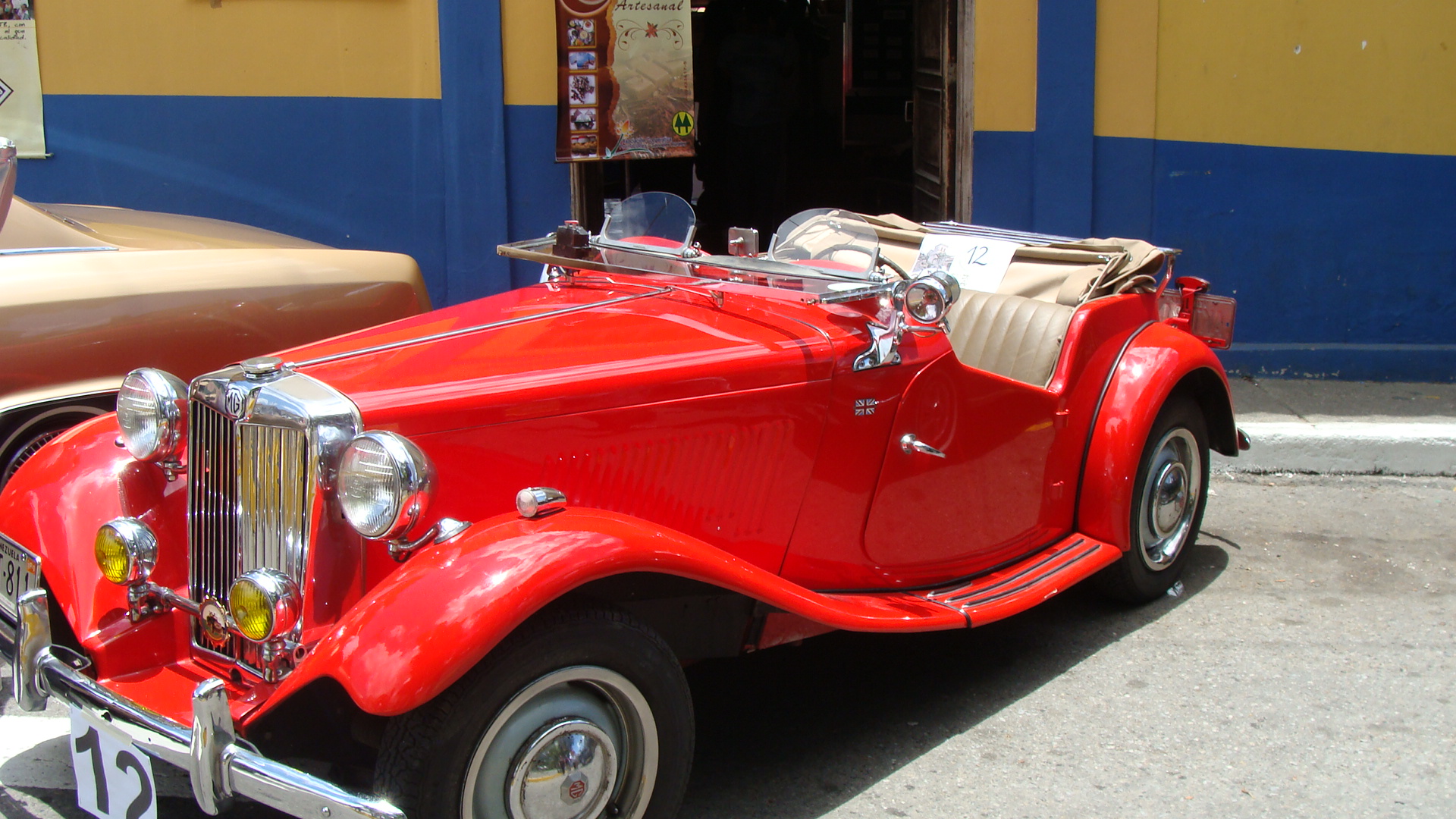
MG TD
"I'm looking at a 1950 MGTD right now. Lady in Johnson City is wanting to sell that vehicle."
The MG TD is an old British sports car from the 1950s. People like it because it looks cool and is fun to drive, even though it's very old.
The MG TD is a classic British sports car produced by MG in the early 1950s. Known for its charming vintage design and driving experience, it is a popular collector's car today.

Chevrolet Nova
"..., and I just tore the heck out of that 1974 Chevy Nova SS. It was brand new, too."
The Chevrolet Nova is a small car made by Chevrolet. The 1974 Nova SS is a sportier version that was designed to be faster and look more exciting than the regular model. It was popular with people who wanted a fun car to drive in the 1970s.
The Chevrolet Nova is a compact car that was produced by Chevrolet, with the 1974 model being part of the third generation. The Nova SS (Super Sport) was a performance-oriented version known for its sporty styling and stronger engines, making it a popular muscle car in the early 1970s. It is often discussed for its blend of everyday usability and muscle car performance during that era.
sensors
"And a modern car could have been totaled, because all the airbags and stuff going off and all the sensors destroyed. Times have changed, and that was totally my fault."
Sensors are tiny devices in cars that notice things like crashes or problems and tell the car what to do to keep people safe.
Sensors in modern vehicles detect various conditions such as collisions, airbag deployment, and system status. They help the car respond appropriately during accidents and assist with safety features.
airbags
"And a modern car could have been totaled, because all the airbags and stuff going off and all the sensors destroyed. Times have changed, and that was totally my fault."
Airbags are cushions inside cars that pop out quickly if there's a crash to help keep people safe and stop them from getting hurt badly.
Airbags are safety devices in modern cars that inflate rapidly during a collision to protect occupants from injury. They work alongside seat belts to reduce the risk of serious harm.

Volkswagen Jetta
"I can show film examples of people losing control of a car around a curve like my daughter did in a 1987 VW Jetta."
The 1987 Volkswagen Jetta is a small car made in the 1980s that many people liked because it was comfortable and didn't use too much gas.
The 1987 Volkswagen Jetta is a compact sedan known for its European styling and solid build quality. It was popular for its balance of comfort and economy during the 1980s.
360 spin
"She jerked the steering wheel, spun around 360, took out a bunch of a whole fence row and several nice trees."
A 360 spin means the car spins all the way around once, which can cause accidents or damage.
A 360 spin is when a vehicle rotates completely around on its vertical axis, often resulting from loss of traction or control. This can lead to crashes or collisions with roadside objects.
license plate tags
"And also to look at your license plate and make sure that your tags aren't expired. And then finally, look at your driver's license and make sure it's not expired."
License plate tags are small stickers on your car's license plate that show your registration is up to date. You need to renew them every year or so.
License plate tags are stickers or decals placed on a vehicle's license plate that indicate the registration is current and valid. They usually show the expiration date and must be renewed periodically.
labor rates
"Labor rates in excess in major cities of $200, $250 an hour. I mean, you just have a diagnosis."
Labor rates are the amount of money a mechanic charges for each hour they work on your car. In big cities, this can be quite expensive, making repairs cost more.
Labor rates refer to the hourly charges that repair shops or mechanics bill for their work on vehicles. These rates vary by location and can significantly impact the total cost of car repairs.
flush
"I mean, they even probably sell flushes for their headliner. Well, probably not that, but they sell flushes for everything else."
A flush means cleaning out old fluid from parts of your car, like the cooling system, and putting in fresh fluid to keep things working well.
A flush is a maintenance procedure where a fluid system, such as the cooling system, is drained and refilled to remove old, contaminated fluid and debris. This helps maintain system efficiency and prevent damage.
tune-up
"I remember when they changed the tune-up frequency on vehicles. When I first got into the business, you were supposed to get a tune-up at 22,500 miles. Now they say, well, a tune-up isn't what it used to be. It used to be basically spark plugs, spark plug wires, new points, and a condenser. Then the filters and all that stuff. Of course, when I was first doing this, all of that was probably $49."
A tune-up is when a mechanic checks and replaces parts like spark plugs to help your car run better and not break down.
A tune-up is a routine maintenance service that traditionally included replacing spark plugs, spark plug wires, points, and a condenser to keep the engine running smoothly. Modern vehicles require fewer tune-ups due to improved technology.
points
"Well, I just thought it was maybe due for new spark plugs and points. It doesn't have points on it anymore, and your spark plugs should be good for 100,000 miles."
Points were old parts in cars that helped make the spark for the engine. Newer cars don't use them anymore.
Points are a mechanical ignition component used in older vehicles to trigger the spark plugs. Modern cars no longer use points, having replaced them with electronic ignition systems.
Request an Explanation
Heard something you'd like explained? We'll add it to this episode.
Sign in to request explanations for terms you heard.
Want to learn more?
Browse our glossary for plain-English explanations of automotive terms, jargon, and concepts.
Help improve this episode
See something that's not quite right? Our annotations are AI-generated and can sometimes miss the mark. Click the flag icon on any annotation to suggest a correction.