
Why Cars Now Cost $50K (And What’s Coming Next)
About this episode
New-car pricing gets traced to global scale and regulation: China’s massive EV build-out and government backing are framed as a path to cheaper cars, while Europe’s cybersecurity rules are already reshaping Porsche’s lineup. Back in the shop, the hosts swap stories about alignment work, curb feelers, and a severely degraded clear bra on a Lotus Elise—plus why dealer access matters for modern electronics. The episode closes with enthusiast “what to do next” ideas like restomods and value track builds.
chrome wheels
"Wish me luck. See you soon. Tim Harris. Oh man, he said chrome wheels and curb what? Curve feelers, man."
Chrome wheels are wheels with a shiny, chrome-like finish. Scrapes from curbs can leave marks that are more noticeable on shiny wheels.
Chrome wheels are wheel designs finished with a chrome-like coating for a shiny appearance. Because the finish is more visually sensitive, owners often worry about scuffs and curb contact that can mar the surface.
curb feelers
"chrome wheels and curb what? Curve feelers, man. Curve feelers. What are those? I don't even know what that is. Do you? Yeah, there are these little metal like extensions that are flexible that come off the side of the car to let you know when you are getting close to the curb."
Curb feelers are little metal pieces that stick out near the side of the car. If you get too close to a curb, they touch first and make a noise so you don’t scrape or damage your wheels.
Curb feelers are small, flexible metal extensions mounted near the side of a car to warn the driver when they’re getting too close to a curb. They’re designed to contact first and create a scraping sound, helping prevent damage to wheels and wheel finishes.
wheel alignment
"You know, the shop, there's always something going on in the shop, right? We aligned a couple of Porsches this week."
Wheel alignment means adjusting the car so the wheels point in the right directions. When it’s done correctly, the car drives straighter and the tires wear more evenly.
Wheel alignment is the process of adjusting a car’s suspension angles so the tires track correctly. Proper alignment helps steering feel, tire wear, and straight-line stability.
ride height
"we had to do set the ride height as well, which is kind of a pain on a 930 turbo. We were talking about 930s last week."
Ride height is how high the car sits off the ground. Lowering or raising it can change how the car feels and handles, and it can be annoying to adjust on certain setups.
Ride height is the distance between the car’s body and the ground, set by the suspension. Changing it affects handling balance, how the car behaves over bumps, and—on some cars—can be time-consuming to adjust correctly.
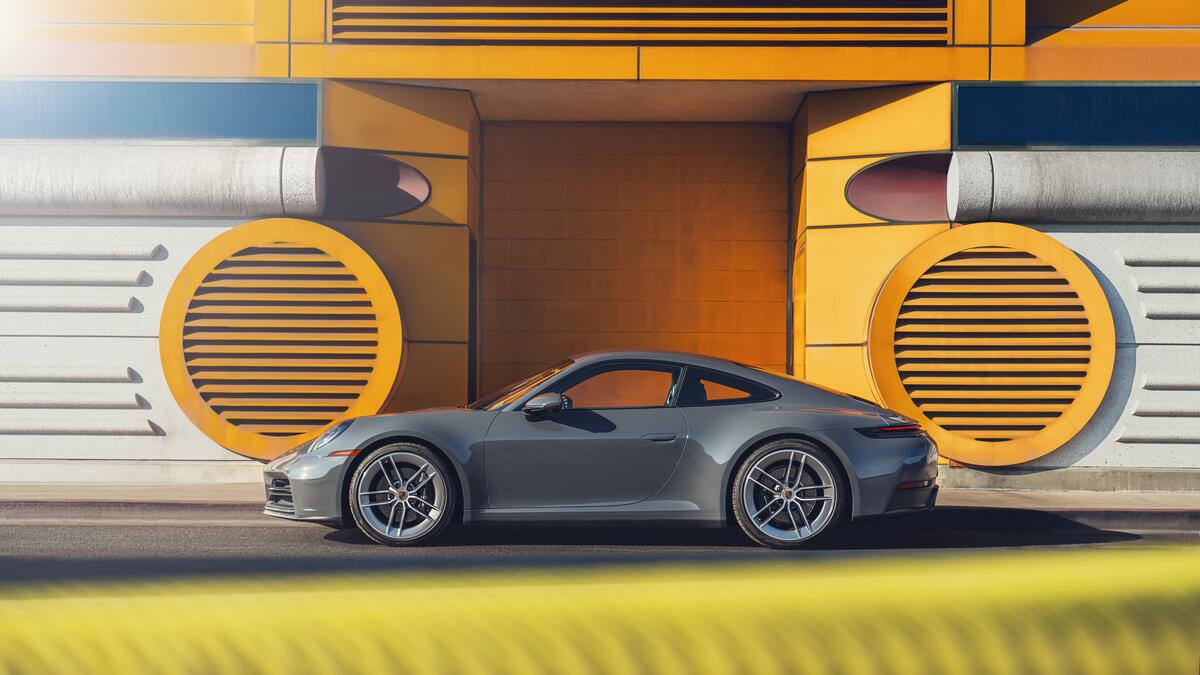
911 930S
"which is kind of a pain on a 930 turbo. We were talking about 930s last week. And so I had some strong things to say last week. You did. You did. But listen, man, you know, we're very opinionated..."
The Porsche 911 Turbo (930) is a famous older 911 Turbo model. They’re talking about how its gear ratios make it feel unusual at highway speeds, and also about how adjusting ride height on this setup can be a pain.
The Porsche 911 Turbo (930) is the classic 911 Turbo generation known for its distinctive turbocharged character and 911-era driving feel. This segment focuses on how its gearing feels—especially the “tall” ratios and the fact that many 930s are described as having a four-speed—plus the practical hassle of setting ride height.
gear ratios
"one of the things that I noticed about it was the gearing is really tall. It's been a while since I drove a 930. And the gearing was really tall."
Gear ratios are how the transmission multiplies the engine’s motion. If the ratios are “tall,” the engine turns slower at highway speeds, and the car can feel like it’s not in the right gear for the way you drive.
Gear ratios determine how engine speed (RPM) relates to vehicle speed in each gear. “Tall” gearing means lower RPM at a given speed, which can make the car feel less responsive or simply feel wrong depending on the driver’s expectations.
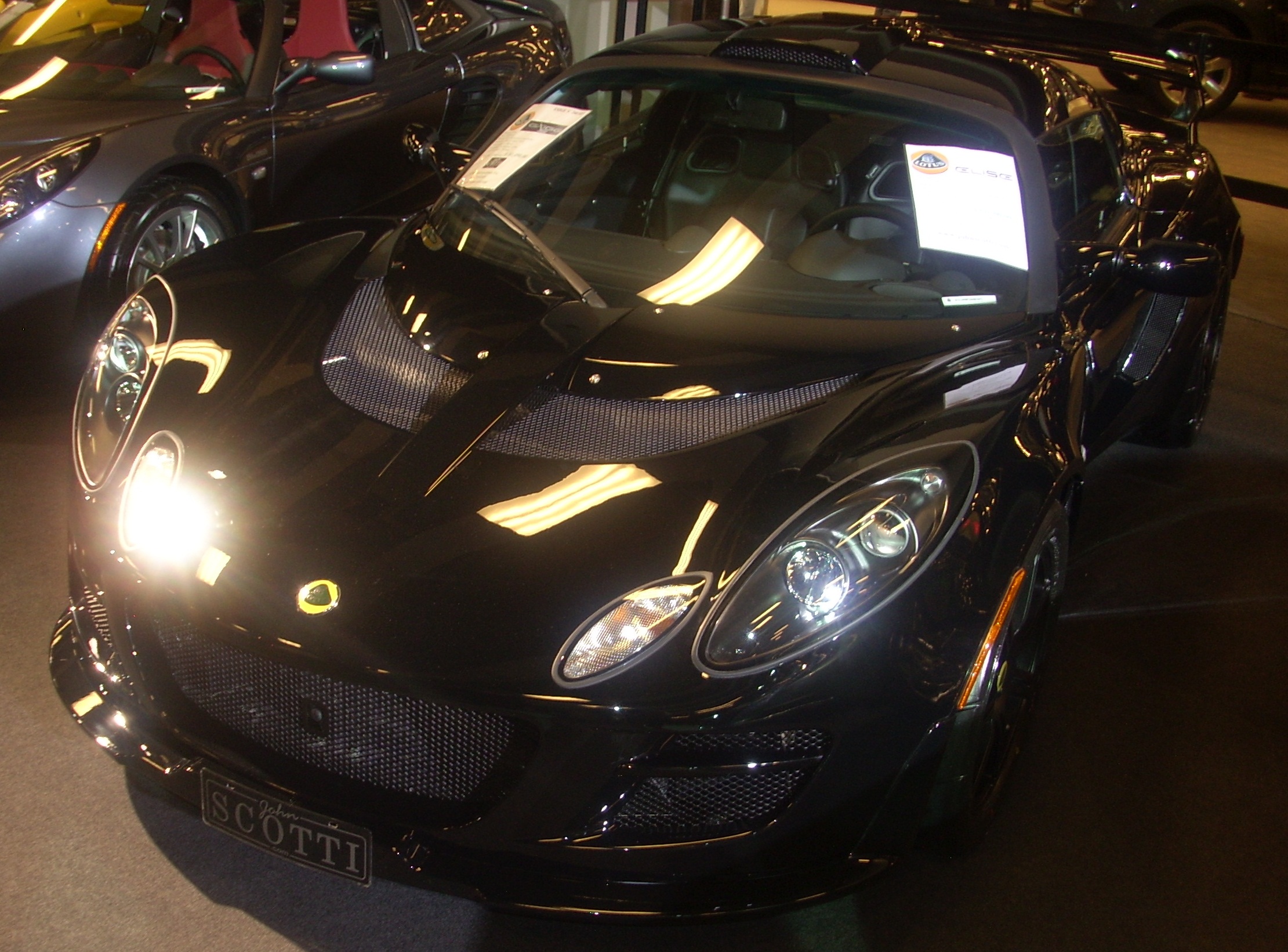
Lotus Elise
"And this was a Lotus Elise that was sent to us. And let me let me show you guys a little bit more if those of you are watching on the video, our YouTube channel. That's this car"
The Lotus Elise is a small, lightweight sports car built to feel sharp and fun to drive. This one came in with engine problems, and the protective film on the front had gotten moldy and worn out.
The Lotus Elise is a lightweight, driver-focused sports car known for its agile handling and emphasis on balance. Here, the hosts discuss a specific Elise that arrived with engine issues and cosmetic protection (clear bra) that had degraded badly.
clear bra
"But this was absolutely the worst mold infestation I have ever seen on clear bra... a lot of people that think that clear bra is a lifetime product or it lasts for years and years."
A clear bra is a thin, clear protective sheet that sticks to your car’s paint. It helps prevent scratches and rock chips, but over time it can peel or get gross-looking if it’s been through bad weather or moisture.
Clear bra is a transparent paint-protection film (often polyurethane) applied to high-wear areas like the front bumper, hood, and headlights. It’s meant to protect against rock chips and light abrasions, but it can fail when it’s exposed to harsh conditions or when the film adhesive/edges break down.
mold infestation
"absolutely the worst mold infestation I have ever seen on clear bra... it looked like it had some sort of camouflage, you know, graphic on the car."
Mold infestation means mold is growing where moisture is trapped. With clear protective film, water can get underneath, and then the film can start looking stained and nasty—so it may need to be taken off.
A mold infestation in paint-protection film usually means moisture got trapped under the film edges or between the film and paint. Once trapped, organic growth can spread, making the film look mottled, discolored, and “camouflaged,” and it often requires removal and cleaning.
paint-protection film edge failure
"The clear bra is completely shot... it's from Florida... it's going to have to come off because it just it looks despicable."
Sometimes the clear protective film doesn’t stay sealed at the edges. When water gets underneath, it can cause staining and growth, and the film may need to be removed.
Paint-protection film can fail at its edges when the adhesive loses grip or when water gets underneath. That trapped moisture accelerates discoloration, staining, and biological growth, which is why the hosts say the film has to come off.
3M
"we'll talk about clear bra in the future because I worked at 3M on this product back in the early 90s."
3M is a company that makes lots of materials used in cars, including clear protective film. The host is saying they worked there and knows a lot about these products.
3M is a major manufacturer of industrial and automotive materials, including paint-protection films. The host mentions working at 3M in the early 1990s, tying the discussion to the company’s role in clear-bra products.

BMW E30
"you're like, oh, that's sweet. I love that E30 BMW, that Alpina. I wonder who in this [506.8s] vast sea of people owns that car because I would really like to talk to them about it."
The BMW E30 is an older BMW 3 Series (from the late 1980s/early 1990s). Car people love it because it drives well and there are lots of parts and upgrades available.
The BMW E30 is the 3 Series generation from the 1980s to early 1990s, and it’s a huge enthusiast favorite. It’s known for a simple, balanced driving feel and a massive aftermarket, which is why you still see them at car meets.
Alpina
"you're like, oh, that's sweet. I love that E30 BMW, that Alpina. I wonder who in this [506.8s] vast sea of people owns that car because I would really like to talk to them about it."
Alpina is a tuner/brand that builds BMWs with its own performance and comfort-focused engineering. When someone says they love an “Alpina,” they’re usually referring to an Alpina-tuned BMW with distinctive suspension, tuning, and trim.

Ferrari 296
"you know, in this picture you can see behind me is a Ferrari 296. [569.2s] I wish bad bunny. By the way, beautiful color, man. Beautiful color."
The Ferrari 296 is a high-end Ferrari that uses a turbo V6 plus an electric motor. It’s a hybrid supercar—fast like a supercar, but with extra electric assist.
The Ferrari 296 is a modern Ferrari built around a turbocharged V6 paired with an electric motor (a plug-in hybrid layout). It’s notable because it uses a compact V6 instead of a traditional V8/V12, while still delivering supercar performance and Ferrari-style drama.

Mercedes-Benz Sclass
"And for those who may not be familiar with the Toyota Sentry, it's like the 90s version of Japan's attempt to compete with like the executive S-Class, you know, sitting the back of the car, have your driver drive you around in it. And this car was awesome. And I found myself captivated"
The Mercedes-Benz S-Class is a large luxury car meant for very comfortable rides. It’s built with features that focus on passengers in the back seat as well as the front. The podcast mentions it as a reference point for an executive-style car.
The Mercedes-Benz S-Class is a full-size luxury sedan known for comfort, quietness, and high-end technology. It’s significant because it’s designed as an “executive” flagship, often featuring advanced features aimed at rear-seat passengers. The podcast references an “executive S-Class” idea when talking about a Toyota Sentry concept.
Cars and coffee
"…the attempt was never to win the cars and coffee, but I was in the running this past week. I had some serious fans. So that's what I did…"
“Cars and coffee” is a casual car meet where people show up early, park their cars, and hang out while looking at everyone’s rides. It’s a big part of car culture in many cities.
“Cars and coffee” is a recurring meet-up format where car owners gather in the morning to show their cars, talk to other enthusiasts, and sometimes compete informally for attention. It’s become a major part of modern car culture because it mixes casual socializing with real car talk.

Nissan 300
"...dom car that is like the automatic version of the Nissan 300 or 240, you know, whatever it was. And and they'r..."
The Nissan 300 ZX is a sports car coupe from Nissan’s Z lineup. It’s known for being a performance-style car rather than a regular sedan. The podcast mentions it while talking about different versions, including automatic ones.
The Nissan 300 ZX is a sports coupe from Nissan’s Z-car line, known for its performance-focused design and long-running popularity. In the podcast context, it’s mentioned alongside a discussion of automatic versions and how people refer to related models. The host seems to be clarifying which “300 or 240/whatever” Z-car they mean.

Porsche 928
"...of the like a few months ago, he showed up with a 928, a brown one, like a like first generation 928. Y..."
The Porsche 928 is an older Porsche sports car that was made decades ago. It’s known for its V8 engine and grand-touring style, meaning it was built for comfortable long-distance driving. The podcast mentions it because someone brought one to show off.
The Porsche 928 is a classic grand touring (GT) sports car from the late 1970s through the early 1980s, known for its distinctive styling and V8 power. It’s a notable Porsche because it represents a different era and design direction than the more common 911. The podcast specifically references a first-generation 928 shown by a guest.
naturally aspirated
"And they talked about the future of the GT3 and the naturally aspirated crown jewel, as you've called it before, which is so spot on. Incredible motor."
A naturally aspirated engine doesn’t use a turbo or supercharger to push air in. It relies on the engine’s normal breathing, and the hosts are debating whether that can continue for the GT3.
Naturally aspirated engines make air intake happen through engine vacuum rather than using a turbocharger or supercharger. The hosts are discussing whether Porsche can keep the GT3’s engine naturally aspirated as regulations and technology pressure manufacturers toward forced induction.
turbocharging
"This is car and driver saying, we followed up by asking whether he saw turbocharging as a potential path forward for the GT3"
Turbocharging uses a turbo to cram more air into the engine. More air usually means more power, and the hosts are wondering if Porsche might switch the GT3 to turbocharging.
Turbocharging uses a turbine-driven compressor to force more air into the engine, allowing higher power and improved efficiency compared with an equivalent naturally aspirated setup. Here, it’s raised as a potential path forward if Porsche can’t keep the GT3 naturally aspirated.
turbocharged
"So, I kind of had a field day last week with turbocharged 911s. ... I don't really want to see a turbocharged, you know, GT3 car."
A turbocharged engine uses a device that squeezes more air into the engine. More air helps the engine make more power, and it can also help carmakers meet stricter rules.
“Turbocharged” means the engine uses a turbocharger to force more air into the cylinders. That lets the engine make more power from a smaller displacement, which can help manufacturers meet emissions and efficiency targets compared with larger naturally aspirated engines.
Porsche 911
"...nd of had a field day last week with turbocharged 911s. I don't want to open some of those those wounds ..."
The Porsche 911 is a famous sports car model from Porsche. It’s known for its distinctive design and strong performance. The podcast brings up turbocharged 911s because they’re a big part of what people argue about and love.
The Porsche 911 is the brand’s iconic rear-engine sports car, famous for its handling, performance, and long production history. It’s often discussed because nearly every generation has its own character, and turbocharged versions are especially popular among enthusiasts. The podcast mentions “turbocharged 911s” and jokes about reopening “wounds,” implying a lively debate or strong opinions.
emissions requirements
"it's hard for a manufacturer to meet the ... emission requirements and hit the horsepower and performance targets that they're trying to achieve."
Emissions requirements are government rules about how much pollution a car is allowed to produce. When they get stricter, carmakers have to adjust how engines are built to keep making power without breaking the law.
Emissions requirements are government limits on what pollutants a vehicle can produce, typically including exhaust gases and related compliance testing. The hosts argue these rules are tightening and can force manufacturers to change engineering strategies—like using turbocharging—to still hit power targets while staying legal.
cybersecurity regulation
"It's a cybersecurity regulation and mandate that Europe has imposed on all of the manufacturers. ... this old Macan ... can't meet those cybersecurity regulations."
Cybersecurity regulations are rules meant to keep connected car systems secure from hacking. If a car’s software platform can’t be updated enough, the manufacturer may have to stop selling that version.
A cybersecurity regulation for cars is a government requirement that vehicles’ connected systems (like telematics and software updates) meet defined security standards. Automakers may have to redesign or stop selling certain models if older platforms can’t be updated to comply, even if the powertrain itself is unchanged.
cybersecurity mandate
"The fascinating thing about this is the United States doesn't impose that same cybersecurity requirement on manufacturers."
A cybersecurity mandate is a government rule about making connected cars secure from hacking. The hosts are saying those rules can change which versions of a car a company can sell in the U.S.
A cybersecurity mandate is a regulatory requirement that forces automakers to meet certain security standards for connected vehicles. In this discussion, it’s used to explain why Porsche might stop selling the gas-powered Macan in the U.S. even if other markets allow it to continue.

Porsche Macan
"Yeah, I don't know about Macans in general, or specifically, but in 2025, we're to the United States. So they're basically going to say, well, we can't sell the Macan."
The Porsche Macan is Porsche’s smaller SUV. The hosts are talking about whether Porsche will keep selling the gas version in the U.S. based on government rules and costs.
The Porsche Macan is Porsche’s compact luxury SUV, and it’s a high-volume model for the brand. In this segment, the hosts discuss how the U.S. market’s rules affect whether Porsche keeps selling the gas-powered Macan there.
EV mandate of 2035
"remember, the other part of that puzzle was that the EV mandate of 2035 certainly played a role in that decision to not continue investing in the US Macan."
The EV mandate of 2035 is a policy that aims to get more cars to be electric by 2035. The hosts connect it to why companies might stop spending money on certain gas models for the U.S.
The EV mandate of 2035 refers to a policy direction that pushes automakers toward selling electric vehicles by that year. Here, it’s presented as a major reason Porsche wouldn’t keep investing in the U.S. gas-powered Macan program.
ICE V8 powertrains
"But the big one is GM is just investing more into ice V eight power trains."
ICE means the traditional gas engine. “ICE V8 powertrains” means cars built around a V8 gas engine, and the hosts are saying GM is still spending money on that tech.
ICE stands for internal combustion engine, and “ICE V8 powertrains” means vehicle setups built around a V8 gasoline engine (engine plus the related drivetrain components). The segment uses this to argue that automakers like General Motors are still investing heavily in gas-engine technology despite the EV push.
General Motors
"But the big one is GM is just investing more into ice V eight power trains."
General Motors is a big car company. Here, they’re saying GM is still putting money into gas-engine development, not just electric cars.
General Motors (GM) is a major automaker making both vehicles and the technology behind them. In this segment, GM is cited as continuing to fund engine development, which the hosts interpret as evidence that internal-combustion vehicles will remain relevant for longer than some people expect.
EVs
"with this General Motors and Porsche, everybody rolling back their EVs and reinvesting back into the gas powered engines"
EVs are cars that run on electricity from a battery instead of gasoline. The hosts are saying some companies are changing plans and spending more again on gas cars.
EVs are electric vehicles, powered primarily by electric motors and batteries rather than gasoline engines. The segment discusses automakers “rolling back” EV plans and shifting investment back toward gas powertrains, which affects product timelines and development budgets.
gas powered engines
"everybody rolling back their EVs and reinvesting back into the gas powered engines"
This just means regular gasoline engines—the kind that burn fuel to make power. The point is that automakers are shifting money back toward those engines.
“Gas powered engines” means internal-combustion engines that burn gasoline to make power. The discussion frames this as a reallocation of investment away from EVs, driven by regulatory and political uncertainty.
R&D
"The cost of this stuff, Shenu, you're an engineer, you've built cars, you'd you develop parts. The cost of R&D and development has to be the largest or one of if not the largest expenses these guys have when they're developing new cars."
R&D means research and development—the spending and effort to design and test new car technology. The point here is that it costs a lot because you need specialized tools and time to build new systems.
R&D (research and development) is the work automakers do to create new vehicles, powertrains, and technologies. The host emphasizes that it’s a major cost because it requires expensive equipment and long development cycles.
capital intense business
"I mean, it's a very capital intense business, right? So the equipment required to produce a car is quite significant as well."
“Capital intensive” means the business needs a lot of expensive equipment to operate. For car companies, that’s factories and production tools, so big changes can cost a fortune.
A capital-intensive business is one where the company must spend a lot of money upfront on equipment, factories, and tooling. In carmaking, that includes the production equipment needed to build vehicles at scale, which makes delays and regulatory changes especially expensive.
Stellantis
"articles. You know, I just wrote one recently about the Stellantis and you know, what I think is going to happen industry wise there."
Stellantis is a big car company that makes a lot of different brands. When people talk about what’s happening to car prices and rules, Stellantis is one of the companies that gets affected.
Stellantis is a major automaker formed from the merger of Fiat Chrysler and PSA. In discussions about rising car prices and shifting regulations, it often comes up because it sells large volumes across the U.S. and Europe and has to manage compliance and product planning.
Resto mods
"And you know, what's that going to mean for you and I? Well, Resto mods is what it means for me. I'm going to buy old cars and try to make it more modern."
A restomod is an older car that gets updated with newer parts. It’s meant to feel more modern to drive, but still keep the original “classic” vibe.
A restomod is a classic or older car that’s rebuilt with modern upgrades while keeping the original character. The goal is usually to improve drivability, safety, and reliability (often with modern suspension, brakes, and electronics) without turning it into a completely different car.

Corvette
"Now, maybe we'll get lucky and GM will get smart and put a freaking manual in the Corvette and the C nine, or maybe some of that will start to surprise us again and where it goes."
The Corvette is a well-known American sports car. The discussion is about whether GM might offer it with a manual transmission again, which matters to drivers who like shifting themselves.
The Chevrolet Corvette is a performance sports car that’s historically offered with manual transmissions in some eras. Here it’s mentioned in the context of whether GM might “put a manual in the Corvette,” which would be a notable shift for enthusiasts who prefer traditional gearboxes.
consumables
"Another listener had asked a question about the consumables on a C8 Corvette. So I've been doing a bit more research on that, talking to a bunch of people that have them, that have been running them on track."
“Consumables” are the wear-and-tear items you go through faster when you drive on a track. Think of things like tires and brakes that you replace more often.
In track or performance driving, “consumables” are parts that wear out quickly and are expected to be replaced regularly. Examples include brake pads/rotors, tires, and sometimes fluids or filters depending on how the car is used.
Underrated vs overrated cars segment
"Today, we're going to try to be a little bit more positive and talk about the cars that we believe are underrated. We've each picked three."
They’re switching to a new part of the show where they talk about cars they think are underrated. Each person is picking three cars to explain.
The hosts pivot from discussing cars they previously called overrated to a new segment focused on cars they believe are underrated. They also mention each host picking three cars for the discussion.
rear control arm
"this car had a rear control arm issue that we had rectified earlier. And then we had to, we had to come back and dial the alignment in on this car."
The rear control arm is part of the suspension that helps hold the rear wheel in the right position. If it’s not right, the car won’t handle as well, so you often need an alignment after repairs.
A rear control arm is a suspension link that locates the rear wheel and helps control its movement and alignment under driving loads. If it’s damaged or worn, it can cause handling issues and uneven tire wear, which is why the host mentions fixing it and then dialing in the alignment afterward.
larger displacement
"this car's been modified, the engine's, you know, larger displacement, blah, blah, blah. But anyways, the handling of the car was so sublime."
Larger displacement means the engine was modified to be bigger inside. That can change the car’s power and how it pulls when you accelerate.
Larger displacement means the engine has been modified to increase its total volume (often via a bigger bore and/or stroke). That typically changes how the engine makes power and torque, which can affect how the car feels and handles under acceleration.
affordable sports cars vs expensive new cars
"earlier, we were talking about how, you know, unaffordable new cars are, well, there's luckily, there's still some really good... cars like, like the Boxster."
They’re talking about why new cars cost so much, and pointing to older or more affordable sports cars that still feel fun to drive. The Boxster is used as the example.
The host contrasts unaffordable new cars with still-available “affordable sports car” options, using the Porsche Boxster as an example. This is a discussion about what enthusiasts can realistically buy today for a fun driving experience.
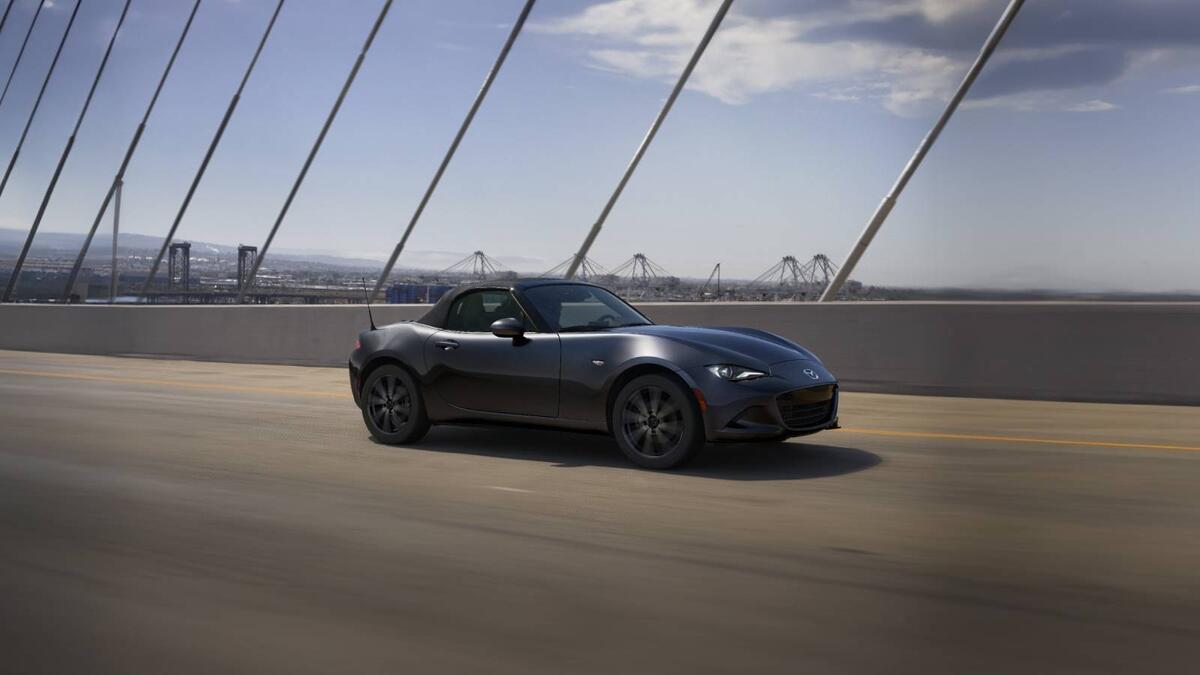
Mazda MX-5 / Miata
"...nvertible, like a small roadster. Since I sold my Miata, I've missed that at this time, every single year..."
The Mazda Miata is a small two-seat convertible roadster. It’s made to be fun and easy to drive, especially on twisty roads. The podcast mentions it because the host sold one and misses it.
The Mazda MX-5, commonly called the Miata, is a lightweight two-seat roadster focused on simple, fun driving. It’s significant because it’s often praised for delivering “real driving feel” without needing huge power. The podcast mentions the host missing the Miata after selling it.

Porsche 986 Boxster S
"it was a year or two ago, I went, I drove a 986 Boxster S and a Honda S2000 almost back to back."
The Porsche 986 Boxster S is the early version of the Boxster, and the “S” is the stronger, sportier trim. People often look at it because it’s one of the more affordable ways to get a Porsche-style driving feel.
The Porsche Boxster (986) is the first-generation Boxster, and the “S” version adds performance-focused tuning compared with the base model. This generation is known for being a relatively accessible way to experience Porsche roadster dynamics, which is why it comes up in affordability discussions.

Honda S2000
"the problem I have with the 986 Boxster is that the Honda S2000 exists... Whereas, you know, an S2000 with a four cylinder doesn't necessarily."
The Honda S2000 is a sports car with a four-cylinder engine that spins very high. The hosts are comparing it to the Porsche Boxster, including how the engines feel and sound.
The Honda S2000 is a lightweight, enthusiast-focused sports car famous for its high-revving four-cylinder engine. In this discussion, it’s contrasted with the Porsche 986 Boxster—specifically how the S2000’s four-cylinder sound/feel differs from the Boxster’s flat-six character.
flat six
"if it was set up well with the right exhaust... Open the exhaust on this flat six, these sound pretty darn good."
A “flat six” is an engine design where the cylinders are laid out flat, like two rows lying opposite each other. People often like the sound and feel of this setup, and the host says exhaust changes can make it even better.
A “flat six” (boxer six) is an engine layout where six cylinders sit horizontally in two banks, moving in opposite directions. The host is using it to describe the Porsche 986 Boxster’s distinctive sound and character, and why an exhaust setup can make it more satisfying.
C5 treatment
"Not only to maybe send to you and give it the C5 treatment, but just so I can stop... talking about it and almost buying these"
“C5 treatment” sounds like a particular way of setting up or modifying a C5 Corvette. In this clip, they’re hinting at applying that same idea to another car, but they don’t list the exact parts.
“C5 treatment” here refers to a specific kind of upgrade/approach the hosts associate with the C5-generation Corvette—likely a set of mods or setup philosophy. The segment implies the Boxster could be treated similarly, but the exact recipe isn’t spelled out in this excerpt.
Chevrolet Corvette Z06 (C5)
"which is a C5 Corvette Z06. I have driven multiple of these... as being one of the best budget track cars. It's 400 horsepower in torque in an early 2000s car."
The C5 Corvette Z06 is a high-performance Corvette from the early 2000s. In this segment they’re praising it as a great track option for the money, and they also talk about how it’s comfortable and easy to live with compared to some other sports cars.
The C5 Chevrolet Corvette Z06 is a performance-focused version of the C5-generation Corvette, built for track use with a more aggressive powertrain than the standard cars. Here it’s positioned as a “budget track car,” with the host calling out its strong output (400 horsepower and torque) and discussing how it feels in the real world (comfort, space, and shifter feel).
budget track car
"I've talked about them before as being one of the best budget track cars."
A “budget track car” is a car you can take to a racetrack without spending exotic-level money. The idea is to get fun and speed on track while keeping costs more manageable.
A “budget track car” is a car you can use on track days without the ownership costs of high-end exotics—typically because the car is relatively affordable and parts/mods are easier to source. The host uses this idea to frame the C5 Corvette Z06 as a practical way to get track performance for less money.
short shifter
"And you can put a short shifter on it as well to make it even better from MGW."
A short shifter makes the gear lever move less distance to get into the next gear. That usually makes shifting feel faster and more precise.
A short shifter is a modification that reduces the lever travel between gears, making shifts feel quicker and more direct. The host mentions adding one to improve the already-good shifter feel in early 2000s Corvettes.
MGW
"And you can put a short shifter on it as well to make it even better from MGW."
MGW is a company that makes aftermarket car parts. Here they’re specifically tied to a short shifter upgrade to make shifting feel better.
MGW is an aftermarket parts brand known for shifter and driveline-related upgrades for manual-transmission cars. In this segment, MGW is mentioned as the source of a short shifter to improve shift feel.
Callaway
"You can put in it or Callaway, call up the Callaway specialist, put an exhaust on these things."
Callaway is a company that modifies cars to make them faster or sound better. Here, they’re talking about having a Callaway specialist install performance upgrades like an exhaust.
Callaway is an aftermarket performance company known for tuning and upgrading cars—especially Corvettes—beyond stock specifications. When the host says to “call up the Callaway specialist,” they mean getting an exhaust and other performance parts installed by a specialist shop tied to that brand.

Porsche 981 Cayman S
"But if you go back a generation to the 981, so I would have put up this picture behind me, that was my first Porsche I've ever owned. Okay. And 981 Cayman S on some HRE wheels... You get it with the Porsche Sport exhaust for the 981 generation... they sound spectacular."
The Porsche 981 Cayman S is an older Cayman generation, and the host says it was their first Porsche. They’re praising it for how it feels to drive and how great it sounds with the Porsche Sport exhaust.
The Porsche 981 Cayman S is the 981-generation Cayman, and the host calls it their first Porsche and highlights it as a particularly great era. They also mention the Porsche Sport exhaust for the 981 generation, emphasizing how the car’s sound and overall driving feel stand out.
HRE
"Okay. And 981 Cayman S on some HRE wheels."
HRE makes aftermarket wheels. The host mentions them as part of the look and setup on their Cayman S.
HRE is a wheel brand known for premium aftermarket rims, often used by enthusiasts to improve appearance and sometimes reduce unsprung weight. In the transcript, HRE wheels are part of the host’s 981 Cayman S setup.
Porsche Sport exhaust
"You get it with the Porsche Sport exhaust for the 981 generation, whether it's a base car or a GTS or GT4, they sound spectacular."
Porsche Sport exhaust is an upgraded exhaust option made for the car. It’s meant to make the engine sound better and more exciting than the standard exhaust.
“Porsche Sport exhaust” refers to a factory-style performance exhaust option for the 981-generation Cayman. It’s specifically mentioned as the reason the cars “sound spectacular,” meaning it changes the exhaust note and character compared with a quieter stock setup.
mid-engine
"You've been, you may know secrets about your feelings about mid-engine versus rear engine, but they are smaller. They are mid-engine. It's right behind you."
Mid-engine means the engine is placed near the middle of the car, behind you. The host thinks that placement helps the car feel more balanced and fun to drive.
Mid-engine describes a layout where the engine sits behind the driver but ahead of the rear axle. The host argues this layout contributes to the Cayman’s “playfulness,” since it helps balance the car and affects how it turns compared with rear-engine designs.
wheelbase
"They are mid-engine. It's right behind you. They've got a kind of short, they've got a shorter wheelbase."
Wheelbase is the length of the car measured from the front wheels to the rear wheels. A shorter wheelbase often makes a car feel quicker to turn.
Wheelbase is the distance between the front and rear axles. The host says the Cayman has a shorter wheelbase, which can make it feel more agile and responsive in everyday driving and at the track.
long gearing
"I will save the long gearing discussion to a future episode because that is hotly debated whether or not it matters."
Long gearing means the gears are set up so the engine spins slower at higher speeds. The host is saying people argue about whether that changes how fun the car feels.
Long gearing refers to transmission gear ratios that favor higher speeds at lower engine RPM, often making acceleration feel less aggressive but improving cruising. The host says they’ll save the debate about whether long gearing “matters,” implying it affects how the car feels in real driving and on track.
Porsche Cayman S
"I started having, I was tracking it and I thought, you know what, why not upgrade to a GT4? ... I drove this Cayman S to meet the guy, jumped out of this into that GT4."
The Porsche Cayman S is a mid-engine Porsche sports car. Here, the host is saying it can feel close to a GT4 on normal roads, but the GT4 pulls ahead once you’re driving hard on a track.
The Porsche Cayman S is a mid-engine sports coupe (the “S” denotes a higher-output Cayman) that’s known for balanced handling and strong road manners. In this segment, the host compares it directly to a Porsche GT4 to explain why the Cayman S can feel similar for everyday driving but separates on track.
Aero
"The Aero is a kind of hidden benefit. But they are not. This is a 3.4 liter."
Here, “aero” means the car’s shape and add-on parts that affect airflow. The host is saying it’s not always obvious at first, but it can make the car feel more stable and grippy when you drive aggressively.
In this context, “aero” refers to aerodynamic elements (like wings, splitters, and other bodywork) that improve airflow around the car. The host calls it a “hidden benefit,” meaning the aero helps stability and grip, especially when driving harder.

Dodge Hellcat
"I'm going to move on and put up my next one, which I think it's underrated. That's the Hellcat. My argument is I think it's underrated by sports car guys like us."
The Dodge Hellcat is a very powerful muscle car. The host is saying sports-car people often dismiss it, but after driving one, he found it genuinely fun.
The Dodge Hellcat is a high-output muscle car known for extreme power and a big, heavy-car feel compared with sports cars. In this segment, the host argues it’s “underrated” by sports-car enthusiasts, and describes driving it to show it can be fun even if you don’t normally consider muscle cars.

Challenger Hellcat
"...xt one, which I think it's underrated. That's the Hellcat. My argument is I think it's underrated by sports..."
The Dodge Challenger is a powerful muscle-style sports car. The podcast talks about the Hellcat version and says it doesn’t get enough credit. The point is that it’s a strong performance car that people may overlook.
The Dodge Challenger is a muscle car known for powerful engines and a classic, aggressive look. The podcast specifically references the Hellcat and argues it’s “underrated” among sports cars. It’s mentioned as part of a broader discussion about which performance cars deserve more attention.

BAC Mono
"a journalist came to visit us to drive my BAC mono. And this is back, it's probably 2015-ish. ... you talk about polar opposites on the complete other end of the, you know, the sideway from both these two cars"
The BAC Mono is a very small, lightweight, track-style car that feels more like a race machine than a normal car. The host compares it to the Hellcat to show how wildly different the driving feel can be.
The BAC Mono is a lightweight, single-seat track-focused car with a motorcycle-like driving feel and a very narrow, exposed layout. Here it’s used as a contrast to the Dodge Hellcat—“polar opposites”—to highlight how different driving experiences can still be enjoyable.
special red key
"I love the fact you can get some options with some special red key and they get set up for drag racing with slicks"
A special red key is like an extra key mode that changes how the car behaves. The host is saying it can unlock a more aggressive performance setup for drag racing.
A special red key is a manufacturer-provided key fob/programming option that enables a more aggressive performance mode. In this context, the host says it unlocks additional power and drag-race-oriented settings like tire choices.
slicks
"I love the fact you can get some options with some special red key and they get set up for drag racing with slicks and smaller skinnier front tires"
Slicks are special tires made for drag racing. They have almost no tread so they can grip the track better, but they wear out fast and aren’t great for normal street use.
Slicks are drag-race tires with little to no tread, designed to maximize grip on a straight line. They’re typically used for short, high-traction runs because they wear quickly and aren’t meant for wet or everyday driving.
drag racing
"I love the fact you can get some options with some special red key and they get set up for drag racing with slicks and smaller skinnier front tires"
Drag racing is racing in a straight line over a short distance. The goal is maximum acceleration, so the car gets set up with tires and parts that help it launch and grip better.
Drag racing is a motorsport where cars accelerate over a very short distance, usually from a standstill, to determine who’s fastest. The host connects it to setup choices like slicks and tire sizing that prioritize traction and acceleration rather than cornering.
lift the front wheel
"and you know, you turn that key and it unlocks some additional power apparently and it'll lift the front wheel on a drag strip."
“Lift the front wheel” means the car’s front end comes up during hard acceleration. It’s a sign the car has a lot of pulling power and the rear tires are gripping the road.
“Lift the front wheel” describes a wheelie, where the car’s front end rises under hard acceleration. It typically happens when torque and traction are high enough that the rear tires can propel the car faster than the front can stay planted.
Mopar
"Well, if we do have any Mopar or muscle car guys listening to this podcast, they're going to be listening right now"
Mopar is a nickname car fans use for Chrysler-era muscle brands like Dodge. The host is basically saying “muscle-car fans will get what I mean.”
Mopar is the enthusiast nickname for the Chrysler Group brands (including Dodge and Plymouth historically). In this segment, the host uses it to address muscle-car fans who would recognize the Hellcat/Challenger/drag-racing context.
canyons
"But we're all sports car guys and we all are in the canyons. We're all in the racetrack."
Canyons are roads with lots of curves. The host is saying that kind of driving is great for handling-focused cars, but many places don’t have roads like that.
Canyons are winding-road environments where sustained cornering and braking matter more than straight-line speed. The host contrasts canyon driving with drag racing, arguing that most of the country isn’t suited to canyon-style performance.
Dodge Challenger Hellcat
"I mean, it's what's interesting about this is you cannot get the charger Hellcat with a manual, but you can get this challenger that you have up behind you in a manual. And I've sat in one of those."
The Dodge Challenger Hellcat is a super-powerful muscle car. The host is excited because you can get it with a manual transmission, meaning you can drive it like an old-school enthusiast car.
The Dodge Challenger Hellcat is a supercharged V8 muscle car known for extreme straight-line acceleration. Here, the standout detail is that you can get a Challenger Hellcat with a manual transmission, which is unusual for this kind of high-power car and is part of why the host finds it especially cool.

Dodge Charger Hellcat
"I mean, it's what's interesting about this is you cannot get the charger Hellcat with a manual, but you can get this challenger that you have up behind you in a manual."
The Dodge Charger Hellcat is a very powerful muscle car. The host is saying you can’t get the Charger Hellcat with a manual gearbox, so it’s harder to buy one if you want to shift yourself.
The Dodge Charger Hellcat is a high-output muscle car built around a supercharged V8 and a drag-focused performance package. In this segment, the key point is that the Charger Hellcat is not offered with a manual transmission, which affects how enthusiasts can choose their preferred driving feel.
manual trans
"But how cool is a big old burly thing with 700 horse and a manual trans manual lever that kind of tilts a little bit in it"
A manual transmission means you shift gears yourself with a clutch pedal and a stick. The host likes the idea because it can make a super-powerful car feel more connected to the driver.
A manual transmission (manual trans) requires the driver to shift gears using a clutch and gear lever. In high-power cars, enthusiasts often prefer it because it can feel more engaging and can help with controlling launch and traction during aggressive driving.

Dodge Viper
"...ge cluster and I thought, well, clearly he's in a Viper. And I think he placed in his class and I thought..."
The Dodge Viper is a very powerful sports car with a bold, aggressive design. It’s known for having a large engine and a raw driving feel. The podcast mentions it because someone recognized it and it did well in a competition.
The Dodge Viper is a hardcore American sports car known for its aggressive styling and big V10 power. It’s often discussed because it’s a raw, performance-first machine with a very distinctive character. The podcast references recognizing a Viper by its instrument cluster and noting it placed in its class.
HEMI
"But it's the Hemi, you know, motor. Anyway, so I think [2872.6s] there are more sporting intentions in this car than we or many of us give credit."
HEMI is an engine design name Dodge uses on its performance V8s. In this case, it means the Challenger has the 392 HEMI V8, not the more extreme Hellcat setup.
HEMI is Dodge’s branding for a hemispherical combustion-chamber engine design, commonly associated with performance V8s. Here, the host says the Challenger Scat Pack has the HEMI V8 (the 392) even though it’s not the supercharged Hellcat.
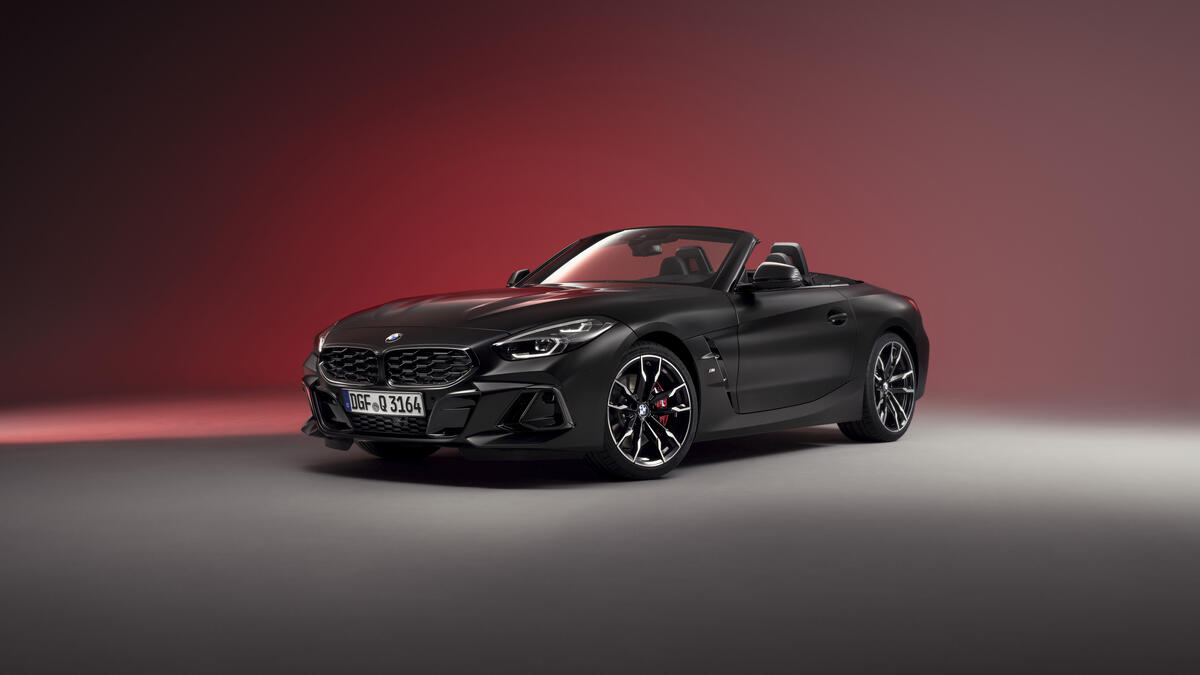
BMW Z4
"...n here. I put up the 2000, oh boy, 2007, 2008 BMW Z4. And I should know the model designation. Somebod..."
The BMW Z4 is a small two-seat convertible roadster. It’s made for sporty driving and open-top fun. The podcast mentions older model years while talking about which Z4 they drove or considered.
The BMW Z4 is a two-seat roadster designed for sporty, open-top driving. The podcast references specific model years (around 2007–2008) and implies the speaker is discussing a particular generation or designation. It’s brought up as part of a comparison of fun roadsters the host has driven.
S54 engine
"so these have the S54, I would like to call it the, you know, the renowned S54 engine in it that [2945.7s] came out of the E46M3. This is the only car post like E46 that had that S54 engine that revs to [2957.1s] 8000, makes 330 ish horsepower."
The S54 is BMW’s performance straight-six engine used in the E46 M3. It’s known for revving high and feeling lively, which is why the host thinks this car is so engaging to drive.
The S54 engine is BMW’s high-performance inline-six used in the E46 M3, known for its willingness to rev and its strong enthusiast reputation. The host claims it revs to about 8,000 rpm and makes roughly 330 horsepower, using those traits to explain why this Z4M Coupe feels like a real driver’s car.
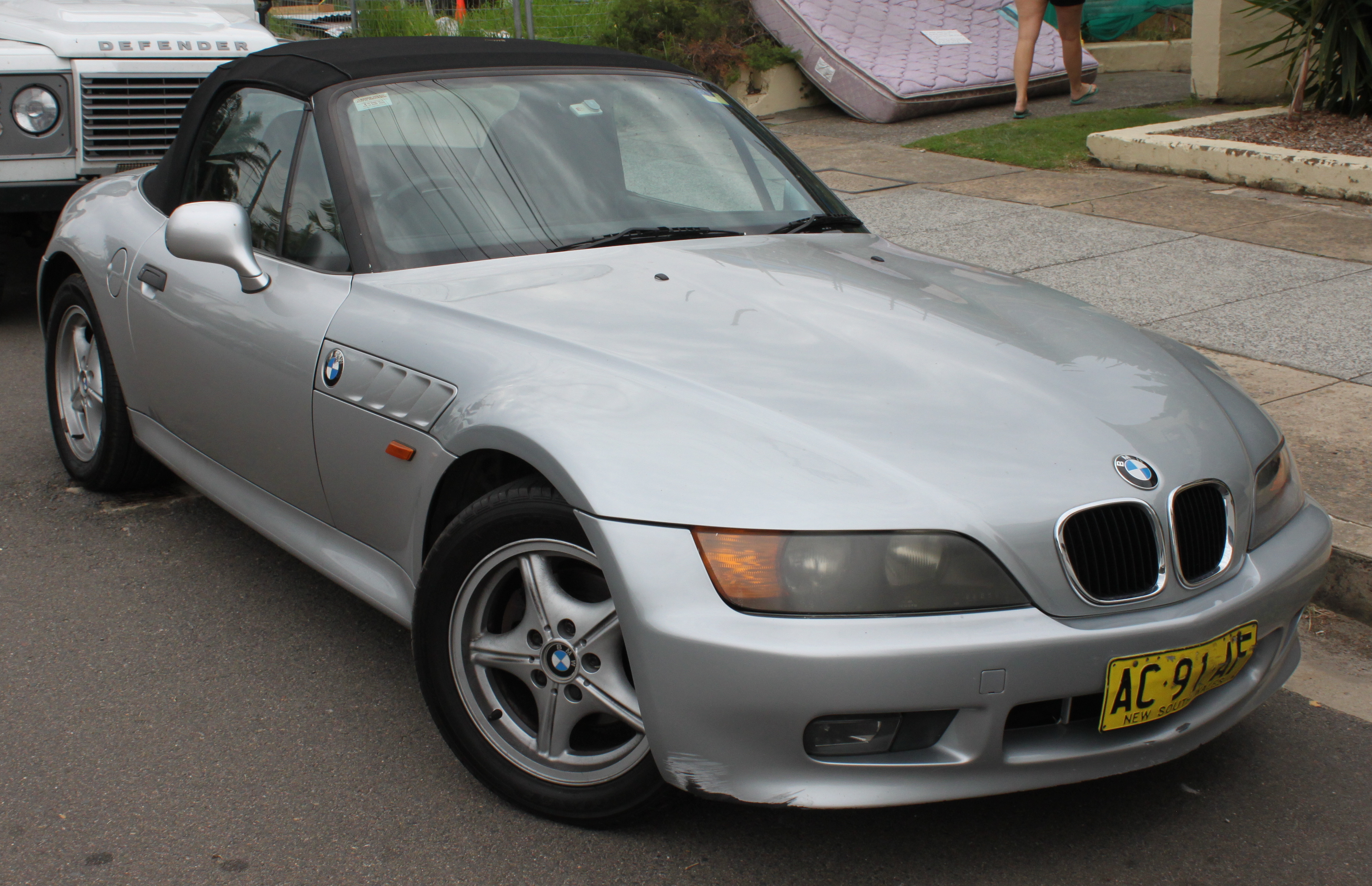
BMW Z3M
"...ally. And it's got a little less rawness than the Z3M Coupe and the E46M3. It's slightly more refined, ..."
The BMW Z3 is a small two-seat convertible roadster. The podcast says it feels a bit more refined and less “raw” than some other versions. It’s being used as an example of how different roadster models can drive differently.
The BMW Z3 is a compact two-seat roadster, and the podcast compares it to other Z3 and M3 variants by describing it as slightly more refined and less raw. It’s mentioned as part of a discussion about how different roadster versions feel and what kind of driving character they offer. The key takeaway is the Z3’s role as an entry point into BMW’s roadster lineup.
rear trailing arm suspension
"part of what I didn't love about my M Coupe, which is that I wanted to track a little bit. And that [2985.1s] car with rear trailing arm suspension and funky weight distribution was not set up well to drive [2991.8s] hard."
This is a type of rear suspension design that helps control how the rear wheels move. The host is saying their car’s rear suspension setup didn’t work as well when they tried to drive it hard on a track.
Rear trailing arm suspension is a multi-link setup where the rear wheel is controlled by arms that pivot to manage wheel motion and alignment. The host says their M Coupe’s rear trailing arm suspension (combined with weight distribution) wasn’t set up well for hard track driving.
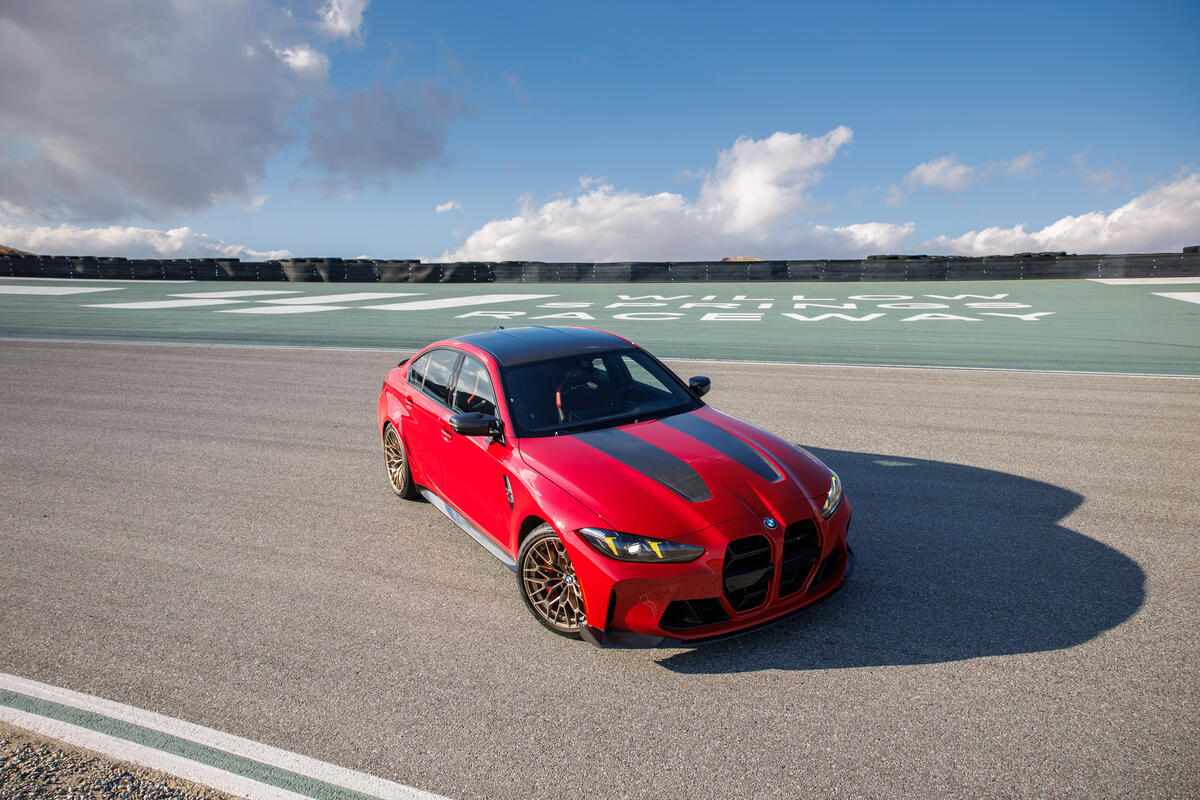
BMW E90 M3
"Well, these occupy a really interesting space in the BMW lineage because it's also kind of Frankenstein-ish. It's very of the E90 generation. So if you think of an E90 M3 and you think about the interior and the way it feels and the way those cars drive..."
The BMW E90 M3 is a specific generation of the BMW M3. The hosts are using it as a benchmark for how the car feels and drives compared to older M3s.
The BMW E90 M3 is the M3 generation from the E90 3 Series era, known for a more modern, refined feel than earlier M cars. In this segment, it’s used as a reference point for how the interior feel and driving character changed between generations.
Fox body
"Okay. So it's a Ford Mustang SVO. So this is Fox body. Yes. So this is, this is the 80s, man. Okay."
“Fox body” is a nickname for a specific generation of the Ford Mustang. It helps you know the car is from the 1980s Mustang era and what it generally looks like.
“Fox body” is the enthusiast nickname for the 1979–1993 Ford Mustang platform. It’s used here to place the Ford Mustang SVO in the 1980s Mustang era and explain why its styling and proportions look the way they do.

Ford Mustang SVO
"Okay. So it's a Ford Mustang SVO. So this is Fox body. Yes. So this is, this is the 80s, man. Okay. ... This thing had a turbocharged four cylinder in it. Wow. Yeah. The styling, it had this asymmetric front hood scoop. It had this by wing, you know, rear spoiler."
The Ford Mustang SVO is a Mustang variant built for performance, but instead of a V8 it uses a turbocharged four-cylinder. The hosts also point out its 1980s Fox-body look and unique exterior details.
The Ford Mustang SVO is a special, performance-focused Mustang variant that stands out for its turbocharged four-cylinder setup rather than the more common V8 approach. In this segment it’s also tied to its Fox-body era and distinctive styling cues like the asymmetric front hood scoop and rear spoiler.

Ford Mustang GTD
".... Yeah. This car came out at the same time as the Mustang GT, which, you know, five liter V8. This thing had a..."
The Ford Mustang GTD is a special, higher-performance version of the Mustang. The podcast says it was introduced around the same time as the regular Mustang GT and that it’s meant to be a big step up in performance. The focus is on how serious and fast this GTD is.
The Ford Mustang GTD is a high-performance Mustang variant built to deliver track-level capability while still being a Mustang. The podcast notes it came out around the same time as the standard Mustang GT and highlights that it has a very serious performance focus. It’s mentioned as part of a comparison of what different Mustangs offer.
asymmetric front hood scoop
"The styling, it had this asymmetric front hood scoop. It had this by wing, you know, rear spoiler."
An asymmetric front hood scoop is a raised intake opening on the hood that channels airflow toward the engine bay. The “asymmetric” part means it’s not centered, which can be a distinctive styling and functional cue on certain performance models.
rear spoiler
"It had this by wing, you know, rear spoiler. It was the Euro version of a Mustang effectively."
A rear spoiler is a part on the back of the car that helps the air flow more smoothly. It’s commonly used on performance cars and also makes them look more aggressive.
A rear spoiler is an aerodynamic add-on at the back of the car designed to improve airflow and reduce lift. On performance cars, it’s often both functional and a strong styling signal that the vehicle is meant to handle at speed.
four cylinder
"And a four cylinder. Yeah. Well, one of my, you know, grade school friends that I went to school"
A four-cylinder engine is an engine with four working cylinders. The hosts mention it as part of why a car was more expensive and didn’t sell as well.
A four-cylinder engine has four combustion chambers, typically used to improve efficiency and keep weight down compared with larger engines. In this segment it’s part of the discussion about why a particular car didn’t do well—cost and powertrain choice were both factors.
zero to 60 time
"instead of going to spend obscene amounts of money on some computer on wheels that goes zero to 60 in 2.2 seconds, but you feel none of it."
Zero to 60 time is a simple measure of how quickly a car speeds up from stopped to 60 mph. The discussion is about whether you should pay a lot for that kind of number.
Zero to 60 time is how many seconds it takes a car to accelerate from a standstill to 60 mph. It’s a common performance metric, but the hosts argue that some cars can be expensive while still not feeling as engaging as a cheaper, modded alternative.
electronic gremlins
"But the majority of issues I've heard about are electronic in nature. What should my level of concern be from that standpoint?"
“Electronic gremlins” means annoying car problems caused by the car’s electronics—things like sensors or computer modules. The question is whether those kinds of issues are a big deal or just occasional annoyances.
“Electronic gremlins” is a car-enthusiast way to describe recurring, hard-to-diagnose problems caused by sensors, modules, infotainment, or other electronic systems. The listener is asking how concerned they should be if most issues are electronic rather than mechanical.
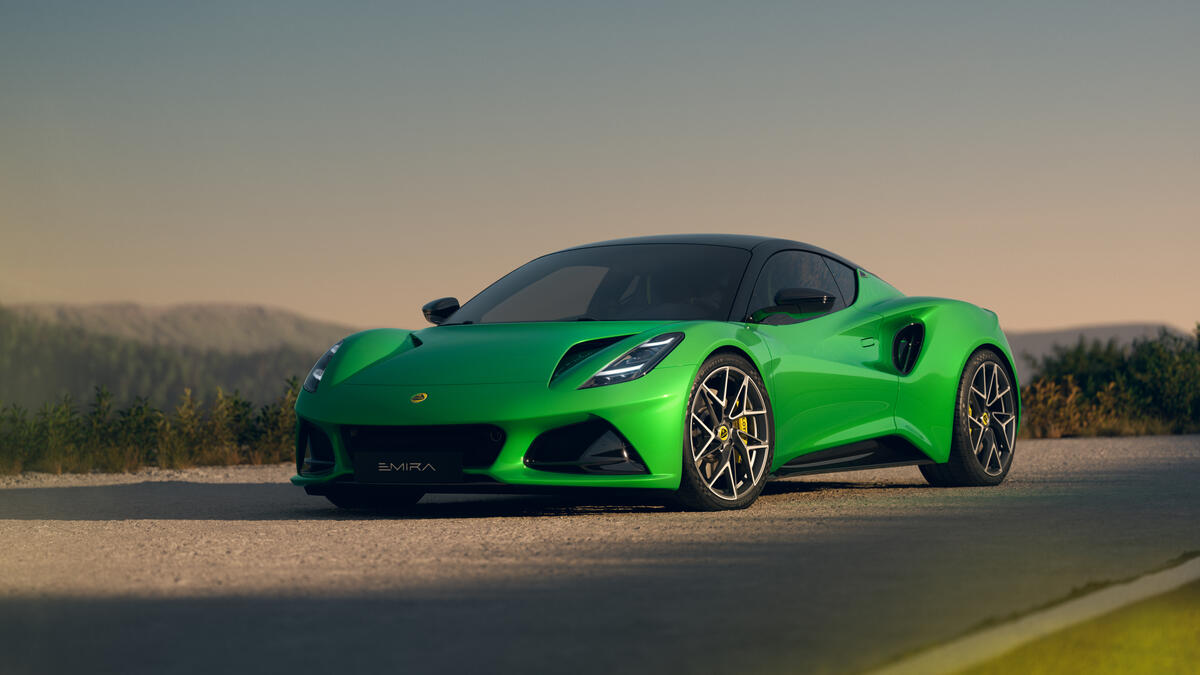
Lotus Amira
"... kind of happening with the newest cars, like the Amira. You know, there's lots of stories, lots of peopl..."
The Lotus Emira is a sports car made to be fun to drive. It’s built with a focus on handling and driver experience. The podcast brings it up while talking about people’s stories and interest in newer cars.
The Lotus Emira is a modern Lotus sports car designed to deliver a lightweight, driver-focused feel. It’s discussed in the context of newer cars and the stories people share around them. The podcast mentions it as “the Amira,” referring to the same model.
automatic transmissions
"Some guys going on the racetrack with the automatic transmissions, having some issues there, more so than the manual transmission cars."
An automatic transmission is the kind of gearbox that changes gears for you. The hosts are saying some people have had more trouble with automatics when they take the car to a race track.
Automatic transmissions are gearboxes that shift without the driver manually selecting gears. This segment specifically links reported issues to automatic cars when they’re driven hard on a racetrack, implying the transmission may be more sensitive to track use than the manual setups some owners choose.
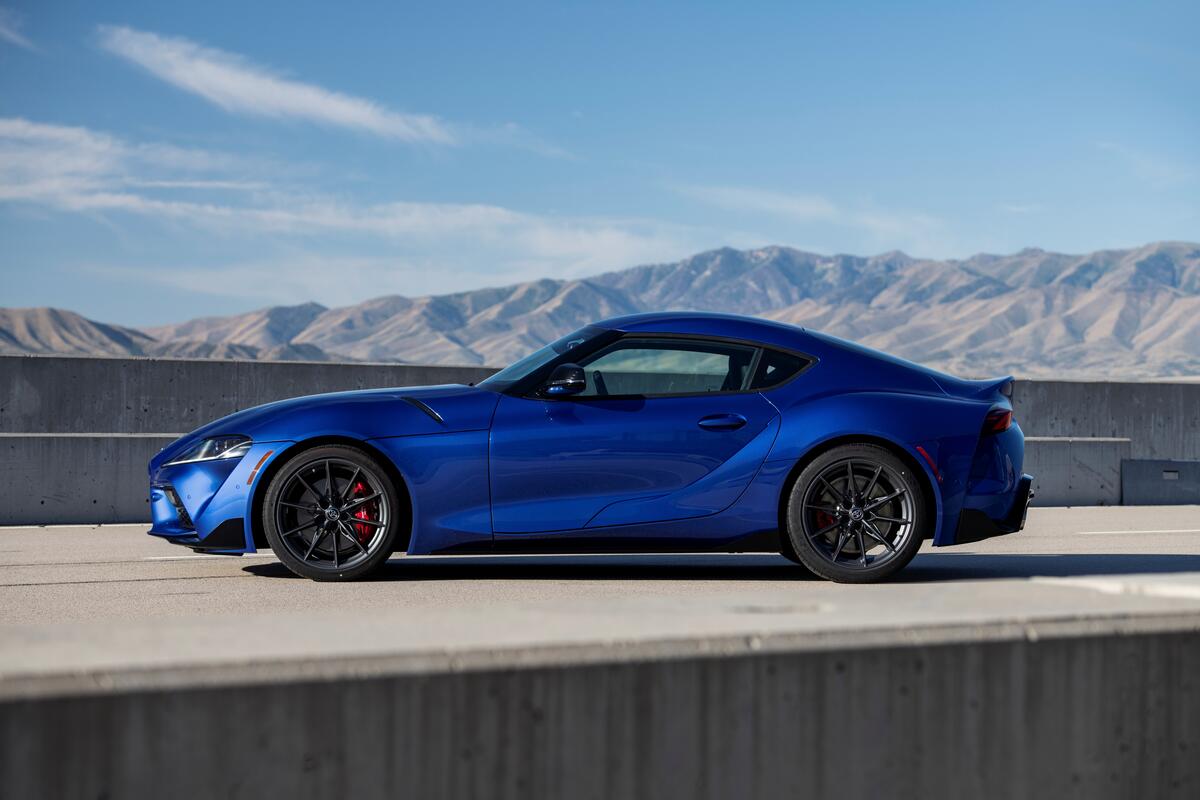
Toyota Supra
"...ing to bring in BMW, you know, Porsche, you know, Supra type clients, right? And provide a car that's a l..."
The Toyota Supra is a sports car built for performance and driving excitement. It’s designed to feel fast and sporty rather than like a normal commuter car. The podcast brings it up as part of a lineup aimed at performance buyers.
The Toyota Supra is a performance sports car known for its strong engine options and sports-car heritage. It’s significant in discussions because it’s often positioned as a “serious” sports car for buyers who want a modern, track-capable feel. In the podcast, it’s mentioned in the context of attracting certain performance-oriented customers.
electronic complexity
"it has more technology, you know, your phone connects and all sorts of things that require added bits of electronic complexity."
Electronic complexity means the car has lots of computer-controlled features and systems. The hosts are implying that more electronics can lead to more small problems and can be harder to fix if you don’t have the right dealer or tools nearby.
Electronic complexity refers to how many electronically controlled systems a modern car has—sensors, modules, and software features. The segment ties this to features like phone connectivity and suggests that more electronics can mean more potential points of failure or harder troubleshooting, especially for owners far from specialized service.
factory warranty
"it has a factory warranty on it. So, you know, as long as you're close to a dealer, you should be able to get things resolved."
A factory warranty is the official coverage from the car maker that pays for certain repairs for a limited time. The hosts are saying it matters a lot if you have a dealer nearby, because warranty work is usually handled through them.
A factory warranty is coverage provided by the automaker for repairs during a defined period and under defined conditions. The hosts use it to argue that owners who live near a dealer can get problems resolved more easily, especially when the car has electronics-related complexity.
electrical issues
"They're all modern cars are having all sorts of electrical issues, sensor related problems, because these cars have gotten so complicated."
Electrical issues are problems with the car’s electronics—like sensors, wiring, or computer-controlled parts. The hosts are saying modern cars have more of this stuff, so you may need a good dealer to diagnose it.
“Electrical issues” refers to problems caused by the car’s wiring, control modules, or electronic components. In modern cars, these can be triggered by sensor faults or software/diagnostic interactions, which is why the hosts connect them to dealer access and specialized troubleshooting.
sensor related problems
"They're all modern cars are having all sorts of electrical issues, sensor related problems, because these cars have gotten so complicated."
A sensor is a device that measures something (like temperature or airflow) and tells the car’s computer. If a sensor is wrong or fails, the car can behave oddly and may need a scan tool to figure out what’s happening.
Sensor-related problems are faults where one or more sensors send incorrect data to the car’s computers. Because modern vehicles use sensors to control everything from engine behavior to safety systems, a sensor fault can cause warning lights, drivability issues, or repeated diagnostic trouble codes.
pre-owned vs. newer-generation strategy
"So yes, if you go back a generation like an Avora as an example, that would be a smart strategy because most of those issues have been kind of figured out."
They’re suggesting that buying an older generation can be smarter because many early problems get fixed over time. It’s a way to reduce the chance of running into brand-new electronic quirks.
The hosts describe a strategy of buying one generation older to avoid early-life issues that show up in brand-new designs. The idea is that electronics and sensor problems tend to get identified and resolved as the model matures.
Parts availability
"Parts availability becomes the one challenge. But if you're buying a car like this, it's not your daily driver."
Parts availability means whether replacement parts are easy to find. If parts are hard to get, the car can sit longer waiting for repairs.
Parts availability is how quickly and easily you can get replacement components for a specific car. The hosts say it’s the main challenge for some niche/exotic brands, because if parts are scarce, repairs can take much longer even when you have a competent mechanic.
dealer network
"And that is a big, big, you know, handicap that Lotus, you know, has to deal with. And that is the lack of a good distribution and dealer network."
A dealer network is the set of authorized dealerships that can service a brand, stock parts, and handle warranty work. The hosts argue that Lotus is held back by a lack of a strong distribution and dealer network, which affects how easily owners can get repairs done.

Lotus Exige
"...generation to like the Avora, certainly the Elise exige will be a much more reliable, much easier one to ..."
The Lotus Exige is a lightweight sports car designed to be fun to drive, often with a more performance-focused setup. In the podcast, it’s mentioned as being easier to own and more reliable than another Lotus model being discussed. The takeaway is that it’s presented as the more practical option.
The Lotus Exige is a lightweight, track-oriented sports car derived from Lotus’s Elise platform approach. The podcast mentions the Exige as being “much more reliable” and “easier” compared with an Avora/Amira-type comparison, focusing on ownership practicality. It’s brought up in the context of choosing a Lotus model that’s simpler to live with.
sports cars have a shelf life
"But the problem is it's a sports car and all sports cars have a shelf life. Unfortunately, there's a lot of people that are attracted to the latest fancy shiny object..."
The hosts are saying sports cars often get the most attention when they’re new. After a few years, people move on to the next new thing unless the car keeps getting fresh updates.
The “shelf life” idea is that sports-car demand often peaks around launch and then fades as the model gets older. The hosts argue that buyers get pulled toward newer “shiny object” releases, so automakers must keep introducing updates to maintain momentum.
demand drops off a cliff
"So, you know, I think we've talked about this in the past, you know, with cars, you know, sports cars, after the first few years, you know, then the demand drops off a cliff."
They’re describing a situation where sales and interest fall very quickly after the early excitement wears off. For sports cars, that can happen unless the brand keeps things fresh.
“Demand drops off a cliff” describes a rapid decline in sales or interest after an initial surge. In the context of this episode, it’s used to explain why older sports cars can struggle unless manufacturers keep adding new variants or features.
AMG paddle shift
"because what is new, you know, that the new car was the AMG paddle shift four-cylinder turbo, you know, Yamera, which is arguably lighter and has more potential..."
A paddle shift is when you change gears using buttons or levers behind the steering wheel. It’s being mentioned here as part of the newer powertrain/tech package they’re talking about.
“Paddle shift” refers to steering-wheel-mounted controls that let the driver command gear changes without using a traditional gear lever. The hosts attribute this setup to an AMG-sourced four-cylinder turbo powertrain in the context of what’s new for the Lotus Amira.
Request an Explanation
Heard something you'd like explained? We'll add it to this episode.
Sign in to request explanations for terms you heard.
Want to learn more?
Browse our glossary for plain-English explanations of automotive terms, jargon, and concepts.
Help improve this episode
See something that's not quite right? Our annotations are AI-generated and can sometimes miss the mark. Click the flag icon on any annotation to suggest a correction.