
Why Chinese Cars Won't Be That Affordable: Ep 123
About this episode
Chinese car prices don’t translate cleanly to the U.S. and Canada, the hosts say—China-market numbers don’t match other regions, and currency translation is misleading. They connect higher costs to safety rules, shipping, and tariffs, plus the economics of selling low-profit “entry” models. Even if Chinese brands gain share with aggressive pricing, the hosts raise questions about long-term quality, service/repair, and direct-to-consumer bottlenecks. The conversation also touches on how mainstream “basic” cars already include tech.
safety regulations have to be followed because they are different
"And I wonder that $15,000 car that's sold in Mexico, will it be that in Canada and the US once our safety regulations have to be followed because they are different?"
Car rules aren’t identical in every country. If a car has to be redesigned or re-certified to meet local safety standards, it can cost more—so the price can’t always stay the same.
Different countries require cars to meet different safety regulations (crash testing, lighting, crash structures, occupant protection, etc.). That can force changes to the vehicle’s design and equipment, which adds cost and prevents a simple “same $15,000 car everywhere” outcome.

Audi sedan, the A5
"if you look at something like a basic Audi sedan, the A5, it's more expensive, even though it's built over there, it is more expensive to buy that there than it is in the US."
The Audi A5 is a popular Audi model. The host is using it to show that European cars can still cost more in Europe than in the US, even if they’re made there.
The Audi A5 is a compact executive sedan/coupe-family model from Audi, used here as an example of how pricing can differ by market. The key point is that even when a car is built in Europe, local taxes, distribution, and compliance costs can make it more expensive than in the US.
tariffs
"we are, you are seeing this with the tariffs, this increase in manufacturing capacity is being [502.0s] used more."
Tariffs are extra taxes the government adds to imported products. The host is saying tariffs can change how car companies decide where to build cars.
Tariffs are taxes the U.S. can place on imported goods. In this segment, the host links tariffs to changes in how automakers plan production and capacity, affecting what gets built in the U.S. versus imported.
manufacturing capacity
"we are, you are seeing this with the tariffs, this increase in manufacturing capacity is being [502.0s] used more."
Manufacturing capacity is basically how many cars a factory can build. The host is saying policy and demand changes can affect whether companies use that available production space.
Manufacturing capacity is how many vehicles a factory (or network of factories) can produce over a given time. The host ties changes in manufacturing capacity to tariffs and to automakers using previously unused production capability.
excess capacity
"There was excess capacity that wasn't being used at a lot of places, so automakers like [507.3s] Nissan, for example, it's like, but we'll just build more rogues, you know, in this factory, and [512.0s] they can do that."
Excess capacity means a factory could build more cars than it’s building right now. If that unused space gets used, companies can produce more cars without starting from scratch.
Excess capacity means factories have more production capability than they’re currently using. The host says automakers can ramp up output when they have unused capacity, which influences pricing and availability.

Nissan Rogue
"...for example, it's like, but we'll just build more rogues, you know, in this factory, and they can do that...."
The Nissan Rogue is a compact SUV meant for normal daily use. It’s built to be comfortable and easy to drive, with room for passengers and cargo. The podcast references it because more of them are being produced to meet demand.
The Nissan Rogue is a compact crossover SUV that’s designed for everyday driving with practical space and comfort. In the podcast, it’s mentioned in the context of production—specifically building more Rogues at a factory—highlighting how supply and demand can affect what’s available. That makes it relevant to discussions about inventory and sales.

Nissan Versa
"So they, they canceled the models like the Nissan Versa, [533.9s] the Kia Soul."
The Nissan Versa is a budget-friendly small car. The host is saying automakers can’t keep selling very cheap models if they aren’t selling enough to cover costs and still make profit.
The Nissan Versa is a low-cost subcompact car that’s often used as a “budget” benchmark in the U.S. The host cites canceling the Nissan Versa as an example of automakers abandoning models that don’t generate enough profit per car and therefore require very high sales volumes to work.
Econobox
"So if you only make a little bit of [552.1s] amount of money on a car like that, which is what they don't make much money, you need to sell a lot [556.9s] of them. And they weren't selling a lot. So the idea that that $15,000 Chinese car, it's not going [565.0s] to be a luxury vehicle, it is going to be an Econobox."
An Econobox is a cheap, basic car meant mainly to get you from point A to point B. The host is saying that if a car is priced around $15,000, people may still expect it to feel like more than just a bare-bones budget option.
An Econobox is an enthusiast term for a very budget-focused car that prioritizes low purchase price and basic transportation over features or refinement. The host argues that a $15,000 Chinese car would likely be expected to be an Econobox, but shoppers may want more than that.

Hyundai Elantra
"And they're picking up the Hyundai Elantra a little more expensive. It's starting to, as we see this economy shift, they're starting to see sales pick up."
The Hyundai Elantra is a popular small car. The hosts bring it up because it costs a bit more than the very cheapest models, and they’re talking about which cars are selling better as prices and demand change.
The Hyundai Elantra is a compact car (sedan) that’s often priced higher than the cheapest entry-level options while still competing in the mainstream market. Here it’s mentioned as a step up in price versus the Nissan Sentra, and the hosts discuss how sales respond as the market shifts.
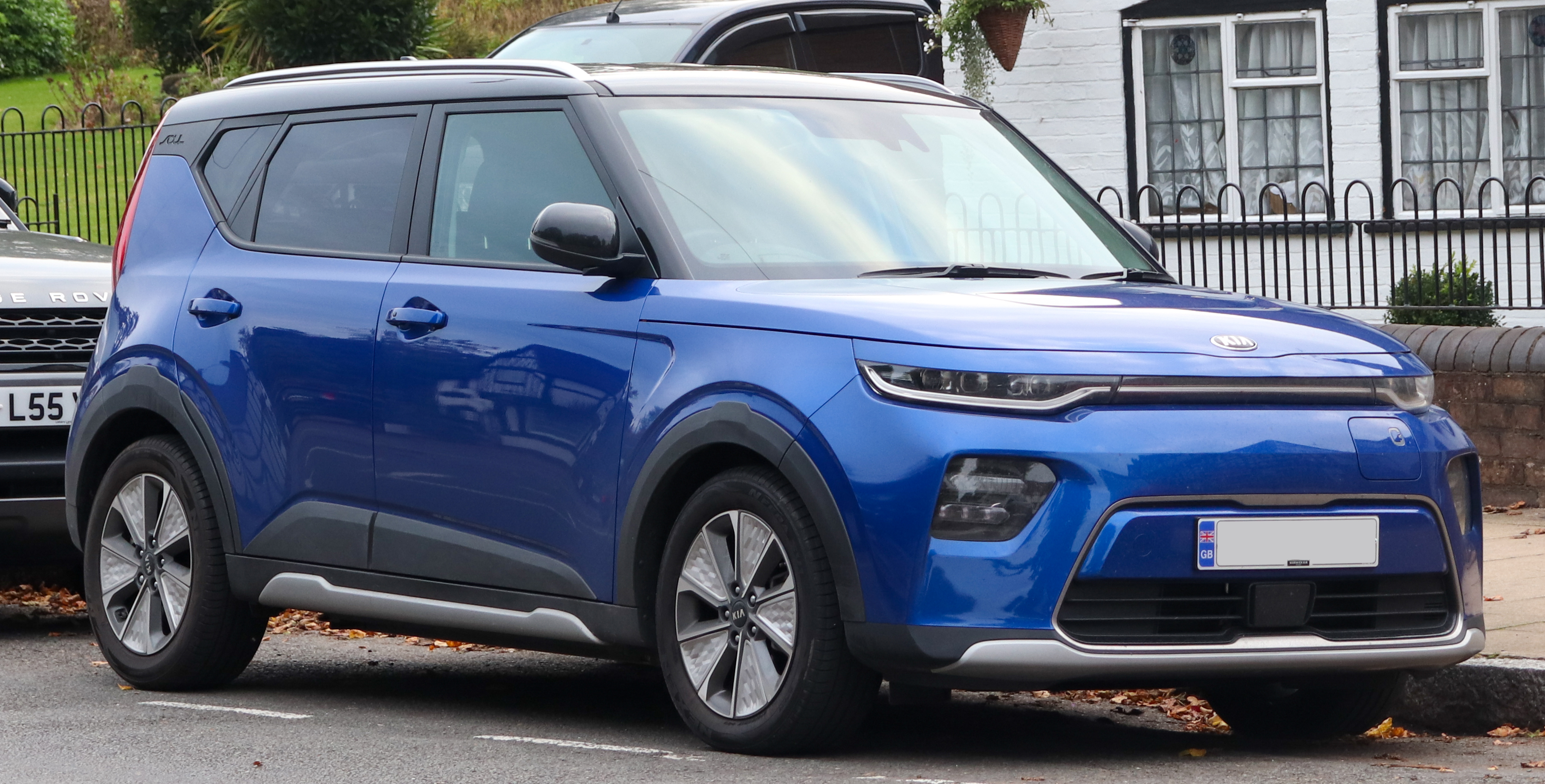
Kia Soul
"But those ones underneath the Hyundai Venue, the Kia Soul, they weren't, they weren't seeing that type of volume pick up."
The Kia Soul is a small, distinctive-looking car that’s often priced for value. The hosts mention it as another example of a model that didn’t sell more the way some competitors did.
The Kia Soul is a compact, boxy-styled crossover that competes in the value-focused small-car market. The hosts cite it alongside the Hyundai Venue as an example of models that didn’t see the same volume increase.

Hyundai Venue
"But those ones underneath the Hyundai Venue, the Kia Soul, they weren't, they weren't seeing that type of volume pick up."
The Hyundai Venue is a small SUV-style car. The hosts mention it to say some cheaper models didn’t get the same sales boost as others when the market changed.
The Hyundai Venue is a subcompact crossover/SUV that’s typically aimed at buyers wanting a small, affordable vehicle with a higher ride height than a sedan. In this segment, it’s used to contrast models that didn’t see the same sales rebound as the Elantra.

Ford F150
"Yeah. And that's always sort of been a thing where people say they want something affordable. And they go by loaded up by F-150 and get themselves upside down on a finance, which plagued our region forever. But you brought up an interesting point. And this next topic"
The Ford F-150 is a large pickup truck made by Ford. People buy it for work or everyday driving, and it comes in many versions with different features. It can be discussed in the context of how adding lots of options can make the monthly cost much higher.
The Ford F-150 is a full-size pickup truck known for being widely available in many trims, including more affordable base versions and heavily equipped “loaded” models. It often comes up in discussions about pricing and financing because buyers can end up stretching their budget when they choose higher-cost options. That’s why it’s frequently mentioned when people talk about getting into a payment they didn’t plan for.
free trade
"And a lot of the Japanese manufacturers for us, because we essentially more or less have free trade with Japan and Korea and Canada. So we actually get models from there that are built in the States, because it's cheaper to ship them from Japan than to just take a truck up from the US."
Free trade refers to agreements that reduce or eliminate trade barriers (like tariffs and import restrictions) between countries. The hosts use it to explain why Canada can receive models built in the U.S. from Japan and Korea more easily than bringing in cars made in China.
massive disruption
"So maybe some of that would continue with the Chinese, but it would be a massive disruption if the domestics and even the import brands that are here, like the Koreans and Japanese lost sales and production as well."
“Disruption” means the market gets shaken up fast. The idea is that if Chinese brands sell a lot more cars, other brands could lose sales and have to cut back production.
In auto-industry talk, “disruption” usually means a sudden, large shift in how cars are sold and produced—often from new competitors undercutting prices or changing demand. Here, the hosts are arguing that Chinese brands expanding could reduce sales and production for domestic and other foreign automakers.
Koreans
"So maybe some of that would continue with the Chinese, but it would be a massive disruption if the domestics and even the import brands that are here, like the Koreans and Japanese lost sales and production as well."
They mean South Korean car companies. The point is that if Chinese brands sell more cars, other foreign brands could lose sales too.
“Koreans” here is shorthand for South Korean automakers competing in the U.S. market (like Hyundai and Kia). The hosts are grouping them with Japanese and domestic brands as potential losers if Chinese brands take market share.
Japanese
"So maybe some of that would continue with the Chinese, but it would be a massive disruption if the domestics and even the import brands that are here, like the Koreans and Japanese lost sales and production as well."
They mean Japanese car companies. The claim is that Chinese brands taking market share could hurt Japanese brands’ sales and production plans too.
“Japanese” is shorthand for Japanese automakers selling in the U.S. market. The hosts are arguing that Chinese growth wouldn’t just affect domestic brands—it could also pressure Japanese and Korean manufacturers’ sales and production.
Volkswagen's
"Yes, manufacturers at the time, the Chinese have been building cars now for a while and they learned so much from Volkswagen's, the BS companies that came in and helped them."
They’re saying Chinese car companies learned a lot from Volkswagen—like how to build cars more effectively. It’s used as an example of outside help speeding up progress.
Volkswagen is referenced as a key source of know-how for Chinese automakers. The point is that Chinese manufacturers learned production and design lessons by working with or studying Volkswagen-era technology and practices.
long-term quality
"I do think there are questions on long-term quality. There's going to be a lot of questions on service and repair situations and how well they treat"
They’re talking about whether cars stay good after you’ve owned them for a while. Even if a car seems fine at first, the real test is whether it lasts and keeps working reliably over years.
“Long-term quality” refers to how well a vehicle holds up over years—things like durability of components, how reliably systems keep working, and whether problems show up after the initial honeymoon period. The hosts are saying Chinese brands may be good at launch, but there are still open questions about durability.
service and repair situations
"I do think there are questions on long-term quality. There's going to be a lot of questions on service and repair situations and how well they treat"
They mean how easy it is to get the car fixed when something breaks. If a brand doesn’t have good service support and parts, repairs can take longer and cost more.
This phrase points to the real-world ownership experience: whether a brand has enough dealer/service capacity, parts availability, and trained technicians to fix cars quickly and correctly. For newer entrants, the concern is that even if cars are affordable, repairs and maintenance could be harder or slower.
dealer network
"customers. It is a huge sore spot for any automaker that has, you know, service through a dealer here ... Will they go with that dealer network and rely on that and understand the importance of that?"
A dealer network is the set of local car dealerships that sell cars and handle repairs. If something goes wrong, the dealership is usually who fixes it. The question here is whether Chinese brands will rely on dealerships or try a different sales model.
A dealer network is the network of franchised dealerships that sell and service vehicles. For automakers, service and warranty repairs flowing through dealers can make or break customer satisfaction and brand reputation. The hosts discuss whether Chinese automakers will build this infrastructure or rely on direct-to-consumer sales instead.
direct-to-consumer route
"Or will they go a direct-to-consumer route, which will be hard to get through our political system, as some of the EV brands know. And the problem with direct-to-consumer is also on that service side..."
Direct-to-consumer means the company sells the car straight to you, instead of using regular car dealerships. That can be harder because laws and rules vary by location. Even if sales are direct, you still need places to service and repair the cars.
A direct-to-consumer (DTC) route means selling vehicles straight to customers rather than through traditional franchised dealerships. The hosts tie it to regulatory/political friction and also to service capacity, since repairs and maintenance still need a practical network. They argue that DTC can create bottlenecks on the service side even for established EV brands.

Tesla
"where it is a huge bottleneck even on the Tesla at this stage of Tesla's lifespan to fix and repair and maintain their vehicles..."
Tesla is mentioned as an example of an electric car brand that sells directly to customers. The hosts say that even Tesla can struggle with service and repairs becoming a bottleneck. They use that as a warning that direct sales don’t automatically solve maintenance.
Tesla is discussed here not as a specific model, but as an example of an EV brand that sells direct-to-consumer. The hosts argue that even Tesla can face service and repair bottlenecks, which can affect how smoothly vehicles get maintained over time. This is used to question whether Chinese brands will have an easier path.

Hyundai Palisade Calligraphy
"I was just in a Palisade calligraphy yesterday. ... it is $60,000. But ... it's got like a leather wrapped dashboard. It's got like the soft headliner. It's got all, I mean, it is, it is as quiet as any Lexus..."
The Hyundai Palisade Calligraphy is the nicer, higher-end version of Hyundai’s big family SUV. The hosts point out that it feels more luxurious inside—materials and a quiet ride—than you’d expect for the price. They use it to compare against what BYD is offering now.
The Hyundai Palisade Calligraphy is a top-trim, family-oriented SUV that’s positioned to feel like a luxury vehicle. The hosts highlight its cabin materials and quiet ride—like a leather-wrapped dashboard and soft headliner—as examples of how Hyundai has moved upmarket. They use it as a benchmark for how far BYD has progressed in perceived “mainstream-to-luxury” feel.

Lotus Excel
"...w, SUV. If you had shown someone that next to the Excel or whatever it was when they did, when the first ..."
The Lotus Excel is an older sports car made by Lotus. It was designed for fast, comfortable driving over longer distances. The podcast mentions it because it’s part of Lotus history and helps explain how later models were compared.
The Lotus Excel is a classic sports car from Lotus, known for being a high-performance grand touring model. The podcast references it in a historical comparison, suggesting it was notable enough to be used as a reference point when discussing what came next. That kind of mention usually signals the Excel’s role in Lotus’s lineup and its impact on enthusiasts.

Hyundai Excel
"If you had shown someone that next to the Excel ... you wouldn't believe it was the same company, right?"
The Hyundai Excel is an older Hyundai model that the hosts mention as the “before” example. They’re using it to show how much Hyundai’s cars have improved in quality and comfort since then. The point is the big change in how the brand feels today.
The Hyundai Excel is an older, more basic Hyundai model the hosts use as a contrast point to show how far Hyundai has progressed. They’re not discussing the Excel’s technical details here—rather, they’re emphasizing the brand’s leap in perceived quality and refinement over time. It’s part of their argument that the “window” to improve is shrinking for newer competitors.
BYD
"So where BYD is now is much closer to the calligraphy, you know, Palisade than it is to the Excel for sure."
BYD is a Chinese car company. The hosts are saying BYD’s newer cars feel much more “luxury-like” than you might expect, based on how they compare it to a high-end Hyundai SUV. It’s used to support their argument about how fast Chinese brands are improving.
BYD is a Chinese automaker the hosts use as an example of how quickly Chinese brands are closing the gap in perceived quality. In this segment, they compare BYD’s current offerings to the Hyundai Palisade Calligraphy rather than to older, entry-level Hyundai models like the Excel. The takeaway is that BYD’s design and cabin refinement are getting closer to mainstream luxury expectations.

Kia Sportage
"They'd been in the US for a couple of years with the original on Sportage. And I can remember their sedan, but the Rio,"
Kia’s Sportage is a popular SUV model. The host is basically saying Kia used to be new in Canada, and people noticed the cars were different from what they expected.
The Kia Sportage is a compact SUV from Kia that became one of the brand’s early mainstream models in North America. In this segment, the host uses it as a reference point for when Kia first started selling in Canada, tying it to how quickly the brand’s lineup and reputation changed.

Kia Rio
"And I can remember their sedan, but the Rio, the very first Rio we got, and I worked rental cars and we got them there. So it was the old one Rio. And I remember driving that and thinking, what is this thing?"
The Kia Rio is a small, budget-friendly car line from Kia. The host is saying the early Rio felt confusing or unimpressive, but Kia has improved a lot since then.
The Kia Rio is Kia’s small subcompact sedan/hatchback line, and it’s often used as an entry-level model for new markets. Here, the host recalls the very first Kia Rio they drove in Canada (from rental fleets) and contrasts that early impression with how much better Kia’s modern cars feel, especially in EV form.
EVs
"And now, like the keys are fantastic, especially the EVs. So 20 years, it changed quick."
EVs are cars that run on electricity stored in a battery. The host is saying the EV experience has gotten much better compared to earlier days.
EVs are electric vehicles powered primarily by an electric motor and battery rather than a gasoline engine. The host mentions that the keys/experience are “fantastic,” especially for EVs, using that as evidence that the industry can improve quickly over time.
CVT
"I mean, you know, when you talk about the Japanese and introducing a CVT transmission, you know, at the time, if you drive in Japan, if you've been there, everyone drives at a very steady pace, right?"
A CVT is a type of automatic transmission that changes ratios smoothly rather than shifting gears like a traditional automatic. The host is saying that how people drive (calm vs aggressive) can make a CVT feel great or annoying.
CVT stands for continuously variable transmission, a gearbox that can smoothly change gear ratios instead of stepping through fixed gears. The host’s point is that CVTs can feel different depending on driving style and region—people in the U.S. may drive more aggressively, which can make the CVT’s “smooth” behavior feel less satisfying.
Hemmies
"we just saw the swing going back to people wanting, you know, the Hemmys and, you know, the complete swing away from the EV ethos"
“Hemmies” refers to a famous type of V8 engine used by some Chrysler cars. The host is saying people are starting to want big, powerful gas engines again.
“Hemmies” is a enthusiast nickname for Chrysler’s HEMI V8 engines, known for their hemispherical combustion chambers. The host uses it to describe a consumer swing back toward big, traditional gasoline engines after a period of EV-focused interest.
EV ethos
"we just saw the swing going back to people wanting, you know, the Hemmys and, you know, the complete swing away from the EV ethos and like, no, give me the big, the biggest thing"
“EV ethos” means the overall attitude that electric cars are the direction to go. The host is saying some buyers are moving away from that and wanting bigger gas engines instead.
“EV ethos” refers to the cultural/consumer mindset that prioritizes electric vehicles—often emphasizing efficiency, sustainability, and the idea that EVs are the future. The host claims there’s been a “complete swing away” from that mindset, toward wanting larger, more powerful engines.
12 seconds to get to 60 miles an hour
"And so, you know, the little $15,000 car I mentioned, I think it has like less than 120 horsepower. It takes 12 seconds to get to 60 miles an hour, which I don't think..."
This is a simple test of how fast a car accelerates from a stop to 60 mph. The lower the number of seconds, the quicker the car feels when you press the gas.
“0–60 mph” (here described as “12 seconds to get to 60 miles an hour”) is a common acceleration test that measures how quickly a car reaches 60 mph from a stop. The host uses it to show that a low-cost car with low power would still be slow in real driving situations.
horsepower
"And so, you know, the little $15,000 car I mentioned, I think it has like less than 120 horsepower. It takes 12 seconds to get to 60 miles an hour..."
Horsepower is a number that roughly describes how strong a car’s engine is. Higher horsepower usually helps a car accelerate faster, which is why the host mentions it when comparing cheap cars.
Horsepower is a measure of engine power—how much work the engine can do over time. In this segment, the host uses horsepower to argue that a very cheap car likely won’t feel quick, especially compared with mainstream small crossovers.
screens
"And today's basic cars, like from a Nissan or a Hyundai or Kia, they have screens. They've got the full screens and everyone sees the expensive Chinese cars with lots of screens."
“Screens” are the dashboard displays and infotainment screens you touch to control things like navigation and media. The host is arguing that even cheaper cars now tend to include them.
In modern cars, “screens” usually refers to infotainment and driver-information displays (often large touchscreens). The host uses them as shorthand for the tech level that today’s mainstream “basic” cars include.
analog gauges
"But that $15,000 one has analog gauges, doesn't have any of the tech, doesn't, you know, it is bare. And those cars don't exist in the US anymore."
Analog gauges are the classic dashboard dials with needles. The host is saying that cheaper cars may still use these instead of newer digital screens and tech features.
Analog gauges are traditional instrument dials (like a speedometer and tachometer) with needles and physical markings. The host contrasts them with modern digital/large-screen dashboards to argue that a “$15,000” car would feel more basic than what U.S. buyers expect.
bare bone cars
"And so people say, oh, that's what we want. I beg to differ. So I think what you're seeing really in these, like if you take a Chevy Trax..."
“Bare-bones” means a car with very few features. The host is saying that in the U.S., buyers don’t really get (or want) the super-minimal versions anymore.
“Bare-bones” refers to a stripped-down vehicle with minimal features. The host argues that the U.S. market no longer sells truly bare-bones cars, so Chinese brands can’t rely on selling an ultra-basic spec to win buyers.

Chevrolet Trax
"So, you know, it's, I think the expectation of an American consumer, as much as they might be saying they want this one thing, they don't, what they're thinking of bare bones is not what it will really be. Yeah, the Trax is a fantastic value for them. I've spent a lot of time, but I agree..."
The Chevy Trax is a small, budget crossover. The host is using it as an example that even cheaper cars today usually include modern tech, not the old-school “bare minimum” setup people imagine.
The Chevrolet Trax is a compact crossover positioned as an affordable value option. Here, the host uses it to argue that today’s “basic” cars still come with modern features (like screens), so the American idea of “bare bones” doesn’t match what buyers actually get.
rear suspension setups
"And the Hyundai's too. And their rear suspension setups were so strange for our roads. And when you hit bumps, they would squirm side to side."
This means the parts and tuning that help the back wheels handle bumps. If it’s set up for smoother roads, it can feel wobbly or unstable on rough roads.
“Rear suspension setups” refers to the specific design and tuning of the suspension components that control how the rear wheels move over bumps and uneven pavement. The host argues that Hyundai/Kia’s early rear suspension tuning didn’t match North American road conditions, leading to noticeable side-to-side motion.
expansion gaps
"But over here, our roads are terrible. And you have expansion gaps and puddle. And yeah, it's just a small learning curve..."
Expansion gaps are the intentional seams in roads and bridges that allow pavement to expand and contract with temperature changes. The host notes that these features, along with potholes/rough surfaces, can excite suspension movement and reveal tuning weaknesses.
learning curve
"And yeah, it's just a small learning curve where even with testing, they still didn't, well, when this car is 50,000 miles on it, and someone's driving in Michigan, what's it going to be like?"
The host means it takes time for a brand to figure out how its cars behave on local roads. Even if they test first, real driving over time can show issues they didn’t fully predict.
In this context, “learning curve” means the time it takes a new or expanding automaker to gather real-world data and refine tuning for local road conditions. The host’s point is that even with testing, long-term behavior at higher mileage and in specific regions (like Michigan) can differ from what engineers expected.
US MCA negotiation
"And, you know, the next few years, we've got to figure out the US MCA negotiation. I think that will be really interesting."
pickup trucks
"when you talk about markets, like the only other market for like pickup trucks, like the light duties that that make, you know, the domestics of the US so profitable is Canada."
Pickup trucks are the common North American work/utility vehicles with an open cargo bed. The host is saying this segment matters a lot for how profitable certain automakers can be.
Pickup trucks are a specific vehicle type that’s especially important to North American market economics because they’re often used for work and have high demand. The host uses them as an example of a segment where Canada is a key market for profitability.

Ford Mustang
"...w. I don't know if they're still in business. The Mustang doesn't sell like it used to. So those are sort o..."
The Ford Mustang is a sports car from Ford. It’s known for being fun to drive and for its classic look. The podcast brings it up because sales and interest may not be as strong as in the past.
The Ford Mustang is a popular American sports car that’s been a long-running symbol of performance and style. The podcast notes that it doesn’t sell like it used to, which is the kind of market conversation dealers and buyers often discuss. That makes it a relevant example when talking about changing demand for certain cars.

Jeep Wrangler
"...butter right now. And I mean, every domestic Jeep Wrangler, like you can name one or two models that that's ..."
The Jeep Wrangler is an SUV built for off-road driving. Many versions can have the roof and doors removed, which makes it feel more open-air. The podcast mentions it because it’s a very common model people talk about and buy.
The Jeep Wrangler is a rugged off-road-focused SUV known for its removable top and doors on many models. The podcast suggests that Wranglers are common enough that you can name only a few models that don’t fit the usual pattern, implying strong overall presence in the market. It’s brought up as a benchmark for how certain vehicles keep moving despite changing conditions.
Chemical Guys Tire and Trim Gel High Gloss Restore and Protectant
"Okay, so it is time for the product review and today's product is Chemical Guys Tire and Trim Gel High Gloss Restore and Protectant. A lot of words and basically what I am discussing or reviewing is a gel you use to get all those plastic bits on the outside of your car and the rubber bits and your tires to shine like new."
Chemical Guys is a detailing brand that sells products for cleaning and protecting a car’s exterior. This particular gel is meant to make faded plastic trim and tires look dark and shiny again, while also adding some protection.
Chemical Guys is an aftermarket brand that makes detailing products, and this specific product is a tire-and-trim gel meant to restore and protect exterior plastics and rubber. The “high gloss” positioning indicates it’s designed to leave a shiny finish rather than a matte look.

2014 Subaru Forester XT
"Now again, I am using my well used, well aged 2014 Subaru Forester XT as the test bed and with over 150,000 miles through salt and all sorts of other debris that a north wet or northeast winter brings with it."
This is a 2014 Subaru Forester XT, a Subaru SUV with a more powerful “XT” trim. The host uses it as their real-world test car to show how a product can make the exterior trim and tires look less faded after winter road salt and grime.
The 2014 Subaru Forester XT is a compact SUV from Subaru that’s notable for its turbocharged setup (the “XT” trim) and for being used as a practical, everyday test vehicle. In this segment it’s the host’s “test bed” for showing how a tire-and-trim dressing restores faded exterior plastics and rubber after harsh winter conditions.
test bed
"Now again, I am using my well used, well aged 2014 Subaru Forester XT as the test bed and with over 150,000 miles through salt and all sorts of other debris that a north wet or northeast winter brings with it."
A “test bed” just means the car they use to try the product and see how it turns out. In this case, it’s their own Forester that’s been through winter grime to judge the results.
A “test bed” is the vehicle used to evaluate a product in real conditions. Here, the host uses the 2014 Subaru Forester XT to see how well the gel restores faded trim after salt and winter debris.
microfiber
"So I use this gel and applying it is super simple using the microfiber sort of spongy cloths that you can buy as well."
Microfiber is a soft cleaning cloth material commonly used for car detailing. It helps you apply products smoothly without scratching the trim or paint.
Microfiber is a synthetic fabric used in car detailing because it’s soft and can hold onto product while reducing the chance of scratching. In this segment it’s used as an applicator cloth for spreading the gel onto exterior trim.
linear horizontal strokes
"You just put a bit on there and just using linear horizontal strokes on the trim bits that you want to restore. You spread it out and it's crazy how instantly it absorbs into the material..."
This is just the way the host applies the gel—by rubbing it on in straight, even lines. The goal is to spread it smoothly so it doesn’t look blotchy or streaky.
“Linear horizontal strokes” describes the application technique—moving the applicator in straight, consistent lines. Detailing products like tire-and-trim gels are often applied this way to spread evenly and avoid streaking.
Chemical Guys Tire and Trim Gel High Glosser Store and Protected
"so yes I recommend Chemical Guys Tire and Trim Gel High Glosser Store and Protected. We'll take another quick break and we'll be back with the mailbag."
Chemical Guys is a car-care brand. This particular gel is meant to make tires and exterior plastic trim look darker and shinier again, but it may need redoing later.
Chemical Guys is an aftermarket detailing brand, and this product is specifically aimed at dressing tires and exterior plastic trim. The host credits it with quickly restoring a darker, shinier look to the Forester’s trim, though they note it likely wears off over time.

Dodge Ram Rumblebee
"Okay so going to our mailbag we had a reader who saw our post on the new Dodge Ram Rumblebee and they wanted to know is this a all-new truck or a sub-brand or what is it?"
The Dodge Ram Rumblebee is a special version of a Ram pickup. It’s meant to look and feel more performance-oriented, with styling cues like a widebody look and hood scoops.
The Dodge Ram Rumblebee is a performance-focused Ram truck sub-trim/branding concept aimed at giving the look and vibe of a widebody, track-oriented street truck. The host ties it to Ram’s V8 lineup and specifically mentions TRX-style cues like a wide body, hood scoops, and other “go-fast” styling.
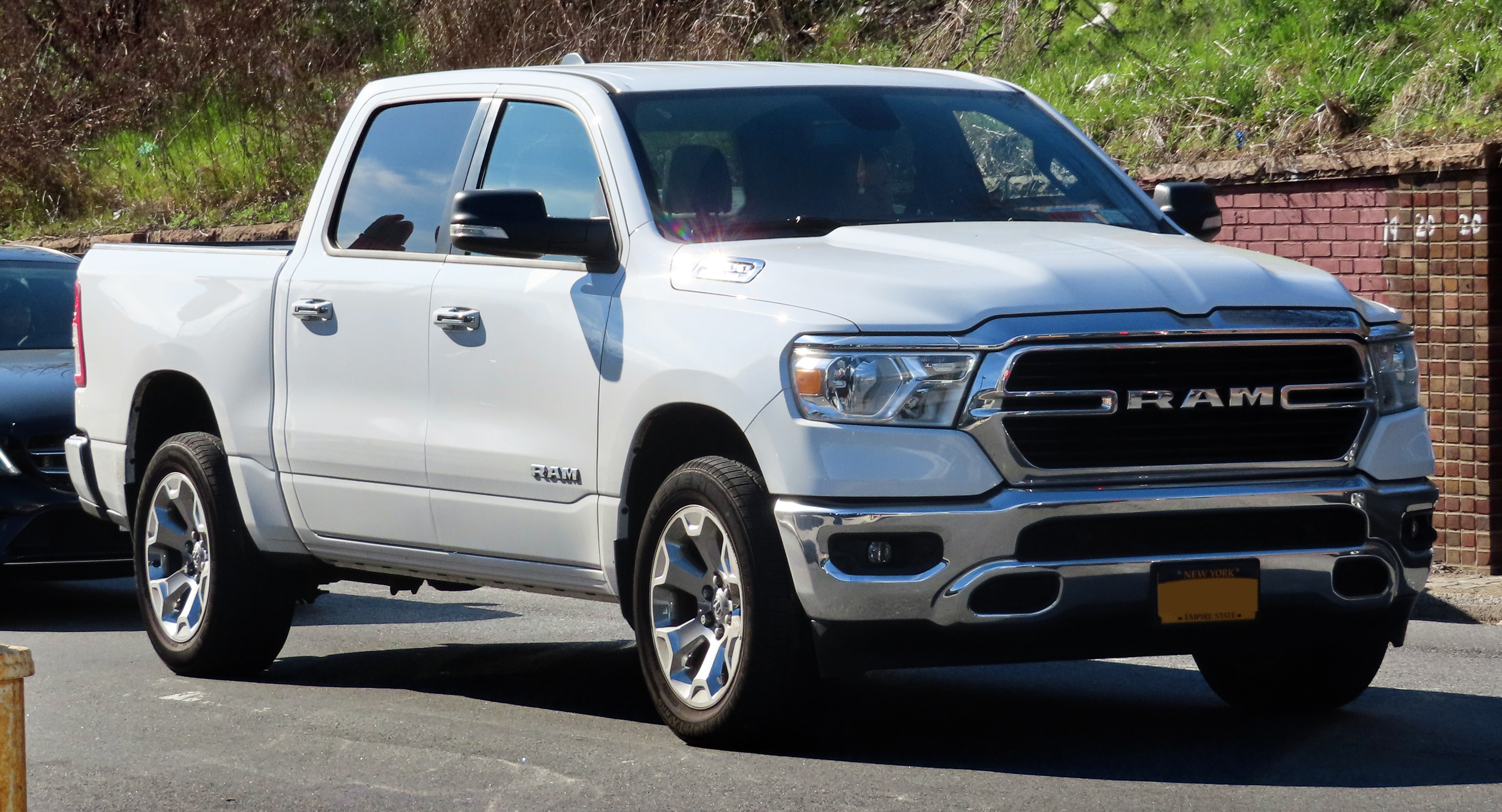
Ram 1500
"Now I believe the regular 5.7 liter Hemi V8 will be available on a regular Ram 1500 but if you want a performance truck well the Rumblebee..."
The Ram 1500 is a common full-size pickup model. Here it’s mentioned as the regular truck that could get the 5.7-liter Hemi V8.
The Ram 1500 is Ram’s mainstream half-ton pickup, and in this segment it’s used as the baseline for where a 5.7-liter Hemi V8 would be offered. The host contrasts it with the Rumblebee as the performance-oriented option.
Hemi V8
"Now I believe the regular 5.7 liter Hemi V8 will be available on a regular Ram 1500"
A “Hemi V8” is a V8 engine design from Chrysler/Dodge with a combustion chamber shape meant to burn fuel efficiently. In this segment, it’s the engine option being discussed for the Ram lineup.
“Hemi V8” refers to Chrysler’s hemispherical combustion-chamber engine design paired with a V8 cylinder configuration. The hemispherical shape is intended to improve airflow and combustion efficiency compared with simpler chamber layouts.

TRX
"if you want a performance truck well the Rumblebee with its wide body TRX like inspiration and hood scoops and all the the go-fast bits"
TRX is Ram’s high-performance truck branding. They’re saying the Rumblebee will borrow some of that look, like the widebody style and hood scoops.
TRX refers to the Ram TRX performance truck line, which is known for an aggressive widebody look and high-performance styling cues. The host says the Rumblebee will take inspiration from TRX with features like a wide body and hood scoops.
wide body
"if you want a performance truck well the Rumblebee with its wide body TRX like inspiration and hood scoops and all the the go-fast bits"
“Wide body” means the vehicle’s fenders are made wider. It usually helps fit wider tires and makes the truck look more aggressive.
A “wide body” is a bodywork style that adds wider fenders/arches to visually (and sometimes physically) broaden the car or truck. It’s commonly used on performance models because it can accommodate wider tires and gives a more aggressive stance.
hood scoops
"and hood scoops and all the the go-fast bits this is the street truck the the sport truck"
Hood scoops are raised openings on the hood. They can help bring more air to the engine area, and they also signal a performance look.
Hood scoops are openings on the hood that can help route airflow to the engine bay or to cooling components. Even when they’re partly cosmetic, they’re a common performance styling cue associated with higher airflow and track-focused intent.
go-fast bits
"and hood scoops and all the the go-fast bits this is the street truck the the sport truck"
“Go-fast bits” just means the parts that make a truck feel more performance-focused. In this context, it’s describing the Rumblebee’s sporty, performance-style upgrades.
“Go-fast bits” is enthusiast slang for performance-oriented features—often a mix of functional parts and aggressive styling elements. Here it’s used to describe the Rumblebee’s TRX-inspired hardware and appearance cues.
V8
"amazing considering the Ram didn't have a V8 last year and now it has three so you can get the 5.7 ... V8 which is available in other trims as well"
A V8 is an engine with eight cylinders. More cylinders usually means more power potential, and the host is saying Ram is adding V8 options to make the truck quicker.
A V8 is an engine with eight cylinders arranged in a “V” shape. In this segment, the host uses V8 availability to explain why the Ram lineup is getting faster—moving from smaller powerplants to larger V8 options.
6.4 liter V8
"there will now be the 6.4 liter V8 the 392 that's been available in many other products wasn't in the Ram previously"
“6.4 liter” is the engine’s size. In this discussion, the bigger 6.4L V8 is presented as the reason the truck gets quicker than the smaller engine.
“6.4 liter” refers to engine displacement, a measure of the total volume swept by the pistons. The segment ties the 6.4L V8 to the Ram 392 variant and quotes faster acceleration and quarter-mile times when compared to the smaller 5.7L option.
supercharged Hellcat engine
"optional engine which is the 6.2 liter supercharged Hellcat engine ... in this version it makes 777 horsepower"
A supercharged engine uses a device that pushes extra air into the engine. More air lets it make more power, and the host is saying this Hellcat setup is what makes the Rumble Bee so fast.
A supercharged engine uses a belt-driven compressor to force more air into the cylinders, which enables much higher power than the same engine without boost. The host connects the “Hellcat” supercharged setup to the quoted 777 horsepower and the Rumble Bee’s performance claims.

Challenger Hellcat
"...tional engine which is the 6.2 liter supercharged Hellcat engine although I don't really know if they're ca..."
The Challenger is a muscle car from Dodge. The podcast mentions a very powerful version that uses a large 6.2-liter supercharged engine. It’s included because it represents the top end of what the Challenger can be.
The Dodge Challenger is a muscle car known for powerful engine options and a performance-focused design. The podcast specifically references the 6.2-liter supercharged Hellcat engine, which is one of the most extreme versions associated with the model. It’s brought up to illustrate the kind of high-performance equipment people talk about when discussing the Challenger lineup.
zero to 60
"it makes 777 horsepower which is way more than it used to make the ridiculous stats on this truck with that engine are zero to 60 miles an hour in 3.4 seconds"
“Zero to 60” measures how fast a car can go from standing still to 60 mph. The quicker the number, the faster the truck is accelerating.
“Zero to 60” is shorthand for how quickly a vehicle accelerates from 0 mph to 60 mph. The segment uses these times (3.4 seconds for the 777-hp version, for example) to argue that a pickup can be competitive with drag-focused cars.
quarter mile
"then if you get the 392 the 6.4 you're down to 5.2 seconds and a 13.2 quarter mile and then of course ... 11.6"
The quarter mile is a drag-racing measurement of how fast a car can cover 1/4 mile. Faster quarter-mile times generally mean stronger acceleration and top-end pull.
The quarter mile is a common drag-racing distance (1,320 feet) used to compare straight-line performance. The host quotes quarter-mile times for each Ram engine option to show how the supercharged version is expected to run much faster.
top speed
"it's quoted as having a top speed they hope for 170 miles an hour in a truck I mean legally you can't but even on a track it's obviously for bragging rights"
Top speed is the highest speed the vehicle can reach. The host is basically saying it’s mostly for bragging, because it’s not something you can safely or legally do in normal driving.
Top speed is the maximum speed a vehicle is expected to reach under ideal conditions. The host notes Ram’s quoted target of about 170 mph for the performance truck, framing it as bragging rights rather than practical everyday use.
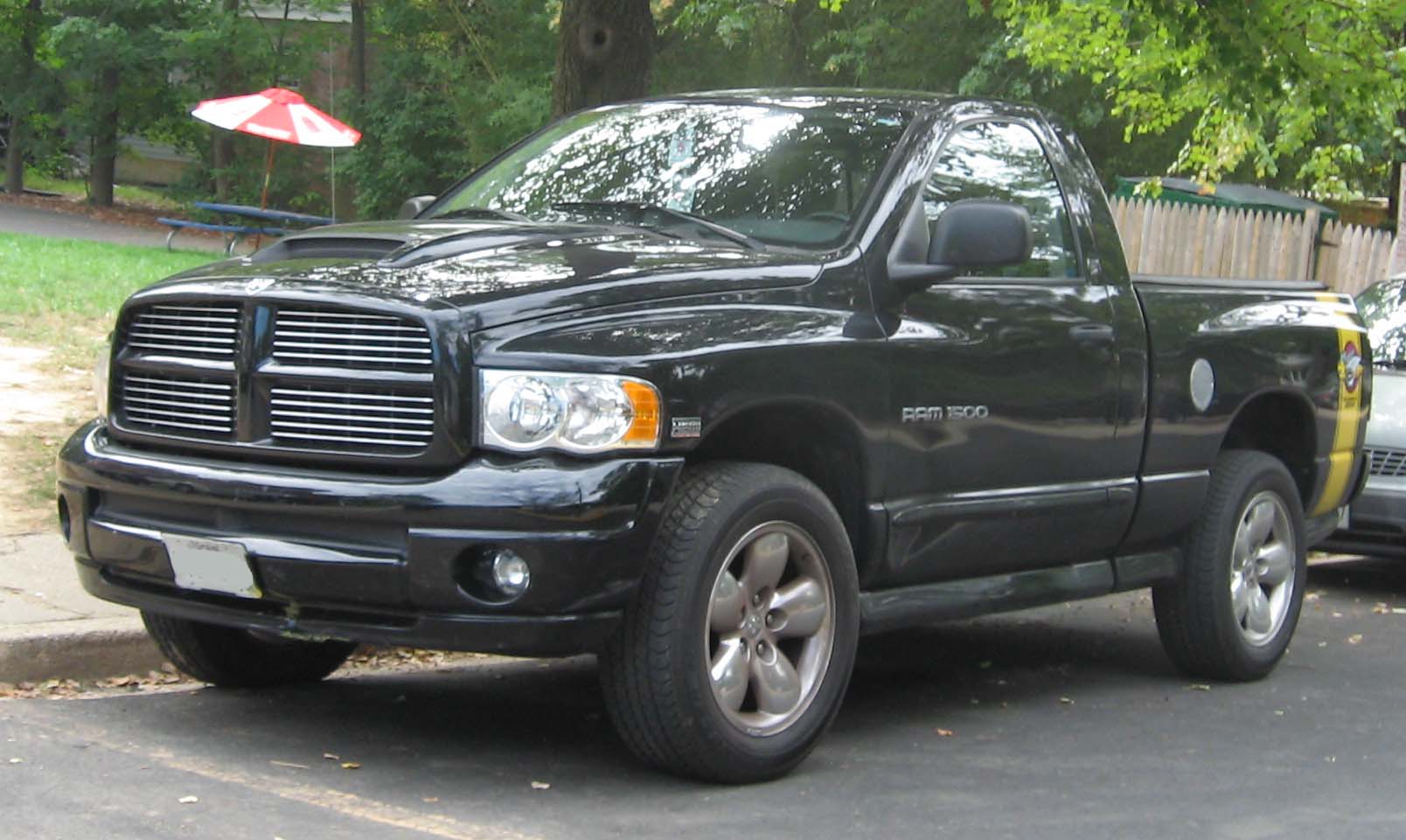
Ram Rumble Bee
"of these new rumble bees or SRT whatever they're officially called I think it is SRT rumble bee ... that supercharged 777 horsepower"
The Ram Rumble Bee is a special performance version of a Ram pickup. It’s the supercharged, high-horsepower model in the lineup, and the host is saying it’s meant to be very quick—almost like a drag car.
The Ram Rumble Bee (SRT) is a performance trim built around a supercharged V8, positioned as a more aggressive, muscle-car-style pickup. In this segment, the host highlights its “777 horsepower” output and drag-strip-style acceleration claims as part of Ram’s push toward higher-performance trucks.
SRT
"or SRT whatever they're officially called I think it is SRT rumble bee"
SRT is a label for the more performance-focused versions of certain vehicles. The host is saying the Rumble Bee is officially tied to that performance branding.
SRT is a performance sub-brand used by Stellantis-era Dodge/Chrysler products for higher-output models. In this segment, the host uses “SRT” to refer to the official naming of the Ram Rumble Bee performance trim.
low stance
"they're gonna be pretty unmistakable their wide body low stance fat tired"
“Low stance” means the truck sits lower to the ground than normal. It’s often done with suspension changes and gives a sportier look.
A “low stance” describes a vehicle sitting closer to the ground, typically from suspension lowering. The host pairs it with wide-body and wider tires to describe the Rumble Bee’s aggressive, performance-oriented appearance.
fat tired
"their wide body low stance fat tired"
“Fat tires” means wider tires. Wider tires can help with traction, and they also make the truck look more aggressive.
“Fat tires” is enthusiast slang for wider tires than stock, which can improve grip and reinforce the performance look. Here it’s used as part of a visual checklist for how the Rumble Bee will look compared with a more standard Ram truck.
Request an Explanation
Heard something you'd like explained? We'll add it to this episode.
Sign in to request explanations for terms you heard.
Want to learn more?
Browse our glossary for plain-English explanations of automotive terms, jargon, and concepts.
Help improve this episode
See something that's not quite right? Our annotations are AI-generated and can sometimes miss the mark. Click the flag icon on any annotation to suggest a correction.