NVH is a car-industry way of talking about how loud it is, how much it vibrates, and how smooth or rough it feels. Engineers work to reduce NVH so the car feels more refined.
“Tail of the Dragon” refers to a famous stretch of winding road in the U.S. that’s known for tight turns and elevation changes. It’s a popular route for drivers to test how well a car handles in real-world cornering conditions.
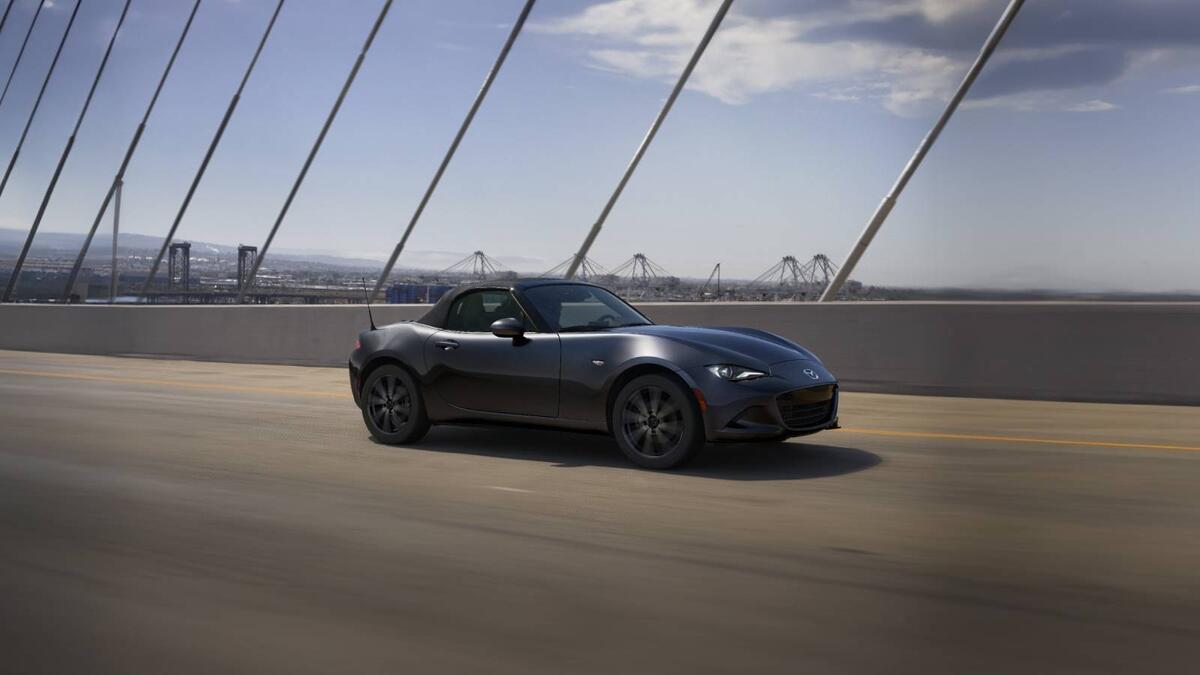
The Miata is a small two-seat car made for driving pleasure. It’s known for being light and easy to handle, so it feels fun on curvy roads. People often talk about it because it’s a great car for learning and enjoying driving.
Term
closed supervision
This sounds like the driving was done under controlled, supervised conditions rather than everyday traffic. It’s meant to be safer while someone coaches the driver.
Car
1993 Mazda Miata LE
This is a 1993 Mazda Miata roadster, in the “LE” trim. People like it because it’s light and fun to drive, especially on twisty roads.
The Audi R8 is a supercar from Audi with the engine placed toward the middle of the car. That layout helps it handle well. In this story, it’s one of the cars the kids want to show off.
An MG Midget is an older British sports car that’s famous for being light and fun. People often modify them, including changing the exhaust to make it louder and sound better. Here they’re talking about one that was very clean and had a straight-pipe exhaust.
“Straight piped” means the exhaust is modified to be less muffled, so it’s louder. It often makes the car sound more aggressive. In this story, that’s why the MG Midget stood out.
The Lotus Elan is an older Lotus sports car. In the podcast, it’s mentioned as an example of the kinds of issues people sometimes had with older sports cars. The point is to compare past ownership experiences with what newer cars are like.
“Clapped out” is slang for a car that’s beat up and not in great shape. Here, it means many older Miatas have been neglected or driven hard by previous owners.
A track day is when regular cars go to a race track for fun and practice. You drive on the track instead of public roads, and it can be tough on parts if you push the car.
“Sliding” means the tires lose grip and the car moves sideways a bit while you steer. It’s something drivers do on a track to make the car rotate and feel more exciting.
Wheel bearings help the wheel spin smoothly. If they wear out or get damaged, the car can get noisy or feel rough, and replacing them can get you back on track.
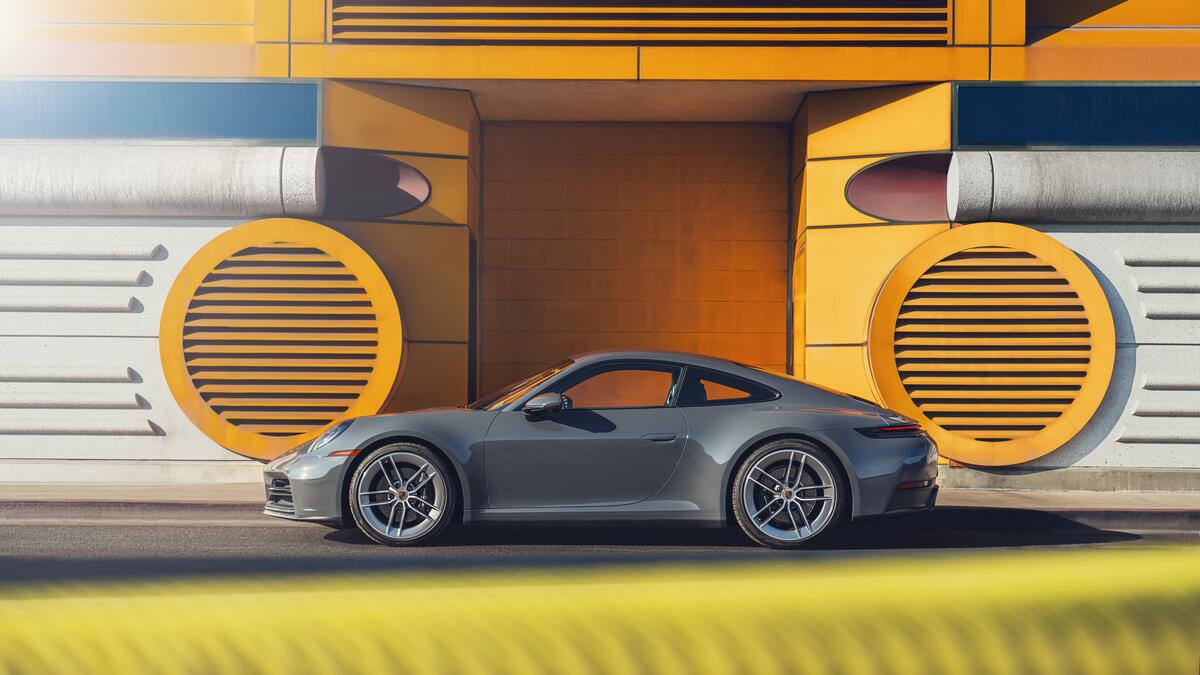
“GT3” usually means the Porsche 911 GT3, a track-oriented version of the 911. People bring it up as an example of a car that’s meant to be driven hard for fun.
Calway makes an aftermarket supercharger kit. A supercharger forces more air into the engine, which usually makes the car faster, and the host is describing testing the car after installing it.
The Corvette is a sports car made by Chevrolet. People who like Corvettes often talk about how different versions are engineered to make more power. In the podcast, it comes up in a discussion about why a certain Corvette variant might use supercharging.
In performance-car talk, “gearing” usually refers to the transmission’s gear ratios and/or final-drive ratio, which strongly affect acceleration feel and how the engine behaves at different speeds. The hosts bring it up while comparing the Grand Sport to the Z06, implying the two cars may feel different even before any supercharger upgrade.
“Bang for the buck” means getting the most improvement for the money. They’re saying the upgrade path can be a cheaper way to make more power than buying the top model.
Caterham is a British car company famous for small, lightweight sports cars. The host is saying a Japanese company is now involved with Caterham, but the brand is still focused on keeping its classic “Seven” formula.
The “Super Seven” is Caterham’s version of a classic lightweight sports car. The point here is that it’s meant to feel old-school and connected to the driver, not like a modern gadget-heavy car.
“Analog cars” means cars that feel more mechanical and direct—where you can sense what the car is doing without it being run by lots of computers and screens. The host is saying Caterham keeps that classic feel.
Term
IP
“IP” here means intellectual property—basically the legal rights to a design or idea. The host is saying Caterham acquired the rights behind the Seven concept and kept building on it.
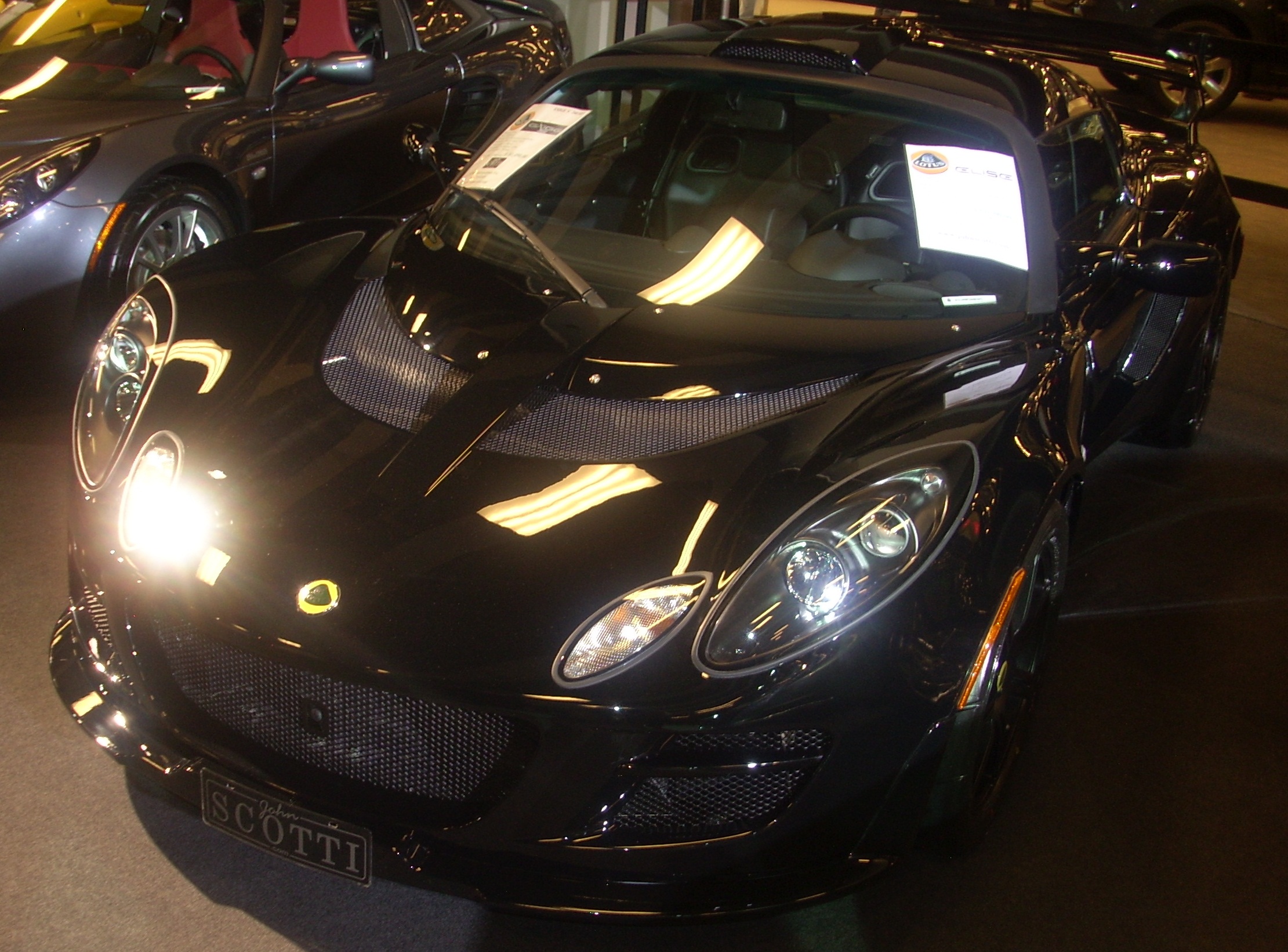
The Exige is a lightweight sports car from Lotus. It’s designed to feel more track-focused and agile than a typical road car. The podcast mentions it along with the Elise because they share a similar “light and fun to drive” idea.
The BAC Mono is a very minimal, single-seat performance car. Enthusiasts like it because it feels direct and driver-focused—more about how you drive than about gadgets.
Mountune is a company that works on making engines perform better. Here, it’s brought up because they’re involved in building the engines for these specialty cars.
“Analog” here means the car feels more like a traditional, mechanical machine. Instead of relying on screens and electronics, it responds in a way you can feel through the steering and pedals.
A K24 swap is when someone puts a Honda K24 engine into a different car instead of the original engine. Enthusiasts do it to make the car faster and more fun to drive.
This means the engine is in the front, and the back wheels get the power. That setup affects how the car turns and grips, and it changes the driving feel.
Akio Toyota is the top leader at Toyota. In this clip, he talks about how he feels worried that everyone is moving away from gas engines and toward electric cars.
Combustion vehicles are regular gas or diesel cars that make power by burning fuel in an engine. The speaker is saying he wants those engine jobs to keep existing as more people switch to electric cars.
EVs are electric cars that run on batteries and electric motors. The host is discussing how the industry is moving toward them and away from gas engines.
The MR2 is a small sports car made by Toyota. It’s designed to be fun to drive and has its engine placed in the middle of the car. In the podcast, it’s mentioned as a comparison for what a new sports car might be like.
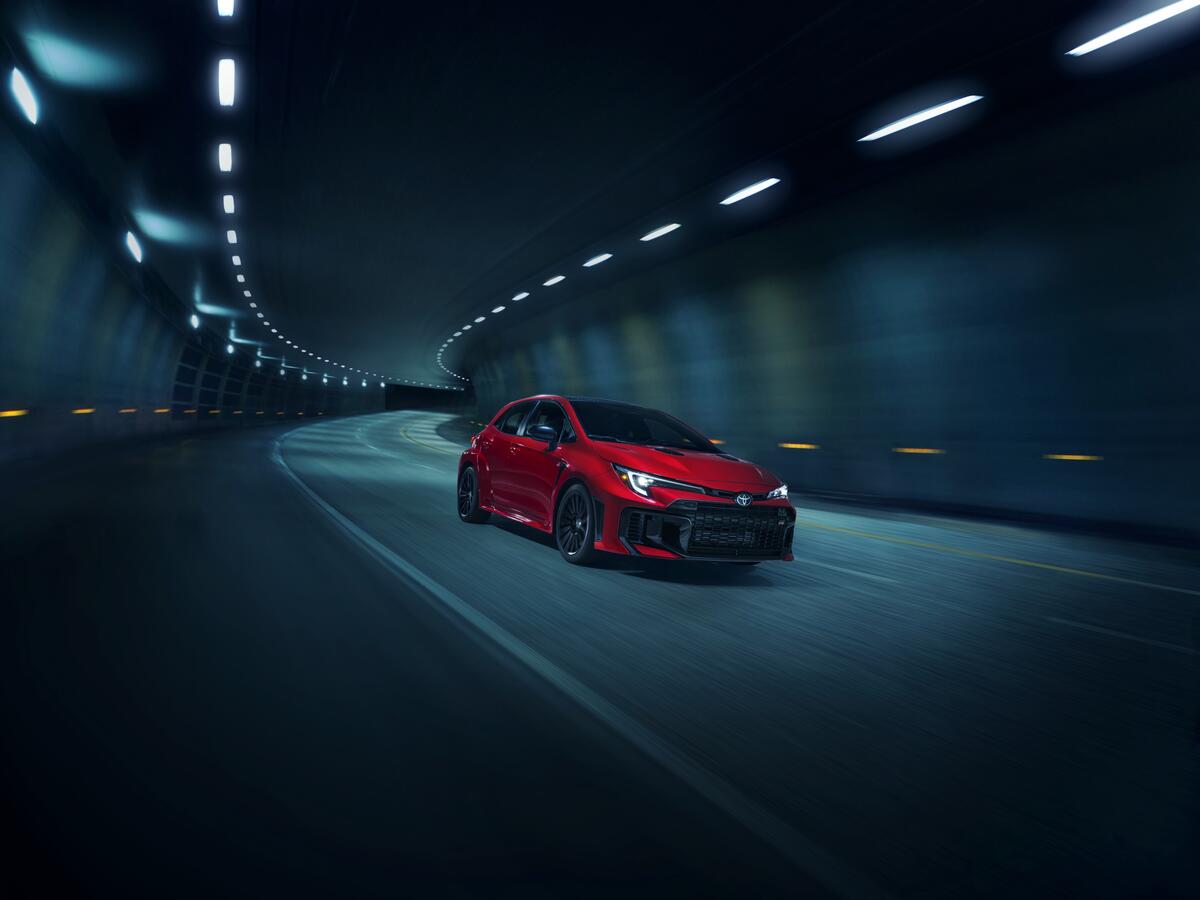
The GR Corolla is a fast version of the Toyota Corolla. It’s designed to be sporty and it uses all-wheel drive to help grip the road. The podcast brings it up while talking about whether Toyota might turn that idea into a different kind of sports car.
These are government limits on how much pollution a car is allowed to put into the air. If the rules get stricter, car makers have to change engines and designs to comply.
It’s the classic engine type that burns gasoline or diesel inside the engine to make power. The host is basically saying that future rules may make it harder for these engines to keep being common.
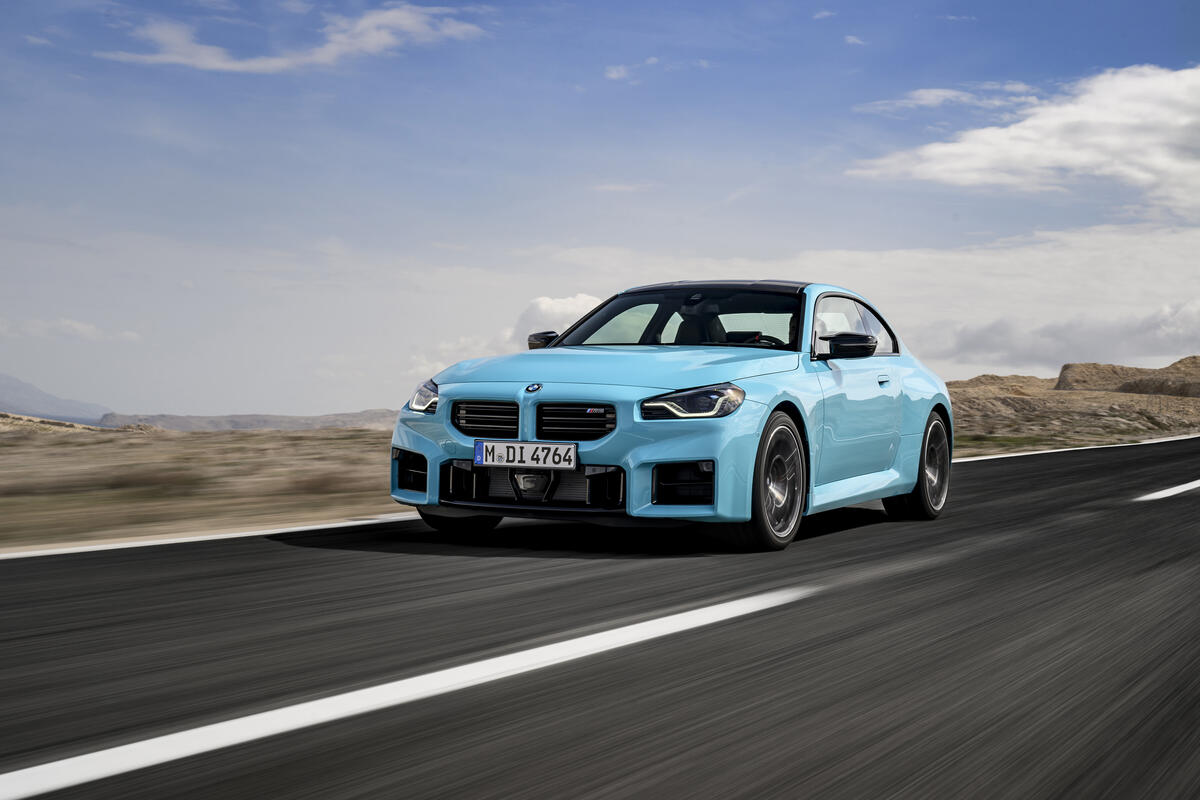
The BMW M2 is a smaller BMW coupe built for performance. It’s meant to feel sporty and responsive when you drive it. The podcast mentions it as an example of a compact, driver-focused car.
Shelby is a famous performance brand connected with special Ford cars, especially Mustangs. The speaker is talking about whether Ford should keep paying to use that name.
GT4 is a type of race category for cars that are based on real production models. It’s meant to be a more affordable way to race than the highest-level GT classes.
The Mustang Dark Horse is a more aggressive, higher-performance version of the Ford Mustang. The speaker is basically saying it doesn’t excite them as much as the older Shelby Mustangs.
The C8 Corvette is a Corvette generation with the engine in the middle of the car. The speaker says they really enjoyed driving it, and that’s part of why they’re not as interested in the Dark Horse.
A Shelby Mustang is a Mustang that’s been modified and tuned for higher performance by Shelby. It’s meant to be quicker and handle better than a standard Mustang. The podcast brings it up because it has a well-known performance reputation.
Multimatic is a company that helps with racing car development and support work. The host is saying Ford relies on them for a lot of its big performance efforts.
GTD is a category in sports-car racing for cars that are based on production models. The host is saying Ford is building cars to compete in that class.
Pilotes is a brand of driving shoes. The host is saying these shoes are comfortable for everyday wear but still good for feeling the pedals when driving.
Foot fatigue means your feet get tired or sore after a long time using the pedals. The host is saying these shoes are designed to help reduce that for endurance driving.
The e-Golf is Volkswagen’s electric version of the Golf, replacing the gasoline powertrain with an electric motor and battery pack. Here it’s mentioned as part of the hosts’ “EV experience” background before they pivot back to analog-car feel and engineering targets.
NVH is a car engineering shorthand for how loud, how shaky, and how rough the car feels. The hosts are discussing how engineers measure and try to reduce it, and why that can be tricky depending on the system.
Term
control services
Here, “control services” means the parts that carry your steering/handling input from the cockpit to the moving control surfaces. When it’s mechanical (like cables), you can feel vibrations and resistance through the controls. That’s the “feel” the speaker is talking about.
A stall is when the wings stop producing enough lift to keep the plane flying. It happens when the wing is at too steep of an angle. The plane can start dropping fast, which is why pilots need strong warning signs—sometimes felt through the controls.
Term
amplifying that control signal
As planes got larger, the pilot’s hand force wasn’t enough to move the control surfaces directly. So the system boosts the pilot’s input—either electronically or with powered help—so the plane responds correctly. The goal is to keep the pilot connected to what’s happening, not just make it automatic.
Fly-by-wire means the pilot doesn’t move the airplane controls with cables. Instead, the pilot’s commands go through computers and electronics, and the plane moves its control surfaces based on that. Because it’s electronic, it can feel different than older systems.
Brake-by-wire means pressing the brake pedal sends an electronic signal instead of directly controlling the brakes through a traditional connection. The car then computes and applies the braking, while still making the pedal feel normal.
Feedback is the “information loop” that tells you what’s happening when you move a control. If that information disappears, it’s much harder to correct mistakes in time.
Yaw is the sideways turning motion of an aircraft—like the nose swinging left or right. Pilots need to control it to keep the plane pointed the way they want.
“G’s” are how strong the forces are compared to gravity. “High G’s” means the aircraft is pulling or turning so hard that it creates big forces on the pilot.
Term
supersonic aircraft
Supersonic means the plane is going faster than sound. When you go that fast, the airflow behaves differently, so the plane needs more advanced control to stay stable.
Here, “communication” means how clearly the vehicle tells you what’s happening—through feel, feedback, and response. The host compares it to flying, where losing feedback can be dangerous. In cars, the same idea affects both safety and how fun the drive feels.
The Ferrari 308 is an older Ferrari sports car with a mid-engine V8. The host is saying it’s fun because the throttle and pedal feel predictable, so it’s easier to match engine revs when you shift. That makes driving feel more connected and enjoyable.
Rev matching means you adjust the engine RPM to fit the lower gear before you complete the shift. If you do it right, the car doesn’t jerk and the downshift feels smooth. The host is saying the pedal/throttle feel determines how easy it is to do that consistently.
Throttle progression describes how the engine’s response ramps up as you move the accelerator pedal—essentially the mapping between pedal travel and throttle opening. If progression is “too fast,” small pedal movements can cause large changes in engine speed, making fine control harder. The host uses this to explain why rev matching can be more difficult in the 911 R.
A flywheel is a heavy spinning part that helps the engine feel smooth. If it’s lighter, the engine can speed up and slow down faster when you press the gas, which can make the car feel more immediate.
Throttle mapping is how the car’s computer turns your gas pedal input into engine power. Different settings can make the car feel gentle or jumpy when you press the pedal.
Go-karts are small, simple race vehicles where you feel a lot through the seat. The speaker is using them to explain how direct feedback can help you control a car.
“Solid mounted” means the engine is attached with less rubber isolation. That can make the car feel more connected, but it also tends to make it louder and more vibrating inside.
“Hard mounted” means the engine is attached in a way that doesn’t absorb much vibration. So the car can feel more intense and connected, but it also tends to shake and feel harsher inside. That’s why it can increase noise and vibration for passengers.
Wishbones are parts of the suspension that help control how the wheel moves. The host is saying the rear suspension arms are mounted to the gearbox area. That kind of layout can change how much vibration gets transmitted into the car.
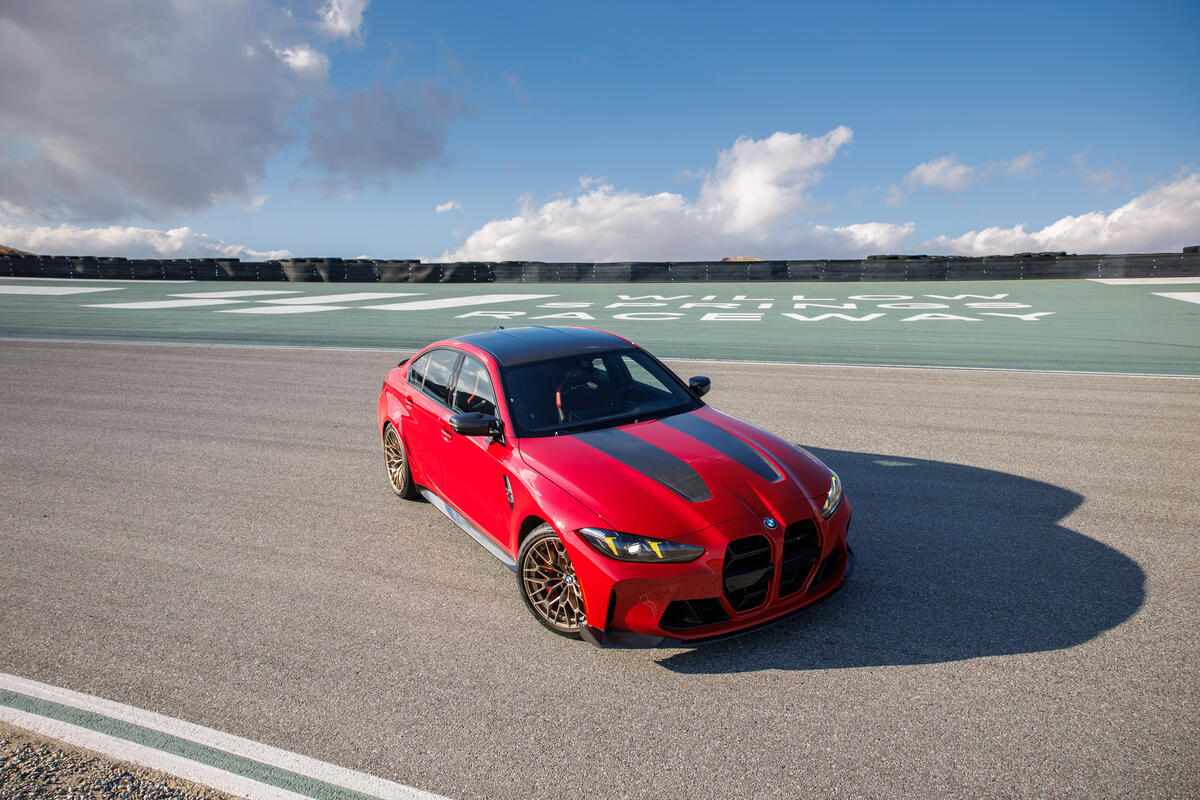
The BMW M3 is BMW’s high-performance version of the 3 Series line. It’s meant to feel more exciting and connected to the driver than a normal commuter BMW. The host is questioning whether modern comfort and quietness goals make even an M3 lose some of that special feel.
The BMW 3 Series is a mid-size car that’s meant to be comfortable for daily driving. It can also be offered in higher-performance versions. In the podcast, it’s mentioned to explain that some performance models are still designed to carry people comfortably.
Car
Polestar BST
Polestar BST is a special performance version of a Polestar car. The host is treating it as more track-oriented than a typical commuter setup. It’s brought up to discuss how different tuning choices can change the driving character.
A force feel curve is basically a chart of how hard you push versus what the system does in response. They use it to make the pedal/control feel consistent and predictable.
Place
Gulfstream
Gulfstream is an airplane company. The speaker is saying they used similar control-feel engineering ideas on aircraft before applying the thinking to cars.
Hysteresis means the pedal can “feel” slightly different when you press it versus when you release it. They want the pedal to behave the same in both directions so the driver gets predictable feedback.
Dead band is the tiny “slack” where you move the wheel but the car doesn’t really respond yet. Less dead band means steering feels tighter and more direct.
Dead play is the “slop” you can feel before the steering actually starts doing anything. Less dead play usually means more precise, confidence-inspiring steering.
“Gs” is a way to describe how strongly a car is accelerating compared to gravity. Higher Gs usually means harder cornering or stronger forces on the driver.
Kinematics is how the moving parts translate your input into motion. In a car, that translation is what determines how the steering or pedal feels to your hands and feet.
Friction is what makes moving parts resist motion. If friction changes or is too high, the car’s controls can feel inconsistent—like the pedal or steering doesn’t respond the same way every time.
“0 to 60” is a simple test: how fast a car can go from standing still to 60 mph. The host thinks focusing on that number can make cars less fun to drive in other ways.
“Diminishing returns” means you get less and less benefit for each extra improvement. The host is saying that pushing for higher speed and power is starting to stop paying off, so cars should focus more on how they feel to drive.
A “halo” car is the brand’s standout, attention-grabbing model. The idea is that if the brand improves that top car, some of those improvements can spread to cheaper cars too.
Horsepower and torque are numbers that describe how strong a car’s powertrain is. Torque is the “pull” you feel when you accelerate, and horsepower is another measure of overall strength that affects how fast it can go.
LIVE
Hey everybody, welcome back. Full throttle talk. Shenu. How you doing man?
Good Blair. Good to see you brother. You too. Hey, exciting episode today because one of
our guests, our guest from a couple of episodes ago, he's back. It's Derek Peterson. We've
got a lot to talk about, about aerospace engineering and how that translates to noise, vibration
and harshness and drivers cars. So before we get into that and all the other stuff,
Shenu, any word out of Puerto Rico this week we should know about.
Well, I do have a dispatch from Tim, but it's from a different location. So let me just read
what I got here. Okay. From Tim Harris, driving update from the tail of the dragon.
I spent the weekend in my Miata, coaching with my daughter riding shotgun. A few miles into the run,
she informed me that I was not keeping it between the mustard and mayo.
I explained that I was simply maximizing the available roadway. I also reminded her that I
have decades of driving experience. She quickly reminded me that the yellow line has been there
the whole time. So the remainder of the drive was conducted under closed supervision. I'm really
not sure, you know, who's instructing who? Tim Harris.
Welcome to Full Throttle Talk, the podcast where a horsepower meets conversation
from supercars to classic legends, high revving tech to motorsport mayhem.
We covered all straight from the driver's seat, whether you're a gearhead eraser
or just love the thrill of the open road, you're in the right place.
Buckle up, hit the gas and let's go full throttle into today's episode.
So Tim Harris moved from Puerto Rico and I think he spends his summers
in North Carolina and he's got a beautiful 1993 Mazda Miata LE, the black over the red.
Now we've got stories about one of those as well from what I did in cars this week.
But Tim, I'm glad to hear you're raising a little car enthusiast and go to Full Throttle Talk's
Instagram page where I want to like take abuse and punishment from the Porsche community.
But Tim did post a great video from the tail of the dragon and his Miata.
So thanks, Tim. It's great to hear from you, buddy.
Awesome. So we've got our first, what did you do with cars this week, Blair?
You had a fun, fun week from some of the things that I've seen.
I did have a spectacular week in cars this week.
Before I get into my trip down to Grand Junction, which is the Mecca of flying Miata
and my brother and buddies, we just took a little trip down there for a fun adventure.
I had a little bit of a breakthrough, you know, with one of my boys this week.
I bribed them once a month in Salt Lake. There's a really big cars and coffee
and, you know, bribed them. There's a Krispy Kreme donut that's not far from the cars and coffee.
So you can imagine how I got them to come with me.
And I said, guys, you got to pick three of your favorite cars.
Before you can like go sit in the K-Van and, you know, get on your, get on my phone, whatever,
entertain yourself. So they're like, dad, we got our donut. We got our three cars.
It's that Lambo, that Lambo and that already Audi R8. I'm like, oh, come on, guys.
So, but I ran into some buddies and was chatting with some guys.
So once I was done with my socializing, I went into the Bravo and I said, guys, get out.
You're going to show me your three favorite cars. We're going to take a little tour of this place.
So the car that I just put up behind me. Oh, nice.
One of my boys said, dad, okay, now that I got their undivided attention, dad,
I saw this little red car that was so cool and he's like, I can't find it.
But he started to feel, get a little bit distressed almost because he really liked this car.
Is that a tiger? No, this is, no, it's an MG Midget.
Yeah, there we go. Okay.
And this thing was so clean, straight piped. It sounded so awesome, but we couldn't find it.
And I'm like, crap. I said, I actually talked to a kid who restored an MG Midget with his dad.
And he's had it since high school and it was cherry.
Just cherry red, but mint. And so we keep looking. Sure enough, the kid rolls back around in parks.
I don't know where he was coming and going during the cars and coffee.
And he's like, yeah, dad, that is it. So we talked to the kid who built the car.
And my boy is like, dad, in a couple of years when I'm 16, can I get an MG Midget?
And I said, no, you cannot because I'm not a mechanic son.
I'm like, well, maybe we could get one, but no, that's not going to be like your car.
I said, but Stu's named Stu. I said, this is the reason Mazda Miata's are so popular.
Because the NA Miata is like the British roadster reincarnate in a more usable, reliable form.
So I said, remember my Miata, buddy? That's what people drive who don't want to deal with
old MG problems and Triumph problems and Lotus Elan problems, whatever.
Yes. So he's like, well, dad, okay, maybe I want to, a Miata one day, which
leads us perfectly into my week that I had or just the last couple of days
at the flying Miata summer camp. Nice. Which is as awesome as it sounds.
This is the fourth year she knew that I've gone to this thing. And it's...
How long have they been hosting this summer camp?
That is a great question. I think that it started somewhat recently. So I went,
I think in one of the early years, and they're down in Grand Junction, Colorado.
And there is a shifter cart track, which is the Grand Junction Motor Speedway.
It's a great little track. And they do look like the Red Rock Racers is a group in,
I think, Southwest Colorado. They use the track, so they do look cars on there.
But flying Miata rents that track out Wednesday, Thursday, Friday.
And then they do group drives, and then they do tech seminars at their office, whatever.
We've gotten to where we just go down for one of the track days. And then we come home.
And so I no longer have a Miata, but I inspired my brother and then subsequently a bunch of buddies
and some of his friends to buy them as well. And they're nice.
What's that? The brother that has the micro van?
Yes, exactly. He's totally into oddball cars. And he got a 1991 special edition,
the British Racing Green over Tan Miata. And the funny thing about this is like,
Miatas are normally not a stereotype. Sorry to all these Miata owners who don't fit this.
But a lot of times they're all clapped out. The NA Miatas, they get in the hands of a
teenager, a college kid. They modify them. They beat the crap out of them. They don't take care
of these things. But we're a bunch of middle age guys who bought Miatas and like them.
So as you can see behind me, at one point, we had like six or seven of the cleanest NA Miatas
you can find. Because especially three or four years ago when we all started buying them,
like $17, $18 grand buys you the nicest one in the country. Now they have gone up in value a
little bit. Okay. So yeah, we get together, we road trip down. There were six of us,
three Miatas. We had a big truck that kind of hauls the gear. We spent the day yesterday at the track.
Shifter Fields, my Instagram, I posted a bunch of fun videos of sliding these things around
this little track. It is such a great time. And you can't help. There were like 50 or
something Miatas yesterday that were part of this track day. Amazing. So yeah, it is a blast.
We get an Airbnb, go stay for a couple of nights. I mean, it's like he who laughs the most wins one
of those kind of guys trips and not taking this seriously. It is like just, you know, slapstick,
you know, a couple of days. But these cars are so fun. Every time I drive my brother's car,
like incredible that we can get these night 35 year old Miatas, drive them four hours,
beat the snot out of them, drive them home. We rarely skip a beat. We had one of our guys kind
of the pit crew. He sees mechanical, he swapped wheel bearings right there on the track, two of
them. It was awesome. We had a blast. Excellent. That sounds like so much fun.
Well, yeah, it is fun. And it's another example of like, that's what cars are supposed to be. So
we can't take this stuff too seriously. Whether it's a Miata or a GT3, it's supposed to be fun.
So I would say if you're not having fun with your cars, find new people to drive with,
find new cars, find new experiences, that's what it's about. And cars can take you to
cool places to do, in this case, very hilarious things. What about you, Shadu? How's the week?
Well, you know, mine was not clearly as exciting and fun as yours. I went to a Corvette club,
the local Corvette club meet last night. And you get the George from my background picture.
Yeah. So really nice people, you know, we're having this tech seminar tomorrow. So hopefully
a bunch will be showing up there in a bunch of C8s, okay? But here's the kind of the funny bit,
you know, and I think I was the youngest person there. So anyways, and I'm not exactly a young
person. I mean, you're 28, so big deal. Exactly. Exactly. Well, we finished a C7 service on a
Corvette that has the Calway Supercharger kit on it. So that was actually kind of fun. I got to
take that thing out, you know, for a little quick shake down after the service was completed.
And, you know, it's, they really are really good cars. They're so much fun. And, you know,
that aero wagon that you and I have talked about, you know, this is the car, you know. And so anyways,
that was certainly a bit of fun that I had. So let me ask you a question. Why Supercharge the
Grand Sport? And I do not keep harping on gearing. I do think they are a little gearing in the
Grand Sport versus the Z06. Yeah. Well, why do that over just buying the Z06? Or is it, hey,
I already have the Grand Sport and let's... That's really the issue, right? I mean, there's so many
of these, you know, just some quick research. It's just they've made 180, they sold 180,000
C8 Corvettes already. Wow. Right. They make Corvettes like, you know, like they're going
out of style, right? I mean, there is just so, they sell so many of them, right? And so you can
pick up a C7 for a song, you know. And now you could build this thing up into just a real weapon.
And so, yeah, I think it's, you know, there's certainly some value for people that are looking
for the best bang for the buck and easy way to get more power. You know, because look, at the end
of the day, the car is, it is heavy, okay? You feel that mass. And, you know, there's the pros and
the cons, of course, with that. But yeah, the other thing is, you know, I had a very interesting
Zoom call with Caterham. You know, Caterham are now owned by a Japanese company. It was actually
their importer and distributor in Japan who has acquired Caterham. And so I had an interesting
conversation with those guys this week. You know, they're coming out to Monterey, which I think you
and I are also going to be coming to Monterey, right? And looking forward to that. So anybody
who's there, hit us up. Yeah, we should look, we should put together a full throttle talk,
a little meetup, you know, and it may be kind of fun to grab the beers with people that are
listening. And so anyways, the, I like the fact that I've gone to Japan 30 plus times. I've done
business with Japanese since the early 90s. And I have a lot of admiration for the way they do
things in the automotive industry. So that makes me feel pretty excited to hear that there's a
Japanese company in control of Caterham, because Caterham are still sticking to their knitting,
as far as the super seven is concerned. And, you know, you and I keep preaching about these
analog cars. And, you know, what they've done, you know, in my mind is, is continue that in a way
for, you know, for the 50 plus years they've been in, you know, in business and since acquiring the
the low to seven, you know, IP. Behind me, I had to put up a little picture that is a rendering of a
kind of a Caterham homage or tribute that a design house out of Italy proposed to me, oh man, 10 plus
years ago. And this spot of concept, you know, they're super cool father and son. Okay, the father
did a number, he used to work for Zagato. And so pretty pretty accomplished and
exceptionally capable designer. But so they proposed, they proposed this to you for what
purpose they want you to try help them bring this to market and well, they would were
hoping that I might produce it, you know, for them, right? And they wanted to just be the design house,
you know, so yeah, anyways, I need to send this picture to the catering boys. I told them about
it. As it fell as I hope you can find some money to do something like this to, you know, but,
you know, we're gonna, we're gonna continue some conversations and see, you know, if there may
be an opportunity to, to, to help them, you know, I think, you know, that car again is a testament
to when you get the fundamentals right, it will be appealing for decades. And that's why I feel
like the Elise and exige are kind of the modern day equivalent, you know, where the fundamentals
are so good that there should be decades of, of, of appeal for drivers, you know, and so
anyhow, yeah, that was, that was kind of, you know, maybe one of the, the, the more highlights
of my week. And so, so let me ask you a little more about that. So you had a call this past week
with catering and with the company out of Japan that owns them. Yeah, no, actually, I just had
a conversation with the catering guys in England that I didn't talk to the Japanese guys, you know,
but I, but I know that they're acquired by the Japanese. Yeah. And this was a strategic
discussion about how to continue to grow and, yeah, they're, they're really looking at the US
market and they want to grow here. They see the opportunity, you know, is, is, is good, you know,
and, you know, I know, I'm probably one of handful of people that really is kind of an expert in
the space of these boutique analog cars, right? Having sold aerial atoms and BAC monos and dragons,
you know, I've sold like, oh, what, 70, 80 plus of these cars. And that doesn't include the lotuses
that we've kind of built and sold. And so, you know, I think the, you know, understanding the
space and understanding the trials and tribulations of building, selling, you know, registering
them as well, right? So I'm one of the few guys that's, that's around that kind of has that a grip
on that. So they wanted to talk to me. They're getting their engines built and the engine builder,
you know, and I know them very, very well, Mount Tune. And so, Ken, you should talk to these guys
and I'll make sure, you know, have them give me a call. And so we ended up, you know, it took a
little while, but we ended up having a good call. And so, you know, again, it kind of,
you know, helps it to kind of reaffirm, if you will, our belief that analog sports cars are here
to stay. And there are other people out there looking at the market objectively from a business
perspective and saying, yes, we think that there are people here that are into these cars. And so,
that we want to invest in the US market to help promote our analog cars, right? So I think from a,
from an enthusiasm perspective for the things that you and I particularly are preaching constantly,
it's nice to get some validation from other companies, other people that kind of see it the
same way. That's pretty amazing. Caterham's obviously fascinating piece of equipment, technology.
I was talking to a guy at this Miata track day that we were doing, and he's got a K24 swap
in a Miata. Beautiful build. He's put a lot of blood, sweat, and tears into this car.
But he also has a Caterham. I don't admittedly know enough about these cars. And he told me which
model he's got. But he said it's like 220, 240 horse, and it weighs 1300 pounds. And he just said
the thing absolutely rips. And given my experience with the 111 RS at 275-ish horsepower and 2000
pounds, that has to be really thrilling. How did the Caterham or the Lotus community,
like the Lotus United Gathering, for example, that's coming up this year in Salt Lake,
how do they view the Caterham guys? I mean, is that given the Lotus Super 7 roots? They're part
of the crew. Yeah, absolutely. They embrace them fully because Caterham, there have been several
companies that have done Super 7 replicas. But Caterham are the only ones that have the actual
license to do it officially. And so they've stuck to the formula and didn't deviate far from what
the Lotus 7 was like. And so, yeah, no, you'll see plenty of Caterhams. And I should say plenty,
but Caterhams will show up at the Lotus Meats as well. And they're fully embraced. Everybody
views them as the same. It's, yeah, very, very welcome at the Lotus events.
Well, I encourage this guy to come up and see us for that. And get a Caterham.
I mean, dynamically, you're going to love it because it's more like the Miata. It's just like
a lighter, more powerful Miata. You know, it has that kind of weight distribution,
right? And so the handling characteristics are like that, you know, front engine, rear drive. So
fun and different. I've been asked now that I've got experience with this hard core Elise that
you built that I bought. And if that renders things like the Miata obsolete or useless, and
once again, these are wildly different cars, whereas the Miata from NA to ND, they're whimsical,
they're fun, they're smile inducing, they're slidey little cars. There's a place for that,
whereas the Elise is really hardcore and buttoned down and the driving is very different. So
moving into automotive news, Shenu, we've talked about Toyota. Toyota is doing some
fascinating stuff. And I wanted to chime in or touch a couple of things. Number one is their
CEO, Akio Toyota, gave kind of a somber interview with, or at least this snippet of the interview
was a little somber. It was with Carwow, which is famous over in England, you know, big YouTube
channel, do a lot of drag races. But I think they also have a buying tool and search tool for
vehicles, valuation tool, stuff like that. Anyways, this guy said that he's feeling alone in this
kind of pursuit or trying to hang on to combustion vehicles. His direct quote, if I can read it,
everybody is shifting to EVs. This is the biggest fear for me. Three or four years ago,
I was the only one to say to the media that I love smell, I love sound, and I love engines,
and I want to keep the jobs for engine suppliers. But it seems to me that I'm the only one. I feel
very alone, which is so fascinating because Toyota is the largest car company in the world.
They've maintained for years in a row now a stronghold of that over the Toyota or the VW group,
and they have also in kind of adjacent news confirmed, I think one of their heads of R&D
just confirmed that they are working, or their chief engineer revealed that the company is currently
testing mid-engine all-wheel drive sports car, which most of us or most the community
is rumoring this thing to be the new MR2. So you've got Toyota that we've both talked about
doing some really awesome stuff. Yeah, so many cool enthusiast cars recently. Absolutely. Yeah,
and they're talking about an all-wheel drive, which makes me think, are they trying to
repackage the GR Corolla into a sports car, which would be all-wheel drive, but this is
mid-engine, so you're probably not a real easy crossover there or even possible, right?
Right, yeah. I would be surprised if the MR2 comes with that kind of packaging,
because if they do, it's going to deviate quite a bit from the size and dimensions that we expect
an MR2 to have. So yeah, I would be surprised if it isn't just a rear drive car. That would be the
smart solution here. Well, listen, you've got a BMW up behind you, so I'll let you talk about that,
but it is interesting because BMW has said they think the manual, there is a place to keep that
around into the future. So it's kind of interesting that the seat you have, Toyota, who's a big car guy
who loves the smell of combustion cars and all that comes with it, which is so reassuring and it's
not a surprise given the cars they're coming out with and rumored to come out with, but hopefully
his fear is not founded and that there are others still really going to join the pursuit of more
and better combustion vehicles, especially for enthusiasts. Yeah, I mean, it's really going to
get dictated by what emissions requirements are going to be out there in the future as far as what
can be continued to be produced. And so look, we're rearranging the deck chairs on the Titanic on
the internal combustion engine Titanic. That's just a cold hard reality. He's obviously talking
on people's heartstrings and looking for some sympathy. To hear some of that stuff, it kind
of, okay, fine. That's great. He feels alone. Oh my gosh. But that's okay. Look, I think that
you're not so, you're not buying that he actually is.
No, no, I'm not. But he knows how to get some likes and tug on some heartstrings of people
that want to stand with him. I'm sure there will be some soon stand with Akio. There will be some
new memes and whatever things that people post on social media. But now, listen, I'm excited
because I feel like, and in fact, actually, maybe this is the time that I wrote that article
recently about enthusiast CEOs as opposed to bean counter CEOs. And I love the fact that
he's a true enthusiast. And it seems that when you have these guys leading a car company,
you end up with really great products. And I think that's exactly what they're doing.
Their products have been recently coming out with all these really great, exciting sports cars or
sports compact sedans and hatchbacks and stuff. And so, yeah, I hope that continues. I put the
picture of this M EV, their Neu-class car, because I just saw it this morning. I thought,
ah, this thing looks actually kind of cool. I actually like the way it looks. The rear of the
car I'm not particularly excited about, but it's a bit like the very blocky, like the current M2.
But that's all right. I could see myself driving around in this thing as my daily driver. So,
we'll see. We'll see. But the news that actually, there's two other things, one that's somewhat
minor, but one that I'm honestly more excited about. But Ford spent 60 years building up that
Shelby Mustang legend. And now they've decided that they're breaking ties with Shelby,
and they're going to start using Dark Horse as the nomenclature. So, it's kind of interesting.
I think I saw somewhere like maybe $30 million paying licensing fees to Shelby America
over the years. And I think they've kind of come to the conclusion that, you know what,
we can kind of do this stuff in-house. Or maybe we just keep hiring Multimatic to build us GTDs
and build our GT4 race cars and Mustang and Ford GTs. And maybe we don't need to rely on Shelby,
which I think is probably the case. I don't know if Shelby, I mean, Shelby's making their own,
you know, little car, various cars, but whether they can truly leverage that history for much
longer if it really has any value. So, I saw that. I thought that was kind of interesting.
But- Well, it's funny if I may on that point. I'm mixed about that because I'm sure it's
hard to pay in the Shelby name. But I do think it is synonymous to me with Ford and some of the
great Fords and the history of the brand from a racing and enthusiast standpoint. And that,
that, so I do feel a little bit- Great racing from when? 50 years ago?
Yeah. I mean, but that is really- I just want to point to context.
My favorite Ford they've ever made is the Shelby GT350. And so I just think, yeah, that there is
at least me growing up. It's like Ford and Shelby was always a thing. And Ford versus Ferrari,
they really show how intertwined those two brands were. And I get they don't want to spend that
money anymore. I do think it's more important, like the Mustang Dark Horse, I don't know if it's
been a success for them. It's never really captivated me all that much. And I think more
important than whether they call it a Dark Horse or a Shelby, they got to build better cars, I think.
And more compelling cars, because I talked last week all about the C8 Corvette. I made no
no bones about the fact that I really enjoyed the experience behind the wheel and those Stingray
and the 06. But I've been compelled to go try that thing. I'm not compelled by the Dark Horse
and I don't know why I would ever spend the money on that when I could go buy a GT350 Shelby.
So the point is I want their Mustang. It's not the halo, I guess, but the one people can aspire
to and can own. I want it to be better. And so I think whatever they call it, I want it to be
more desirable and I would totally be all over it if they could capture that. Well, I think American
car companies have not raced at the highest levels for long enough. And so Corvette has been racing
at that high level since the 90s. And it's taken this long for them to finally get enough interest
from guys like you and me to go look at a C8 and actually drive it and realize, oh my god,
this is actually pretty good. And so I think Ford has not raced the Mustang for very long,
nor has Shelby. So what is it that Shelby is really bringing to the table other than nostalgia?
From cars that were raced when Carol Shelby was alive, which was, again, 50 years ago.
So I personally think it's the right move. People need to feel like Ford is doing this
themselves and they're not leveraging some other brand that frankly isn't really out there racing.
You and I know and many people know that Multimatic is supporting most of
Ford's significant efforts. It seems like in building these crazy GTDs and Ford GTs and stuff.
But Ford, they've publicly stated recently, Jim Farley who races, he says, yeah, we need to build
this capability in-house. And so they seem to be working on that. And I think this just signals
that intention. So I actually think it's the smart thing to do. But anyways, not to beat a
dark horse any longer. Nice. Because you'll get a slip in some puns every once in a while, right?
But this dark pair of shoes that are sitting behind me in this picture in my screen here,
he's my absolute favorite Pilotes, the Prototipos. I've been wearing the, they're back in production,
okay? They've been out of production for a while. This is the original kind of soul that Pilote,
you know, and Kevin Beard, who was the founder of the company, first introduced. And he was all
about foot fatigue for endurance racers. And so this soul is actually very comfortable to walk
around in. So I wear these shoes pretty much every day into the office. Because if I got to jump in
a car, it's good on the pedals, you know? This soul is a little bit, you know, thicker than the
hardcore race shoes that I wear on track. And certainly for taller guys like you, it's maybe
a little bit too thick, you know? But because you need every quarter of an inch or every eighth
of an inch that you can get, right? And so, but for those of us who are, you know, not quite so
tall, you know, or even average height, you know, these Pilotes are wonderful because you can walk
around in them. They're comfortable and they're good on the pedals. So I was excited to see them
back on the market because the design that they went to has a much thinner soul that's not so
comfortable when you walk around all day long, you know? And so I'm happy because I've burned
through probably, honestly, 15 pairs of these damn shoes over the course of the last 26 years
I've been wearing them. And because I've been wearing them pretty much every day, you know?
And so excited to see these damn things back, you know, on the market. So for those of you guys
who drive and have tight pedal boxes, the Pilote Pro, Pro Tipos are back on the market.
So we might have reached a new pinnacle of nerddom about cars and car enthusiasm.
When she knew you see them light up over the new Pilotes.
Well, so, okay, here's, here's actually one of the first realizations that I realized that the
Lotus community is a bit different from others. Okay. When I went to, when I go to Lotus Club
events, everybody is wearing driving shoes. Okay. When I go to like Porsche events or BMW events
or certainly Corvette events, I see people wearing Reeboks, you know, cross trainers. I see them
wearing, you know, Doc Martin boots. And I'm thinking, how in the hell, you know, well, yeah,
I know, because the pedals on a BMW are nicely spaced. There's a lot of room in the foot well.
And you can drive a car with, you know, Doc Martin army boots, you know, totally. Well,
I like the nerddom. And we are going to bring a guest on who will also really dig into this
nerdy car stuff with us. Derek has a fascinating background. We got into the VIP Porsche experience
with him a few weeks ago, but we're going to get a little more techy. I'm going to let the engineers
kind of have a field day here and I'll try to corral you two. And if you're ready to take that
nerddom to a new level, I'm excited about this because it's a fascinating discussion we both
love about cars, what makes them great and what's making, makes them great to drive.
Let's bring Derek on. Awesome. Okay, here he is. We got Derek back, our esteemed guest,
guest number one who's now back for round two. Yes. Because there's too much. Derek, Derek,
I am so excited about you being back here. And this subject matter, you know, the last interview,
it was great. You, you gave us a peek behind a curtain, you know, something that most of us will
never, you know, experience. And so that was awesome. But as an engineer and as a driver,
today's NVH discussion, I'm so super excited about this. So welcome back. Yeah, very cool.
Thank you. Yeah, good to be back. Yeah, to tee this up, Derek and I have had a lot of these
conversations as well, like Shanu and I have. And I just thought, Derek, you got to come tell
your story about what you've done professionally and how it relates to the automotive industry
and cars. And so to tee it up, if you will, tell us about your educational and career
background and how you wound up dealing with flight systems and, you know, technically,
like this discussion and where your expertise comes from. Yeah, you got it.
Yeah. So I gave you a little bit of my background last time, but I got into, I got into engineering
because I was either going to be a full-time mechanic or go to school, right? And mechanical
engineering was just the right fit for me. You know, it was by language. It was my people. We
all liked the same kind of stuff. Well, I kind of stumbled into aerospace. I had a background
in airplanes, but I kind of stumbled into aerospace just based on job opportunities.
And it ended up being, you know, truly incredible. And specifically, my career has been in flight
controls. So what that means is anything from what the pilot interfaces with all the way out to the
control service. So that could be on the tail or the wing, anything that controls flight and the
mechanical side of it. That was, you know, that's what we did in our company. And it's pretty
interesting because there's a lot that goes into it. So Blair, we were talking about this a few
months ago and it just dawned on me why I'm so particular about the way a car feels. And I'm
not, you know, wedded to new versus old. I just care about how the inputs feel. And I thought
it'd be kind of interesting to share with you guys why that's important, not just to me from
like my perspective, but truly as we engage with these things, whether it's an airplane or a car.
So anyway, that's kind of my background. I think we can kind of walk through that today.
Cool.
Yeah, that is very cool. And, you know, Shanu owns an EV. He accused me of becoming an EV
sympathizer on last week's pod because I drove that Audi e-tron.
That was a confession on your side, my friend. You finally admitted that you actually like EVs.
Derek has owned an e-golf. So, you know, we, I think we come at this from the full like broad
perspective that I think is due when you're talking about analog cars. So tell us more
specifically about, you know, building in like the NVH discussion. And when you were building
flight control systems, what, where does NVH come into that discussion? Why does it matter,
especially in that realm?
Well, so, so NVH, obviously noise, vibration and harsh harshness is a very automotive term.
And it's become a very negative term for engineers specifically. I think they're trying to engineer
NVH out. Everybody's trying to do that. Well, in aerospace.
Why is that, Derek? Sorry to cut you off. Why do you think they're trying to engineer
that out? Well, I think it's the wrong metrics. I think it's the wrong targets, truthfully. I
think it's just a lack of understanding of what that does. You know, we're always trying to push
the envelope as engineers to make it better than it was before. And in engineers, like Shindu,
you made this point last time that we have very good engineers and we can't figure this stuff out.
We just have to know what the targets are. So, like in a car, you know, maybe a, like you take
a four cylinder engine as example, it's not very balanced. They are pretty harsh. Your goal
should be to make that very soft and balanced and, you know, take that out so the user experience is
better. Makes sense, right? Well, on the controls side of it, that's where it becomes a problem.
So, so I'll give you an example. Well, in aerospace, specifically in flight controls,
we don't use the term NVH, like you're referencing, we call it feel like specifically feel sounds
like a very generic term, but that's what all the, the conversations are is around
feel. Okay. And it's a very different mindset. These aerospace engineers are real sophisticated,
you know, they just call it feel. Yeah, exactly. Call it feel, exactly.
Every thought you're, you know, geniuses of sorts and yeah, exactly. Maybe that is the
genius. You simplify it. It's interesting though, but if you just think about that term,
the feel is what matters to car enthusiasts as well. Right. In aerospace, feel is very important
for safety. It's a very, very big deal for safety. So I'll give you an example. When
Chinnu, you don't have your pilot's license, I assume, do you? I don't. I don't. Yeah. You ever,
you ever flown in a Cessna, you were, you were Blair, a small, you know, private aircraft?
I haven't. I haven't. Well, if you do get a chance to get up in a Cessna,
you know, just a small, you know, private aircraft, you're, you're holding the control
column, the yoke, and it has cables all the way back to the control services.
Right. Which means you have enough strength to move the control service and control the
airplane, right? The upside of that is you can feel everything that's happening at all times.
So if you're about to stall the aircraft, you don't need anything to tell you it's going to
happen because you feel it in the stick because the control services vibrate and you feel that
thing start to shake, right? Sure. So the control on a very small aircraft and the feel on a small
aircraft is very intuitive and it's easy to interact with. Does that make sense? Absolutely.
Well, the problem is as the airplanes got bigger, the humans did not get bigger. Right. So if you're
trying to fly, if you're trying to fly a, you know, a commercial airliner, you're just not strong
enough to move that control service, right? Right. So over time, what we had to do is start
amplifying that control signal and, you know, use it to amplify the surface. Well, we started
doing that with, literally, we had still had cable controls and then we used amplified servos
to help boost what the pilot was doing. So you still have some element of feel.
Sure. Well, as flight controls have advanced, we now disconnect the pilot from the control
surface with what's called fly by wire. And that's, and you start to hear that kind of
terminology in automotive too, where it's, you know, steer by wire or break by wire.
Yep, it's happening. Yeah. When you totally disconnect the pilot from the control surface,
that's, that can be a very dangerous situation because there's no longer any feedback.
So it could be truly like a video game where, you know, you don't know what's going on and
then the control service is doing something. All of a sudden, the only feedback you have is from your
inner ear, right? And that, that can be dangerous. Like, you know, Kobe Bryant's helicopter crash,
as an example. Yeah. If you're trying to fly in a situation where you're just trying to rely on
your inner ear and you can't get a sense for what's happening outside, you're going to get
upside down really fast and crash. Right. Does that kind of make sense? Why it's, why it's so
important players? Absolutely. Absolutely. Yeah. So how did you engineer some of that?
Yeah. So this is super interesting. So I'll give you an example. We have to do, we have to provide
all of the feedback to the pilot that allows him to control the aircraft in a safe manner.
So as an example, if you take, we did a flight, a directional control system for Gulfstream on
their aircraft, which is what you, what you fly with your feet, it's the yaw on the aircraft.
And in order to do that, we have to say, okay, what does the pilot need to feel
in the certain circumstances so that he has, he understands what to do with the aircraft.
And you do that literally with springs, dampers, masses, you might have an eccentric mass that
vibrates when you're about to stall that type of a thing. All of the stuff is to give you,
give your body a sense of what's happening so that you don't have to be thinking about it.
Does that make sense? Yeah, absolutely. The exact same thing happens in a car.
So another example, if you look at, at the F16, so the F16, you know, it's a,
it's a supersonic aircraft. It can pull very, very high Gs. Well, the pilot also is not strong
enough to move the control services, nor is he fast enough or smart enough to keep that thing
stable. It would be aerodynamically instable and it would crash. So the computer has to do a lot
of stuff. Well, the pilot has to use a side stick to control pitch and yaw or pitch and roll
on that airplane. Well, the way that side stick works, it's literally a stick that you grab,
you know, with your hand and push it, you know, forward or sideways. The way that stick works
is it's a force-based feedback system. So, and it's, the harder you push, the more Gs you pull.
And that's how the, that's how the spec is written. So if you want to pull, you know, two Gs,
this is how hard you pull. You get that very direct feedback. And when they,
they initially designed it actually, that side stick had no motion in it. They literally just
had strain gauges. So you pull on that side stick and then the aircraft pulls a certain number of
Gs. Now you take a second to think about that with respect to cars. So that, that like very direct
communication feedback from the aircraft back to the pilot allows him to control the F16
in very difficult situations and very fast. If, if the pilot didn't have that feedback,
there's no way the F16 would fly. I mean, it just wouldn't work. Well, when they first designed it,
there was literally no motion in the stick and they were getting into, they would force what's
called pilot-induced oscillations where you start to turn one way and then you over correct and go
the other way. You start to kind of weave and bob and the PIO is a dangerous thing on an aircraft.
So they actually had to add in a quarter inch of movement in the stick to get that to, so that
the pilot could control that. So in airplanes, that kind of like, you know, I mean, throttle
progression on a car, right? They tune that. So, you know, if you're, you know, putting just a
partial throttle in it, you're not getting, you know, 100%, right? So that, that kind of calibration
that was done, it sounds like that's, that's what you guys were doing there. Yeah, same thing in
airplanes. Okay. So we do it in helicopters, we do it in fighter jets, you know, business jets,
because the, because the human, the way we can sense with our body is very well understood in
aerospace. Yeah. No one ever talks about it in automotive, to my knowledge. Maybe they do,
but I'm not aware that they do because, because it's flight critical. So if you get into a very
dangerous situation where the pilot's workload is really, really high, so maybe you have an engine
fire in a commercial airline or something like that, and he's got to make quick decisions. Well,
if all of a sudden I disconnect the spring mass system, that's the fuel for the pilot,
he's got one more thing that he's got to think about, or she's got to think about to control
the aircraft safely. And that's a very, very dangerous situation. The same exact same thing
happens in a car. And you could look at it from the, the safety perspective, or just from the
enthusiast perspective. So Blair, I think I told you about the, the pin and free in a Batista,
my experience with that. Have you told you about that? Yeah, yeah. Well, I'll have you talk about
this, but to transition over to automotive. So you're talking a lot about communication
from a safety standpoint. Correct. That's probably not irrelevant in cars, right? Like I'm,
you know, it may not be the driver behind why we're kind of clamoring for the right kind of
NVH or less NVH, whatever it is we're trying to try to wish we could see more of an enthusiast
cars. We're speaking of it from the enthusiast standpoint and having fun. The pilots aren't
thinking, Hey, this would be more fun if I could feel, you know, they do give us that same feedback.
There are airplanes that they enjoy flying. Oh yeah, absolutely. Like a good, a good airplane
with good feedback. So the senses is what's important to focus on. So like as you, as an example,
I think you drove that 308, that Ferrari 308. Yeah. That Ferrari 308 is not a fast car,
but it has tons of feedback. So that the VA sounds incredible. The throw the throttle you
brought this option in is really, really nice. So if I'm trying to rev match the Ferrari 308,
which is a fun little car, not a fast car, but a fun little car, I use about
probably two to two and a half inches of pedal throw to rev match. So which means I don't have
to be very precise and I can get it to work every single time. So I've got, I've got a really nice
progressive clutch and then I use two inches of pedal throw to get that rev that the revs just
right when I rev match. And I can, it's just a beautiful and enjoyable experience, right? Whereas
if you get in like a, I mean, I mentioned the 911 R, which is a great car, but it's got a, it's
the throttle progression. Like you mentioned, it's not very good. It's too fast. Okay. So I,
on that one, I've got to use like a quarter inch of pedal travel to rev match, which means it's
really, really difficult to get it just right. That car's got a lighter flywheel too, doesn't
it? Totally. It's got it right. So it's just so fast. Yeah. Yeah. So like humans can only do so
much and the faster things get and the more sensitive, you know, Jay Leno, you know,
mentions this all the time, he's like, I get in my McLaren, it's like zero to jail in two seconds.
And like, what happened? Well, well, when things happen too quickly, it's hard for us to respond.
And if it's hard for us to respond, it's also difficult to really enjoy, in my opinion. Sure.
So there's, there's things that we can engineer back into cars if we're looking at the right
targets. Does that make sense? And all of these things translate to all of the controls. So that
could be that this could be throttle mapping, it could be clutch, you know, waiting and throw,
it could be progression on the steering. And then more importantly, like on your 111 RS,
as an example, Shenin, I told Blair immediately, I could feel everything in my hips.
Well, that's, that's a big deal because that's part of the senses. And I know exactly what's
happening with the back. So I raised go-karts for like 10 years. And I always knew what was
happening with the back end of my car. And I could set up my cart so that it was loose in the back
end. And I liked that because I can feel it through the seat. There's no padding. I can feel
everything. I got into your 111 RS and I could feel everything through the chassis. Right. And
that's when you guys mentioned it, you're calling that NVH. And that's true. That's exactly what
it is. But for me, it's feel, it's feedback. And it makes it easier to control. Like we can do more
if we can feel more. Does that make sense? Yeah, it totally makes sense. I mean, you know, to your
point about NVH being kind of this negative, you know, you have this negative connotation,
it's because really, when you think about it, most people that drive cars are not enthusiasts.
And so fatigue and driver fatigue is a significant issue. And so NVH is really trying to reduce,
you know, physical fatigue, you know, audible that sonic fatigue that exists
when a car is too loud, you know, the vibrations will wear you out, you know, the BAC model,
perfect example, the powertrain is, you know, solid mounted. Okay. It's a structural component.
Okay. The rear wishbones hang off the gearbox. Okay. The engine is essentially a hard mounted.
It shakes like crazy. Okay. Most people, you know, after about a, you know, 50 to 100 miles of driving
that car, your eyes are blurred, your ears are ringing, you know, people are coughing, literally
they're coughing, you know, from, from the, the NVH. And so it's the most glorious 100 miles you're
going to have in a, in a little car, but there's limits to it, you know. And so I think that's
where the NVH piece, how do we, you know, reduce the, the negative side of that, but still keep
the feels, you know, like you're saying, or as they're calling it there, because that's what
we're looking at as driving enthusiasts. So yeah, yeah, absolutely. I think you nailed it,
Shenu, that obviously mass marketability and profitability of the car companies, which to
your point, Derek, that is the target, you know, they're, they're trying to be as viable as possible.
And it's been a little bit of a tough road for a lot of auto manufacturers, especially with all
the regulatory changes, you know, environmental issues, all of that kind of stuff. I guess the,
the question I have in my mind is can you, let's take a BMW M3 as an example. Can you take a BMW
3 series, call it an M340i, which is designed to be a people mover. It's designed to be
a commuter car, designed to be comfortable and fairly quiet and effortless power and
good dynamically. Can you take that car and make an M3 that feels more feelsome because
the buyers of that M3 largely should be the ones who care about this stuff. And I see why it's
difficult for them because they're trying to appeal to a broad market. And is the question,
whereas the answer to that, the aftermarket, how much can you take an existing car that's been
built? Can you introduce that stuff? And I think that's a question for both of you.
Or is it just like, because I think they've done a fairly mediocre job at best to differentiate
the M3 from the three series to make it more of a driver's car, call it in the last 10 years.
I'm getting my thoughts on what I think has to happen. So I'm looking at a Polestar BST right
now. I don't know if you guys remember what that is. The Polestar is a great car at Polestar too.
They made a BST edition and Polestar is a racing company. Right. Well, the BST edition has dual
flow shocks. The thing is amazing. The chassis is really incredible. And that's the only thing that
they had to really play with from an enthusiast standpoint was that feedback. Well, this new M3
that just got released or they're just showing concepts up, they're going to have to do the same
thing. Right. So here's what could be done from an engineering standpoint. If you go back to this
directional control system that we designed for Gulfstream, when we were designing this,
we had literally had a map that we called a force feel curve. So we know exactly how much force
goes into the pedal. And we know exactly the position of the pedal. And then on the way back,
it has to follow what's called a hysteresis loop. And that's very nerdy. But it has to,
we have to minimize the hysteresis. So imagine Blair, I said to you, well, on this pedal that
I'm pushing on, when I put 10 pounds of force, it has to travel two inches. And then on the way back,
when I'm at that exact same position, it has to be within like 10% of that force.
Well, if you think about that, that's the same way steering works on a car.
Or we look at that F16 as example. So if we design steering racks with really,
really, really low friction and really, really, really low dead band zone, so not a lot of movement
like dead play, what you get is a really low small hysteresis loops, which means it's the same
going as it is coming. It's always exactly the same, which means from a driver perspective,
so you think about that F16, that you knew at any given time, if I push with 15 pounds of force,
I'm going to produce X number of Gs in either a turn or a loop or whatever. Well, I want the same
type of feedback on that new M3, where if I put in exactly this much force into the wheel with this
much displacement, I know how many Gs I'm going to create based on my speed. Well, the better we
can get at that, and that's just at the root of engineering. The better we can get at controlling
those, it really just comes down to friction in those things, that kinematics. If we can control
those really well, you can get good feedback. So like as an example, you changed the steering on
that 111 RS, and that had an impact to the feel right into the steering wheel. Yeah, I mean,
as an example, it increased the steering effort required. That's right. And that's something
for some people it's negative. Yeah, exactly. So it can be done.
Yeah, I mean, I think that's the question is do, and we've talked about this in episodes past,
I think I've been guilty of saying, hey, these manufacturers don't care about enthusiasts anymore,
but I am convinced that that is just not true. And the reason for that is because it's the
enthusiast models that get all the headlines, all the press and the affirmation from the journalist,
the YouTube community, they care about the M3, they don't really care, they don't care about the
330i, maybe a little about the 340i, but they are still wanting to appeal to these types of
reviewers, and they're going to serious lengths to continue to build sports cars, which defies
kind of the logic that they just don't care, and they're just trying to mass market to everybody.
So here's the issue that the engineers are given metrics, and they're given the metrics largely
by us, right? Which includes a budget, correct? But they're given metrics, and they're hitting
those metrics. And the engineers will always hit the metrics, we just have to define the metrics
correctly, right? So like if I'm going to design an F16 control system, well, it's going to be based
on what the pilot needs. If we had a set of metrics, as we were talking about the other day,
my driveway, if we had a set of metrics that were enthusiast based, instead of just chasing 0 to 60
as an example, which is a ridiculous metric, or just horsepower, we could focus on things
within budgets truthfully, that would be more appealing. I think we could do better if we had
something else we were targeting. Well, see, I think we've kind of been mentioning this in
this pod for a while now, that this chasing these numbers, we're at this point of diminishing returns,
right? So I think that some of these manufacturers are realizing that it's going to be very difficult
to continue to improve upon those speed numbers, those power numbers. And so our hope is that
they're going to start focusing on feel. Exactly. It just seems to me, and a little bird told me
from England recently that that's exactly what they're hearing coming out of Lotus, is that
they're talking about working on feel. And so fingers crossed, that's where more dollars will
start to go. And I do believe that there will be a trickle down effect of that, that if the Halo
vehicles get some engineering to bring back feel, that it'll work its way into other cars.
Go ahead, Blair. Oh, well, I was just going to say, that assumes, like I had brought up a quote
earlier that Akiyoto Yoda thinks he's the only one who's still trying to put cares about the combustion
engine. Shenu thinks he's tugging at the heartstrings and sensationalizing that a little bit,
which is very possible because we are seeing BMW saying, hey, we're going to keep the manual.
Porsche just came out and said the 911 is never going to be EV. That came out this week. So like
it remains to be seen where the car industry goes. I think many of us hope that this is a cycle,
that there was a race for horsepower and torque, and the race has largely been won by EV technology.
Now, if EV truly becomes the standard and that's what most enthusiast cars are forced to become,
I'm less optimistic that you can create NVH. I'm going to drive the Hyundai Ioniq 5N that simulates,
I got a buddy that's got one. He said, yeah, come drive the thing. And that's the first
attempt. But I think it remains to be seen where the industry goes. And then that might dictate
what happens. But I do think like Shenu's right that they are coming to this realization that
maybe it's a good time you had a thought you wanted to share, but also to talk about the
pin and farina bautista experience that you had. And that wasn't exactly what you hoped it would be.
Yeah, so the challenge with, if you just think of this in terms of feel,
so we drive with our senses for sure. And it's not just visual, audio,
it's all of the senses, and that's what makes feel. It's all the senses. Well, if you take away
the combustion engine, you lose part of that sensory experience. That's the issue. And your
feel is already worse, no matter what. So EVs are penalized from the get go on feel. And that's
just how it is, because they're so smooth and so quiet. So you brought up this pin and farina
bautista, which is a truly beautiful, beautiful car. Well, the local dealer reached out a couple
years ago and said, hey, we think you guys ought to check this out. And I said, look, to be totally
honest, that's not at all on our radar. We're completely the opposite as far as wanting that
for an enthusiast type car. And the dealer's a friend of mine. I said, look, but if you can't
find anybody at all to drive that, because they're coming in from Italy, I said, just let me know
it. I'd be happy to come drive it. So he calls me back and he's like, we got a spot for you. So
I'm like, okay, I'm in. So I went and checked it out. They had brought in their team from
pin and farina, a really great team. And the car is stunning. I mean, you see it in person, it is
truly beautiful. Well, the guy who's there representing pin and farina takes me for a drive
and the fit and finish is perfect. Everything's amazing. Well, he takes me for a drive and he
goes, okay, I just got to show you, he goes, I'm gonna have you drive it next, but I got to show
you just how fast this thing is. And I'm already thinking, okay, it's 2000 horsepower. And I think
that's crazy. Like that's, that's beyond, that's not just like beyond useful. That's actually
probably bad. But anyway, I was maybe a little biased. So he takes me, we get a big gap in traffic
and he just pins it full power mode. And that tunnel vision effect that happens when you go so
fast in an EV, it makes you a little bit sick. Well, this made me so sick, it literally took me a
day to feel like back to normal. I thought, what was, what was good about that experience? Like,
there was nothing. So we take it up the canyon and I'm driving at this time. And I don't even want
to do the full power pull because it's just so much. And we've got a 918 in the collection,
which is also very, very aggressive, but it does not make me sick. It's not the acceleration is
the issue. It's the lack of sensory input. That's the problem. So you have no feel. So you have no
sense of what's happening. And you just get the disoriented. It's like that helicopter crash with
Kobe, you get disoriented if you don't have all of the senses. And then you get sick. So I take
this thing up the canyon. And I'm driving, I'm like, it's super fast and the suspension is pretty
good. But I'm like, what's going on with the steering? And the guy goes, isn't that amazing?
I'm like, this feels like steer by wire. And he goes, it is steer by wire. Isn't that incredible?
I'm like, no, because I can't feel the road. I just can't feel anything. And they did a very
good job, but it was full steer by wire. The car weighs 7,000 pounds and you can feel that
dynamically. So I'm like, I came away from that thing just super puzzled. I said, look,
from an engineering perspective, they nailed it. They nailed the brief, they did exactly what they
were supposed to do. The thing is insanely fast. It's very, very beautiful. But I said, look, man,
I pulled up in a 1977 911 Turbo with a super loud exhaust and a great shift of feel and it smells and
it does all of the things for the senses. And that's the car I would rather be driving. Maybe
that was just my personal preference, but it was just a miss. And I don't think they've actually
sold any of these things because it's hard to consume. So if you look at electric, I'm a big
fan of electric. I'm just not a big fan of that, right? That was not a good, that was not a good
application. So like, you know, I'm looking for a commuter right now a daily driver and I'm looking
at that Polestar and it fits the brief perfectly. It's not too fast. It's fast enough, but it happens
to have all in suspension, which I love and I continue it. So all the chassis dynamics are
there. The steering feel is excellent. And it's not overly fast, right? It's like it does what
it's supposed to do. So if we're going to do EVs for performance at all, we just got to be
careful about that feel. You got to involve the senses. So even on that Hyundai Ion again,
that Ion 5N, they had to incorporate that artificial feel or sound because that's a sense
that we need. It's the same thing we do on airplanes. We fake it. We fake it so you can be
safe. We fake it so you can, you know, feel it. It's the same thing you got to do on electric
cars. So you just can't, as goofy as it is, you got to use the senses.
Well, it's interesting that, you know, you guys have been doing it in aerospace and there's,
there is, I think, trickle down from aerospace into automotive, you know, and hopefully this is
exactly what we'll see starting to happen because I think experiences like you had with the pit
and farina is all the people having that same experience. And I think the chief engineers
out there, the executives in the auto industry that are starting to recognize that, at least the
ones that do agree that feel important. Okay. I think those are the folks that I hope will bring
this, you know, enjoy the trickle down effect or, you know, try to make that happen into automotive
because there are some other things that are happening. For example, the Chinese are
developing new cars in 18 months and they're gunning for 12 months. Okay. That is just insane.
And, you know, the first world country is, you know, the U.S., Japan, you know, Europe,
they're nowhere close to 18 months, you know, development cycles and the Chinese are sure
for 12. Well, it's going to be tough, okay, to develop cars with the fields when they're faced
with that. But hopefully, the Ferraris, the Lotuses, the Lamborghinis will have the lead
way. They'll be given the briefs. They'll be given the targets to bring back feel, you know.
I'll give you an example, like a recent memory example. The Shelby, the GT350, the S550 GT350.
So that has one of the best feeling shifters of all time. It's fantastic. And it's fantastic
because the engineers paid attention to the synchros. And the synchros are what feel different.
So like, you know, we have a big Porsche enthusiast community. Well, in Porsche, as an example,
when they went from the 915 gearbox to the G50 gearbox, the 915 had synchros that were designed
by Porsche. And they held on to those for a long time. And then the G50 was somebody else was not
Porsche on the synchros. Yeah, that's right. So the G50, you can shift really fast,
but it does not feel as good as the 915. It's not like the 915 is buttery, right? It just feels
really, really nice. You got to go a little slower, but it just feels really, really good. Well,
that's the type of stuff that engineers can do. And they did it on the S550 GT350. It was really,
really good. It was like a, I think it was a brass and carbon synchro, something like that. But
it just felt really, really nice going into gear. And I think it's amazing. It's really good. So it
can be done as long as we, we have some type of target. I just wish there was discussion
around feel, because you hear enthusiasts talk about it. They're like, I just didn't like that car.
I like old cars, but I can't say why. Well, it's that. I mean, that's really what it comes down to.
Those are the things that we can drive with. We can drive with our senses.
I'm happy you waited into those rakes and landmines there saying the 915 feels better than the G50.
That's going to stoke the air cooled Porsche flame a little bit, a hotly debated topic. But
working in the healthcare industry, if you want to affect change, or the best way to get a hospital
or an operating room to change is through safety. If you can prove that something you're bringing
into the hospital or chains are going to make is safer for the patient. It's amazing how much money
they're willing to find and spend quickly to do it. And maybe that, you know, that that can be
proven out in the modern car space, that it is safer, not just to add airbags everywhere inside
the car, but it's also safer to have more feel and tactility for the driver. And the 111 RS
that you brought up earlier, when I tracked that car a little bit ago, I called Shenu the morning
on my way out to the track and said, Shenu, I've only tracked modern cars with traction control.
Just want to make sure I'm thinking about the right stuff. I want to make sure that I'm,
you know, I'm in the right headspace. I'm a little uneasy about this. And Shenu, remember what you
told me? I think I do. You said, Blair, you're going to feel everything in this car. You are going
you're going to be fine. You're going to feel everything. And not only did I go out there and
had the most fun that I've ever had on track. I also never once felt unsafe, not one time.
And I, you know, compared to even some of the Porsches I've been on and are in on track,
like, and I'm going every bit as quickly, if not faster than what I could do in like my GT4,
for example, which I did really enjoy on track. But it's because I had more feel, which led to more
confidence, which led to safer driving and also a lot more fun. So I do think for enthusiast
driving and performance driving, it's very clear that feel does relate to and correlate to fun
without a doubt. That's implied. But to safety as well. And, you know, maybe that's the case that
needs to be made to some of these manufacturers is it'd be a lot safer if the gal driving to work
in her M340i could actually feel through the steering what the front wheels are doing. And
instead of, you know, blanketing her in airbags, maybe also communicate, let her communicate
or communicate to her what the car underneath her is doing so that she can avoid some of that
problem that might exist. But it's, it's a really fascinating discussion. Any other
points you guys are thinking about that you want to make before we bring this thing to a
land this plane, if you will, Derek. Oh, we're killing it with the puns today, where we're just,
yeah, this is amazing. So no, listen, Derek, I think, you know, it's really great to get your
input and to really see how that, you know, that connection in aerospace, how you, how feels,
you know, how you engineer that in. And it's great for us to hear that. So we can look at,
you know, the opportunities here in automotive to say, Hey, look, there is, there is hope,
there is hope, not everything needs to feel like a video game. So thank you for coming. I'm so,
so, you know, glad to have learned this from you and, and have this conversation.
Yeah, no Blair, I just said, it can be done. I mean, to Shneew's point, if we know what
target is, we can make it happen. Yeah, I got stories upon stories of us just increasing mass
or decreasing friction or whatever to make it happen. So if we give targets, we can do it.
So I'm optimistic that we can, you know, make the, make cars better, more enjoyable,
more enjoyable for the enthusiasts. Yeah, I went on record last week saying I genuinely
enjoyed the C8 Stingray and the C806. And while it's not perfect in the field department,
I think not all hope is lost. And I, I'm going to latch on to Shneew's optimism that
the, the objectives for these guys are going to change. And it's going to be a little bit more
old school, feel oriented and enthusiast focused. So we'll end on that very positive note.
Absolutely. Yeah. Derek, thanks a million. We love having you on. And we could talk about
this step for hours. Unfortunately, we all don't have it. So we'll do it again. Awesome. Thanks,
Derek. Appreciate it. All right, Blair. Thanks. See you, man. Take care, guys.
About this episode
Returning guest Derek Peterson ties aerospace flight-controls thinking to why modern cars can feel numb: NVH targets, “feel” metrics, and the safety-critical importance of feedback. The hosts weave in real-world car culture—Miata track trips, Caterham analog philosophy, and Corvette/Camaro-style upgrade talk—then pivot to Toyota and EV pressure. As emissions rules and EV smoothness reshape development, they argue manufacturers chase headline numbers while enthusiasts want steering, throttle, and pedal feedback that builds confidence and fun.
What separates a great driver’s car from just another fast car?
Aerospace engineer Derek joins Blair and Shinoo for a fascinating discussion on the science of driver engagement. From fighter jets and flight controls to Miatas, Lotus sports cars, Toyotas, and EVs, the conversation explores why feedback, communication, and feel matter more than horsepower.
Plus:
Toyota’s commitment to combustion engines
A possible new MR2
Caterham’s future
Mustang Dark Horse vs Shelby
Flying Miata Summer Camp
Why some modern performance cars feel disconnected
If you care about the emotional side of driving, this episode is for you.