
A staggering one in five Americans are now paying over $1,100 monthly for car payments, highlighting a growing payment crisis. The episode dives into the rising costs of vehicle ownership, including the hidden expenses of software-defined vehicles, which could add an estimated $600 annually. Hosts Ray and Zach discuss the implications of extended loan terms and the impact on consumer behavior, emphasizing the need for buyers to focus on affordable payments and the long-term consequences of financing decisions. The conversation reveals a troubling trend in the automotive market that affects both consumers and dealers.
Today on CarEdge Live, Ray and Zach discuss the latest car payment data. Tune in to learn more! Hosted by Simplecast, an AdsWizz company. See https://pcm.adswizz.com
for information about our collection and use of personal data for
advertising.
"...what their dock fee is, what their dealer markup is, how much we've been able to negotiate with our AI agent from first OTD to last OTD."
A dock fee is a charge that car dealerships might add to cover the costs of getting a car ready to sell. It can be different at each dealership and sometimes you can negotiate it.
A dock fee is a charge that dealerships may impose to cover the costs associated with preparing a vehicle for sale, including transportation and handling. This fee can vary by dealership and is often negotiable.
"...what their dock fee is, what their dealer markup is, how much we've been able to negotiate with our AI agent from first OTD to last OTD."
Dealer markup is when a car dealership charges more than the price set by the manufacturer. This means you might pay extra on top of the regular price for a car.
Dealer markup refers to the additional amount a dealership adds to the manufacturer's suggested retail price (MSRP) of a vehicle. This can significantly increase the final price a buyer pays, beyond what the manufacturer intended.
"...how much we've been able to negotiate with our AI agent from first OTD to last OTD. If a dealership adds add-ons and things like that, it'll show here as well."
OTD means 'Out-the-Door' price, which is the total amount you pay to buy a car, including everything like taxes and fees. It's the final price you need to know before you can take the car home.
OTD stands for 'Out-the-Door' price, which includes the total cost of purchasing a vehicle, encompassing the vehicle price, taxes, fees, and any additional costs. It represents the final amount a buyer needs to pay to drive the car off the lot.
"...If a dealership adds add-ons and things like that, it'll show here as well. All sorts of fun reports breaking down like dealer dock fees by different states..."
Add-ons are extra features or services that you can buy when getting a car. They can be things like warranties or special coatings that protect the car's paint.
Add-ons are additional features or services that a dealership may offer when selling a vehicle. These can include things like extended warranties, paint protection, or aftermarket accessories, which can increase the overall cost of the vehicle.
"...they're going to absorb over 1.5 billion in tariff costs that are going to impact their profitability..."
Tariff costs are extra fees that companies have to pay when they bring products into a country from another country. These fees can make it more expensive for companies to sell their cars.
Tariff costs refer to taxes imposed on imported goods, which can increase the overall cost of manufacturing and affect a company's profitability. For automakers like Subaru, these costs can significantly impact pricing and sales strategies.
"you know, like what was it? The BRZ, not the BRZ, their electric vehicle that hasn't taken off..."
The Subaru BRZ is a sporty two-door car that is fun to drive. It's designed for people who enjoy a more engaging driving experience.
The Subaru BRZ is a lightweight, rear-wheel-drive sports coupe known for its sharp handling and driver engagement. It shares a platform with the Toyota 86 and is popular among driving enthusiasts.
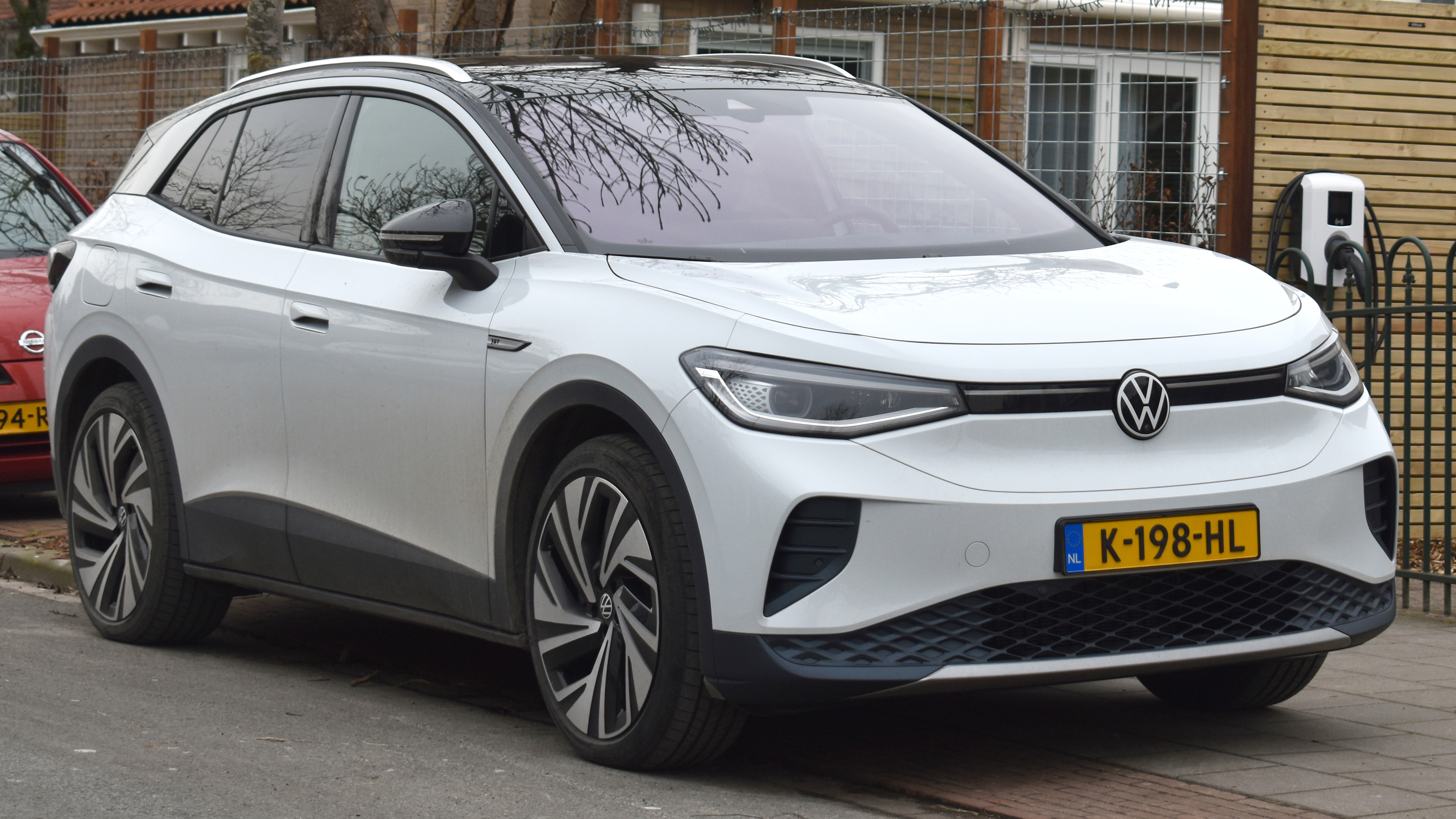
"There are many vehicles out there, ID4. If Volkswagen build is it, ain't nobody coming to buy it..."
The Volkswagen ID.4 is an electric SUV that offers a lot of space and a modern design. It's part of Volkswagen's push to create more electric cars.
The Volkswagen ID.4 is an all-electric SUV that is part of Volkswagen's ID family of electric vehicles. It aims to provide a practical and spacious electric option for consumers.
"So going for the volume play here may actually be something that we see many automakers try to do. And Subaru is pretty notorious for having a simple lineup. Compare the Subaru lineup to like Jeep, for example."
Jeep is a car brand that makes vehicles, especially known for their ability to drive off-road and handle tough conditions.
Jeep is an American brand known for its off-road vehicles, particularly the Wrangler, which is designed for rugged terrain and outdoor adventures.
"one of Subaru's secret sauces has always been, A, its all-wheel drive, and B, it is reasonably priced..."
All-wheel drive means that all four wheels of a car get power from the engine, which helps the car grip the road better, especially in bad weather.
All-wheel drive (AWD) is a drivetrain system that provides power to all four wheels of a vehicle simultaneously, enhancing traction and stability in various driving conditions.
"We've seen Mazda sales go backwards because they've tried to go upmarket and they admit they're trying to go upmarket."
Mazda is a car company from Japan that makes different types of cars, including sporty ones. They are known for making cars that are fun to drive.
Mazda is a Japanese automaker known for producing a range of vehicles, including sedans, SUVs, and sports cars. They are recognized for their focus on driving dynamics and innovative engineering.
Nissan is a big car company from Japan that makes many types of cars, including electric ones. They are known for their popular models like the Altima and Leaf.
Nissan is a major Japanese automaker that produces a wide range of vehicles, from compact cars to trucks and electric vehicles. They are known for models like the Nissan Altima and Nissan Leaf.
"...Nissan Honda Mitsubishi talking about a merger."
Mitsubishi is another car company from Japan that makes different kinds of cars, including SUVs. They are known for models like the Outlander.
Mitsubishi is a Japanese automaker that produces a variety of vehicles, including SUVs and electric cars. They are known for models like the Mitsubishi Outlander and Mitsubishi Eclipse.
"...Nissan Honda Mitsubishi talking about a merger."
Honda is a famous car company from Japan that is known for making reliable cars like the Civic and Accord. They also make motorcycles and other equipment.
Honda is a well-known Japanese automaker recognized for its reliable cars, motorcycles, and power equipment. Popular models include the Honda Civic and Honda Accord.
"Honda is experiencing some financial issues. The cost of electrification and the cost of tariffs has cut their, I mean, they're losing money."
Electrification means changing cars from using gasoline engines to using electric power. This helps reduce pollution and is better for the environment.
Electrification refers to the process of replacing traditional internal combustion engines with electric powertrains in vehicles. This transition is driven by the need for cleaner energy sources and reducing greenhouse gas emissions.
"Honda is experiencing some financial issues. The cost of electrification and the cost of tariffs has cut their, I mean, they're losing money."
Tariffs are extra fees that governments charge on products coming from other countries. This can make it more expensive for companies to sell their cars.
Tariffs are taxes imposed by a government on imported goods, which can affect the cost of manufacturing and selling vehicles. They can lead to increased prices for consumers and impact a company's profitability.
"...one company that has actually been the darling of the past few years, well, that company would be Carvana, who reports their quarterly earnings tomorrow."
Carvana is a company that sells used cars online, making it easy for people to buy and sell cars without going to a dealership.
Carvana is an online used car retailer that allows customers to buy, sell, and trade vehicles through a digital platform. They are known for their unique car vending machines and home delivery service.
"...because the new cars are too damn expensive. And so, and as dealers are anticipating a slow down in new car sales, and every pundit has spoken about that for 2026..."
New car sales are when people buy brand new cars from dealerships. If fewer new cars are sold, it can affect the prices of used cars too.
New car sales refer to the transactions involving brand new vehicles sold by dealerships to consumers. A decline in new car sales can impact the overall automotive market, including the used car market.
"...bidding up used car prices higher and more quickly this year than what we have historically seen. That doesn't bode well for used car buyers out there..."
Used car prices are how much people have to pay for cars that have been owned before. These prices can go up or down depending on how many people want to buy them and how many are available.
Used car prices refer to the market value of pre-owned vehicles. These prices can fluctuate based on demand, supply, and economic conditions, often rising when new car prices are high.
"...create that loan and then being able to package all the loans that they create and sell them off as asset-backed securities. Which to be clear here is what a lot of car dealerships are turning into in the savvy ones."
Asset-backed securities are like investments that are backed by things people owe money on, such as car loans. Car dealerships can bundle these loans together and sell them to make money.
Asset-backed securities are financial instruments backed by a pool of assets, such as loans or receivables. In the context of car dealerships, they often package loans made to customers for purchasing vehicles and sell them to investors.
"This weekend, the Wall Street Journal Review was a new Volkswagen Tiguan. $45,000 are they on drugs? My 230i M Sport was $45,000 and I got it for $37,000, not as practical, but also not a Volkswagen."
The Volkswagen Tiguan is a small SUV that is good for families and has a lot of space inside. It also comes with modern technology to make driving easier and more enjoyable.
The Volkswagen Tiguan is a compact SUV that offers a blend of practicality and performance. It's known for its spacious interior and advanced technology features, making it a popular choice in the crossover segment.
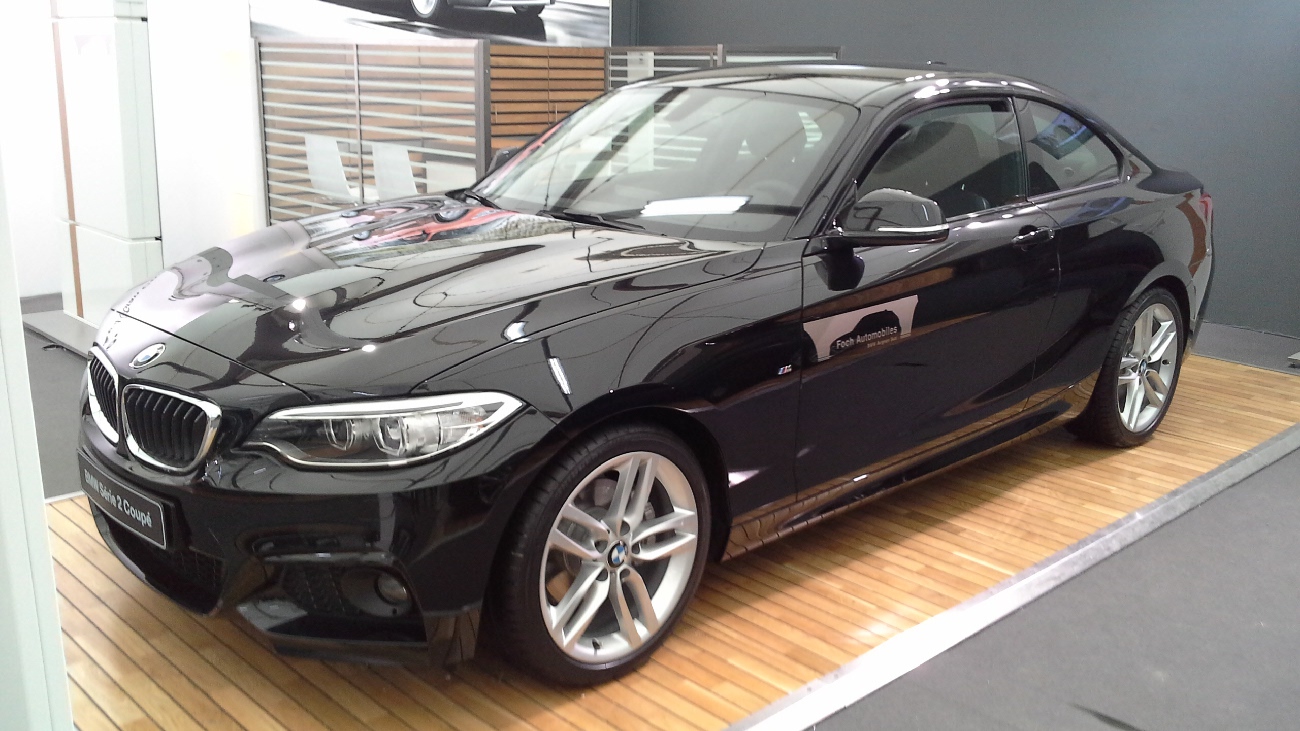
"...Volkswagen Tiguan. $45,000 are they on drugs? My 230i M Sport was $45,000 and I got it for $37,000, not..."
The BMW 2 Series is a small, fancy car that is fun to drive and has nice features inside. People often talk about it because it offers a good mix of performance and luxury, especially for its price.
The BMW 2 Series is a compact luxury car that combines sporty performance with upscale features. It's known for its agile handling and powerful engine options, making it a popular choice among driving enthusiasts. The mention of its pricing in comparison to other vehicles highlights its value proposition in the luxury segment.
"My 230i M Sport was $45,000 and I got it for $37,000, not as practical, but also not a Volkswagen."
The BMW 230i M Sport is a stylish and sporty car that is fun to drive. It has a strong engine and looks great, making it a good choice for people who like performance cars.
The BMW 230i M Sport is a sporty coupe that combines performance with luxury. It features a powerful engine and is designed for driving enthusiasts who appreciate a dynamic driving experience.
Select text to request an explanation
Quick, choose a meal deal with McValue, the $5 McChicken meal deal, the $6 McDouble meal
deal, or the new $7 Daily Double meal deal, each with its own small fries, drink and four
piece McNuggets.
There's actually no rush, I'm just excited for McDonald's.
For a limited time only, prices and participation may vary not bad for McDelivery.
When winter hits, you need a vehicle that can handle every road.
At Dave Smith, America's only national car dealer, we've got the power, tech and traction
to keep you moving forward.
With hundreds of vehicles in stock, we make it easy to tackle the season with confidence.
Snow doesn't stand a chance against Jeep and Ram, available now at Dave Smith.
Call Dave Smith Motors or visit www.davesmith.com.
Dave Smith Motors, where friends meet.
It's noon here in Venture City, New Jersey, and this is Car Edge Live for February 17th,
ladies and gentlemen.
It's noon here in Venture and in our nation's capital, Washington, D.C.
Your hosts today, as always, are me, Ray here in Venture and Zach, my handsome son, hanging
out of this apartment in D.C.
How are you today?
Handsome?
I'm doing well, Dave.
Happy Tuesday, February 17th, grateful to be with you here for another episode of Car
Edge Live.
Today's show, folks, is brought to you by none other than CarEdge.com.
Car prices show you fake prices.
Car sites, excuse me, show you fake prices, we'll get you the real one.
For those of you that are unfamiliar, we help thousands of people every single week by a
new and used car, so please check out CarEdge.com.
For those of you that have been tuning in recently, we have a new product in beta.
Car dealer ratings based on real prices, CarEdge.com slash dealer dash ratings.
We're seeking out feedback and input for this new product.
Again, it is in beta, so please take it with a big grain of salt.
Here on the CarEdge dealer ratings page, you can find transparent dealers.
For example, we've got Middleton Mazda.
When you click into any particular dealership, it shows you what their dock fee is, what their
dealer markup is, how much we've been able to negotiate with our AI agent from first
OTD to last OTD.
If a dealership adds add-ons and things like that, it'll show here as well.
All sorts of fun reports breaking down like dealer dock fees by different states and all
sorts of compelling information, so please check it out, y'all, and share your feedback
in the chat.
It means the world to me and our team.
Dad.
Yes?
The big story this morning.
You ready?
I'm sitting down, so yes, yes, I'm ready.
One in five Americans are spending more than $1,000, over $1,100 a month.
There was a new article that just came out on MoneyWise, Washington, mom dishes out $1,100
a month in car payments, and she is alone.
One in five Americans have four-figure car payments.
This is the new normal.
You and I have been talking about this for a while.
Payments are exploding, and at the same exact time, Dad, there's another phenomena that's
adding to cost of ownership, software-defined vehicles hidden threat, the high cost of keeping
their tech fresh.
There's an estimated additional $600 in ownership expense to be coming for car shoppers and car
owners because of technology investments.
You've got increasing car payments.
You've got increasing cost of ownership.
It's a little bit of a left jab, right hook, like a one-two combo.
Or if you're a southpaw like me, it's a right jab and a left hook, but either way, I saw
a comment from our dear friend, Mark Miller in there, and he says, I don't get the math.
If only 13% of the population can afford to buy cars, how can 20% have payments in excess
of $1,000?
Well, it's 20% of the 13% that can actually buy a car that have those payments.
It's not 20% of all the people out there, but that is a scary number that we thought
it was crazy when we were approaching one in five people having a car payment of close
to $1,000 a month, and then it was over $1,000 a month.
Now we're talking about $1,100 a month, and we haven't factored in automobile insurance,
which is what, $200 to $300 a month?
We haven't factored in maintenance.
We haven't factored in fuel.
We haven't factored in depreciation.
There is no faster losing investment, and by the way, buying an automobile is not an
investment, ladies and gentlemen.
But there is no faster losing what people think is an investment than buying a car.
The costs associated with that are skyrocketing.
And the fact that of the 13% to 15% of Americans that feels if they can participate, the fact
that 20% of those are opting for payments of $1,100 a month or more, that's a staggering
number.
I don't have people do it, and I've been saying that for five years or six years.
And there is no way you can convince me that, well, we know the vast majority of the people
can't do it, because the vast majority of the people don't no longer find themselves
looking at new cars.
They're looking at used cars, because new cars are way too expensive.
It's just staggering to me.
I want to dig in though, so again, yes, the new headlines are now no longer just $1,000
car payments.
It's $1,100.
It seems like every week that's going up and up and up.
Another kicker to this, dad, is the cost of ownership spree, and you were speaking to
it there just a moment ago.
And again, this comes from an article in Automotive News, software-defined vehicles, hidden threat,
the high cost of keeping their tech fresh.
This article is fascinating, dad, because essentially, what it's saying is that as cars
become more and more software-enabled, well, the reality is as they sit on roads for 10
to 15 years, it is actually costing and creating organizational, you can see right here, the
cost and organizational burden of continuous support, change man and validation increasingly
threatened to become one of the largest and least predictable operating expenses in the
software-driven vehicle era.
Dad, the estimates from the industry are that it could cost anywhere from $4 to $600 per
vehicle annually to actually just make sure that software and subscription fees and things
like that and all that software-driven crap works in your car that you keep for the next
decade.
Think about that.
We are going to have to update caredge.com cost of ownership, because right now it says
your car payment, which is including the interest, it says your insurance cost, it says your
fuel cost.
We get a little bit of heat because we also factor in depreciation, shocker, that's a
cost of ownership.
We now need to add in, if it's a software-driven vehicle, you need to anticipate $4 to $600
a year in software costs, because these companies are taking on new cost infrastructure and
what happens when companies take on cost burden, Dad, they pass it along to the consumer.
They tend to pass it on to the ultimate customer.
Isn't that crazy?
Well, I guess that's par for the course when it comes to software and technology.
There's a reason it's 1.0 and then 1.1 and 1.2 and onward and upward, because it's always
being updated and refined and improved and somebody's got to pay for all that.
I'm pretty sure when people buy their cars and they don't realize what they're driving
around in today is a massive computer, but that's what it is.
It's like they're computers at home.
It's going to need to be updated occasionally and sometimes you have to pay for those updates.
The payment, Dad, comes in the form of these companies are now going to have to staff differently.
They're going to have to organize differently.
The cost of these companies is to look a little bit more like a software company, which is
not cheap.
Then, when they paid these people those salaries to do those things, the cost ultimately gets
passed along to the consumer.
Yes.
Another way to make cars even less affordable for the vast majority of people out there.
Perhaps if we had fewer computers in cars and they were less reliant on software, perhaps
the cost of those vehicles could actually go down.
Here's the other phenomena that ties right back into this.
What's happening, and we talk about it all the time now, what's happening that's keeping
people in cars longer?
One is they can't afford to get into a new one, so they're just simply saying, okay,
I'm going to stay in my current car.
The other are extended loan terms, Dad.
You have these people in cars outside of warranty typically because they're taking on 7,280,
490, 620 month car loans.
Again, we talked about this yesterday, but I want to pull it up on the screen.
There's a viral LinkedIn post.
This is the benefit of being a part of the car edge community, y'all.
You are in the know of how the auto industry is thinking.
Brian Benstock, this man runs dealerships, ready?
Every 84 month loan costs you four transactions.
Most dealers don't see it this way.
They see lower monthly payments, faster deal closes, F&I hitting their numbers.
What they're missing?
Every time we stretch financing to 84 months, we remove a customer from our trade cycle
for seven years.
In that same window, we could sell them three new vehicles and take in two trades, excuse
me, five transactions versus one.
So not only that, do we have the proliferation of, and do the math for a second here, folks.
You want that $1,100 a month car payment?
That's 66,000 financed over 60 months at 7%.
That's absurd.
So many people are extending the term out on that 66 month financing to 84 months to
then have higher cost of ownership because there's more software in your car.
And the industry loses in this case, the consumer loses in this case.
It's the perfect lose-alose situation, Ed.
It is what Brian was pointing out there is that so many dealers today do not look at long term.
They just see short term.
Having spent 43 years in the industry, I can assure you that if you are in management,
everything is broken down into monthly terms.
The first of a month, you start at zero, the end of the month, you want to hit a number.
And so you think in February 28 day cycles, or 30 or 31 day cycles, and that's as far as you
look ahead, okay?
Because it's one day at a time.
And what Brian's pointing out is that if you don't take a longer term view, you will ultimately
lose sales that you could have had.
And I was going to say this yesterday because this part is truly incumbent upon the customer.
And don't get mad at me, folks, when I say this.
But you need to look at cars that you can afford the payment for 48 months or less.
Maybe max 60 months or less.
So if that means you have to give up many of your wants and just settle for your needs
so that you can keep a relatively comfortable payment for 48 or 60 months,
as opposed to extended terms like 72, 84 and 96 months, you would be doing yourself a favor.
It is, there are certain things in life that at least in my opinion are worth stretching for.
Cars are not one of them.
Real estate typically is because historically most real estate appreciates over time.
And so, you know, a house, a condo, a town home, whatever it is, that's something that,
okay, maybe you stretch a little more on a comfortable payment because that's actually
going to be worth more over time than what you initially paid for it.
The vehicle that you're looking at, that in order to have the wants that you desire,
as opposed to just the needs, well, that's a losing proposition.
That is not one of those purchases that you stretch on because it's not going to go up in
value. Okay, so we saw during COVID times, but that was an anomaly.
That's not normal. So let's assume to a certain degree things are back to normal.
That car you're looking to purchase today is going to depreciate in value.
So six, seven, eight years from now, it's going to be worth considerably less than what you
purchased it for as opposed to that home that you stretched for that could be worth thousands,
if not 10,000s of dollars more. So as a consumer, you have to take that into consideration.
You have to put aside your wants just one time in your damn life. Put aside your wants
and just settle for your needs so that you can shorten the term loan length so that you're not
getting clobbered with interest. Talk about wants and needs. We're going to switch gears and we're
going to talk about Subaru. Subaru wants and needs that to increase their sales by more than a third
in less than the next 10 years. Subaru is trying to go from 900,000 vehicles sold to 1.2
million units globally. At the same time, Dad, they're going to absorb over 1.5 billion in tariff
costs that are going to impact their profitability. So Subaru, Dad, their strategy in a post tariff
world is the way that we're going to win is they're going to sell more volume. This is the classic
we're going to make it up in volume. So this is the first signal we're seeing from an automaker
that's essentially saying, don't be surprised if we come out with big incentives, deals for customers
to cover their new tariff, 1.5 billion dollars in tariff costs. They're going to try and
grow through volume, which I thought was super interesting. They are looking at their core
products and trying to figure out how they can add to those core products so that they can have more
offerings so that they can grow sales globally from 900,000 to 1.2, 1.3 million. And they figure
if they can do that, that that will help to underwrite the cost of the extra cost of the
tariffs that they've been absorbing. Would you think it would work? Yeah, if you come out with
the products that people want to buy, but if you come out with products and they're dead on arrival,
you know, like what was it? The BRZ, not the BRZ, their electric vehicle that hasn't taken off
and may never take off. I mean, you know, those are investments that aren't paying off with them. So
their hope has to be that whatever it is they come out with is stuff that people want. And
we have seen in the automobile industry over time that the theory that many manufacturers have of
if we build it, they will come and buy it is not a true statement anymore. There are many vehicles
out there, ID4. If Volkswagen build is it, ain't nobody coming to buy it because it is the slowest
selling vehicle in America based on the day supply of vehicles that are on hand. So in theory,
what Subaru is looking to do might work. In practicality, depending upon what it is that
they decide to build, it might not. Nobody does selling better than Shopify. Shopify is the home
of the number one checkout on the planet. And the not so secret secret with shop pay that boosts
conversions up to 50%, meaning way less cards go abandoned and way more sales going through.
So if you're into growing your business, your commerce platform better be ready to sell wherever
your customers are scrolling or strolling on the web, in your store, in their feed and everywhere
in between. Businesses that sell more sell on Shopify. Upgrade your business and get the
same checkout that Skims uses. Sign up for your $1 per month trial period for three months at
shopify.com slash westwood one all lowercase. Go to shopify.com slash westwood one to upgrade
your selling today shopify.com slash westwood one.
When winter hits, you need a vehicle that can handle every road.
At Dave Smith, America's only national car dealer, we've got the power tech attraction to keep you
moving forward. With hundreds of vehicles in stock, we make it easy to tackle the season with
confidence. Drive through the cold with GMC strength. Ready today at Dave Smith. Call Dave
Smith Motors or visit www.davesmith.com. Dave Smith Motors, where friends meet.
Two factors that go into growing sales by 33%. What are we trying to sell and what's the price
of it? Think of it this way, Dad, for a second with me. Subaru's selling about 900,000 vehicles
right now and they're trying to, and that's globally, and they're trying to make up a $1.5
billion tariff. That's like 1600 bucks a car because they're trying to make up. So think about
that for a second. Well, if they sell 1.2 million instead of 900,000, now they got to make up less
per car. So going for the volume play here may actually be something that we see many automakers
try to do. And Subaru is pretty notorious for having a simple lineup. Compare the Subaru lineup to
like Jeep, for example. You're not getting nearly as many variations and iterations. So
it could be interesting here to see if Subaru, especially because you know what, I don't know
if anyone at Subaru watches our show, they know the same data we know. People do not want to
actually spend $1,100 a month on a car payment. And so maybe they will come out with some cheaper
options, some simpler options, and then incentivize the heck out of them so they can hit their sales
goals. But if you read the article, it states that the vehicles that they're looking to produce
to grow that number will be more expensive, higher profit margin vehicles. So you know,
one of the things, one of Subaru's secret sauces has always been, A, its all-wheel drive,
and B, it is reasonably priced for the type of vehicle that it is. So they have a very loyal
customer base because it's affordable. Well, if you are going to concentrate on the upper end
of that market, well, you might be pricing many of your customers out. And so that would be,
if I was working at Subaru, that would be my counter argument is you can end up doing to
Subaru what Stalantis did to Jeep, which is to continue to raise the prices and go more upscale
until you get to the point where your customers no longer feel as if they're your customers
because you've priced the vehicles out of their reach. I don't know how you make up a $1.5 billion
expense due to tariffs. You know, they only build final assembly in basically two countries,
Japan and the United States. And so much of their vehicles that they sell come from Japan
and are subject to a 15% tariff. I don't know that they have the ability to be able to build
more cars in the States. So this is going to be an ongoing struggle for years and years and years
for many of these manufacturers, especially, and we've seen it with Mazda as well,
especially the manufacturers that tend to produce their mass market reasonably priced in relatively
inexpensive quality vehicles. We've seen Mazda sales go backwards because they've tried to go
upmarket and they admit they're trying to go upmarket. We could see Subaru sales go the wrong
way because they're saying we need to go more upmarket. We need, in my opinion, we need more
manufacturers that understand there's a huge market to be served at lower price points as
opposed to higher price points. You mentioned Japan. You mentioned these automakers going in
the wrong direction. Well, folks, we've got an update on Nissan Honda Mitsubishi. We're two years
into dating. I want to be very clear. Two years of dating between Nissan Honda Mitsubishi talking
about a merger. This is fascinating, especially in the lens of what you just talked about, which
are these automakers who are struggling in this current environment. Now, if Nissan,
Honda, and Mitsubishi combined, maybe the world's third largest automaker over 8 million vehicles
sold, and it's pretty clear here, dad, Nissan needs Honda. Mitsubishi needs Honda. Honda doesn't need
Nissan or Mitsubishi. So it's an interesting dynamic because Nissan's been struggling here
domestically in the United States, and globally, and we've talked about it, they've shut down many
of their manufacturing plants, globally, seven of them. They're trying their best. Yeah, you see
it here from Edward. Honda needs to avoid the merger. We're in two years of dating and we're
getting more headlines and automotive news. So maybe talks are heating up, maybe.
I don't know, Honda is experiencing some financial issues. The cost of electrification
and the cost of tariffs has cut their, I mean, they're losing money. It has cut their profits
to the point that there isn't any. They are struggling financially and they are one of the
largest independent automobile manufacturers in the world. If they're struggling financially
because of tariffs and everything else, and we know Nissan is, and we can assume that Mitsubishi
is as well. Well, I don't know that it gets any better when you put three struggling brands,
financially struggling brands together, and hope that you're going to come out with a super brand
that is going to cure the financial ills that you're experiencing because there's just not enough
money to go around to, and if you're going to counteract the cost of tariffs,
there's a couple of ways to do it. Subaru thinks, okay, we need to increase sales dramatically.
The other way is to raise the price of the vehicles to cover your cost of those extra tariffs,
and if you do that, then you're on the risk of losing your customers again because the price
of your vehicles has gone up. And everybody says, well, just build the damn things in America.
That's easier said than done. We talked about it last year when we first started talking about
tariffs. Yeah, okay, build them in America. Well, if you were to build a plant today,
it's not like it'll be ready tomorrow. It takes years, and it takes a lot of money, and in the
meantime, a lot of these manufacturers are bleeding money because of the cost of tariffs. So,
I don't know what the answer is. I am glad that I work at CarEdge and not at Subaru or Honda on a
corporate level, but it is going to be a struggle for a number of these brands to be able to survive
these extra costs. And ultimately, maybe I'm wrong, but ultimately, I think those costs
will get pushed to their customers. The consumers will definitely be the ones that end up paying for
that. Now, one company that has actually been the darling of the past few years,
well, that company would be Carvana, who reports their quarterly earnings tomorrow.
Would that be Carvana? They do, and leading up to their quarterly earnings, Carvana's stock
has gone down more than 25% in the past month. So interested to see what happens tomorrow because
that the market's pricing in that their stock is going to move in one direction or another.
That's the expectation. I think we're going to get a pretty big signal here for the health of the
used car market tomorrow. Carvana is, are they the largest now, used car dealer? Second largest?
They're still behind CarMax, but allegedly, well, obviously, they're going faster than any
other used car retailer out there. Definitely. And certainly, via their accounting practices,
they can book and tend to book higher profits significantly, I don't know, two to three times
higher profits than everybody else that's been in the business.
But then the second, I just want to stand on this for a second. So they are the second largest
used car dealer. We know the used car market. Let me actually pull it up that. I didn't queue
this for today's show. So let's take a quick peek. Bear with me. You know where I'm going?
I'm guessing Blackbook. Going to Blackbook. Let's see what's going on with wholesale used car prices.
Okay, they went up again. Historically, they go down this time of year. Again, they went up. I'm
not bowed well when you compare it to 2024 and 2025. You can see this. Yeah, this chart shows you
wholesale used car prices. Each line is a year. The orange line is 2024. The green line is 2025.
The black line is 2026. Used car prices are appreciating more than they did in 24 and 25.
This is a time of year where they should not be increasing in value. And so, yeah, I think
they are part of on that. They are. You can look at those, the green line and the orange line,
and you can see for the same time period in those previous years, the wholesale values were going
down not up. And we have started the year where wholesale values started going up almost immediately.
And I think one of the reasons for that is because the new cars are too damn expensive.
And so, and as dealers are anticipating a slow down in new car sales, and every pundit has spoken
about that for 2026, where they expect new car sales to be soft this year. Well, that indicates
to dealers, well, then we have to be in the used car business. And they're bidding up used car prices
higher and more quickly this year than what we have historically seen. That doesn't bode well
for used car buyers out there. It would indicate to me, they're going to be asked to pay more,
a significantly more than they would have in the past.
Well, I'm going to be watching the earnings tomorrow, Dad. Don't be surprised if it's
Carvana shocks the car industry because it will really be an insight into what's going on the
used car market. Well, here I can help you one way or the other. Those earnings will shock the
industry either negatively or positively. But there will be a shock and I can assure you
that'll probably be in a headline somewhere. That options traders are expecting. So like the people
who buy the options on the stock market, they're expecting a 15% price change in Carvana stock
tomorrow. So like, yes, everyone is anticipating some volatility and some shock. Who knows if it's
going to be positive or negative, that's to be decided here in the next 24 hours. But it will,
I think, actually give us a really good barometer of the health of the used car market and quite
frankly, in particular, like the sub-private used car market because, again, a lot of Carvana's
customers, because of their lending practices, are able to get approved for auto loans.
As I've always said, Carvana is in the loan origination business and the vehicle that they
use for that is the sale of used cars. They don't really care about the car. They only care
about creating that loan and then being able to package all the loans that they create and sell
them off as asset back securities. Which to be clear here is what a lot of car dealerships are
turning into in the savvy ones. That's for sure. From Matthew here, Dad, thank you Matthew for this.
We really appreciate it. This weekend, the Wall Street Journal Review was a new Volkswagen Tiguan.
$45,000 are they on drugs? My 230i M Sport was $45,000 and I got it for $37,000, not as practical,
but also not a Volkswagen. $45,000 buys a Patek watch. Patek yourself, Volkswagen, what a world.
Wow. You know that $45,000 that buys the Patek Philippe watch? That is one of those
investments that will actually go up in value, as opposed to that Tiguan that will go down in
value faster than a boat anchor drops off of a super yacht. Again, folks, a friendly reminder,
we are in beta with CarEdge dealer ratings. Now, on that same little website, there's reports and AI
negotiation impact. Take a peek at this, guys. We have contacted 47,205 dealers. We've done
47,200 by dealer outreaches from July of last year. In just the last 45 hours, oh my gosh,
24 hours, we've saved customers $45,500 in AI negotiations. You can literally go on this chart
and see how many new negotiations are started each day, how much money we've saved for customers.
In the past 14 days, dad, $1.3 million have been saved. This is calculated by OTD quotes,
first OTD, last OTD. Each day, we're saving people almost $90,000 for context here, dad.
Yeah. This is what we've done so far. 19.5 million saved, 47,000 negotiations,
436,000 messages sent, more than 13 million hours saved for buyers. Dealers are responding 69
nice percent at a time. Dealers have replied almost half a million times. In just the last
seven days, we've brought $508 back to customers. You can learn even more about dealer responsiveness,
how long it takes them to respond, how much we're saving based on how many rounds and negotiations.
There's so much good information back here in this new little website. I encourage how we're
by each state, dad, in case you're curious which states are getting better results from the AI agent.
Please, y'all, this is in beta, seeking feedback, seeking input. Check it out and share some comments
in the chat below. I promise I will. Thank you, dad. I encourage everyone out there to do the
same. There it is. All right. We're back tomorrow with more Carriage Live. How's that sound?
It sounds good to me. I'll be back here from Ventner. I'm assuming, and one can never assume
with you, but I'm assuming you'll be right there in your trusty apartment in D.C.?
I think I'll be in the office tomorrow. I think I'll be in the office.
Okay. Well, there you have it. You'll still be in the confines of Washington, D.C., though.
Indeed, indeed. Thompson, good afternoon. I'm going to do the same over here. Everyone,
thanks for tuning in. We'll be back tomorrow with more Carriage Live.
Absolutely. Thank you, everybody. See you tomorrow.
All right.
Request an explanation for:
4 cars
4 cars featured
Request an Explanation
Heard something you'd like explained? We'll add it to this episode.
Sign in to request explanations for terms you heard.
Want to learn more?
Browse our glossary for plain-English explanations of automotive terms, jargon, and concepts.
See something that's not quite right? Our annotations are AI-generated and can sometimes miss the mark.
Click the flag icon on any annotation to suggest a correction.