
149: Cracking the CAN Code: Mastering Integration in Performance Builds
About this episode
Mitch Minton from Minton Performance joins to discuss the complexities of CAN bus communication in performance builds. He shares his journey from struggling with aftermarket engine management systems to developing his own CAN gateway, allowing for seamless integration of various electronic components. The conversation dives into the importance of understanding CAN protocols, the challenges of retrofitting modern vehicles, and the future of automotive communication with emerging technologies like CAN FD. Listeners will gain insights into the technical aspects of CAN communication and the practical applications in performance automotive settings.
CAN communication might seem like a secret, nerdy language spoken only by electronic components —and, in a way, it is. But behind that digital chatter lies the key to unlocking integration between different electrical systems.
Mitch Minton from Minton Performance joins us to unpack CAN communication—how it really works, and why it’s become such a crucial part of the aftermarket performance world.
👉 Use the code ‘PODCAST500’ to get $500 OFF HPA's VIP Package: https://hpcdmy.co/podvip
In this episode of Tuned In, Mitch shares his journey from a casual interest in cars, sparked by ‘The Fast and the Furious’, to becoming a skilled automotive technician and data analyst. He reflects on the evolution of his expertise and his experiences in race engineering and mobile diagnostics.
We then dive into the fascinating world of CAN communication, exploring its vital role in modern automotive systems. Mitch breaks down the complexities of CAN protocol, explaining data transmission, how to decode negative values, and the purpose of his CAN gateway.
We explore the challenges of integrating aftermarket ECUs and how intricate modern vehicle data networks have become. Mitch explains why continuous learning in this field is essential for anyone serious about automotive technology.
With modern vehicles packed full of electronic modules, traditional engine swaps, gearbox conversions, and standalone ECU upgrades aren’t as straightforward as they once were. Without the understanding and use of CAN communication a lot of these modifications are no longer possible.
👉 Use the code ‘PODCAST500’ to get $500 OFF HPA's VIP Package: https://hpcdmy.co/podvip
Follow Mitch here:
WWW: mintonperformance.com
Youtube: @mintonperformance
Facebook: Mitch Minton
Timestamps:
0:00 Cracking the CAN Code: Mastering Integration in Performance Builds
4:37 How did you get interested in cars?
9:11 At what point did you decide to go down the IT road?
12:45 What is your work history and where are you today?
14:54 Can you tell us which HPA courses you took and how you found them?
19:34 What sort of race engineering and data analysis did you get involved in?29:40 How easy is it to understand and use different data loggers?
34:34 Why did you stop doing data analysis?
36:16 What does your current working role look like?
38:33 What is CAN?
45:30 How do the CAN high and CAN low wires work?
47:25 Is there a limit of nodes depending on the Bus length?
48:33 What is the benefit of using CAN Bus?
54:12 What does a CAN message look like?
1:03:29 Why can’t we send the data in the numbers we want to see?
1:05:04 What hardware and software do we need to reverse engineer a CAN Bus? 1:14:10 What is a CAN gateway?
1:19:20 How do we run a modern DCT gearbox on a standalone that doesn’t accurately log torque output?
1:23:09 How do you actually control and program the CAN gateway?
1:24:55 Could you offer a standard and a pro version for different users?
1:28:21 What is CAN 2.0 and what is CAN FD?
1:31:57 Where do you place the data in addresses of importance?
1:33:43 How mainstream is CAN FD at the moment?
1:35:20 What is FlexRay?
1:37:50 Is it going to get harder and harder to make stand alone ECU’s work on late model vehicles?
1:45:08 Final 3 questions
CAN bus
"I didn't know what can was in the grand scheme outside of the communication model from the get-go."
The CAN bus is a system that helps different electronic parts of a car talk to each other. It makes sure everything works together smoothly.
The CAN bus (Controller Area Network) is a robust vehicle bus standard designed to facilitate communication among various electronic components in a vehicle without a host computer. It allows different parts of the vehicle to communicate with each other efficiently.
Minton Performance
"And in this episode, we're joined by Mitch Minton from Minton Performance."
Minton Performance is a business that focuses on improving car electronics to make them work better, especially for performance cars.
Minton Performance is a company that specializes in performance aftermarket electronics, particularly in the area of CAN communication systems. They provide solutions that enhance vehicle performance through advanced electronic management.
Haltech Elite
"Mitch actually popped back on our radar after our interview with tuned by Sean. And the reason for this is that Sean and Mitch have partnered up to provide Haltech Elite Plug-in Play solutions for various late model cars."
Haltech Elite is a type of computer system that helps improve how a car's engine runs. It allows for better tuning and performance.
Haltech Elite is a line of advanced engine management systems designed for performance vehicles. These systems allow for precise tuning and control of engine parameters, improving performance and efficiency.

Chevrolet Corvette
"One of these is the Z06 Corvette. Now traditionally, this would be impossible with the Haltech Elite because the canned communication template is locked down."
The Chevrolet Corvette Z06 is a fast sports car that is built for high performance. It's known for being powerful and fun to drive.
The Chevrolet Corvette Z06 is a high-performance variant of the Corvette sports car, known for its powerful engine, lightweight construction, and advanced technology. It is designed for both street and track performance.
carburetor
"I didn't know anything about carburetors at the time."
A carburetor is a part of the engine that helps mix air and fuel so the car can run. It's mostly found in older cars.
A carburetor is a device that mixes air and fuel for an internal combustion engine. It was commonly used in older cars before fuel injection became standard.
B-series engine
"They are a pretty easy platform to go and buy... upgrade it with B series or whatever it might be."
The B-series engine is a type of engine made by Honda that many people like to use because it's powerful and can be modified easily.
The B-series engine is a line of four-cylinder engines produced by Honda, known for their performance and tunability. They are popular for engine swaps in various Honda models.
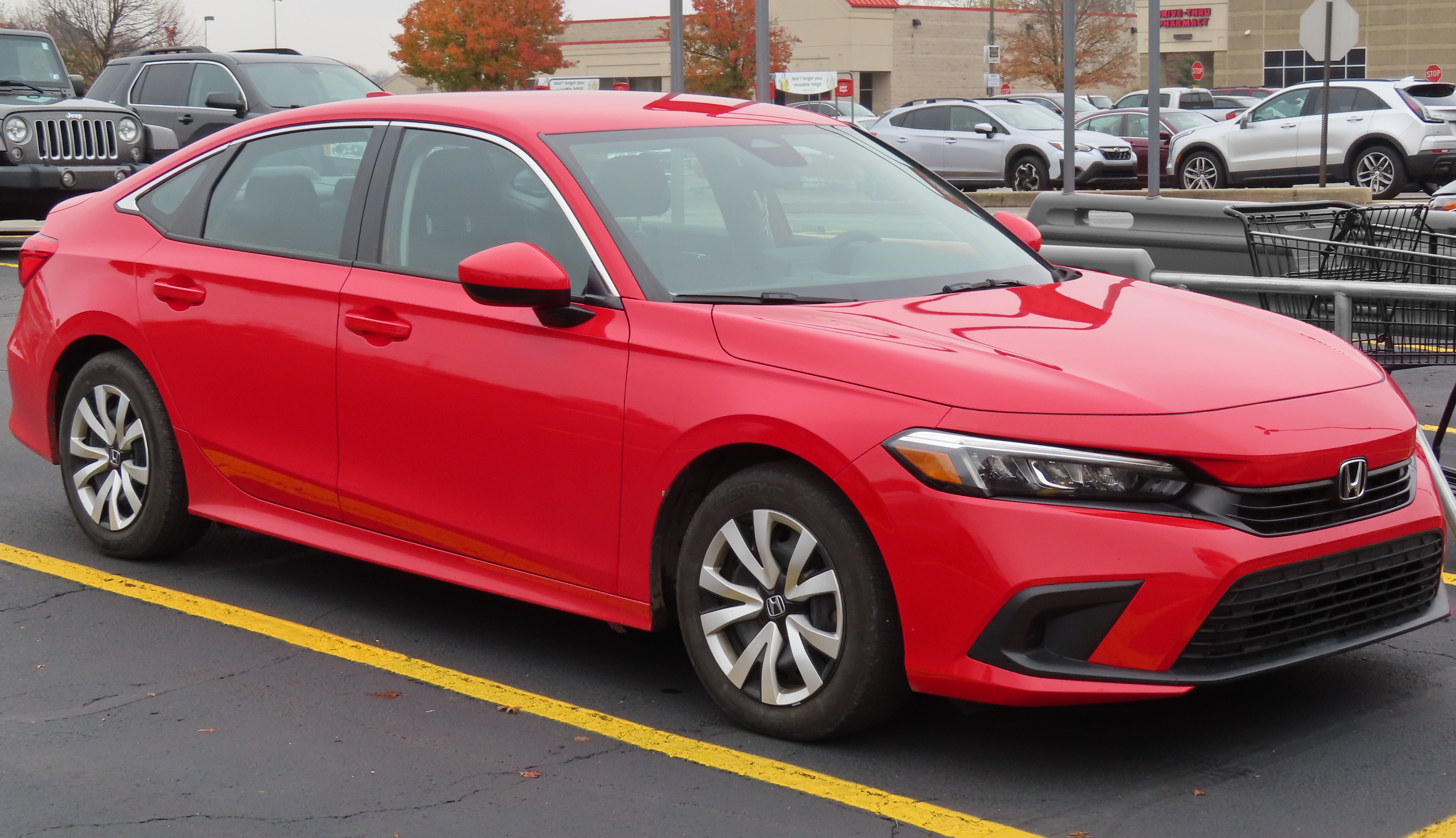
Honda Civic
"Once I kind of transitioned over to the Civic, so to speak, and the newer records, that was certainly what sparked the curiosity..."
The Honda Civic is a small car that many people like because it's dependable and can be made faster with upgrades. It's popular for customizing.
The Honda Civic is a popular compact car known for its reliability and performance. It has a strong aftermarket support, making it a favorite among car enthusiasts for modifications and upgrades.
timing belt
"you know, replacing a time of belt for the first time and things like that and getting in time."
The timing belt is a part that helps keep the engine's parts moving in sync. If it breaks, it can cause serious damage to the engine.
The timing belt is a critical component that synchronizes the rotation of the engine's crankshaft and camshaft. Replacing it is essential for engine performance and longevity.

Dodge Omni
"...es at the time that that helped me. There's a guy Omni Power or Omni Man Steve, Steve Rothenbueller, I b..."
The Dodge Omni is a small car that was made a long time ago, from the late 1970s to the early 1990s. It was one of the first cars in the U.S. to have the engine in the front and the wheels driven by the front tires, which made it different from many other cars at the time.
The Dodge Omni was a compact car produced by Chrysler from 1978 to 1990. It was significant for being one of the first front-wheel-drive cars in the U.S. market and helped establish the hatchback segment in America, making it a notable model in automotive history.
ampacity
"...a better understanding of ampacity and current limits and things like that based on wires and grounding and stuff. And then I followed that one up with the traction understanding traction control model because I didn't understand enough at the time."
Ampacity is how much electricity a wire can safely handle without getting too hot or damaged. It's important to know this to avoid electrical problems.
Ampacity refers to the maximum amount of electric current a conductor or device can carry before sustaining immediate or progressive deterioration. It's a crucial concept in electrical wiring to ensure safety and efficiency.
traction control
"...followed that one up with the traction understanding traction control model because I didn't understand enough at the time. Granted, I didn't have a real, real need to because I didn't have a standalone engine management system or anything I could really play with traction control on."
Traction control helps your car maintain grip on the road when you accelerate. It stops the wheels from spinning too much, which can happen on slippery surfaces.
Traction control is a system in vehicles that helps prevent wheel spin during acceleration by adjusting engine power or applying brakes to specific wheels. This is particularly useful in high-performance and racing scenarios.
60-foot
"...in the drag race in the world, you know, your 60-foot is going to be a make it or break it in most circumstances. So if you don't have a solid launch, you're not, you're not going to make it."
The 60-foot time is how fast a car can go in the first 60 feet after it starts racing. It's important because a good start can help win the race.
The 60-foot time is a measurement used in drag racing that indicates how quickly a car can travel the first 60 feet from a standing start. It's a critical metric for assessing launch performance and overall drag racing success.

Audi R8
"I end up going there and walk in and they have an Audi R8 GT3."
The Audi R8 GT3 is a special version of the Audi R8 made for racing. It's built to be faster and safer on the racetrack.
The Audi R8 GT3 is a race car variant of the R8, designed specifically for GT racing. It features modifications for performance and safety, making it suitable for competitive racing environments.
MoTeC dash
"we want you to find it so we can add it to our MoTeC dash."
A MoTeC dash is a special display used in race cars to show important information like speed and engine performance while driving.
MoTeC is a brand known for high-performance data acquisition systems and dashboards used in motorsport. A MoTeC dash displays critical information about the vehicle's performance in real-time.
CAN messages
"...you're talking about and logging all of the can messages that are being sent from the engine control unit to the Bosch data logger. That's correct."
CAN messages are like text messages that car parts send to each other to share important information. This helps the car's systems work together smoothly.
CAN messages refer to the data packets sent over the Controller Area Network (CAN), a communication protocol used in vehicles to allow various components to communicate with each other. This is crucial for monitoring and controlling vehicle systems like the engine and sensors.
SRO
"...most of the racing sanctions, you have MSA, you have SRO, you have TransAm..."
SRO is a group that organizes car racing events, especially for sports cars. They help manage the races and ensure everything runs smoothly.
SRO, or the Société Rallye Automobile, is a motorsport organization that oversees various racing series, including GT racing and endurance events. They are known for organizing events that feature sports cars and prototypes.
TransAm
"...you have SRO, you have MSA, you have TransAm, NASCAR's in its own little world..."
TransAm is a type of car racing series in North America where fast cars compete against each other. It's known for thrilling races and has been around for a long time.
TransAm is a North American auto racing series that features high-performance cars competing in various classes. It has a rich history and is known for its exciting races and competitive fields.
MSA
"...you have MSA, you have SRO, you have TransAm..."
MSA is a group that manages car racing in the UK. They make sure the races are safe and follow the rules.
MSA stands for the Motorsport Association, which is the governing body for motorsport in the UK. They oversee various racing events and ensure compliance with safety and regulatory standards.
data logger
"...that particular car. You mentioned that it has the Bosch factory-fitted data logger. And then they had fitted this, this auxiliary motor unit."
A data logger is a device that collects information about how a car is performing while it's being driven. It helps teams understand things like speed and engine performance.
A data logger is an electronic device that records data over time, often used in motorsports to monitor vehicle performance and gather telemetry data. This information can help engineers and drivers analyze performance and make improvements.
Bosch
"...that particular car. You mentioned that it has the Bosch factory-fitted data logger. And then they had fitted this, this auxiliary motor unit."
Bosch is a big company that makes parts and technology for cars. They create things like sensors that help cars work better and safer.
Bosch is a global engineering and technology company known for its automotive components, including sensors, data loggers, and other electronic systems. They play a significant role in the automotive industry by providing advanced technology solutions.
Motech
"...because I had taken Motech's training to understand, you know, data analysis within the Motech systems."
Motech makes systems that help race cars collect data about their performance, which can be used to make them faster.
Motech is a company known for its advanced data logging and engine management systems, widely used in motorsports for performance analysis and tuning.
lap times
"...troubleshoot why we were getting lap times only half of the time."
Lap times are how long it takes a car to go around a racetrack. Shorter times usually mean better performance.
Lap times refer to the amount of time it takes for a car to complete a lap on a racetrack, a crucial metric for assessing performance.
RaceLogic
"...it also had a racelogic V-Box HD2, which was brand new to me at this time..."
RaceLogic makes tools that help track how fast cars go around a racetrack, which can help drivers improve their performance.
RaceLogic is a company that specializes in performance measurement systems, including GPS-based lap timers and data loggers used in motorsports.
V-Box HD2
"...the racelogic V-Box HD2, which was brand new to me at this time..."
The V-Box HD2 is a tool that records both video and data from a car while it's on the track, helping drivers analyze their performance.
The V-Box HD2 is a high-definition video and data logging system from RaceLogic that captures vehicle performance metrics and video during track sessions.
track map
"...the auto track map was picking the wrong track and the wrong layout..."
A track map shows what a racetrack looks like, including where the turns and straight sections are, helping drivers know where to go.
A track map is a graphical representation of a racetrack, showing the layout, turns, and key features, used for navigation and strategy in racing.
data analysis
"...the data analysis with Motech or with the Motech dash would certainly be more beneficial."
Data analysis is looking at information collected from a race car to find ways to make it go faster or handle better.
Data analysis in motorsports involves examining performance data to identify areas for improvement, helping teams optimize their strategies and vehicle setups.
video channels
"...it had basically two channels of video associated with it."
Video channels are different camera views that record what happens while driving, helping to see how the driver is performing.
Video channels in the context of data logging refer to the different camera feeds that can be recorded simultaneously to provide visual feedback during data analysis.
driver input
"...to see what the driver input is."
Driver input is what the driver does with the steering wheel and pedals while driving, which affects how the car performs.
Driver input refers to the actions taken by the driver, such as steering, braking, and accelerating, which can significantly affect a vehicle's performance on track.
brakes
"...you're thinking yourself, why are you on the brakes here?"
Brakes are what make a car slow down or stop, and how well they work can change how fast a car can go around a track.
Brakes are the components of a vehicle that slow it down or stop it, and their performance is critical for effective lap times on a racetrack.
telemetry
"...when the guy, his name is Brad would show up with us too, he would put telemetry on the car so we could watch the V-Box video in pits to understand what's going on in the car as well."
Telemetry is like a way to get real-time information from a car while it's racing. It helps teams see how well the car is doing and make adjustments if needed.
Telemetry refers to the collection and transmission of data from a vehicle to analyze its performance in real-time. This data can include speed, braking force, and engine performance, allowing teams to make informed decisions during a race.

Volkswagen Bus
"...ith a terminating resistor at just one end of the bus. And I think then the other one is if you're runn..."
The Volkswagen Bus is a famous old van that people loved to use for road trips and camping. It has a unique shape and lots of room inside, which made it very popular in the 1960s and 70s.
The Volkswagen Bus, also known as the VW Type 2, is a classic vehicle that became an icon of the 1960s counterculture. Its spacious interior and distinctive design made it popular for families and travelers, and it remains a beloved symbol of freedom and adventure.

Renault Latitude
"...uired GPS, for example, if you're looking at your latitude and longitudinal GPS coordinates, those are huge ..."
The Renault Latitude is a car that was made to be comfortable and safe, but it didn't sell very well. It was produced for a few years and is not very well-known compared to other cars.
The Renault Latitude is a mid-size sedan that was produced from 2010 to 2015, primarily for markets outside of Europe. It was designed to offer a comfortable ride with a focus on technology and safety features, but it never gained significant popularity.

Mercedes-Benz E55 AMG
"Yep, that's absolutely correct. The essentially what drug me down this rabbit hole is I had a, I bought an E55 AMG back in 2015."
The Mercedes-Benz E55 AMG is a fast and luxurious car that combines comfort with high performance. It's known for having a strong engine and many features that make it enjoyable to drive.
The Mercedes-Benz E55 AMG is a high-performance luxury sedan known for its powerful engine and advanced features. It was part of the E-Class lineup and is recognized for its blend of comfort and sportiness.
DCT gearbox
"How do you approach maybe something with a modern DCT gearbox or auto gearbox, which is very reliant on accurate talk output from the engine control unit into the TCU."
A DCT gearbox is a type of automatic transmission that can change gears very quickly, making cars feel faster and more responsive when driving.
A DCT (Dual-Clutch Transmission) gearbox uses two separate clutches for odd and even gear sets, allowing for faster gear shifts and improved performance compared to traditional automatic transmissions.

Lancia Lambda
"..., you have airflow, you have VE and you have your lambda values and your ignition timing pending it's at i..."
The Lancia Lambda is an old car from the 1920s that was special because of its unique way of being built, which made it lighter and stronger. It was considered a fancy car back then and is still admired by car enthusiasts today.
The Lancia Lambda, produced from 1922 to 1931, is notable for being one of the first cars to feature a unitary body construction, which significantly influenced automotive design. Its innovative engineering and luxurious features made it a prestigious model in its time.
Request an Explanation
Heard something you'd like explained? We'll add it to this episode.
Sign in to request explanations for terms you heard.
Want to learn more?
Browse our glossary for plain-English explanations of automotive terms, jargon, and concepts.
Help improve this episode
See something that's not quite right? Our annotations are AI-generated and can sometimes miss the mark. Click the flag icon on any annotation to suggest a correction.