
159: BMW Direct Injection on MoTeC: Genius or Headache?
About this episode
Greg Strom (Strom Motorsports) breaks down why modern direct-injection BMW tuning is far more complex than port injection—especially when using MoTeC standalone. He contrasts dyno “numbers” with real race-lap durability, then walks through DI fundamentals like injection timing, fuel pressure control, MBT ignition mapping, and the knock/mixture sensitivity that can swing power with tiny timing changes. Greg also shares his path from racing and coaching into motorsport engineering, plus real-world GT4/GT racing lessons on limp modes, traction/ABS behavior, and why factory ECUs can be frustrating. The episode ends with his current B48-focused parts/business direction.
Port-injected engines and aftermarket standalone ECUs go hand in hand—but controlling direct-injected engines is far less charted territory. Brett Strom from Strom Motorsport has been deep in the weeds mastering BMW’s B48 on a MoTeC ECU, and he’s here to break it all down—plus much more.
👉 Use the code ‘PODCAST500’ to get $500 OFF HPA's VIP Package: https://hpcdmy.co/podvip
In this episode of Tuned In, Brett shares his journey from young racing enthusiast to professional racer and engineer. He dives into the realities of building a career in motorsport and the rapid evolution of technology. We also get into ABS, traction control, and the strategy behind endurance racing.
We unpack Brett’s hands-on experience with racing and tuning, focusing on the complexities of direct injection. From injection timing to fuel pressure behaviour, he explains the intricacies and what really matters when tuning DI engines on a standalone ECU.
The conversation also covers choosing the right ECU for a particular application, dyno tuning versus real-world performance, the challenges of building reliable race engines, and why MoTeC remains his go-to platform.
Brett’s done a lot in the world of motorsport—and we’ve only scratched the surface. From racer to engineer to tuner and builder, his depth of experience makes this one a seriously compelling listen.
👉 Use the code ‘PODCAST500’ to get $500 OFF HPA's VIP Package: https://hpcdmy.co/podvip
Follow Brett Here:
Instagram: strommotorsport
Youtube: strommotorsport
WWW: strommotorsport.com
Timestamps:
0:00 BMW Direct Injection on MoTeC: Genius or Headache?
4:40 How did you form an interest in cars?
7:32 First car BMW E30
10:29 Advantages of spec racing series
13:59 What were you going to do for a job after university?
18:30 What was wrong with the BMW factory ECU?
21:59 Why did you pick MoTec?
27:25 You've done an EFI course, what happened when you started tuning?
32:21 How did your career as a racer develop?
41:23 Running a motorsport based performance shop. How hard is it?
45:59 Challenges of turning late model cars into race cars?
56:04 Is it not until GT3 level cars that they’re actually factory built race cars?
58:23 Motorsport grade traction control and ABS
1:06:41 What’s the challenges of controlling a DI engine with a standalone ECU
1:27:58 Are you adding port injection to these engines as well?
1:30:01 What is the benefit of Direct Injected engines and how do we tune them?
1:47:36 Do you need a complex standalone ECU and which one?
1:59:00 B48 engine swap into BMW E36 & E46
2:02:18 Final 3 Questions
High Performance Academy
"for those who are new to the TuneIn podcast, High Performance Academy is an online training school. We specialise in teaching people how to build performance engines, how to tune EFI, how to construct wiring harnesses."
High Performance Academy is a training site that teaches people how to build and tune performance engines. They also teach practical skills like wiring and using data logs.
High Performance Academy (HPA) is an online training school focused on performance engine building and tuning education. The episode mentions their courses covering EFI tuning, wiring harness construction, and data logging.
track day
"...worked at a shop cleaning the floors to kind of learn what I could. Yeah I got to do my very first track day actually so this was I think it was like 1997 and I was 16..."
A track day is when regular drivers get time on a race track. You’re not usually racing other cars side-by-side—more like practicing and learning the track.
A track day is an organized event where drivers can use a racetrack for practice and fun, usually with limited or no wheel-to-wheel racing. It’s a common way to learn car control and driving technique while managing risk and costs compared with full racing.
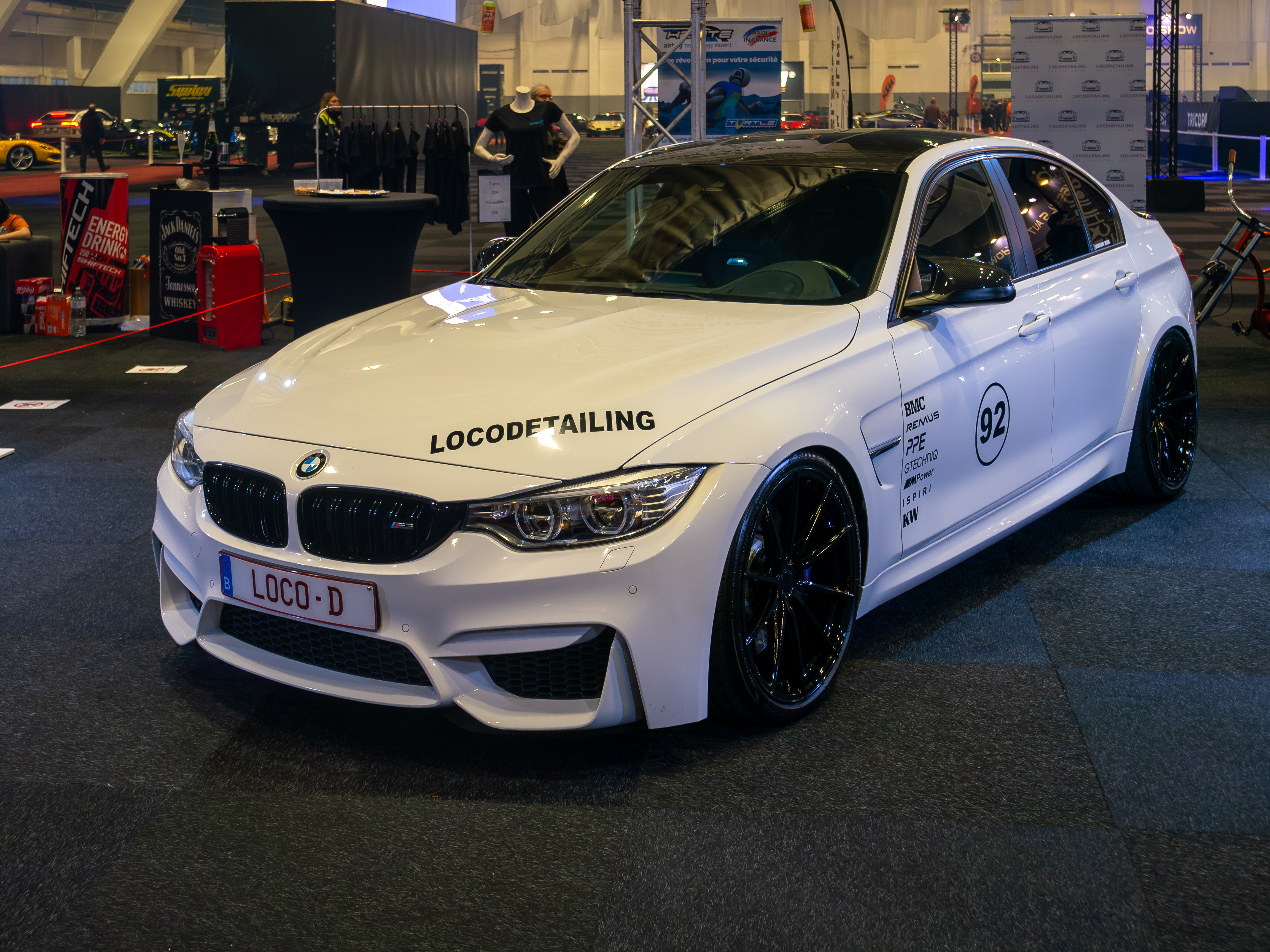
e46 M3
"my dad picked up an e46 m3 with the smg like they had just come out with that and we started doing track days with that because it was a lot easier for me to drive because I couldn't shift"
The BMW E46 M3 is an older M3 generation. It’s a performance BMW that many people track, and the version mentioned uses an SMG transmission that can make driving easier for someone who can’t shift normally.
The BMW E46 M3 is the fourth-generation M3 (produced in the late 1990s to early 2000s). It’s known for its track-friendly balance and, in SMG-equipped cars, a semi-automatic transmission that can help drivers who can’t use a clutch normally.
spec racing
"[614.9s] for racing for spec racing is the speccy 30"
Spec racing is a format where cars are kept close to identical (or tightly regulated) so competition depends more on driver skill and setup within the rules. The speaker later ties this to small power differences and shared suspension/brake rules making driver talent more important.
slicks
"it's on 280 width slicks"
Slicks are race tires made for maximum grip. They work best on dry track days and help the car stick better when you accelerate and brake.
Slicks are race tires with no tread pattern, designed to maximize grip on dry pavement. They typically provide much more traction than street tires, which changes how power and braking translate into lap time.
MoTeC
"Interestingly though the MoTeC West Coast office at the time for USA they don't have it anymore but was was a couple... once I kind of got it going... I called up Shane Tecklenburg because he was he's the MoTeC guy... it’s 800 bucks for the day to come down and tune it"
MoTeC makes aftermarket computers for engine control. Tuners use it when they want more control than the factory ECU, especially for custom builds.
MoTeC is a high-end aftermarket engine management brand known for standalone ECUs and professional tuning support. In this segment, it’s the system the speaker is using to start and tune a BMW engine, and they’re discussing getting help from a MoTeC specialist.
ECU
"because most ECUs will have some kind of trigger scope or ref sync capture so you don't actually need to break out the oscilloscope... every calculation for fuel ignition is based on that information being valid."
ECU is the car’s engine computer. It reads sensors and decides how much fuel to inject and when to spark the plugs.
ECU stands for Engine Control Unit. It’s the computer that reads sensor inputs and uses them to calculate things like fuel delivery and ignition timing in real time.
ignition timing
"just such a powerful way of showing exactly what the ignition timing's doing to the engine torque. Interestingly Todd from Mainline upgraded us to their new Pro Hub firmware and it's lost that"
Ignition timing is when the spark happens in the engine cycle. If it’s too late you lose power; if it’s too early you can get knock and damage.
Ignition timing is when the spark plug fires relative to engine position. Changing it affects cylinder pressure, torque, and knock risk, so tuners often map timing across different RPM and load conditions.
data log
"Oh really? Well there's a different way of doing it with a data log so essentially there's a logger that's running the whole time and if you've got torque and ignition timing you can log those two parameters against each other and it'll show you that graph"
A data log is a recorded file of what the car/dyno measured during the pull. You can review it later to see patterns that weren’t displayed live.
A data log records sensor values over time so you can analyze relationships after the run. Here, they’re logging torque and ignition timing against each other to recreate the missing graph feature.
torque
"if you've got torque and ignition timing you can log those two parameters against each other and it'll show you that graph but at the moment"
Torque is the engine’s pulling force. Tuners care about it because it’s closely tied to how much power the car makes in the real world.
Torque is the twisting force the engine produces, and it’s a primary metric tuners optimize for. In this segment, torque is plotted against ignition timing to understand how timing changes affect engine output.
BOP balance of power
"...if you back in the day... it was a lot easier to get the cars to be kind of equal you know effectively BOP balance of power now or performance that was..."
Balance of Performance (BOP) is a racing rule system that adjusts things like weight, engine output, or other limits so different cars can compete more evenly. The speaker connects it to modern racing where technology makes it harder to “naturally” keep cars equal.
cam timing table
"and trying to figure out what was the cam timing table it was like I have nightmares about it."
A cam timing table tells the engine computer when the camshafts should move. If it’s set wrong, the engine can run poorly or not make power. It’s one of the more sensitive tuning areas.
A cam timing table is part of the ECU calibration that controls when the camshafts open/close relative to engine speed and load. Getting it wrong can cause poor power, rough running, or even engine damage, which is why it’s a common “nightmare” area for tuners.
engine tuning
"...like obviously we do engine tuning we're also designing suspension components and we do obviously I do driver coaching..."
Engine tuning means adjusting how the engine runs so it makes more power or drives better. A tuner changes settings like fuel and timing so the car performs the way you want.
Engine tuning is the process of modifying and calibrating an engine to achieve better performance, drivability, or efficiency. In a performance shop, it often includes changes to fueling, ignition timing, boost control, and how the ECU responds under different conditions.
endurance racing
"...paid me to come because I I could both drive with him or or drive with the team if we were doing endurance racing but also would consistently like if we were having problems..."
Endurance racing is long-duration racing where the car has to last. It’s not only about speed—reliability and careful setup are just as important.
Endurance racing is motorsport where cars run for long durations, testing durability as much as outright speed. Setup choices—cooling, fueling strategy, reliability, and driver stints—matter heavily because failures are costly over long races.
limp mode
"at the 24 hours of COTA where the car suddenly went into a limp mode like an hour into the race and no indication as to why it's just it's a factory race car"
Limp mode is when the car automatically cuts back power to protect the engine. It happens when the computer thinks something is wrong, so you can keep driving (slowly) or get back to the pits.
Limp mode is a protective strategy where the engine management limits power to prevent damage when it detects a fault. On race cars, it can be triggered by sensor issues or cooling/intercooling problems, and it often reduces drivability without clearly explaining the root cause.
inlet temperature not shown on the display
"it didn't tell you what the inlet temp was on the display which is insane like you'd think of all the values that you would want to know on a turbocharged race car like that"
Sometimes the car knows something is wrong, but the driver screen doesn’t show the key number. If you can’t see the inlet temperature, you may not catch the problem before the car limits power.
This highlights a motorsport systems integration issue: the ECU may detect a problem and trigger limp mode, but the driver-facing display may not show the underlying parameter (inlet temperature). That delay in actionable information can turn a solvable cooling/sensor issue into a race-ending event.
manuals
"[3216.0s] in we rented two rental cars so that we could both practice driving manuals and we got the [3220.3s] cheapest rental cars we could and you know my co-driver was paying for this stuff"
“Manuals” means cars where you shift gears yourself with a clutch. If you’re not practiced, it’s easy to shift at the wrong time and lose performance or stress the drivetrain.
“Manuals” refers to driving a car with a manual transmission, where the driver selects gears using a clutch and shifter. Learning manual technique matters in racing because mistakes can cause poor acceleration, missed shifts, or even engine over-rev situations.
oil pressure
"[3270.6s] what was happening is that the pan wasn't baffled very well so under braking it would lose oil pressure"
Oil pressure is how strongly the engine’s oil is pumped through the system. If it drops—like during hard braking—some engine parts don’t work correctly and the car can throw faults.
Oil pressure is the pressure of lubricating oil in the engine system, and it’s critical for actuators and hydraulic components. In this segment, low oil pressure under braking is linked to a fault in the BMW Vanos system.
wheel lockup
"[3642.6s] you see Formula One cars admittedly not very often but you see Formula One cars locking up a [3647.3s] front wheel coming into a corner well the answer is no they can't so yeah abs for me yeah"
Wheel lockup is when the brakes are so strong that a wheel stops turning and starts sliding. That usually makes the car harder to steer and can increase stopping distance.
Wheel lockup happens when a tire stops rotating and skids, usually under excessive brake pressure. The speaker uses Formula One examples to argue that without ABS, maintaining control and consistent braking performance is not achievable in all conditions.
Bosch
"[3732.1s] lap time it is quicker it's interesting you say that because when the the deal we had with that [3732.1s] Bosch motorsport abs unit was we were given it by Bosch motorsport Australia and we're very open [3738.5s] about the fact that yes we were given a very expensive piece of equipment but also from the"
Bosch is the company that makes the ABS hardware used in racing. They’re saying they tested it and shared what they learned instead of just trusting marketing claims.
Bosch is mentioned as the supplier of a motorsport ABS unit. The speaker discusses testing it openly and reporting findings, implying the system’s real-world performance can be evaluated rather than assumed.
compression ratio
"and there it's just stock stock engine 10.2 to 1 compression so it is scary in the sense that like if you're trying to push power right away on them"
Compression ratio is how tightly the engine squeezes the air-fuel mixture. With boost, higher compression can make knock more likely, so you have to tune carefully.
Compression ratio is the ratio between the cylinder’s maximum and minimum volume. A higher compression ratio generally increases thermal efficiency but can also make knock more likely under boost, requiring more conservative tuning.
rev limit
"now I think the stock rev limit on these is 7000 and I just had a car out this last weekend that we were pushing to 7800"
The rev limit is the RPM ceiling the car won’t normally exceed. It’s there to protect the engine, so raising it is something tuners do carefully.
The rev limit is the engine’s programmed maximum RPM. Modern ECUs use it to protect the engine, but some tuners and drivers can exceed factory limits under controlled conditions if the engine remains stable.
wall wedding
"The first time I was tuning [6553.4s] acceleration enrichment and the whole idea of wall wedding, I was like, this is crazy."
This sounds like a mis-heard term, but the idea is that fuel can “stick” to the inside of the intake for a moment. When you change throttle quickly, that stored fuel affects how much fuel the engine actually gets, so the tune has to account for it.
“Wall wedding” appears to be a transcription error for a tuning concept related to fuel film on the intake tract (often discussed as “wall wetting”). The idea is that fuel can temporarily stick to intake surfaces, so the ECU needs strategies to compensate during transient throttle changes.
commission
"...you use the ECU that the tuner you've chosen suggests. And they're not suggesting that ECU because they're making 40% commission on that versus 20% on something else."
Commission refers to a sales incentive the tuner or shop might earn for recommending certain products. The speaker explicitly addresses this concern, arguing that ECU recommendations aren’t primarily driven by commission differences but by professional capability and alignment.
Haltech
"but at that time Haltech wasn't super popular in New Zealand. And I felt that those two products"
Haltech makes aftermarket computers for engine tuning. Tuners use them to control things like fuel and ignition, and the speaker is saying it wasn’t very common in their area at the time.
Haltech is an aftermarket engine management ECU brand commonly used for tuning and motorsport. In this segment, the speaker notes it wasn’t widely popular locally, which affected what options were available for customers.
plug-and-play harness
"So yeah, so we're doing Motec plug-and-play harnesses for these where you'll just be able to plug the thing in."
A plug-and-play harness is a ready-to-install wiring kit. It helps prevent wiring mistakes that can cause the car to run poorly or not start.
A plug-and-play harness is a pre-made wiring adapter that connects the vehicle to an aftermarket ECU with minimal modification. This reduces the risk of incorrect pinouts, missed connections, and configuration mistakes that can prevent the car from starting or cause unstable behavior.
air flags
"And every single time I logged into that ECU, it was like, oh, look, there's like 32 little air flags here."
“Air flags” are settings inside the engine computer that tell it how to interpret air-related sensor data. If they’re wrong, the car may not run correctly until the settings are fixed.
“Air flags” likely refers to ECU configuration/status bits related to airflow or sensor interpretation (e.g., which inputs are enabled or how the ECU expects air-related signals). Misconfigured flags can cause incorrect fueling/ignition behavior or prevent proper operation until corrected.
perceived value around price point
"[7574.6s] also I think if you're charging yourself out at a rate that's too low, there's sort of perceived [7580.0s] value around price point. So if you're charging out yourself too low, you're charging $500 [7587.7s] for a tune and everyone locally's $1,000, almost people look at that and are like, oh it can't [7592.2s] possibly be any good if it's $500"
People sometimes think “cheap must mean bad.” If your price is much lower than everyone else’s, some customers may assume the work isn’t good, even when it is.
The speaker is describing how customers often judge quality based on price. If a tune is priced too low compared to local competitors, people may assume it can’t be effective, even if it is.
charging for expertise vs time
"[7615.9s] No. And I think it is important to realize exactly what you just said, I had the same issue with [7621.3s] with feeling or putting in the time to solve problems and then you get, you fix the problem [7625.9s] and you're like, oh, well, I guess I should have known that, I should have done that first, you [7629.9s] know, only to realize that like, no, you had to go through the steps and it's unlikely someone [7634.7s] else could have figured it out faster. You got to charge for it. So. Absolutely. I think that [7639.5s] where that goes almost the other way though is where you come into a job and, you know, [7645.1s] someone's been driven crazy by this problem that no one's been able to fix and they've [7649.2s] poured hours and hours into it. So look at it, look through the thing and I know what the [7653.5s] issue is and you've fixed it in five minutes. And so what do you do? Do you build them for [7657.8s] the five minutes of time or the 20 years of experience that you've gained along the way?"
Sometimes you solve a problem fast, but you only can do that because you’ve learned from years of similar issues. The price should reflect that know-how, not just the time you spent that day.
This is the idea that professional work isn’t just the minutes spent on the final fix—it’s also the accumulated experience and diagnostic process. The speaker contrasts “five minutes to fix it” with “20 years of experience” that made that quick solution possible.
strongmotorsports.com
"And then our website, strongmotorsports.com, is where I'm probably going to hire a media guy soon because I'm not good at it. And I get so busy with the technical stuff"
They mention their website, strongmotorsports.com, where people can find what they do. It sounds like it’s connected to the tuning and products they’re selling.
The speaker references strongmotorsports.com as the website tied to their business and technical work. For listeners, this is likely where they can find products, services, or educational material related to the tuning work discussed on the show.
VIP package
"don't forget by using the code podcast500 at checkout, podcast listeners can get a huge $500 off our VIP package which includes over 40 current courses as well as a long list of courses to be released in the future."
A “VIP package” is being promoted as a paid membership tier that includes a large library of courses and ongoing access. In the context of performance education, this implies structured learning (not just one-off videos) and continued updates via webinars and a community forum.
lifetime access
"As a VIP, you'll also get lifetime access to our members only webinars and our community forum. Lastly, we'd love it if you could leave a review or comment"
They’re saying you keep access to the content forever. That’s helpful because tuning knowledge changes, and you may want to rewatch or review things later.
“Lifetime access” indicates the membership provides ongoing, non-expiring access to webinars and community resources. For technical tuning education, this matters because engine management strategies and best practices evolve over time, so being able to revisit material is useful.
engine building
"we are an online training school and we specialise in teaching a range of performance automotive topics. Everything from engine turning and engine building through to wiring, car suspension and wheel alignment, data analysis and race driver education."
Engine building means taking an engine apart and putting it back together (sometimes with upgrades) so it can make more power or handle harder use. It’s not just “bolt-on” work—there’s a lot of careful assembly involved.
“Engine building” is the process of assembling and modifying an engine to meet a specific performance goal. It often includes choosing internal components, setting clearances, and ensuring the engine is assembled to handle higher loads.
wheel alignment
"Everything from engine turning and engine building through to wiring, car suspension and wheel alignment, data analysis and race driver education."
“Wheel alignment” is the adjustment of suspension angles (like camber, toe, and caster) to ensure the tires track correctly. Proper alignment improves tire wear, straight-line stability, and cornering consistency—especially important for performance driving.
Request an Explanation
Heard something you'd like explained? We'll add it to this episode.
Sign in to request explanations for terms you heard.
Want to learn more?
Browse our glossary for plain-English explanations of automotive terms, jargon, and concepts.
Help improve this episode
See something that's not quite right? Our annotations are AI-generated and can sometimes miss the mark. Click the flag icon on any annotation to suggest a correction.