
159: The Tough Truth About Heavy Duty Electric Trucks
About this episode
Polestar 4 lease deals take center stage, with the hosts warning that “$399–$499/month” pricing comes with fine-print caveats and limited inventory—especially for dual-motor models. The discussion emphasizes an exit strategy: leasing reduces long-term risk as Polestar winds down US operations. They also stress checking service support (likely via Volvo/Geely networks) before signing. Later, buying-advice context is shared via Dave’s new “Out of Spec Deals” concept, aiming to negotiate EV purchases for consumers.
Episode 59
• Deal of the week X 2
• Jason needs a pickup with big towing capacity
• David's looking for a highway cruiser for a big commute
• Sarah & Marcus wonder if Rivian R1T is right for an off-grid solar situation

Polestar 4
"is a Polestar 4. And that is the new one... Right. Yeah, Polestar 4 coupe lease."
The Polestar 4 is an electric car from Polestar with a sleek, coupe-like shape. Here, the hosts are talking about a lease promotion and how incentives can lower the monthly cost.
The Polestar 4 is Polestar’s electric fastback/coupe-style crossover, positioned as a more stylish alternative to traditional EV sedans. In this segment, it’s the featured lease deal, with the hosts discussing monthly pricing, down payment, and incentives tied to Polestar’s US rollout changes.
lease from $399 a month for 39 months
"it says lease from $399 a month for 39 months. This is a $1,000 down deal."
This is a lease offer structure: the monthly payment is quoted ($399/month) and the lease term is specified (39 months). Lease deals like this often depend on assumptions about the car’s residual value and incentives, so the same car can look very different under different lease terms.
Polestar owner
"if you're a current Polestar owner, they have another $1,000 they can lay into your monthly payments"
This is a customer loyalty discount for people who already own a Polestar. The hosts say it can add an extra $1,000 toward your lease payments.
A “current Polestar owner” incentive is a loyalty rebate that rewards existing customers. In this segment, it’s described as an extra $1,000 that can be applied to monthly payments, which changes the effective cost of the lease.
putting like this $19,000 on the hood for leases
"It's putting like this $19,000 on the hood for leases, plus another $1,000 if there's already a Polestar vehicle in your household."
“Money on the hood” means the seller is adding a big discount to the deal. In this case, it’s specifically for lease offers, so it can make the monthly payment cheaper.
“Putting money on the hood” is a sales-incentive phrase meaning the seller is effectively subsidizing the deal to reduce what you pay. Here, it’s tied to lease offers, which can lower monthly payments or improve the overall lease cost.
winding down its US operations
"because the company will be winding down its US operations at the end of the year. It's putting like this $19,000 on the hood for leases"
Winding down US operations means the company is scaling back or leaving the US market. When that happens, they may offer bigger discounts or lease deals to sell what’s left.
Winding down US operations means the company is reducing or ending its business presence in the United States. In practice, it often leads to aggressive incentives (like lease support) to move inventory and manage remaining obligations.

Polestar 4
"exiting from owning a Polestar a few years from now, when there's no Polestar dealers around or anything, might be a tricky situation, but if you're leasing it... for $399 a month, that gives you a real drive Polestar 4... But anyway, the truth of the matter is that really, it's a $499 a month, at least if you can find the right vehicle."
The Polestar 4 is an all-electric Polestar SUV/crossover. Here they’re talking about lease pricing and which versions are available, including a dual-motor setup and a package of driver-assist features.
The Polestar 4 is a battery-electric crossover-coupe from Polestar, built around a modern EV layout and software-driven features. In this segment, it’s discussed specifically in the context of leasing deals and availability of certain configurations, including dual-motor versions and the Pilot Pack.
dual motor
"but there is a slightly problem out there. That's a dual motor. That's $399... I feel like any single motor, a dual drive Polestar 4 in the country are gone"
A dual-motor EV has two electric motors instead of one. That usually helps the car feel quicker and grip better, and here it’s the version that’s hardest to find at the advertised price.
A dual-motor EV uses two electric motors—typically one driving each axle—to improve traction and enable stronger acceleration. In this segment, the host treats the dual-motor Polestar 4 as the specific configuration that’s disappearing from the advertised lease deal.
Pilot pack
"And that's comes with the pilot pack, so that's your lane keep assist and all that kind of stuff is in there."
The Pilot Pack is an add-on package that includes safety/driver-assist features. In this case, it includes lane-keeping help, and cars with the package cost more on the lease listings.
The Pilot Pack is a bundled option package that groups driver-assistance features. Here it’s specifically tied to lane-keeping functionality (“lane keep assist”), and it’s used to explain why some Polestar 4 listings cost more per month.
lane keep assist
"And that's comes with the pilot pack, so that's your lane keep assist and all that kind of stuff is in there."
Lane Keep Assist is a safety feature that helps the car stay in its lane. It uses sensors to detect lane markings and can gently steer to keep you from drifting.
Lane Keep Assist is a driver-assistance system that helps keep the car centered in its lane by using cameras and steering input. In this segment, it’s mentioned as part of the Pilot Pack, meaning it’s included on the higher-priced lease configurations.
bigger wheels
"you can get the cars with more options, pilot pack. These could have bigger wheels or a few different options"
Bigger wheels are when the car is equipped with larger rims and often different tires. They can make the car look sportier and can affect how it rides, and here they’re mentioned as an option that costs extra.
Bigger wheels usually refer to larger wheel diameter and often wider tires, which can change ride comfort, steering feel, and appearance. The host uses “bigger wheels” as an example of option content that increases the monthly lease price.
Polestar store
"Polestar store or a Volvo store that currently houses a Polestar dealer, basically, because that's for all intents and purposes, that's probably who's going to be doing the service on your Polestar going forward."
A Polestar store is the brand’s retail/service touchpoint where customers buy and arrange support. The host is emphasizing that the store you purchase from may be the one coordinating service going forward.
service plan
"You got to get from them a commitment that they have a service plan for you."
A service plan is a promise about who will fix and maintain the car and what’s covered. The host is saying you should get that promise in writing before you commit to the purchase.
A service plan is a pre-arranged agreement that specifies who will perform maintenance/repairs and under what coverage terms. For EVs—especially newer brands or changing dealer networks—confirming a service plan is key to avoiding gaps in support.
Volvo dealer
"You got to get from them a commitment that they have a service plan for you. You can take it to the Volvo dealer and they will take on that service load."
A Volvo dealer is a regular car dealership that can do repairs and maintenance. Here, they’re saying you may be able to get Polestar service handled through a Volvo dealer if the deal includes a service plan.
A Volvo dealer is a traditional franchised dealership network that can perform service work for Volvo-branded vehicles and, in this case, potentially for Polestar customers. The host is describing a practical service pathway: buy from a store that commits to a service plan, and then service can be handled at a Volvo dealer.
Geely
"There's been mixed messages coming from Volvo, I think, but they both kind of have ownership by Geely in the big Chinese conglomerate."
Geely is a big Chinese auto company that owns parts of Volvo and Polestar. The host is basically saying that because of that connection, service and support might be easier to sort out.
Geely is the Chinese automaker group that has ownership ties to Volvo and Polestar. In this context, the host is suggesting that shared ownership could help coordinate service and support even if the brand’s retail footprint changes.
lease deal
"The thing that I would have just cautioned you on is I think what we're trying to do is put you in the camp of here's a cheap lease deal."
A lease deal is when you pay to drive a car for a few years instead of buying it outright. The monthly price can look great, but you still have rules like mileage limits and what you owe at the end.
A lease deal is an agreement where you pay to use a vehicle for a set term, typically with mileage limits and end-of-lease conditions. The monthly payment can be influenced by factors like down payment, incentives, and the vehicle’s assumed residual value, so the “cheap” payment may not reflect the full economics.
fine, fine tooth
"But until you sit down with the dealership and go through the fine, you know, fine tooth, all of the details, you know, these asterisks scare me,"
They’re warning you to read the fine print in the deal. Lease offers can look cheap, but the small details can add costs or add conditions you have to meet.
This phrase is pointing to “fine print” in a lease or purchase offer—specific conditions, exclusions, and requirements that can change the real cost. In automotive deals, those details often include mileage limits, fees, eligibility rules, and what happens if you don’t meet the terms.
asterisks
"fine, you know, fine tooth, all of the details, you know, these asterisks scare me,"
“Asterisks” are the footnotes on ads that explain the deal’s conditions. If you skip them, you might miss extra requirements or fees that change what you actually pay.
“Asterisks” refers to the little footnote markers on ads and deal sheets that point to conditions or exceptions. For car shoppers, those footnotes can be where the real requirements (and costs) hide.
MSP
"I mean, what's the MSP on a Polestar 4 dual motor? ... Like, they're $670,000? Yeah, it's a lot of money."
MSP is a baseline price number the manufacturer uses. It helps you compare deals more fairly—especially when a lease payment looks low but the overall price or fees might be higher.
MSP here refers to the manufacturer’s suggested price (a sticker-style baseline price used in pricing discussions). In EV lease comparisons, knowing the MSP helps you judge whether a monthly payment deal is truly discounted or just structured with other costs.
Polestar pulling out of the US market
"If Polestar is pulling out of the US market, smell the blood in the water and go have the conversation with the dealership."
This means Polestar might stop selling in the US. The host thinks that could lead to better deals, but you should also worry about whether service and support will still be available.
This refers to a brand changing its market presence—reducing or exiting sales and retail operations in a region. The host connects that to shopping strategy: if a brand is leaving, dealers may become more motivated to negotiate and move inventory, but service/support continuity becomes a bigger concern.

Polestar 3
"They also have the Polestar 3, [490.4s] which is the nicer one. But those are at $579 a month... ...these Polestar 3s, these are actually 2025 Polestar 3s. So that means these are 400 volt Polestar 3s. The Polestar is changing all the Polestar 3 to 800 volts..."
The Polestar 3 is an all-electric SUV. In this episode, they’re talking about newer versions of it—especially changes to the electrical system and software—so it can charge and drive better than older setups.
The Polestar 3 is a battery-electric SUV from Polestar, known for its performance-oriented EV layout and tech-focused ownership experience. In this segment, the hosts discuss how the 2025 Polestar 3 is being updated from a 400-volt architecture toward an 800-volt setup, plus changes to motors, suspension, and onboard computing.
400 volt
"these Polestar 3s, these are actually 2025 Polestar 3s. So that means these are 400 volt Polestar 3s. The Polestar [573.9s] is changing all the Polestar 3 to 800 volts..."
“400 volt” is the electrical system voltage inside the EV. It affects how the car handles power and charging—higher voltage systems usually let the car charge faster.
“400 volt” refers to the electrical system voltage in an EV. Higher-voltage EV architectures (like 800 volts) can reduce current for the same power, which often enables faster charging and more efficient power delivery.
800 volts
"The Polestar [573.9s] is changing all the Polestar 3 to 800 volts, giving them newer motors, making the rear biased power trains, they're getting a better suspension..."
“800 volts” means the EV uses a higher-voltage electrical system. That can help the car pull more power during charging, which is why high-voltage EVs often charge faster.
“800 volts” describes an EV’s high-voltage electrical architecture. Moving from 400 to 800 volts can improve charging speed and powertrain efficiency, and it often pairs with updated motors and power electronics—exactly what the hosts claim Polestar is doing for the Polestar 3.
rear biased power trains
"The Polestar is changing all the Polestar 3 to 800 volts, giving them newer motors, making the rear biased power trains, they're getting a better suspension..."
“Rear biased” means the car sends more drive power to the back wheels than the front. That can make the car feel more stable and fun when you accelerate or turn.
“Rear biased power trains” means the EV’s drive system sends more of the torque/power to the rear axle than the front. That typically improves traction and handling feel, especially during acceleration and corner exits.
computers replaced
"This one has had, the 2025 has had their computers replaced so they can process things better, [592.7s] but they're still kind of primarily like a front drive sort of car."
“Computers replaced” means the car’s main electronic control hardware was swapped. That can help the EV run better—like improving how it controls power and charging.
“Computers replaced” refers to swapping out the EV’s electronic control units (ECUs) or related onboard computing hardware. In EVs, updated computing can improve how the car manages charging, motor control, and other functions.
leasing
"And if you are leasing it, at least you know, definitely try to get the, you know, negotiate the best price on the lease on behalf of the leasing company... The good news about leasing is, you know exactly how much money you're on the hook for when you sign on the day you drive it away."
Leasing means you rent the car for a few years and return it at the end. The host’s point is that leases are often clearer about what you’ll owe up front and over the term.
Leasing is a way to use a vehicle for a set term while paying for depreciation and financing costs, rather than owning it outright. The host emphasizes that with leasing you typically know the total amount you’re responsible for when you sign, compared with buying where costs can be less predictable.
out of spec
"I suspect deals is a new basically division of out of spec where we are, we are going to be negotiating car purchases on the behalf, on behalf of buyers..."
Out of Spec is the group behind a new service that helps people negotiate car purchases. The goal is to make buying less stressful.
Out of Spec is referenced as the organization behind a new division focused on negotiating car purchases for buyers. In this segment, it’s positioned as a service to reduce the stress and complexity of buying from dealerships.
car buying negotiation service
"I suspect deals is a new basically division of out of spec where we are, we are going to be negotiating car purchases on the behalf... It's a really kind of a snake pit, a dangerous place to walk into dealerships..."
They talk about a new service that helps people negotiate when buying a car. It’s meant to make the process easier and help you get a better deal.
The hosts discuss a new service that negotiates car purchases for buyers, including used or new vehicles. The segment frames it as a way to avoid dealership “snake pit” anxiety and improve deal outcomes.
Tesla
"And while it's super easy to buy a new Tesla, a new Rivian, a new Lucid, or at least one, because it's direct from the company itself."
Tesla is a major electric-car maker. The point here is that buying a Tesla can be more straightforward than dealing with a traditional dealership.
Tesla is a leading EV manufacturer known for selling many vehicles direct-to-consumer. The host uses Tesla as an example of an EV purchase that’s simpler because it’s bought directly from the company, with less dealership-style negotiation.
direct from the company itself
"And while it's super easy to buy a new Tesla, a new Rivian, a new Lucid, or at least one, because it's direct from the company itself."
This means the car company sells the car straight to you. The host is saying that can make the buying process easier than going through a dealership.
Direct-from-manufacturer sales means the EV brand sells to customers without relying on the traditional dealer network. The host uses this to explain why buying can be simpler and involve less negotiation than dealership-based sales.
Lucid
"And while it's super easy to buy a new Tesla, a new Rivian, a new Lucid, or at least one, because it's direct from the company itself."
Lucid is an electric-car company that sells premium EVs. The host is using it as an example of buying direct from the manufacturer.
Lucid is an EV brand known for premium electric sedans. The host lists Lucid as an example of a company-direct purchase that reduces negotiation compared with traditional dealership sales.
Rivian
"And while it's super easy to buy a new Tesla, a new Rivian, a new Lucid, or at least one, because it's direct from the company itself."
Rivian makes electric vehicles, including trucks and SUVs. Here it’s mentioned as another EV brand you can buy more directly, without the same dealership hassle.
Rivian is an EV maker best known for electric trucks and SUVs. The host mentions Rivian alongside other direct-sale EV brands to contrast easier buying with the more negotiation-heavy dealership experience.
dealerships
"It's a really kind of a snake pit, a dangerous place to walk into dealerships and a lot of people have a lot of anxiety about it."
Dealerships are the traditional retail channel where buyers negotiate pricing, trade terms, and add-ons. The host describes them as a high-anxiety environment (“snake pit”) and contrasts that with direct-from-company EV buying.
24 month lease
"But the lease price is 665 a month with zero down 24 month lease, which I like. I don't like 36 month leases. I really prefer those 24 month leases."
A 24-month lease means you’re renting the truck for two years. The host prefers it because it can reduce how much tax you end up paying over the life of the deal.
A “24 month lease” is a financing structure where you pay to use the vehicle for two years, then return it (or decide on an end-of-lease option). In the segment, the host prefers 24 months over 36 months because it changes the total tax exposure and overall cost.
zero down
"But the lease price is 665 a month with zero down 24 month lease, which I like. I don't like 36 month leases. I really prefer those 24 month leases. Zero down, which sounds nice. You're probably, it's not going to be zero down at the dealer."
“Zero down” sounds like you pay nothing upfront for the lease. But the host says you’ll still likely pay some money up front for taxes, fees, and extras.
“Zero down” in a lease ad usually means you don’t pay a large upfront down payment at signing. The host cautions that you may still owe money up front in the form of taxes, fees, and dealer add-ons, so it’s rarely truly $0 out of pocket.
36 month leases
"But the lease price is 665 a month with zero down 24 month lease, which I like. I don't like 36 month leases. I really prefer those 24 month leases."
A 36-month lease is a three-year rental. The host’s point is that the longer you lease, the more tax you may end up paying overall.
A “36 month lease” is a three-year lease term, which typically means you’re paying for a longer period. The host argues that longer lease terms can increase the total taxes you effectively pay during the lease.
dealer fees
"You're probably, it's not going to be zero down at the dealer. It's going to probably be in the ballpark of $2,000 to $3,000 down, effectively down with taxes, fees, dealer fees, add-ons, whatever."
Dealer fees are extra charges the dealership adds when you sign. The host is saying these can make a “zero down” lease not actually be $0 at the dealership.
“Dealer fees” are charges added by the dealership on top of the vehicle’s advertised price, often covering paperwork and other administrative items. The host includes them as part of why “zero down” deals may still require a few thousand dollars upfront.
add-ons
"It's going to probably be in the ballpark of $2,000 to $3,000 down, effectively down with taxes, fees, dealer fees, add-ons, whatever."
Add-ons are extra items or packages the dealer tries to include with the lease. The host is warning that these can add to what you pay upfront.
“Add-ons” are optional or semi-optional items dealerships bundle into the deal, such as protection packages or accessories. The host groups them with taxes and fees as costs that can turn a “zero down” ad into real upfront spending.
taxes
"But one of the direct benefits of a shorter lease horizon is the fact that you're going to pay less in taxes. Because basically what happens is if you lease a car for 36 months, and it's $100 a month in taxes, you're going to have to write a check for $3600."
Taxes can change the real cost of a lease. The host is saying that with a shorter lease, you may end up paying less tax overall.
In lease deals, “taxes” can be calculated and collected in ways that depend on the lease term and how the payments are structured. The host’s specific claim is that a shorter lease horizon (24 months vs 36) can reduce the total tax amount you effectively pay.
re-register the car
"[1125.9s] depending on how strict your state, I mean, you're going to have to do it anywhere you live. But like in California, coming up on that three-year period, I'm going [1130.4s] to have to re-register the car."
Re-registering means renewing your car’s legal paperwork with the state. The speaker is frustrated because even if the tax term is shorter, you may still have to pay again when the state’s registration renewal comes due.
Re-registering a car is renewing its legal registration status with the state for another period. The speaker’s point is that if an incentive or tax is structured in shorter terms, you can still face a full re-registration cost at the normal renewal interval.
MSRP
"[1130.4s] The car's MSRP is over $60,000. I'm probably going to pay somewhere [1137.0s] in the ballpark of like $1500-ish to just re-register that vehicle in the state of California"
MSRP (Manufacturer’s Suggested Retail Price) is the sticker price automakers publish as the baseline for what the vehicle costs before taxes and fees. The speaker uses it to frame how expensive California registration fees can be for a higher-priced vehicle.
pro-rated amount
"[1149.8s] But, Andrew, in that case, wouldn't you get a pro-rated amount back as a refund?"
Pro-rated means you get charged or refunded based on the fraction of time you used. If you only had it for part of the period, you should only pay for that part.
A pro-rated amount is a refund or charge calculated proportionally based on how much time you actually had the benefit. Instead of paying the full period, you’re credited for the unused portion.
expired tax
"[1180.0s] I'm not sure about other states, but you can return a car in California [1184.6s] without, with expired registration. Yeah, expired, sorry, expired tax, not registration, expired [1192.5s] tax."
Expired tax means the vehicle’s tax period is over and the payment is no longer current. The speaker is saying California has some unusual rules where, for certain lease returns, the manufacturer/bank may handle it instead of the driver.
An expired tax refers to taxes that were due for a vehicle registration period but are no longer current. In California, the speaker claims there are special rules where an expired tax situation can shift responsibility to the manufacturer/bank when returning a lease.

GMC Sierra
"[1204.7s] like some weird rules there. But the point is, I don't like this. On this particular vehicle on [1211.5s] that GMC Sierra, that was a loaner, right?"
The GMC Sierra is a big pickup truck from GMC (part of General Motors). Here it’s mentioned because the speaker is talking about how rules like warranty timing work when a truck is used as a loaner.
The GMC Sierra is a full-size pickup truck line from General Motors. In this segment, it’s referenced as a loaner vehicle, which matters because warranty and registration rules can differ depending on when you actually take ownership.
vehicle warranty
"[1211.5s] because we just saw that yesterday, [1217.5s] one of one, when and if you call that dealership, because we just saw that yesterday, [1217.5s] So it already had some miles on it, but it was sold as new. So the vehicle warranty will kick in on the in-service date that you actually take ownership"
A vehicle warranty is the manufacturer’s coverage for repairs for a limited time. The speaker’s point is that the warranty should start when the car is put into service for the actual owner, not when it was sitting around as a loaner.
A vehicle warranty is the manufacturer’s promise to cover certain repairs for a set period or mileage. Here, the key point is that warranty coverage is tied to the vehicle’s in-service date—when the owner takes possession—rather than when it was used as a loaner.
in-service date
"[1217.5s] So it already had some miles on it, but it was sold as new. So the vehicle warranty will kick in on the in-service date that you actually take ownership"
The in-service date is the date the manufacturer treats as the start of your warranty. It’s usually when the car is officially yours and put into use, not when it was first handled by the dealership.
The in-service date is the official start date used by the manufacturer for warranty coverage. It’s typically when the vehicle is first put into use by the customer, which can be different from when it was delivered to a dealer or used as a loaner.

GMC Sierra EV
"And the Sierra, the GMC Sierra EV, it's like the GMC version of the Silverado EV, and it's got just a little bit nicer seats and material, I think inside, right? ... The battery pack is what? How big is the battery pack in that things, isn't it? Like, 120 on the big model. It's like 273 miles range."
The GMC Sierra EV is an electric version of the GMC Sierra pickup truck. It’s basically the electric “Sierra” you’d compare to the electric Silverado, and the hosts talk about how big the battery is and how far it can go on a charge.
The GMC Sierra EV is an electric pickup built on the Sierra nameplate, positioned as the GMC counterpart to the Silverado EV. In this segment, the hosts discuss its battery size and real-world range, plus how it’s harder to find in base form while Denali trims are more common.
battery pack
"The battery pack is what? How big is the battery pack in that things, isn't it? Like, 120 on the big model. It's like 273 miles range."
A battery pack is the large group of battery cells inside an electric vehicle that stores electrical energy for driving. Its size (often measured in kilowatt-hours) strongly affects how far the truck can go per charge, which is why the hosts immediately connect it to range.
miles range
"Like, 120 on the big model. It's like 273 miles range. There aren't a lot of base Sierra's out there."
“Miles range” means how many miles the electric truck can drive on a full charge. Your actual number can change depending on how you drive and conditions like temperature and speed.
“Miles range” refers to the estimated driving distance an EV can cover on a full charge under stated conditions. It’s a key spec for comparing electric trucks, but real-world range can vary with speed, weather, payload, and charging strategy.
efficiency standpoint
"As a matter of fact, that vehicle in the Silverado trim was the one that won our race from Jacksonville to San Diego from an efficiency standpoint."
“Efficiency standpoint” means how well the truck uses its battery to go a certain distance. If it’s more efficient, it can usually travel farther before needing to recharge.
“Efficiency standpoint” here means how effectively the truck converts stored electrical energy into miles traveled—often discussed as energy use per distance. In EVs, efficiency is closely tied to driving behavior, aerodynamics, tire choice, and how often you charge.
overnight charge
"We finish at four in the afternoon started six in the morning. So there's plenty of time for an overnight charge. We use"
They’re talking about charging the truck overnight while it’s parked. That way, it’s ready to go the next day for the next set of trips.
The hosts discuss using an overnight charge as part of a daily work routine for an electric truck. This is a practical charging strategy: you plug in when the vehicle is parked so you start the next day with a full battery.
gooseneck flatbed trailer
"a goose neck flatbed trailer with a GV RW of 16,000 pounds. Currently we're hauling this with a diesel Ford F one F 350 flatbed."
A gooseneck trailer is a type of trailer hitch where the connection point sits higher, usually in the truck bed. The trailer sits more securely for heavy loads, but electric trucks often have batteries under the bed, which can make this hitch setup harder.
A gooseneck flatbed trailer uses a hitch that rises up from the truck bed, allowing a lower trailer deck and better stability for heavy loads. It’s commonly used for farm and towing work, but it can be difficult on electric trucks because many EVs place battery packs under the bed.
GV RW
"a goose neck flatbed trailer with a GV RW of 16,000 pounds."
GVWR is the maximum weight the trailer (or vehicle) is rated to handle safely. It matters because it tells you whether a truck can tow the load without exceeding its limits.
GVWR (gross vehicle weight rating) is the maximum total weight a vehicle or trailer is rated to carry safely. Here it’s used to describe the trailer’s capacity (16,000 pounds), which drives what the truck must be able to tow.

Ford F350
"Currently we're hauling this with a diesel Ford F one F 350 flatbed. It works great with 350,000 miles on it."
This is a Ford F-350, a heavy-duty truck that’s commonly used for towing and hauling. The hosts are saying it’s been doing the job for a long time, so they’re looking for an electric truck that can replace it.
The Ford F-350 is a heavy-duty pickup built for towing and hauling, which is why it’s used here to pull a flatbed trailer. In this segment, it’s described as a diesel work truck with high mileage, setting the baseline for what the EV replacement needs to do.

Ford F
"...ounds. Currently we're hauling this with a diesel Ford F one F 350 flatbed. It works great with 350,000 mi..."
The Ford F-100 is an older style pickup truck. Pickup trucks are built for hauling and towing, and the F-100 is known for being a classic work truck. In the podcast context, it’s being discussed as part of a hauling story—who’s doing the work and what gets moved.
The Ford F-100 is a classic pickup truck known for its simple, work-focused design and strong aftermarket support. In your excerpt, it’s referenced indirectly through a towing/hauling setup involving a diesel Ford F-350, which highlights how older trucks and modern heavy-duty trucks can both play roles in hauling tasks. The mention suggests the conversation is about real-world use and what vehicles are used to move loads.
gooseneck hitch
"Okay, so I want to kick this one off a little bit because unfortunately a goose neck hitch is not really feasible with an electric truck. Usually those are mounted to the frame rails of the truck and come up through the floor of the bed."
A gooseneck hitch is the special connection that lets a gooseneck trailer attach to the truck. The problem for electric trucks is that the battery is often under the bed, so there may not be safe space to mount the hitch the usual way.
A gooseneck hitch is the raised hitch connection used with gooseneck trailers, typically mounted to the truck’s frame structure and extending up into the bed area. The host argues it’s “not really feasible” on many electric trucks because battery placement under the bed limits where the hitch hardware can go.
frame rails
"Usually those are mounted to the frame rails of the truck and come up through the floor of the bed. See on electric truck, that's where the battery is right under the bed."
Frame rails are the strong metal parts under a truck that hold everything together and support heavy towing gear. If an electric truck doesn’t have the same frame layout, it can be harder to mount a heavy hitch the usual way.
Frame rails are the main structural members of a truck’s chassis that carry loads and provide mounting points for heavy-duty hardware like hitches. The host contrasts traditional frame-rail mounting with electric trucks’ battery packaging and “unibody” construction, which can reduce available mounting structure.
unibody kind of construction
"And this is a unibody kind of construction. So I'm not exactly sure what the frame rails are, how it all works out."
Unibody construction means the car’s body is doing most of the structural work, not a separate heavy frame. For towing, that can change where you can safely mount things like a gooseneck hitch—especially when the battery is under the bed.
Unibody construction uses the vehicle body as the primary structure instead of a separate ladder-frame chassis. The host suggests this matters for towing because hitch mounting typically relies on frame structure, while EV battery placement under the bed can interfere with where hardware can be installed.

Silverado EV
"So I would suggest for Jason here, a Silverado EV in the 5WT work truck spec. So Chevrolet has said, right, so 5WT, this is the only, I think it's one of the only work truck specs that gives you that full 12,500 pound gross trailer rating."
The Silverado EV is Chevrolet’s electric pickup. In this segment, they’re talking about whether it can tow like a diesel farm truck, and how the towing rating depends on the exact work-truck version.
The Chevrolet Silverado EV is an electric heavy-duty pickup platform, positioned here as a replacement for a diesel work truck. The host focuses on towing capability and how specific trims/specs affect the maximum trailer rating, which is the key requirement for farm hauling.
5WT work truck spec
"So I would suggest for Jason here, a Silverado EV in the 5WT work truck spec. So Chevrolet has said, right, so 5WT, this is the only, I think it's one of the only work truck specs that gives you that full 12,500 pound gross trailer rating."
“5WT” is a particular work-truck version of the Silverado EV. The host is saying the towing rating depends on the trim, so you have to pick the right one to get the maximum trailer weight.
“5WT” is a specific Silverado EV work-truck trim/spec level that the host says is one of the few configurations that preserves the full maximum trailer rating. The point is that towing limits can vary by trim, so you can’t just buy “an EV Silverado”—you need the right spec.
gross trailer rating
"this is the only, I think it's one of the only work truck specs that gives you that full 12,500 pound gross trailer rating. I think the LT's also have that, but then for various reasons, you know, they've had to lower a bit, so like 10,500 on different trims."
Gross trailer rating is the maximum total weight your trailer is allowed to be when you tow it. The host is saying some versions of the truck can tow less than others, so you have to match the rating to your trailer’s needs.
Gross trailer rating is the maximum allowable weight for the trailer (including cargo) that the truck is rated to tow. The host uses it to compare trim levels—claiming some Silverado EV trims are limited to lower trailer ratings than the 5WT spec.
kilowatt hours of battery
"Anyway, those trucks are pretty sweet. Over 200, like 220 kilowatt hours of battery in the bigger ones."
Kilowatt-hours (kWh) tell you how big the battery is—basically how much energy it can store. More kWh usually means more potential range and the ability to handle longer work sessions.
Kilowatt-hours (kWh) measure battery capacity—how much electrical energy the pack can store. The host cites “over 200…kilowatt hours” to argue the Silverado EV has enough energy for long farm-hauling days and seasonal work.
EPA range
"And then it gives you a truck with maybe 424 miles of EPA range, a huge front trunk,"
EPA range is the official estimate of how many miles an EV can drive on one full charge, based on standardized testing. Real-world range can be different, but it’s a useful baseline for planning.
EPA range is the estimated driving distance an EV can travel on a full charge, measured under standardized U.S. testing by the Environmental Protection Agency. The host uses an “EPA range” number to set expectations for how far the truck can go between charges during harvest season.
outlets to plug this to power tools
"and then outlets as well to plug this to power tools. If you're working some way away from the farm buildings or whatever, it's just a great utility in a truck."
They’re talking about built-in power outlets in the truck. That means you can plug in tools directly, which is handy when you’re working in the field and don’t have easy access to power.
The host is referring to built-in vehicle power outlets (often via an onboard inverter) that let you run tools directly from the truck. This is a practical feature for farm use when you’re working away from buildings.
front trunk
"And then it gives you a truck with maybe 424 miles of EPA range, a huge front trunk, and then outlets as well to plug this to power tools."
A front trunk (often called a frunk) is extra storage at the front of an EV. Since there’s no engine there like in a gas truck, you can use that space for tools or supplies.
A front trunk is storage space at the front of an EV, often called a “frunk,” made possible because there’s no traditional engine occupying that area. The host mentions it as part of the EV’s utility for farm work and carrying gear.
GVWR
"You're right, the Silverado EV has the highest GVWR of any EV truck out there... the specific ask of this gentleman is to have a 16,500 or 16,000 pound GVWR."
GVWR means “maximum total weight” your truck is rated to handle. It includes the truck and what you’re carrying, and it’s used to judge whether your towing setup is legal.
GVWR (gross vehicle weight rating) is the maximum total weight a vehicle is certified to carry, including the truck, passengers, cargo, and the weight of anything being towed. For towing legality, GVWR matters because it’s used by states to decide whether your setup exceeds legal limits.
CDL
"you may need to have a CDL, which is a commercial driver's license, in order to pull a rig like that."
A CDL is a special driver’s license for certain commercial driving and heavy towing. If your truck-and-trailer setup is over the state’s limits, you may need one to drive legally.
CDL (commercial driver's license) is a special driver’s license required for certain commercial vehicles and towing configurations. In this segment, the host warns that if the combined GVWR of the truck and trailer exceeds state thresholds, you may need a CDL to legally pull the rig.
5th wheel
"look, I have an F350 diesel with a Gooseneck pulling a Brinkley 5th wheel, RV, and technically my setup in the state of Connecticut."
A fifth-wheel is a trailer hitch style where the trailer connects to a special plate in the truck bed. It’s common for RVs, and its weight rating affects whether you need extra licensing.
A fifth-wheel (often written “5th wheel”) is a trailer type that couples to the truck using a pivoting plate mounted in the bed, rather than a standard bumper hitch. Fifth-wheels are common for RVs and heavy towing, and their trailer GVWR is central to the CDL/GVWR discussion in this segment.
Brinkley
"look, I have an F350 diesel with a Gooseneck pulling a Brinkley 5th wheel, RV, and technically my setup in the state of Connecticut."
Brinkley is the brand of the RV trailer they’re towing. The important part is that the RV has its own weight rating, which affects whether the whole setup is legal.
Brinkley is the brand of the fifth-wheel RV mentioned in the speaker’s towing example. The brand matters here because the RV’s trailer GVWR rating is part of the legal math for whether the tow setup requires a CDL.
Connecticut
"look, I have an F350 diesel with a Gooseneck pulling a Brinkley 5th wheel, RV, and technically my setup in the state of Connecticut. I'm over the limit, so I would need to have a CDL in the state of Connecticut."
Connecticut is where the speaker says their setup would be over the legal limit and would require a CDL. It’s an example of how towing rules can depend on where you’re driving.
Connecticut is mentioned as the state where the speaker’s specific truck-and-trailer setup would require a CDL due to exceeding the relevant GVWR limits. This illustrates how towing legality can vary by state even with the same equipment.
Florida
"However, in the state of Florida, as long as you're using it for non-commercial purposes, but you are using it for commercial purposes, so I think you're kind of screwed there as well."
Florida is mentioned because the towing/license rules can differ by state. The speaker suggests that even if it’s not “commercial” in one sense, the way it’s used could still require a CDL.
Florida is mentioned as having different rules or enforcement logic for when a CDL is required, depending on whether the use is considered commercial versus non-commercial. The speaker suggests that even in Florida, the setup could still trigger CDL requirements if used commercially.

F250, 350
"Yeah, I mean, you basically need an F250, 350. Yeah, and you've already got that."
They’re referring to Ford’s F-250 and F-350 heavy-duty trucks. The point is that towing legally at high ratings usually requires a truck in this heavier class.
The Ford F-250 and F-350 are heavy-duty pickup trucks commonly used for towing because they’re rated for higher gross weights than many lighter trucks. Here, the host is saying that meeting a 16,000–16,500 lb GVWR requirement typically means using a truck in this F-series class.
Texas
"and the state of Texas is specifically really, they really will look at, and it doesn't matter how much weight you're carrying. They'll look at the GVWR of your vehicle on the sticker, and they'll look at the GVWR of the trailer."
Texas is mentioned as a state that can be strict about towing rules. The host says they may focus on the official weight ratings on the truck and trailer, not just the real-world weight.
Texas is called out for strict enforcement of towing legality based on GVWR ratings on both the truck and the trailer. The host claims that even if the driver is under the actual carried weight, Texas may still impound the rig if the combined GVWR exceeds thresholds.
fifth wheel
" ...but a fifth wheel is, generally speaking, that's probably the same issue, but that's a bracket that goes up. It's a different contraption to connect up than a goose neck."
A fifth wheel is a towing hitch used for heavier trailers. The hitch setup mounts in the truck bed and the trailer locks onto it, so you need to respect your truck’s towing and weight ratings.
A fifth wheel is a heavy-duty trailer hitch where the coupling mechanism sits on a sliding bracket in the truck bed and the trailer “kingpin” locks into it. Compared with a gooseneck, it’s a different hardware design, but both are intended for substantial towing loads and require staying within the truck’s rated limits.

Hyundai IONIQ 5
"buying a brand new lower range model like a based Hyundai IONIQ 5, a Chevy VB to get the full factory warranty, buying a used higher end model, Ford F-150 Lightning, or a Tesla Model 3 long range Okay, my take, do not buy a new base Hyundai IONIQ 5 at all, because that one's a small battery, makes like 167 horsepower, base interior, all cloth seats,"
The Hyundai IONIQ 5 is an all-electric Hyundai crossover. Here, the host is saying the cheapest/new versions aren’t the best deal because they have a smaller battery and don’t hold their value as well as better-equipped used ones.
The Hyundai IONIQ 5 is a battery-electric crossover built around a large, efficient battery pack and fast charging capability. In this segment, the host specifically argues against buying a new base/standard-range IONIQ 5 due to its smaller battery, lower power output, and weaker resale (“residual”) value.

Ford Model Ford
"buying a brand new lower range model like a based Hyundai IONIQ 5, a Chevy VB to get the full factory warranty, buying a used higher end model, Ford F-150 Lightning, or a Tesla Model 3 long range that has already taken the initial depreciation hit. Given how much highway speeds degrade"
The Ford Model A is an older car from Ford’s early days. It’s not like modern electric or gas cars you’d drive today—parts and maintenance can be very different. If someone brings it up, it’s usually because of its classic status and the importance of finding a good condition example.
The Ford Model A is a classic early-1900s Ford passenger car, historically important as a successor to the Model T and a major step in mass-market automotive design. It’s mentioned in your podcast context as part of a broader “what to buy” discussion, but it’s fundamentally a very different kind of vehicle than modern EVs or trucks. Because it’s an older collector-style car, the conversation is likely about availability, condition, and what ownership really involves.

Tesla Model 3 long range
"buying a brand new lower range model like a based Hyundai IONIQ 5, a Chevy VB to get the full factory warranty, buying a used higher end model, Ford F-150 Lightning, or a Tesla Model 3 long range ...used model three long range rear or all wheel drive, fantastic car. You can't go wrong with that. Tech is great. All those older ones will have autopilot, you could always upgrade to FSD if you want that as well."
The Tesla Model 3 is an electric car. The host likes the Long Range version because it’s a great all-around EV, and they mention that older ones often already have Autopilot features, with an option to pay for more advanced driving-assist later.
The Tesla Model 3 is an EV sedan known for strong efficiency and software-driven features. Here, the host recommends the Model 3 Long Range (including rear-wheel drive or all-wheel drive) and highlights that many older cars include Autopilot, with the option to upgrade to Full Self-Driving (FSD).
highway speeds degrade cold weather range
"Given how much highway speeds degrade cold weather range and the fact that I'll be racking up nearly 25,000 miles a year,"
EV range can drop in cold weather because the battery and cabin need extra energy, and efficiency worsens. The host also points out that driving at highway speeds increases energy use, further reducing the usable range in winter conditions.
residual values
"because that one's a small battery, makes like 167 horsepower, base interior, all cloth seats, ...does not have good residual values, nobody wants the SE standard range at all on the used market."
Residual value is basically how much the car is expected to be worth later. If a car has low residual value, it usually means it will be worth less when you go to sell or trade it in.
Residual value is what a vehicle is expected to be worth in the future, often used to estimate depreciation. The host argues that the base Hyundai IONIQ 5 has poor residual values, meaning it tends to lose value faster and is a worse buy if you plan to sell later.
Autopilot
"Tech is great. All those older ones will have autopilot, you could always upgrade to FSD if you want that as well."
Autopilot is Tesla’s set of driver-assist features that can help the car steer and control speed in some situations. It’s not full self-driving, but it can reduce workload on long drives.
Autopilot is Tesla’s driver-assistance suite that can help with steering and maintaining speed/spacing under certain conditions. The host notes that many older Model 3 cars already include Autopilot, which affects how much you’d need to pay for additional features later.

Equinox EV
"I think the model three is a great choice. Equinox EV, I think that's definitely a solid option as well. Can't really go wrong with that. The charging speeds are a little bit slower, but doesn't really matter if you're just level two charging."
The Equinox EV is Chevrolet’s electric SUV. The host thinks it’s a good choice, but says it charges slower than some competitors—though that’s less of a problem if you charge at home with a Level 2 charger.
The Chevrolet Equinox EV is an all-electric compact SUV positioned as a practical daily driver. The host calls it a “solid option” but notes its charging speeds are slower, and that this matters less if you mostly rely on Level 2 charging at home.
Level two charging
"Can't really go wrong with that. The charging speeds are a little bit slower, but doesn't really matter if you're just level two charging."
Level 2 charging is the common home EV charger that uses a 240-volt outlet. It’s usually much faster than plugging into a regular wall outlet, so you can charge enough for daily driving.
Level 2 charging is home or workplace EV charging using 240V power, typically faster than a standard household outlet (Level 1). The host implies that slower charging speeds matter less if you mostly charge at Level 2, because you can top up overnight.
standard range
"And it will be a standard range, which is still going to be fine for the commute, but it's hard to find lightnings for under 35."
Standard range means the EV has a smaller battery. You’ll usually get fewer miles per charge than the long-range version, but it can still work well for everyday commuting.
Standard range refers to an EV’s smaller battery configuration, which typically provides less total miles per charge than long-range variants. The host says that if you find a Ford F-150 Lightning under $35k, it’s likely standard range, which can still be fine for commuting but may limit flexibility on longer trips.
Pro or an XLT
"And then the other thing too is if you do get a lightning for under 35, it's going to be the Pro or an XLT and both of those is standard, do not come with adaptive"
Pro and XLT are different versions (trim levels) of the Ford F-150 Lightning. Different trims include different equipment, so the host is warning that the cheaper ones may not have every convenience/safety feature.
Pro and XLT are trim levels for the Ford F-150 Lightning, with different equipment packages and feature availability. The host notes that these trims are “standard” in the under-$35k Lightning examples and then points out a missing feature (adaptive).

Hyundai Kona
"...right? Whether it's a bolt, a leaf, an equinox, a Kona, a Nero, a BZ, any of Model Ys, Model 3s, any of ..."
The Hyundai Kona is a small SUV/crossover. Some versions are electric, meaning they run on a battery instead of gas. It’s mentioned alongside other EVs because people compare options based on range and price.
The Hyundai Kona is a small crossover that’s been offered in multiple powertrain versions, including electric variants. In your podcast excerpt, it’s grouped with other EVs and EV-like options, which suggests the conversation is about comparing what’s available and what fits a buyer’s needs. The Kona is often discussed because it can be a practical entry point into EV ownership depending on the specific trim and range.

Tesla Model 3S
"...n equinox, a Kona, a Nero, a BZ, any of Model Ys, Model 3s, any of these cars, you'll be able to do two full..."
FSD
"[2139.4s] Model 3 or Y, for that matter, that has autopilot and maybe you don't need FSD, but lane centering [2149.7s] is, I think it can save your life and if you're tired, you're getting up in the morning, whatever"
FSD means “Full Self-Driving,” a Tesla software option. They’re saying you might not need the most advanced version if simpler lane help is what you care about.
FSD stands for Full Self-Driving, a Tesla software package aimed at expanding automated driving capabilities beyond basic driver assistance. The hosts suggest you may not need FSD specifically if you at least have lane-centering.
lane centering
"[2149.7s] is, I think it can save your life and if you're tired, you're getting up in the morning, whatever [2155.1s] it is, I think that having that kind of tech is really smart and you won't get blue crews on [2162.3s] those base 150s like Andrew mentioned. So, you know, just basic lane centering is pretty much [2169.5s] on all these cars, like on the Hyundai's, on the EGMP platforms,"
Lane centering is a feature that helps the car stay in the middle of your lane. The hosts think it can reduce mistakes when you’re tired or driving the same route every day.
Lane centering is a driver-assistance function that helps keep the vehicle centered within its lane using steering inputs. The hosts argue it’s especially valuable for tired drivers and repetitive highway commutes.
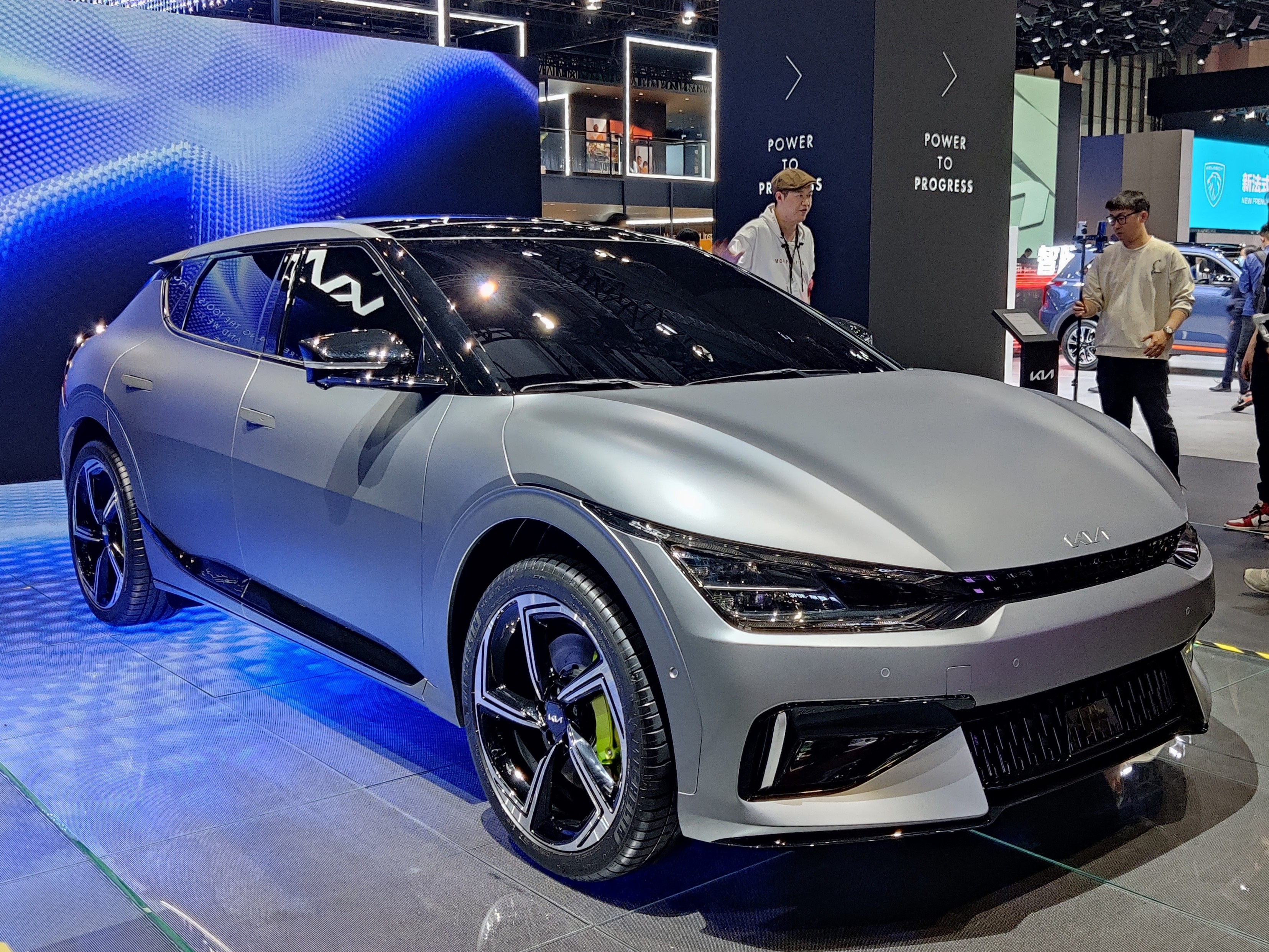
Kia EV6
"[2169.5s] on all these cars, like on the Hyundai's, on the EGMP platforms, whether it's a, you know, in EV6 [2174.9s] or an IONIQ 5, you know, whether you get HDA1, which is basic lane centering or HDA2, which will [2182.3s] also add lane changing, you could find an HDA1 equipped IONIQ 5 or EV6 and be really happy,"
The Kia EV6 is an electric crossover. They’re comparing its driver-assistance features to show what you might want for an easy highway commute.
The Kia EV6 is an electric crossover that shares the same E-GMP platform family as other Hyundai/Kia EVs. In this segment, it’s used alongside the IONIQ 5 to explain how lane-centering and lane-changing features vary by package (HDA1 vs HDA2).
EGMP platforms
"[2169.5s] on all these cars, like on the Hyundai's, on the EGMP platforms, whether it's a, you know, in EV6 [2174.9s] or an IONIQ 5, you know, whether you get HDA1, which is basic lane centering or HDA2, which will"
E-GMP is the shared “electric car design” platform Hyundai and Kia use across multiple EV models. They’re saying cars built on it tend to offer similar driver-assist features like lane centering.
E-GMP (Electric-Global Modular Platform) is Hyundai/Kia’s shared electric vehicle architecture. The hosts mention it to explain that lane-centering features are broadly available across multiple Hyundai/Kia EV models built on the platform.
HDA1
"[2174.9s] or an IONIQ 5, you know, whether you get HDA1, which is basic lane centering or HDA2, which will [2182.3s] also add lane changing, you could find an HDA1 equipped IONIQ 5 or EV6 and be really happy,"
HDA1 is a Hyundai driver-assist package level. In this discussion, it’s the “basic” version that mainly helps keep you centered in your lane.
HDA1 is Hyundai’s driver-assistance level that (in this segment) is described as providing basic lane centering. It’s contrasted with HDA2, which adds additional capabilities like lane changing.
HDA2
"[2174.9s] or an IONIQ 5, you know, whether you get HDA1, which is basic lane centering or HDA2, which will [2182.3s] also add lane changing, you could find an HDA1 equipped IONIQ 5 or EV6 and be really happy,"
HDA2 is a more capable Hyundai driver-assist package than HDA1. Here, they say it can do lane changing in addition to keeping you centered.
HDA2 is a higher Hyundai driver-assistance level than HDA1. In this segment, it’s described as adding lane changing on top of basic lane centering.
10-year, 100,000-mile battery
"[2208.0s] And I think for me with the Hyundai's, just the warranty is so good, it's like I would just go [2212.2s] with the used one because you get a 10-year, 100,000-mile battery, drive train warranty,"
That’s a warranty promise for the car’s main electric battery, measured in years and miles. The point here is that even a used IONIQ 5 may still be covered for a long time.
This refers to a warranty coverage period for the high-voltage battery, expressed as time and mileage. The hosts use it to argue that a used Hyundai IONIQ 5 can still have substantial battery warranty remaining.
drive train warranty
"[2212.2s] with the used one because you get a 10-year, 100,000-mile battery, drive train warranty, [2217.7s] and then the basic warranty is five years, 60,000 miles."
A drivetrain warranty covers the big power-related parts that help move the car. They’re bringing it up to show that buying used can still leave you with strong coverage.
A drivetrain warranty covers major components that transmit power from the motor to the wheels. In this segment, it’s mentioned alongside the battery warranty to support the idea that used Hyundai EVs can have strong coverage.
basic warranty
"[2217.7s] and then the basic warranty is five years, 60,000 miles. So, you could literally get a two-year-old [2222.1s] IONIQ 5 with low miles and it's basically going to have the same warranty as a new Equinox, just [2226.7s] minus the balance of the high-voltage battery and component warranty."
The basic warranty is the standard coverage that protects you from certain repairs for a set time and mileage. They’re using it to argue that a used EV can still be covered similarly to a new gas car.
The basic warranty is the general coverage period for non-battery/non-drivetrain components. Here, it’s used to compare the remaining warranty on a used Hyundai EV versus a new non-EV model.
Equinox
"[2222.1s] IONIQ 5 with low miles and it's basically going to have the same warranty as a new Equinox, just [2226.7s] minus the balance of the high-voltage battery and component warranty."
The Chevrolet Equinox is a common SUV. They’re using it as a reference point to compare how much warranty you’d still have on a used electric car.
The Chevrolet Equinox is a mainstream compact SUV used here as a warranty comparison baseline. The hosts claim a two-year-old Hyundai IONIQ 5 can have similar overall warranty coverage to a new Equinox, except for the remaining high-voltage battery/component coverage.

F-150 Lightning
"But then I said, oh, what F-150 Lightning? I'm on a truck binge right now for under 35. Can you even find that?"
The Ford F-150 Lightning is an electric pickup truck. The hosts are discussing how far it can go on a charge and how that changes what you should pay for one.
The Ford F-150 Lightning is Ford’s all-electric version of the F-150 pickup, aimed at buyers who want truck utility without gasoline. This segment focuses on real-world range differences between battery sizes and how that affects pricing and daily usability.

Ferrari F50
"So, yeah, I gave up once I realized I was way over, way overpriced. Well, I did see some nice ones on your site, Evercars. You got some nice F-50 Lightning's out, shout out to Evercars. I was hoping to actually use them, but I couldn't quite find one"
The Ferrari F50 is a very rare, very fast sports car made by Ferrari. It’s usually expensive to buy and maintain because it’s a special, limited-production vehicle. People often talk about it in terms of price and how hard it is to find one in good condition.
The Ferrari F50 is a high-performance supercar from Ferrari, built for drivers who want extreme speed and a very special ownership experience. It’s discussed in your excerpt in the context of someone realizing a price point was “overpriced,” which fits how these cars are often evaluated—rare, expensive, and typically bought for performance and collectability rather than practicality. The mention of “nice ones” suggests the conversation is about availability and pricing on the market.
cell voltage deviation issues
"We've actually noticed this too with lightnings, just with some battery testing is sometimes the batteries actually go bad prematurely in the lightnings and it's like not, it's uncommon, but it's less uncommon than I thought it was. And it's basically you get these cell voltage deviation issues and you basically just get a big, because"
This is a battery problem where some small parts inside the battery don’t stay balanced with the others. When the cells get out of sync, the whole battery pack can lose performance sooner than you’d expect.
Cell voltage deviation issues mean individual battery cells (or cell groups) don’t stay as closely matched in voltage as they should. In EV packs, that can lead to reduced usable capacity, earlier degradation, or charging/discharging imbalance—so the pack may behave worse than expected even if it’s not “dead.”
battery cell
"you're limited by the lowest performing battery cell. And I've seen several battery replacements"
An EV battery is made of many small units. If one unit inside the pack is weaker than the rest, the whole battery has to behave like that weaker one.
A battery cell is the smallest unit inside a battery pack that stores electrical energy. In EVs, the overall performance can be limited by the weakest (lowest-performing) cells, because the pack has to operate within the limits of its worst cells.
ground mounted solar array
"We produce all our own power through a 12 kilowatt ground mounted solar array paired with a 30 kilowatt hour home battery bank."
Ground-mounted solar panels are installed on the ground instead of on a roof. Where they’re placed can help them capture more sunlight, which is important when you’re charging an EV off-grid.
A ground-mounted solar array is a solar panel system installed on the ground rather than on a roof. The placement can affect how well the panels can be oriented and how much energy they produce, which matters for off-grid EV charging.
Request an Explanation
Heard something you'd like explained? We'll add it to this episode.
Sign in to request explanations for terms you heard.
Want to learn more?
Browse our glossary for plain-English explanations of automotive terms, jargon, and concepts.
Help improve this episode
See something that's not quite right? Our annotations are AI-generated and can sometimes miss the mark. Click the flag icon on any annotation to suggest a correction.