
160: Mercedes AMG CLA: Brand's Cheapest Sedan Turned Super Sports Sedan
About this episode
Mercedes’ new AMG CLA 45 4Matic+ is framed as the brand’s “cheapest sedan” that punches into supercar territory: a ground-up EV on the MBEA platform with front-axle motors, a 94 kWh usable battery, and WLTP range around 474 miles. Charging targets include up to ~330 kW and a 10–80% time of about 22 minutes. The hosts debate whether sedan EVs still have a market versus SUV dominance, compare China’s fast-charging obsession, and correct early spec mix-ups (including peak power and quicker 0–62 claims).
In this episode:
• Mercedes AMG CLA 45 debuts
• We Fast Charge the Rivian R2
• Fiat Topolino price revealed
Cohosts:
Tom Moloughney from State of Charge and EVchargingstations.com
https://evchargingstations.com/ | https://www.youtube.com/StateOfChargeWithTomMoloughney
Martyn Lee from EV News Daily
https://www.evnewsdaily.com/
Domenick Yoney from Drive Electric with Domenick
https://www.youtube.com/@DriveElectricWithDomenick

Mercedes AMG CLA
"Today, the AMG CLA from Mercedes. We charge, well, one of us does, the Rivian R2 and Fiat Topolino's little price revealed, but is it a little price?"
This is a Mercedes sedan that’s been tuned by AMG for more performance. In this episode, they’re talking about the electric version and why it matters to Mercedes’ lineup.
The Mercedes-AMG CLA is a performance-focused version of Mercedes’ CLA sedan, with AMG tuning and hardware aimed at sharper acceleration and handling. In this episode, they’re discussing the new AMG CLA 45 variant and how it fits into Mercedes’ shift toward electrification.
DC fast charging graphs
"this site is packed with comprehensive charger reviews, detailed DC fast charging graphs, and the latest news from all of the fast charging networks."
These graphs show how fast the car charges at different points during a charging session. EVs often start fast and then slow down as the battery gets fuller.
DC fast charging graphs show how an EV’s charging speed changes over time while connected to a DC fast charger. They’re useful because many cars charge quickly at first, then slow down as the battery fills or temperatures change.

Mercedes-Benz Mercedesbenz Cla
"All right, here we go. Welcome back to the show. And let's get into, first of all, the car of the year is the Mercedes-Benz CLA. So what do we know about the new Mercedes AMG CLA 45, 4Matic, plus to give it its full name, finally taking the wraps off what might be"
The Mercedes-Benz CLA (C117) is a small car with a sporty shape, but it still has four doors. In the podcast, they’re talking about a high-performance version called the AMG CLA 45 with all-wheel drive. The point is that it’s a compact car that’s been made to feel more powerful.
The Mercedes-Benz CLA (C117) is a compact four-door coupe-style sedan, known for its sporty look and relatively efficient everyday size. The episode frames it as “car of the year” and then shifts to the new Mercedes-AMG CLA 45, 4Matic, plus, indicating a performance-focused variant. It’s discussed because the CLA line is often a gateway into Mercedes-AMG performance in a smaller package.
all-electric C-Class
"finally taking the wraps off what might be a really critical vehicle for their legacy lineup, the all-electric C-Class."
They’re talking about Mercedes making the C-Class fully electric. That usually means the car is designed for batteries and electric motors, not just converted from a gas car.
An “all-electric C-Class” refers to Mercedes’ plan to move the C-Class lineup to a battery-electric powertrain. The key idea is that it’s not just an engine swap—it’s designed around electric components and packaging from the ground up.
Mercedes-Benz Cclass
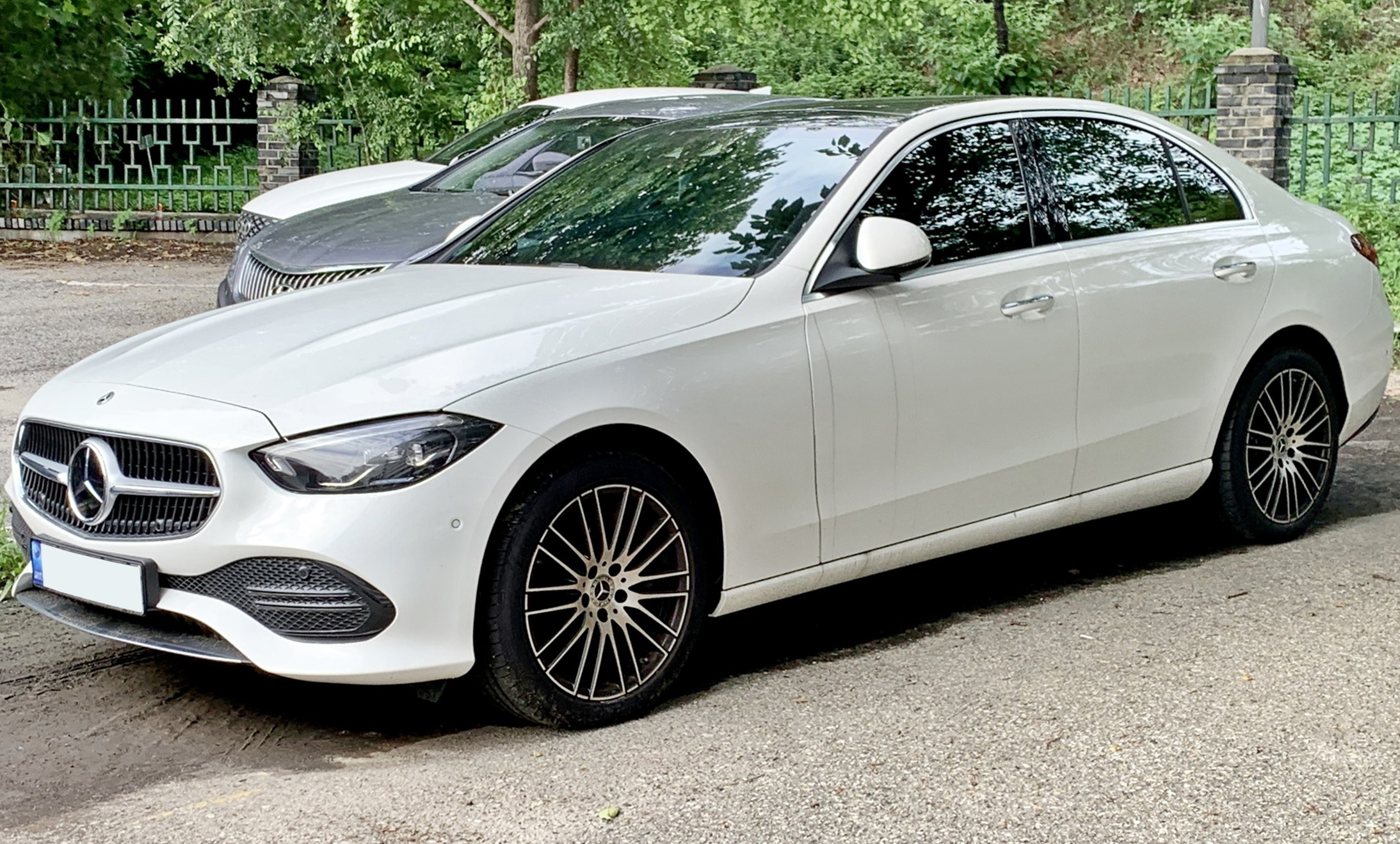
"CLA 45, 4Matic, plus to give it its full name, finally taking the wraps off what might be a really critical vehicle for their legacy lineup, the all-electric C-Class. Specifically, the headline grabbing C400 4Matic, not just an internal combustion engine swapped out"
The Mercedes-Benz C-Class is a common mid-size car model from Mercedes-Benz. The podcast is talking about an all-electric version, meaning it would run on electricity instead of gasoline. They’re highlighting it because it could be a major step for the brand’s electric lineup.
The Mercedes-Benz C-Class is a long-running compact executive sedan/estate lineup from Mercedes-Benz. In this episode, the discussion focuses on an all-electric C-Class and how it could be important for the brand’s lineup going forward. It’s a headline-worthy topic because electrifying a major legacy model can affect how many people experience electric vehicles in the mainstream segment.
MBEA platform
"A ground up on the MBEA platform looking at the performance numbers."
An “MBEA platform” is Mercedes’ shared EV design underneath the car. It’s the basic structure that helps them build electric models efficiently and consistently.
The MBEA platform is Mercedes-Benz’s electric vehicle architecture used to build battery-electric models. A platform like this defines the core layout—battery placement, motor mounting, and structural design—so multiple EVs can share engineering foundations.
front axle motors
"Specifically, the headline grabbing C400 4Matic, not just an internal combustion engine swapped out for the battery. A ground up on the MBEA platform looking at the performance numbers. It's on the front axle motors"
This means the electric motors that drive the wheels are on the front axle. Where the motors sit can change how the car accelerates and handles.
Front axle motors means the electric drive motors are mounted to the front axle. This layout affects traction, steering feel, and how the car distributes torque between axles.
front axle disconnect
"It's on the front axle motors and a front axle disconnect, because we do love that highway efficiency."
A front axle disconnect can temporarily “turn off” the front axle. That can help the car waste less energy when you don’t need all-wheel drive.
A front axle disconnect is a drivetrain feature that can disengage the front axle under certain conditions. On EVs, it’s used to reduce mechanical drag and improve efficiency when full-time AWD isn’t needed.
usable 94 kilowatt hours
"So they haven't gone crazy big, but by their standards, 94 kilowatt hours usable is a large pack."
That’s how much energy you can actually use from the battery while driving. It’s measured in kilowatt-hours, and “usable” means the car doesn’t let you drain the battery completely.
“Usable” battery capacity is the portion of the battery’s total energy that the car actually allows you to access. “94 kilowatt hours” is the EV’s effective battery size for real-world driving, not just a theoretical maximum.
WLTP
"a really long way. WLTP, which is applying for me over here, 474 miles."
WLTP is a standardized test that car makers use to estimate how far a car can go. It helps you compare ranges between cars, but your real range may be different depending on how you drive and the weather.
WLTP (Worldwide Harmonized Light Vehicles Test Procedure) is a standardized testing method used to estimate a car’s fuel economy and electric range. When a manufacturer quotes a WLTP range, it’s meant to be comparable across models, though real-world range can still vary with speed, weather, and charging behavior.
DC fast charger
"but will take 330 kilowatts on a DC fast charger."
A DC fast charger is a high-power EV charging station that can add a lot of energy quickly. The faster the charger (higher power), the quicker you can charge—up to the limits of the car’s battery.
A DC fast charger supplies direct current at high power to recharge an EV quickly. The charger’s power rating (like the kilowatts mentioned) strongly influences how fast the battery can accept energy, especially during the early part of a charge session.
kilowatts
"but will take 330 kilowatts on a DC fast charger."
Kilowatts are a measure of charging speed. A higher number usually means you can charge faster, though the car and battery conditions can limit it.
Kilowatts (kW) measure charging power—how quickly energy can flow into the battery. Higher kW generally means faster charging, but the car may still limit the rate depending on battery temperature and state of charge.
94 kilowatt hour pack
"You talked about a 94 kilowatt hour pack that, you know, that's a lot to stuff in this small platform."
A “94 kilowatt hour pack” means the battery can store a lot of energy. More battery capacity often means more driving range, but charging speed still depends on the charger and the car’s battery limits.
A “94 kilowatt hour pack” is the battery capacity—how much electrical energy the EV’s high-voltage battery can store. Larger capacity usually supports longer range, but charging speed also depends on the car’s battery chemistry, thermal management, and how much power the battery can accept at a given moment.
form factor
"Yeah, what about the form factor? Because doesn't everyone just want a SUV or a truck these days?"
“Form factor” here just means the car’s shape and body style. For EVs, the shape matters because it can affect how efficiently the car moves through the air.
In EV discussions, “form factor” means the vehicle’s body style and layout—like sedan vs SUV—and how that shape affects aerodynamics, packaging, and efficiency. A more aerodynamic shape can reduce drag and help an EV travel farther on the same battery.

Byd Seal
"...announced last week, or maybe this week, BYD, the SEAL 08. It's just a big saloon with its new flash cha..."
The BYD Seal is an electric sedan, meaning it’s powered by a battery instead of gasoline. The podcast is talking about a version called SEAL 08 and focusing on charging details. The takeaway is that it’s a larger electric car and the episode is highlighting its charging-related specs.
The BYD Seal is a battery-electric sedan from BYD, discussed in the episode as a “big saloon” with a new charging-related headline. The mention of “SEAL 08” suggests the conversation is about a specific updated or related model and its charging capabilities. It’s brought up because BYD’s EVs are often covered for their feature set and how they position charging and value.
aero
"Not everybody wants one, but it is more aero and it is better for being an EV."
“Aero” means how the car’s shape affects airflow. A more aerodynamic car wastes less energy, which helps an EV go farther.
“Aero” is shorthand for aerodynamics—how easily air flows around the car. Better aerodynamics reduce drag, which is especially important for EVs because efficiency directly impacts range.
megawatt charging
"Look, if someone's going to unveil megawatt charging on a car that the average person can buy, we're going to cover it..."
Megawatt charging is an EV charging idea where the charger can deliver extremely high power—so high it’s measured in megawatts. The hosts are saying that even if it’s impressive, what matters is how much charge you can realistically add quickly.
Megawatt charging is an EV charging concept where the charger can deliver power on the order of one megawatt (1,000 kW). The segment uses it as a benchmark for “headline” charging speeds, while questioning whether that translates into meaningful real-world benefit for typical short stops.

Ford Flex
"... astray there. But yeah, so it's got three actual flex motors in it, similar to the, you know, they used..."
The Ford Flex is a roomy family car with a very unusual, boxy shape. The podcast mentions it in a way that sounds related to the word “flex,” not necessarily how the car works. The main idea is that it’s a practical, space-focused vehicle.
The Ford Flex is a distinctive, boxy full-size crossover/people-hauler known for its roomy interior and unique styling. In the episode, it’s mentioned alongside a technical discussion about “three actual flex motors,” which appears to be a wordplay or reference to the car’s name rather than its drivetrain. It comes up because it’s memorable and different-looking compared with typical crossovers.
flex motors
"But yeah, so it's got three actual flex motors in it, similar to the, you know, they used actual flux in the other Mercedes-Benz AMG, Ford or Coupe that we talked about just like a few weeks ago."
“Flex motors” is the name the hosts are using for the car’s electric motors. They’re saying this EV uses multiple motors to make a lot of power.
“Flex motors” here refers to a specific EV motor setup described as “three actual flex motors,” implying multiple electric motors used to generate traction and power. The hosts connect it to Mercedes-AMG’s prior use of a similar “actual flux” technology, suggesting a motors-and-inverter design aimed at high output.

Mercedes-Benz Mercedesbenz Amg
"something went astray there. But yeah, so it's got three actual flex motors in it, similar to the, you know, they used actual flux in the other Mercedes-Benz AMG, Ford or Coupe that we talked about just like a few weeks ago. So this is, I got that same sort of"
The Mercedes-Benz AMG GT is a sports car made for fast driving. The episode mentions it has a special motor setup, which is part of what makes it perform the way it does. It’s the kind of car people discuss when they want to talk about how performance is engineered.
The Mercedes-Benz AMG GT is a high-performance sports car from Mercedes-AMG, built for track-capable driving and strong acceleration. The podcast mentions it having “three actual flex motors,” which points to a specific technical setup being discussed. It’s brought up because its engineering details and performance layout make it a frequent topic in enthusiast conversations.
0-60
"And the 0-60 is, I think we said 3.9 seconds at the top,"
0-60 is a simple acceleration test: how fast the car goes from standing still to 60 mph. Faster 0-60 usually means the car feels quicker when you press the pedal.
0-60 time is the elapsed time for a car to accelerate from 0 mph to 60 mph, commonly used as a quick measure of straight-line acceleration. The hosts cite a figure around 3.9 seconds to communicate how “super sports sedan” quick the Mercedes-AMG CLA is expected to feel.
0-62
"but it's actually 2.7 seconds for 0-62, which makes it like a 2.5 second, which is, I think, ... But yeah, 2.7 seconds, 0-62."
“0–62” is how fast a car accelerates from a stop to 62 miles per hour. Lower time means the car feels quicker when you floor it from a standstill.
0–62 mph (often written as “0–60” in the US) is a common acceleration benchmark: how many seconds it takes to go from a standstill to 62 mph. It’s used to compare how quickly different cars feel in real-world “get up and go” situations.

Tesla Model S
"It's like, I don't know, the Model S Plaid, of course, does it in 1.9 or two seconds."
The Tesla Model S Plaid is one of Tesla’s quickest electric cars. They mention it because it’s so fast in a straight line that it sets the bar for what “super quick” means.
The Tesla Model S Plaid is a high-performance electric sedan known for extremely fast acceleration, which is why it’s used here as the benchmark. The host cites its roughly 1.9–2.0 second 0–60 performance to show how the Mercedes-AMG CLA’s acceleration compares within the “quickest cars” conversation.
shooting brakes
"Oh, they did also introduce like that shooting brakes. So if you saw one where we're scrolling through the pictures, there's like a station wagon shape as well now to the CLA"
A shooting brake is a car body style that’s like a wagon, but with a sportier, sleeker roof shape. It’s basically a “wagon that looks more like a coupe.”
A shooting brake is a specific body style: typically a two-door (or coupe-like) wagon with a more sloped rear roofline than a traditional station wagon. Here, the host says the CLA lineup also gets a shooting-brake variant, described as having a station-wagon shape.
800 volts
"Hard to see not to 800 volts, loads of power, really premium, nice little German badge on the front."
“800 volts” is about how the EV’s electrical system is set up. Higher voltage can help the car charge faster and deliver power more efficiently, as long as the charging setup supports it.
An “800-volt” electrical system refers to the high-voltage architecture used in some modern EVs. Higher voltage can reduce current for the same power, which helps enable faster charging and more efficient power delivery (assuming the charger and vehicle support it).
SAIC
"I'm sure BYD is not going anywhere or SAIC, but if you really are not quite there yet with buying a Chinese car..."
SAIC is a large Chinese automotive group that produces vehicles and powertrains for multiple brands. Here it’s mentioned alongside BYD as an example of a Chinese manufacturer with staying power.
supply chains
"They offer a lot of value, but some risk, supply chains, spare parts, stuff like that."
Supply chains are how parts and materials get delivered to make and fix cars. If that system is slow or unreliable, repairs can take longer.
“Supply chains” are the network of companies and logistics that move parts and materials from suppliers to manufacturers and then to dealers. If supply chains are disrupted or inefficient, repairs can take longer because parts don’t arrive when needed.
spare parts
"They offer a lot of value, but some risk, supply chains, spare parts, stuff like that."
Spare parts are the replacement pieces a car needs for repairs. If a brand is new or hard to get in your country, those parts can be harder to find or take longer to arrive.
“Spare parts” are replacement components used to repair a vehicle after wear or damage. For less-established brands—especially newer imports—availability can be slower or more expensive, which affects how quickly owners can get cars back on the road.

Polestar 4
"...ght not have logged in as a host on this. Anyway, Polestar 4 SUV launches on the 2nd of September here. So, yo..."
The Polestar 4 is an electric SUV, so it runs on electricity. The podcast is mentioning when it will launch, which helps people plan around buying or waiting for it. It’s part of Polestar’s newer EV lineup.
The Polestar 4 is an electric SUV from Polestar, positioned as a more performance-oriented, stylish alternative in the brand’s lineup. The episode notes its launch timing (“on the 2nd of September”), which indicates the discussion is centered on availability and what to expect when it arrives. It’s relevant because new EV launches often bring fresh battery, charging, and tech updates to the market.
estate
"It's not an estate. It's not quite an SUV. It looks hella practical."
An “estate” is a wagon-style body with extended cargo space behind the rear seats. The host is emphasizing that the Polestar 4 is not being offered as a traditional estate, even though it may look practical.
Geely
"Sorry. Is this one the Polestar 4 SUV from Geely, though? Oh, yeah, from Geely, right."
Geely is the Chinese automaker group associated with Polestar’s ownership and platform ecosystem. The host connects the Polestar 4 SUV to Geely, framing it as part of a broader corporate structure rather than an independent newcomer.
right hand drive
"It's kind of raggedy. Right hand drive. They should have done this to start with, but there you go."
“Right hand drive” means the steering wheel is on the right side of the car, which is common in countries that drive on the left. It affects packaging and driver ergonomics, and it can be a key detail for buyers in those markets.
Rivian R2
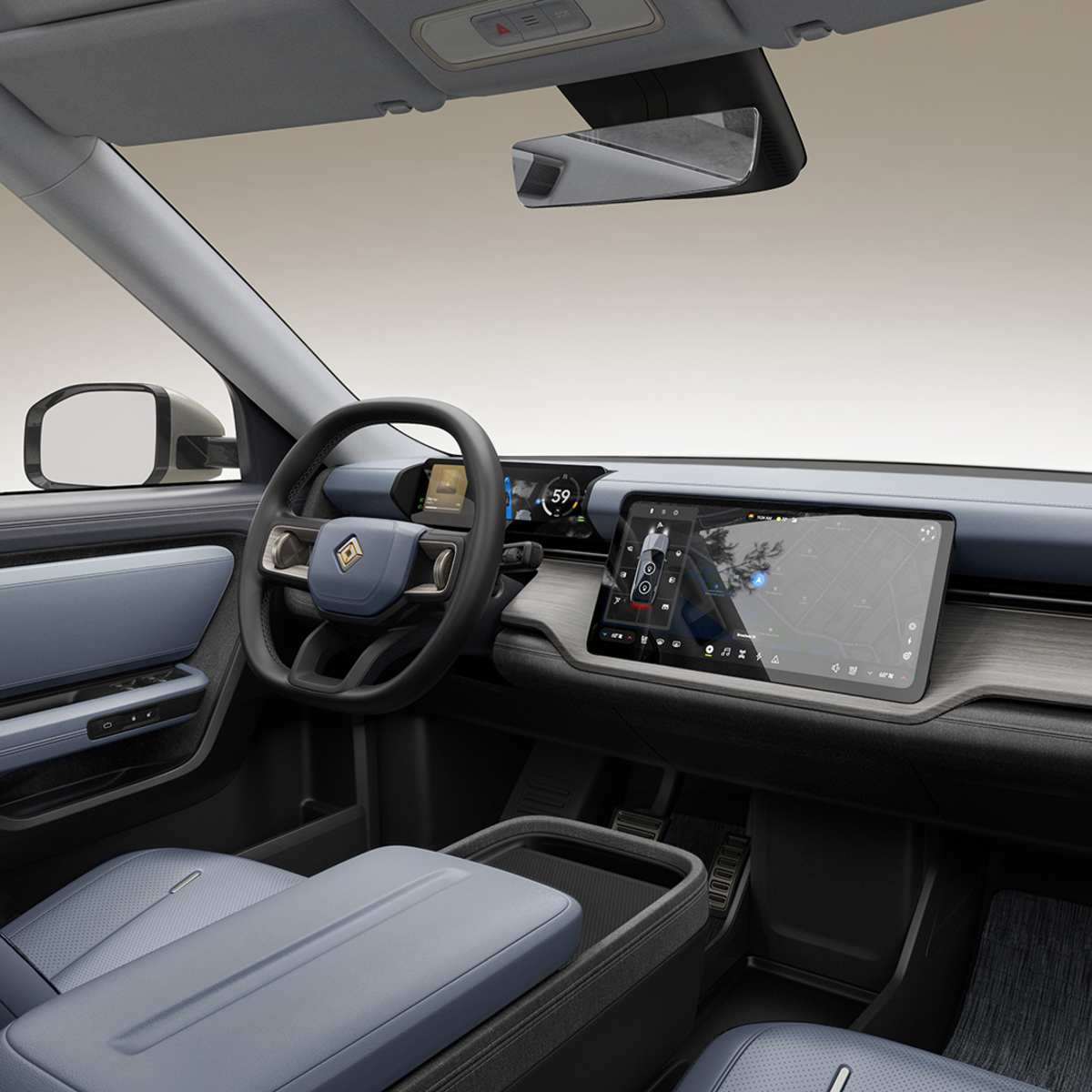
"Tom, last week you told us about your Rivian R2 highway range test. This is really, really important, because this is going to be a big seller... Now we can fully get into Rivian R2 charging and your full charging video. What did you learn?"
The Rivian R2 is an electric SUV/EV that the hosts are judging by how quickly it can charge on fast chargers. They’re talking about how long it takes to go from low battery to a more usable level, which matters for road trips.
The Rivian R2 is an upcoming Rivian electric vehicle (EV) that’s being discussed here specifically in terms of real-world DC fast-charging performance. The key point is the charging time from 10% to 80%, which is a major factor in whether an EV feels practical on trips.
highway range test
"Tom, last week you told us about your Rivian R2 highway range test. This is really, really important, because this is going to be a big seller for Rivian."
A highway range test is when someone drives an EV on the highway to see how many miles it can go on one charge. It’s meant to be more realistic than the official numbers.
A highway range test is a real-world EV efficiency test performed at highway speeds to estimate how far the vehicle can go on a charge. Unlike idealized lab cycles, it reflects factors like aerodynamic drag, sustained speed, and real driving conditions.
800 volt architecture
"They should use the 800 volt architecture. It's got to be under 20 minutes."
800 volt architecture is an EV design that helps it accept more charging power. With the right fast charger, that can mean faster charging and less time waiting.
800 volt architecture is an EV electrical design that allows higher power transfer during charging, often enabling faster charging with the right charger. In practice, it can reduce current for the same power, which helps with charging speed and thermal management.
charging curve
"That's going to be another video I'm going to do to map out the full charging curve. ... It tapers down after 31% state of charge."
A charging curve is how fast an EV charges at different battery levels. Usually it charges fastest at lower charge and then slows down as the battery gets closer to full.
A charging curve describes how charging power (and thus speed) changes as the battery state of charge increases. Most EVs taper—meaning they charge quickly at first and then reduce power to protect the battery as it fills.
10 to 80
"But this was just a 10 to 80. Rivian promised 29 minutes. I shaved two minutes off of that"
“10 to 80” is a common EV fast-charging benchmark: the time it takes to charge from 10% battery state of charge (SoC) to 80%. It matters because charging is usually fastest at lower battery levels and slows as the battery fills up.
amps
"that can deliver the full 400 amps that the R2 can accept. It actually can accept up to 450 amps"
Amps are a measure of electrical current. For fast charging, the EV can only accept up to a certain current, and that affects how quickly it can recharge.
Amps (current) are part of how fast a DC fast charger can deliver energy to an EV. Higher allowable current can enable faster charging—though the vehicle and battery management system ultimately limit it.
state of charge
"In 10 minutes, it added 35% state of charge. ... It tapers down after 31% state of charge."
State of charge is just how full the battery is, shown as a percentage. Charging speed often changes depending on whether the battery is at 20% or 80%.
State of charge (SoC) is the battery’s current charge level, expressed as a percentage of its usable capacity. EV charging speed and behavior are strongly tied to SoC, which is why benchmarks like “10 to 80” reference it.
tapering down
"it'll do that for like 10 minutes ... and then starts tapering down. It tapers down after 31% state of charge."
Tapering down means the car slows charging as the battery gets fuller. It’s normal and helps protect the battery.
Tapering down is the reduction in charging power as the battery approaches higher state of charge. It’s a normal EV behavior driven by battery chemistry and thermal limits to protect the pack and extend battery life.
OTA updates
"Rivian may improve this. They've done this before with OTA updates."
OTA updates are software updates that download to your car over the internet, without a shop visit. The host is saying Rivian could improve charging performance through these updates.
OTA (over-the-air) updates are software updates delivered wirelessly to a vehicle. EV makers use them to improve features and sometimes adjust charging behavior, such as optimizing charging curves.
21-inch wheels
"because I didn't range test the 21-inch wheels with all terrain, with all season tires. I did the 20-inch wheels"
Bigger wheels can reduce range because they can create more resistance as you drive. The host is saying their test used a different wheel size than the one shown in the chart.
Wheel size can affect EV range because larger wheels often increase rolling resistance and can change aerodynamic drag. Here, the host notes they didn’t test the Rivian R2 with 21-inch wheels, which matters when comparing range results.
all terrain tires
"because I didn't range test the 21-inch wheels with all terrain, with all season tires."
All-terrain tires are made for mixed roads, not just smooth highways. They can cost you some efficiency, which can reduce how far an EV goes on a charge.
All-terrain tires are designed to handle mixed surfaces, but they can be less efficient than highway-focused tires. That efficiency difference can show up as reduced EV range, which is why the host calls out the tire type used in their test.
tapers off
"For the first 10 minutes, it actually does pretty well. So that was great. It tapers off after the first 10 minutes of charging."
Fast charging often slows down as the battery gets fuller. So the first part of the charge is usually quicker than the later part.
Charging taper is when a fast charger’s power delivery drops as the battery fills up. That’s why early minutes can be strong, but the rate slows after a certain state of charge.
home charging
"I would venture to guess a high percentage of our two owners are going to have home charging. They're not going to use DC Fast Charging unless they're on road trips"
Home charging means plugging your electric car in at your house. It helps you avoid needing public fast chargers for everyday trips.
Home charging refers to charging an EV at the driver’s residence, typically using Level 2 equipment. It reduces reliance on public DC Fast Charging for daily driving.
multifamily dwellings
"We need to have fast DC Fast Charging EVs so that people that live in multifamily dwellings don't have home charging."
Multifamily dwellings are apartment buildings or shared housing. If you can’t install your own charger, you may rely more on public charging stations.
Multifamily dwellings are apartment-style housing where residents may not have dedicated parking or personal charging access. This affects EV charging availability and often increases dependence on public fast charging.
21 inch with all season tires
"because again, because I haven't done a 70 mile an hour highway range test for the 21 inch with all season tires."
Wheel size and tire type change how efficiently the car rolls. Bigger wheels and typical all-season tires can reduce range compared with more efficiency-focused setups.
Tire size and type affect EV efficiency and range. Larger wheels (like 21-inch) can increase rolling resistance, and all-season tires are a compromise between grip and efficiency compared with more specialized low-rolling-resistance tires.
EPA rated range
"And in 20 minutes, you had 200 miles of EPA rated range. Now, you're probably not going to hit EPA on a highway"
EPA rated range is the official “how many miles” number for an EV based on standardized tests. Your actual range can be more or less depending on how you drive.
EPA rated range is the distance an EV is expected to travel under EPA’s standardized testing cycle. It’s a comparable benchmark across vehicles, but it may not match your specific driving conditions.
range test driving 70 to 80 miles an hour
"range test driving 70 to 80 miles an hour. You could probably knock, you know, 20% off of that, or it would take 20% longer."
They’re talking about testing how far an electric car goes when you drive fast on the highway. Going 70–80 mph uses more energy, so the car won’t travel as far as it would at slower speeds.
This describes an EV range test at steady highway speeds (70–80 mph). Higher speeds increase aerodynamic drag and energy use, so range drops compared with slower driving; the segment uses this to estimate how much range you can expect.
EGMP vehicle
"something like a EGMP vehicle, 18, 19 minutes."
EGMP is Hyundai/Kia’s shared electric-car platform. The host is comparing charging performance to what cars on that platform can do.
EGMP refers to Hyundai Motor Group’s Electric-Global Modular Platform, a shared EV platform used across multiple Hyundai/Kia models. The host uses it as a benchmark for fast-charging time targets (like 10–80% under 20 minutes).
MSRP
"I'm sure they fought for every dollar that they could shave off the MSRP."
MSRP is the official price the manufacturer lists for the car. It’s the starting point for what you’ll pay before things like taxes and fees.
MSRP (Manufacturer’s Suggested Retail Price) is the sticker price automakers set before taxes, registration, and dealer-specific add-ons. In the segment, the host argues Rivian needed to keep MSRP down to make the R2 feel affordable for mass-market buyers.
400 volt architecture
"And so I'm fine with them using a 400 volt architecture."
“400 volt architecture” is how the electric car’s electrical system is set up. It influences how efficiently the car can move power around, including during fast charging.
A “400 volt architecture” means the EV’s electrical system is designed around a ~400V battery and power electronics. This affects charging and power delivery—higher-voltage systems can move more energy with less current, which can help with fast-charging efficiency and component sizing.
Tesla connector
"can you clarify for people like me who aren't such a charging expert, why did you need to use a Tesla connector when you charge this?"
A Tesla connector is the plug shape/standard Tesla uses at its charging stations. The point is that your car has to match the connector and charging setup to charge efficiently.
A Tesla connector refers to the plug standard Tesla uses for charging. The episode implies the Rivian R2 needs that connector (or at least Tesla-compatible hardware) because of how its charging current and voltage requirements line up with the available charging equipment.
amperage
"So the, as I mentioned earlier, the R2 is unique in the amperage that it pulls. Tesla vehicles have been notorious for pulling high amperage..."
Amperage is basically the “flow rate” of electricity going into the battery. If the charger can’t deliver the right current, the car can’t charge as fast (or sometimes at all).
Amperage (current) is how much electricity flows into the battery during charging. Higher amperage can enable faster charging, but it also requires chargers and cables designed to safely deliver that current.
charging infrastructure
"But now when you have these third party architects, networks that are building charging infrastructure for all of the other companies that all operate on different voltages and different amperages..."
Charging infrastructure is the network of charging stations and equipment that EVs use to recharge. If different cars need different electrical settings, the charger makers have a harder job supporting them all.
Charging infrastructure is the network of chargers and supporting systems that deliver electricity to EVs. The host argues that when multiple automakers use different voltage/current requirements, it becomes harder for third-party infrastructure providers to tailor equipment for every “edge case” vehicle.
edge case vehicles
"You have to kind of make it for everything, but then there's these edge case vehicles that should you spend a lot of money on to accommodate these edge case vehicles."
Edge case vehicles are cars that don’t charge in the “typical” way. If a charger has to be specially set up to handle them, it can be more expensive for the charging network.
Edge case vehicles are EVs with charging requirements that don’t fit neatly into the most common charger configurations. The host’s point is that accommodating these outliers can cost more for charger operators, so networks must decide whether it’s worth the expense.
IANA network
"So with that said, the IANA network has uses Alpetronic"
The IANA network sounds like a specific charging network. The discussion implies it has rules or equipment choices that affect whether different EVs can charge smoothly.
The IANA network is referenced as the charging network being discussed at the end of the segment. The context suggests it’s related to how charging equipment is standardized and deployed across different EV brands and electrical requirements.
Alpetronic
"So with that said, the IANA network has uses Alpetronic"
Alpetronic is a company that makes charging equipment. Different charging hardware can support different EV charging requirements, so the brand of charger can affect compatibility.
Alpetronic is a manufacturer/vendor name for EV charging hardware. In this context, it’s tied to the charging network’s equipment choices, which can matter for compatibility with different EV charging voltage/current needs.
NAC side
"HYC 400 chargers, right? They can put out 600 amps on both sides, the CCS side and the NAC side,"
NACS is the Tesla-style charging plug standard. “NAC side” means the part of the charger meant for that Tesla-style plug.
NAC here refers to Tesla’s North American Charging Standard (NACS) connector. On a charger with both standards, the “NAC side” is the Tesla-style plug side and its maximum current capability.
CCS side
"HYC 400 chargers, right? They can put out 600 amps on both sides, the CCS side and the NAC side,"
CCS is a common fast-charging plug for many EVs. “CCS side” just means the part of the charger that uses the CCS plug and how fast it can charge through that plug.
CCS (Combined Charging System) is the dominant DC fast-charging standard in North America. Saying “CCS side” refers to the CCS connector portion of a dual-standard charger, and how much current (amps) that connector can deliver.
ABB A400
"So the ABB A400 is also a 400 kilowatt charger that can deliver 600 amps. Sounds like it's a great match. However, the NAC side of the ABB A400 can only deliver 375 amps."
ABB’s A400 is a high-power fast charger. In this case, the Tesla-style plug side can be slower than the CCS plug side because it supports fewer amps.
The ABB A400 is a DC fast-charging platform rated around 400 kW. The segment highlights a connector-dependent limitation: its NACS side can deliver less current (375 amps) than its CCS side (600 amps).
liquid cooled
"The connector is not liquid cooled. But for 90% of the vehicles that charge out there, it won't make a difference."
Some charger parts are cooled with liquid to handle heat when charging at very high current. If the connector isn’t liquid cooled, it may not be able to push as many amps for as long.
A “liquid-cooled” connector uses coolant to manage heat under high-current charging. The segment says the ABB connector they chose is not liquid cooled, which can cap how much current it can safely deliver on the NACS side.
native NACS port
"when I was charging the R2... I needed to find a 400 amp charger that had a native NACS port."
A “native NACS port” means the car is set up to use the Tesla-style plug directly. That’s why they wanted a charger that has the matching plug.
A “native NACS port” means the vehicle is designed to accept the NACS connector directly, without needing an adapter. The host uses this to explain why they specifically searched for a charger with a Tesla-style plug when charging the R2.
CCS1 adapter
"there is no CCS1 adapter that's rated for 600 amps. None."
A CCS1 adapter is a piece that helps your EV plug into a CCS charging setup. The key point here is that the speaker says the high-current version they need doesn’t really exist yet.
A CCS1 adapter is a connector adapter intended to let a vehicle use CCS charging hardware through a CCS1-style interface. The speaker claims there are no CCS1 adapters rated for 600 A, which would be needed for their target charging conditions.
CCS2NACS adapters
"So I brought a bag of CCS2NACS adapters with me because I'm thinking, what if something goes wrong?"
These adapters let you use one charging plug type with a different car plug type. The host is using them as a backup if the main setup has problems.
CCS2-to-NACS adapters are used to connect a CCS2-style plug to a NACS-compatible vehicle/port (or vice versa, depending on the setup). The speaker carries them as a workaround in case the primary adapter causes charging derates or faults.
derate
"What if it starts to derate? I'll shut the charger off. I'll swap it."
Derate means the charger slows down to protect itself or the car. It’s like a safety mode that reduces charging power.
A derate is when a charger or adapter reduces its output (often current or power) to protect hardware from overheating or to meet safety limits. The speaker expects that if derating starts, they can stop and swap adapters.
J3400
"Now the one that they sell is J3400 compliant, which is the new adapter really. It's the new connectors called J3400"
J3400 is a newer standard for the charging connector hardware. Being “compliant” generally means it’s built to handle higher demands more safely.
J3400 is a connector specification related to the newer generation of Tesla-compatible charging hardware. The speaker says the redesigned adapter they sell is “J3400 compliant,” implying it meets updated electrical/thermal requirements.
CCS-1 to NACS adapter
"if you're an R2 owner not to use, if you have an older CCS-1 to NACS adapter, don't use it."
Electric cars use different charging plug types. This adapter is a “converter” that lets a car with one plug type charge from a charger with the other plug type.
CCS-1 and NACS are two different EV charging plug/port standards. A “CCS-1 to NACS adapter” lets an EV that uses CCS-1 connect to a charger that uses the NACS plug.
UL 2252
"Make sure you use an adapter that is safety certified to UL 2252. And you should be okay."
UL 2252 is a safety “approval” standard for certain EV charging gear. If your adapter is certified to it, it’s more likely to be built and tested to handle charging safely.
UL 2252 is a safety certification standard for EV charging equipment/adapters. Using an adapter certified to UL 2252 is meant to reduce the risk of overheating or unsafe electrical behavior.
overboost
"Even those adapters are not rated for 600 amps, but they have overboost. They're for a certain period of time, they'll be able to handle that."
Overboost here means the adapter can handle extra power for a short time. It’s not meant to be used at that higher level indefinitely.
In this context, “overboost” means the adapter can temporarily exceed its normal current rating for a limited time. It implies the hardware has a short-term thermal/electrical headroom, not unlimited high-current capability.
Tesla adapter
"Now I used the electron adapter after I used the Tesla adapter that melted. It smelled, I smell the burning smell in it."
They’re talking about a charging adapter made for Tesla’s charging plug system. The host claims it overheated and melted, so they’re comparing it to a different adapter.
This refers to a charging adapter associated with Tesla’s NACS ecosystem. The speaker says a Tesla adapter melted and smelled like burning, which is why they switched to another adapter afterward.
CCS connector
"Walmart is sending somebody to that charger to make sure I didn't ruin the pins on the CCS connector."
The CCS connector is the charging plug and its metal pins. If the pins overheat or melt, charging can become unsafe and the connector may need replacement.
A CCS connector is the physical plug/interface used for CCS charging. The speaker’s concern is specifically about damage to the connector’s pins, which can happen if the adapter/connection overheats under high current.
Walmart
"now, like Walmart is sending somebody to that charger to make sure I didn't ruin the pins on the CCS connector."
Walmart is mentioned because the charging station is at a Walmart location. They’re sending someone to check the charger after the adapter/pins issue.
Walmart is mentioned as the site operator sending someone to a charger location. The context is confirming whether the CCS connector pins were damaged after the adapter incident.
R2
"And what I'm talking about is, you know, the, the, the, how do you control the garbage $99 adapters that are on Amazon right now? Yeah. How do you stop an R2?"
R2 is the name of an electric vehicle model being discussed. The point is that owners could try to use cheap third-party adapters to make charging work.
R2 is a specific electric vehicle model referenced in the segment. The speaker is talking about how owners might buy low-cost charging adapters online and use them on public charging networks.
Nax adapter
"How do you stop an R2 owner not from going to Amazon and clicking, you know, CCS-1 to Nax adapter, sort by lowest price?"
An adapter is a little connector that lets your car plug into a charger it normally wouldn’t fit. The concern is that cheap adapters may not be truly safe or reliable.
“Nax adapter” here refers to an adapter that claims to convert between charging plug standards. Adapters are meant to let a vehicle use a different connector type, but their safety and electrical compatibility can vary widely.
EV goes
"And, you know, then you've got the EV goes and the electrify Americas and the Walmarts out there cringing thinking like, okay, every time somebody is one of these shitty adapters on their network, it's going to cost them $2,000 to replace a cable"
They’re talking about electric cars and charging networks. The worry is that bad adapters can cause expensive problems for the people running the chargers.
This phrase is used conversationally to refer to electric vehicles and their charging ecosystem. In context, it’s about how charging networks and retailers react when low-quality adapters appear on their infrastructure.
Electrify America
"And, you know, then you've got the EV goes and the electrify Americas and the Walmarts out there cringing thinking like, okay, every time somebody is one of these shitty adapters on their network, it's going to cost them $2,000 to replace a cable"
Electrify America runs public fast-charging stations. They’re worried that cheap adapters could damage equipment and create big repair bills.
Electrify America is a major U.S. DC fast-charging network operator. In the segment, it’s mentioned as one of the parties concerned about the costs and risks of low-quality adapters used on their chargers.
liability issue
"...So if you're buying this bad stuff, there's a liability issue around it as well."
“Liability” is about who’s responsible if something breaks. If you use the wrong or unapproved charging gear and it causes damage, you may not be covered for repairs.
“Liability issue” here means responsibility for damage or failures caused by using non-approved charging accessories. In practice, that affects whether the automaker or charging network will cover repairs if something goes wrong.
terms of use
"...And the terms of use in most of the networks that they have published, they used to say that this has evolved."
“Terms of use” are the charging-station rules. They can say what plugs/adapters you’re allowed to use, and using something outside the rules can cause problems.
“Terms of use” are the rules published by charging networks that govern what equipment you’re allowed to use at their stations. Violating them—like using an adapter that isn’t permitted—can put you outside coverage or support policies.
LFP
"they can now charge their new battery. I think it's a LFP at over 8,000 kilowatts. And it's 0 to 97% like the BYD."
LFP is a type of EV battery. It’s known for being safer and lasting a long time, and it can handle fast charging better than some other battery types.
LFP stands for lithium iron phosphate, a battery chemistry known for strong safety and long cycle life. The speaker links LFP to faster charging behavior and compares its charge-time performance to other chemistries like BYD’s.
0 to 97%
"And it's 0 to 97% like the BYD. Instead of nine minutes, it's like eight minutes and 40 seconds or something like that."
This is a way to compare charging speed: how long it takes to go from empty to almost full. Charging often slows down near the top, so “97%” is a common benchmark.
“0 to 97%” is a charging test window that measures how long it takes to fill a battery from empty to near-full. EV charging is usually fastest at lower states of charge and slows as the battery approaches full, so the exact endpoint matters when comparing cars or battery chemistries.
McMurtry Spearling
"There is a crazy, crazy car that's now on sale. If you'd like to buy one, it is the McMurtry Spearling. It's the fan car that sucks itself to the ground."
The McMurtry Spearling is an electric car designed to stick to the road using a huge suction fan. The goal is maximum grip, and the hype is that it could even stay stuck to surfaces like a ceiling.
The McMurtry Spearling is a purpose-built electric “fan car” that uses a powerful suction fan system to pull the vehicle down for extreme traction. The key idea is that it can generate downforce by sucking itself to the ground, and the speaker claims it could even drive on the ceiling.
slick size
"Well, [2451.2s] you know, it's got big old slick size. It should be driven on a track [2454.9s] with an ambulance on standby if unless you're a good driver."
“Slick size” is about the tires—specifically track tires with no tread. Those tires are designed to grip the road as hard as possible on a race track.
“Slick size” refers to the tire size/fitment for track-only slick tires, which have no tread pattern for maximum contact patch. Larger or wider slicks typically help generate more grip for high-speed cornering and braking.
track-focused design
"It should be driven on a track [2454.9s] with an ambulance on standby if unless you're a good driver. This thing's crazy. [2461.3s] it's electric power."
This means the car is built mainly for racing tracks. It’s set up to perform best during laps, not for normal street driving.
“Track-focused design” describes a vehicle engineered primarily for circuit use—optimized for grip, stability, and repeatable lap performance rather than everyday comfort or mixed-road practicality. The segment reinforces this by talking about driving it on a test track and having a test driver evaluate it.
electric power
"And of course, [2461.3s] it's electric power. It sucked to the ground though. So you can't go off, right?"
They’re saying the car runs on electricity instead of a gas engine. That usually means the car can deliver power very quickly when you press the pedal.
“Electric power” here means the car is driven by an electric powertrain rather than a gasoline or diesel engine. That changes how power is delivered (instant torque) and how the car’s traction and control feel at the limit.
Goodwood Festival of Speed
"Of course, a lot of people first heard of that at the Goodwood Festival of Speed, which is on the South Coast here in the UK, where a lot of Chinese stuff, particularly BYD unveiling Denza here for the UK,"
Goodwood Festival of Speed is a big car event in the UK where automakers show off new cars and tech. It’s especially popular with car fans and media.
The Goodwood Festival of Speed is a major UK motorsport and car culture event held at Goodwood, famous for hill climbs and high-profile vehicle debuts. Automakers often use it to showcase new performance cars and concept tech to a highly engaged enthusiast crowd.
Denza
"where a lot of Chinese stuff, particularly BYD unveiling Denza here for the UK,"
Denza is an EV brand from China. In this clip, it’s mentioned as something being shown for the UK at Goodwood.
Denza is a Chinese EV brand associated with BYD’s ecosystem, positioned as a more premium alternative within the Chinese EV market. The host mentions it as part of BYD’s UK unveiling activity at Goodwood.
plug in hybrid
"but also at the other end, smallest city car, tiny little small car with a plug in hybrid."
A plug-in hybrid is a car that can run on electricity for some driving, but it also has a gas engine. You can charge it by plugging it in.
A plug-in hybrid is a hybrid car that can be charged from an external power source, typically using a battery for electric driving for part of the trip. It still has an internal-combustion engine, so it’s not purely electric.

Fiat Topolino
"For anyone who's seen the previous show, we've discussed the Fiat Topolino coming to the United States. We love a good follow up on this show. And now we can follow up with the price,"
The Fiat Topolino is a very small electric car meant for city driving. The host talks about how much it costs and how far it can go on a charge.
The Fiat Topolino is a tiny city EV/plug-in microcar concept tied to the Citroën Ami formula: minimal size, low speed, and short-range practicality. In this segment, the host focuses on its US pricing and battery/range specs, framing it as an affordable entry into EV ownership.

Citroen Ami
"$13,995. That's not true. It's got almost $1,000 destination. So let's call it $15,000 to have it in your driveway. The Fiat Topolino is the Citroën Ami, 46 miles of range, 5.4 kilowatt hour pack. You won't have to worry too much about burning 600 amp adapters on this."
The Citroën Ami is a very small electric car meant mainly for city driving. The podcast mentions its low price and that it can go about 46 miles on a charge. It uses a small battery (about 5.4 kWh), so it’s built for short trips rather than long highway drives.
The Citroën Ami is a small, low-speed electric vehicle designed for short-distance urban mobility. The episode highlights its price and key specs like roughly 46 miles of range and a 5.4 kWh battery pack, which are central to how it fits everyday use. It’s discussed because it’s an entry-level EV concept aimed at making electrified driving more accessible.
600 amp adapters
"The Fiat Topolino is the Citroën Ami, 46 miles of range, 5.4 kilowatt hour pack. You won't have to worry too much about burning 600 amp adapters on this."
This is about charging hardware that can handle very high electrical current. The point is that this tiny EV doesn’t need that kind of extreme setup.
“600 amp adapters” refers to very high-current charging hardware, which would be needed for certain fast-charging setups. The host’s joke implies the car’s charging needs are modest compared with those extreme adapter requirements.
AC charging
"It has a horn. It's only AC charging. Only AC charging."
AC charging is the normal kind of charging you’d do at home using a standard charger. It’s usually slower than the fast-charging stations you see on highways.
AC charging means the car charges using alternating current from the power source, with the vehicle typically handling the conversion to the battery’s required form. It’s common for home charging, but it’s usually slower than DC fast charging.
golf cart
"Good. I mean, we said about, you know, this would be good in Florida as a golf cart, but there's no AC. Golf carts don't have AC."
A golf cart is a small vehicle meant for short, low-speed trips—often around golf courses or neighborhoods. In some areas it’s allowed on certain roads, but not everywhere.
A golf cart is a small, low-speed vehicle commonly used on golf courses and in some neighborhoods or private communities. In places like Florida, they’re often used for short trips, but rules about where they can be driven vary by location.
open roof
"it would probably be a bit more for the roped off doors and the opening roof version of this, but still like golf carts, $15,000, $16,000 easy."
An open-roof setup means there’s no full hard roof like a normal car. You’ll get more air, but it also means less protection from sun and weather.
An open-roof golf cart is configured without a full enclosed cabin, so it relies on airflow rather than HVAC. That makes it feel cooler in mild weather, but in hot, humid climates like Florida it can be uncomfortable without proper ventilation.
gated communities
"Well, his, his, their, their places are getting redone or rebuilt or something. And so like, you know, a lot of gated communities or just, you know,"
A gated community is a neighborhood with controlled entry points. Because of the private roads and rules inside, people may use golf carts for getting around.
Gated communities are residential areas with controlled access (often for security and traffic management). They frequently have internal rules about vehicle use, which can make golf carts more common for short local trips.
private communities
"Maybe it can't be driven on public roads. I mean, it can on these private communities, but you can't drive it to like Walmart."
Private communities are neighborhoods with their own internal roads. Some low-speed vehicles can be used there even if they can’t be driven normally on public roads.
Private communities are residential areas where vehicle use may be restricted to internal roads rather than public streets. That matters because low-speed vehicles may be allowed only in these controlled environments.
destination
"It starts at 15 grand with destination. I'm still like, why are people interested in this?"
“Destination” is the fee that covers shipping the vehicle to the dealer. It’s added on top of the car’s base price.
“Destination” is a line-item charge on a vehicle’s price that covers shipping the car to the dealer. It’s separate from the vehicle’s base price and can affect the out-the-door cost.
all terrain vehicles
"They have a line of these things in front, not really golf, they're kind of golf cart-ish, but they're like all terrain vehicles. I got knobby tires on them and stuff."
ATVs are off-road vehicles made for rough ground. They’re usually for dirt trails and yard/property use, not regular commuting on public roads.
All-terrain vehicles (ATVs) are small off-road vehicles designed to handle rough surfaces like dirt, grass, and gravel. They’re typically used for trails and property use rather than normal street driving.
knobby tires
"but they're like all terrain vehicles. I got knobby tires on them and stuff. Some of them are electric."
Knobby tires have chunky tread that bites into dirt and loose ground. They help the vehicle grip better off-road than regular tires.
Knobby tires have raised tread blocks meant to grip loose or uneven surfaces. The larger, more aggressive tread helps traction in mud, dirt, and gravel compared with smooth street tires.
plastic key
"“…people are going to buy it and then going to realize, oh, you know, I can't do shit with this. There's really kind of plastic key inside here. It doesn't sound good.”"
They’re talking about how the key you use feels cheap—mostly plastic. It’s not about speed or power; it’s about the overall “quality feel” of the car.
A “plastic key” here refers to the physical key fob/remote being mostly plastic rather than a heavier, more premium-feeling key. The host is using it as a proxy for perceived build quality and “feel,” which can affect how convincing the car feels as a real product.
Request an Explanation
Heard something you'd like explained? We'll add it to this episode.
Sign in to request explanations for terms you heard.
Want to learn more?
Browse our glossary for plain-English explanations of automotive terms, jargon, and concepts.
Help improve this episode
See something that's not quite right? Our annotations are AI-generated and can sometimes miss the mark. Click the flag icon on any annotation to suggest a correction.
1 community members have helped improve this episode.