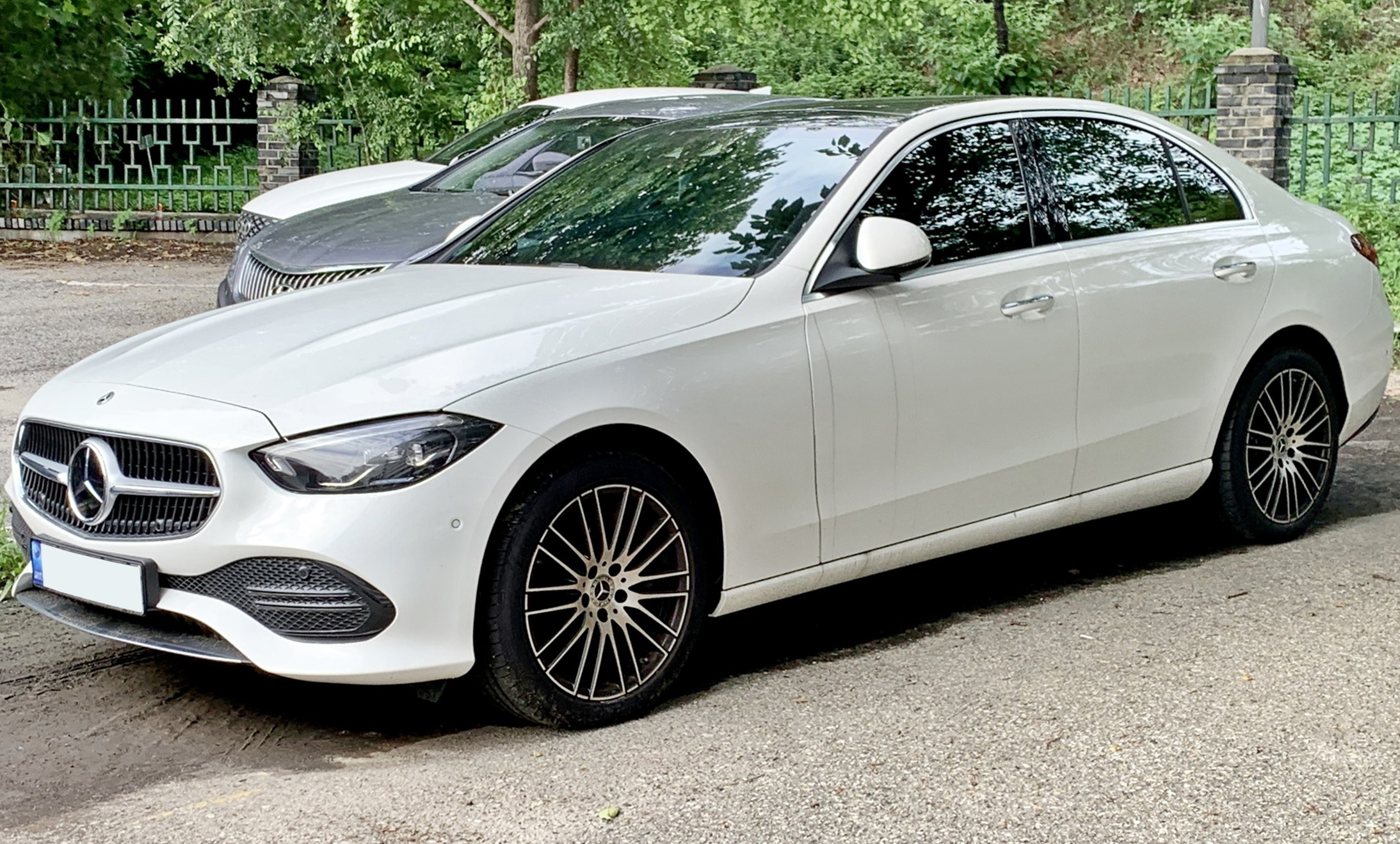
This is a Mercedes sedan that’s been tuned by AMG for more performance. In this episode, they’re talking about the electric version and why it matters to Mercedes’ lineup.
These graphs show how fast the car charges at different points during a charging session. EVs often start fast and then slow down as the battery gets fuller.
The Mercedes-Benz CLA (C117) is a small car with a sporty shape, but it still has four doors. In the podcast, they’re talking about a high-performance version called the AMG CLA 45 with all-wheel drive. The point is that it’s a compact car that’s been made to feel more powerful.
They’re talking about Mercedes making the C-Class fully electric. That usually means the car is designed for batteries and electric motors, not just converted from a gas car.
The Mercedes-Benz C-Class is a common mid-size car model from Mercedes-Benz. The podcast is talking about an all-electric version, meaning it would run on electricity instead of gasoline. They’re highlighting it because it could be a major step for the brand’s electric lineup.
An “MBEA platform” is Mercedes’ shared EV design underneath the car. It’s the basic structure that helps them build electric models efficiently and consistently.
That’s how much energy you can actually use from the battery while driving. It’s measured in kilowatt-hours, and “usable” means the car doesn’t let you drain the battery completely.
WLTP is a standardized test that car makers use to estimate how far a car can go. It helps you compare ranges between cars, but your real range may be different depending on how you drive and the weather.
A DC fast charger is a high-power EV charging station that can add a lot of energy quickly. The faster the charger (higher power), the quicker you can charge—up to the limits of the car’s battery.
A “94 kilowatt hour pack” means the battery can store a lot of energy. More battery capacity often means more driving range, but charging speed still depends on the charger and the car’s battery limits.
“Form factor” here just means the car’s shape and body style. For EVs, the shape matters because it can affect how efficiently the car moves through the air.
The BYD Seal is an electric sedan, meaning it’s powered by a battery instead of gasoline. The podcast is talking about a version called SEAL 08 and focusing on charging details. The takeaway is that it’s a larger electric car and the episode is highlighting its charging-related specs.
Megawatt charging is an EV charging idea where the charger can deliver extremely high power—so high it’s measured in megawatts. The hosts are saying that even if it’s impressive, what matters is how much charge you can realistically add quickly.
The Ford Flex is a roomy family car with a very unusual, boxy shape. The podcast mentions it in a way that sounds related to the word “flex,” not necessarily how the car works. The main idea is that it’s a practical, space-focused vehicle.
Term
flex motors
“Flex motors” is the name the hosts are using for the car’s electric motors. They’re saying this EV uses multiple motors to make a lot of power.
The Mercedes-Benz AMG GT is a sports car made for fast driving. The episode mentions it has a special motor setup, which is part of what makes it perform the way it does. It’s the kind of car people discuss when they want to talk about how performance is engineered.
0-60 is a simple acceleration test: how fast the car goes from standing still to 60 mph. Faster 0-60 usually means the car feels quicker when you press the pedal.
The Tesla Model S Plaid is one of Tesla’s quickest electric cars. They mention it because it’s so fast in a straight line that it sets the bar for what “super quick” means.
A shooting brake is a car body style that’s like a wagon, but with a sportier, sleeker roof shape. It’s basically a “wagon that looks more like a coupe.”
“800 volts” is about how the EV’s electrical system is set up. Higher voltage can help the car charge faster and deliver power more efficiently, as long as the charging setup supports it.
SAIC is a large Chinese automotive group that produces vehicles and powertrains for multiple brands. Here it’s mentioned alongside BYD as an example of a Chinese manufacturer with staying power.
Spare parts are the replacement pieces a car needs for repairs. If a brand is new or hard to get in your country, those parts can be harder to find or take longer to arrive.
The Polestar 4 is an electric SUV, so it runs on electricity. The podcast is mentioning when it will launch, which helps people plan around buying or waiting for it. It’s part of Polestar’s newer EV lineup.
An “estate” is a wagon-style body with extended cargo space behind the rear seats. The host is emphasizing that the Polestar 4 is not being offered as a traditional estate, even though it may look practical.
Geely is the Chinese automaker group associated with Polestar’s ownership and platform ecosystem. The host connects the Polestar 4 SUV to Geely, framing it as part of a broader corporate structure rather than an independent newcomer.
“Right hand drive” means the steering wheel is on the right side of the car, which is common in countries that drive on the left. It affects packaging and driver ergonomics, and it can be a key detail for buyers in those markets.
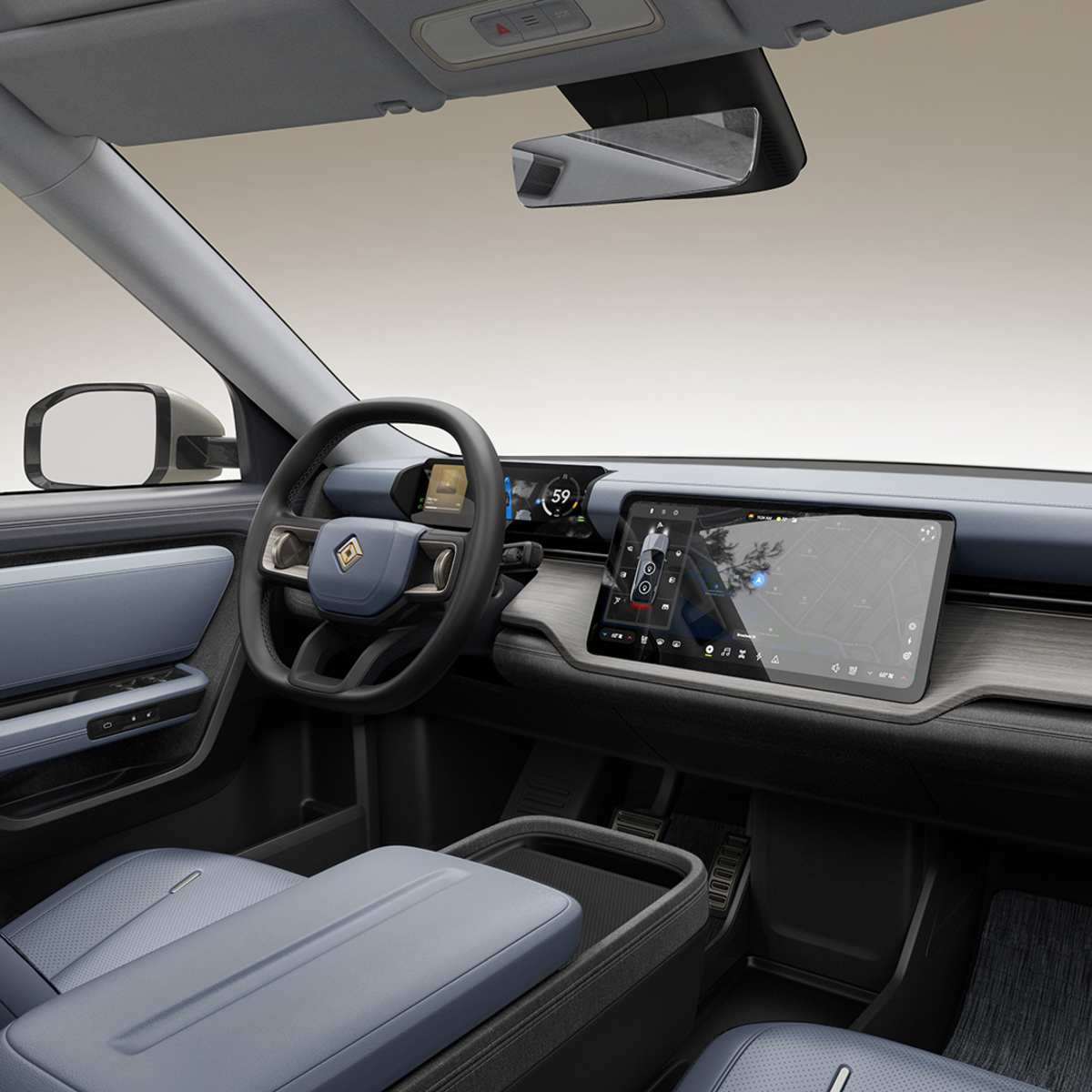
The Rivian R2 is an electric SUV/EV that the hosts are judging by how quickly it can charge on fast chargers. They’re talking about how long it takes to go from low battery to a more usable level, which matters for road trips.
A highway range test is when someone drives an EV on the highway to see how many miles it can go on one charge. It’s meant to be more realistic than the official numbers.
800 volt architecture is an EV design that helps it accept more charging power. With the right fast charger, that can mean faster charging and less time waiting.
A charging curve is how fast an EV charges at different battery levels. Usually it charges fastest at lower charge and then slows down as the battery gets closer to full.
“10 to 80” is a common EV fast-charging benchmark: the time it takes to charge from 10% battery state of charge (SoC) to 80%. It matters because charging is usually fastest at lower battery levels and slows as the battery fills up.
Amps are a measure of electrical current. For fast charging, the EV can only accept up to a certain current, and that affects how quickly it can recharge.
State of charge is just how full the battery is, shown as a percentage. Charging speed often changes depending on whether the battery is at 20% or 80%.
OTA updates are software updates that download to your car over the internet, without a shop visit. The host is saying Rivian could improve charging performance through these updates.
Bigger wheels can reduce range because they can create more resistance as you drive. The host is saying their test used a different wheel size than the one shown in the chart.
All-terrain tires are made for mixed roads, not just smooth highways. They can cost you some efficiency, which can reduce how far an EV goes on a charge.
Multifamily dwellings are apartment buildings or shared housing. If you can’t install your own charger, you may rely more on public charging stations.
Term
21 inch with all season tires
Wheel size and tire type change how efficiently the car rolls. Bigger wheels and typical all-season tires can reduce range compared with more efficiency-focused setups.
EPA rated range is the official “how many miles” number for an EV based on standardized tests. Your actual range can be more or less depending on how you drive.
Term
range test driving 70 to 80 miles an hour
They’re talking about testing how far an electric car goes when you drive fast on the highway. Going 70–80 mph uses more energy, so the car won’t travel as far as it would at slower speeds.
“400 volt architecture” is how the electric car’s electrical system is set up. It influences how efficiently the car can move power around, including during fast charging.
A Tesla connector is the plug shape/standard Tesla uses at its charging stations. The point is that your car has to match the connector and charging setup to charge efficiently.
Amperage is basically the “flow rate” of electricity going into the battery. If the charger can’t deliver the right current, the car can’t charge as fast (or sometimes at all).
Charging infrastructure is the network of charging stations and equipment that EVs use to recharge. If different cars need different electrical settings, the charger makers have a harder job supporting them all.
Edge case vehicles are cars that don’t charge in the “typical” way. If a charger has to be specially set up to handle them, it can be more expensive for the charging network.
Term
IANA network
The IANA network sounds like a specific charging network. The discussion implies it has rules or equipment choices that affect whether different EVs can charge smoothly.
Alpetronic is a company that makes charging equipment. Different charging hardware can support different EV charging requirements, so the brand of charger can affect compatibility.
CCS is a common fast-charging plug for many EVs. “CCS side” just means the part of the charger that uses the CCS plug and how fast it can charge through that plug.
Some charger parts are cooled with liquid to handle heat when charging at very high current. If the connector isn’t liquid cooled, it may not be able to push as many amps for as long.
A CCS1 adapter is a piece that helps your EV plug into a CCS charging setup. The key point here is that the speaker says the high-current version they need doesn’t really exist yet.
Electric cars use different charging plug types. This adapter is a “converter” that lets a car with one plug type charge from a charger with the other plug type.
UL 2252 is a safety “approval” standard for certain EV charging gear. If your adapter is certified to it, it’s more likely to be built and tested to handle charging safely.
They’re talking about a charging adapter made for Tesla’s charging plug system. The host claims it overheated and melted, so they’re comparing it to a different adapter.
The CCS connector is the charging plug and its metal pins. If the pins overheat or melt, charging can become unsafe and the connector may need replacement.
R2 is the name of an electric vehicle model being discussed. The point is that owners could try to use cheap third-party adapters to make charging work.
An adapter is a little connector that lets your car plug into a charger it normally wouldn’t fit. The concern is that cheap adapters may not be truly safe or reliable.
Term
EV goes
They’re talking about electric cars and charging networks. The worry is that bad adapters can cause expensive problems for the people running the chargers.
“Liability” is about who’s responsible if something breaks. If you use the wrong or unapproved charging gear and it causes damage, you may not be covered for repairs.
“Terms of use” are the charging-station rules. They can say what plugs/adapters you’re allowed to use, and using something outside the rules can cause problems.
This is a way to compare charging speed: how long it takes to go from empty to almost full. Charging often slows down near the top, so “97%” is a common benchmark.
Car
McMurtry Spearling
The McMurtry Spearling is an electric car designed to stick to the road using a huge suction fan. The goal is maximum grip, and the hype is that it could even stay stuck to surfaces like a ceiling.
They’re saying the car runs on electricity instead of a gas engine. That usually means the car can deliver power very quickly when you press the pedal.
The Citroën Ami is a very small electric car meant mainly for city driving. The podcast mentions its low price and that it can go about 46 miles on a charge. It uses a small battery (about 5.4 kWh), so it’s built for short trips rather than long highway drives.
Term
600 amp adapters
This is about charging hardware that can handle very high electrical current. The point is that this tiny EV doesn’t need that kind of extreme setup.
AC charging is the normal kind of charging you’d do at home using a standard charger. It’s usually slower than the fast-charging stations you see on highways.
A golf cart is a small vehicle meant for short, low-speed trips—often around golf courses or neighborhoods. In some areas it’s allowed on certain roads, but not everywhere.
A gated community is a neighborhood with controlled entry points. Because of the private roads and rules inside, people may use golf carts for getting around.
Private communities are neighborhoods with their own internal roads. Some low-speed vehicles can be used there even if they can’t be driven normally on public roads.
They’re talking about how the key you use feels cheap—mostly plastic. It’s not about speed or power; it’s about the overall “quality feel” of the car.
LIVE
Hello and welcome to the BATTUES Included podcast. It's Friday, July 10th, Episode 147.
Today, the AMG CLA from Mercedes. We charge, well, one of us does, the Rivian R2 and Fiat
Topolino's little price revealed, but is it a little price? And of course, much, much
more. I'm your host, Martin Lee, from EV News Daily. Joining us today is the euphonious
Mr. Tom Logany, host of YouTube State of Charge and EVChargingStations.com. And Dominic
Yoni, long time EV journalist and host of YouTube's Drive Electric with Dominic. Let's
get into it.
The batteries included podcast is sponsored by EVChargingStations.com. If you drive an
electric vehicle or you're planning to, this site is packed with comprehensive charger
reviews, detailed DC fast charging graphs, and the latest news from all of the fast
charging networks. You'll find real world testing easy to understand comparison and
deep dives into how different electric vehicles actually charge. Before you buy an EV
charger or plan your next road trip, make sure to bookmark EVChargingStations.com and
make smarter charging decisions.
All right, here we go. Welcome back to the show. And let's get into, first of all, the
car of the year is the Mercedes-Benz CLA. So what do we know about the new Mercedes AMG
CLA 45, 4Matic, plus to give it its full name, finally taking the wraps off what might be
a really critical vehicle for their legacy lineup, the all-electric C-Class. Specifically,
the headline grabbing C400 4Matic, not just an internal combustion engine swapped out
for the battery. A ground up on the MBEA platform looking at the performance numbers. It's on
the front axle motors and a front axle disconnect, because we do love that highway efficiency.
482 horsepower, 590 pound feet of torque, although it's an EV, so it's just gonna be
really powerful. 0-60, 3.9 seconds. What about the pack inside? So they haven't gone crazy
big, but by their standards, 94 kilowatt hours usable is a large pack. But here's where
we are with modern Mercedes and BMWs. Gotta admit, the latest stuff they're making goes
a really long way. WLTP, which is applying for me over here, 474 miles. That's over 760
kilometers charging, not China beating, but will take 330 kilowatts on a DC fast charger.
Look, it's all about, I mean, Tom will scream from the top of the mountain. It's about miles
per minute charged, but 10 to 80 in 22 minutes. So a 10 minute stop, they say 325 kilometers
added. You know what, for 10 minutes of stopping, how long have I been talking for a couple of
minutes already? I'll take it. Let's get into it. Tom, we're just getting the specs coming in on this.
Whether you want to comment on like the wider German Mercedes thing or just specifically
this vehicle, what do you think? Yeah, no, I love what Mercedes is doing. As you mentioned,
there's just camera cross. So I haven't really dove into the details, but I love the CLA.
I think it's a great car. This seems like it's going to be a great version of it, the AMG,
you know, CLA 45. It's going to be pricey, but you know, Mercedes customers are used to that,
but this is, don't forget that like the lower version, like the entry kind of entry level
Mercedes. So when you start really jazzing it up, I think it now it enters the class of some of the
more expensive, larger brothers. So, you know, it's great that they make something like this.
This will not be a big seller. It will move the needle. No, I hate to sound like I'm throwing
cold water on it. It's a cool, exciting vehicle. Charge is great, goes far. You talked about a
94 kilowatt hour pack that, you know, that's a lot to stuff in this small platform. This isn't a
was, you know, probably about the most Mercedes could. So good on them. Yeah, what about the form
factor? Because doesn't everyone just want a SUV or a truck these days? Because we've seen in China,
actually, a run of saloons and sedan's MG. I forget the MG one that was announced last week,
or maybe this week, BYD, the SEAL 08. It's just a big saloon with its new flash charging technology.
See now, China, actually, a few more cars like this, a little bit less SUV focused. It's a tough
form factor. Not everybody wants one, but it is more aero and it is better for being an EV. And
if you don't need an SUV, there's a lot to be said for cars like this. No, I agree. And there'll
be a market for it. Don't get me wrong. It won't be a huge market, but there'll be a market for
this car. And I think I would expect it to drive wonderfully. And I think that's where you might
find your buyers and people that want the driving experience more than the utility of the compact
SUVs, because this will probably drive really well. Yeah. Yeah. Another Chinese, I met someone at a
conference, that thing that I did when I hosted the thing with RJ. And I was talking to him.
He works for a car manufacturer. And I've not checked that I can say this because we were chatting
over the coffee machine. So I would not say who he is. But he was really not annoyed. He was
frustrated at how much us, the media, podcasters, bloggers, commentators, have given China's focus
on fast charging because he's like, you've just ruined the whole conversation around
charging because they've got this massive number. Now, nothing's ever going to be good enough.
And who cares? Like, this is a 10-minute stop and it's 325 kilometers on this car. And I
can see where it's coming from. But equally, I also said, look, if someone's going to unveil
megawatt charging on a car that the average person can buy, we're going to cover it and we're going
to get excited over it. Look, this charges, what did I say, 330 kilowatts peak? Yes. Almost.
We've all seen with these numbers lately, a 400, 500, 600 kilowatts charging. Oh,
is it good enough? But I mean, this is how much faster do we need to go? Like,
this is a 10-minute stop to add a decent amount of charge. How much faster, like the answer is,
we always want more, obviously. But the specs are pretty killer on this.
And the specs that you listed at the front, Martin are not quite right. The one in our script
are not quite right. Looking at the press release, actually, it's 680 peak power. So
this press release and all the information around this car just dropped like half an hour before we
arrived here. And so we were just been scrambling trying to get all the information right and
something went astray there. But yeah, so it's got three actual flex motors in it, similar to the,
you know, they used actual flux in the other Mercedes-Benz AMG,
Ford or Coupe that we talked about just like a few weeks ago. So this is, I got that same sort of
technology inside there making huge power. And the 0-60 is, I think we said 3.9 seconds at the top,
but it's actually 2.7 seconds for 0-62, which makes it like a 2.5 second, which is, I think,
for like this class of car, this is like as quick as really any car really, and he said go like
two and a half seconds. It's like, I don't know, the Model S Plaid, of course, does it in 1.9 or
two seconds. There's always going to be a faster car, there's always going to be something top
Trump's beat there, you know. But really, for most people who drive on the road,
you will never, it's so discombobulating for one thing, you know. If you're over like 25 years
old, it's going to like, you know, mess with your mind and everything, unless you have like a lot
of experience with this kind of thing. But yeah, 2.7 seconds, 0-62. I'm just looking over here to see
if there's any other specs that we missed, you know. Oh, they did also introduce like that
shooting brakes. So if you saw one where we're scrolling through the pictures,
there's like a station wagon shape as well now to the CLA, which, you know, looks pretty good.
I'll try to pull that back up on the screen here again in a moment. But yeah, this looks,
this looks pretty great, like active aerodynamics. And I wonder how much more
money it's going to cost than the regular CLA since, you know, that's the entry level CLA.
So I guess this would be like the entry level AMG?
Yeah, but yeah, sounds about right. Yeah. Yeah. So amazing specs. Obviously,
obviously I love the, I'll try and bring one up while I'm talking.
Love the form factor for anything like this because it's, I just think it looks fantastic.
I need to use a sample size of one. Me. Do I need an SUV? No. I like, I like riding in one.
And I like the form factor because I like to sit up a little bit higher, but I don't need one.
At least not one of our cars. I probably need a van now that my kids are getting older.
And so do I love the form factor? Absolutely. Yes.
Supple size of one. If this was in my driveway, would I be absolutely over the moon for the next
few years? Hard to see not to 800 volts, loads of power, really premium, nice little German badge
on the front. One of the Chinese importers here. And I will just research that before I say it
wrong on it. One of the Chinese importers just went not belly up, but I pulled out of the UK
this week. And so, yeah, I'll get that information in a minute. And so,
I'm sure BYD is not going anywhere or SAIC, but if you really are not quite there yet with
buying a Chinese car, lots of people aren't. They offer a lot of value, but some risk, supply chains,
spare parts, stuff like that. Insurance is a lot more on some of those cars than, man,
I would be absolutely over the moon to have this vehicle. So, what's not to love?
The backseat would be good for the kiddos though. I don't think so. Let's say it's one of the two
cars. It's a pretty small backseat. Yeah, one of the two cars. Honestly, the Polestar's cramped at
the minute because it wasn't meant to be an EV. So, let me show. So, there's this. Love that.
I'll just take that off and I will add in a, let's see if I can screen share. Can I screen
share on this? I might not have logged in as a host on this. Anyway, Polestar 4 SUV launches on the
2nd of September here. So, you've got the Polestar 4 Coupe. They haven't called it Polestar 4
wagon. They've called it Polestar 4 SUV. And again, I've got to admit that maybe Dom can get a photo
on because I can't, for some reason, I can't screen share at the minute. Must have done a different
kind of login or something, but it looks beautiful. Like the app, I love it. It's not an estate.
It's not quite an SUV. It looks hella practical. Brilliant. So, yeah, I think these cars are great
for a certain audience, but as Tom says, not going to be a massive seller.
Well, the base CLA, I think, starts at like $49,000 when you add in, you know, destination and docks.
So, you know, 50 grand, pretty much starting price for the non AMG version. So, what's this going
to be? Mid-60s, I guess? Somewhere around there. Yeah. So, it's going to be an expensive vehicle
for what it is. Oh, I can screen share. Yeah, it starts cheap. Oh, you've got it. There you go.
Sorry. Is this one the Polestar 4 SUV from Geely, though? Oh, yeah, from Geely, right.
Yeah, it looks nice. It looks nice. Yeah, and that comes September here. It's kind of raggedy.
Right hand drive. They should have done this to start with, but there you go. They've got it right.
See if I can put it next to the other one on your screen if I can add that and add that on my screen.
And you put the two next to each other and you go, oh, okay. I can see an audience that would
want the SUV style. Oh, yeah. It's not an SUV. Like, but it does sit quite high anyway.
The long roof. Yeah, the much more practical, a lot more storage space in the back.
And they should have, but that should have been the car. I don't know if it looked like a coupé
and looked, but maybe it's just recently priced. Usually you start with the SUV and then, you know,
show the coupé afterwards. You know, that's what a lot of the other manufacturers do. But
I guess if Polster has to do it their own way, I guess.
Does it come with a rear mirror? I think I read that somewhere. Maybe they put a glass back in.
Our dear kind, wonderful audience would be able to correct me, which we can't do at the minute,
because we've been recording it for a period of time on a Thursday, which is why we rushed
this one into the, because it would be, you know, in 24 hours time, you think, oh, I heard that
in yesterday's news. So we're trying to get stuff more topical. But we have a solution to that,
which you can probably imagine. We're just finalizing the plans. But we've missed,
we've missed the live comments, especially the corrections in real time, so we can actually
get it right. Tom, last week you told us about your Rivian R2 highway range test. This is really,
really important, because this is going to be a big seller. Well, it has to be a big seller
for Rivian. And we spoke a little bit about charging. No secret. It's not the best charger.
But I forget the word you used. Acceptable. It might have been that one in your video.
Now we can fully get into Rivian R2 charging and your full charging video. What did you learn?
I learned a lot. So the interesting thing is, Martin, as you alluded to a little bit earlier,
the Chinese have just ruined charging. So whatever comes out now, people are going to say,
that's not good enough. That's not fast enough. This is a disappointment. They should use the
800 volt architecture. It's got to be under 20 minutes. A couple of years ago, when the three
of us remember the state where DC fast charging was, we would have loved a 25 or 26 minute 10 to
80 charge time, which the R2 came in at just under 27 minutes, 10 to 80. I also did a 0 to 100
charge recording. That's going to be another video I'm going to do to map out the full charging
curve. But this was just a 10 to 80. Rivian promised 29 minutes. I shaved two minutes off of that
and repeated it actually another time. That's not on camera. So if you're on a charger, that can
deliver the full 400 amps that the R2 can accept. It actually can accept up to 450 amps, which is
very high. Extremely unusual other than Tesla vehicles. Tesla vehicles can accept high amperage
also. But most other automakers are capped at 500 amps. So 10 to 80, 27 minutes. In 10 minutes,
it added 35% state of charge. So a little more than one third of your range in 10 minutes,
which would translate to roughly 100 miles of driving. So 10 minutes, you add 100 miles of
driving. Record setting, absolutely not. Top of class, no. Acceptable for what this class of
vehicles has. Yeah. There aren't a lot of vehicles out there in this class that can do
that much better than this outside of China. You got to put China in its own box for now,
I think. So I think it was fine. You can pull up to about 230. Actually, I just saw 226
kilowatt. It'll do that for like 10 minutes or actually a little bit less than 10 minutes
and then starts tapering down. It tapers down after 31% state of charge. The charging curve that I
posted on my video, I am certain is the charging curve for the Rivian, like kind of the optimal
charging curve. I've confirmed it with people that are in the know, that know what the vehicle
can do. There's slight variations that might be a little bit off here and there, but overall,
the basic charging curve that I produced is kind of what you're going to get for R2 for now.
Rivian may improve this. They've done this before with OTA updates. So there's a good chance that
they probably, my bet would be yes. If you told me to put money on it, I think a year from there
or two years from now, they'll shave a minute or two off the 10 to 80 time. So I put all my charts
and graphs. If you're watching on video now, the chart we have up now is the range replenishing rate
and this is according to EPA, not according to my range test because I didn't range test the 21-inch
wheels with all terrain, with all season tires. I did the 20-inch wheels with all terrain tires.
You can see there in the 10 minutes, it averages 11.6 miles of range per minute. Once you get up
over 10 miles per minute, you're doing really well with DC Fast Charging. For the first 10 minutes,
it actually does pretty well. So that was great. It tapers off after the first 10 minutes of charging.
You're down to eight, but overall, it averages close to 10 for the first 20 minutes, which is not
bad. So if you'd get ahead and home and you've got to do a quick stop and you're pulling at 10%
and you want a quick top up to get just that last bit to get home, like that first bit's okay.
Like you're not stopping till 80% or 90%, but that bit's respectable, right?
Right. Especially if you're at a kind of a lower state of charge, you can add close to 100 miles
in 10 minutes. Now, it's hard to get away from a DC Fast Charging stop in under 10 minutes. If you're
going to walk inside wherever it is and use the restroom or grab a coffee or something like that,
10 minutes is kind of like, it's going to take 10 minutes just to do the basic.
So you could add close to 100 miles of range in 10 minutes. And again,
you know, I would venture to guess a high percentage of our two owners are going to have
home charging. They're not going to use DC Fast Charging unless they're on road trips,
like most people today. Now, I know that sounds like it's making an excuse because we need to have
electric vehicles to that DC Fast Charge quickly for those who don't have home charging. That's
electric vehicles really proliferate across the whole community. We need to have
fast DC Fast Charging EVs so that people that live in multifamily dwellings don't have home
charging. It's a 10 or 15 minute stop and they've refueled for the week, you know. So in that regard,
it would be nice if it charged a little bit quicker. But for road trips, as far as I'm concerned,
this is fine. And now I have, if you're watching again the video, how long it takes to add driving
range. This is an important metric. Yeah, according to EPA, because again, because I haven't
done a 70 mile an hour highway range test for the 21 inch with all season tires.
It adds 50 miles of range in like 4.3 minutes. 100 miles of range, 8.5 minutes. So, you know,
you're in 100 miles of range in less than 10 minutes. 150 miles in 13.8. And in 20 minutes,
you had 200 miles of EPA rated range. Now, you're probably not going to hit EPA on a highway
range test driving 70 to 80 miles an hour. You could probably knock, you know, 20% off of that,
or it would take 20% longer. But still, you're still looking at 100 miles of range in about 10
minutes, 150 miles in a range in about 15 minutes of DC fast charging. That's acceptable as far as
I'm concerned. I know, you know, you can't look at the Chinese recordings and say, oh my God,
you know, we're so far behind. Yeah, we're far behind. But you could sit and cry about it all
day, or you could look at the bright side and say, look, this isn't bad, and it's not bad.
And if it means that they get to sell the vehicle at a price point because they use parts or develop
parts themselves or in, you know, made bits or bought them from wherever that were more available,
were cheaper because they're lower voltage, that they could get them at the scale that they think
they need for R2. That's also a consideration. It's the consideration, Martin. If you tell me,
okay, we could sell the R2 for a base price of 2,500 more per vehicle, and the 10 to 80% time
would be under 20 minutes, you know, something like a EGMP vehicle, 18, 19 minutes. Of course,
there's going to be people out there that say, oh, I'll take it in a second. I know that. But
I think the masses, if you really took a poll of legitimate people that are in the market to buy
this vehicle, I think it would be like 85% of the people would say, give me the $2,500 savings.
And on those few times I need to DC fast charge, I'll sit there for eight more minutes, you know,
and wait for the 10 to 80. I think this vehicle had to come in at an affordable price.
This is, let's face it, Rivian needs this to be a mass market vehicle. I'm sure they fought for
every dollar that they could shave off the MSRP. And I know, like, I've talked in the past to
people from other companies about how they, you know, how engineering and design and the
bean counters, you know, sit down and literally like almost come to fists over a $10 item, you know,
and I'm sure that was the case with this. This had to come in at the price point that Rivian
thought it would need to be to be the mass market vehicle. And so I'm fine with them using a 400
volt architecture. Yeah, one of the, whether I mentioned it a couple of weeks ago, one of the
questions I asked RJ was how many times as a leader, because it was a business conference,
and he was talking to a bunch of leaders as a leader, how many times do you have to step in,
either as the deciding votes or to say it's my name above the door. This is what we're doing.
And he said surprisingly little, like the Rivian team now they've got to a place as you just said,
Tom, you know, with, I'm sure that they have robust discussions, but they've got to a place now
where they knew what they needed to do, which was to bring this car in at that price. And there's
stuff like spare parts and all the, if they sell as many vehicles as they hope to sell here,
we've seen with EVs when sometimes you have these exotics technologies or you know, pandemics hit
and spare parts hit insurance rates and your cars off the road. All these things must factor in as
well in terms of, right, this was the base of the vehicle. It's just not going to set the world
of light at the game of top trumps, like I mentioned, but like I'm, I'm well up for what
they've done with this. I think it's pretty very important vehicle. In terms of the charging,
can you clarify for people like me who aren't such a charging expert,
why did you need to use a Tesla connector when you charge this? Yeah, so I'm actually,
I've been working all week on a video that I need to put out. This is kind of another topic,
but we might as well at least talk about it here now. So the, as I mentioned earlier,
the R2 is unique in the amperage that it pulls. Tesla vehicles have been notorious for pulling
high amperage with 400 volt architecture vehicles to get that 250 ish DC fast charge
power. So, but they've done it on the Tesla network, which is designed, that's one of the
brilliance of Tesla. The whole ecosystem is designed so that everything just works, right?
But now when you have these third party architects, networks
that are building charging infrastructure for all of the other companies that all
operate on different voltages and different amperages, it becomes a lot harder and it's
harder to custom tailor the charging equipment to the vehicle. You have to kind of make it for
everything, but then there's these edge case vehicles that should you spend a lot of money on
to accommodate these edge case vehicles. So with that said, the IANA network has uses Alpetronic
HYC 400 chargers, right? They can put out 600 amps on both sides, the CCS side and the NAC side,
that that's kind of unique putting out 600 amps, like a lot of the other networks can't push out
that much. So the Walmart network now, they use the Alpetronic HYC 400s and they also have NACs
connectors and CCS 1 connectors. Both sides again can put out 600 amps, but Walmart didn't want to
be beholden to one manufacturer. Walmart needed to hedge their bets and said, look, what if
Alpetronic has a fire at their factory and they can't produce units anymore or whatever,
or at the pace that they want to install these chargers, maybe Alpetronic couldn't
sell them as many as they needed. So they went with ABB as a second vendor. They checked out a
ton of other equipment. They had pilot programs from all the companies. They said, okay, Alpetronic,
ABB, those are who we're going to bed with. So the ABB A400 is also a 400 kilowatt charger
that can deliver 600 amps. Sounds like it's a great match. However, the NAC side of the
ABB A400 can only deliver 375 amps. The CCS side can deliver 600 amps. It's throttled by the
connector they chose. The connector is not liquid cooled. But for 90% of the vehicles that
charge out there, it won't make a difference. It will make a difference on Tesla vehicles and
they're going to use that. So I shouldn't say 90%. The more Tesla vehicles are going to use them,
but if you were counting Tesla as one manufacturer, then the majority would be the other manufacturers.
But even that, Tesla owners would barely notice the difference. When you plug in,
people don't put cameras on the screen like we do and watch every little thing. You plug in,
you walk into Walmart, you come back out, it might make the difference of four or five more
minutes charging. Who cares really in most instances, right? So when I was charging the R2,
when I flew out to Colorado Springs, I needed to find a 400 amp charger that had a native NACS port.
Well, that was what I wanted to do because R2 has a NACS inlet. The closest Iona station was
180 something miles away. It wasn't working for me to do my range test, drive 87 miles,
charge it, drive 87 miles back. So I settled on the Walmart charger in Colorado Springs.
They use the ABB units. I wish they had the Alpetronics, but they use the ABBs. So now I
couldn't get the perfect charging curve using the NACS side because I was going to be limited to
375 amps. So I decided to use the CCS side. Now I knew there could be a problem with the
adapters because there is no CCS1 adapter that's rated for 600 amps. None. They don't exist. And
from what I understand, if they're talking to many of the engineers, they'll never exist. The thing
would have to be built much bigger. It would be clunkier. You can't get that much like to get it
officially rated at that. It's not happening. So I brought a bag of CCS2NACS adapters with me
because I'm thinking, what if something goes wrong? What if it starts to derate? I'll shut
the charger off. I'll swap it. And it did on my zero to 100% charge recording. At around 30%,
I got the notification on the R2 saying, adapter to warm slowing charging station. I immediately
stopped charge, unplugged, popped another connector in, plugged in and continued. Perfect. I got like
45 seconds of interruption. But other than that, I'll be able to map the two together to get a
charging curve. However, that was with the official Tesla CCS1 to NACS adapter that I've had for like
two years. When I unplugged, or actually later on, I looked at the adapter, one of the pins is
melted. Whoa. Really? So it can't handle the 600 amps, which was surprising to me because
it was Tesla's adapter and Tesla vehicles call on very high amperage. But then I started thinking
about it. When I bought this two or three years ago, there were no third party charging stations
that Teslas could go to that could deliver 600 amps. So Tesla was like, well,
the 500 amp limit is going to be fine for this thing. Tesla has since redesigned the adapter.
Now the one that they sell is J3400 compliant, which is the new adapter really. It's the new
connectors called J3400, not really NACS. It's not the Tesla adapter. And it has a higher threshold.
And it's UL 2252 compliant. So basically in a nutshell, I'm going to make a video explaining
to our two owners, like I would not use any older adapters that you've had in the past.
I would make sure that we use that use safety certified adapters that are certified to UL
2252, like the electron, like the A to Z adapter, like the new Tesla adapter. And the good news is
Rivian is supplying a CCS-1 to NACS adapter with the vehicle. You have to pay for it's weird. I
wonder why.
It might be some type of carb rule because it appears as though the carb states get it for free.
I'll dive into that in the video, but I know this is dragging on, but it's important
if you're an R2 owner not to use, if you have an older CCS-1 to NACS adapter, don't use it.
Make sure you use an adapter that is safety certified to UL 2252. And you should be okay.
Even those adapters are not rated for 600 amps, but they have overboost.
They're for a certain period of time, they'll be able to handle that. Now I used the electron
adapter after I used the Tesla adapter that melted. It smelled, I smell the burning smell in it.
So it should be fine though, but let's see. I put it back, I contacted the electron, put it
a box, their engineers are tearing it apart now. Their initial reaction was, look, it's going to be
fine. They actually even sent me their engineering reports. Unfortunately, I cannot publish those,
but they sent me their engineering reports that they can run over 600 amps through it for longer
than I did and everything will be fine. It could just be, it was the first time I used this adapter.
It could just be the first, you know, when you use an electrical appliance for the first time,
you kind of get that burn off smell a little bit, but I was really like sensitive at that point
because I saw the pins on the Tesla adapter melted. So I'm like picking it up and I'm like,
I think it's burning. But I could have been, but any of it, they're tearing it down.
And I'm going to put out a video in a week or so. I've been talking to the manufacturers of
the adapters. I've been talking to the net, some of the networks about their adapter policies.
And I think it's a good PSA video that I'm going to put out just so that Rivian owners understand
the potential issue. And then here's the best part about it really. 99% of the, not 99, 90% of
the time that they charge, they won't be on a charger that can deliver 600 amps. So it won't
be a problem. But on the times you do, it's, it's, it's kind of important because I mean now,
like Walmart is sending somebody to that charger to make sure I didn't ruin the pins on the CCS
connector. You know, like this is, it's a whole thing now. Rivians. Yeah. So it's, it's, it's,
you know, but that's only because you have a massive retailer that is doing an amazing thing.
You have the hardware manufacturers and you have the car makers. And as you said, Tesla
could do, they, they had the land. Well, it was never their land, but Tesla charging Tesla cars.
And for a large part they designed and built a lot of it themselves. I think that the adapter,
I forget who they buy the adapter in from or who makes it their manufacturer.
But I think it's their factory in New York that makes the, maybe then maybe the new one
they made them initially. And it's like, so as you say, you know, even you need to call Walmart
and be like, Oh, I might have, I just get to go check that charger, please. Because this is all
good work that you have to do. Yeah. I didn't have to call them when they saw the video. I was
planning on it, but I was honestly so, I was so focused on getting that video out ASAP because
it was the first charging video. I didn't reach out to them yet, but they saw it. They're like,
don't call up. Yeah. Yeah. Rivian saw it too. And they're like, love that video, Tom. Now,
let's talk about the trouble you caused. Yeah. We had how meetings about that.
I mean, if, if, you know, anyone could go and do what you do, you did, right? So, I mean,
that's the equipment, the vehicle, the charging equipment, it all has to be, you know, built
to handle all that kind of stuff, you know, and it's really, it should be done. But don't forget,
this industry is, is rapidly progressing. And what I'm talking about is, you know, the, the,
how do you control the garbage $99 adapters that are on Amazon right now? Yeah. How do you stop
an R2? Yeah. Yeah. How do you stop an R2 owner not from going to Amazon and clicking, you know,
CCS-1 to Nax adapter, sort by lowest price? Oh, there's one for 50 bucks. Why should I buy the
$220 one? It's the same thing. It says safety tested. It says, you know, robust, you know,
it says top quality. And oh, look, it's got a 4.5 star rating. This must be good. You know, like,
so that's what we're up against. And, you know, then you've got the EV goes and the electrify
Americas and the Walmarts out there cringing thinking like, okay, every time somebody is one
one of these shitty adapters on their network, it's going to cost them $2,000 to replace a cable
and a, and a connector, you know, so it's something that we have to talk about. Yeah. Yeah. It reminds
me of, of so it was a case here at local petrol station, and they put it in the wrong. They,
they got a mixed up. So like 200 cars came through and filled up with petrol, and then they all
broke down. And then, and then the petrol retailer said, well, we put diesel in the tank
underground or something like that. And it costs someone a huge someone somewhere spent a lot of
money on an insurance claim or whatever and making those drivers right. But of course, that's the
world we're coming from, which is you turn up, you put something in your car. And if it goes wrong,
it's not my problem. Whereas there's so many moving bits with EVs. And that's not a criticism.
It's just there are new things to learn. And the technology is changing. And yeah, if you go buy
an adapter, then Rivian not going to say, Hey, don't worry, we'll get you a new vehicle. No,
did it melt? That's fine. We'll get you in, you know, and Walmart and not going to be,
don't worry, you melted one of our charges. Don't worry, we'll put that's not going to happen. So
if you're buying this bad stuff, there's a liability issue around it as well. So
yeah, you're doing the good work, Tom. You're doing the good work. That's why the automakers all
have their own, you know, certified version of the adapter that they sell to you. So, you know,
they said, use this one and then you're cool. Don't use any other kind on here.
Even though you can't go to Amazon and do that nasty, nasty thing.
And the terms of use in most of the networks that they have published,
they used to say that this has evolved. A year ago, it said no adapters are allowed
on almost all of them. You cannot use adapters. Then they changed it to only OEM sold only the
adapter sold by your OEM. So if you have a GM vehicle, you can't use a Ford adapter,
or otherwise you're violating the terms of service. Now that has evolved.
And many of them now say only adapters that are certified to UL 2252 or, you know, either the
manufacturer, the adapter that your manufacturer gave you or the ones that are certified to UL 2252.
But then the interesting thing about that is all of the early adapters that the companies sold
directly, like Tesla, for instance. You're a Tesla customer. You bought the CCS-1 to Nax adapter
three years ago. Tesla, you bought it from your manufacturer, but it's going to melt.
So it's, you know, it's a tough area here right now. It's, you know, it's growing pains.
Highly moly. And then what are we doing? The Chinese
chargers come here and can deliver. You know, how much power and the cars can accept.
Just 100 kilowatts. Yeah, so. Yeah, I've been watching the Norwegian YouTuber Björn Newland
and he's got a row of Chinese stuff at the minute. So he's tested three ex-pangs.
He's got a Zika at the moment and he's having to go somewhere in either Norway or Sweden
where the Tesla chargers are 500 kilowatts to really stretch these things because they're
charging at 430, 450 kilowatts. And that is like one or two near him that he can at least drive to
at these crazy speeds. I can't, I think I've got maybe one or two in the country I can go to.
I don't know. But yeah, you're right. Look, we've spent a long time on that. We've got a
lot to get to today. We've got a lot to talk about in terms of, sorry, carry on Don.
I was just going to say, speaking of Zika real quick, they just had a little story up today
that they can now charge their new battery. I think it's a LFP at over 8,000 kilowatts.
And it's 0 to 97% like the BYD. Instead of nine minutes, it's like eight minutes and 40 seconds
or something like that. 800 kilowatts. Yeah, it wouldn't be 8,000. It's over 1,000 kilowatts.
Over 1,000 kilowatts. Sorry, over 1,000 kilowatts. Just
Megawatt charging on an LFP pack. Wow, cool. Cool. So 10 to 97% in under nine minutes.
And the CATL has the same, actually the CATL battery. I think it was closer to five minutes.
There's some crazy stuff happening right now in the battery world in China.
But that's not the world we live in. There is a crazy, crazy car that's now on sale. If you'd
like to buy one, it is the McMurtry Spearling. It's the fan car that sucks itself to the ground.
And all the articles say it could drive on the ceiling because that's how it works.
And it's the way it's been described. If you've seen that car, 1.2 million pounds
is now the price that you'll need to come up with if you'd like to buy one of these McMurtry
Spearlings that do are just the most insane specs at all. It's really interesting. Chris Harris,
who many people might know from a time on rebooted top gear, but you all remember from watching
a long time ago on YouTube and then through automotive press. And now he does his own YouTube
stuff. And it's just such a brilliant storyteller. I think most people would know from YouTube,
but from top gear, but such a good car journalist in terms of how he tells the story.
He's been, I think he spent a year with McMurtry, either it was sponsored content or just editorial,
like the journey that they've been on. And in one of those videos, McMurtry said,
in coming to the road car, they've just redesigned so many bits of this thing
to get to where it is. Should mere mortals like you and I be allowed to buy one of these? Well,
you know, it's got big old slick size. It should be driven on a track
with an ambulance on standby if unless you're a good driver. This thing's crazy. And of course,
it's electric power. It sucked to the ground though. So you can't go off, right? It's just a
matter of not blocking out when you're making those turns. Go and watch the YouTube videos.
Go and watch the YouTube videos. So there's one of his ones where he's standing on the old
top gear test track and they take the car there and have the McMurtry test driver driving it.
And it comes to something when a seasoned automotive journalist, he's just standing on
the outside of the corner watching it do laps. And he's just going like, no, how's it doing it?
Like, but it's genuine. He wasn't doing it for the cameras. You can tell it's genuine. He was
so blown away by that. And of course, you drove it and it's amazing. And you should go watch his
go watch his videos. Yeah, this thing is just next level, brilliant bonkers. If you got 1.2
million pounds, what's about one and a half million dollars added to your collection,
you can go buy one now. Not sure how many they're making of it, but they've been around a long time
now. It's a fascinating story of this company and the guy ready to check right now, the guy that
started it and where they've come from. And yeah, it's just awesome technology, small, agile,
doing their thing. I hope they can keep on iterating. Of course, a lot of people first heard
of that at the Goodwood Festival of Speed, which is on the South Coast here in the UK,
where a lot of Chinese stuff, particularly BYD unveiling Denza here for the UK,
but also at the other end, smallest city car, tiny little small car with a plug in hybrid.
A lot of Chinese are taking the time to do debuts at Goodwood. So I think over the next
week or two, we'll have some lot of coverage on this podcast of that. Anything to add on
McMurtry, Dom? No, I mean, it's nice that they've made it. I might have heard from
driving it before, like just like driving like the track, the original version that they made,
not this revised road going car that was like really, really loud inside there and probably
not very comfortable and probably kind of hot. So I have the feeling that this road going car
fixes a lot of that, but probably not everything. It's probably pretty, still pretty noisy in there.
And I guess, does he talk about that in the video? Yeah, yeah, because there's a certain
sounds to it. Again, it makes a good YouTube video if there's pops and bangs and noise.
And so there is a certain aesthetic to performance EVs, which not everyone appreciates.
I think when Ken Block was his partner for the Hoonigan stuff and when he made the move
to electric power, I think a lot of the fans that enjoyed the drama of those videos,
this is the one where he drifts it round cities and areas and stuff. And
you know, when you lose the combustion engine, I understand a lot of people
feel that's part of performance and speed and drama. I get it. This next car won't have a problem
with that. For anyone who's seen the previous show, we've discussed the Fiat Topolino coming to
the United States. We love a good follow up on this show. And now we can follow up with the price,
$13,995. That's not true. It's got almost $1,000 destination. So let's call it $15,000
to have it in your driveway. The Fiat Topolino is the Citroën Ami, 46 miles of range,
5.4 kilowatt hour pack. You won't have to worry too much about burning 600 amp adapters on this.
It has a horn. It's only AC charging. Only AC charging.
AC charging only. Of course. There's a windshield and four wheels.
And no AC. No. Good. I mean, we said about, you know, this would be good in Florida as
a golf cart, but there's no AC. Golf carts don't have AC. It's fine. There you go. That's where
15 grand gets you. So, I would expect Dave just bought a golf cart this week, actually.
And he bought like a 2017. Golf carts are expensive. So this is not a bad price, actually,
if you want a golf cart replacement, especially if you, it would probably be a bit more for the
roped off doors and the opening roof version of this, but still like golf carts,
$15,000, $16,000 easy. You're looking for like a nice golf cart. Like he paid, I think he paid,
I think at like 12, maybe I could have that wrong a little bit, but he has a video on it,
actually. If you're in the market for a golf cart, I would expect Dave, a YouTube channel,
he's got a great video about, you know, all the different factors he had to, you know,
think about and calculate when he was going to buy. He bought used instead of a new
off brand, you know, you can get some off brands cheaper, but, you know, he likes the standard,
like the club car. There's a few brands that are like traditionally like really strong
golf cart brands, but anyway, this would be an interesting replacement. But I don't know if
you'd want to have like the doors and everything in Florida in the summer. I don't think this is
wind or whatever coming through that thing. You want the open roof and the open doors version,
if you're going to work, you know, for golf cart life at least.
And you need a bit of alligator protection with those doors on.
What, like, what's the deal with golf carts? I get the whole thing about Florida, Florida
man headlines and also golf carts in on, on like private estate. Like what's the deal with golf
carts in Florida? Where can you on, can you not drive them? So why, so why is out of spec
Dave bought one is what I'm asking? Well, he's in a community where he's moved down to Florida and
he's in a, he's in an RV park right now. Well, his, his, their, their places are getting redone
or rebuilt or something. And so like, you know, a lot of gated communities or just, you know,
RV parks or, you know, and there'll be like an RV park and there'll be some trails and
different places have, and some places like there's a place in Florida called the villages,
and it's a huge community, a gated community, and they have like an overpass. Like this used to be
a river or trestle or something over the highway, but now you just see golf carts, you're driving
down, you'll see like golf carts driving over the highway as you're going by. And yeah, like
places like that. And there's other communities too, like up in Georgia, Peach Street, Georgia,
which is a suburb, I believe, of Atlanta, it's golf, big golf cart community. And there's places
like that throughout, you know, the South and the US. Wow. Yeah. We don't have that size here.
Like you just, you do stuff on such, I guess if you live on a massive community, I think RV park,
I've been, we used to own an RV before kids. And so when I think RV park, I think of a park
that you take your RV to that you can walk to the shower block and walk through amenities.
And you've probably got electrical hookup and whatnot. But I'm guessing my mind's eyes not
picturing something on a really big scale where you've actually got a driver vehicle to go anywhere
to the shop. I think he said something like there's like a few hundred lots there at like at least,
might have been a lot more than that. I think it's 100,000. They're huge Martin.
Really? And not just RV parks. Like the communities, as Don mentioned, there are these
private communities where, you know, you can, they're massive and you don't want to fire up the
car to go visit your neighbor six blocks away. And they just tool around in the little electric
golf carts. And I just, to me, I'm shocked at the amount of attention that this got. It was like,
I guess because it's a cute little picture. So it's clickable. But every news outlet covered it.
It was like, you know, top story. Yeah, everywhere I was clicking, maybe because of my,
my, my, I guess my history. But everything I saw was this couple of years and I'm saying myself,
who the hell wants this thing? Like, is it cute? I think it's really cute. Yeah.
You know, it's not a functional golf cart. Look at the thing that Dave bought. It's,
it's got four seats. It's got a big rack in the back that you could stand on.
Where are you going to put your golf clubs in this thing? Like if you want to use it as a
golf cart, like it's got two seats and no storage. It top speed of 19 miles an hour
could run faster downhill. Maybe it can't be driven on public roads. I mean,
it can on these private communities, but you can't drive it to like Walmart.
Like I think it's cool. I think in the realm of golf carts, it has a little niche, but like
I would totally do what Dave did and buy a gently used, used golf cart for less than this.
It starts at 15 grand with destination. I'm still like, why are people interested in this?
I guess cause it's cute as a button, but like it, it does nothing. It, it, it has no purpose this
thing. I think people are, people are charmed by it. And by the way, I think when, when you buy it,
the dealers are putting a kid on it. So it has like turn signals that function properly and
it'll go faster. And that was, it starts at 19 miles an hour. But when they put the kid on it,
it's 25 miles an hour, which is still dangerously slow on any mode, any road. If someone's behind
you, like, why is this guy in front of me driving so slowly? Get out of the way.
I like 25 miles an hour. Like no one understands in most states,
you'd only be allowed to drive this if the speed limit was 35 miles an hour or lower.
You know, and there's some places where there is like, you know, 20 mile an hour streets,
limited use, limited use, but like there's 20 mile an hour streets, but do they lead anywhere?
Like you drive on those for a couple of miles, then you hit the 45 mile an hour street that
actually takes you to the store or the doctor or whatever. Like, you know, I mean, it's kind
of cool. It looks cool. Don't get me wrong. But I just like, I just don't know why someone would
buy one. Look at what you look at the golf carts. It starts at 15 grand. Look at the golf carts that
you can get for 15 grand. I mean, Lowe's here, my Lowe's, that's like 10 miles from my house.
They have a line of these things in front, not really golf, they're kind of golf cart-ish,
but they're like all terrain vehicles. I got knobby tires on them and stuff. Some of them are
electric. Some of them are gas. They're a whole lineup of them at 9, 9, 9, 9. Like for 10 grand,
I would take one of those things any day before this. I don't know. I'm still surprised at the
attention it's gotten. So people are loving it, right? But I think it's loving it. They're not
buying it. Yes. Yeah. If you want one, go buy it now because I don't think it's going to last
a year in the States. I don't, because people are going to buy it and then going to realize,
oh, you know, I can't do shit with this. There's really kind of plastic key inside here. It doesn't
sound good. I don't really like the weight. If everything's hard, why am I driving? It's cute,
but you know. Don't run out and buy one now. Wait two years. Get it for three grand. It's
selling them here. If I can share my screen, people are selling the Citroen Ami here. I
mentioned this a couple of weeks ago. I think people bought them and were like, this is so cool.
I'll buy one. And now everyone's selling them. They start at four and a half grand. There's one
not far from me. What's that? I don't know. Well, that's four and a half thousand miles. It's three
years old. I still wouldn't pay because you just can't, you can't drive it home. You've got a trailer
at home. Like it's legal. By the way, it's street legal. But it's, but it's anyway, before we go
today. In your neighborhood, in can you drive to the
store where you live? Yes. Yeah. I can, I can get to Aldi and I read an article in the papers this
week about how we've exported Aldi to the United States. You're welcome. Well, we, we imported
Aldi, but it's doing very well where you are. You're really getting the hang of Germany originally,
right? Yeah. Aldi and little, they came over here years and years ago and they just blew the
supermarkets out with just sort of not a, not a stack them high, sell them cheap, like a lot of
big hypermarkets in France. And then we went like that where you could go to the supermarket and buy
TV and, you know, hot tub and your vegetables. And whereas they would much smaller and just
like one of everything, like just some fresh fruit and veg and, and yeah, they're just blown the
sort of grocery market here. And I gather America's enjoying your Aldi. I can get to my local Aldi
on a 30 mile an hour road, but not much further. So a Citroen Ami would, would literally just do
that. I can take my kids to school possibly, but 28, I think we're limited to 28 miles now on the Ami.
Still, still then, like, I know the legal speed limit here is 30, but still you're then
four, you know, foot to the floor, annoying someone behind you. So with e-bikes going past you.
Anyway. So there's a, I saw a little thing in today. I just saw today there's, there may be a Fiat
Topolino, a Arbarth, Arbarth. No one's buying it, but it's cool. The speed version. That one's
going to be able to go 35 miles an hour a bit. But well done. Like their PR team is good. Hey,
before we go, I've got 10 minutes left, probably the school run. Dom, I know you're going to be on
your travels again over the next couple of weeks. We might see you. We might not, depending on where
you are in the world, if you can join us, you will and connectivity and stuff like that. For now,
you've been in Thailand and can we, before we sign off, get an update on some of the EVs,
maybe that you've seen, maybe like a local mall or something. What, what cars are you seeing? Any
surprises? I did see a few different things. So I went to the mall the other day. I went to a
couple of malls. The first one was the great, it was big, but they didn't have any cars. But the
second one, they had a bunch of cars. And let me just pull the, if I can pull the right one here
first to start with. Oh yeah. So this is, this just debuted in the States last week. We announced
it was coming into the States on the show. It was like rumored in the next morning. It's here
as the YL Tesla. And so they have this in Thailand already, but this comes from China.
And so I got to see it in person and check it out. I think it's like $58,000 equivalent,
something like that. It's not cheap in Thailand. So you can see the YL, you know, the extra Y
things on the, on the logo there. So I got to, you know, see it in person and have a look around.
And I got, I turned up the rear seats basically. And you know, I thought there were going to be a
lot more spaces than they were, but it turns out, it was just fast forwarded just a little bit. So
you can pull this, the seat forward a bit, right? And it pulls it. You can see that there's still
not a lot of room here between the, the pillar and this, and the seat backs
lops where it pulls over. It has a motor inside to do this, but then try to get, you have to kind
of climb up over that whole seat thing, something around it. It was very difficult and very awkward
to get back here and excuse my legs are going to be in the picture. I'm wearing shorts at the time,
but there's, there's like no, no, I'm 6'2". There's no room back here for an adult of my height,
at least, you know, it was, and getting in and out. It was, it was not great. There was a bench
back there, which is nice to see. Yeah. So that was, that was kind of cool to check out in person.
And I, and I also saw the, I see you, here we go. This, this one here, take that, should take that off.
The Tesla Model 3. So I found the, the legendary $35,000 Tesla Model 3 in Thailand. That, the price
in Thailand, in Thai bought, it converts to just under $35,000, $34,800 and something.
So that thing, let's see, it's a wrong video here, but so that was kind of amazing. It's not
quite the same as the one that we get here, the Tesla Model 3. It's, right. It still has the glass
roof. So in, in, in America, they, this is a little cheaper, right, than the one they sell in
America. The American one's just a bit above this, but they have the, like the roof
blocked off, right? With the, with the, with the roof, what do you call, trim or whatever.
Yeah, the roof lining, yeah. You can't see the glass roof lining, right. Thank you. But then this,
when you, you can, it's quite nice. So the cloth seats. They have the, like, they have the.
Is this the Mexico spec Model 3? Well, I know, well, I know it's the Mexico spec Model 3,
the, like the 35 grand one. Yeah. Right. Good spec.
It's an LFP battery. Yeah. So they were using the LFP before,
but they had, now in, now in the U.S. they're not using LFP. They're using
NMC because they can't get the LFP from, from China because of the rules.
Yeah. So they had, so they had these Teslas in there and then they also had a few other things.
So like this Nevo Q05, which I didn't really get a chance to look at them because there's
a bunch of people in there, but I did see this other red car. I didn't get the chance to look
into it either because there's people inside and, you know, chatting around with the salesperson
and whatever, but seeing it as in person, this is the Mazda 6E and it is nice. Yeah,
they sell it here as well. Oh, do they? Oh man, this, I would take this over a Model 3,
pretty much, and it is a little slower than the Model 3, but it's longer and the interior is like
a lot nicer. They have a lot, a lot of features that you won't find in a Tesla Model 3, especially
the standard and that same, it's the same price. It's like a $35,000 EV. Yeah. And so, yeah, so
I, they had a few other brands there like Ion, which I've slipped my mind. Is that a Cherry brand?
Martin, do you know? I should know. Yeah, is that launching here soon as well?
It was really nice. Like this steering wheel is nice. Everything kind of felt nice in this
car better than some of the other ones that I looked at a little bit later. And I didn't spend a
whole time, you know, just like touching materials and, you know, just taking a look at the back seats,
maybe, and the seat. Yeah, I really liked the 30 seconds I spent with the Ion.
Is that the Ion V? The UT, I believe. Oh, UT, okay. Oh, yeah. They do make the Ion V too. And
the crossway, this is a plug-in hybrid. And you can see like the luxury van style, but it's a plug-in
hybrid. All made in China, I presume. Like all of the stuff that goes to Thailand is just made in
China. Yes. Okay. Yes, M8. I forget what even that is, like a GAC. This is a tank. That's a diesel
version, but they also make plug-in hybrids of that. And that's becoming very popular here.
So this is the Aura V, which is replacing the Aura Good Cat. So Aura is made by Great Wild China,
Automaker. And they've had this brand, this look, it looks a lot like the Good Cat. They had this,
when they first came out, they had the Aura brand, ORA. They had Good Cat. They had Funky Cat. I think
this is like a bit more mature. Growing up, it's slightly bigger. And it's kind of replacing the
Good Cat and the Aura lineup. So this is just a quick look. It's just a bit bigger. It's kind of
nice, bigger screens than the regular Aura. You see the Good Cats around Chiang Mai here all the time.
Is there a price on that in front? Did you notice the price on that?
It did not. This one in particular. No, but it did. It's like this material. It's like a speaker
grill there at all. It seems pretty decent. Your lower plastics are hard, but other things are not
so bad. And I can't remember if there's another. Oh, it's Geely EX2. This is like, I can't remember,
which is the EX2. Maybe the EX5 is the biggest seller in China. But this is like the smallest
version, basically. And you'll see them here quite a bit. And they're the great little cars.
I think, yeah, I did open the door on this one. Yeah, everything's covered in plastic. We're in
a mall. I did pass a few dealerships, but they're kind of hard to get to unless you like drive there.
You can't really walk there because they're allowing like big highways, basically.
Yeah, but this is like, these are Geely also really nice. Nice feeling steering wheel.
It's the first thing I do when I open these doors. I feel the steering wheel. It's like,
you know, because that's the thing you touch most of the time. Yeah. And yeah, the interior just
looked nice. This is like a really cheap car. I forget. It's underpricing. They're underpricing
everybody here. I forget the exact numbers. I'm going to put together a video for my
Driver like with Dominic channel here in the next week. And I'll have a bit more information
on this stuff. But yeah, so that's kind of what I've been up to.
Wow. And we look forward to your travels when you can update us in future weeks. Where are you going?
I should be with you next week. I think I'll be in Bangkok for the night on my way back to
Europe. Good. All right. We look forward to having you back here in Europe. It's hot,
by the way, another nine day heat wave that we're heading into. It's 30 degrees right now.
Another article I read in the paper this week was, I think it was the FT. I think it was Financial
Times ran a piece on cultural differences. And they interviewed a bunch of Americans who'd come
over here during our heat wave. And they're like, why is there no air conditioning in Europe?
What do you do? We just get hot. If it's like a nice chain hotel or whatever, of course,
they're air conditioned. But for the large part, where's your AC? We don't have any, I'm afraid.
You just have to sweat. So, yeah, if you're coming over here, dummy, I mean, you're coming from
Thailand and you won't be, you know, you won't be too... I presume it's been hot and humid in
Thailand, but it's been particularly hot here, about 40 degrees in Spain and France. So, yeah,
toasty. Very tasty. It's about 30 degrees here, I think, with really high humidity,
but it's quite nice. Kind of adapted to it. I just... We look forward to having you back.
Skywell was the brand I meant to say earlier in the podcast. Skywell, I think it's their import,
their UK importer. I carefully ran my language of what I say. They haven't gone bust or anything,
but I think they've stopped importing the vehicles. Not that they've stopped trading,
but either way, yeah, tough if you've bought a Sky... If you took a punt on a Skywell,
or they make commercial vehicles too, I think. And also Ion, GAC, own that one,
in case you're wondering. But, dear listeners, probably could have corrected this in real
time in the comments. But we have news about that, so stay tuned. Right, we'll call that a day and
put it in the books, and I'll do school pickup. Thank you for watching. If you have any questions
or comments, leave them below on the YouTube section, even if you're listening to us in your
ears. And if you're not yet, if you just watched the video version of this, then why not open up
your podcast app? Subscribe to us there, because it's free. And that way, when you're walking the
dog at the gym on a long drive in your EV, you've got the option. So, yeah, then it's always just
sitting in your feed, and you can just delete it. So, make sure you subscribe to the audio show
as well. So, you've always got the option, and you've got that freedom and flexibility. If you like
the show, give us a thumbs up on YouTube, and we will see you again very soon. Thanks for watching
and listening. Hey, Dom, say ciao. Ciao. Mega.
About this episode
Mercedes’ new AMG CLA 45 4Matic+ is framed as the brand’s “cheapest sedan” that punches into supercar territory: a ground-up EV on the MBEA platform with front-axle motors, a 94 kWh usable battery, and WLTP range around 474 miles. Charging targets include up to ~330 kW and a 10–80% time of about 22 minutes. The hosts debate whether sedan EVs still have a market versus SUV dominance, compare China’s fast-charging obsession, and correct early spec mix-ups (including peak power and quicker 0–62 claims).